Quick Answer
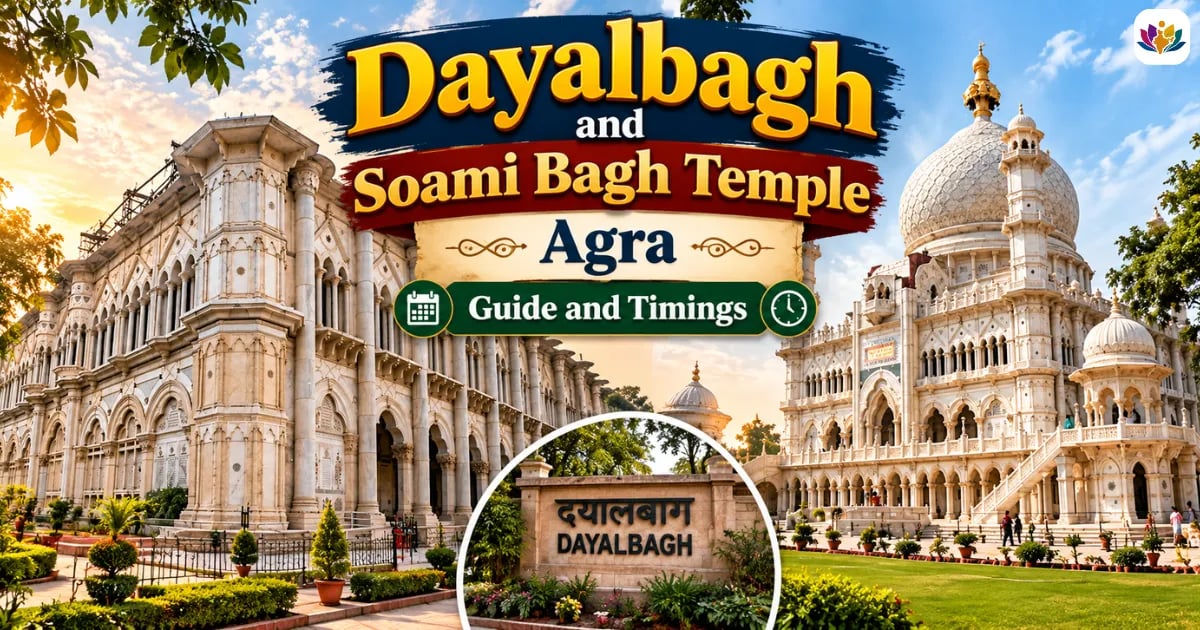
The Soami Bagh Samadh, often called the Dayalbagh Temple, is a magnificent white-marble Radhasoami mausoleum on the outskirts of Agra, famous for hand-carved reliefs often compared to the Taj Mahal. Under construction since 1904, it welcomes all visitors, with free entry, open daily from 10:00 AM to 4:00 PM. Delhi Agra Tour Packages, a unit of Experience My India, plans Agra trips.
The Soami Bagh Samadh, widely known as the Dayalbagh Temple, is one of the most extraordinary and often-overlooked sights of Agra, a magnificent white-marble monument on the city's northern outskirts whose exquisite hand-carved stone reliefs are so fine they are often said to rival the Taj Mahal itself. Dedicated to the founder of the Radhasoami faith and under construction for well over a century, it is a living testament to devotion, set beside the remarkable self-sustaining colony of Dayalbagh. This guide from Delhi Agra Tour Packages covers Dayalbagh and the Soami Bagh temple in full, its history, its architecture, the timings, the free entry, the visitor rules and how to reach it, a rewarding offbeat addition for anyone exploring beyond the usual sights on a Golden Triangle tour.
I was born in Delhi and in more than 11 years planning trips across the region for Experience My India I have taken curious travellers out to Soami Bagh and the sheer quality of its marble carving astonishes everyone who sees it. Here is the clear, practical guide to visiting.
Dayalbagh and Soami Bagh Temple at a glance
Detail | Information |
What it is | A white-marble Radhasoami Samadh (mausoleum), often called the Dayalbagh Temple |
Dedicated to | Soamiji Maharaj, founder of the Radhasoami faith |
Construction | Begun 1904, ongoing for over a century |
Famous for | Hand-carved marble reliefs often compared to the Taj Mahal |
Height | Rising to around 193 feet, in white Makrana marble |
Timings | Daily, 10:00 AM to 4:00 PM |
Entry | Free for all visitors |
About the Soami Bagh Samadh and Dayalbagh
The Soami Bagh Samadh, often referred to simply as the Dayalbagh Temple (and the area also spelled Swami Bagh), is a magnificent white-marble architectural marvel located on the outskirts of Agra. It is a Samadh or mausoleum, dedicated to the founder of the Radhasoami faith and it is renowned above all for its exquisite, intricate hand-carved stone reliefs, work of such beauty and refinement that it is widely said to rival the Taj Mahal.
What makes a visit so special is the combination of this breathtaking craftsmanship with the monument's living, spiritual character and its remarkable setting. The Samadh is the sacred heart of the Radhasoami faith and it stands amid Dayalbagh, a highly organised, self-sustaining green colony built on principles of cooperation, service and simple living. Together, the dazzling marble monument and the utopian community around it make Soami Bagh one of the most unusual and thought-provoking places to visit in all of Agra, a world away from the crowds of the great Mughal monuments, as our things to do in Agra guide covers the full range of the city's attractions.
The history of the Radhasoami faith and the Samadh
The story of Soami Bagh begins with the founding of the Radhasoami faith. Its foundation was laid in January 1861 by Param Purush Puran Dhani Huzur Soamiji Maharaj, also known as Sri Shiv Dayal Singh Seth, who is revered as the founder of the faith. Following his passing, it was resolved to build a grand Samadh to house his holy ashes, a fitting monument to the founder of the faith.
The construction of this great mausoleum began in 1904, under the direction of the fifth revered leader of the community, Sir Anand Swarup. Remarkably, the work has continued, actively and almost without pause, for well over a century and it is ongoing to this day. This is no accident or delay: it flows from the community's deep belief that building a monument to the Supreme Creator should be an eternal act of devotion, a work never truly finished. The result is that the Samadh is a living testament to human patience and faith, built slowly and lovingly across many generations, which gives a visit a sense of witnessing something truly rare, a monument still rising, stone by carved stone, after more than a hundred years.
The architecture and marble carving
The architecture of the Soami Bagh Samadh is its glory and it is this that earns the monument its comparisons with the Taj Mahal. Rising to an impressive total height of around 193 feet, the monument is built purely of premium white Makrana marble, the same celebrated marble from Rajasthan that was used for the Taj Mahal, giving it a dazzling, luminous beauty.
The true wonder, however, lies in the detail. The Samadh showcases stunning pietra dura inlay work, the painstaking craft of setting multi-coloured stones into the marble and above all its incredibly detailed relief carvings. Unlike the geometric and floral patterns of most Mughal work, the carving here depicts an astonishing array of naturalistic motifs, including beautifully rendered fruits, vegetables and flowers, carved by hand into the marble with extraordinary realism and delicacy. Standing before these reliefs, it is easy to see why the monument is spoken of in the same breath as the Taj and why the work has taken so long: each element is a labour of devotion and consummate skill. For anyone who loves fine craftsmanship, the marble work of Soami Bagh is reason enough to make the trip and it stands comparison with the greatest, as our Taj Mahal ticket price and timings guide covers the wonder of the world it is so often likened to.
The significance of Soami Bagh
Beyond its beauty, Soami Bagh holds deep significance as the spiritual epicentre of the Radhasoami faith, serving as its headquarters and sacred heart. Understanding a little of this adds greatly to a visit.
The Radhasoami faith is notable for rejecting rigid ritualism, focusing instead on the deliverance of the spirit through meditation, in the practice known as Surat Shabd Yoga and on the pursuit of inner peace. This emphasis on inner devotion over outward ceremony gives the community its distinctive, gentle character. Surrounding the temple is Dayalbagh itself, a highly organised, self-sustaining green colony whose residents emphasise communal ownership, cooperative agricultural farming, social service and eco-friendly living, alongside the respected Dayalbagh Educational Institute. To visit is to glimpse not only a stunning monument but a whole way of life built on cooperation and devotion, a genuinely utopian community, which makes Soami Bagh as fascinating for the thoughtful traveller as it is beautiful.
Dayalbagh and Soami Bagh Temple timings
The temple welcomes people of all spiritual backgrounds and beliefs, which is part of its gracious character. The general visiting hours are daily from 10:00 AM to 4:00 PM, which is the window for most tourists and visitors. Do note that parts of the core interior may occasionally restrict tourist entry during active construction phases or exclusive community prayers, so access to every area cannot always be guaranteed.
For those interested in the spiritual life of the community, the satsang or spiritual discourse, is typically held daily at 3:45 AM and again at 3:45 PM. Entry to the temple is free for all visitors. Because this is a living place of worship and devotion and an active construction site, it is wise to visit within the general hours and to be respectful of any areas that are closed, as explained below.
Timings and entry | Detail |
General visiting hours | Daily, 10:00 AM to 4:00 PM |
Satsang (spiritual discourse) | Typically daily at 3:45 AM and 3:45 PM |
Entry fee | Free for all visitors |
Note | Parts of the interior may be closed for construction or community prayers |
Important visitor rules
As a sacred and actively working site, Soami Bagh has some clear and strict visitor rules that it is important to know and respect before you go. Observing them ensures a smooth and respectful visit.
The most important rule concerns gadgets: mobile phones, cameras and other electronic items are strictly prohibited inside the inner complex and must be deposited at the security locker counter before you enter. This is strictly enforced, so be prepared to leave your devices behind. There is also a dress code: visitors must dress modestly, ensuring shoulders and knees are fully covered and should avoid shorts, sleeveless tops and miniskirts. As at any sacred monument, shoes must be removed before entering the main monument area. Observing these rules respectfully is the key to an easy and welcome visit.
Visitor rules | Detail |
Gadgets | Mobile phones, cameras and electronics prohibited inside; deposit at the locker counter |
Dress code | Modest dress, shoulders and knees fully covered (no shorts, sleeveless tops or miniskirts) |
Footwear | Remove shoes before entering the main monument area |
Respect | A living place of worship; observe closed areas and quiet |
Location, address and how to reach
The Soami Bagh Samadh is situated on the northern outskirts of Agra, roughly 9 kilometres north of the Agra Cantonment Railway Station and about 12 kilometres from the Taj Mahal, which makes it an easy addition to a day in the city for those willing to venture a little off the usual trail.
It is easily accessible from the main city by auto-rickshaw, app-based cab or local taxi and the closest airport is Agra's Kheria Airport, about 15 kilometres away. Because it lies in the north of the city, it combines well with the other monuments of that side of Agra, such as Akbar's great tomb at Sikandra, for a rewarding half-day away from the crowds.
Location and how to reach | Detail |
Address | Samadh Soamiji Maharaj, Nw 1A, Poiya Ghat Road, Swamibagh, Dayalbagh, Agra 282005 |
From Agra Cantt railway station | About 9 km north |
From the Taj Mahal | About 12 km |
Nearest airport | Kheria Airport, about 15 km |
By road | Auto-rickshaw, app-based cab or local taxi from the city |
Combine Soami Bagh with north Agra's sights
Soami Bagh lies in the northern part of Agra, a part of the city rich in monuments away from the main Taj and Fort cluster, which makes it easy to combine into a rewarding half-day of offbeat sightseeing.
Close by on this side of the city is the magnificent tomb of the emperor Akbar at Sikandra, one of the great Mughal monuments of Agra, as our Akbar's Tomb Sikandra guide covers that grand mausoleum and nearby too is the handsome tomb of Mariam, Akbar's wife, as our Mariam's Tomb Agra guide covers that fine monument. For nature lovers, the tranquil Keetham Lake and its bird sanctuary lie a little further north along the Delhi highway, as our Keetham Lake and Sur Sarovar Bird Sanctuary Agra guide covers that peaceful wetland. Together, these sights make north Agra a rewarding area to explore beyond the famous monuments of the city centre.
The best time to visit Soami Bagh
Soami Bagh can be visited year round, but the most comfortable season to explore Agra and its monuments is the cooler period from about October to March, when the weather is pleasant for sightseeing, as our best time to visit Agra guide covers the seasons in the city.
Within the day, since the temple is open from 10:00 AM to 4:00 PM, a late-morning or early-afternoon visit works well and the bright daylight is perfect for appreciating the dazzling white marble and the fine detail of the carvings. As access to some areas can depend on the construction and on community prayers, it is worth allowing a little flexibility and visiting with a relaxed, respectful attitude, ready to enjoy whatever is open on the day.
How to plan your visit
A visit to Soami Bagh takes perhaps an hour or so to admire the marble monument and its carvings and to take in the atmosphere of the Dayalbagh colony, so it is best combined with the other sights of north Agra, such as Akbar's Tomb at Sikandra, into a rewarding half-day away from the crowds. By private car with a driver, reaching the temple, managing the gadget-locker and dress-code rules and moving between the sights is simple and stress-free.
Agra sits at the heart of the Golden Triangle and fits beautifully into a wider trip, as our one week North India itinerary guide maps out a route taking in Agra and more.
Want your Agra trip planned, with Soami Bagh, the great sights and the hidden gems all sorted around you? Message us on WhatsApp and Experience My India will build it for you.
Tips for visiting Soami Bagh
Leave your phone, camera and electronics ready to deposit at the locker counter, as they are strictly prohibited inside the inner complex.
Dress modestly, with shoulders and knees fully covered and be ready to remove your shoes before the main monument.
Visit within the general hours of 10:00 AM to 4:00 PM and be relaxed about any areas closed for construction or prayers.
Take your time to appreciate the extraordinary hand-carved marble reliefs of fruits, flowers and vegetables, the monument's great glory.
Combine the visit with Akbar's Tomb at Sikandra and other north Agra sights for a rewarding half-day.
Visit respectfully, remembering this is the living spiritual heart of the Radhasoami faith as well as a monument.
Reach it easily by taxi, cab or auto-rickshaw; it is about 9 km from Agra Cantt station and 12 km from the Taj.
What to expect
A visit to Soami Bagh is a quietly astonishing experience, quite unlike anything else in Agra. You can expect a dazzling white-marble monument, still rising after more than a century of devoted work, covered in hand-carved reliefs of fruits, flowers and foliage so fine they are compared to the Taj Mahal, set within the calm, green, cooperative colony of Dayalbagh. It is a place of both breathtaking craftsmanship and living faith, welcoming visitors of all backgrounds with free entry.
As an offbeat, free and genuinely extraordinary monument, away from the crowds of the city centre and rich in both beauty and meaning, Soami Bagh is a wonderful addition for any traveller who loves fine art and craftsmanship or is curious about India's living spiritual traditions. With its simple rules respected and an hour to spare, it rewards the visitor richly.
Plan your trip with us
A visit to Soami Bagh, as part of a wider Agra and Golden Triangle trip, is easiest and most enjoyable when the travel, the stays, the guide and the practicalities are all arranged for you. That is what we do, a comfortable private car and an experienced driver, a knowledgeable guide to bring the monument and the faith to life, well-chosen stays and the whole trip planned around you.
Tell us your dates and group size and we will price it honestly around your standard rather than a fixed figure. You can combine Agra with the classic circuit on our Golden Triangle tours and we can build it all within our wider Delhi Agra Tour Packages.
Related guides
New Delhi tour: the capital's imperial landmarks.
Old Delhi tour: the Red Fort, Jama Masjid and Chandni Chowk.
Delhi day tour: the best of the capital in a day.
Experience My India has personally hosted 50,000+ travelers and the service he leads is rated 4.9 from 2,600+ reviews, operating since 2015. Delhi Agra Tour Packages is a unit of Experience My India.
Book Your Delhi - Agra Trip Today 📞 +91-7302265809 💬 WhatsApp: +91-7302265809 Rated 4.9★ / 2600+ Reviews Explore all: Delhi Agra Tour Packages |
What a Experiance My India
Complete Delhi-Agra services
Private AC Cabs
Comfortable AC cars with experienced local drivers for Delhi, Agra and Jaipur tours.
Local Expert Guides
Explore the Taj Mahal and historic monuments with knowledgeable local guides.
Handpicked Hotels
Comfortable stays near the Taj Mahal and prime locations across Delhi and Agra.
Delhi–Agra Tours
Well-planned same-day and multi-day tours covering the best attractions.
Golden Triangle
Experience Delhi, Agra and Jaipur together with carefully planned itineraries.
24/7 Travel Support
Get assistance throughout your journey from booking to your return.
Plan Your Trip
Get a free quote in 30 mins
100% Trusted & Verified
by 50,000+ Travellers since 2018
Why travellers choose Experience My India
What makes us different from other agencies
We plan and run every trip ourselves, so you get a private AC car, a local expert guide, an honest fixed price, and no reseller or touts in between. We have guided travelers and families since 2018 and hold a 5.0 star rating across 3 verified reviews.
What Our Travellers Say
Real reviews from real Travellers
“We booked our Agra tour package through Experience My India, and the experience was excellent. Abhay ji was a very helpful guide who explained the history of Soami Bagh Samadh, its beautiful marble carvings, and the spiritual importance of Dayalbagh in a simple and interesting way. The cab was clean and comfortable, the hotel was good, and the entire trip was well organised. We were especially happy to visit this peaceful attraction beyond the usual Taj Mahal sightseeing. Highly recommended for anyone planning an Agra trip.”
Rohit Chawla
Ludhiana· 2026-10-08
“We chose Experience My India for our Agra tour and were pleased with the overall arrangements. Abhay ji was friendly, informative, and attentive throughout the sightseeing experience. His explanation of Dayalbagh, the Radhasoami faith, and the beautiful carvings at Soami Bagh made the visit especially interesting. Our cab was comfortable, the hotel was well arranged, and the service team was responsive whenever we needed assistance. We appreciated the balance between sightseeing and a relaxed travel pace. It was a lovely trip, and we would consider booking with them again.”
Tanvi Mukherjee
Bhubaneswar· 2026-10-10
“We had a wonderful Agra trip with Experience My India. Abhay ji was an excellent guide and explained the significance of Dayalbagh and Soami Bagh Temple in an easy-to-understand manner. He also shared useful tips about appropriate clothing, footwear, and the restrictions on electronic devices inside the complex. The cab was neat, the driver was courteous, and our hotel stay was comfortable. Everything was arranged professionally, making the trip convenient for our family. Thank you to the team for such thoughtful service.”
Simran Kaur
Jalandhar· 2026-09-25
We booked our Agra tour package through Experience My India, and the experience was excellent. Abhay ji was a very helpful guide who explained the history of Soami Bagh Samadh, its beautiful marble carvings, and the spiritual importance of Dayalbagh in a simple and interesting way. The cab was clean and comfortable, the hotel was good, and the entire trip was well organised. We were especially happy to visit this peaceful attraction beyond the usual Taj Mahal sightseeing. Highly recommended for anyone planning an Agra trip.
Rohit Chawla
Ludhiana
We chose Experience My India for our Agra tour and were pleased with the overall arrangements. Abhay ji was friendly, informative, and attentive throughout the sightseeing experience. His explanation of Dayalbagh, the Radhasoami faith, and the beautiful carvings at Soami Bagh made the visit especially interesting. Our cab was comfortable, the hotel was well arranged, and the service team was responsive whenever we needed assistance. We appreciated the balance between sightseeing and a relaxed travel pace. It was a lovely trip, and we would consider booking with them again.
Tanvi Mukherjee
Bhubaneswar
We had a wonderful Agra trip with Experience My India. Abhay ji was an excellent guide and explained the significance of Dayalbagh and Soami Bagh Temple in an easy-to-understand manner. He also shared useful tips about appropriate clothing, footwear, and the restrictions on electronic devices inside the complex. The cab was neat, the driver was courteous, and our hotel stay was comfortable. Everything was arranged professionally, making the trip convenient for our family. Thank you to the team for such thoughtful service.
Simran Kaur
Jalandhar
We booked our Agra tour package through Experience My India, and the experience was excellent. Abhay ji was a very helpful guide who explained the history of Soami Bagh Samadh, its beautiful marble carvings, and the spiritual importance of Dayalbagh in a simple and interesting way. The cab was clean and comfortable, the hotel was good, and the entire trip was well organised. We were especially happy to visit this peaceful attraction beyond the usual Taj Mahal sightseeing. Highly recommended for anyone planning an Agra trip.
Rohit Chawla
Ludhiana
We chose Experience My India for our Agra tour and were pleased with the overall arrangements. Abhay ji was friendly, informative, and attentive throughout the sightseeing experience. His explanation of Dayalbagh, the Radhasoami faith, and the beautiful carvings at Soami Bagh made the visit especially interesting. Our cab was comfortable, the hotel was well arranged, and the service team was responsive whenever we needed assistance. We appreciated the balance between sightseeing and a relaxed travel pace. It was a lovely trip, and we would consider booking with them again.
Tanvi Mukherjee
Bhubaneswar
Frequently Asked Questions
Quick answers to common questions
The Soami Bagh Samadh, often called the Dayalbagh Temple, is a magnificent white-marble mausoleum on the northern outskirts of Agra, dedicated to Soamiji Maharaj, the founder of the Radhasoami faith. It is famous for its exquisite hand-carved marble reliefs, often compared to the Taj Mahal and it serves as the spiritual heart of the faith, set within the self-sustaining Dayalbagh colony. Entry is free and all visitors are welcome.
The Samadh was begun in 1904, under the direction of Sir Anand Swarup, the fifth revered leader of the Radhasoami community, to house the holy ashes of the faith's founder, Soamiji Maharaj, whose faith was founded in January 1861. Remarkably, the construction has continued actively for well over a century and is still ongoing, reflecting the community's belief that building a monument to the Creator is an eternal act of devotion.
It is compared to the Taj Mahal because of its material and its craftsmanship. Like the Taj, it is built of premium white Makrana marble from Rajasthan and it is covered in extraordinarily fine hand-carved reliefs and pietra dura inlay of multi-coloured stones. Its carvings of fruits, flowers and vegetables are so detailed and beautiful that many say they rival the Taj, making it one of the finest examples of marble craftsmanship in India.
The general visiting hours are daily from 10:00 AM to 4:00 PM, which is the window for most visitors. The community's satsang or spiritual discourse, is typically held daily at 3:45 AM and 3:45 PM. Note that parts of the core interior may occasionally be closed to tourists during active construction phases or exclusive community prayers, so it is wise to visit within the general hours and be flexible about access.