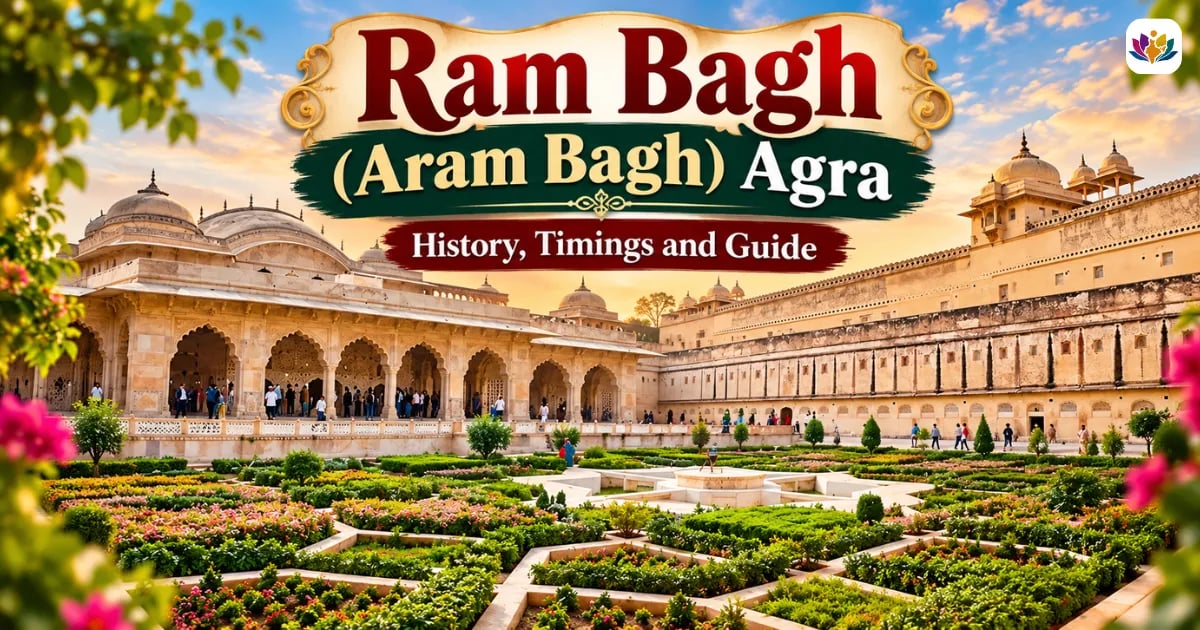
Quick Answer
Ram Bagh, originally Aram Bagh, is the oldest surviving Mughal garden in India, laid out by Emperor Babur in 1526 to 1528 on the east bank of the Yamuna in Agra. Built in the Persian Charbagh style with terraces, water channels and pavilions, it is open daily from sunrise to sunset for a small fee. Delhi Agra Tour Packages, a unit of Experience My India, plans Agra trips.
Ram Bagh, originally known as Aram Bagh, is a monument of great historical importance and quiet charm in Agra, celebrated as the oldest surviving Mughal garden in all of India, laid out by the first Mughal emperor himself. This guide from Delhi Agra Tour Packages covers Ram Bagh in full, its history, the beautiful Charbagh design, the timings, the fees and how to reach it, a rewarding stop for anyone exploring the quieter, trans-Yamuna side of Agra on a Golden Triangle tour.
I was born in Delhi and in more than 11 years planning trips across the region for Experience My India I have taken many history-loving travellers to this peaceful garden on the bank of the Yamuna. Here is the clear, practical guide to visiting.
Ram Bagh at a glance
Detail | Information |
What it is | The oldest surviving Mughal garden in India |
Also known as | Aram Bagh, Bagh-i-Gul Afshan |
Built | 1526 to 1528, by Emperor Babur |
Design | Persian Charbagh style, with terraces, water channels and pavilions |
Timings | Daily, sunrise to sunset (about 6:00 AM to 6:00 PM), all 7 days |
Entry fee | A small fee (reconfirm current rates); children under 15 free |
Where | Firozabad Road, east bank of the Yamuna, Agra |
About Ram Bagh (Aram Bagh)
Ram Bagh is a historic Mughal garden set along the left or eastern bank of the Yamuna River in Agra, on the Firozabad Road, among the cluster of monuments on that side of the river. Though it is quiet and far less visited than the Taj Mahal and the Agra Fort, it holds a very special place in Indian history: it is celebrated as the oldest surviving Mughal garden in the entire country.
The garden carries several names across its long history. It was originally called Aram Bagh, meaning the Garden of Rest and it was also known by the lovely name Bagh-i-Gul Afshan, the garden that scatters flowers. In later centuries the name Aram Bagh shifted to Ram Bagh, the name by which it is most commonly known today. For anyone interested in the roots of Mughal India, in gardens or in the beginnings of the dynasty that would go on to build the Taj Mahal, Ram Bagh is a genuinely important and atmospheric place to visit.
The history of Ram Bagh
Ram Bagh was built between 1526 and 1528 by Emperor Babur, the founder of the Mughal Empire in India, in the very first years of Mughal rule after his victory at the Battle of Panipat. This makes it not only the oldest surviving Mughal garden in the country, but one of the earliest Mughal structures of any kind, dating from the dawn of the empire. Babur, who came from Central Asia and loved the gardens of his homeland, laid out this garden in the Persian style he knew, bringing the tradition of the ordered pleasure garden to the banks of the Yamuna.
The garden has several fascinating chapters in its history. Later, the Empress Nur Jahan, the powerful wife of Emperor Jahangir, restored and enhanced the garden, adding to its beauty. In a remarkable episode, Babur himself was temporarily buried here after his death, before his remains were later moved to Kabul in accordance with his wishes. And during the period of Maratha rule over Agra, roughly from 1774 to 1803, the old name Aram Bagh gradually shifted to the Ram Bagh by which it is known today. Through these centuries, the garden has remained a living link to the very beginnings of the Mughal age in India.
The Charbagh design
Ram Bagh is a classic example of the Persian Charbagh, the four-part symmetrical garden that would become the signature form of Mughal garden design, later seen in grander form at the Taj Mahal and other monuments. The Charbagh divides the garden into quarters, creating a sense of order, balance and paradise on earth, an idea rooted in Persian and Islamic tradition.
What makes Ram Bagh especially interesting is how it is laid out to suit its riverside setting. The garden is arranged on three descending terraces, stepping down towards the Yamuna and it is threaded with cascading water channels and fountains, with stone pavilions placed to catch the cool air coming off the river. This clever design was intended to keep the garden and the royal visitors who rested in it, cool and comfortable in the Agra heat, with the sound and movement of flowing water adding to the sense of calm. Even today, walking the terraces and pavilions, you can appreciate the thought that went into creating this early Mughal pleasure garden and see the template that later, grander Mughal gardens would follow.
Ram Bagh timings and entry fees
Ram Bagh is open to visitors every day of the week, all seven days, from sunrise to sunset, which is roughly from around 6:00 AM to 6:00 PM, though as this follows the sun the exact hours shift a little through the year. It is a peaceful, uncrowded spot, so you can usually explore it at a relaxed pace.
The entry fee is modest. At the time of writing, the ticket is a small amount, roughly in the region of ₹15 to ₹25 per person for Indian, SAARC and BIMSTEC citizens and around ₹250 to ₹300 per person for foreign nationals, while children under the age of 15 enter free. As fees are updated from time to time by the Archaeological Survey of India and the tourism authorities, it is always wise to reconfirm the current rates before your visit.
Tickets can be bought at the monument and can also be booked online in advance through the official portals. These include the Archaeological Survey of India (ASI) Agra Circle website, the official Taj Mahal ticketing portal, where Ram Bagh can be selected under the other Agra monuments and the ASI PayGov portal. Booking online can save a little time, though as Ram Bagh is rarely crowded, buying at the gate is usually straightforward too.
Location and how to reach Ram Bagh
Ram Bagh is located on the Firozabad Road, also described as the Agra to Aligarh Road, on the left or eastern, bank of the Yamuna River, in the Rambagh area of Agra. This places it among the group of monuments on that side of the river, a little away from the main city and the great sights across the water, but easily reached by road.
The garden is best reached by private car, taxi or auto-rickshaw. It sits close to the other trans-Yamuna monuments, so it is very easy to combine with them in a single outing. If you are already touring that side of the river, visiting the nearby tile-clad tomb of Chini Ka Rauza or the exquisite Baby Taj, Ram Bagh is only a short hop away, as our Chini Ka Rauza Agra guide covers that beautiful tiled tomb and our Itimad-ud-Daulah Baby Taj Agra guide covers the jewel-like Baby Taj.
Combine Ram Bagh with the trans-Yamuna monuments
The real pleasure of visiting Ram Bagh is that it sits among a cluster of lovely, lesser-visited monuments on the eastern bank of the Yamuna, which together make a wonderful, offbeat half-day away from the crowds of the main sights.
Nearby are the tiled tomb of Chini Ka Rauza and the beautiful marble Baby Taj and also the famous garden of Mehtab Bagh, which lies directly across the river from the Taj Mahal and is renowned for its sunset views of it, as our Mehtab Bagh Agra guide covers that garden. While Mehtab Bagh is loved for its view of the Taj across the water, Ram Bagh is quite different in character and importance: it is the ancient original Mughal garden of Babur himself, valued for its history and its early Charbagh design rather than a famous view. Together, these trans-Yamuna sights make a rich circuit for those wanting to see a quieter, more historic side of Agra, as our things to do in Agra guide covers the full range of the city's sights.
The best time to visit Ram Bagh
Ram Bagh can be visited at any time of year, but the best season to explore Agra and its gardens in comfort is the cool period from about October to March, when the weather is pleasant for strolling the terraces and pavilions, as our best time to visit Agra guide covers the seasons in the city.
Within the day, the softer light of the early morning or the late afternoon is loveliest for wandering the garden and appreciating its design and these cooler hours are the most pleasant for walking. As the garden is quiet at almost any time, you have the freedom to choose your moment and it makes a peaceful, restful stop in a day of Agra sightseeing, living up to its original name as the Garden of Rest.
How to plan your visit
A visit to Ram Bagh takes only a short while, perhaps half an hour to an hour, so it is best enjoyed as part of a tour of the trans-Yamuna monuments or a wider day of Agra sightseeing, rather than a trip in itself. By private car with a driver, it is wonderfully easy to combine Ram Bagh with Chini Ka Rauza, the Baby Taj and Mehtab Bagh, along with the great sights across the river, such as the Taj Mahal and the Agra Fort, as our Taj Mahal ticket price and timings guide covers the Taj and our Agra Fort ticket and timings guide covers the mighty fort.
Agra itself is easily reached as part of the Golden Triangle, by road from Delhi, as our Delhi to Agra distance guide covers that journey and it fits beautifully into a wider trip, as our one week North India itinerary guide maps out a route taking in Agra and more.
Want your Agra trip planned, with Ram Bagh, the trans-Yamuna monuments, the Taj Mahal and the rest all sorted? Message us on WhatsApp and Experience My India will build it for you.
Tips for visiting Ram Bagh
Combine Ram Bagh with the nearby Chini Ka Rauza, Baby Taj and Mehtab Bagh for a rewarding, offbeat half-day on the eastern bank of the Yamuna.
Visit in the early morning or late afternoon for the loveliest light and the most comfortable walking.
Carry the children along, as under-15s enter free and the open garden is pleasant for families.
Reconfirm the current entry fee and timings, as rates are updated from time to time by the ASI.
Book online in advance through the official ASI or Taj Mahal ticketing portals if you prefer, though the gate is rarely crowded.
Allow around half an hour to an hour to walk the terraces, water channels and pavilions at a relaxed pace.
Appreciate the history as you go, remembering this is the oldest surviving Mughal garden in India, laid out by Babur himself.
What to expect
A visit to Ram Bagh is a quiet, historic and restful experience, quite different from the grand, crowded splendour of the Taj Mahal and the Agra Fort. You can expect a peaceful, green Mughal garden laid out on terraces above the Yamuna, with old water channels, fountains and stone pavilions and the deep sense of history that comes from standing in the oldest surviving Mughal garden in India, created by the founder of the dynasty. It is a place for those who love history, gardens and the pleasure of discovering a quiet, important site away from the tour-bus crowds.
As the garden of Babur himself, an early template for the great Mughal gardens that followed and a peaceful retreat on the bank of the river, Ram Bagh is a rewarding addition to a deeper exploration of Agra. With a modest fee and only a short visit needed, it offers history and calm in equal measure.
Plan your trip with us
A visit to Ram Bagh, as part of a wider Agra and Golden Triangle trip, is easiest and most enjoyable when the travel, the stays, the guide and the sightseeing are all arranged for you. That is what we do, a comfortable private car and an experienced driver, a knowledgeable guide to bring the garden and its history to life, well-chosen stays and the whole trip planned around you.
Tell us your dates and group size and we will price it honestly around your standard rather than a fixed figure. You can combine Agra with the classic circuit on our Golden Triangle tours and we can build it all within our wider Delhi Agra Tour Packages.
Related guides
New Delhi tour: the capital's imperial landmarks.
Old Delhi tour: the Red Fort, Jama Masjid and Chandni Chowk.
Delhi day tour: the best of the capital in a day.
Experience My India has personally hosted 50,000+ travelers and the service he leads is rated 4.9 from 2,600+ reviews, operating since 2015. Delhi Agra Tour Packages is a unit of Experience My India.
Book Your Delhi - Agra Trip Today 📞 +91-7302265809 💬 WhatsApp: +91-7302265809 Rated 4.9★ / 2600+ Reviews Explore all: Delhi Agra Tour Packages |
What a Experiance My India
Complete Delhi-Agra services
Private AC Cabs
Comfortable AC cars with experienced local drivers for Delhi, Agra and Jaipur tours.
Local Expert Guides
Explore the Taj Mahal and historic monuments with knowledgeable local guides.
Handpicked Hotels
Comfortable stays near the Taj Mahal and prime locations across Delhi and Agra.
Delhi–Agra Tours
Well-planned same-day and multi-day tours covering the best attractions.
Golden Triangle
Experience Delhi, Agra and Jaipur together with carefully planned itineraries.
24/7 Travel Support
Get assistance throughout your journey from booking to your return.
Plan Your Trip
Get a free quote in 30 mins
100% Trusted & Verified
by 50,000+ Travellers since 2018
Why travellers choose Experience My India
What makes us different from other agencies
We plan and run every trip ourselves, so you get a private AC car, a local expert guide, an honest fixed price, and no reseller or touts in between. We have guided travelers and families since 2018 and hold a 5.0 star rating across 3 verified reviews.
What Our Travellers Say
Real reviews from real Travellers
“Our Agra trip with Experience My India was a memorable experience. Abhay ji guided us through Ram Bagh and explained its historical importance, Persian garden design, and connection with the early Mughal period. The driver was polite, the cab was clean, and the hotel service was satisfactory. We appreciated the team's coordination and the opportunity to visit Agra's historical attractions comfortably.”
Priyanka Shah
Ahmedabad· 2026-09-28
“We purchased an Agra tour package from Experience My India and were pleased with the arrangements. Abhay ji was knowledgeable and made our visit to Ram Bagh more interesting by explaining its history and beautiful Charbagh layout. The private cab made travelling between monuments easy, and the hotel arrangements were convenient. It was a great experience for anyone interested in history and architecture.”
Kunal Deshmukh
Pune· 2026-10-02
“Experience My India helped us enjoy a well-organised Agra sightseeing trip. Abhay ji was a friendly and informative guide who explained why Ram Bagh holds such an important place in Mughal history. We also appreciated the comfortable cab, helpful coordination, and good hotel arrangements. The itinerary allowed us to enjoy the monuments without feeling rushed. We were very happy with the overall service.”
Sneha Iyer
Bengaluru· 2026-10-12
Our Agra trip with Experience My India was a memorable experience. Abhay ji guided us through Ram Bagh and explained its historical importance, Persian garden design, and connection with the early Mughal period. The driver was polite, the cab was clean, and the hotel service was satisfactory. We appreciated the team's coordination and the opportunity to visit Agra's historical attractions comfortably.
Priyanka Shah
Ahmedabad
We purchased an Agra tour package from Experience My India and were pleased with the arrangements. Abhay ji was knowledgeable and made our visit to Ram Bagh more interesting by explaining its history and beautiful Charbagh layout. The private cab made travelling between monuments easy, and the hotel arrangements were convenient. It was a great experience for anyone interested in history and architecture.
Kunal Deshmukh
Pune
Experience My India helped us enjoy a well-organised Agra sightseeing trip. Abhay ji was a friendly and informative guide who explained why Ram Bagh holds such an important place in Mughal history. We also appreciated the comfortable cab, helpful coordination, and good hotel arrangements. The itinerary allowed us to enjoy the monuments without feeling rushed. We were very happy with the overall service.
Sneha Iyer
Bengaluru
Our Agra trip with Experience My India was a memorable experience. Abhay ji guided us through Ram Bagh and explained its historical importance, Persian garden design, and connection with the early Mughal period. The driver was polite, the cab was clean, and the hotel service was satisfactory. We appreciated the team's coordination and the opportunity to visit Agra's historical attractions comfortably.
Priyanka Shah
Ahmedabad
We purchased an Agra tour package from Experience My India and were pleased with the arrangements. Abhay ji was knowledgeable and made our visit to Ram Bagh more interesting by explaining its history and beautiful Charbagh layout. The private cab made travelling between monuments easy, and the hotel arrangements were convenient. It was a great experience for anyone interested in history and architecture.
Kunal Deshmukh
Pune
Frequently Asked Questions
Quick answers to common questions
Ram Bagh is famous as the oldest surviving Mughal garden in India. It was laid out by Emperor Babur, the founder of the Mughal Empire, between 1526 and 1528, making it one of the earliest Mughal structures in the country. Built in the Persian Charbagh style with terraces, water channels and pavilions above the Yamuna, it is a historic and peaceful garden originally called Aram Bagh, the Garden of Rest.
Ram Bagh was built by Emperor Babur, the first Mughal emperor and founder of the dynasty in India, between 1526 and 1528, in the very first years of Mughal rule. Babur, who loved the gardens of his Central Asian homeland, laid it out in the Persian style, making it the oldest surviving Mughal garden in the country. Later, Empress Nur Jahan restored and enhanced it.
The garden was originally named Aram Bagh, meaning the Garden of Rest and was also known as Bagh-i-Gul Afshan, the garden that scatters flowers. During the period of Maratha rule over Agra, roughly from 1774 to 1803, the name Aram Bagh gradually shifted to Ram Bagh, which is the name by which it is most commonly known today.
Ram Bagh is open every day of the week, all seven days, from sunrise to sunset, which is roughly from around 6:00 AM to 6:00 PM. As the hours follow the sun, they shift a little through the year. Because it is a quiet, uncrowded garden, you can comfortably explore it at a relaxed pace whenever you visit during the day.