Quick Answer
The best Taj Mahal photos come at sunrise from inside the complex, from the across-the-river view at Mehtab Bagh and through the framing arches of the gateway and mosque. Tripods and flash are restricted and no photography is allowed inside the mausoleum chamber. Delhi Agra Tour Packages, a unit of Experience My India, arranges Agra photography trips.
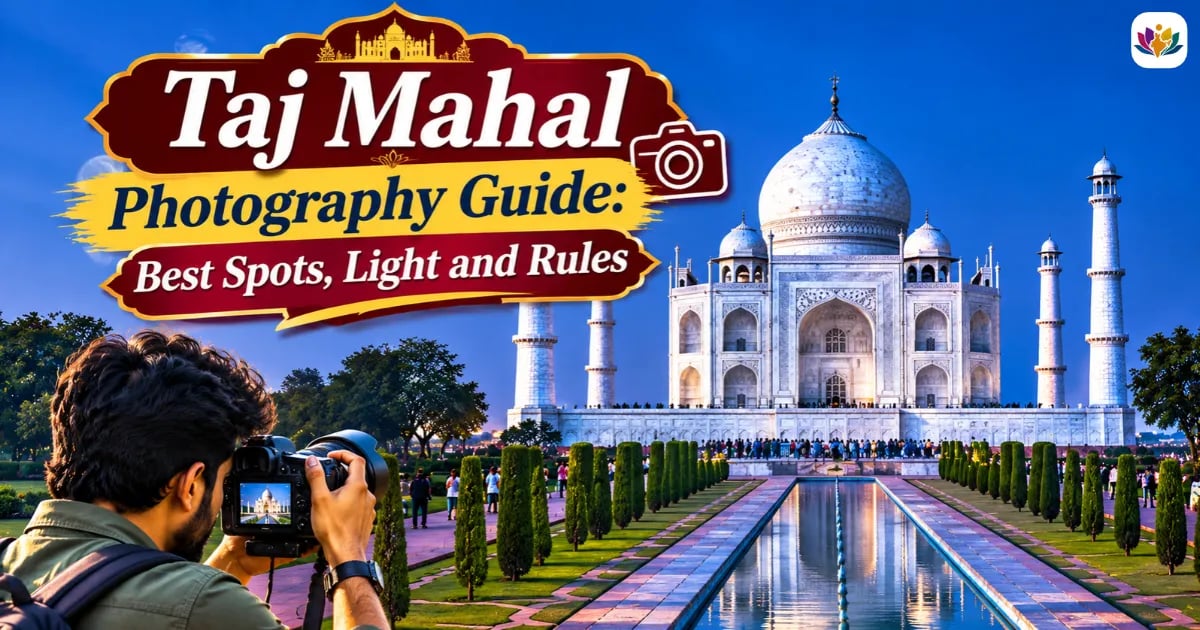
The Taj Mahal is the most photographed monument in India and with good reason, but capturing it beautifully takes a little knowledge of the best spots, the right light and the rules. This guide from Delhi Agra Tour Packages walks you through where to stand, when to shoot, what the ASI allows and how to compose your shots, so you come away with stunning images of the Taj Mahal, whether you are a phone photographer or carrying a full kit and whether on your own or as part of a Golden Triangle tour.
I was born in Delhi and in more than 11 years guiding travellers across the region for Experience My India I have watched countless visitors photograph the Taj and the ones who plan their light and their spots come away with far better images. Here is how to be one of them.
Taj Mahal photography at a glance
Detail | Best choice |
Best time of day | Sunrise, for soft golden light and fewer crowds |
Best across-river spot | Mehtab Bagh, for sunset and the classic back view |
Best framing | Through the great gateway and the mosque's arches |
Best season | October, November and March for clear skies |
Avoid | Harsh midday sun and the foggy mornings of late December and January |
Key rule | No photography inside the mausoleum chamber; tripods and flash restricted |
The best time of day for Taj Mahal photos
The single most important factor in a great Taj photo is light and the best light of all is at sunrise. Entering as the gates open, you get the monument bathed in soft, warm golden light, the marble shifting through pinks and ambers and crucially far fewer crowds in your frame than later in the day. For most photographers, a dawn visit is the one non-negotiable tip and it is exactly what our Sunrise Taj Mahal tour is built around.
The golden hours of early morning and late afternoon give the most flattering, directional light, while the harsh overhead sun of the middle of the day flattens the marble and blows out the highlights, so it is the worst time to shoot. The Taj also takes on different moods through the day: cool and ethereal at first light, brilliant white by mid-morning and warm again towards sunset. If you can, photograph it at more than one time to capture these changing characters.
The best photography spots and angles
There is far more to Taj photography than the classic shot from the main gateway. Here are the spots and angles worth seeking out.
Spot | The shot |
The great gateway (Darwaza) | The Taj framed in the dark arch as you enter, a dramatic reveal |
The central reflecting pool | The classic symmetrical reflection down the charbagh gardens |
The mosque and jawab arches | The dome framed through red-sandstone arches to either side |
The riverside / platform level | Side-on views and detail of the inlay and minarets |
Mehtab Bagh (across the Yamuna) | The back view and sunset reflection from the far bank |
Nearby rooftop cafes (Taj Ganj) | The dome above the rooftops, good for sunrise and sunset |
The classic view is the symmetrical shot straight down the central watercourse from near the gateway, with the Taj reflected in the pool, but do not stop there. Frame the dome through the dark arch of the great gateway as you enter, for a dramatic reveal and through the scalloped arches of the mosque and its mirror building, the jawab, on either side. For a completely different and crowd-free perspective, cross the Yamuna to Mehtab Bagh, the riverside garden directly behind the Taj, which gives the beautiful back view and a glorious sunset reflection. The rooftop cafes of the Taj Ganj area and the view from the Agra Fort, from where Shah Jahan himself gazed at the monument, offer further memorable angles.
Camera rules and restrictions
Photography at the Taj is subject to firm rules set by the Archaeological Survey of India and knowing them in advance saves disappointment at the gate. These are the general rules at the time of writing, but they do change and are strictly enforced, so reconfirm the current regulations before you travel.
Rule | Detail |
Inside the mausoleum | Photography is not allowed inside the main marble tomb chamber |
Flash | Flash photography is restricted and banned inside the mausoleum |
Tripods | Generally not allowed without prior permission or a permit |
Drones | Strictly banned over the monument and its security zone |
Bags and gear | Large bags and extra equipment are restricted; travel light |
In short, you may freely photograph the exterior, the gardens and the grounds, but you cannot photograph inside the central mausoleum chamber where the cenotaphs lie and you should not rely on using a tripod or flash. Drones are completely prohibited. Because large bags and excess gear are restricted and the security check is thorough, it is best to carry only your camera or phone and the essentials. If you are a serious photographer wanting a tripod or professional setup, you must arrange the appropriate permissions in advance.
Composition tips for stunning Taj photos
Beyond the spots and the light, a few composition techniques will lift your Taj photos from snapshots to something special.
Use symmetry: The Taj is perfectly symmetrical, so centre it and shoot straight on down the watercourse for the iconic, balanced image.
Capture the reflection: Use the central pool or the river at Mehtab Bagh, to mirror the monument; shoot low for a stronger reflection.
Frame it: Shoot the dome through the arches of the gateway or the mosque to add depth and lead the eye.
Add people for scale: A single figure on the bench or path conveys the monument's vast size.
Mind the dome detail: In bright light, expose the white marble so the dome keeps its detail rather than blowing out.
Try the golden-hour glow: Shoot into the warm, low sun of early morning or late afternoon for mood and colour.
Look for the small details: The pietra dura inlay, the calligraphy and the jali screens reward close-up shots.
Together, symmetry, reflection and framing are the three techniques that define great Taj photography and the low, golden light of sunrise ties them all together. Even a phone camera, used thoughtfully with these ideas, can produce a beautiful image.
The best season for Taj photography
Season matters as much as time of day. The clearest skies and the best photographic conditions come in October, November and March, when the air is relatively clear and the light is good. The single biggest seasonal warning is to avoid the foggy mornings of late December and January: Agra's thick winter fog very often shrouds the Taj in white mist, which can ruin a dawn shoot entirely, so if you travel then, build in more than one morning to improve your odds.
The summer, from April to June, offers clear skies but very harsh, hot midday light, so stick to the golden hours then, while the monsoon, from July to September, can bring dramatic skies and lush green gardens, with the occasional storm cloud making for moody, atmospheric images. Plan around the clear-sky shoulder months of the cool season for the most reliable results and our wider travel guides can help you plan the timing.
What else to photograph in Agra
The Taj is the star, but Agra rewards the photographer with far more and a fuller itinerary gives your portfolio real variety. The mighty Agra Fort, with our tickets-and-timings guide to help you plan, offers grand red-sandstone architecture and that famous distant view of the Taj, while the exquisite Itmad-ud-Daulah, the Baby Taj, is a jewel of marble inlay perfect for detail shots.
A little outside the city, the red-sandstone Mughal capital of Fatehpur Sikri is wonderfully photogenic and you can see the full range of the city's sights in our Agra attractions guide. For the practicalities of an early start and getting around for the best light, our Agra Metro guide and Noida to Agra distance guide help and if you are extending into the Braj region, our Agra to Vrindavan distance guide covers that photogenic onward journey.
Tips for the best Taj Mahal photos
Enter at sunrise for the softest golden light and the fewest people in your frame.
Shoot the classic symmetrical reflection down the central pool, then explore other angles.
Frame the dome through the gateway and mosque arches for depth and drama.
Cross to Mehtab Bagh for the crowd-free back view and sunset reflection.
Do not expect to use a tripod or flash and never try to photograph inside the mausoleum chamber.
Travel light, as large bags and extra gear are restricted at the security check.
Avoid the foggy mornings of late December and January; aim for October, November or March.
What to expect
A photography-focused visit to the Taj Mahal is immensely rewarding when you plan it well. You can expect the finest images at sunrise, in soft golden light with thin crowds, from the classic reflection down the gardens, through the dramatic framing arches of the gateway and mosque and, for a different mood, from across the river at Mehtab Bagh at sunset. With symmetry, reflection and framing as your guiding techniques and the golden hours as your light, even a simple camera can capture something magical.
Keep the rules in mind, no photography inside the mausoleum, restricted tripods and flash, banned drones and travel light through the security check and choose a clear-sky month over the foggy depths of winter. Do that and you will leave Agra with images of the world's most beautiful building that truly do it justice, the highlight of any Golden Triangle photographer's portfolio.
Plan your trip with us
Getting the best Taj photos means being at the right place at the right time, above all at the gates for sunrise and that is exactly where a well-planned trip helps. We provide a comfortable private car and an experienced driver for those early starts, a knowledgeable guide who knows the best spots and the rules and an itinerary built around the golden-hour light.
Tell us your dates and group size and we will price it honestly around your standard rather than a fixed figure. A dawn photography session also fits a same-day Agra tour from Delhi and Agra sits at the centre of our Golden Triangle tours and our full range of Delhi Agra Tour Packages, with a relaxed Agra overnight tour from Delhi giving time to shoot the Taj in more than one light.
Want your Agra photography trip planned around you? Message us on WhatsApp and Experience My India will build it for you.
Related guides
New Delhi tour: the capital's photogenic imperial landmarks.
Old Delhi tour: the Red Fort, Jama Masjid and Chandni Chowk.
Delhi day tour: the best of the capital in a day.
Experience My India has personally hosted 50,000+ travelers and the service he leads is rated 4.9 from 2,600+ reviews, operating since 2015. Delhi Agra Tour Packages is a unit of Experience My India.
Book Your Delhi - Agra Trip Today 📞 +91-7302265809 💬 WhatsApp: +91-7302265809 Rated 4.9★ / 2600+ Reviews Explore all: Delhi Agra Tour Packages |
What a Experiance My India
Complete Delhi-Agra services
Private AC Cabs
Comfortable AC cars with experienced local drivers for Delhi, Agra and Jaipur tours.
Local Expert Guides
Explore the Taj Mahal and historic monuments with knowledgeable local guides.
Handpicked Hotels
Comfortable stays near the Taj Mahal and prime locations across Delhi and Agra.
Delhi–Agra Tours
Well-planned same-day and multi-day tours covering the best attractions.
Golden Triangle
Experience Delhi, Agra and Jaipur together with carefully planned itineraries.
24/7 Travel Support
Get assistance throughout your journey from booking to your return.
Plan Your Trip
Get a free quote in 30 mins
100% Trusted & Verified
by 50,000+ Travellers since 2018
Why travellers choose Experience My India
What makes us different from other agencies
We plan and run every trip ourselves, so you get a private AC car, a local expert guide, an honest fixed price, and no reseller or touts in between. We have guided travelers and families since 2018 and hold a 5.0 star rating across 3 verified reviews.
What Our Travellers Say
Real reviews from real Travellers
“Our Agra trip with Experience My India was wonderful. Abhay ji guided us to the best photography spots at the Taj Mahal and helped us understand the right angles for beautiful pictures. We especially loved the early morning visit and the peaceful atmosphere. The cab was clean and comfortable, the hotel was excellent, and the driver was very cooperative. Highly recommended for an Agra trip!”
Rohit Chawla
Chandigarh· 2026-08-24
“We booked our Agra tour package through Experience My India and had a lovely experience. Abhay ji was an excellent guide who explained the Taj Mahal's architecture and showed us some beautiful places to take photographs. The sunrise visit was our favourite part. Hotel arrangements, cab service and overall coordination were very good. Everything was managed smoothly.”
Meenal Deshmukh
Nagpur· 2026-10-02
“A memorable experience with Experience My India! We wanted to capture some beautiful photographs of the Taj Mahal, and Abhay ji guided us to wonderful viewpoints and helped us understand the best time for photography. The cab was comfortable, the hotel was well maintained, and the entire team was helpful throughout the journey. We truly enjoyed our Agra visit.”
Karthik Subramanian
Coimbatore· 2026-09-22
Our Agra trip with Experience My India was wonderful. Abhay ji guided us to the best photography spots at the Taj Mahal and helped us understand the right angles for beautiful pictures. We especially loved the early morning visit and the peaceful atmosphere. The cab was clean and comfortable, the hotel was excellent, and the driver was very cooperative. Highly recommended for an Agra trip!
Rohit Chawla
Chandigarh
We booked our Agra tour package through Experience My India and had a lovely experience. Abhay ji was an excellent guide who explained the Taj Mahal's architecture and showed us some beautiful places to take photographs. The sunrise visit was our favourite part. Hotel arrangements, cab service and overall coordination were very good. Everything was managed smoothly.
Meenal Deshmukh
Nagpur
A memorable experience with Experience My India! We wanted to capture some beautiful photographs of the Taj Mahal, and Abhay ji guided us to wonderful viewpoints and helped us understand the best time for photography. The cab was comfortable, the hotel was well maintained, and the entire team was helpful throughout the journey. We truly enjoyed our Agra visit.
Karthik Subramanian
Coimbatore
Our Agra trip with Experience My India was wonderful. Abhay ji guided us to the best photography spots at the Taj Mahal and helped us understand the right angles for beautiful pictures. We especially loved the early morning visit and the peaceful atmosphere. The cab was clean and comfortable, the hotel was excellent, and the driver was very cooperative. Highly recommended for an Agra trip!
Rohit Chawla
Chandigarh
We booked our Agra tour package through Experience My India and had a lovely experience. Abhay ji was an excellent guide who explained the Taj Mahal's architecture and showed us some beautiful places to take photographs. The sunrise visit was our favourite part. Hotel arrangements, cab service and overall coordination were very good. Everything was managed smoothly.
Meenal Deshmukh
Nagpur
Frequently Asked Questions
Quick answers to common questions
Sunrise is the best time, without question. Entering as the gates open gives you the monument in soft, warm golden light, with the marble shifting through pinks and ambers and far fewer crowds in your frame than later in the day. The golden hours of early morning and late afternoon give the most flattering, directional light, while the harsh overhead sun of midday flattens the marble and blows out the highlights. For the best photos, plan a dawn visit and if possible shoot at more than one time of day to capture the Taj's changing moods.
Beyond the classic symmetrical shot down the central reflecting pool from the gateway, seek out several angles. Frame the dome through the dark arch of the great gateway as you enter and through the scalloped arches of the mosque and the jawab on either side. For a crowd-free back view and sunset reflection, cross the Yamuna to Mehtab Bagh. The rooftop cafes of Taj Ganj and the distant view from the Agra Fort, where Shah Jahan gazed at the monument, offer further memorable perspectives. Variety of angle is the key to a strong set of images.
Generally no, not without prior permission or a permit. Tripods are usually not allowed inside the complex for casual visitors and the rules are strictly enforced. Serious photographers who need a tripod or a professional setup must arrange the appropriate permissions in advance through the authorities. For most visitors, this means shooting handheld, so in low light you should steady yourself against a wall or railing, raise your ISO and keep a steady hand. Flash is also restricted and banned inside the mausoleum, so plan to work with available light.
You can photograph the exterior, the gardens and the grounds freely, but photography is not allowed inside the main marble mausoleum chamber, where the cenotaphs lie. This is a firm rule, strictly enforced to protect the sanctity of the tomb. Flash is also banned inside the mausoleum and restricted generally. So plan your photography around the stunning exterior, the symmetry, the reflections and the framing arches, which is where the iconic images come from anyway and simply enjoy the interior with your own eyes when you step inside.