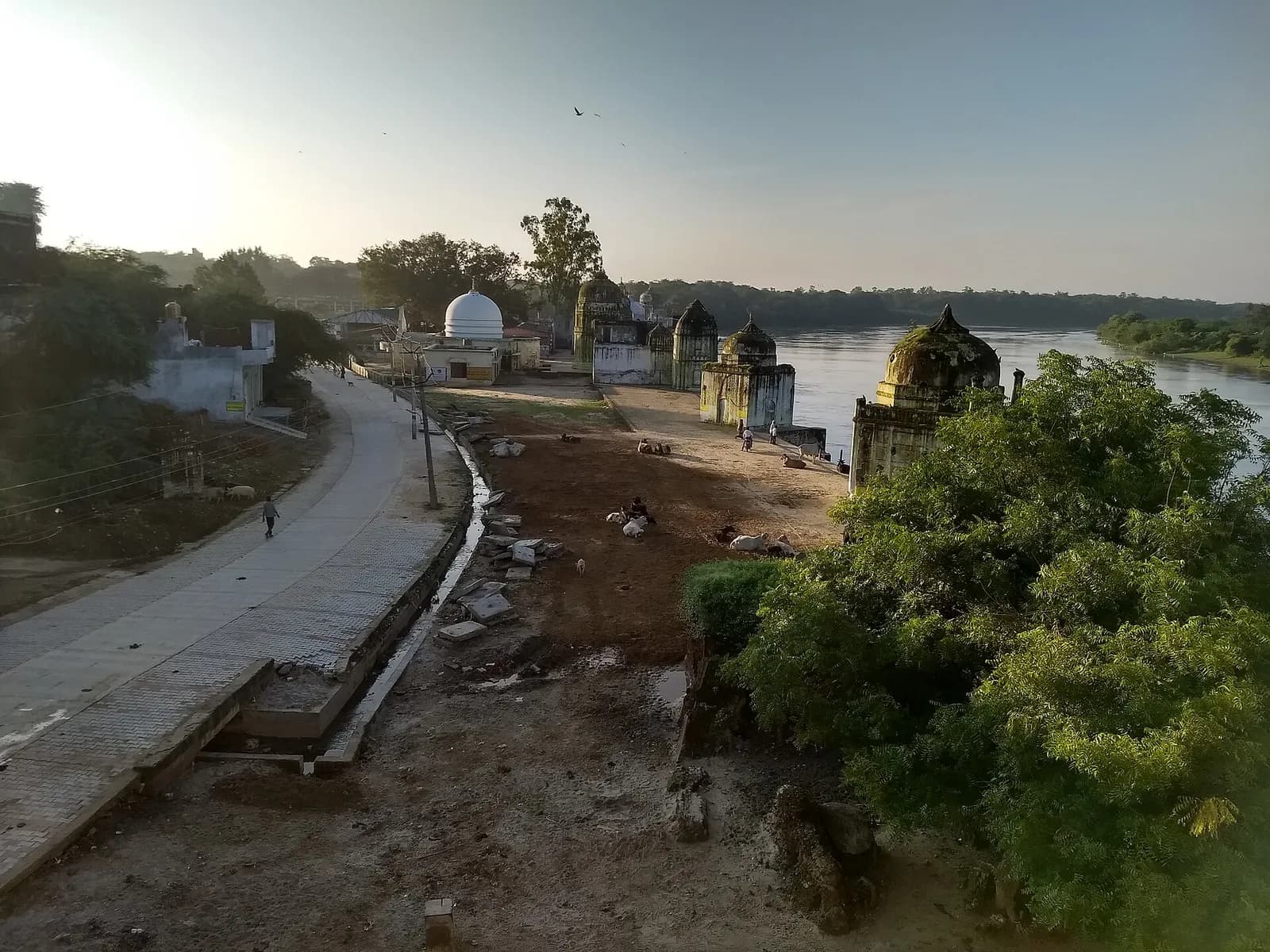
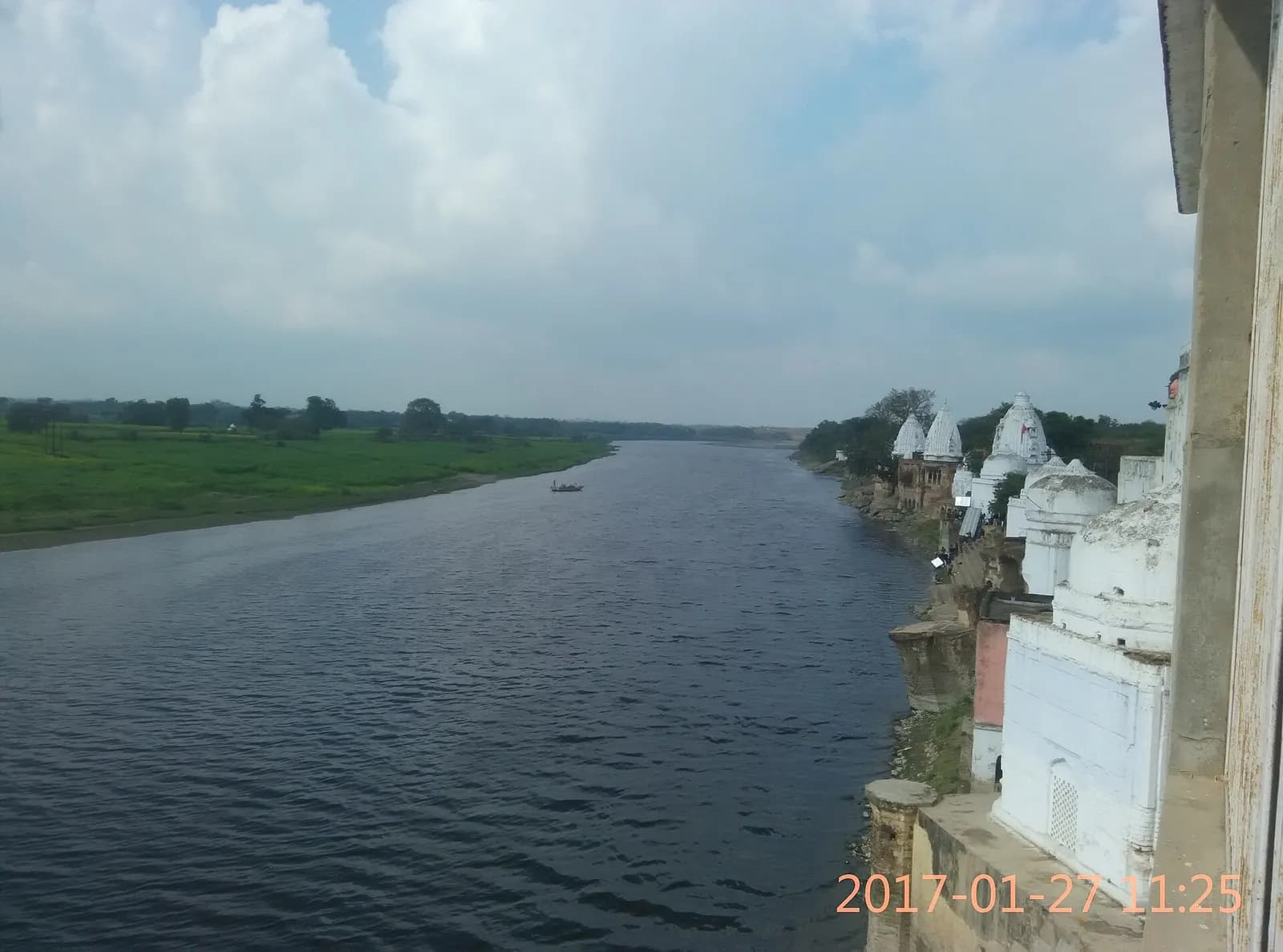
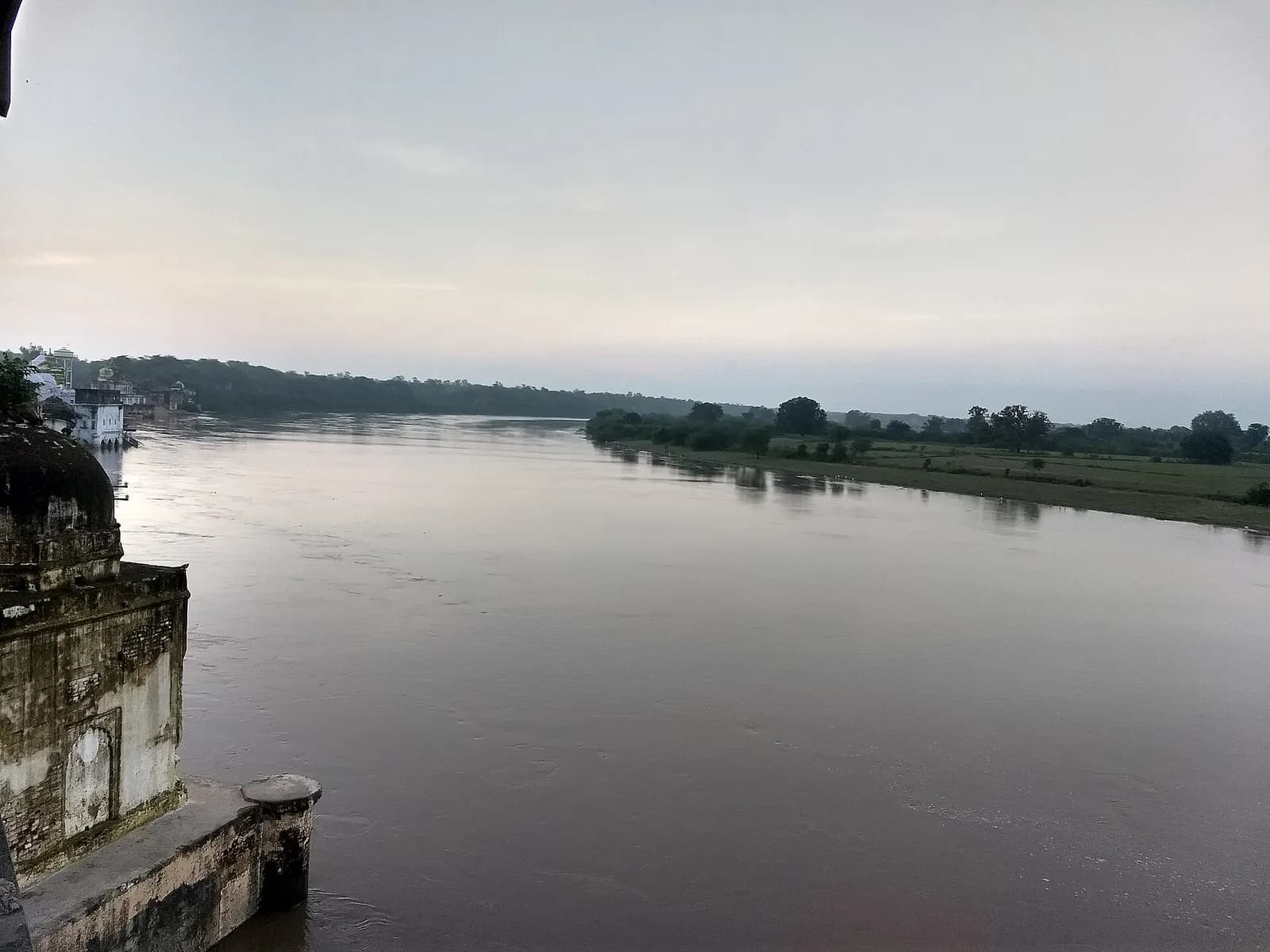
 Bateshwar, Agra district, Agra
Bateshwar Temple Agra: Shiva Ghats, Fair and Day Trip Guide
Planning a Bateshwar day trip from Agra? Here is the Yamuna temple town's history, the chain of Shiva shrines, the famous fair, timings and how to reach it.
Quick answer
Bateshwar is a historic temple town 70 kilometres southeast of Agra, on the crescent-shaped banks of the Yamuna, famous for a long chain of white-domed Shiva shrines and a huge winter cattle fair. Dedicated to Bateshwarnath Mahadev, it is a revered Hindu and Jain pilgrimage site and the ancestral village of former Prime Minister Atal Bihari Vajpayee. Temples open from 4 AM, entry is free and it features on our Agra tours, run by a unit of Experience My India.
- #bateshwar
- #agra
- #agra-attractions
- #agra-travel
Bateshwar is one of the most atmospheric places near Agra, a riverside town where more than a hundred shrines once lined the Yamuna in an unbroken row of white domes and where North India's great cattle fair still fills the ghats each winter. It is a proper day trip, away from the tourist trail and our team at Delhi Agra Tour Packages arranges it for travellers who want to see the living, rural heart of the region, easily added to a Golden Triangle tour through Delhi, Agra and Jaipur.
I am Abhay Sharma, a Golden Triangle guide since 2015 and I send curious guests to Bateshwar when they have a spare day and want something real. It gives you a long line of ancient Shiva temples along the river, morning and evening aartis on the ghats, a short hop to the Jain holy town of Shauripur and, if your timing is right, the spectacle of the Bateshwar Fair. This guide covers everything you need, the history, the temples, the fair, the timings and how to reach it. Note that this is the Bateshwar in Agra district, Uttar Pradesh, on the Yamuna, not the Bateshwar group of temples in Morena, Madhya Pradesh.
Bateshwar at a glance
| Detail | Information |
|---|---|
| What it is | A riverside temple town on the Yamuna |
| Main deity | Lord Shiva, as Bateshwarnath Mahadev |
| Famous for | A chain of Shiva shrines and a huge winter fair |
| Distance from Agra | 70 km southeast |
| Open | Daily, from 4 AM to 9 PM |
| Entry | Free |
| Best season | October to March |
| Time needed | A half to full day trip |
Bateshwar temple timings
| Detail | Information |
|---|---|
| Temple opening hours | Daily, 4 AM to 9 PM |
| Inner shrines | Some open 24 hours or by local priests |
| Aartis | Morning and evening on the ghats |
| Time needed | A half to full day |
The Bateshwar temples are open daily from 4 AM to 9 PM, with some individual inner shrines open 24 hours or with access managed by the local priests. The riverside aartis, performed on the ghats in the morning and the evening, are among the most atmospheric moments to be present. Because it is a day trip from Agra, plan your timing for the 2-hour drive each way. These timings are current at the time of writing and can vary by shrine and season, so treat them as a guide.
Entry fee
| Detail | Information |
|---|---|
| General temple access | Free |
| Ghats and aartis | Free |
| Boat rides | Affordable local charge |
Entry to the Bateshwar temples is free for general access and there is no charge to walk the ghats or watch the aartis. Traditional boat rides on the Yamuna are available for an affordable local fare paid directly to the boatmen. This information is current at the time of writing.
How to reach Bateshwar from Agra
| Mode | Details |
|---|---|
| By road | 70 km via the Fatehabad to Bah road, 2 hours |
| By taxi or bus | Private taxi or local bus from Agra |
| By rail | Bateshwar Halt or Agra Cantt and Agra Fort plus a taxi |
| Nearest airport | Kheria Airport, Agra, a 2-hour drive |
What is Bateshwar?
Bateshwar is a historic temple town 70 kilometres southeast of Agra, in Uttar Pradesh, nestled on the crescent-shaped banks of the Yamuna. It is renowned for its chain of ancient white-domed shrines along the river and for its deep spiritual roots in both the Hindu and Jain traditions. The town is dedicated primarily to Lord Shiva, worshipped here as Bateshwarnath Mahadev and its temples run in a long line along the riverfront ghats where the Yamuna briefly curves northward. Add a famous winter fair, a link to a former Prime Minister and a nearby Jain holy town and Bateshwar becomes one of the most rewarding day trips from Agra for travellers who want to go beyond the monuments.
Several things make Bateshwar special and they are worth knowing before you go:
- A chain of riverside Shiva shrines. An almost unbroken row of white-washed temples lines the Yamuna, a striking and unusual sight.
- A great winter fair. The Bateshwar Fair brings one of North India's largest cattle markets and a huge pilgrim gathering to the ghats.
- Hindu and Jain heritage. The town is sacred to Shiva and the nearby Shauripur is a revered Jain pilgrimage site.
- A link to history. Bateshwar is the ancestral village of former Prime Minister Atal Bihari Vajpayee.
- A real rural day trip. At 70 kilometres from Agra, it offers a genuine taste of riverside, small-town India.
History and significance
Bateshwar's story reaches deep into legend and Indian history and it belongs to two great faiths at once. The following draws on local tradition and recorded heritage.
- The name and the deity. The town is dedicated to Lord Shiva as Bateshwarnath Mahadev and the name Bateshwar comes from the local banyan tree, bat in Sanskrit, under which Shiva is said to have rested.
- The chain of temples. Raja Badan Singh Bhadauria originally built 101 temples along the dam and the ghats, of which around 42 major shrines survive today, built in the North Indian Nagara style in sandstone.
- Ancient and epic roots. Bateshwar is mentioned in ancient texts including the Mahabharata, the Ramayana and the Matsya Purana, marking it as a sacred site of great antiquity.
- A Prime Minister's village. It is the ancestral village of former Prime Minister Atal Bihari Vajpayee, whose ashes were immersed at the Bateshwar ghats.
- A Jain holy town nearby. Just 3 kilometres away lies Shauripur, revered as the birthplace of Bhagwan Neminath, the 22nd Tirthankara.
This double heritage is what gives Bateshwar its unusual depth. For Hindus it is a Shiva town of epic antiquity, its row of shrines a rare and beautiful sight on the river; for Jains, the nearby Shauripur is a major pilgrimage centre tied to one of the great Tirthankaras. The connection to Atal Bihari Vajpayee adds a strand of modern history, drawing visitors to the ghats where his ashes were immersed. Few places near Agra weave together so many threads of faith and history in one riverside setting.
The mythology behind the name adds yet another layer. In Sanskrit, bat is the banyan tree and the story that Lord Shiva rested beneath a banyan here gives the town both its name and its identity as Bateshwarnath, the lord of the banyan. That the place should then be named across the Mahabharata, the Ramayana and the Matsya Purana speaks to how long this bend of the Yamuna has been held sacred, long before any of the surviving stone was carved. The temples you see today, raised by Raja Badan Singh Bhadauria, are therefore only the most recent chapter in a story that local tradition traces back through the ages. For a visitor, knowing this transforms the row of white shrines from a pretty sight into something far more resonant, a place where living worship, epic legend and recorded history all meet at the water's edge. It is this sense of continuity, of a sacred site used without a break across the centuries, that gives Bateshwar its quiet power.
The chain of Shiva shrines
The defining sight of Bateshwar is its temple complex, an uninterrupted linear row of white-washed Shiva shrines lining the Yamuna at the point where the river briefly curves northward. Built in the North Indian Nagara style in sandstone, the temples rise along the riverfront ghats in a long procession of domes and spires, their whitewash gleaming against the water. Raja Badan Singh Bhadauria is credited with building 101 temples along the dam and the ghats and although time has reduced them, around 42 major shrines survive today, still a remarkable concentration. Walking the ghats past shrine after shrine, with the river on one side and the temples on the other, is the heart of the Bateshwar experience and it is quite unlike the single grand monuments that define Agra. The setting, where the Yamuna bends and the domes reflect in the water at dawn, is genuinely beautiful and it rewards an unhurried visit on foot.
The Nagara style of the temples is worth noticing as you walk. This classic North Indian temple form, with its curving spire rising over the sanctum, gives each shrine its characteristic silhouette and seeing so many of them in a row, in warm sandstone under coats of whitewash, is a rare pleasure. Each temple is modest in size, but their number and their alignment along the river create an effect that no single building could, a rhythm of domes and spires marching along the ghats. Many of the shrines house a Shiva linga and remain in active worship, so you will find priests, offerings and the small daily rituals of a living temple rather than an empty monument. The best way to take it all in is from the water, on one of the local boats, from which the full sweep of the temple line reveals itself against the sky, especially when the early or late sun turns the whitewash golden.
Key attractions in Bateshwar
Bateshwar is a place to explore slowly, on foot and by boat and these are its main draws.
- The Bateshwar temple complex. The uninterrupted row of white-washed Shiva shrines along the Yamuna, the town's signature sight, best seen in the soft light of morning or evening.
- The Sri Digamber Jain temple at Shauripur. An ancient and serene Jain pilgrimage centre 3 kilometres away, with finely carved sculptures and deep ties to Lord Neminath.
- Vankhandeshwar Mahadev and local shrines. Smaller historic temples scattered along the slopes and foothills, including Seth Sethani Mandir and Trimurti Dham.
- The Yamuna ghats and boat rides. Peaceful riverside steps where the traditional morning and evening aartis take place, with affordable local boat rides on the river.
Between these, the pleasure of Bateshwar is simply being by the river. A boat ride at dawn, the sound of an aarti drifting across the water, the long line of domes catching the light, this is the atmosphere people come for and it is a world away from the crowds of the famous monuments.
Shauripur and the Jain heritage
Just 3 kilometres from Bateshwar lies Shauripur, one of the most revered Jain pilgrimage sites in the region and it makes a natural pairing with a visit to the Shiva temples. Shauripur is honoured as the birthplace of Bhagwan Neminath, the 22nd Tirthankara, marking both his Garbha and Janma Kalyanaka, the sacred events of his conception and birth. The Sri Digamber Jain temple here is ancient and serene, with finely carved sculptures and a deep, quiet atmosphere of devotion. For Jain pilgrims it is a major destination in its own right and for other visitors it adds a fascinating second dimension to a Bateshwar day, showing how this stretch of the Yamuna has been holy ground for more than one faith across the centuries. The short distance between the two means you can comfortably see both in a single trip and together they tell a richer story than either would alone.
The Bateshwar Fair
If you can time your visit to it, the Bateshwar Fair, the Mela Shri Bateshwar Nath Ji, is an unforgettable spectacle. Held around Kartik Purnima in October or November, it is a massive annual winter gathering that transforms the quiet riverside town. The fair is famous for hosting one of North India's largest livestock markets, second only to one other, where traders gather to buy and sell cattle, horses and camels in huge numbers. Alongside the animal market, the fair brings ritual bathing in the Yamuna, folk performances and a bustling bazaar of stalls, food and entertainment, with pilgrims and visitors arriving from across the region. It is a vivid, crowded, deeply traditional event, the kind of rural Indian fair that has all but vanished elsewhere. The other great occasion is Maha Shivaratri, celebrated in February or March with special Rudrabhishek rituals and large gatherings of pilgrims at the Shiva shrines. If a fair is not your aim, these are times to expect heavy crowds and higher prices; if it is, they are the most atmospheric and memorable times of all to come.
Timings and entry
Bateshwar is free and easy to visit, with the main planning point being the journey. The temples are open daily from 4 AM to 9 PM and some individual inner shrines stay open 24 hours or are opened by the local priests, so there is almost always access to the main sites. Entry is free for general temple access and the ghats and aartis are open to all at no charge. Traditional boat rides on the Yamuna are available for an affordable local fare. Because Bateshwar is 70 kilometres from Agra, the practical constraint is the 2-hour drive each way, so an early start makes for a far more relaxed day. These details are current at the time of writing and can vary by shrine and by season, especially around the fair.
Where to stay and eat
Most visitors see Bateshwar as a day trip from Agra and for good reason, because local accommodation is limited. The options are modest, chiefly the Rahi Tourist Bungalow, Jain dharamshalas near Shauripur for pilgrims or basic lodges in the nearby town of Bah, 10 to 12 kilometres away. For a comfortable bed and a wide choice of hotels and food, Agra is the sensible base, with Bateshwar visited as an excursion. For food on the spot, simple vegetarian eateries and tea stalls operate near the ghats and the area is locally famous for its fresh roadside pakauris, which are worth trying. Carry your own drinking water for the day and do not expect fine dining, because the pleasure here is the setting and the simplicity rather than the amenities. If you are visiting during the fair, many more temporary food stalls appear, adding to the atmosphere. A practical tip is to eat a proper breakfast before leaving Agra and to carry some snacks, so that the simple fare at Bateshwar is a pleasure rather than a necessity and you can time your meals around the aartis and the drive rather than around hunger.
Dress code and visitor rules
Bateshwar is a cluster of active Hindu and Jain temples, so a little respect and preparation go a long way. Keep these points in mind:
- Dress modestly. Wear modest, conservative attire that covers the shoulders and knees, as these are active places of worship for both Hindus and Jains.
- Easy footwear. You must remove your shoes outside individual temple compounds and while walking on the stone ghats, so slip-on footwear is the most practical choice.
- Carry essentials. Bring drinking water and sun protection and a change of clothes if you plan to take a ritual dip in the Yamuna.
- Respect the rituals. The aartis and the river bathing are acts of devotion, so observe them quietly and follow the lead of local priests and pilgrims.
- Plan for limited facilities. This is a rural riverside town, so come self-sufficient and do not expect polished tourist infrastructure.
What to expect at Bateshwar
Expect a peaceful, rural, deeply traditional riverside town rather than a polished tourist destination. You drive out from Agra through the countryside, arrive at the Yamuna and walk a long line of white-domed Shiva shrines along the ghats, with the river curving past and boats drifting on the water. The atmosphere is devotional and unhurried, with priests tending the temples, pilgrims bathing in the river and the sound of aartis rising at dawn and dusk. Facilities are simple, the crowds are local rather than touristy and outside the fair it is wonderfully quiet. This is a place for travellers who enjoy atmosphere, faith and rural life over comfort and convenience. If that is you, Bateshwar is a rare and memorable experience, one of the most authentic things you can do near Agra. If you need polish and ease, it may feel basic, so come with the right expectations and you will love it.
It helps to picture the rhythm of a visit. In the cool of the morning the ghats come alive with the first aarti, pilgrims bathing, priests opening the shrines and boatmen offering rides on the still water. By the middle of the day the light is harsh and the town quiet, a good time for a simple lunch and the short trip to Shauripur. As the afternoon softens, the riverside fills again for the evening aarti, when lamps are floated on the Yamuna and the domes glow in the last light. Outside the fair season you may share the ghats with only a handful of local worshippers, which is part of the charm. During the fair, by contrast, the whole scene swells into a sea of people, animals and colour. Either way, Bateshwar rewards those who slow its pace rather than treating it as a box to tick.
Best time to visit Bateshwar
The best season is October to March, when the weather is cool and pleasant for walking the ghats and exploring the temples. Within that window, visiting in November often lets you witness the grand Bateshwar Fair around Kartik Purnima, which is the most spectacular time to come, though also the busiest. Maha Shivaratri in February or March is another great occasion, drawing large gatherings of pilgrims. For a quiet, contemplative visit, an ordinary cool-season weekday is ideal, with the dawn and dusk aartis as the atmospheric highlights. The summer months are hot and best avoided for a long day out of the city. Our wider notes on the best time to visit Agra apply to the region as a whole and for more day-trip ideas see our guide to tourist places near Agra.
How to reach Bateshwar from Agra
Bateshwar lies 70 kilometres southeast of Agra and the usual way to reach it is by road. You can hire a private taxi or take a local bus from Agra via Fatehabad to Bah road, a journey of 2 hours. By rail, the small Bateshwar Halt Railway Station connects locally, but most travellers arrive at Agra Cantt or Agra Fort railway stations and take a road taxi from there. The nearest airport is Kheria Airport in Agra, a 2-hour drive away. For arrivals into Agra itself, our guide on how to reach the Taj Mahal and the city covers the main options. A private car with a driver is by far the most comfortable way to do Bateshwar, because it gives you the flexibility to stop at Shauripur and the ghats at your own pace and travellers often build it into an Agra overnight tour from Delhi or a same day Agra tour from Delhi with an extra day added.
Bateshwar as a day trip from Agra
Bateshwar works best as a dedicated day trip rather than a quick stop, because of the distance involved. The ideal plan is an early start from Agra, the 2-hour drive out through the countryside, a morning on the ghats among the Shiva shrines with the dawn aarti, a short hop to Shauripur for the Jain temple and a simple riverside lunch of local pakauris before the drive back. With a private car you can shape the day around the light and the aartis, which is when Bateshwar is at its most beautiful. It pairs naturally with the other sights of the Bah region for travellers with more time and it makes a wonderful contrast to a city full of grand monuments. Because so few foreign visitors ever reach it, a day at Bateshwar feels like a genuine discovery rather than a stop on a well-worn trail, which is exactly its appeal. If your trip coincides with the November fair, give it a full day, because the spectacle deserves it. For the headline Agra sights to balance it, the Taj Mahal, the Agra Fort, the riverside Itimad-ud-Daulah, the garden of Mehtab Bagh and, on the Jaipur road, Fatehpur Sikri remain the essentials and our overview of the city at the Agra travel guide and the list of things to do in Agra and other Agra places of interest will help you plan the rest.
Visiting tips
A few notes to make your day at Bateshwar smooth:
- Start early. The 2-hour drive each way means a dawn start gives you the best light and the morning aarti.
- Hire a car and driver. It is far more comfortable than the bus and lets you add Shauripur at your own pace.
- Wear slip-on shoes. You will be removing footwear often at the temples and on the ghats.
- Carry water and sun protection. Facilities are basic, so come prepared for a rural day out.
- Pack a change of clothes. Useful if you plan a ritual dip in the Yamuna.
- Time it for the fair. If you can, visit in November for the Bateshwar Fair, but expect big crowds.
Plan your trip with us
If you would like to see the river town of a hundred shrines, with time for the ghats, the aartis and the Jain temples of Shauripur, let us arrange the day. A Bateshwar excursion needs a comfortable car, an early start and a driver who knows the Bah road, all of which we handle so you can simply enjoy it. Our Delhi Agra tours cover the Taj Mahal, the Agra Fort and excursions beyond the city and travellers short on time often choose a full Golden Triangle tour through Delhi, Agra and Jaipur or an early start with our sunrise Taj Mahal tour before heading out. To plan dates, inclusions and a route that gives Bateshwar its due, message Abhay and the team directly on WhatsApp at +91 7302265809 or reach our team online and we will build an Agra trip that pairs the great monuments with the quiet magic of the river.
Related guides
Keep reading before you travel, these pair well with this guide:
Enquire Now
What our travellers say
“Our Golden Triangle honeymoon was flawless. Sunrise at the Taj with a private guide felt like a dream — every detail was handled.”
“As a first-time visitor to India, I felt completely safe and looked after. The driver and guide were superb professionals.”
“Travelling with two kids is hard, but they made it effortless. Great pacing, clean cars and zero surprises on price.”
“Booked the Agra day trip on short notice and it went off without a hitch. The guide's history knowledge made the Taj come alive.”
“Best decision of our India trip. Car was spotless, driver was punctual every single day, and the itinerary never felt rushed.”
“Organised a same-day Agra trip for my parents. Communication before and during the trip was excellent — genuinely stress-free.”
“Sunrise at the Taj Mahal was magical. Our guide spoke great English and answered every question with patience.”
“Three generations travelling together and everyone was comfortable — good vehicle, sensible stops, and no hidden costs.”
“I've used a few tour operators across Asia and this was among the smoothest. Fair pricing and they actually answer the phone.”
“Our custom Rajasthan-Agra combo was planned around our budget without cutting corners on comfort. Highly recommend.”
“Solo female traveller here — I felt safe throughout. The driver was respectful and the whole trip was timed perfectly.”
Ready to Explore
The Magic of Agra?
Experience the Taj Mahal at sunrise, explore the mighty Agra Fort, and discover the hidden gems of India's most beloved heritage city with our expert-guided premium tours.

Agra
Premium Tour Package
Questions
Frequently asked questions
Where is Bateshwar and what is it famous for?
Bateshwar is a historic temple town 70 kilometres southeast of Agra, in Uttar Pradesh, on the banks of the Yamuna. It is famous for a long chain of white-domed Shiva shrines along the river, a huge winter cattle fair and its heritage as a sacred Hindu and Jain site and the ancestral village of former Prime Minister Atal Bihari Vajpayee.
How far is Bateshwar from Agra?
Who built the Bateshwar temples?
How many temples are there in Bateshwar?
What are the Bateshwar temple timings?
Is the Bateshwar temple in Agra or Madhya Pradesh?
What is the Bateshwar Fair?
What is Shauripur near Bateshwar?
Is there an entry fee at Bateshwar?
Is Bateshwar worth visiting?
Explore more
Plan your Bateshwar trip with us

Interested in Bateshwar Temple Agra: Shiva Ghats, Fair and Day Trip Guide?
Chat with our travel team for a custom quote, or browse every package.
Related Attractions
9Bateshwar Temple Agra on the map
Open in Google MapsReady to explore Bateshwar Temple Agra: Shiva Ghats, Fair and Day Trip Guide?
Book your private tour today and experience the magic of India's rich heritage.