
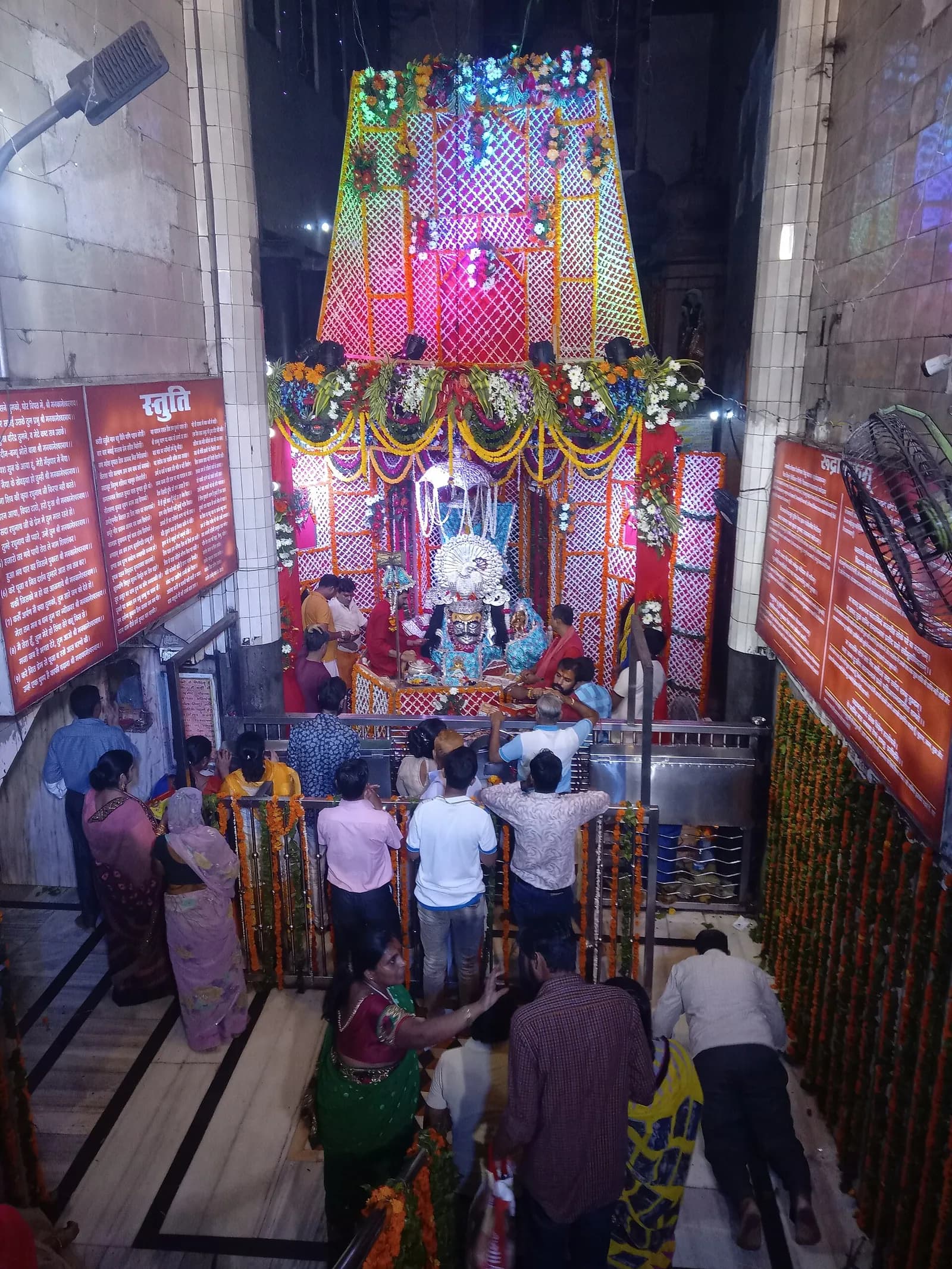
 Old city, near Agra Fort, Agra
Mankameshwar Mandir Agra: Timings, Aarti and Darshan Guide
Visiting Mankameshwar Mandir in Rawatpara, Agra? Here are the darshan and aarti timings, history, dress code, metro access and how to reach this Shiva temple.
Quick answer
Shri Mankameshwar Mandir is one of Agra's oldest and most revered temples of Lord Shiva, in the historic Rawatpara market near the Agra Fort. Its name means the Lord who fulfils heartfelt wishes and its underground sanctum holds a silver-clad Shivalinga. The temple opens from 5 AM with a midday break, entry is free and it features on our Agra tours, run by a unit of Experience My India.
- #mankameshwar-mandir
- #agra
- #agra-attractions
- #agra-travel
Mankameshwar Mandir is the spiritual heart of old Agra, a temple whose name promises the fulfilment of a devotee's deepest wishes, tucked into the narrow, bustling lanes of the Rawatpara market beside the Agra Fort. For the people of Agra it is a daily place of worship and for a traveller it offers a glimpse of the city's living faith. Our team at Delhi Agra Tour Packages often weaves it into an old-city walk and it sits easily within a wider Golden Triangle tour through Delhi, Agra and Jaipur.
I am Abhay Sharma, a Golden Triangle guide since 2015 and I always point interested guests toward this temple, because it shows an Agra the monuments do not. Mankameshwar Mandir gives you a 5,000-year legend, a descending underground sanctum with a silver-covered Shivalinga, eleven eternal flames and a brand-new silver door, all in the heart of the spice bazaar. This guide covers everything you need before a visit, the darshan and aarti timings, the history, the dress code, the festivals and how to reach it.
Mankameshwar Mandir at a glance
| Detail | Information |
|---|---|
| What it is | One of Agra's oldest Shiva temples |
| Name means | The Lord who fulfils heartfelt wishes |
| Famous for | Swayambhu Shivalinga in an underground sanctum |
| Location | Rawatpara market, near Agra Fort |
| Open | Daily, from 5 AM, with a midday break |
| Entry | Free for all |
| Nearest metro | Mankameshwar Metro Station, Yellow Line |
| Time needed | 45 minutes to 1 hour |
Mankameshwar Mandir timings
| Session or ritual | Timing |
|---|---|
| Morning session | 5 AM to 12 PM |
| Opens earlier in summer, later in winter | 4:40 AM in summer, 5:30 AM in winter |
| Mangala and Abhishek Aarti | 5 AM to 6:30 AM |
| Shringar and Rajbhog Darshan | 8:30 AM to 12 PM |
| Evening session | 4 PM to 10 PM, until 11 PM on Mondays |
| Sandhya (evening) Aarti | 6:45 PM to 7 PM |
The temple is open daily with a midday break between the morning and evening sessions and entry is completely free. The morning session runs from 5 AM to 12 PM, opening earlier at 4:40 AM in summer and a little later at 5:30 AM in winter, while the evening session runs from 4 PM to 10 PM, staying open until 11 PM on Mondays. The aartis are the highlights of the day, from the early Mangala Aarti to the evening Sandhya Aarti. These timings are current at the time of writing and shift slightly with the season and on festival days, so reconfirm before a special visit.
Entry fee
| Visitor | Entry fee |
|---|---|
| All devotees and visitors | Free |
| Darshan | Free |
| Shoe storage (joota ghar) | Free |
Entry to Mankameshwar Mandir is completely free for everyone and there is no charge for darshan. Free shoe storage, the joota ghar and drinking water are available near the entrance. There are no public restrooms inside the complex, so plan accordingly. The temple runs on the devotion and offerings of its community and while you may make a voluntary offering, nothing is required. This information is current at the time of writing.
How to reach Mankameshwar Mandir
| From | Route |
|---|---|
| Address | Daresi Road, Rawatpara, Mantola, Agra |
| Nearest metro | Mankameshwar Metro Station, Yellow Line |
| Nearest railway | Agra Fort Railway Station |
| Main railhead | Agra Cantt |
| Local transport | E-rickshaw or auto to the Daresi Road market entrance |
What is Mankameshwar Mandir?
Shri Mankameshwar Mandir is one of Agra's oldest and most revered Hindu temples, dedicated to Lord Shiva, in the historic Rawatpara market near the Agra Fort. Its name translates to the Lord who fulfils heartfelt wishes, from man-ki-iccha and it draws thousands of devotees seeking spiritual peace and the granting of their deepest desires. Unlike the Mughal monuments that make Agra famous, this is a living temple of great antiquity, its sacred site believed to predate the city's marble wonders by millennia. At its heart lies an underground sanctum with a self-manifested Shivalinga, around which the whole devotional life of old Agra turns.
Several things make Mankameshwar Mandir special and they are worth knowing before you arrive:
- A wish-fulfilling temple. Its very name promises the fulfilment of heartfelt wishes, which is why devotees come with their prayers.
- An ancient, self-manifested linga. The underground sanctum holds a Swayambhu Shivalinga, clad in silver, revered as self-manifested.
- One of Agra's oldest sacred sites. Local tradition traces it back thousands of years, long before the Mughals.
- A living temple in the bazaar. It sits in the heart of the Rawatpara spice market, woven into the daily life of the old city.
- Free and open to all. There is no entry charge and visitors of all backgrounds are welcome for darshan.
Set against the grand, ticketed Mughal monuments that define Agra for most visitors, Mankameshwar offers something altogether different, intimate, free and deeply alive. It is not a site you tour so much as a shrine you enter, joining the flow of local devotion rather than standing apart from it. That is precisely what makes it worth seeking out: in a city where so much of the history is admired from a respectful distance, here you can step right into a tradition that has continued unbroken for as long as Agra has existed. For travellers curious about the real spiritual life of the city, rather than only its imperial past, the temple is one of the most rewarding stops in Agra and its position in the old city places it within easy reach of the great monuments.
History and mythological significance
The story of Mankameshwar Mandir reaches far beyond recorded history into legend and for devotees that sacred antiquity is the whole point. The following accounts are drawn from local tradition and folklore rather than dated records.
- A Dwapara Yuga legend. Local tradition traces the temple's origins back more than 5,000 years, to the age of the Mahabharata.
- Established by Lord Shiva himself. Legend holds that Lord Shiva personally established the Swayambhu or self-manifested, Shivalinga here after visiting Mathura to see the infant Lord Krishna.
- The wish-fulfilling vow. According to folklore, Lord Shiva declared that anyone who worships at this spot with a pure heart will have their deepest desires fulfilled.
- Pre-Mughal heritage. While the present structure saw renovations in the 16th century, the sacred site is believed to predate Agra's Mughal monuments by millennia.
This blend of myth and devotion is what gives the temple its pull. The connection to Krishna's Mathura, just up the road, places Mankameshwar within the sacred geography of the Braj region, while the promise of wishes fulfilled draws a steady stream of devotees through the bazaar lanes every day. You do not come here for dated history in the way you visit a Mughal tomb; you come for a living tradition that the people of Agra have kept alive for as long as anyone can remember.
It is worth understanding why this matters so much to the city. Agra is known worldwide for its Mughal monuments, which belong to a few centuries of imperial history, but temples like Mankameshwar speak to a far older, continuous current of faith that flowed through this land long before the forts and tombs were raised. For many of Agra's residents, the Taj Mahal is a monument they may visit once or twice in a lifetime, while Mankameshwar is a part of their weekly, even daily, lives. That is the distinction a traveller feels most strongly here, between a monument admired and a shrine lived with. The temple's place within the Braj region, the land of Krishna's childhood, only deepens that sense, linking Agra to the great pilgrimage circuit of Mathura, Vrindavan and Gokul that surrounds it. To step into Mankameshwar is to step into that living web of devotion, rather than to look at history behind a rope.
Architecture and deities
Mankameshwar Mandir is a working temple rather than a showpiece of architecture, but it holds several features that reward a closer look.
- The subterranean sanctum. Devotees descend a short flight of stairs to reach the underground inner sanctum, the garbhagriha, which houses the ancient black stone Shivalinga covered in silver metal.
- The eternal flames. The temple maintains eleven eternal flames, the Akhand Jyot, which burn continuously around the clock.
- The Rajat Dwar and the sacred well. Recent additions include a grand, intricately crafted silver entrance door of 100 kilograms, the Rajat Dwar and a rejuvenated historic well consecrated with water drawn from 22 holy rivers across India.
- The surrounding shrines. Alongside Lord Shiva, the complex houses smaller shrines for Goddess Parvati, Lord Ganesha, Hanuman, Ganga, Yamuna, Saraswati, Kaila Devi, Lord Rama, Lord Krishna and Narasimha.
The descent into the underground sanctum is the heart of the experience. Stepping down from the busy bazaar into the quiet, lamp-lit chamber where the silver-clad linga rests, with the eternal flames glowing nearby, is a genuinely moving transition. The gleaming silver Rajat Dwar at the entrance and the well of 22 rivers are newer touches that show how actively the community continues to honour and enrich the temple.
Each of these features carries its own significance for devotees. The eleven eternal flames, kept burning without pause, symbolise the unbroken presence of the divine and their soft light fills the sanctum with a quiet warmth at every hour. The silver cladding on the linga and the hundred-kilogram silver door reflect the deep devotion and generosity of the temple's community, who have adorned the shrine over the years as an act of faith. The well consecrated with water from 22 holy rivers is a particularly striking idea, gathering the sanctity of India's sacred waters into one place in the heart of Agra, so that a devotee need not travel the length of the country to touch them. The many smaller shrines around the main sanctum, from Parvati and Ganesha to Rama, Krishna and Narasimha, turn the complex into a compact gathering of the Hindu pantheon, where a visitor can offer prayers to many deities in a single circuit. Together these elements make a small temple feel surprisingly rich, rewarding those who take the time to look closely rather than hurrying through.
Darshan and aarti timings
Mankameshwar Mandir follows a two-part daily schedule with a midday break, so timing your visit well makes all the difference. The morning session opens at 5 AM, a little earlier at 4:40 AM in the summer and later at 5:30 AM in the winter and runs until 12 PM. Within it, the Mangala and Abhishek Aarti takes place from 5 AM to 6:30 AM, featuring the early morning bathing rituals of Bhang Snan and Panchamrit Abhishek, after which the Shringar and Rajbhog Darshan runs from 8:30 AM to 12 PM, when the deity is adorned with flowers and sandalwood before the midday closure. The temple reopens for the evening session from 4 PM to 10 PM, staying open until 11 PM on Mondays, which are especially sacred to Lord Shiva. The Sandhya or evening, Aarti falls from 6:45 PM to 7 PM, filled with rhythmic bells, conch shells and Vedic chanting and it is one of the most atmospheric moments to be present. For a calm darshan, the early morning is ideal, while the aartis offer the fullest devotional experience.
Dress code and temple rules
As a sacred and actively worshipped temple, Mankameshwar Mandir asks visitors to observe its rules and dress with respect. Keep these points in mind:
- Attire for the inner sanctum. To enter the inner garbhagriha and perform direct Abhishek rituals, traditional Indian attire is mandatory, a dhoti for men and a saree for women.
- General modesty. Visitors in shorts, bermudas, short skirts or revealing western clothing are not permitted on the campus, so dress modestly.
- Leather items restricted. Leather belts, wallets and bags are not allowed inside the inner shrine.
- No photography. Taking photos or selfies is strictly prohibited inside the temple premises, to preserve its spiritual sanctity.
- Facilities. Free shoe storage, the joota ghar and drinking water are available near the entrance, though there are no public restrooms inside the complex.
Major festivals at Mankameshwar Mandir
The temple's calendar comes alive around the festivals of Lord Shiva, when crowds swell and the rituals reach their peak. The holy monsoon month of Shravan or Sawan, is the most important period and every Monday during it sees massive crowds, extended darshan hours and special Shobhayatra processions through the old city. Maha Shivratri is celebrated with night-long vigils, the Jagran, continuous Rudrabhishek ceremonies and elaborate floral decorations, making it the single grandest night of the year here. Nag Panchami and Ganesh Chaturthi are marked by special Panchamrit Abhishek rituals and community feasts, the Bhandara, that feed devotees and visitors alike. If you wish to witness the temple at its most vibrant, time your visit to one of these occasions, but be ready for dense crowds in the narrow bazaar lanes and allow extra time for darshan.
For a traveller, a festival visit is a trade-off worth weighing. On one hand, you see the temple exactly as its devotees cherish it, charged with music, colour, ritual and a sea of worshippers, an experience that can be genuinely unforgettable. On the other hand, the crowds in the tight Rawatpara lanes become intense, queues for darshan grow long and the heat and press can be tiring, particularly during the monsoon Mondays of Sawan. If your main aim is a calm, contemplative darshan and a close look at the sanctum and shrines, an ordinary weekday morning serves you far better. If you want to feel the full devotional energy of the place and do not mind the crowds, a festival is the time to come. Either way, plan your timing deliberately rather than arriving by chance and you will get the visit you are hoping for. Monday is the key day to note in any week, sacred to Lord Shiva and always the busiest, with the evening session extended to 11 PM to accommodate the extra worshippers.
What to expect at Mankameshwar Mandir
Expect a genuine, busy neighbourhood temple rather than a polished tourist site. You reach it on foot through the crowded, colourful lanes of the Rawatpara wholesale market, leave your shoes at the joota ghar and step into a compact complex centred on the underground sanctum. Inside, the atmosphere is devotional and intimate, with the scent of incense and flowers, the glow of the eternal flames, the ring of bells at aarti and a steady flow of local worshippers. It is not large and you can see the main shrine and the surrounding deities in under an hour, but the feeling of the place lingers. Photography is not allowed inside, so this is a visit to experience rather than to document. Come with respect, dress modestly and you will be welcomed into one of the most heartfelt corners of old Agra, a world away from the monument queues just a short distance off.
The journey to the temple is part of the experience and worth preparing for. Rawatpara is one of Agra's busiest wholesale markets, a tight warren of lanes crammed with shops, handcarts, scooters and the colour and noise of everyday commerce. For some visitors this is a highlight in itself, a chance to see the real, working city at close quarters; for others it can feel overwhelming, especially in the heat of the day. Going early helps on both counts, with cooler air and thinner crowds. Keep your belongings secure in the press of the bazaar, move at the pace of the lanes and treat the walk as part of the pilgrimage rather than an obstacle to it. Once you step down into the calm of the sanctum, the contrast with the bustle outside makes the quiet feel all the deeper, which is exactly what generations of devotees have come here to find.
Best time to visit Mankameshwar Mandir
The best season is October to March, when Agra's weather is pleasant for exploring the old city on foot. For a peaceful darshan, arrive on a weekday morning before 8 AM, when the temple is calm and the bazaar is still waking up. Monday evenings are best avoided if you want quiet, because Mondays are especially sacred to Lord Shiva and draw the largest crowds, as do the Sawan Mondays through the monsoon month. The early Mangala Aarti and the evening Sandhya Aarti are the most atmospheric times to be present if you wish to experience the rituals, so choose between a quiet darshan and a full-throated aarti depending on what you are after. Our wider notes on the best time to visit Agra apply here too, since the cooler months suit both the temple and the walk to it.
Within a single day, think of the temple in two moods. The morning, especially before 8 AM on a weekday, is the time for a serene, unhurried darshan, when you can descend to the sanctum, sit a while and take in the shrines without a crowd. The evening, around the Sandhya Aarti, is the time for atmosphere and ritual, when the bells, conch shells and chanting fill the chamber and the day's devotion reaches its height. Both are rewarding in different ways, so if your schedule allows, a weekday dawn visit gives you the calm and an evening aarti gives you the spectacle. What to avoid, if you can, is the crush of a Monday evening or a Sawan Monday, unless the energy of a packed festival crowd is exactly what you are seeking. Planning around these rhythms is the single best thing you can do to shape the visit you want.
How to reach Mankameshwar Mandir and its location
Mankameshwar Mandir is at Daresi Road, in the Rawatpara area of the Mantola neighbourhood, near the Agra Fort. The easiest way to reach it is on the Agra Metro, taking the Yellow Line directly to Mankameshwar Metro Station, which sits a short walk from the market lanes and our guide to the Agra Metro covers the network. By train, Agra Fort Railway Station is the closest railhead, while Agra Cantt is a short auto ride away. Because the temple sits inside the narrow, congested wholesale lanes of Rawatpara, it is best to avoid bringing a private car and instead hire an e-rickshaw or auto-rickshaw to drop you at the Daresi Road market entrance, from where you walk in. The old-city setting is part of the experience, so allow time to make your way through the bazaar. If the temple is one stop on a fuller Agra day, it fits a central and old-city plan and travellers staying over often add it to an Agra overnight tour from Delhi or a same day Agra tour from Delhi.
Places to visit near Mankameshwar Mandir
Mankameshwar Mandir sits in the dense old city near the Agra Fort, so it pairs naturally with the monuments and markets of that quarter. The mighty Agra Fort is close by and the obvious great monument to combine with a temple visit. A short walk away stands the grand Jama Masjid, the imperial mosque opposite the fort and the surrounding lanes hold the famous spice markets of Rawatpara and the glittering Kinari Bazaar, ideal for a taste of old Agra's trade and street food. The city's street-food scene is at its best around here, so our guide to the famous foods of Agra is worth a look. When you are ready for the headline sights, the Taj Mahal, the eastern-bank Itimad-ud-Daulah, the garden of Mehtab Bagh and, further afield, Fatehpur Sikri complete the picture.
Visiting tips
A few notes to make your visit smooth and respectful:
- Go early on a weekday. Arrive before 8 AM for the calmest darshan and the quietest bazaar.
- Dress modestly. Avoid shorts and revealing clothing and carry a dhoti or saree if you wish to enter the inner sanctum.
- Leave the camera away. Photography is banned inside, so keep your phone pocketed.
- Travel light. Leather bags and wallets are restricted in the inner shrine and shoes go to the joota ghar.
- Skip the car. Take an e-rickshaw or auto to the Daresi Road entrance and walk in through the lanes.
- Mind Monday crowds. Mondays, especially in Sawan, are busiest, so plan around them for a quieter visit.
Mankameshwar Mandir in your Agra itinerary
Mankameshwar Mandir fits an Agra itinerary as a meaningful early-morning or old-city stop that balances the grandeur of the monuments with the city's living faith. Because it sits in Rawatpara beside the Agra Fort, the natural way to use it is as part of an old-city walk, pairing the temple with the fort, the Jama Masjid and the spice bazaars, ideally in the cool of the morning. For travellers interested in temples, local life and the texture of old Agra, it is a highlight rather than a detour and a quiet pre-breakfast darshan here is a lovely way to begin a day that later turns to the Taj Mahal. Our Agra travel guide helps you weave it into a trip that sees the city's spiritual and everyday side alongside its Mughal splendour.
Plan your trip with us
If you would like to experience old Agra properly, with a dawn darshan at Mankameshwar, a walk through the Rawatpara bazaars and the great monuments at the right hours, let us arrange the day. Our Delhi Agra tours cover the Taj Mahal, the Agra Fort and the city's living heritage and travellers short on time often choose a full Golden Triangle tour through Delhi, Agra and Jaipur or an early start with our sunrise Taj Mahal tour. To plan dates, inclusions and a route that gives the old city its due, message Abhay and the team directly on WhatsApp at +91 7302265809 or reach our team online and we will shape an Agra journey that honours both its monuments and its faith.
Related guides
Keep reading before you travel, these pair well with this guide:
Enquire Now
What our travellers say
“Our Golden Triangle honeymoon was flawless. Sunrise at the Taj with a private guide felt like a dream — every detail was handled.”
“As a first-time visitor to India, I felt completely safe and looked after. The driver and guide were superb professionals.”
“Travelling with two kids is hard, but they made it effortless. Great pacing, clean cars and zero surprises on price.”
“Booked the Agra day trip on short notice and it went off without a hitch. The guide's history knowledge made the Taj come alive.”
“Best decision of our India trip. Car was spotless, driver was punctual every single day, and the itinerary never felt rushed.”
“Organised a same-day Agra trip for my parents. Communication before and during the trip was excellent — genuinely stress-free.”
“Sunrise at the Taj Mahal was magical. Our guide spoke great English and answered every question with patience.”
“Three generations travelling together and everyone was comfortable — good vehicle, sensible stops, and no hidden costs.”
“I've used a few tour operators across Asia and this was among the smoothest. Fair pricing and they actually answer the phone.”
“Our custom Rajasthan-Agra combo was planned around our budget without cutting corners on comfort. Highly recommend.”
“Solo female traveller here — I felt safe throughout. The driver was respectful and the whole trip was timed perfectly.”
Ready to Explore
The Magic of Agra?
Experience the Taj Mahal at sunrise, explore the mighty Agra Fort, and discover the hidden gems of India's most beloved heritage city with our expert-guided premium tours.

Agra
Premium Tour Package
Questions
Frequently asked questions
What is Mankameshwar Mandir famous for?
Mankameshwar Mandir is one of Agra's oldest and most revered temples of Lord Shiva, famous for fulfilling the heartfelt wishes of devotees, which its very name means. Its underground sanctum holds a silver-clad, self-manifested Shivalinga and it maintains eleven eternal flames and a grand silver entrance door.
What are the Mankameshwar Mandir timings?
What are the aarti timings at Mankameshwar Mandir?
How old is Mankameshwar Mandir in Agra?
Is there an entry fee at Mankameshwar Mandir?
What is the dress code at Mankameshwar Mandir?
What is the nearest metro station to Mankameshwar Mandir?
Can I take photos inside Mankameshwar Mandir?
When is the best time to visit Mankameshwar Mandir?
How do I combine Mankameshwar Mandir with other Agra sights?
Explore more
Plan your Mankameshwar Mandir trip with us
Interested in Mankameshwar Mandir Agra: Timings, Aarti and Darshan Guide?
Chat with our travel team for a custom quote, or browse every package.
Related Attractions
9Mankameshwar Mandir Agra on the map
Open in Google MapsReady to explore Mankameshwar Mandir Agra: Timings, Aarti and Darshan Guide?
Book your private tour today and experience the magic of India's rich heritage.