Jama Masjid Delhi: Timings, Entry, History and Complete Visitor Guide
Planning a Jama Masjid visit? Free entry, timings and prayer closures, the camera fee, the minaret climb, dress code, metro route and the food outside Gate 1.
In a Nutshell
“Jama Masjid in Old Delhi is open to visitors all week, roughly 7:00 AM to 12:00 PM and about 1:30 PM to 6:30 PM, closed to tourists during prayers. Entry is free, though a photography fee of around ₹300 applies if you carry a camera or phone and climbing the south minaret costs a little extra. Dress modestly and remove your shoes. Delhi Agra Tour Packages, a unit of Experience My India, pairs it with the Red Fort and the food lanes nearby.”
Jama Masjid is the beating heart of Old Delhi, the great Friday mosque that Shah Jahan raised as the crowning monument of his new capital. Stand in its vast red sandstone courtyard, with the Red Fort visible beyond the walls and the food lanes rumbling below and you feel the Mughal city more vividly than almost anywhere else. It is an active place of worship first and a monument second and that living quality is exactly what makes it unforgettable. If you are planning a trip, Delhi Agra Tour Packages is where I set the city's sights in a sensible order and Jama Masjid always comes paired with the fort and the food of Old Delhi. It is a natural stop on our Golden Triangle tour routes, where it sets up the Mughal story you follow south to Agra.
I am Abhay Sharma, Delhi born and a Golden Triangle guide since 2015. Over 11 years I have walked more than 50,000 travellers through this city and Jama Masjid is a place where knowing the small practicalities makes all the difference. Visitors get caught out by the prayer closures, surprised by the camera fee, unsure about the dress code and they often miss the legendary food lane right outside the gate. This guide fixes all of that. You will get the real timings and when tourists are not allowed, the honest picture of the fees, the dress code and the rules, a walk through the mosque and the minaret climb and the Old Delhi food that should be part of any visit. Fees and timings shift a little, so treat them as a guide and reconfirm.
Jama Masjid at a glance
Here are the essentials before we go deeper.
| Detail | Information |
|---|---|
| Official name | Masjid-i Jahan-Numa, known as Jama Masjid |
| Location | Jama Masjid Road, Chandni Chowk, Old Delhi 110006 |
| Built by | Mughal Emperor Shah Jahan |
| Built | 1650 to 1656 |
| Materials | Red sandstone and white marble |
| Courtyard capacity | Up to about 25,000 worshippers |
| Entry fee | Free, with a photography fee if you carry a camera |
| Time needed | About 1 hour, more with the minaret and food |
| Best time | October to March, early morning |
Details
Jama Masjid timings
| Session | Timings |
|---|---|
| Morning | About 7:00 AM to 12:00 PM |
| Afternoon and evening | About 1:30 PM to 6:30 PM |
| Open days | All seven days a week |
| Note | Tourists are not admitted during prayer times, confirm locally |
Details
Fees (approximate, reconfirm at the gate)
| Item | Fee |
|---|---|
| General entry to the courtyard | Free |
| Photography fee (camera or phone) | Around ₹300, enforced if you carry a camera |
| South minaret climb | Around ₹100 for Indians, more for foreign visitors |
| Robe and shoe handling | Small charges or tips, robe often free |
Details
How to reach
| Mode | Detail |
|---|---|
| Nearest metro | Jama Masjid station (Violet Line), Gate 1 or Gate 2, a 3 to 5 minute walk |
| Alternative metro | Chawri Bazar (Yellow Line), about 10 to 15 minutes by foot or rickshaw |
| By road | Chandni Chowk, Old Delhi, very congested |
| Parking | Park at Asaf Ali Road or near Chandni Chowk metro, then take a rickshaw |
What is Jama Masjid and why is it so famous?
Jama Masjid is the principal congregational mosque of Old Delhi and one of the largest mosques in India. Its formal name, Masjid-i Jahan-Numa, roughly translates as the mosque that commands a view of the world, which fits both its lofty position on a raised plinth and its ambition. It is famous as a towering masterpiece of Mughal architecture, as the last great monument built by Shah Jahan, the emperor behind the Taj Mahal and as a living, active place of worship whose vast courtyard can hold tens of thousands of people at prayer.
For a traveller, the mosque works on two levels. It is a magnificent building to admire, all red sandstone and white marble, soaring domes and minarets and it is an atmosphere to absorb, the hush of the courtyard above the roar of the markets below. Sitting a short walk from the Red Fort, it completes the Mughal heart of the city and it belongs on any serious list of things to do in Delhi. Few places give you the feel of old Shahjahanabad so completely.
Who built Jama Masjid and when?
Jama Masjid was commissioned by Shah Jahan, the fifth Mughal emperor, the same visionary ruler who built the Taj Mahal and the Red Fort. Construction ran from 1650 to 1656 and the mosque was inaugurated in 1656 by its first imam, drawn from the Bukhari line that has led the mosque ever since. The design is credited to the architect Ustad Khalil, with the emperor's ministers supervising the work and thousands of labourers worked for years to raise it.
The mosque was conceived as the religious centrepiece of Shahjahanabad, Shah Jahan's grand new walled capital, now Old Delhi, laid out around the Red Fort and the great market street of Chandni Chowk. It was among the last major monuments of his reign and in scale and confidence it represents Mughal architecture at its height. Understanding that the mosque, the fort and the market were conceived together as one imperial city is the key to appreciating it and it is why seeing the Mughal sites of Delhi before the Taj Mahal and Agra Fort makes the whole trip read as one connected story.
What role has Jama Masjid played in Delhi's history?
Beyond its beauty, Jama Masjid has stood at the centre of Delhi's story for more than three and a half centuries. As the principal mosque of Shahjahanabad, it was the religious heart of the Mughal capital, where emperors prayed and the city gathered. Its most dramatic chapter came with the uprising of 1857, when Old Delhi rallied around the last Mughal emperor, Bahadur Shah Zafar. After the British recaptured the city, the mosque was seized and occupied by troops and for a time its very future hung in the balance, before it was eventually returned to the community.
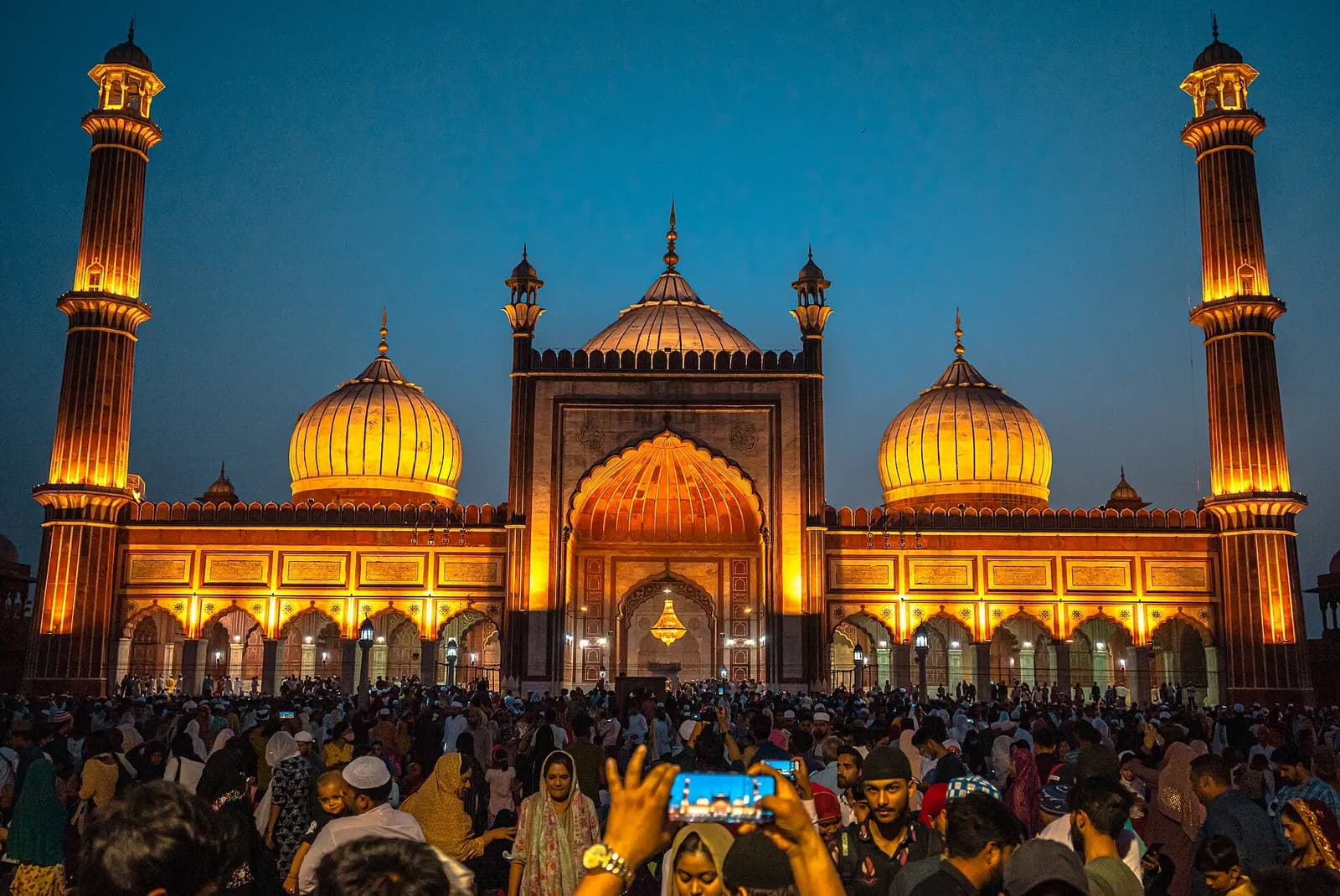
Through all of it, the mosque has remained a living institution, led since its foundation by the Bukhari line of Shahi Imams, whose first imam Shah Jahan himself appointed. Today it is still the great gathering place for the city's Muslims, never more so than at the two Eid festivals, when tens of thousands fill the courtyard in a sight that has changed little in centuries. Standing in that same courtyard on an ordinary morning, with the weight of this history around you, is a large part of what makes a visit here so moving. It is this combination, a masterpiece of architecture that is also a working heart of the community, that sets Jama Masjid apart from the city's purely historical sites.
What are the Jama Masjid timings and when are tourists not allowed?
Jama Masjid is open every day of the week and tourists can generally visit in two windows, roughly 7:00 AM to 12:00 PM in the morning and about 1:30 PM to 6:30 PM in the afternoon and evening. The gap in the middle and other short periods through the day, are for prayers and tourists are not admitted to the main complex during prayer times. This is the single most common thing visitors get wrong, turning up during a prayer and being turned away, so plan around it.
Fridays need extra care, since the mosque is busiest for the main weekly congregation around midday and non worshipping visitors are kept out during that period. If you want a calm visit, the early morning window just after opening is by far the best, quiet, cool and beautifully lit. The south minaret, if you plan to climb it, generally keeps its own daytime hours, roughly 9:00 AM to 5:30 PM. Because these timings shift with prayer schedules and the season, treat them as a guide and confirm on the day, especially if you are visiting on a Friday or during a religious festival.
Is there an entry fee for Jama Masjid?
General entry to the mosque and its courtyard is completely free, for everyone. There is no ticket to walk in and experience the space. Where the charges come in and where visitors are often surprised, is with the extras. The most enforced is the photography fee, around ₹300, which is charged if you carry a camera, smartphone or video equipment in with you and in practice it is applied to the device rather than to actual photos taken, so you may be asked to pay simply for carrying a phone. The fee and how strictly it is applied can vary with the attendant on duty.
Beyond that, climbing the south minaret costs a separate ticket, roughly ₹100 for Indian visitors and more for foreign nationals and there may be small charges for a modesty robe if you need one and for shoe handling at the gate. My practical advice is to carry a small amount of cash in low notes for these extras, since hunting for change at the gate is a nuisance. None of it is expensive, but knowing the camera fee exists before you arrive saves both surprise and argument.
What can you see at Jama Masjid?
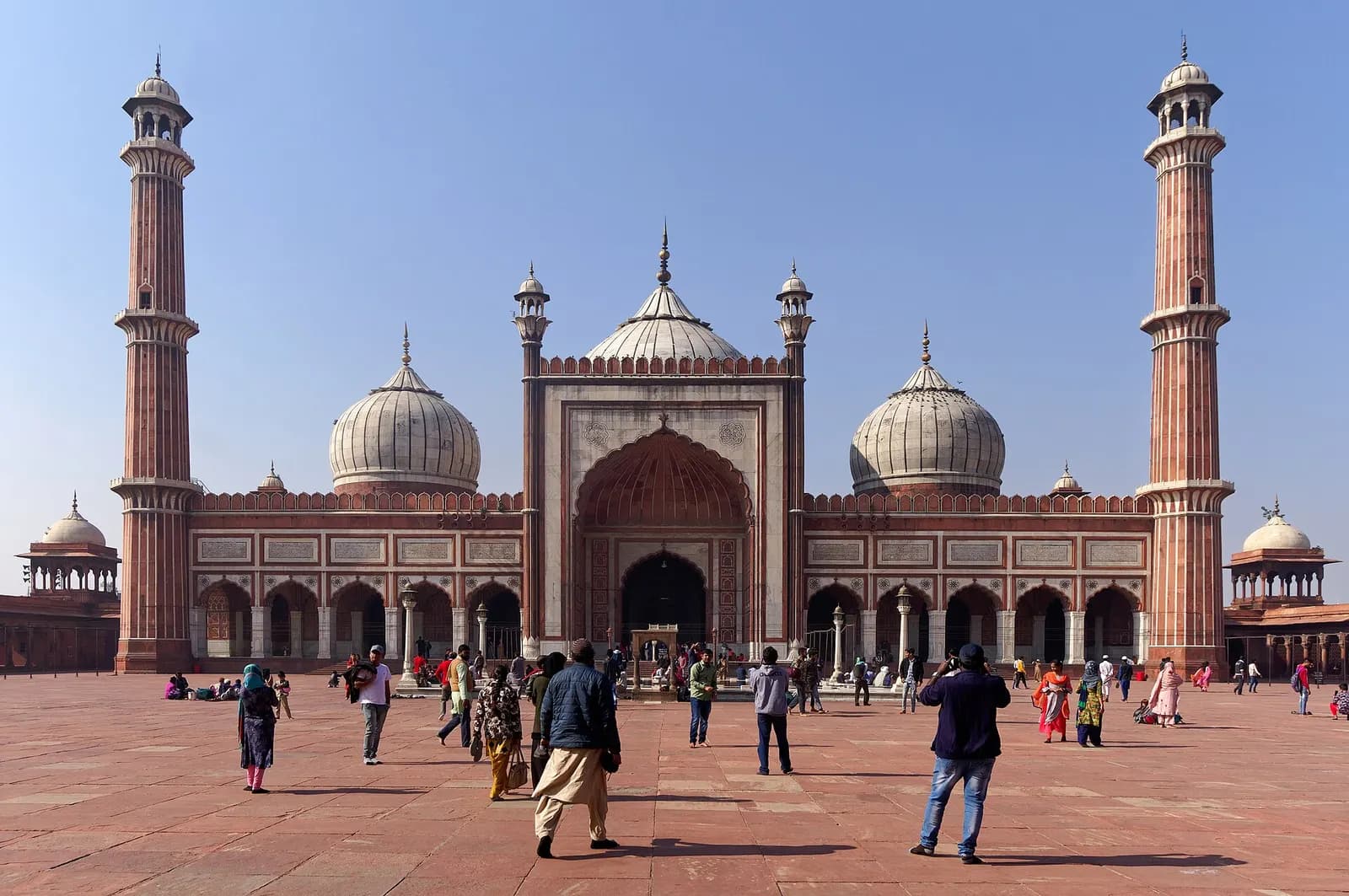
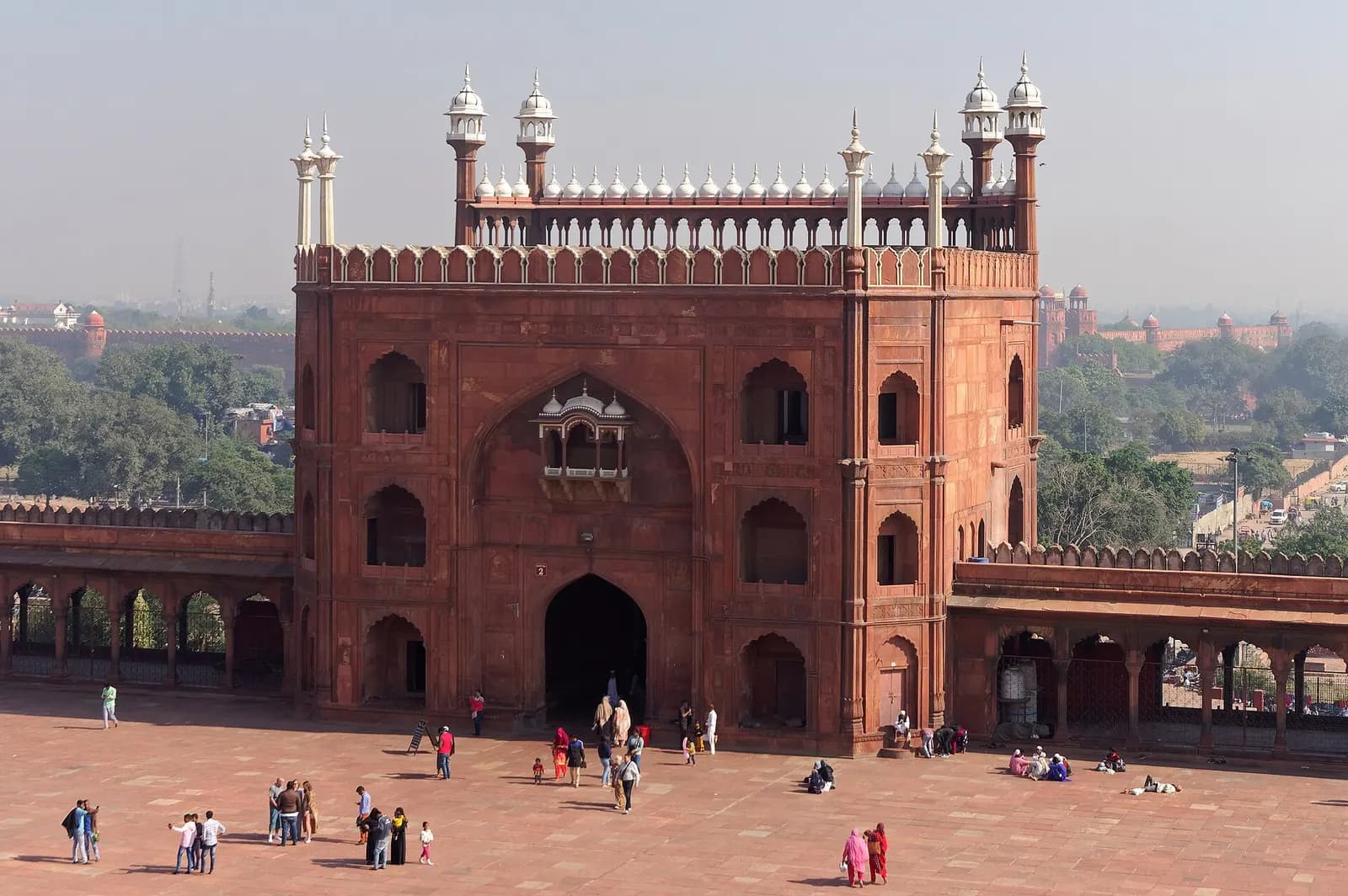
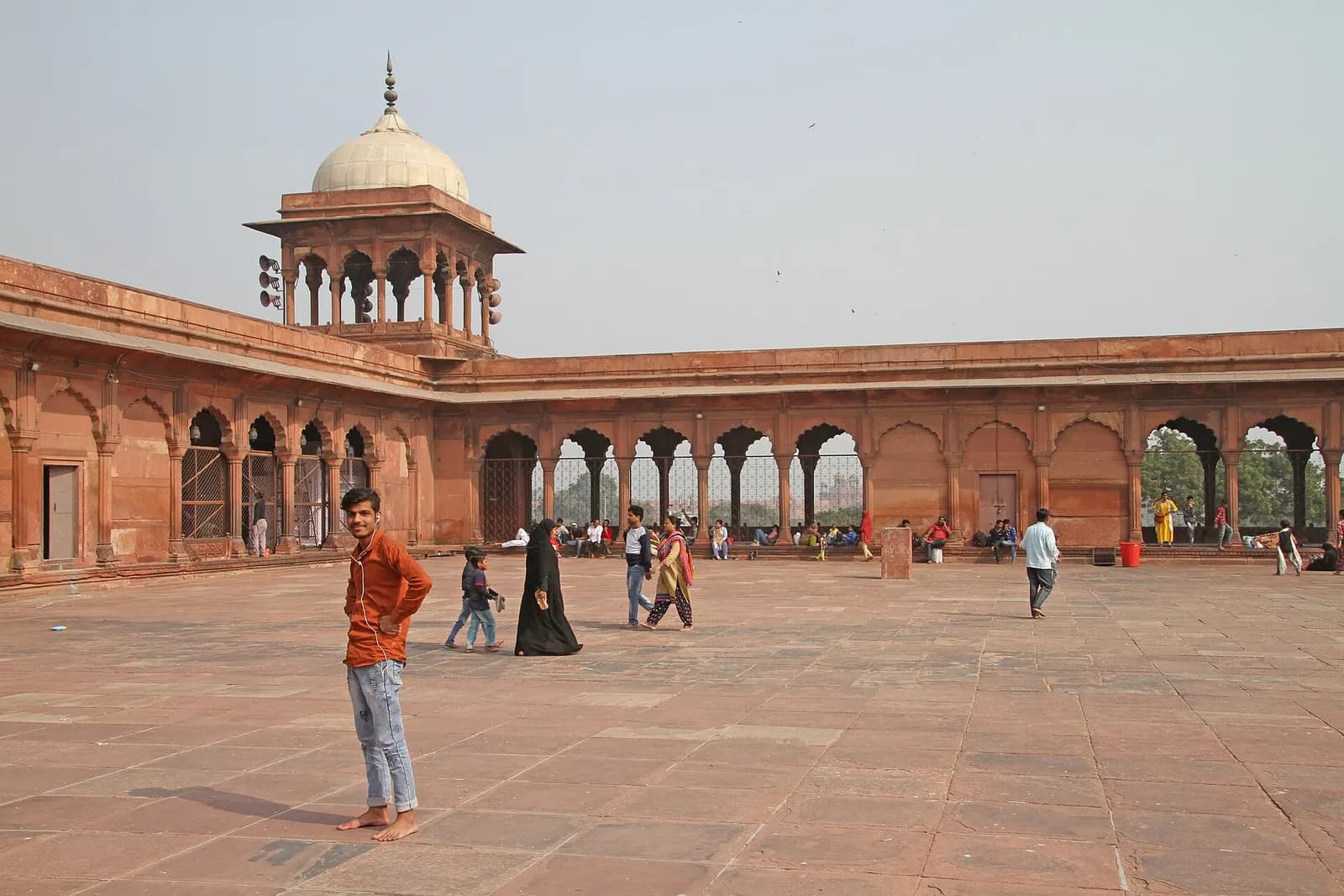
The mosque is best experienced slowly, so here is what to look for. You enter by climbing a broad flight of steps to one of the great gateways, a dramatic approach that lifts you above the street. The mosque has three massive gateways and Gate 1 to the south and Gate 3 to the north are the ones generally used by tourists, while the eastern Gate 2 was historically reserved for the emperor and Mughal royalty.
Once through, you step into the enormous open courtyard, which measures roughly 99 metres on each side and can hold up to 25,000 worshippers at once. At its centre sits the wazu, a cleansing pool used for the ritual ablutions performed before prayer. Across the courtyard rises the main prayer hall or liwan, fronted by a grand central archway and crowned with three majestic white marble domes striped subtly with black. Flanking it stand the two great minarets, each about 40 metres high, built of alternating strips of red sandstone and white marble like the rest of the mosque. Take time simply to stand in the courtyard and absorb the scale and the calm, which is the real experience, before turning to the detail of the carving and inlay up close.
Can you climb the minaret at Jama Masjid?
Yes and it is one of the best things to do here. For a small fee you can climb the narrow spiral staircase of the south minaret, around 130 steps, to a viewing gallery near the top. The reward is a genuinely breathtaking panorama, the mosque's own courtyard spread out below, the dead straight line of Chandni Chowk running away toward the Red Fort and the dense, smoky rooftops of Old Delhi in every direction. It is one of the finest views in the city and a highlight for photographers.
A few honest caveats. The staircase is narrow, steep and can feel claustrophobic, so it is not for everyone and it gets hot in summer. Access rules can change and at times climbing has been restricted or required visitors to be accompanied, so it is worth checking on the day whether the minaret is open. If you are reasonably fit and not troubled by tight spaces, though, the climb is well worth the effort and the small ticket and the view from the top is something most day visitors to Delhi never see.
What is the architecture of Jama Masjid like?
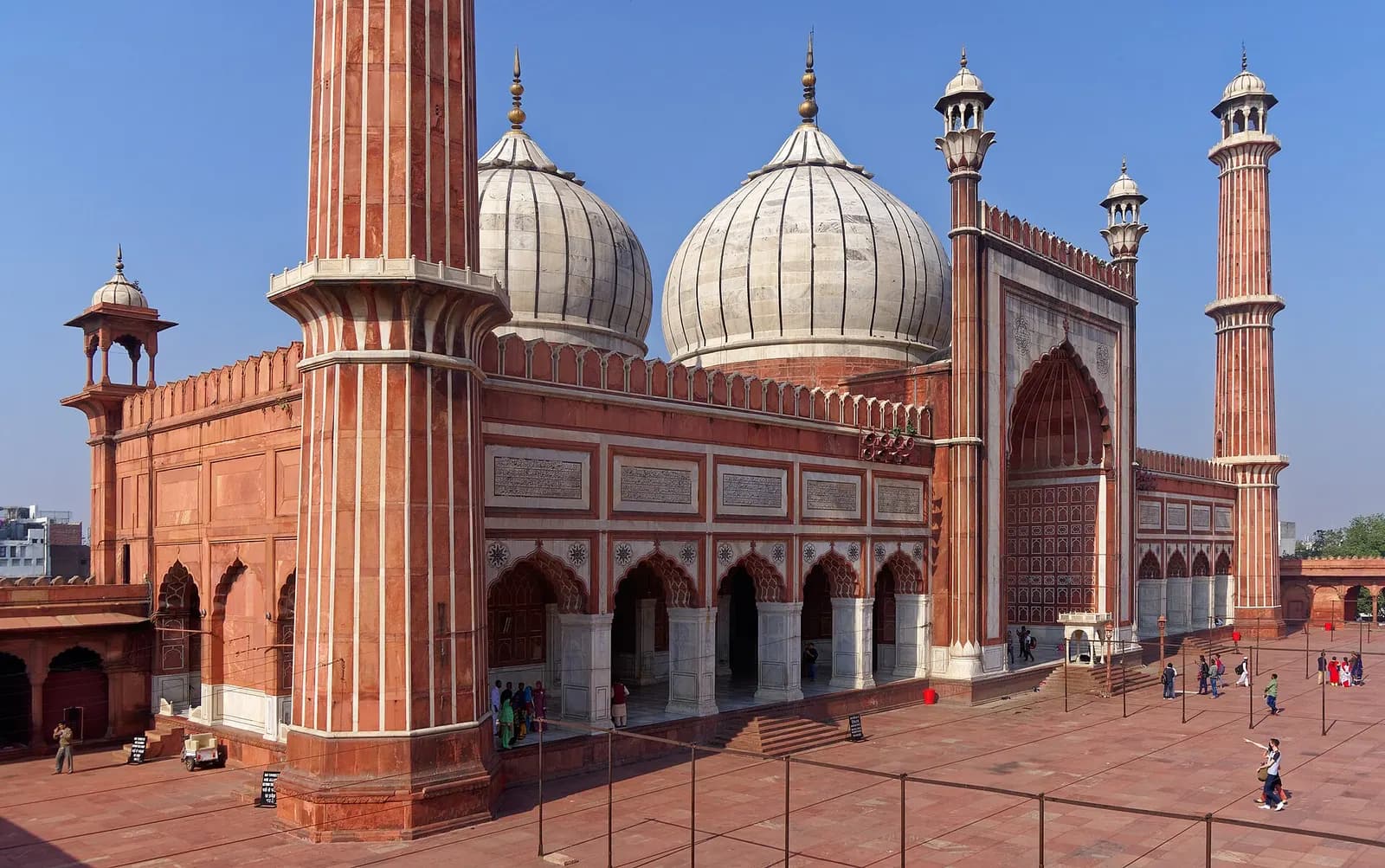
Jama Masjid is Mughal architecture at its most assured, built in the signature palette of red sandstone and white marble that Shah Jahan used across his monuments. The whole mosque sits on a high plinth, so it rises above the surrounding city and is approached by grand flights of steps, a deliberate piece of theatre that makes the building feel monumental from the first glance. The prayer hall is fronted by a tall central archway, the iwan, that draws the eye across the courtyard and it is topped by three bulbous marble domes and framed by the two soaring minarets.
What makes it work is the balance of mass and detail. From a distance the mosque reads as a few bold, simple shapes, the domes, the minarets, the great arch, but up close the surfaces reveal fine inlay, carved panels and calligraphy. Unlike many mosques where only the interior is treated as architecturally important, real care was taken to give Jama Masjid a harmonious and striking exterior from every side. It faces west toward Mecca and the symmetry and proportion throughout are textbook Mughal, the same confident grammar you meet at the Red Fort and that reaches its peak in Agra.
What is the dress code and what are the rules at Jama Masjid?
Because Jama Masjid is an active, sacred place of worship, the rules are taken seriously and respecting them is both expected and the right thing to do. Conservative clothing is mandatory. Shoulders, upper arms and legs must be fully covered, so shorts, short skirts, sleeveless tops and tight clothing are not permitted for either men or women. If your outfit does not comply, attendants at the main gates provide long, loose robes to wear, usually included or free, though a small tip is often requested.
Footwear comes off before you enter. Shoes are not allowed in the courtyard, so you remove them at the steps and you can either carry them with you or leave them with a shoe handler at the gate for a nominal charge. Inside, behave as you would in any house of worship, keep your voice low, do not sit sprawled across the courtyard floor or treat it as a picnic spot and be especially mindful and unobtrusive during prayer times. Local marshals keep an eye on decorum. Follow these simple courtesies and you will be warmly tolerated in what is, after all, somebody's place of prayer.
How do you reach Jama Masjid?
The metro is by far the easiest way in, given how congested Old Delhi is. The Jama Masjid station on the Violet Line is the nearest, with Gate 1 or Gate 2 bringing you out a short 3 to 5 minute walk from the mosque. The Chawri Bazar station on the Yellow Line is an alternative, about 10 to 15 minutes away on foot or by cycle rickshaw through the wonderful chaos of the old lanes, which is an experience in itself.
Driving is strongly discouraged, because the lanes around the mosque are extremely narrow and congested and parking is a real headache. If you must come by car, the sensible approach is to park at an authorised facility such as the multi level parking on Asaf Ali Road or near the Chandni Chowk metro station and then take a cycle rickshaw the rest of the way. For visitors who would rather not navigate any of it, our Old Delhi tour handles the logistics and the context together and a broader Delhi day tour folds the mosque into the wider city.
What food is near Jama Masjid?
This may be the best reason of all to time your visit well, because Jama Masjid is ringed by some of the most legendary food in India. Right outside Gate 1 runs Matia Mahal, a narrow lane that is a place of pilgrimage for lovers of Mughlai food, lined with historic eateries. Karim's, founded over a century ago, is the most famous name, with Al Jawahar nearby for rich curries and kebabs, Aslam Chicken for its buttery grilled chicken and Cool Point for sweet treats like shahi tukda and kulfi. Breakfast here means nihari and khameeri roti and the evenings fill with the smoke of grilling meat.
The honest advice is to come hungry and eat where the crowds are, since high turnover means freshly cooked food. Pair the mosque with a meal in Matia Mahal and you have one of the great Old Delhi mornings or evenings. For a fuller tour of the city's best bites, see our guide to the famous street food of Delhi and if you are shopping as well, the lanes of Chandni Chowk nearby are covered in our guide to shopping in Delhi.
When is the best time to visit and how much time do you need?
Across the year, October to March is the comfortable season for Old Delhi, when walking the mosque and the markets is a pleasure rather than a sweat. Within the day, the early morning window, roughly 7:30 AM to 9:00 AM, is the sweet spot, when the courtyard is quiet, the light is soft and golden on the sandstone and the afternoon heat and crowds have not yet arrived. Late afternoon toward sunset is the other lovely time, especially if you climb the minaret for the view.
On time, allow about an hour for the mosque itself, the courtyard, the prayer hall and the gates and add more if you climb the minaret or, as you should, give yourself an hour or two for the food lanes outside. Factor in the prayer closures when you plan and avoid the Friday midday congregation if you want an unhurried visit. For the wider question of when to plan your trip, see our guide to the best time to visit Delhi.
What is there to see near Jama Masjid?
Jama Masjid sits in the richest part of old Shahjahanabad, so the surroundings are half the reward. The Red Fort is a short walk away, the two monuments conceived together as the centre of Shah Jahan's city and between them runs Chandni Chowk, the great market street still thundering with trade, spices and sweets. Together the fort, the mosque, the market and the food make a complete, classic Old Delhi outing, best done as a single morning.
If you have more time, the city's deeper Mughal and medieval layers are close too. The ramparts of Purana Qila and the stepwell of Agrasen ki Baoli are both worth a detour, the great Humayun's Tomb lies across the city and for a complete change of pace the serene Lotus Temple and the ancient tower of the Qutub Minar round out a fuller Delhi plan. Jama Masjid is the anchor of the old city and everything around it rewards a wander.
How does Jama Masjid fit into a Delhi or Golden Triangle itinerary?
For most visitors Jama Masjid is part of a classic Old Delhi morning, paired with the Red Fort and a walk and a meal through Chandni Chowk and Matia Mahal. That single outing covers the Mughal heart of the city and its living street life in one go and the mosque is the high point of it, best visited early before the heat and the Friday crowds. An afternoon in New Delhi then balances the day.
If Delhi is your gateway to the wider Golden Triangle, Jama Masjid is day one, the Mughal prologue before you head south. Because Shah Jahan built both this mosque and the great monuments of Agra, seeing them in sequence turns the trip into one connected story and many of my guests follow a Delhi day with an early sunrise Taj Mahal tour the next morning. Delhi for its Mughal and modern heart, Agra for the Taj and Jaipur for Rajasthan, tied into one trip, is the whole idea behind how we plan routes and a day or two more in the capital, with easy day trips within 50 km, rounds it out.
Travel tips for visiting Jama Masjid
A few pointers make the visit smoother. Come early, around 7:30 to 9:00 AM, for the calmest, best lit experience and plan around the prayer closures, avoiding the Friday midday congregation if you want an unhurried visit. Dress modestly with shoulders and legs covered or use the robes at the gate and be ready to remove your shoes at the steps. Carry a little cash in small notes for the camera fee, the minaret ticket, a robe or shoe handling, so you are not stuck for change. Decide in advance whether you want to pay the roughly ₹300 photography fee and leave larger bags behind, since the lanes are tight. Take the metro rather than driving, climb the south minaret if you are up for it and above all, do not leave without eating in Matia Mahal, which is half the reason to come. Get these few things right and Jama Masjid becomes the richest hour of your whole Old Delhi day.
Want Jama Masjid and the best of Old Delhi done properly, food and all? Message our team on WhatsApp at +91 7302265809 and we will build it into a Delhi itinerary that flows.
Plan your trip with us
Jama Masjid is at its best when it is woven into a well planned Old Delhi morning, with the fort, the market and the food in the right order and the logistics handled. At Experience My India we design trips that get that sequence right, so you arrive at the calm early hour, skip the prayer closures and finish with the city's finest food. Whether you want a focused Old Delhi heritage walk or a full day across the capital, our Delhi Agra tours suit every style of traveller and our wider Golden Triangle tours carry the Mughal thread south to Agra. Tell us your travel dates and group size and we will shape a plan around you, with a licensed guide who brings the old city to life.
Related guides
Keep planning with these hand picked reads from our team:
- Important monuments of Delhi, a fuller rundown of the city's historic sites
- Connaught Place, the elegant colonial shopping circle of New Delhi
- Lotus Temple, the serene Baha'i house of worship in South Delhi
Enquire Now
Ready to Explore
The Heart of Delhi?
Explore the Red Fort, Qutub Minar, Humayun's Tomb, and the vibrant streets of Old Delhi with our expert-guided premium tours of India's capital city.

Delhi
Premium Tour Package
Questions
Frequently asked questions
What are the Jama Masjid timings?
It is open all week, roughly 7:00 AM to 12:00 PM and again about 1:30 PM to 6:30 PM, with tourists not allowed during prayer times. The south minaret generally keeps hours of about 9:00 AM to 5:30 PM.
Is there an entry fee for Jama Masjid?
Who built Jama Masjid and when?
Can tourists visit Jama Masjid on Friday?
What is the dress code at Jama Masjid?
Can you climb the Jama Masjid minaret?
How much time do I need at Jama Masjid?
Which is the nearest metro station to Jama Masjid?
Is Jama Masjid free to photograph?
What food should I eat near Jama Masjid?
Is Jama Masjid worth visiting?
Explore more
Plan your Jama Masjid trip with us

Photo credits
Photos from Wikimedia Commons, used under their licences:
- Photo 1 by Jakub Hałun, CC BY-SA 4.0
- Photo 2 by Sachin Ghai, CC BY-SA 4.0
- Photo 3 by Jakub Hałun, CC BY-SA 4.0
- Photo 4 by Jakub Hałun, CC BY-SA 4.0
- Photo 5 by Gerd Eichmann, CC BY-SA 4.0
Interested in Jama Masjid Delhi: Timings, Entry, History and Complete Visitor Guide?
Chat with our travel team for a custom quote, or browse every package.
Related Attractions
9Ready to explore Jama Masjid Delhi: Timings, Entry, History and Complete Visitor Guide?
Book your private tour today and experience the magic of India's rich heritage.