

Heritage & Architecture Deep-Dive Tour
An architecture deep-dive of the Golden Triangle: 800 years of styles, from Delhi's Qutb Minar to Jaipur's planned Pink City, with an expert guide.
In a Nutshell
“800 years of styles, from Delhi's Qutb Minar to Jaipur's planned Pink City, with an expert guide.”
Heritage & Architecture Deep-Dive Tour
Experience My India's architecture deep-dive treats the Golden Triangle as what it really is: eight centuries of building, layered city upon city. Where the Mughal-history tour follows one dynasty, this one follows the architecture itself — Indo-Islamic, Rajput, Mughal, the Vastu-planned Pink City, colonial Lutyens' Delhi and beyond — so you watch styles collide, fuse and evolve, and understand how and why these buildings were made. It runs 6 to 8 days, private, from Rs 10,000 per person per day, with an expert heritage guide. For architects, students and anyone who reads a building like a book, this is the circuit at its richest.
At a glance
Quick Facts
Trip length
6 to 8 days, private, expert-guided
Base price from
Rs 10,000 pp/day (4-star), Rs 15,000 (5-star), twin sharing
The span
About 800 years, from the Qutb Minar (1199) to modern Delhi
Styles covered
Indo-Islamic, Rajput, Mughal, Indo-Saracenic, colonial Lutyens
Jaipur highlight
India's first planned city (grid on Vastu principles), and Jantar Mantar
Guiding
A genuine architecture and heritage expert
Best season
October to March; the Taj is closed on Fridays
Why An Architecture Deep-Dive
Most tours show you the monuments; this one explains them. The Golden Triangle is a rare place where you can trace the whole sweep of North Indian architecture in a week — from the Delhi Sultanate's first stone towers, through the Rajput forts and the Mughal marble, to the British imperial capital and the modern city, each style borrowing, reacting to and building on the last. With an expert guide, you learn to read the buildings: how an arch is engineered (or faked), why a Rajput palace has jharokha balconies and courtyards, how a Persian garden-tomb becomes the Taj, how a whole city is laid out on a grid. It is the difference between admiring a facade and understanding a civilisation.
The Story of The Styles (What You'll Trace)
Indo-Islamic beginnings, Delhi. The UNESCO Qutb Minar (begun 1199), a 73-metre victory tower, and the Quwwat-ul-Islam Mosque beside it, where you can see early masons imitating the arch with corbelled brackets — the very birth of a fused Indian-Islamic style.
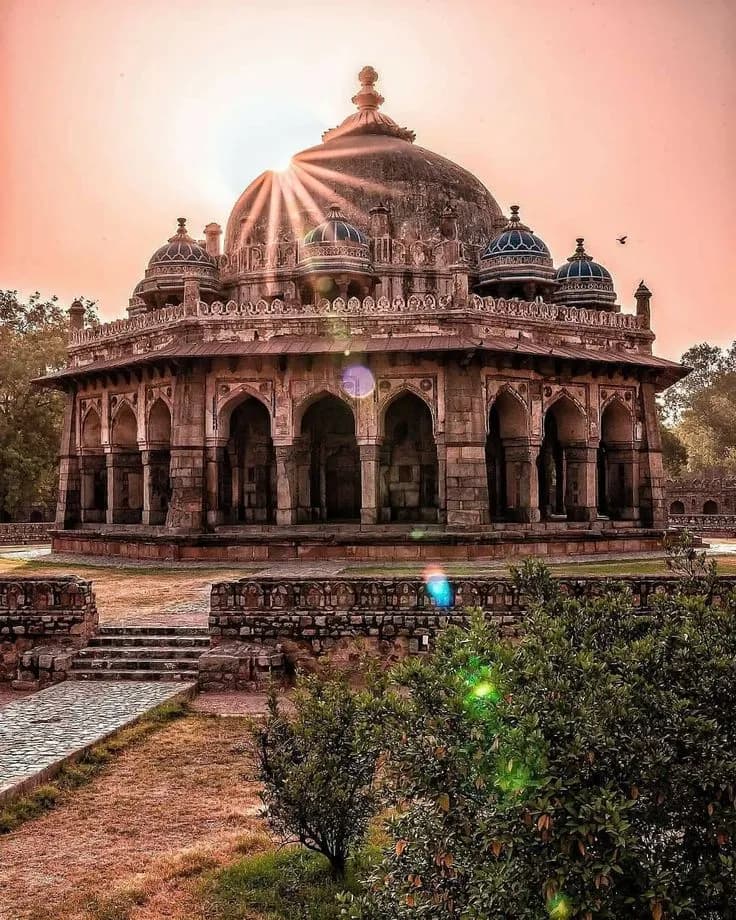
The garden-tombs, Delhi. Lodhi Gardens and Humayun's Tomb, the evolution of the domed garden-tomb that would culminate in the Taj.
Mughal marble, Agra. Agra Fort, the Itimad-ud-Daulah (the marble 'Baby Taj') and the Taj Mahal itself — the technique of pietra-dura inlay and perfect symmetry at its height, plus Akbar's planned capital at Fatehpur Sikri.
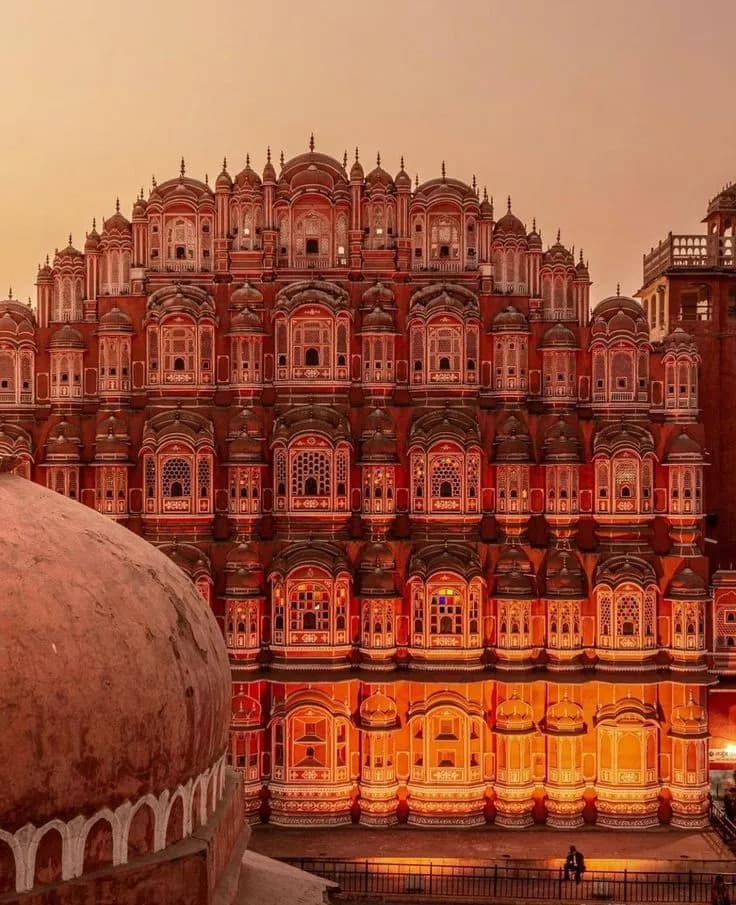
Rajput Jaipur and Amber. Amber Fort, a celebrated fusion of Hindu and Mughal design with elephant brackets, courtyards and the mirrored Sheesh Mahal; the City Palace (Rajput, Mughal and European blended); and the Hawa Mahal, its 953 latticed windows built so royal women could watch the street unseen.
The planned Pink City and its observatory. Jaipur itself, India's first planned city (1727), laid out on a Vastu-based grid by Vidyadhar Bhattacharya, and the Jantar Mantar, a UNESCO observatory of vast stone instruments, including the world's largest sundial.
Colonial and modern Delhi. Lutyens' imperial New Delhi, India Gate, the grand central vista and the princely houses, and modern landmarks like the Lotus Temple.
Our Promise
Two honest things. First, this is a slower, cerebral tour, not a highlights dash. Reading buildings properly takes time and a good guide, so we suggest 6 to 8 days and plenty of unhurried time at each site; if you want the headline monuments quickly, the classic Golden Triangle suits you better. Second, we tell the history straight. India's architecture is gloriously syncretic, but its story also includes conquest, and, at sites like the Qutb complex, the reuse of demolished older temples, and we present that factually and respectfully, as history rather than polemic. Understanding the full, honest story is exactly what a deep-dive is for.
Day by day
Day-by-Day Itinerary (Sample Shape)
Fine print
What Is Included, And What Is Not
Included
- Private air-conditioned car with chauffeur
- Best-reviewed hotels with breakfast
- An expert architecture and heritage guide throughout
- All monument entry fees (including the lesser-visited sites)
- Sightseeing as per the itinerary
- Bottled water
- Tolls and taxes
- 24x7 support
Excluded
- Flights
- Most lunches and dinners
- Personal expenses
- Camera or special-access permit fees
- Any specialist lectures or private after-hours access if arranged
- Travel insurance (recommended)
- Tips
- Anything not listed above
Investment
Pricing, Plainly
4-Star Package (per person, twin sharing)
From Rs 10,000 per day
Best-reviewed 4-star hotels, private car, expert guide, and all monument entry fees.
5-Star Package (per person, twin sharing)
From Rs 15,000 per day
Luxury 5-star hotels, private car, expert guide, and all monument entry fees.
Expert Architecture Guide
Included
A genuine architecture and heritage expert throughout the tour — the heart of this experience.
The main variables are the number of days (6 to 8), the hotel tier, and the level of specialist guiding. GST applies as per the invoice.
This is the classic circuit at the standard per-day rate, with an architectural focus and an expert guide.
Our promise
Why Choose Experience My India
Honest note
This Trip Is NOT For You If
- You want the highlights fast. This is a deep, slow, expert-led tour.
- You want only the Mughal story. This ranges much wider — Indo-Islamic, Rajput, planned-city and colonial chapters.
- You are not drawn to architecture or history. The appeal is understanding buildings.
- You have only 4 to 5 days. The deep-dive wants 6 to 8 to cover the styles properly.
Preparation
Before You Go
🎒Packing List
- 1.October to March is the comfortable season.
- 2.Allow 6 to 8 days, and let us pair you with a genuine architecture-and-heritage guide.
- 3.A little background reading on Indo-Islamic, Rajput and colonial architecture makes it richer.
- 4.Wear comfortable shoes for forts, towers and Fatehpur Sikri.
- 5.Bring sun protection.
- 6.The Taj is closed on Fridays.
- 7.Bring a good camera and a notebook — you will want to record what you learn.
- 8.Ask about engineering and ornament; the details are the delight.
Enquire Now
Ready to Explore
Incredible India?
Explore the rich heritage, stunning monuments, and vibrant culture of India with our expert-guided premium tours.

India
Premium Tour Package
Questions
Frequently Asked Questions
How is this different from the Mughal-history tour?
The Mughal-history tour follows one dynasty's story through its monuments. This architecture deep-dive is broader — it traces every major style across about 800 years: Indo-Islamic (the Qutb Minar), Rajput (Amber, the Hawa Mahal), Mughal (Agra), the Vastu-planned Pink City, and colonial Lutyens' Delhi, with a focus on how buildings were designed and engineered.
What styles and sites does it cover?
Why is Jaipur important architecturally?
Do I get a specialist guide?
How many days do I need?
Will the tour address the difficult parts of the history?
Explore more
Related Trips
Interested in Heritage & Architecture Deep-Dive Tour?
Chat with our travel team for a custom quote, or browse every package.
Related Attractions
2Ready to explore Heritage & Architecture Deep-Dive Tour?
Book your private tour today and experience the magic of India's rich heritage.