
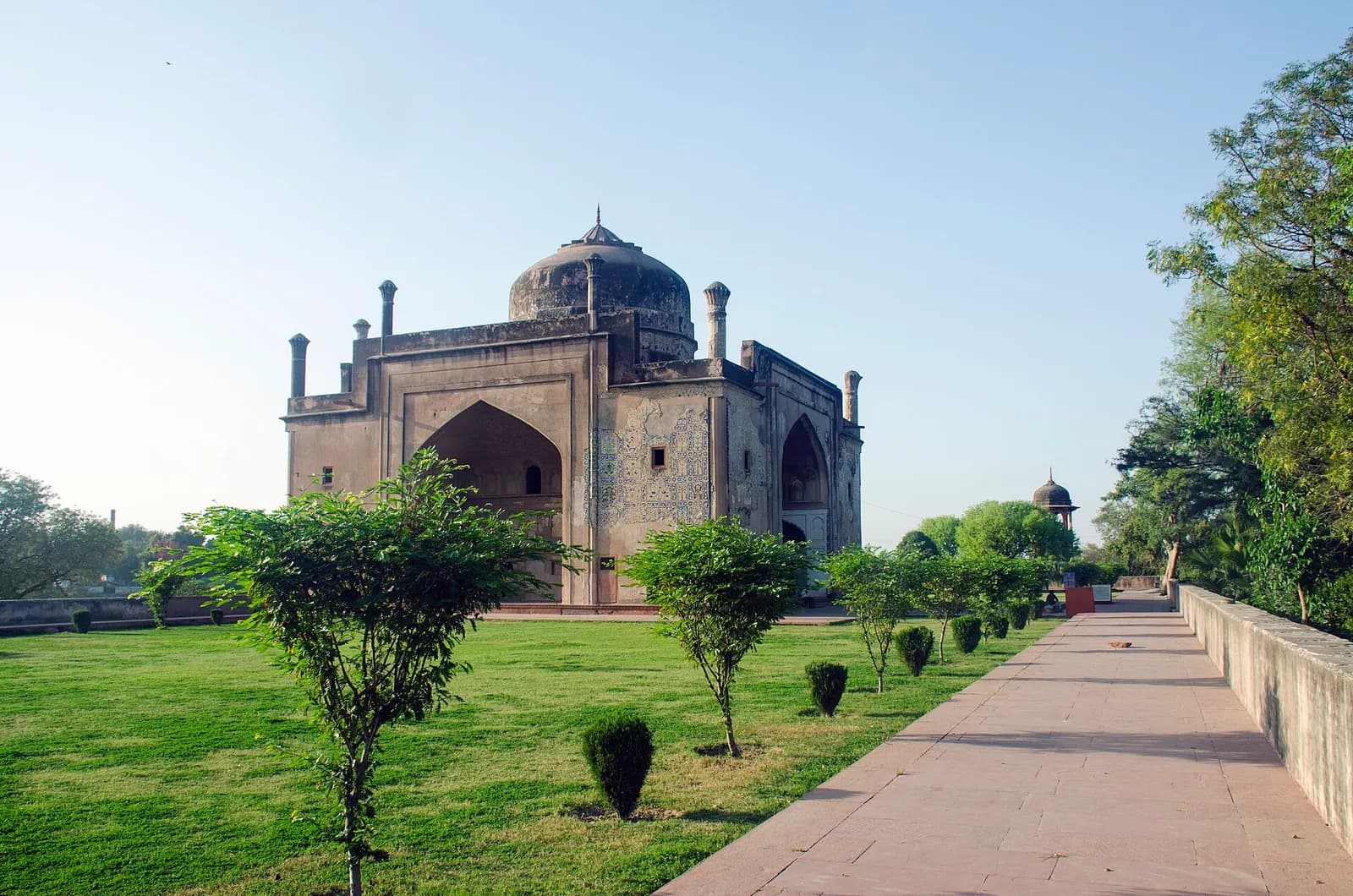


 East bank of the Yamuna, Agra
Chini ka Rauza Agra: The Porcelain Tomb, Timings and History
Visiting Chini ka Rauza in Agra, the Persian tiled Porcelain Tomb? Its history, timings, free entry, the tilework, how to reach and best time to visit.
Quick answer
Chini ka Rauza, the Porcelain Tomb, is a 17th-century Mughal mausoleum on the eastern bank of the Yamuna in Agra, holding the tomb of the Persian scholar and Grand Vizier Afzal Khan Shirazi. It is the only monument in Agra faced entirely in Persian-style glazed tilework, entry is free and it opens every day. It features on our Agra tours, run by a unit of Experience My India.
- #chini-ka-rauza
- #agra
- #agra-attractions
- #agra-travel
Chini ka Rauza is the monument almost nobody crosses the river to see, a jewel of blue and turquoise tilework tucked into a quiet garden while the crowds queue at the Taj. Our team at Delhi Agra Tour Packages folds it into unhurried eastern bank days and it sits naturally on any Golden Triangle tour through Delhi, Agra and Jaipur.
I am Abhay Sharma, a Golden Triangle guide since 2015 and this is one of my favourite Agra secrets. It is the only tomb in the city dressed head to toe in glazed Persian tiles, built by a poet-scholar who rose to be Shah Jahan's prime minister and whose brother carved the very inscriptions on the Taj Mahal. This guide gathers everything I would tell a visitor beforehand, the history and the tilework, the timings and free entry, the honest truth about its condition and how to fold it into a trans-Yamuna circuit.
Chini ka Rauza at a glance
| Detail | Information |
|---|---|
| Also known as | The Porcelain Tomb, the China Tomb |
| Whose tomb | Afzal Khan Shirazi, Grand Vizier to Shah Jahan |
| Location | Katra Wazir Khan, east bank of the Yamuna, Agra |
| Built | 17th century, in the 1630s |
| Famous for | The only fully glazed Persian tilework monument in Agra |
| Managed by | Archaeological Survey of India |
| Entry | Free for all visitors |
| Time needed | 30 to 45 minutes |
| Best season | October to March |
Chini ka Rauza timings
| Detail | Information |
|---|---|
| Open | All seven days |
| Hours | Sunrise to sunset, 6 AM to 6 PM |
| Time needed | 30 to 45 minutes |
Chini ka Rauza is an Archaeological Survey of India Monument of National Importance and opens every day of the week, from sunrise to sunset, 6 AM to 6 PM. There is no closed day here, so it fits any Agra schedule, including Friday when the Taj Mahal is shut. These timings are current at the time of writing and can change, so reconfirm before a special trip.
Entry fee
| Visitor | Entry |
|---|---|
| Indian nationals | Free |
| Foreign nationals | Free, plus the ADA toll noted below |
| Children | Free |
Entry to Chini ka Rauza is free for everyone, both Indian and foreign visitors and there is no ticket counter on site. Foreign nationals visiting Agra are separately subject to the Agra Development Authority toll of 500 rupees, the ADA pathkar, which is exempt on Fridays and covers same-day entry across the major Agra monuments, so if you already paid it at the Taj Mahal or the Agra Fort, keep your receipt. These details are current at the time of writing and can change, so reconfirm before you travel.
How to reach Chini ka Rauza
| From | Route |
|---|---|
| Itimad-ud-Daulah (Baby Taj) | 1 km south, a very short hop |
| Taj Mahal | 2 to 3 km north across the river |
| By auto, e rickshaw or cab | From Agra Fort, Agra Cantt or Yamuna Kinara Road |
| Location | Katra Wazir Khan, left bank of the Yamuna |
What is Chini ka Rauza?
Chini ka Rauza, meaning the Porcelain Tomb or China Tomb, is a 17th-century Mughal funerary monument on the eastern or left, bank of the Yamuna in Agra, holding the tomb of Allama Afzal Khan Shirazi, a renowned Persian scholar, poet and the Grand Vizier or prime minister, to Emperor Shah Jahan. Built in the 1630s, it is the only monument in all of Agra faced entirely in Persian-style glazed tilework, the kashi or chini work that gives it its name. In a city defined by red sandstone and white marble, this blaze of cobalt and turquoise tiles is something completely different, a piece of Persia transplanted to the banks of the Yamuna. For anyone who has spent a few days surrounded by Agra's familiar palette, that shift of colour and texture is a genuine surprise and it is the main reason the tomb rewards the short trip across the river.
Several things make it special and they are worth drawing out:
- Agra's only tiled tomb. The single monument in the city clad entirely in Persian glazed tiles, unlike anything else in Agra.
- A scholar-vizier's mausoleum. The tomb of a Persian poet and scholar who rose to become Shah Jahan's prime minister.
- A Taj Mahal connection. Its calligraphy is attributed to Amanat Khan, the very same master who inscribed the Taj Mahal.
- Peaceful and free. Entry costs nothing and the garden is very quiet compared with the Taj Mahal and Agra Fort.
- Vivid interiors. A well-preserved painted dome and frescoes survive inside, even where the outer tiles have weathered.
History of Chini ka Rauza
The story of this tomb is the story of a Persian scholar who found his fortune at the Mughal court and of a family whose craft touched the greatest monument in India.
The story runs in clear stages:
- The scholar-vizier. Built for Mullah Shukrullah Shirazi, titled Afzal Khan, who migrated from Shiraz in Persia to the Mughal court during Jahangir's reign and later rose to become Shah Jahan's trusted prime minister and advisor.
- Construction and burial. Afzal Khan commissioned his own mausoleum in the 1630s while still alive. After he died in Lahore in 1639, his body was brought back to Agra and laid to rest in the central chamber alongside his wife.
- Orientation toward Mecca. Unlike the neighbouring riverfront gardens that align strictly with the river's flow, Chini ka Rauza is uniquely angled so that the burial chamber faces directly toward Mecca.
- The Taj Mahal link. Afzal Khan's brother was Amanat Khan, the master Persian calligrapher who designed the famous Quranic inscriptions on the Taj Mahal and art historians attribute the calligraphy inside Chini ka Rauza to his hand as well.
That family connection is what I most love to share with guests. The same hand that gave the Taj Mahal its soaring Quranic verses worked here too, on a far humbler monument, which turns this quiet tomb into a direct footnote to the most famous building in the world.
It is worth pausing on who Afzal Khan was, because his story says a great deal about the Mughal court. He arrived from Shiraz, one of the great cultural cities of Persia, as a scholar and poet rather than a soldier and rose on the strength of his learning and administrative skill until he held one of the highest offices in the empire. The Mughals prized Persian culture and actively drew talented men from across the Persian world and Afzal Khan was one of the most successful of them. That he chose to be commemorated in Persian tilework rather than Mughal marble is no accident, it is a man declaring his origins in the very fabric of his tomb.
The orientation toward Mecca is another quiet statement. Most of the riverfront tombs and gardens on this bank were laid out to line up with the Yamuna, but Chini ka Rauza is deliberately angled so the burial chamber faces the holy city. It is a small thing you would never notice without being told, yet it shows how carefully the builders balanced the demands of a riverside setting with the requirements of faith.
Chini ka Rauza architecture and Persian tilework
For all its weathered condition, Chini ka Rauza is a fascinating piece of Indo-Persian design and the features below reward a close look.
- The kashi glazed tile facade. Rather than Agra's red sandstone or white marble, the exterior was covered in vibrant hand-painted glazed tiles inspired by Persia, in cobalt blue, turquoise, yellow orange and green floral and geometric mosaics, the porcelain-like surface that gave the tomb its name.
- The Indo-Persian layout. Set within a rectangular charbagh-style riverside garden, the brick-and-plaster structure has a high central arched portal, a pishtaq, on each side, flanked by slender corner towers and crowned by a broad, Sultanate-influenced bulbous dome.
- An engineering innovation. To reduce the weight of the thick masonry roof, the builders embedded hollow earthen pots inside the upper masonry, a lightweight vaulting technique also known in Roman and Persian architecture.
- The painted interior dome. Inside, a well-preserved central octagonal chamber carries a vaulted ceiling and walls richly adorned with painted floral arabesques, frescoes and Quranic calligraphy.
- The riverside towers. At the western edge of the garden, overlooking the Yamuna, stand two two-storey octagonal red sandstone pavilions topped with domed chhatris that once framed the riverfront view.
The tilework is the headline, but the engineering is what makes historians pause. Embedding hollow pots to lighten a heavy dome is the kind of clever, practical solution that connected Mughal builders to a much older Persian and Roman tradition and it is a detail most visitors never learn.
The tiles themselves deserve a moment of appreciation for what they once were. Glazed tilework of this kind was a specialised craft, the colours fired into the surface so they would hold their brilliance for centuries and a fully tiled facade would have blazed blue and turquoise against the green of the garden and the brown of the river. Very few monuments in northern India were ever finished this way, which makes Chini ka Rauza a rare survivor of a Persian tradition that never became mainstream in Mughal Agra, where red sandstone and white marble won the day. Standing here you are looking at the road not taken, a glimpse of what Mughal architecture might have looked like had Persian tile, rather than Indian stone, become its signature.
The bulbous dome is worth a second look too. Its broad, slightly heavy profile owes more to the earlier Sultanate style than to the refined domes of Shah Jahan's marble monuments, which places Chini ka Rauza at an interesting transitional moment in Mughal design. Together with the pishtaq portals on each face and the slender corner towers, it gives the tomb a solid, four-square presence that reads as distinctly Persian even from a distance.
Chini ka Rauza entry fee and timings
Chini ka Rauza is one of the easiest Agra monuments to fit into a day, because entry is free for all visitors and it stays open every day of the week from sunrise to sunset, 6 AM to 6 PM. There is no ticket counter on site. The only charge that can apply is the Agra Development Authority toll of 500 rupees for foreign nationals, which is exempt on Fridays and valid across the major Agra monuments on the same day, so a receipt from the Taj Mahal or the Agra Fort covers you here too. Plan on 30 to 45 minutes for a relaxed visit. Because there is no entry barrier and the crowds are thin, you can be flexible with your timing in a way the ticketed monuments do not allow, slipping in whenever the light is good or your eastern bank route brings you past the gate.
Current condition and where to see the best tiles
I always set expectations honestly here, because the monument is weathered. Centuries of weather and Yamuna humidity have eroded much of the exterior plaster and tilework, so this is not a pristine, fully tiled jewel like the photographs of its prime. Guests who arrive expecting a flawless porcelain box can feel briefly let down, which is exactly why I prepare them in advance, so they come looking for the surviving beauty rather than mourning what is lost. To see the sharpest surviving tiles, look closely at the southern and western, river-facing walls, where the best blue, yellow and turquoise floral panels remain. And do not skip the interior, because even where the outer walls appear faded, the interior ceiling frescoes and painted medallions stay vivid and intricate. Bring a phone flashlight or visit in bright daylight to appreciate the dome details properly. Seen with the right expectations, the surviving work is genuinely beautiful and all the more moving for having endured.
Rules and facilities at Chini ka Rauza
A few practical realities shape a visit here, so keep these in mind:
- No facilities on site. There are no cafes, restrooms or souvenir shops at the monument, so carry drinking water and anything else you need.
- A residential setting. The tomb sits inside the Katra Wazir Khan neighbourhood, where the surrounding lanes and riverbanks can have litter and stray animals, though the ASI garden inside the gate is peaceful and green, so do not be put off by the approach.
- Keep valuables secure. As with any quiet, lightly staffed site, keep your belongings close and your phone and camera in hand rather than on a ledge.
- Bring light for the interior. A phone flashlight helps you see the painted dome and frescoes clearly.
What to expect at Chini ka Rauza
Expect a quiet, green, slightly faded garden tomb rather than a polished headline monument. You pass from a workaday residential lane through the gate into a calm ASI garden, with the tiled tomb at its centre and the two sandstone towers looking out over the river. The appeal here is atmosphere and detail, the surviving tile panels outside and the vivid painted dome within, enjoyed almost entirely without crowds. It is a short visit, 30 to 45 minutes and it rewards travellers who like history and craft over grand spectacle. For many of my guests it becomes a quiet highlight precisely because so few people make the effort to come.
The contrast with the Taj Mahal experience is part of what makes it special. Across the river you shuffle through security and crowds to reach a monument everyone has seen in a thousand photographs. Here you often have the garden to yourself, free to walk right up to the walls, trace the surviving tile patterns with your eye and step inside to stand under a painted dome in near silence. That intimacy, the sense of discovering something rather than queuing for it, is increasingly rare at Agra's famous sites and it is exactly what the eastern bank still offers. I tell guests to slow right down here, because the reward of Chini ka Rauza is in the looking, not the ticking off.
Best time to visit Chini ka Rauza
The best season is October to March, when the light is soft and the weather comfortable. Within the day, come in the early morning, from 7 AM to 9:30 AM or in the late afternoon, from 4 PM to 5:30 PM, when gentle sunlight makes the surviving glazed tiles shimmer and gives the blue and turquoise their depth. Harsh midday light flattens the tiles and the summer heat is unforgiving on the open garden, so the ends of the day are far better. A late-afternoon visit also sets you up perfectly to finish the eastern bank at Mehtab Bagh for the Taj Mahal sunset, which is how I usually sequence the circuit. Our wider notes on the best time to visit Agra apply closely here and because entry is free and flexible, you can easily time your stop for the best light rather than working around a ticket window.
How to reach Chini ka Rauza and its location
Chini ka Rauza stands in Katra Wazir Khan on the left, eastern, bank of the Yamuna, 1 km north of Itimad-ud-Daulah and 2 to 3 km north of the Taj Mahal across the river. It is easily reached by auto rickshaw, e rickshaw or private cab from the Agra Fort, Agra Cantt or along the Yamuna Kinara Road. One practical tip, ask your driver to wait, because hailing a return ride directly outside the lane can take a few minutes in this quiet residential pocket. If Chini ka Rauza is part of a fuller Agra plan, it pairs naturally with an eastern bank afternoon and our sunrise Taj Mahal tour works well before a mid morning crossing to this side. Travellers staying over often add it to an Agra overnight tour from Delhi.
Places to visit near Chini ka Rauza: the trans-Yamuna circuit
The smartest way to see Chini ka Rauza is as one stop on a left-bank heritage loop, because several Mughal treasures sit within a short drive and most tourists miss all of them. Just 1 km south lies Itimad-ud-Daulah, the Baby Taj, the exquisite marble tomb built by Nur Jahan. To the north, Ram Bagh, often called the oldest Mughal garden in India, sits 1.5 km away. And further south, Mehtab Bagh faces the Taj Mahal across the water for the classic sunset view. String these together and you have a single relaxed half day on the quiet side of the river, moving between them in minutes and seeing a side of Agra that most visitors never reach. The beauty of this loop is its variety, glazed Persian tile here, white marble inlay at the Baby Taj, an old Mughal garden at Ram Bagh and finally the great river view from Mehtab Bagh, each one a different texture of the same vanished world. Do it in the second half of the day and you can finish with the Taj Mahal glowing gold across the water at sunset, a fitting end to a circuit that quietly outclasses the crowded main-bank rush. You can read more in our overviews of places to visit near the Taj Mahal and lesser-known Agra monuments and dig into the garden itself in our guide to Ram Bagh.
Visiting tips for Chini ka Rauza
A few notes I give every group before we go:
- Carry water. There are no facilities on site, so bring your own drinking water.
- Come for the light. Early morning or late afternoon makes the surviving tiles shimmer; midday flattens them.
- Look at the river-facing walls. The sharpest tiles survive on the southern and western sides.
- Go inside. The painted dome and frescoes are the best-preserved part, so do not judge the tomb by its weathered exterior.
- Keep your ride. Ask your driver to wait, as return rickshaws can be slow to find outside the lane.
Hiring a guide at Chini ka Rauza
Because the monument is small and unlabelled, a good guide adds a great deal here, explaining who Afzal Khan was, how a Persian poet rose to be prime minister and the family link to the Taj Mahal's calligrapher. The tilework and the hidden engineering of the dome also come alive with someone to point them out. If you are doing the whole trans-Yamuna circuit, a single guide for the afternoon works better than hiring separately at each stop, since the eastern bank sites share one Mughal story. Our guided tours handle exactly this, so you get one knowledgeable person who carries the thread from Chini ka Rauza through the Baby Taj to the Mehtab Bagh sunset and who knows the quiet lanes of Katra Wazir Khan well enough to make the stop effortless.
Chini ka Rauza in your Golden Triangle itinerary
Chini ka Rauza is a connoisseur's stop rather than a headline, so it works best added to an eastern bank afternoon alongside the bigger Agra sights. A classic Agra day sees the Taj Mahal at sunrise and the Agra Fort through the morning, then crosses the river for the quieter tombs and gardens, ending with a Mehtab Bagh sunset. Our Agra travel guide ties these together and for travellers who love history and craft, Chini ka Rauza is the detail that makes an Agra visit feel complete rather than rushed through the two famous monuments alone.
On a tighter schedule, even half an hour here is worth building in, because it costs nothing to enter and sits on the way between the other eastern bank sights. On a fuller trip, it slots into a leisurely afternoon of tombs and gardens that balances the intensity of the Taj and the Fort with something calm and unhurried. Either way, it is the kind of stop that separates a traveller who has truly seen Agra from one who has only seen its postcards and that is exactly the kind of day we like to build.
Plan your trip with us
If you would like the quiet, rewarding side of Agra done well, with the eastern bank tombs and gardens arranged around the light and a comfortable car waiting, let us carry the load. We shape the day so you see the famous monuments and the hidden gems without the stress of navigating Agra's lanes yourself. Our Delhi Agra tours combine Chini ka Rauza and its neighbours with the Taj Mahal and Agra Fort and travellers short on time often choose our same day Agra tour from Delhi or a full Golden Triangle tour that threads Delhi, Agra and Jaipur. To plan dates, prices and inclusions, message Abhay and the team directly on WhatsApp at +91 7302265809 or reach our team online.
Related guides
Keep reading before you travel, these pair well with this guide:
Enquire Now
What our travellers say
“Our Golden Triangle honeymoon was flawless. Sunrise at the Taj with a private guide felt like a dream — every detail was handled.”
“As a first-time visitor to India, I felt completely safe and looked after. The driver and guide were superb professionals.”
“Travelling with two kids is hard, but they made it effortless. Great pacing, clean cars and zero surprises on price.”
“Booked the Agra day trip on short notice and it went off without a hitch. The guide's history knowledge made the Taj come alive.”
“Best decision of our India trip. Car was spotless, driver was punctual every single day, and the itinerary never felt rushed.”
“Organised a same-day Agra trip for my parents. Communication before and during the trip was excellent — genuinely stress-free.”
“Sunrise at the Taj Mahal was magical. Our guide spoke great English and answered every question with patience.”
“Three generations travelling together and everyone was comfortable — good vehicle, sensible stops, and no hidden costs.”
“I've used a few tour operators across Asia and this was among the smoothest. Fair pricing and they actually answer the phone.”
“Our custom Rajasthan-Agra combo was planned around our budget without cutting corners on comfort. Highly recommend.”
“Solo female traveller here — I felt safe throughout. The driver was respectful and the whole trip was timed perfectly.”
Ready to Explore
The Magic of Agra?
Experience the Taj Mahal at sunrise, explore the mighty Agra Fort, and discover the hidden gems of India's most beloved heritage city with our expert-guided premium tours.

Agra
Premium Tour Package
Questions
Frequently asked questions
Who built Chini ka Rauza and whose tomb is it?
Chini ka Rauza holds the tomb of Allama Afzal Khan Shirazi, a Persian scholar, poet and the Grand Vizier or prime minister, to Emperor Shah Jahan. He commissioned his own mausoleum in the 1630s while still alive and was buried here with his wife after he died in Lahore in 1639.
Why is it called Chini ka Rauza?
What is the Chini ka Rauza ticket price?
What are the Chini ka Rauza timings?
How far is Chini ka Rauza from the Taj Mahal?
Is Chini ka Rauza worth visiting?
What is the connection between Chini ka Rauza and the Taj Mahal?
How much time do I need at Chini ka Rauza?
Is Chini ka Rauza crowded?
What else can I see near Chini ka Rauza?
Does Chini ka Rauza have a painted interior?
Is there an entry ticket counter at Chini ka Rauza?
Is Chini ka Rauza suitable for a short visit?
Explore more
Plan your Chini ka Rauza trip with us

Interested in Chini ka Rauza Agra: The Porcelain Tomb, Timings and History?
Chat with our travel team for a custom quote, or browse every package.
Related Attractions
9Chini ka Rauza Agra on the map
Open in Google MapsReady to explore Chini ka Rauza Agra: The Porcelain Tomb, Timings and History?
Book your private tour today and experience the magic of India's rich heritage.