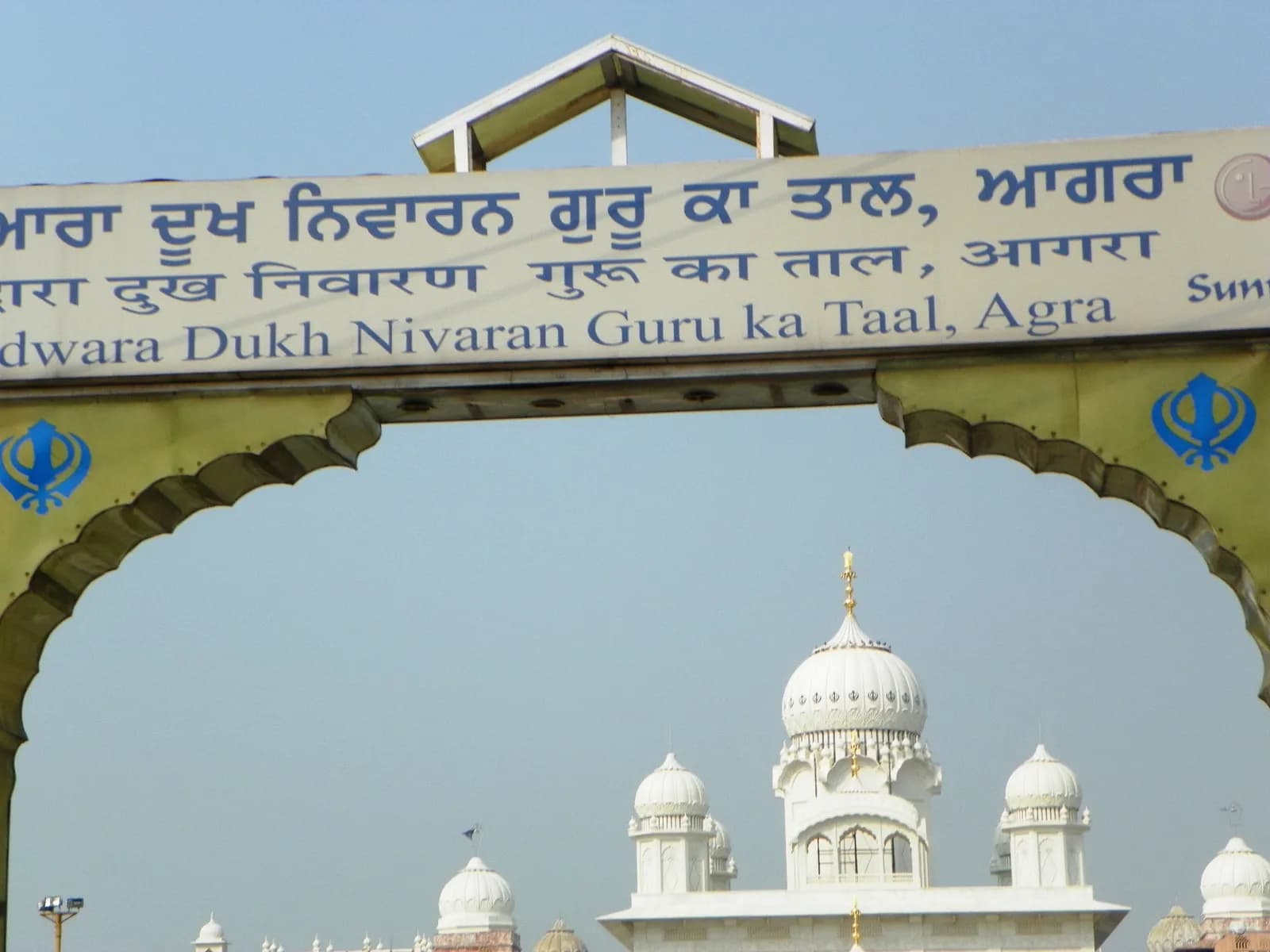
 Sikandra, Agra
Guru ka Taal Agra: Gurudwara Timings, History and Langar
Visiting Gurudwara Guru ka Taal in Sikandra, Agra? Here are its timings, history, langar, sarai rooms, etiquette and how to reach this Sikh shrine.
Quick answer
Guru ka Taal is a revered 17th-century Sikh pilgrimage site in the Sikandra area of Agra, on NH-19, marking the spot where the ninth Guru, Sri Guru Tegh Bahadur Ji, offered himself for arrest to Aurangzeb. The Gurudwara is open 24 hours, entry is free and it serves langar around the clock. It features on our Agra tours, run by a unit of Experience My India.
- #guru-ka-taal
- #agra
- #agra-attractions
- #agra-travel
Guru ka Taal is one of Agra's most moving places, a white marble Gurudwara wrapped around the carved red sandstone towers of a Mughal reservoir, built on ground sacred to Sikhs across the world. For pilgrims it is a site of deep significance and for every traveller it offers a welcome, a langar meal and a lesson in courage. Our team at Delhi Agra Tour Packages often includes it for guests interested in Agra's living faith and its lesser-seen history and it sits easily on a Golden Triangle tour through Delhi, Agra and Jaipur.
I am Abhay Sharma, a Golden Triangle guide since 2015 and I always tell guests that a stop here shows a side of Agra the monuments cannot. Guru ka Taal gives you the story of Guru Tegh Bahadur Ji's sacrifice for religious freedom, a continuous flow of kirtan in the prayer hall, a community kitchen that never closes and on-site rooms for pilgrims who wish to stay. This guide covers everything you need before a visit, the timings and langar, the history, the etiquette, the rooms and how to reach it.
Guru ka Taal at a glance
| Detail | Information |
|---|---|
| What it is | A 17th-century Sikh Gurudwara and historic reservoir complex |
| Full name | Gurudwara Dookh Nivaaran Guru Kaa Taal |
| Sacred to | The arrest of Sri Guru Tegh Bahadur Ji |
| Location | Sikandra, on NH-19, Agra |
| Open | 24 hours, every day |
| Entry | Free for all visitors |
| Langar | Served around the clock |
| Time needed | 1 to 2 hours |
Guru ka Taal timings
| Detail | Information |
|---|---|
| Gurudwara complex | Open 24 hours, 7 days a week |
| Langar | Served around the clock |
| Prayer and kirtan | Continuous, most atmospheric at dawn and dusk |
| Time needed | 1 to 2 hours |
The Gurudwara complex at Guru ka Taal is open 24 hours a day, every day of the week, in keeping with the Sikh tradition that a Gurudwara welcomes all at any hour. The langar runs around the clock and kirtan fills the prayer hall through the day, with the early morning and evening prayer sessions being the most atmospheric. Plan on 1 to 2 hours to see the historic towers, sit in the Diwan Hall and share in the langar. These timings reflect the usual routine at the time of writing and can vary on festival days, so reconfirm if you are visiting for a specific prayer.
Entry fee
| Visitor | Entry fee |
|---|---|
| All visitors, all faiths | Free |
| Foreign tourists | Free entry to the Gurudwara |
| Langar | Free, for everyone |
Entry to Guru ka Taal is completely free for all visitors, regardless of nationality or faith, as is the langar meal, in keeping with the Sikh principles of equality and selfless service. Foreign tourists visiting Agra are separately subject to the standard same-day Agra Development Authority civic toll only if they visit other protected monuments and that toll is not charged on Fridays. There is no ticket for the Gurudwara itself. If you are moved to give, the Gurudwara accepts voluntary offerings and kar seva, but nothing is required. This information is current at the time of writing.
How to reach Guru ka Taal
| From | Route |
|---|---|
| Location | Maharishi Puram Colony, Sikandra, NH-19 |
| Nearest local rail | Billochpura Railway Station |
| Main railhead | Agra Cantt |
| Metro | Guru ka Taal station (Yellow Line) under construction |
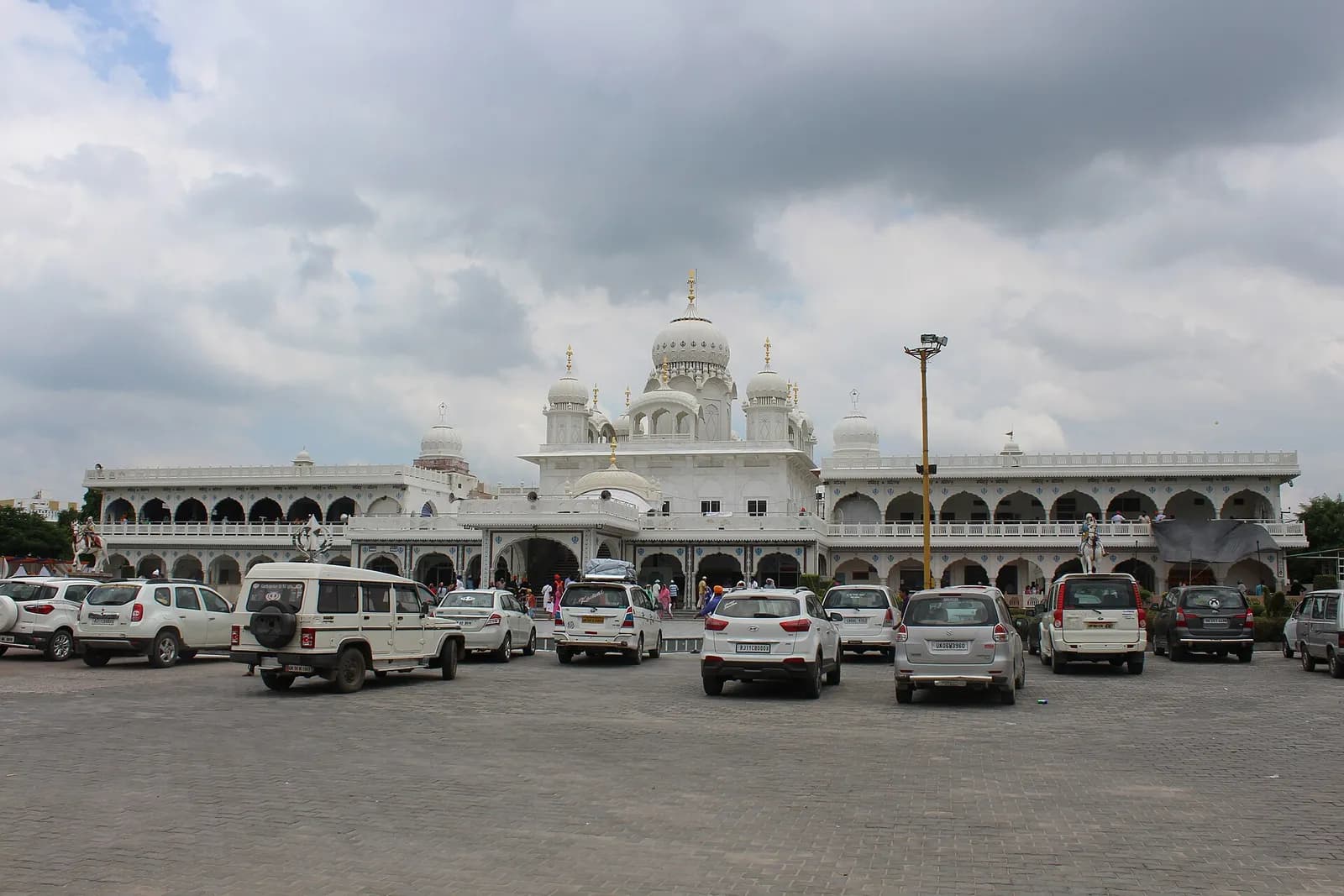
| Parking | Free, on-site |
What is Guru ka Taal?
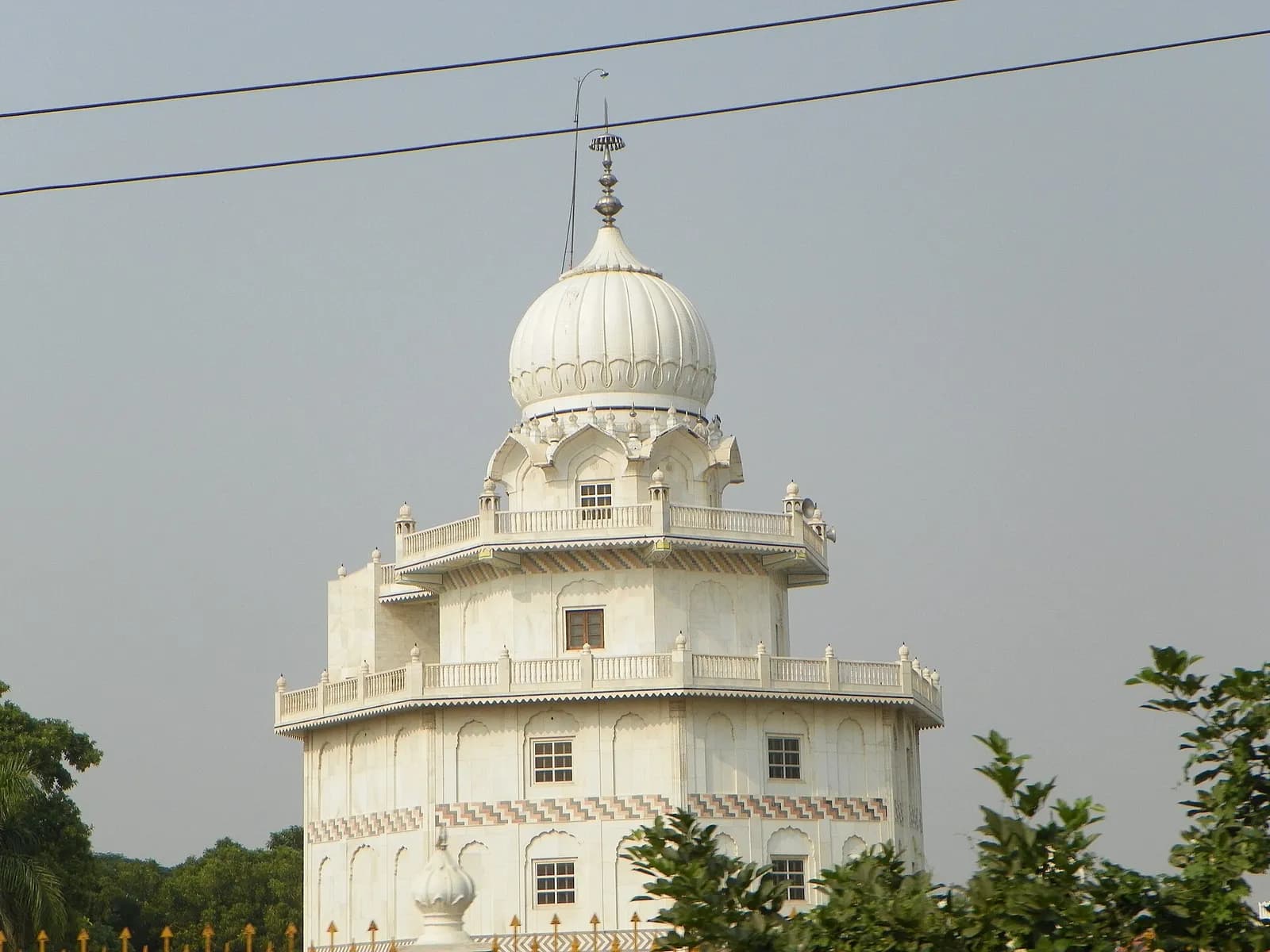
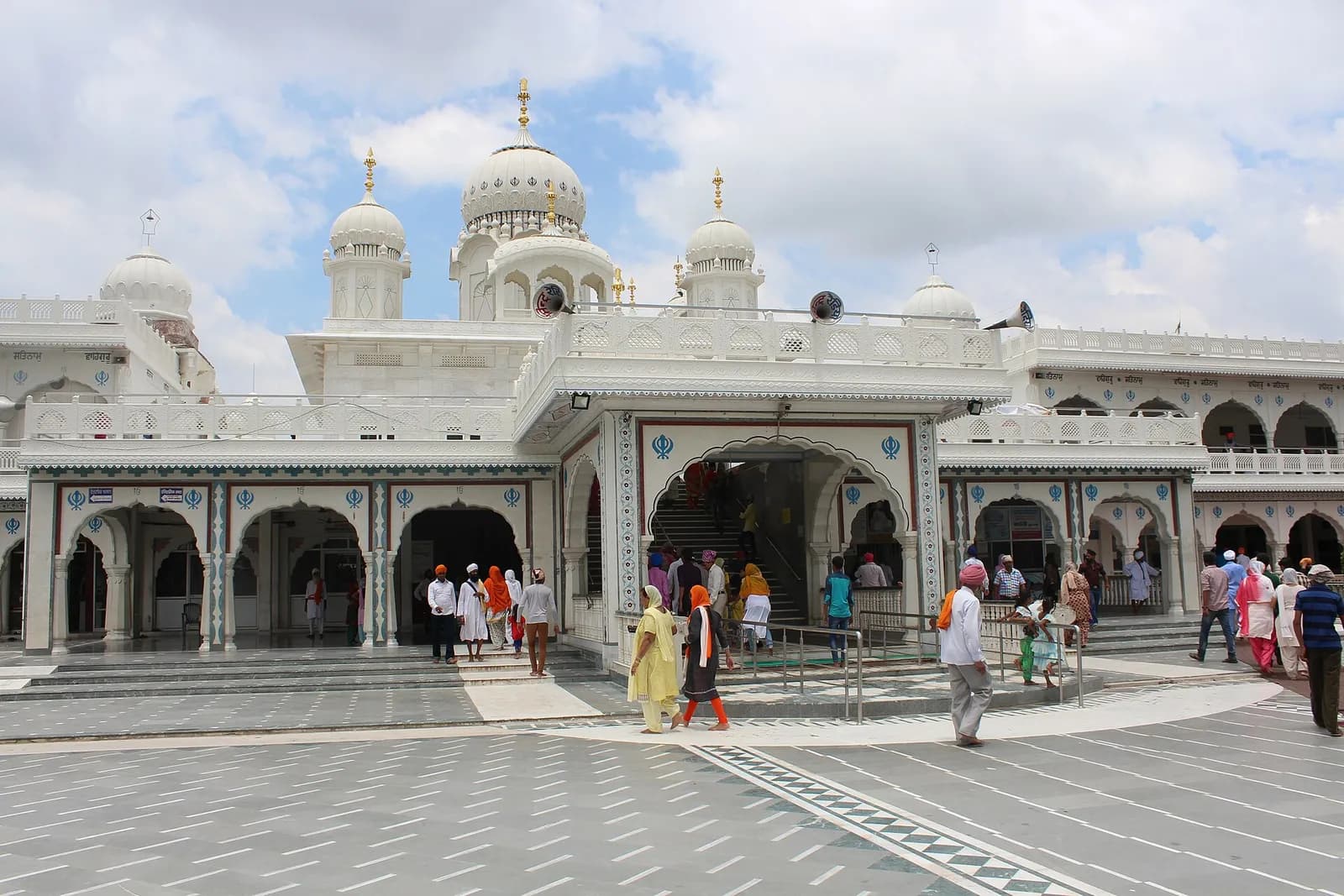
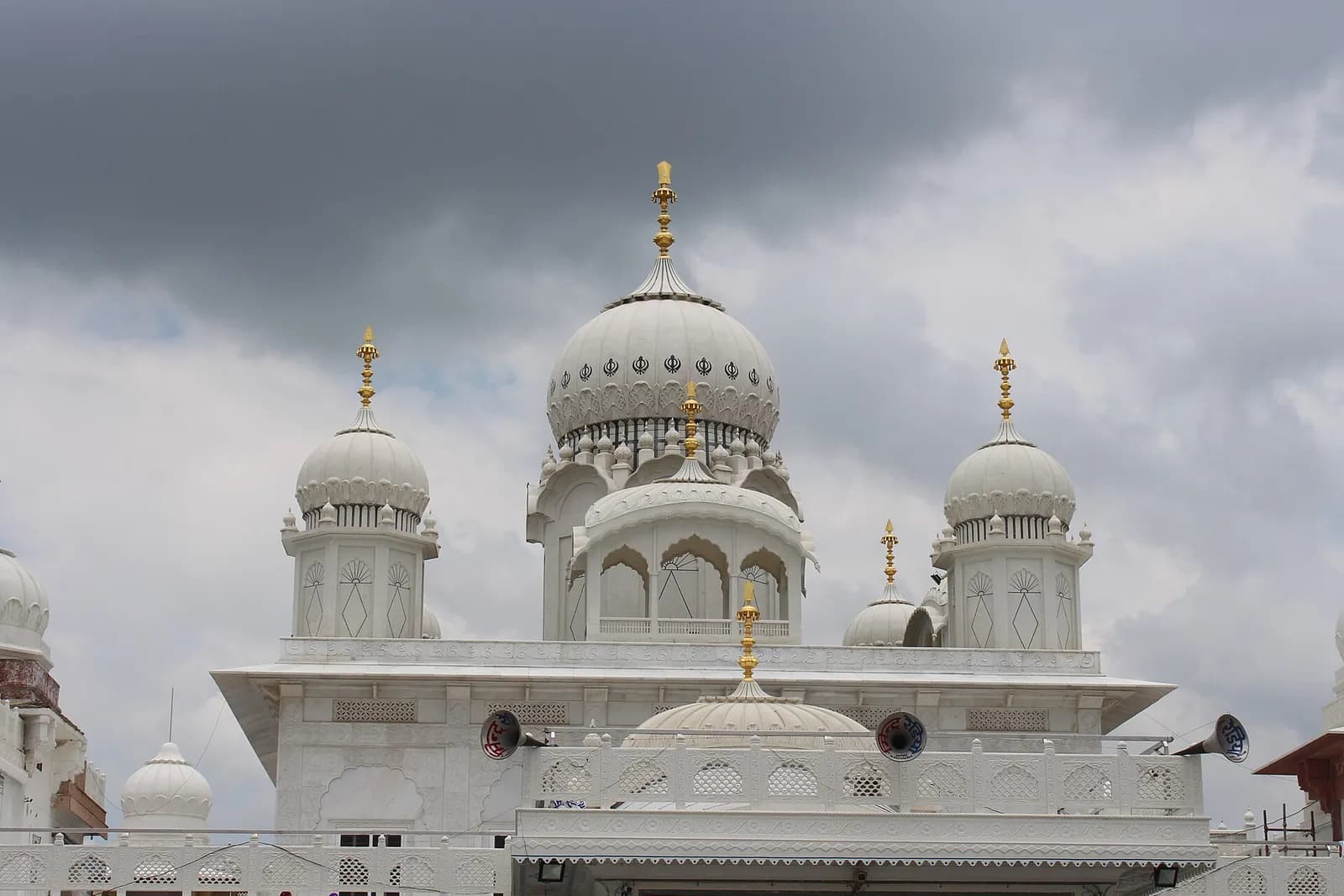
Guru ka Taal, officially Gurudwara Dookh Nivaaran Guru Kaa Taal, is a revered 17th-century Sikh pilgrimage site and historic architectural complex in the Sikandra area of Agra, on National Highway 19, the Mathura Road. It is built beside and around a Mughal-era rainwater reservoir and it commemorates the exact spot where the ninth Sikh Guru, Sri Guru Tegh Bahadur Ji, voluntarily offered himself for arrest to the Mughal Emperor Aurangzeb, in defence of religious freedom. The result is a place where sacred Sikh history and Mughal engineering meet, a white marble shrine rising among carved red sandstone towers, alive with prayer, service and pilgrimage.
Several things make Guru ka Taal special and they are worth knowing before you arrive:
- A site of great Sikh significance. It marks where Guru Tegh Bahadur Ji surrendered himself to protect the right to worship freely.
- A Mughal reservoir within a Gurudwara. The shrine incorporates the carved towers and walls of a 17th-century water tank or taal.
- Open and welcoming to all. Entry is free, the doors are open 24 hours and the langar feeds everyone regardless of faith.
- A living pilgrimage, not a museum. Continuous kirtan, daily service and an on-site sarai make it a working place of worship.
- Easy to reach on the Delhi road. It sits on NH-19 in Sikandra, close to Akbar's Tomb and the city's northern approach.
History and religious significance
The story of Guru ka Taal binds together Mughal water engineering and is one of the defining moments of Sikh history. Understanding it transforms a visit, because every tower and chamber here carries meaning.
- A Mughal water reservoir. The site began in 1610 as a massive stone-carved rainwater harvesting tank or taal, built during Emperor Jahangir's reign to conserve water for irrigation.
- The arrest of Guru Tegh Bahadur Ji. It is revered as the exact place where the ninth Sikh Guru surrendered himself to Aurangzeb's forces, in defence of religious freedom, before being taken to Delhi.
- Bhaura Sahib. The complex holds an underground chamber known as Bhaura Sahib, where Guru Tegh Bahadur Ji was kept in confinement for nine days.
- Blessed by four Gurus. Sikh tradition holds that this ground was graced by the visits of four of the ten Sikh Gurus: Guru Nanak Dev Ji, Guru Hargobind Sahib Ji, Guru Tegh Bahadur Ji and Guru Gobind Singh Ji.
- The modern Gurudwara. The present white marble Gurudwara was built in the 1970s through dedicated kar seva led by Sant Baba Sadhu Singh Ji, known as Mauni.
This layered past is why Guru ka Taal matters so much to pilgrims. Guru Tegh Bahadur Ji is remembered across India as the Guru who gave his life to defend the freedom of others to practise their faith and the ground where he offered himself for arrest is hallowed for that sacrifice. That a Mughal reservoir became the setting for this story and that a community later raised a marble shrine here through voluntary service, gives the site a depth that rewards a slow, thoughtful visit.
The name itself carries meaning. Dookh Nivaaran means the remover of suffering or sorrow, a title given to places of healing and solace in the Sikh tradition, while taal refers to the reservoir around which the shrine grew. Together the full name, Gurudwara Dookh Nivaaran Guru Kaa Taal, speaks of a place of refuge and relief as much as of history. The connection to four of the ten Gurus, held dear in Sikh tradition, adds to that sense of continuity, binding the site to the wider story of the faith from Guru Nanak Dev Ji through to Guru Gobind Singh Ji. When you stand among the old towers today, you are standing where that long thread of devotion passes through Agra, which is part of what makes the visit so affecting.
Architecture and key highlights
Guru ka Taal is an unusual blend of Mughal stonework and Sikh devotional architecture and several features stand out.
- Red sandstone towers. The complex preserves 8 of the original 12 octagonal red sandstone towers or burj, along with intricately carved stone walls from the 17th-century reservoir, blending Mughal and Sikh styles.
- The main Diwan Hall. The central prayer hall is finished in pristine white marble, where the Guru Granth Sahib is enshrined under an ornate canopy, accompanied by continuous kirtan.
- The langar hall. A large community kitchen serves free, freshly prepared vegetarian meals around the clock to devotees and travellers of all faiths, reflecting the Sikh principle of equality and service.
- The sarovar and gardens. Well-kept lawns, peaceful walkways and the historic reservoir basin surround the central shrine.
- The sarai. The Gurudwara runs an on-site guest house offering clean, budget-friendly rooms for pilgrims and travellers.
The contrast between the weathered red towers and the gleaming white shrine is the lasting image most visitors take away. The old reservoir walls, carved centuries ago to hold water, now frame a place of prayer and walking between the two you feel the full span of the site's history in a few steps.
Bhaura Sahib and the story of Guru Tegh Bahadur Ji
At the heart of Guru ka Taal's significance is Bhaura Sahib, the underground chamber where Guru Tegh Bahadur Ji was held in confinement for nine days after offering himself for arrest. For pilgrims, descending to this chamber is one of the most meaningful acts of a visit, a moment of quiet reflection on the Guru's sacrifice. Guru Tegh Bahadur Ji is revered as the Guru who stood against religious persecution and gave his life so that others could worship freely and the ground at Guru ka Taal marks the beginning of that final journey to Delhi. Visitors of every faith are welcome to sit, reflect and learn the story here and doing so adds enormously to an understanding of why the site is so sacred. Treat the chamber and the whole complex with the reverence it deserves, keep silence where prayer is under way and take the time to absorb what this place represents rather than hurrying through.
Langar at Guru ka Taal
The langar, the free community kitchen, is one of the most beautiful things about any Gurudwara and at Guru ka Taal it runs around the clock. Fresh vegetarian meals are prepared and served to everyone who comes, pilgrims and travellers, rich and poor, of every faith and background, all seated together in rows on the floor. This is the Sikh principle of equality and selfless service made real and sharing a langar meal here is a genuine privilege rather than a tourist activity. Everyone sits together in a pangat, on floor mats and is served the same simple, wholesome food. The only etiquette is to cover your head, sit respectfully and accept only as much as you can finish, so that nothing is wasted. For many visitors, the langar is the most memorable part of the whole visit, a quiet, powerful experience of community and generosity that stays with you long after. If you have never shared a langar before, Guru ka Taal is a warm and welcoming place to do so.
Rooms and the sarai at Guru ka Taal
For pilgrims who wish to stay, Guru ka Taal operates an on-site sarai, a guest house offering clean, budget-friendly rooms. This is a common and welcome feature of major Gurudwaras, intended to give pilgrims and travellers a simple, affordable place to rest. The rooms are basic and practical rather than luxurious, in keeping with the spirit of a pilgrimage lodging and they put you right beside the shrine for early morning and late evening prayers. Because the sarai is run for pilgrims, rooms are allocated through the Gurudwara's own office rather than through commercial travel sites, so the best way to arrange a stay is to enquire directly with the Gurudwara, ideally in advance during festival periods when demand is high. Availability, any suggested contribution and the booking process are set by the Gurudwara and can change, so confirm the current arrangements with them directly. If you would prefer a hotel, there is a wide range of accommodation along the Sikandra and NH-19 corridor and across Agra.
Entry fee and timings
Guru ka Taal is free to visit and open at all hours, which makes it one of the most accessible sites in Agra. The Gurudwara complex is open 24 hours a day, seven days a week and entry is free for everyone, of every nationality and faith. The langar is likewise free and served around the clock. Foreign tourists are not charged for the Gurudwara at all and the only related cost is the standard same-day Agra Development Authority civic toll that applies when visiting other protected monuments in the city, which is waived on Fridays. There is no pressure to donate, though voluntary offerings and kar seva are gratefully received. Plan on 1 to 2 hours for an unhurried visit. These details are current at the time of writing and are worth reconfirming, especially around major festivals when timings and crowds change.
Etiquette and visitor rules
A Gurudwara is a living place of worship and observing its etiquette is a mark of respect that is always warmly received. Keep these points in mind:
- Cover your head. Covering your head is mandatory inside the premises and complimentary scarves or rumalas, are provided at the entrance. Dress modestly, in clothing that covers the shoulders and knees.
- Remove your shoes and wash. Leave your footwear at the free deposit counter, the Joda Ghar and wash your hands and feet at the designated trough before entering the main prayer hall.
- In the prayer hall. Bow respectfully before the Guru Granth Sahib and sit cross-legged on the carpeted floor without pointing your feet toward the scripture. Keep silent and set your phone to silent.
- At the langar. Everyone sits together in rows, in a pangat, on the floor mats. Accept only as much food as you can finish, to avoid any waste.
- General respect. Photography may be restricted in parts of the complex, so look for signs or ask and always follow the guidance of the sevadars, the volunteers who serve here.
What to expect at Guru ka Taal
Expect a calm, welcoming and deeply spiritual place rather than a ticketed tourist attraction. You arrive off the busy NH-19, cover your head, leave your shoes at the Joda Ghar and step into a complex where the carved red towers of an old reservoir surround a serene white marble shrine. Inside the Diwan Hall, the Guru Granth Sahib sits beneath its canopy and kirtan plays continuously, filling the space with a gentle, unbroken music. Pilgrims come and go at all hours, the langar hall hums with quiet service and the whole atmosphere is one of openness and peace. It is a place to slow down, sit a while, share a meal and reflect on a remarkable story. Visitors of every faith are not only allowed but genuinely welcomed and the warmth of that welcome is what most people remember. Come with respect and an open mind and Guru ka Taal offers one of the most heartfelt experiences in Agra.
For travellers who have spent their days queuing at ticketed monuments, the contrast here is striking. There is no gate fee, no rush, no sense of being hurried along a set route. You are free to sit as long as you like, to wander among the old towers, to watch the sevadars at their work and to simply be present. The complex is clean and well kept, the sarovar and gardens give space to pause and even at busy times the atmosphere stays calm. It is the kind of place that stays with people and more than a few guests tell me afterwards that it was the quiet highlight of their Agra trip, the moment the city felt less like a checklist and more like a living, generous place.
Best time to visit Guru ka Taal
The best season is October to March, when Agra's daytime weather is comfortable for exploring the complex. Within the day, the early morning and evening prayer sessions are the most atmospheric, when kirtan and the gathering of devotees give the shrine its fullest spirit. The Gurudwara is open around the clock, so there is no wrong time to come, but these quieter, prayerful hours are especially rewarding. The site is at its most vibrant during major Sikh festivals, above all Gurpurab and the Martyrdom Day of Guru Tegh Bahadur Ji, when large, colourful congregations gather and the langar and processions reach their peak. If you wish to witness that devotion at its height, time your visit to a festival, but expect crowds and arrange any sarai stay well in advance. Our notes on the best time to visit Agra cover the wider season.
How to reach Guru ka Taal and its location
Guru ka Taal sits directly on NH-19, the Agra to Delhi and Mathura Road, in Maharishi Puram Colony, Sikandra, on the northern edge of Agra. It is easy to reach by road, well served by city buses, e-rickshaws, auto-rickshaws and app-based cabs, with free parking on-site. For rail arrivals, Billochpura Railway Station is the closest local stop, while Raja Ki Mandi and Agra Cantt, the main long-distance station, are both easily reached by auto-rickshaw or taxi. On the metro, the elevated Guru ka Taal station on the Yellow Line sits right outside the shrine, but it remains under construction and the operational stretch of the Yellow Line currently serves central and eastern Agra, around Mankameshwar, the Agra Fort and the Taj Mahal, so check the latest Agra Metro status before relying on it. Because the shrine is on the main Delhi highway, it is a natural first or last stop on a drive into or out of the city and travellers often fold it into a wider Agra plan such as a same day Agra tour from Delhi or an Agra overnight tour from Delhi.
Do bear in mind that Guru ka Taal is on the northern, Sikandra side of the city, a good distance from the Taj Mahal, which sits on the southern riverside. The two are best treated as separate parts of an Agra day rather than a quick hop between neighbours and our guide on how to reach the Taj Mahal covers that side of the city. A sensible plan is to visit Guru ka Taal and the Sikandra monuments together, as one cluster and keep the Taj Mahal and the central sights for another part of the day. Local autos, e-rickshaws and app cabs make moving between the two straightforward and with your own car and driver the whole circuit is easy to cover in a day.
Places to visit near Guru ka Taal
Guru ka Taal sits in the Sikandra cluster on the Delhi highway, so it pairs naturally with the great monuments at the northern edge of Agra. Right down the road is Akbar's Tomb, the vast mausoleum of the Mughal emperor, set in its deer-park garden and the obvious pairing for a Sikandra visit. Nearby you can also see Pathar ka Ghoda and further north along NH-19 lies the Sur Sarovar Bird Sanctuary at Keetham Lake, a fine stop for birdwatchers. On the way back into the city, the headline sights await, from the Agra Fort to the eastern-bank Itimad-ud-Daulah and the incomparable Taj Mahal. With a full day on the Jaipur road, the deserted Mughal capital of Fatehpur Sikri is a rewarding addition and across the river the garden of Mehtab Bagh gives the classic Taj sunset.
Visiting tips
A few notes to make your visit smooth and respectful:
- Carry a head covering. Rumalas are provided, but a scarf of your own is handy; both men and women must cover their heads.
- Dress modestly. Clothing that covers the shoulders and knees is expected throughout the complex.
- Share the langar. Sit, accept a meal and experience the kitchen that never closes, it is the heart of the visit.
- Visit Bhaura Sahib. Take time at the underground chamber to understand the Guru's sacrifice.
- Combine with Akbar's Tomb. It is right down the road, so the two make an easy Sikandra pairing.
- Respect the quiet. Keep phones on silent and follow the sevadars, especially during prayer.
Guru ka Taal in your Agra itinerary
Guru ka Taal fits an Agra itinerary beautifully as a meaningful, unhurried stop that balances the grandeur of the monuments with something gentler and more human. Because it sits on NH-19 in Sikandra, the natural way to use it is on the way into Agra from Delhi or Mathura or on the way out, pairing it with Akbar's Tomb just down the road. For travellers interested in faith, history or simply the warmth of the langar, it is a highlight rather than a detour. Pilgrims, of course, may make it the centre of their visit and stay in the sarai. However you include it, it offers a change of pace and a depth of feeling that the marble monuments, for all their beauty, do not. Our Agra travel guide helps you weave it into a trip that sees the city's living faith alongside its Mughal splendour. A short, respectful visit here, between the forts and the tombs, often turns out to be the part of Agra that guests remember most warmly.
Plan your trip with us
If you would like to visit Guru ka Taal with the time to understand its story, share the langar and see the Sikandra monuments alongside it, let us arrange the day. Our Delhi Agra tours cover the Taj Mahal, the Agra Fort and the quieter, meaningful corners of the city and travellers short on time often choose a full Golden Triangle tour through Delhi, Agra and Jaipur or an early start with our sunrise Taj Mahal tour. To plan dates, inclusions and a route that gives Guru ka Taal its due, message Abhay and the team directly on WhatsApp at +91 7302265809 or reach our team online and we will shape an Agra journey that honours both its monuments and its living heritage.
Related guides
Keep reading before you travel, these pair well with this guide:
Enquire Now
What our travellers say
“Our Golden Triangle honeymoon was flawless. Sunrise at the Taj with a private guide felt like a dream — every detail was handled.”
“As a first-time visitor to India, I felt completely safe and looked after. The driver and guide were superb professionals.”
“Travelling with two kids is hard, but they made it effortless. Great pacing, clean cars and zero surprises on price.”
“Booked the Agra day trip on short notice and it went off without a hitch. The guide's history knowledge made the Taj come alive.”
“Best decision of our India trip. Car was spotless, driver was punctual every single day, and the itinerary never felt rushed.”
“Organised a same-day Agra trip for my parents. Communication before and during the trip was excellent — genuinely stress-free.”
“Sunrise at the Taj Mahal was magical. Our guide spoke great English and answered every question with patience.”
“Three generations travelling together and everyone was comfortable — good vehicle, sensible stops, and no hidden costs.”
“I've used a few tour operators across Asia and this was among the smoothest. Fair pricing and they actually answer the phone.”
“Our custom Rajasthan-Agra combo was planned around our budget without cutting corners on comfort. Highly recommend.”
“Solo female traveller here — I felt safe throughout. The driver was respectful and the whole trip was timed perfectly.”
Ready to Explore
The Magic of Agra?
Experience the Taj Mahal at sunrise, explore the mighty Agra Fort, and discover the hidden gems of India's most beloved heritage city with our expert-guided premium tours.

Agra
Premium Tour Package
Questions
Frequently asked questions
What is Guru ka Taal?
Guru ka Taal, officially Gurudwara Dookh Nivaaran Guru Kaa Taal, is a revered 17th-century Sikh pilgrimage site in Sikandra, Agra, on NH-19. It marks the spot where the ninth Guru, Sri Guru Tegh Bahadur Ji, offered himself for arrest to Aurangzeb and it is built around the carved towers of a Mughal-era reservoir.
What are the Guru ka Taal timings?
Is there an entry fee at Guru ka Taal?
What is the history of Guru ka Taal?
What are the langar timings at Guru ka Taal?
Can you book a room at Guru ka Taal?
How far is Guru ka Taal from the Taj Mahal?
What is the nearest metro or railway station to Guru ka Taal?
Is Guru ka Taal open to non-Sikh visitors?
What should I wear and know before visiting Guru ka Taal?
Explore more
Plan your Guru ka Taal trip with us

Interested in Guru ka Taal Agra: Gurudwara Timings, History and Langar?
Chat with our travel team for a custom quote, or browse every package.
Related Attractions
9Guru ka Taal Agra on the map
Open in Google MapsReady to explore Guru ka Taal Agra: Gurudwara Timings, History and Langar?
Book your private tour today and experience the magic of India's rich heritage.