


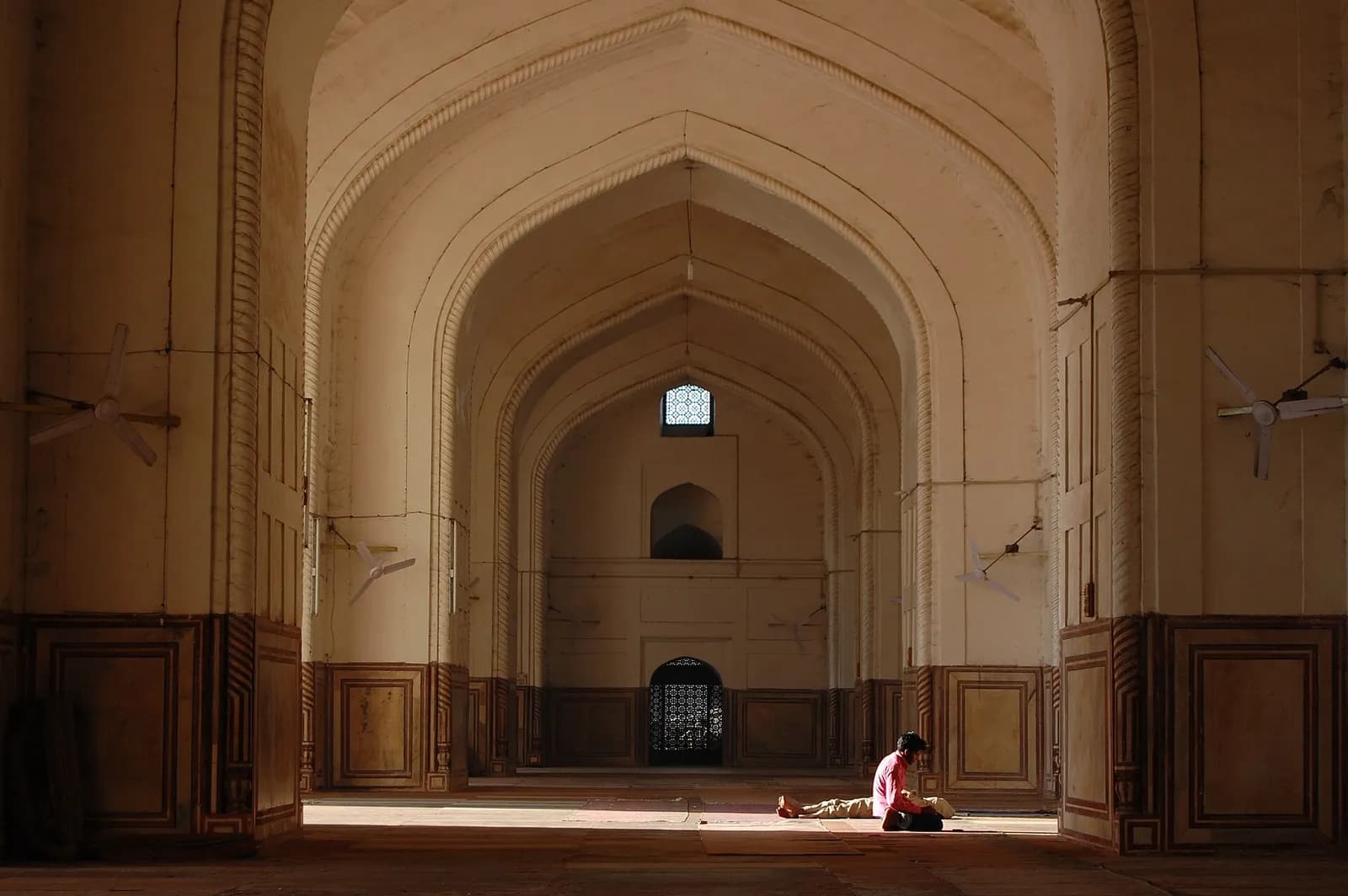
 Old city, near Agra Fort, Agra
Jama Masjid Agra: Timings, Entry, History and Visitor Guide
Visiting Jama Masjid in Agra, the great mosque built by Jahanara Begum opposite Agra Fort? Its history, timings, free entry, the Friday rule and how to reach.
Quick answer
Jama Masjid Agra, also called the Shahi Jama Masjid, is a 17th-century Mughal congregational mosque built by Princess Jahanara Begum, daughter of Shah Jahan, directly opposite the Agra Fort. One of India's largest imperial mosques, it has free entry and is open daily, though non-Muslim tourists cannot enter on Fridays. It features on our Agra tours, run by a unit of Experience My India.
- #jama-masjid
- #agra
- #agra-attractions
- #agra-travel
Jama Masjid is the great mosque most Taj Mahal visitors walk right past, a soaring red sandstone and marble monument built by an emperor's daughter and still beating at the heart of old Agra. Our team at Delhi Agra Tour Packages folds it into Agra Fort days and it sits naturally on any Golden Triangle tour through Delhi, Agra and Jaipur.
I am Abhay Sharma, a Golden Triangle guide since 2015 and I love bringing guests here because it tells a story the famous monuments do not. This is a mosque designed and funded entirely by Princess Jahanara in honour of her father, Shah Jahan, standing in the thick of Agra's oldest bazaars opposite the Fort. Few visitors realise that one of Agra's grandest monuments was the work of a Mughal princess and fewer still make the short walk from the Fort to see it, which is exactly why it remains such a rewarding, uncrowded stop. This guide gathers everything I would tell a visitor beforehand, the history and the architecture, the timings and the all-important Friday rule, the dress code and how to reach it through the lanes of Kinari Bazar.
Jama Masjid at a glance
| Detail | Information |
|---|---|
| Also known as | Shahi Jama Masjid |
| Built by | Princess Jahanara Begum, daughter of Shah Jahan |
| Built | 17th century, completed 1648 |
| Location | Kinari Bazar, old Agra, opposite the Agra Fort |
| Capacity | Up to 25,000 worshippers |
| Entry | Free for all visitors |
| Friday | Non-Muslim tourists not permitted |
| Time needed | 30 to 60 minutes |
| Best season | October to March |
Jama Masjid timings
| Detail | Information |
|---|---|
| Open | Daily, 6 AM to 10 PM |
| Best for sightseeing | 7 AM to 12 PM and 1:30 PM to 6:30 PM |
| Friday | Non-Muslim tourists not permitted (Jumu'ah prayers) |
| Time needed | 30 to 60 minutes |
Jama Masjid is generally open every day from 6 AM to 10 PM, but tourist sightseeing is best done between 7 AM and 12 PM or 1:30 PM and 6:30 PM, outside the main prayer times, so you do not disturb worshippers. The one firm rule to plan around is Friday, when non-Muslim tourists are not permitted to enter because of the large weekly congregational prayers. These timings are current at the time of writing and can change, so reconfirm before a special trip.
Entry fee
| Visitor | Entry |
|---|---|
| Indian nationals | Free |
| Foreign nationals | Free |
| Children | Free |
Entry to Jama Masjid is completely free for both Indian and international visitors and there is no ticket counter at the mosque. This makes it one of the easiest and most rewarding free stops in Agra, a welcome contrast to the ticketed Taj Mahal and Agra Fort, as long as you plan around the prayer times and the Friday restriction. These details are current at the time of writing, so reconfirm before you travel.
How to reach Jama Masjid
| From | Route |
|---|---|
| Agra Fort | 5 to 10 minute walk, directly opposite |
| Agra Fort Railway Station | Adjacent, a few steps from the entrance |
| Agra Metro (Yellow Line) | Mankameshwar Mandir station, a 9 minute walk |
| Taj Mahal | 10 to 15 minute auto rickshaw or cab ride |
What is Jama Masjid Agra?
Jama Masjid Agra, also known as the Shahi Jama Masjid, is a 17th-century Mughal congregational mosque in the historic heart of old Agra, standing directly opposite the Agra Fort. Built by Princess Jahanara Begum, the eldest daughter of Emperor Shah Jahan and completed in 1648, it is one of India's largest imperial mosques, capable of holding up to 25,000 worshippers. Raised on a high plinth above the surrounding bazaars, with three striped domes and a vast red sandstone courtyard, it remains Agra's primary congregational mosque and a living centre of faith rather than a ticketed monument. For the visitor, it offers a very different experience from the city's famous mausoleums, a chance to see a grand Mughal building still at the heart of daily life in the old city.
Several things make it special and they are worth drawing out:
- An emperor's daughter's gift. Designed and funded entirely by Princess Jahanara Begum in honour of her father, Shah Jahan.
- One of India's largest mosques. A vast courtyard that can hold up to 25,000 worshippers.
- Striking striped domes. Three bulbous domes banded with distinctive zigzag white marble inlaid into red sandstone.
- A living mosque. Still Agra's main congregational mosque, with Sufi shrines inside the complex, not just a museum piece.
- Free and central. Free to enter and set right opposite the Agra Fort in the old city's busiest bazaars.
History of Jama Masjid
The story of Jama Masjid is unusual among Agra's monuments, because it was the creation of a royal woman at the height of the Mughal Empire.
The story runs in clear stages:
- Royal patronage. The mosque was commissioned, designed and funded entirely by Princess Jahanara Begum, the eldest daughter of Shah Jahan, in honour of her father.
- Construction timeline. It was built over six years, from 1643 to 1648, by a workforce of some 5,000 artisans, at an estimated cost of 5 lakh rupees, an enormous sum for the time.
- A demolished forecourt. The mosque was originally connected to the Delhi Gate of the Agra Fort by a grand octagonal chowk, a market square, which the British demolished in 1857 to lay railway tracks.
- A spiritual hub. It remains Agra's primary congregational mosque and houses the tomb of the grandson of the Sufi saint Sheikh Salim Chishti, along with the Gareeb Shah Baba Mazaar inside the complex.
That lost octagonal chowk is the detail I always point out, because it changes how you read the site. The mosque and the Fort once faced each other across a grand ceremonial square, a single imperial composition, until the railway cut them apart. Knowing that, you can still feel how the mosque was meant to be approached in procession from the Fort, rather than squeezed between bazaar lanes as it is today.
Jahanara Begum herself is a figure worth knowing, because she was far more than a name on a plaque. As the eldest daughter of Shah Jahan she became the most powerful woman at the Mughal court, especially after her mother Mumtaz Mahal, for whom the Taj Mahal was built, died. She controlled vast resources in her own right and was a noted patron of architecture, poetry and learning and this mosque was one of her grandest commissions. That a princess could design, fund and dedicate a congregational mosque of this scale tells you a great deal about her standing and it makes Jama Masjid a rare monument to Mughal women's power as well as to faith.
The mosque also sits at an interesting moment in the dynasty's story. It was completed in 1648, the same era in which Shah Jahan was shifting his capital and building projects toward Delhi, so Jama Masjid Agra stands near the end of Agra's great building age, a final imperial flourish in the old capital before the centre of gravity moved north. Reading it that way, the mosque feels like a daughter's tribute to her father's city as much as to the man himself.
Jama Masjid architecture
Jama Masjid is a confident piece of Mughal design and the features below reward a slow look as you cross the courtyard.
- The elevated plinth. The entire complex rests on a high platform reached by a flight of 35 steps, lifting the sacred space above the surrounding street markets.
- The zigzag striped domes. Three massive bulbous domes, crowned with inverted lotus motifs and finials, carry distinctive narrow zigzag bands of white marble inlaid into red sandstone.
- The central iwan and calligraphy. The main prayer hall is fronted by a soaring central arched portal, the iwan, decorated with intricate black stone inlays of Persian inscriptions praising Jahanara Begum and verses from the Quran.
- The expansive courtyard. The vast red sandstone courtyard, the sahn, holds a central ablution fountain, pillared cloisters and rooftop chhatris, with room for up to 25,000 worshippers.
The zigzag striped domes are the signature here, unlike the smooth white domes of the Taj Mahal and they give the mosque an instantly recognisable silhouette above the old city. The bands of white marble zigzagging across the red sandstone domes are a bold, almost playful touch and once you have seen them you will spot the mosque from across the rooftops of old Agra. The calligraphy on the central iwan is worth a closer look too, because it is one of the few Mughal monuments where the inscriptions openly praise a royal woman, a fitting tribute on a mosque she built herself.
The scale of the courtyard is best appreciated when it is quiet. Standing in the vast red sandstone sahn, with the pillared cloisters running along the sides and the rooftop chhatris breaking the skyline, you get a real sense of the 25,000 worshippers it was built to hold. The central ablution fountain, where the faithful wash before prayer, anchors the space and the whole composition, raised high above the bazaar on its plinth, was designed to lift both the eye and the spirit away from the everyday bustle below. It is monumental architecture built for a community rather than for a single tomb, which gives it a different, more communal feeling than Agra's famous mausoleums.
Jama Masjid entry fee and timings
Jama Masjid is one of the easiest Agra monuments to add to a day, because entry is free for everyone and there is no ticket counter. It is generally open from 6 AM to 10 PM, though for sightseeing the calm windows are 7 AM to 12 PM and 1:30 PM to 6:30 PM, outside the busiest prayer times when the courtyard fills with worshippers. The single most important thing to plan around is Friday, when non-Muslim tourists are not permitted to enter at all because of the large Jumu'ah congregation. If your Agra day falls on a Friday, see the mosque from the outside and save the interior for another day. Plan on 30 to 60 minutes for a visit, a little longer if you want to explore the surrounding bazaars. These details are current at the time of writing, so reconfirm before you travel.
Dress code and rules at Jama Masjid
This is an active place of worship, so a few rules matter here more than at a ticketed monument. Keep these in mind:
- Dress modestly. Cover your shoulders and knees and women should cover their heads with a scarf or shawl.
- Remove footwear. Shoes must come off before you step onto the mosque platform, so wear something easy to slip off.
- Mind the Friday rule. Non-Muslim tourists are not permitted to enter on Fridays because of the large weekly congregational prayers, so plan your Agra days accordingly.
- Visit outside prayer times. Come during the quieter sightseeing windows so you do not disturb worshippers and be respectful and quiet inside.
What to expect at Jama Masjid
Expect a living, working mosque in the middle of a busy old-city bazaar rather than a quiet, manicured monument. You climb the 35 steps from the crowded market up onto the high plinth and the noise of the lanes falls away as the vast red sandstone courtyard opens in front of you, with the striped domes rising above the prayer hall. That climb is part of the experience by design, a deliberate transition from the chaos of commerce below to the calm of worship above and it is one of the simplest and most effective pieces of Mughal planning you will encounter in Agra. It is a genuine spiritual space, often with worshippers present, so the atmosphere is reverent rather than tourist. The contrast is part of the appeal, from the constant press of Kinari Bazar below to the calm, elevated courtyard above. Allow 30 to 60 minutes to take in the architecture, the courtyard and the surrounding heritage lanes of the old city.
This is not a sanitised, ticketed experience and that is exactly why I bring curious travellers here. You share the space with local worshippers and the rhythm of daily prayer, you hear the call to prayer echo over the bazaar and you see a Mughal monument still doing the job it was built for nearly four centuries ago. For visitors who have spent their time in Agra filing past the Taj and the Fort with thousands of others, the mosque offers something more human and alive, a working piece of the old city rather than a museum. Approach it with respect and an open mind and it becomes one of the most memorable half hours of an Agra trip.
Best time to visit Jama Masjid
The best season is October to March, when Agra's daytime weather is pleasant for walking in the old city, as the crowded bazaar lanes around the mosque can be tiring in the summer heat. During the day, the late afternoon is lovely, when warm natural light falls on the red sandstone and the striped domes glow against the sky. Aim for the calm sightseeing windows, 7 AM to 12 PM or 1:30 PM to 6:30 PM and remember to avoid Friday if you are a non-Muslim visitor hoping to go inside the mosque itself. Our wider notes on the best time to visit Agra apply closely here and because entry is free, it is easy to time your stop for the best light and the quietest hour.
How to reach Jama Masjid and its location
Jama Masjid stands on Jama Masjid Road in Subhash Bazar and Kinari Bazar, in the old heart of Agra, directly opposite the Agra Fort. The Agra Fort Railway Station sits right beside the mosque, just a few steps from the entrance, which makes arrival by train very easy. On the Agra Metro Yellow Line, the nearest stop is Mankameshwar Mandir station, formerly called Jama Masjid station, a 9 minute walk away and our guide to the Agra Metro explains the network and routes in detail. From the Taj Mahal it is a 10 to 15 minute auto rickshaw or cab ride and from the Agra Fort it is a 5 to 10 minute walk. If Jama Masjid is part of a fuller Agra plan, it pairs naturally with the Fort and our sunrise Taj Mahal tour works well before a morning in the old city. Travellers staying over often add it to an Agra overnight tour from Delhi.
Places to visit near Jama Masjid
Jama Masjid sits in the busiest, most atmospheric part of old Agra, so it combines beautifully with the city-side sights rather than the eastern bank. Directly opposite stands the Agra Fort, the great red sandstone citadel, which is the natural pairing for a morning in the old city and shares much of the same Mughal history. A short walk away is the revered Shri Mankameshwar Mandir, one of Agra's most important and ancient temples, dedicated to Lord Shiva and covered in our guide to Mankameshwar Temple, which makes a meaningful contrast of faiths within a few minutes' walk. All around the mosque spread the lanes of Kinari Bazar, famous for street food, sweets and spice shopping, which make a visit here as much about the living city as the monument. These are some of the oldest and most atmospheric bazaars in Agra, where you can buy spices, sweets, textiles and traditional jewellery and simply watching the life of the lanes is an experience in itself. Pairing the mosque with a wander through the market and perhaps a plate of Agra street food, turns a quick monument stop into a proper half day in the old city. You can read more in our overview of places to visit near the Taj Mahal and our list of lesser-known Agra monuments.
Visiting tips for Jama Masjid
A few notes I give every group before we go:
- Avoid Friday for the interior. Non-Muslim tourists cannot enter on Fridays, so plan around it.
- Dress and cover up. Shoulders and knees covered, a scarf for the head and shoes you can slip off easily.
- Walk the last stretch. The bazaar lanes are narrow and crowded, so walking or an e- rickshaw is far easier than driving up to the gate.
- Come in the quiet windows. Visit outside the main prayer times for a calm, respectful experience.
- Leave time for the bazaar. The spice and sweet shops of Kinari Bazar around the mosque are half the fun.
- Carry small cash. The bazaar shops and street food stalls around the mosque are easiest to enjoy with small notes and coins in hand.
Exploring Jama Masjid and the old city
Because Jama Masjid sits deep in the Kinari Bazar and Subhash Bazar area, the visit is as much about the surrounding old city as the mosque itself. The lanes here are densely packed, full of spice merchants, sweet shops, textile traders and street food, so a knowledgeable guide can turn a simple mosque stop into a rich walk through Mughal-era Agra. A guide also helps you read the architecture and the history, from Jahanara's patronage to the lost octagonal chowk that once linked the mosque to the Fort. If you are doing the Fort and the old city together, one guide for the morning makes the whole area flow and our guided tours handle exactly this, including the easiest way through the crowded bazaars.
The old city around Jama Masjid can feel overwhelming on a first visit, with narrow lanes, heavy foot traffic and little signage, so having someone who knows the area transforms the experience from stressful to fascinating. A good local guide can lead you to the best spice and sweet shops, point out the small shrines and old havelis tucked into the lanes and make sure you arrive at the mosque at a quiet, respectful hour rather than in the middle of prayers. For many of our guests, the walk through these bazaars with a guide ends up being one of the most vivid memories of their whole Agra trip, precisely because it is real, working India rather than a polished tourist bubble.
Jama Masjid in your Golden Triangle itinerary
Jama Masjid is a natural companion to the Agra Fort rather than a stop of its own, so it works best built into a city-side morning. A classic Agra day sees the Taj Mahal at sunrise, then the Agra Fort and Jama Masjid together in the old city, with the bazaars of Kinari Bazar between them. For travellers who want more than the two headline monuments, it adds real depth, showing the living, working side of Mughal Agra alongside the imperial showpieces and it pairs well with Fatehpur Sikri and the eastern bank gardens like Mehtab Bagh and Itimad-ud-Daulah on a fuller trip. Our Agra travel guide ties these together.
On a tight schedule, Jama Masjid costs you almost nothing in time or money, since it is free and sits right beside the Fort, so even a quick climb up to the courtyard is worth it. On a fuller trip, it anchors a proper old-city morning that balances the grandeur of the Fort with the texture of the bazaars, giving you a rounder picture of Agra than the famous monuments alone can offer. Either way, it is the kind of stop that rewards travellers who want to understand the city rather than simply tick off its wonders.
Plan your trip with us
If you would like the old-city side of Agra done well, with the Fort, the great mosque and the bazaars arranged around the light and the prayer times, let us carry the load. We shape the day so you see the famous monuments and the living city without the stress of navigating Agra's crowded lanes yourself. Our Delhi Agra tours combine Jama Masjid and the old city with the Taj Mahal and Agra Fort and travellers short on time often choose our same day Agra tour from Delhi or a full Golden Triangle tour that threads Delhi, Agra and Jaipur. To plan dates, prices and inclusions, message Abhay and the team directly on WhatsApp at +91 7302265809 or reach our team online.
Related guides
Keep reading before you travel, these pair well with this guide:
Enquire Now
What our travellers say
“Our Golden Triangle honeymoon was flawless. Sunrise at the Taj with a private guide felt like a dream — every detail was handled.”
“As a first-time visitor to India, I felt completely safe and looked after. The driver and guide were superb professionals.”
“Travelling with two kids is hard, but they made it effortless. Great pacing, clean cars and zero surprises on price.”
“Booked the Agra day trip on short notice and it went off without a hitch. The guide's history knowledge made the Taj come alive.”
“Best decision of our India trip. Car was spotless, driver was punctual every single day, and the itinerary never felt rushed.”
“Organised a same-day Agra trip for my parents. Communication before and during the trip was excellent — genuinely stress-free.”
“Sunrise at the Taj Mahal was magical. Our guide spoke great English and answered every question with patience.”
“Three generations travelling together and everyone was comfortable — good vehicle, sensible stops, and no hidden costs.”
“I've used a few tour operators across Asia and this was among the smoothest. Fair pricing and they actually answer the phone.”
“Our custom Rajasthan-Agra combo was planned around our budget without cutting corners on comfort. Highly recommend.”
“Solo female traveller here — I felt safe throughout. The driver was respectful and the whole trip was timed perfectly.”
Ready to Explore
The Magic of Agra?
Experience the Taj Mahal at sunrise, explore the mighty Agra Fort, and discover the hidden gems of India's most beloved heritage city with our expert-guided premium tours.

Agra
Premium Tour Package
Questions
Frequently asked questions
Who built Jama Masjid in Agra?
Jama Masjid Agra was built by Princess Jahanara Begum, the eldest daughter of Emperor Shah Jahan. She commissioned, designed and funded the mosque herself in honour of her father and it was completed in 1648.
Is Jama Masjid Agra the same as Jama Masjid Delhi?
What is the Jama Masjid Agra entry fee?
What are the Jama Masjid Agra timings?
Can tourists visit Jama Masjid Agra on Friday?
How far is Jama Masjid from the Taj Mahal and Agra Fort?
What should I wear to Jama Masjid Agra?
How many people can Jama Masjid Agra hold?
Is Jama Masjid Agra worth visiting?
How much time do I need at Jama Masjid Agra?
Why are there zigzag stripes on the domes of Jama Masjid Agra?
What is the nearest metro station to Jama Masjid Agra?
Can I combine Jama Masjid with the Agra Fort?
Is Jama Masjid Agra still used for prayers?
What are the bazaars around Jama Masjid Agra known for?
Explore more
Plan your Jama Masjid Agra trip with us

Interested in Jama Masjid Agra: Timings, Entry, History and Visitor Guide?
Chat with our travel team for a custom quote, or browse every package.
Related Attractions
9Jama Masjid Agra on the map
Open in Google MapsReady to explore Jama Masjid Agra: Timings, Entry, History and Visitor Guide?
Book your private tour today and experience the magic of India's rich heritage.