 Fatehpur Sikri, Agra
Jodha Bai Palace Fatehpur Sikri: History and Architecture
Jodha Bai's Palace at Fatehpur Sikri near Agra was the royal harem's grandest home. Who Jodha Bai was, the history, architecture, timings and how to reach it.
Quick answer
Jodha Bai's Palace is the largest residential building in the royal harem or Zenana, of Fatehpur Sikri, near Agra. Built by Akbar for his chief Rajput queen, historically Mariam-uz-Zamani and popularly called Jodha Bai, it is a fortified red sandstone palace rich in Hindu and Mughal carving. Entry is part of the Fatehpur Sikri palace ticket and it opens daily from 7:30 AM to 6 PM. It features on our Fatehpur Sikri and Agra tours, run by a unit of Experience My India.
- #jodha-bai-palace
- #agra
- #agra-attractions
- #agra-travel
Jodha Bai's Palace is the grandest of the royal residences at Fatehpur Sikri, a large, fortified mansion built for Akbar's principal Rajput queen and filled with carving that blends Hindu and Mughal traditions. It is one of the most atmospheric buildings in the ticketed palace complex and it tells, in stone, the remarkable story of a Mughal emperor who gave his Hindu queen a home where she could keep her own faith. Our team at Delhi Agra Tour Packages includes it on visits to Fatehpur Sikri on the Agra to Jaipur road and it is a natural part of a Golden Triangle tour through Delhi, Agra and Jaipur.
I am Abhay Sharma, a Golden Triangle guide since 2015 and I find guests are always moved by this palace, because it makes the famous story of Akbar and his Rajput queen feel real. This guide covers who Jodha Bai actually was, the history and purpose of her palace, its fortified architecture and Hindu shrines, the timings and ticket and how to reach it. One note to begin: this is Jodha Bai's Palace at Fatehpur Sikri near Agra, in Uttar Pradesh, not the Jodha Bai associations at Amer Fort near Jaipur and it is a separate building from the palaces inside Agra Fort.
Jodha Bai Palace at a glance
| Detail | Information |
|---|---|
| What it is | The largest residence in the royal harem of Fatehpur Sikri |
| Built for | Akbar's chief Rajput queen, Mariam-uz-Zamani, popularly Jodha Bai |
| Built by | Mughal Emperor Akbar |
| Built | From 1569, continuing into the 1580s |
| Style | Indo-Islamic, with strong Hindu and Rajput carving |
| Location | Fatehpur Sikri palace complex, Agra, Uttar Pradesh |
| Entry | Part of the Fatehpur Sikri palace ticket |
| Open | Daily, 7:30 AM to 6 PM |
Timings
| Detail | Information |
|---|---|
| Opening hours | Daily, 7:30 AM to 6 PM |
| Best hours | Early morning or late afternoon |
| Time needed | 30 to 45 minutes for the palace |
| Full site | 3 to 4 hours for all of Fatehpur Sikri |
Entry fee
| Visitor | Price |
|---|---|
| Indian, SAARC and BIMSTEC | ₹50 per person |
| Foreign nationals | ₹610 per person |
| Children under 15 | Free |
| Covers | The whole Fatehpur Sikri palace complex |
How to reach
| Detail | Information |
|---|---|
| Location | Fatehpur Sikri, Agra District, Uttar Pradesh |
| From Agra | 37 km west, on the Agra to Jaipur road |
| Nearest airport | Kheria Airport, Agra, 40 km away |
| By train | Fatehpur Sikri Railway Station or Agra Cantonment |
What is Jodha Bai's Palace?
Jodha Bai's Palace, also known as Jodha Bai ka Mahal or the Palace of Mariam-uz-Zamani, is the largest and most prominent residential building in the royal harem, the Zenana, of Fatehpur Sikri. It lies 37 km from Agra, in Uttar Pradesh, inside the UNESCO World Heritage complex that was Akbar's short-lived imperial capital in the late sixteenth century. Built for the emperor's chief Rajput consort, it is a substantial, fortified palace arranged around a great central courtyard and it is remarkable both for its considerable size and for the way its rich carving blends Hindu, Jain and Mughal traditions in a single harmonious whole. For a visitor, it is one of the most rewarding buildings at Fatehpur Sikri, quieter and more domestic than the public halls and full of detail that tells the story of the queen who lived there and the emperor who built it for her. Where the Diwan-i-Khas and the Panch Mahal speak of the public and ceremonial life of the court, this palace speaks of its private, domestic world, which is exactly what makes it such an interesting counterpoint to the showier buildings nearby.
Several things make it special:
- The grandest royal residence. It was the largest home in the Zenana, built for Akbar's principal queen and its scale reflects her standing.
- A home for a Hindu queen. Its design accommodated the queen's Hindu practices, with temple-style niches and a place for a sacred Tulsi plant.
- Indo-Islamic fusion. It blends Gujarati and Rajasthani stone carving with Mughal and Persian planning, a marriage of traditions in stone.
- Fortified and private. High red sandstone walls and a single guarded gateway kept the royal women secluded.
- A symbol of alliance. The palace stands for the strategic bond between the Mughals and the Rajput kingdom of Amer.
Who was Jodha Bai?
The name on the palace is one of the most asked-about in Indian history, so it is worth being clear. The queen for whom this palace was built is known to history as Mariam-uz-Zamani, born a Rajput princess of Amer, often recorded as Harka Bai; she was Akbar's chief Hindu consort and the mother of his heir, Prince Salim, who became the Emperor Jahangir. The popular name Jodha Bai, by which the palace and the queen are widely known today, became attached to her through later tradition and, in modern times, through film and television, rather than through the contemporary records of Akbar's own court, which call her Mariam-uz-Zamani. Whether the exact name Jodha Bai was used for her in her lifetime is debated by historians, but there is no doubt about the woman herself: a Rajput princess of Amer, married to Akbar as part of a political alliance, who kept her own Hindu faith, held the highest honour at court and gave the dynasty its next emperor. On this page we use the familiar name Jodha Bai, as the palace is universally known by it, while noting that her documented name is Mariam-uz-Zamani. Her tomb, incidentally, stands at Sikandra near Agra and you can read about it in our guide to Mariam's Tomb.
The confusion over her name is worth understanding, because it is one of the most common questions visitors arrive with. In Akbar's own court chronicles she is titled Mariam-uz-Zamani, meaning Mary of the Age, an honorific granted after she gave birth to the heir; her birth name as a Rajput princess of Amer is usually given as Harka Bai or Hira Kunwari. The name Jodha Bai appears to have become attached to her much later and it was carried into the popular imagination above all by twentieth and twenty-first century cinema and television, to the point where it is now the name most people recognise. Some accounts even suggest Jodha Bai more properly belonged to a different royal woman of the period, which is part of why historians are cautious about it. For a traveller, none of this diminishes the palace or the queen; it simply means that the grand building before you honours a real and remarkable woman whose true title was Mariam-uz-Zamani, however she is popularly remembered. We note the distinction so that the history is accurate, while using the familiar name so that the page is easy to find.
History and purpose of the palace
The palace belongs to the founding era of Fatehpur Sikri and to the heart of Akbar's policy of alliance and tolerance:
- Commissioned by Akbar. The Mughal Emperor Akbar built the palace from 1569, with construction continuing into the 1580s, as the chief residence of the Zenana.
- Home of the chief queen. It was built for Mariam-uz-Zamani, the Rajput princess of Amer popularly remembered as Jodha Bai and it was the early childhood home of Prince Salim, the future Jahangir.
- A symbol of alliance. The palace stood for the strategic alliance between the Mughal Empire and the Rajput kingdom of Amer, sealed by the marriage, which bound two great powers together.
- Religious harmony. Reflecting Akbar's policy of Sulh-i-Kul or universal peace, the palace was designed to accommodate both Islamic court customs and the queen's Hindu religious practices under one roof.
This combination of purposes is what makes the building so significant. It was at once a royal home, a political statement and a gesture of religious tolerance and it sits at the very centre of the story of how Akbar built his empire as much through marriage and accommodation as through conquest. That the future emperor Jahangir spent his earliest years here only adds to its importance.
The marriage that lies behind the palace was itself a turning point in Mughal history. By wedding a princess of Amer and raising her to the first rank, Akbar signalled a new kind of relationship between the Mughal throne and the Rajput houses, one of alliance and honour rather than conquest alone and many leading Rajput families were drawn into the imperial service as a result. The queen was no mere consort: as Mariam-uz-Zamani she held a position of real standing at court, was honoured as the mother of the heir and in later life was known for her own wealth and enterprise. Her palace at Fatehpur Sikri, the largest in the Zenana, is the physical expression of that standing and walking through it you are walking through the home of one of the most consequential women of the Mughal age. It is a reminder that the empire's story was shaped not only in its halls of audience but in its royal households and that this quiet, carved palace was once at the centre of both.
Architecture and key features
The palace is a masterpiece of Indo-Islamic fusion, blending Gujarati and Rajasthani stone-carving traditions with Mughal and Persian symmetry and spatial planning:
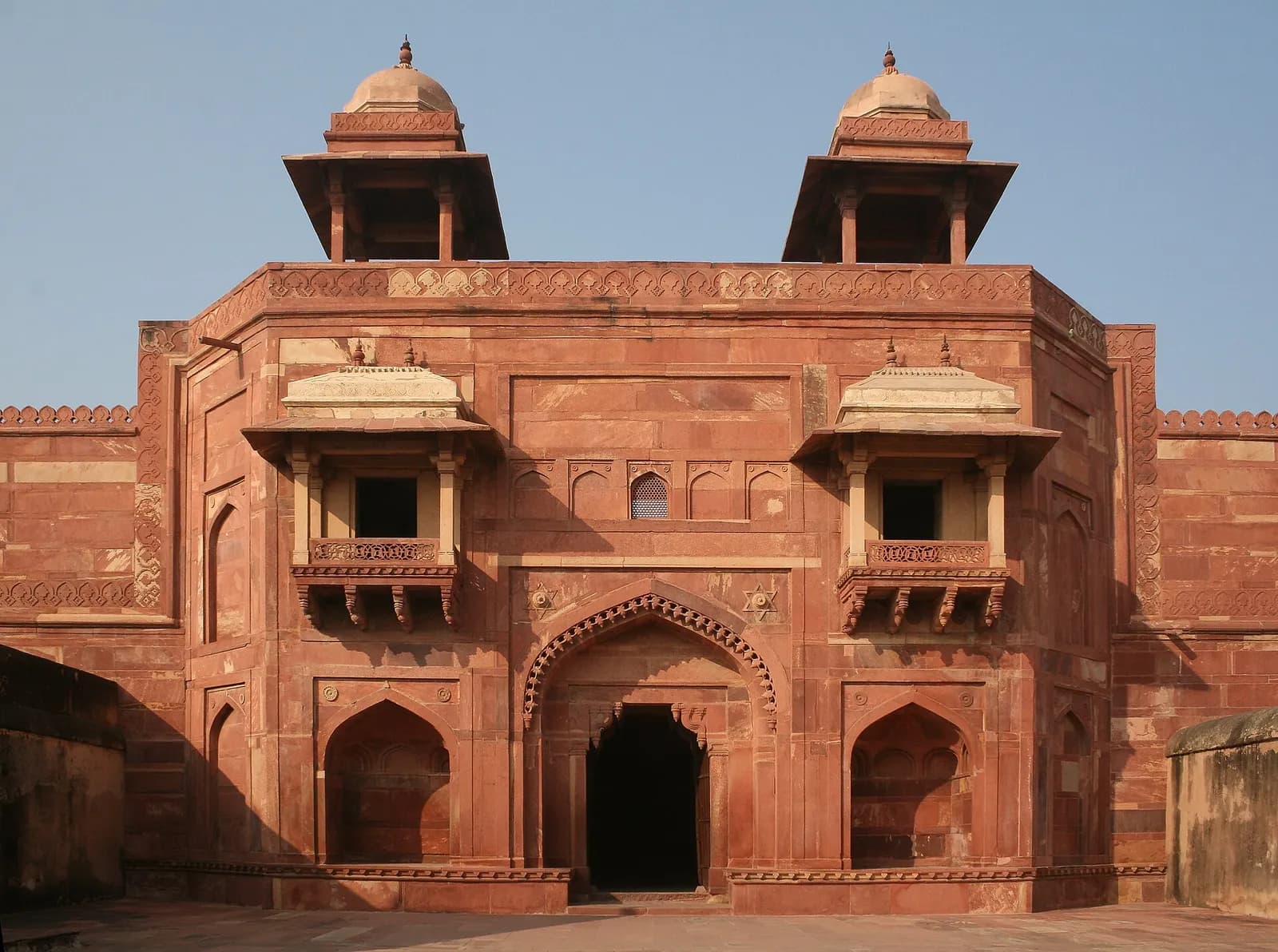
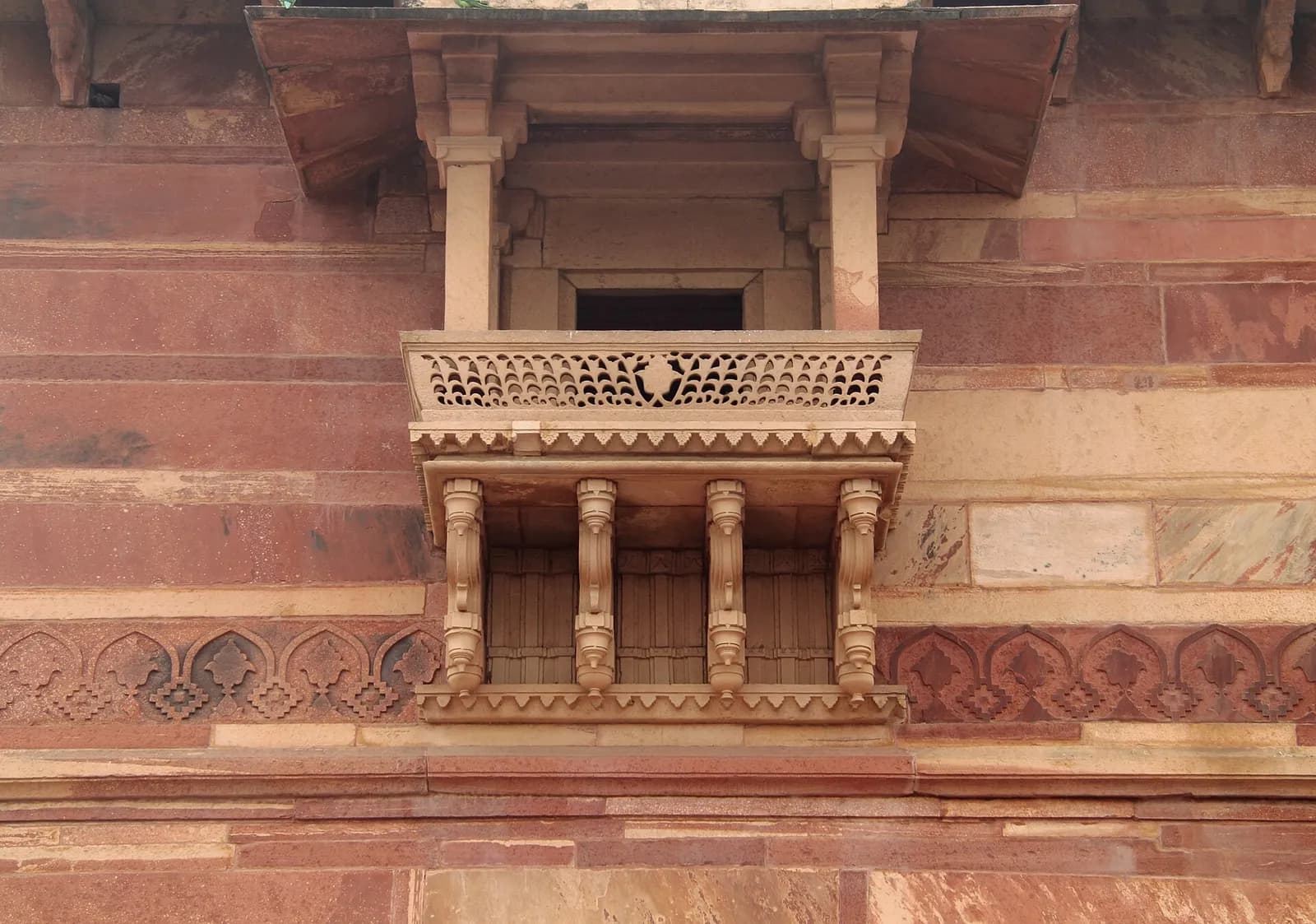
- Fortified exterior. High red sandstone walls surround the building, with a heavily guarded eastern gateway rising 9 metres, built to ensure strict privacy for the royal women within.
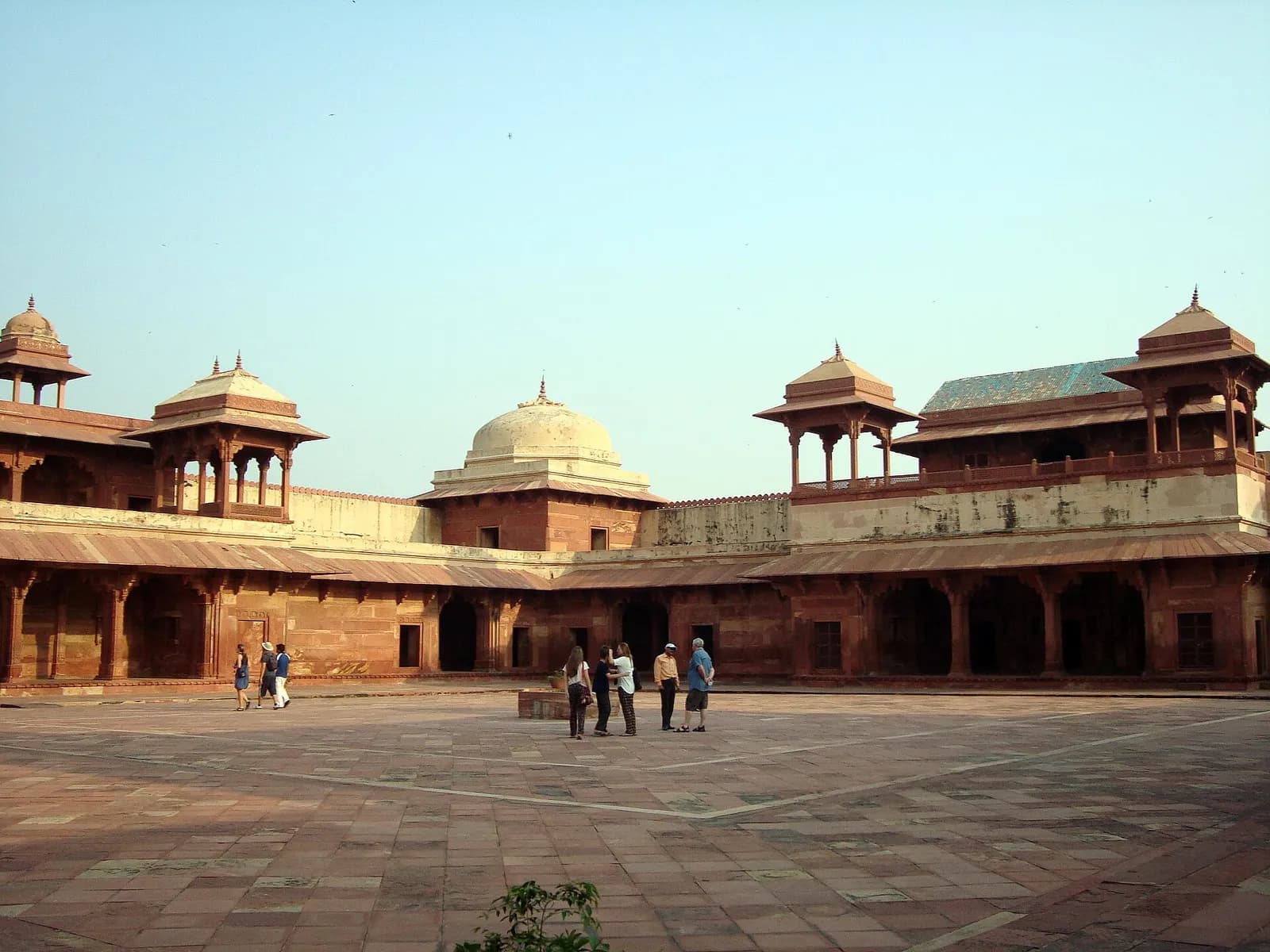
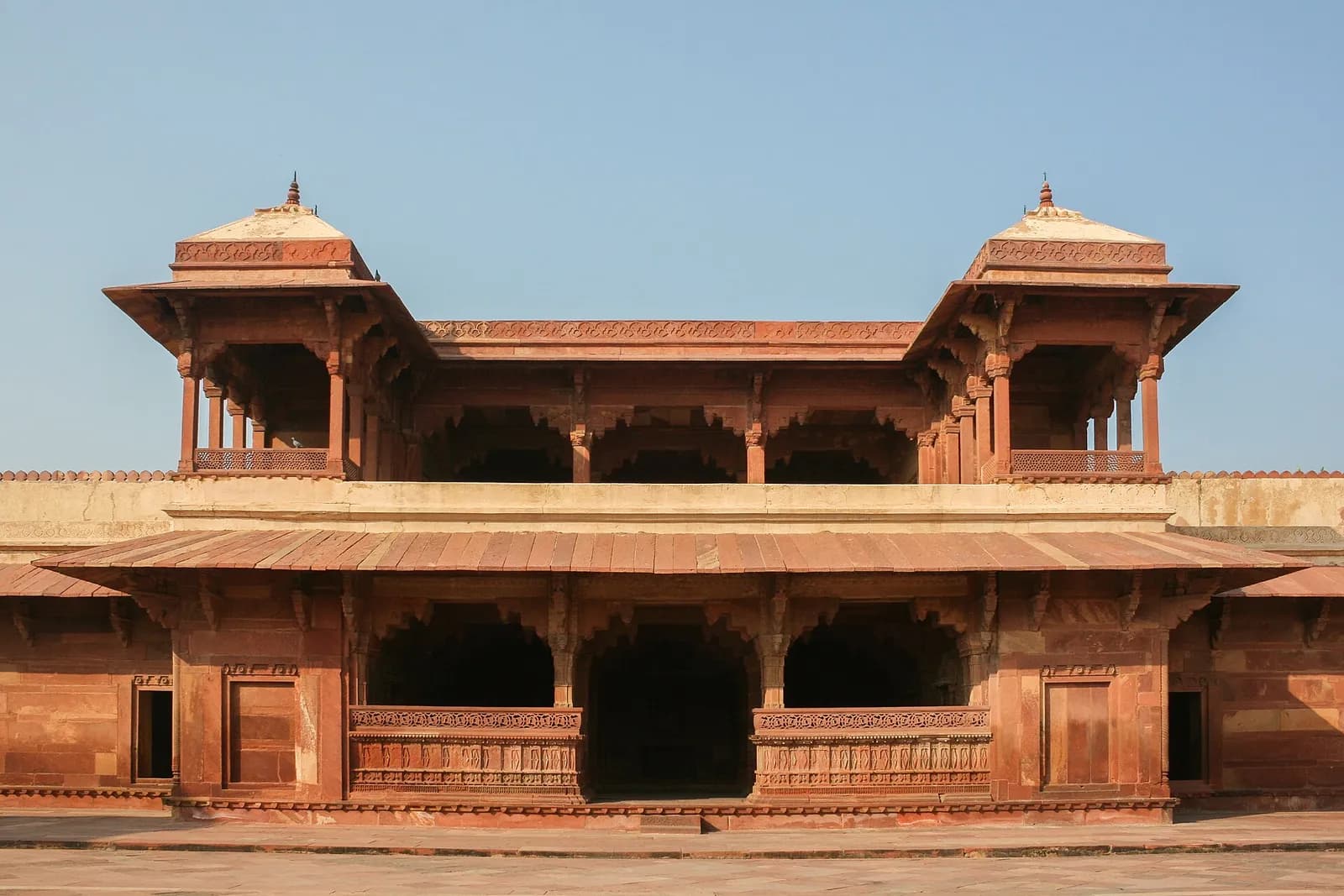
- Central courtyard. The layout centres on a large open courtyard, flanked by multi-storied residential suites, pillared verandahs and separate seasonal quarters designed for summer and winter living.
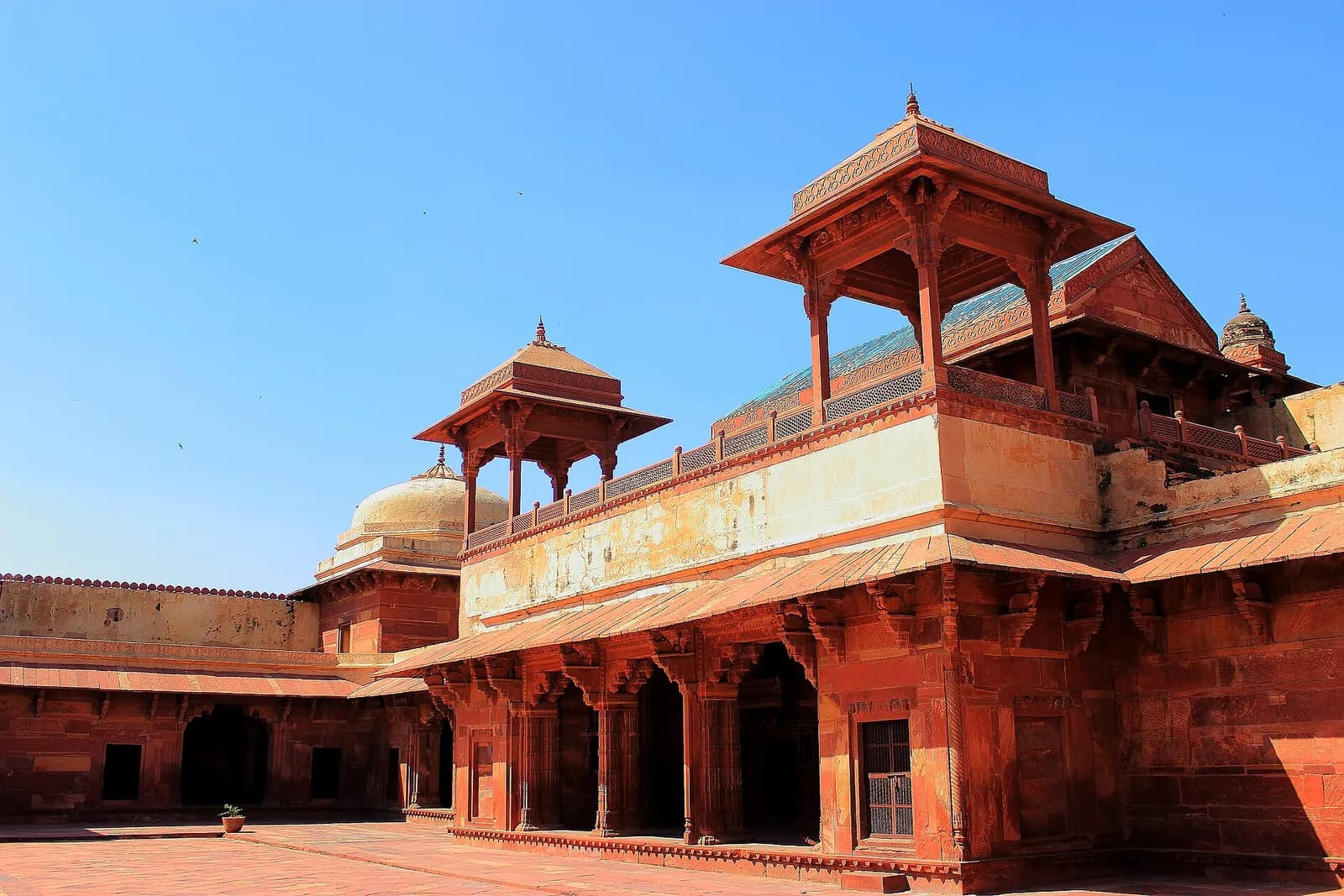
- Intricate carvings. Stone brackets, columns and lintels display Hindu, Jain and Mughal motifs, so look for the Kalasha, the auspicious pot, along with lotus flowers, bell-and-chain patterns and Hansa or swan, designs.
- Hindu shrines. Internal wall niches, the jharokhas and archways, are styled like temple altars where Hindu deities were worshipped, alongside a dedicated area for a sacred Tulsi plant.
- Rooftop pavilions. Steep staircases lead up to roof terraces lined with parapets and small domed pavilions or chhatris, at the corners.
The Hindu shrines and Akbar's religious harmony
Of all the features of the palace, the most telling are its Hindu shrines, because they show Akbar's famous tolerance made solid in stone. In an age when such things were far from guaranteed, the Mughal emperor built his Hindu queen a palace in which she could worship freely and the interior still carries the evidence: wall niches and archways shaped like temple altars, where images of Hindu deities once stood and a dedicated space for a sacred Tulsi plant, the holy basil central to Hindu household devotion. This was a deliberate expression of Akbar's policy of Sulh-i-Kul, the idea of universal peace and respect among faiths that shaped his whole reign and the palace is one of the clearest surviving examples of it. The carved motifs reinforce the point, with Hindu and Jain symbols, the pot of plenty, the lotus, the swan, worked into a Mughal building by craftsmen from Gujarat and Rajasthan. For a visitor, these details turn the palace from a handsome ruin into a moving document of coexistence, a place where two great faiths and two distinct cultures were brought together under one roof by deliberate design. It is this, as much as its size, that makes Jodha Bai's Palace one of the most meaningful buildings at Fatehpur Sikri.
The seasonal design of the palace is another detail that repays attention. The residential suites around the courtyard were planned for comfort through the year, with quarters oriented and built to suit the fierce heat of the northern Indian summer and the cooler winter, using thick stone, shaded verandahs and the movement of air through the courtyard to keep the rooms liveable. This practical, climate-aware planning sits alongside the symbolic carving, so that the palace was both a comfortable home and a statement of culture. The pillared verandahs that ring the courtyard would have been the everyday living spaces, shaded and open to any breeze, while the enclosed rooms behind gave privacy and protection. Taken together, the fortified walls, the single guarded gateway, the seasonal quarters and the Hindu shrines paint a vivid picture of how a royal Rajput queen actually lived within a Mughal court: secluded and protected, yet honoured, comfortable and free to keep her own faith. Few buildings in India let you read life so clearly from its stones.
Ticket price and entry
Access to Jodha Bai's Palace is included in the main Archaeological Survey of India ticket for the Fatehpur Sikri palace complex, so there is no separate charge for the palace itself. The palace ticket costs ₹50 for Indian, SAARC and BIMSTEC citizens and ₹610 for foreign nationals, with children under 15 entering free and it covers the whole palace complex, so the same pass admits you to the Panch Mahal, the Diwan-i-Khas, the Diwan-i-Aam and the other royal enclosures as well. You can buy it at the monument counter or book in advance through the official ASI online ticketing portal, which saves time at the gate on a busy day. The nearby sacred complex, with the Jama Masjid, the Buland Darwaza and the Salim Chishti Dargah, is free and separate from this palace ticket. These prices are current at the time of writing and are revised periodically, so reconfirm the latest rate when you plan your visit and our guide to Fatehpur Sikri covers the full site and its ticketing in detail.
Timings and the best time to visit
Jodha Bai's Palace is open daily from 7:30 AM to 6 PM, so it is best seen within daylight hours as part of a wider tour of the palace complex. The ideal season to visit is October to March, when the weather is comfortable for exploring the open red sandstone complex, which can be harsh in the summer heat, with little shade across the courtyards. Within the day, early morning or late afternoon is best, both for cooler temperatures and for the warm, low light that suits the red sandstone and the carved detail. These hours are also quieter, before and after the main flow of tour groups, so you can take in the carvings and the shrines without the crowds. Allow 30 to 45 minutes for the palace itself and 3 to 4 hours for the whole of Fatehpur Sikri if you want to see it properly. All timings are current at the time of writing and can change, so reconfirm before you travel and our notes on the best time to visit Agra cover the seasons across the region.
Rules and visiting tips
A few practical points make for a smoother visit:
- Hire an official guide. Approved local guides at the entrance gate can point out the hidden architectural details and the symbolic carvings, which are easy to miss on your own and you should use only licensed guides rather than the touts outside.
- Wear comfortable footwear. Exploring the palace and the surrounding monuments means extensive walking over stone floors and up steep stairs, so sturdy, comfortable shoes are essential.
- Combine the nearby monuments. The Buland Darwaza, the Diwan-i-Khas, the Panch Mahal and the Tomb of Salim Chishti are all within walking distance, so see them together on one visit.
- Carry water and sun protection. The courtyards are open and exposed, so bring water, a hat and sunscreen outside the cool months.
- Respect the shrines. The palace held Hindu places of worship, so move through its quieter corners with the respect you would show any shrine.
What to expect
Expect a large, dignified and slightly austere palace rather than a decorated showpiece, a building whose interest lies in its history and its carved detail rather than in colour or grandeur. From outside, the high red sandstone walls and single guarded gateway make it look almost like a fort, which was the point: this was a private world for the royal women. Inside, the great courtyard opens out, flanked by residential suites and verandahs and it is here, in the brackets, niches and carved motifs, that the palace reveals itself, with Hindu and Jain symbols worked throughout and the temple-style shrines that are its most moving feature. It is quieter and less visited than the showier buildings nearby, which is part of its appeal and a good guide makes all the difference in bringing out what you are looking at. The stone floors and steep stairs call for comfortable shoes and the open courtyards are hot at midday, so an early or late visit in the cool season is best. Approached with a little knowledge of its story, Jodha Bai's Palace is one of the most human and meaningful stops at Fatehpur Sikri, the home of a queen and a quiet monument to Akbar's tolerance.
Many visitors find that the palace grows on them as they walk it. The first impression, of plain fortified walls, gives way inside to a wealth of carved detail that rewards slow looking and the knowledge of whose home this was and what it represented, lends even the empty rooms a weight they would not otherwise have. Children and those with little interest in history may pass through it quickly, but anyone who pauses over the temple-style niches, imagines the Tulsi growing in its dedicated spot and thinks about the Rajput queen who lived here within a Mughal court, will find it among the most memorable buildings on the site. It is a palace to be read as much as looked at and a guide or a little background turns it from a set of stone rooms into a living story.
How to reach Jodha Bai's Palace
Jodha Bai's Palace is within the Fatehpur Sikri fort complex, in Agra District, Uttar Pradesh, 37 km west of Agra on the road to Jaipur. By air, the nearest airport is Kheria Airport at Agra, 40 km away, though it has limited commercial flights, so most travellers arrive via Delhi or Jaipur and continue by road. By train, you can arrive at Fatehpur Sikri Railway Station, close to the complex or travel via Agra Cantonment, which has much wider rail connectivity and then continue by road. By road, regular state-run buses, taxis and auto-rickshaws connect the site to both Agra and Mathura and as with the rest of the complex, private vehicles park at the base station, from where a shuttle carries visitors up to the monuments. For most travellers a private cab from Agra or a guided tour combining the city with Fatehpur Sikri is the simplest option. Our guide on how to reach the Taj Mahal and Agra covers arrival into the city, from where the Fatehpur Sikri road begins and our list of places to visit in Fatehpur Sikri covers the wider site.
Jodha Bai's Palace in your Fatehpur Sikri and Agra trip
Jodha Bai's Palace is one of the key stops on the half-day most visitors give to Fatehpur Sikri, seen as part of the ticketed palace complex. The natural plan is to tour the palaces, the Diwan-i-Khas, the Panch Mahal and Jodha Bai's Palace, in the cool of the morning, then cross into the free Jama Masjid courtyard for the Buland Darwaza and the Salim Chishti Dargah, so that you see both the private, residential side and the grand, sacred side of Akbar's capital in a single visit that takes in the whole arc of the site. Because Fatehpur Sikri lies on the road to Jaipur, it is easy to include on the way in or out of Agra rather than as a separate trip, which is why it suits a longer Golden Triangle route. For most travellers it pairs with a day in Agra for the Taj Mahal and the Agra Fort, with Fatehpur Sikri and its palaces on a second day or en route. Those with more time can add the riverside Itimad-ud-Daulah and a sunset at Mehtab Bagh, while our Agra travel guide and our notes on Taj Mahal history and facts add the wider Mughal context. For anyone interested in the human story behind the monuments, this palace, the home of a queen, is one of the most rewarding stops at Fatehpur Sikri. Paired with her tomb at Sikandra, which you may pass on the way in or out of Agra, it lets you follow the life of Mariam-uz-Zamani from the court she presided over to her final resting place.
Plan your trip with us
If you would like to see Jodha Bai's Palace and Fatehpur Sikri with the logistics handled, the drive from Agra, the parking and shuttle, a government-approved guide and your palace ticket, let us help. We can build Fatehpur Sikri into your Agra itinerary as a half-day on the Jaipur road or a dedicated day trip, timed for the cool morning hours when the palace is quiet and the light is best. Our Delhi Agra tours cover the Taj Mahal, the Agra Fort and Fatehpur Sikri and travellers short on time often choose a full Golden Triangle tour through Delhi, Agra and Jaipur, which passes Fatehpur Sikri directly. For a relaxed visit, our Agra overnight tour from Delhi leaves room for the palaces and the shrine, while an early start with our sunrise Taj Mahal tour or a same day Agra tour from Delhi can be extended to include it. To plan a route that takes in Jodha Bai's Palace, message Abhay and the team directly on WhatsApp at +91 7302265809 or reach our team online and we will build an Agra and Fatehpur Sikri trip around it.
Related guides
Keep reading before you travel, these pair well with this guide:
Enquire Now
What our travellers say
“Our Golden Triangle honeymoon was flawless. Sunrise at the Taj with a private guide felt like a dream — every detail was handled.”
“As a first-time visitor to India, I felt completely safe and looked after. The driver and guide were superb professionals.”
“Travelling with two kids is hard, but they made it effortless. Great pacing, clean cars and zero surprises on price.”
“Booked the Agra day trip on short notice and it went off without a hitch. The guide's history knowledge made the Taj come alive.”
“Best decision of our India trip. Car was spotless, driver was punctual every single day, and the itinerary never felt rushed.”
“Organised a same-day Agra trip for my parents. Communication before and during the trip was excellent — genuinely stress-free.”
“Sunrise at the Taj Mahal was magical. Our guide spoke great English and answered every question with patience.”
“Three generations travelling together and everyone was comfortable — good vehicle, sensible stops, and no hidden costs.”
“I've used a few tour operators across Asia and this was among the smoothest. Fair pricing and they actually answer the phone.”
“Our custom Rajasthan-Agra combo was planned around our budget without cutting corners on comfort. Highly recommend.”
“Solo female traveller here — I felt safe throughout. The driver was respectful and the whole trip was timed perfectly.”
Ready to Explore
The Magic of Agra?
Experience the Taj Mahal at sunrise, explore the mighty Agra Fort, and discover the hidden gems of India's most beloved heritage city with our expert-guided premium tours.

Agra
Premium Tour Package
Questions
Frequently asked questions
Who built Jodha Bai's Palace?
The palace was built by the Mughal Emperor Akbar, from 1569 with construction continuing into the 1580s, as the chief residence of the royal harem at his capital Fatehpur Sikri. He built it for his Rajput queen and it was the early childhood home of the future Emperor Jahangir.
Who was Jodha Bai?
Is Harka Bai the same as Jodha Bai?
Why was Jodha Bai's Palace built?
What is the Jodha Bai Palace ticket price?
What are the Jodha Bai Palace timings?
Where is Jodha Bai's Palace?
What makes the palace architecturally special?
Did Jodha Bai really exist?
How far is Jodha Bai's Palace from Agra?
Explore more
Plan your Jodha Bai's Palace trip with us

Interested in Jodha Bai Palace Fatehpur Sikri: History and Architecture?
Chat with our travel team for a custom quote, or browse every package.
Related Attractions
9Jodha Bai Palace Fatehpur Sikri on the map
Open in Google MapsReady to explore Jodha Bai Palace Fatehpur Sikri: History and Architecture?
Book your private tour today and experience the magic of India's rich heritage.