
 Near Taj Mahal East Gate, Agra
Taj Nature Walk Agra: Timings, Tickets and Taj Views
Visiting Taj Nature Walk in Agra, the forest park with tree-framed Taj Mahal views near the East Gate? Its timings, tickets, trails, wildlife and how to reach.
Quick answer
Taj Nature Walk is a 70-hectare protected forest reserve and eco-park just 500 metres from the Eastern Gate of the Taj Mahal in Agra, maintained by the Uttar Pradesh Forest Department. Its elevated mounds give tree-framed, crowd-free views of the Taj and it opens from dawn to dusk. It features on our Agra tours, run by a unit of Experience My India.
- #taj-nature-walk
- #agra
- #agra-attractions
- #agra-travel
Taj Nature Walk is the quiet green secret right beside the world's most famous monument, a forest of winding trails and grassy mounds from which you can see the Taj Mahal framed by trees, almost alone. Our team at Delhi Agra Tour Packages folds it into Taj mornings and it sits naturally on any Golden Triangle tour through Delhi, Agra and Jaipur.
I am Abhay Sharma, a Golden Triangle guide since 2015 and this is my favourite trick for Taj visitors who want something different. Come here at sunrise for birdsong, roaming peacocks and a tree-framed view of the dome, then walk 500 metres to the Taj Mahal's East Gate, which usually has the shortest queues. This guide gathers everything I would tell a visitor beforehand, the trails and viewpoints, the timings and tickets, the wildlife and how to pair it with the Taj.
Taj Nature Walk at a glance
| Detail | Information |
|---|---|
| What it is | A 70-hectare forest reserve and eco-park |
| Famous for | Tree-framed, crowd-free views of the Taj Mahal |
| Location | 500 metres from the Taj Mahal East Gate, Agra |
| Maintained by | Uttar Pradesh Forest Department |
| Trails | Around 9 km of nature trails and six viewing mounds |
| Open | Daily, dawn to dusk |
| Time needed | 1.5 to 2.5 hours |
| Best season | October to March |
Taj Nature Walk timings
| Detail | Information |
|---|---|
| Open | Daily, dawn to dusk |
| Hours | Typically 6 AM to 7 PM or 7 AM to 6 PM in winter |
| Time needed | 1.5 to 2.5 hours |
Taj Nature Walk follows a strict dawn-to-dusk schedule, typically open from 6 AM to 7 PM or 7 AM to 6 PM in the winter months, which makes it ideal for an early morning or late afternoon visit. Note that some local schedules align routine maintenance closures with the main Taj Mahal monument, so it is worth checking. These timings are current at the time of writing and can change, so reconfirm before a special trip.
Entry fee
| Visitor | Entry fee |
|---|---|
| Indian adults | ₹40 to ₹50 |
| Indian children | Around ₹5 |
| Foreign tourists | ₹100 to ₹200 |
| Battery cart (optional) | ₹150 to ₹200 per person |
Entry is modest, with Indian adults paying ₹40 to ₹50, children a nominal ₹5 and foreign tourists ₹100 to ₹200 per person. Electric battery-operated carts are often available near the East Gate zone for ₹150 to ₹200 per person if you would rather not walk the full approach. Plan on 1.5 to 2.5 hours to explore the trails, viewpoints and wildlife. These prices are current at the time of writing and are revised periodically, so reconfirm before you travel.
How to reach Taj Nature Walk
| From | Route |
|---|---|
| Taj Mahal East Gate | 500 metres, a 5 minute walk |
| By electric transport | E rickshaw or golf cart from the East Gate zone |
| Nearest metro | Taj East Gate Metro Station |
| Parking | Near Shilpgram and the Kalakriti Auditorium |
What is Taj Nature Walk?
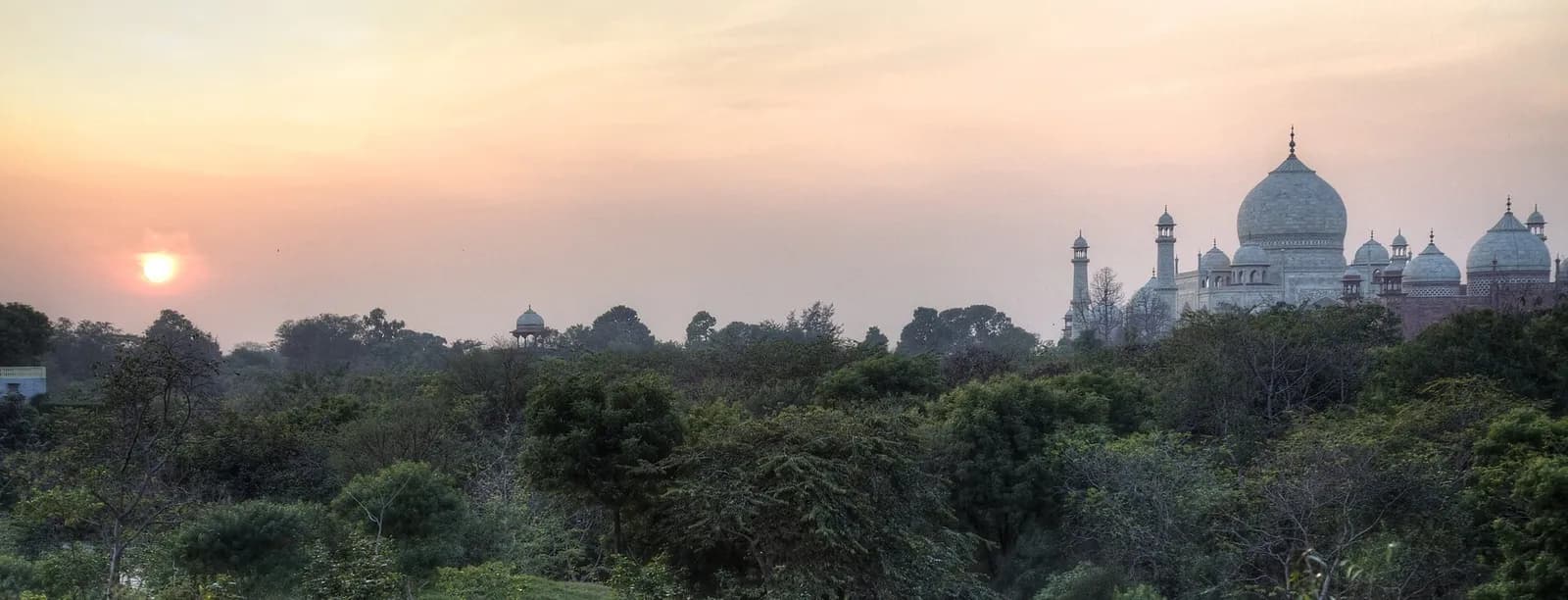
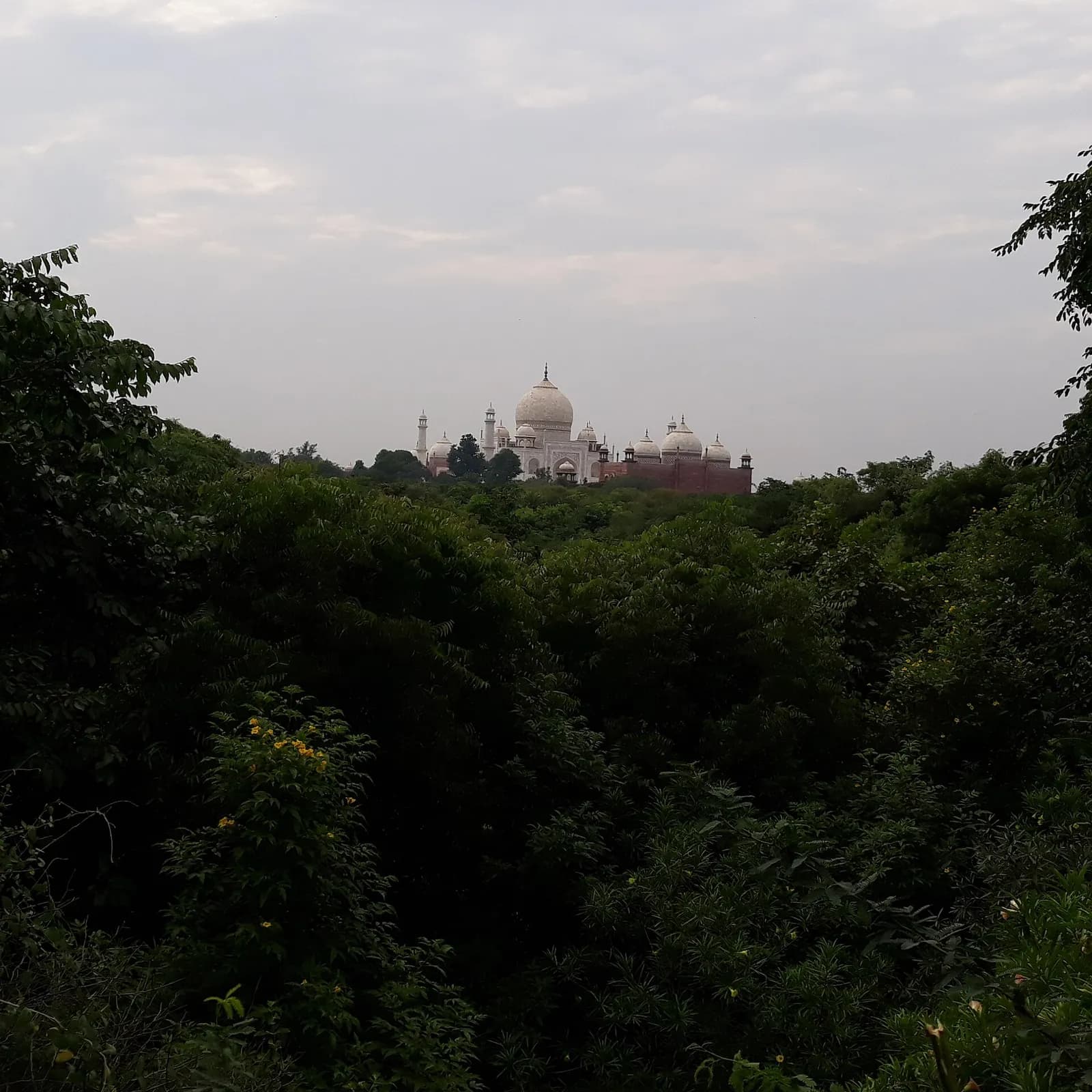
Taj Nature Walk is a 70-hectare protected green reserve and eco-park just 500 metres from the Eastern Gate of the Taj Mahal in Agra, maintained by the Uttar Pradesh Forest Department. Unlike the manicured Mughal gardens inside the monument complex, it preserves the natural ravine and dry deciduous forest ecosystem along the right bank of the Yamuna, with winding trails, grassy mounds and wooden watchtowers. From its elevated viewpoints you get unique, tree-framed views of the Taj Mahal's dome and minarets, away from the tourist crowds, which makes it one of the most peaceful experiences in all of Agra.
The setting matters to understanding the place. This stretch of land was once eroded, degraded ravine terrain of the kind that scars much of the Yamuna's banks around Agra and it has been restored and replanted into a living forest that now acts as a green buffer for the monument. That origin is why it feels so different from everything else a visitor sees in the city. There are no marble screens, no inlaid flowers, no queues, only earth paths, birdsong and the slow unfolding of the Taj between the trees as you walk. For many travellers it becomes the quiet, unexpected highlight of their Agra day, the moment when the world's most photographed building suddenly feels personal.
Several things make it special and they are worth drawing out:
- Tree-framed Taj views. Elevated mounds and watchtowers give crowd-free, naturally framed views of the Taj Mahal.
- A real forest, not a garden. It preserves the wild ravine and dry deciduous forest of the Yamuna bank, not a manicured lawn.
- An urban wildlife sanctuary. Peacocks, parakeets, kingfishers and more roam freely among 45 kinds of native plants.
- Right beside the Taj. Just 500 metres from the East Gate, so it pairs perfectly with a Taj Mahal visit.
- Quiet and uncrowded. A calm, green escape from the intensity of Agra's monuments.
The story behind Taj Nature Walk
Part of what makes Taj Nature Walk special is that it is a conservation success rather than a historical monument. The land around the Taj Mahal on this eastern side had long suffered from ravine erosion, with the soft soil of the Yamuna bank cutting into gullies and scrub. To protect the setting of the Taj and to restore the degraded ground, the Uttar Pradesh Forest Department developed this tract into a managed forest and eco-park, planting native species, shaping the walkways and raising the viewing mounds. The result is a green lung on the doorstep of the monument, a place that absorbs dust and noise and gives the Taj Mahal a natural frame on its eastern approach. For visitors, that back story adds meaning to the walk, because every mound you climb and every grove you pass through is part of a deliberate effort to heal the landscape and keep the great tomb in a setting worthy of it. It also explains the strict plastic-free, no-pollution rules, which exist to safeguard both the monument and the young forest that now shelters it.
Key attractions and highlights
Taj Nature Walk is a place to slow down and explore on foot and the features below are what make it worth the time.
- Elevated Taj viewpoints. Six landscaped grassland mounds and wooden watchtowers offer unobstructed, tree-framed views of the Taj Mahal's marble dome and minarets, without the tourist crowds.
- A network of nature trails. Around 9 kilometres of winding dirt and paved pathways, including a shorter 2-kilometre main walkway and a 6.4-kilometre loop for those who want a longer walk.
- Rich birdlife and wildlife. The forest acts as an urban sanctuary, with free-roaming peacocks, peahens, parakeets, kingfishers, grey hornbills and palm squirrels, plus more than 45 varieties of native flowering plants and butterflies.
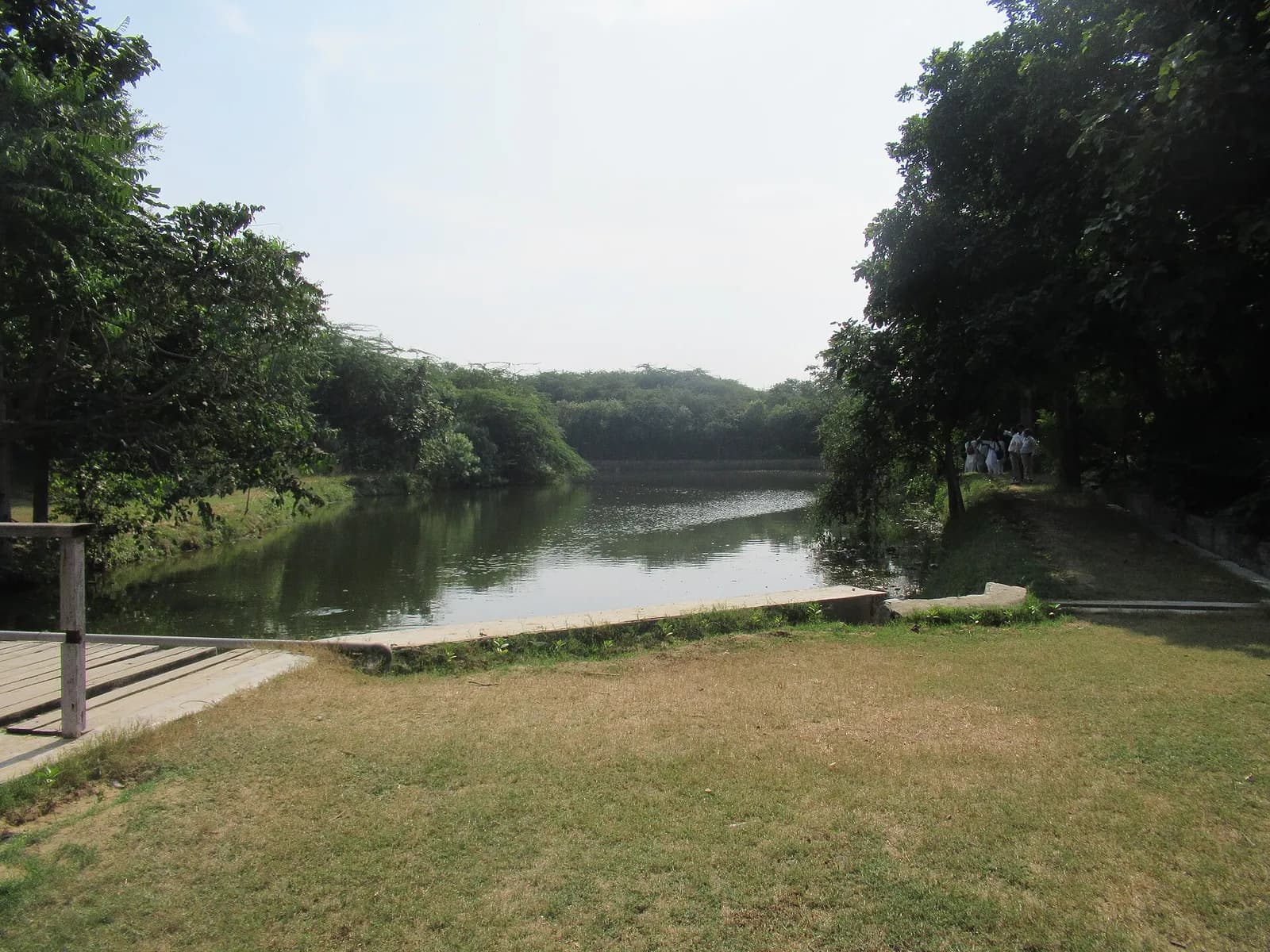
- Landscaped zones. Along the route you pass rock gardens, small ponds, shaded gazebos and designated viewpoints and selfie spots.
The six viewing mounds are the real draw and I always steer guests toward them. Climbing a grassy mound or a wooden watchtower, you see the Taj Mahal rising above a screen of trees, a softer, wilder frame than the formal view from inside the complex and you often have the spot entirely to yourself. For photographers, this tree-framed composition is something no other vantage point in Agra can offer. Each mound sits at a slightly different angle and distance, so it is worth walking between several of them to find the frame you like best, whether that is the full dome floating above the canopy or a tighter study of the minarets through the branches.
The trail network is designed to be flexible. If you only have an hour, the 2-kilometre main walkway loops you past the best viewpoints and back to the entrance without a long trek. If you have the morning and the energy, the longer 6.4-kilometre circuit carries you deeper into the forest, away from even the handful of other visitors, into the quietest corners where the birdlife is richest. The paths are earthen and shaded in long stretches, with benches and gazebos spaced along the way, so you can pause, catch your breath and simply watch the trees. Nothing here is rushed, which is exactly the point.
Birdlife and wildlife at Taj Nature Walk
One of the great pleasures of Taj Nature Walk is that it is a genuine wildlife haven in the middle of a busy city. The dry deciduous forest and its ponds draw a surprising variety of birds and on a quiet morning you can easily spot peacocks displaying, parakeets flashing green through the trees, kingfishers by the water and grey hornbills among the branches, while palm squirrels dart along the paths. The reserve protects more than 45 kinds of native flowering plants, which in turn bring butterflies, so the whole place hums with life at dawn. Between October and March the forest also attracts migratory birds, making it a favourite with birdwatchers. Bring binoculars if you can, move quietly and you will be rewarded with sightings you would never expect so close to the Taj Mahal.
The best wildlife watching happens in the first hour or two after opening, before the day warms up and before any other visitors arrive. Peacocks are most active and vocal then, often strutting across the open grass of the mounds and the smaller birds feed busily in the low light. Keep your voice down, avoid sudden movements and let the animals come to you rather than chasing a sighting. Because the park is an eco-sensitive zone, feeding the wildlife, plucking plants and straying off the marked paths are all discouraged, both to protect the forest and to keep it the calm refuge it is meant to be. A patient walk here rewards you far more than a hurried one and it is one of the few places in Agra where nature, rather than architecture, is the main event.
Taj Nature Walk ticket price and entry fee
Taj Nature Walk is an affordable and easy addition to a Taj Mahal visit. At the time of writing, Indian adults pay ₹40 to ₹50, children a nominal ₹5 and foreign tourists ₹100 to ₹200 per person. If you would rather not walk the full approach from the East Gate zone, electric battery-operated carts are often available for ₹150 to ₹200 per person. Because the park sits inside the pollution-controlled zone around the Taj Mahal, you reach it by electric transport or on foot rather than by private car. Plan on 1.5 to 2.5 hours to explore the trails, climb the viewing mounds and watch the wildlife. These figures are current at the time of writing and change periodically, so reconfirm before you travel.
Facilities and rules at Taj Nature Walk
Because the park is an eco-sensitive zone right beside the Taj Mahal, amenities are kept deliberately simple to protect the environment. Keep these points in mind:
- Basic amenities. There are public restrooms, picnic tables, benches and a small children's play area with swings and slides, plus a basic canteen near the entrance for light refreshments, though options inside the trails are limited.
- A plastic-free zone. The reserve is a strict plastic-free and no-pollution area, so carry out whatever you bring in.
- Protect the wildlife. Littering, plucking flowers and disturbing the birds and animals are all prohibited.
- Accessibility. The main entrance and parking lot are wheelchair accessible, but the interior trails have uneven natural ravine terrain and steps up to the viewing mounds, which make full wheelchair navigation difficult.
What to expect at Taj Nature Walk
Expect a genuine forest trail rather than a landscaped park, with birdsong, dappled light, grassy mounds and the Taj Mahal glimpsed through the trees. You walk in from the East Gate zone, follow dirt and paved paths through the dry deciduous woodland and climb the mounds or watchtowers for the framed Taj views. It is quiet, green and refreshingly free of crowds, a complete contrast to the press of visitors inside the monument. The terrain is natural and uneven in places, so this is an active, outdoors experience best enjoyed at a gentle pace over an hour or two. For nature lovers, photographers and anyone wanting a calm start to a Taj day, it is a small revelation.
Do not come expecting polished tourist infrastructure. This is a working forest reserve, so the facilities are deliberately basic, the signage is simple and parts of the trail are rough underfoot. That is the trade for solitude and the birdlife. Phone signals are patchy in the deeper sections and there is little shade-free seating, so plan your pace for the cooler hours. What you get in return is something rare in Agra, space to breathe, a view of the Taj that most visitors never see and the feeling of having the monument almost to yourself.
Photography at Taj Nature Walk
For photographers, Taj Nature Walk is one of the most rewarding spots in Agra and it deserves a dedicated visit. The classic shot is the Taj Mahal framed by trees from one of the elevated mounds, a composition you cannot get anywhere inside the complex. Soft early light on the white marble, with green foliage in the foreground, gives an image that feels intimate rather than postcard-familiar. Arrive at the opening for the gentlest light and the emptiest frames and give yourself time to move between the mounds, because each offers a slightly different angle on the dome and minarets. A zoom lens helps you pull the Taj closer through gaps in the canopy, while a wider lens captures the forest-and-monument relationship that makes this viewpoint unique. Beyond the Taj itself, the peacocks, kingfishers and butterflies make fine subjects and the rock gardens, ponds and gazebos add foreground interest. Tripods are generally fine on the open paths, though be considerate of the few other visitors. Above all, keep to the trails and respect the no-disturbance rules, which keep the wildlife relaxed and the scene worth photographing.
Best time to visit Taj Nature Walk
The best season is October to March, when the weather is pleasant and the forest attracts migratory birds. Within the day, visit right at sunrise, from 6 AM to 8:30 AM, for golden light on the Taj Mahal and the most active peacock sightings or in the late afternoon before sunset, from 4:30 PM to 6 PM. These are the magical hours here, when the light is soft, the birds are busy and the heat is gentle. The harsh midday sun is far less rewarding and the summer months are hot on the open trails, so aim for the ends of the day. Our wider notes on the best time to visit Agra and the best time to visit the Taj Mahal apply closely here.
The winter months are the clear favourite for a reason beyond comfort. Cool, clear mornings bring the sharpest views of the Taj and the greatest variety of birds and the overnight mist that sometimes hangs over the Yamuna can turn a sunrise walk into something genuinely dreamlike as the dome emerges through the haze. Spring stays pleasant, but by April the open ground grows hot quickly, so an early start becomes essential. The monsoon, from July to September, brings lush greenery and a very different, damp-forest atmosphere, though the trails can be muddy and insects more active, so sturdy shoes and repellent matter most then. Whatever the season, the first and last hours of daylight are always the ones to aim for.
How to reach Taj Nature Walk and its location
Taj Nature Walk lies just 500 metres from the Taj Mahal East Gate, off Taj East Gate Road near the Shilpgram parking and the Kalakriti Auditorium. Because petrol and diesel vehicles are restricted near the Taj Mahal to protect the monument, you reach the park by electric auto rickshaw, golf cart or a short 5 minute walk from the East Gate. The Taj East Gate Metro Station is also nearby and our guide to the Taj Mahal entry gates explains the layout of this zone. For arrival from further afield, see our guide on how to reach the Taj Mahal. If the Taj Nature Walk is part of a fuller Agra plan, it pairs perfectly with a Taj morning and our sunrise Taj Mahal tour can begin here. Travellers staying over often add it to an Agra overnight tour from Delhi.
In practice, most visitors arrive at the Shilpgram parking and pickup point, the same hub used for the Taj Mahal East Gate and cover the last stretch by battery-operated shuttle or on foot. If you are coming by car or taxi, your driver will drop you at this outer parking area, since vehicles cannot approach the gate itself. From the Taj East Gate Metro Station it is a short, well-signed walk or a quick shared electric ride to the same point. The park entrance is close enough to the East Gate that you can comfortably combine both in one outing without arranging separate transport. If you are staying at one of the hotels in the Taj East Gate and Shilpgram area, you may even be able to walk the whole way, which is the nicest option on a cool morning.
Places to visit near Taj Nature Walk
Taj Nature Walk sits right in the Taj Mahal's own zone, so it combines best with the great monument and the nearby viewpoints. The Taj Mahal itself is just 500 metres away through the East Gate, the obvious pairing for any visit here. Across the river, Mehtab Bagh gives the classic sunset view of the Taj from the far bank, making a lovely end to a day that began among the trees. Slightly further afield you can add the great riverside fortress of Agra and, for the wider picture, the eastern bank tomb of Itimad-ud-Daulah, often called the Baby Taj, which sits on the same side of the Yamuna. You can read more in our overview of places to visit near the Taj Mahal.
If you are building a half-day around this part of Agra, a natural sequence is to start at Taj Nature Walk at dawn, enter the Taj Mahal through the East Gate once you have had your fill of the forest and then cross to the eastern bank for Itimad-ud-Daulah and Mehtab Bagh in the afternoon and evening. That route keeps you moving in one geographic loop rather than criss-crossing the city and it ends with the Taj glowing over the river at sunset. Families and slower travellers can trim it to just the park and the Taj, which on their own make a full and satisfying morning.
Visiting tips and what to carry
A few notes I give every group before we go:
- Come at sunrise. Early morning gives golden light on the Taj, the most active birdlife and the coolest, quietest trails.
- Wear sturdy shoes. The trails are uneven natural ravine terrain, so proper walking shoes are a must.
- Carry water. Refreshment options inside are limited, so bring your own drinking water.
- Bring binoculars. Birdwatching is excellent and binoculars make it far better.
- Pack insect repellent. Useful near dusk or during the monsoon season.
- Carry small change. Entry is low cost and a little cash is handy for the battery cart or the canteen.
- Wear a hat and sunscreen. The mounds and open grass offer little shade once the sun is up.
- Keep it plastic-free. Carry a reusable bottle and take all your waste back out with you.
- Go early for the queue trick. An early walk lets you reach the Taj East Gate before the longest lines form.
Combining Taj Nature Walk with the Taj Mahal
The smartest way to use Taj Nature Walk is as the quiet opening act of a Taj Mahal visit. Arrive first thing in the morning for peaceful photography and birdwatching among the trees, then walk the 500 metres to enter the Taj Mahal through the East Gate, which typically has shorter queues than the South or West gates. This single logistical trick saves many visitors a long wait, because the East Gate draws fewer crowds and sits right beside where your nature walk ends. You can then round off the day with an evening crossing to Mehtab Bagh for the sunset view across the river, so a single day gives you the Taj framed by forest at dawn and glowing gold over the water at dusk. It is one of my favourite ways to show guests the monument from more than one angle and it turns a single ticketed sight into a full, varied day out. The contrast is the whole point, the hush of the forest at first light against the grandeur of the marble, then the softness of the river at the close.
Taj Nature Walk in your Golden Triangle itinerary
Taj Nature Walk slots neatly into a Golden Triangle trip as a gentle, nature-filled complement to the headline monuments. Most travellers use it as an early-morning prelude to the Taj Mahal, before the crowds build, then continue to the Agra Fort and, with more time, to Fatehpur Sikri on the road toward Jaipur. For families and nature lovers it is a welcome change of pace in a packed sightseeing schedule and it shows a softer, greener side of Agra that most visitors never see. Our Agra travel guide ties these together for a trip that goes beyond the two famous monuments.
On a classic three-city Golden Triangle route through Delhi, Agra and Jaipur, Agra is usually the middle leg and most itineraries give it a single packed day. Adding Taj Nature Walk does not require stretching that schedule, because it fits inside the Taj Mahal morning rather than beside it, you simply start thirty to sixty minutes earlier at the park and walk straight on to the monument. Travellers who stay overnight in Agra have the most freedom, able to enjoy an unhurried dawn among the trees one day and the Taj Fort and other sights the next. However you build it, the park adds a breath of calm to a trip that is otherwise all marble, forts and traffic and it is the kind of detail that guests remember long after the famous photographs.
Plan your trip with us
If you would like to see the Taj Mahal from the forest at sunrise and skip the worst of the queues, let us carry the load. We shape the day so you start quietly at Taj Nature Walk, enter the Taj through the East Gate at the right moment and see the rest of Agra without the stress of navigating the city yourself. Our Delhi Agra tours combine Taj Nature Walk with the Taj Mahal and Agra Fort and travellers short on time often choose our same day Agra tour from Delhi or a full Golden Triangle tour that threads Delhi, Agra and Jaipur. To plan dates, prices and inclusions, message Abhay and the team directly on WhatsApp at +91 7302265809 or reach our team online.
Related guides
Keep reading before you travel, these pair well with this guide:
Enquire Now
What our travellers say
“Our Golden Triangle honeymoon was flawless. Sunrise at the Taj with a private guide felt like a dream — every detail was handled.”
“As a first-time visitor to India, I felt completely safe and looked after. The driver and guide were superb professionals.”
“Travelling with two kids is hard, but they made it effortless. Great pacing, clean cars and zero surprises on price.”
“Booked the Agra day trip on short notice and it went off without a hitch. The guide's history knowledge made the Taj come alive.”
“Best decision of our India trip. Car was spotless, driver was punctual every single day, and the itinerary never felt rushed.”
“Organised a same-day Agra trip for my parents. Communication before and during the trip was excellent — genuinely stress-free.”
“Sunrise at the Taj Mahal was magical. Our guide spoke great English and answered every question with patience.”
“Three generations travelling together and everyone was comfortable — good vehicle, sensible stops, and no hidden costs.”
“I've used a few tour operators across Asia and this was among the smoothest. Fair pricing and they actually answer the phone.”
“Our custom Rajasthan-Agra combo was planned around our budget without cutting corners on comfort. Highly recommend.”
“Solo female traveller here — I felt safe throughout. The driver was respectful and the whole trip was timed perfectly.”
Ready to Explore
The Magic of Agra?
Experience the Taj Mahal at sunrise, explore the mighty Agra Fort, and discover the hidden gems of India's most beloved heritage city with our expert-guided premium tours.

Agra
Premium Tour Package
Questions
Frequently asked questions
What is Taj Nature Walk?
Taj Nature Walk is a 70-hectare protected forest reserve and eco-park just 500 metres from the Taj Mahal East Gate in Agra, maintained by the Uttar Pradesh Forest Department. Its trails, grassy mounds and watchtowers give tree-framed, crowd-free views of the Taj Mahal and shelter a surprising variety of birds and wildlife.
What are the Taj Nature Walk timings?
What is the Taj Nature Walk ticket price?
Is Taj Nature Walk free?
How far is Taj Nature Walk from the Taj Mahal?
Can you see the Taj Mahal from Taj Nature Walk?
What wildlife can I see at Taj Nature Walk?
How long are the trails at Taj Nature Walk?
Is Taj Nature Walk worth visiting?
How do I combine Taj Nature Walk with the Taj Mahal?
Explore more
Plan your Taj Nature Walk trip with us

Interested in Taj Nature Walk Agra: Timings, Tickets and Taj Views?
Chat with our travel team for a custom quote, or browse every package.
Related Attractions
9Taj Nature Walk Agra on the map
Open in Google MapsReady to explore Taj Nature Walk Agra: Timings, Tickets and Taj Views?
Book your private tour today and experience the magic of India's rich heritage.