Quick Answer
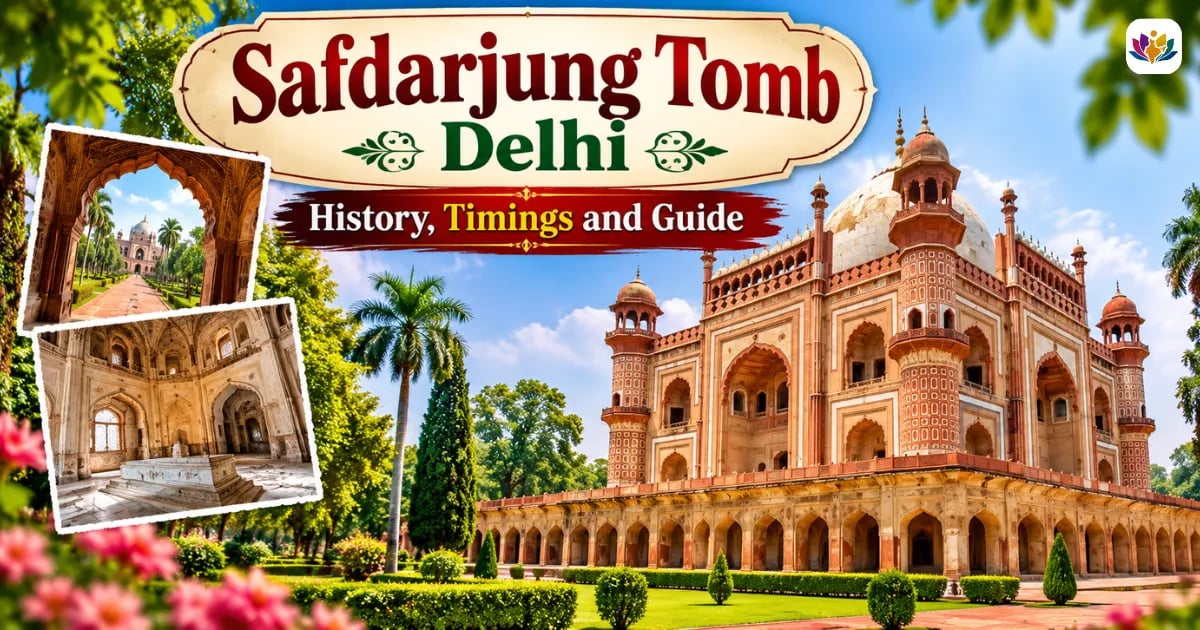
Safdarjung Tomb is the last great Mughal garden tomb, built in 1754 in New Delhi for Safdarjung, the Nawab of Awadh and prime minister to the Mughal emperor. Set in a Persian Charbagh garden and often called the Mini Taj, it is open daily with a small entry fee. Delhi Agra Tour Packages, a unit of Experience My India, plans Delhi trips.
Safdarjung Tomb is one of the most beautiful and historically significant monuments in New Delhi, celebrated as the last of the great Mughal garden tombs, a grand finale to a tradition that had earlier given the world the Taj Mahal and Humayun's Tomb. This guide from Delhi Agra Tour Packages covers Safdarjung Tomb in full, its history, the Charbagh architecture, the timings, the tickets and how to reach it, a rewarding stop for anyone exploring the capital on a Golden Triangle tour.
I was born in Delhi and in more than 11 years planning trips across North India for Experience My India I have taken many travellers to this elegant tomb in its peaceful garden. Here is the clear, practical guide to visiting.
Safdarjung Tomb at a glance
Detail | Information |
What it is | The last monumental Mughal garden tomb |
Built for | Safdarjung, Nawab of Awadh and Mughal prime minister |
Built | 1754, by his son Nawab Shuja-ud-Daula |
Style | Persian Charbagh garden with a central marble and sandstone mausoleum |
Timings | Daily, generally around 7:00 AM to 6:00 PM (reconfirm; some listings differ) |
Entry fee | A small fee (reconfirm current rates) |
Nearest metro | Jor Bagh (Yellow Line), about a 5-minute walk |
About Safdarjung Tomb
Safdarjung Tomb is a magnificent garden tomb standing in the heart of New Delhi, near Lodhi Road and Jor Bagh and it holds a special place in the history of Mughal architecture. It is celebrated as the last monumental garden tomb of the Mughal Empire, the final grand expression of a great architectural tradition that stretched back through Humayun's Tomb to the Taj Mahal itself. Built in the mid-18th century, when the Mughal Empire was in decline, it is in many ways the last magnificent flourish of Mughal building in the capital.
Set within a large, four-quartered Persian garden, with a stately mausoleum at its centre, the monument is often affectionately called the Mini Taj Mahal and is sometimes described as a cousin monument to the great Humayun's Tomb nearby. Quieter and far less crowded than Delhi's most famous sights, it offers a peaceful, elegant and deeply historic experience and a lovely green escape in the middle of the city.
Who was Safdarjung?
The tomb is dedicated to Mirza Muqim Abul Mansur Khan, known to history as Safdarjung. He was a powerful and important noble of the late Mughal age: the Nawab of Awadh, the great province of the east and later the prime minister of the Mughal Empire, holding the exalted title of Wazir-ul-Hindustan, during the reign of the emperor Muhammad Shah. As one of the most important statesmen of his time, at the very heart of the empire, he was a figure of real consequence and his grand tomb reflects his high standing.
Understanding who Safdarjung was adds greatly to a visit, for the monument is not just a beautiful building but the resting place of one of the leading men of the last great age of the Mughals, built at a moment when the empire itself was passing its peak.
The history of Safdarjung Tomb
Safdarjung Tomb was commissioned in 1754 by Safdarjung's son, Nawab Shuja-ud-Daula, who succeeded his father as the Nawab of Awadh and who had the tomb built in his father's memory after his death. Shuja-ud-Daula wished to give his father a grand mausoleum worthy of his station, in the great Mughal tradition of the garden tomb.
The monument is historically important precisely because of its date and place in that tradition. Coming in the mid-18th century, it is the last of the truly monumental Mughal garden tombs, the final chapter of a story of imperial tomb-building that had produced some of the greatest buildings in India. For this reason, it is treasured not only for its beauty but as a marker of the end of an age, the last grand expression of the Persian Charbagh tomb in Mughal architecture. It makes a fascinating counterpart to the earlier, grander Humayun's Tomb, the tomb that began the tradition in Delhi, as our Humayun's Tomb Delhi guide covers that great monument.
The architecture of Safdarjung Tomb
Safdarjung Tomb is a classic example of the Mughal garden tomb, laid out in the Persian Charbagh style, the four-quartered paradise garden divided by walkways and water channels, with the mausoleum rising at its centre. It is the final grand expression of this beautiful form in Mughal architecture and walking through the garden to the tomb gives a real sense of the ordered, paradise-garden ideal that the Mughals so loved.
At the heart of the complex stands the central mausoleum, built of white marble and red sandstone, crowned by a large dome and rising on a raised platform, elegant and imposing. The wider complex has much more to see as well. There is a three-domed mosque within the grounds and the grand main gateway is especially notable, as it houses a library, today managed by the Archaeological Survey of India. Around the garden stand prominent residential pavilions with evocative names, including the Jangli Mahal, the Moti Mahal and the Badshah Pasand, which add to the grandeur and interest of the complex. Together, the central tomb, the mosque, the gateway and the pavilions, all set in the great Charbagh garden, make Safdarjung Tomb a rich and rewarding monument to explore and a fine example of late Mughal design.
Safdarjung Tomb timings
Safdarjung Tomb is open to visitors every day of the week, Monday to Sunday. It is generally open daily from around 7:00 AM to 6:00 PM, though it is worth noting that some official listings give the hours as around 9:00 AM to 7:00 PM and timings can vary a little by season, so it is sensible to reconfirm the current hours when you plan your visit.
As the monument and its large garden are rarely crowded, you can comfortably explore at a relaxed pace. The garden is a lovely place to spend an hour or so and arriving earlier in the day often means the most pleasant light and the quietest surroundings.
Safdarjung Tomb ticket price
The entry fee for Safdarjung Tomb is modest. At the time of writing, the standard ticket is around ₹25 per person for Indian citizens and visitors from the SAARC and BIMSTEC countries and around ₹250 per person for foreign nationals. Carrying a still camera is free, while there is a small charge, around ₹25, for a video camera. As fees are updated from time to time by the Archaeological Survey of India, it is always wise to reconfirm the current rates before your visit and tickets can often be booked online in advance as well as bought at the monument.
Given how modest the fee is and how much there is to see across the tomb, the mosque, the gateway and the garden, Safdarjung Tomb is a wonderful and rewarding addition to a day of Delhi sightseeing and excellent value.
Location and how to reach Safdarjung Tomb
Safdarjung Tomb is very conveniently located in the heart of New Delhi, near the Air Force Golf Course, close to Jor Bagh and Lodhi Road, in the green, elegant part of the city. This central position makes it easy to reach and simple to combine with the other attractions of the area.
The easiest way to reach it is by the Delhi Metro: the nearest station is Jor Bagh on the Yellow Line, which is only about a five-minute walk from the tomb, making the metro a quick and convenient option, as our Delhi metro guide for tourists covers using the metro to get around the city. You can of course also reach it easily by taxi, auto-rickshaw or private car. Its location in the heart of New Delhi means it sits close to many other sights, so it is easy to add to a tour of the capital.
Combine Safdarjung Tomb with nearby sights
One of the pleasures of Safdarjung Tomb is that it lies in one of the loveliest and most historic parts of New Delhi, close to a number of other wonderful sights, so it is easy to build a rich half-day or day around it.
Very close by is the beautiful Lodhi Garden, a gorgeous landscaped park dotted with old tombs and monuments, perfect for a stroll, as our Lodhi Garden Delhi guide covers that lovely green space. A little further lies the magnificent Humayun's Tomb, the great garden tomb that began the tradition Safdarjung Tomb would close, making a wonderful pairing of the first and last of Delhi's imperial tombs. The capital is full of such treasures, as our important monuments of Delhi guide covers the great landmarks and our things to do in Delhi guide covers the full range of the city's sights, from the towering Qutub Minar, as our Qutub Minar ticket and timings guide covers that monument, to much more.
The best time to visit Safdarjung Tomb
Safdarjung Tomb can be visited at any time of year, but the best season to explore Delhi and its gardens and monuments in comfort is the cool period from about October to March, when the weather is pleasant for walking the garden and the complex, as our best time to visit Delhi guide covers the seasons in the capital.
Within the day, the softer light of the morning or the late afternoon is loveliest for the marble and sandstone of the tomb and for photography and these cooler hours are the most pleasant for strolling the Charbagh garden. As the monument is quiet at almost any time, you have the freedom to choose your moment and it makes a peaceful, green stop in a day of Delhi sightseeing.
How to plan your visit
A visit to Safdarjung Tomb takes around an hour or a little more, enough to see the central tomb, the mosque, the gateway and to stroll the garden at a relaxed pace, so it fits easily into a wider day of Delhi sightseeing. By private car with a driver or via the convenient Jor Bagh metro, it is simple to combine with Lodhi Garden, Humayun's Tomb and the other sights of New Delhi into a rich itinerary.
Delhi is the gateway to the Golden Triangle and Safdarjung Tomb fits beautifully into a wider North India trip, as our one week North India itinerary guide maps out a route taking in Delhi, Agra, Jaipur and more.
Want your Delhi trip planned, with Safdarjung Tomb, Lodhi Garden, Humayun's Tomb and the rest all sorted? Message us on WhatsApp and Experience My India will build it for you.
Tips for visiting Safdarjung Tomb
Take the metro to Jor Bagh station on the Yellow Line, just a five-minute walk from the tomb, for a quick and easy arrival.
Combine Safdarjung Tomb with the nearby Lodhi Garden and Humayun's Tomb for a lovely half-day in this historic part of New Delhi.
Visit in the early morning or late afternoon for the loveliest light and the most comfortable walking in the garden.
Allow around an hour or so to see the tomb, the mosque, the gateway and the garden at a relaxed pace.
Carry your still camera, which is free; there is a small charge for a video camera.
Reconfirm the current timings and fees, as hours can vary by season and rates are updated from time to time.
Explore the whole complex, including the pavilions around the garden, not just the central tomb.
What to expect
A visit to Safdarjung Tomb is a peaceful, elegant and historic experience, a lovely contrast to the busier, more crowded sights of Delhi. You can expect a stately marble and sandstone mausoleum crowned by a great dome, set at the centre of a beautiful four-quartered Mughal garden, along with a three-domed mosque, a grand gateway and evocative garden pavilions, all steeped in the history of the last great age of the Mughals. It is a place for those who love history, architecture and quiet green spaces in the heart of the city.
As the last monumental garden tomb of the Mughal Empire, a worthy counterpart to the great Humayun's Tomb and an echo of the Taj Mahal, Safdarjung Tomb is a rewarding and uncrowded addition to any exploration of New Delhi. With a modest fee, a convenient metro connection and only an hour or so needed, it offers history and calm in equal measure.
Plan your trip with us
A visit to Safdarjung Tomb, as part of a wider Delhi and Golden Triangle trip, is easiest and most enjoyable when the travel, the stays, the guide and the sightseeing are all arranged for you. That is what we do, a comfortable private car and an experienced driver, a knowledgeable guide to bring the monuments and their history to life, well-chosen stays and the whole trip planned around you.
Tell us your dates and group size and we will price it honestly around your standard rather than a fixed figure. You can explore the capital and the classic circuit on our Golden Triangle tours and we can build it all within our wider Delhi Agra Tour Packages.
Related guides
New Delhi tour: the capital's imperial landmarks.
Old Delhi tour: the Red Fort, Jama Masjid and Chandni Chowk.
Delhi day tour: the best of the capital in a day.
Experience My India has personally hosted 50,000+ travelers and the service he leads is rated 4.9 from 2,600+ reviews, operating since 2015. Delhi Agra Tour Packages is a unit of Experience My India.
Book Your Delhi - Agra Trip Today 📞 +91-7302265809 💬 WhatsApp: +91-7302265809 Rated 4.9★ / 2600+ Reviews Explore all: Delhi Agra Tour Packages |
What a Experiance My India
Complete Delhi-Agra services
Private AC Cabs
Comfortable AC cars with experienced local drivers for Delhi, Agra and Jaipur tours.
Local Expert Guides
Explore the Taj Mahal and historic monuments with knowledgeable local guides.
Handpicked Hotels
Comfortable stays near the Taj Mahal and prime locations across Delhi and Agra.
Delhi–Agra Tours
Well-planned same-day and multi-day tours covering the best attractions.
Golden Triangle
Experience Delhi, Agra and Jaipur together with carefully planned itineraries.
24/7 Travel Support
Get assistance throughout your journey from booking to your return.
Plan Your Trip
Get a free quote in 30 mins
100% Trusted & Verified
by 50,000+ Travellers since 2018
Why travellers choose Experience My India
What makes us different from other agencies
We plan and run every trip ourselves, so you get a private AC car, a local expert guide, an honest fixed price, and no reseller or touts in between. We have guided travelers and families since 2018 and hold a 5.0 star rating across 3 verified reviews.
What Our Travellers Say
Real reviews from real Travellers
“We booked our Delhi tour package with Experience My India and had a wonderful experience. Abhay ji was an excellent guide who explained the history and architecture of Safdarjung Tomb in a simple and interesting way. The private cab was comfortable, the hotel arrangements were good, and the itinerary covered the main attractions without feeling rushed. We were very happy with the overall service.”
Rahul Khanna
Jaipur· 2026-10-02
“Our Delhi sightseeing trip with Experience My India was a lovely experience. Abhay ji guided us through Safdarjung Tomb and helped us understand its importance in Mughal history. We also enjoyed the beautiful Charbagh garden and the monument's peaceful atmosphere. The cab service was convenient, the hotel was comfortable, and the team coordinated everything smoothly.”
Sneha Desai
Ahmedabad· 2026-10-14
“Experience My India organised our Delhi tour package very well. Abhay ji was knowledgeable and explained the architectural details of Safdarjung Tomb, including its dome, garden layout and historical significance. We appreciated the comfortable cab, helpful service and well-planned sightseeing schedule. The visit was especially enjoyable because our guide made history interesting for the whole family.”
Arjun Menon
Kochi· 2026-09-28
We booked our Delhi tour package with Experience My India and had a wonderful experience. Abhay ji was an excellent guide who explained the history and architecture of Safdarjung Tomb in a simple and interesting way. The private cab was comfortable, the hotel arrangements were good, and the itinerary covered the main attractions without feeling rushed. We were very happy with the overall service.
Rahul Khanna
Jaipur
Our Delhi sightseeing trip with Experience My India was a lovely experience. Abhay ji guided us through Safdarjung Tomb and helped us understand its importance in Mughal history. We also enjoyed the beautiful Charbagh garden and the monument's peaceful atmosphere. The cab service was convenient, the hotel was comfortable, and the team coordinated everything smoothly.
Sneha Desai
Ahmedabad
Experience My India organised our Delhi tour package very well. Abhay ji was knowledgeable and explained the architectural details of Safdarjung Tomb, including its dome, garden layout and historical significance. We appreciated the comfortable cab, helpful service and well-planned sightseeing schedule. The visit was especially enjoyable because our guide made history interesting for the whole family.
Arjun Menon
Kochi
We booked our Delhi tour package with Experience My India and had a wonderful experience. Abhay ji was an excellent guide who explained the history and architecture of Safdarjung Tomb in a simple and interesting way. The private cab was comfortable, the hotel arrangements were good, and the itinerary covered the main attractions without feeling rushed. We were very happy with the overall service.
Rahul Khanna
Jaipur
Our Delhi sightseeing trip with Experience My India was a lovely experience. Abhay ji guided us through Safdarjung Tomb and helped us understand its importance in Mughal history. We also enjoyed the beautiful Charbagh garden and the monument's peaceful atmosphere. The cab service was convenient, the hotel was comfortable, and the team coordinated everything smoothly.
Sneha Desai
Ahmedabad
Frequently Asked Questions
Quick answers to common questions
Safdarjung Tomb is famous as the last monumental garden tomb of the Mughal Empire, the final grand expression of the Persian Charbagh tomb tradition that earlier produced Humayun's Tomb and the Taj Mahal. Built in 1754 in New Delhi, it is often called the Mini Taj Mahal, with a marble and sandstone mausoleum set in a beautiful four-quartered garden and is a peaceful, historic and uncrowded sight.
Safdarjung Tomb was commissioned in 1754 by Nawab Shuja-ud-Daula, the son of Safdarjung, who built it in his father's memory after his death. Safdarjung himself, named Mirza Muqim Abul Mansur Khan, was the Nawab of Awadh and the prime minister of the Mughal Empire during the reign of Muhammad Shah, which is why his son gave him such a grand mausoleum.
Safdarjung Tomb is open every day, Monday to Sunday. It is generally open daily from around 7:00 AM to 6:00 PM, though some official listings give the hours as around 9:00 AM to 7:00 PM and timings can vary a little by season. It is sensible to reconfirm the current hours when you plan your visit. The large garden is rarely crowded, so you can explore at a relaxed pace.
At the time of writing, the standard ticket is around ₹25 per person for Indian, SAARC and BIMSTEC visitors and around ₹250 per person for foreign nationals. A still camera is free, while a video camera carries a small charge of around ₹25. As fees are updated from time to time by the Archaeological Survey of India, it is wise to reconfirm the current rates and tickets can often be booked online as well as at the gate.