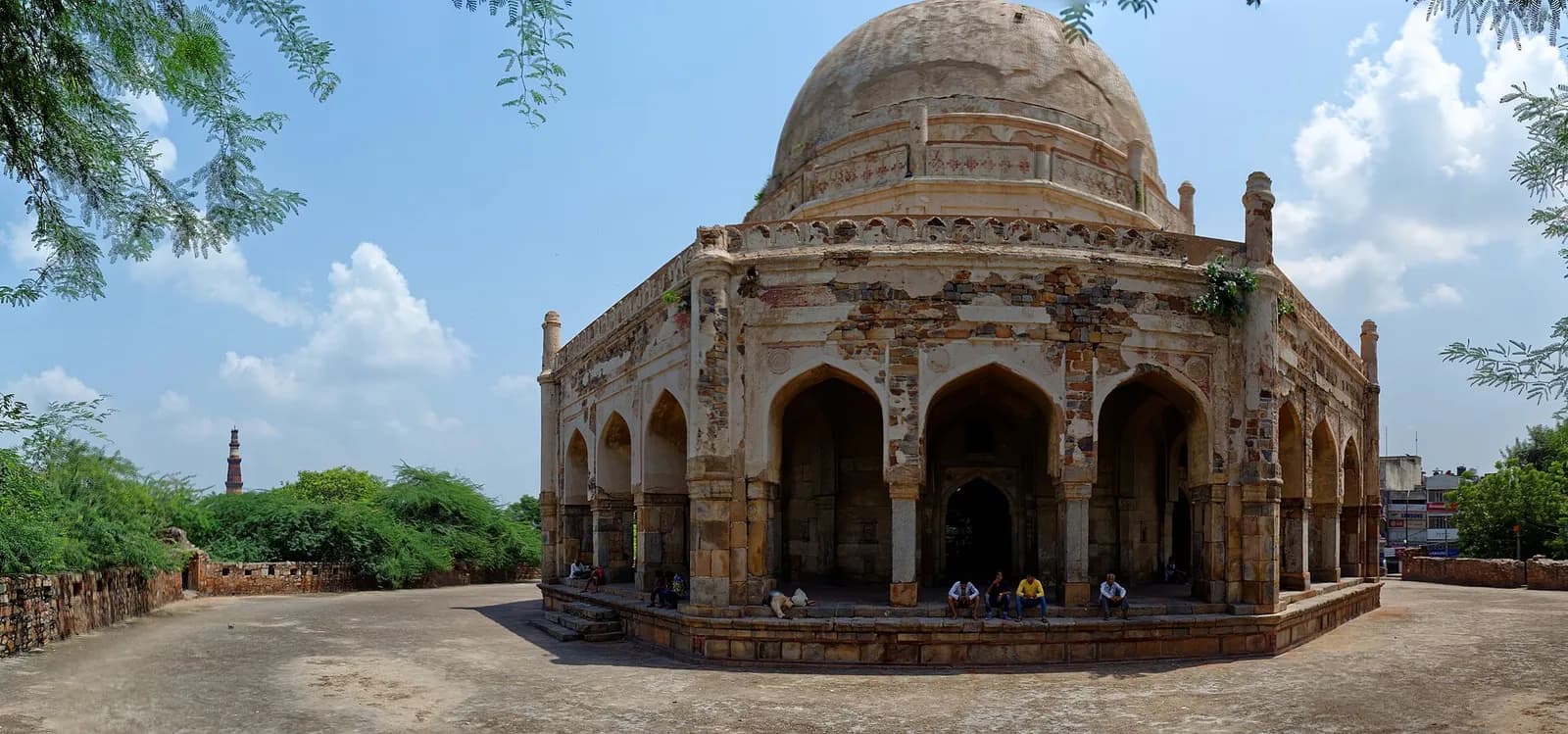
Adham Khan's Tomb Delhi (Bhool Bhulaiya): History and Guide
Visiting Adham Khan's Tomb, the Bhool Bhulaiya, in Mehrauli? Its dramatic story, the traitor's octagonal design, the labyrinth, timings and nearest metro.
In a Nutshell
“Adham Khan's Tomb, popularly called the Bhool Bhulaiya or labyrinth, is a dramatic octagonal Mughal tomb in Mehrauli, South Delhi, built in 1562 by Emperor Akbar for his foster brother Adham Khan and his mother Maham Anga. Adham Khan was executed on Akbar's orders for murdering a trusted minister and Akbar deliberately chose the octagonal Lodi style to brand him a traitor. Its thick walls hide a maze of passages that disorient visitors, giving it its nickname. Perched on the walls of ancient Lal Kot, it is free to enter, open daily and reached from Qutub Minar metro. It features on our heritage Delhi tours, run by a unit of Experience My India.”
Adham Khan's Tomb is one of Delhi's most dramatic and story-rich monuments, an octagonal mausoleum steeped in a tale of murder, betrayal and imperial wrath, perched above a chaotic Mehrauli crossroads with the Qutub Minar on the horizon. For history lovers and those drawn to the city's offbeat heritage, it is a fascinating stop. Our team at Delhi Agra Tour Packages often points it out on a Mehrauli heritage walk and it adds a vivid, story-rich dimension to a wider Golden Triangle tour through the capital.
I am Abhay Sharma, Delhi born and a Golden Triangle guide since 2015 and I enjoy bringing history-minded guests here, because few monuments in the city carry such a gripping story, a tale of betrayal and royal vengeance, written into the very shape of the building. This guide gathers everything I would tell a visitor beforehand, checking against current information, including the history, the architecture, the labyrinth, the timings and how to reach it.
Details
Adham Khan's Tomb at a glance
| Detail | Information |
|---|---|
| Location | Mehrauli Road, near the bus terminus, South Delhi |
| Also known as | Bhool Bhulaiya, the labyrinth or maze |
| Built | 1562, by Emperor Akbar |
| Houses | Adham Khan and his mother Maham Anga |
| Famous for | Its dramatic story and its maze-like walls |
| Entry | Free; an open ASI monument |
| Nearest metro | Qutub Minar, around 1.5 km away |
| Time needed | About 30 to 45 minutes |
Adham Khan's Tomb timings
| Detail | Information |
|---|---|
| Open | Daily, 10:00 AM to 5:00 PM |
| Grounds | Often accessible sunrise to sunset |
| Time needed | About 30 to 45 minutes |
Adham Khan's Tomb is officially open daily from 10:00 AM to 5:00 PM, though the open park grounds around it are often accessible from sunrise to sunset. A walk through the tomb and its terrace takes about thirty to forty five minutes. These timings are current at the time of writing and can vary, so a daytime visit is best.
Entry fee
| Item | Information |
|---|---|
| Entry fee | Free for all visitors |
| Tickets | None; no token booths or queues |
| Upper passages | The labyrinth stairways are locked for safety |
How to reach Adham Khan's Tomb
| From | Route |
|---|---|
| Qutub Minar metro (Yellow Line) | A short 5 minute auto, about 1.5 km |
| Mehrauli bus stand circle | The tomb stands right at the crossroads |
| By car | Roadside at a busy intersection; parking is limited |
| On foot | At the main Mehrauli traffic junction |
What is Adham Khan's Tomb?
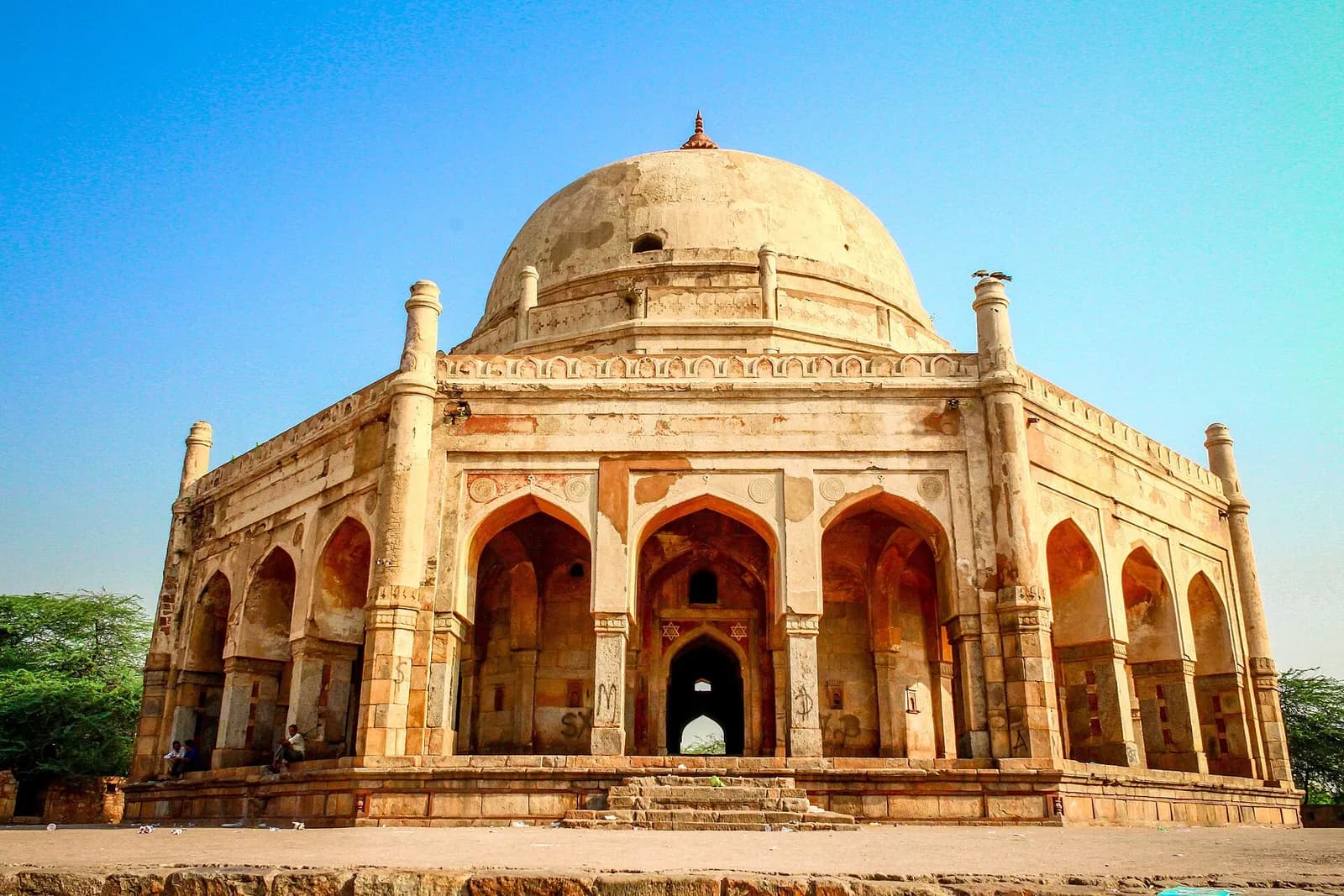
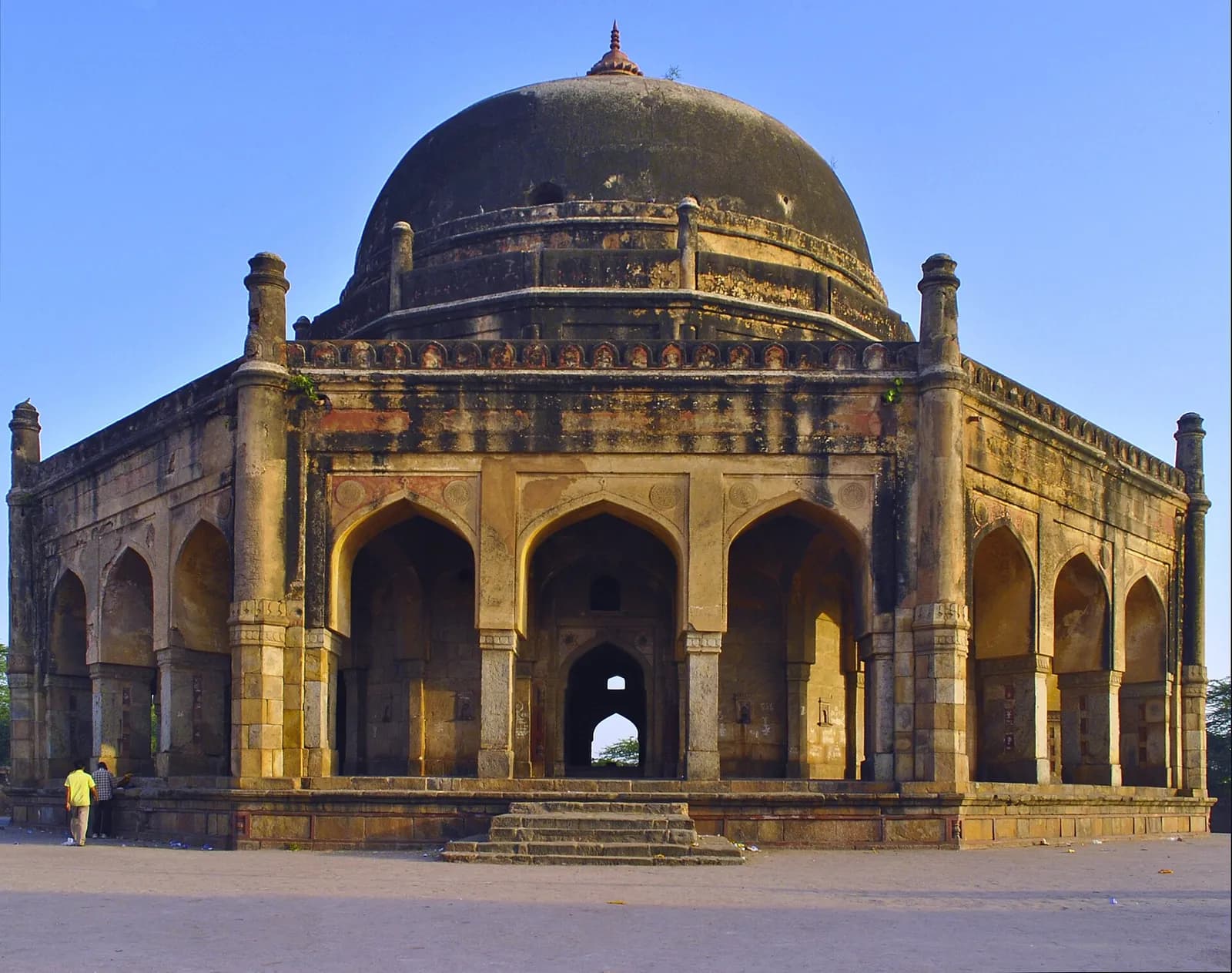
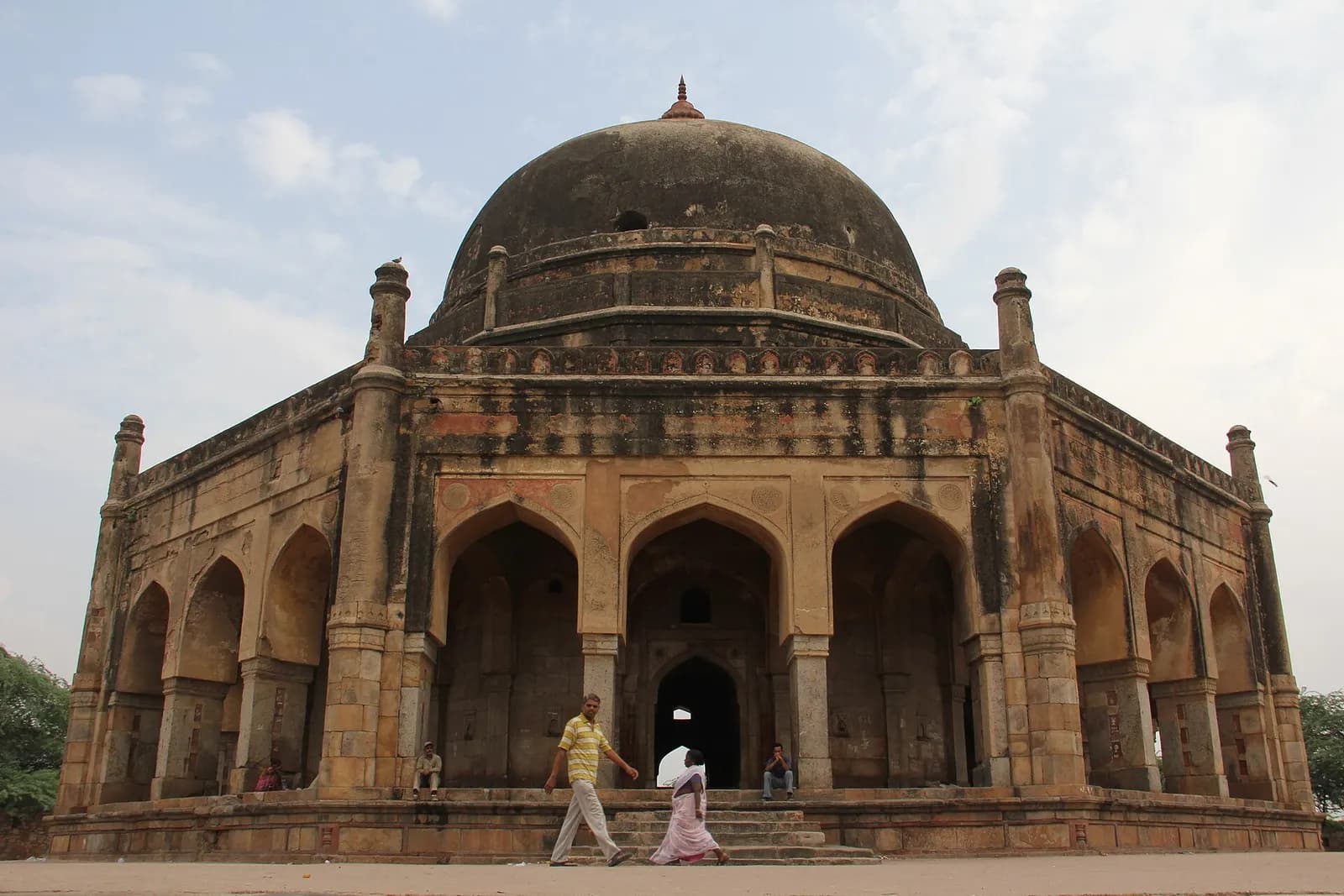
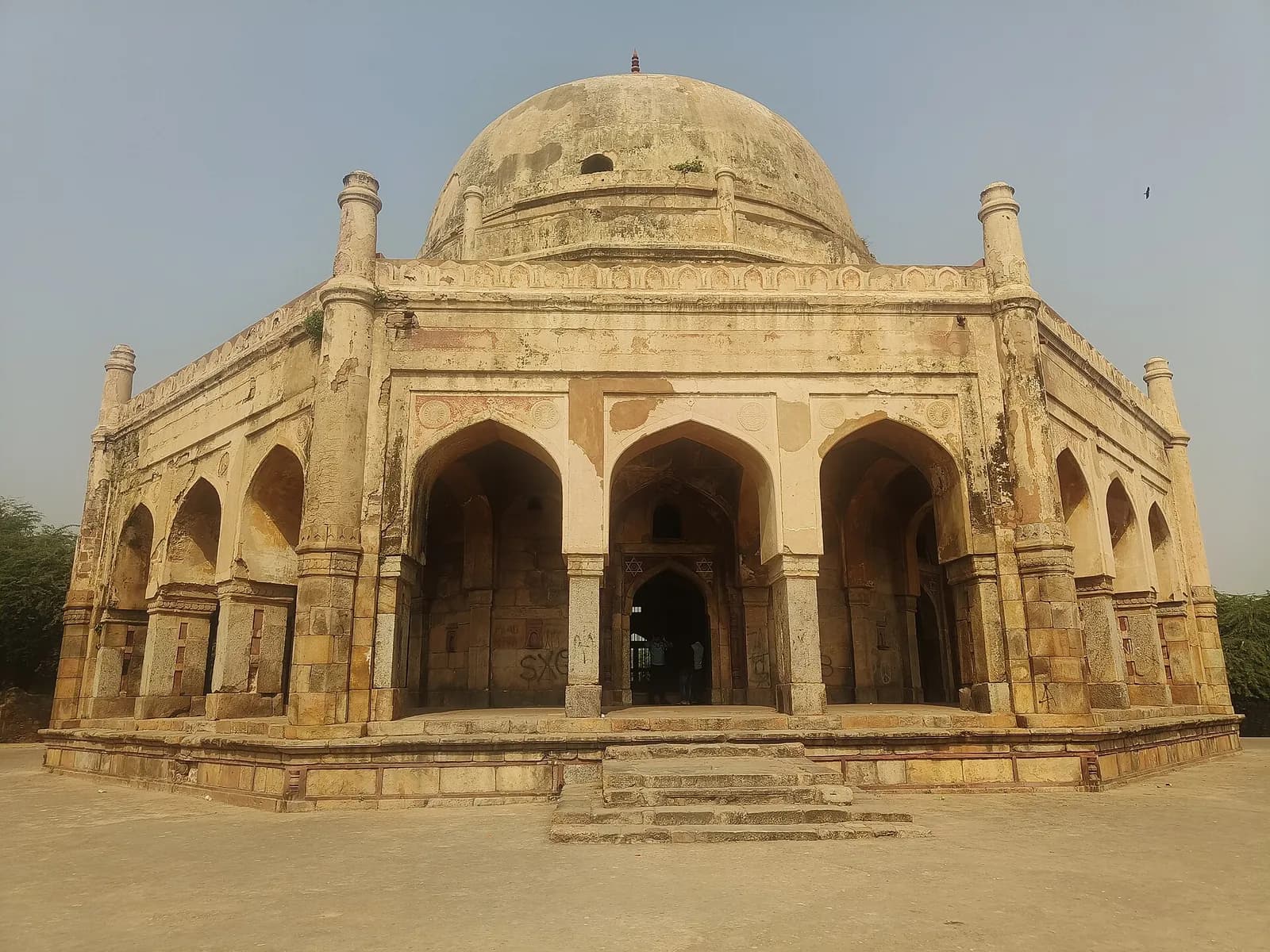
Adham Khan's Tomb is a historic 16th-century Mughal mausoleum in Mehrauli, South Delhi, built in 1562 by Emperor Akbar and famous both for the dramatic story behind it and for the maze of passages in its walls that earns it the popular name Bhool Bhulaiya, meaning labyrinth or maze. The tomb houses the remains of Adham Khan, Akbar's foster brother and a Mughal general and his mother Maham Anga, Akbar's influential wet nurse and it was raised after a sensational episode of murder and royal vengeance at the imperial court. Built in a distinctive octagonal style perched high on a stone plinth along the ancient defensive walls of Lal Kot, Delhi's earliest city, it is a sombre, atmospheric and story-laden monument, standing somewhat incongruously at a busy Mehrauli crossroads with fine views of the Qutub Minar nearby. It is one of the most gripping of Delhi's lesser-known tombs, where a tale of betrayal is written into the very architecture.
Several things make it special and they are worth drawing out:
- A tale of betrayal and vengeance. Built for Adham Khan, executed on Akbar's orders for murdering a trusted minister, one of the most dramatic stories in Mughal Delhi.
- The traitor's octagonal design. Akbar deliberately chose the old Lodi octagonal form, associated with traitors, to brand Adham Khan in the eyes of history.
- The Bhool Bhulaiya. The thick walls hide a maze of narrow passages in which visitors famously lose their way, giving the tomb its nickname.
- A perch on ancient Lal Kot. The tomb stands on the walls of Lal Kot, the earliest of Delhi's historic cities.
- Views of the Qutub. The raised terrace offers fine panoramic views toward the Qutub Minar over the trees.
It is one of the most dramatic and historically rich of the offbeat things to do in Delhi and a fascinating lesser-known entry among the important monuments of Delhi.
The story of Adham Khan
The whole meaning of the tomb lies in the dramatic and violent story of the man buried in it, which is one of the most sensational episodes of Akbar's early reign. Adham Khan was Akbar's foster brother, the son of Maham Anga, the emperor's wet nurse and, in the early years of his rule, one of his most powerful and influential advisers, so Adham Khan grew up close to the heart of imperial power and rose to become a prominent Mughal general. But his ambition and the jealousies of the court led him to a fatal act of betrayal. In May 1562, driven by rivalry and resentment, Adham Khan stormed into the imperial apartments and brutally murdered Shamsuddin Ataga Khan, Akbar's trusted prime minister and general, a shocking crime at the very centre of the empire.
Akbar's response was swift and terrible. Enraged by the murder of his trusted minister and by the betrayal of his own foster brother, the emperor personally ordered Adham Khan to be executed by being thrown headlong from the high ramparts of the fort and when the first fall did not kill him, he was hurled down a second time until he died. The tragedy did not end there: Maham Anga, Adham Khan's mother, utterly broken by the sudden and violent death of her son, is said to have died of grief just forty days later. A remorseful Akbar then built this large tomb to house the graves of both mother and son together. For the visitor, this gripping story of ambition, murder, royal wrath and a mother's grief is the soul of the monument and knowing it transforms a visit into an encounter with one of the most human and dramatic episodes in all of Mughal history.
Why the octagonal design marks a traitor
One of the most fascinating aspects of Adham Khan's Tomb is that its very architecture was chosen to make a statement, so that the building itself passes judgment on the man within it. Akbar deliberately ordered the tomb to be built in a distinctive octagonal style, copied from the older Lodi and Sayyid dynasties, rather than in the square or rectangular form used for the great Mughal tombs of the era, most famously the roughly contemporary Humayun's Tomb. This was no accident of taste. The Mughals associated the octagonal tomb plan with the earlier Lodi rulers whom they had overthrown, the dynasty they regarded as belonging to a defeated and, in their eyes, illegitimate or traitorous past.
By choosing this octagonal, Lodi-associated form for Adham Khan's tomb, Akbar was making a deliberate and pointed architectural statement: he was visually branding his foster brother as a traitor, consigning him in death to the form associated with the overthrown dynasty rather than honouring him with the imperial Mughal style reserved for the loyal and the great. It was a way of writing Adham Khan's disgrace into the permanent fabric of the monument, a judgment in stone that would outlast any inscription. For the visitor, this is one of the most intriguing things about the tomb: its octagonal shape is not merely a style but a message, a reminder that in the Mughal world architecture could be used to honour or to condemn and that this building was built to condemn. Knowing this adds a remarkable depth to what might otherwise seem a plain octagonal tomb.
The Bhool Bhulaiya labyrinth
The tomb's popular name, Bhool Bhulaiya, meaning labyrinth or maze, comes from a genuine and intriguing architectural feature that has delighted and disoriented visitors for generations. The walls of the octagonal gallery were engineered to be exceptionally thick and within that thickness runs a complex web of narrow interior staircases and hidden structural corridors. Unsuspecting visitors who wandered into these dark, echoing wall passages would frequently become completely disoriented, unable to find their way back to the door they had entered by and it is from this maze-like quality that the tomb earned its enduring nickname of Bhool Bhulaiya.
This labyrinthine quality gave rise to local legends and a certain eerie reputation, including a famous tale of a wedding party said to have become lost inside the passages. In recent times, however, because of structural shifting, decaying steps and safety concerns arising from the maze, the Archaeological Survey of India has locked and gated the narrow upper stairways that lead into the labyrinth walls, so visitors can no longer wander into the maze itself. Today you are free to explore the ground-floor arched verandah and the main open burial hall, but the famous inner passages are sealed for safety. For the visitor, the Bhool Bhulaiya is now more a matter of story than of experience, but it remains a wonderful part of the tomb's character: knowing that the thick walls hide a sealed maze that once swallowed up the unwary adds a delightful air of mystery to the sombre monument.
Architecture of Adham Khan's Tomb
Architecturally, Adham Khan's Tomb is a striking and deliberate building and its features repay a close look, especially in the light of the story and the message behind its design. Set high on a massive stone plinth built along the ancient walls of Lal Kot, it commands its surroundings and its key elements are worth noting:
- The octagonal plan. The defining feature, a deliberate octagonal form in the old Lodi style, chosen to brand the occupant a traitor, with a surrounding arched verandah.
- The central dome. A large central dome crowns the structure, topped by a finial of deep red sandstone, rising above the octagonal body.
- The high plinth on Lal Kot. The tomb is raised on a high stone plinth set along the defensive ramparts of Lal Kot, Delhi's earliest city, giving it both elevation and a deep historical setting.
- The thick, labyrinthine walls. The exceptionally thick octagonal walls house the hidden maze of passages and stairs that give the tomb its Bhool Bhulaiya name.
The overall impression is of a solid, austere and commanding monument, its octagonal form and crowning dome recalling the Lodi tombs of an earlier age, deliberately so and its high perch on the ancient walls giving it presence despite the chaos of the modern crossroads below. The red sandstone finial adds a touch of Mughal colour to the grey stone, while the thick walls conceal their secret maze. The building rewards being understood as much as looked at: its shape is a judgment, its walls hide a labyrinth and its foundation rests on the oldest city of Delhi. Knowing what to look for, the octagonal Lodi form, the dome and finial, the Lal Kot plinth and the hidden passages, turns a visit into a rich reading of the monument's many layers.
What to expect at Adham Khan's Tomb
A visit to Adham Khan's Tomb is short, atmospheric and full of story, with a striking contrast between its chaotic setting and its sombre dignity and knowing what to expect helps you make the most of it. The tomb stands perched on a rocky mound right at a busy, chaotic main traffic intersection in Mehrauli, directly opposite the local bus terminal, so the immediate surroundings are noisy and crowded and the lower steps are often occupied by commuters waiting for buses. Once you climb up past the main plinth boundaries onto the terrace, however, the environment becomes noticeably quieter and more solemn, a dignified heritage space raised above the bustle, with fine panoramic views of the Qutub Minar rising over the trees. The experience is one of exploring the ground-floor verandah and the main burial hall, taking in the architecture and the views and above all absorbing the dramatic story of the tomb. The visit takes about thirty to forty five minutes.
Because the famous labyrinth passages in the walls are now locked for safety, the visit is confined to the ground-floor arched verandah and the open burial hall, so you experience the Bhool Bhulaiya as a story rather than by wandering the maze. There are no real visitor facilities and the setting at the traffic junction is busy, so a little patience is needed and stepping up onto the terrace is the key to finding the quiet, solemn heart of the monument. The views toward the Qutub Minar from the raised platform are a real highlight and the combination of the gripping history, the deliberate architecture and the elevated perch makes for a memorable, if brief, stop. Come knowing the story, climb up past the crowds on the steps and the tomb rewards you with one of the most vivid heritage experiences in Mehrauli.
Adham Khan's Tomb timings and entry
Adham Khan's Tomb is officially open daily from 10:00 AM to 5:00 PM, though the open park grounds around it are often accessible from sunrise to sunset. Entry is completely free for both domestic and international visitors, with no digital ticket queues or token booths of any kind. A walk through the tomb and its terrace takes about thirty to forty five minutes. One important point to note is that, due to structural shifting, decaying steps and safety concerns around the maze, including the famous legend of a wedding party getting lost inside, the Archaeological Survey of India has locked and gated the narrow upper stairways that lead into the labyrinth walls, so visitors are free to explore the ground-floor arched verandah and the main open burial hall but cannot enter the inner maze. Because the tomb sits directly opposite the main local bus terminal, the lower steps are frequently occupied by commuting passengers, so stepping up past the main plinth boundaries is the way to reach the quieter, solemn heritage environment above. These timings and conditions are current at the time of writing and can vary, so plan a daytime visit and reconfirm if your plans depend on exact hours.
Visiting tips
A few pointers make the visit smoother and more rewarding:
- Know the story first. The tale of Adham Khan, the murder and Akbar's vengeance is the heart of the monument, so read it before you go.
- Climb up past the steps. The lower steps are crowded with bus commuters, so step up onto the plinth and terrace for the quiet, solemn space.
- Enjoy the Qutub views. The raised terrace offers fine panoramic views of the Qutub Minar over the trees, a highlight.
- Understand the octagonal shape. Look at the Lodi-style octagonal form knowing it was chosen to brand a traitor.
- The maze is sealed. The labyrinth passages are locked for safety, so experience the Bhool Bhulaiya as a story, not by wandering it.
- Allow 30 to 45 minutes and combine it with the Mehrauli heritage.
- Reach it via Qutub Minar metro, a short auto to the Mehrauli bus stand circle.
The key point is simply to climb up off the busy steps onto the terrace, where the noise of the junction falls away and the monument's dignity and views emerge. Done so and with the dramatic story in mind, Adham Khan's Tomb rewards you with a vivid, atmospheric heritage stop right in the heart of Mehrauli.
Best time to visit Adham Khan's Tomb
The best time to visit is the cooler months, from October to March and within the day the morning or the earlier afternoon, for comfortable weather and clear light on the monument and the Qutub views. A pleasant winter day is ideal, with good visibility toward the Qutub Minar from the terrace and comfortable temperatures for the short visit. The summer is hot and the busy junction below uncomfortable and the monsoon can make the old steps slippery, so the winter months are much the most pleasant. Because the tomb is quick to see and the main draws are the story, the architecture and the views, any clear daytime hour in the cool season works well. Avoid dusk given the busy setting. Allow about half an hour to forty five minutes and combine it with the rest of Mehrauli. Our guide to the best time to visit Delhi sets out the seasons across the city in more detail.
How to reach Adham Khan's Tomb (nearest metro)
Adham Khan's Tomb stands on Mehrauli Road, right at the main Mehrauli bus terminus traffic circle in South Delhi, making it one of the easier Mehrauli monuments to find, as it is a prominent landmark at the junction rather than buried in the lanes. The nearest metro station is Qutub Minar on the Yellow Line, roughly one and a half kilometres away and from the station exit it is a short five minute auto-rickshaw or local e-rickshaw ride directly to the Mehrauli bus stand circle where the tomb stands. Because the tomb is right at the busy intersection, it is simple to reach, though the junction itself is chaotic. It also makes a natural landmark and starting point for exploring the rest of the Mehrauli heritage on foot. Set in the historic heart of Mehrauli, it pairs naturally with a Delhi day tour or a heritage-focused New Delhi tour that takes in the Qutub complex and the Mehrauli monuments.
Places to visit near Adham Khan's Tomb
Adham Khan's Tomb sits at the gateway to Mehrauli, one of the richest historical quarters in all of Delhi, so it is surrounded by remarkable monuments and makes a natural landmark from which to explore them. Right nearby rises the towering Qutub Minar, the great medieval victory tower, visible from the tomb's terrace and the sprawling ruins of the Mehrauli Archaeological Park, while the ship palace of Jahaz Mahal and the last Mughal palace of Zafar Mahal are a short walk into the lanes.
A ride away, the capital's other landmarks round out a full picture of the city: the mighty Red Fort and old city, the serene Humayun's Tomb, whose square imperial form contrasts so pointedly with this octagonal one, the ceremonial India Gate, the lotus-shaped Lotus Temple and the old fort of Purana Qila. For more history, the citadel of Feroz Shah Kotla, the great circle of Connaught Place, the ancient stepwell of Agrasen ki Baoli, the astronomical Jantar Mantar and the historic Hauz Khas Fort complete the sweep of Delhi's past.
Adham Khan's Tomb in your Delhi itinerary
For most visitors, Adham Khan's Tomb works best as a dramatic, story-rich stop at the start of a Mehrauli heritage outing, since it stands right at the Mehrauli junction and makes an easy landmark from which to explore the quarter. The natural plan is to begin here, taking in the tomb and its Qutub views and then walk on to the other treasures of Mehrauli, the Qutub Minar, the archaeological park, Jahaz Mahal and Zafar Mahal, for one of the richest heritage days in the city. It is a stop for travellers with a genuine interest in history, especially the dramatic human stories of the Mughal court, rather than for those chasing only the grand headline sights and it rewards knowing the gripping tale of Adham Khan in advance, which turns a plain octagonal tomb into a vivid piece of history.
If Delhi is your gateway to the wider Golden Triangle, Adham Khan's Tomb offers a vivid window onto the human drama behind the Mughal grandeur, a tale of ambition, murder, royal wrath and a mother's grief, with the added fascination of an architecture chosen to condemn. Many of my history-minded guests find the story and the idea that the tomb's very shape was a judgment, genuinely gripping and the Qutub views from the terrace a lovely bonus and it adds a dramatic, human note to a Delhi exploration before the journey on to Agra, where Akbar's own great monuments await.
Travel tips for visiting Adham Khan's Tomb
A few pointers make the visit smoother and more rewarding:
- Know the dramatic story first, the murder, the execution and Maham Anga's grief, as it is the heart of the monument.
- Climb up onto the terrace, past the commuters on the lower steps, for the quiet, solemn space and the views.
- Look for the Qutub Minar, framed beautifully from the raised platform over the trees.
- Understand the octagonal shape, chosen deliberately to brand Adham Khan a traitor.
- Come in the cooler months and in daylight, for comfort and clear views.
- Use it as a Mehrauli base, as it is an easy landmark from which to explore the quarter.
- Allow 30 to 45 minutes for the tomb itself.
- Reach it via Qutub Minar metro, a short auto to the Mehrauli bus stand circle.
If you would like a local guide to bring the dramatic story of Adham Khan and the Mehrauli heritage to life, message our team on WhatsApp at +91 7302265809 with your travel dates and group size and we will shape the day for you.
Is Adham Khan's Tomb worth visiting?
For history lovers and those drawn to Delhi's dramatic, offbeat heritage, yes, it is a rewarding and memorable stop. There are few monuments in the city with so gripping a human story, a foster brother's murder of a minister, an emperor's furious vengeance and a mother's death from grief, nor many where the very architecture was designed to pass judgment, in the octagonal form Akbar chose to brand a traitor. Add the mystery of the sealed Bhool Bhulaiya labyrinth in the walls, the perch on the ancient ramparts of Lal Kot and the fine views of the Qutub Minar and it is a monument rich in interest. Entry is free. The honest note is that it sits at a chaotic, crowded traffic junction, the famous maze is now sealed for safety and it is a compact tomb rather than a grand palace, so its appeal rests on the story and the setting rather than on scale or facilities. But for the curious, history-minded traveller who knows its tale and climbs up onto the quiet terrace, it is one of the most dramatic and atmospheric stops in Mehrauli and I enjoy showing it to guests with a taste for the human stories behind the stones.
Plan your trip with us
At Experience My India, through our Delhi and Golden Triangle travel desk, we design unhurried, well paced trips that make room for dramatic, story-rich stops like Adham Khan's Tomb and the Mehrauli heritage, not just the headline monuments and we know the stories that bring the stones to life. Whether you want a relaxed set of Delhi Agra tours or a full Golden Triangle route through Delhi, Agra and Jaipur, we plan around your pace, your interests and the right season, with local guides who know the history. Share your dates and the kind of trip you have in mind through our enquiry page, tell us your group size and we will put together an honest, tailored plan rather than a rushed checklist.
Related guides
- Places to visit in Delhi, for the wider picture
- Hidden places to visit in Delhi, the city's quieter corners
- Nearby places to visit in Delhi, to extend your trip
Enquire Now
Ready to Explore
The Heart of Delhi?
Explore the Red Fort, Qutub Minar, Humayun's Tomb, and the vibrant streets of Old Delhi with our expert-guided premium tours of India's capital city.

Delhi
Premium Tour Package
Questions
Frequently asked questions
What are the timings of Adham Khan's Tomb?
It is officially open daily from 10:00 AM to 5:00 PM, with the grounds often accessible from sunrise to sunset. A visit takes about 30 to 45 minutes. Reconfirm, as timings can vary.
What is the entry fee for Adham Khan's Tomb?
Why is it called Bhool Bhulaiya?
Who was Adham Khan?
Why did Akbar build the tomb in an octagonal shape?
How did Adham Khan die?
Which is the nearest metro station to Adham Khan's Tomb?
Is Adham Khan's Tomb worth visiting?
Explore more
Plan your Adham Khan's Tomb trip with us

Interested in Adham Khan's Tomb Delhi (Bhool Bhulaiya): History and Guide?
Chat with our travel team for a custom quote, or browse every package.
Related Attractions
9Ready to explore Adham Khan's Tomb Delhi (Bhool Bhulaiya): History and Guide?
Book your private tour today and experience the magic of India's rich heritage.