Chhatarpur Temple Delhi: Timings, Darshan, History and Visitor Guide
Visiting Chhatarpur Temple in Delhi? The Katyayani Shakti Peeth, timings, free entry, Navratri, the marble complex, nearest metro, best time and tips.
In a Nutshell
“Chhatarpur Temple, officially the Shri Aadya Katyayani Shakti Peeth Mandir, is one of Delhi's largest temple complexes, a sprawling white marble campus in South Delhi dedicated to the goddess Katyayani, a form of Durga. Founded in 1974 by Baba Sant Nagpal Ji, it blends North and South Indian temple styles across around 70 acres and draws vast crowds during Navratri. Entry is free, it is open daily morning and evening and the nearest metro is Chhatarpur. It is cared for within the work of a unit of Experience My India.”
Chhatarpur Temple is one of the most impressive religious complexes in Delhi, a serene expanse of carved white marble shrines spread across acres of South Delhi, yet far less visited by tourists than it deserves. If you want a peaceful, beautiful and deeply devotional place a short hop from the Qutub Minar, this is a lovely stop. Our team at Delhi Agra Tour Packages sometimes includes it for travellers interested in living faith and temple architecture and it adds a spiritual note to a wider Golden Triangle tour.
I am Abhay Sharma, Delhi born and a Golden Triangle guide since 2015 and I like suggesting Chhatarpur to guests who want to see a grand, living Hindu temple rather than only historic ruins. This guide gathers everything I would tell a visitor beforehand, checked against current information, including when the main goddess shrine is open and how to visit respectfully.
Details
Chhatarpur Temple at a glance
| Detail | Information |
|---|---|
| Official name | Shri Aadya Katyayani Shakti Peeth Mandir |
| Location | Chhatarpur, South Delhi |
| Dedicated to | Goddess Katyayani, a form of Durga |
| Founded | 1974, by Baba Sant Nagpal Ji |
| Size | A large complex, around 70 acres |
| Style | A blend of North Indian Nagara and South Indian Dravidian architecture in white marble |
| Entry fee | Free |
| Nearest metro | Chhatarpur (Yellow Line), about 1 km |
| Time needed | 1 to 2 hours |
Chhatarpur Temple timings
| Session | Timings |
|---|---|
| Morning | About 6:00 AM to 12:00 PM |
| Evening | About 4:00 PM to 10:00 PM |
| Opening days | Open every day |
The temple generally opens in two sessions, roughly 6:00 AM to noon and 4:00 PM to 10:00 PM. Timings can vary and they extend greatly during festivals, especially Navratri, so treat these as a guide and reconfirm around special occasions.
Entry and facilities
| Detail | Information |
|---|---|
| Entry fee | Free for everyone |
| Parking | Free parking available |
| Facilities | Shoe racks, cloakrooms, drinking water |
| Langar | Free community meals offered |
| Accommodation | Basic pilgrim accommodation available |
Entry is completely free and the complex offers good pilgrim facilities, including free parking, cloakrooms, drinking water, a free community kitchen or langar and basic accommodation. As at any temple, you remove your shoes before entering the shrines.
How to reach
| From | Route |
|---|---|
| Chhatarpur metro (Yellow Line) | About 1 km away; a short auto or e-rickshaw to the gate |
| Sultanpur metro (Yellow Line) | Also close, on the other side |
| By road | Via Mehrauli-Gurgaon Road; free parking at the complex |
What is Chhatarpur Temple and why is it special?
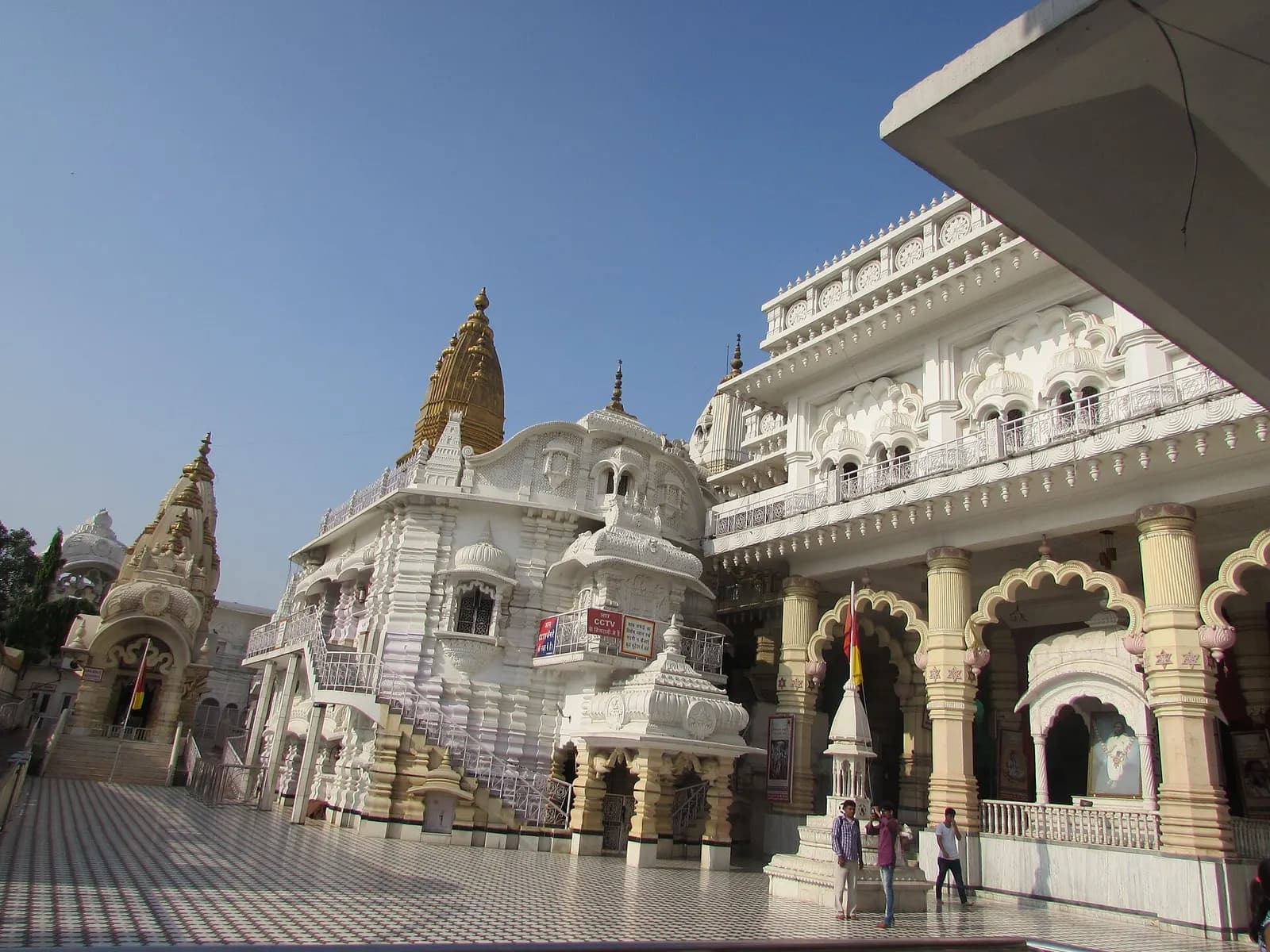
Chhatarpur Temple, properly the Shri Aadya Katyayani Shakti Peeth Mandir, is one of the largest and most elaborate Hindu temple complexes in Delhi, spread across roughly 70 acres in the south of the city and dedicated to the goddess Katyayani, a fierce and protective form of Durga. Founded in 1974, it is a modern temple rather than an ancient one, but its scale, its gleaming white marble shrines and its carved detail make it genuinely impressive and it is a major centre of devotion, above all during the Navratri festivals.
It is special for several reasons worth spelling out:
- Sheer scale. One of Delhi's biggest temple campuses, a whole walled city of shrines, halls, gardens and facilities.
- Beautiful marble architecture. Intricately carved white marble shrines that blend North Indian and South Indian temple styles.
- A living Shakti Peeth. A major, active centre of goddess worship, especially electric during Navratri, when hundreds of thousands come.
- Peace and space. Outside festival times it is calm and uncrowded by tourists, a serene place to wander.
- Excellent facilities. Free entry, parking, a community kitchen and pilgrim services make it easy and welcoming to visit.
It belongs on any thoughtful list of things to do in Delhi for travellers drawn to living faith and fine temple craft and it is one of the grandest of the spiritual places to visit in Delhi.
Who founded Chhatarpur Temple and when?
Chhatarpur Temple was founded in 1974 by Baba Sant Nagpal Ji, a revered spiritual figure whose vision and following built up the vast complex over the decades that followed. From comparatively modest beginnings it grew into one of the largest temple campuses in the country, expanding shrine by shrine into the sprawling marble city of today. Baba Sant Nagpal Ji's samadhi, his memorial shrine, lies within the complex and he remains central to its identity and devotion. Because the temple is a 20th century foundation, it is best appreciated not as an antiquity but as a living expression of modern Hindu devotion and temple building, carried out on a grand scale and still growing and thriving. That youth is part of its character: everything is well kept, actively worshipped and designed for the comfort of the many pilgrims who come.
Baba Sant Nagpal Ji is remembered as a saint devoted to the goddess and the temple grew directly out of his devotion and the community of followers who gathered around him. What began as a shrine to Katyayani expanded, over the years, into the enormous campus of today, added to shrine by shrine as resources and devotion allowed. This organic, faith driven growth explains the complex's layout, a collection of many shrines and halls rather than a single planned building, each added in its time. After the founder's passing, his samadhi became a revered part of the complex in its own right and the institution he created continues to run the temple, its charitable kitchen and its pilgrim services. For a visitor, knowing this human story, a saint, his devotion to the goddess and a community that built a marble city around it in a single lifetime, gives the vast campus a warmth and coherence it might otherwise lack.
What can you see in the Chhatarpur Temple complex?
The campus is vast and divided into several main sections, so a visit is a walk between distinct complexes linked by lawns and pathways. The key areas and highlights:
- The Shaktipeeth complex. The devotional heart, holding the main sanctum of Maa Katyayani along with numerous other shrines to various deities, the focus of worship especially at Navratri.
- The Matrichaya complex. The administrative and welcoming side of the temple, with offices, a museum and the hall known as Nutan Bhawan.
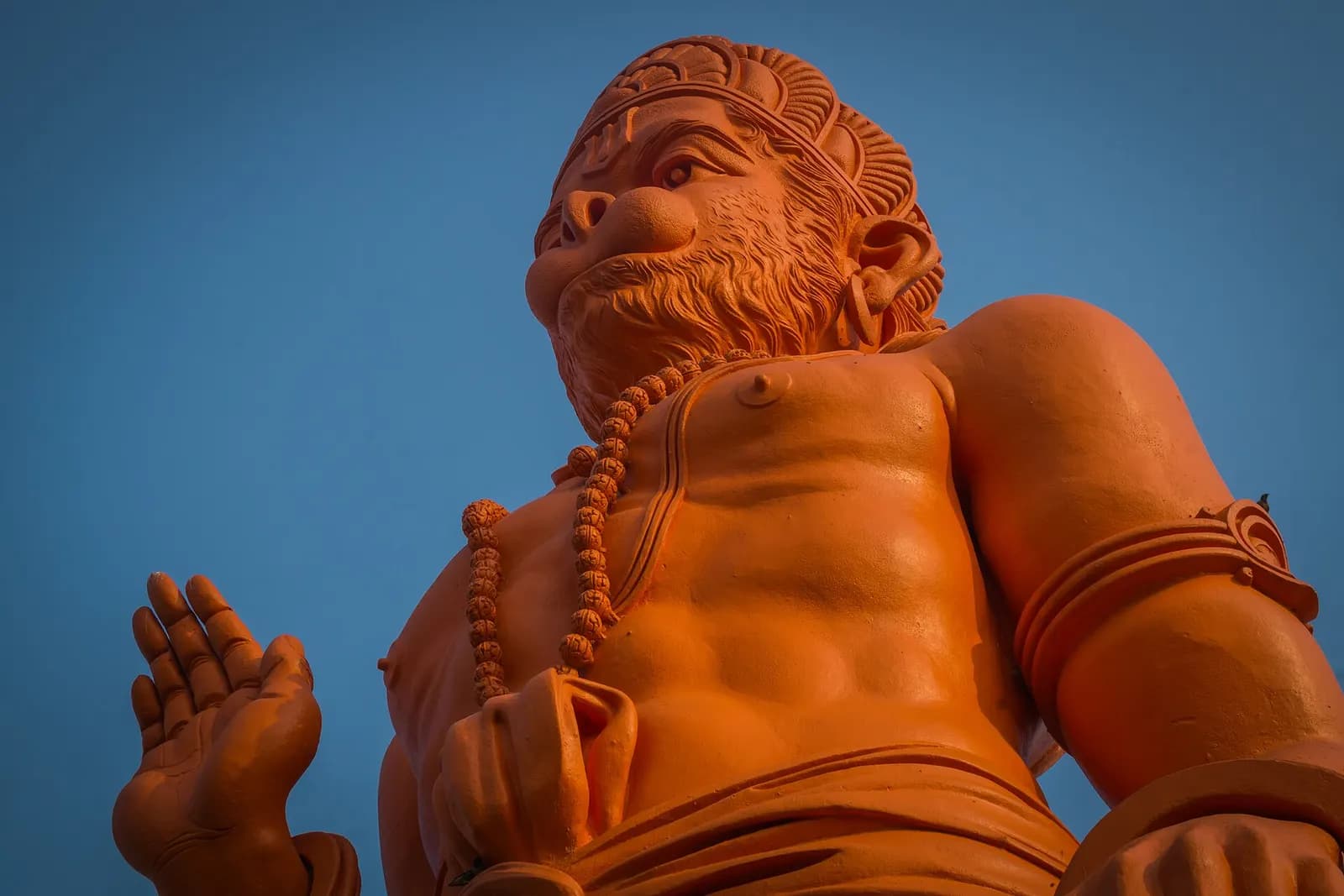
- The Markandeya complex. Home to the samadhi of Baba Sant Nagpal Ji and a towering Hanuman statue that is visible from far around.
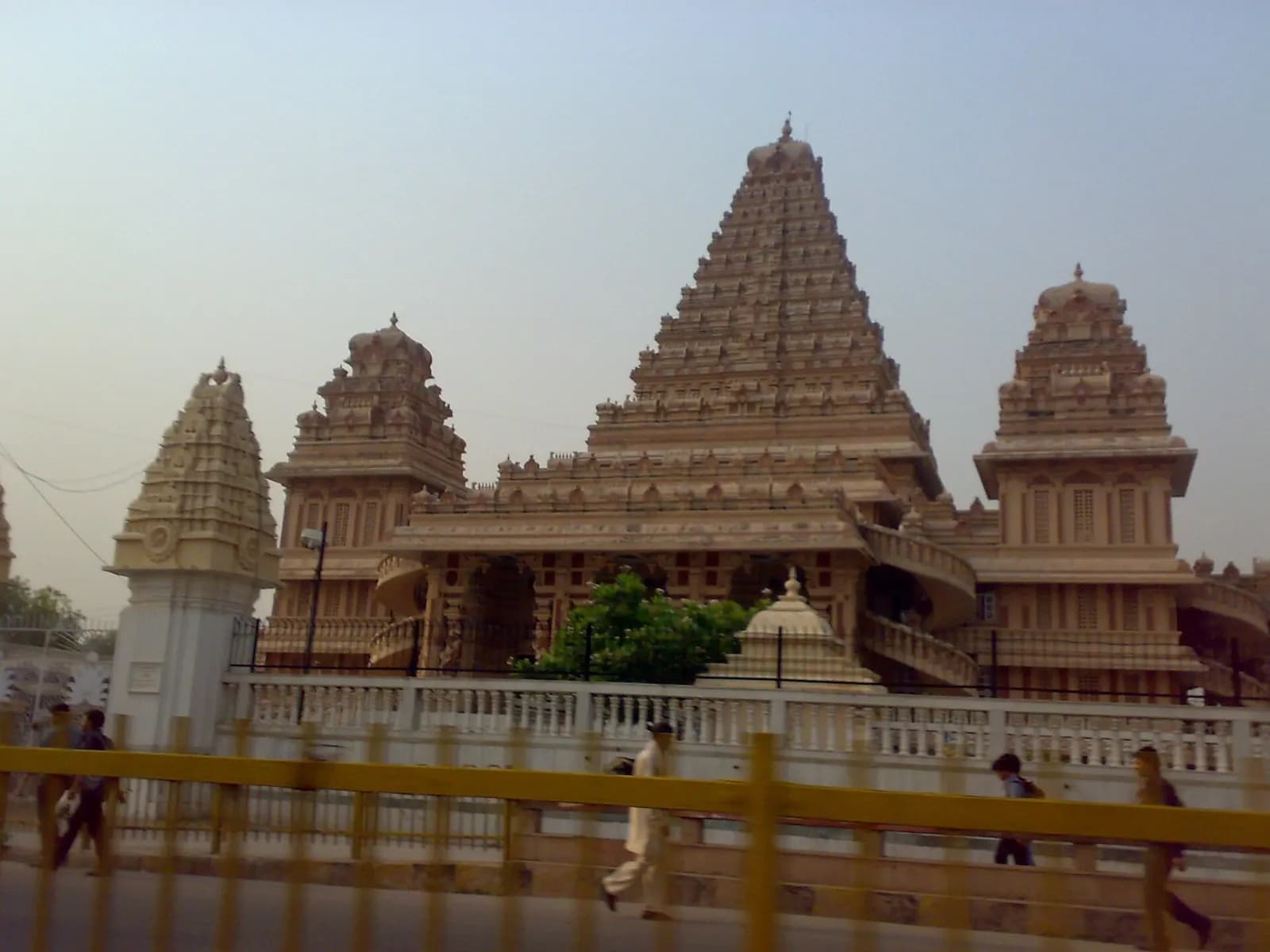
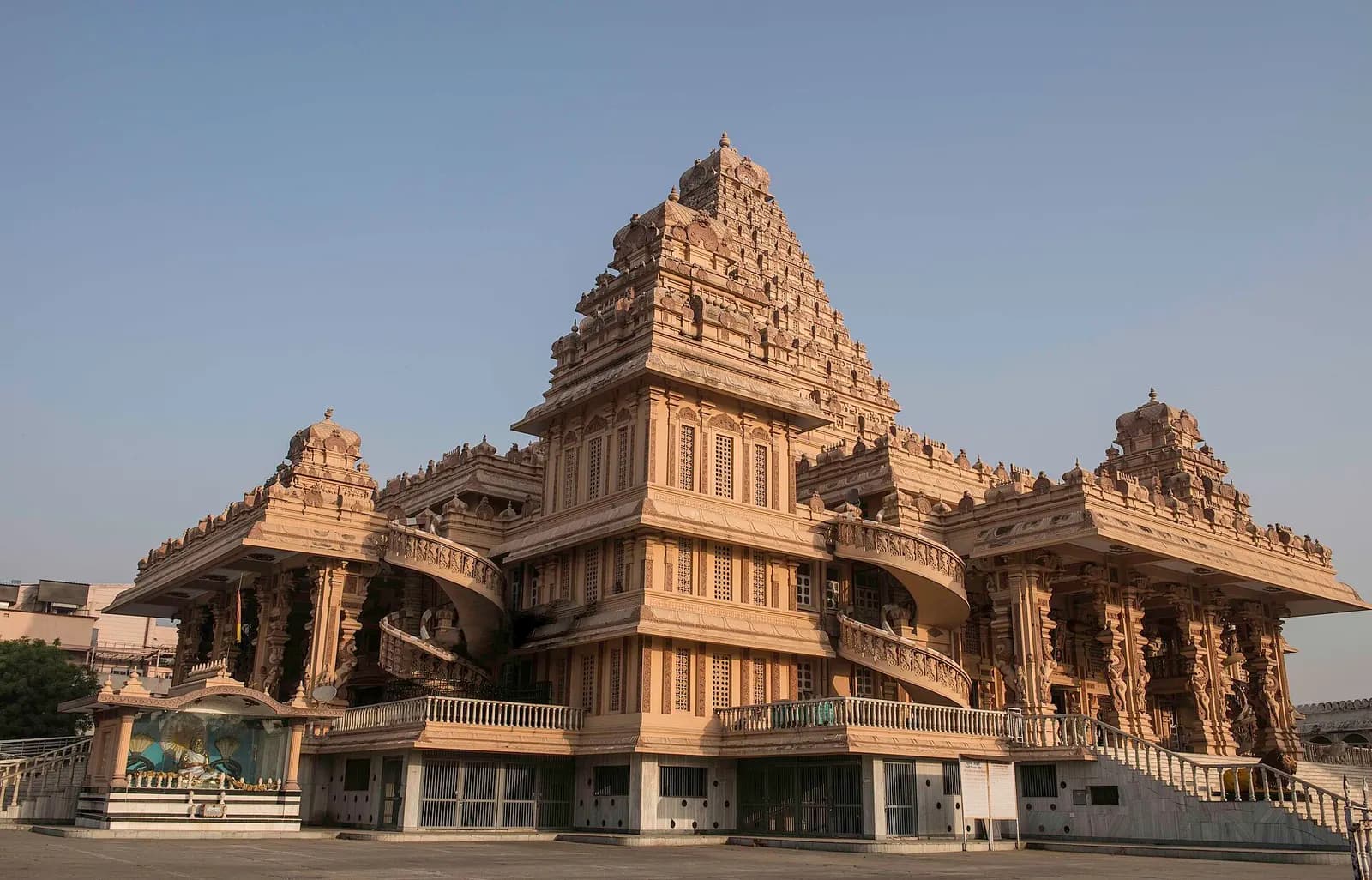
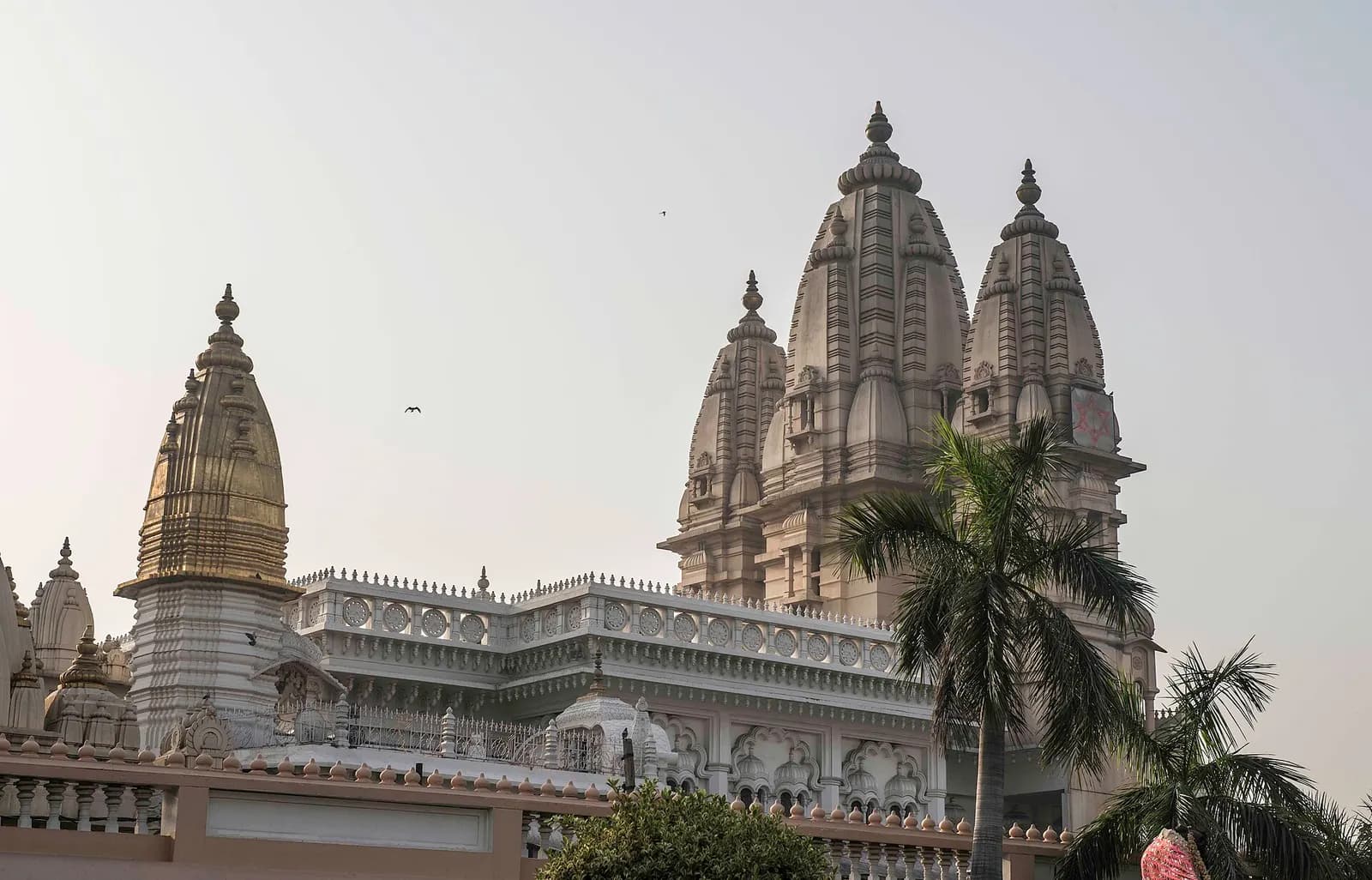
- The marble shrines and carving. Throughout, the shrines are built and clad in white marble with intricate latticework and carving, blending the curvilinear Nagara towers of the north with the tiered Dravidian forms of the south.
- Gardens and halls. Open lawns, prayer halls and quiet corners that make the huge complex pleasant to wander at a relaxed pace.
Take time to walk between the complexes rather than heading straight to the main shrine; the scale and variety are a large part of the experience.
The architecture itself rewards a closer look. Rather than following a single regional style, Chhatarpur draws on the whole breadth of Indian temple building, so you will see the tall, curving shikhara towers characteristic of North Indian Nagara temples alongside the stepped, pyramidal gopuram forms of the South Indian Dravidian tradition, often within sight of one another. Much of the work is in white marble, carved with fine latticework screens or jaalis, floral motifs and figures of deities and the overall effect is bright ornate and harmonious. Within the shrines you will find images of a wide range of gods and goddesses besides Katyayani herself, including Shiva, Vishnu, Lakshmi, Ganesh and Hanuman, so the complex functions almost as a gathering of the whole Hindu pantheon in one place. The giant Hanuman statue in the Markandeya complex, with hands parting its chest to reveal Ram and Sita within, is a particular landmark, tall enough to be seen from the road and the metro. Even for visitors with no religious interest, the craftsmanship and the sheer ambition of the marble work are impressive.
Who is Goddess Katyayani?
The temple is dedicated to Katyayani, one of the most important forms of the great goddess Durga and understanding her helps make sense of the devotion here. Katyayani is counted among the Navadurga, the nine forms of Durga worshipped over the nine nights of Navratri and she is a fierce, warrior aspect of the goddess, invoked for strength, protection and the overcoming of obstacles and evil. As a Shakti Peeth, a seat of the divine feminine energy or shakti, the temple is a place where devotees come to seek the goddess's blessing and power. This is why the temple is at its most intense during the two annual Navratri festivals, in spring and autumn, when the worship of Durga in her nine forms reaches its height. Knowing that Katyayani is a form of Durga and that this is a centre of goddess worship, explains both the temple's name and the extraordinary crowds and energy of its festival days.
In the stories of the tradition, Katyayani is the goddess born of the combined energies of the gods to vanquish a demon that none of them could defeat alone, the warrior mother who restores cosmic order and she is worshipped on the sixth night of Navratri in particular. Devotees come to her for courage in adversity, for the removal of obstacles and, in popular belief, for blessings in matters such as marriage and family. The title Shakti Peeth places the temple within a wider sacred geography of goddess shrines across the subcontinent, seats of the divine feminine power that Hindus hold especially holy. You do not need to follow the faith to feel the atmosphere this creates: an intensity of devotion, particularly from women worshippers, that gives the temple an emotional charge quite different from a historic monument. It is a place where belief is vividly, visibly alive.
When is the main shrine open and what is Navratri like?
This is the key thing to know about timing a visit. While the wider complex and its many shrines are open daily, the innermost original sanctum of Maa Katyayani is, by long tradition, opened to devotees mainly during the two Navratri festivals each year, so the temple's spiritual peak is tied to those occasions. During Navratri the whole complex is transformed: hundreds of thousands of devotees pour in over the nine days and nights, long queues form for darshan of the goddess, the shrines blaze with lights and flowers and the atmosphere is one of overwhelming collective devotion. It is one of the great religious spectacles of Delhi, though it also means enormous crowds and long waits.
For most travellers, the choice is simple. If you want to witness the temple at its most alive and are prepared for huge crowds, time your visit for Navratri, usually falling in spring, around March to April and autumn, around September to October. If you prefer a calm, unhurried visit to admire the architecture and soak up a peaceful atmosphere, come on any ordinary day outside the festivals, when the complex is serene and you can wander freely. Either way, the sheer scale and devotion of the place leave an impression.
If you do come during Navratri, a little planning helps enormously. Arrive very early or late to avoid the worst of the queues, wear comfortable clothes and shoes you can slip off easily, carry minimal belongings and be prepared for slow moving crowds and tight security. The temple and the authorities put special arrangements in place for the festival, with marked queues, barriers and extra facilities, so follow the signs and the staff. The reward for the effort is witnessing devotion on an epic scale, the whole complex garlanded and lit, the chanting continuous and a sense of collective faith that is genuinely stirring. The two Navratris fall at the changing of the seasons, the more famous Sharad Navratri in the autumn around September or October, leading up to Dussehra and Chaitra Navratri in the spring around March or April. Both transform the temple completely. Outside these windows, the same shrines sit quiet and serene, so your experience of Chhatarpur depends enormously on when you choose to come.
What is a visit to Chhatarpur Temple like?
A visit here is a gentle, uplifting experience quite unlike touring a historic ruin. You arrive, leave your shoes at the racks and step into a calm, spotless world of white marble shrines, lawns and prayer halls. Devotees move quietly between the shrines, ringing bells, offering flowers and sitting in contemplation and the air carries incense and the sound of chanting. At the morning and evening aarti, the lamp ceremony, the shrines fill with light, bells and song and even a brief few minutes of it is moving. Because the campus is so large, it rarely feels crowded outside festival days, so you can wander at your own pace, pausing where you like.
It is worth going in the right spirit. This is a living place of worship, not a sightseeing attraction, so move calmly, dress modestly, keep your voice low near the shrines and follow the lead of those around you. Photography is generally fine in the open areas but often restricted inside the inner sanctums, so look for signs and ask if unsure. You are welcome to join the queues for darshan, a viewing of the deity, if you wish or simply to admire the architecture and absorb the atmosphere. Many visitors, of any faith or none, find the combination of grand marble surroundings and heartfelt devotion genuinely peaceful and memorable.
What are the Chhatarpur Temple timings and entry fee?
Chhatarpur Temple is open every day, generally in two sessions, roughly from 6:00 AM to noon in the morning and from 4:00 PM to 10:00 PM in the evening, so plan your visit around those windows. During Navratri and other festivals the hours extend dramatically, often around the clock, to accommodate the crowds, so timings then are quite different. Entry is completely free for everyone, with no ticket of any kind and the temple provides generous facilities, including free parking, shoe racks, cloakrooms, drinking water, a free community kitchen serving langar and basic pilgrim accommodation. As these are current at the time of writing and can change, especially around festivals, it is worth reconfirming before a special visit. As at any Hindu temple, dress modestly and remove your shoes before entering the shrines.
What is the best time to visit Chhatarpur Temple?
The best time depends on what you want. For the full devotional spectacle, visit during Navratri, in spring or autumn, when the main goddess shrine is open and the complex pulses with worshippers, lights and festivity, as long as you are ready for very large crowds and queues. For a peaceful experience of the architecture and atmosphere, come on an ordinary weekday outside the festivals, ideally in the cooler months from October to March, when the weather is pleasant for walking the large open campus. On any day, the early morning and the evening sessions are the times to come, both because those are the opening hours and because the light and the aarti, the lamp ceremony, are especially lovely then. Mornings tend to be the calmest for a quiet visit, while the evening aarti has a warm, lamplit atmosphere that many find especially beautiful. Avoid the harsh middle of the day in summer, when the open marble courtyards grow very hot underfoot and remember that the temple closes between its two sessions around midday, so plan to arrive within the morning or evening windows rather than in between. A weekday is far quieter than a weekend, when local families visit in greater numbers.
Is Chhatarpur Temple worth visiting?
Yes, with the right expectations. Chhatarpur is not an ancient monument, so visitors hoping for centuries old history will find that at the nearby Qutub Minar and Mehrauli instead. What Chhatarpur offers is different and valuable in its own way: one of the largest, most elaborate and most actively worshipped temple complexes in Delhi, a serene expanse of carved marble that is free to enter and easy to combine with the big southern sights. For travellers interested in living Hindu faith, temple architecture or simply a calm and beautiful place to pause, it is well worth an hour or two. For anyone in Delhi during Navratri, it becomes something more, a chance to witness one of the city's great religious gatherings. It also scores highly on practicality: free entry, free parking, clean facilities, a community kitchen and a metro station close by all make it an easy, welcoming stop. Set against its modest demands on your time, the scale and serenity of the place make it a rewarding addition to a South Delhi day for the right traveller.
What facilities does Chhatarpur Temple offer?
One of the pleasant surprises of Chhatarpur is how well it looks after its visitors, reflecting its role as a working pilgrimage centre rather than a tourist site. Entry is free and so is parking, which is ample. There are shoe racks and cloakrooms where you can safely leave footwear and bags, drinking water points around the campus and clean, maintained grounds throughout. The temple runs a langar, a free community kitchen, where simple vegetarian meals are served to all comers in the spirit of seva or selfless service, a humbling and welcoming experience that is central to the ethos of the place. For pilgrims travelling from afar there is also basic accommodation. These facilities make a visit easy and comfortable even for families or older travellers and they mean you can arrive with little and be well provided for. As always, a respectful donation is welcome but never required.
How do you reach Chhatarpur Temple?
Chhatarpur Temple is easy to reach. The nearest metro is Chhatarpur on the Yellow Line, about 1 km from the complex, with Sultanpur, also on the Yellow Line, close on the other side; from either, a short auto or e-rickshaw brings you to the gate. By road it is reached via the Mehrauli-Gurgaon Road and the temple offers free parking, which makes driving straightforward too. The giant Hanuman statue near the metro is a useful landmark as you approach.
Its location in South Delhi, only about 4 km from the Qutub Minar, means it fits naturally into a southern sightseeing plan. If you are threading a wider route, a dedicated New Delhi tour can tie it together with the imperial sights, while a broader Delhi day tour folds the temple into the full span of the capital.
What is there to see near Chhatarpur Temple?
Chhatarpur sits in the temple and heritage rich south of the city, so it pairs easily with plenty nearby. A short drive away is the towering Qutub Minar and the sprawling Mehrauli Archaeological Park, full of medieval ruins, while the relaxed Garden of Five Senses near Saket and the lively Hauz Khas complex are also close.
For those following a temple trail, Delhi offers some magnificent companions: the vast modern Akshardham, the serene Lotus Temple, the hilltop Devi shrine of Kalkaji Mandir nearby, the ISKCON temple and the Birla Mandir, along with the tranquil Bangla Sahib Gurudwara. Together these turn Chhatarpur into part of a rewarding spiritual and sightseeing day in South Delhi and you can see the fuller picture in our guide to the important monuments of Delhi.
How does Chhatarpur Temple fit into a Delhi itinerary?
For most visitors, Chhatarpur works well as a calm, uplifting stop folded into a South Delhi day, easily paired with the Qutub Minar and Mehrauli just up the road. Because it is free, well organised and quick to see outside festival times, it is an easy addition rather than a demanding one. Those interested in Delhi's living faith often build a small temple trail, taking in Chhatarpur with the Lotus Temple, Akshardham or nearby Kalkaji for a varied picture of the city's spiritual life. Travellers on a fuller itinerary can balance it with the grand historic monuments, the serene Humayun's Tomb and the mighty Red Fort, for a day that moves between history and devotion.
If Delhi is your gateway to the wider Golden Triangle, Chhatarpur adds a note of living, modern Hindu devotion to a trip otherwise rich in Mughal and sultanate history and a visit timed for Navratri can be an unforgettable glimpse of Indian festival culture. Many of my guests are struck by how grand yet peaceful it feels on an ordinary day.
A practical note on sequencing: because Chhatarpur closes around midday between its two sessions, it works best as an early morning stop before you move on to the Qutub Minar and Mehrauli, which stay open through the day or as an evening visit after them, in time for the lamplit aarti. Fitting it to the temple's hours rather than squeezing it into the middle of the day makes for a far better experience and your guide or driver can easily plan the day around it. For the best season across the capital, our guide to the best time to visit Delhi is a useful companion.
Travel tips for visiting Chhatarpur Temple
A few pointers make the visit smooth and respectful:
- Mind the two sessions, roughly 6:00 AM to noon and 4:00 PM to 10:00 PM and plan around them.
- Time it deliberately, Navratri for the full spectacle and open main shrine or an ordinary day for peace.
- Dress modestly, covering shoulders and knees and be ready to remove your shoes at the racks before entering the shrines.
- Come by metro to Chhatarpur station and take a short auto to the gate or drive in and use the ample free parking.
- Carry little, as cloakrooms are available and large bags are much easier left behind than carried through the shrines.
- Try the langar if it is being served, the free community meal, as a simple, humbling and genuinely welcoming part of the temple experience.
- Allow extra time and patience during festivals, when crowds and queues are very large.
- Visit in the cooler months for comfort walking the large open campus.
- Catch an aarti if you can, the morning or evening lamp ceremony, for the temple at its most atmospheric.
- Look for the giant Hanuman statue near the metro, a striking landmark and a highlight of the Markandeya complex.
If you would like a local to build Chhatarpur Temple into a wider Delhi plan, message our team on WhatsApp at +91 7302265809 with your travel dates and group size and we will help you shape the day.
Plan your trip with us
At Experience My India, through our Delhi and Golden Triangle travel desk, we design unhurried, well paced trips that make room for living, spiritual places like Chhatarpur Temple, not just the historic monuments. Whether you want a relaxed set of Delhi Agra tours or a full Golden Triangle route through Delhi, Agra and Jaipur, we plan around your pace, your interests and the right season, with local guides who know how to visit a temple respectfully and when a festival is on. Share your dates and the kind of trip you have in mind through our enquiry page, tell us your group size and we will put together an honest, tailored plan rather than a rushed checklist.
Related guides
- Nearby places to visit in Delhi, to extend your day
- Hidden places to visit in Delhi, more of the city's quieter corners
Enquire Now
Ready to Explore
The Heart of Delhi?
Explore the Red Fort, Qutub Minar, Humayun's Tomb, and the vibrant streets of Old Delhi with our expert-guided premium tours of India's capital city.

Delhi
Premium Tour Package
Questions
Frequently asked questions
What are the timings of Chhatarpur Temple?
It is open every day, generally from about 6:00 AM to noon and again from 4:00 PM to 10:00 PM. Hours extend greatly during Navratri and other festivals, so reconfirm then.
Is there an entry fee for Chhatarpur Temple?
Which is the nearest metro station to Chhatarpur Temple?
Who founded Chhatarpur Temple and when?
Which deity is Chhatarpur Temple dedicated to?
When is the main Katyayani shrine open?
What is Chhatarpur Temple like during Navratri?
How much time do I need at Chhatarpur Temple?
Is Chhatarpur Temple worth visiting?
What should I wear to Chhatarpur Temple?
Explore more
Plan your Chhatarpur Temple trip with us

Photo credits
Photos from Wikimedia Commons, used under their licences:
- Photo 1 by © ShadesofIndia, CC BY-SA 4.0
- Photo 2 by Mahabalaindia, CC BY-SA 4.0
- Photo 3 by Mahabalaindia, CC BY-SA 4.0
- Photo 4 by Aarti Jadli, CC BY-SA 4.0
- Photo 5 by Akshatha Inamdar, CC BY-SA 4.0
Interested in Chhatarpur Temple Delhi: Timings, Darshan, History and Visitor Guide?
Chat with our travel team for a custom quote, or browse every package.
Related Attractions
9Ready to explore Chhatarpur Temple Delhi: Timings, Darshan, History and Visitor Guide?
Book your private tour today and experience the magic of India's rich heritage.