Jahaz Mahal Delhi: History, Timings and Visitor Guide
Visiting Jahaz Mahal in Mehrauli, Delhi's ship palace? Its history, the floating reflection, the Hauz-i-Shamsi tank, timings, free entry and the nearest metro.
In a Nutshell
“Jahaz Mahal in Mehrauli is a late 15th-century palace on the edge of the historic Hauz-i-Shamsi reservoir in South Delhi, famous because its long silhouette, reflected in the full tank, looks like a ship floating on the water, which is what its name, Ship Palace, means. Built in the twilight of the Lodi era, it served as a monsoon retreat, a summer resort and a rest-house for pilgrims and it is the grand finale venue of the Phoolwalon ki Sair festival. It is distinct from the larger Jahaz Mahal at Mandu. Entry is free, it is open daily and it is reached from Qutub Minar metro. It features on our heritage Delhi tours, run by a unit of Experience My India.”
Jahaz Mahal is one of Delhi's most charming and atmospheric lesser-known monuments, a serene ship palace by a sacred reservoir hidden in the lanes of Mehrauli, offering a quiet escape from the city. For history lovers and those seeking the capital's offbeat heritage, it is a delightful stop. Our team at Delhi Agra Tour Packages often includes it on a Mehrauli heritage walk and it adds a tranquil, story-rich dimension to a wider Golden Triangle tour through the capital.
I am Abhay Sharma, Delhi born and a Golden Triangle guide since 2015 and I love bringing history-minded guests here, because few places in the city are as quietly magical as this ship palace mirrored in its ancient tank, with a legend of a dream and a celestial horse attached to the water beside it. This guide gathers everything I would tell a visitor beforehand, checked against current information, including the history, the architecture, the timings and how to reach it.
Details
Jahaz Mahal at a glance
| Detail | Information |
|---|---|
| Location | Talaab Lane, Mehrauli, South Delhi |
| Meaning | Ship Palace, from its floating reflection on the tank |
| Built | Late 15th century, in the Lodi era |
| Beside | The historic Hauz-i-Shamsi reservoir |
| Known for | Its ship-like reflection, chhatris and glazed tilework |
| Entry | Free; an open ASI monument |
| Nearest metro | Qutub Minar, around 2 km away |
| Time needed | About 30 minutes |
Jahaz Mahal timings
| Detail | Information |
|---|---|
| Open | Daily, 10:00 AM to 5:00 PM |
| Best season | October to March, when the tank holds water |
| Time needed | About 30 minutes |
Jahaz Mahal is open daily from 10:00 AM to 5:00 PM and a casual walk around the palace and the water takes about thirty minutes. The famous floating reflection is best seen in the post-monsoon and winter months, when the reservoir is full, as the tank can dry considerably in high summer. These timings are current at the time of writing and can vary, so reconfirm before a special trip.
Entry fee
| Item | Information |
|---|---|
| Entry fee | Free for all visitors |
| Tickets | None; no counters or digital passes |
| Setting | Quiet fenced heritage lawns amid busy market lanes |
How to reach Jahaz Mahal
| From | Route |
|---|---|
| Qutub Minar metro (Yellow Line) | An auto to the Mehrauli terminal or Adham Khan's Tomb |
| From the terminal | A 5 to 10 minute walk down Talaab Lane to the tank |
| By car | Difficult; the market lanes are narrow and congested |
| On foot | Through the Mehrauli market lanes to the lake gates |
What is Jahaz Mahal?
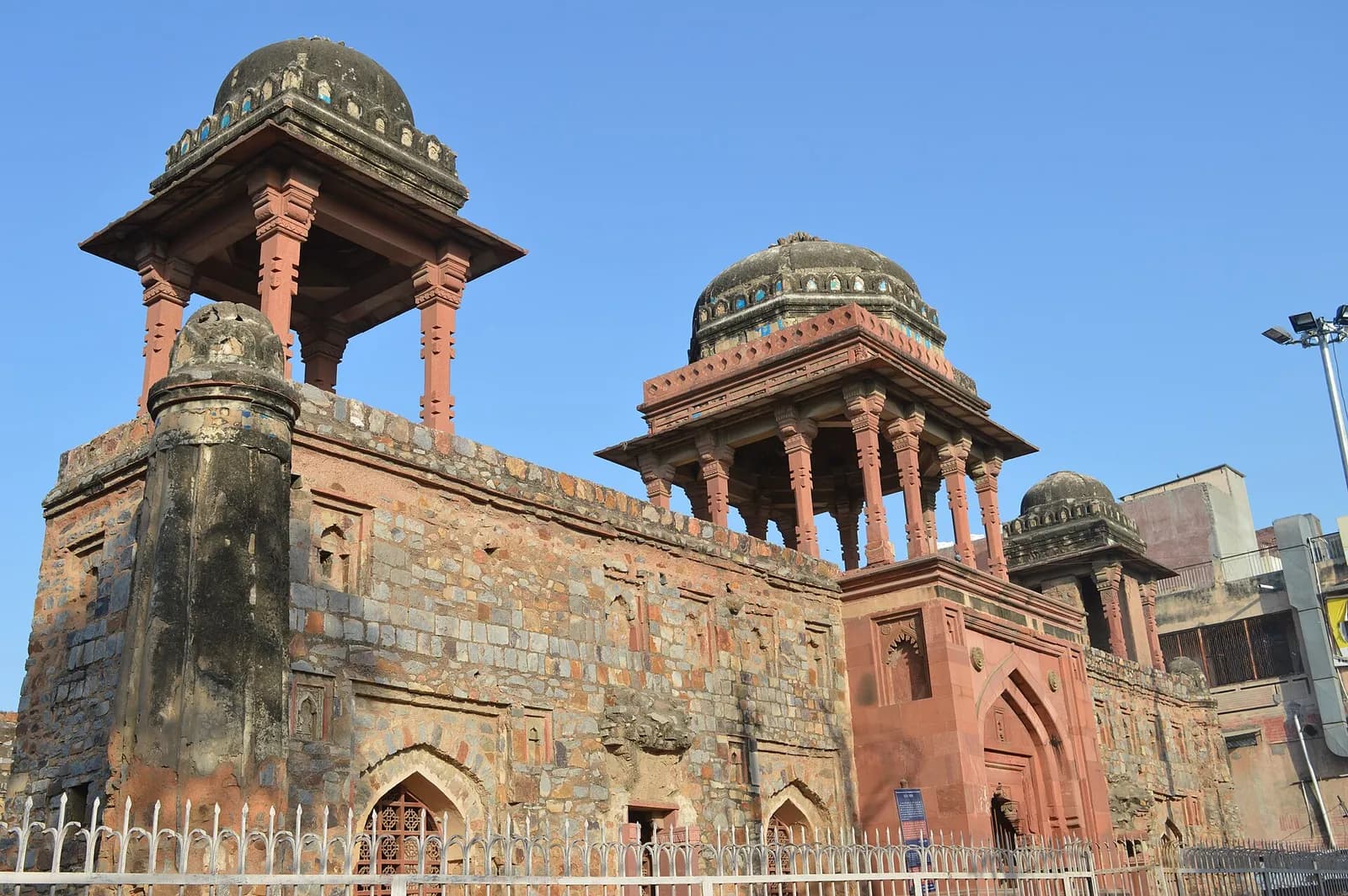
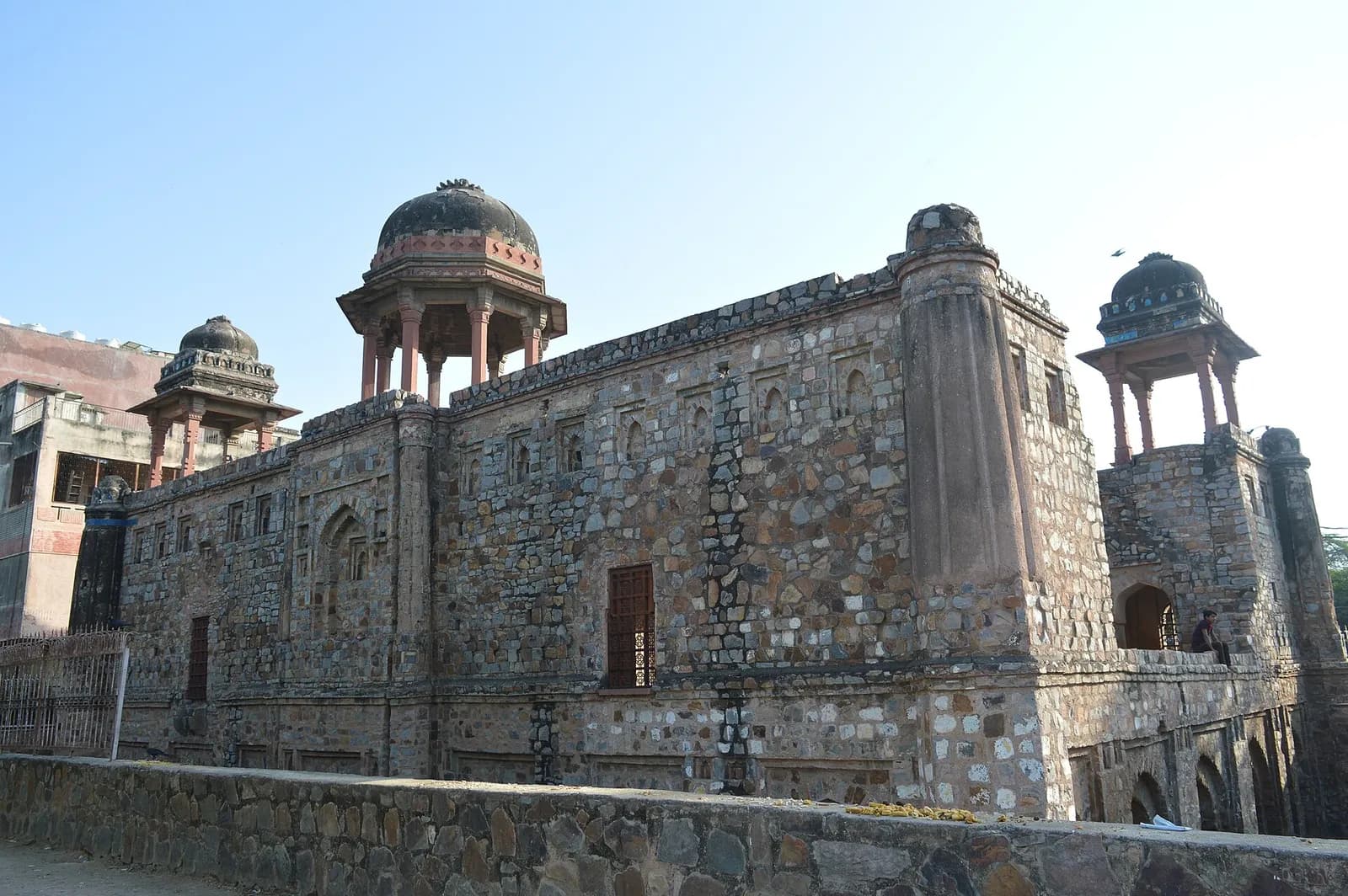
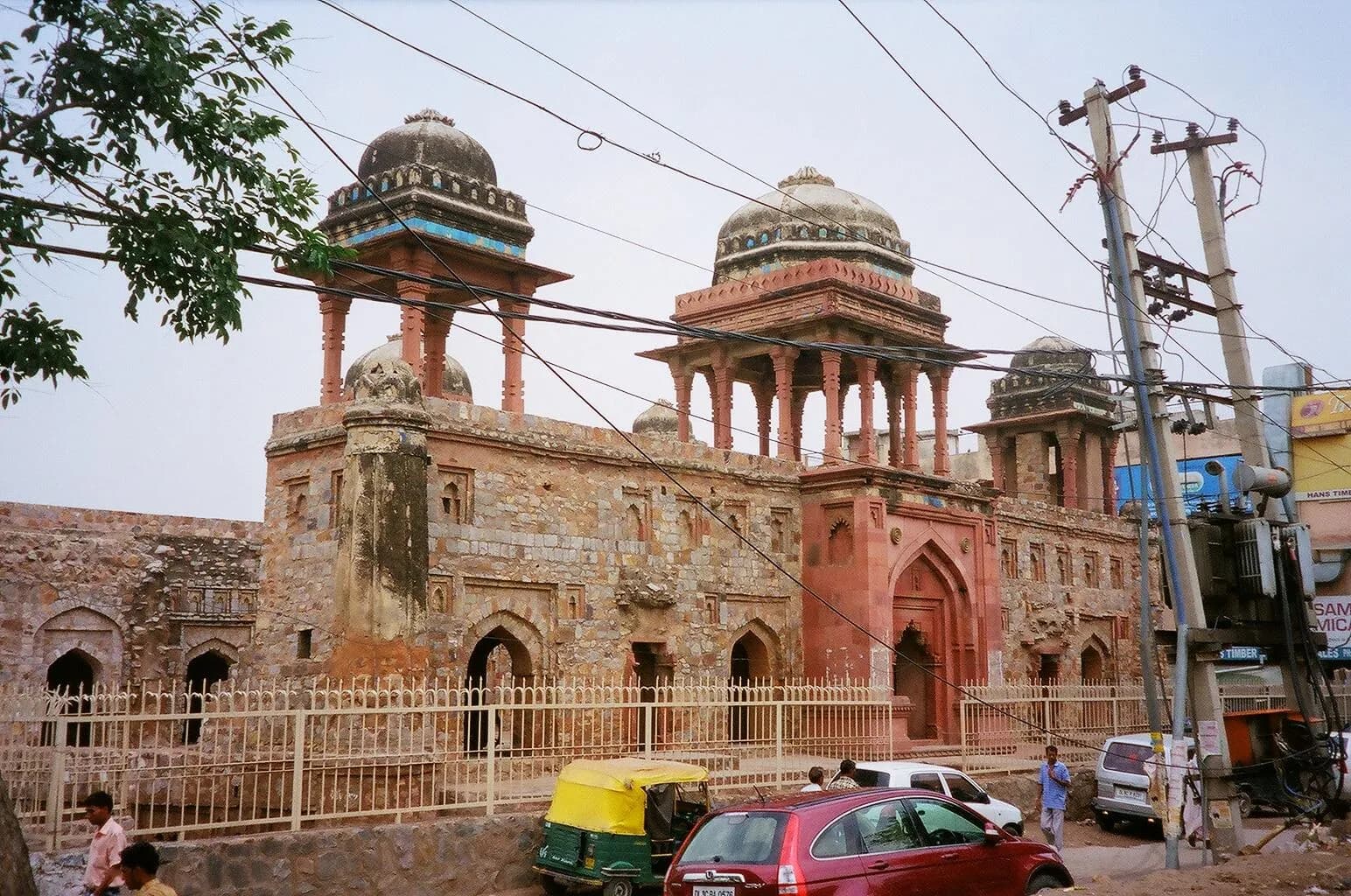
Jahaz Mahal is a historic late 15th-century palace in the old village of Mehrauli in South Delhi, standing on the edge of the ancient Hauz-i-Shamsi reservoir and famous for the beautiful optical illusion that gives it its name. The name Jahaz Mahal means Ship Palace, earned because the building's long, low, elongated silhouette, set right at the water's edge, is reflected in the full reservoir so that the palace appears to float on the water like a ship. Built in the twilight of the Lodi dynasty, it served over the centuries as a monsoon pleasure resort, a summer retreat for Delhi's elite, a place of quiet worship and a sarai or rest-house, for pilgrims. Today it is a serene and atmospheric heritage site, its lawns a peaceful oasis amid the congested market lanes of Mehrauli, decorated with domed rooftop pavilions and traces of bright blue Persian tilework and beside it the sacred tank with its own remarkable legend. It is a quiet gem of the Mehrauli heritage, quite distinct from the larger and more famous Jahaz Mahal at Mandu in Madhya Pradesh.
Several things make it special and they are worth drawing out:
- The floating ship illusion. Its reflection in the full reservoir makes the long palace appear to float like a ship, the source of its name.
- A Lodi-era retreat. Built in the late 15th century as a monsoon and summer resort, a place of worship and a rest-house for pilgrims.
- The rooftop chhatris. Six domed pavilions crown the roof, each, intriguingly, with a different number of supporting pillars.
- Persian tilework and a hidden mark. Traces of bright blue glazed tilework survive and a rare medieval tiger mason's mark hides in the gateway.
- The sacred Hauz-i-Shamsi. The adjacent reservoir, dug in 1230, carries a famous legend of a dream, the Prophet and a celestial horse.
It is one of the most charming and atmospheric of the offbeat things to do in Delhi and a delightful lesser-known entry among the important monuments of Delhi.
Why is it called Jahaz Mahal?
A natural question for anyone encountering the palace is why it is called Jahaz Mahal, the Ship Palace and the answer is one of the most charming in Delhi's heritage. The name comes from a beautiful optical illusion created by the palace's setting and design. Jahaz Mahal is a long, low, horizontal building and it was constructed right at the edge of the great Hauz-i-Shamsi reservoir, so that when the tank is full of water, the palace's elongated silhouette is reflected clearly on the surface. That reflection, with the long building seeming to sit upon the water, creates the striking impression of a great ship floating on the reservoir and from this the palace took its evocative name.
The illusion is at its best in the post-monsoon and winter months, when the reservoir is full and still and it is this seasonal magic that has drawn visitors and poets to the spot for centuries. In the dry heat of high summer, when the water level drops considerably, the floating effect is lost, which is why the timing of a visit matters so much here. For the visitor, understanding the name is understanding the whole appeal of the place: Jahaz Mahal is designed to be seen with water, as a ship mirrored on a sacred lake and catching it in the right season, with the reflection complete, is the key to appreciating why it has enchanted people for so long. Knowing this transforms a look at a low stone building into an appreciation of one of the most poetic architectural ideas in the city.
History of Jahaz Mahal
The history of Jahaz Mahal belongs to the transitional age at the close of the Delhi Sultanate and it reflects the many uses to which such a pleasure palace was put over the centuries. Built in the late 15th century, spanning the twilight of the Lodi dynasty and the approach of the Mughal era, it was raised in a period when Mehrauli, with its sacred reservoir and great Sufi shrine, was an important and favoured area just outside the main centres of power. Its story is one of varied and gentle purposes:
- A monsoon pleasure resort. The palace was used as a retreat during the monsoon, a cool and beautiful spot by the water in the rainy season, when the reservoir and the reflection were at their finest.
- A summer sanctuary. It served as an unhurried summer getaway for the rulers and elite of Delhi, a place of rest and leisure away from the city.
- A place of worship. At times it functioned as a place of quiet worship, in keeping with the sacred character of the adjoining reservoir and the nearby dargah.
- A pilgrims' sarai. It also served as a sarai, a rest-house offering shelter to weary pilgrims who came to the holy sites of Mehrauli.
Taken together, this history shows Jahaz Mahal as a gentle, multi-purpose retreat rather than a fortress or a seat of power, a place made for pleasure, rest, worship and hospitality by a sacred lake. That character still defines the site today, which remains serene and unhurried, a world away from the grand military and imperial monuments elsewhere in the city. The palace also became and remains, the grand finale venue of the beloved Phoolwalon ki Sair festival, deepening its role as a place of celebration and shared culture. For the visitor, knowing this history of leisure and devotion by the water helps explain the palace's uniquely tranquil and poetic atmosphere, which is its greatest charm.
Architecture of Jahaz Mahal
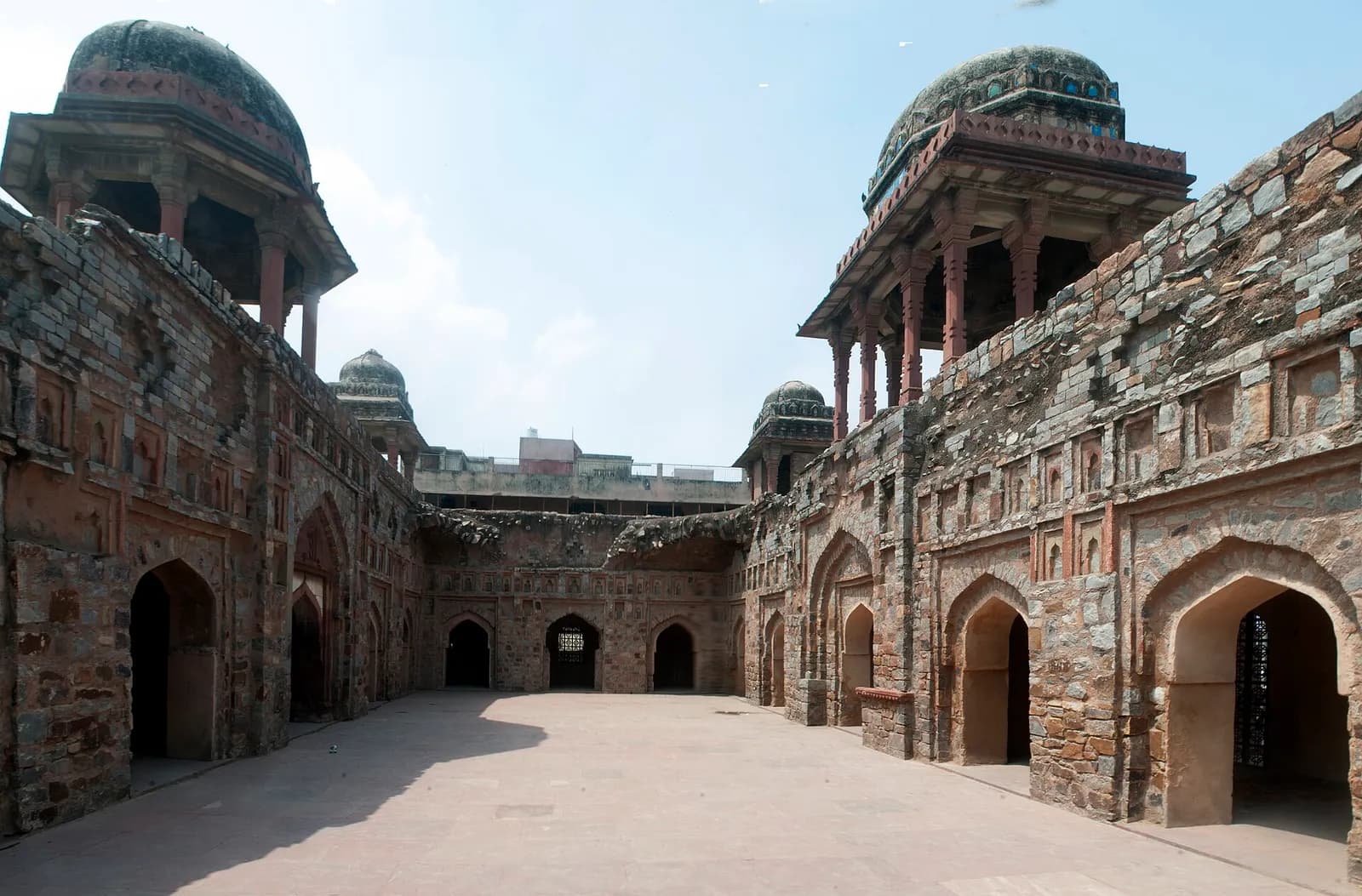
Architecturally, Jahaz Mahal is a graceful and intriguing building of the late sultanate period and its features reward a close and knowing look. It is a long, low, rectangular structure flanked by stout corner towers, built primarily of local rubble stone and plaster with premium red sandstone, a composition designed above all to present that long, ship-like profile to the water. Its most distinctive features are worth seeking out:
- The ship silhouette. The long rectangular plan with corner towers, set at the water's edge to create the famous floating reflection, is the defining architectural idea of the building.
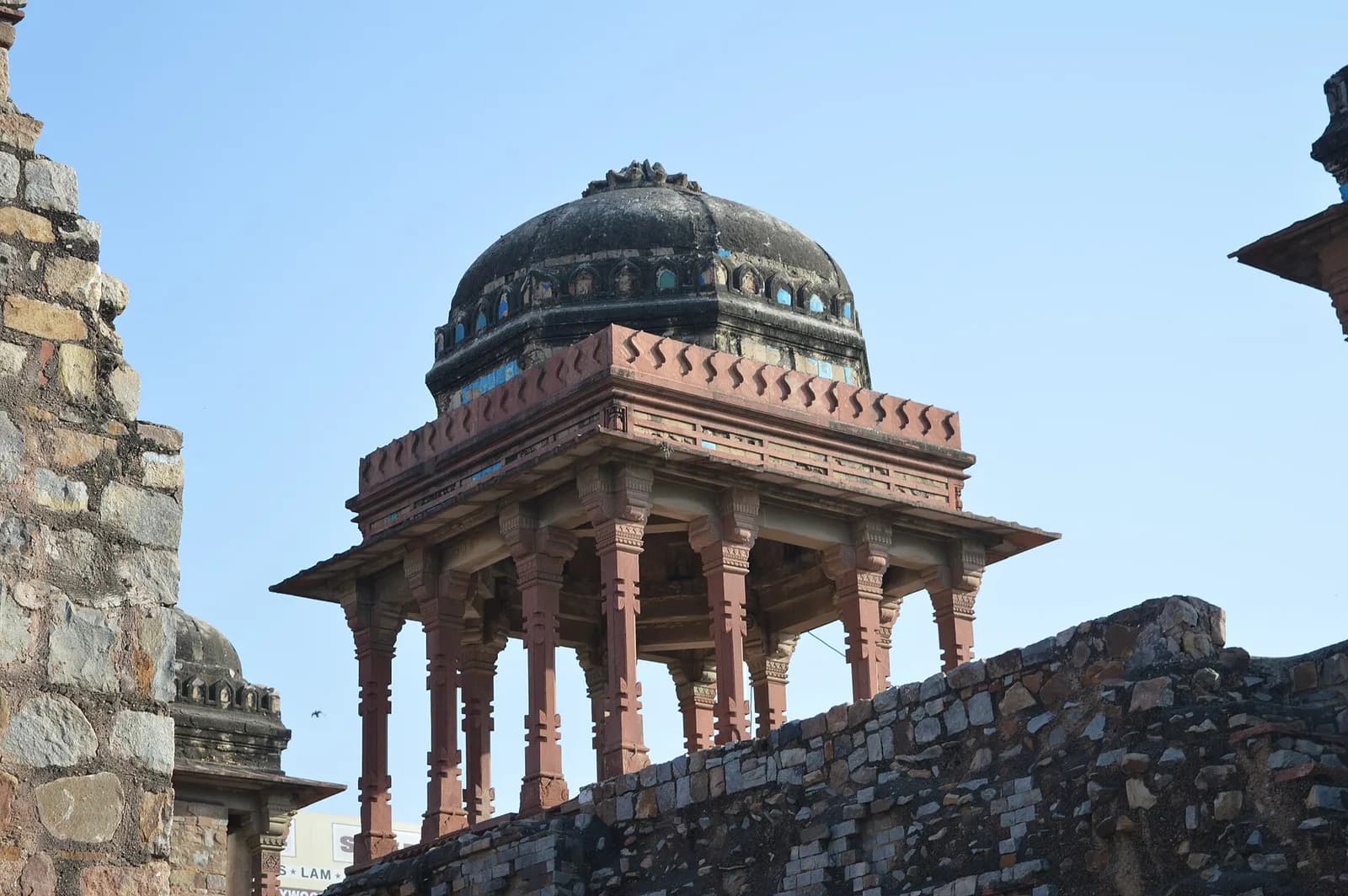
- The six chhatris. The roof is crowned by an array of six beautiful chhatris or domed pavilions, with an intriguing quirk: each one is designed with a different number of supporting pillars, a curious and deliberate variation.
- The glazed tilework. The entry arches and the central dome still retain visible traces of bright blue Persian glazed tilework, delicate survivals of the colour that once adorned the stone.
- The tiger mark. Hidden within the central stone gateway is a rare medieval tiger mason's mark, an ancient signature left by the master craftsmen who built the walls.
The overall impression is of a refined and playful pleasure palace, its long low form and crowning pavilions made for leisure and for reflection in the water rather than for defence or display of power. The six chhatris with their varying pillar counts are a delightful detail that shows the inventiveness of the builders, while the surviving blue tilework hints at how colourful and ornate the palace once was and the hidden tiger mark is a charming trace of the individual craftsmen behind it. Knowing what to look for, the ship silhouette, the six varied chhatris, the blue tiles and the tiger mark, turns a visit into a rewarding hunt for the building's many quiet delights.
The Hauz-i-Shamsi reservoir and its legend
Jahaz Mahal cannot be understood apart from the great reservoir beside it, the historic Hauz-i-Shamsi, which is both the reason for the palace's famous reflection and the bearer of one of Delhi's most beautiful legends. The reservoir was originally excavated in 1230 by Sultan Shamsuddin Iltutmish, one of the great early rulers of the Delhi Sultanate, as a vital water source for the Mehrauli area and it is from his name, Shams, that the tank takes its name. For centuries it was a major sacred and practical water body and it is this tank that supplies the water in which Jahaz Mahal appears to float.
The reservoir carries a famous and lovely legend about its origin. According to Islamic folklore, Sultan Iltutmish was guided to the spot in a dream, in which the Prophet Muhammad appeared riding a celestial stallion and pointed out the exact place where water should be found and the tank dug. When the Sultan went to the spot, he is said to have found the hoof-print of the Prophet's horse on the rocky ground and he marked this sacred spot by building a central red stone domed pavilion, which still stands in the middle of the lake to this day. This legend gives the reservoir and by extension the palace beside it, a deep spiritual resonance, tying the whole site to the sacred history of early Muslim Delhi. For the visitor, the tank is not just a scenic backdrop but a monument and a legend in its own right and the little domed pavilion in the water, said to mark the celestial hoof-print, is one of the most enchanting sights in Mehrauli.
The Phoolwalon ki Sair festival
Jahaz Mahal holds a special place in the living culture of Delhi as the grand finale venue of the Phoolwalon ki Sair, the Festival of the Flower Sellers, one of the city's most cherished and beautiful traditions. This historic annual festival is a celebration of interfaith harmony and shared culture, in which a vibrant royal procession of flower-woven fans and canopies is carried through Mehrauli, with offerings made at both the Sufi dargah of Qutbuddin Bakhtiar Kaki and a nearby Hindu temple, in a joyful expression of the city's syncretic spirit. The procession, with its colour, music and flowers, is a living link to the Mughal-era patronage of the festival and to the deep cross-communal roots of Mehrauli.
It is here at Jahaz Mahal, in the palace courtyard by the water, that the festival reaches its grand finale, with traditional dances and musical programmes held in this beautiful historic setting. This role gives the palace a vivid contemporary life beyond its history, as a stage for one of the city's most meaningful celebrations and it deepens the sense of Jahaz Mahal as a place of gathering, culture and shared joy. For the visitor, knowing that this serene ship palace comes alive each year with the flowers, music and dance of the Phoolwalon ki Sair adds a wonderful dimension to it, connecting the quiet lawns and the reflecting water to one of the warmest living traditions of Delhi.
What to expect at Jahaz Mahal
A visit to Jahaz Mahal is short, tranquil and quietly delightful, a peaceful escape from the surrounding bustle and knowing what to expect helps you make the most of it. The palace is tucked deep within the dense, congested and winding commercial market lanes of Mehrauli, so reaching it means walking through a lively, noisy old quarter of shops and traffic. Once you pass through the gates into the fenced heritage lawns, however, the environment changes completely, becoming calm, green and serene, a quiet alternative to the heavily commercial tourist spots of the city. The experience is one of unhurried wandering: admiring the ship-like palace and its reflection in the tank, looking up at the six chhatris, seeking out the blue tilework and the tiger mark and taking in the sacred reservoir with its legendary central dome. A casual walk around the structure and the water takes about thirty minutes.
The great variable is the water. In the post-monsoon and winter months the reservoir is full and the famous floating reflection is at its best, which is when the palace is most magical, while in the dry heat of high summer the tank can shrink considerably and the ship-like effect is lost, so the season of your visit makes a real difference. There are no real visitor facilities on the lawns and the surrounding lanes are busy and narrow, so a little patience is needed to reach the site. The mood within the grounds, though, is peaceful and poetic, especially with the water full and the combination of the charming palace, the legendary tank and the quiet lawns makes for a lovely, restful stop. Come in the right season, prepare for the walk through the market lanes and Jahaz Mahal rewards you with one of the most serene and enchanting corners of old Delhi.
Jahaz Mahal timings and entry
Jahaz Mahal is open daily from 10:00 AM to 5:00 PM and a casual walk around the palace and the water boundary takes about thirty minutes. Entry is completely free for everyone, with no ticketing counters or digital passes of any kind. The single most important point for planning a visit is the season: the famous floating reflection, the whole point of the ship palace, is best seen in the post-monsoon and winter months, roughly October to March, when the Hauz-i-Shamsi reservoir is full, whereas during dry summer spells the tank dries up considerably and the floating effect is temporarily lost, so a winter visit is strongly preferable. The surrounding market alleys are congested, loud and narrow, but once inside the fenced heritage lawns the environment becomes peaceful. Handheld smartphone photography is fully permitted free of charge. These timings and conditions are current at the time of writing and can vary, so plan a cool-season daytime visit and reconfirm if your plans depend on exact hours.
Visiting tips
A few pointers make the visit smoother and more rewarding:
- Visit in the cool season. Come between October and March, when the reservoir is full and the floating reflection is at its best.
- Reach it on foot through the lanes. Take an auto to the Mehrauli terminal or Adham Khan's Tomb, then walk in, as cars struggle in the narrow market lanes.
- Look for the details. Seek out the six chhatris with their differing pillars, the blue Persian tilework and the hidden tiger mark.
- See the tank and its dome. Take in the Hauz-i-Shamsi and the little red domed pavilion in the water, said to mark the celestial hoof-print.
- Allow about 30 minutes and combine it with the other Mehrauli heritage.
- Be patient in the market lanes. The surroundings are busy and noisy, but the lawns inside are calm.
The key point is simply to come in the right season and to be ready for a walk through the Mehrauli market lanes to reach the quiet grounds. Done so, Jahaz Mahal rewards you with a tranquil, poetic and charming heritage experience quite unlike the crowded headline monuments.
Best time to visit Jahaz Mahal
The best time to visit is firmly the post-monsoon and winter months, from October to March, both for pleasant weather and, crucially, because this is when the Hauz-i-Shamsi reservoir holds water and the famous ship-like reflection can be seen, the whole magic of the place. A clear winter morning or afternoon is ideal, with the palace mirrored in the full, still tank and comfortable temperatures for the walk through the Mehrauli lanes. The dry heat of summer is best avoided, both for comfort and because the shrinking tank loses the floating effect, which is the main reason to come. The monsoon itself fills the tank beautifully but can make the lanes and grounds wet and awkward. Allow about thirty minutes and ideally combine the visit with the rest of the Mehrauli heritage for a fuller day. Our guide to the best time to visit Delhi sets out the seasons across the city in more detail.
How to reach Jahaz Mahal (nearest metro)
Jahaz Mahal is on Talaab Lane in the old village of Mehrauli in South Delhi, tucked deep within the congested market lanes, so reaching it takes a little navigation. The nearest metro station is Qutub Minar on the Yellow Line, roughly two kilometres away. Because large cabs and private vehicles struggle to drive through the narrow, congested market lanes, the best strategy is to take a short five minute auto-rickshaw hop from the metro station to the Mehrauli bus terminal or to Adham Khan's Tomb, the well-known landmark and from there to walk the final five to ten minutes down Talaab Lane to the lake gates. The walk through the bustling lanes is part of the Mehrauli experience. Set in the historic heart of Mehrauli, the palace pairs naturally with a Delhi day tour or a heritage-focused New Delhi tour that takes in the Qutub complex and the Mehrauli heritage.
Places to visit near Jahaz Mahal
Jahaz Mahal sits in Mehrauli, one of the richest historical quarters in all of Delhi, so it is surrounded by remarkable monuments and combines beautifully into a Mehrauli heritage day. Right nearby rises the towering Qutub Minar, the great medieval victory tower and the sprawling ruins of the Mehrauli Archaeological Park, while the poignant last Mughal palace of Zafar Mahal and the Madhi Masjid are a short walk away. The great Sufi dargah of Qutbuddin Bakhtiar Kaki, tied to the Phoolwalon ki Sair, is also close by.
A ride away, the capital's other landmarks round out a full picture of the city: the mighty Red Fort and old city, the serene Humayun's Tomb, the ceremonial India Gate, the lotus-shaped Lotus Temple, the old fort of Purana Qila and the citadel of Feroz Shah Kotla. For more history, the great circle of Connaught Place, the ancient stepwell of Agrasen ki Baoli, the astronomical Jantar Mantar and the historic Hauz Khas Fort complete the sweep of Delhi's past.
Jahaz Mahal in your Delhi itinerary
For most visitors, Jahaz Mahal works best as a tranquil, charming stop within a Mehrauli heritage outing rather than a destination on its own, given that the visit takes only about thirty minutes and that it pairs so naturally with the other treasures of the quarter. The ideal plan is to combine it with the Qutub Minar, the Mehrauli Archaeological Park and the ruins of Zafar Mahal, all close by, for one of the richest heritage days in the city, spanning the sultanate, the Mughals and their end. It is a stop for travellers with a genuine interest in history and in the city's quieter, more poetic corners, rather than for those chasing only the headline sights and it rewards a cool-season visit when the reflection is at its best.
If Delhi is your gateway to the wider Golden Triangle, Jahaz Mahal offers a gentle, poetic perspective on the pleasures of old Delhi, a ship palace mirrored on a sacred lake with a legend of a dream, a serene counterpoint to the grandeur and the drama of the city's forts and tombs. Many of my history-minded guests find the quiet charm of the palace and its reflection and the story of the celestial horse and the hoof-print in the tank, a delightful surprise amid the Mehrauli bustle and it adds a restful, enchanting note to a Delhi exploration before the journey on to Agra and Jaipur.
Travel tips for visiting Jahaz Mahal
A few pointers make the visit smoother and more rewarding:
- Come in the cool season, October to March, when the tank is full and the floating reflection can be seen.
- Know the story first, the ship-palace illusion and the Hauz-i-Shamsi legend, as they are the heart of the place.
- Take an auto from Qutub Minar metro to the Mehrauli terminal or Adham Khan's Tomb, then walk down Talaab Lane.
- Hunt for the details, the six varied chhatris, the blue Persian tiles and the hidden tiger mark.
- See the tank and its central dome, said to mark the hoof-print of the celestial horse.
- Combine it with the Qutub Minar, the archaeological park and Zafar Mahal for a full Mehrauli day.
- Allow about 30 minutes for the palace and the water.
- Be patient in the market lanes, which are congested before you reach the calm lawns.
If you would like a local guide to bring the charm and legends of Jahaz Mahal and the Mehrauli heritage to life, message our team on WhatsApp at +91 7302265809 with your travel dates and group size and we will shape the day for you.
Is Jahaz Mahal worth visiting?
For history lovers and those drawn to Delhi's quiet, poetic and offbeat heritage, yes, it is a charming and rewarding stop. There are few places in the city as gently enchanting as this ship palace mirrored in its ancient sacred tank, with its crown of six varied chhatris, its traces of blue Persian tilework, its hidden tiger mark and the lovely legend of the dream and the celestial horse attached to the reservoir beside it. Entry is free and the peaceful lawns are a welcome escape from the Mehrauli bustle. The honest note is that it is a modest, quiet monument best appreciated in the cool season when the tank is full and the floating reflection can be seen and reached by a walk through congested market lanes, so it rewards the right timing and an interest in history rather than offering grandeur or facilities. But for the curious, history-minded traveller who comes in winter and knows its story, it is one of the most delightful and restful corners of old Delhi and I love showing it to guests with a taste for the city's gentler charms.
Plan your trip with us
At Experience My India, through our Delhi and Golden Triangle travel desk, we design unhurried, well paced trips that make room for charming, history-rich stops like Jahaz Mahal and the Mehrauli heritage, not just the headline monuments and we know the right season to catch the reflection and the stories that bring the ruins to life. Whether you want a relaxed set of Delhi Agra tours or a full Golden Triangle route through Delhi, Agra and Jaipur, we plan around your pace, your interests and the right season, with local guides who know the history. Share your dates and the kind of trip you have in mind through our enquiry page, tell us your group size and we will put together an honest, tailored plan rather than a rushed checklist.
Related guides
- Places to visit in Delhi, for the wider picture
- Hidden places to visit in Delhi, the city's quieter corners
- Nearby places to visit in Delhi, to extend your trip
Enquire Now
Ready to Explore
The Heart of Delhi?
Explore the Red Fort, Qutub Minar, Humayun's Tomb, and the vibrant streets of Old Delhi with our expert-guided premium tours of India's capital city.

Delhi
Premium Tour Package
Questions
Frequently asked questions
What are the timings of Jahaz Mahal?
It is open daily from 10:00 AM to 5:00 PM and a walk around the palace and tank takes about 30 minutes. Come in the cool season, October to March, when the reservoir is full. Reconfirm before a special trip.
What is the entry fee for Jahaz Mahal?
Why is it called Jahaz Mahal?
Who built Jahaz Mahal and when?
Is the Delhi Jahaz Mahal the same as the one at Mandu?
Which is the nearest metro station to Jahaz Mahal?
What is the Hauz-i-Shamsi?
Is Jahaz Mahal worth visiting?
Explore more
Plan your Jahaz Mahal trip with us

Interested in Jahaz Mahal Delhi: History, Timings and Visitor Guide?
Chat with our travel team for a custom quote, or browse every package.
Related Attractions
9Ready to explore Jahaz Mahal Delhi: History, Timings and Visitor Guide?
Book your private tour today and experience the magic of India's rich heritage.