
Lakshminarayan Temple (Birla Mandir) Delhi: Timings and Visitor Guide
Visiting Birla Mandir (Lakshminarayan Temple) in New Delhi? Timings, free entry, the electronics rule, aarti, nearest metro and the best time to visit.
In a Nutshell
“Lakshminarayan Temple, popularly called Birla Mandir, is a large and beautiful Hindu temple in central New Delhi, built by the industrialist Birla family between 1933 and 1939 and dedicated to Lakshmi and Narayan, the goddess of wealth and the preserver Vishnu. It was the first Birla temple in India and was inaugurated by Mahatma Gandhi on the condition that people of every caste and faith could enter freely. Entry is free, it is open morning and evening and electronics are not allowed inside. It features on our Delhi tours, run by a unit of Experience My India.”
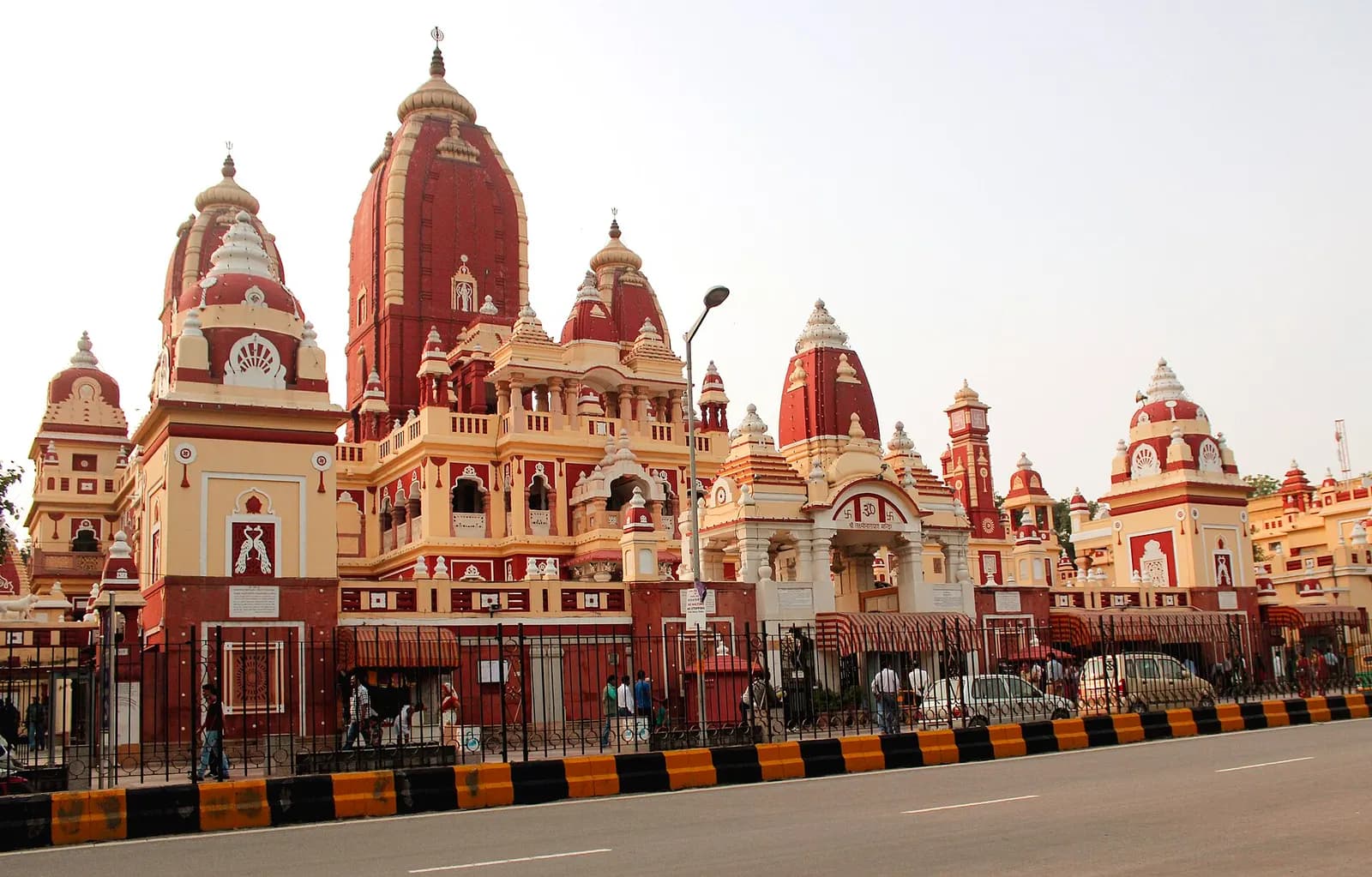
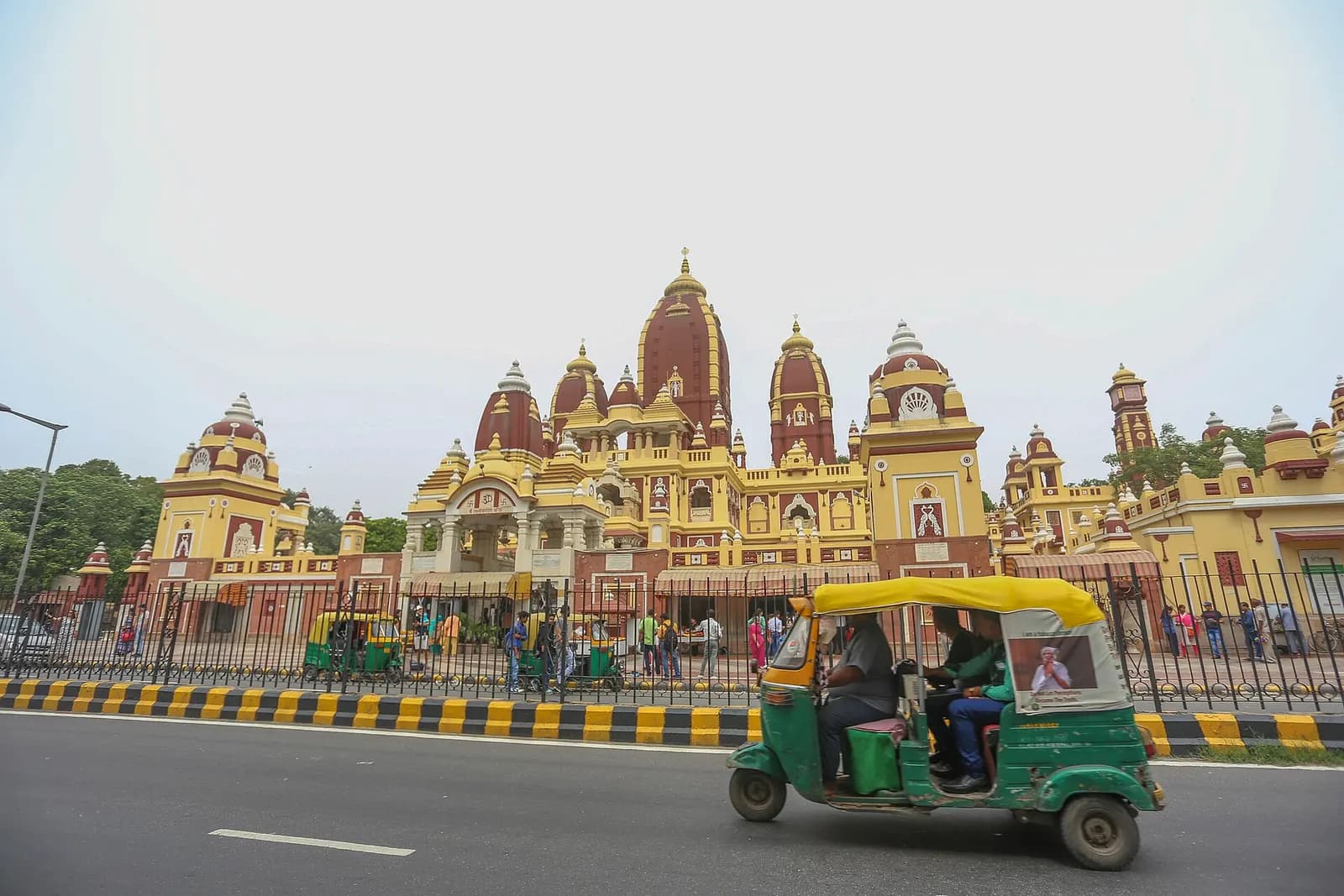
Birla Mandir is one of Delhi's most loved temples, a serene, spotless complex of red sandstone spires, painted halls and tiered gardens set a short way from Connaught Place, offering a calm spiritual pause in the middle of the busy capital. Its mix of fine architecture, open-to-all spirit and peaceful gardens makes it a favourite with pilgrims and sightseers alike. Our team at Delhi Agra Tour Packages often slots it into a central Delhi morning and it sits comfortably on a Golden Triangle tour through the city.
I am Abhay Sharma, Delhi born and a Golden Triangle guide since 2015 and I send many guests here for a quiet, uplifting hour away from the crowds, especially around the morning or evening aarti. This guide gathers everything I would tell a visitor beforehand, checked against current information, including the timings, the strict electronics rule, the free entry and how to reach it.
Details
Lakshminarayan Temple (Birla Mandir) at a glance
| Detail | Information |
|---|---|
| Location | Mandir Marg, near Gole Market, central New Delhi |
| Built by | The Birla family, Baldeo Das Birla and Jugal Kishore Birla |
| Built | 1933 to 1939 |
| Dedicated to | Lakshmi and Narayan (Vishnu), with other shrines |
| Known for | The first Birla Mandir in India, opened to all castes and faiths |
| Entry | Free for everyone |
| Nearest metro | R K Ashram Marg (Blue Line), about 1.5 km |
| Time needed | About 1 to 1.5 hours with the gardens |
Birla Mandir timings
| Detail | Information |
|---|---|
| Morning | About 4:30 AM to 1:30 PM |
| Evening | About 2:30 PM to 9:00 PM |
| Afternoon break | Closed for roughly an hour in the early afternoon |
| Best for aarti | Arrive 20 to 30 minutes before the morning or evening rituals |
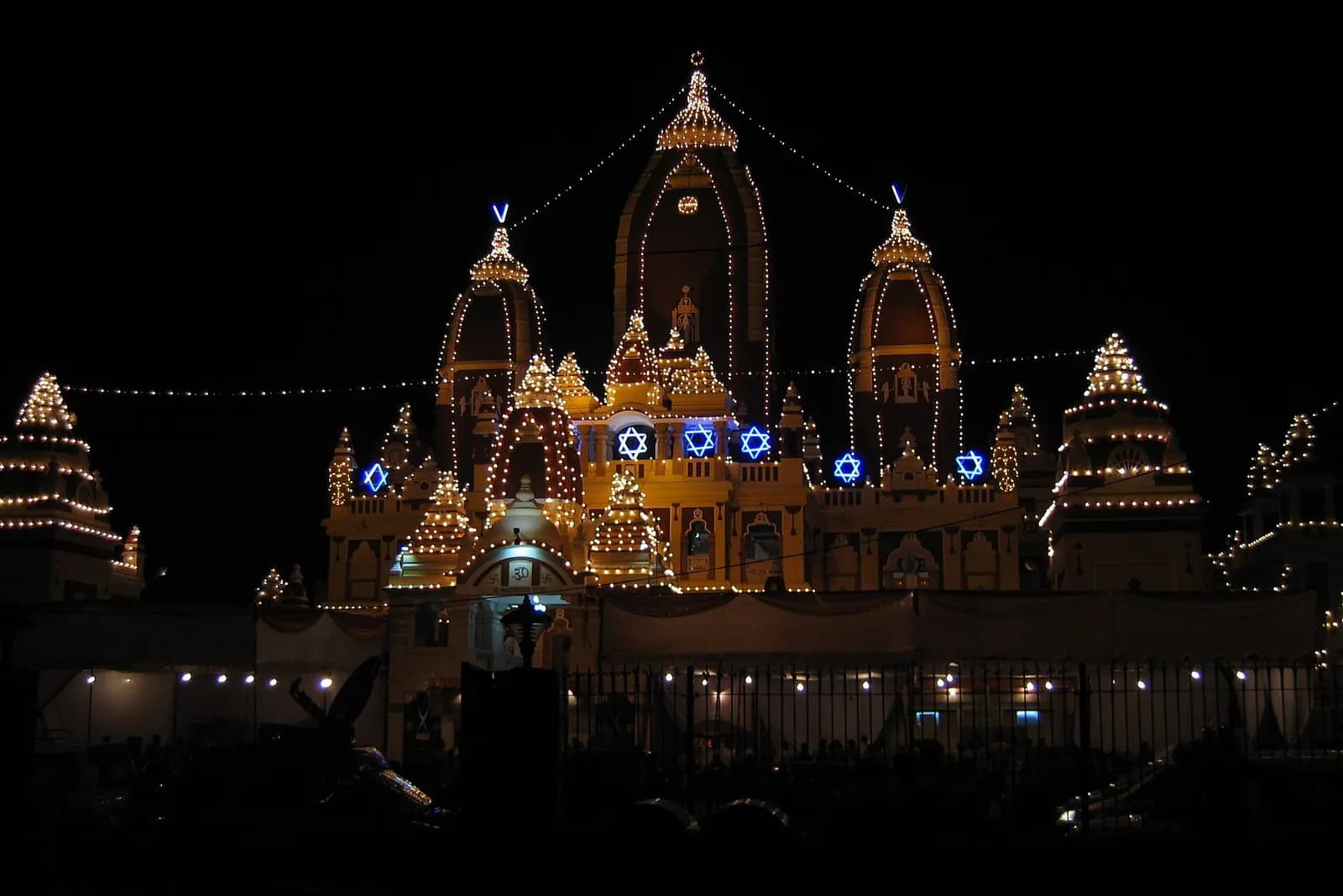
The temple is open daily in two sessions, generally from about 4:30 AM to 1:30 PM and again from about 2:30 PM to 9:00 PM, closing for roughly an hour in the early afternoon. Timings can change with the season and festivals, so reconfirm and time your visit for the morning or evening aarti, when the atmosphere is at its most beautiful and the complex is lit up after dark.
Birla Mandir entry fee and rules
| Item | Information |
|---|---|
| Entry fee | Free for domestic and international visitors |
| Electronics | Mobiles, cameras and devices not allowed inside |
| Cloakroom | A free counter to deposit devices before security |
| Dress | Modest, respectful clothing; shoes removed at the entrance |
How to reach Birla Mandir
| From | Route |
|---|---|
| R K Ashram Marg metro (Blue Line) | About 1.5 km, a short auto ride or walk |
| Connaught Place | A short auto or taxi ride |
| New Delhi railway station | About 3.6 km away |
| By cab or auto | Drops close to the temple gates on Mandir Marg |
What is Lakshminarayan Temple (Birla Mandir)?
Lakshminarayan Temple, universally known as Birla Mandir after the family who built it, is a large Hindu temple in the heart of New Delhi dedicated primarily to Lakshminarayan, a form combining Lakshmi, the goddess of wealth and fortune and Narayan, that is Lord Vishnu, the preserver. Built in the 1930s by the industrialist Birla family, it was the first of the many grand Birla temples that would later rise in cities across India and it set the template for them. Spread over several acres with soaring carved spires, richly painted interior halls and extensive tiered gardens behind, it is both an important living temple and one of the capital's most attractive modern monuments.
Several things make it special and they are worth spelling out:
- The first Birla Mandir in India. The original of a famous series of temples and the one that began the tradition.
- Open to all. Inaugurated by Mahatma Gandhi on the condition that people of every caste and religion could enter freely, a landmark in its day.
- A calm green oasis. Pristine orderly and peaceful, with manicured gardens, fountains and waterfalls, a world away from the rush of central Delhi.
- Fine modern temple architecture. Red sandstone and white marble worked in the north Indian Nagara style, with a towering central spire.
- A full spiritual complex. Beyond the main shrine it holds halls, subsidiary shrines and the painted Geeta Bhawan for discourse.
It is one of the most rewarding things to do in Delhi for anyone wanting calm and beauty and it sits among the capital's important monuments of Delhi.
History of Birla Mandir Delhi
The temple was built between 1933 and 1939 by the industrialist Baldeo Das Birla and his son Jugal Kishore Birla, members of the prominent Birla business family, as an act of devotion and public gift to the city. It holds a special place in history as the very first Birla Mandir in India, the one that began a tradition the family would continue with famous temples in Varanasi, Hyderabad, Jaipur and other cities, each a landmark in its own right. From the start it was conceived not as a private shrine but as a temple for all.
The most significant moment in its history came at its inauguration, which was performed by Mahatma Gandhi. Gandhi agreed to open the temple only on a strict and, for the time, radical condition, that people of every caste, creed and religion be allowed to enter and worship freely, with no one excluded on the grounds of caste. In an era when many temples still barred so-called lower castes, this was a powerful statement in line with Gandhi's campaign against untouchability and it set the open, inclusive character the temple has kept ever since. That founding principle, that the doors are open to all, is part of what gives Birla Mandir its warm and welcoming atmosphere to this day and it is a piece of the building's story worth carrying with you as you visit. Knowing that this serene complex was from its first day a deliberate stand for equality deepens the experience of walking through it.
Birla Mandir architecture and design
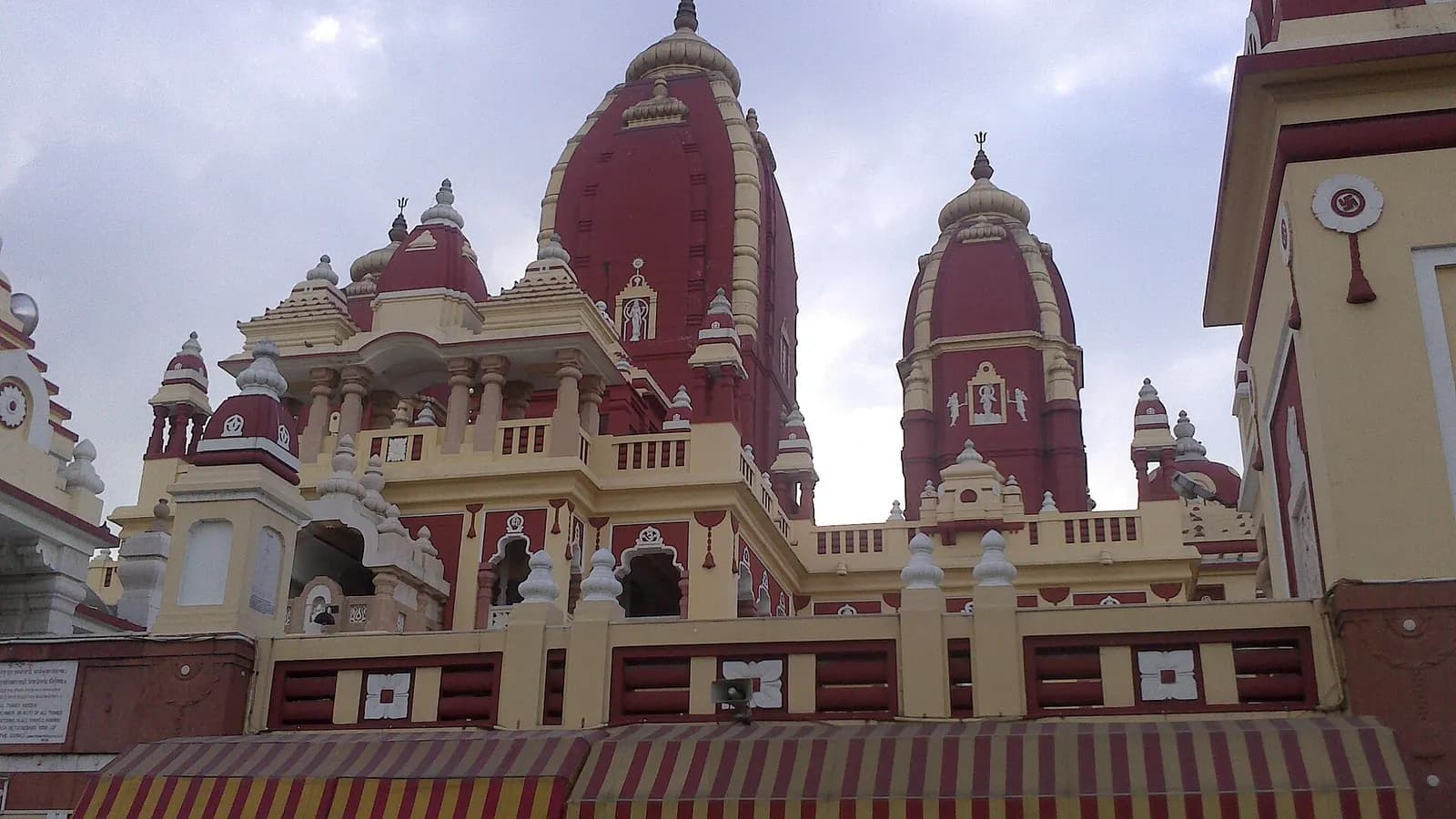
Architecturally, Birla Mandir is a fine example of the modern Nagara style, the classic north Indian temple form, built on a generous scale across more than three hectares, around seven and a half acres. It is faced largely in warm red Dholpur sandstone, set off with white marble, a combination that gives it a bright, clean and distinctly north Indian character and the whole complex is laid out with a sense of order and space that sets it apart from the cramped older temples of the city. The building rises in a series of carved towers and the eye is drawn upward to the tall central spire.
The main architectural features reward a slow look:
- The central shikhara. The soaring main spire over the principal shrine rises to around 49 metres, about 160 feet, dominating the complex.
- Red sandstone and white marble. The warm Dholpur sandstone with marble accents gives the temple its bright, characteristic palette.
- The carved spires and halls. A cluster of towers and ornate halls in the Nagara idiom, richly detailed yet harmonious.
- The Geeta Bhawan. A large hall decorated with paintings of scenes from Hindu mythology and scripture, used for spiritual discourse.
- The tiered gardens. Behind the temple, landscaped stepped gardens with artificial waterfalls, fountains and stone sculptures.
The gardens at the rear are a highlight in themselves, a quiet, beautifully kept green space with flowing water and sculptures that invites you to sit and rest and they are a large part of why the complex feels like such a peaceful retreat. Taken together, the architecture and the setting make Birla Mandir not only a place of worship but a genuinely lovely place simply to spend an unhurried hour.
Things to see at Lakshminarayan Temple
A visit divides naturally into the main shrine, the subsidiary shrines, the Geeta Bhawan and the gardens and each deserves time:
- The main Lakshminarayan shrine. The central sanctum is dedicated to Lakshmi and Narayan, the devotional heart of the temple.
- The subsidiary shrines. Additional shrines honouring other deities including Shiva, Krishna, Ganesha and a shrine to the Buddha, reflecting the temple's inclusive spirit.
- The Geeta Bhawan. The painted discourse hall, worth stepping into for its colourful depictions of mythological scenes.
- The tiered gardens. The landscaped rear gardens with their waterfalls, fountains and sculptures, ideal for a peaceful stroll.
- The complex by night. The temple is beautifully illuminated after dark, so an evening visit around the aarti is especially memorable.
Allow about an hour to an hour and a half to take in the shrines and linger in the gardens, more if you come for a full aarti. Because photography is not allowed inside, this is a visit to experience with your eyes rather than your camera, which many find a welcome change.
Aarti and darshan at Birla Mandir
One of the best reasons to time your visit well is the aarti, the devotional ritual of light and chanting performed in the mornings and evenings. Arriving some twenty to thirty minutes before the aarti lets you pass through the security and cloakroom formalities in good time and find a calm spot before the rituals begin, so that you are settled when the lamps are lit and the chants rise through the halls. The atmosphere at these times, with the bells, the singing and the glow of the lamps, is deeply peaceful and moving and it is when the temple feels most alive. Darshan, the act of viewing and being in the presence of the deities, is open to everyone regardless of faith, in keeping with the temple's founding principle and visitors of all backgrounds are welcome to observe respectfully. The evening aarti is especially atmospheric because the whole complex is floodlit afterwards, making it a lovely time to wander the gardens. If you can plan your visit around one of the aarti times rather than the quiet middle of the day, do so, as it transforms the experience from sightseeing into something closer to participation.
What to expect at Lakshminarayan Temple
A visit to Birla Mandir tends to surprise first time visitors with how calm and orderly it feels, given how central and busy its surroundings are. You arrive off the bustle of Mandir Marg, deposit your phone and any devices at the cloakroom, slip off your shoes and pass through security and almost at once the noise of the city falls away. Inside, the complex is spotlessly kept, the sandstone bright, the halls cool and softly lit and the mood reverent but unhurried. Devotees move quietly between the shrines, bells sound now and then and the air carries incense and the murmur of prayer. Because there are no phones or cameras, there is none of the distracted photography that fills so many monuments; people are simply present, which gives the place a settled, human quality that many visitors say they remember long afterwards.
Most people take in the main Lakshminarayan shrine first, then wander the subsidiary shrines and step into the painted Geeta Bhawan, before drifting out to the tiered gardens at the back, which are the quiet heart of the complex. There, among the fountains, the small waterfalls and the stone sculptures, families sit and rest, children watch the water and the pace slows right down. An hour passes easily. If you have arrived for an aarti, the tempo lifts as the lamps are lit and the chanting begins and the whole temple seems to gather itself. The overall impression is of a place that is at once grand and welcoming, devotional and peaceful and it is this blend, rather than any single sight, that makes the visit so pleasant. It is a temple you feel as much as see.
The Birla temples of India
Part of what gives this temple its wider fame is that it was the first of a whole family of landmark temples built by the Birlas across India. After the success and warm reception of the Delhi temple, the family went on to endow a series of grand temples in other cities, among them well known Birla Mandirs in Varanasi, Hyderabad, Jaipur, Kolkata and beyond, each a prominent local landmark and each carrying the same spirit of fine architecture and open access. In this sense the Delhi temple is the original and the model, the place where the tradition began, which adds to its significance for visitors who may have seen or heard of the other Birla temples elsewhere on their travels. The Birlas, as one of India's foremost industrial families, used their wealth to build not only businesses but also temples, educational institutions and public works and the Lakshminarayan Temple is among the best loved of these gifts. Standing in it, you are standing at the start of that story, which is a nice thought to carry around the complex and it helps explain why a temple only built in the twentieth century holds such a secure place among Delhi's monuments.
Birla Mandir timings and entry fee
Birla Mandir is open every day in two sessions, generally from about 4:30 AM to 1:30 PM in the morning and again from about 2:30 PM to 9:00 PM in the evening, closing for roughly an hour in the early afternoon, though these timings shift with the season and with festival days, so it is worth reconfirming before a special trip. Entry is completely free for everyone, Indian and international visitors alike, with no ticket of any kind, in keeping with the temple's open character. There are no charges to see the shrines or the gardens. The only practical thing to budget for is the cloakroom, which itself is free, where you must deposit electronic devices before entering, as explained below. Allow around an hour to an hour and a half for a relaxed visit and aim for the morning or evening aarti for the fullest experience. As with all timings and practicalities, treat these as a current guide and reconfirm, since arrangements can change.
Rules and what to carry at Birla Mandir
The single most important thing to know before you arrive is the strict ban on electronics, which catches many first time visitors by surprise:
- No electronics inside. Mobile phones, cameras and all electronic devices are strictly prohibited within the main temple premises.
- Use the free cloakroom. You must deposit your devices at the security cloakroom counter, which is free, before you pass through the metal detectors.
- Remove your shoes. Footwear is left at the entrance, as in any Hindu temple.
- Dress respectfully. Modest clothing is expected, in keeping with a place of worship.
- No photography inside. Because cameras and phones are left at the gate, there is no photography within the temple; enjoy it in person instead.
Knowing the electronics rule in advance saves confusion, so plan to leave valuables you would rather not deposit back at your hotel, carry only what you need and treat the device free hour as part of the temple's calm. The rule is uniformly enforced, so there is no point trying to slip a phone through.
Best time to visit Birla Mandir
The best season to visit, as across the whole city, is the cooler stretch from October to March, when the gardens are at their most pleasant and wandering the complex is comfortable. On any given day, the most rewarding times are around the morning aarti soon after the early opening, when the air is fresh and the temple quiet and the evening aarti, after which the whole complex is beautifully illuminated. The middle of the day, especially the early afternoon closure, is best avoided. Festival days, particularly Janmashtami and Diwali, see the temple gloriously decorated and thronged with devotees, which is wonderful to witness but not the time for a quiet visit. For a calm, contemplative experience, a weekday morning or a weekday evening in the cooler months is close to ideal. Our guide to the best time to visit Delhi sets out the seasons across the capital in more detail.
How to reach Lakshminarayan Temple (nearest metro)
Birla Mandir stands on Mandir Marg near Gole Market, in central New Delhi, a short way west of Connaught Place and it is easy to reach. The nearest metro station is R K Ashram Marg on the Blue Line, roughly 1.5 kilometres away, from which a short auto-rickshaw ride or a walk brings you to the gates. From Connaught Place the temple is a short auto or taxi ride and from the New Delhi railway station, about 3.6 kilometres off, an auto or cab is simplest. App cabs and autos can drop you right on Mandir Marg beside the temple, which is the most convenient option. Being so central, it slots neatly into a wider plan of the city centre and a guided New Delhi tour can fold it in alongside the nearby landmarks, while a broader Delhi day tour ties it into the full span of the capital.
Places to visit near Birla Mandir
Birla Mandir sits in central Delhi within easy reach of a cluster of well known sights, which makes it simple to build a half day around it. Close by is the great commercial circle of Connaught Place, with its colonnades, shops and eateries and just off it the much loved Pracheen Hanuman Mandir and the serene Bangla Sahib Gurudwara, one of the most beautiful Sikh shrines in the city. Also within the central ring are the astronomical instruments of Jantar Mantar and the ancient stepwell of Agrasen ki Baoli, both quick to reach.
A little further out, the great monuments of the capital are an easy ride away, the ceremonial India Gate, the mighty Red Fort and the serene Humayun's Tomb, along with the modern Lotus Temple and Akshardham. For temple lovers, the Kalkaji Mandir and the grand ISKCON Temple round out a devotional circuit of the city. Together these make Birla Mandir a fine central anchor for exploring Delhi.
Lakshminarayan Temple in your Delhi itinerary
For most visitors, Birla Mandir works best as a calm, uplifting stop of an hour or so within a central Delhi morning or evening, easily paired with Connaught Place, Bangla Sahib and the Hanuman temple, all of which lie close together. A pleasant plan is to see the temple around the morning aarti, when it is quiet and fresh, then move on to the nearby sights or to save it for the evening aarti and the illuminated complex after a day of sightseeing. Because it offers peace and greenery, it also makes a welcome breather between the heavier historic monuments. Those on a fuller itinerary often combine a central Delhi loop like this with an Old Delhi morning of the Red Fort and the bazaars, giving a balanced day across the old and new city.
If Delhi is your gateway to the wider Golden Triangle, Birla Mandir is a gentle, beautiful counterpoint to the Mughal forts and tombs and a reminder that the capital's story runs on into the modern age. Many of my guests enjoy a day or two in Delhi, taking in temples like this alongside the great monuments, before travelling on to Agra and Jaipur. Seeing a living temple such as this one, open to all and humming with devotion, adds a human warmth to a trip that might otherwise be all stone and history.
Is Birla Mandir worth visiting?
For most visitors, yes and for several reasons. If you want a calm, beautiful and uplifting break from the crowds and the heavier historic monuments, few places in central Delhi do it better; the gardens alone are worth the trip. If you are interested in temples and living worship, it offers a welcoming, open to all experience and a fine example of modern Nagara architecture. And if you simply want somewhere pleasant and central to spend a reflective hour, with a good chaat stall outside the gates, it fits perfectly. The honest caveat is that it is a twentieth century temple rather than an ancient monument, so if you are specifically after old Mughal grandeur or centuries of history you will find more of that at the Red Fort or Humayun's Tomb; approached for what it is, a serene, immaculate and spiritually warm complex, it rarely disappoints. For families, for anyone seeking a quiet moment and for those who appreciate the story of its open door inauguration, it is a genuinely rewarding stop and I include it often in my central Delhi days.
Who is Birla Mandir best for?
It helps to know in advance whom the temple suits most:
- Those seeking calm, who want a peaceful, green and immaculate retreat in the middle of a busy city.
- Temple and architecture lovers, drawn by the Nagara style spires, the painted halls and the first of the Birla temples.
- Families, who find the gardens, fountains and open space easy and pleasant with children.
- Devotees and the curious alike, since darshan and the aarti are open to visitors of every faith and background.
- Anyone on a central Delhi day, as it pairs so easily with Connaught Place, Bangla Sahib and the nearby temples.
If you have only a short time in Delhi and are set on its ancient monuments above all, you might prioritise those first; but for nearly everyone else, this is an easy and rewarding hour.
Travel tips for visiting Birla Mandir
A few pointers make the visit smoother and more rewarding:
- Leave electronics behind or be ready to deposit your phone and camera at the free cloakroom before the metal detectors.
- Time it for the aarti, arriving 20 to 30 minutes early for the morning or evening ritual.
- Come in the cooler months, October to March, when the gardens are at their best.
- Avoid the early afternoon, when the temple closes for about an hour.
- Visit in the evening to see the whole complex beautifully illuminated after the aarti.
- Dress modestly and be ready to remove your shoes at the entrance.
- Linger in the gardens at the rear, which are a peaceful highlight in their own right.
- Try the chaat at the street stalls just outside the gates for an authentic Delhi snack.
If you would like a local guide to build Birla Mandir into a wider central Delhi plan, message our team on WhatsApp at +91 7302265809 with your travel dates and group size and we will shape the day for you.
Plan your trip with us
At Experience My India, through our Delhi and Golden Triangle travel desk, we design unhurried, well paced trips that make room for calm, restorative stops like Birla Mandir, not just the big ticket monuments. Whether you want a relaxed set of Delhi Agra tours or a full Golden Triangle route through Delhi, Agra and Jaipur, we plan around your pace, your interests and the right season, with local guides who know the aarti times, the quiet corners and how to move through the city. Share your dates and the kind of trip you have in mind through our enquiry page, tell us your group size and we will put together an honest, tailored plan rather than a rushed checklist.
Related guides
- Places to visit in Delhi, for the wider picture
- Hidden places to visit in Delhi, the city's quieter corners
- Nearby places to visit in Delhi, to extend your trip
Enquire Now
Ready to Explore
The Heart of Delhi?
Explore the Red Fort, Qutub Minar, Humayun's Tomb, and the vibrant streets of Old Delhi with our expert-guided premium tours of India's capital city.

Delhi
Premium Tour Package
Questions
Frequently asked questions
What are the timings of Birla Mandir Delhi?
It is open daily in two sessions, generally from about 4:30 AM to 1:30 PM and again from about 2:30 PM to 9:00 PM, closing for roughly an hour in the early afternoon. Reconfirm, as timings shift with the season and festivals.
What is the entry fee for Lakshminarayan Temple?
Which is the nearest metro station to Birla Mandir?
Who built Birla Mandir and when?
Why is Birla Mandir famous?
Can I take my phone or camera inside Birla Mandir?
Is photography allowed at Birla Mandir?
What deities are worshipped at Lakshminarayan Temple?
How much time do I need at Birla Mandir?
What is the best time to visit Birla Mandir?
Is Birla Mandir worth visiting?
Explore more
Plan your Lakshminarayan Temple (Birla Mandir) trip with us

Photo credits
Photos from Wikimedia Commons, used under their licences:
- Photo 1 by Joshua Doubek, CC BY-SA 3.0
- Photo 2 by salil sharma, CC BY-SA 3.0
- Photo 3 by Pawan Kolhe, CC BY-SA 3.0
- Photo 4 by Vinayaraj, CC BY-SA 3.0
- Photo 5 by Shahriar Amin Fahim247, CC BY-SA 4.0
Interested in Lakshminarayan Temple (Birla Mandir) Delhi: Timings and Visitor Guide?
Chat with our travel team for a custom quote, or browse every package.
Related Attractions
9Ready to explore Lakshminarayan Temple (Birla Mandir) Delhi: Timings and Visitor Guide?
Book your private tour today and experience the magic of India's rich heritage.