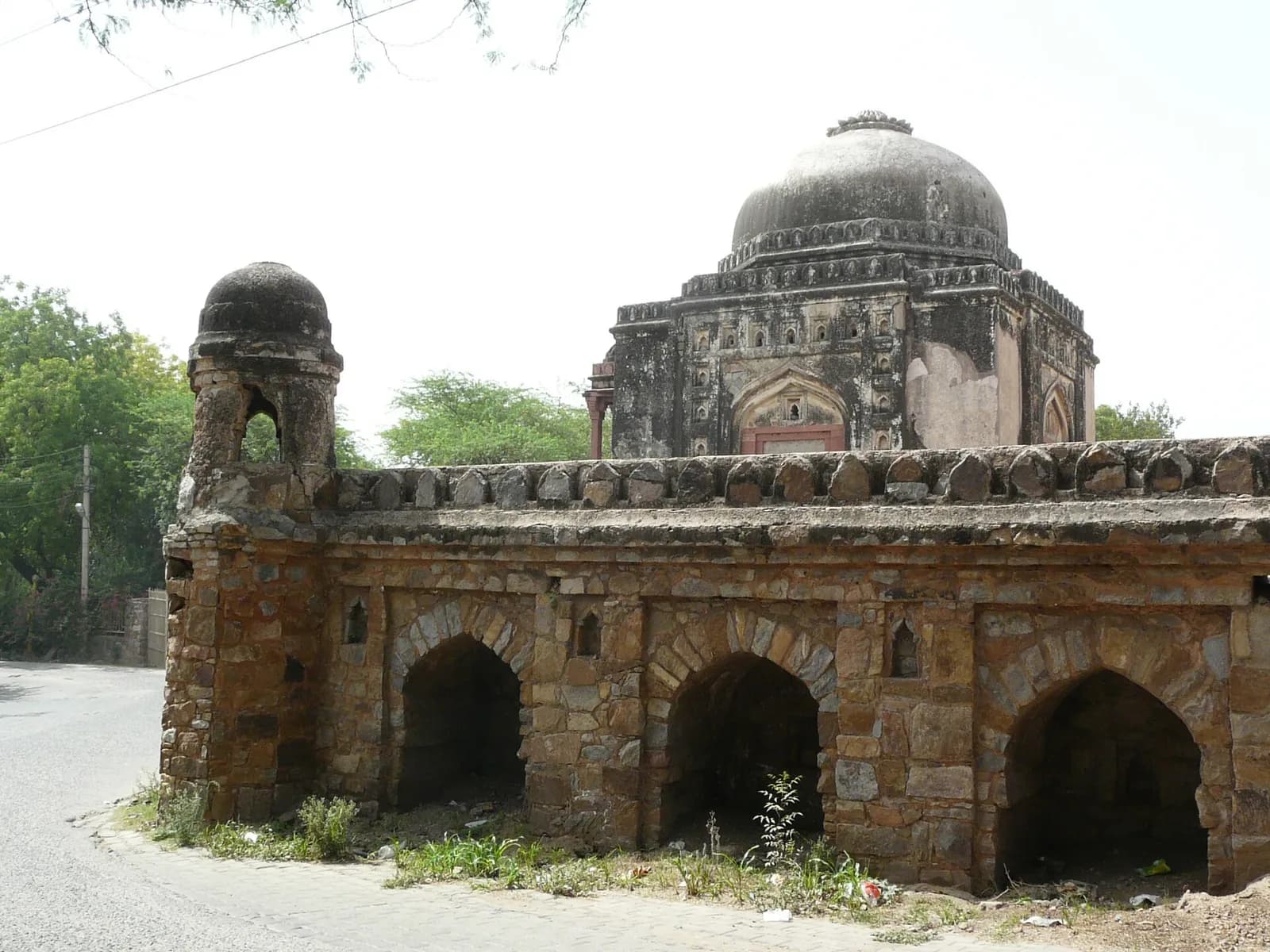
Madhi Masjid Mehrauli Delhi: History, Timings and Guide
Visiting Madhi Masjid in Mehrauli, Delhi's fortress-like mosque? Its history, the citadel design, the jharokha gatehouse, timings, free entry and metro.
In a Nutshell
“Madhi Masjid is a rare, fortress-like medieval mosque in Mehrauli, South Delhi, tucked just outside the northern edge of the Mehrauli Archaeological Park. Scholars date it to the late Lodi or early Mughal period, around the late 15th or early 16th century and its original name, Mandiwali Masjid, came from a nearby grain market. Unusually, it looks like a miniature citadel, with thick walls, corner turrets and a towering gatehouse and is thought to have doubled as a watchtower. Deserted and overgrown, it is free to enter and open through the day, reached from Qutub Minar metro. It features on our heritage Delhi tours, run by a unit of Experience My India.”
Madhi Masjid is one of Delhi's most unusual and overlooked monuments, a mosque built like a little fort, silent and wild, in a green pocket of Mehrauli known to very few. For history lovers and those drawn to the city's hidden, offbeat heritage, it is a rewarding discovery. Our team at Delhi Agra Tour Packages sometimes includes it on a deeper Mehrauli heritage walk and it adds a quiet, atmospheric dimension to a wider Golden Triangle tour through the capital.
I am Abhay Sharma, Delhi born and a Golden Triangle guide since 2015 and I love bringing the more adventurous of my history-minded guests here, because few people, even in Delhi, know this fortress-mosque exists and its unusual design and deserted calm make it a real discovery. This guide gathers everything I would tell a visitor beforehand, checking against current information, including the history, the architecture, the timings and how to reach it.
Details
Madhi Masjid at a glance
| Detail | Information |
|---|---|
| Location | Ladha Sarai lane, Mehrauli, South Delhi |
| Also known as | Mandiwali Masjid |
| Dated to | Late Lodi or early Mughal, late 15th to early 16th century |
| Known for | Its rare fortress-like, citadel design |
| Setting | Just outside the north edge of the Mehrauli Archaeological Park |
| Entry | Free; an open ASI monument |
| Nearest metro | Qutub Minar, around 270 metres walk from the lane |
| Time needed | About 30 minutes |
Madhi Masjid timings
| Detail | Information |
|---|---|
| Access | Nominally sunrise to sunset, roughly 6:00 AM to 6:00 PM |
| Side chambers | Often locked by the ASI for safety |
| Time needed | About 30 minutes |
Madhi Masjid is nominally accessible daily from sunrise to sunset, roughly 6:00 AM to 6:00 PM. A visit, taking in the gatehouse, the courtyard and the prayer wall, takes about thirty minutes. The covered side chambers are frequently kept locked, so the visit is mostly of the gateway and the open courtyard. These timings are current at the time of writing and can vary, so a bright daytime visit is best.
Entry fee
| Item | Information |
|---|---|
| Entry fee | Free for all visitors |
| Tickets | None; no ticket windows or scanners |
| Note | A secluded, overgrown ruin, not a serviced site |
How to reach Madhi Masjid
| From | Route |
|---|---|
| Qutub Minar metro (Yellow Line) | Cross Aurobindo Road to the Dada Bari lane |
| From the lane | A 5 minute walk, about 270 metres, to the stairs |
| Landmark | Near the Jain Mandir Dadabadi compound |
| By car | Limited; the mosque sits off the main roads |
What is Madhi Masjid?
Madhi Masjid is a rare and unusual medieval mosque in Mehrauli, South Delhi, dating to the late Lodi or early Mughal period and remarkable above all for its fortress-like design, which makes it look less like a conventional mosque than a miniature military citadel. Tucked away in a quiet green pocket just outside the northern boundary of the Mehrauli Archaeological Park, it is encircled by massive stone walls with solid circular corner turrets, entered through a towering, fort-like gatehouse reached by a steep flight of stairs and it is thought to have served a dual purpose as both a place of prayer and a defensive watchtower. Inside, it departs from the usual mosque plan, with an open-air prayer wall flanked by covered chambers that suggest it also worked as a madrasa or religious school. Deserted, silent and heavily overgrown, visited almost only by parrots and pigeons, it is one of the most atmospheric and least-known monuments in the whole Mehrauli heritage zone, a genuine hidden discovery for those who seek it out.
Several things make it special and they are worth drawing out:
- A mosque built like a fort. A rare, experimental design with fortress walls, corner turrets and a citadel silhouette, unlike conventional mosques.
- The dual-purpose theory. Thought to have served both as a place of prayer and as a fortified watchtower guarding the approaches from the south.
- The Mandiwali name. Originally called Mandiwali Masjid, from a nearby grain market or mandi, of the Khilji era.
- A hybrid prayer hall. An unusual split layout with an open Qibla wall and flanking covered chambers that suggest a madrasa.
- A deserted, wild setting. Silent, overgrown and almost unvisited, a true hidden corner of Mehrauli.
It is one of the most unusual and genuinely hidden of the offbeat things to do in Delhi and a fascinating discovery among the lesser-known important monuments of Delhi.
History of Madhi Masjid
The history of Madhi Masjid is, intriguingly, something of a mystery, which is part of its appeal as a forgotten and obscure monument. Unlike the great dated and documented monuments of Delhi, the exact builder and the precise date of construction of this medieval complex are not recorded in the surviving court chronicles, so its origins remain uncertain. What scholars can say, from the architectural elements and the style of the building, is that it belongs heavily to the late Lodi dynasty or the early Mughal transition, placing its construction somewhere in the late 15th or early 16th century, in the turbulent period around the end of the Delhi Sultanate and the coming of the Mughals.
The name of the mosque offers one of the few firm clues to its story. Though popularly known today as Madhi Masjid, early epigraphical surveys record its original name as Mandiwali Masjid, a name it earned from its close proximity to a historic mandi or wholesale grain market, that had been established in the area during the landmark economic reforms of Sultan Alauddin Khilji in an earlier century. So the name ties the mosque, at least in its location, to the commercial and administrative world of medieval Mehrauli. Beyond this, the building's history is largely the story of its long survival in obscurity, protected now by the Archaeological Survey of India but remaining isolated and outside the usual tourist routes. It is worth remembering that Mehrauli in the late Sultanate and early Mughal period was not the quiet suburb it can seem today but a significant settlement around the great Qutub complex and the shrine of Qutbuddin Bakhtiar Kaki, with its own markets, tombs and mosques, so a substantial building like this would once have stood in a lively and important quarter rather than the forgotten green pocket it occupies now. That shift, from a monument of a busy medieval town to an overgrown and almost unknown ruin, is itself part of its story. For the visitor, this very obscurity is part of the charm: Madhi Masjid is a monument whose makers are forgotten, which lends it a mysterious, almost melancholy quality and knowing how little is known about it only deepens the sense of discovery.
The fortress design and the dual-purpose theory
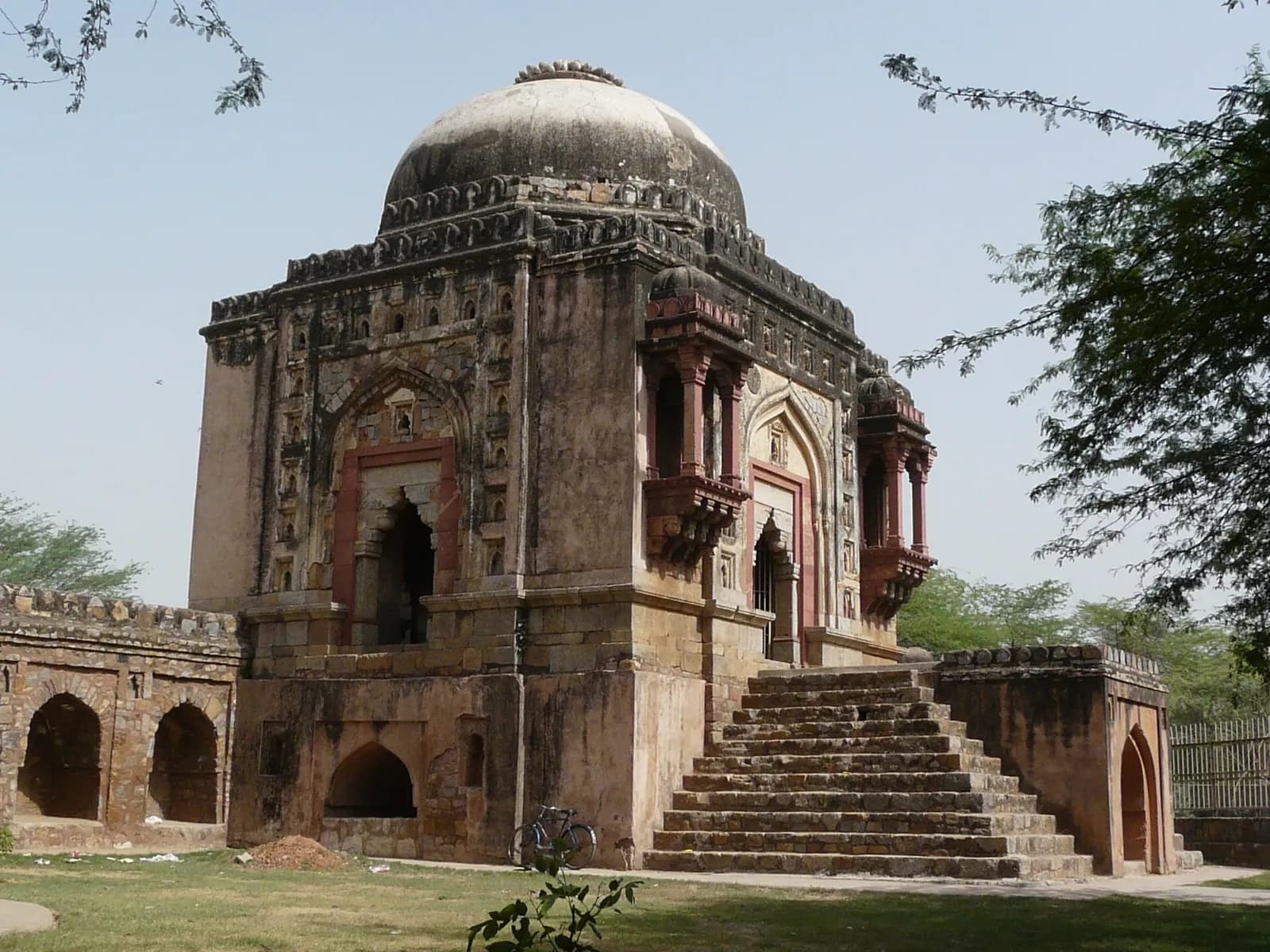
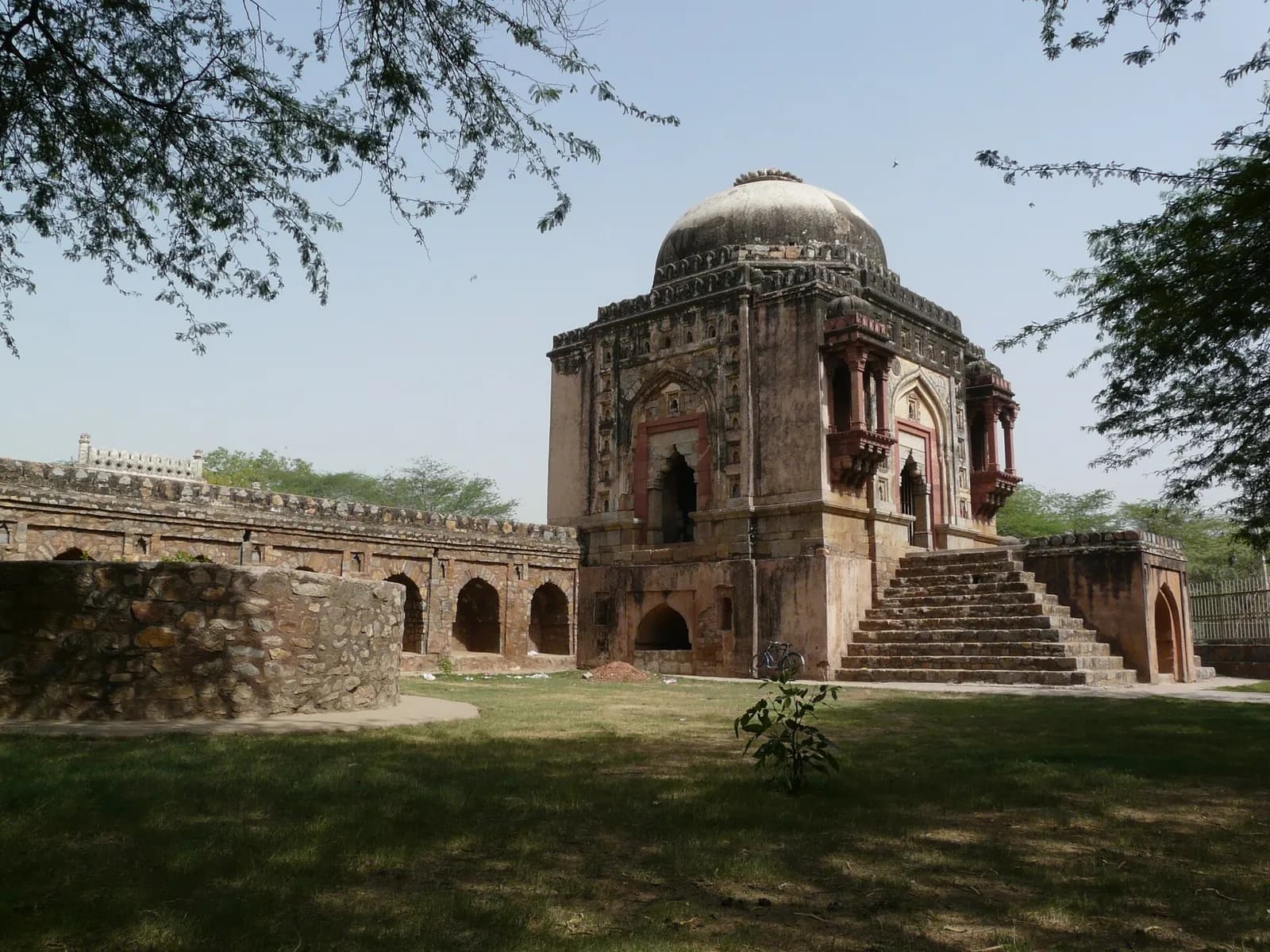
The most striking and distinctive thing about Madhi Masjid is that it does not look like a mosque at all in the conventional sense, but rather like a small fortress and this unusual character has given rise to a fascinating theory about its purpose. The entire complex is an experimental configuration that breaks away from the standard rules of Sultanate mosque design: instead of an open, welcoming religious building, it presents massive, robust stone boundary walls flanked by solid circular corner turrets, giving the sacred complex the raw silhouette of a miniature military citadel. The entry, too, is fort-like, handled through a massive gateway block reached by a steep flight of stone stairs, more like the approach to a stronghold than to a place of worship.
This military character has led to a strong and plausible theory, supported by local folklore and the structural elements, that the building served a dual purpose. It is thought to have functioned simultaneously as a quiet place of prayer and as a fortified defensive watchtower, engineered to track and guard against the movement of enemy forces approaching Delhi from the south. In the turbulent late-Sultanate period, such a combination of the sacred and the defensive would have made practical sense, placing a watchful stronghold on the approaches to the city under the guise or alongside the function, of a mosque. For the visitor, this dual identity is the heart of what makes Madhi Masjid so intriguing: it is a building that blurs the line between the mosque and the fort and standing within its citadel-like walls, imagining it as both a house of prayer and a watchtower, is a genuinely unusual and thought-provoking experience. Whether it was deliberately conceived as a fortified mosque or simply built with heavy, defensive walls in an insecure age, is part of the open question that surrounds the monument and both possibilities tell us something about the uncertain, contested world of Delhi in the years around the fall of the Lodis. Either way, the effect on the visitor is the same: a mosque that feels like a stronghold, raised in a time when the sacred and the defensive could not easily be separated.
Architecture of Madhi Masjid
Architecturally, Madhi Masjid is one of the most unusual and experimental monuments in Delhi, departing from convention at almost every turn and its features reward a close and knowing look. The complex combines a fortress exterior with a highly unusual split prayer hall and its key elements are worth seeking out:
- The fortress exterior. Massive stone boundary walls enclose the spacious courtyard, flanked by solid circular corner turrets or burjs, giving the whole sacred complex the look of a miniature citadel.
- The towering eastern gatehouse. The entry is a massive, fort-like gateway block reached by a steep stair, its facade featuring two prominent Rajasthani-style stone balconies or jharokhas, on ornate brackets, crowned by a defensive parapet with a merlon motif.
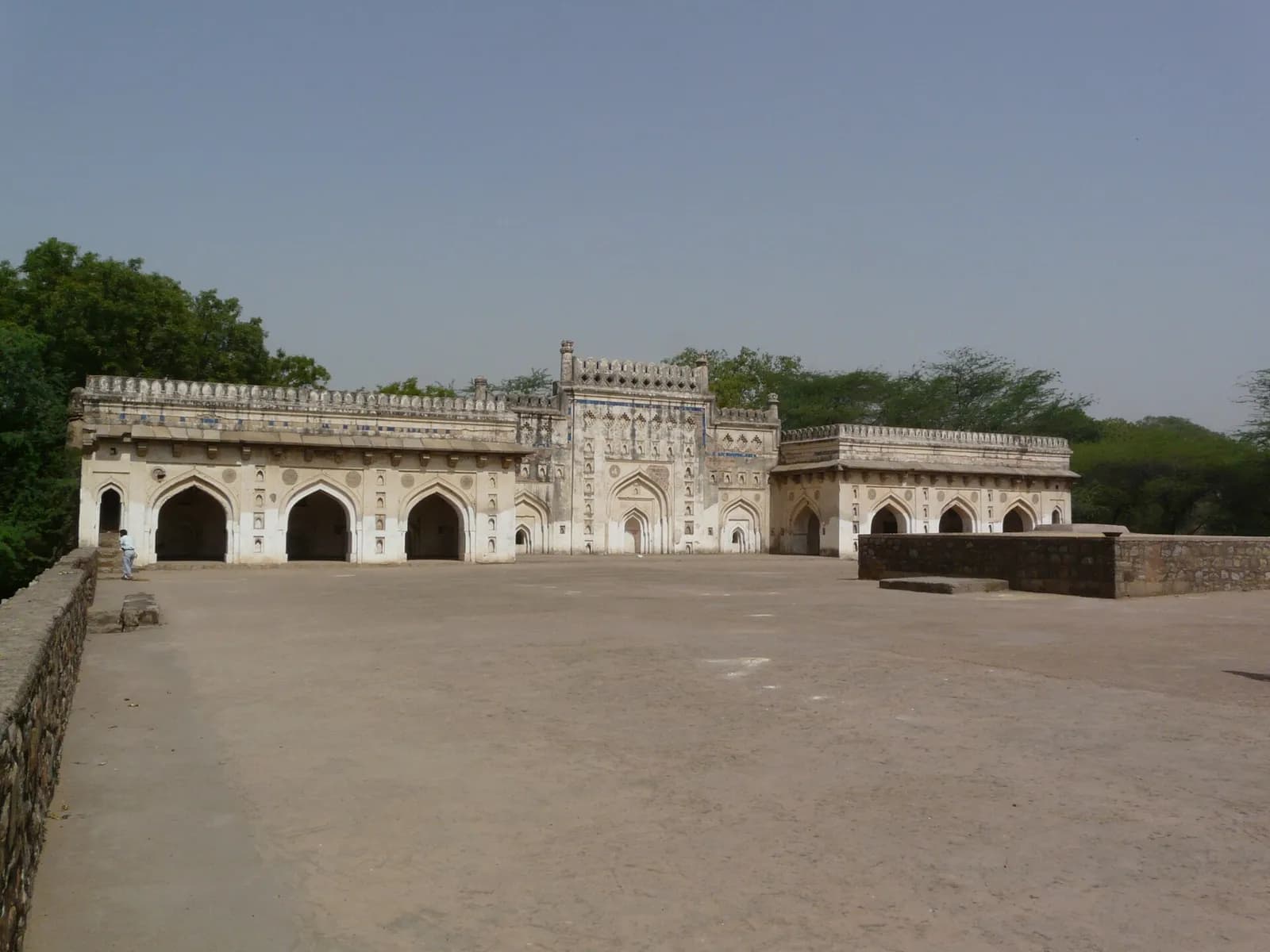
- The hybrid prayer hall. Instead of the usual single domed hall, the layout splits into an open-air western prayer wall and flanking covered chambers, an experimental departure from the norm.
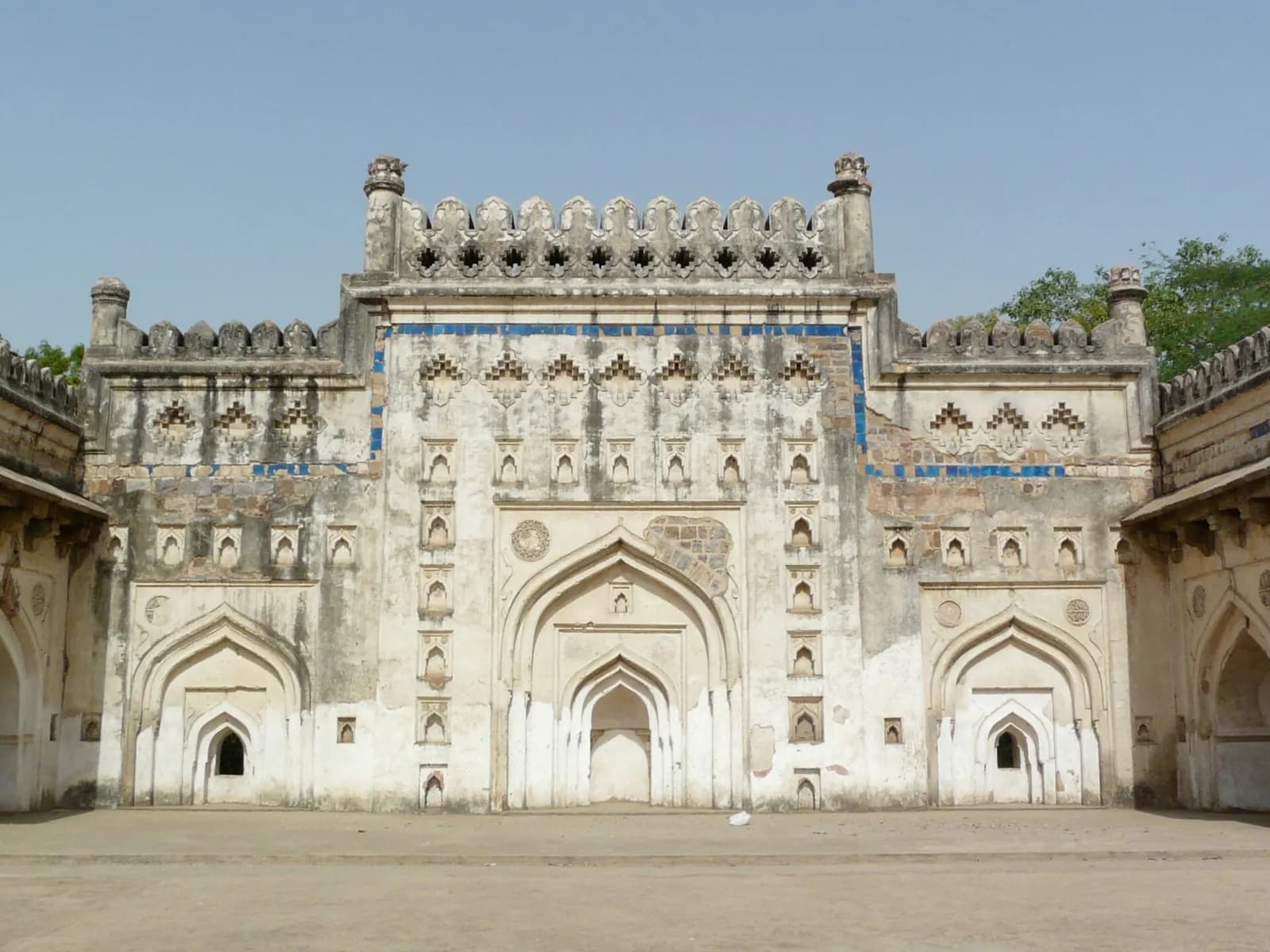
- The Qibla wall and mihrab. The centre features a long open-air western Qibla wall framing a beautifully plastered central prayer niche or mihrab, incised with plaster roundels detailing the Bismillah and the Kalima.
- The flanking madrasa chambers. On either side of the open wall stand two flat-roofed covered chambers opening through three scalloped bays, with historic window layouts that suggest the building also served as a madrasa.
The overall impression is of a bold, experimental building that fuses the mosque, the fort and the school into one unusual whole, quite unlike the conventional mosques of its age. The fortress walls and turrets give it military presence, the jharokha-fronted gatehouse adds a note of Rajasthani decorative flourish and the split prayer hall with its flanking chambers points to a dual religious and educational role. Delicate, weathered remnants of bright blue Persian glazed tilework still cling to the plastered surfaces around the courtyard niches, hints of the colour that once brightened the grey stone. The mihrab in particular rewards a close look: its plaster roundels, carrying the Bismillah and the Kalima in incised script, are among the few decorative survivals in an otherwise austere and military-feeling building, a reminder that for all its fortress character this was a working place of prayer. The scalloped bays of the flanking chambers, too, show a decorative delicacy at odds with the heavy outer walls, which is part of what makes the building such an intriguing hybrid. Knowing what to look for, the citadel walls, the jharokha gatehouse, the open Qibla wall and mihrab, the madrasa chambers and the blue tiles, turns a visit into a rich reading of one of Delhi's most inventive and unclassifiable medieval buildings.
What to expect at Madhi Masjid
A visit to Madhi Masjid is quiet, atmospheric and a genuine off-the-map discovery, quite unlike any mainstream monument and knowing what to expect helps you appreciate it. The mosque is tucked away in a secluded green pocket just outside the northern boundary fencing of the Mehrauli Archaeological Park, off the main roads and well away from the tourist trail, so it is almost completely deserted and silent, heavily overgrown with wild shrubs and populated mainly by local parrots and pigeons nesting in the brickwork. Reaching it means a short walk off the road to the base of its steep stone staircase and climbing up through the fort-like gatehouse into the open courtyard. The experience is one of solitary, peaceful exploration: taking in the citadel walls and turrets, the jharokha gatehouse, the open prayer wall with its plastered mihrab and the quiet, wild courtyard, while absorbing the mystery and the unusual character of the place. The visit takes about thirty minutes.
Because the monument is so secluded and is a genuine ruin, a few points are worth bearing in mind. The covered side chambers are frequently kept locked by the ASI for structural safety, so the visit is mostly of the gateway, the stairs and the open-air courtyard rather than the interiors. There are no visitor facilities of any kind at this hidden plot and the location completely lacks lighting, with rugged, uneven stone steps, so it should be visited strictly in bright daylight and the deep perimeter tree buffers avoided late in the day. The mood, with the overgrown lawns, the birdsong and the fortress-like walls standing silent and almost forgotten, is one of deep, slightly eerie tranquillity that those who love hidden heritage find deeply rewarding. Come in daylight, prepared for a wild and deserted ruin and Madhi Masjid offers one of the most genuinely undiscovered heritage experiences in all of Delhi.
Madhi Masjid timings and entry
Madhi Masjid is nominally accessible daily from sunrise to sunset, roughly 6:00 AM to 6:00 PM, as an open monument. Entry is completely free for all domestic and international visitors, with no ticket windows or digital scanners of any kind at this hidden plot. A visit takes about thirty minutes. A few points are important given its secluded, ruined character: because it sits tucked away from the primary roads and is highly secluded, the main interior wooden doors leading to the covered side chambers are frequently kept locked by the ASI for structural safety, so visitors can freely enter the main gateway, climb the stairs and walk the central open-air courtyard, but may not always access the side chambers. The location completely lacks public lighting and the rugged stone steps are uneven, so it should be visited strictly during bright daylight hours and the deep perimeter tree buffers avoided after dusk. These timings and conditions are current at the time of writing and can vary, so plan a daytime visit and reconfirm if your plans depend on exact hours.
Safety and visiting notes
Because Madhi Masjid is a secluded, unlit ruin, a few precautions make the visit safe and rewarding:
- Visit in bright daylight only. The site has no lighting and uneven stone steps, so avoid dusk and after dark entirely.
- Take care on the steep stairs. The fort-like gatehouse is reached by a steep, rugged flight of stone steps, so step carefully.
- Do not expect the side chambers to open. The covered chambers are often locked by the ASI, so the visit is mainly the gateway and courtyard.
- Avoid the overgrown edges late in the day. The deep perimeter tree buffers are best not explored near dusk.
- Consider going with the company. Given how deserted and secluded it is, it is more comfortable to visit with others.
- Allow about 30 minutes and combine it with the Mehrauli Archaeological Park next door.
The key point is that this is a genuinely remote and deserted ruin without facilities or lighting, so a bright daytime visit, sensible footing on the steps and ideally some company, are what make it comfortable. Approached that way, its solitude and wild, fortress-like atmosphere become its greatest charm, offering a rare taste of undiscovered heritage.
Best time to visit Madhi Masjid
The best time to visit is the cooler months, from October to March and within the day the morning or the earlier afternoon, in bright daylight both for comfort and for safe footing on the rugged steps. A pleasant winter day is ideal, with comfortable temperatures for the walk and the climb and good light on the fortress walls and the blue tile remnants. The summer is hot and the overgrown setting can feel oppressive and the monsoon leaves the wild lawns lush but the stone slippery, so the winter months are much the most comfortable. Because the site is unlit and secluded, a daytime visit, well before dusk, is also by far the safest. Allow about half an hour and ideally combine it with the adjacent Mehrauli Archaeological Park and the wider Mehrauli heritage. Our guide to the best time to visit Delhi sets out the seasons across the city in more detail.
How to reach Madhi Masjid (nearest metro)
Madhi Masjid is on Ladha Sarai lane in Mehrauli, near the Jain Mandir Dadabadi and just outside the northern edge of the Mehrauli Archaeological Park and it is surprisingly easy to reach despite its secluded feel. The nearest metro station is Qutub Minar on the Yellow Line. From the station exit, cross Aurobindo Road toward the lane leading down to the Dada Bari Jain temple compound and make a short five minute walk, roughly 270 metres, down the sidewalk directly to the base of the mosque's stone staircase. Because it sits off the primary roads, driving right up to it is awkward, so the metro and a short walk are the easiest approach. Set at the edge of the great Mehrauli heritage zone, it pairs naturally with a Delhi day tour or a heritage-focused New Delhi tour that takes in the Qutub complex and the Mehrauli monuments.
Places to visit near Madhi Masjid
Madhi Masjid sits at the edge of Mehrauli, one of the richest historical quarters in all of Delhi, so it is surrounded by remarkable monuments and combines naturally into a Mehrauli heritage day. Right beside it lies the sprawling Mehrauli Archaeological Park, with its many tombs and ruins and close by rises the towering Qutub Minar, the great medieval victory tower, while the ship palace of Jahaz Mahal, the last Mughal palace of Zafar Mahal and the dramatic Adham Khan's Tomb are all a short distance away in the Mehrauli lanes.
A ride away, the capital's other landmarks round out a full picture of the city: the mighty Red Fort and old city, the serene Humayun's Tomb, the ceremonial India Gate, the lotus-shaped Lotus Temple and the old fort of Purana Qila. For more history, the citadel of Feroz Shah Kotla, the great circle of Connaught Place, the ancient stepwell of Agrasen ki Baoli, the astronomical Jantar Mantar and the historic Hauz Khas Fort complete the sweep of Delhi's past.
Madhi Masjid in your Delhi itinerary
For most visitors, Madhi Masjid works best as an adventurous add-on within a deeper Mehrauli heritage outing rather than a destination on its own, since it takes only about thirty minutes and sits right beside the Mehrauli Archaeological Park. The natural plan is to combine it with the park next door and with the other Mehrauli treasures, the Qutub Minar, Jahaz Mahal, Zafar Mahal and Adham Khan's Tomb, for one of the richest heritage days in the city, with Madhi Masjid as the hidden, offbeat highlight that few other visitors will have seen. It is a stop for travellers with a genuine appetite for discovery and for the obscure corners of history, rather than for those chasing only the headline sights and it rewards the curiosity to seek out a forgotten fortress-mosque off the trail.
If Delhi is your gateway to the wider Golden Triangle, Madhi Masjid offers the rare pleasure of a genuine discovery, a mysterious, fortress-like mosque that even many Delhiites have never heard of, in a wild and silent setting. Many of my more adventurous guests find the thrill of reaching a monument so hidden and the strangeness of a mosque built like a fort, among the more memorable moments of their Delhi exploration, precisely because it is so far from the crowds. It adds an intrepid, atmospheric note to a Mehrauli day before the journey on to Agra and Jaipur.
Travel tips for visiting Madhi Masjid
A few pointers make the visit smoother and more rewarding:
- Know the story first, the obscure origins, the Mandiwali name and the fortress-watchtower theory, as they are the heart of the place.
- Visit in bright daylight, as the site is unlit, secluded and has uneven steps.
- Walk in from Qutub Minar metro, crossing to the Dada Bari lane for the short 270 metre walk.
- Climb the fort-like gatehouse and look for the jharokhas, the mihrab and the blue tile remnants.
- Do not expect the side chambers open, as they are often locked by the ASI.
- Pair it with the Mehrauli Archaeological Park right next door for a fuller visit.
- Consider going with the company, given how deserted the spot is.
- Allow about 30 minutes for the mosque.
If you would like a local guide to lead you to this hidden fortress-mosque and the wider Mehrauli heritage, message our team on WhatsApp at +91 7302265809 with your travel dates and group size and we will shape the day for you.
Is Madhi Masjid worth visiting?
For history lovers and those who relish hidden, offbeat heritage, yes, it is a genuinely rewarding discovery. There are few monuments in Delhi as unusual as this fortress-like mosque, with its citadel walls and turrets, its jharokha gatehouse, its split prayer hall and madrasa chambers and the intriguing theory that it doubled as a watchtower, all wrapped in the mystery of a building whose makers are forgotten. Add its wild, deserted setting beside the Mehrauli Archaeological Park and it offers the rare thrill of a monument almost no one else visits. Entry is free. The honest note is that it is a secluded, overgrown ruin with no facilities or lighting, its side chambers often locked, reached by a short walk and a steep stair, so its appeal rests entirely on a love of history and discovery rather than on grandeur or convenience. But for the curious, adventurous traveller who seeks it out and knows its story, it is one of the most memorable hidden corners of Mehrauli and I love showing it to guests with a taste for the undiscovered.
Plan your trip with us
At Experience My India, through our Delhi and Golden Triangle travel desk, we design unhurried, well paced trips that make room for genuine hidden discoveries like Madhi Masjid and the deeper Mehrauli heritage, not just the headline monuments and we know how to find and interpret the city's forgotten corners. Whether you want a relaxed set of Delhi Agra tours or a full Golden Triangle route through Delhi, Agra and Jaipur, we plan around your pace, your interests and the right season, with local guides who know the history. Share your dates and the kind of trip you have in mind through our enquiry page, tell us your group size and we will put together an honest, tailored plan rather than a rushed checklist.
Related guides
- Places to visit in Delhi, for the wider picture
- Hidden places to visit in Delhi, the city's quieter corners
- Nearby places to visit in Delhi, to extend your trip
Enquire Now
Ready to Explore
The Heart of Delhi?
Explore the Red Fort, Qutub Minar, Humayun's Tomb, and the vibrant streets of Old Delhi with our expert-guided premium tours of India's capital city.

Delhi
Premium Tour Package
Questions
Frequently asked questions
What are the timings of Madhi Masjid?
It is nominally accessible daily from sunrise to sunset, roughly 6:00 AM to 6:00 PM. A visit takes about 30 minutes and a bright daytime visit is best given the unlit setting. Reconfirm, as conditions can vary.
What is the entry fee for Madhi Masjid?
Why is it called Madhi Masjid?
Why does Madhi Masjid look like a fort?
Who built Madhi Masjid and when?
Which is the nearest metro station to Madhi Masjid?
Can you go inside the prayer chambers?
Is Madhi Masjid worth visiting?
Is Madhi Masjid the same as Mandiwali Masjid?
Explore more
Plan your Madhi Masjid trip with us

Interested in Madhi Masjid Mehrauli Delhi: History, Timings and Guide?
Chat with our travel team for a custom quote, or browse every package.
Related Attractions
9Ready to explore Madhi Masjid Mehrauli Delhi: History, Timings and Guide?
Book your private tour today and experience the magic of India's rich heritage.