Ashoka Pillar Delhi Ridge: History, Timings and Visitor Guide
Visiting the Ashoka Pillar on the Delhi Ridge? The Mauryan origin, the Tughlaq move, the edicts, timings, free entry and nearest metro, plus the other pillar.
In a Nutshell
“The Ashoka Pillar on the Delhi Ridge, known as the Delhi-Meerut Pillar, is an ancient Mauryan monolith erected by Emperor Ashoka around 250 BCE and carved with his edicts in Brahmi script. Sultan Firoz Shah Tughlaq moved it from Meerut to Delhi in 1356 CE to crown his hunting palace on the Ridge. A polished Chunar sandstone column about 10 metres tall, it stands beside the road on the Kamla Nehru Ridge, opposite Bara Hindu Rao Hospital. It is one of two Ashoka pillars in Delhi, the other being the Delhi-Topra pillar at Feroz Shah Kotla. Entry is free, it is open through the day and it is reached from Vishwavidyalaya metro. It features on our heritage Delhi tours, run by a unit of Experience My India.”
The Ashoka Pillar on the Ridge is one of Delhi's most remarkable and least-visited historical treasures, a genuinely ancient monument more than two thousand years old that carries the message of one of India's greatest emperors. For history lovers and those drawn to the city's deep past, it is a fascinating stop. Our team at Delhi Agra Tour Packages sometimes includes it on a Ridge heritage walk and it adds an extraordinary dimension of antiquity to a wider Golden Triangle tour through the capital.
I am Abhay Sharma, Delhi born and a Golden Triangle guide since 2015 and I enjoy bringing history-minded guests here, because few places in the city let you stand before something so ancient and so meaningful, an actual Mauryan pillar inscribed with Ashoka's own words. This guide gathers everything I would tell a visitor beforehand, checked against current information, including the history, the inscriptions, the timings and how to reach it.
Details
Ashoka Pillar Ridge at a glance
| Detail | Information |
|---|---|
| Location | Kamla Nehru Ridge, Civil Lines, North Delhi |
| Also known as | The Delhi-Meerut Pillar |
| Originally erected | By Emperor Ashoka, around 250 BCE |
| Brought to Delhi | By Firoz Shah Tughlaq, in 1356 CE |
| Material | Polished Chunar sandstone, about 10 metres tall |
| Entry | Free; an open roadside monument on the Ridge |
| Nearest metro | Vishwavidyalaya or Pul Bangash |
| Time needed | About 15 to 20 minutes |
Ashoka Pillar timings
| Detail | Information |
|---|---|
| Access | Open through the day; nominally accessible any time |
| Recommended hours | 6:00 AM to 6:00 PM, sunrise to sunset |
| Time needed | About 15 to 20 minutes |
The Ashoka Pillar on the Ridge sits in an open forest reserve and is nominally accessible at any time, but a visit is best planned for daylight, roughly 6:00 AM to 6:00 PM, for safety and for the light. Seeing the pillar takes only about fifteen to twenty minutes. These timings are current at the time of writing and can vary, so a daytime visit is best.
Entry fee
| Item | Information |
|---|---|
| Entry fee | Free for all visitors |
| Tickets | None; no ticket window or digital pass |
| Setting | A roadside monument inside the Ridge forest reserve |
How to reach the Ashoka Pillar
| From | Route |
|---|---|
| Vishwavidyalaya metro (Yellow Line) | A short 5 minute auto up the Ridge |
| Pul Bangash metro (Red Line) | Also close, a short auto or e-rickshaw ride |
| Hindu Rao Hospital circle | The pillar stands opposite the main gates |
| By car | Roadside on the Ridge, near the hospital |
What is the Ashoka Pillar on the Delhi Ridge?
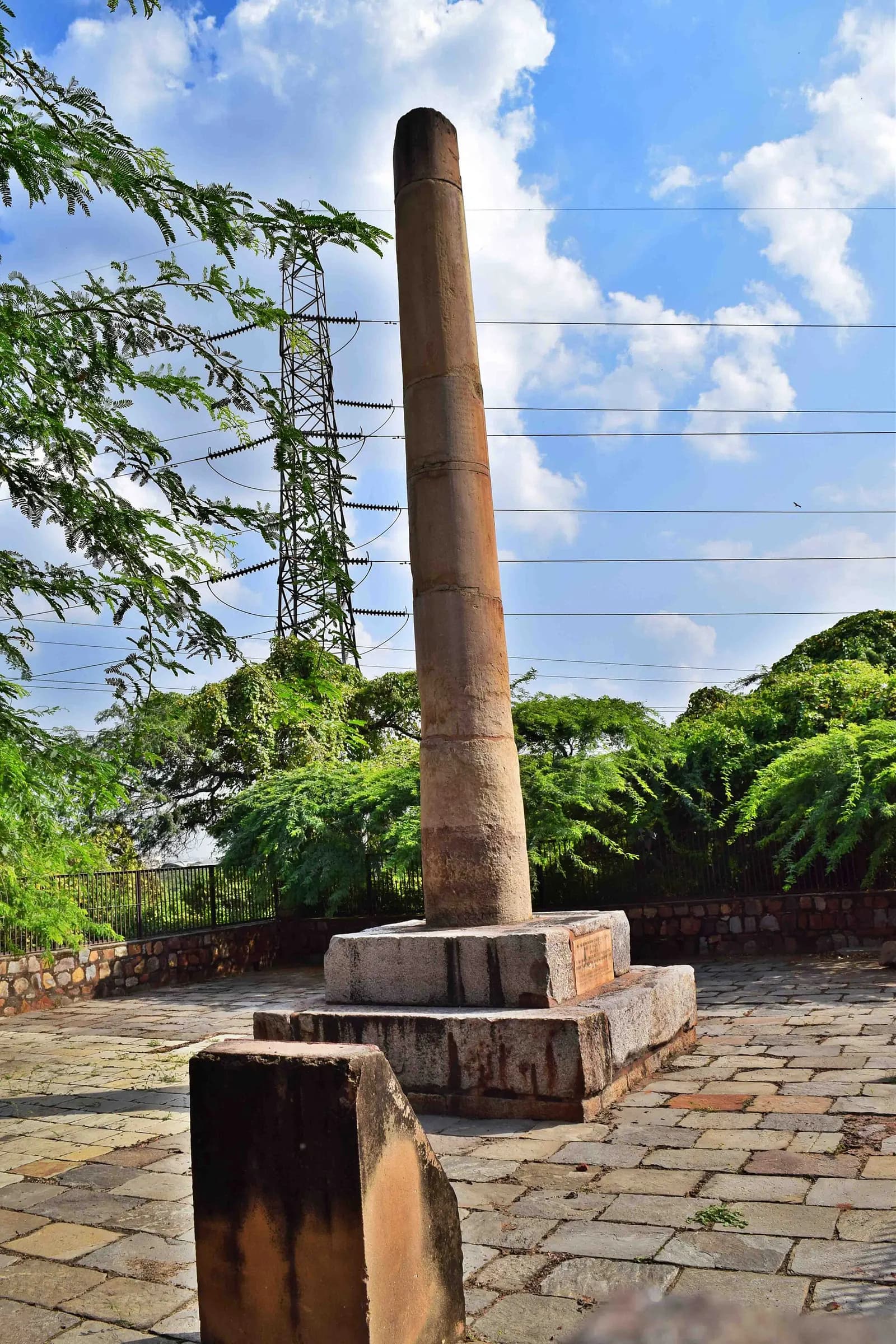
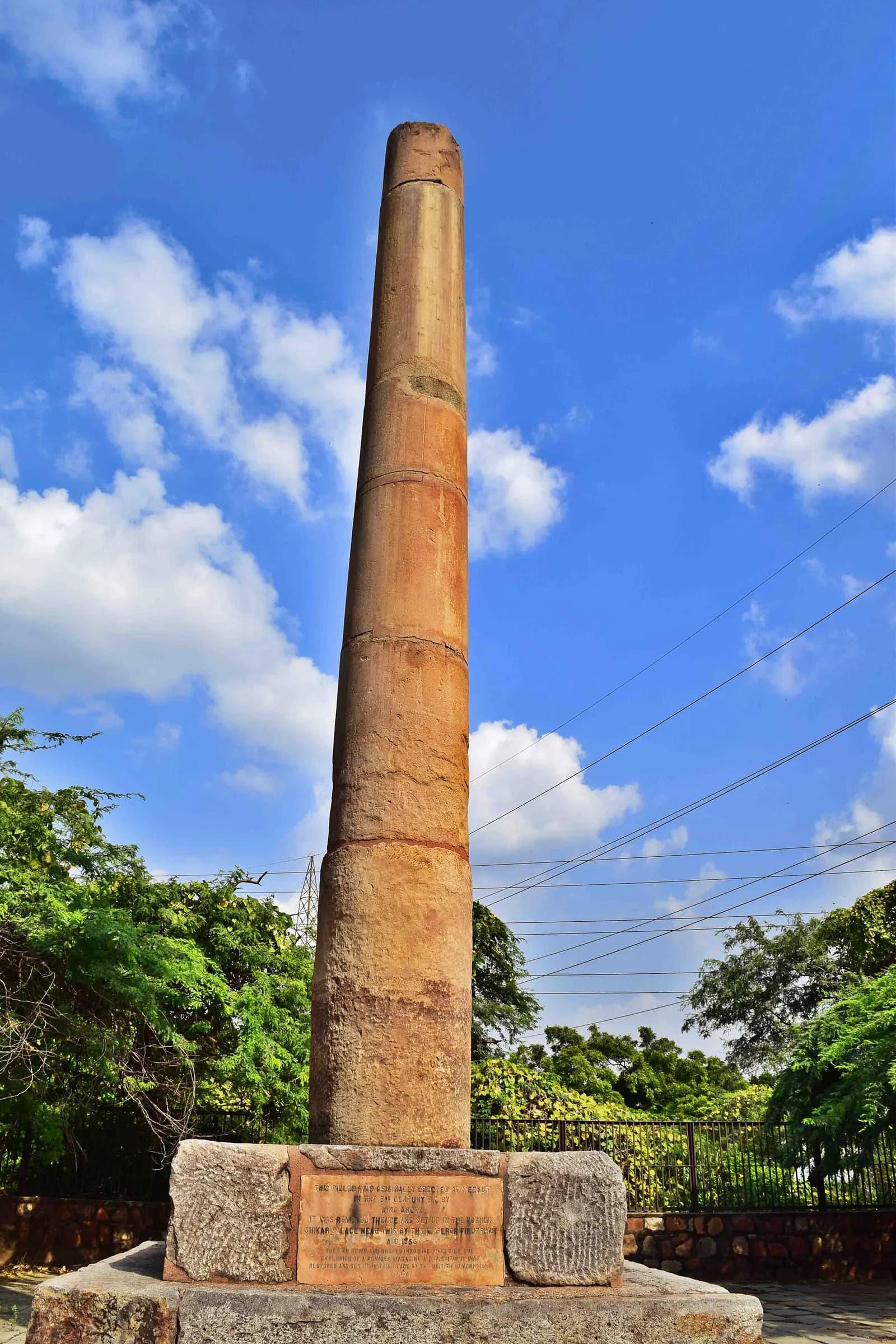
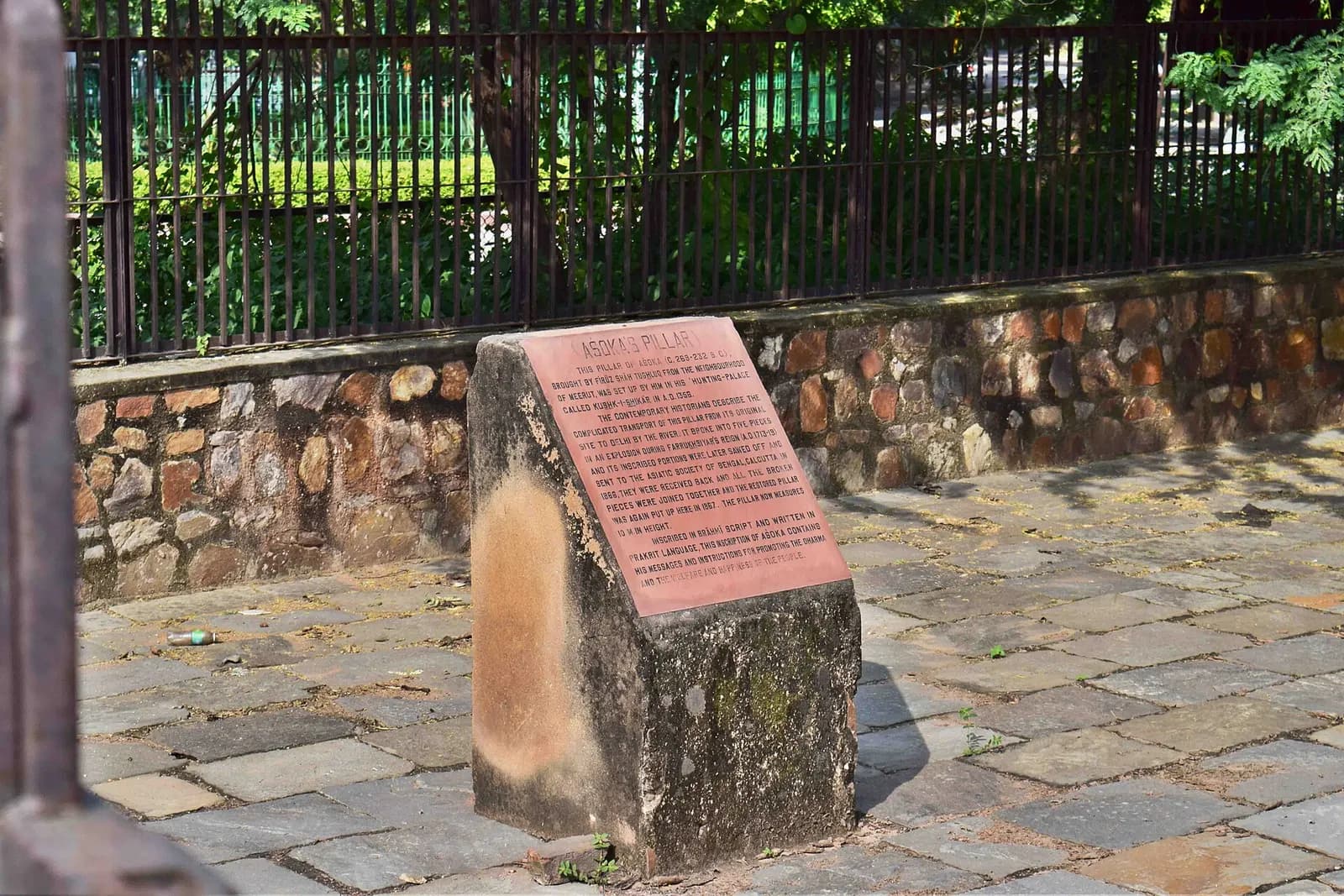
The Ashoka Pillar on the Delhi Ridge is an ancient Mauryan monolithic column, more than two thousand years old, that stands beside the road on the Kamla Nehru Ridge in North Delhi, directly opposite the main gates of the historic Bara Hindu Rao Hospital. Formally known as the Delhi-Meerut Pillar, it was originally erected by the great Emperor Ashoka around 250 BCE and later transported to Delhi by Sultan Firoz Shah Tughlaq in 1356 CE. It is a tall, slender column of pale, polished Chunar sandstone, about ten metres high, its surface carved with Ashoka's edicts in the ancient Brahmi script and though its original crowning capital was lost long ago and the column itself was once broken and restored, it remains one of the most genuinely ancient and historically significant monuments in the entire city. Set quietly on the wooded Ridge, it is a profound and moving relic, carrying across more than two millennia the message of peace and righteous conduct that Ashoka sought to spread.
Several things make it special and they are worth drawing out:
- A genuinely ancient monument. A Mauryan pillar from around 250 BCE, among the oldest monuments in Delhi by many centuries.
- Ashoka's own message. Carved with the emperor's edicts on morality, non-violence and welfare, in the ancient Brahmi script.
- A travelling stone. Quarried near Varanasi, erected in Meerut and moved to Delhi by Firoz Shah Tughlaq, a monument with an epic journey.
- The Mauryan polish. The famous glass-smooth, mirror-like finish of Mauryan stonework, still visible on the column.
- One of two in Delhi. A companion to the Delhi-Topra pillar at Feroz Shah Kotla, both brought to the city by the same sultan.
It is one of the most historically rich and genuinely ancient of the offbeat things to do in Delhi and a remarkably lesser-known entry among the important monuments of Delhi.
How many Ashoka Pillars are in Delhi?
A common and worthwhile question for anyone researching this monument is how many Ashoka pillars there are in Delhi and the answer is two, both brought to the city by the same medieval sultan, which is why visitors often confuse them. Understanding the pair clears up the confusion:
- The Delhi-Meerut Pillar. This is the pillar on the Northern Ridge, opposite Hindu Rao Hospital, the subject of this guide. Firoz Shah Tughlaq brought it from Meerut in Uttar Pradesh and set it up on the Ridge to crown his hunting palace.
- The Delhi-Topra Pillar. The other pillar, which Firoz Shah Tughlaq brought from Topra in Haryana and placed atop his citadel, where it still stands at the ruins of Feroz Shah Kotla in central Delhi.
So both of Delhi's Ashoka pillars were relocated here by Firoz Shah Tughlaq in the 14th century, from different original sites, as prized ancient trophies for his new constructions. They are named after the two cities each was moved between: the Delhi-Meerut pillar on the Ridge and the Delhi-Topra pillar at the Kotla. If you are interested in the complete story, our guide to Feroz Shah Kotla covers the companion Topra pillar and the sultan's citadel in detail and seeing both pillars makes for a fascinating thread through the city's history. This Ridge pillar is the quieter and less visited of the two, standing by the road rather than inside a ticketed complex, which gives it a particular, almost forgotten charm.
History of the Ashoka Pillar
The history of the Ridge pillar is an epic journey across more than two thousand years and several ruling dynasties and it is the key to appreciating the monument. Its story unfolds in distinct chapters:
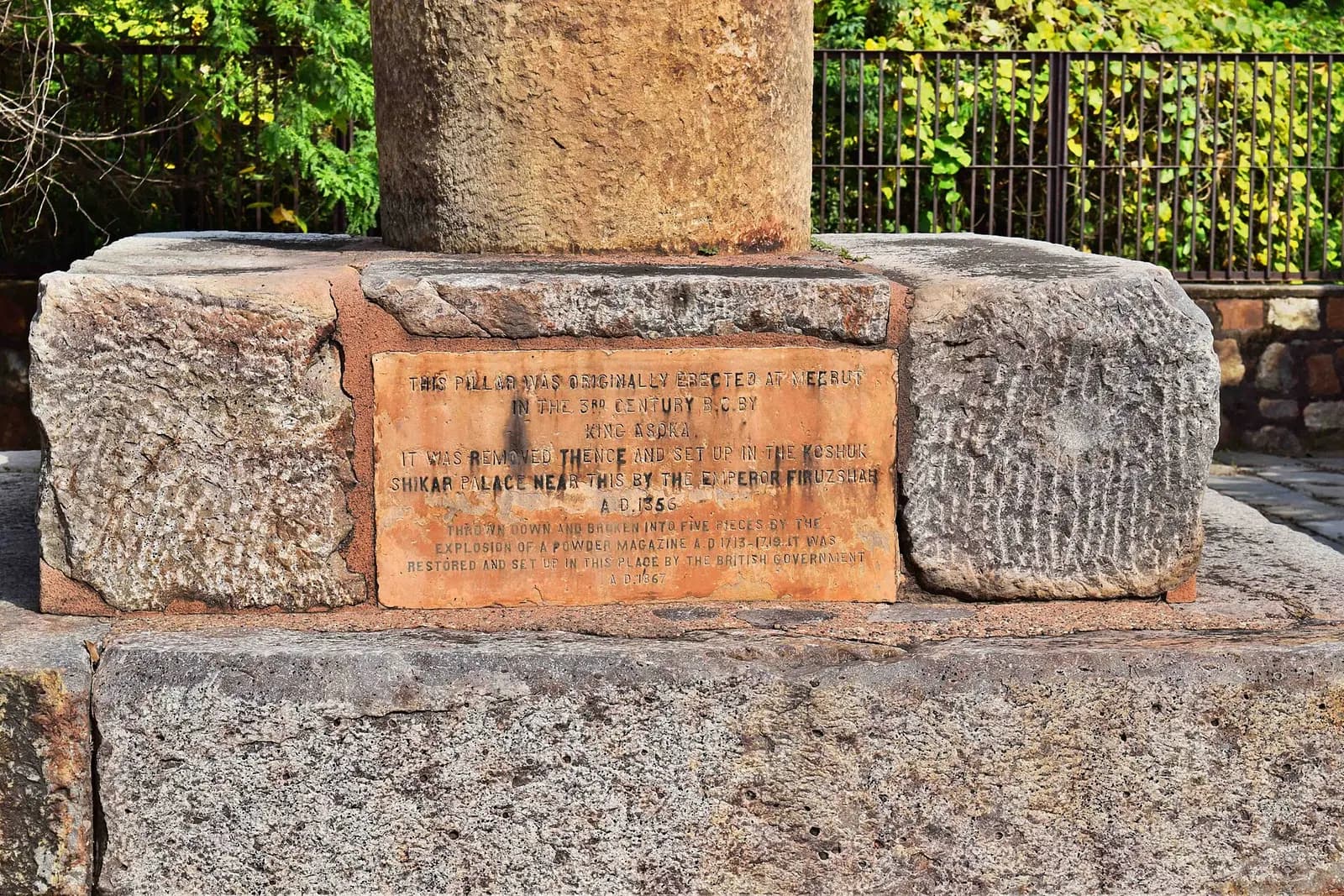
- The Mauryan origin, around 250 BCE. The pillar was commissioned and erected by Emperor Ashoka the Great in the 3rd century BCE originally standing in Meerut in what is now Uttar Pradesh, as part of his campaign to spread his philosophy of Dhamma, a code of righteous conduct, peace and non-violence, across his empire.
- The Tughlaq relocation, 1356 CE. More than fifteen centuries later, Sultan Firoz Shah Tughlaq encountered the magnificent monolith during a campaign and, captivated by its grandeur, had it painstakingly transported down the Yamuna on rafts and re-erected on the Delhi Ridge to crown his hunting palace complex, the Kushak-i-Shikar.
- The Mughal explosion, between 1713 and 1719 CE. During the reign of the Mughal emperor Farrukhsiyar, an accidental gunpowder explosion nearby shattered the column into five broken pieces, a catastrophic blow to the ancient monument.
- The British restoration, 1838 to 1867. The broken fragments were collected in 1838, the inscribed pieces studied by scholars and in 1867 the British administration systematically rejoined the pieces and re-erected the restored pillar at its present location on the Ridge.
Taken together, this is one of the most remarkable life stories of any monument in India: quarried near Varanasi, inscribed and raised by Ashoka in the 3rd century BCE, admired and moved by a Tughlaq sultan in the 14th century, shattered by a Mughal-era explosion in the 18th and restored by the British in the 19th. Each ruling power left its mark on the pillar's fate, so that the column standing on the Ridge today is a physical record of more than two millennia of Indian history. To know this story and then to stand before the restored stone and read the join lines where it was once broken, is to feel the long, layered history of the land in a single object, which is what makes this quiet roadside monument so extraordinary.
Who brought the Ashoka Pillar to Delhi?
A frequent question is who brought the Ashoka pillar to Delhi and the answer is Sultan Firoz Shah Tughlaq, the 14th-century ruler of the Tughlaq dynasty, who was responsible for moving both of the city's Ashoka pillars. In the case of this Ridge pillar, Firoz Shah Tughlaq came across the great Mauryan column during a military campaign in the Meerut region and was so struck by its grandeur that he resolved to bring it back to his capital. The transport was an enormous engineering feat for its time: the massive monolith was carefully lowered, wrapped and carried on large logs and rafts down the Yamuna river to Delhi, then raised again on the Ridge to serve as the crowning ornament of his hunting palace, the Kushak-i-Shikar.
This act tells us a good deal about the sultan and his age. Firoz Shah Tughlaq was an unusually keen patron of architecture and a collector of antiquities and in moving two ancient Ashoka pillars to Delhi he was deliberately associating his own rule with the grandeur of a far older imperial past, even though the Brahmi inscriptions on the columns could not be read by anyone in his time. The pillars were prized as objects of wonder and prestige rather than for their message, which would remain a mystery for centuries more. For the visitor, knowing that a medieval sultan went to such extraordinary lengths to bring this ancient stone to the Ridge adds a wonderful layer of story to the monument, a reminder that even a thousand years ago the pillar was already a treasured relic of a deep and admired past.
The inscriptions and the edicts
What makes the pillar far more than a handsome column is what is carved upon it, for its surface is deeply engraved with Ashoka's Major Pillar Edicts, the public proclamations through which the emperor sought to guide the conduct of his people. These inscriptions are written in the ancient Prakrit language using the Brahmi script, the early Indian writing system from which so many later scripts descend and they set out Ashoka's remarkable vision of a moral state. Their content is striking even today:
- Codes of public morality. Instructions on righteous conduct, honesty, respect and the ethical duties Ashoka wished his subjects to observe.
- Rules for animal protection. Notably humane directives on the protection of animals, restricting killing and cruelty, far ahead of their time.
- State welfare directives. Measures reflecting Ashoka's idea of a caring state concerned with the wellbeing of its people.
For many centuries after the pillars were moved to Delhi, no one could read these inscriptions and the Brahmi script remained an impenetrable mystery to medieval and even early modern scholars. It was only in 1837 that the brilliant British scholar and orientalist James Prinsep finally deciphered the Brahmi script, unlocking the meaning of Ashoka's edicts and, with them, a vast chapter of ancient Indian history that had been lost to memory. That decipherment was one of the great achievements of 19th-century scholarship and it transformed these silent columns into readable records of one of the ancient world's most enlightened rulers. Standing before the pillar and knowing that its weathered lines carry Ashoka's own words on peace, morality and the protection of living things, written more than two thousand years ago and only rediscovered less than two centuries ago, is a genuinely moving experience.
Architecture and the Mauryan polish
The pillar is a masterpiece of ancient Indian stonework and its physical qualities reward a close and knowing look. It is a massive monolithic column, carved from a single block of premium pale pinkish-orange Chunar sandstone, the fine stone quarried near Varanasi that the Mauryans favoured for their finest monuments. Its key features are worth noting:
- A single stone. The entire shaft is cut from one monolithic block, a remarkable feat of ancient quarrying, transport and carving.
- The Mauryan polish. The surface bears the signature glass-like, mirror-smooth finish known as the Mauryan polish, a lustrous technique whose exact method is still admired and imperfectly understood today.
- The dimensions. The column stands about ten metres, some thirty three feet, tall and though slightly shorter than the Topra pillar at Feroz Shah Kotla, it has a noticeably larger base circumference.
- The lost capital. The original crowning capital, most likely an animal figure such as a lion in the Mauryan style, was lost centuries ago during the column's breaks and upheavals, so the pillar today ends without its crown.
The overall impression is of an object of extraordinary craft and antiquity, its pale polished stone still catching the light after more than two thousand years, bearing both the beauty of Mauryan workmanship and the scars of its long and turbulent history. The join lines from the 19th-century restoration are visible on close inspection, a reminder of the explosion that once shattered it and the missing capital speaks to all it has endured. Knowing what to look for, the single block, the polish, the Brahmi lettering, the signs of breakage and repair, turns a glance at a roadside column into an appreciation of one of the great survivals of ancient Indian art.
What to expect at the Ashoka Pillar
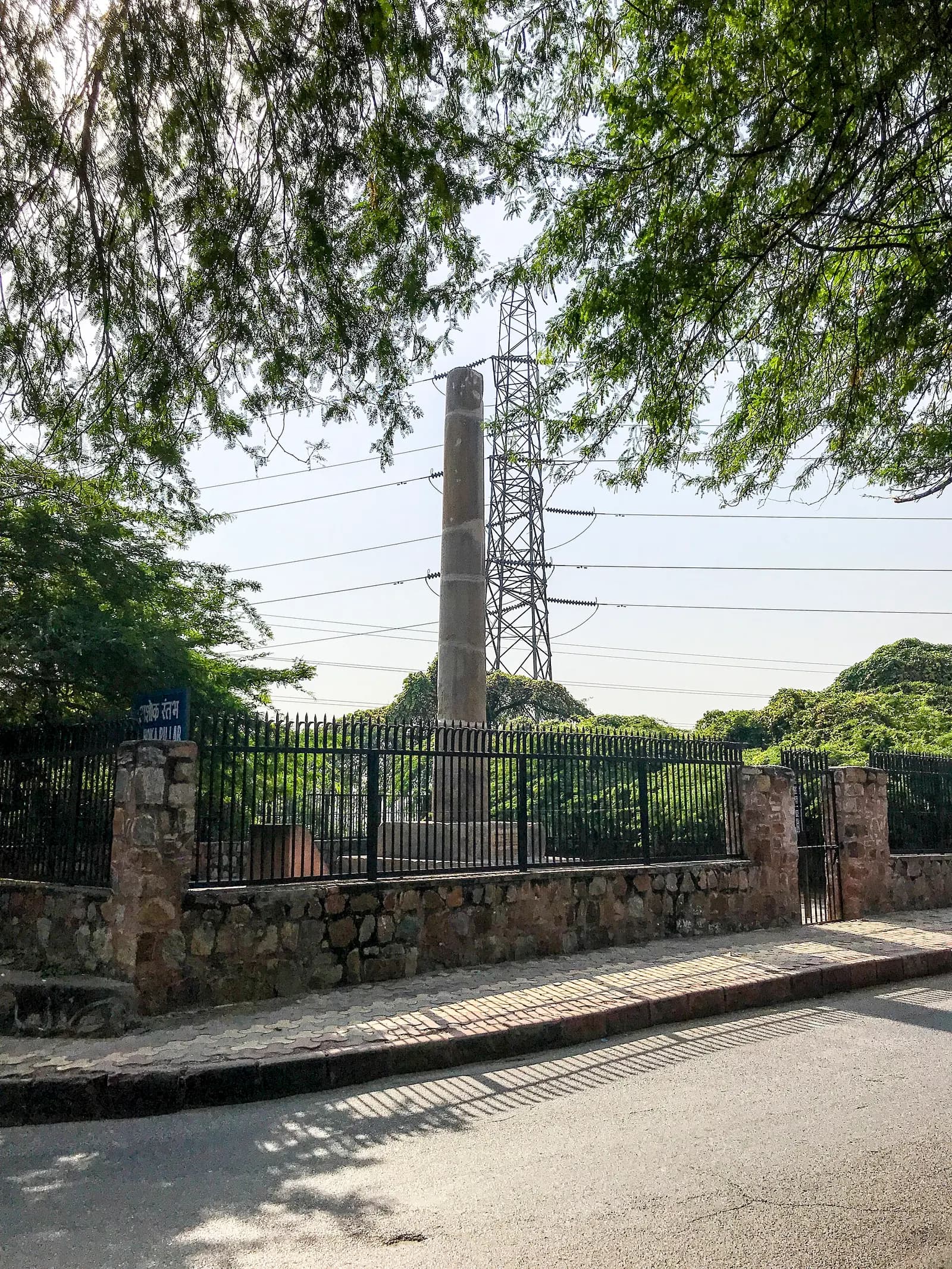
A visit to the Ridge pillar is short, quiet and quietly profound, quite different from the city's grand enclosed monuments and knowing what to expect helps you appreciate it. The pillar stands right beside the road on the Kamla Nehru Ridge, opposite the Hindu Rao Hospital, in an open and rather modest setting without the ticketed gates, gardens or crowds of the major sites. There is no complex to explore, no museum and little signage, so the experience is simply of standing before the ancient column, taking in its height, its polish and its inscriptions and absorbing the extraordinary span of history it represents. The whole visit takes only about fifteen to twenty minutes, making it a brief but memorable stop for those who know what they are looking at.
Because it sits on the Ridge in a forest reserve, the immediate surroundings are green but a little rough and desolate and the area can feel isolated, especially early or late in the day. The forest is home to bold troops of rhesus monkeys and some stray dogs, so it is wise to keep any food and plastic bags closed inside a backpack rather than in your hands, to avoid snatching incidents. The pillar is best appreciated with its history firmly in mind, because without it the monument can read as simply an old column by the road; with it, the same stone becomes one of the most moving things in Delhi. Come to know the story, visit in daylight, stay alert to the monkeys and the Ridge pillar offers a rare and quiet encounter with the deep antiquity of India.
Ashoka Pillar timings and entry
The Ashoka Pillar on the Ridge sits within an open forest reserve and is nominally accessible around the clock, as there are no gates or enclosure, but a visit is strongly recommended during daylight hours, roughly 6:00 AM to 6:00 PM, both for safety and for the best light on the inscriptions. Entry is completely free for all domestic and international visitors, with no ticket window or digital pass of any kind, since it is simply an open roadside monument. Seeing the pillar takes only about fifteen to twenty minutes. There are no visitor facilities at the monument itself. A few sensible precautions apply: the Ridge trail can be very quiet and desolate early in the morning and late in the evening and the surrounding forest has aggressive troops of rhesus monkeys and some stray dogs, so keep food and plastic bags stored safely in a closed bag and avoid visiting entirely alone at quiet hours. These timings and conditions are current at the time of writing and can vary, so plan a daytime visit and reconfirm if your plans depend on exact hours.
Safety and what to carry
Because the pillar sits on an open, lightly frequented stretch of the Ridge, a few precautions make the visit safer and smoother:
- Visit in daylight and not alone. The trail can be desolate early and late, so come between the recommended daytime hours and ideally with company.
- Guard your food and bags. The forest has aggressive rhesus monkeys and stray dogs, so keep snacks and plastic bags closed inside a backpack, not in your hands.
- Carry your own water. There are no facilities or stalls at the monument itself.
- Wear comfortable shoes. The roadside and Ridge ground is uneven.
- Keep valuables secure. As with any quiet, isolated spot, stay aware of your surroundings and belongings.
- Allow 15 to 20 minutes for the pillar and combine it with the other Ridge monuments.
The key point is that this is an open, unguarded monument in a forest setting, not a serviced tourist site, so coming prepared and alert, especially about the monkeys and the isolation at quiet hours, is what makes the visit comfortable. Handled sensibly, the Ridge setting is part of the pillar's appeal, a rare chance to meet a genuinely ancient monument in a quiet, natural corner of the city rather than behind ticket gates.
Best time to visit the Ashoka Pillar
The best time to visit is the cooler months, from October to March and within the day the morning or the earlier afternoon, in good daylight and while the trail is busier and safer. A winter morning is ideal, with pleasant weather and clear light on the pale stone and its inscriptions. The summer is best avoided for the heat on the exposed Ridge and the monsoon can leave the ground muddy, though the pillar itself is quick to see in any season. Because the setting is isolated and home to monkeys, a daytime visit, not too early and not too late, is also the safest. Allow around twenty minutes and ideally combine it with the nearby Ridge monuments, the Flagstaff Tower and the Mutiny Memorial, for a fuller heritage outing. Our guide to the best time to visit Delhi sets out the seasons across the city in more detail.
How to reach the Ashoka Pillar (nearest metro)
The Ashoka Pillar stands on the Kamla Nehru Ridge in Civil Lines, opposite the main gates of Bara Hindu Rao Hospital and it is easy to reach by metro. The nearest stations are Vishwavidyalaya on the Yellow Line and Pul Bangash on the Red Line and from either one it is a short five minute auto-rickshaw or e-rickshaw ride up the Ridge to the Hindu Rao Hospital circle, beside which the pillar stands. The monument is right by the road, so it is simple to find once you reach the hospital area. Because it sits off the usual monument trail and on the quiet Ridge, it is best treated as part of a dedicated Ridge heritage outing and a heritage-focused New Delhi tour or a broader Delhi day tour that takes in the Ridge and its monuments can help you reach and understand it.
Places to visit near the Ashoka Pillar
The Ashoka Pillar sits on the Northern Ridge in the historic north of the city, so it combines naturally with the Ridge heritage trail and with Delhi's great monuments. On the Ridge itself it stands close to the 1857 sites of the Flagstaff Tower and the Mutiny Memorial, a profound bridge across time between its own ancient message of non-violence and the 19th-century battlefield history around it. The companion site of Feroz Shah Kotla, with the second Ashoka pillar, lies to the south in central Delhi.
A short ride brings you to the mighty Red Fort and the old city, the old fort of Purana Qila and the ceremonial India Gate with the great circle of Connaught Place. The capital's other landmarks round out a full picture of the city: the serene Humayun's Tomb, the towering Qutub Minar with its own ancient iron pillar and the modern marvels of the Lotus Temple and Akshardham. For more layered history, the ancient stepwell of Agrasen ki Baoli, the astronomical Jantar Mantar and the historic Hauz Khas Fort complete the sweep of Delhi's long past.
The Ashoka Pillar in your Delhi itinerary
For most visitors, the Ridge pillar works best as a short, meaningful stop within a Northern Ridge heritage outing rather than a destination on its own, given that it takes only fifteen to twenty minutes to see and rewards knowing its story. The natural pairing is with the other Ridge monuments, the Flagstaff Tower and the Mutiny Memorial, which lie close by, making a compact walk that spans more than two thousand years, from Ashoka's ancient message of peace to the violence of the 1857 struggle on the same heights. For the fuller Ashoka story, pairing it with a visit to Feroz Shah Kotla to see the companion Topra pillar is deeply rewarding. It is a stop for travellers with a genuine interest in history and in India's deep past, rather than for those ticking off headline sights and it rewards reading the pillar's extraordinary journey in advance.
If Delhi is your gateway to the wider Golden Triangle, the Ashoka Pillar offers a rare and moving perspective on the sheer antiquity of Indian civilisation and on the enlightened vision of one of its greatest rulers, a quiet, ancient counterpoint to the Mughal and colonial monuments that dominate the usual itinerary. Many of my history-minded guests find standing before a genuine Mauryan pillar, inscribed with Ashoka's own words, one of the most memorable moments of their time in the city and it adds a profound sense of time-deep to a Delhi exploration before the journey on to Agra and Jaipur.
Travel tips for visiting the Ashoka Pillar
A few pointers make the visit smoother and more rewarding:
- Come in the cooler months, October to March and in daylight, for comfort, light and safety.
- Know the story first, the Mauryan origin, Firoz Shah Tughlaq's move and the edicts, as the pillar's power is entirely in its history.
- Look for the details, the single block, the Mauryan polish, the Brahmi inscriptions and the restoration join lines.
- Guard food and bags from the Ridge monkeys and keep them closed in a backpack.
- Visit with company rather than alone, as the setting is quiet and isolated.
- Combine it with the Flagstaff Tower and Mutiny Memorial on the Ridge and with Feroz Shah Kotla for the second pillar.
- Reach it via Vishwavidyalaya or Pul Bangash metro, then a short auto to Hindu Rao Hospital.
- Allow 15 to 20 minutes for the pillar itself.
If you would like a local guide to build the Ashoka Pillar and the Ridge trail into a wider Delhi heritage plan, message our team on WhatsApp at +91 7302265809 with your travel dates and group size and we will shape the day for you.
Is the Ashoka Pillar worth visiting?
For history lovers and those drawn to India's deep past, yes, it is a genuinely rewarding and even profound stop. There are very few monuments in Delhi so ancient and few still that carry the actual words of an emperor who ruled more than two thousand years ago, inscribed in a script that was lost for centuries and only rediscovered less than two hundred years ago. Its epic journey, from Ashoka's Meerut to a Tughlaq sultan's Ridge palace, through a Mughal-era explosion to a British restoration, makes it one of the most extraordinary survivals in the country. It is free and quick to see. The honest note is that it is a single roadside column in a quiet, rough and somewhat isolated Ridge setting, with no facilities and bold monkeys and its appeal depends almost entirely on an appreciation of history; a casual visitor expecting a grand enclosed monument may find it modest at first glance. But for the curious, history-minded traveller who understands what they are looking at, it is one of the most moving and memorable places in Delhi and I love showing it to guests with a feeling for the long reach of the past.
Plan your trip with us
At Experience My India, through our Delhi and Golden Triangle travel desk, we design unhurried, well paced trips that make room for genuinely ancient, history-rich stops like the Ashoka Pillar and the Ridge trail, not just the headline monuments and we know how to reach and interpret the city's hidden historical corners. Whether you want a relaxed set of Delhi Agra tours or a full Golden Triangle route through Delhi, Agra and Jaipur, we plan around your pace, your interests and the right season, with local guides who know the stories behind the stones. Share your dates and the kind of trip you have in mind through our enquiry page, tell us your group size and we will put together an honest, tailored plan rather than a rushed checklist.
Related guides
- Places to visit in Delhi, for the wider picture
- Hidden places to visit in Delhi, the city's quieter corners
- Nearby places to visit in Delhi, to extend your trip
Enquire Now
Ready to Explore
The Heart of Delhi?
Explore the Red Fort, Qutub Minar, Humayun's Tomb, and the vibrant streets of Old Delhi with our expert-guided premium tours of India's capital city.

Delhi
Premium Tour Package
Questions
Frequently asked questions
What are the timings of the Ashoka Pillar on the Ridge?
It sits in an open Ridge reserve and is nominally accessible any time, but visits in daylight, roughly 6:00 AM to 6:00 PM, for safety and light. Seeing it takes 15 to 20 minutes. Reconfirm, as conditions can vary.
What is the entry fee for the Ashoka Pillar?
How many Ashoka pillars are there in Delhi?
Who brought the Ashoka Pillar to Delhi?
How old is the Ashoka Pillar?
What is written on the Ashoka Pillar?
Who deciphered the inscriptions?
Which is the nearest metro station to the Ashoka Pillar?
Is the Ashoka Pillar worth visiting?
Explore more
Plan your Ashoka Pillar Delhi Ridge trip with us

Interested in Ashoka Pillar Delhi Ridge: History, Timings and Visitor Guide?
Chat with our travel team for a custom quote, or browse every package.
Related Attractions
9Ready to explore Ashoka Pillar Delhi Ridge: History, Timings and Visitor Guide?
Book your private tour today and experience the magic of India's rich heritage.