Balban's Tomb Delhi: History, Timings and Visitor Guide
Visiting Balban's Tomb in Mehrauli, home of India's first true arch? Balban's story, the Dar-ul-Amaan, the architecture, timings, free entry and metro.
In a Nutshell
“Balban's Tomb is a historically momentous 13th-century ruin in the Mehrauli Archaeological Park, South Delhi, built around 1287 for Ghiyas-ud-din Balban, the powerful "Blood and Iron" sultan of the Mamluk or Slave, dynasty. Though roofless and plain today, it holds a monumental place in Indian architecture as the earliest surviving example of the true arch and once of the first true dome, in the subcontinent. The walled complex was Balban's Dar-ul-Amaan, a legal sanctuary and the tomb of his son Khan Shahid stands beside it. It is free to enter, open through the day and reached from Qutub Minar metro. It features on our heritage Delhi tours, run by a unit of Experience My India.”
Balban's Tomb is one of Delhi's most historically important yet least-visited monuments, a ruined but pivotal structure that changed the course of Indian architecture, hidden in the woods of the Mehrauli park. For history lovers and those drawn to the city's offbeat heritage, it is a fascinating discovery. Our team at Delhi Agra Tour Packages often includes it on a deeper Mehrauli heritage walk and it adds a historically rich dimension to a wider Golden Triangle tour through the capital.
I am Abhay Sharma, Delhi born and a Golden Triangle guide since 2015 and I love bringing history-minded guests here, because few ruins so plain to the eye are so important to the story of Indian architecture, this is where the true arch and dome begin. This guide gathers everything I would tell a visitor beforehand, checked against current information, including the history, the architecture, the timings and how to reach it.
Details
Balban's Tomb at a glance
| Detail | Information |
|---|---|
| Location | Mehrauli Archaeological Park, South Delhi |
| Built | Around 1287, for Ghiyas-ud-din Balban |
| Dynasty | The Mamluk or Slave, dynasty of the Sultanate |
| Famous for | The earliest surviving true arch in India |
| Also holds | The Dar-ul-Amaan sanctuary and Khan Shahid's tomb |
| Entry | Free; a protected ASI ruin |
| Nearest metro | Qutub Minar, then a walk through the park |
| Time needed | About 30 minutes |
Balban's Tomb timings
| Detail | Information |
|---|---|
| Open | Daily, sunrise to sunset, roughly 6:00 AM to 6:00 PM |
| Access | A 10 to 15 minute walk through the park from the gate |
| Time needed | About 30 minutes |
Balban's Tomb is open every day from sunrise to sunset, roughly 6:00 AM to 6:00 PM, within the Mehrauli Archaeological Park. Reaching it involves a ten to fifteen minute walk through the park, on a slightly overgrown trail behind the Jamali Kamali complex and a visit takes about thirty minutes. These timings are current at the time of writing and can vary, so a daylight visit, well before dusk, is strongly advised.
Entry fee
| Item | Information |
|---|---|
| Entry fee | Free for all visitors |
| Tickets | None; it lies within the open archaeological park |
| Note | A roofless, overgrown ruin, not a serviced site |
How to reach Balban's Tomb
| From | Route |
|---|---|
| Qutub Minar metro (Yellow Line) | A short auto to the Mehrauli park entrance |
| Within the park | A 10 to 15 minute walk, behind Jamali Kamali |
| Landmark | About 100 metres east of Jamali Kamali |
| By car | Park near the Mehrauli Archaeological Park gate |
What is Balban's Tomb?
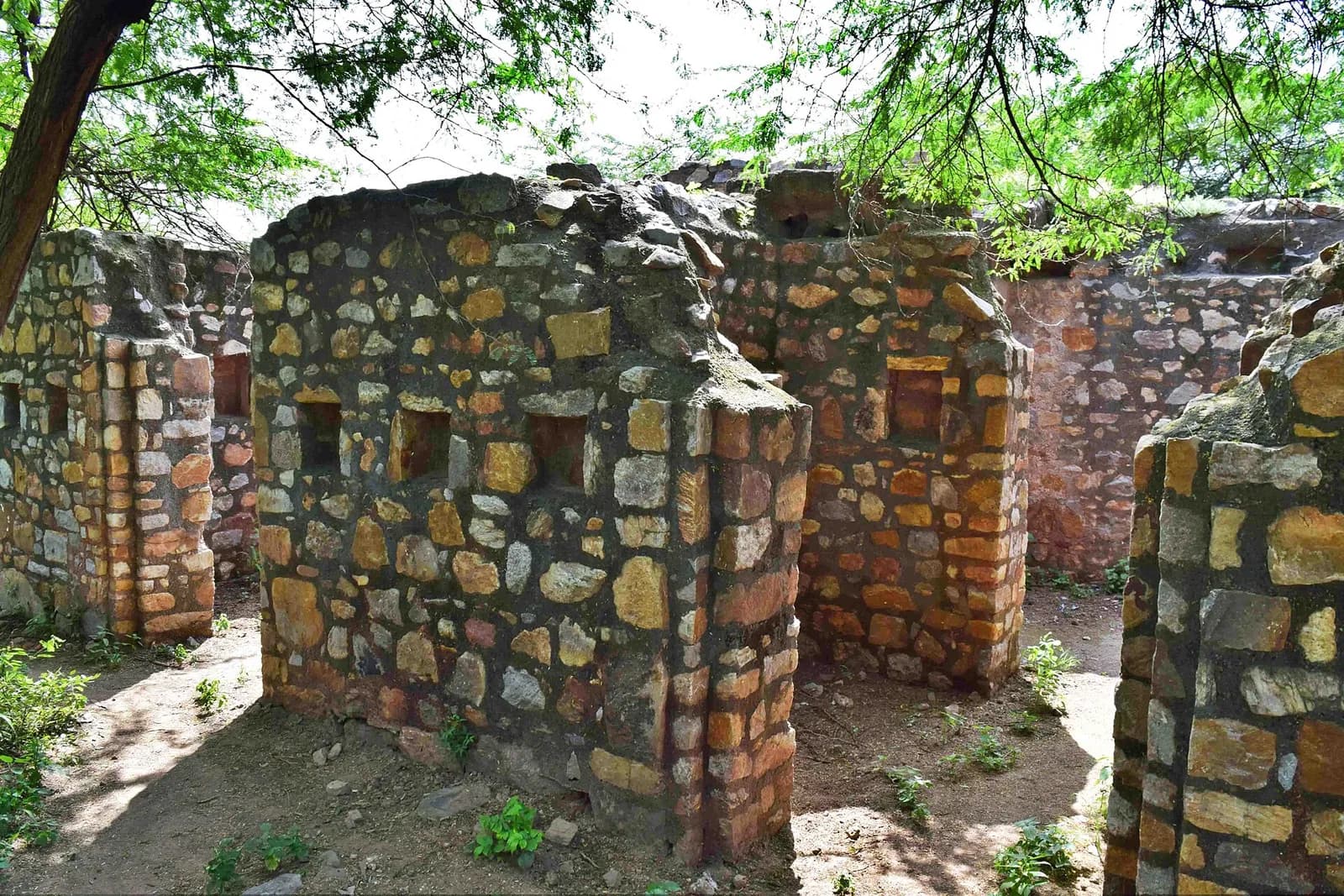
Balban's Tomb is a 13th-century mausoleum, now a roofless ruin, set in the wooded heart of the Mehrauli Archaeological Park in South Delhi and despite its plain and dilapidated appearance it holds a monumental place in the history of Indian architecture. Built around 1287 for Ghiyas-ud-din Balban, the ninth and one of the most powerful sultans of the Mamluk or Slave, dynasty of the Delhi Sultanate, it marks the decisive moment when building in India moved from the older indigenous corbelled technique to true Islamic structural masonry, for it contains the earliest surviving example of the true arch and is believed to have carried one of the first true domes, on the subcontinent. The tomb stood at the centre of a walled complex that Balban had created as the Dar-ul-Amaan, a legal sanctuary and beside it lies the ruined tomb of his beloved son, Khan Shahid. Though roofless, overgrown and stripped of its ornament today, it is one of the most historically significant monuments in all of Delhi.
Several things make it special and they are worth drawing out:
- The first true arch in India. The tomb is the earliest surviving example of the true, voussoir-and-keystone arch on the subcontinent, a turning point in Indian architecture.
- The first true dome. Its central chamber is believed to have carried one of the first true masonry domes in India, now collapsed.
- A powerful sultan's grave. The tomb of Ghiyas-ud-din Balban, the ruthless "Blood and Iron" ruler of the Slave dynasty.
- The Dar-ul-Amaan. The walled complex served as a sanctuary where debtors and the pursued could not be arrested.
- The tomb of Khan Shahid. Beside it lies the tomb of Balban's son, the martyred prince who died fighting the Mongols.
It is one of the most historically important and genuinely offbeat of the things to do in Delhi and a pivotal if little-known entry among the important monuments of Delhi.
Who was Ghiyas-ud-din Balban?
To appreciate the tomb is to know the formidable man buried in it, for Ghiyas-ud-din Balban was one of the most powerful and ruthless rulers of early Sultanate Delhi. Born around 1201, Balban's life was an extraordinary rise from the lowest beginnings to the summit of power. Captured as a youth and sold into slavery, he was bought by Sultan Iltutmish and entered the royal household and through sheer ability he rose steadily through the military and administrative ranks, mastering the dangerous court politics of the age, until he became the effective power behind the throne and finally, in 1266, sultan in his own right as the ninth ruler of the Mamluk or Slave, dynasty.
As sultan, Balban governed with an iron hand and he is remembered above all for his famous and uncompromising policy of "Blood and Iron", a ruthless approach to crushing rebellion, disciplining the nobility and restoring the prestige and authority of the crown after a period of weakness. He surrounded the monarchy with awe and ceremony, broke the power of the fractious nobles and defended the Sultanate fiercely against the ever-present threat of Mongol invasion from the northwest. Yet for all his harshness, his life held deep personal tragedy, above all the death of his beloved son and heir in battle against the Mongols, a blow from which he never recovered. He died in 1287 and this tomb was raised for him immediately afterward. For the visitor, knowing Balban's story, the slave who became one of Delhi's mightiest sultans, ruling by blood and iron yet broken by a father's grief, gives the plain ruin a powerful human and historical depth.
The first true arch and dome in India
The single most important reason Balban's Tomb matters and the thing that gives this modest ruin its monumental place in history, is its role in the evolution of Indian architecture, for it marks the arrival of the true arch and dome on the subcontinent. Understanding this transformation is the key to the monument:
- The older corbelled method. Before this, the early Islamic builders in India relied on local Hindu and Jain artisans, who built arches by the traditional corbelling method, overlapping horizontal stone slabs inward until they met at the top. This limited how wide and how strong an opening could be.
- The true arch arrives. Balban's Tomb is the earliest surviving example of a true arch in India, formed of radiating stone wedges, called voussoirs, curved symmetrically around a central keystone, a design that directs weight outward and downward and allows far wider, grander openings.
- The first true dome. The central square chamber transitions to an octagonal frame by means of corner brackets called squinches and this octagon is believed to have supported the very first true masonry dome in India, now long collapsed.
This was a revolution in building. The true arch and dome, structural principles that the Islamic world had long mastered, could now be realised in India, freeing architecture from the limits of corbelling and opening the way to the soaring spaces and great domes of the centuries to come. The design pioneered here paved the way for masterpieces such as the nearby Alai Darwaza at the Qutub complex and, ultimately, the great domes of the Mughals, culminating in the Taj Mahal itself. For the visitor, this is the heart of the monument's significance: standing before these plain, roofless arches, one is looking at the very beginning of a tradition that would produce some of the most beautiful buildings in the world and knowing this transforms a modest ruin into a landmark of architectural history.
The Dar-ul-Amaan and the sanctuary
Beyond its architectural importance, Balban's Tomb has a fascinating history as a place of sanctuary, which adds a remarkable human dimension to the site. The tomb stood at the centre of a walled enclosure that Balban had created and named the Dar-ul-Amaan, meaning the House of Safety and historical accounts, including those of the famous traveller Ibn Battuta and references by later rulers such as Firoz Shah Tughlaq, reveal that this complex functioned, by royal decree, as a sacred legal asylum. The principle was extraordinary for its age: anyone who sought refuge within its gates could not be legally arrested or seized.
This meant that debtors fleeing their creditors, victims of political persecution and even criminals could find protection inside the Dar-ul-Amaan, safe from the reach of the law so long as they remained within its walls. The sultan himself, it is recorded, would frequently pay off the debts or settle the blood-money demands of those who took refuge there, out of his own personal treasury, to resolve their cases and protect them. That so ruthless a ruler as Balban, the sultan of blood and iron, should also have created so generous a sanctuary is one of the intriguing contradictions of his reign and Balban chose to be buried at the very geometric centre of this house of safety. For the visitor, knowing that this ruined enclosure was once a place where the pursued could find protection and that its fearsome founder lies at its heart, adds a rich and surprising layer to the monument, a reminder of the complex ideas of kingship, justice and mercy in the medieval world.
The tomb of Khan Shahid
Beside Balban's own grave lies a second, deeply poignant tomb that is bound up with the sultan's personal tragedy, that of his beloved eldest son, Prince Muhammad Khan. Adjacent to the eastern room of Balban's mausoleum stands the ruined tomb chamber of this prince, who is remembered by the posthumous title Khan Shahid, meaning the Martyred Prince. The title was earned in the most honourable and tragic way: the prince died in 1285, fighting a fierce defensive battle against the invading Mongol forces that perpetually threatened the Sultanate's northwestern frontier, giving his life in the defence of the realm.
The death of his favourite son and chosen heir was a catastrophe for Balban, both dynastically and personally. The sultan's grief over the loss of Khan Shahid is said to have broken his health and his spirit and he died just two years later, in 1287, a father undone by sorrow as much as a ruler reaching the end of his reign. That the tombs of father and son stand side by side here gives the complex a moving human unity: the mighty sultan and the martyred prince, the grief that joined them, resting together in the house of safety Balban had built. For the visitor, the tomb of Khan Shahid deepens the emotional resonance of the site immeasurably, turning a monument of architectural history into a memorial of a father's love and loss and knowing the story of the martyred prince is essential to understanding the human heart of Balban's Tomb.
Architecture and the state of the ruins
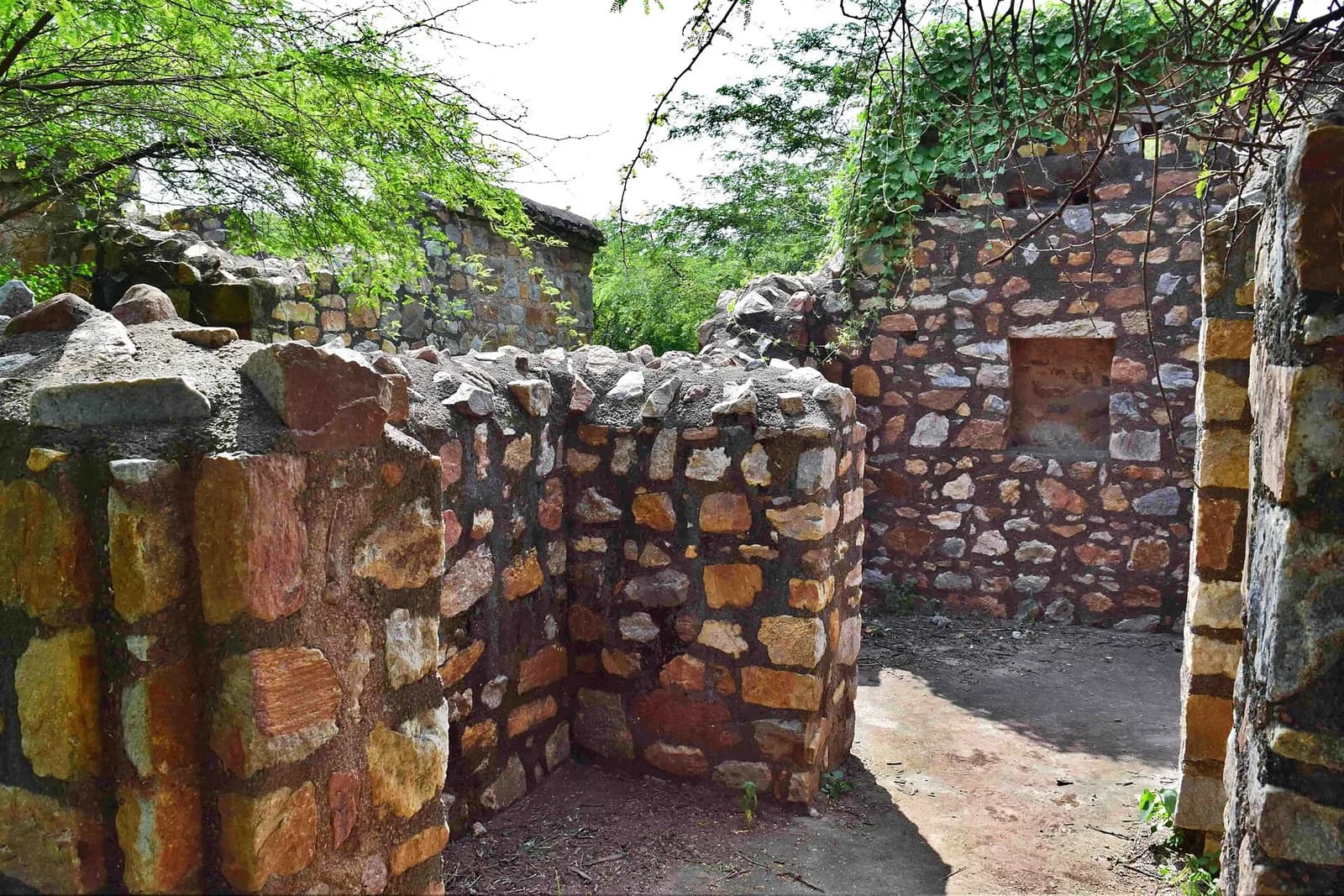
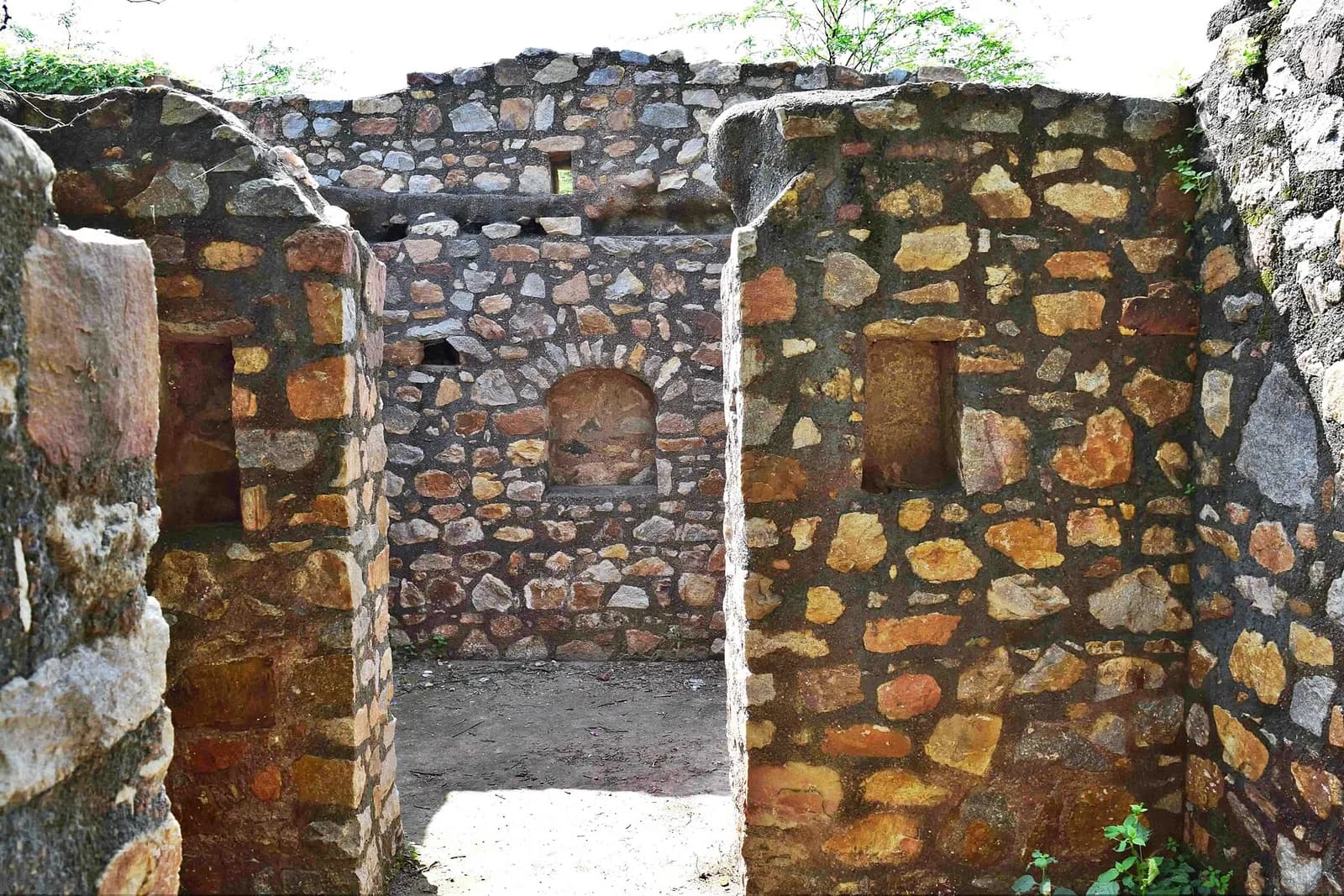
Architecturally, Balban's Tomb is important for its structural innovations rather than its ornament and it is seen today in a severely ruined state, which visitors should understand in advance. The tomb was built not of the polished sandstone of later Mughal monuments but of coarse, rugged quartzite rubble masonry, bound heavily with lime mortar, a sturdy, unpolished construction typical of the early Sultanate. Its key features and its current condition, are worth noting:
- The true arches. The surviving arched openings, formed of voussoirs around a keystone, are the monument's great treasure, the earliest true arches in India, framing the surrounding woods.
- The squinch chamber. The central square chamber, with its corner squinches rising to an octagon, once carried the pioneering true dome, which collapsed centuries ago, leaving the chamber open to the sky.
- The lost ornament. The walls were once covered in a thick layer of fine decorative white stucco plaster, which has completely eroded away, leaving the bare rubble masonry exposed.
- The vanished sarcophagus. Balban's original central marble sarcophagus is entirely missing, though the brick-lined base of his grave is clearly visible at the centre of the chamber.
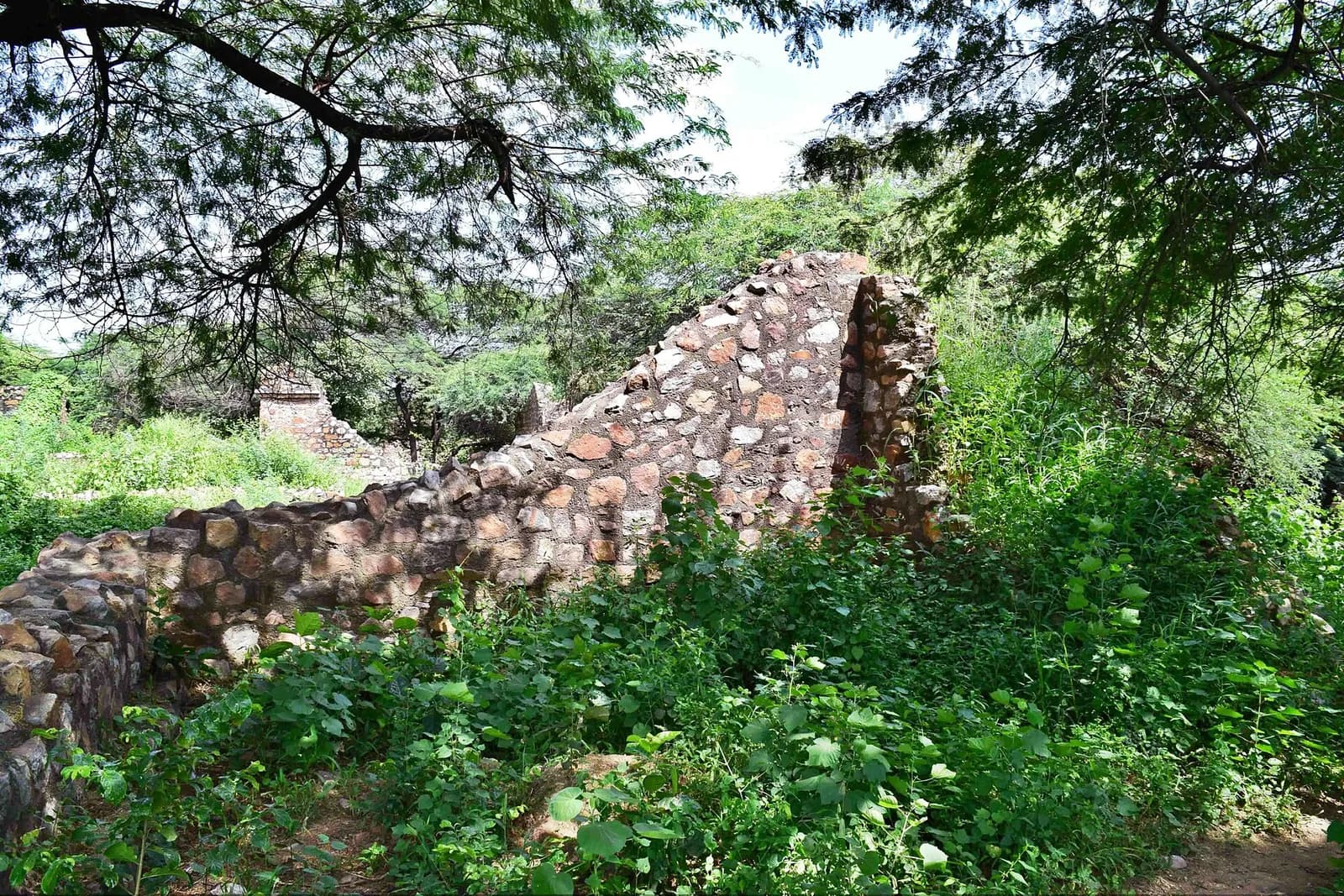
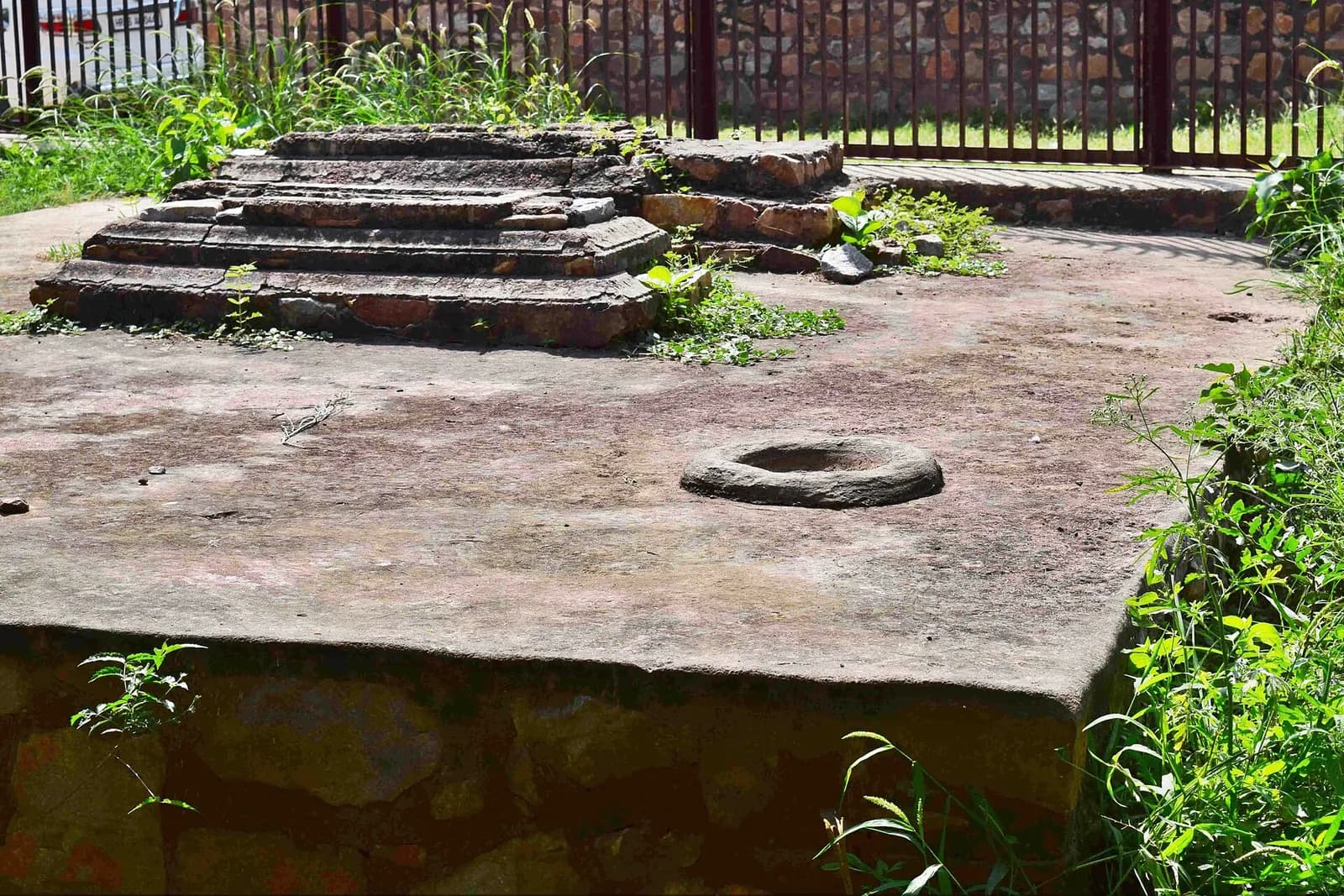
The overall impression is of a stark, roofless and weathered ruin, open to the sky and surrounded by wild vegetation, fallen masonry and the remains of late-medieval housing, stripped of the plaster and marble that once dignified it. This plainness, however, is exactly what lets the visitor see the bare bones of the building's revolutionary structure, the true arches and the squinched chamber, laid open to view. The complex was recently desilted, stabilised and opened up to the public following a heritage restoration drive by the ASI and the Delhi administration, which cleared debris and improved access. Knowing what to look for, the voussoir arches, the squinches, the lost dome and the empty grave, turns a visit to this modest ruin into an appreciation of one of the most important structures in Indian architectural history.
What to expect at Balban's Tomb
A visit to Balban's Tomb is quiet, atmospheric and a genuine off-the-trail discovery, set deep in the wooded ruins of the Mehrauli Archaeological Park and knowing what to expect helps you appreciate it. The tomb lies about a hundred metres east of the Jamali Kamali complex, reached by a ten to fifteen minute walk through the park on a slightly overgrown trail, so getting there is itself a small adventure through the green heritage grounds, well away from the crowds. The monument itself is a roofless, open-to-the-sky ruin of bare rubble arches and a squinched central chamber, surrounded by wild vegetation and fallen masonry, so the experience is one of exploring an atmospheric ruin and, above all, appreciating its extraordinary architectural significance and its human story. The visit takes about thirty minutes.
Because it is a plain, ruined and somewhat isolated monument, the appeal of Balban's Tomb rests almost entirely on knowing what it is: without the history, it can look like just another heap of old arches, but with it, those same arches become the beginning of Indian architecture as we know it. The gaping arched entryways frame the surrounding woods beautifully, making the ruin an excellent and atmospheric spot for heritage photography. Because the setting is wild, overgrown and isolated, with an overgrown approach trail, it should be visited in daylight and well before dusk and ideally not entirely alone. There are no facilities at the tomb. Come knowing the story of the true arch, of Balban and of Khan Shahid, prepared for a walk and a genuine ruin and the monument rewards you with one of the most historically meaningful and peaceful experiences in the Mehrauli park.
Balban's Tomb timings and entry
Balban's Tomb is open every day from sunrise to sunset, roughly 6:00 AM to 6:00 PM, as it lies within the open Mehrauli Archaeological Park and entry is completely free for all visitors, with no ticketing. Reaching it requires a ten to fifteen minute walk through the park from the entrance, on a slightly overgrown trail that runs behind the Jamali Kamali complex, about a hundred metres to its east and a visit takes about thirty minutes. Because the tomb is a roofless ruin in a wild, overgrown and somewhat isolated part of the park, a few points matter: there are no facilities at the monument, the approach trail can be overgrown and the setting is secluded, so it should be visited strictly in daylight and well before dusk and ideally with company rather than entirely alone. Comfortable shoes are wise for the walk. These timings and conditions are current at the time of writing and can vary, so plan a daytime visit and reconfirm if your plans depend on exact hours.
Visiting tips
A few pointers make the visit smoother and more rewarding:
- Know the significance first. The true arch and dome and the story of Balban and Khan Shahid, are what make this plain ruin extraordinary.
- Walk in from Jamali Kamali. The tomb is about 100 metres east, a 10 to 15 minute walk on a slightly overgrown trail through the park.
- Visit in daylight, before dusk. The setting is wild and isolated, so come well before the park empties and ideally with company.
- Look for the true arches and squinches. Seek out the voussoir arches and the squinched chamber that once carried the first true dome.
- Bring a camera. The gaping arches frame the surrounding woods beautifully for heritage photography.
- Combine it with the park. See Jamali Kamali, Rajon ki Baoli and Gandhak ki Baoli for a full Mehrauli heritage walk.
- Allow about 30 minutes for the tomb, more for the park.
The key point is that this is a plain, isolated ruin whose greatness lies in its history, so coming with the story in mind, in daylight and ideally with company, is what makes the visit rewarding and comfortable. Done so, Balban's Tomb offers the rare thrill of standing at a true turning point in the history of Indian architecture.
Best time to visit Balban's Tomb
The best time to visit is the cooler months, from October to March and within the day the morning or the earlier afternoon, in good daylight for the walk through the park and for safe, atmospheric exploration of the ruin. A pleasant winter day is ideal, with comfortable temperatures for the overgrown trail and beautiful light through the arches onto the surrounding woods. The summer is hot and the walk tiring and the monsoon leaves the trail overgrown and muddy, so the winter months are much the most comfortable. Because the setting is wild and isolated, a daytime visit well before dusk is also by far the safest. Allow about half an hour for the tomb and ideally combine it with the rest of the Mehrauli park. Our guide to the best time to visit Delhi sets out the seasons across the city in more detail.
How to reach Balban's Tomb (nearest metro)
Balban's Tomb lies within the Mehrauli Archaeological Park in South Delhi and reaching it combines a short ride with a walk through the park. The nearest metro station is Qutub Minar on the Yellow Line, from which it is a short auto-rickshaw ride to the entrance of the Mehrauli Archaeological Park. From the park entrance, the tomb is a ten to fifteen minute walk along the heritage trails, passing the Jamali Kamali complex, behind which, about a hundred metres to the east, Balban's Tomb stands on a slightly overgrown path. Because it sits deep within the park rather than on any road, the final approach is necessarily on foot through the green ruins, which is part of the experience, though it means the trail can be a little hard to follow, so a guide or careful attention to the signage helps. Set within the great Mehrauli heritage zone, it pairs naturally with a Delhi day tour or a heritage-focused New Delhi tour that takes in the Qutub complex and the park.
Places to visit near Balban's Tomb
Balban's Tomb sits within the Mehrauli Archaeological Park, a sprawling heritage reserve with over a hundred historical ruins, so it is surrounded by remarkable monuments and is best enjoyed as part of a wider walk. Within the Mehrauli Archaeological Park itself, the beautiful Jamali Kamali mosque and tomb stand just to its west, the elegant stepwell of Rajon ki Baoli and the older, sulphur-water Gandhak ki Baoli lie nearby and just outside rises the towering Qutub Minar, the great medieval victory tower, whose Alai Darwaza carries on the true-arch tradition begun here. The central stepwell of Agrasen ki Baoli makes another fine comparison.
A ride away, the capital's other landmarks round out a full picture of the city: the mighty Red Fort and old city, the serene Humayun's Tomb, the ceremonial India Gate, the lotus-shaped Lotus Temple and the old fort of Purana Qila. For more history, the citadel of Feroz Shah Kotla, the great circle of Connaught Place and the astronomical Jantar Mantar complete the sweep of Delhi's past.
Balban's Tomb in your Delhi itinerary
For most visitors, Balban's Tomb works best as a historically rich stop within a walking tour of the Mehrauli Archaeological Park rather than a destination on its own, since it takes about half an hour and sits deep among the park's many other treasures. The natural plan is to explore the park, taking in Jamali Kamali right beside it, along with Rajon ki Baoli and Gandhak ki Baoli and combining it with the adjacent Qutub Minar complex, where the Alai Darwaza shows the true arch and dome in their first full flowering, carrying on what began at Balban's Tomb. It is a stop for travellers with a genuine interest in history and architecture, who will appreciate standing at the very beginning of the Indo-Islamic building tradition, rather than for those seeking grand or beautiful sights and it rewards knowing the significance of the true arch and the story of Balban in advance.
If Delhi is your gateway to the wider Golden Triangle, Balban's Tomb offers a profound insight into the origins of the architecture you will admire throughout your journey, for the true arch and dome that begin here reach their perfection in the great Mughal monuments, above all the Taj Mahal in Agra. Many of my history-minded guests find it genuinely moving to stand at this humble ruin knowing it is where that whole tradition started and the story of Balban and his martyred son adds a deep human note, so it makes a thoughtful and meaningful prelude to the grander monuments awaiting in Agra and Jaipur.
Travel tips for visiting Balban's Tomb
A few pointers make the visit smoother and more rewarding:
- Know the significance first, the first true arch and dome in India and the story of Balban and Khan Shahid, as they are what make the ruin extraordinary.
- Walk in from Jamali Kamali, about 100 metres east on a slightly overgrown trail through the park.
- Visit in daylight and before dusk, as the setting is wild and isolated and ideally with company.
- Seek out the true arches and squinches and the empty, brick-lined grave at the centre.
- Bring a camera, as the gaping arches frame the woods beautifully.
- Combine it with the Qutub complex, whose Alai Darwaza continues the true-arch tradition begun here.
- Wear comfortable shoes for the walk through the park.
- Allow about 30 minutes for the tomb, more for the park.
If you would like a local guide to lead you to Balban's Tomb and explain its place in architectural history, message our team on WhatsApp at +91 7302265809 with your travel dates and group size and we will shape the day for you.
Is Balban's Tomb worth visiting?
For history lovers and those fascinated by architecture, yes, it is a genuinely rewarding and significant stop, though it rewards knowledge more than almost any other monument in the city. There are few places in Delhi or in all of India, as important to the story of architecture as this plain ruin, for it is here that the true arch and the true dome first appear on the subcontinent, the structural principles that would produce the Alai Darwaza, the great Mughal domes and ultimately the Taj Mahal. Add the gripping story of Balban, the slave who became a mighty sultan, his generous Dar-ul-Amaan sanctuary and the poignant tomb of his martyred son and it is a monument rich in both history and humanity. Entry is free. The honest note is that it is a roofless, unadorned ruin in a wild, isolated and overgrown part of the park, with no facilities, so to the uninformed eye it can look like little and its entire appeal rests on understanding its significance. But for the curious, history-minded traveller who knows what they are looking at, it is one of the most meaningful monuments in the whole city and I love showing it to guests who appreciate standing at the very beginning of a great tradition.
Plan your trip with us
At Experience My India, through our Delhi and Golden Triangle travel desk, we design unhurried, well paced trips that make room for historically rich stops like Balban's Tomb and the Mehrauli Archaeological Park, not just the headline monuments and we know how to bring the significance of such a ruin to life. Whether you want a relaxed set of Delhi Agra tours or a full Golden Triangle route through Delhi, Agra and Jaipur, we plan around your pace, your interests and the right season, with local guides who know the history and can connect the true arch here to the great domes of Agra. Share your dates and the kind of trip you have in mind through our enquiry page, tell us your group size and we will put together an honest, tailored plan rather than a rushed checklist.
Related guides
- Places to visit in Delhi, for the wider picture
- Hidden places to visit in Delhi, the city's quieter corners
- Nearby places to visit in Delhi, to extend your trip
Enquire Now
Ready to Explore
The Heart of Delhi?
Explore the Red Fort, Qutub Minar, Humayun's Tomb, and the vibrant streets of Old Delhi with our expert-guided premium tours of India's capital city.

Delhi
Premium Tour Package
Questions
Frequently asked questions
What are the timings of Balban's Tomb?
It is open daily from sunrise to sunset, roughly 6:00 AM to 6:00 PM, within the Mehrauli Archaeological Park. A visit takes about 30 minutes, after a 10 to 15 minute walk through the park. Visit in daylight; reconfirm as timings can vary.
What is the entry fee for Balban's Tomb?
Why is Balban's Tomb important?
Who was Balban?
What is the Dar-ul-Amaan at Balban's Tomb?
Whose tomb is beside Balban's?
Which is the nearest metro station to Balban's Tomb?
Is Balban's Tomb worth visiting?
Explore more
Plan your Balban's Tomb trip with us

Interested in Balban's Tomb Delhi: History, Timings and Visitor Guide?
Chat with our travel team for a custom quote, or browse every package.
Related Attractions
9Ready to explore Balban's Tomb Delhi: History, Timings and Visitor Guide?
Book your private tour today and experience the magic of India's rich heritage.