Chandni Chowk Delhi: Markets, Street Food, History and Visitor Guide
Exploring Chandni Chowk in Old Delhi? The markets, street food, Khari Baoli spices, timings, what to see, nearest metro, best time and visitor tips.
In a Nutshell
“Chandni Chowk is the historic, teeming heart of Old Delhi, a 17th century market laid out in the time of Shah Jahan and planned by his daughter Jahanara Begum. Today it is a dense maze of lanes packed with spice, textile, jewellery and electronics bazaars, world-famous street food and the temples, mosque and gurudwara that line its main street. It runs from the Red Fort at one end to Fatehpuri Masjid at the other, is best reached by metro and is one of Delhi's great sensory experiences. It is explored on our Old Delhi tours, run by a unit of Experience My India.”
Chandni Chowk is Delhi at its most intense and alive, a centuries old bazaar where spice porters, wedding shoppers, pilgrims and food lovers all jostle through the same narrow lanes. It can overwhelm the unprepared, but with a little guidance it is one of the most rewarding few hours in India. Our team at Delhi Agra Tour Packages runs walks through its lanes for travellers who want the real Old Delhi and it is a highlight of any wider Golden Triangle tour.
I am Abhay Sharma, Delhi born and a Golden Triangle guide since 2015 and Chandni Chowk is the place I most love introducing to first time visitors, because nothing else captures the city quite like it. This guide gathers everything I would tell a guest before diving in, checked against current information, so you can explore it with confidence rather than being swept away.
Details
Chandni Chowk at a glance
| Detail | Information |
|---|---|
| Location | Old Delhi, between the Red Fort and Fatehpuri Masjid |
| Built | 17th century, in the reign of Shah Jahan |
| Planned by | Jahanara Begum, Shah Jahan's daughter |
| Known for | Spice, textile, jewellery and electronics markets and street food |
| Weekly closure | Many wholesale markets close on Sundays; food stalls stay open |
| Nearest metro | Chandni Chowk (Yellow Line) or Lal Qila (Violet Line) |
| Time needed | 3 to 5 hours to explore properly |
| Best for | Shopping, street food, heritage and photography |
Chandni Chowk timings and when to visit
| Detail | Information |
|---|---|
| Market hours | Shops generally late morning to evening; many wholesale markets shut Sunday |
| Best season | October to March for pleasant weather |
| Best time of day | Arrive by late morning to beat crowds or evening for the food scene |
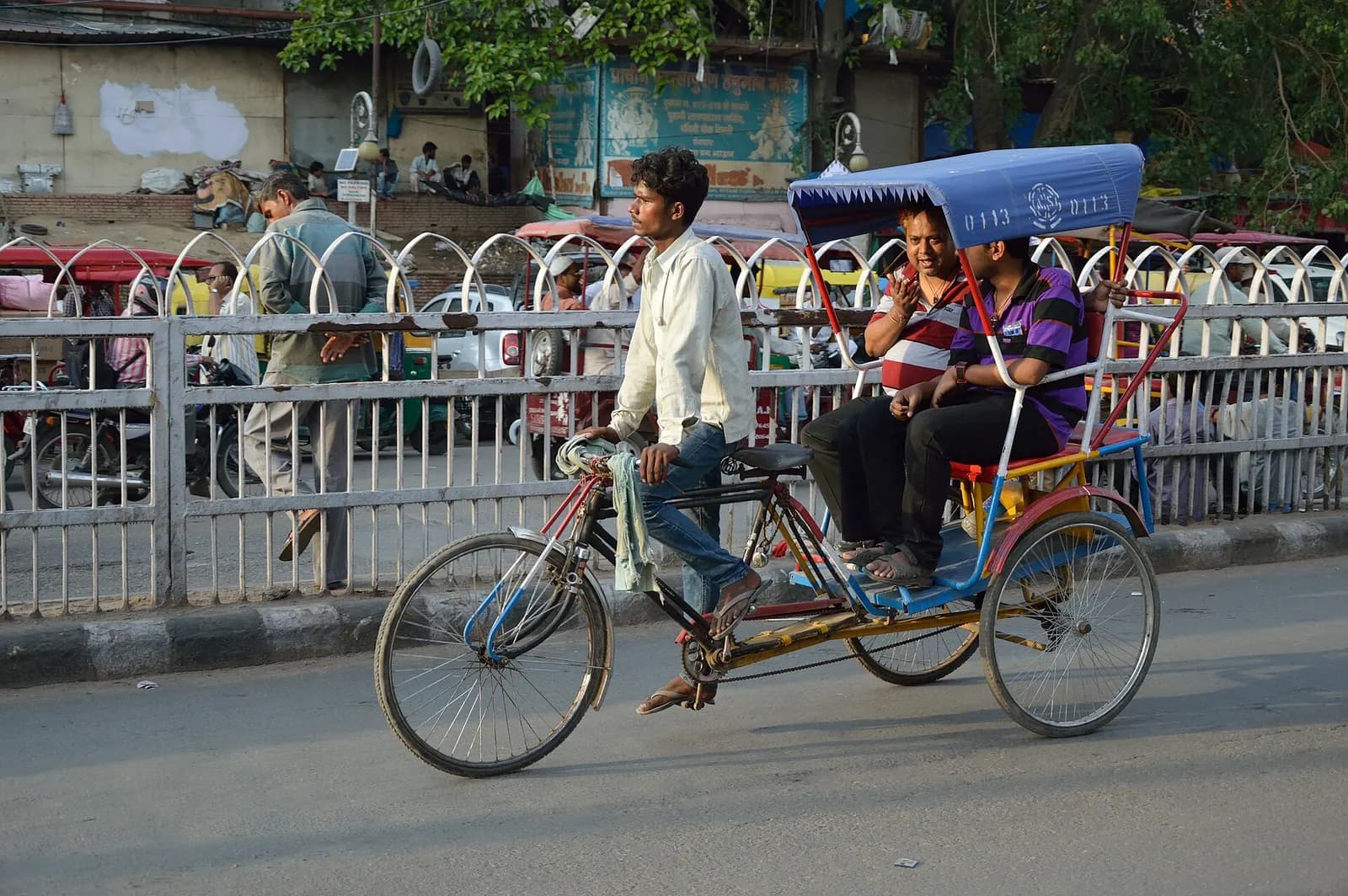
| Main stretch | Pedestrian-only by day; walk or take a cycle rickshaw into the lanes |
Chandni Chowk is a living market rather than a ticketed site, so there are no fixed opening hours, but shops generally run from late morning into the evening and most wholesale markets close on Sundays, though street food stalls and the nearby Red Fort stay open. The main avenue is pedestrianised during the day; to reach the narrow side lanes you walk or hire a cycle rickshaw.
How to reach
| From | Route |
|---|---|
| Chandni Chowk metro (Yellow Line) | Opens right into the market area |
| Lal Qila metro (Violet Line) | By the Red Fort, at the eastern end of the street |
| Inside the market | Pedestrian main stretch by day; walk or take a cycle rickshaw for the lanes |
| By car | Strongly discouraged, due to extreme traffic and no parking |
What is Chandni Chowk and why is it famous?
Chandni Chowk is the historic main market of Old Delhi, laid out in the 17th century as the grand ceremonial avenue of Shahjahanabad, the walled city built by the Mughal emperor Shah Jahan. Running from the Red Fort at its eastern end to the Fatehpuri Masjid at its western, it has been a centre of trade, craft and life for over three centuries and today it survives as one of the busiest, most atmospheric and most beloved market districts in India, a labyrinth of lanes bursting with goods, food and humanity.
It is famous for a remarkable concentration of things:
- Legendary markets. Within it lie Asia's largest spice market, a historic silver bazaar, a famous wedding and textile market, a book hub and a vast electronics market, each a world of its own.
- Iconic street food. Some of the most celebrated street food in the country, from stuffed parathas to ghee-soaked jalebis and fruit-stuffed kulfi, much of it served by shops generations old.
- Living heritage. A Jain temple, a historic gurudwara and grand mosques line its main road, a vivid picture of India's many faiths side by side.
- Mughal history. Planned by a Mughal princess beside the imperial Red Fort, it is a direct link to the golden age of Shahjahanabad.
- Pure sensory intensity. The sights, sounds, colours and smells of Chandni Chowk are an experience in themselves, unlike anywhere else in Delhi.
It belongs on any thoughtful list of things to do in Delhi and is one of the most essential and unforgettable of all the places to visit in Delhi.
What is the history of Chandni Chowk?
The history of Chandni Chowk reaches back to the mid 17th century and the creation of Shahjahanabad, the magnificent new walled capital that the Mughal emperor Shah Jahan, builder of the Taj Mahal, laid out beside the Yamuna. Chandni Chowk was designed as its principal avenue, running west from the Lahori Gate of the Red Fort and the planning of this grand street is credited to Shah Jahan's favourite daughter, the princess Jahanara Begum. In its original form it was a far more elegant place than the crush of today: a wide, tree-lined boulevard with a canal of water running down its centre, which reflected the moonlight so beautifully that the square came to be called Chandni Chowk, the moonlit square or square of moonlight.
Over the centuries the canal was filled in, the boulevard was crowded with buildings and the avenue evolved into the dense commercial warren it is now, but its layout and many of its institutions survive. It has witnessed the whole arc of Delhi's modern history, the splendour of the Mughals, the turmoil of 1857, the colonial era and independence and through it all it has remained the commercial and cultural heart of the old city. Knowing that you are walking a street conceived as the showpiece avenue of a Mughal emperor, now worn into a living bazaar, adds enormously to the experience.
In its heyday Chandni Chowk was among the grandest commercial streets in the world, where caravans and merchants brought silks, gems, spices and horses from across Asia and where the emperor himself would process on elephant-back between the fort and the mosque. Shahjahanabad was built as a planned city with the fort, the great mosque and this avenue as its spine and the wholesale trades that still cluster here, spices, metals, textiles, paper, are the direct descendants of those Mughal-era markets. Over time the princess's elegant boulevard filled in, the canal was paved over and layer upon layer of building crowded the lanes, but the bones of the old city remain and many of the havelis or old mansions, caravanserais and temples tucked away in the side streets date back generations. Part of the pleasure of Chandni Chowk is sensing that deep continuity: you are not in a reconstructed heritage zone but in a working market that has traded on the same spot, in many cases in the same families, for well over three hundred years.
What are the main markets of Chandni Chowk?
Chandni Chowk is really a collection of specialised markets, each in its own lanes and each famous for particular goods. The great ones to know:
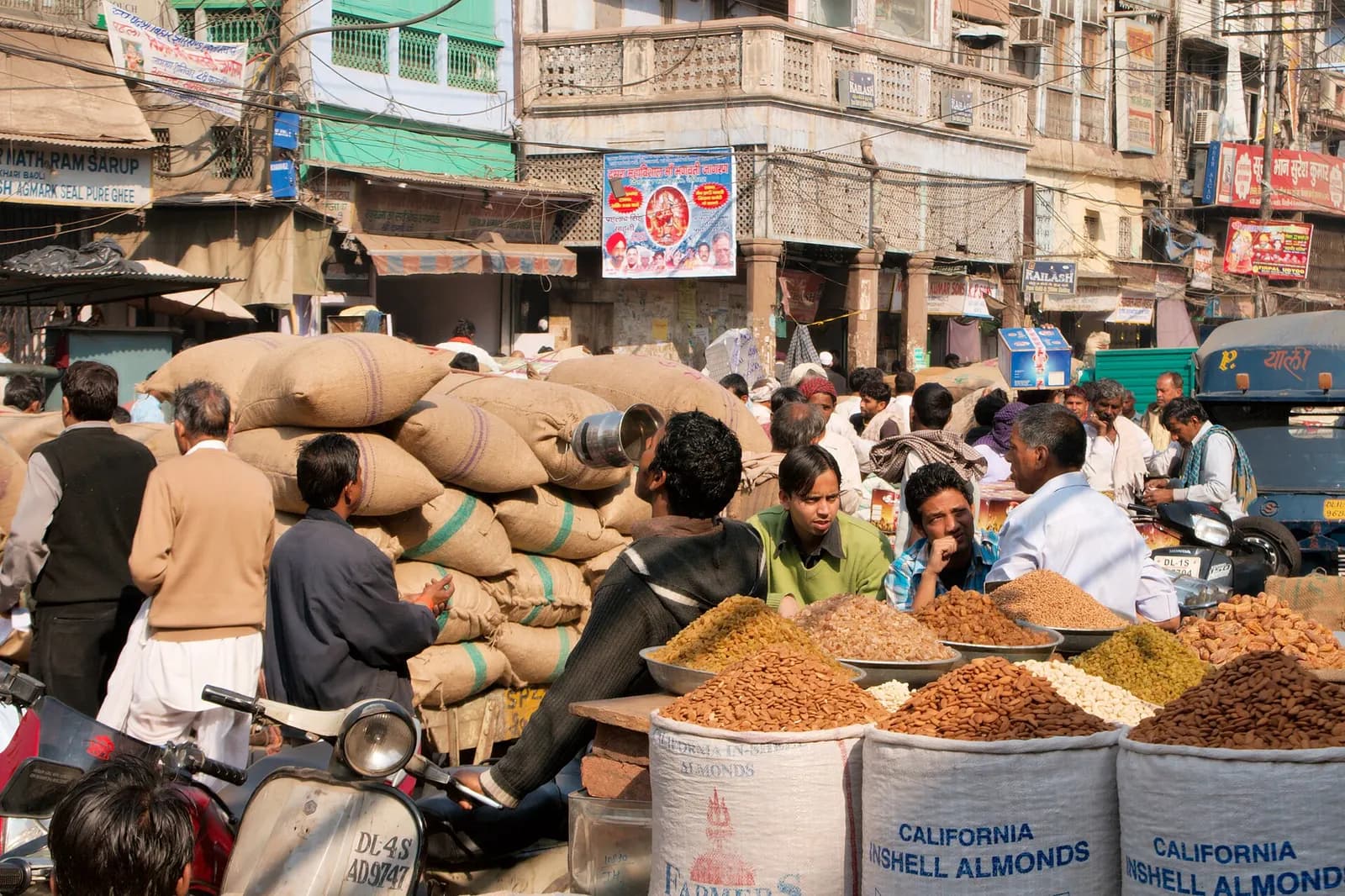
- Khari Baoli. At the western end, Asia's largest wholesale spice market, a staggering sensory experience of sacks of chillies, nuts, herbs, grains and spices, their colours and intense aromas filling the air.
- Dariba Kalan. The historic silver market, dating to Mughal times, the place for authentic silver jewellery, silverware and traditional Indian perfumes or ittar.
- Kinari Bazar. The ultimate wedding and festive market, packed with laces, borders, zardozi embroidery, grooms' turbans and glittering party trimmings.
- Nai Sarak. A huge hub for books and stationery, from school and competitive-exam textbooks to fiction and art supplies.
- Bhagirath Palace. One of India's largest wholesale markets for electronics and lighting, a dazzling display of chandeliers, fairy lights and gadgets at keen prices.
Each market is worth a wander even if you are not buying, simply for the spectacle. If you plan to shop in the retail areas, bargaining is expected, so negotiate with a smile.
Beyond these headline bazaars, Chandni Chowk hides countless specialised lanes: streets devoted to saris, to dried fruit, to paper and wedding cards, to musical instruments, to brass and copper, to perfume. This extreme specialisation, where a whole lane sells nothing but one kind of thing, is a legacy of the old guild-based trade of the Mughal city and it is part of what makes the market so fascinating to explore. For shoppers it means unbeatable choice and wholesale prices, especially for weddings and festivals, which is why Delhiites still flock here for bridal shopping, trousseau and bulk buying. For the browser, it is a living museum of Indian commerce. A word of realism: the retail, tourist-facing shops will quote inflated prices, so bargain hard and start low; the genuine wholesale trade runs on volume and fixed margins and is less open to haggling. Either way, carry cash in small notes, as many of the older shops prefer it and keep it secure in the crowds.
What street food should you try in Chandni Chowk?
For many visitors, the food is the main event and Chandni Chowk is one of the great street food destinations on earth, with shops that have perfected single dishes over generations. I always tell guests to come hungry and dedicate a couple of hours just to eating. The legends not to miss:
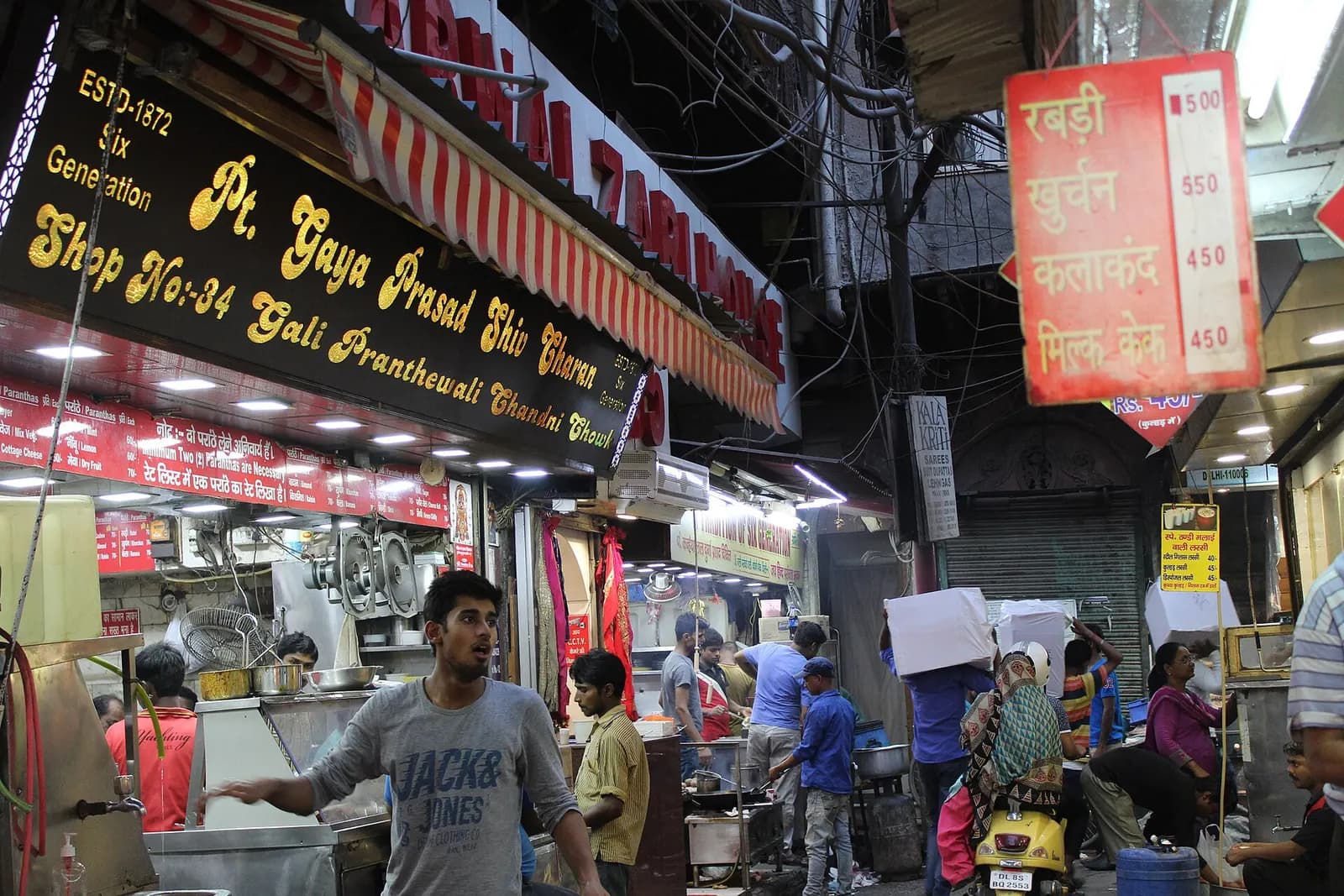
- Paranthe Wali Gali. A famous narrow lane devoted to parathas, deep-fried stuffed flatbreads filled with everything from potato and paneer to banana and cashew, served at shops over a century old.
- Natraj Dahi Bhalle Corner. Near the metro, renowned for ultra-soft lentil dumplings soaked in thick yogurt with sweet and spicy chutneys.
- Old Famous Jalebi Wala. At the Dariba corner, serving huge, thick, piping-hot jalebis fried in pure ghee, a Chandni Chowk institution.
- Kuremal Mohan Lal Kulfi Wale. Famous for stuffed kulfi, the frozen milk dessert is set inside whole real fruits such as mango orange and pomegranate.
These are just the headline names; the lanes are full of chaat, kachoris, nihari, korma, sweets and more. Eat at busy stalls with high turnover and the street food of Chandni Chowk will be a highlight of your whole trip.
What makes the food here special is not just the taste but the heritage behind it. Many of these shops are a century or more old, run by the same families for generations, each perfecting one or two dishes to the point of legend, so you are eating recipes and techniques handed down since Mughal and pre-Independence times. The area is also a crossroads of culinary traditions, with the rich Mughlai meat dishes around Jama Masjid, the vegetarian chaat and sweets of the Hindu and Jain merchant communities and the famous breakfast and snack specialities each with their own devoted following. A guided food walk is the ideal way to experience it, both to find the genuine old shops among the imitators and to pace yourself across many small tastings rather than filling up at the first stop. If you are nervous about street food, stick to items cooked fresh and hot in front of you and to the busiest, most famous shops, where the constant turnover keeps everything fresh and you will eat some of the best food of your life.
Is Chandni Chowk worth visiting?
Absolutely and for most visitors it is essential. Chandni Chowk is not a monument to admire from a distance but an experience to plunge into and it offers something no fort or tomb can: the living, breathing, chaotic soul of old Delhi, little changed in spirit for centuries. For food lovers it is one of the great street food destinations in the world; for shoppers it is an unbeatable, atmospheric bazaar; for anyone interested in history and culture it is a vivid, layered slice of the real India. The caveats are simply that it is crowded, intense and can be overwhelming, so it suits travellers who are happy to embrace a bit of chaos rather than those seeking calm and order. Come prepared, ideally with a guide or a plan, comfortable shoes and an empty stomach and it will almost certainly be one of the most memorable parts of your time in Delhi. Skipping Chandni Chowk means missing the heart of the old city, which is why I include it for almost every guest who wants to understand Delhi rather than just see its sights.
What are the historical and religious landmarks on Chandni Chowk?
One of the most striking things about Chandni Chowk is how it embodies India's religious diversity, with major places of worship for several faiths standing along a single street. The key landmarks:
- Sri Digambar Jain Lal Mandir. The oldest Jain temple in Delhi, directly opposite the Red Fort, famous for its remarkable charitable bird hospital that treats injured birds.
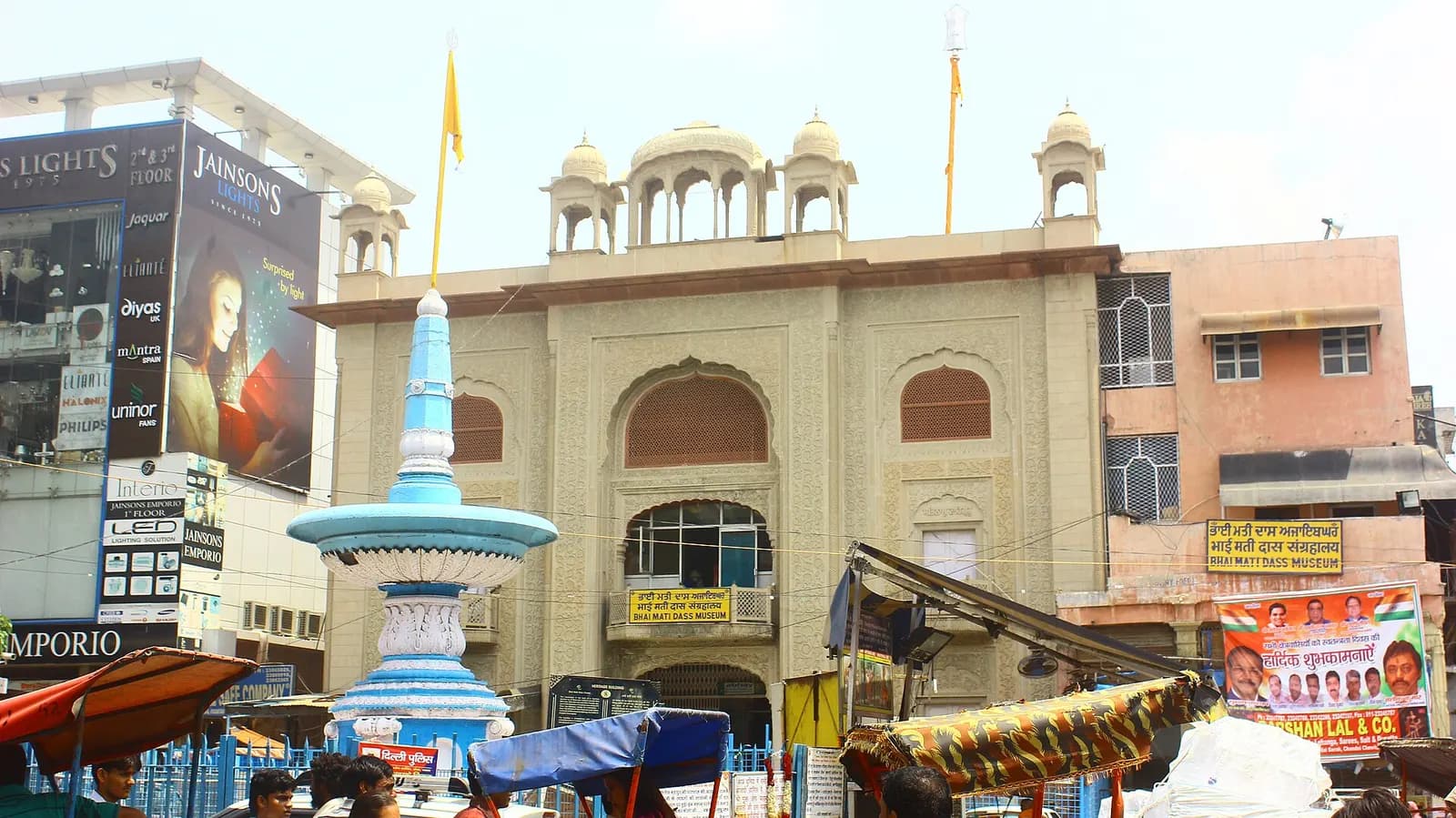
- Gurudwara Sis Ganj Sahib. A deeply revered Sikh shrine marking the site where the ninth Sikh Guru, Guru Tegh Bahadur, was martyred in the Mughal era.
- Fatehpuri Masjid. A graceful 17th century mosque anchoring the western end of the street, built in the Shah Jahan period.
- The Red Fort and Jama Masjid. The mighty Red Fort stands at the eastern end of Chandni Chowk and the grand Jama Masjid, one of India's largest mosques, is a short rickshaw ride away.
Walking the length of the street, passing a Jain temple, a gurudwara, mosques and, nearby, Hindu temples and a church, is a moving lesson in the shared, layered culture of old Delhi.
What is the atmosphere of Chandni Chowk like?
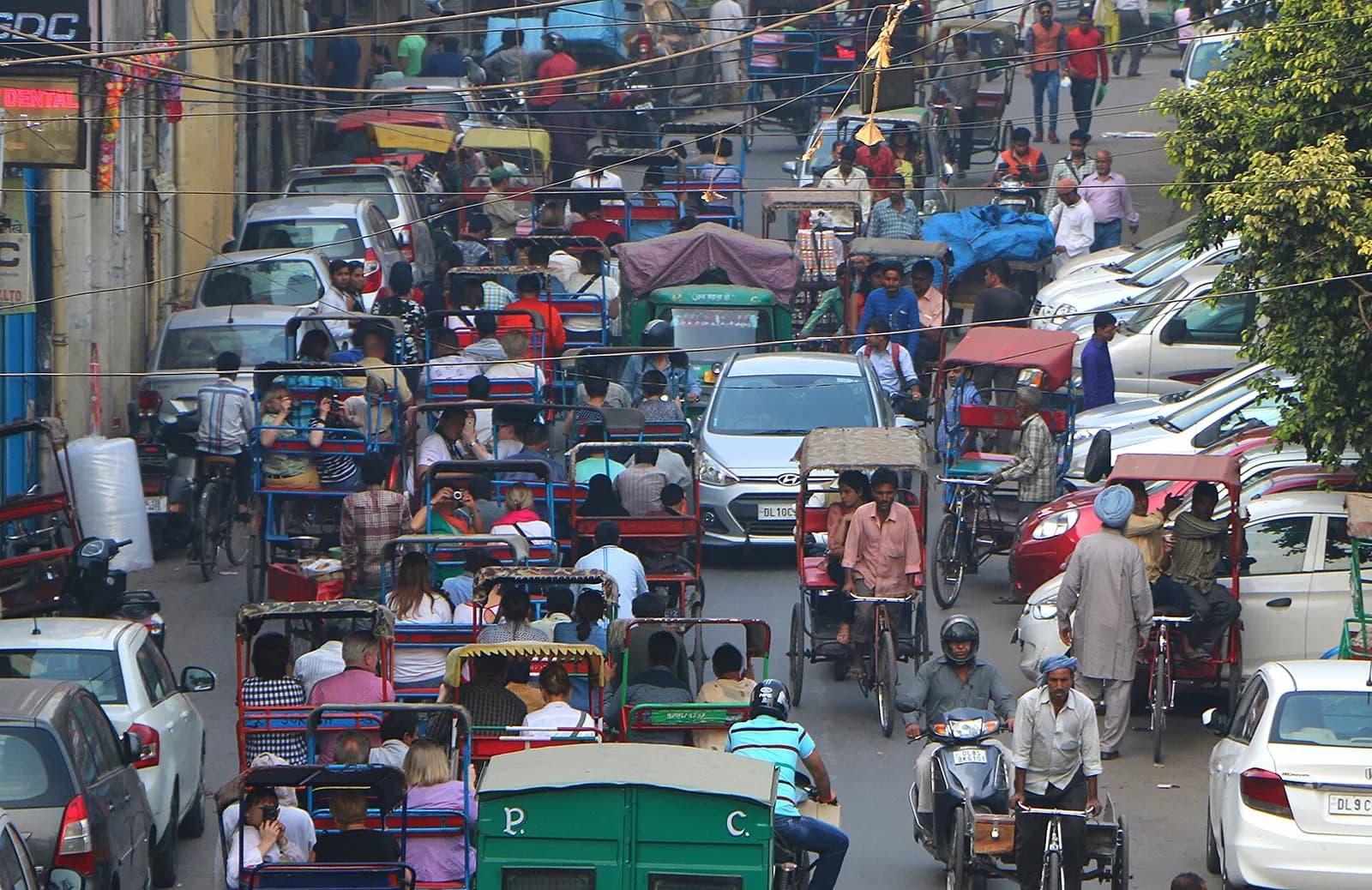
Nothing quite prepares a first time visitor for the sheer sensory intensity of Chandni Chowk. The lanes are a controlled chaos of people, cycle rickshaws, handcarts, porters balancing impossible loads and shopfronts spilling their wares onto the street. The air shifts from the sweet smell of frying jalebi to the sharp sting of chilli in the spice market to incense and marigolds outside a temple, all within a few steps. Overhead, a tangle of electric wires and shop signs frames narrow slices of sky and the noise, vendors calling, bells, horns, bargaining, is constant. It can feel overwhelming at first, but give it a little time and a rhythm emerges and the energy becomes exhilarating rather than exhausting.
This is the real, unvarnished Delhi, utterly different from the calm of the monuments and for many travellers it is the most vivid memory of their whole trip. The key is to slow down, accept the crush as part of the experience and let your senses lead you. Look up at the crumbling ornate facades above the shops, duck into a centuries-old temple or a hidden courtyard, pause to watch a sweet-maker or a spice trader at work and the apparent chaos resolves into a thousand small human stories. Chandni Chowk is not a place you tick off; it is a place you feel and that is exactly why it is so beloved.
What is the best way to explore Chandni Chowk?
Chandni Chowk rewards the right approach, because it can genuinely overwhelm. The single best tip is to come by metro and explore on foot, ideally with a guide or a clear plan, rather than trying to see everything at once. The main avenue is pedestrianised by day and to reach the warren of side lanes you either walk or hire a cycle rickshaw, which is an experience in itself and a good way to cover ground and get your bearings. Pick a focus, spices and street food, say or textiles and silver, rather than attempting the whole maze and allow three to five hours. Arrive by late morning to beat the heaviest crowds or come in the evening when the food scene is in full swing and the lanes are lit up. A knowledgeable local guide makes an enormous difference here, turning a bewildering crush into a series of stories, flavours and hidden corners, which is exactly how our walks through the old city are designed. However you do it, go with comfortable shoes, an empty stomach and an open, curious mind.
When is the best time to visit Chandni Chowk?
The best season is the cool stretch from October to March, when Delhi's weather makes the long hours on foot comfortable; the summer heat and the monsoon both make the crowded lanes hard going. On any given day there are two good windows. Arriving by late morning, around 11:00 AM, lets you explore the markets before the afternoon crush builds and while the shops are fully open. Alternatively, the evening is magical for the street food scene, when the food lanes come alive, the sweets and snacks are freshly made and the whole area buzzes with energy and light. Remember that most wholesale markets close on Sundays, so if shopping is your aim, come on a weekday, though the street food and the Red Fort remain open on Sundays for a food and heritage focused visit. Festivals such as Diwali transform the markets into a dazzling, if extremely crowded, spectacle, with the lighting and decoration markets at Bhagirath Palace and the wedding lanes of Kinari Bazar at their most spectacular. If you can time a visit to the festive season for the atmosphere, it is unforgettable, but be ready for the densest crowds of the year and move slowly. For a gentler introduction, an ordinary cool-season weekday morning lets you take in the markets and a leisurely food crawl before the afternoon rush and it is the timing I most often suggest to first time visitors who want to enjoy Chandni Chowk without feeling swallowed by the throng.
How do you reach Chandni Chowk?
Chandni Chowk is very easy to reach by metro and that is by far the best way to come. Take the Yellow Line to Chandni Chowk station, which opens right into the market area or the Violet Line to Lal Qila station, by the Red Fort at the eastern end of the street. Driving is strongly discouraged: the area suffers extreme traffic and has virtually no parking, so even locals come by metro or auto. Once there, the main stretch is pedestrian-only during the day and you explore the side lanes on foot or by cycle rickshaw.
Its position in Old Delhi, with the Red Fort at one end, makes it the natural heart of any old city visit. The best way to experience it with the history and the food explained is our guided Old Delhi tour; for a wider route, a New Delhi tour covers the imperial sights, while a full Delhi day tour combines old and new.
What is there to see near Chandni Chowk?
Chandni Chowk sits at the centre of Old Delhi, surrounded by some of the city's greatest sights. The mighty Red Fort stands at the eastern end of the street and the vast Jama Masjid is a short rickshaw ride away, so the three together make the essential Old Delhi circuit. The whole area is a feast for food lovers and our guides to the city's famous street food places and where to eat in Delhi are full of ideas.
Beyond the old city, the colonial heart of Connaught Place is a short metro ride away and Delhi's wider shopping scene, from the markets covered in our shopping in Delhi guide to the bazaars of Karol Bagh, extends the experience. For a complete change of pace afterwards, the grand monuments of New Delhi, the Qutub Minar and Humayun's Tomb, await. Together these make Chandni Chowk the anchor of a rich Delhi day and you can see the fuller picture in our guide to the important monuments of Delhi.
How does Chandni Chowk fit into a Delhi or Golden Triangle itinerary?
For most visitors, Chandni Chowk is the centrepiece of an Old Delhi morning or evening, combined with the Red Fort and Jama Masjid for the classic old city trio. A rewarding plan is a morning exploring the Red Fort, then the lanes and markets of Chandni Chowk with a street food feast, perhaps by cycle rickshaw, before a short ride to Jama Masjid. It is a full, vivid half day that contrasts beautifully with the spacious grandeur of New Delhi, the India Gate avenues and the serene Lotus Temple, which you might see on another part of the trip.
If Delhi is your gateway to the wider Golden Triangle, Chandni Chowk gives you the living, chaotic, soulful side of the city to set against the polished monuments of Agra and Jaipur and it is often the experience guests remember most vividly. Many of my travellers say the sights, smells and flavours of these lanes were the moment Delhi truly came alive for them. For the best season across the capital, our guide to the best time to visit Delhi is a useful companion for planning the rest of your days.
Travel tips for visiting Chandni Chowk
A few pointers make the visit far smoother:
- Come by metro, to Chandni Chowk or Lal Qila station and never try to drive, given the traffic and lack of parking.
- Visit October to March and arrive by late morning to beat the crush or in the evening for the food.
- Wear comfortable walking shoes, as you will be on your feet for several hours on uneven, crowded lanes.
- Dress conservatively and keep a scarf handy to cover your head at the temples, gurudwara and mosques.
- Beware of pickpockets, as the lanes are extremely dense; keep bags zipped and phones secure.
- Bargain boldly in the retail and tourist-facing markets, starting at around half the quoted price and negotiating up from there.
- Come hungry and eat at the busiest, most famous stalls with high turnover for the best and safest street food.
- Consider a guide or a cycle rickshaw to turn the overwhelming maze into a manageable, story-filled experience.
- Carry small cash for the street food and older shops, many of which still prefer notes over cards.
If you would like a local to lead you through Chandni Chowk as part of a wider Delhi plan, message our team on WhatsApp at +91 7302265809 with your travel dates and group size and we will help you shape the day.
Plan your trip with us
At Experience My India, through our Delhi and Golden Triangle travel desk, we design unhurried, well paced trips that bring the real Old Delhi to life, not just the headline monuments. Whether you want a relaxed set of Delhi Agra tours or a full Golden Triangle route through Delhi, Agra and Jaipur, we plan around your pace, your interests and the right season, with local guides who know which lane leads to the best jalebi and the story behind every bazaar. Share your dates and the kind of trip you have in mind through our enquiry page, tell us your group size and we will put together an honest, tailored plan rather than a rushed checklist.
Related guides
- Akshardham temple, for a very different, modern Delhi landmark
- Nearby places to visit in Delhi, to extend your day
Enquire Now
Ready to Explore
The Heart of Delhi?
Explore the Red Fort, Qutub Minar, Humayun's Tomb, and the vibrant streets of Old Delhi with our expert-guided premium tours of India's capital city.

Delhi
Premium Tour Package
Questions
Frequently asked questions
What are the timings of Chandni Chowk?
It is a living market with no fixed hours; shops generally run from late morning to evening. Most wholesale markets close on Sundays, though street food stalls and the Red Fort stay open.
Which is the nearest metro station to Chandni Chowk?
What is Chandni Chowk famous for?
What street food should I try in Chandni Chowk?
How much time do I need in Chandni Chowk?
Who built Chandni Chowk and when?
Why is it called Chandni Chowk?
Is Chandni Chowk open on Sundays?
What are the main markets in Chandni Chowk?
Is Chandni Chowk safe for tourists?
What is the best way to explore Chandni Chowk?
Explore more
Plan your Chandni Chowk trip with us

Photo credits
Photos from Wikimedia Commons, used under their licences:
- Photo 1 by Juan Antonio Segal from Madrid, Spain, CC BY 2.0
- Photo 2 by Deeporaj, CC BY-SA 4.0
- Photo 3 by Dave ankita, CC BY-SA 4.0
- Photo 4 by Christian Haugen from Trondheim, Norway, CC BY 2.0
- Photo 5 by Biswarup Ganguly, CC BY 3.0
Interested in Chandni Chowk Delhi: Markets, Street Food, History and Visitor Guide?
Chat with our travel team for a custom quote, or browse every package.
Related Attractions
9Ready to explore Chandni Chowk Delhi: Markets, Street Food, History and Visitor Guide?
Book your private tour today and experience the magic of India's rich heritage.