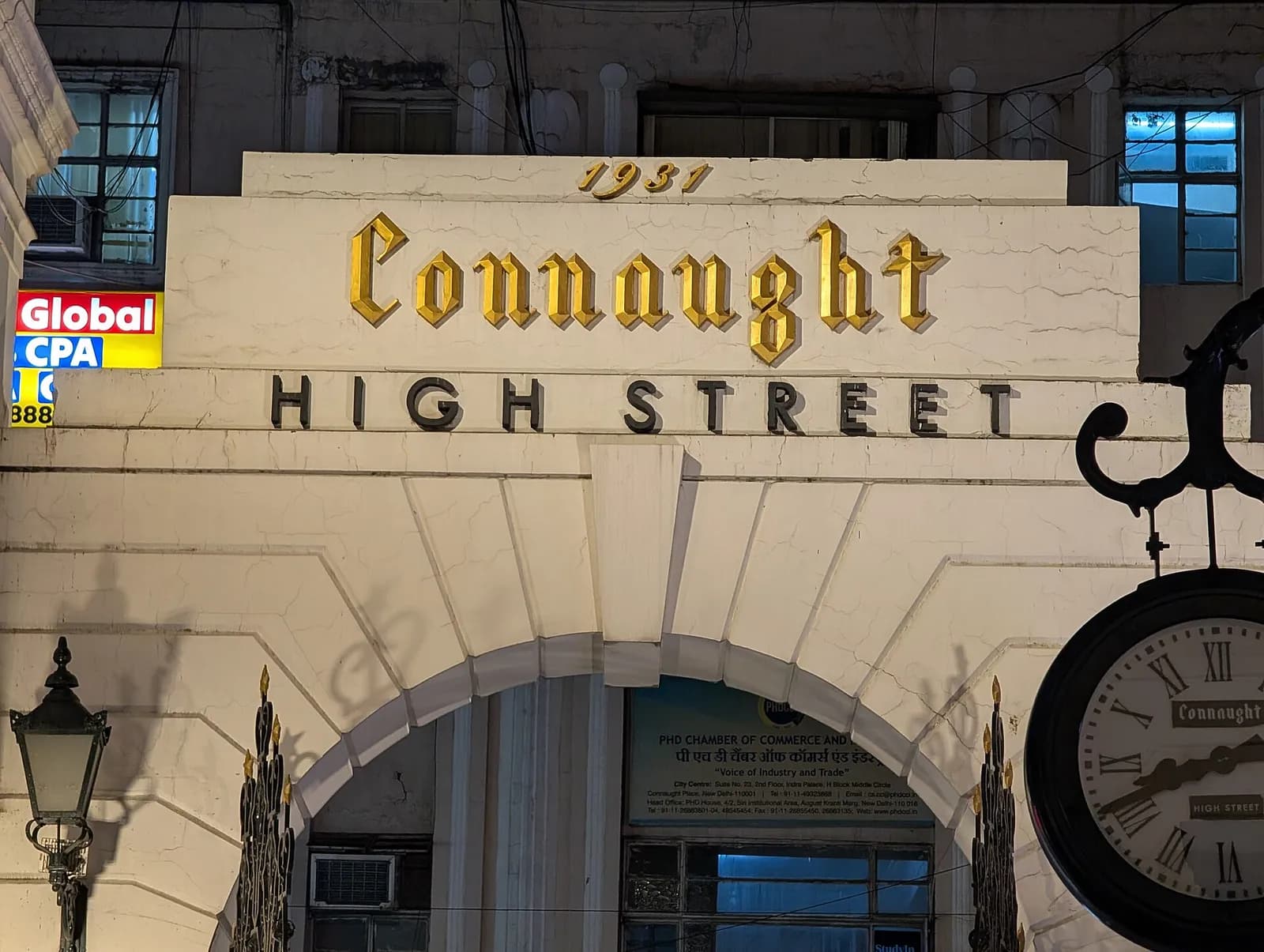
Connaught Place Delhi: History, Shopping and Visitor Guide
Exploring Connaught Place (CP) in New Delhi? Its history and design, the blocks and circles, shopping, food, what to see, timings and the nearest metro.
In a Nutshell
“Connaught Place, universally known as CP and officially Rajiv Chowk and Indira Chowk, is the commercial and geographic heart of New Delhi, a grand circular district of white colonnaded Georgian arcades built by the British between 1929 and 1933. Designed in a concentric wheel of Inner, Middle and Outer Circles cut by eight radial roads, it is Delhi's great hub of shopping, dining, nightlife and heritage, with Central Park, Palika Bazaar, the famous Hanuman Mandir and Jantar Mantar all within it or beside it. It sits on top of Rajiv Chowk metro, the city's busiest interchange. It features on our Delhi tours, run by a unit of Experience My India.”
Connaught Place is one of Delhi's most iconic and lively places, a colonial-era marketplace that remains the beating heart of the modern city, where heritage architecture, shopping, food and the energy of Delhi all come together. For almost every visitor, it is an essential stop. Our team at Delhi Agra Tour Packages often includes it on a central Delhi outing and it adds a vibrant, contemporary dimension to a wider Golden Triangle tour through the capital.
I am Abhay Sharma, Delhi born and a Golden Triangle guide since 2015 and I love bringing guests to CP, because nowhere else captures the sweep of the city so well, from its grand imperial colonnades and legacy restaurants to its buzzing markets, metro crowds and the giant national flag over Central Park. This guide gathers everything I would tell a visitor beforehand, checked against current information, including the history, the layout, the shopping and food and how to reach it.
Details
Connaught Place at a glance
| Detail | Information |
|---|---|
| Location | Central New Delhi, around Rajiv Chowk |
| Known as | CP; officially Rajiv Chowk (inner) and Indira Chowk (outer) |
| Built | 1929 to 1933, by the British |
| Designed by | Edwin Lutyens (planner) and Robert Tor Russell (architect) |
| Layout | Concentric Inner, Middle and Outer Circles, 8 radial roads |
| Known for | Shopping, dining, nightlife, colonial architecture |
| Nearest metro | Rajiv Chowk (Yellow and Blue Lines) |
| Time needed | A few hours to half a day |
Connaught Place timings
| Detail | Information |
|---|---|
| The district | Open and walkable at all times |
| Shops and markets | Typically about 11:00 AM to 8:00 PM; many closed Sunday |
| Restaurants and bars | Into the night |
Connaught Place as a district is always open and walkable, but its shops and markets generally run from late morning to evening, roughly 11:00 AM to 8:00 PM, with many retail shops closed on Sundays, while restaurants, cafes and bars stay lively into the night. Monuments within or beside it keep their own hours. A visit can be anything from an hour to half a day. These timings are current at the time of writing and can vary, so reconfirm for specific shops or sites.
Entry fee
| Item | Information |
|---|---|
| The district | Free to walk and explore |
| Palika Bazaar / markets | Free entry; you pay for what you buy |
| Jantar Mantar (beside CP) | A ticketed ASI monument |
How to reach Connaught Place
| From | Route |
|---|---|
| Rajiv Chowk metro (Yellow & Blue Lines) | Directly beneath CP, with 8 exit gates into the blocks |
| New Delhi Railway Station | A short ride or metro hop |
| Across New Delhi | Radial roads (Janpath, Barakhamba, Parliament St) feed in |
| By car | Busy; metro is far easier, with pedestrianised zones |
What is Connaught Place?
Connaught Place, known to everyone simply as CP, is the commercial, cultural and geographic heart of New Delhi, a grand circular business and shopping district of white neoclassical colonnades built by the British in the early 20th century and still the beating centre of the city today. Officially its inner and outer rings were renamed Rajiv Chowk and Indira Chowk, though the old name CP has never faded. Laid out as a vast concentric wheel of Inner, Middle and Outer Circles, cut across by eight radial roads like the spokes of a wheel, it was designed as the premier marketplace of the new imperial capital and it remains Delhi's foremost hub of shopping, dining, nightlife and business, wrapped around the green Central Park. Within and around it lie the underground Palika Bazaar, the famous Hanuman Mandir, the open-air Janpath market, the astronomical Jantar Mantar and the ancient Agrasen ki Baoli, so CP is at once a living commercial centre and a rich heritage district and for most visitors it is an unmissable part of Delhi.
Several things make it special and they are worth drawing out:
- The heart of New Delhi. The commercial and geographic centre of the capital, a colonial downtown still thriving today.
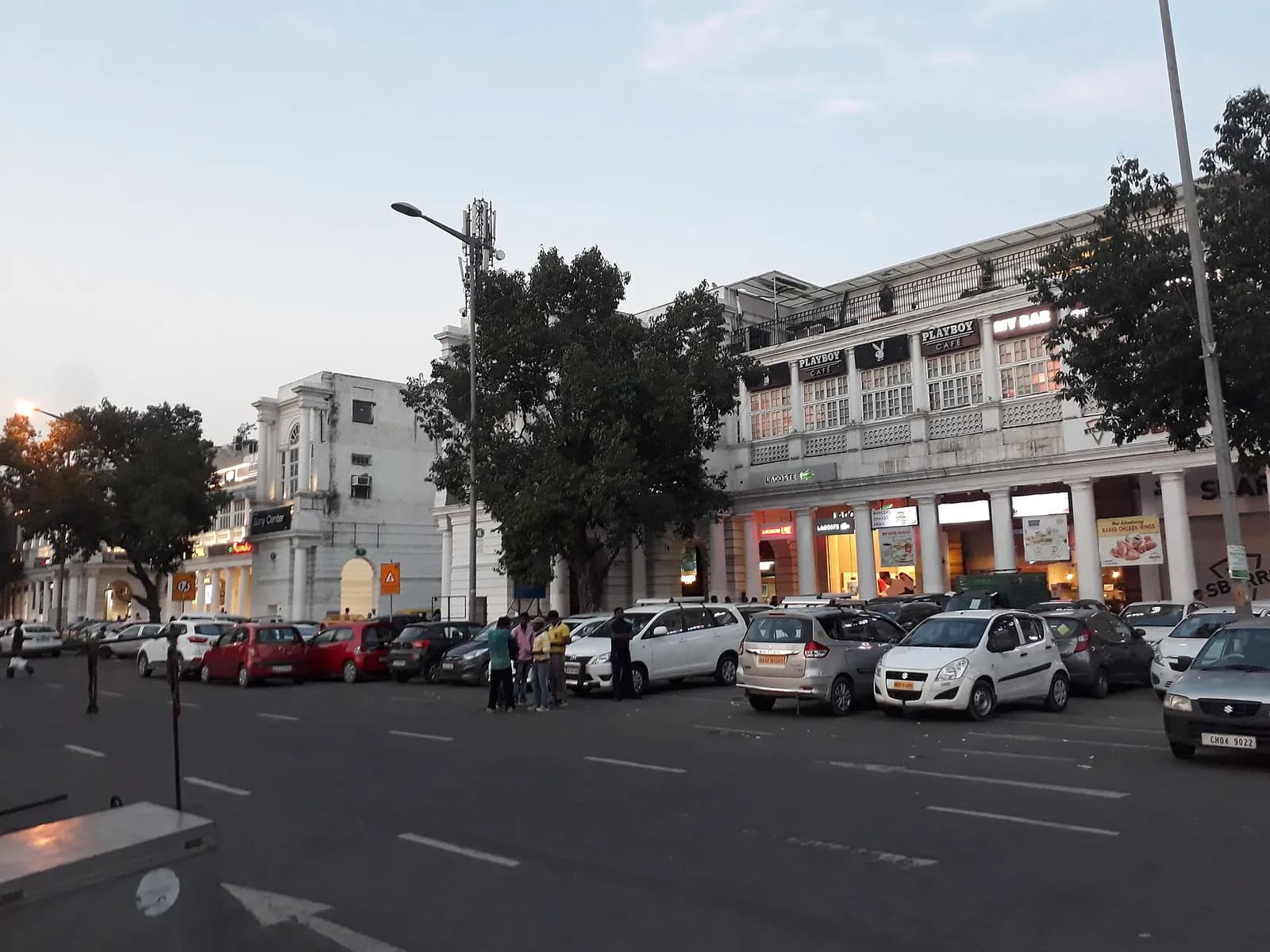
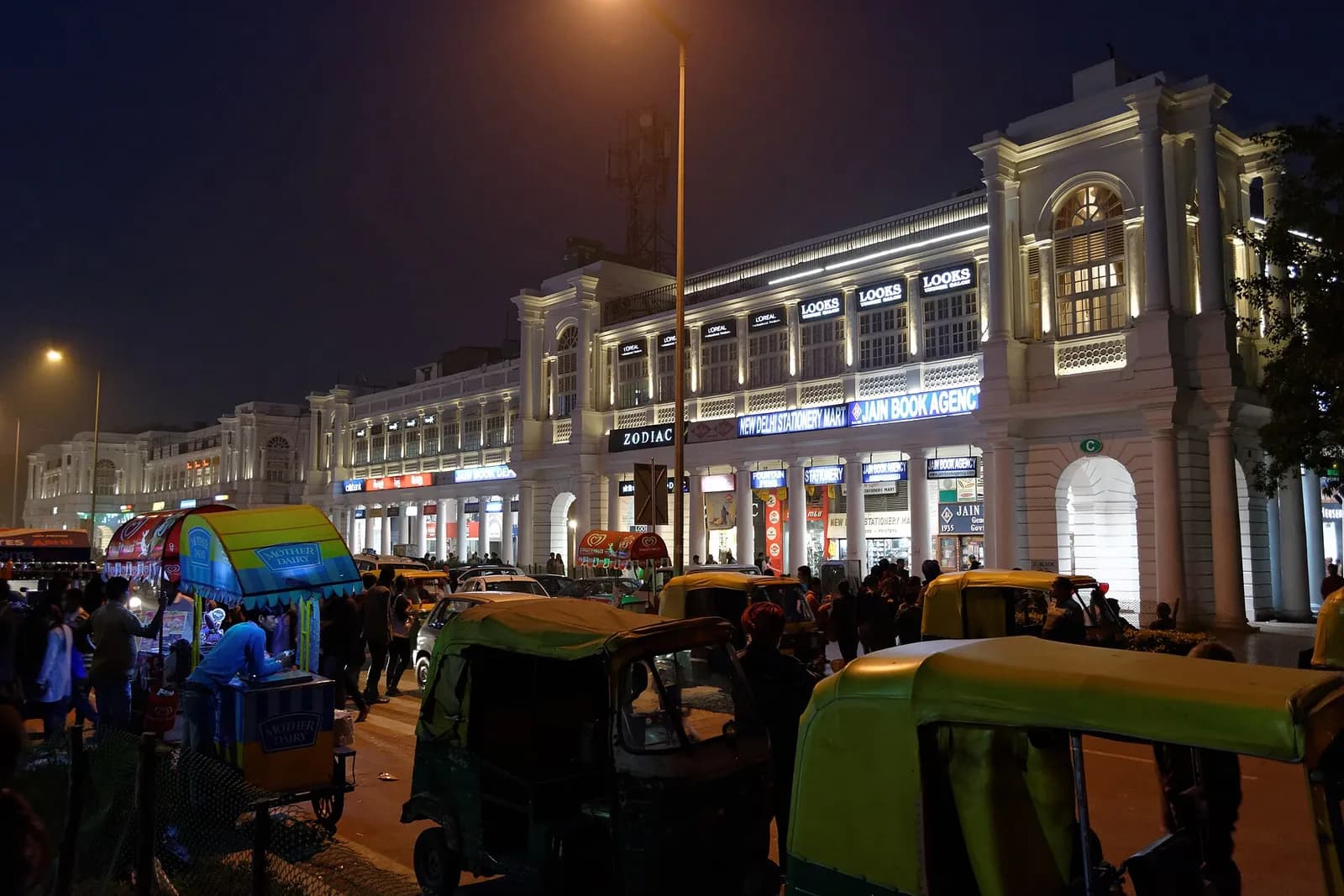
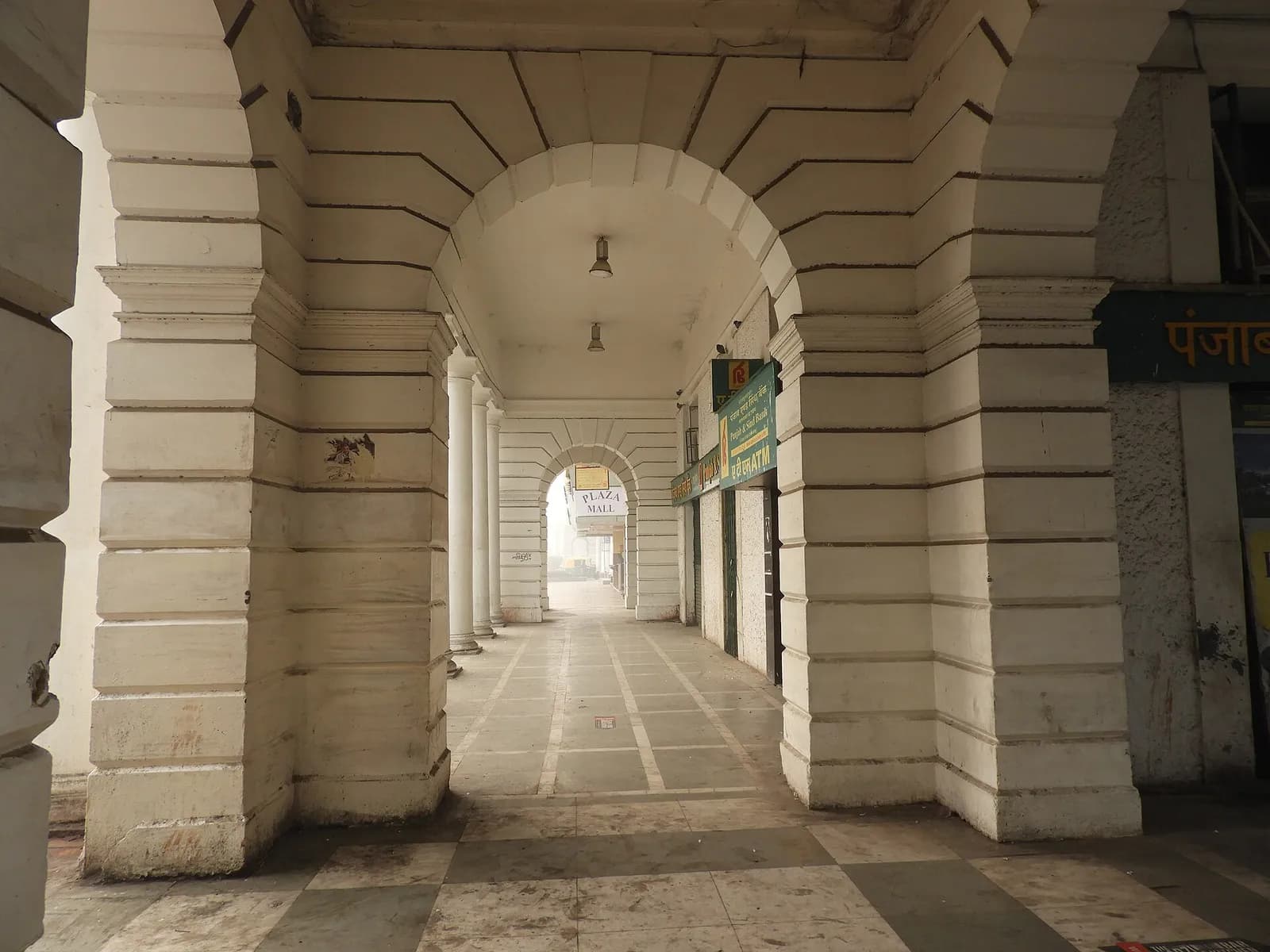
- Grand colonnaded architecture. Sweeping white Georgian arcades in a concentric wheel of circles and blocks, built 1929 to 1933.
- A shopping and dining hub. Flagship brands, historic markets, legendary legacy restaurants and a buzzing nightlife.
- Heritage within reach. Central Park, Palika Bazaar, the Hanuman Mandir, Janpath, Jantar Mantar and Agrasen ki Baoli all in or beside it.
- The transit core. Sitting on Rajiv Chowk, the busiest metro interchange in Delhi.
It is one of the most iconic and essential of the things to do in Delhi and a central landmark alongside the important monuments of Delhi.
The design and layout of Connaught Place
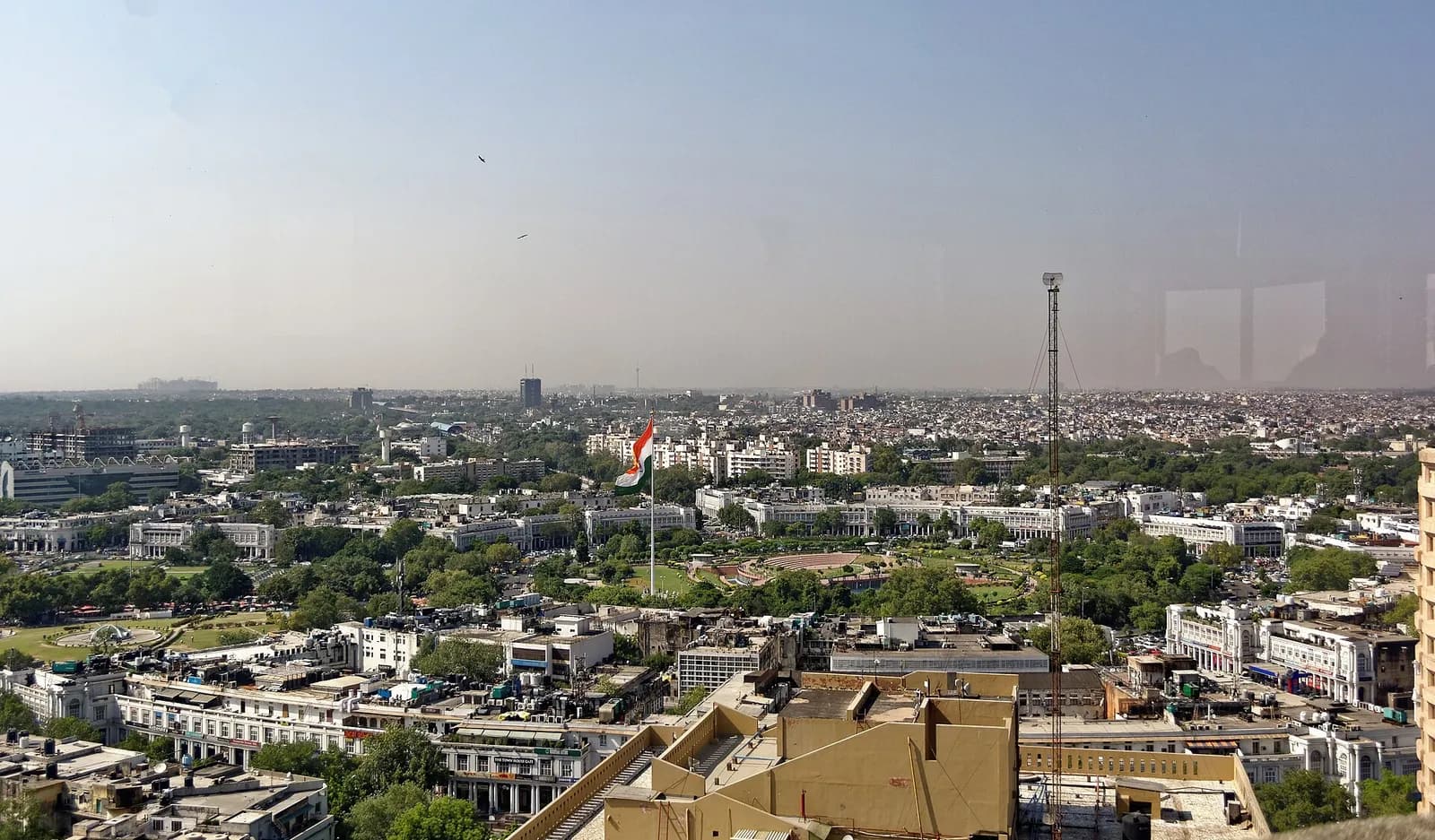
The single most useful thing to understand before visiting CP is its distinctive layout, which can confuse first-time visitors but is simple once grasped and knowing it makes navigation easy. Connaught Place is engineered as a huge concentric wheel, a set of rings divided into blocks and cut by radial roads:
- The Inner Circle (Blocks A to F). The premier core ring, lined with the stately double-storied white colonnaded arcades, home to flagship international brands, jewellery showrooms and premium restaurants.
- The Middle Circle. A service ring that functions as CP's office district, dense with banks, exchange bureaus and corporate offices.
- The Outer Circle (Blocks G to P / Connaught Circus). The large perimeter ring, known for its multi-level pubs and bars, electronics showrooms and budget hotels.
- The eight radial roads. Wide avenues, such as Janpath, Parliament Street and Barakhamba Road, cut across the three circles like wheel spokes, linking CP to the rest of New Delhi.
The whole wheel centres on the green Central Park and beneath and around it runs the Rajiv Chowk metro with its eight exit gates. The genius of the design is its order and symmetry, with the uniform colonnades giving CP its instantly recognisable character, though the very regularity of the identical blocks is exactly what disorients newcomers, who find each arcade looking like the last. The simple key is to remember the three rings, inner, middle, outer and the lettered blocks and to use the numbered metro gates, which deposit you directly into specific blocks of the Inner Circle. For the visitor, understanding this wheel-and-spokes plan turns CP from a confusing maze into an easily navigated and elegant piece of urban design and it is the foundation of enjoying everything the district offers.
History of Connaught Place
The history of Connaught Place is the history of New Delhi itself, for CP was conceived as the commercial heart of the grand new imperial capital the British built in the early 20th century. Its story begins with the decision, announced in 1911, to shift the capital of the British Raj from Calcutta to Delhi, which set in motion the building of a magnificent new city, New Delhi and with it the need for a premier commercial downtown to serve its imperial elite. Its key points are worth knowing:
- The imperial plan. Following the 1911 capital shift, the chief urban planner Edwin Lutyens and the architect Robert Tor Russell designed a new commercial centre for New Delhi and CP was the result.
- The royal namesake. The market was named after Prince Arthur, the 1st Duke of Connaught, the third son of Queen Victoria and construction ran from 1929 to its completion in 1933.
- The architectural model. Robert Tor Russell modelled CP on the famous Royal Crescent in Bath, England, in a Palladian neoclassical style of monumental columns, high arched porches and white-plastered facades designed to shield the interiors from the fierce Delhi sun.
- The land before CP. The site had been a woodland of kikar trees holding the small villages of Madhoganj, Jaisinghpura and Raja ka Bazaar, whose residents were relocated to make way for the imperial district.
This history gives CP its distinctive character as a piece of imperial town planning, a colonial downtown consciously modelled on an elegant English crescent and built to serve the rulers of the Raj, yet one that has been thoroughly adopted and transformed by independent India into its own bustling commercial heart. The uniform white colonnades that so define CP are the direct legacy of Russell's Palladian design, built to keep shoppers cool in the shaded arcades. For the visitor, knowing that CP was purpose-built in the early 1930s as the marketplace of the new imperial capital, on the site of cleared villages and modelled on Georgian Bath, adds a rich layer of history to what might otherwise seem simply a modern shopping district and it explains the grandeur of its architecture.
What to see in and around Connaught Place
Beyond the shopping and dining, CP and its immediate surroundings hold a surprising number of attractions and landmarks, making it a rich stop for sightseeing as well as commerce. The key sights are worth seeking out:
- Central Park. A large circular green lawn at the geometric centre of the Inner Circle, with walking paths, fountains and a giant 207-foot national flag flying permanently over it, a popular landmark and meeting point.
- Palika Bazaar. Delhi's first underground air-conditioned market, opened in the late 1970s beneath the Inner Circle lawns, a warren of stalls for budget electronics, clothing and footwear, where bargaining is the norm.
- The Hanuman Mandir. A historic temple on Baba Kharak Singh Marg, traditionally believed to be one of five temples of the Mahabharata era, famous for the continuous chanting of "Sri Ram, Jai Ram, Jai Jai Ram", which holds a Guinness World Record.
- Jantar Mantar. Just off the outer ring, the open-air astronomical observatory built in 1724 by Maharaja Jai Singh II of Jaipur, with its colossal masonry instruments for tracking the heavens.
- Agrasen ki Baoli. A short walk from the Outer Circle, a beautifully preserved 14th-century stepwell of 103 red-stone steps, a quiet, atmospheric escape from the commercial bustle.
Together these make CP far more than a shopping centre: it is a district where you can admire grand colonial architecture, relax by a giant flag in a central park, dive into an underground bargain bazaar, hear a world-record temple chant and stand before a 300-year-old observatory and a 700-year-old stepwell, all within a short walk. The nearby astronomical observatory and the ancient stepwell, in particular, are proper heritage monuments in their own right, covered in our dedicated guides to Jantar Mantar and Agrasen ki Baoli. For the visitor, this concentration of sights is what makes CP such a rewarding and multi-layered place to explore.
Shopping in Connaught Place
Connaught Place has been Delhi's premier shopping destination since it was built and it still offers an extraordinary range, from international flagships to street bargains, which is a central part of any visit. The shopping falls into distinct zones:
- The Inner Circle brands. The colonnaded Inner Circle blocks house flagship international and Indian brand stores, jewellery showrooms and premium outlets, the upscale face of CP's retail.
- Palika Bazaar. The underground market for budget electronics, clothing and footwear, where haggling is expected.
- Janpath Market. Running off the Inner Circle, the open-air Janpath is a backpackers' favourite, divided into the Tibetan Market, known for brass artefacts, stone jewellery and handicrafts and the main flea market section for cotton clothing, vintage apparel and accessories.
- The State Emporiums. Lined along Baba Kharak Singh Marg, these government-run emporiums offer a curated showcase of ethnic textiles, handloom, silks and regional handicrafts from across India, a reliable and fixed-price place for authentic crafts.
The range is CP's great strength: you can browse global flagship stores in the grand arcades, bargain hard for electronics underground in Palika, hunt for handicrafts and clothes in the lively Janpath street market and buy genuine state handlooms and crafts at fixed prices in the emporiums, all in one district. The State Emporiums in particular are an excellent and often overlooked option for authentic regional handicrafts without the bargaining of the street markets. For the visitor, knowing these zones, upscale arcades, underground Palika, street-market Janpath and the craft emporiums, lets you shop CP efficiently according to what you want and makes the district's commercial riches easy to navigate.
Food and legacy restaurants
Connaught Place is one of Delhi's great dining destinations and it is especially notable for a cluster of legendary legacy establishments that have operated here since the earliest days of CP, giving it a culinary heritage unmatched in the city. Among the historic names are:
- Wenger's. Delhi's legendary Swiss bakery and confectionery, serving the city since 1926, a beloved CP institution for cakes, pastries and savouries.
- United Coffee House. A grand restaurant famous for its crystal chandeliers, high ceilings and pre-independence colonial atmosphere, a dining landmark of CP.
- Kwality and Embassy. Pioneering restaurants that helped introduce and popularise North Indian Punjabi and Mughlai cuisine in New Delhi, long-standing CP favourites.
Alongside these historic institutions, CP today offers a vast and varied dining and nightlife scene, from premium casual restaurants and international chains in the Inner Circle to the pubs, bars and rooftop lounges that cluster in the Outer Circle and give CP its famous after-dark energy. The presence of these legacy restaurants, some operating continuously since the 1920s and 1930s, means a meal in CP can also be a step into the city's history, eating where generations of Delhiites have eaten before. For the visitor, CP is a place to enjoy both the old and the new, a historic pastry at Wenger's or a meal under the chandeliers of the United Coffee House, as well as the contemporary cafes, restaurants and bars that make the district buzz from morning until late at night.
What to expect at Connaught Place
A visit to CP is lively, varied and quintessentially Delhi, a complete contrast to the city's quiet monuments and knowing what to expect helps you enjoy it. CP is a busy, bustling commercial district, full of shoppers, office workers, diners, tourists and crowds, especially in the Inner Circle arcades and around the metro gates and it hums with energy from late morning into the night. Walking the grand colonnaded verandahs, exploring the shops and markets, pausing in Central Park, eating at the cafes and restaurants and seeking out the nearby heritage sights is the essence of the experience, which can fill anything from an hour to a whole day depending on your interests. The uniform architecture can be disorienting at first, so keeping the ring-and-block system and the numbered metro gates in mind helps enormously.
The atmosphere is urban, energetic and cosmopolitan, with the colonnades offering welcome shade and the Central Park a green breathing space at the centre. A few practical notes: many retail shops close on Sundays, though restaurants and some markets stay open; the area is generally busy and lively but, as in any crowded urban hub, it is wise to keep an eye on belongings; and parts of CP have seen pedestrianisation trials that make the arcades more walkable on certain days. The district is extremely well connected by the Rajiv Chowk metro beneath it. For the visitor, CP rewards a relaxed, exploratory approach, wandering the circles, dipping into shops and markets, enjoying a meal and taking in the architecture and the nearby sights and it offers the best single immersion in the energy of modern Delhi alongside its colonial heritage.
Connaught Place timings and practical information
Connaught Place as a district is open and walkable at all hours, but its commercial life follows typical market timings: most shops and showrooms run from roughly 11:00 AM to 8:00 PM, with many retail outlets closed on Sundays, while the restaurants, cafes, pubs and bars stay open and lively well into the night, giving CP its famous nightlife. Palika Bazaar and the street markets keep similar daytime-into-evening hours. The monuments within or beside CP keep their own schedules: the Hanuman Mandir is open through the day, while Jantar Mantar and Agrasen ki Baoli are separate heritage sites with their own timings and, for Jantar Mantar, an entry ticket. Walking and exploring the district itself is free; you pay only for shopping, food and any ticketed monuments. The whole area sits directly on the Rajiv Chowk metro, making it very easy to reach. As a busy central hub, it is sensible to watch your belongings in the crowds. These timings and conditions are current at the time of writing and can vary, so reconfirm for any specific shop, restaurant or monument before a special trip.
Visiting tips
A few pointers make a visit to CP smoother and more rewarding:
- Learn the layout. Remember the Inner, Middle and Outer Circles and the lettered blocks and use the numbered Rajiv Chowk metro gates to reach the right block.
- Come by metro. Rajiv Chowk beneath CP is the easiest way in; driving and parking are difficult.
- Mind Sunday closures. Many retail shops close on Sundays, though restaurants and some markets stay open.
- Match the market to your needs. Inner Circle for brands, Palika for bargains, Janpath for street shopping and handicrafts, the emporiums for fixed-price crafts.
- Try a legacy restaurant. Wenger's, the United Coffee House and other historic names are part of CP's heritage.
- Add the nearby sights. Central Park, the Hanuman Mandir, Jantar Mantar and Agrasen ki Baoli are all in or beside CP.
- Watch your belongings in the busy crowds, as in any major urban hub.
- Allow a few hours to do CP justice, more if you shop and dine.
The key point is to treat CP as a rich district to explore rather than a single sight, using the metro and the ring-and-block system to navigate and combining shopping, food, architecture and the nearby heritage. Done so, Connaught Place offers the single best taste of the energy and the history of modern Delhi.
Best time to visit Connaught Place
The best time to visit is the cooler months, from October to March, when walking the open colonnades and markets is comfortable and within the day either the late morning and afternoon for shopping and sightseeing or the evening for dining and nightlife. A pleasant winter day is ideal for exploring the arcades, Central Park and the nearby monuments on foot, while winter evenings are lively and atmospheric in the restaurants and bars. The summer is hot, though the shaded colonnades and the air-conditioned Palika Bazaar and malls offer relief and the monsoon can be humid. CP is busy and lively year-round and at most hours, but note that many shops close on Sundays, so for serious shopping a weekday or Saturday is best, while the evenings are the time for CP's famous food and nightlife. Our guide to the best time to visit Delhi sets out the seasons across the city in more detail.
How to reach Connaught Place (nearest metro)
Connaught Place sits at the centre of New Delhi and is the most easily reached place in the whole city, thanks to the metro station directly beneath it. The nearest and effectively on-site, metro station is Rajiv Chowk, the busiest interchange in the Delhi Metro network, serving both the Yellow Line and the Blue Line and its eight exit gates open directly into the different blocks of the Inner Circle, so you emerge straight into CP. The New Delhi Railway Station is a short ride away and the eight radial roads, including Janpath, Parliament Street and Barakhamba Road, feed into CP from across the city. Because the district is so busy and central, with pedestrianised zones, the metro is by far the easiest way to arrive, rather than driving. Set at the heart of the capital, CP pairs naturally with a Delhi day tour or a heritage-focused New Delhi tour that takes in the great monuments of New Delhi.
Places to visit near Connaught Place
Connaught Place is at the heart of New Delhi, so it is close to a wealth of the city's monuments and makes an ideal base for exploring the capital. Right in and beside it are Central Park, Palika Bazaar, the Hanuman Mandir, the Janpath market, the astronomical Jantar Mantar and the ancient stepwell of Agrasen ki Baoli. A short ride brings you to the ceremonial India Gate and the old fort of Purana Qila.
Further out, the capital's other landmarks round out a full picture of the city: the mighty Red Fort and old city, the serene Humayun's Tomb, the towering Qutub Minar and the modern marvels of the Lotus Temple and Akshardham. For more history, the citadel of Feroz Shah Kotla, the sprawling Mehrauli Archaeological Park and the historic Hauz Khas Fort complete the sweep of Delhi's past.
Connaught Place in your Delhi itinerary
For most visitors, Connaught Place works best as a flexible anchor in a Delhi itinerary, both a destination in its own right and a central base from which to explore the capital. As a destination, it rewards a few hours or more of wandering the colonnades, shopping the markets, eating at the cafes and legacy restaurants and seeing the nearby sights of Central Park, the Hanuman Mandir, Jantar Mantar and Agrasen ki Baoli. As a base, its unmatched metro connectivity at Rajiv Chowk makes it the natural hub from which to reach the rest of the city's monuments. It suits every kind of visitor, the shopper, the foodie, the architecture lover and the sightseer alike and it is especially good in the evenings for dining and nightlife, offering a lively contrast to the city's historic monuments.
If Delhi is your gateway to the wider Golden Triangle, CP offers the best single immersion in the energy of the living, modern capital, a colonial downtown thoroughly made its own by contemporary India, where you can shop, eat and feel the pulse of the city between visits to its grand monuments. Many of my guests enjoy CP as a relaxed, sociable counterpoint to heritage sightseeing, a place to browse, dine and unwind and it adds a vibrant, contemporary note to a Delhi exploration before the journey on to Agra and Jaipur.
Travel tips for visiting Connaught Place
A few pointers make a visit to CP even better:
- Come by Rajiv Chowk metro, directly beneath CP, using the numbered gates to reach the right block.
- Learn the ring-and-block layout, Inner, Middle and Outer Circles with lettered blocks, to navigate easily.
- Shop by zone, Inner Circle brands, Palika bargains, Janpath street market and the fixed-price state emporiums.
- Try the legacy restaurants, such as Wenger's and the United Coffee House, part of CP's heritage.
- See the nearby heritage, Central Park and the flag, the Hanuman Mandir, Jantar Mantar and Agrasen ki Baoli.
- Mind Sunday shop closures and come on a weekday or Saturday for serious shopping.
- Visit in the cooler months and enjoy the evenings for food and nightlife.
- Keep an eye on belongings in the busy crowds.
If you would like a local guide to show you the heritage and the hidden corners of Connaught Place and central Delhi, message our team on WhatsApp at +91 7302265809 with your travel dates and group size and we will shape the day for you.
Is Connaught Place worth visiting?
Yes, for almost every visitor Connaught Place is an essential and rewarding part of a Delhi trip, one of the few places that captures the whole character of the city at once. There is nowhere else in Delhi that combines grand colonial architecture, premier shopping from flagship brands to street bargains, a legendary dining and nightlife scene with restaurants a century old, a giant national flag over a central park and a cluster of genuine heritage sights, from a world-record temple to a 300-year-old observatory and a 700-year-old stepwell, all in one walkable, metro-connected district. It is free to explore, endlessly lively and the best single taste of modern Delhi alongside its history. The only caveats are small: it is busy and crowded, the uniform architecture can be disorienting at first and many shops close on Sundays, but these are easily managed with a little planning. For the shopper, the foodie, the architecture lover and the sightseer alike, CP is a must and I include it for nearly all my guests as the vibrant heart of the capital.
Plan your trip with us
At Experience My India, through our Delhi and Golden Triangle travel desk, we design unhurried, well paced trips that make room for the living heart of the city like Connaught Place, not just the historic monuments and we know how to navigate its circles, find its heritage corners and time it for shopping, food or sightseeing. Whether you want a relaxed set of Delhi Agra tours or a full Golden Triangle route through Delhi, Agra and Jaipur, we plan around your pace, your interests and the right season, with local guides who know both the history and the best of the modern city. Share your dates and the kind of trip you have in mind through our enquiry page, tell us your group size and we will put together an honest, tailored plan rather than a rushed checklist.
Related guides
- Places to visit in Delhi, for the wider picture
- Hidden places to visit in Delhi, the city's quieter corners
- Nearby places to visit in Delhi, to extend your trip
Enquire Now
Ready to Explore
The Heart of Delhi?
Explore the Red Fort, Qutub Minar, Humayun's Tomb, and the vibrant streets of Old Delhi with our expert-guided premium tours of India's capital city.

Delhi
Premium Tour Package
Questions
Frequently asked questions
What are the timings of Connaught Place?
The district is open and walkable at all times. Most shops run roughly 11:00 AM to 8:00 PM, with many closed on Sundays, while restaurants and bars stay open into the night. Reconfirm for specific places.
Is there an entry fee for Connaught Place?
Who designed and built Connaught Place?
Why is it called Connaught Place and what is Rajiv Chowk?
Which is the nearest metro station to Connaught Place?
What is there to see and do in Connaught Place?
How is Connaught Place laid out?
Is Connaught Place worth visiting?
Explore more
Plan your Connaught Place trip with us

Interested in Connaught Place Delhi: History, Shopping and Visitor Guide?
Chat with our travel team for a custom quote, or browse every package.
Related Attractions
9Ready to explore Connaught Place Delhi: History, Shopping and Visitor Guide?
Book your private tour today and experience the magic of India's rich heritage.