

Coronation Park Delhi: History, Timings and Visitor Guide
Visiting Coronation Park in North Delhi? The Delhi Durbar history, the graveyard of statues, the obelisk, timings, free entry, nearest metro and visitor tips.
In a Nutshell
“Coronation Park in North Delhi is a vast, atmospheric historical ground where the British Raj held its grand Delhi Durbars in 1877, 1903 and 1911 and where King George V announced in 1911 that the capital would move to Delhi. Today it is famous as the "graveyard of statues," a melancholy, open 52-acre park scattered with a towering coronation obelisk, a giant marble statue of King George V and weathered statues of British viceroys removed from central Delhi after independence. Entry is free, it is open daily and it is reached from the GTB Nagar or Majlis Park metro. It features on our Delhi tours, run by a unit of Experience My India.”
Coronation Park is one of Delhi's most evocative and unusual historical sites, a windswept expanse carrying the ghosts of the Raj's grandest pageants and now a strangely moving resting place for its discarded statues. For history lovers and those drawn to the city's offbeat, atmospheric corners, it is a fascinating stop. Our team at Delhi Agra Tour Packages sometimes includes it on a history-themed North Delhi outing and it adds an unusual dimension to a wider Golden Triangle tour through the capital.
I am Abhay Sharma, Delhi born and a Golden Triangle guide since 2015 and I enjoy bringing history-minded guests here, because few places tell the story of the Raj and of how independent India chose to deal with its symbols, quite so vividly. This guide gathers everything I would tell a visitor beforehand, checking against current information, including the history, the statues, the timings and how to reach it.
Details
Coronation Park at a glance
| Detail | Information |
|---|---|
| Location | Burari Road, Model Town area, North Delhi |
| Famous as | The site of the Delhi Durbars and the graveyard of statues |
| Durbars held | 1877, 1903 and 1911 |
| Size | A vast, open park of around 52 acres |
| Known for | The coronation obelisk, the King George V statue, viceroy statues |
| Entry | Free; an open historical park |
| Nearest metro | GTB Nagar or Majlis Park, then an auto |
| Time needed | About 45 to 60 minutes |
Coronation Park timings
| Detail | Information |
|---|---|
| Open | Daily, sunrise to sunset |
| Typical hours | Roughly 5:00 AM to 7:00 PM or 6:00 AM to 6:00 PM, by season |
| Time needed | About 45 to 60 minutes |
Coronation Park is open daily from sunrise to sunset, with the exact hours varying by season, roughly 5:00 AM to 7:00 PM in summer and 6:00 AM to 6:00 PM in winter. A full walk across the 52-acre grounds takes about forty five minutes to an hour. Timings can vary, so a daytime visit is best.
Entry fee
| Item | Information |
|---|---|
| Entry fee | Free for everyone |
| Tickets | None; no counters or digital passes |
| Facilities | Basic washrooms near the gates, free parking |
How to reach Coronation Park
| From | Route |
|---|---|
| GTB Nagar metro (Yellow Line) | A 5 to 10 minute auto to the front gate |
| Majlis Park metro (Pink Line) | Also close, a short auto ride |
| Model Town and North Delhi | A short ride through the area |
| By car | Free on-site parking at the park |
What is Coronation Park?
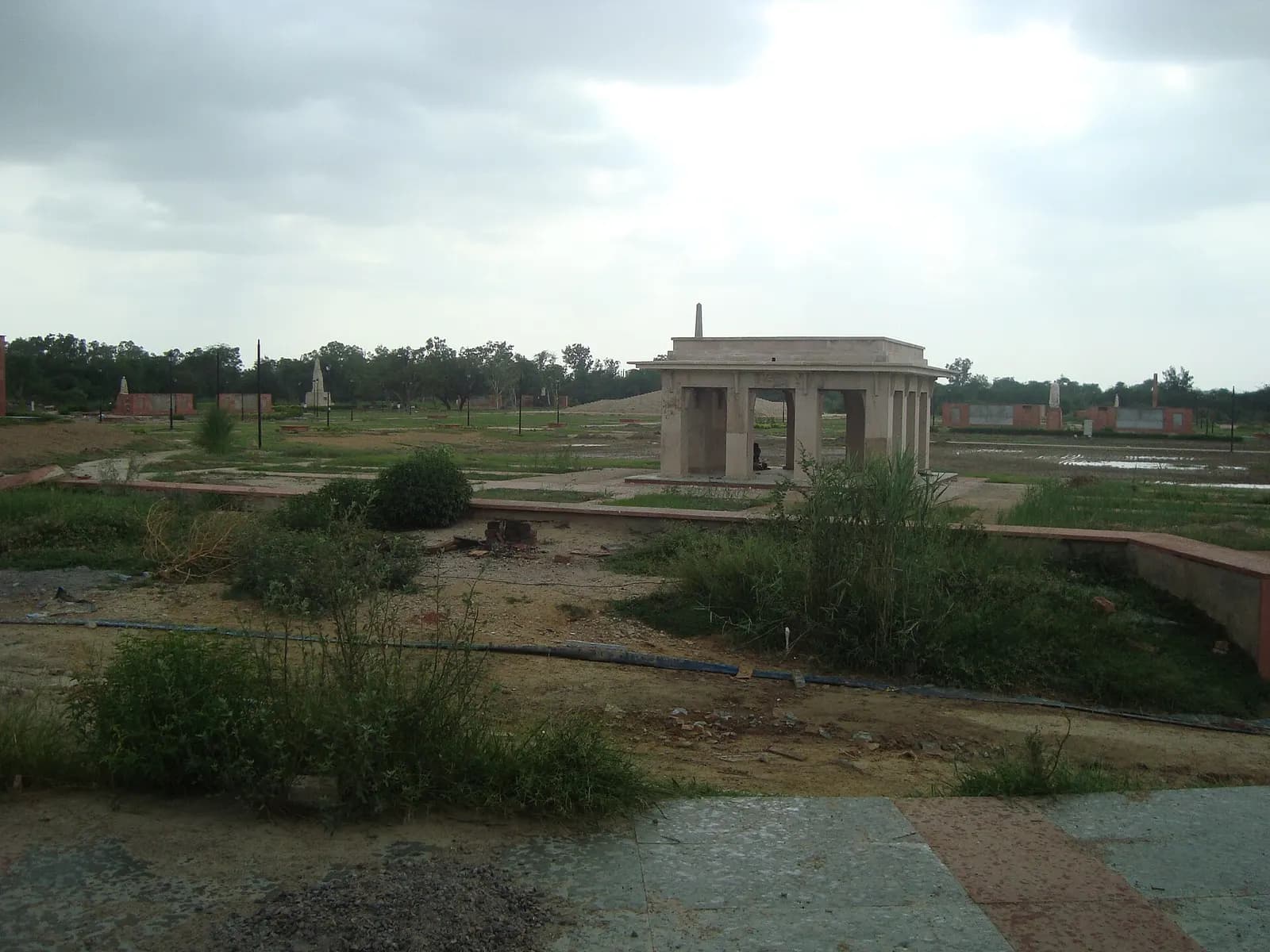
Coronation Park is a large, open historical ground in North Delhi with a remarkable dual claim to fame: it was the stage for the grand imperial pageants, the Delhi Durbars, of the British Raj and it is now the final resting place of the Raj's discarded statues, earning it the evocative nickname of the graveyard of statues. Spread over around 52 acres of vast, mostly open grassy terrain, it contains a scattering of weathered colonial relics, chief among them a towering coronation obelisk and a giant marble statue of King George V, surrounded by the dilapidated statues of former British viceroys and administrators that were removed from central Delhi after independence. Unlike the manicured gardens of central Delhi, it is a desolate, melancholy and atmospheric place, out of sight and heavy with history, that reflects India's ambivalent relationship with its colonial past. For the history-minded visitor, it is one of the most thought-provoking sites in the city.
Several things make it special and they are worth drawing out:
- The Durbar ground. The historic venue of the great Delhi Durbars of 1877, 1903 and 1911, the Raj's grandest displays of imperial power.
- The birthplace of New Delhi. The spot where King George V announced in 1911 that the capital would shift to Delhi, launching the building of New Delhi.
- The graveyard of statues. The final home of British imperial statues removed from central Delhi after independence, a unique and poignant collection.
- The coronation obelisk and George V statue. A towering sandstone obelisk and the largest marble statue of King George V, the park's main monuments.
- A melancholy, offbeat atmosphere. A vast, weathered, little-visited park that tells the story of the empire and its aftermath.
It is one of the most atmospheric and historically rich of the offbeat things to do in Delhi and a fascinating lesser-known entry among the important monuments of Delhi.
History of Coronation Park: the Delhi Durbars
The history of Coronation Park is the history of the Delhi Durbar, the great ceremonial assembly through which the British Raj displayed its authority to the princely states and people of India. Three such Durbars were held on this ground, each a massive, meticulously organised pageant designed to project imperial power and legitimacy. Understanding them is the key to the park:
- The 1877 Durbar. Organised by Viceroy Lord Lytton to proclaim Queen Victoria as the Empress of India, formalising the Crown's rule over the subcontinent.
- The 1903 Durbar. Curated by Viceroy Lord Curzon on a lavish scale to celebrate the accession of King Edward VII to the throne.
- The 1911 Durbar. The grandest of all and the only one attended in person by the reigning monarch, King George V, together with Queen Mary.
These Durbars were among the most spectacular ceremonial events of their age, drawing the rulers of India's princely states, vast crowds and enormous displays of pomp to this very ground. They involved immense temporary cities of tents, grandstands and ceremonial roads, elephant processions, military reviews and gatherings of maharajas in full regalia, all staged to project the permanence and majesty of British rule. They were, in effect, theatre of empire, staged to overawe and to bind India's elites to the Crown. That this now-desolate park was once the setting for such glittering, power-laden pageantry is part of what gives it its haunting quality today. The sheer contrast between the recorded splendour of those assemblies and the empty, weathered field that remains is, for many visitors, the most striking thing about the place. Knowing the Durbar history and standing on the ground where emperors and viceroys once presided over the assembled might of British India, transforms a visit from a walk in an empty park into an encounter with a vanished imperial world.
The 1911 Durbar and the new capital announcement
Of the three Durbars, the 1911 assembly holds a special place in the history of Delhi and of India, for it was here, at this pageant, that one of the most consequential announcements in the country's modern history was made. The 1911 Durbar was the grandest of all, attended in person by King George V and Queen Mary and amid its ceremonies the King made the historic proclamation that the capital of British India would be shifted from Calcutta to Delhi and the foundation stone was laid for what would become New Delhi, the grand new imperial capital later designed by Lutyens.
This decision reshaped the city and the country: it returned Delhi to its historic status as the seat of power in India, set in motion the building of the magnificent New Delhi of broad avenues and government buildings and determined that Delhi, rather than Calcutta, would be the capital of independent India decades later. In other words, modern Delhi as a capital city was, in a sense, born on this ground at the 1911 Durbar. The towering obelisk in the park marks the very spot where the King and Queen sat during the pageant. For the visitor, grasping this makes Coronation Park far more than a curiosity: it is, quite literally, the birthplace of New Delhi, the place where the decision that created the capital was proclaimed, which lends its empty expanse a surprising historical weight.
The graveyard of statues
The feature that draws most curious visitors today and gives the park its popular name, is its role as the graveyard of statues. After India's independence, as anti-colonial sentiment grew, protests in the late 1950s and 1960s led to the systematic removal of British imperial statues from their prominent positions across central Delhi, from locations such as the canopy opposite India Gate and the streets of Chandni Chowk, where they had symbolised colonial authority. Rather than destroy these statues, the authorities chose to relocate them and Coronation Park, out of sight in North Delhi and already associated with the imperial Durbars, was selected as the final storage site. So the statues of kings, viceroys and administrators were gathered here and the park became their melancholy graveyard.
Today these weathered marble and stone figures stand scattered across the lawns, many dilapidated, some missing their original name inscriptions or plaques, a strange and poignant assembly of the Raj's fallen icons. There is something deeply evocative about seeing these once-mighty imperial figures, now faded and anonymous, standing in an empty field far from the city centre they once dominated. Where they once gazed down on the ceremonial heart of New Delhi, commanding the respect their pedestals demanded, they now stand in rows on open ground, their gestures of authority rendered strangely powerless by their surroundings. The arrangement reflects a thoughtful, ambivalent response to the colonial past: not erasure, but removal and quiet relocation, keeping the statues as historical objects while stripping them of their place of honour. It is a very different answer from the outright destruction of monuments seen in some other countries and it leaves the visitor space to reflect rather than simply to celebrate or condemn. For many visitors, wandering among these abandoned statues is the most memorable and affecting part of the park, a vivid meditation on empire, memory and the passage of power.
Monuments at Coronation Park
Across the vast 52-acre grounds, a scattering of weathered colonial monuments rewards exploration, the chief ones being:
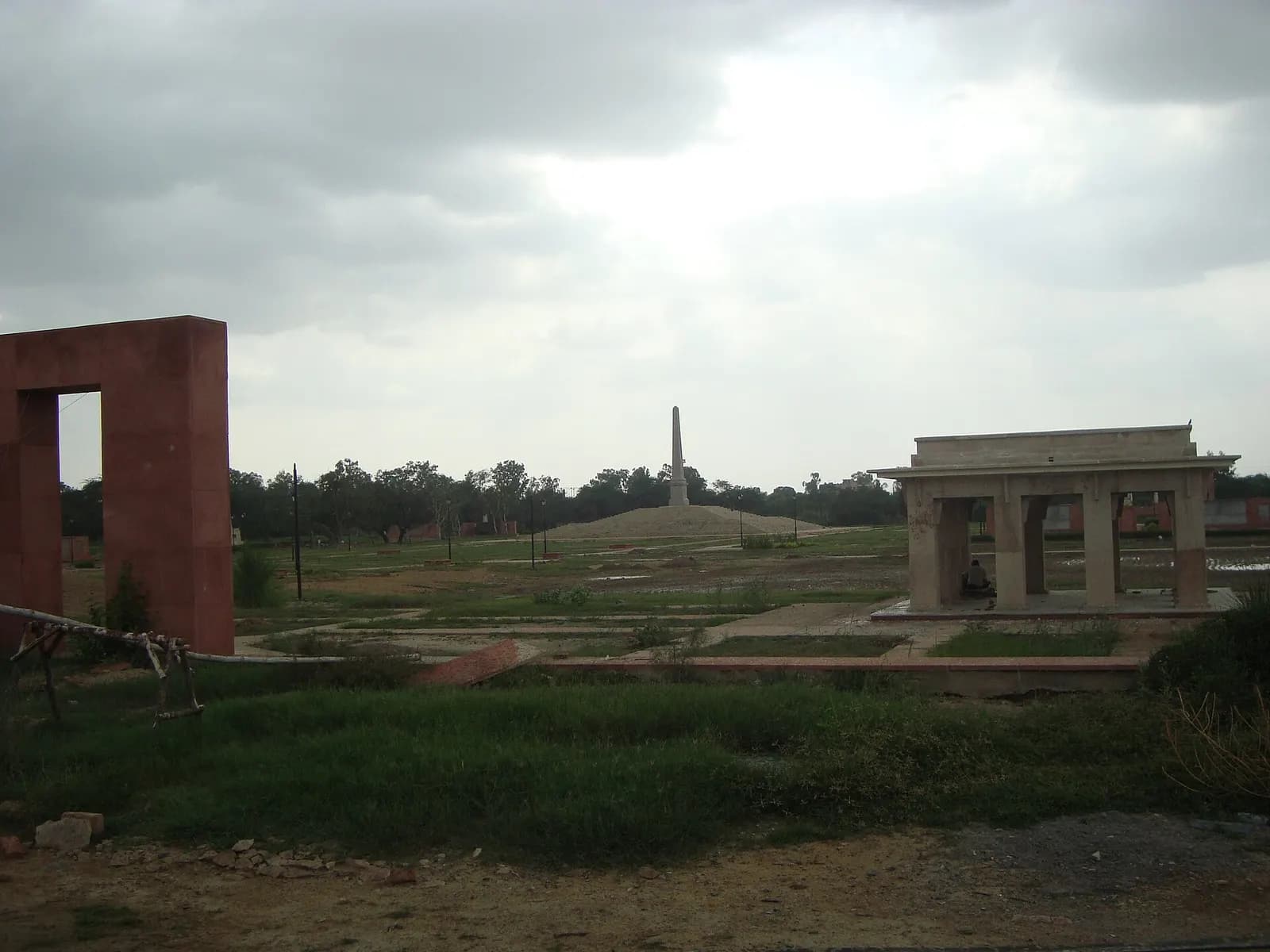
- The Coronation Memorial Obelisk. A towering sandstone obelisk, around 21 metres or 70 feet tall, raised on a multi-tiered stone platform. Erected in 1911, it marks the exact spot where King George V and Queen Mary sat during the final imperial Durbar, the park's central landmark.
- The King George V statue. Standing opposite the obelisk, this is the largest and tallest marble statue of King George V in existence, a massive white marble figure complete with a flowing ceremonial royal cape, moved here in the mid-1960s from its original canopy opposite India Gate.
- The relocated viceregal statues. The surrounding lawns hold several secondary pedestals with dilapidated, weathered marble statues of former British viceroys, governors-general and administrators, including figures such as Lord Chelmsford and Lord Hardinge, many missing their original inscriptions.
Together these monuments make the park an open-air museum of the Raj's imperial iconography, stripped of its original context and left to weather in the North Delhi sun. The obelisk anchors the historical story, marking the Durbar spot; the colossal George V statue, once the centrepiece opposite India Gate, is a startling sight in its lonely new home; and the scattered viceroy statues complete the melancholy tableau. In recent years there have been efforts to tidy and partly conserve the grounds, with cleared pathways and some signage to help visitors read the monuments, though the park retains its essentially raw, open and under-visited character. The statues are best appreciated slowly, reading what inscriptions survive and noting the scale and style of each figure, which speak to the self-image the empire wished to project. Seeking them out across the open grounds and reflecting on their journey from the heart of imperial Delhi to this quiet field, is the essence of a visit and it rewards an unhurried, thoughtful pace rather than a quick look.
What to expect at Coronation Park
A visit to Coronation Park is atmospheric and offbeat, quite unlike the city's polished monuments and knowing what to expect helps you appreciate it. The park is a vast, open, grassy expanse with few trees and little shade, scattered with the obelisk, the statues and the pedestals and ringed by the ordinary life of North Delhi. The overall mood is desolate and melancholic, marked by time and a certain neglect, which is precisely what makes it so evocative; this is not a manicured garden but a weathered historical ground with an ambivalent relationship to its past. On any given day you may find local youths practising martial arts, running on the track, playing casual cricket or using the open-air public gym, so the imperial relics share the space with everyday neighbourhood life, an incongruous but very Delhi scene.
The visit itself takes about forty five minutes to an hour to walk the grounds, seek out the obelisk and the statues and take in the history, with no interiors to explore. There are no guides stationed at the park and limited interpretive signage, so arriving with the background in hand, the Durbar story and the tale of the relocated statues, makes an enormous difference to how much you take from the visit; without it, the park can read as simply an empty field with a few old statues. Because the park is so open and exposed, much of the experience is about atmosphere and reflection rather than architectural detail: standing before the giant fallen king, wandering among the anonymous viceroys and imagining the glittering Durbars that once filled this empty field. Wild peacocks and other birds can often be spotted on the less-cleared edges, adding to the slightly wild, forgotten feel. Come knowing the history, prepared for the sun and the emptiness and the park delivers a powerful, contemplative encounter with the story of empire that few other places in Delhi can match.
Coronation Park timings and entry
Coronation Park is open daily from sunrise to sunset, with the exact hours varying by season, typically around 5:00 AM to 7:00 PM in the longer days of summer and roughly 6:00 AM to 6:00 PM in winter. Entry is completely free for everyone, Indian and international visitors alike, with no advance ticketing or digital passes of any kind; it is simply an open public historical park. A complete walk across the 52-acre grounds, taking in the obelisk and the statues, takes about forty five minutes to an hour. The park has basic facilities, with public washrooms near the entrance gates and free on-site vehicle parking, though there is little else in the way of amenities on the vast grounds. These timings are current at the time of writing and can vary with the season, so plan a daytime visit and reconfirm if your plans depend on exact hours.
Facilities and what to carry
Because the park is a vast, exposed, open space with minimal shade, a little preparation makes the visit much more comfortable:
- Carry water. The grounds are heavily exposed to the sun with very little tree shade or covered shelter, so bring a personal water bottle, especially in the warmer months.
- Bring sun protection. Sunglasses and a sun-hat are strongly recommended for visits on sunny winter afternoons or in the early summer.
- Use the basic facilities. There are basic public washrooms near the entrance gates and free parking on site if you drive.
- Wear comfortable shoes. Covering the 52 acres on foot involves a fair amount of walking across open ground.
- Watch for wildlife. Wild peacocks and various birds frequent the less-cleared edges of the park, a pleasant bonus for nature lovers.
Knowing in advance that the park offers little shade or shelter is the key practical point, as an unprepared visit on a hot, bright day can be tiring. Come with water and sun protection, allow about an hour and the exposed, open character of the park becomes part of its atmospheric appeal rather than a discomfort. Otherwise the facilities are basic but adequate for a short, self-guided historical visit.
Best time to visit Coronation Park
The best time to visit is the cooler months, from October to March and within the day the morning or the late afternoon, avoiding the harsh midday sun given the park's lack of shade. A winter morning is ideal, with soft light on the weathered statues and comfortable temperatures for walking the open grounds and late afternoon light is especially atmospheric and photogenic for the melancholy monuments. The summer is best avoided, as the exposed, treeless expanse becomes very hot and draining and the monsoon can leave the grounds muddy. Because the park is about atmosphere and history rather than lush gardens, overcast or golden-hour light actually suits its mood well. Allow around an hour and combine it with other North Delhi history if you wish. Avoid dusk and after dark, as the park is isolated and closes at sunset. Our guide to the best time to visit Delhi sets out the seasons across the city in more detail.
How to reach Coronation Park (nearest metro)
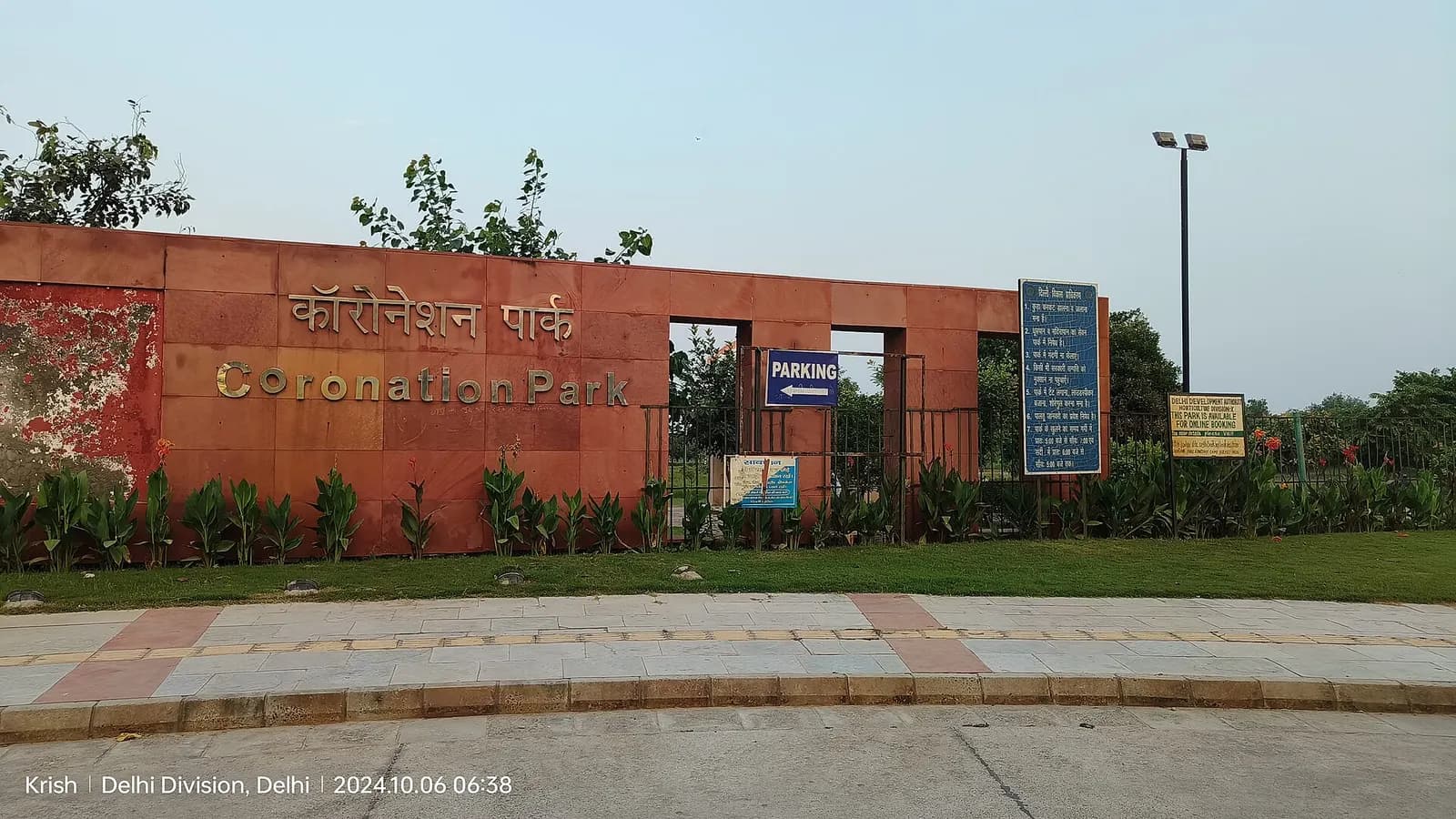
Coronation Park is on Burari Road in the Model Town area of North Delhi, opposite the Nirankari Sarovar, a little away from the central tourist zone. The nearest metro stations are GTB Nagar on the Yellow Line and Majlis Park on the Pink Line and from either it is a brief five to ten minute auto-rickshaw ride to the front gate entrance along Shanti Swaroop Tyagi Marg. App cabs and autos can drop you at the gate and there is free parking on site if you drive. Because it sits off the usual tourist track in North Delhi, it is best treated as a dedicated history outing rather than a casual add-on and a guided New Delhi tour or a broader Delhi day tour focused on heritage can help you reach it and understand its layered history.
Places to visit near Coronation Park
Coronation Park sits in North Delhi, apart from the main monument cluster, but it combines well with the city's history on a wider plan. Its story is intimately tied to India Gate, from whose canopy the giant George V statue was moved here, so seeing both completes a fascinating thread of imperial Delhi. The great monuments of the old and new city are a ride to the south: the mighty Red Fort and the old city, the old fort of Purana Qila and the serene Humayun's Tomb.
A little further, the capital's other landmarks are within a manageable ride: the towering Qutub Minar and the modern Lotus Temple and Akshardham. The central ring, with the great circle of Connaught Place, the ancient stepwell of Agrasen ki Baoli and the astronomical Jantar Mantar and further south the historic Hauz Khas Fort and the ruins of the Mehrauli Archaeological Park, round out the sweep of the city's past. Together these let you set Coronation Park within the long story of Delhi.
Coronation Park in your Delhi itinerary
For most visitors, Coronation Park works best as a short, atmospheric stop within a North Delhi or history-themed outing rather than a destination on its own, given that the visit takes under an hour and the setting is remote. The natural pairing is with the story of imperial Delhi: see the obelisk and the statues here and connect them with India Gate, whose canopy once held the great George V statue and with the broad avenues of New Delhi that the 1911 Durbar set in motion. It is a stop for travellers with a genuine interest in history, in the Raj and in Delhi's offbeat, evocative corners, rather than for those ticking off headline sights and it rewards knowing the Durbar and statue story in advance. For the right visitor, it is one of the most thought-provoking places in the city.
If Delhi is your gateway to the wider Golden Triangle, Coronation Park offers a powerful and unusual perspective on the British Raj and on how independent India chose to handle its imperial symbols, a melancholy counterpoint to the living grandeur of the Mughal and the imperial monuments elsewhere. Many of my history-minded guests find the graveyard of statues and the Durbar story unexpectedly moving and it adds a reflective, distinctive note to a Delhi exploration before the journey on to Agra and Jaipur.
Travel tips for visiting Coronation Park
A few pointers make the visit smoother and more rewarding:
- Come in the cooler months, October to March and in the morning or late afternoon, as the park has little shade.
- Carry water and sun protection, a hat and sunglasses, given the exposed open grounds.
- Know the history first, the Durbars and the graveyard of statues, as the park's power is in its story.
- Seek out the obelisk and the George V statue and wander among the viceroy statues on the lawns.
- Connect it with India Gate, from whose canopy the George V statue was moved here.
- Allow about an hour, to walk the 52-acre grounds.
- Visit in daylight, as the park is isolated and closes at sunset.
- Reach it via GTB Nagar or Majlis Park metro, then a short auto to the gate.
If you would like a local guide to build Coronation Park into a wider Delhi history plan, message our team on WhatsApp at +91 7302265809 with your travel dates and group size and we will shape the day for you.
Is Coronation Park worth visiting?
For history lovers and those drawn to Delhi's atmospheric, offbeat sites, yes, it is a rewarding and unusual stop. There are few places anywhere that capture the story of the British Raj and of its aftermath, quite so vividly, from the ground of its grandest Durbars to the melancholy graveyard of its discarded statues, with the very spot where New Delhi was proclaimed marked by a towering obelisk. It is free, genuinely evocative and unlike anywhere else in the city. The honest note is that it is a vast, desolate, weathered open park with little shade and few facilities, not a polished or convenient tourist attraction and its appeal depends almost entirely on an interest in history and atmosphere; those wanting manicured gardens or grand living monuments may be underwhelmed. But for the curious, history-minded traveller willing to seek it out, it is one of the most thought-provoking and memorable places in Delhi and I enjoy showing it to guests with a taste for the deeper, stranger side of the city's past.
Plan your trip with us
At Experience My India, through our Delhi and Golden Triangle travel desk, we design unhurried, well paced trips that make room for atmospheric, history-rich stops like Coronation Park, not just the headline monuments and we know how to reach and interpret the city's hidden historical corners. Whether you want a relaxed set of Delhi Agra tours or a full Golden Triangle route through Delhi, Agra and Jaipur, we plan around your pace, your interests and the right season, with local guides who know the stories behind the stones. Share your dates and the kind of trip you have in mind through our enquiry page, tell us your group size and we will put together an honest, tailored plan rather than a rushed checklist.
Related guides
- Places to visit in Delhi, for the wider picture
- Hidden places to visit in Delhi, the city's quieter corners
- Nearby places to visit in Delhi, to extend your trip
Enquire Now
Ready to Explore
The Heart of Delhi?
Explore the Red Fort, Qutub Minar, Humayun's Tomb, and the vibrant streets of Old Delhi with our expert-guided premium tours of India's capital city.

Delhi
Premium Tour Package
Questions
Frequently asked questions
What are the timings of Coronation Park?
It is open daily from sunrise to sunset, roughly 5:00 AM to 7:00 PM in summer and 6:00 AM to 6:00 PM in winter. A walk takes about 45 to 60 minutes. Reconfirm, as timings vary by season.
What is the entry fee for Coronation Park?
Which is the nearest metro station to Coronation Park?
Why is Coronation Park famous?
What is the graveyard of statues at Coronation Park?
What was the 1911 Delhi Durbar?
What statues are at Coronation Park?
How much time do I need at Coronation Park?
Is Coronation Park worth visiting?
Explore more
Plan your Coronation Park trip with us

Photo credits
Photos from Wikimedia Commons, used under their licences:
- Photo 1 by Dgp4004, CC0
- Photo 2 by Harshanh, CC BY-SA 4.0
- Photo 3 by कृष्ण कान्त शर्मा, CC BY-SA 4.0
- Photo 4 by Harshanh, CC BY-SA 4.0
- Photo 5 by Harshanh, CC BY-SA 4.0
Interested in Coronation Park Delhi: History, Timings and Visitor Guide?
Chat with our travel team for a custom quote, or browse every package.
Related Attractions
9Ready to explore Coronation Park Delhi: History, Timings and Visitor Guide?
Book your private tour today and experience the magic of India's rich heritage.