

National Crafts Museum Delhi: Timings, Tickets and Guide
Visiting the National Crafts Museum in Delhi? Timings, ticket price, the Village Complex, the Charles Correa architecture, Cafe Lota and nearest metro.
In a Nutshell
“The National Crafts Museum in Delhi, beside the Pragati Maidan and Purana Qila, is one of India's finest showcases of traditional crafts, with over 35,000 artifacts, a five acre open-air village of recreated rural huts and galleries of textiles, courtly crafts and folk art. A living museum, it brings regional artisans in to demonstrate and sell their work and it is set in a celebrated building by the architect Charles Correa. It is open Tuesday to Sunday, closed Mondays, charges a very modest ticket and is a short walk from the Supreme Court metro. It features on our Delhi tours, run by a unit of Experience My India.”
The National Crafts Museum is one of Delhi's most charming and rewarding cultural stops, a peaceful blend of open-air village, rich galleries and living craft, where you can watch artisans at work, buy authentic handicrafts and eat at the renowned Cafe Lota. For anyone interested in India's crafts, textiles or design, it is a treat. Our team at Delhi Agra Tour Packages often suggests it for a relaxed, cultured half day and it fits well on a Golden Triangle tour through the capital.
I am Abhay Sharma, Delhi born and a Golden Triangle guide since 2015 and I love sending craft and textile lovers here, as well as anyone wanting a quieter, more authentic side of Delhi. This guide gathers everything I would tell a visitor beforehand, checked against current information, including the timings, the ticket price, the galleries and how to reach it.
Details
National Crafts Museum at a glance
| Detail | Information |
|---|---|
| Location | Bhairon Marg, near Pragati Maidan and Purana Qila, New Delhi |
| Conceived by | Kamaladevi Chattopadhyay, cultural revivalist |
| Designed by | The architect Charles Correa |
| Collection | Over 35,000 craft artifacts, plus a living craft programme |
| Known for | The village complex, textiles, live artisans, Cafe Lota |
| Entry | A very modest ticket; courtyard and cafe free |
| Nearest metro | Supreme Court (Blue Line), about a 5 minute walk |
| Time needed | About 2 to 3 hours |
National Crafts Museum timings
| Detail | Information |
|---|---|
| Open | Tuesday to Sunday, 9:30 AM to 6:00 PM |
| Closed | Mondays and national public holidays |
| Time needed | Around 2 to 3 hours |
The museum is open Tuesday to Sunday from 9:30 AM to 6:00 PM and is closed on Mondays and national public holidays. Timings can change, so reconfirm and allow two to three hours to enjoy the galleries, the village complex and the artisan courts.
National Crafts Museum ticket price
| Visitor | Fee (at the time of writing, reconfirm) |
|---|---|
| Indian citizens | Around ₹20 per person |
| Students with institutional ID | Around ₹10 per head |
| Foreign nationals | Around ₹300 per person |
| Courtyard, artisan courts, shop and Cafe Lota | Free to enter without a gallery ticket |
How to reach the National Crafts Museum
| From | Route |
|---|---|
| Supreme Court metro (Blue Line) | About a 5 minute walk along Bhairon Marg |
| Pragati Maidan and Purana Qila | A few minutes away |
| India Gate and central Delhi | A short auto or taxi ride |
| By cab or auto | Drops at the museum gates on Bhairon Marg |
What is the National Crafts Museum Delhi?
The National Crafts Museum, formally the National Crafts Museum and Hastkala Academy, is one of India's premier museums of traditional crafts and handlooms, governed by the Ministry of Textiles and set on Bhairon Marg beside the Pragati Maidan and the Purana Qila. It holds an extensive repository of over 35,000 rare artifacts tracing India's vibrant regional design heritage across a timeline spanning more than a century, displayed in a series of galleries and, uniquely, in a five acre open-air village of recreated rural huts and vernacular architecture. What sets it apart from a conventional museum is that it is a living institution: rather than only static exhibits, it invites regional folk and tribal artisans to demonstrate their craft live and to sell their authentic work directly to visitors at fair, government-regulated rates, so the traditions on display are shown as living practices rather than relics.
Several things make it special and they are worth drawing out:
- A living crafts museum. Regional artisans demonstrate and sell their work on site, so crafts are shown as living traditions, not just exhibits.
- A vast collection. Over 35,000 artifacts spanning India's regional craft heritage over more than a century.
- The village complex. A signature five acre open-air display of life-size rural huts and vernacular architecture from across India.
- Celebrated architecture. A low-profile building by the renowned architect Charles Correa, itself a landmark of modern Indian design.
- Cafe Lota and crafts shopping. A famous cafe and a curated shop, plus artisan stalls selling authentic handmade goods.
It is one of the most rewarding and authentic of the things to do in Delhi for the culturally curious and a rich complement to the historic important monuments of Delhi.
History of the National Crafts Museum
The museum owes its existence to the vision of Kamaladevi Chattopadhyay, the renowned freedom fighter and cultural revivalist who devoted much of her life to reviving and championing India's traditional handicrafts and handlooms after independence, at a time when many were under threat. She conceived the museum as a place to preserve, document and keep alive the vast and varied craft traditions of the country and it grew over the decades into the major national institution it is today, holding over 35,000 artifacts and running a living programme of artisan demonstrations. It is now formally the National Crafts Museum and Hastkala Academy, under the Ministry of Textiles, reflecting its dual role as both a museum and an academy for the crafts.
A defining feature of its history and philosophy is the idea of the living museum. Rather than treating crafts as dead artifacts behind glass, the institution was designed to show them as living traditions, bringing artisans from different regions to work on site and sell directly to the public, so that the skills pass on and the makers earn fairly. This approach, rooted in Kamaladevi's belief in the dignity and vitality of India's craftspeople, is what gives the museum its special warmth and authenticity. Knowing this backstory, that the museum was created by a great cultural figure to keep living traditions alive rather than to embalm them, deepens a visit and explains why it feels so different from a conventional gallery.
The architecture of the National Crafts Museum
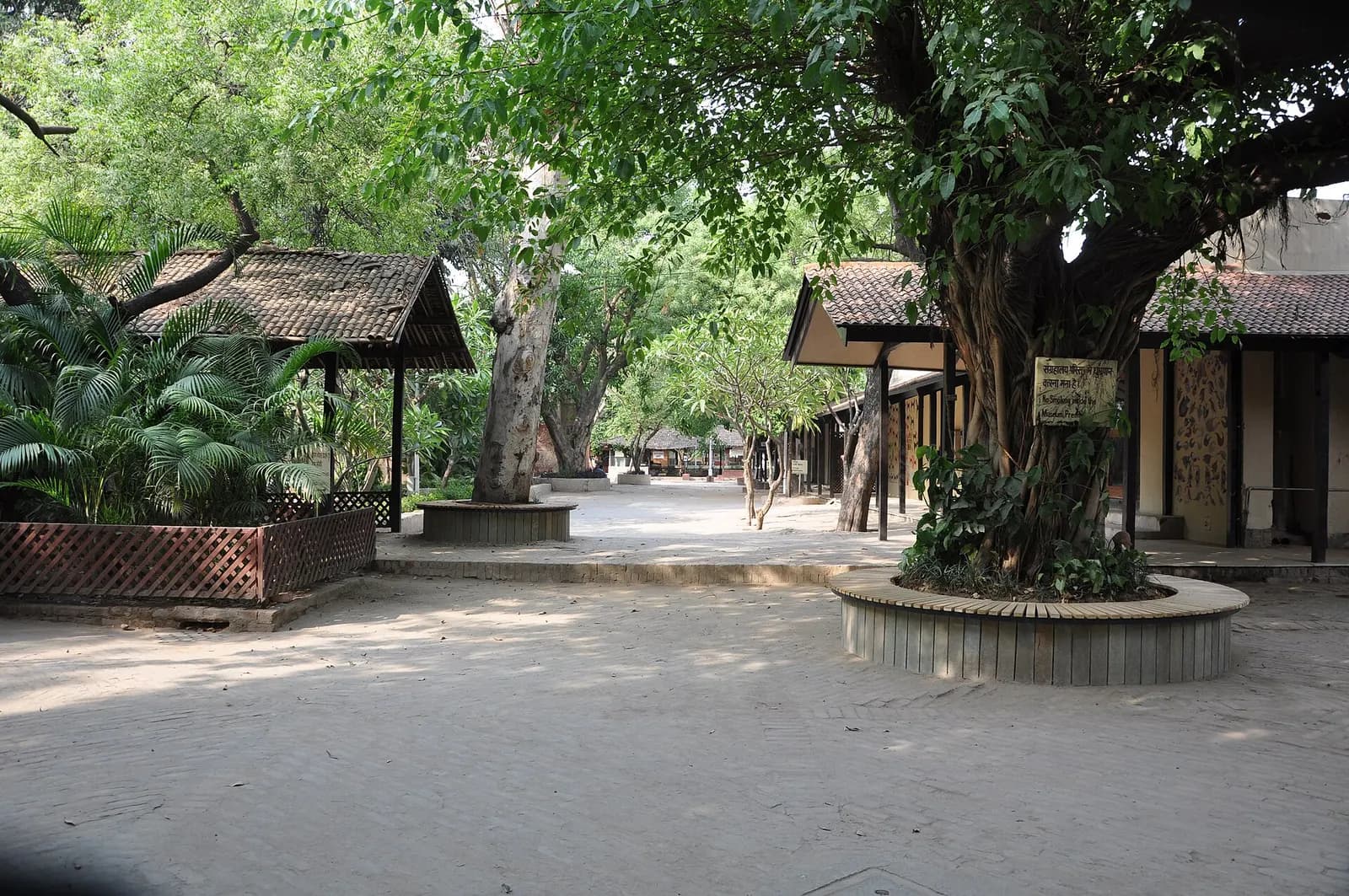
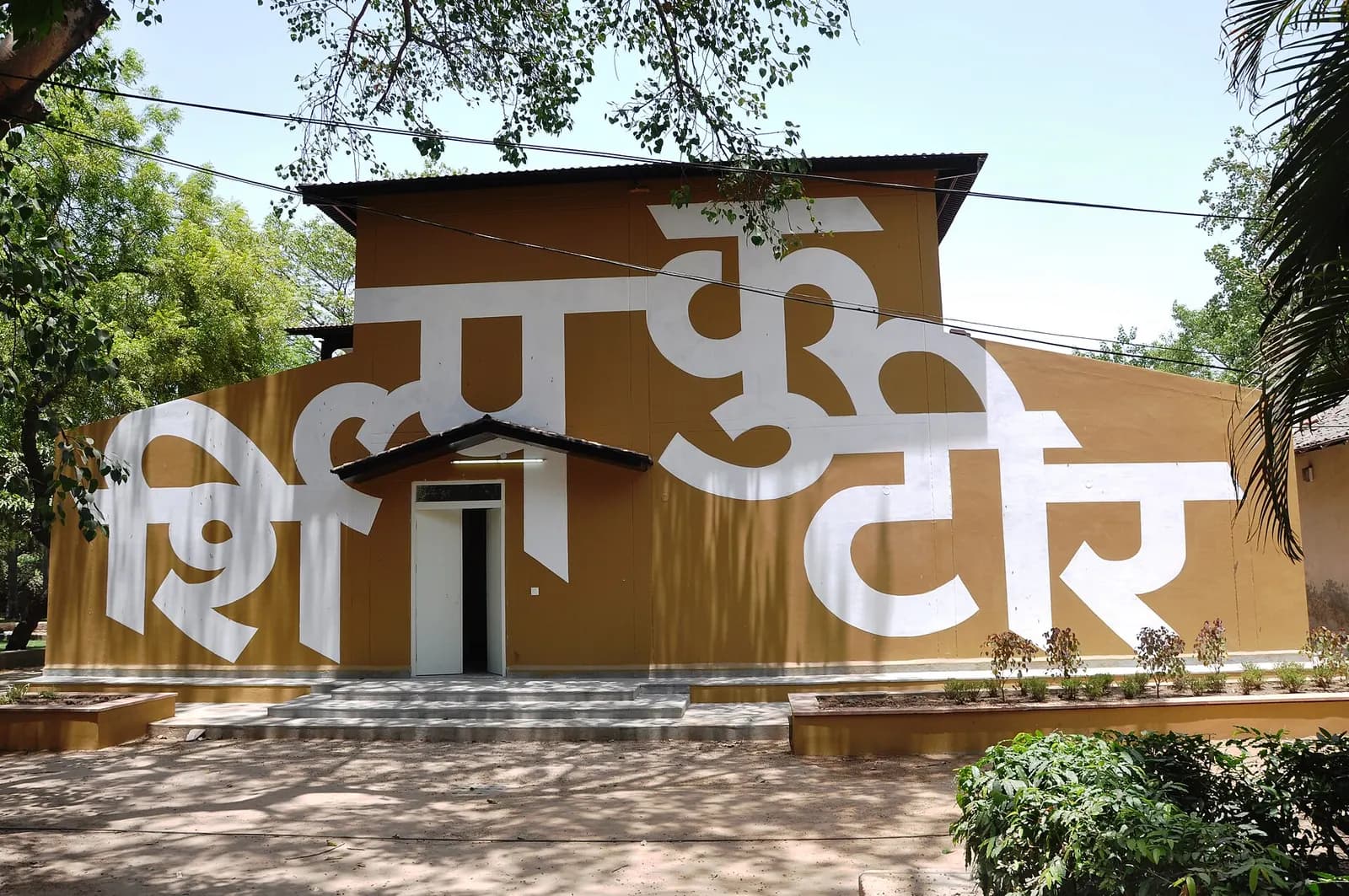
The museum building is itself a celebrated piece of modern Indian architecture, designed by the acclaimed architect Charles Correa and it is worth appreciating in its own right, as many architecture students who come here to study it will attest. Correa conceived the museum not as a single grand structure but as a low-profile, village-like complex, a sequence of spaces that deliberately transitions from enclosed concrete rooms to open, earthy outdoor corridors and courtyards, so that moving through the museum feels like walking through an Indian village or bazaar rather than a formal gallery. This design mirrors the museum's subject, the crafts and rural life of India, dissolving the usual boundary between indoor exhibit and outdoor life.
The architecture rewards attention for several reasons:
- A village-like plan. The layout unfolds as a series of linked spaces and courtyards rather than one monumental building, echoing a traditional settlement.
- Indoor to outdoor flow. The design moves from concrete galleries to open-air muddy corridors and courts, blurring inside and outside.
- A low, human scale. The deliberately low profile keeps the focus on the crafts and the village complex rather than on grand architecture.
- Harmony with the exhibits. The built form complements the rural huts and craft displays, so building and content feel of a piece.
For visitors interested in design, Correa's building is a highlight in itself, a thoughtful, influential example of how modern Indian architecture drew on vernacular traditions and it is one reason the museum is so often studied and admired. Even for the casual visitor, the gentle, unfolding layout makes the museum a uniquely pleasant space to wander.
The Village Complex at the Crafts Museum
The signature feature of the museum is its Village Complex, a five acre open-air stretch where life-size rural huts and examples of vernacular architecture from various Indian states have been recreated, so you can walk through a kind of miniature cross-section of rural India. The huts are not empty shells but carefully detailed, many decorated with the distinctive regional wall paintings that adorn village homes, including the intricate Madhubani work of Bihar, the stylised Warli paintings of Maharashtra and the patterned Gond art of central India. Among the structures stands a giant wooden temple chariot, a Ratha from South India, a magnificent piece of traditional craftsmanship. Wandering the complex, you move from the architecture and decoration of one region to another, gaining a vivid sense of the diversity of India's rural building and folk art traditions. It is the part of the museum that most delights families and photographers, being open, green and full of colour and it is where photography is freely allowed. The Village Complex turns what could be a dry survey of crafts into a living, walkable experience and it is the first place I steer visitors towards.
The galleries at the National Crafts Museum
Alongside the open-air village, the museum has a series of indoor galleries displaying the finest of its collection, each devoted to a different strand of India's craft heritage:
- The Textile Gallery. A large, dimly lit space preserving ancient woven marvels, including centuries-old royal Jamdani, fine Pashmina shawls, Ikat weaves and the exquisite double-Ikat Patola sarees of Gujarat.
- The Courtly Crafts Gallery. Luxurious items made historically for royal houses, showcasing intricate ivory carvings, delicate silver filigree, inlaid Bidriware and carved wood from old havelis.
- The Gallery of Popular Culture. Folk toys, religious metal idols, papier-mache masks used in regional theatre and a striking assembly of multi-tier clay oil lamps.
The Textile Gallery in particular is a treasure for anyone interested in Indian weaving, holding pieces of extraordinary skill and age, while the Courtly Crafts Gallery reveals the luxury end of the tradition and the Gallery of Popular Culture its everyday, festive and devotional side. Between them they give a rounded picture of Indian craft, from the humblest folk toy to the most refined royal commission. The galleries are kept deliberately dim and, in the case of the textiles and jewellery, photography is not allowed, to protect the fragile antiques, so these are rooms to study closely with your eyes rather than your camera.
Live artisans and crafts shopping
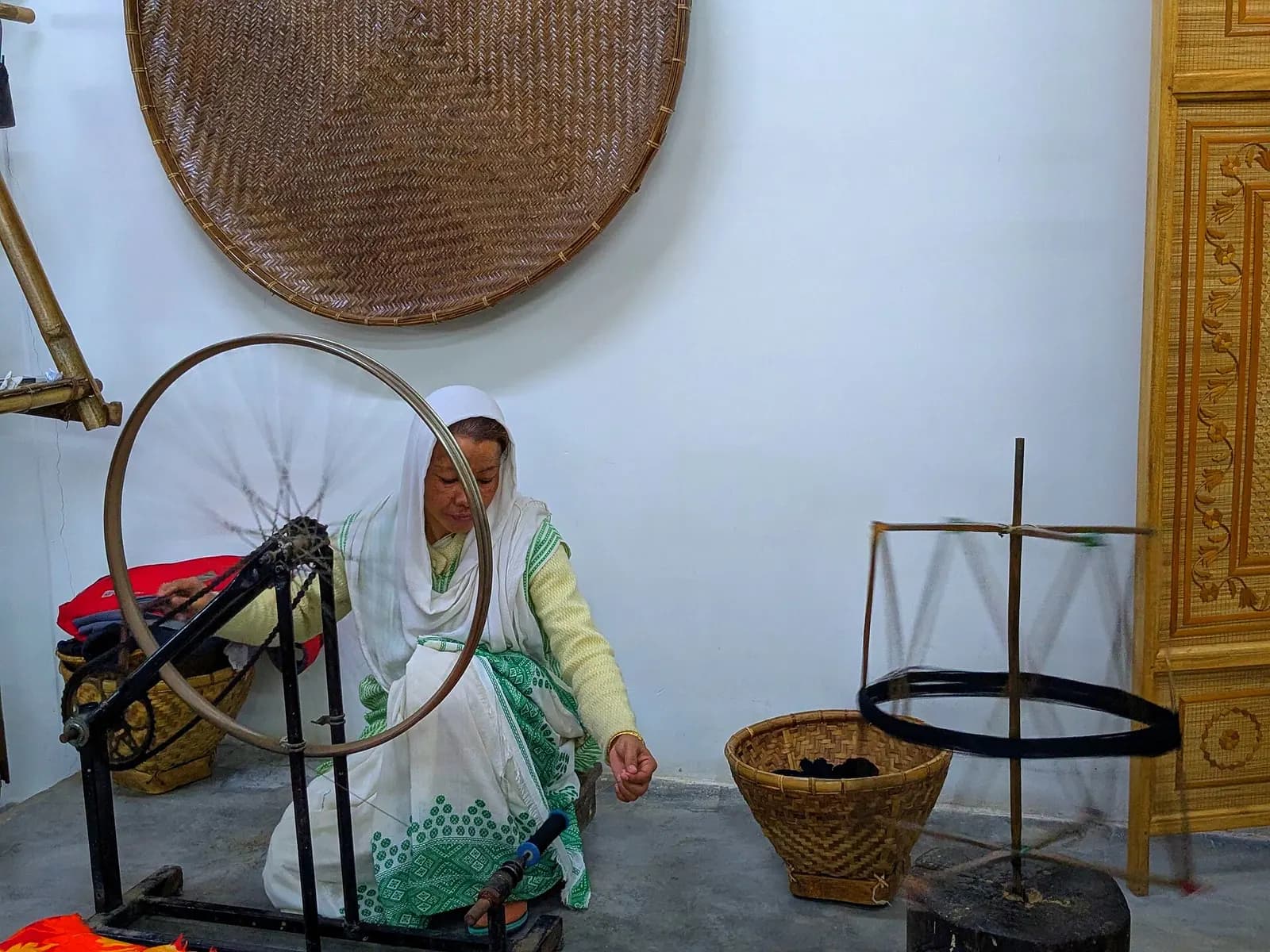
One of the museum's greatest pleasures and the heart of its living-museum philosophy, is the chance to meet artisans and buy their work directly. Along the walkways and in the artisan courts, visiting national award-winning craftspeople demonstrate and sell their traditional work, so you can watch a potter at the wheel, a weaver at the loom or a block-printer at work and then buy directly from the maker:
- Authentic handicrafts. Artisans sell traditional terracotta pottery, handloom stoles, block-printed home linens and much more, at fair rates.
- Buying from the maker. Purchasing directly from the craftsperson means your money goes to them and you take home a genuine, documented piece.
- A pottery workshop. You can even try your hand at a basic interactive pottery wheel for a small fee of around ₹50 to ₹100.
Because the artisans rotate, often changing monthly by region, there is usually something different to see and the courts are free to enter without a gallery ticket, so even a quick visit can include some shopping and artisan-watching. For anyone wanting authentic Indian handicrafts as souvenirs or gifts, bought ethically at fair prices, this is one of the best places in Delhi, far better than a tourist bazaar.
Cafe Lota and the museum shop
The museum is also known for its on-site dining and shopping, which have become destinations in their own right:
- Cafe Lota. An independent, much-loved cafe set in the museum garden, famous for its creative contemporary twists on regional Indian dishes. It is a culinary landmark in its own right, though weekend afternoons can mean long waits.
- The museum shop. A curated gift shop selling museum art prints, handmade jewellery, studio pottery and other quality craft pieces.
Cafe Lota in particular draws many Delhiites who come for the food alone and it makes a lovely break during or after a visit, serving inventive versions of Indian regional cooking in a relaxed garden setting. Both the cafe and the shop, like the artisan courts, can be enjoyed without a gallery ticket, so the museum grounds double as a pleasant place simply to eat, shop and relax. If you plan to eat at Cafe Lota on a weekend, go early or be prepared to wait, as its reputation means it is often busy.
Things to see at the National Crafts Museum
A visit weaves together the village, the galleries and the living craft and the highlights are worth seeking out:
- The Village Complex. The five acre open-air village of regional huts, wall paintings and the South Indian temple chariot.
- The Textile Gallery. The ancient Jamdani, Pashmina, Ikat and Patola textiles, a highlight for weaving lovers.
- The Courtly and Popular Culture galleries. Royal ivory, silver and Bidriware and folk toys, masks and lamps.
- The artisan courts. Live craftspeople demonstrating and selling their work, with a pottery wheel to try.
- Cafe Lota. The celebrated garden cafe, a destination in itself.
Allow two to three hours to take in the village, the galleries and the artisan courts, more if you linger over lunch at Cafe Lota. Because so much of the museum is outdoors and free to wander, it rewards an unhurried visit.
What to expect at the National Crafts Museum
A visit here feels less like a conventional museum and more like a gentle wander through a craft village and knowing that helps you enjoy it in the right spirit. You enter off Bhairon Marg into a calm, green, low-rise complex where the boundary between indoors and out keeps dissolving, so you drift from a dim textile gallery into an open courtyard, past a potter at his wheel and on into the five acre village of painted huts. The pace is slow and unhurried, the crowds usually thin on weekdays and the mood relaxed and authentic rather than polished or touristy. Artisans work quietly in the courts, visitors browse their wares and the smell of Cafe Lota's cooking drifts across the garden. Many people arrive expecting a quick look and stay far longer, drawn in by the colour of the village, the richness of the textiles and the chance to meet the makers. It is one of the most restful and genuine cultural experiences in Delhi and it rewards taking your time.
National Crafts Museum timings and ticket price
The museum is open Tuesday to Sunday from 9:30 AM to 6:00 PM and is closed on Mondays and national public holidays, so plan around that Monday closure. The gallery ticket is very modestly priced: at the time of writing, around ₹20 for Indian citizens, ₹10 for students with an institutional ID and around ₹300 for foreign nationals. Importantly, the outdoor artisan courts, the gift shop and the Cafe Lota areas are completely free to enter without a gallery ticket, so you can enjoy a good part of the museum, including the shopping and the cafe, at no charge, buying a ticket only for the indoor galleries. These figures are current at the time of writing and can be revised, so reconfirm at the counter. Allow two to three hours for a full visit. As with all timings and prices, treat these as a current guide and reconfirm before a special trip.
Photography and rules at the National Crafts Museum
A few simple rules, mainly around photography, help a visit go smoothly:
- Photography outdoors is allowed. Personal smartphone photography is permitted in the open village lawns and the courtyard spaces, which is where the best photo opportunities are.
- No photography in the textile and jewellery galleries. Photography is prohibited inside the indoor textile and jewellery galleries to protect the fragile antiques from camera flash damage.
- Respect the artisans. Ask before photographing a craftsperson at work and buy directly to support them.
- Handle with care. Do not touch the delicate exhibits in the galleries.
- Enjoy the free areas. Remember the courts, shop and cafe need no ticket, so you can wander and shop freely.
Knowing the photography rules in advance saves disappointment, so save your camera for the colourful village complex and the courtyards and simply enjoy the textile and courtly galleries in person.
Best time to visit the National Crafts Museum
The best time to visit is a weekday late morning, soon after the 9:30 AM opening, when the museum is quiet and you can enjoy the village and galleries at leisure before any weekend crowds or Cafe Lota queues build up. Weekends are busier, particularly at the cafe. Above all, avoid Mondays, when the museum is closed. In terms of season, the cooler months from October to March are the most pleasant for the open-air village complex, which is a large part of the experience; in the summer heat, the outdoor sections are less comfortable, though the indoor galleries and cafe offer shade. A weekday winter morning is close to ideal, leaving time for the village, the galleries, the artisans and a relaxed lunch. If you are also interested in the live artisan demonstrations, it is worth checking whether a particular craft fair or seasonal event is on, as these add to the experience. Our guide to the best time to visit Delhi sets out the seasons across the city in more detail.
How to reach the National Crafts Museum (nearest metro)
The National Crafts Museum stands on Bhairon Marg, beside the Pragati Maidan complex and close to the Purana Qila, in central New Delhi and it is easy to reach. The nearest and most convenient metro station is Supreme Court on the Blue Line, formerly known as Pragati Maidan, from which it is a brief five minute walk along Bhairon Marg to the museum gates. App cabs and autos can drop you at the gates. Because it sits beside Pragati Maidan and near the Purana Qila and the zoo, it combines naturally with that part of the city. Being central, it slots neatly into a plan of the capital and a guided New Delhi tour can fold it in alongside the surrounding landmarks, while a broader Delhi day tour ties it into the full span of the capital.
Places to visit near the National Crafts Museum
The National Crafts Museum sits in central Delhi beside Pragati Maidan, so it is easy to pair with nearby sights. The closest major monument is the old fort of Purana Qila, a few minutes away, which makes a fine companion for a half day of craft and history together and the National Zoological Park is also close by. The serene Humayun's Tomb and the ceremonial India Gate are a short ride away, as is the grand temple of Akshardham across the river.
A little further out, the capital's great monuments are a manageable ride away: the mighty Red Fort, the towering Qutub Minar and the modern Lotus Temple, along with the hilltop Kalkaji Mandir and the grand ISKCON Temple. The central ring, with the great circle of Connaught Place, the ancient Agrasen ki Baoli and the astronomical Jantar Mantar, is a little beyond. Together these make the museum a cultured central anchor for exploring Delhi.
The Crafts Museum in your Delhi itinerary
For most visitors, the National Crafts Museum works best as a relaxed, cultured stop of two to three hours within a central Delhi circuit and it is an especially good choice for anyone interested in crafts, textiles, design or authentic shopping, as well as for families, who enjoy the open village complex. It pairs naturally with the adjacent Purana Qila and the nearby zoo for a varied half day and the free Cafe Lota and artisan courts make it an easy add-on even for those short on time. A pleasant plan is to explore the village and galleries in the cooler morning, shop from the artisans and finish with lunch at Cafe Lota. Those on a fuller itinerary often slot it in as a quieter, more authentic contrast to the grand monuments.
If Delhi is your gateway to the wider Golden Triangle, the Crafts Museum is an excellent place to understand the living traditions behind the monuments and to buy genuine handicrafts at fair prices before you travel on, rather than from the tourist bazaars of Agra and Jaipur. Many of my guests with an interest in textiles or design rate it among their favourite Delhi stops and it offers a warm, human counterpoint before the journey on to the great monuments ahead.
Travel tips for visiting the National Crafts Museum
A few pointers make the visit smoother and more rewarding:
- Never come on a Monday, when the museum is closed and allow 2 to 3 hours.
- Visit on a weekday morning, for a quiet museum and shorter Cafe Lota queues.
- Come in the cooler months, as the five acre village complex is largely open-air.
- Save your camera outdoors, since photography is banned in the textile and jewellery galleries.
- Buy directly from the artisans, for authentic, fairly priced handicrafts.
- Try the pottery wheel, a fun hands-on extra for a small fee.
- Enjoy the free areas, as the courts, shop and Cafe Lota need no gallery ticket.
- Come by metro, Supreme Court station, a short walk along Bhairon Marg.
If you would like a local guide to build the National Crafts Museum into a wider Delhi plan, message our team on WhatsApp at +91 7302265809 with your travel dates and group size and we will shape the day for you.
Is the National Crafts Museum worth visiting?
For anyone with an interest in crafts, textiles, design or authentic India, very much so. It is one of the capital's most rewarding and genuine cultural stops, combining a vast collection, a wonderful open-air village, living artisans you can meet and buy from and a building by one of India's greatest architects, all for a tiny ticket, with much of it free to enjoy. For families it offers the colourful, walkable village complex and for food lovers the celebrated Cafe Lota. The honest note is that it is a crafts and culture museum rather than a grand monument, so travellers with very limited time who are focused purely on Delhi's famous sights might prioritise those first; but for the culturally curious and for anyone wanting to buy real handicrafts ethically, it is a quiet gem. I recommend it warmly, especially to guests interested in India's living traditions and it is often a pleasant surprise even for those who come without high expectations.
Plan your trip with us
At Experience My India, through our Delhi and Golden Triangle travel desk, we design unhurried, well paced trips that make room for authentic, cultured stops like the National Crafts Museum, not just the headline monuments and we know where to find genuine crafts at fair prices. Whether you want a relaxed set of Delhi Agra tours or a full Golden Triangle route through Delhi, Agra and Jaipur, we plan around your pace, your interests and the right season, with local guides who know the city's crafts, textiles and food. Share your dates and the kind of trip you have in mind through our enquiry page, tell us your group size and we will put together an honest, tailored plan rather than a rushed checklist.
Related guides
- Places to visit in Delhi, for the wider picture
- Hidden places to visit in Delhi, the city's quieter corners
- Nearby places to visit in Delhi, to extend your trip
Enquire Now
Ready to Explore
The Heart of Delhi?
Explore the Red Fort, Qutub Minar, Humayun's Tomb, and the vibrant streets of Old Delhi with our expert-guided premium tours of India's capital city.

Delhi
Premium Tour Package
Questions
Frequently asked questions
What are the timings of the National Crafts Museum?
It is open Tuesday to Sunday from 9:30 AM to 6:00 PM and is closed on Mondays and national public holidays. Reconfirm, as timings can change.
What is the ticket price for the National Crafts Museum?
Which is the nearest metro station to the National Crafts Museum?
Who designed the National Crafts Museum?
What is the Village Complex at the Crafts Museum?
Can I buy crafts at the National Crafts Museum?
Is photography allowed at the National Crafts Museum?
What is Cafe Lota?
Which day is the National Crafts Museum closed?
Is the National Crafts Museum worth visiting?
Explore more
Plan your National Crafts Museum trip with us

Photo credits
Photos from Wikimedia Commons, used under their licences:
- Photo 1 by Anilbhardwajnoida, CC BY-SA 3.0
- Photo 2 by Anilbhardwajnoida, CC BY-SA 3.0
- Photo 3 by পাপৰি বৰা, CC BY-SA 4.0
- Photo 4 by Anilbhardwajnoida, CC BY-SA 3.0
- Photo 5 by Anilbhardwajnoida, CC BY-SA 3.0
Interested in National Crafts Museum Delhi: Timings, Tickets and Guide?
Chat with our travel team for a custom quote, or browse every package.
Related Attractions
9Ready to explore National Crafts Museum Delhi: Timings, Tickets and Guide?
Book your private tour today and experience the magic of India's rich heritage.