
Flagstaff Tower Delhi: History, Timings and Visitor Guide
Visiting Flagstaff Tower on the Delhi Ridge? The dramatic rebellion history, the refuge and retreat, the architecture, timings, free entry and nearest metro.
In a Nutshell
“Flagstaff Tower is a historic early colonial watchtower on the highest point of the Northern Ridge in Civil Lines, Delhi, built by the British in 1828 as a signal and telegraph station. It became famous on 11 May 1857, when British officers, women and children fled here for shelter during the outbreak of the rebellion before abandoning it in a desperate night retreat toward Karnal. A simple two-storey castellated quartzite tower set deep in the Kamla Nehru Ridge forest, it is now an ASI-protected monument. Entry is free, it is open daily and it is reached from Vishwavidyalaya metro. It features on our heritage Delhi tours, run by a unit of Experience My India.”
Flagstaff Tower is one of Delhi's most atmospheric and historically charged offbeat sites, a lonely stone tower hidden in the Ridge forest that witnessed one of the most dramatic moments of 1857. For history lovers and those drawn to the city's quiet, forested corners, it is a fascinating and evocative stop. Our team at Delhi Agra Tour Packages sometimes includes it on a Ridge heritage walk and it adds an unusual, story-rich dimension to a wider Golden Triangle tour through the capital.
I am Abhay Sharma, Delhi born and a Golden Triangle guide since 2015 and I enjoy bringing history-minded guests here, because few places let you stand so directly on the ground where the drama of 11 May 1857 unfolded, in a setting that has barely changed. This guide gathers everything I would tell a visitor beforehand, checked against current information, including the history, the architecture, the timings and how to reach it.
Details
Flagstaff Tower at a glance
| Detail | Information |
|---|---|
| Location | Kamla Nehru Ridge, Civil Lines, North Delhi |
| Built | 1828, by the British |
| Original purpose | Signal, lookout and telegraph station |
| Famous for | The dramatic events of 11 May 1857 |
| Status | ASI-protected monument of national importance |
| Entry | Free; an open monument on the Ridge |
| Nearest metro | Vishwavidyalaya, then a short walk or auto |
| Time needed | About 20 to 30 minutes |
Flagstaff Tower timings
| Detail | Information |
|---|---|
| Open | Daily, sunrise to sunset |
| Typical hours | Roughly 6:00 AM to 6:00 PM |
| Time needed | About 20 to 30 minutes |
Flagstaff Tower is open daily from sunrise to sunset, roughly 6:00 AM to 6:00 PM. A visit to the tower and its setting takes about twenty to thirty minutes. The interior is generally kept locked for preservation, so the experience is of the exterior and the Ridge around it. These timings are current at the time of writing and can vary, so a daytime visit is best.
Entry fee
| Item | Information |
|---|---|
| Entry fee | Free for all visitors |
| Tickets | None; no booking or digital ticketing |
| Interior | The iron gate is usually locked for preservation |
How to reach Flagstaff Tower
| From | Route |
|---|---|
| Vishwavidyalaya metro (Yellow Line) | A 15 to 20 minute walk or a 5 minute auto |
| The forest path | Via Chauburja Marg into the Ridge |
| Civil Lines and Delhi University | A short ride or walk through the campus area |
| By car | Limited; the tower sits inside the forest reserve |
What is Flagstaff Tower?
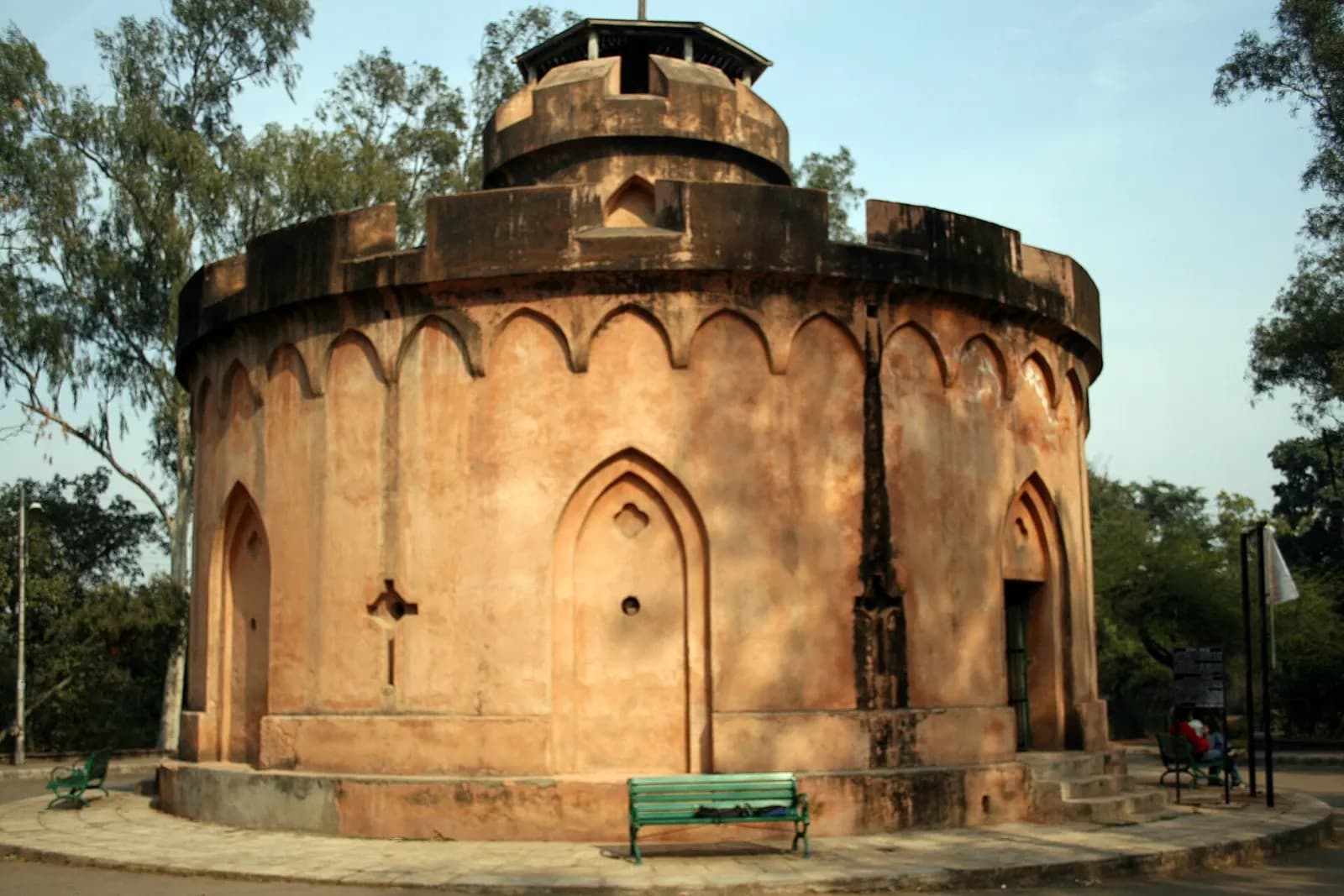
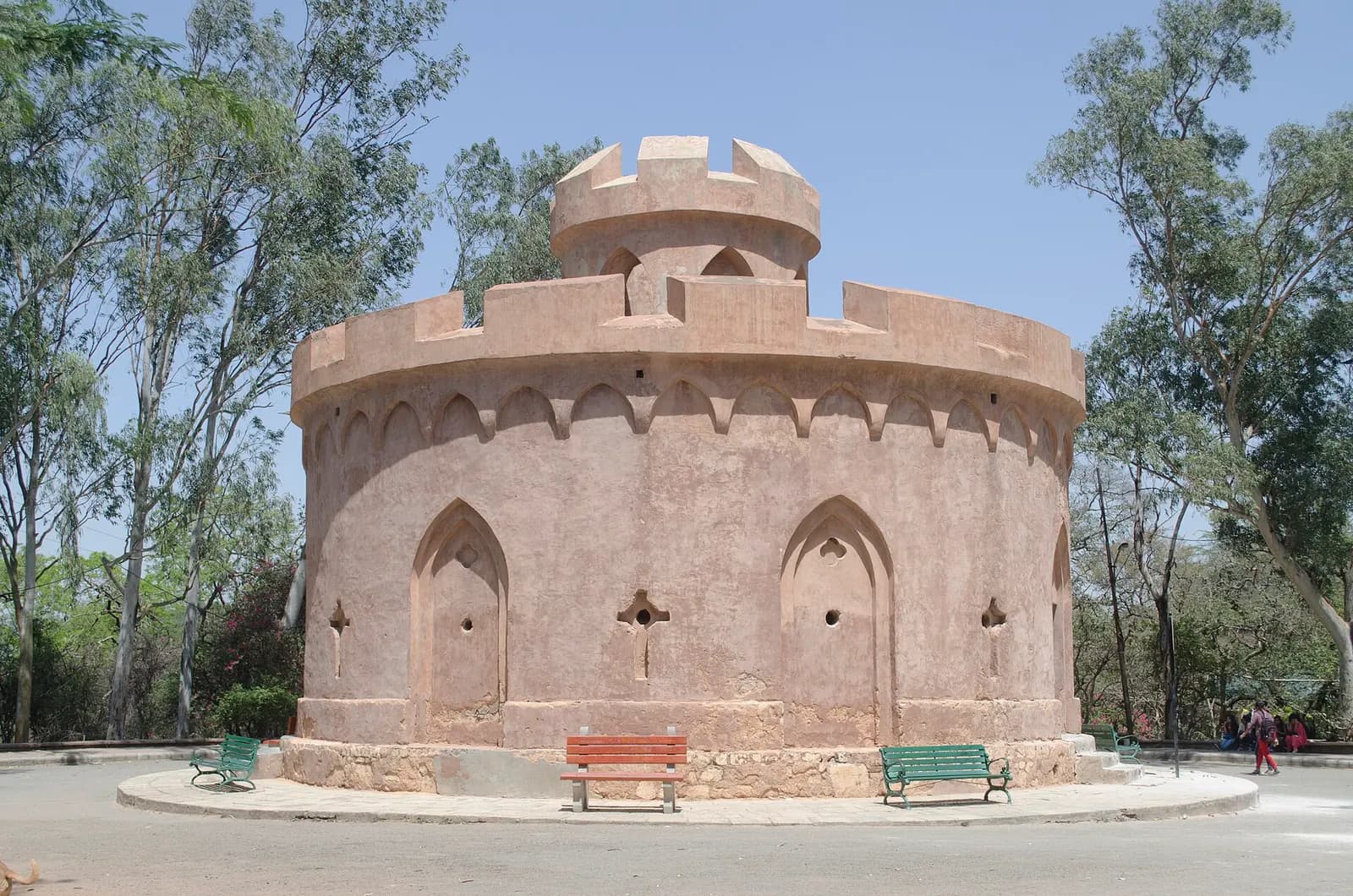
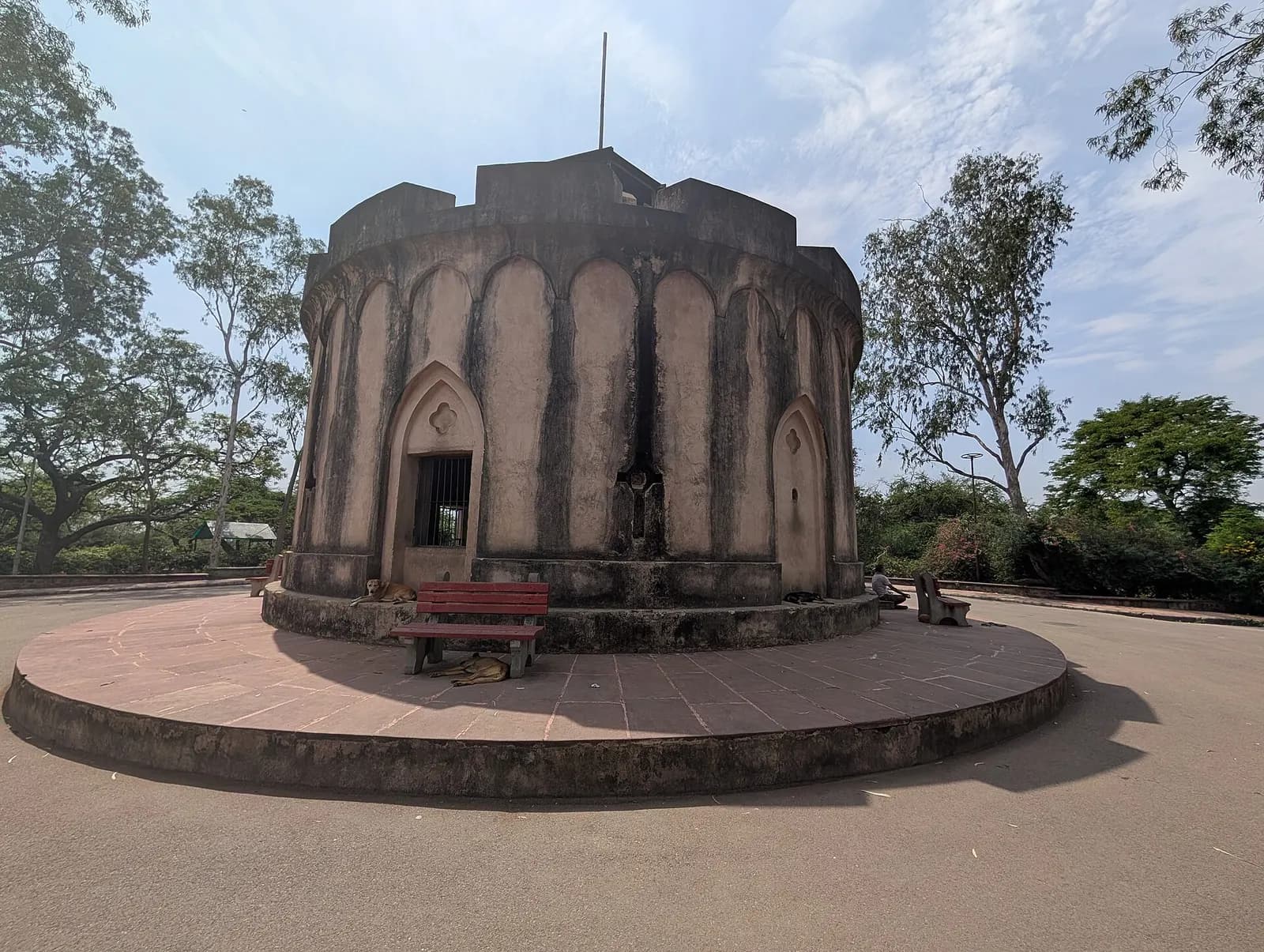
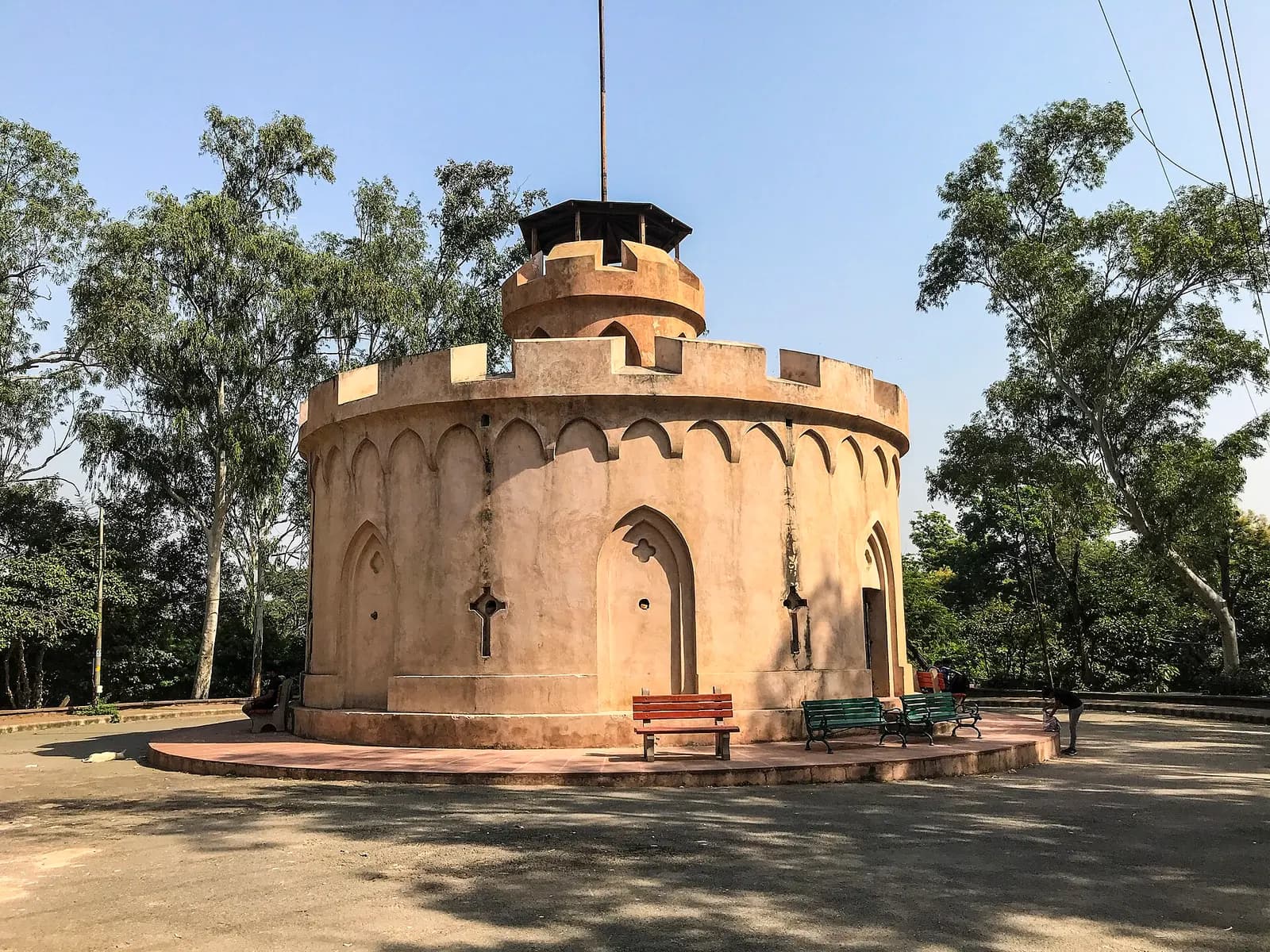
Flagstaff Tower is a historic early 19th-century colonial watchtower standing on the highest point of the Northern Ridge, set deep within the forested Kamla Nehru Ridge in Civil Lines, North Delhi. Built by the British in 1828, it was designed as a strategic lookout, signal station and telegraph post, from which the Union Jack was flown to assert control over the Ridge territory. It is a simple, sturdy structure built for military utility rather than beauty: a standalone circular two-storey castellated tower of local Delhi quartzite, with thick walls, narrow arrow-slit loopholes for firing under cover, a single circular ground-floor room and a winding stair to the roof, where a tall central iron flagpole gives the tower its name. Today it is a protected monument of national importance under the Archaeological Survey of India, a quiet, isolated and deeply atmospheric relic hidden in the forest, best known for the pivotal and tragic role it played in the opening of the 1857 rebellion.
Several things make it special and they are worth drawing out:
- A key site of 1857. The tower where British refugees sheltered on 11 May 1857, one of the most direct links to the outbreak of the rebellion.
- A dramatic human story. The refuge, the agonising day under siege and the desperate night retreat make it one of Delhi's most story-rich monuments.
- An early colonial structure. A rare surviving example of an 1828 British military signal tower, purpose-built and little altered.
- A forest setting. Hidden on the wooded Northern Ridge, a wild, green and isolated contrast to the city around it.
- A Ridge heritage trail. A milestone on the trail that links it with the nearby Mutiny Memorial and the ancient Ashoka Pillar.
It is one of the most atmospheric and historically rich of the offbeat things to do in Delhi and a fascinating lesser-known entry among the important monuments of Delhi.
History of Flagstaff Tower
The history of Flagstaff Tower spans its original military purpose and the dramatic role it played in the rebellion of 1857 and understanding both is the key to the site. The tower was built by the British in 1828 as a practical piece of military infrastructure, a signal and lookout station and telegraph post placed on the highest point of the Delhi Ridge, from where its occupants could watch over the surrounding country and fly the flag that signalled British control of the Northern Ridge. For its first decades it was simply that, a quiet, functional outpost on the wooded heights above the city, part of the network by which the colonial administration kept watch over Delhi and the routes to the north.
That quiet function was shattered on 11 May 1857, when the tower became a focal point in the outbreak of the rebellion:
- The outbreak. As rebel sepoys marched on Delhi from Meerut and took control of the walled city, the British community in the Civil Lines and cantonment areas was thrown into panic.
- The refuge. Terrified British officers, women, children and loyalists fled their bungalows and crowded into this tiny, cramped tower, hoping for shelter and for rescue.
- The retreat. After an agonising, sweltering day inside under threat, with no reinforcements coming, the refugees abandoned the tower at nightfall and made a desperate retreat toward Karnal and Ambala.
In the aftermath, the tower was taken by the Indian fighters, who used its commanding height to monitor the movements of British troops arriving from the north during the long struggle for the city. In the months that followed, as British forces regrouped and gathered on the Ridge to lay siege to Delhi, this high ground became strategically vital to both sides and the tower that had sheltered the fleeing families in May stood witness to the wider campaign that unfolded across these heights through the summer and autumn of that year. These events place Flagstaff Tower at the very heart of the opening of the 1857 rebellion in Delhi and they are what give the modest structure its powerful hold on the imagination. To stand at the tower knowing that it sheltered frightened families on that first chaotic day and that they fled from it into the night, is to feel the human reality of a pivotal moment in Indian history. Knowing this story transforms a visit from a look at an old stone tower into an encounter with one of the most dramatic episodes the city has seen.
The events of 11 May 1857
Of all the tower's history, it is the single day of 11 May 1857 that defines it and it is worth telling in full, because it is the reason the site matters. On that morning, the rebellion that had broken out among the sepoys at Meerut spread to Delhi, as mutinying soldiers crossed to the city, rallied support and seized control of the walled capital, turning to the last Mughal emperor as their figurehead. For the British residents of Delhi, living in the bungalows of the Civil Lines below the Ridge, the news brought sudden terror and many fled upward to the one defensible point they knew, the Flagstaff Tower on the heights.
There, through a long and brutally hot day, a crowd of officers, women, children and loyal servants huddled inside and around the tiny tower, far too small to hold them in any comfort, waiting in fear and confusion for news and for the relief that never came. As the day wore on and it became clear that the city was lost and that no reinforcements were on their way, the decision was taken to abandon the position. At nightfall the refugees left the tower and set off in a desperate, disorganised retreat northward toward Karnal and Ambala, a flight marked by hardship and danger. The tower they left behind was occupied by the revolutionaries, who used its vantage point to watch for the British forces that would later gather on the Ridge to besiege the city. It is this concentrated drama, the panic, the long wait, the abandonment and the flight, all unfolding at this one small tower, that makes Flagstaff Tower such an evocative place to visit and knowing it in detail is what brings the quiet stones to life.
Architecture and design
Flagstaff Tower is a textbook example of early 19th-century colonial military architecture, built for defensive utility rather than ornament and its plain, solid form is part of its appeal. The structure is a standalone, circular, two-storey castellated stone tower, constructed from the local Delhi quartzite that gives so many Ridge monuments their rugged character. Its key features are worth noting as you walk around it:
- The castellated form. A compact circular tower with a crenellated, battlement-style top, giving it the look of a miniature fort.
- Thick walls and loopholes. Heavy stone walls pierced by narrow arrow-slit loopholes, designed so that defenders could fire rifles at attackers while staying under cover.
- The flagstaff. A tall central iron flagpole rising from the roof, from which the Union Jack was flown to signal control of the Ridge and from which the tower takes its name.
- The interior. A single circular room on the ground floor, with a small winding staircase leading up to the roof, a cramped space that makes the crowding of 11 May 1857 all the more vivid.
The overall impression is of a purposeful, no-nonsense military building, small, strong and perched for its commanding view, with none of the decorative flourish of the city's Mughal or imperial monuments. The choice of local quartzite ties it visually to the Ridge itself and to the other colonial-era structures scattered across these heights, so that the tower seems to grow out of the rocky ground it stands on. Its elevated position was the whole point of its existence, giving its occupants a clear line of sight over the country to the north and the routes into the city, which is exactly why it mattered so much in the fighting that followed. That very plainness is evocative, because it was this cramped, utilitarian shelter that the refugees of 1857 crowded into. The interior iron gate is currently kept locked to the public for preservation, so visitors experience the tower from the outside, but even from without, reading its loopholes, its battlements and its tiny footprint against the story of that day is deeply affecting. The architecture and the history are inseparable here: the building is small and spare precisely because it was never meant to shelter a terrified community, which is what makes its role in 1857 so poignant.
What to expect at Flagstaff Tower
A visit to Flagstaff Tower is short, atmospheric and distinctly offbeat, quite unlike the city's major monuments and knowing what to expect helps you make the most of it. The tower stands deep inside the wooded Northern Ridge, reached by a path through the forest, so the approach itself is part of the experience, a green, quiet and slightly wild walk away from the noise of the city. The monument is compact and with the interior locked the visit is about the exterior and the setting: walking around the tower, taking in its castellated form and loopholes, absorbing the commanding position on the Ridge and, above all, reflecting on the drama of 1857 that played out here. The whole visit takes only about twenty to thirty minutes, so it is a focused, contemplative stop rather than a lengthy one and it rewards pausing to picture the scene of 1857 rather than simply looking at the stones. For many visitors the lasting impression is less the modest building itself than the strange quiet of the place and the weight of the history it holds.
Because it sits inside a rugged forest reserve, there are no public toilets, drinking water taps or food stalls anywhere nearby, so you should come self-sufficient, carrying your own water. The forest is also home to large, bold troops of rhesus monkeys, which will readily try to snatch food, plastic bags, juices or snacks from your hands, so it is best not to carry open food or bags in sight. The setting is peaceful and historic, but it is genuinely isolated, so it is wise to visit in daylight and ideally not entirely alone. Come to know the story, prepared for a forest walk with no facilities and watchful monkeys and the tower delivers a powerful, concentrated encounter with one of the most dramatic moments in Delhi's past.
Flagstaff Tower timings and entry
Flagstaff Tower is open daily from sunrise to sunset, roughly 6:00 AM to 6:00 PM and entry is completely free for both domestic and international visitors, with no advance booking or digital ticketing of any kind. A visit to the tower and its immediate setting takes about twenty to thirty minutes, as the interior iron gate is generally kept locked for preservation and the experience is of the exterior and the Ridge around it. There are no facilities at or near the monument, no public toilets, drinking water or food stalls, because it sits deep within the forest reserve, so plan to arrive self-sufficient with your own water. Be mindful too of the aggressive rhesus monkeys in the surrounding forest, which will try to snatch food and bags. These timings are current at the time of writing and can vary, so plan a daytime visit, ideally in the morning and reconfirm if your plans depend on exact hours.
Facilities, safety and what to carry
Because the tower sits deep in a forest reserve with no amenities, a little preparation makes the visit far more comfortable and safe:
- Carry your own water. There are no drinking water taps or food stalls anywhere near the monument, so bring a personal water bottle.
- Keep food and bags out of sight. The forest has large, bold troops of rhesus monkeys that actively snatch open plastic bags, juices and snacks from visitors' hands.
- Use facilities beforehand. There are no public toilets at or near the tower, so plan ahead before you set off into the Ridge.
- Wear comfortable shoes. Reaching the tower involves a walk through the forest on rough paths.
- Visit in daylight and not alone. The setting is genuinely isolated, so it is wise to come in the morning or earlier afternoon and ideally with company.
- Allow 20 to 30 minutes for the tower and its setting.
The key practical point is that this is a monument in the wild, not a serviced tourist site, so coming self-sufficient and alert, especially about the monkeys and the isolation, is what makes the visit smooth. Handled sensibly, the forest setting is a large part of the tower's charm, a rare chance to experience a historic monument in a genuinely natural and atmospheric Ridge landscape within the city.
Best time to visit Flagstaff Tower
The best time to visit is the cooler months, from October to March and within the day the morning, both for comfortable weather on the forest walk and for the better light and quieter, safer conditions earlier in the day. A winter morning is ideal, with pleasant temperatures for the walk through the Ridge and soft light on the old stone tower. The summer is best avoided, as the forest walk and the exposed heights become very hot, exactly as the refugees of 1857 found on that sweltering May day and the monsoon can leave the forest paths muddy and slippery. Because the tower sits in a wooded reserve with aggressive monkeys and no facilities, a daytime morning visit is also the safest. Allow around half an hour and combine it with the other Ridge monuments if you wish. Our guide to the best time to visit Delhi sets out the seasons across the city in more detail.
How to reach Flagstaff Tower (nearest metro)
Flagstaff Tower stands on the Kamla Nehru Ridge in Civil Lines, close to Delhi University's north campus and it is most easily reached by metro. The nearest station is Vishwavidyalaya on the Yellow Line and from the station exit it is a pleasant fifteen to twenty minute walk through the university lanes or a short five minute auto-rickshaw hop, to the forest entry path on Chauburja Marg, from which a path leads through the Ridge to the tower. The surrounding Northern Ridge and the university area are a historic, leafy part of north Delhi, so the approach is itself enjoyable. Because the tower sits off the usual monument trail and inside a forest reserve, it is best treated as a dedicated history and nature outing and a heritage-focused New Delhi tour or a broader Delhi day tour that takes in the Ridge and the 1857 sites can help you reach and understand it.
Places to visit near Flagstaff Tower
Flagstaff Tower sits in the historic north of the city, on the Ridge above Civil Lines and old Delhi, so it combines naturally with the city's 1857 history and its great monuments. It forms a milestone on the Ridge heritage trail that links it with the nearby Mutiny Memorial and the ancient Ashoka Pillar on the same wooded heights, a natural walking circuit for the history-minded. A short ride south brings you to the mighty Red Fort, the great Mughal citadel at the heart of the 1857 story and the old fort of Purana Qila.
The ceremonial heart of New Delhi, with India Gate and the great circle of Connaught Place, is a manageable ride away and the capital's other landmarks round out a full picture of the city: the serene Humayun's Tomb, the towering Qutub Minar and the modern marvels of the Lotus Temple and Akshardham. For more hidden history, the ancient stepwell of Agrasen ki Baoli, the astronomical Jantar Mantar, the historic Hauz Khas Fort and the ruins of the Mehrauli Archaeological Park complete the sweep of Delhi's long past.
Flagstaff Tower in your Delhi itinerary
For most visitors, Flagstaff Tower works best as a short, atmospheric stop within a Northern Ridge heritage outing rather than a destination on its own, given that the visit takes under half an hour and that it rewards knowing its story. The natural pairing is with the other Ridge monuments, the Mutiny Memorial and the Ashoka Pillar, which share both the wooded setting and the 1857 theme, so the three together make a focused, story-rich walk through the heights where so much of the rebellion played out. It is a stop for travellers with a genuine interest in history, in the events of 1857 and in Delhi's quiet, forested corners, rather than for those ticking off headline sights and it rewards reading the dramatic story of 11 May in advance.
If Delhi is your gateway to the wider Golden Triangle, Flagstaff Tower offers a powerful and intimate perspective on the opening of the 1857 rebellion and on the human drama behind the grand sweep of history, a wild, reflective counterpoint to the polished Mughal and imperial monuments elsewhere. Many of my history-minded guests find the story of the refuge and retreat unexpectedly moving and the forest setting unexpectedly wild for a monument within the city and it adds a distinctive, adventurous note to a Delhi exploration before the journey on to Agra and Jaipur.
Travel tips for visiting Flagstaff Tower
A few pointers make the visit smoother and more rewarding:
- Come in the cooler months, October to March and in the morning, for the forest walk and the light.
- Know the story first, the events of 11 May 1857, as the tower's power is entirely in its history.
- Carry your own water, as there are no taps, toilets or food stalls near the monument.
- Keep food and bags hidden from the bold rhesus monkeys in the forest.
- Wear comfortable shoes for the walk through the Ridge from Chauburja Marg.
- Visit in daylight and ideally with company, as the setting is isolated.
- Combine it with the Mutiny Memorial and Ashoka Pillar on the Ridge heritage trail.
- Reach it via Vishwavidyalaya metro, a 15 to 20 minute walk or a short auto.
If you would like a local guide to build Flagstaff Tower and the Ridge trail into a wider Delhi heritage plan, message our team on WhatsApp at +91 7302265809 with your travel dates and group size and we will shape the day for you.
Is Flagstaff Tower worth visiting?
For history lovers and those drawn to Delhi's atmospheric, offbeat and natural corners, yes, it is a genuinely rewarding stop. There are few places in the city that connect you so directly to the dramatic outbreak of the 1857 rebellion and fewer still that do so in such a wild, forested and evocative setting, a lonely stone tower on the Ridge where terrified families once sheltered and from which they fled into the night. It is free, quick to see and deeply story-rich. The honest note is that it is a small, locked monument deep in a forest with no facilities and bold monkeys, reached by a walk and best appreciated with its history in hand, so it is not a convenient or feature-rich tourist attraction and its appeal depends almost entirely on an interest in history and atmosphere. But for the curious, history-minded traveller willing to seek it out, especially as part of the Ridge trail, it is one of the most evocative and memorable places in Delhi and I enjoy showing it to guests with a taste for the deeper, wilder side of the city's past.
Plan your trip with us
At Experience My India, through our Delhi and Golden Triangle travel desk, we design unhurried, well paced trips that make room for atmospheric, history-rich stops like Flagstaff Tower and the Ridge trail, not just the headline monuments and we know how to reach and interpret the city's hidden historical corners. Whether you want a relaxed set of Delhi Agra tours or a full Golden Triangle route through Delhi, Agra and Jaipur, we plan around your pace, your interests and the right season, with local guides who know the stories behind the stones. Share your dates and the kind of trip you have in mind through our enquiry page, tell us your group size and we will put together an honest, tailored plan rather than a rushed checklist.
Related guides
- Places to visit in Delhi, for the wider picture
- Hidden places to visit in Delhi, the city's quieter corners
- Nearby places to visit in Delhi, to extend your trip
Enquire Now
Ready to Explore
The Heart of Delhi?
Explore the Red Fort, Qutub Minar, Humayun's Tomb, and the vibrant streets of Old Delhi with our expert-guided premium tours of India's capital city.

Delhi
Premium Tour Package
Questions
Frequently asked questions
What are the timings of Flagstaff Tower?
It is open daily from sunrise to sunset, roughly 6:00 AM to 6:00 PM. A visit takes about 20 to 30 minutes. The interior is usually locked, so you see the exterior and the setting. Reconfirm, as timings can vary.
What is the entry fee for Flagstaff Tower?
Which is the nearest metro station to Flagstaff Tower?
Why is Flagstaff Tower famous?
What happened at Flagstaff Tower in 1857?
Can you go inside Flagstaff Tower?
How do I reach Flagstaff Tower and are there facilities?
Is Flagstaff Tower worth visiting?
Can I combine Flagstaff Tower with other monuments?
Explore more
Plan your Flagstaff Tower trip with us

Photo credits
Photos from Wikimedia Commons, used under their licences:
- Photo 1 by Ramesh lalwani, CC BY-SA 3.0
- Photo 2 by Rangan Datta Wiki, CC BY-SA 4.0
- Photo 3 by Dgp4004, CC0
- Photo 4 by Indrajit Das, CC BY-SA 3.0
- Photo 5 by Indrajit Das, CC BY-SA 3.0
Interested in Flagstaff Tower Delhi: History, Timings and Visitor Guide?
Chat with our travel team for a custom quote, or browse every package.
Related Attractions
9Ready to explore Flagstaff Tower Delhi: History, Timings and Visitor Guide?
Book your private tour today and experience the magic of India's rich heritage.