

Kalkaji Mandir Delhi: Timings, Aarti, Darshan and Visitor Guide
Visiting Kalkaji Mandir in Delhi? The Kali Shakti Peeth, timings, aarti, free darshan, Navratri, the nearest metro, best time and visitor tips.
In a Nutshell
“Kalkaji Mandir is an ancient and much revered Hindu temple in South Delhi, dedicated to the goddess Kalka, a form of Kali and known as a Manokamna Siddh Peeth, a shrine believed to fulfil sincere wishes. Set on a low hill opposite Nehru Place and right beside the Lotus Temple, it draws huge crowds, especially during Navratri. General darshan is free, it is open from the early hours until late at night and the nearest metro, Kalkaji Mandir, is barely 200 metres away. It is cared for within the work of a unit of Experience My India.”
Kalkaji Mandir is one of Delhi's most important and atmospheric Devi temples, a living centre of goddess worship that has drawn pilgrims for centuries, now sitting improbably between the metro, Nehru Place and the serene Lotus Temple. If you want to feel the raw devotional energy of a great Shakti shrine, this is the place. Our team at Delhi Agra Tour Packages often pairs it with its famous neighbours for travellers interested in living faith and it adds a powerful spiritual note to a wider Golden Triangle tour.
I am Abhay Sharma, Delhi born and a Golden Triangle guide since 2015 and I always tell guests that Kalkaji rewards an early start and an open, respectful heart. This guide gathers everything I would tell a visitor beforehand, checked against current information, including the darshan windows and how to visit comfortably.
Details
Kalkaji Mandir at a glance
| Detail | Information |
|---|---|
| Location | Ma Anandmayee Marg, Kalkaji, South Delhi, opposite Nehru Place |
| Dedicated to | Goddess Kalka, a form of Kali |
| Known as | A Manokamna Siddh Peeth, a wish-fulfilling shrine |
| Entry fee | Free for general darshan; paid VIP passes available |
| Nearest metro | Kalkaji Mandir (Violet and Magenta interchange), about 200 metres |
| Time needed | 30 to 60 minutes, longer at festivals |
| Busiest | Navratri and Saturday and Tuesday evenings |
| Neighbours | The Lotus Temple and ISKCON Temple, both close by |
Kalkaji Mandir timings
| Detail | Information |
|---|---|
| Temple doors | Daily, about 4:00 AM to 11:30 PM |
| Weekly closure | None and no long afternoon break |
| Brief closures | Short pauses for cleaning and bhog offerings |
The temple is open long hours every day, roughly 4:00 AM to 11:30 PM, with brief daily closures for cleaning and the preparation of bhog, the food offering. Darshan runs in windows through the day, so there are short pauses rather than one long afternoon closure.
Darshan and aarti
| Session | Approximate time |
|---|---|
| Early darshan (after Mangala aarti) | 4:00 AM to 5:30 AM |
| Morning darshan | 6:30 AM to 11:30 AM |
| Afternoon and evening darshan | 12:00 PM to 7:00 PM |
| Night darshan | 9:00 PM to 11:30 PM |
| Morning aarti | Around 5:00 to 6:30 AM in summer, 6:00 to 7:30 AM in winter |
| Evening aarti | Around 7:00 to 8:30 PM in summer, 6:30 to 8:00 PM in winter |
These windows and aarti times are approximate and shift between summer and winter and around festivals, so treat them as a guide and reconfirm, especially if you are coming for a particular aarti.
Entry and VIP darshan
| Detail | Information |
|---|---|
| General darshan | Free for everyone |
| VIP darshan | Paid passes, roughly ₹100 to ₹500 depending on the rush |
| Footwear | Removed outside the main sanctum |
| Dress code | Modest, traditional, respectful attire |
General darshan is completely free. Paid VIP passes, which allow a quicker route to the shrine during busy times, can be bought at official counters, with prices varying by season and crowd. Reconfirm the current arrangements, as they change around festivals.
How to reach
| From | Route |
|---|---|
| Kalkaji Mandir metro (Violet and Magenta interchange) | About 180 to 200 metres; Exit Gate 2 leads straight to the temple |
| Okhla NSIC metro (Magenta Line) | About 340 metres away |
| Hazrat Nizamuddin Railway Station | About 6 km away |
| By road | On-site parking is very limited; use Nehru Place parking and walk |
What is Kalkaji Mandir and why is it so revered?
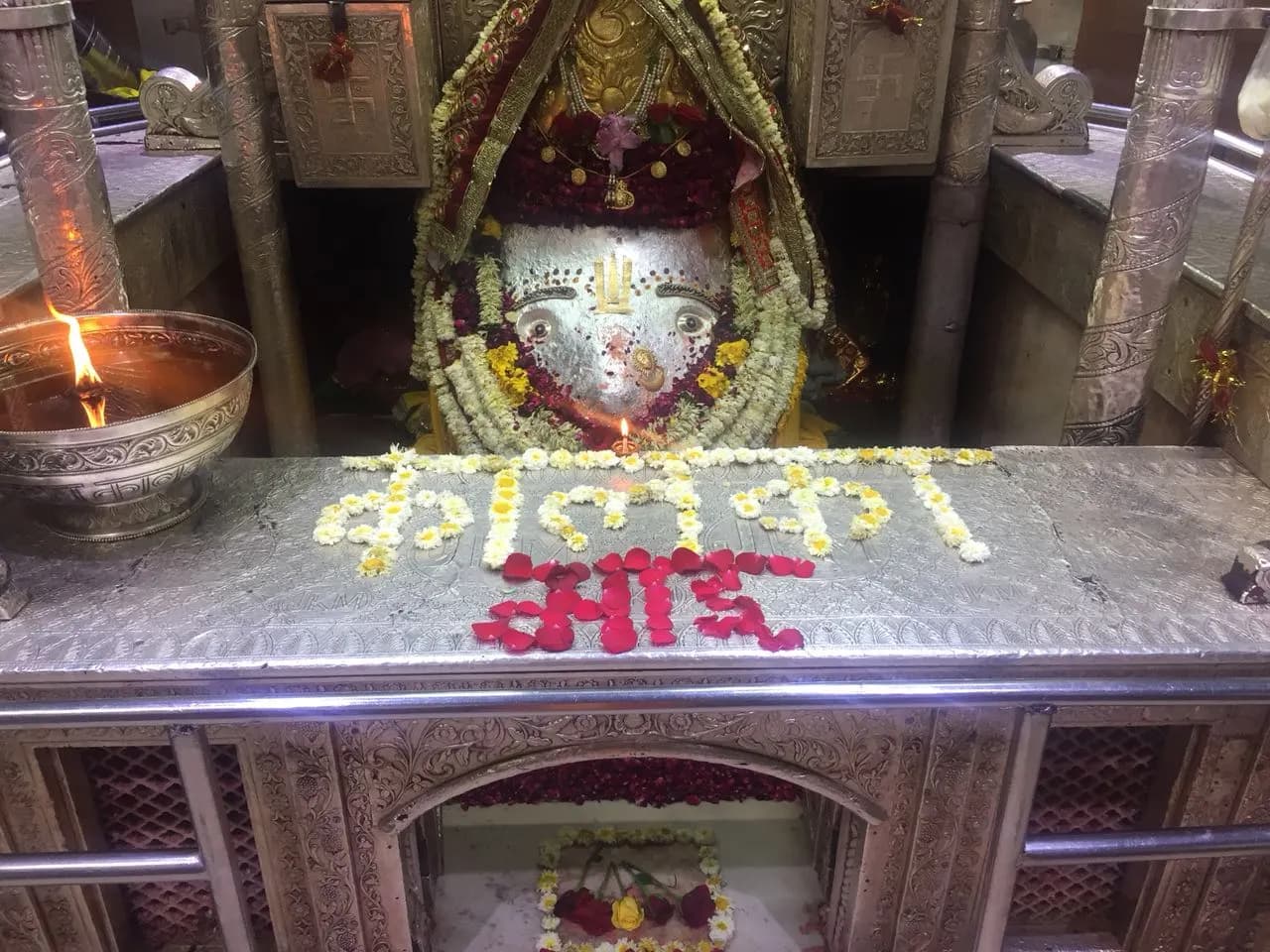
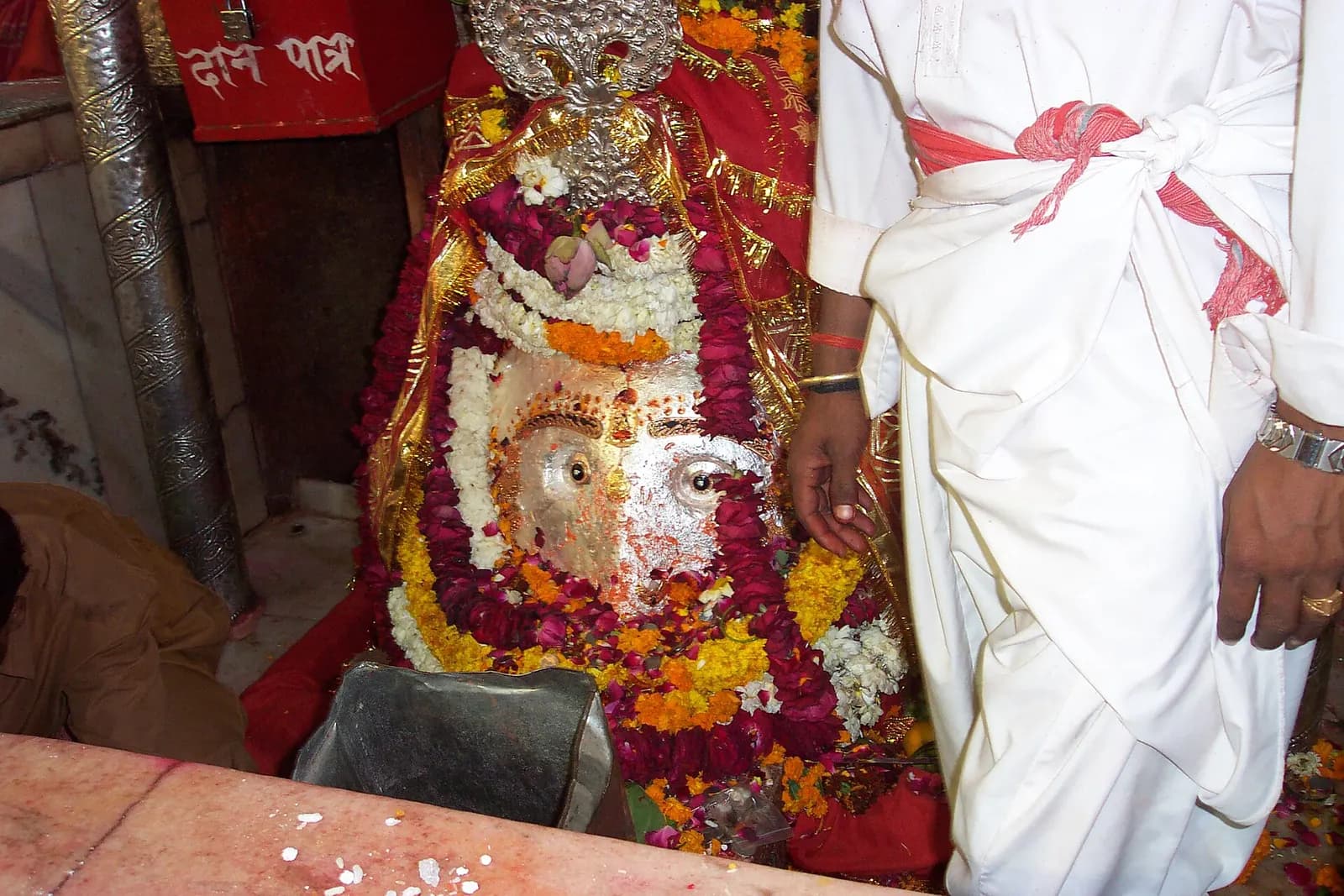
Kalkaji Mandir is an ancient Hindu temple in South Delhi dedicated to the goddess Kalka, worshipped as a fierce and protective form of Kali, the great goddess of power and destruction of evil. It stands on a low hillock, long known as the Kalkaji hill and it is held to be a Siddh Peeth, a shrine of proven spiritual power and in particular a Manokamna Siddh Peeth, a place where the sincere wishes and prayers of devotees are believed to be fulfilled. That reputation, built over centuries, is why the temple draws such enormous and devoted crowds.
It is revered and remarkable for several reasons:
- A powerful Devi shrine. One of Delhi's most important temples to the goddess, a living centre of Shakti worship.
- A wish-fulfilling Siddh Peeth. Famed as a place where heartfelt prayers are answered, which draws pilgrims from far and wide.
- Ancient roots. A shrine of great antiquity by tradition, layered with legend reaching back to the epics.
- An extraordinary setting. A centuries old temple now ringed by the metro, Nehru Place and the modern Lotus Temple, old and new side by side.
- Navratri intensity. During the goddess festivals the temple and its approaches overflow with devotees in one of Delhi's great displays of faith.
It belongs on any thoughtful list of things to do in Delhi for those drawn to living devotion and it is among the most spiritually charged of the places to visit in Delhi.
What is the history and legend of Kalkaji Mandir?
Kalkaji is wrapped in both deep antiquity and vivid legend and the honest picture blends the two. By tradition the shrine is extremely old, with its sanctity reaching back into myth and some accounts link worship on this hill to the age of the epics, when the Pandavas and others are said to have honoured the goddess here. The core legend tells that the goddess Kalika manifested on this very spot to destroy demons who were terrorising the gods, among them the fearsome Raktabija and that the temple marks the place of her triumph, which is why it is held to be charged with her living presence and power.
The physical temple you see today is more recent. While worship here is ancient, the present structure is generally dated to the 18th century, with much of it attributed to the Maratha period and later additions and expansions by devotees and rulers over the following centuries. So, as with many of India's great living shrines, you are looking at a relatively recent building raised over a site whose holiness is believed to be immeasurably older. For devotees, the age of the stones matters far less than the continuity of the goddess's presence, which they hold to have drawn worshippers to this hill for countless generations. That blend of myth, antiquity and unbroken devotion is central to the temple's aura.
The temple's own structure reflects this long, layered history. The main shrine is a modest, dodecagonal or twelve-sided, marble and stone building, added to and expanded many times by different patrons and devotee communities over the centuries, so it is less a single grand design than an accretion of devotion, verandahs, gateways and halls growing around the ancient core. In the past the hill stood in open country south of the city, a quiet place of pilgrimage; today the metropolis has grown entirely around it and the contrast between the old shrine and the high-rises, flyovers and metro that now surround it is striking. Yet the devotion has never faltered. For the millions who come, Kalkaji is not a heritage site to be dated and catalogued but a living seat of the goddess and that continuity of faith, far more than any building, is what they come for. It is worth holding both truths in mind as you visit: a relatively recent set of structures and a sanctity believed to be ancient beyond reckoning.
Who is Goddess Kalka?
The temple is dedicated to Kalka or Kalika, a form of the goddess Kali and understanding her helps make sense of the devotion here. Kali is the fierce, powerful aspect of the great goddess, the destroyer of evil and ego, worshipped across India as a protective mother who vanquishes demons and dangers that gentler forms cannot. As Kalka, she is the presiding deity of this hill and the temple's standing as a Shakti shrine, a seat of the divine feminine energy, flows from her. Devotees come to her for strength, protection and the fulfilment of their deepest wishes, which is why the temple is so closely associated with the idea of the Manokamna Siddh Peeth, the shrine that grants sincere desires. Her worship reaches its height during the two annual Navratri festivals, the nine nights dedicated to the forms of the goddess, when Kalkaji becomes one of the most thronged temples in the capital. Knowing that this is a shrine to Kali in her powerful, wish-granting form explains both the intensity of the devotion and the scale of the Navratri crowds.
The idea of the Manokamna Siddh Peeth is worth dwelling on, because it is central to why people come. Manokamna means a heartfelt wish or desire and a Siddh Peeth is a shrine whose power is held to be proven, so a Manokamna Siddh Peeth is a place where devotees believe the goddess grants their sincere prayers. Many who visit Kalkaji come not as sightseers but as petitioners, bringing a specific hope, for health, a child, a marriage, success in an exam or a venture and returning to give thanks when it is fulfilled. This is why you will see such visible emotion at the shrine and why the temple is so densely woven into the everyday lives of Delhi's people rather than being a monument they visit once. For an outsider, understanding this transforms the experience: the crowds and the intensity are not chaos but concentrated hope, generations of it, focused on this one hill. It is a powerful thing to witness and approaching it with that understanding and with respect, is the key to appreciating Kalkaji.
What is Navratri like at Kalkaji Mandir?
Navratri is when Kalkaji comes fully into its own and it is one of the great devotional spectacles of Delhi. Over the nine nights dedicated to the goddess, twice a year in spring and autumn, the temple and the lanes leading to it fill with vast crowds of worshippers come to seek the blessing of the goddess in her most powerful season. Queues stretch for hours, the approaches throng with stalls selling flowers, offerings and red chunris and the air is thick with chanting, bells and incense around the clock. Special arrangements, extra queues, barriers and security are put in place to manage the enormous footfall and the energy is overwhelming in the best sense, a tide of collective faith focused on the hill.
For a visitor, Navratri at Kalkaji is unforgettable but demanding. If you want to witness Devi worship at its most intense, there is nowhere better, but go prepared for long waits, dense crowds and slow movement, arrive very early or very late, carry little and be patient. If instead you want a calmer experience of the same shrine, come well outside the festival, when the temple returns to its everyday rhythm of morning and evening aartis and manageable queues. Knowing which experience you want and timing your visit accordingly, makes all the difference at Kalkaji.
What is a visit to Kalkaji Mandir like?
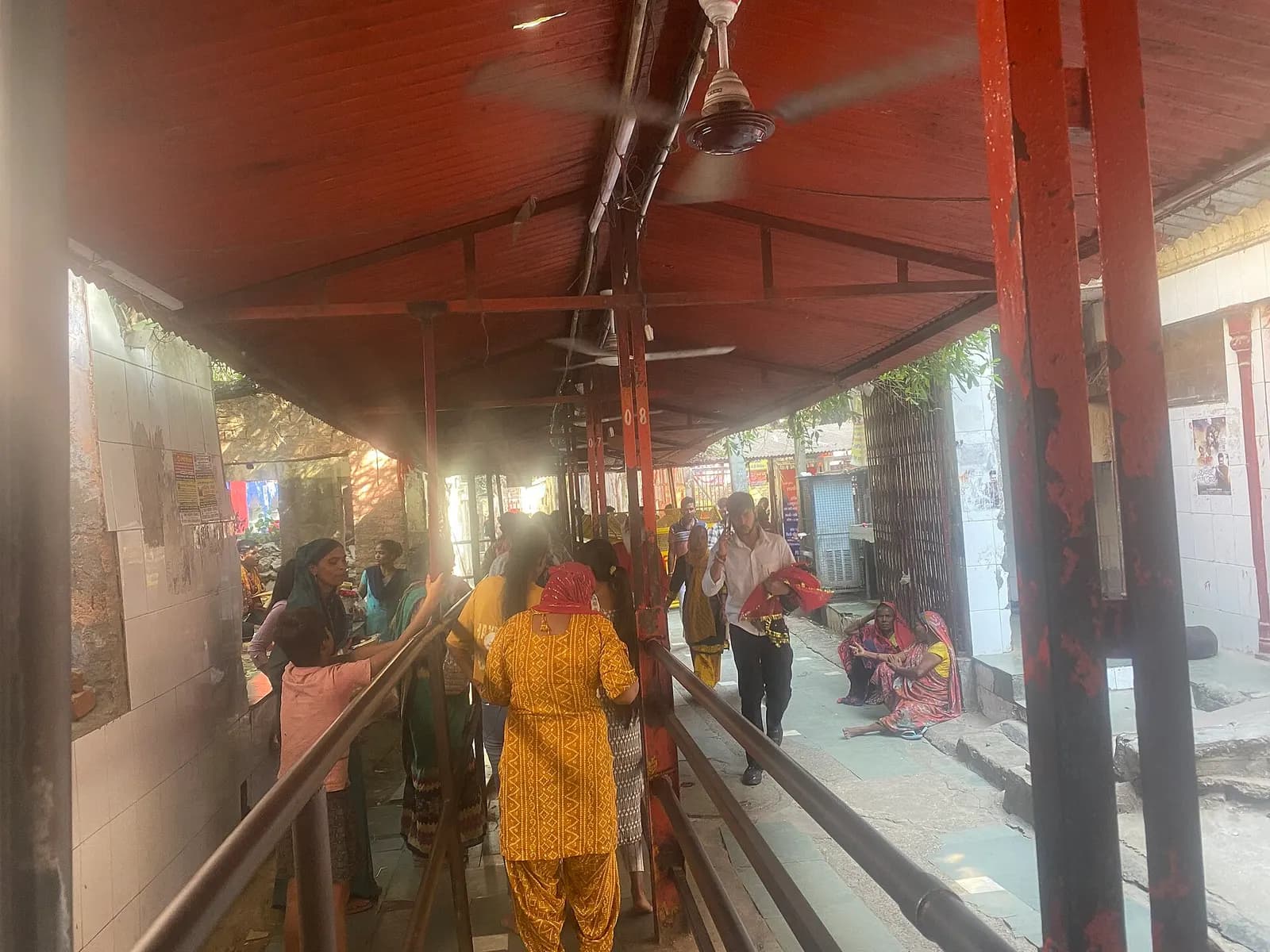
A visit to Kalkaji is an intense, deeply devotional experience rather than a quiet sightseeing stop and knowing that helps you enjoy it. You approach through a lane lined with stalls selling flowers, coconuts, red chunris and other offerings for the goddess, leave your shoes at a stand and join the flow of pilgrims towards the sanctum. Inside, the shrine is small, dim and powerfully atmospheric, heavy with the scent of incense and flowers and the sound of bells and chanting, with the deity at its heart. The crowd presses close, especially at busy times and the darshan itself is often brief, a charged moment before the goddess before you move on. It is a world away from the calm of a museum, full of raw, heartfelt devotion.
Go in the right spirit and it is deeply moving. Come early if you can for a calmer experience, keep your expectations realistic about crowds and queues, hold your belongings close and simply let yourself be carried along by the devotion around you. You do not need to be a believer to feel the power of the place; the sheer concentration of faith is striking in itself. Many visitors pair the raw energy of Kalkaji with the serene calm of the Lotus Temple next door and the contrast between the two, barely a few hundred metres apart, is one of the most memorable in Delhi.
A few practical observations help set expectations. The approach lanes are narrow and lined tightly with shops and they can be chaotic, especially in the evenings, so keep children close and watch your belongings. The darshan queue is usually managed with railings and during ordinary times moves reasonably quickly, though at peak hours it can be slow and crowded. Inside, you are not permitted to linger long at the sanctum when it is busy, as the crowd must keep flowing, so take in the moment and move on gracefully. Photography is generally restricted in and around the inner shrine, so look for signs and follow the lead of the staff and other devotees. None of this should put you off; it is simply the reality of a hugely popular living temple and going in knowing what to expect lets you relax into the experience rather than being surprised by the crowds. Come early and much of this eases considerably.
Is Kalkaji Mandir worth visiting?
Yes, though it suits a particular kind of visitor. Kalkaji is not a polished, architectural showpiece like the Lotus Temple next door; it is a crowded, intense, deeply living shrine and its value lies exactly there. For travellers who want to experience real, everyday Hindu devotion, the raw energy of a great Shakti temple and the texture of a pilgrimage that has drawn people for centuries, it is one of the most authentic and powerful stops in Delhi. For those who prefer calm order and clear sightlines, it can feel overwhelming, especially at busy times. The ideal approach is to come early, keep your expectations realistic and treat it as an experience to feel rather than a monument to inspect. Its unbeatable location, right at the metro and beside the Lotus Temple and ISKCON, makes it easy to include and the contrast between Kalkaji's intensity and its serene neighbours is itself one of the most rewarding things about visiting this corner of Delhi. For the right traveller, it is unmissable; for others, it is best appreciated briefly and early. Either way, it offers a side of the city that the grand monuments cannot.
What are the Kalkaji Mandir timings and darshan windows?
Kalkaji Mandir keeps long hours, open every day with no weekly closure and no single long afternoon break. The doors are generally open from about 4:00 AM to 11:30 PM, with darshan offered in several windows throughout the day and short pauses in between for cleaning and for bhog, the preparation and offering of food to the goddess. Broadly, there is early darshan after the pre-dawn Mangala aarti from around 4:00 to 5:30 AM, a long morning window from about 6:30 to 11:30 AM, an afternoon and evening window from around noon to 7:00 PM and a late night window from about 9:00 to 11:30 PM. The main aartis are held morning and evening, with the exact times shifting between summer and winter, roughly 5:00 to 6:30 AM and 7:00 to 8:30 PM in summer and a little later in the morning and earlier in the evening in winter. All of these are approximate and change around festivals, so reconfirm if you are timing your visit to a particular aarti or darshan window.
What are the entry fee and VIP darshan at Kalkaji Mandir?
General darshan at Kalkaji Mandir is completely free for everyone, as at any public temple and most devotees simply join the regular queue. For those who prefer a quicker route to the shrine during busy periods, paid VIP darshan passes are available at official counters, with prices varying roughly between ₹100 and ₹500 depending on the season and the level of the rush. These are optional and exist mainly to manage the heavy footfall at peak times such as Navratri and weekend evenings. Because the arrangements and prices change, especially around festivals, it is worth reconfirming at the temple on the day. Be wary, as at many popular shrines, of unofficial touts outside offering special access or services; stick to the official counters. Beyond any VIP pass, you only spend what you choose on flowers, offerings or prasad.
What is the best time to visit Kalkaji Mandir?
The best time of day is early morning, roughly 4:00 to 6:00 AM, when the temple is at its most serene and the crowds are lightest, giving you a calmer, more reflective darshan before the day builds. By season, the cool months from October to March are the most comfortable for the visit and the walk from the metro. The flip side is knowing when to avoid the biggest crowds: the temple is thronged during the two Navratri festivals, in spring and autumn and gets very busy on weekend evenings and on days traditionally associated with the goddess. If you specifically want to experience that devotional intensity, Navratri is extraordinary, but be ready for enormous queues and long waits. For most visitors seeking a balance of atmosphere and comfort, an early weekday morning outside festival season is ideal.
How do you reach Kalkaji Mandir?
Kalkaji Mandir is exceptionally well connected, which is part of why it is so busy. The nearest metro is Kalkaji Mandir station, an interchange of the Violet and Magenta lines, barely 180 to 200 metres away, with Exit Gate 2 leading almost straight to the temple along a pedestrian path; the Okhla NSIC station on the Magenta line is also close, around 340 metres. This makes arriving by metro by far the easiest option. If you are coming from outside the city, the Hazrat Nizamuddin Railway Station is about 6 km away and New Delhi Railway Station around 15 km, while the airport is roughly 18 km. By road the temple is central and easy to reach, but on-site parking is very limited and often congested, worsened at times by local construction, so the usual advice is to park at the Nehru Place commercial parking nearby and walk the short distance.
Its location opposite Nehru Place and beside the Lotus Temple means it sits at the heart of a cluster of sights. If you are threading a wider route, a dedicated New Delhi tour can tie it together with the imperial sights, while a broader Delhi day tour folds the temple into the full span of the capital.
What is there to see near Kalkaji Mandir?
Kalkaji sits in one of Delhi's best clusters of sights, so it pairs beautifully with its neighbours. Right beside it is the serene, lotus-shaped Lotus Temple, one of the capital's most famous modern landmarks and a study in calm after the intensity of Kalkaji and a short distance away is the joyful ISKCON temple in the Hare Krishna Hills, making a natural trio of very different temples within easy reach. The commercial hub of Nehru Place is right across the road for anything practical.
For a wider spiritual and sightseeing circuit, Delhi offers the modern marvel of Akshardham, the Birla Mandir and the tranquil Bangla Sahib Gurudwara, while the leafy Hauz Khas complex and the relaxed Garden of Five Senses are a short drive. For a meal around Nehru Place, our roundup of where to eat in Delhi has ideas. Together these turn Kalkaji into part of a rewarding South Delhi day and you can see the fuller picture in our guide to the important monuments of Delhi.
How does Kalkaji Mandir fit into a Delhi itinerary?
For most visitors, Kalkaji works best as part of a South Delhi temple cluster, combined very easily with the adjacent Lotus Temple and the nearby ISKCON temple for a varied half day that moves from raw devotion to serene calm to joyful kirtan, all within a tight radius around the Kalkaji Mandir metro. Because general darshan is free and the station is right at the door, it is an effortless addition and an early start lets you see it at its most peaceful before moving on. Those interested in Delhi's living faith often build this into a wider temple trail with Akshardham or Chhatarpur, while travellers on a fuller itinerary can balance it against the grand historic monuments, the towering Qutub Minar, the serene Humayun's Tomb, the mighty Red Fort and the imperial avenues of India Gate, for a day that moves between history and devotion.
If Delhi is your gateway to the wider Golden Triangle, Kalkaji offers a glimpse of the intense, everyday Devi worship that runs deep through North India, a different and rawer kind of sacred experience from the grand Mughal monuments. Many of my guests find the contrast between Kalkaji and the Lotus Temple next door unforgettable. For the best season across the capital, our guide to the best time to visit Delhi is a useful companion for planning the rest of your days in the capital.
Travel tips for visiting Kalkaji Mandir
A few pointers make the visit smooth and respectful:
- Come early, ideally 4:00 to 6:00 AM, for a calm, peaceful darshan before the crowds build.
- Visit in the cooler months, October to March, for the most comfortable weather and the walk from the metro.
- Come by metro to Kalkaji Mandir station, barely 200 metres away via Exit Gate 2, as parking is very limited.
- Dress modestly in traditional, respectful attire.
- Remove footwear outside the sanctum and carry minimal bags, as security checks and crowds are routine.
- Avoid peak Navratri days and late Saturday nights if you want to skip the biggest crowds.
- Stick to official counters for any VIP darshan pass and ignore touts offering special access.
- Pair it with the Lotus Temple next door for a striking contrast of devotion and calm.
- Keep children close in the narrow, busy approach lanes and watch your belongings in the crowd.
- Move on gracefully at the sanctum when it is busy, as the queue must keep flowing for everyone.
If you would like a local to build Kalkaji Mandir into a wider Delhi plan, message our team on WhatsApp at +91 7302265809 with your travel dates and group size and we will help you shape the day.
Plan your trip with us
At Experience My India, through our Delhi and Golden Triangle travel desk, we design unhurried, well paced trips that make room for intense, living shrines like Kalkaji Mandir, not just the historic monuments. Whether you want a relaxed set of Delhi Agra tours or a full Golden Triangle route through Delhi, Agra and Jaipur, we plan around your pace, your interests and the right season, with local guides who know when to arrive for a calm darshan and how to visit a temple respectfully. Share your dates and the kind of trip you have in mind through our enquiry page, tell us your group size and we will put together an honest, tailored plan rather than a rushed checklist.
Related guides
- Nearby places to visit in Delhi, to extend your day
- Hidden places to visit in Delhi, more of the city's quieter corners
Enquire Now
Ready to Explore
The Heart of Delhi?
Explore the Red Fort, Qutub Minar, Humayun's Tomb, and the vibrant streets of Old Delhi with our expert-guided premium tours of India's capital city.

Delhi
Premium Tour Package
Questions
Frequently asked questions
What are the timings of Kalkaji Mandir?
The temple is generally open every day from about 4:00 AM to 11:30 PM, with no weekly closure and only brief pauses for cleaning and bhog. Darshan runs in windows through the day.
Is there an entry fee for Kalkaji Mandir?
Which is the nearest metro station to Kalkaji Mandir?
Which deity is Kalkaji Mandir dedicated to?
Why is Kalkaji Mandir called a Siddh Peeth?
What is the best time to visit Kalkaji Mandir?
How crowded is Kalkaji Mandir?
How much time do I need at Kalkaji Mandir?
What should I wear to Kalkaji Mandir?
Can I visit Kalkaji Mandir and the Lotus Temple together?
Explore more
Plan your Kalkaji Mandir trip with us

Photo credits
Photos from Wikimedia Commons, used under their licences:
- Photo 1 by Shrikalkajimandir, CC BY-SA 4.0
- Photo 2 by Immanuelle, CC BY 4.0
- Photo 3 by Immanuelle, CC BY 4.0
- Photo 4 by Shrikalkajimandir, CC BY-SA 4.0
- Photo 5, Public domain
Interested in Kalkaji Mandir Delhi: Timings, Aarti, Darshan and Visitor Guide?
Chat with our travel team for a custom quote, or browse every package.
Related Attractions
9Ready to explore Kalkaji Mandir Delhi: Timings, Aarti, Darshan and Visitor Guide?
Book your private tour today and experience the magic of India's rich heritage.