Kartavya Path (Rajpath) Delhi: Timings, History and Visitor Guide
Visiting Kartavya Path, the old Rajpath, in Delhi? Timings, free entry, the Central Vista avenue, fountains, India Gate, nearest metro and visitor tips.
In a Nutshell
“Kartavya Path, formerly Rajpath and originally Kingsway, is the grand 3 km ceremonial boulevard at the heart of New Delhi, running from Rashtrapati Bhavan on Raisina Hill down to India Gate. Recently rebuilt under the Central Vista Avenue project, it now has red granite walkways, lawns, canals, fountains and vending plazas and it is the route of the Republic Day parade. It is open and free to walk at all hours, loveliest at sunset and the nearest metro is Central Secretariat. It is explored on our Delhi tours, run by a unit of Experience My India.”
Kartavya Path is the monumental spine of New Delhi, a sweeping, symmetrical avenue that frames one of the great planned vistas of the 20th century. An evening stroll here, with the fountains lit and India Gate glowing at one end and the secretariats on Raisina Hill at the other, is one of the simple pleasures of the capital. Our team at Delhi Agra Tour Packages often includes it as a relaxed evening on a Delhi day and it is a highlight of any wider Golden Triangle tour.
I am Abhay Sharma, Delhi born and a Golden Triangle guide since 2015 and I love timing a walk here for the golden hour, when the whole axis lights up. This guide gathers everything I would tell a visitor beforehand, checked against current information, including the best times to come and the rules along the renewed avenue.
Details
Kartavya Path at a glance
| Detail | Information |
|---|---|
| Location | Central Delhi, from Rashtrapati Bhavan to India Gate |
| Length | About 3 km |
| Former names | Rajpath and originally Kingsway |
| Renamed | Kartavya Path, after the Central Vista Avenue redevelopment |
| Entry fee | Free, no ticket |
| Open | At all hours; inner lawns restricted late at night |
| Nearest metro | Central Secretariat (Yellow and Violet lines) |
| Best time | Evening for the fountains, early morning for calm |
Kartavya Path timings
| Detail | Information |
|---|---|
| Access | Open 24 hours, 7 days a week |
| Late night | Lawn plaza and inner paths restricted after about 11:00 PM |
| Entry fee | Free |
The avenue is a public boulevard, open at all hours, though physical access to the central lawn plaza and the innermost paths is restricted late at night, after about 11:00 PM, for security. There is no ticket to walk the path, sit on the lawns or visit India Gate.
How to reach
| From | Route |
|---|---|
| Central Secretariat metro (Yellow and Violet lines) | Exit Gate 3, right at the western end of the avenue |
| Udyog Bhawan metro (Yellow Line) | Just south, handy for the central ministries section |
| By cab or auto | Drop near Vijay Chowk at the west end or the India Gate plaza at the east |
Best times to visit
| Window | Why |
|---|---|
| Evening, about 5:00 to 8:30 PM | Sunset over the axis and the illuminated fountains |
| Morning, about 6:00 to 8:00 AM | Crowd-free photography, cycling and peaceful walks |
| October to March | Delhi's pleasant winter weather for long walks |
What is Kartavya Path and why is it famous?
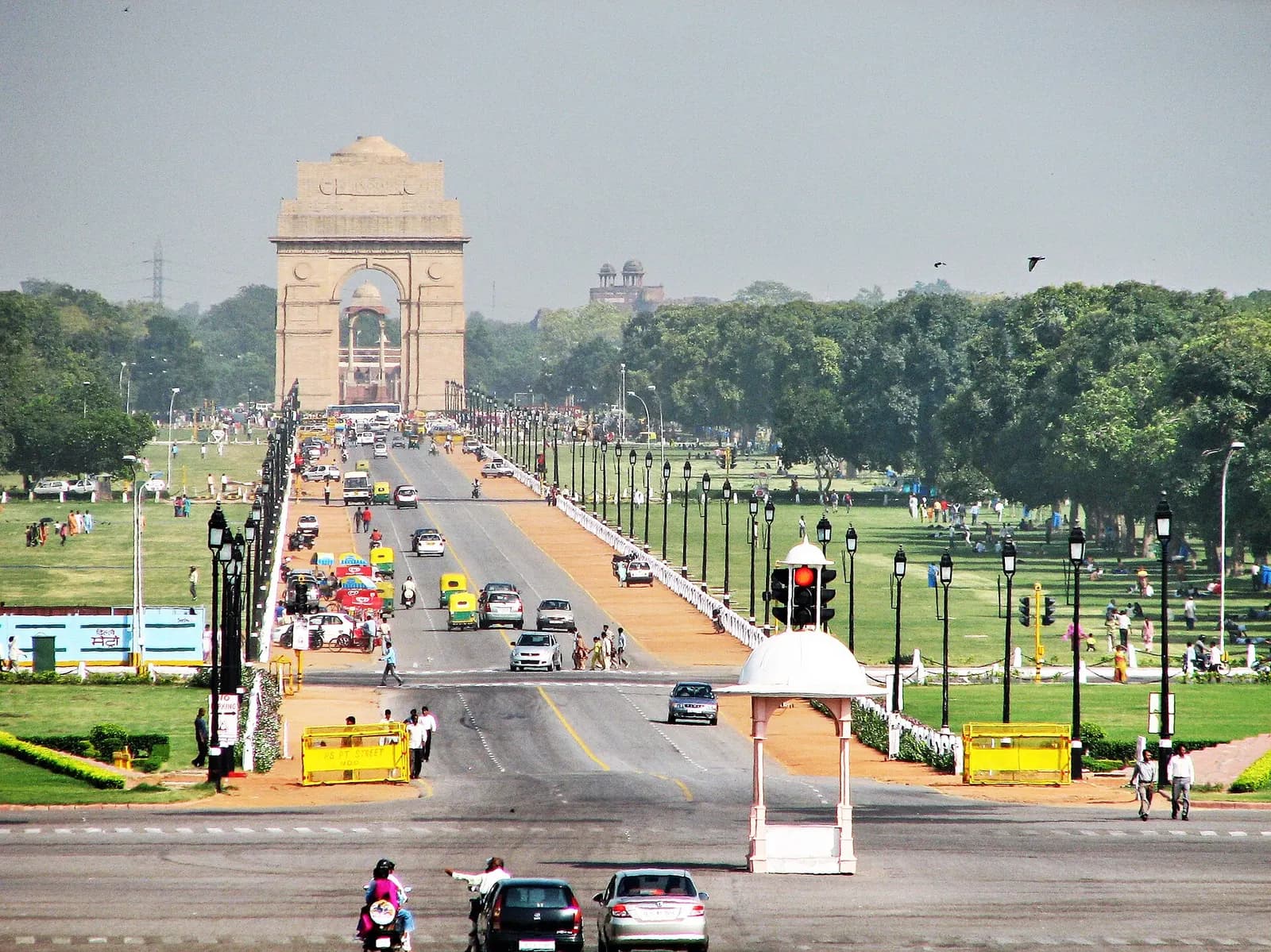
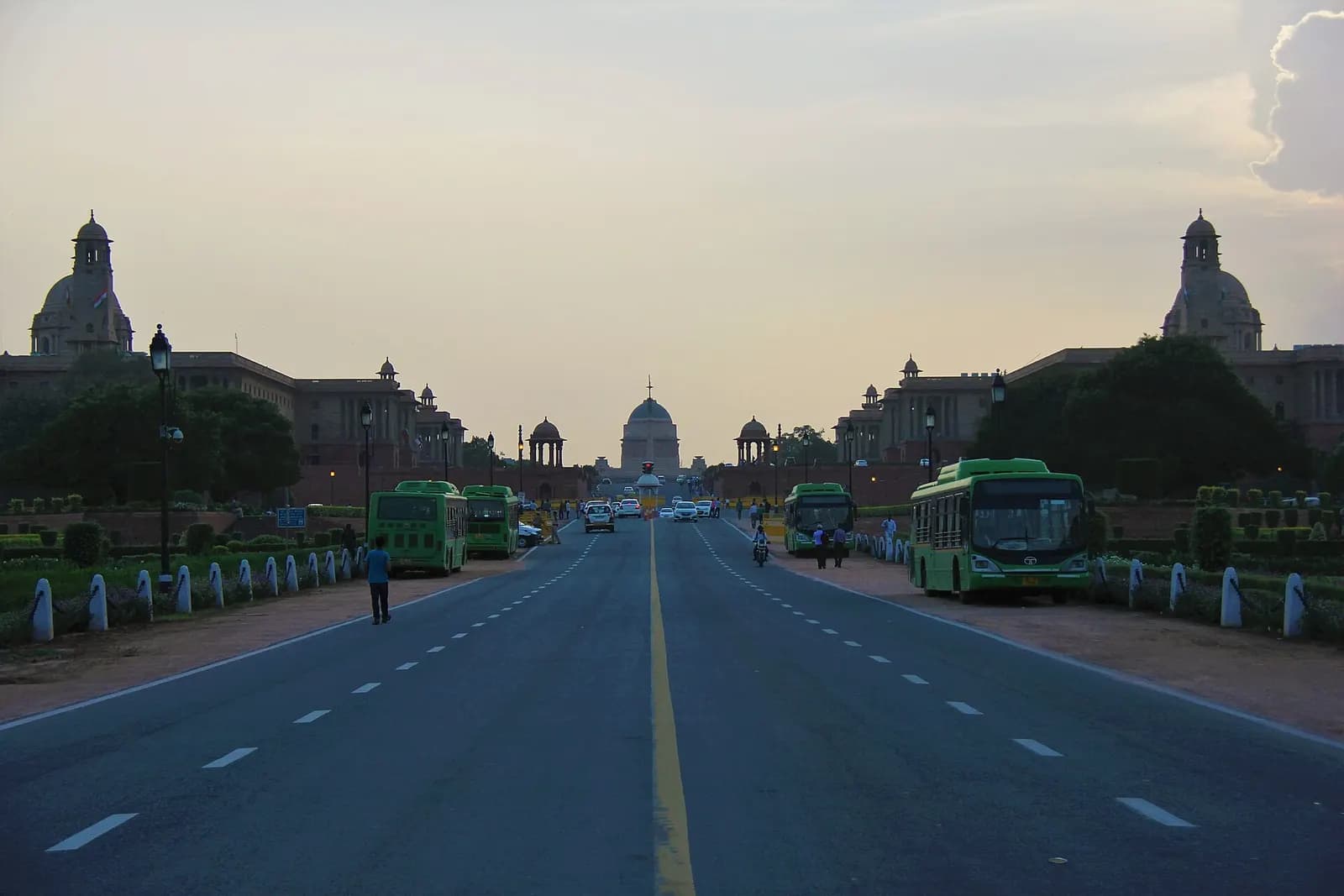
Kartavya Path is the grand central vista of New Delhi, a roughly 3 km ceremonial avenue running dead straight from the presidential palace, Rashtrapati Bhavan, on Raisina Hill in the west, down through the government quarter to the India Gate war memorial in the east. Laid out as the monumental axis of the imperial capital in the early 20th century, it was called Kingsway, then Rajpath after independence and most recently Kartavya Path following a major redevelopment. It is the stage for the nation's grandest ceremonies, above all the Republic Day parade and an everyday public promenade the rest of the year.
It is famous for several reasons worth spelling out:
- A monumental planned visit. One of the great symmetrical axes of 20th century city planning, framing an unobstructed view from the secretariats to India Gate.
- The ceremonial heart of India. The route of the Republic Day parade and the backdrop to the country's most important state occasions.
- A renewed public space. After the Central Vista Avenue project it has smart red granite walkways, lawns, canals, fountains and food plazas.
- A perfect evening stroll. Free, open and beautiful at sunset, when the fountains are lit and India Gate glows.
- Gateway to major sights. India Gate, the National War Memorial and the government buildings all sit along or at the ends of the avenue.
It belongs on any thoughtful list of things to do in Delhi and the walk down it is one of the most iconic of all the places to visit in Delhi.
Why was Rajpath renamed Kartavya Path?
Many visitors know the avenue by its older name, Rajpath, so the change is worth explaining. The boulevard was built as the ceremonial centrepiece of the new imperial capital designed by Edwin Lutyens and Herbert Baker in the early 20th century and it was first named Kingsway, in honour of the British king. After India became independent, Kingsway was translated and renamed Rajpath, meaning the path of the state or of kings. In 2022, following the large Central Vista Avenue redevelopment of the whole stretch, the government renamed it Kartavya Path, which means the path of duty, intended to reflect a shift from an emphasis on power to one of public service and citizens' duty. So the single avenue carries three names from three eras, Kingsway, Rajpath and Kartavya Path, a neat little history of India's last century in itself. In practice both Rajpath and Kartavya Path are widely used and locals and visitors alike will understand either.
What was the Central Vista Avenue redevelopment?
Understanding the recent makeover helps you appreciate what you see today. Over decades of heavy use the old Rajpath and its lawns had become worn and in the early 2020s the stretch was comprehensively redeveloped as part of the wider Central Vista project, reopening in its new form in 2022 as Kartavya Path. The redevelopment kept the historic layout and vistas but renewed everything around them, with new red granite walkways designed to resist wear, tidied and relaid lawns, restored canals crossed by stone bridges, synchronised illuminated fountains, improved low-level eco-friendly lighting, step-free accessible paths, pedestrian underpasses at the busy junctions, signage, amenity blocks and organised vending plazas for food and refreshments. The result is a cleaner, greener, more walkable and more visitor-friendly version of the grand old avenue, with far better facilities than before, while preserving the monumental sweep that makes it special. Knowing it is a freshly renewed public space, rather than a faded historic relic, sets the right expectation for a pleasant, well-kept evening stroll.
The redevelopment was not without debate, as big changes to such a symbolic, historic space rarely are and some lamented the loss of the old, informal character of Rajpath, where families had long spread picnic blankets on the lawns. The new avenue is more managed and more rule-bound than before, with designated food zones and restrictions on picnicking directly beside the path. In return, visitors get cleaner facilities, better lighting, safer road crossings, accessible paths and a generally smarter environment and the lawns behind the canals still welcome families and children. Whichever side of the debate you fall on, the practical result for a visitor today is a comfortable, well-equipped and attractive avenue and the grand historic vista, the whole point of the place, is entirely intact. It is worth knowing this backstory, because you will still hear locals refer fondly to the old Rajpath and its freer, more relaxed lawns.
Why is Kartavya Path important to India?
Beyond being a pleasant promenade, Kartavya Path is the symbolic and ceremonial spine of the Indian Republic and understanding that adds meaning to a visit. It was conceived as the grand central axis of the new imperial capital in the early 20th century, a deliberate statement of power running between the seat of government on Raisina Hill and the memorial arch to the east. After independence, that same axis became the stage on which the new nation performed its most important public rituals, above all the annual Republic Day parade every 26 January, when the armed forces, cultural tableaux from every state and ceremonial displays process down the avenue before the President and vast crowds, watched by the whole country on television. It is also the route for state funerals and other great national occasions. So when you walk here, you are walking the ground where modern India presents itself to itself and to the world. The flanking North and South Block secretariats and the presidential palace at the western end house the actual machinery of government, which is why the vista feels so charged with significance; it is not just a beautiful avenue but the physical heart of the Republic.
What are the key highlights along Kartavya Path?
A walk along the avenue takes in a sequence of landmarks and features and knowing them helps you plan your stroll. The highlights:
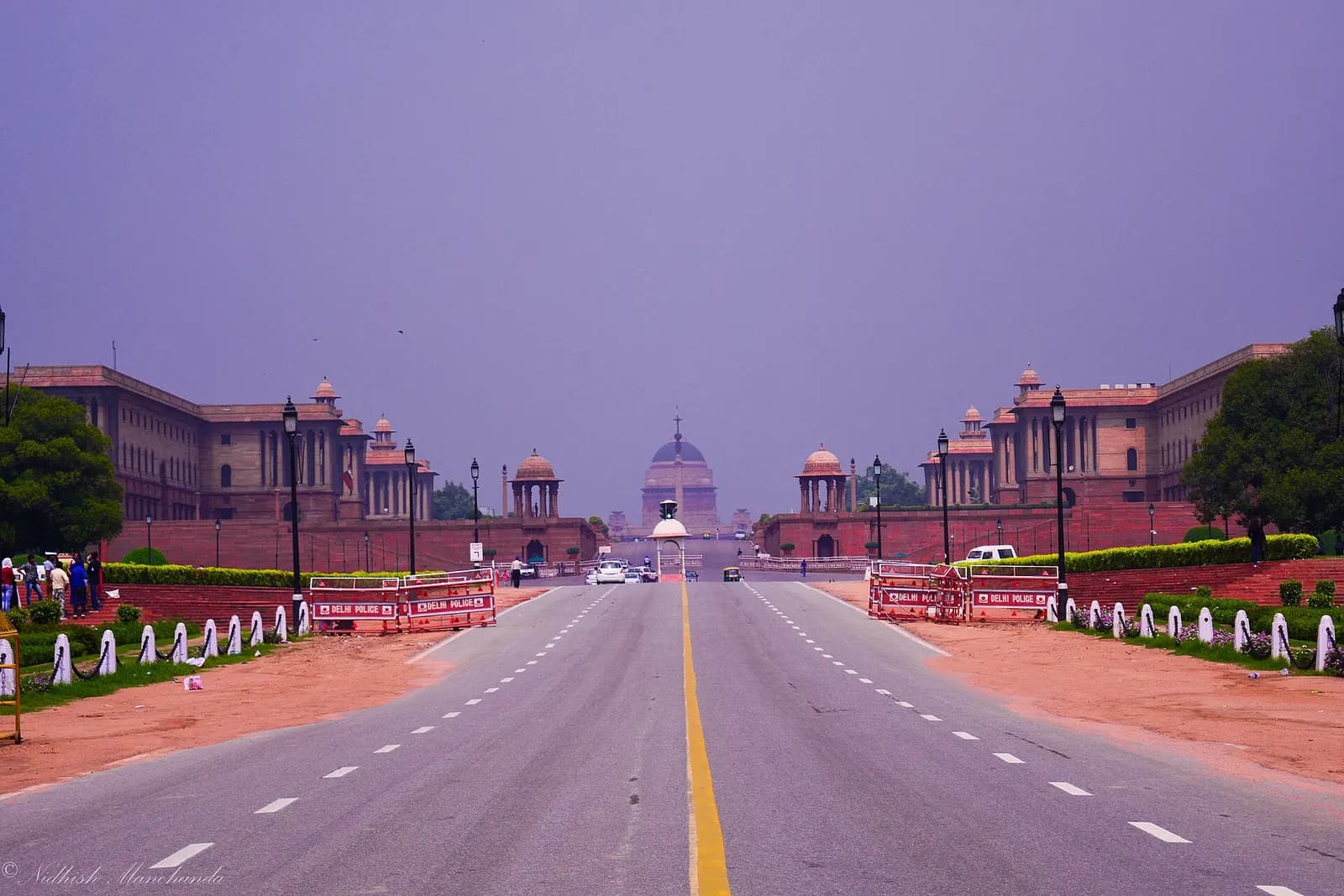
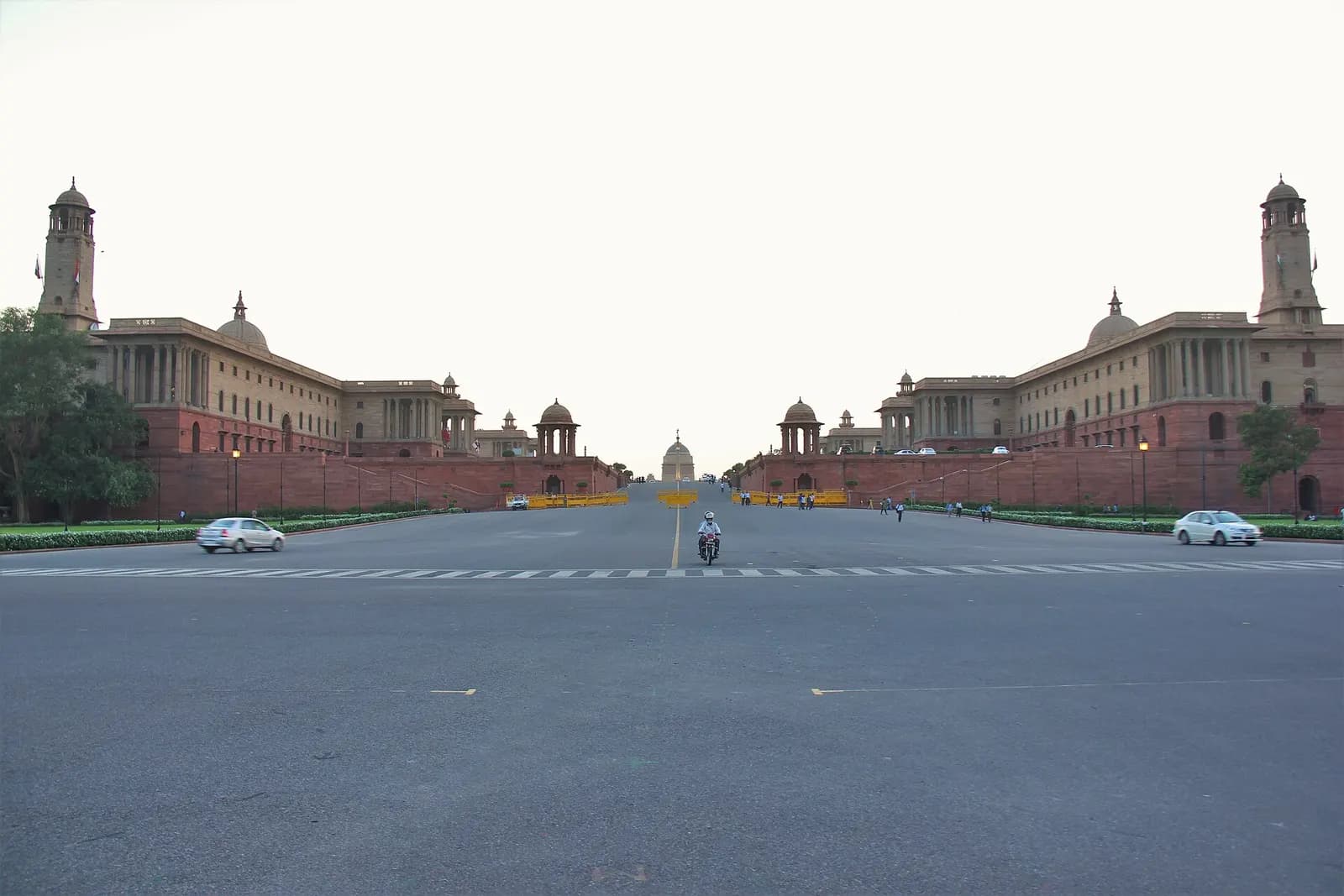
- The symmetrical axis. The avenue offers a perfectly framed, unobstructed view along its length, flanked at the western end by the majestic North and South Block secretariats on Raisina Hill, with Rashtrapati Bhavan beyond.
- India Gate. The 42 metre war memorial arch at the eastern end, one of Delhi's most iconic sights, with the eternal flame and the surrounding plaza.
- The National War Memorial. A dignified modern memorial just behind India Gate, honouring armed forces personnel who gave their lives since independence.
- The Netaji Subhas Chandra Bose statue. A grand roughly 28-foot monolithic granite statue of the freedom fighter, standing under the historic canopy behind India Gate.
- The canals and fountains. Water channels border both sides of the path, crossed by stone bridges, with synchronised coloured-light fountains that run in the evening.
- The vending plazas and underpasses. Organised food plazas along the avenue and four well-lit pedestrian underpasses that let you cross the busy junctions safely.
Together these turn a simple walk into a procession of some of the capital's most significant sights.
Two of these deserve a little more. India Gate, at the eastern end, is the 42 metre sandstone memorial arch designed by Lutyens to honour the Indian soldiers who died in the First World War and the Afghan campaigns and it remains the emotional focal point of the avenue, especially floodlit at night. Just behind it, the National War Memorial, opened in recent years, is a dignified, modern complex of concentric walls inscribed with the names of the fallen since independence, arranged around an eternal flame, a solemn, beautifully designed space that rewards a quiet, respectful visit. The contrast between the century-old arch and the new memorial, both honouring the armed forces, is one of the quietly moving aspects of this end of the walk. At the western end, meanwhile, the view climbs Raisina Hill between the grand North and South Block secretariats towards the dome of Rashtrapati Bhavan, a composition deliberately staged by the city's planners to impress and it still does, particularly in the clear light of a winter morning or at sunset.
What is the Netaji Subhas Chandra Bose statue?
One of the newest and most striking features of the avenue is the grand statue of Netaji Subhas Chandra Bose, the revered freedom fighter and leader of the Indian National Army, which now stands under the sandstone canopy behind India Gate. Carved from a single block of granite and standing around 28 feet tall, it is an imposing, dignified monument installed as part of the renewal of the avenue. The canopy itself has its own history: it was built to shelter a statue of the British king George V, which was removed after independence, leaving the elegant structure empty for decades. Placing Netaji's statue there is a deliberate and symbolic act, replacing an imperial figure with an Indian national hero at the ceremonial heart of the capital and it has quickly become a focal point for visitors at the India Gate end of the walk. Pausing here, beneath the canopy with India Gate framed beyond, is one of the memorable moments of a stroll down Kartavya Path.
When is the best time to visit Kartavya Path?
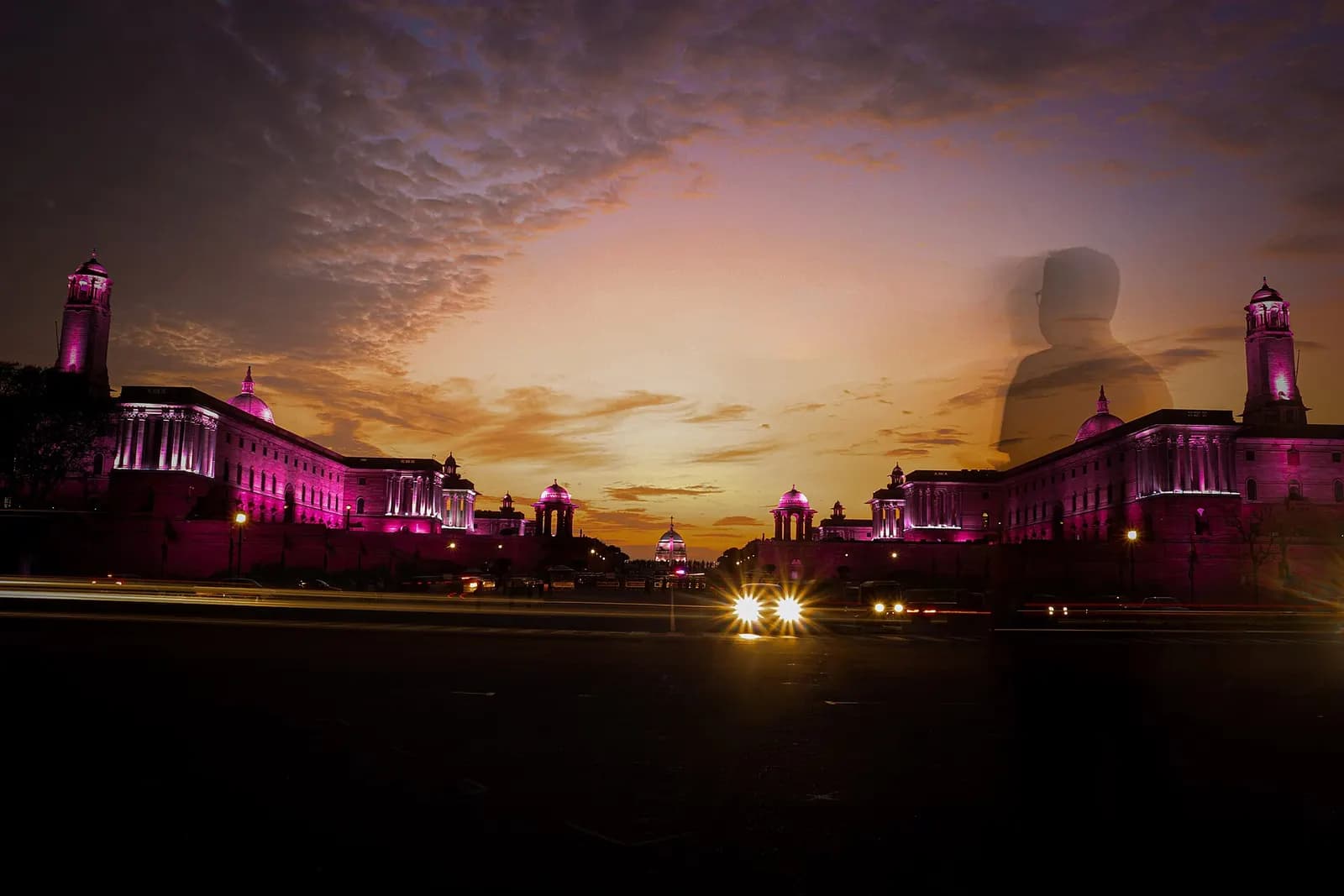
There are two ideal windows, each with its own appeal. The evening, roughly 5:00 PM to 8:30 PM, is the classic time: you catch the sunset along the great axis, the temperature drops, families gather on the lawns, the fountains come on with their coloured lights and India Gate is beautifully illuminated after dark. It is lively, atmospheric and the most popular time to come. The early morning, around 6:00 AM to 8:00 AM, is the opposite in mood, quiet and fresh, perfect for crowd-free photography, a peaceful walk or a cycle along the avenue before the city wakes. By season, the cool months from October to March are far and away the best, when Delhi's pleasant winter weather makes the long, open walk a delight; the summer sun on the shadeless avenue is punishing, so in the warmer months stick firmly to early morning or after sunset. One timing note: around mid-to-late January, in the run-up to Republic Day on the 26th, large parts of Kartavya Path and nearby metro gates face heavy public restrictions for the parade rehearsals and the event itself, so check before visiting then.
If you do happen to be in Delhi for Republic Day and can arrange tickets for the parade, it is an extraordinary spectacle, but it is a ticketed, high-security event quite different from a casual visit, with seating booked well in advance and the whole area sealed off, so it needs separate planning. For ordinary sightseeing, aim for any evening outside that late-January window. Another small tip: the avenue can be breezy and exposed, pleasant in winter but a factor to dress for and in the peak of summer even the evenings stay warm, so the cooler months genuinely make the difference between a magical stroll and a sweaty one. Weekends and public holidays draw the biggest, most festive crowds, which many enjoy, while a weekday evening is a little calmer if you prefer space to wander and photograph.
What is an evening at Kartavya Path like?
An evening here is one of the gentlest, most democratic pleasures in Delhi. As the sun drops and the heat eases, the avenue fills with people of every kind, families with children, young couples, tourists, groups of friends, office workers winding down, all strolling, sitting on the lawns, taking photographs and buying ice cream and snacks from the vending plazas. The great vista glows in the golden light, the fountains come on with their coloured illumination and after dark India Gate and the memorial are floodlit, drawing everyone towards the eastern end. There is no entrance, no queue and no fuss; you simply arrive and join the relaxed, happy flow. Children run on the rear lawns, balloon and toy sellers weave through the crowds and the whole scene has the feel of a nightly public festival in the heart of the capital.
It is this everyday, free, shared quality that makes Kartavya Path special, quite apart from its grandeur and history. For a traveller it offers a lovely window into ordinary Delhi life at leisure, a complete contrast to the ticketed, often crowded monuments. Bring a little cash for a snack, wear comfortable shoes and let yourself amble down towards the lit arch with everyone else. Few experiences capture the relaxed, sociable side of the city as well and it costs nothing at all.
Is Kartavya Path worth visiting?
Yes and especially in the evening. Kartavya Path is not a ticketed attraction with a single must-see object; it is an experience, a grand, free, open-air promenade that brings together a historic vista, iconic monuments, lit fountains and the cheerful life of the city at leisure. For first-time visitors it is almost unmissable, since India Gate at its eastern end is one of Delhi's signature sights and the walk towards it at sunset is unforgettable. For repeat visitors it remains a relaxed, pleasant way to spend an evening. The only real caveats are the summer heat, which makes a daytime visit uncomfortable and the January parade restrictions; outside those, it is one of the easiest and most rewarding things to do in the capital, requiring no booking, no fee and no special effort. For almost every guest I take through Delhi, an evening stroll down Kartavya Path is a simple, happy highlight and a fine way to round off a day among the city's grander, busier sights. Afterwards, it is an easy ride to dinner and our roundup of where to eat in Delhi has plenty of ideas nearby.
How do you reach Kartavya Path?
Kartavya Path is very easy to reach by metro, the best way to get there. The most convenient station is Central Secretariat, served by both the Yellow and Violet lines, from whose Exit Gate 3 you emerge right at the western end of the avenue near Vijay Chowk; Udyog Bhawan on the Yellow Line, just to the south, is handy if you want to start from the central ministries section. By cab or auto you can be dropped at the designated points near Vijay Chowk at the western end or the India Gate plaza at the eastern end. The avenue is best experienced on foot: you can walk the whole 3 km stretch or focus on the livelier India Gate end.
Its central location, with India Gate at its eastern end, puts it at the ceremonial heart of New Delhi. If you are threading a wider route, a dedicated New Delhi tour can tie it together with the imperial sights, while a broader Delhi day tour folds the avenue into the full span of the capital.
What are the rules and facilities along Kartavya Path?
The renewed avenue is well equipped but comes with some rules worth knowing so your visit goes smoothly:
- Picnic restrictions. Traditional picnic mats and large spreads of home-cooked food are not allowed on the lawns directly beside the main path, though families can sit and children can play freely on the green lawns set behind the canal channels.
- Organised food zones. You cannot eat within the immediate India Gate structure, so head to the modern vending plazas along the avenue for street food, snacks and ice cream.
- High security. Security is tight, with metal-detector checkpoints and bag screening near the India Gate plaza, so carry minimal items to pass through quickly.
- Accessibility. Step-free paths, underpasses and good lighting make the avenue easy to walk, including for wheelchair users and families with prams.
- January restrictions. Expect closures and diversions around Republic Day in late January for the parade and its rehearsals.
Knowing these in advance means you can simply relax and enjoy the walk, the fountains and the views.
What is there to see near Kartavya Path?
Kartavya Path sits in the grand heart of Lutyens' New Delhi, surrounded by major sights. At its eastern end stands the iconic India Gate and the National War Memorial, while at its western end rise Rashtrapati Bhavan and the secretariats of Raisina Hill. A short distance away are the colonial shopping circle of Connaught Place, the astronomical observatory of Jantar Mantar and the hidden stepwell of Agrasen ki Baoli.
A little further out the heritage continues, from the lawns and tombs of Lodhi Garden to the great monuments of the wider city, the Red Fort, the Qutub Minar, Humayun's Tomb and the modern Lotus Temple and Akshardham. For the famous street food of the vending plazas and beyond, our guide to the city's famous street food places has ideas. Together these make Kartavya Path a natural part of a central Delhi day and you can see the fuller picture in our guide to the important monuments of Delhi.
How does Kartavya Path fit into a Delhi or Golden Triangle itinerary?
For most visitors, Kartavya Path works best as a relaxed evening, the natural way to end a day of sightseeing in central Delhi. A classic plan is to arrive in the late afternoon, walk the avenue towards India Gate as the sun sets, watch the fountains and the floodlit arch after dark and grab a snack at a vending plaza. It is free, open and requires no booking, so it slots in effortlessly. Because it is a walk rather than a ticketed monument, it pairs naturally with a daytime of nearby sights and makes a fitting, grand finale. Travellers on a fuller itinerary often combine it with the capital's other icons, the Red Fort, Humayun's Tomb and the towering Qutub Minar, for a day that spans Mughal, imperial and modern Delhi.
If Delhi is your gateway to the wider Golden Triangle, an evening on Kartavya Path gives you the grand, ceremonial, modern face of the capital to set against the Mughal monuments of Agra and the royal palaces of Jaipur that follow. Many of my guests find a sunset walk here, with families out, fountains playing and India Gate glowing, one of their happiest, most relaxed memories of Delhi. For the best season across the capital, our guide to the best time to visit Delhi is a useful companion for planning the rest of your days in the capital.
Travel tips for visiting Kartavya Path
A few pointers make the visit even better:
- Come at sunset, around 5:00 to 8:30 PM, for the golden light, the lit fountains and the floodlit India Gate or early morning for peace and photography.
- Visit October to March and avoid the open, shadeless avenue in the midday heat of the summer months.
- Come by metro to Central Secretariat, Exit Gate 3, at the western end or start from the India Gate plaza at the east.
- Carry minimal bags, as the security screening near India Gate is strict and much faster when you have less to check.
- Use the vending plazas for food and ice cream, since eating is restricted on the lawns beside the path and at the India Gate structure itself.
- Wear comfortable shoes, as the avenue is about 3 km end to end and best explored on foot; if you do not want the full walk, focus on the livelier India Gate end.
- Avoid mid-to-late January unless you are there for Republic Day, due to parade rehearsals and heavy restrictions.
- Sit on the rear lawns behind the canals, where families can relax and children can play freely.
- Walk from west to east towards India Gate in the evening, so you end at the floodlit arch and the liveliest part of the avenue after dark.
If you would like a local to build Kartavya Path into a wider Delhi plan, message our team on WhatsApp at +91 7302265809 with your travel dates and group size and we will help you shape the day.
Plan your trip with us
At Experience My India, through our Delhi and Golden Triangle travel desk, we design unhurried, well paced trips that make room for simple pleasures like a sunset walk on Kartavya Path, not just the ticketed monuments. Whether you want a relaxed set of Delhi Agra tours or a full Golden Triangle route through Delhi, Agra and Jaipur, we plan around your pace, your interests and the right season, with local guides who know exactly when the light and the fountains are at their best. Share your dates and the kind of trip you have in mind through our enquiry page, tell us your group size and we will put together an honest, tailored plan rather than a rushed checklist.
Related guides
- Nearby places to visit in Delhi, to extend your day
- Hidden places to visit in Delhi, more of the city's quieter corners
Enquire Now
Ready to Explore
The Heart of Delhi?
Explore the Red Fort, Qutub Minar, Humayun's Tomb, and the vibrant streets of Old Delhi with our expert-guided premium tours of India's capital city.

Delhi
Premium Tour Package
Questions
Frequently asked questions
What are the timings of Kartavya Path?
It is an open public avenue, accessible 24 hours a day, though the central lawn plaza and innermost paths are restricted after about 11:00 PM. There is no ticket.
Is there an entry fee for Kartavya Path or India Gate?
Which is the nearest metro station to Kartavya Path?
Why was Rajpath renamed Kartavya Path?
What is the best time to visit Kartavya Path?
What can you see along Kartavya Path?
What is the Netaji statue at India Gate?
Can you have a picnic on Kartavya Path?
Is Kartavya Path worth visiting?
Is Kartavya Path affected by Republic Day?
Explore more
Plan your Kartavya Path (Rajpath) trip with us
Photo credits
Photos from Wikimedia Commons, used under their licences:
- Photo 1 by Seb & Jen, CC BY-SA 2.0
- Photo 2 by Nidhish 98, CC BY-SA 4.0
- Photo 3 by AKS.9955, CC BY-SA 4.0
- Photo 4 by Mohit Jhanjhotia, CC BY-SA 4.0
- Photo 5 by AKS.9955, CC BY-SA 4.0
Interested in Kartavya Path (Rajpath) Delhi: Timings, History and Visitor Guide?
Chat with our travel team for a custom quote, or browse every package.
Related Attractions
9Ready to explore Kartavya Path (Rajpath) Delhi: Timings, History and Visitor Guide?
Book your private tour today and experience the magic of India's rich heritage.