
National Museum Delhi: Timings, Tickets, Highlights and Visitor Guide
Visiting the National Museum in Delhi? Timings, tickets, the Dancing Girl and top galleries, the closed day, nearest metro, best time and visitor tips.
In a Nutshell
“The National Museum in New Delhi is India's premier museum, on Janpath in central Delhi, holding a vast collection that spans over 5,000 years of the subcontinent's history across some 200,000 artefacts. Its treasures include the famous bronze Dancing Girl of Mohenjo-daro, sacred Buddhist relics, exquisite Mughal and Rajput miniature paintings and spectacular Chola bronzes. It is open Tuesday to Sunday, closed on Mondays, charges a modest ticket and the nearest metro is Udyog Bhawan or Central Secretariat. It is explored on our Delhi tours, run by a unit of Experience My India.”
The National Museum is the single best place in Delhi to understand the sheer depth of Indian civilisation, a calm, air-conditioned treasure house that is wonderfully uncrowded compared with the city's monuments. If you have any interest in history, art or archaeology, a few hours here will enrich everything else you see on your trip. Our team at Delhi Agra Tour Packages often suggests it to curious travellers and it adds real depth to a wider Golden Triangle tour.
I am Abhay Sharma, Delhi born and a Golden Triangle guide since 2015 and I love sending history-minded guests here, because it makes sense of the whole story behind the forts and tombs they see elsewhere. This guide gathers everything I would tell a visitor beforehand, checked against current information, including the closed day and the must-see galleries.
Details
National Museum Delhi at a glance
| Detail | Information |
|---|---|
| Location | Janpath, near Rajpath, central Delhi |
| Established | 1949 |
| Collection | Over 200,000 artefacts spanning 5,000 years |
| Famous for | The Dancing Girl of Mohenjo-daro, Buddhist relics, miniatures, Chola bronzes |
| Open | Tuesday to Sunday |
| Closed | Mondays and gazetted national holidays |
| Nearest metro | Udyog Bhawan (Yellow Line) or Central Secretariat (Violet Line) |
| Time needed | 3 to 4 hours for the highlights, a full day for depth |
National Museum timings
| Detail | Information |
|---|---|
| Open days | Tuesday to Sunday |
| Timings | About 10:00 AM to 6:00 PM |
| Weekly closure | Mondays |
| Also closed | Gazetted national holidays |
The museum is open Tuesday to Sunday, generally from about 10:00 AM to 6:00 PM and is closed on Mondays and on gazetted national holidays. Timings can change, so reconfirm and arrive by early afternoon at the latest if you want enough time for the main galleries.
Admission and tickets
| Visitor | Fee (at the time of writing, reconfirm) |
|---|---|
| Indian adults | Around ₹20 |
| Foreign nationals | Around ₹650, usually including the audio guide |
| School students up to Class 12 | Free, with a valid school ID |
| Booking | At the gate counter or the official online portal |
The ticket is very affordable for Indian visitors and the foreign-national ticket, while higher, usually includes the excellent audio guide, which is well worth having. Rates can be revised, so reconfirm. The audio guide greatly enriches a visit, so pick one up if it is not already included with your ticket.
How to reach
| From | Route |
|---|---|
| Udyog Bhawan metro (Yellow Line) | Exit Gate 2, a 5 to 10 minute walk |
| Central Secretariat metro (Violet Line) | A short walk to the museum |
| By bus | Several routes stop at the National Museum stop; also on the HoHo tourist bus circuit |
| By road | Central location on Janpath; autos and cabs drop at the gate |
What is the National Museum and why is it special?
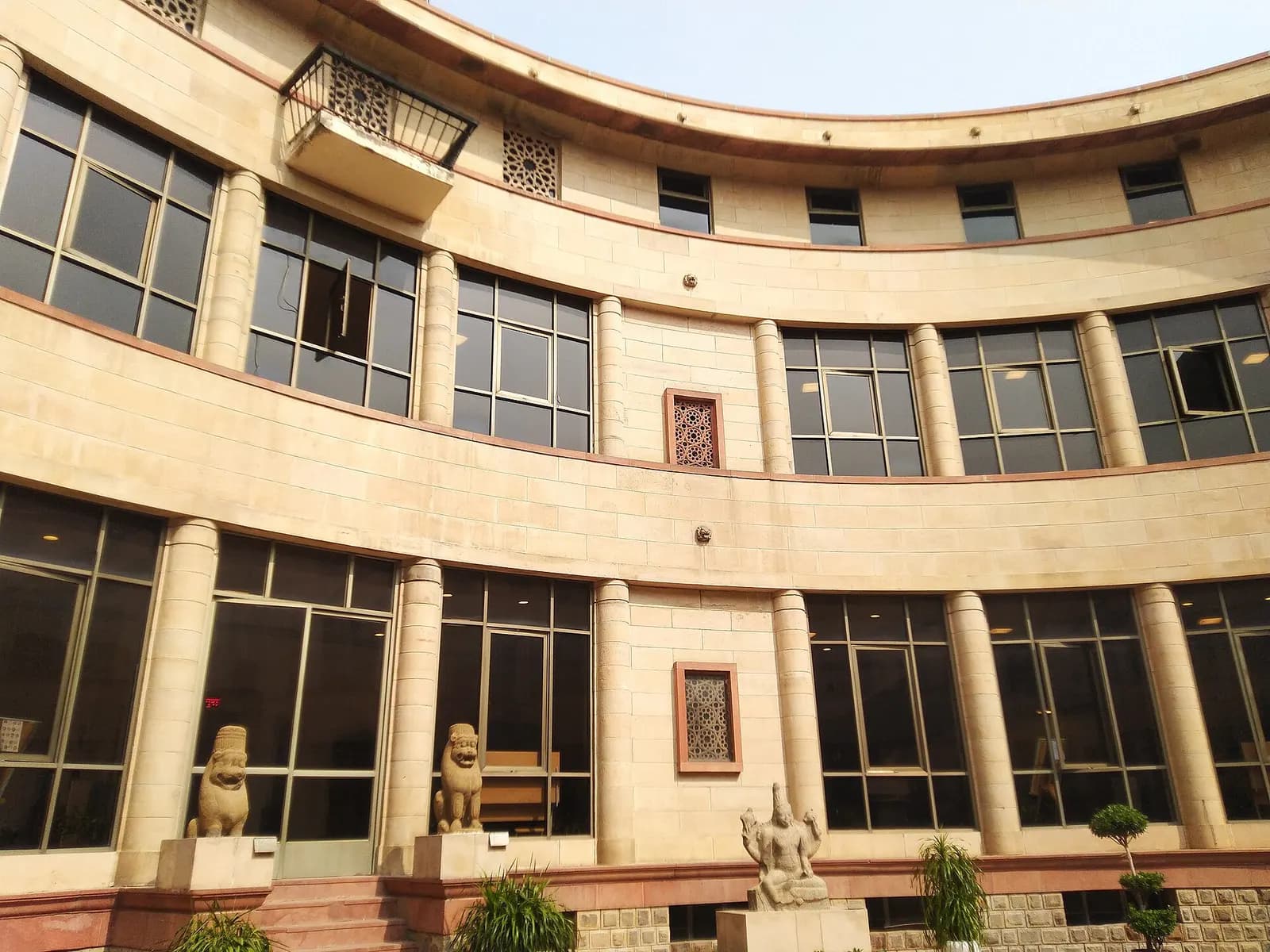
The National Museum in New Delhi is the country's foremost museum, established in 1949 soon after independence to be the national repository of India's cultural and artistic heritage. Housed in a grand building on Janpath near the ceremonial heart of the capital, it holds a staggering collection, often cited as around 200,000 objects, spanning more than five thousand years, from the prehistoric and Indus Valley eras right through the classical, medieval and later periods. In a single, cool, calm building you can trace the entire sweep of Indian civilization.
It is special for several reasons worth spelling out:
- An unmatched collection. From Harappan artefacts to Mughal miniatures to temple bronzes, it gathers the finest of India's material heritage under one roof.
- World-famous treasures. It holds iconic objects such as the bronze Dancing Girl of Mohenjo-daro and sacred relics of the Buddha.
- Context for everything else. Seeing the art and artefacts here deepens your understanding of the forts, temples and tombs you visit across India.
- Calm and uncrowded. Compared with Delhi's busy monuments, the museum is quiet, air-conditioned and unhurried, a restful, enriching change of pace.
- Superb value. A tiny ticket for Indians and an audio-guide-inclusive ticket for foreigners make it one of the best-value cultural experiences in the city.
It belongs on any thoughtful list of things to do in Delhi for anyone interested in history and art and it is one of the most rewarding of the cultural places to visit in Delhi.
What is the history of the National Museum?
The National Museum has an interesting origin story. Its nucleus came from a landmark exhibition of Indian art held in London in the winter of 1947 to 1948, which gathered masterpieces from across the country. Before these treasures were returned to their home institutions, it was decided to show them together in Delhi and the exhibition, mounted in the Rashtrapati Bhavan in 1949, was so successful and so clearly demonstrated the value of a national collection that it led directly to the founding of a permanent National Museum. The museum was formally established in 1949, initially in the presidential palace and later moved to its own purpose-built home on Janpath, where the foundation was laid in the early 1950s and the building opened to the public in the following years.
Since then it has grown steadily into the vast institution of today, acquiring and preserving artefacts from every era and region of India and beyond. As a visitor it is worth knowing that the museum is a product of newly independent India's desire to gather, protect and celebrate its own heritage, which had been scattered and often carried abroad in the colonial era. That founding purpose gives the collection its national sweep and explains why, in one building, you can follow the whole thread of Indian civilisation from the Indus Valley to the Mughals and beyond.
Over the decades the museum has also become a centre of scholarship and conservation, not merely a display space, with departments studying and preserving everything from ancient manuscripts to textiles and an institute of art history and conservation attached to it. This is worth bearing in mind as you walk the galleries: the objects on show are the visible tip of a far larger national collection, much of it in storage and study and the displays are periodically refreshed and reorganised as research advances and galleries are modernised. It is a living, working institution charged with safeguarding the material memory of one of the world's oldest civilisations, which gives even a casual visit a certain weight. You are not just looking at old things; you are seeing the carefully chosen highlights of the nation's own effort to understand and preserve its past.
What are the must-see highlights of the National Museum?
The museum spans three floors and more than two dozen thematic galleries, so it helps to know the highlights and head for them first. The treasures not to miss:
- The Dancing Girl of Mohenjo-daro. In the Harappan gallery, this tiny bronze figure, around 4,500 years old, is one of the most famous artefacts in India, an astonishingly confident, lifelike masterpiece from the Indus Valley Civilisation.
- The Harappan gallery. Beyond the Dancing Girl, a superb collection of Indus Valley seals, pottery, jewellery and tools that bring one of the world's oldest urban civilisations to life.
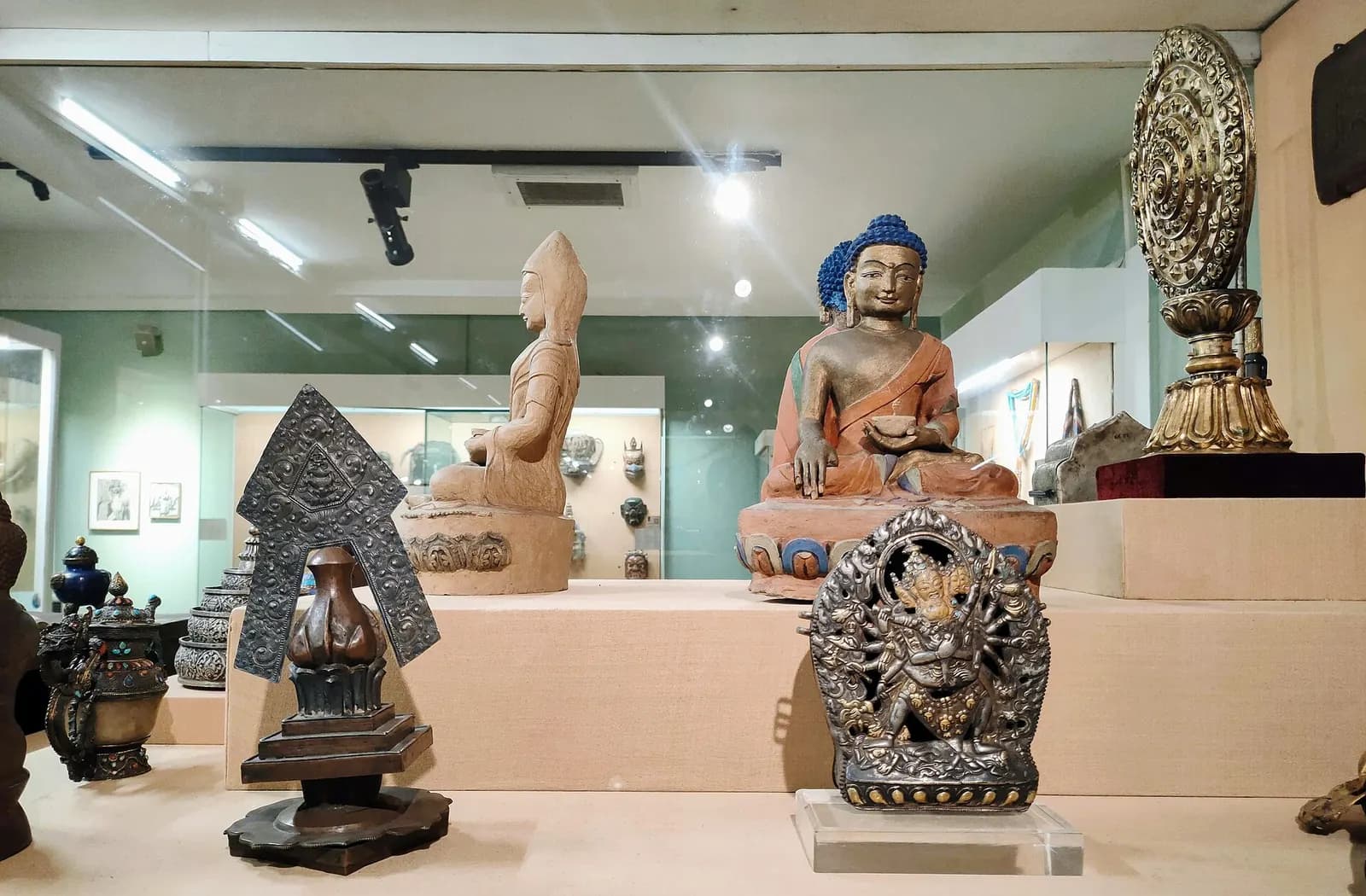
- The Buddhist relics. The museum holds the sacred Piprahwa relics, believed to be bodily relics of the Buddha himself, along with exquisite Gandhara stone sculptures blending Indian and Greco-Roman styles.
- The miniature paintings. One of the world's great collections of Indian miniatures, spanning the Mughal, Deccani, Rajasthani and Pahari schools, jewel-like works of extraordinary delicacy.
- The South Indian bronzes. Spectacular temple bronzes, including masterpieces of the Chola dynasty such as the dancing Nataraja form of Shiva.
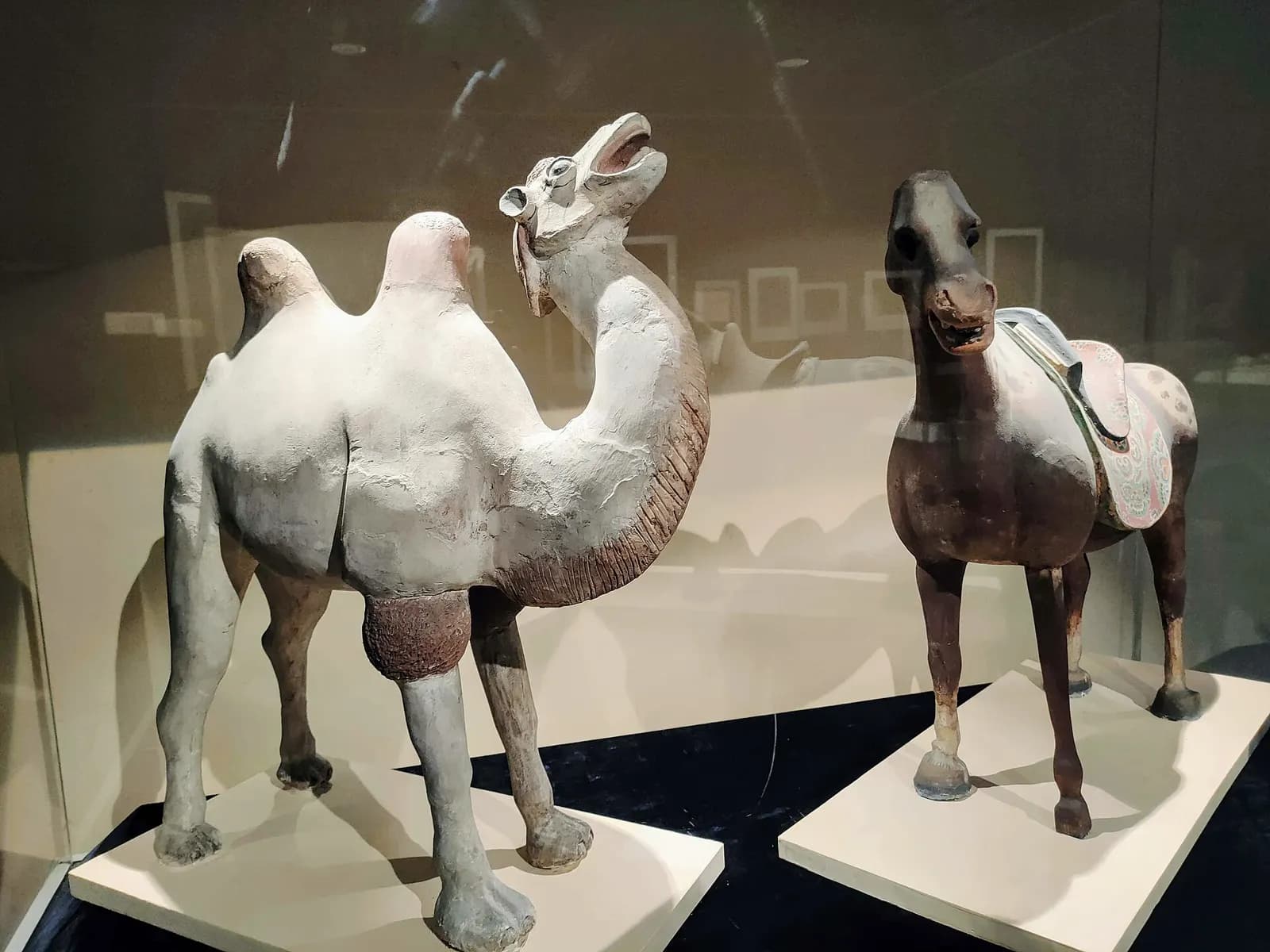
- The Central Asian antiquities. Rare materials from the Silk Road, including frescoes and artefacts recovered from early 20th century expeditions into Central Asia.
Even a visitor with only a couple of hours can take in these highlights and come away with a vivid sense of India's artistic and historical depth.
What is the Dancing Girl of Mohenjo-daro?
If the museum has one icon, it is the Dancing Girl and she deserves a closer look. This is a small bronze statuette, only about ten centimetres tall, made some 4,500 years ago in the Indus Valley Civilisation and found at the great city of Mohenjo-daro, now in Pakistan. Despite her tiny size and great age, she is startlingly modern and alive: a young woman standing with casual confidence, one arm on her hip, laden with bangles, her head tilted. She was cast using the sophisticated lost-wax method, which tells us how advanced Indus metalworking was and her relaxed, naturalistic pose is unlike almost anything else surviving from the ancient world. She has become a symbol of the Indus Valley Civilisation and of Indian art itself and seeing the real object, so small and so full of character, is a genuinely moving experience. Take a moment with her; she is one of the great treasures not just of India but of world archaeology.
What makes her all the more remarkable is how little we know and how much she suggests. The Indus Valley Civilisation, which flourished more than four thousand years ago across a vast area of the subcontinent, built sophisticated cities with planned streets and drainage, yet its script has never been deciphered, so much about its people remains a mystery. The Dancing Girl, with her self-assured stance and her jewellery, hints at a society with leisure, art and a confident sense of the human body, long before the ages of the great empires most visitors associate with India. Standing before her, you are looking across more than four millennia at a single, vivid human moment, which is exactly the kind of connection a great museum makes possible and a photograph in a book never quite can.
What else can you see in the galleries?
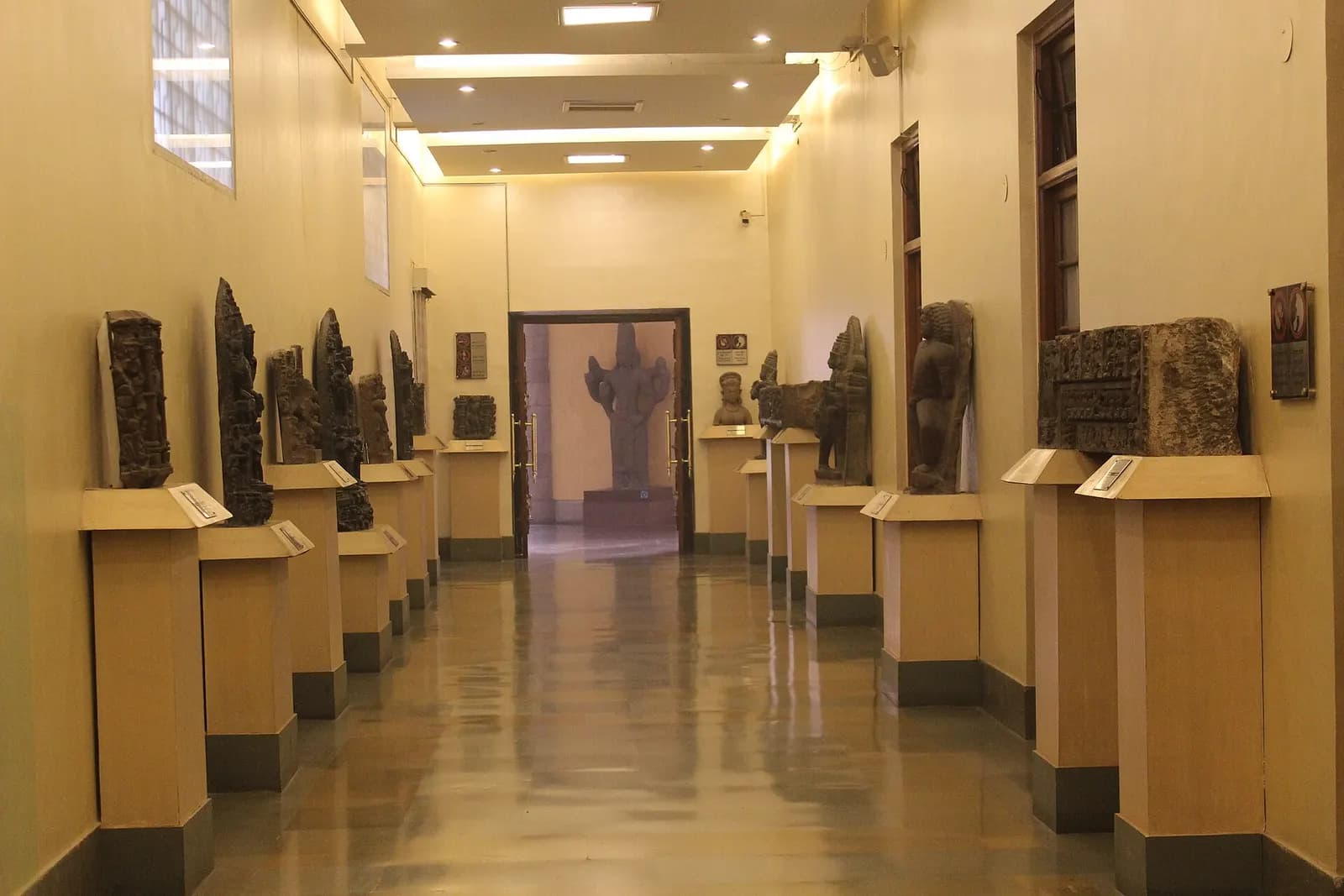
Beyond the headline treasures, the National Museum rewards a deeper wander, with galleries covering a remarkable range of India's art and material culture. You can follow the development of Indian sculpture through the Mauryan, Gupta and medieval periods, admire intricate wood and ivory work, explore manuscripts and coins that trace the subcontinent's many dynasties and scripts and study decorative arts, musical instruments and tribal and folk art. The classical sculpture galleries, in particular, let you trace how Indian artists depicted gods, the Buddha and human figures across the centuries, which makes wonderful preparation for or reflection on, the temples and monuments you see elsewhere on your travels.
It is worth noting that a great museum like this is a living institution: galleries are periodically refurbished, reorganised or temporarily closed for conservation and modernisation. At the time of writing, some specialised galleries, including those devoted to arms and armour, textiles and jewellery, have been closed for structural renovation, so if there is a particular collection you are keen to see, it is wise to check in advance or ask at the entrance. Even so, the core galleries of Harappan, Buddhist, miniature painting and bronze art, which hold the museum's most famous pieces, are the heart of any visit and the reason most people come.
If you have time beyond the highlights, a few quieter galleries reward the effort. The coin collection traces the subcontinent's history through its currency, from ancient punch-marked coins to Mughal gold. The manuscripts and the pre-Columbian and tribal art sections offer unexpected variety and the wood and ivory carvings show craftsmanship of astonishing fineness. Because the museum is so rarely crowded, even these lesser-visited rooms are peaceful places to linger and they often hold small surprises that stay with you. A good approach is to see the famous pieces first, then wander freely and let something unexpected catch your eye.
What are the Buddhist relics and miniature paintings?
Two of the museum's collections deserve a special mention beyond the headline list. The first is its Buddhist holdings, crowned by the Piprahwa relics, fragments believed to be bodily relics of the Buddha himself, recovered from a stupa in the late 19th century and among the most sacred objects in any museum in the world. They are displayed with great reverence and for Buddhist pilgrims a visit here is a deeply moving experience. Around them, the museum's Gandhara sculptures show the remarkable early style in which the Buddha was first depicted in human form, blending Indian spirituality with the realism of Greco-Roman art carried east after Alexander, a vivid reminder of how cultures met along the ancient trade routes.
The second is the miniature painting collection, one of the finest in the world. These small, exquisitely detailed paintings, often no bigger than a book page, were made for the courts of the Mughal emperors and the Rajput and Pahari kingdoms and they depict everything from imperial portraits and court scenes to romances, religious epics and the changing moods of the seasons. The delicacy of the brushwork, some lines reportedly painted with a single hair and the glowing mineral colours are breathtaking up close. Together, the Buddhist art and the miniatures show the two poles of Indian artistic genius, the monumental and the intimate and they are reason enough on their own to visit.
What is a visit to the National Museum like?
A visit to the National Museum is a calm, absorbing and refreshingly uncrowded experience, a world away from the heat and bustle of Delhi's monuments. You enter the grand building, buy your ticket and move through a sequence of cool, quiet, well-lit galleries arranged around a central courtyard, each devoted to a theme or period. Unlike the city's famous sites, it is rarely crowded, so you can linger over objects, read the labels and take your time and the air-conditioning makes it a blessed relief on a hot or rainy day. The scale can be daunting, so the trick is not to try to see everything: pick the highlight galleries, take the audio guide and treat anything beyond that as a bonus.
It is an especially good visit for anyone who wants to understand, rather than just photograph, India and it suits families with older children, history and art lovers and independent travellers happy to explore at their own pace. There is an on-site cafe for a break, lockers for bags, clean restrooms and a shop for books and souvenirs, so you can comfortably spend half a day. Go in with a little curiosity and the museum repays it many times over, turning names and dates into real, tangible objects, a 4,500-year-old bronze dancer, a relic of the Buddha, a painting from a Mughal court, that you will remember long after the trip.
Is the National Museum worth visiting?
Yes and it is one of the most underrated stops in Delhi. While crowds queue for the forts and tombs, this treasure house of the nation's heritage stays quiet and that is part of its charm. For anyone with an interest in history, art or archaeology, it is unmissable, holding objects of world importance at a trivial ticket price for Indians and good value for foreigners. Even for the casual visitor, an hour or two spent with the Dancing Girl, the Buddhist relics, the bronzes and the miniatures gives a depth of understanding that makes every monument elsewhere on the trip more meaningful. The only reasons to skip it are if you have no interest at all in museums or if your days are too short to fit it in; otherwise, it is one of the smartest, calmest and most rewarding uses of a few hours in the capital. For most of my guests who give it a chance, it becomes a quiet highlight and the context it provides genuinely enriches the rest of their Golden Triangle journey.
What are the National Museum timings and ticket prices?
The National Museum is open Tuesday to Sunday, generally from about 10:00 AM to 6:00 PM and is closed on Mondays and on gazetted national holidays, so plan around that Monday closure, a common trap for visitors. Admission is very reasonable: Indian adults pay around ₹20, foreign nationals around ₹650, a ticket that usually includes the excellent audio guide and school students up to Class 12 enter free with a valid school ID. Tickets can be bought at the main gate counter or through the official online portal. These figures are current at the time of writing and can be revised, so reconfirm before your visit. Given the size of the collection, allow at least three to four hours for the highlights or a full day for a thorough visit and consider the audio guide, which greatly enriches the experience by explaining the key objects. The museum has an on-site cafe, lockers, a souvenir shop and clean restrooms, so you can comfortably spend a long visit here.
What is the best time to visit the National Museum?
Because it is indoors and air-conditioned, the National Museum is a good visit in any season and a particularly welcome refuge during the harsh Delhi summer and the monsoon, when outdoor sightseeing is uncomfortable. For that reason it makes an ideal midday activity, a cool, calm couple of hours when the heat outside is at its worst. On any given day, arriving soon after opening, around 10:00 AM, gives you the quietest galleries and the most time before the 6:00 PM close; aim to arrive by early afternoon at the latest so you are not rushed. Avoid Mondays entirely, when it is closed and be aware that weekends and school holidays bring more families and student groups, so a weekday is calmer. If you want a focused visit to the highlights, two to three hours midday on a weekday is ideal; for a full exploration, come early and make a day of it.
How do you reach the National Museum?
The National Museum is easy to reach in the heart of New Delhi. By metro, the nearest stations are Udyog Bhawan on the Yellow Line, from Exit Gate 2 it is a five to ten minute walk and Central Secretariat on the Violet Line, also a short walk away. Several city bus routes stop right at the National Museum stop or the nearby Nirman Bhawan stop and it is a regular halt on the Delhi Tourism hop-on hop-off tourist bus circuit, which is a handy way to combine it with other central sights. By road it is central and easy to reach by auto or cab, which drop at the gate.
Its location on Janpath, close to India Gate and the government quarter, puts it at the heart of New Delhi's monumental core. If you are threading a wider route, a dedicated New Delhi tour can tie it together with the imperial sights, while a broader Delhi day tour folds the museum into the full span of the capital.
What is there to see near the National Museum?
The National Museum sits in the grand, spacious heart of Lutyens' New Delhi, surrounded by major sights. A short distance away are the ceremonial avenue and the war memorial of India Gate and the government buildings of the central vista, while the colonial shopping circle of Connaught Place is a short ride north, close to the astronomical observatory of Jantar Mantar and the stepwell of Agrasen ki Baoli.
A little further out the heritage continues, from the lawns and tombs of Lodhi Garden to the great monuments of the wider city, the Red Fort, the Qutub Minar, Humayun's Tomb and the modern Lotus Temple and Akshardham. For a meal around the centre, our roundup of where to eat in Delhi has ideas. Together these make the National Museum a natural part of a central Delhi day and you can see the fuller picture in our guide to the important monuments of Delhi.
How does the National Museum fit into a Delhi or Golden Triangle itinerary?
For most visitors, the National Museum works best as a focused, enriching half day, ideally slotted into the hottest or wettest part of a day when its cool, indoor calm is most welcome and combined with the nearby India Gate and central vista. Because it explains the whole arc of Indian history and art, many travellers find it most rewarding early in their trip, as a foundation that brings the forts, temples and tombs they see afterwards to life. It is also a perfect wet-weather or peak-summer option when outdoor sightseeing is hard. Those on a fuller itinerary often pair it with the grand monuments, the Red Fort, Humayun's Tomb and the Qutub Minar, using the museum to connect the dots between them.
If Delhi is your gateway to the wider Golden Triangle, an hour or two here is one of the smartest investments you can make, since understanding the Indus Valley, the Mauryan and Gupta ages, the bronzes of the south and the miniatures of the Mughal court will immeasurably deepen your appreciation of the Taj Mahal, the forts of Agra and the palaces of Jaipur that follow. Many of my guests say the museum was the key that unlocked the rest of their trip. For the best season across the capital, our guide to the best time to visit Delhi is a useful companion and for more ideas see our guide to the city's hidden places to visit.
Travel tips for visiting the National Museum
A few pointers make the visit far more rewarding:
- Never come on a Monday, when the museum is closed, nor on a gazetted national holiday.
- Arrive soon after opening or by early afternoon at the latest, to have time before the 6:00 PM close.
- Take the audio guide, included with the foreign-national ticket and well worth it for everyone, to make sense of the key objects.
- Head for the highlights first, the Dancing Girl, the Harappan gallery, the Buddhist relics, the miniatures and the bronzes, then explore more if time allows.
- Use it as a midday or wet-weather refuge, since it is cool, indoor and calm when the city outside is hot or rainy.
- Allow 3 to 4 hours for a proper visit or a full day if you love museums and want real depth.
- Check which galleries are open, as some specialised ones are periodically closed for renovation.
- Come by metro to Udyog Bhawan or Central Secretariat, both only a short walk away, rather than driving into the central area.
If you would like a local to build the National Museum into a wider Delhi plan, message our team on WhatsApp at +91 7302265809 with your travel dates and group size and we will help you shape the day.
Plan your trip with us
At Experience My India, through our Delhi and Golden Triangle travel desk, we design unhurried, well paced trips that make room for enriching, context-giving stops like the National Museum, not just the monuments themselves. Whether you want a relaxed set of Delhi Agra tours or a full Golden Triangle route through Delhi, Agra and Jaipur, we plan around your pace, your interests and the right season, with local guides who can help the museum's treasures bring the rest of your trip to life. Share your dates and the kind of trip you have in mind through our enquiry page, tell us your group size and we will put together an honest, tailored plan rather than a rushed checklist.
Related guides
- Nearby places to visit in Delhi, to extend your day
- Sunder Nagar market, for antiques and crafts nearby
Enquire Now
Ready to Explore
The Heart of Delhi?
Explore the Red Fort, Qutub Minar, Humayun's Tomb, and the vibrant streets of Old Delhi with our expert-guided premium tours of India's capital city.

Delhi
Premium Tour Package
Questions
Frequently asked questions
What are the timings of the National Museum Delhi?
It is open Tuesday to Sunday, generally from about 10:00 AM to 6:00 PM and closed on Mondays and gazetted national holidays. Reconfirm, as timings can change.
What is the entry fee for the National Museum?
Is the National Museum closed on Mondays?
Which is the nearest metro station to the National Museum?
What is the most famous object in the National Museum?
What are the must-see galleries in the National Museum?
How much time do I need at the National Museum?
Does the National Museum have Buddha relics?
Is photography allowed in the National Museum?
Is the National Museum worth visiting?
Explore more
Plan your National Museum trip with us
Photo credits
Photos from Wikimedia Commons, used under their licences:
- Photo 1 by DesiBoy101, CC BY-SA 4.0
- Photo 2 by Nomu420, CC BY-SA 3.0
- Photo 3 by Dr Sandip Roy, CC BY 3.0
- Photo 4 by Nomu420, CC BY-SA 3.0
- Photo 5 by Dr Sandip Roy, CC BY 3.0
Interested in National Museum Delhi: Timings, Tickets, Highlights and Visitor Guide?
Chat with our travel team for a custom quote, or browse every package.
Related Attractions
9Ready to explore National Museum Delhi: Timings, Tickets, Highlights and Visitor Guide?
Book your private tour today and experience the magic of India's rich heritage.