Delhi Zoo (National Zoological Park): Timings, Tickets and Guide
Visiting Delhi Zoo (National Zoological Park)? Timings, which day it is closed, ticket price, cashless booking, the animals, nearest metro and visitor tips.
In a Nutshell
“Delhi Zoo, officially the National Zoological Park, is a 176 acre zoo on Mathura Road beside the Purana Qila, home to over 1,300 animals of nearly 130 species, from Royal Bengal and white tigers to elephants, hippos and migratory birds. Opened in 1959 on an open-moated design, it is a major conservation breeding centre. It is closed on Fridays, uses fully cashless digital ticketing and is reached from the Supreme Court or Khan Market metro. It features on our Delhi tours, run by a unit of Experience My India.”
Delhi Zoo is one of the capital's best loved family outings, a sprawling green expanse in the heart of the city where you can walk or ride among tigers, lions, elephants and, in winter, thousands of migratory birds. Set right beside the historic Purana Qila, it combines a fine day out with real conservation work. Our team at Delhi Agra Tour Packages often suggests it for families and it fits easily into a wider Golden Triangle tour through the capital.
I am Abhay Sharma, Delhi born and a Golden Triangle guide since 2015 and I love sending families with children here for a relaxed half day among the animals. This guide gathers everything I would tell a visitor beforehand, checked against current information, including the timings, which day it is closed, the cashless ticketing and how to reach it.
Details
Delhi Zoo at a glance
| Detail | Information |
|---|---|
| Location | Mathura Road, beside Purana Qila, New Delhi |
| Opened | 1959, renamed National Zoological Park in 1982 |
| Size | Around 176 acres of green woodland |
| Animals | Over 1,300 animals of nearly 130 species |
| Known for | Tigers, lions, elephants, winter migratory birds |
| Entry | Cashless digital ticketing; closed Fridays |
| Nearest metro | Supreme Court (Blue Line) or Khan Market (Violet Line) |
| Time needed | About 3 to 4 hours for the full loop |
Delhi Zoo timings
| Season | Timings |
|---|---|
| Winter (16 October to 31 March) | 9:00 AM to 5:00 PM, online tickets close 4:30 PM |
| Summer (1 April to 15 October) | 8:30 AM to 5:30 PM, online tickets close 5:00 PM |
| Weekly closure | Closed every Friday and on national holidays |
The zoo follows seasonal timings, open roughly 9:00 AM to 5:00 PM in winter and 8:30 AM to 5:30 PM in summer and it is closed every Friday and on national holidays. Note that it is Friday, not Monday, that is the weekly off day here. Timings can change, so reconfirm and arrive early to see the animals at their most active and to cover the large grounds in cooler hours.
Delhi Zoo ticket price
| Visitor | Fee (at the time of writing, reconfirm) |
|---|---|
| Indian adults | Around ₹80 per head |
| Indian children 5 to 12 and senior citizens | Around ₹40 per head |
| Children under 5 | Free |
| Foreign nationals, non-SAARC | Around ₹400 per adult, ₹200 per child |
| Foreign nationals, SAARC countries | Around ₹200 per adult, ₹100 per child |
How to reach Delhi Zoo
| From | Route |
|---|---|
| Supreme Court metro (Blue Line) | A 5 to 7 minute auto to the entrance |
| Khan Market metro (Violet Line) | Also close, a short auto ride |
| Purana Qila and Pragati Maidan | A few minutes away |
| By cab or auto | Drops at the entrance gate lane on Mathura Road |
What is Delhi Zoo (National Zoological Park)?
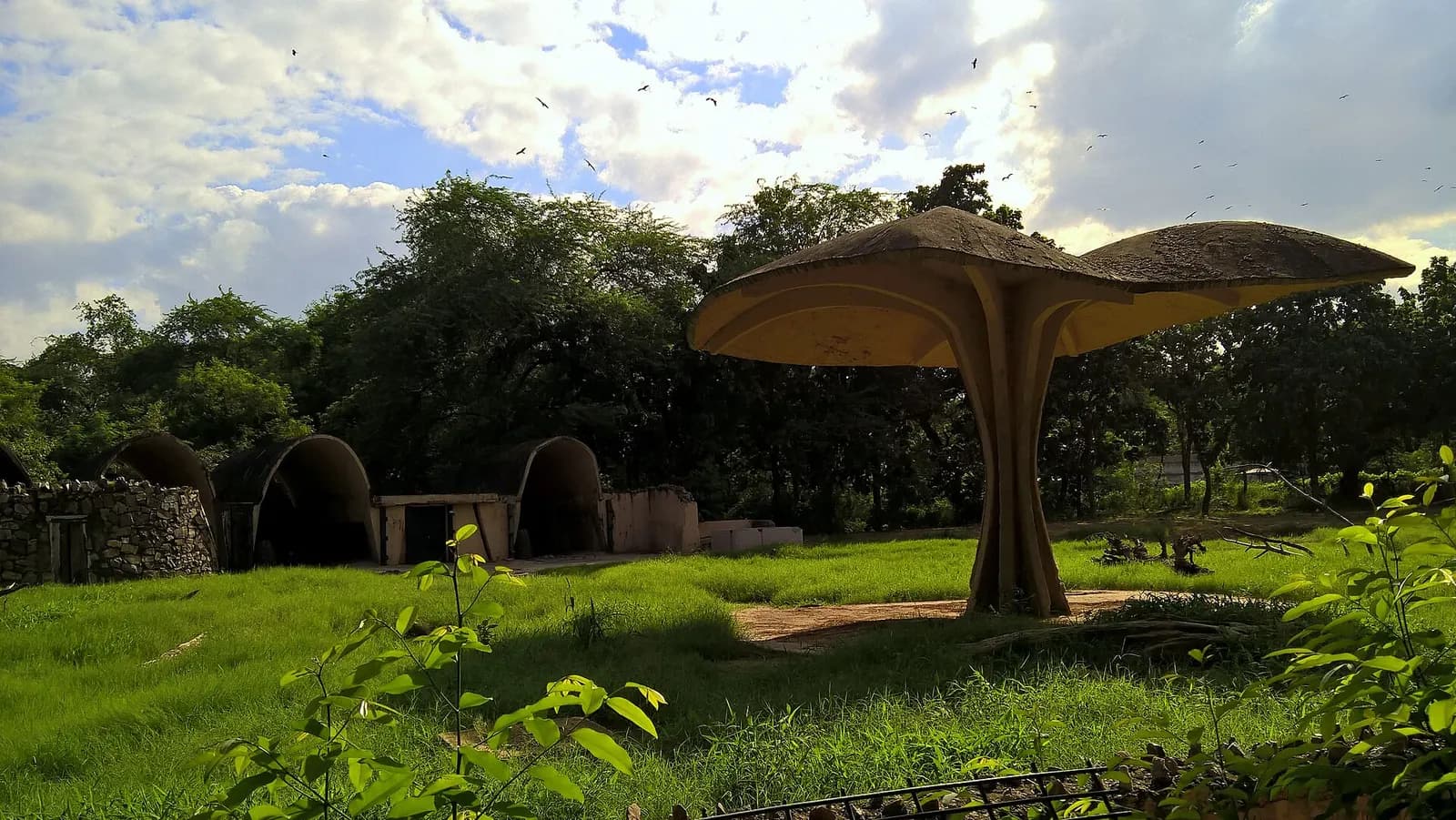
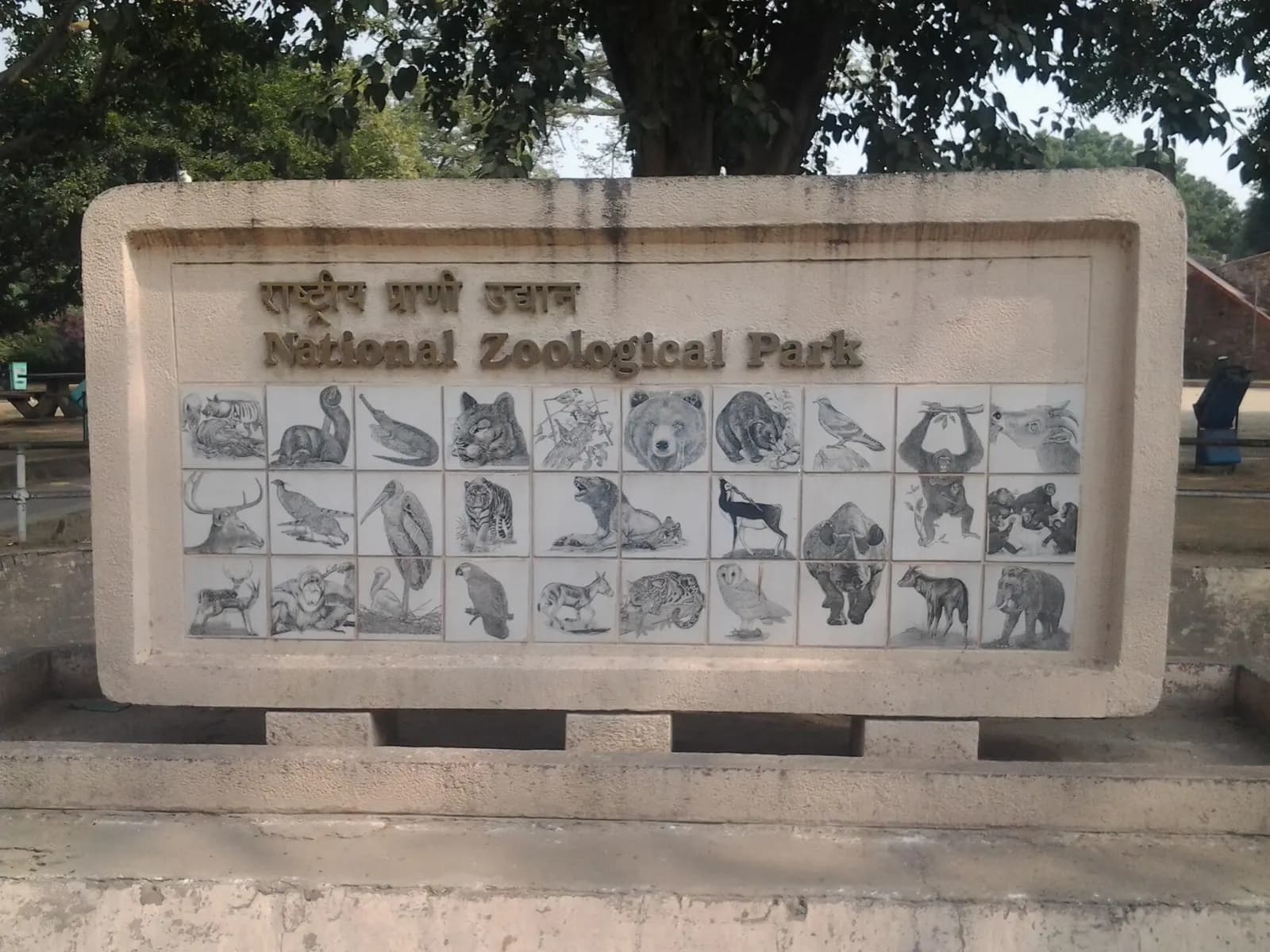
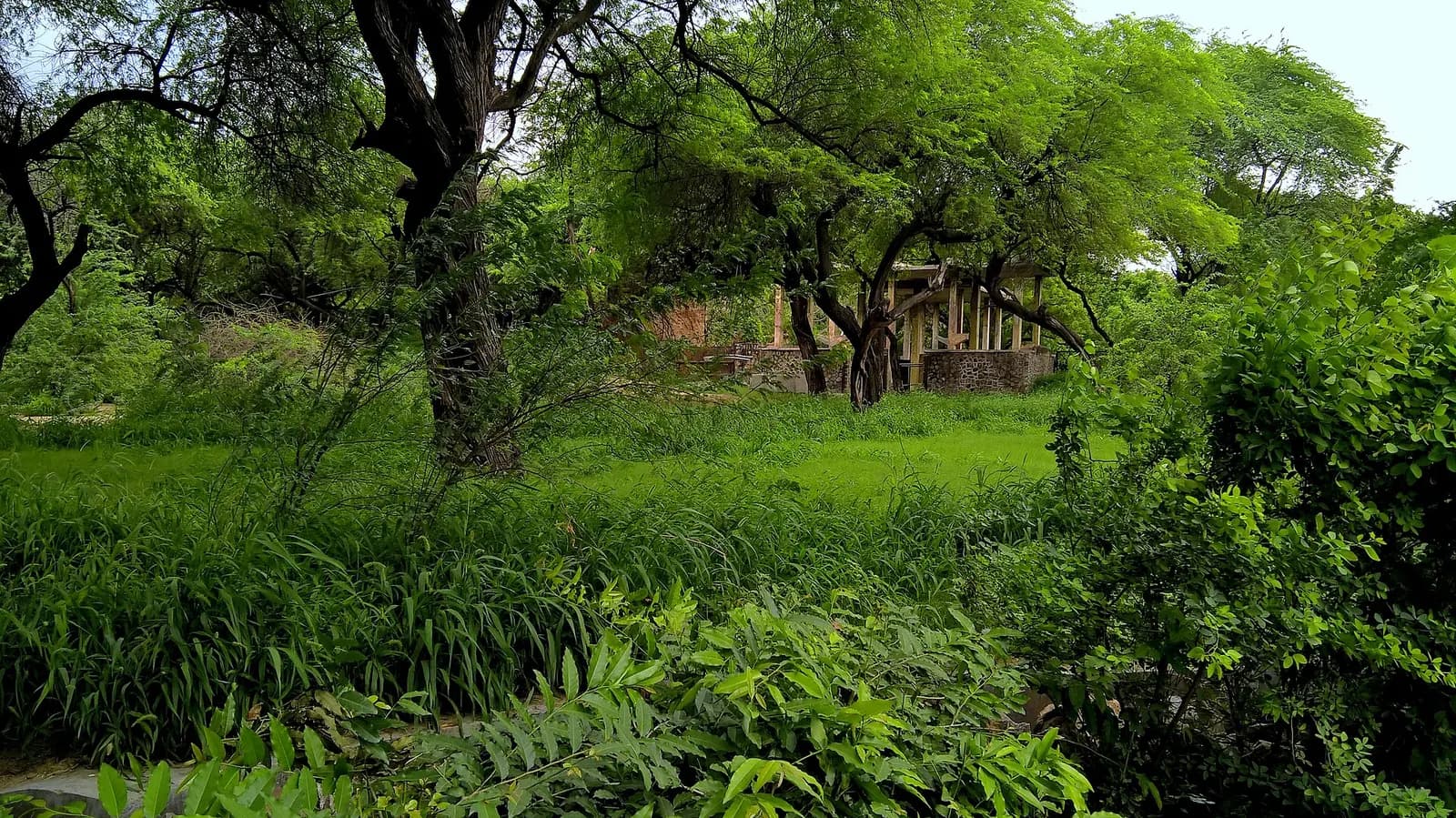
Delhi Zoo, officially named the National Zoological Park, is the capital's principal zoo, a large and green wildlife park spread across around 176 acres on Mathura Road, right beside the historic Purana Qila. Home to over 1,300 animals representing nearly 130 species from India and around the world, it was laid out on a modern, open-moated design that replaced traditional barred cages with naturalistic enclosures separated by moats, so that animals are seen in more open, humane surroundings. Beyond being a popular family outing, it is a serious institution, serving as a model zoo and a conservation breeding centre under the Central Zoo Authority, with a focus on safeguarding endangered species. It is one of the most visited attractions in Delhi, especially with families and schoolchildren.
Several things make it special and they are worth drawing out:
- A vast green wildlife park. Around 176 acres of woodland in the heart of the city, home to over 1,300 animals of nearly 130 species.
- Big cats and iconic animals. Royal Bengal and white tigers, Asiatic lions, elephants, hippos, giraffes and more.
- Winter migratory birds. Marshy lakes that fill with thousands of migratory birds, painted storks and pelicans in the colder months.
- Real conservation work. A breeding centre for endangered species such as the white tiger, Asiatic lion, Indian rhinoceros and gharial.
- A historic setting. Grounds beside the Purana Qila that even contain a centuries-old Mughal Kos Minar mile marker.
It is one of the best family-friendly of the things to do in Delhi and a green, living contrast to the stone of the important monuments of Delhi.
History of Delhi Zoo
The zoo was conceived as a modern, humane wildlife park from the start. Its blueprint was created by the renowned German zoo designer Carl Hagenbeck, a pioneer of the open-moated concept, in which barless, naturalistic enclosures separated from visitors by moats replace the cramped barred cages of older zoos. Built on this cutting-edge design, it officially opened on 1 November 1959 as the Delhi Zoo, set on a large green site beside the Purana Qila in the heart of the capital. In 1982 it was officially renamed the National Zoological Park, a change that reflected its new role as a high-standard national model for zoo management and wildlife conservation across India.
Since then it has grown into one of the country's most important zoos, both as a public attraction and as a conservation institution, operating under the Central Zoo Authority and running breeding programmes for endangered species. The grounds themselves carry a layer of older history: among the trees stands a centuries-old Kos Minar, a Mughal-era mile marker monument, a reminder that this land was part of the imperial landscape long before the zoo arrived. Knowing this history, that the zoo was designed on a progressive open-moated model and sits on historic Mughal ground beside the Purana Qila, adds depth to what might seem simply a family day out and it explains the zoo's standing as a national model rather than just a city attraction.
Animals at Delhi Zoo
For most visitors the main draw is simply the animals and with over 1,300 of them across nearly 130 species, there is plenty to see on a walk around the grounds. The collection spans big cats, large herbivores, primates, reptiles and birds, many displayed in open, moated enclosures set among greenery. Highlights to look out for include:
- The big cats. Royal Bengal tigers, rare white tigers, Asiatic lions, jaguars and panthers, the headline attractions.
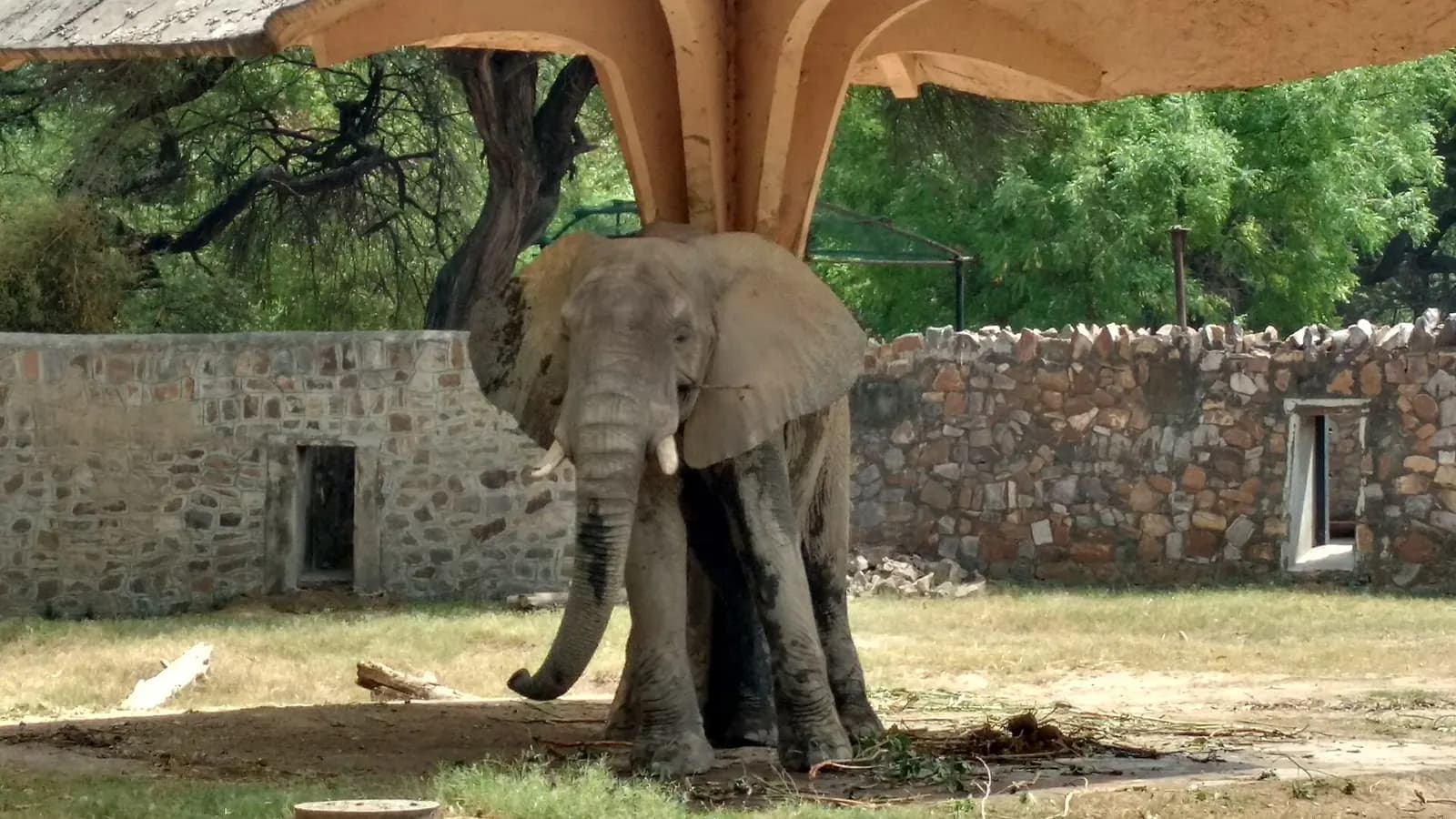
- The large herbivores. Elephants, both Indian and African, giraffes, zebras, hippopotamuses and swamp deer, the barasingha.
- The bears and primates. Black bears, sloth bears and various monkeys and primates along the trails.
- The reptiles. Indian pythons, king cobras, monitor lizards and ancient turtles in the reptile house.
- The birds. Resident peacocks and, in winter, thousands of migratory birds, painted storks and pelicans on the lakes.
Walking the loops, you pass from one naturalistic habitat to the next and part of the pleasure is the green, open feel of the place, so different from a cramped old-fashioned zoo. For families, spotting the tigers, feeding time for the elephants and the sight of the winter birds on the water are the moments children remember. The zoo is also home to conservation-priority animals such as the Indian rhinoceros and the gharial, so a visit is a chance to see some of the subcontinent's rarest wildlife.
The feline enclosures and big cats
The headline zone of the zoo and the one most visitors make straight for, is the set of feline enclosures, home to some of the most magnificent animals in the collection. Here you can see the Royal Bengal tiger, the national animal, in open moated surroundings, along with the rare and striking white tiger, which is always a favourite with children. The zoo also houses the Asiatic lion, one of the world's most endangered big cats, found in the wild only in a single forest in India, which makes seeing it here especially meaningful, as well as jaguars and panthers. The big cats are a central part of the zoo's conservation breeding work, so they are not only a spectacle but a serious effort to safeguard threatened species. Viewing these powerful animals in their spacious, naturalistic enclosures, rather than behind bars, is a highlight of any visit and it is worth timing your walk so that you reach the feline zone when the cats are likely to be active, generally in the cooler morning or late afternoon hours rather than the drowsy heat of midday.
Birds, reptiles and the migratory lakes
Beyond the big cats, two of the zoo's quieter pleasures are its reptile house and its lakes, each worth seeking out:
- The reptile house. A specialised indoor, temperature-regulated zone displaying Indian pythons, massive king cobras, monitor lizards and ancient turtles, a cool and fascinating stop.
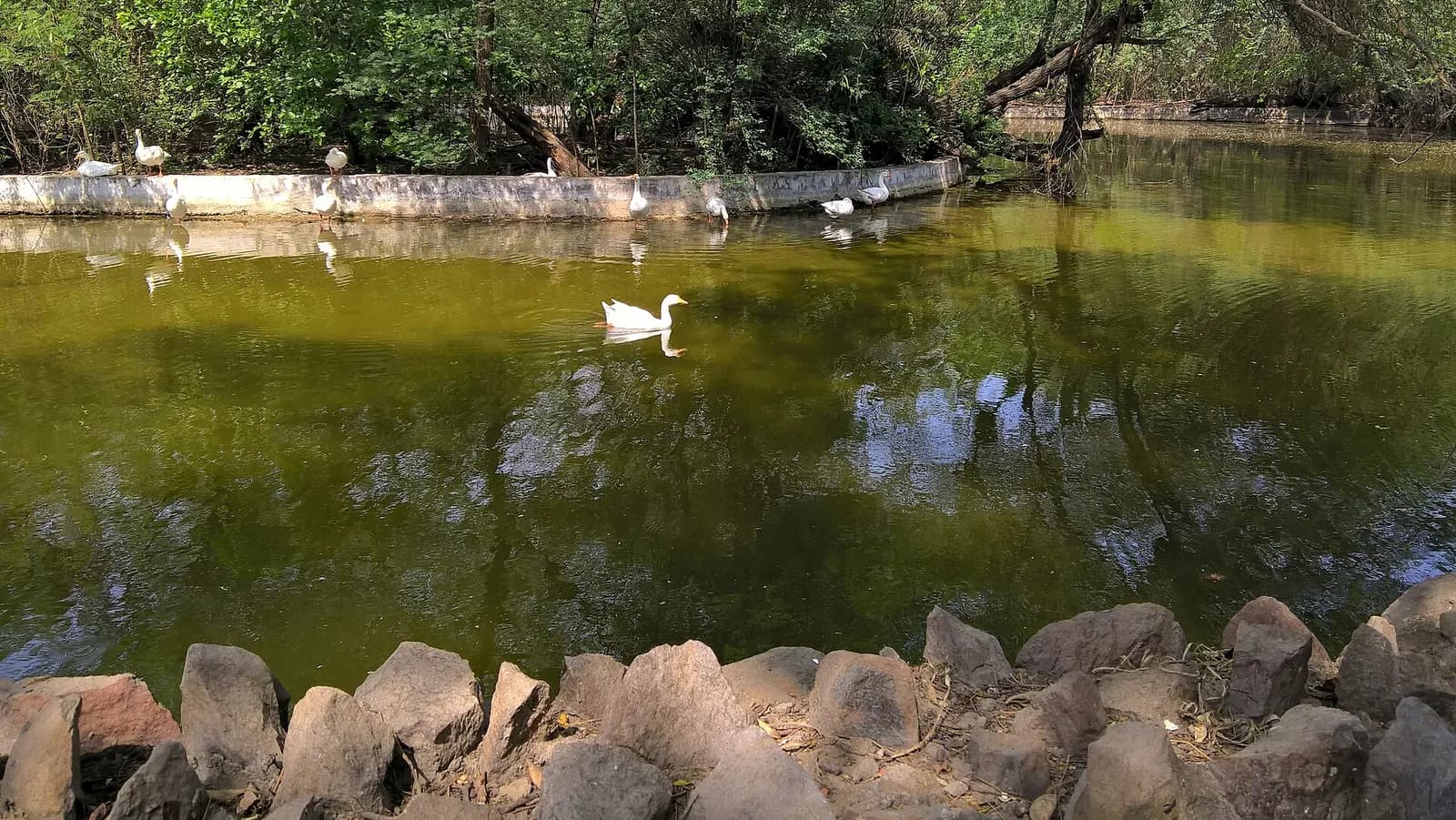
- The migratory lakes and aviaries. Large marshy water lagoons that, in the colder months, become heavily populated by thousands of vibrant migratory birds, colonies of painted storks and pelicans, alongside the zoo's resident peacocks.
The winter bird spectacle in particular is a highlight that many visitors do not expect: between roughly November and February the lakes draw large numbers of migratory waterbirds, turning the zoo into a fine spot for casual birdwatching as well as a wildlife park. The reptile house, meanwhile, offers a welcome air-conditioned break and a close look at some of India's most impressive snakes and reptiles. Together these give the zoo a variety well beyond the big cats and they are a large part of why a visit rewards a slow, full loop rather than a rush to the tigers alone.
Battery vehicles and getting around the zoo
Because the zoo is large, with a main walking loop of roughly three to four kilometres, getting around is worth planning, especially with children or elderly visitors or in hot weather. The zoo runs hop-on, hop-off battery-operated electric shuttles continuously along the trails, which are an easy way to cover the distance and rest tired legs between enclosures:
- Adult shuttle ticket. Around ₹93 per person at the time of writing.
- Child shuttle ticket, 5 to 12 years. Around ₹53 per child.
- Children under 5. Free.
- Private full cart booking. On weekdays, an exclusive 14-seater cart can be chartered for roughly ₹1,065 per trip.
In addition, free manual wheelchairs and strollers or prams are available at the main gate plaza for elderly visitors and infants, on a first-come basis, which makes the zoo easier for families and those with limited mobility. Many visitors choose to walk the shaded loop at their own pace and use the battery vehicle for the longer stretches or when energy flags, which is a sensible approach on a hot day or with young children. Planning how you will cover the ground, on foot, by shuttle or a mix, makes the visit far more comfortable.
What to expect at Delhi Zoo
A visit to Delhi Zoo is a relaxed, outdoor half day and knowing what to expect helps you plan it well. You arrive at the Mathura Road entrance, pass through a security check where bags and outside food are not allowed and enter a large, green, tree-shaded park laced with walking loops and shuttle tracks. The feel is more like a sprawling wooded garden than a cramped zoo, thanks to the open-moated design, so animals are seen across water and greenery rather than behind bars. The main loop is long, three to four kilometres, so most visitors mix walking with hops on the battery shuttle, pausing at the enclosures that interest them most. In the cool of the morning the animals are at their most active, while by midday many of the big cats drown in the shade, so timing matters.
Most families make for the big cats first, then wander among the elephants, giraffes and hippos, duck into the cool reptile house and, in winter, finish at the lakes where the migratory birds gather. There are refreshment points inside, shaded benches to rest on and free wheelchairs and prams at the gate, so it is an easy outing with children or older visitors. Because it is fully cashless, the one thing to sort before you arrive is a digital payment method or an online booking, after which the day is simple and unhurried. Many visitors are struck by how green and spacious the grounds are, a genuine pocket of nature in the middle of the city. It is a gentle, enjoyable half day rather than a thrill-packed one and approached in that spirit, especially with children, it rarely disappoints.
Conservation at Delhi Zoo
Beyond being a family outing, Delhi Zoo is a working conservation institution, which gives a visit a little more meaning. Operating under the Central Zoo Authority as a national model zoo, it runs conservation breeding programmes aimed at safeguarding endangered species, among them the white tiger, the critically threatened Asiatic lion, the Indian rhinoceros and the gharial, a fish-eating crocodile found only in the subcontinent. Seeing these rare animals here is not just a spectacle but a glimpse of serious efforts to protect species under pressure in the wild and for children in particular it is a chance to learn why such work matters. The open-moated, naturalistic design, progressive when the zoo was built, reflects the same intent of housing animals more humanely. Knowing that your visit supports a genuine conservation centre, rather than a mere menagerie, adds a worthwhile dimension to the day and it is part of what distinguishes the National Zoological Park as a national institution rather than simply a city attraction.
Delhi Zoo timings and which day it is closed
The zoo follows seasonal timings. In winter, from 16 October to 31 March, it is open from 9:00 AM to 5:00 PM, with online ticketing closing at 4:30 PM and in summer, from 1 April to 15 October, from 8:30 AM to 5:30 PM, with online ticketing closing at 5:00 PM. Crucially, the zoo is closed every Friday, as well as on national holidays, so unlike most Delhi attractions, which close on Mondays, here it is Friday you must avoid. This catches many visitors out, so it is worth repeating: do not plan a Friday visit. Arriving soon after opening is best, both to see the animals while they are active in the cool of the morning and to have time to cover the large 176 acre grounds before closing. These timings are current at the time of writing and can change, so reconfirm before your trip, particularly around the seasonal changeover dates.
Delhi Zoo ticket price and cashless booking
The entry ticket is modestly priced: at the time of writing, around ₹80 for Indian adults and ₹40 for Indian children aged five to twelve and for senior citizens, with children under five free. Foreign nationals pay more, around ₹400 per adult and ₹200 per child for non-SAARC visitors and around ₹200 per adult and ₹100 per child for visitors from SAARC countries. The single most important practical point is that the zoo is now fully cashless: there are no physical cash ticket counters at the gates and all entry tickets must be booked electronically in advance through the official portal or on the spot by scanning the on-site gate QR codes and paying through UPI or a digital payment app. This means you should arrive ready to pay digitally, ideally having booked online in advance to skip any queue, rather than expecting to buy a ticket with cash. The battery vehicle tickets are charged separately as above. These figures are current at the time of writing and can be revised, so reconfirm before your visit.
Rules, bags and food at Delhi Zoo
A few rules, mostly around bags and food, are strictly enforced, so it helps to know them in advance:
- No outside food. Outside food, lunches, snacks, plastic bags, toys, pocket knives and smoking materials are prohibited and checked at the security lanes.
- Only water and infant formula. Only basic water bottles and infant formula are allowed inside; buy other refreshments within.
- Cloakroom for bags. A managed cloakroom at the entrance plaza stores personal belongings for a small charge of around ₹5 per bag.
- Cashless only. There are no cash counters, so be ready to pay by UPI or a digital app or book online in advance.
- Photography is free. Still photography on smartphones or compact cameras is free; commercial documentary videography carries a charge.
Knowing the strict bag and food rules in advance saves hassle at the gate, so travel light, carry only water and any essentials and use the cloakroom for anything bulky. The cashless system is the other thing to prepare for, so have a digital payment method ready.
Best time to visit Delhi Zoo
The best time to visit is the cooler months and the early part of the day. In terms of season, winter, roughly November to February, is ideal, both because the weather is comfortable for walking the large grounds and because the lakes fill with migratory birds, adding a whole extra dimension to the visit; the summer months are hot and tiring across the open loop. On any day, arriving soon after opening gives you the coolest hours, the most active animals, who tend to drown in the midday heat and the most time to cover the 176 acres. Avoid Fridays, when the zoo is closed and expect weekends and school holidays to be busier. A winter weekday morning is close to ideal, especially with children. Our guide to the best time to visit Delhi sets out the seasons across the city in more detail.
How to reach Delhi Zoo (nearest metro)
Delhi Zoo stands on Mathura Road in the Sundar Nagar area of central New Delhi, directly beside the historic Purana Qila and the National Crafts Museum. The most reliable way to reach it is by metro: the Supreme Court station on the Blue Line and the Khan Market station on the Violet Line are both nearby and from either a short five to seven minute auto-rickshaw ride brings you to the entrance gate lane. App cabs and autos can drop you at the gate on Mathura Road. Because it sits beside the Purana Qila and close to Pragati Maidan, it combines naturally with that part of the city. Being central, it slots neatly into a plan of the capital and a guided New Delhi tour can fold it in alongside the surrounding landmarks, while a broader Delhi day tour ties it into the full span of the capital.
Places to visit near Delhi Zoo
Delhi Zoo sits beside the Purana Qila in central Delhi, so it is easy to pair with nearby sights. The closest major monument is the old fort of Purana Qila, literally next door, which makes an excellent companion for a half day of wildlife and history together and the National Crafts Museum is also adjacent. The serene Humayun's Tomb and the grand Akshardham temple are a short ride away, as is the ceremonial India Gate.
A little further out, the capital's great landmarks are a manageable ride away: the mighty Red Fort, the towering Qutub Minar and the modern Lotus Temple, along with the hilltop Kalkaji Mandir and the grand ISKCON Temple. The central ring, with the great circle of Connaught Place, the ancient Agrasen ki Baoli and the astronomical Jantar Mantar, is a little beyond. Together these make the zoo a fine family anchor for exploring the city.
Delhi Zoo in your Delhi itinerary
For most visitors, Delhi Zoo works best as a relaxed half day and it is an especially smart choice for anyone travelling with children, who can easily spend three to four hours among the animals. It pairs naturally with the adjacent Purana Qila for a mix of wildlife and history or it can be a dedicated family outing in its own right. A sensible plan is to arrive at opening, see the big cats and the active animals in the cool morning hours, cover the grounds with the help of the battery shuttle and finish by early afternoon, perhaps combining it with the neighbouring fort. In winter, the migratory birds make a morning visit especially rewarding. Those on a fuller itinerary often slot it in as a green, family-friendly change of pace from the historic monuments.
If Delhi is your gateway to the wider Golden Triangle, the zoo adds a relaxed, wildlife dimension to a trip otherwise rich in forts and tombs, a welcome change for children in particular. Many of my guests travelling with families say it was one of the stops their children enjoyed most in the capital and it offers an easy, open-air interlude before the journey on to the monuments of Agra and Jaipur.
Travel tips for visiting Delhi Zoo
A few pointers make the visit smoother and more rewarding:
- Never come on a Friday, the weekly closed day here, unlike most Delhi attractions.
- Book online in advance or be ready to pay by UPI, as the zoo is fully cashless with no cash counters.
- Arrive at opening, to see active animals in the cool and to cover the large grounds comfortably.
- Visit in winter, roughly November to February, for pleasant weather and the migratory birds.
- Use the battery shuttle, as the walking loop is 3 to 4 km, especially with children or elderly visitors.
- Travel light, since outside food, bags and many items are not allowed, with a cloakroom for the rest.
- Carry water, which is allowed and buy other refreshments inside.
- Come by metro, from Supreme Court or Khan Market, then a short auto.
If you would like a local guide to build Delhi Zoo into a wider Delhi plan, message our team on WhatsApp at +91 7302265809 with your travel dates and group size and we will shape the day for you.
Is Delhi Zoo worth visiting?
For families with children, yes, very much so. If you are travelling with young ones, it is one of the most rewarding stops in the city, a chance to see tigers, lions, elephants and, in winter, flocks of migratory birds across a large, green park and the modest ticket makes it easy to include. For anyone who enjoys wildlife it is a substantial zoo, one of India's largest and a serious conservation centre and its setting beside the Purana Qila makes for an easy pairing of animals and history. The honest note is that, like any city zoo, some enclosures are better than others and a full loop is a lot of walking, so the battery shuttle and a cool-season morning visit make a real difference; approached that way, it is a genuinely enjoyable half day. For families especially, I recommend it warmly and the big cats and winter birds are often a highlight of a children's trip to Delhi.
Plan your trip with us
At Experience My India, through our Delhi and Golden Triangle travel desk, we design unhurried, well paced trips that make room for relaxed, family friendly stops like Delhi Zoo, not just the headline monuments and we time outdoor stops like this for the cooler hours so your day flows. Whether you want a relaxed set of Delhi Agra tours or a full Golden Triangle route through Delhi, Agra and Jaipur, we plan around your pace, your interests and the right season, with local guides who know how to keep every age happy. Share your dates and the kind of trip you have in mind through our enquiry page, tell us your group size and we will put together an honest, tailored plan rather than a rushed checklist.
Related guides
- Places to visit in Delhi, for the wider picture
- Hidden places to visit in Delhi, the city's quieter corners
- Nearby places to visit in Delhi, to extend your trip
Enquire Now
Ready to Explore
The Heart of Delhi?
Explore the Red Fort, Qutub Minar, Humayun's Tomb, and the vibrant streets of Old Delhi with our expert-guided premium tours of India's capital city.

Delhi
Premium Tour Package
Questions
Frequently asked questions
What are the timings of Delhi Zoo?
In winter, 16 October to 31 March, it is open 9:00 AM to 5:00 PM and in summer, 1 April to 15 October, 8:30 AM to 5:30 PM. Online ticketing closes 30 minutes before. It is closed on Fridays. Reconfirm, as timings can change.
Which day is Delhi Zoo closed?
What is the ticket price for Delhi Zoo?
How do I book Delhi Zoo tickets?
Which is the nearest metro station to Delhi Zoo?
What animals are at Delhi Zoo?
How big is Delhi Zoo and how much time does it need?
Is outside food allowed in Delhi Zoo?
Is there transport inside Delhi Zoo?
Is Delhi Zoo worth visiting?
Explore more
Plan your Delhi Zoo (National Zoological Park) trip with us

Interested in Delhi Zoo (National Zoological Park): Timings, Tickets and Guide?
Chat with our travel team for a custom quote, or browse every package.
Related Attractions
9Ready to explore Delhi Zoo (National Zoological Park): Timings, Tickets and Guide?
Book your private tour today and experience the magic of India's rich heritage.