
Nicholson Cemetery Delhi: History, Timings and Visitor Guide
Visiting Nicholson Cemetery near Kashmere Gate? The 1857 Siege of Delhi history, John Nicholson's tomb, notable graves, timings, free entry and nearest metro.
In a Nutshell
“Nicholson Cemetery is a historic, atmospheric colonial-era Christian burial ground in Civil Lines, North Delhi, established in 1857 during the Siege of Delhi and named after Brigadier General John Nicholson, the British officer killed storming Kashmere Gate. The oldest Christian cemetery in the Delhi region, it holds Nicholson's tomb, the graves of officers and soldiers, poignant clusters of infant graves and rare inter-faith markers, shaded by ancient neem and tamarind trees. Entry is free, it is open daily and it sits beside Kashmere Gate metro. It features on our heritage Delhi tours, run by a unit of Experience My India.”
Nicholson Cemetery is one of Delhi's most evocative and moving historical sites, a quiet, tree-shaded ground that carries the story of the dramatic events of 1857 and of the city's old Christian community. For history lovers and those drawn to the city's atmospheric, offbeat corners, it is a fascinating and reflective stop. Our team at Delhi Agra Tour Packages sometimes includes it on a heritage walk around Kashmere Gate and Civil Lines and it adds an unusual, poignant dimension to a wider Golden Triangle tour through the capital.
I am Abhay Sharma, Delhi born and a Golden Triangle guide since 2015 and I enjoy bringing history-minded guests here, because few places tell the human story of 1857 and of the colonial community that lived and died in old Delhi, quite so vividly and quietly. This guide gathers everything I would tell a visitor beforehand, checked against current information, including the history, the notable graves, the timings and how to reach it.
Details
Nicholson Cemetery at a glance
| Detail | Information |
|---|---|
| Location | Club Road, Ludlow Castle, Civil Lines, North Delhi |
| Established | 1857, during the Siege of Delhi |
| Named after | Brigadier General John Nicholson |
| Known as | The oldest Christian burial ground in the Delhi region |
| Size | Around 4 to 5 acres |
| Entry | Free; respectful visiting only |
| Nearest metro | Kashmere Gate, Gate No. 4, about 50 metres |
| Time needed | About 45 minutes to an hour |
Nicholson Cemetery timings
| Season | Hours |
|---|---|
| Winter, October to March | 9:00 AM to 5:00 PM daily |
| Summer, April to September | 8:00 AM to 6:00 PM daily |
| Time needed | About 45 minutes to an hour |
Nicholson Cemetery is open daily, from 9:00 AM to 5:00 PM in the winter months of October to March and from 8:00 AM to 6:00 PM in the summer months of April to September. A visit, taking in Nicholson's tomb and the notable graves, takes about forty five minutes to an hour. These timings are current at the time of writing and can vary, so a daytime visit is best.
Entry fee
| Item | Information |
|---|---|
| Entry fee | Free for all visitors |
| Tickets | None; be wary of touts charging unauthorised fees |
| Conduct | A place of grief and memory; quiet, respectful visiting only |
How to reach Nicholson Cemetery
| From | Route |
|---|---|
| Kashmere Gate metro | Gate No. 4, turn right onto Karnal Road, about 50 metres |
| Metro lines | Red, Yellow and Violet Lines interchange at Kashmere Gate |
| Civil Lines and North Delhi | A short ride through the area |
| By car | On-street in the Civil Lines area |
What is Nicholson Cemetery?
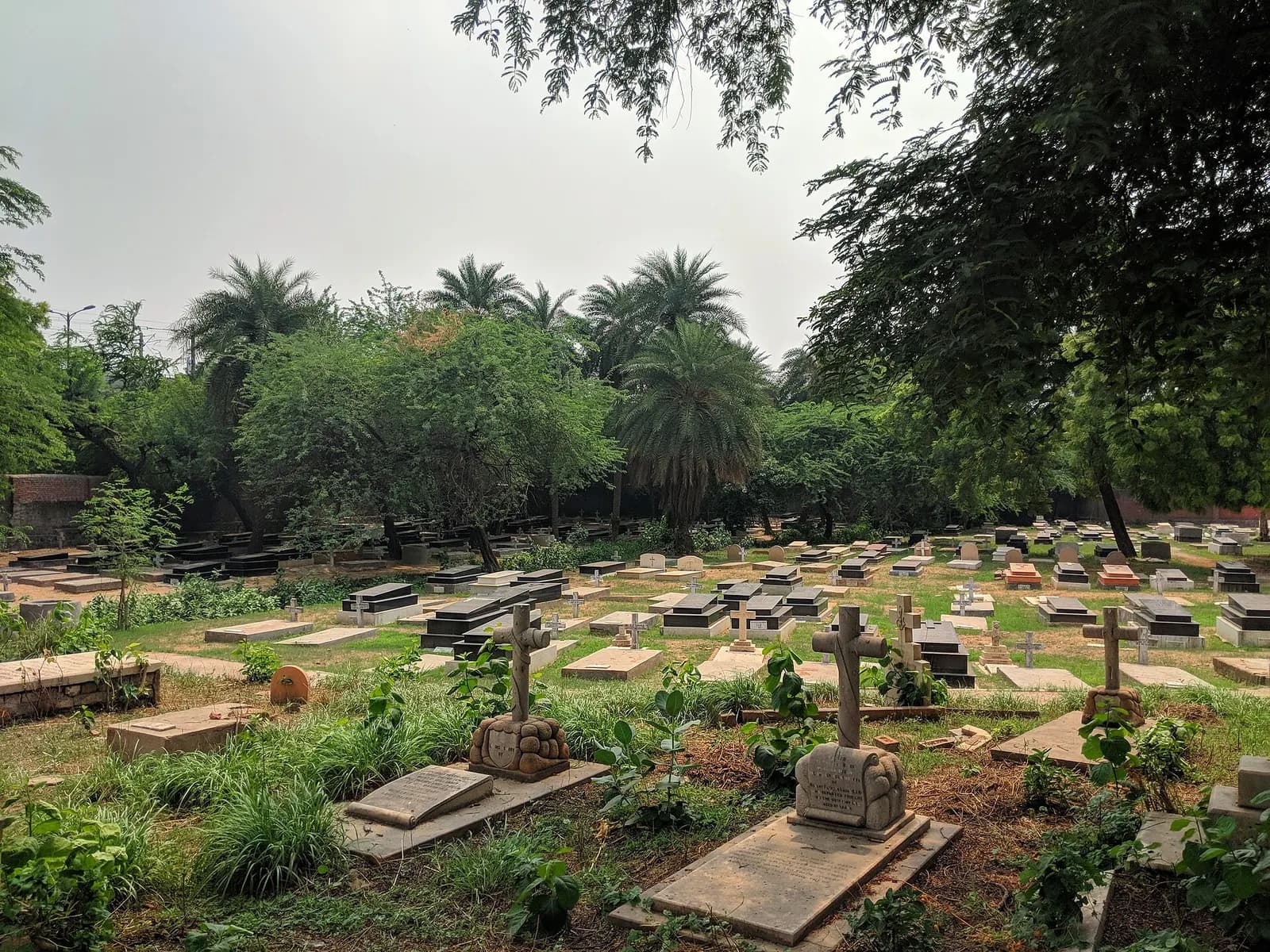
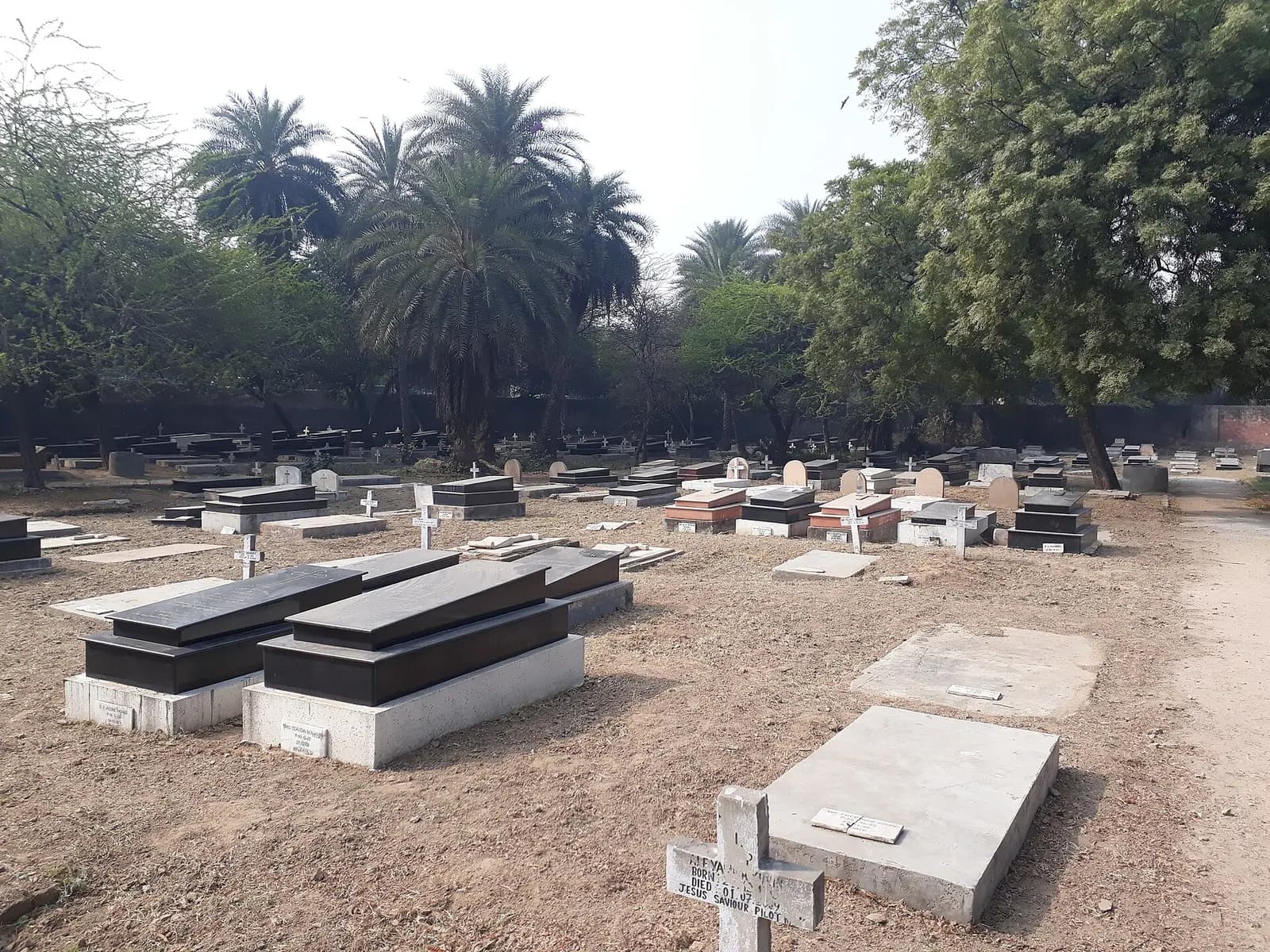
Nicholson Cemetery is a historic Christian burial ground of around four to five acres in Civil Lines, North Delhi, established in 1857 and standing today as the oldest known Christian cemetery in the Delhi region. It was opened out of urgent necessity during the Siege of Delhi, the intense fighting of the 1857 rebellion, to bury the soaring number of British casualties and it was later named after Brigadier General John Nicholson, the officer who led the storming of Kashmere Gate and died of his wounds. Shaded by massive ancient neem, tamarind and date palm trees and scattered with Victorian tombs, Neoclassical mausoleums, Gothic crosses and simple soldiers' slabs, it is a quiet, atmospheric and deeply moving place, an open-air record of colonial Delhi's social order and of the human cost of 1857. The cemetery is still in use by Delhi's Christian community and is maintained in connection with the nearby St James' Church.
Several things make it special and they are worth drawing out:
- A site of 1857. Established during the Siege of Delhi to bury the casualties of the rebellion, making it one of the city's most direct links to those dramatic events.
- John Nicholson's grave. The tomb of the controversial British officer known as the Hero of Delhi, located just inside the entrance.
- The oldest Christian cemetery in Delhi. The oldest known Christian burial ground in the Delhi region, tied to the historic St James' Church.
- A record of colonial society. Graves that reflect the rigid 19th-century military and social hierarchy, from grand officers' mausoleums to simple soldiers' slabs.
- A quiet, tree-shaded atmosphere. A green, peaceful and poignant refuge, steeped in history and folklore.
It is one of the most atmospheric and historically rich of the offbeat things to do in Delhi and a fascinating lesser-known entry among the important monuments of Delhi.
History of Nicholson Cemetery and the Siege of Delhi
The history of Nicholson Cemetery is inseparable from the dramatic events of 1857, the uprising the British called the Indian Mutiny and which is remembered in India as the First War of Independence. The cemetery was established in 1857 at the peak of the rebellion originally known as the Old Delhi Military Cemetery or the Kashmere Gate Cemetery, opened out of urgent necessity to bury the rapidly mounting British casualties of the intense Siege of Delhi. Understanding that context is the key to the place:
- The 1857 rebellion. A major uprising against British East India Company rule, with Delhi a central theatre as rebel soldiers seized the city and rallied around the last Mughal emperor.
- The Siege of Delhi. The months-long struggle in which British forces besieged and then stormed the walled city, some of the bloodiest fighting of the rebellion.
- The urgent need for burials. The scale of death among the British forces and community created an immediate need for a new burial ground and the cemetery was opened to meet it.
The result is that Nicholson Cemetery is, in a very direct sense, a product of 1857, its earliest graves filled in the months of that violent year. Walking its paths, past the tombs of officers and soldiers who fell in or around that conflict, is to stand close to one of the pivotal moments in Indian history. After independence in 1947, the cemetery transitioned from a largely colonial military burial ground into a public graveyard where local Indian Christians continue to be laid to rest, so it carries the layered history of both the colonial era and the modern city. Knowing the 1857 story and reading it in the dates and inscriptions on the stones, transforms a visit from a walk among old graves into an encounter with a defining chapter of the nation's past.
Who was John Nicholson?
The cemetery takes its name from Brigadier General John Nicholson, one of the most prominent and controversial British military figures of the Victorian era and understanding him adds greatly to a visit. Nicholson was a formidable and famously ruthless officer, known to the British as the Hero of Delhi and revered by some of his loyal Indian troops under the name Nikal Seyn, around whom a near-cult following grew. During the Siege of Delhi he led the storming party that breached the rebel defences at the historic Kashmere Gate, a decisive and desperate assault and in the course of that attack he was shot in the chest. He died of his wounds on 23 September 1857, at the age of just thirty five and was buried in the new cemetery that would later carry his name.
His was a complex and divisive legacy: celebrated by the British as a hero of the siege, he was also known for his harshness and the brutality with which he suppressed the rebellion and his reputation has been reassessed critically in the years since, so he is remembered today as a controversial rather than a simply heroic figure. To the colonial establishment of his day he was a near-legendary warrior whose exploits on the frontier and at Delhi were celebrated in memoirs and biographies; to a modern Indian reader his record looks very different, bound up with the violence of empire and the crushing of the 1857 uprising. That tension is precisely what makes him such an interesting figure to encounter and standing at his grave invites reflection on how history remembers its so-called heroes. For the visitor, his story is the human thread that runs through the cemetery, a young, driven, ruthless officer killed in the storming of the city, buried on the ground his name now marks. Standing at his tomb and knowing the arc of his short and turbulent life, is one of the most compelling parts of a visit and it opens up the wider, contested history of the events of 1857.
Notable graves at Nicholson Cemetery
Across the four to five acres, the cemetery functions almost as an open-air museum of colonial social structures and Victorian funerary masonry and seeking out its notable graves is the heart of a visit:
- John Nicholson's tomb. Located immediately to the right after you pass through the main entrance, his grave is protected by a heavy iron grill often overgrown with climbing jasmine and his tombstone is a solid white marble slab said to have been taken from the Red Fort.
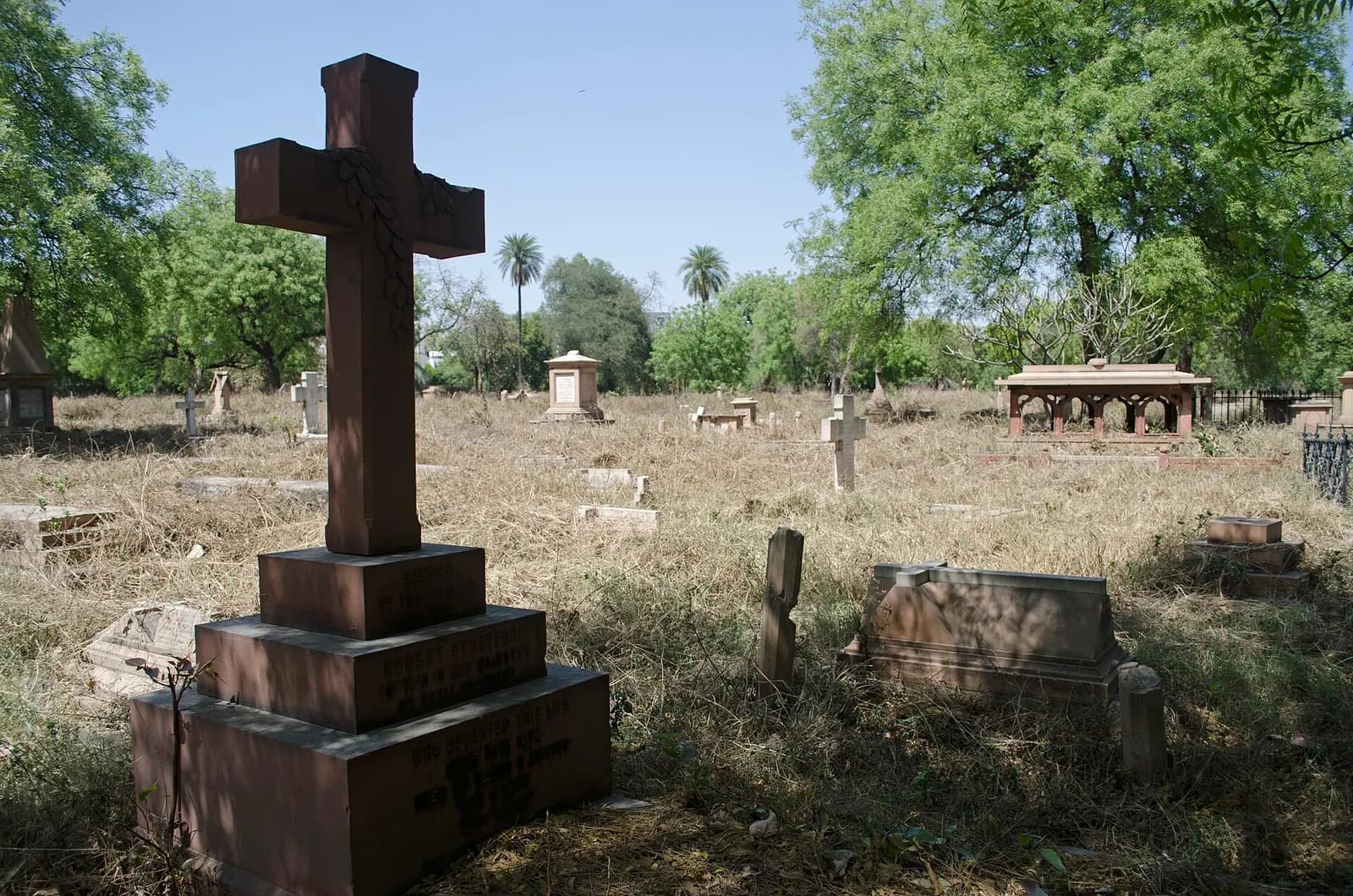
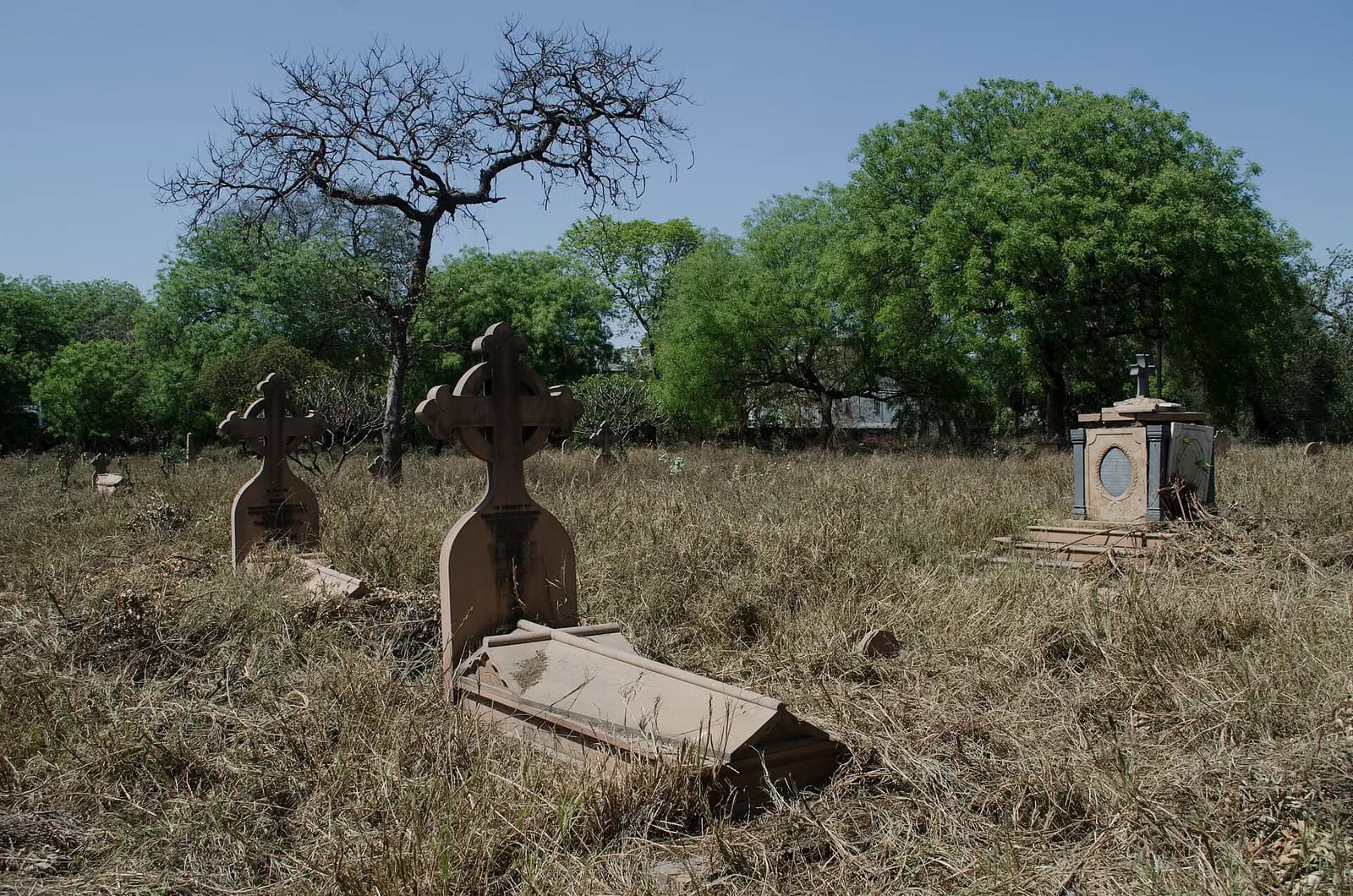
- Officers' mausoleums. High-ranking officers rest beneath elaborate Neoclassical mausoleums, Gothic arches and tall stone crosses, reflecting their rank and status in the colonial order.
- Soldiers' slabs. Common soldiers are marked by stark, simple stone slabs, a quiet contrast to the grand officers' tombs that speaks to the rigid hierarchy of the time.
- The infant graves. A particularly moving sub-section holds tiny, closely clustered tombstones of young infants and children who died of cholera and the brutal heat, a heart-wrenching record of the toll the climate and disease took on the colonial community.
- Inter-faith and Masonic markers. The older sections contain rare joint Christian and Jewish tombstones, some carved with symbols of the deceased's profession and with Freemason etchings, such as the Star of David paired with the square and compasses.
- Professor Yesudas Ramachandra's grave. Beyond the British graves lies the tomb of this notable Indian scholar, a mathematics professor at Delhi College and a convert to Christianity, a tutor to the Maharaja of Patiala, who survived the 1857 outbreaks and died in 1880.
Together these graves tell a remarkably full story: the fame and controversy of Nicholson, the stark hierarchy of officers and soldiers, the heartbreaking vulnerability of children, the surprising inter-faith and professional diversity of old Delhi and, in Professor Ramachandra, the presence of distinguished Indians within this Christian community. Reading the stones slowly, noting the dates, ranks and inscriptions, is far more rewarding than a quick glance and it turns the cemetery into a vivid window onto the society of 19th-century Delhi.
Architecture and layout
The cemetery is entered through a picturesque, cottage-styled archway of dark red stone, topped by a cross and fitted with black iron gates, which also serves as the living quarters of the on-site caretaker and his family. Inside, the ground opens into a green, tree-shaded expanse of paths and tombs, with Nicholson's grave just to the right of the entrance and the wider field of graves spreading beyond. The funerary architecture ranges widely in scale and style, from the imposing Neoclassical mausoleums and Gothic crosses of senior officers to the plainest slabs of ordinary soldiers and the tiny markers of infants, a physical record of the social order of colonial Delhi written in stone.
Much of the older masonry is weather-beaten and fragile, cracked and softened by more than a century and a half of Delhi's climate, which is part of what gives the place its melancholy, time-worn beauty. The heavy canopy of ancient neem, tamarind and date palm trees keeps the ground cool and shaded even in the heat and in the winter months thick bougainvillea sheds cascading pink petals over the old gravestones, a quietly beautiful sight. The overall impression is of a green, peaceful and atmospheric historical ground, cared for but gently worn, where the architecture itself tells the story of who was buried here and how they were remembered.
What to expect at Nicholson Cemetery
A visit to Nicholson Cemetery is quiet, reflective and atmospheric, quite different from the city's grand monuments and knowing what to expect helps you appreciate it. This is first and foremost an active place of grief and memory, not a recreational park, so the mood is calm and respectful and loud talking, running and music are not appropriate here. The experience is one of slow, thoughtful wandering: finding Nicholson's tomb, reading the inscriptions on officers' and soldiers' graves, pausing at the poignant cluster of infant graves and taking in the shaded, time-worn beauty of the grounds. There are no interiors or displays and limited signage, so the richness of the visit depends largely on arriving with the history in hand.
The visit takes about forty five minutes to an hour at an unhurried pace. The cemetery is well shaded and green, a cool refuge even in warm weather, though the paths and older sections are uneven and the masonry fragile. It retains an eerie, folkloric reputation and is often cited in local lore as one of the city's most haunted places, which draws some curious visitors, though by day it is simply a peaceful, moving historical ground. Come quietly, respectfully and with the 1857 story in mind and the cemetery offers one of the most contemplative and human encounters with Delhi's past that the city has to offer.
Nicholson Cemetery timings and entry fee
Nicholson Cemetery is open daily, with seasonal hours: from 9:00 AM to 5:00 PM in the winter months of October to March and from 8:00 AM to 6:00 PM in the summer months of April to September. Entry is completely free for all visitors and there is no official ticket; visitors should be wary of any local touts or informal individuals who may try to charge unauthorised fees at the gate, as none are payable. A visit takes about forty five minutes to an hour. Because this is an active place of grief and memory rather than a tourist park, a strict code of respectful conduct applies: visiting is quiet and reflective, loud talking, running and playing music are not appropriate and while photography is generally permitted, visitors must remain respectful and must never climb on or deface the fragile, crumbling 19th-century gravestones. It is also wise to avoid the deep, overgrown outer edges near dusk. These timings are current at the time of writing and can vary, so plan a daytime visit and reconfirm if your plans depend on exact hours.
Code of conduct and visitor guidelines
Because the cemetery is a living place of mourning and remembrance, a few points of etiquette make all the difference to visiting it well:
- Keep quiet and respectful. This is a place of grief, not a picnic spot, so avoid loud talking, running and music and move gently through the grounds.
- Do not touch or climb the graves. The 19th-century masonry is fragile and crumbling, so never climb on, lean against or deface the tombstones.
- Photograph respectfully. Photography is generally allowed, but be discreet and respectful, especially if any burial or mourning is taking place.
- Beware of unauthorised fees. Entry is free; politely decline anyone at the gate trying to charge a ticket or informal fee.
- Avoid the overgrown edges at dusk. The dense vegetation at the far edges can harbour snakes or monkeys, so stick to the main paths, especially later in the day.
- Allow about an hour and visit during the posted daytime hours.
Observing this etiquette is not only courteous but essential, as the cemetery remains in use and its stones are genuinely fragile. Visited with respect and in the right spirit, it rewards you with one of the most peaceful and moving historical experiences in the city and keeps the ground as it should be for those who come to mourn as well as those who come to remember the history.
Best time to visit Nicholson Cemetery
The best time to visit is the cooler months, from October to March, when Delhi's weather is pleasant and the bougainvillea sheds its pink petals over the old stones and within the day the morning or the earlier afternoon, well before the gates close and before dusk. A winter morning is ideal, with soft light filtering through the neem and tamarind canopy and comfortable temperatures for unhurried wandering. The heavy tree cover keeps the cemetery shaded and relatively cool even in the warmer months, so a summer visit is more bearable here than at exposed sites, though the midday heat is still best avoided. The monsoon leaves the grounds lush but can make the older paths slippery. Avoid late dusk and after-dark visits, both out of respect and because the overgrown edges are best not explored then. Our guide to the best time to visit Delhi sets out the seasons across the city in more detail.
How to reach Nicholson Cemetery (nearest metro)
Nicholson Cemetery is on Club Road in the Ludlow Castle area of Civil Lines, North Delhi and it is remarkably easy to reach by metro. The nearest station is Kashmere Gate, one of the city's major interchange nodes connecting the Red, Yellow and Violet Lines, which makes it accessible from almost anywhere in Delhi. From the station, head for Gate No. 4, exit and turn right onto Karnal Road and the cemetery entrance sits only about fifty metres from the metro steps, an easy walk. App cabs and autos can also drop you close to the gate and the surrounding Civil Lines area is a historic, leafy part of old north Delhi worth a wider wander. Because it sits a little off the usual monument trail, it pairs naturally with a heritage-focused New Delhi tour or a broader Delhi day tour that takes in the old city and the 1857 sites.
Places to visit near Nicholson Cemetery
Nicholson Cemetery sits in the historic north of the city, close to Kashmere Gate and old Delhi, so it combines beautifully with the monuments of the Mughal and colonial capital. A short ride south brings you to the mighty Red Fort, the great Mughal citadel, from which the marble for Nicholson's tombstone is said to have come and the old fort of Purana Qila. The ceremonial heart of New Delhi, with India Gate and the great circle of Connaught Place, is a manageable ride away.
A little further afield, the capital's other landmarks round out a full picture of the city: the serene Humayun's Tomb, the towering Qutub Minar and the modern marvels of the Lotus Temple and Akshardham. For more hidden history, the ancient stepwell of Agrasen ki Baoli, the astronomical Jantar Mantar, the historic Hauz Khas Fort and the ruins of the Mehrauli Archaeological Park complete the sweep of Delhi's long past.
Nicholson Cemetery in your Delhi itinerary
For most visitors, Nicholson Cemetery works best as a short, atmospheric stop within a Kashmere Gate and Civil Lines heritage outing rather than a destination on its own, given that the visit takes under an hour and that it rewards a reflective, unhurried pace. The natural pairing is with the story of 1857 and old Delhi: see Nicholson's tomb and the graves here and connect them with the Red Fort and the walled city where the siege was fought, so the human cost recorded in the cemetery and the grand stage of the rebellion come together. It is a stop for travellers with a genuine interest in history, in the events of 1857 and in Delhi's quiet, poignant corners, rather than for those ticking off headline sights and it rewards knowing the story in advance.
If Delhi is your gateway to the wider Golden Triangle, Nicholson Cemetery offers a powerful and intimate perspective on a pivotal chapter of Indian history and on the colonial community that lived and died in the old city, a reflective counterpoint to the grandeur of the Mughal and imperial monuments elsewhere. Many of my history-minded guests find the infant graves and the Nicholson story unexpectedly moving and it adds a thoughtful, distinctive note to a Delhi exploration before the journey on to Agra and Jaipur.
Travel tips for visiting Nicholson Cemetery
A few pointers make the visit smoother and more respectful:
- Come in the cooler months, October to March and in the morning, for pleasant weather and soft light.
- Know the history first, the 1857 Siege of Delhi and John Nicholson, as the cemetery's power is in its story.
- Visit quietly and respectfully, remembering this is an active place of grief, not a park.
- Find Nicholson's tomb just to the right of the entrance, then seek out the officers' mausoleums and the infant graves.
- Do not touch or climb the fragile old gravestones and photograph discreetly.
- Decline any gate fee, as entry is free and any charge is unauthorised.
- Reach it via Kashmere Gate metro, Gate No. 4, about fifty metres away.
- Allow about an hour and visit in daylight, avoiding the overgrown edges at dusk.
If you would like a local guide to build Nicholson Cemetery into a wider Delhi heritage plan, message our team on WhatsApp at +91 7302265809 with your travel dates and group size and we will shape the day for you.
Is Nicholson Cemetery worth visiting?
For history lovers and those drawn to Delhi's quiet, atmospheric and offbeat sites, yes, it is a genuinely rewarding and moving stop. There are few places in the city that connect you so directly and so humanly to the events of 1857, from the tomb of the officer who stormed Kashmere Gate to the heartbreaking cluster of infant graves and the surprising inter-faith stones of old Delhi's community. It is free, easy to reach beside a major metro interchange, beautifully shaded and deeply evocative. The honest note is that it is a working cemetery and a place of grief, best visited quietly and with respect, not a conventional tourist attraction with facilities and displays and its appeal depends almost entirely on an interest in history and atmosphere. But for the curious, respectful, history-minded traveller, it is one of the most contemplative and memorable places in Delhi and I enjoy showing it to guests with a taste for the deeper, human side of the city's past.
Plan your trip with us
At Experience My India, through our Delhi and Golden Triangle travel desk, we design unhurried, well paced trips that make room for atmospheric, history-rich stops like Nicholson Cemetery, not just the headline monuments and we know how to reach and interpret the city's hidden historical corners with the respect they deserve. Whether you want a relaxed set of Delhi Agra tours or a full Golden Triangle route through Delhi, Agra and Jaipur, we plan around your pace, your interests and the right season, with local guides who know the stories behind the stones. Share your dates and the kind of trip you have in mind through our enquiry page, tell us your group size and we will put together an honest, tailored plan rather than a rushed checklist.
Related guides
- Places to visit in Delhi, for the wider picture
- Hidden places to visit in Delhi, the city's quieter corners
- Nearby places to visit in Delhi, to extend your trip
Enquire Now
Ready to Explore
The Heart of Delhi?
Explore the Red Fort, Qutub Minar, Humayun's Tomb, and the vibrant streets of Old Delhi with our expert-guided premium tours of India's capital city.

Delhi
Premium Tour Package
Questions
Frequently asked questions
What are the timings of Nicholson Cemetery?
It is open daily, 9:00 AM to 5:00 PM in winter, October to March and 8:00 AM to 6:00 PM in summer, April to September. A visit takes about 45 minutes to an hour. Reconfirm, as timings can vary.
What is the entry fee for Nicholson Cemetery?
Which is the nearest metro station to Nicholson Cemetery?
Why is Nicholson Cemetery famous?
Who was John Nicholson?
Is Nicholson Cemetery haunted?
Can you visit John Nicholson's grave?
Is Nicholson Cemetery worth visiting?
How old is Nicholson Cemetery?
Explore more
Plan your Nicholson Cemetery trip with us

Photo credits
Photos from Wikimedia Commons, used under their licences:
- Photo 1 by Anupamg, CC BY-SA 4.0
- Photo 2 by Aman.arch, CC BY-SA 4.0
- Photo 3 by Rangan Datta Wiki, CC BY-SA 4.0
- Photo 4 by Pinakpani, CC BY-SA 4.0
- Photo 5 by Rangan Datta Wiki, CC BY-SA 4.0
Interested in Nicholson Cemetery Delhi: History, Timings and Visitor Guide?
Chat with our travel team for a custom quote, or browse every package.
Related Attractions
9Ready to explore Nicholson Cemetery Delhi: History, Timings and Visitor Guide?
Book your private tour today and experience the magic of India's rich heritage.