 Yamuna Bazar, Delhi
Nigambodh Ghat Delhi: History, Significance and Visitor Guide
About Nigambodh Ghat on the Yamuna in Delhi: its sacred history and legend, the winter migratory birds, the ghat today, timings, location and the nearest metro.
Quick answer
Nigambodh Ghat on the banks of the Yamuna at Yamuna Bazar, near Kashmere Gate in Old Delhi, is revered as the city's oldest and most sacred Hindu cremation ground. By legend its story reaches back to the Mahabharata era, when Lord Brahma is said to have bathed here and recovered his lost Vedic knowledge, which gives the ghat its name. It remains an active and deeply solemn place of last rites and in winter the adjoining stretch of river draws thousands of migratory gulls. It is open at all times as a working cremation ground and it is reached from Kashmere Gate metro. It is a place our Delhi guides describe with respect, run by a unit of Experience My India.
- #nigambodh-ghat
- #delhi
- #nigambodh-ghat-delhi
- #delhi-attractions
- #delhi-travel
Nigambodh Ghat is first and foremost a sacred and active cremation ground, a place of mourning and of profound religious significance, rather than a conventional tourist site and it deserves to be approached with care and respect. For those interested in Delhi's spiritual heritage, its ancient legends and, in the winter months, the remarkable gathering of migratory birds along the river, it is a place of deep meaning. Our team at Delhi Agra Tour Packages treats it as a site to understand and respect rather than to sightsee and this guide is written in that spirit as part of our wider knowledge of the capital for a Golden Triangle tour.
I am Abhay Sharma, Delhi born and a Golden Triangle guide since 2015 and when guests ask about Nigambodh Ghat I always begin by explaining what it truly is: one of the holiest and oldest sites in the city and an active place of last rites that calls for the utmost respect. This guide gathers what I would tell a visitor beforehand, checking against current information, including the history and legend, the significance, the winter birds, the practical details and how to reach it.
Nigambodh Ghat at a glance
| Detail | Information |
|---|---|
| Location | Yamuna Bazar, Ring Road, near Kashmere Gate, Old Delhi |
| Type | Delhi's oldest and most sacred Hindu cremation ground |
| Legendary origin | Linked to Lord Brahma and the Mahabharata era |
| On the | West bank of the Yamuna, behind the Red Fort |
| Known for | Its sacred significance and winter migratory birds |
| Access | Active cremation ground, functioning at all hours |
| Nearest metro | Kashmere Gate, a short auto or walk |
| Nature of visit | A solemn, respectful site, not a casual attraction |
Nigambodh Ghat timings
| Detail | Information |
|---|---|
| Cremation operations | Function 24 hours, every day of the year |
| Best time for the birds | Winter mornings, November to February |
| Nature of visit | Respectful; it is an active place of mourning |
As an active cremation ground, Nigambodh Ghat operates around the clock, every day of the year, including all festivals and public holidays. For those drawn by the winter migratory birds along the adjoining river, the window is roughly November to February and early morning is the time, but any visit must respect the solemn purpose of the place. These details are current at the time of writing and can vary, so reconfirm if needed.
Nature of a visit
| Item | Information |
|---|---|
| Primary purpose | An active, sacred Hindu cremation ground |
| Visitor etiquette | Absolute quiet, modesty and respect are essential |
| Photography | Never toward funeral pyres or mourning families |
How to reach Nigambodh Ghat
| From | Route |
|---|---|
| Kashmere Gate metro | A short 5 minute auto or 10 minute walk to Yamuna Bazar |
| Metro lines | Red, Yellow and Violet Lines interchange at Kashmere Gate |
| The Ring Road | Along the river behind the Red Fort |
| By car | Via the Ring Road at Yamuna Bazar |
What is Nigambodh Ghat?
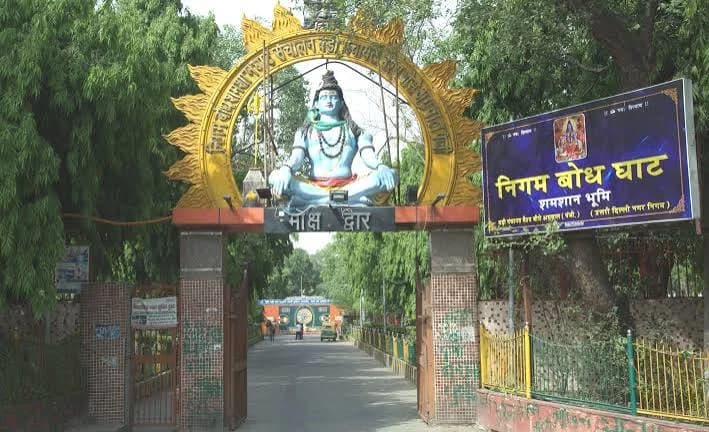
Nigambodh Ghat is a sacred ghat on the western bank of the Yamuna River at Yamuna Bazar, near Kashmere Gate in Old Delhi and it is universally revered as the oldest and most sacred Hindu cremation ground or shamshan ghat, in the city. It is, above all, an active and deeply solemn place of last rites, where Hindu families have come to perform funeral ceremonies for their loved ones for centuries and it remains the busiest and largest cremation ground in the Delhi region today. Set along the river behind the Red Fort, beneath the spans of a modern metro bridge, it combines profound religious significance, ancient legend reaching back to the Mahabharata and, in the winter months, a remarkable natural spectacle as thousands of migratory birds settle on the adjoining stretch of the Yamuna. It is a place to be understood and respected rather than sightseeing and its importance in the spiritual life of the city is immense.
Several things define its significance and they are worth understanding:
- The oldest cremation ground. Revered as Delhi's oldest and most sacred Hindu shamshan ghat, in continuous use for centuries.
- A site of ancient legend. Associated by Hindu tradition with Lord Brahma and with the Pandavas of the Mahabharata.
- An active place of last rites. A working, round-the-clock cremation ground and a place of mourning that calls for deep respect.
- A spot of natural spectacle. In winter, the adjoining river draws thousands of migratory gulls, a striking sight at dawn.
- A riverbank anchor. Long tied to the old walled city, once beside the lost Nigambodh Gate of Shahjahanabad.
It is one of the most spiritually significant and historically ancient sites in the city and while it is not a sightseeing monument in the usual sense, it is an important part of understanding the sacred geography of Delhi and sits among the deeper heritage described in our guide to the important monuments of Delhi.
The legend and meaning of Nigambodh Ghat
The deepest significance of Nigambodh Ghat lies in the beautiful legend that gives it its name and its sanctity, a story that reaches back to the mythological age of the Mahabharata. According to Hindu tradition, it was at this very spot on the Yamuna that Lord Brahma, the creator, took a ritual bath and thereby recovered his lost divine memory and the sacred Vedic scriptures that he had forgotten. It is from this miracle that the ghat takes its name: Nigambodh combines Nigam, meaning the sacred Vedas and Bodh, meaning awareness or knowledge, so that the name itself means the realisation or recovery of sacred knowledge. This legend gives the ghat a profound spiritual resonance, marking it as a place where divine wisdom was restored.
The site's sanctity is further deepened by its association with the Pandavas of the Mahabharata. Local tradition and texts credit the eldest Pandava brother, Yudhishthira, the king of Indraprastha, the legendary city believed to have stood in the Delhi area, with establishing the permanent stone bathing ghats here and with founding the nearby temple. These connections root the ghat in the deepest layers of Hindu sacred history and of Delhi's own mythology as the land of Indraprastha. For anyone seeking to understand why this particular stretch of riverbank is held so sacred, the legend is everything: it is believed to be a place touched by the creator himself and shaped by the heroes of the great epic, which is why, across so many centuries, it has remained the most revered cremation ground in the city. Knowing this story is the key to approaching the ghat with the understanding and respect it deserves.
History of Nigambodh Ghat
Beyond its mythological origins, Nigambodh Ghat has a long recorded history as an anchor of life and death on the Delhi riverbank, closely tied to the old walled city. Its historical threads are worth drawing together:
- An ancient, continuous site. Whatever its precise origins, the ghat has served as a sacred bathing and cremation site on the Yamuna for many centuries, making it one of the oldest continuously used sacred sites in the city.
- The lost Nigambodh Gate. The ghat originally stood beside the historic Nigambodh Gate, one of the fourteen grand gateways of the Mughal walled city of Shahjahanabad, which connected the city to the river here.
- The shifting river. Over time the red sandstone gate fell out of use and disappeared as the Yamuna gradually shifted its course away from the walls, but the ghat itself remained an active and unbroken anchor of the riverbank.
- The busiest ground today. It has grown into the largest and busiest cremation ground in the Delhi region, serving a vast city while retaining its ancient sanctity.
This history ties the ghat intimately to the story of old Delhi: it was one of the points where the walled city of Shahjahanabad met the sacred river, through a gate that bore the ghat's name and while the gate and even the river's course have since changed, the ghat has endured as a living sacred site. That continuity, across the rise and fall of the gate, the shifting of the river and the vast growth of the modern city, is itself remarkable and it speaks to the enduring spiritual importance of the place. For the visitor, understanding this history, the ancient sanctity, the lost gate, the changing river, adds a deep sense of time and continuity to an already profound site.
The significance of the ghat today
Today Nigambodh Ghat remains, above all, the most important and active Hindu cremation ground in Delhi, a place of enormous significance in the religious and emotional life of the city. For countless families across the capital, it is here that the last rites of departed loved ones are performed, according to ancient Hindu tradition and the ghat accommodates a very large number of cremations each day, functioning continuously to serve a vast population. This makes it, in the truest sense, a place of mourning and of sacred duty, where the profound rituals surrounding death and the passage of the soul are carried out day and night.
It is essential for any visitor to understand and honour this reality. The ghat is not a monument or an attraction in the ordinary sense; it is a working, sacred space where grieving families come at the most difficult moments of their lives. The air carries the smoke of funeral pyres and the mood is solemn and charged with genuine grief. Anyone who comes to the riverbank, whether out of interest in its history or to see the winter birds, must do so with the deepest respect, remaining quiet, dressing modestly and keeping a respectful distance from the rites and the mourners. Approached in that spirit, the ghat offers a profound, humbling encounter with one of the most sacred and universal dimensions of human life and with a cornerstone of Delhi's spiritual heritage. It is a place that asks for reverence, not sightseeing.
Layout and features of the ghat
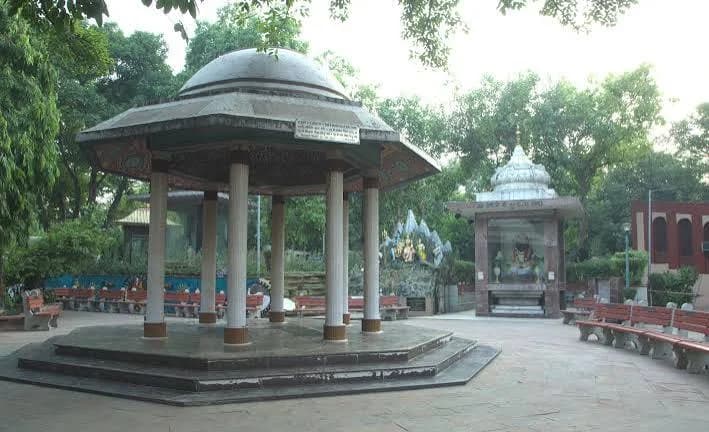
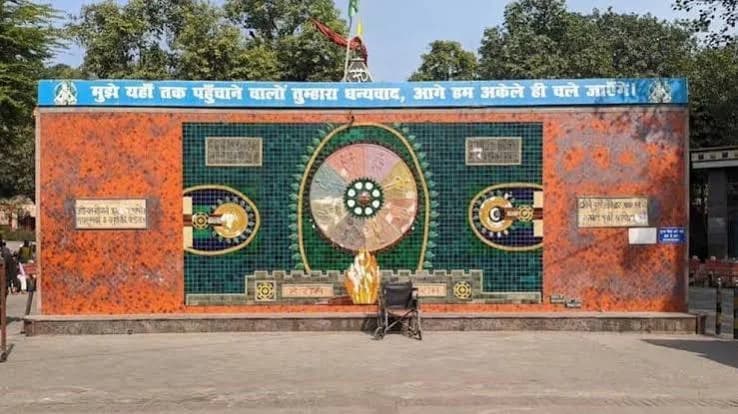
The ghat complex along the riverbank combines traditional sacred architecture with modern facilities added to serve the city and protect the environment and understanding its layout helps make sense of the site. Its main elements are:
- The stepped piers. A long, continuous series of stone and concrete stepped ghats leading down into the Yamuna, used for the ceremonial purification baths and ritual washings that accompany the funeral rites.
- The pyre platforms. Dozens of open-air and semi-sheltered masonry platforms set aside for traditional Vedic funeral rites performed with wood, the oldest and most traditional form of cremation here.
- The electric and CNG crematoriums. To reduce air pollution and protect the river, the site added an electric crematorium in the 1950s and a modern multi-furnace CNG-run crematorium in 2006, offering cleaner alternatives to the wood-fired pyres.
- The Nili Chatri Mandir. In the outer complex stands the historic Nili Chatri temple, a centuries-old shrine to Lord Shiva, traditionally also credited to King Yudhishthira, which adds to the sacred character of the site.
Together these elements show how the ghat has balanced ancient tradition with the needs of a modern metropolis: the stepped piers and wood-fired pyre platforms continue age-old practices, while the electric and CNG crematoriums reflect a thoughtful adaptation to the pressures of urban pollution and the health of the river. The Nili Chatri Mandir, with its own connection to the Pandava legend, anchors the spiritual dimension of the complex. For the visitor, this layout, read respectfully and from an appropriate distance, reflects the living, evolving nature of a sacred site that has served the city across the centuries and continues to do so today.
The winter migratory birds
Beyond its solemn religious purpose, this stretch of the Yamuna by Nigambodh Ghat becomes, in the winter months, the setting for a remarkable natural spectacle that draws nature lovers and photographers. Between roughly November and February, thousands of migratory gulls, which complete an extraordinary journey from Siberia and Central Asia to escape the northern winter, settle on this particular stretch of the river, filling the air and the water with their white forms. The sight of these great flocks wheeling and gathering over the Yamuna at sunrise is genuinely striking and it has become a well-known seasonal attraction along the riverbank.
Visitors and locals often come at dawn to see the birds and small wooden rowboats can be hired from the piers to glide out onto the water, where people feed the massive flocks, a popular winter ritual that creates memorable scenes of birds swirling around the boats in the morning light. It is a beautiful and uplifting counterpoint to the solemnity of the ghat and for photographers and bird enthusiasts it is the main reason to visit. That said, even those who come purely for the birds must remember where they are: this is first and foremost a cremation ground and a place of mourning, so the birdwatching, the boats and the photography must always be kept well away from the funeral rites, conducted quietly and never allowed to intrude on grieving families. Enjoyed with that respect, the winter bird gathering is one of the more unexpected and beautiful seasonal sights in the city. The birds are tied firmly to the cool season, arriving as the northern winter sets in and departing as it warms, so the timing matters and our guide to the best time to visit Delhi sets out the city's seasons in more detail for planning a winter trip around them.
Visiting Nigambodh Ghat: etiquette and respect
Because Nigambodh Ghat is an active, sacred cremation ground and a place of profound grief, the single most important thing for any visitor to understand is how to behave with appropriate respect and this cannot be overstated. If you come to the outer riverbank, whether out of interest in history or to see the winter migratory birds, you are a guest at a place where families are experiencing the most painful moments of their lives and your conduct must reflect that at all times. The essential points of etiquette are:
- Behave with absolute quiet and solemnity. Keep your voice low, move calmly and never treat the place as a casual outing or spectacle.
- Dress modestly and appropriately. Cover up and dress with the restraint suitable for a sacred place of mourning.
- Never photograph the pyres or mourners. Do not point cameras toward private funeral pyres or grieving families under any circumstances, however striking the scene.
- Keep a respectful distance from the rites. Do not approach or intrude upon the funeral ceremonies or the families performing them.
- Confine birdwatching to the appropriate areas. If you have come for the birds, keep well away from the cremation activities and the mourners.
Observing this etiquette is not optional; it is a matter of basic human decency and respect for the bereaved and for the sanctity of the site. The ghat is included here not as a sightseeing tick-list item but so that those who encounter it, perhaps while exploring the Kashmere Gate area or coming for the winter birds, understand what it is and how to conduct themselves. Approached with genuine reverence and humility, it can be a deeply moving reminder of the shared human realities of mortality and faith. Approached carelessly, it is an intrusion on people's grief, which no traveller should ever wish to be.
Practical information
For families and others who need the practical details of the ghat as a functioning cremation facility, the key points are as follows, provided here factually and respectfully. As an active cremation ground, the ghat and its wood-pyre, electric and CNG facilities operate twenty four hours a day, every day of the year, including all festivals and public holidays, so that last rites can always be performed. Standard municipal charges for a basic cremation begin at a modest level, with full traditional arrangements costing more depending on the wood, ritual items and priestly services required and the current figures are best confirmed directly with the ghat administration, as costs can change. Securing a cremation slot requires the family to present a formal doctor's death certificate along with government-issued photo identification of both the deceased and the immediate relative, so the necessary documentation should be arranged in advance. These practical details are current at the time of writing and are subject to change, so for any actual requirement it is best to contact the ghat administration directly for the latest information.
How to reach Nigambodh Ghat (nearest metro)
Nigambodh Ghat is at Yamuna Bazar on the Ring Road, along the Yamuna behind the Red Fort, near Kashmere Gate in Old Delhi and beneath the spans of the Delhi Metro bridge, a striking juxtaposition of the ancient riverbank and modern infrastructure. The nearest metro station is Kashmere Gate, one of the city's largest interchange nodes connecting the Red, Yellow and Violet Lines. From the station, the ghat is a short five minute auto-rickshaw ride or around a ten minute walk down toward the Yamuna Bazar lanes via the Ring Road exits. Autos and cabs can bring you to the Yamuna Bazar area directly. Because of the nature of the site, it is not part of a standard sightseeing route, but for those with a respectful interest in the city's sacred heritage or coming for the winter birds, it is easily reached and it lies close to the Kashmere Gate heritage covered in our wider Delhi guides, which you can explore on a Delhi day tour or a heritage-focused New Delhi tour.
Places near Nigambodh Ghat
Nigambodh Ghat sits by the Yamuna near Kashmere Gate, behind the Red Fort, in the historic heart of old Delhi, so it lies close to many of the city's great monuments, should you be exploring the area with appropriate sensitivity to the ghat itself. Immediately behind it rises the mighty Red Fort, the great Mughal citadel and nearby stand the old fort of Purana Qila and the historic citadel of Feroz Shah Kotla with its Ashoka pillar.
The ceremonial heart of New Delhi, with India Gate and the great circle of Connaught Place, is a manageable ride away and the capital's other landmarks round out a full picture of the city: the serene Humayun's Tomb, the towering Qutub Minar and the modern marvels of the Lotus Temple and Akshardham. For more layered history, the ancient stepwell of Agrasen ki Baoli, the astronomical Jantar Mantar and the historic Hauz Khas Fort complete the sweep of Delhi's past.
Nigambodh Ghat and understanding sacred Delhi
For the traveller seeking to understand Delhi beyond its monuments, Nigambodh Ghat offers a window onto the sacred and spiritual dimension of the city that so many sightseeing itineraries miss, provided it is approached with the right understanding. It is a reminder that Delhi is not only a city of forts and tombs but a living sacred landscape, rooted in legend and in continuous religious practice, where the great realities of life and death are woven into the fabric of the riverbank. The ghat embodies this in the most direct way, as a place touched, in belief, by the creator himself, shaped by the heroes of the Mahabharata and still serving the city's families in their grief today.
It is not and should never be treated as a casual stop on a tourist trail. Rather, for those with a genuine and respectful interest in the spiritual heart of the city and for nature lovers drawn by the winter birds, it is a place to encounter quietly and thoughtfully, with full awareness of its solemn purpose. On our tours we speak about the ghat and its meaning as part of understanding the sacred geography of old Delhi and the Yamuna, rather than leading visitors into a place of mourning as sightseers. Understood this way, Nigambodh Ghat deepens one's sense of the city immeasurably, revealing the profound continuity of faith and ritual that underlies the capital's long history, from the age of legend to the present day.
Travel tips and respectful guidance
A few points help anyone encountering Nigambodh Ghat do so appropriately:
- Understand what it is first. It is an active, sacred cremation ground and a place of grief, not a sightseeing monument.
- Come only with respect. If you visit the outer riverbank, behave with absolute quiet, solemnity and modesty throughout.
- Never photograph the rites or mourners. Keep cameras away from the funeral pyres and grieving families at all times.
- For the birds, come at a winter dawn. November to February, early morning and keep well clear of the cremation activities.
- Keep your distance from the ceremonies. Do not approach or intrude on the families or the rites.
- For practical cremation needs, contact the administration. Confirm current timings, charges and documentation directly.
- Reach it via Kashmere Gate metro, a short auto or walk to Yamuna Bazar.
If you are exploring the sacred and historic heritage of old Delhi and would like a knowledgeable, sensitive local guide, message our team on WhatsApp at +91 7302265809 with your interests and dates and we will plan a respectful itinerary for you.
Should you visit Nigambodh Ghat?
Whether to visit depends entirely on your purpose and your willingness to behave with complete respect. This is not a sightseeing attraction and no one should come simply to gawk at a cremation ground; to do so would be a serious intrusion on the grief of others. But for those with a genuine, respectful interest in the spiritual heritage of Delhi, in its ancient legends and in the sacred life of the Yamuna, it is a place of profound significance, best understood through its history and meaning rather than through a casual visit. And for nature lovers, the winter gathering of migratory birds along the adjoining river is a beautiful seasonal spectacle that can be enjoyed, always keeping well away from the funeral rites and the mourners. The honest guidance is this: approach Nigambodh Ghat only if you can do so quietly, modestly and with real reverence for what it is and if you cannot, it is far better to learn about it from a respectful distance. Understood and honoured properly, it offers one of the most moving insights into the sacred soul of the city that any traveller can have.
Plan your trip with us
At Experience My India, through our Delhi and Golden Triangle travel desk, we help travellers understand the full depth of the city, its sacred and spiritual heritage as well as its monuments, always with sensitivity to places like Nigambodh Ghat that are first and foremost sites of faith and mourning. Whether you want a relaxed set of Delhi Agra tours or a full Golden Triangle route through Delhi, Agra and Jaipur, we plan around your pace, your interests and the right season, with local guides who know both the history and the etiquette of the city's sacred sites. Share your dates and the kind of trip you have in mind through our enquiry page, tell us your group size and we will put together a thoughtful, respectful and tailored plan.
Related guides
- Places to visit in Delhi, for the wider picture
- Hidden places to visit in Delhi, the city's quieter corners
- Nearby places to visit in Delhi, to extend your trip
Enquire Now
What our travellers say
“Our Golden Triangle honeymoon was flawless. Sunrise at the Taj with a private guide felt like a dream — every detail was handled.”
“As a first-time visitor to India, I felt completely safe and looked after. The driver and guide were superb professionals.”
“Travelling with two kids is hard, but they made it effortless. Great pacing, clean cars and zero surprises on price.”
“Booked the Agra day trip on short notice and it went off without a hitch. The guide's history knowledge made the Taj come alive.”
“Best decision of our India trip. Car was spotless, driver was punctual every single day, and the itinerary never felt rushed.”
“Organised a same-day Agra trip for my parents. Communication before and during the trip was excellent — genuinely stress-free.”
“Sunrise at the Taj Mahal was magical. Our guide spoke great English and answered every question with patience.”
“Three generations travelling together and everyone was comfortable — good vehicle, sensible stops, and no hidden costs.”
“I've used a few tour operators across Asia and this was among the smoothest. Fair pricing and they actually answer the phone.”
“Our custom Rajasthan-Agra combo was planned around our budget without cutting corners on comfort. Highly recommend.”
“Solo female traveller here — I felt safe throughout. The driver was respectful and the whole trip was timed perfectly.”
Ready to Explore
The Heart of Delhi?
Explore the Red Fort, Qutub Minar, Humayun's Tomb, and the vibrant streets of Old Delhi with our expert-guided premium tours of India's capital city.

Delhi
Premium Tour Package
Questions
Frequently asked questions
What is Nigambodh Ghat?
It is the oldest and most sacred Hindu cremation ground in Delhi, on the banks of the Yamuna at Yamuna Bazar near Kashmere Gate, an active place of last rites of deep religious significance.
Why is it called Nigambodh Ghat?
What are the timings of Nigambodh Ghat?
Which is the nearest metro station to Nigambodh Ghat?
Can tourists visit Nigambodh Ghat?
What are the migratory birds at Nigambodh Ghat?
Is there a temple at Nigambodh Ghat?
How do I arrange a cremation at Nigambodh Ghat?
Explore more
Plan your Nigambodh Ghat trip with us

Interested in Nigambodh Ghat Delhi: History, Significance and Visitor Guide?
Chat with our travel team for a custom quote, or browse every package.
Related Attractions
9Nigambodh Ghat Delhi on the map
Open in Google MapsReady to explore Nigambodh Ghat Delhi: History, Significance and Visitor Guide?
Book your private tour today and experience the magic of India's rich heritage.