
Quli Khan's Tomb and Dilkhusha, Mehrauli: History and Guide
Quli Khan's Tomb in Mehrauli, the Mughal tomb Metcalfe turned into his Dilkhusha country house. Its history, the Qutub view, timings and how to reach.
In a Nutshell
“Quli Khan's Tomb, in the Mehrauli Archaeological Park in South Delhi just south of the Qutub Minar, is a late-16th-century Mughal tomb with a remarkable second life. Built for Muhammad Quli Khan, a noble of Emperor Akbar's court and brother of Adham Khan, it was bought in the 1840s by the British Resident Sir Thomas Metcalfe, who stripped and remodelled it into an eccentric country house he named Dilkhusha, surrounded by landscaped gardens and artificial ruins called Metcalfe's Follies. Today it is a free, offbeat ruin famous for its face-to-face view of the Qutub Minar. It features on our Mehrauli heritage walks, run by a unit of Experience My India.”
Quli Khan's Tomb is one of the most fascinating and least-known monuments in all of Delhi, a place where early Mughal funerary architecture and 19th-century British colonial fantasy collide in a single extraordinary building. For the traveller who loves offbeat heritage, layered history and a great photograph, it is a genuine hidden gem tucked within the ruins of Mehrauli. Our team at Delhi Agra Tour Packages is always glad to include it for guests who want the stories behind the stones and it adds a rare, atmospheric depth to a wider Golden Triangle tour through the capital.
I am Abhay Sharma, Delhi born and a Golden Triangle guide since 2015 and Quli Khan's Tomb is one of my favourite corners of Mehrauli, because few places tell so strange and vivid a story: a Mughal nobleman's grave turned into a British official's weekend house, complete with a dining room where the cenotaph once stood and mock ruins scattered across the hills, all with the Qutub Minar framed perfectly in the distance. This guide brings together everything I would tell a visitor beforehand, checked against current information, including its history, its unique architecture, Metcalfe's Follies and the timings and directions.
Details
Quli Khan's Tomb at a glance
| Detail | Information |
|---|---|
| Official name | Tomb of Muhammad Quli Khan (later Dilkhusha) |
| Built | Late 16th century, as a Mughal tomb |
| Converted | 1840s, into a British country house by Sir Thomas Metcalfe |
| Location | Core of Mehrauli Archaeological Park, South Delhi |
| Managed by | Archaeological Survey of India (ASI) and Delhi Tourism (DTTDC) |
| Known for | Mughal tomb turned colonial house; panoramic Qutub Minar view |
| Nearest metro | Qutub Minar (Yellow Line) |
| Entry | Free |
Quli Khan's Tomb timings
| Detail | Information |
|---|---|
| Open | Every day |
| Hours | Sunrise to sunset (about 6:00 AM to 6:00 PM) |
| Best light | Early morning and late afternoon |
Quli Khan's Tomb, within the Mehrauli Archaeological Park, is open every day from roughly sunrise to sunset, approximately 6:00 AM to 6:00 PM. The early morning and the golden light of late afternoon are the finest times for the views and photography. These timings are current at the time of writing and can vary, so reconfirm before a special trip.
Entry fee
| Visitor | Fee |
|---|---|
| All visitors | Free; no ticket for this part of the park |
How to reach Quli Khan's Tomb
| From | Route |
|---|---|
| Qutub Minar metro (Yellow Line) | Nearest station, a short walk or auto to the park gate on Anuvrat Marg |
| Park main gate | A 10-minute walk along the trail, passing Balban's Tomb |
| Qutub Minar complex | About 500 metres northwest |
| By car | Park near the Qutub complex or the Mehrauli park gate, then walk |
What is Quli Khan's Tomb?
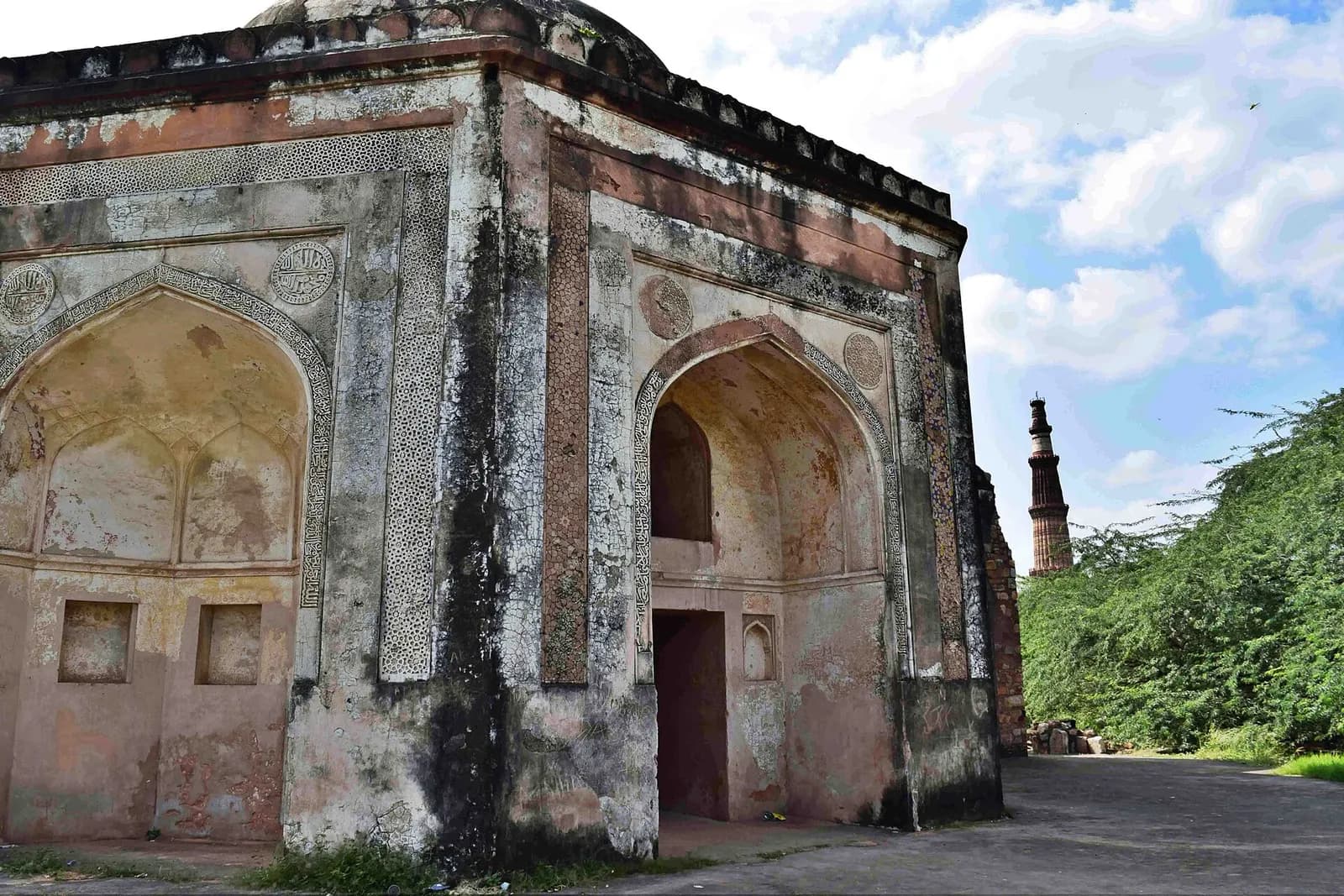
Quli Khan's Tomb is a late-16th-century Mughal mausoleum in the heart of the Mehrauli Archaeological Park in South Delhi, famous today for its extraordinary second life as a British colonial country house. Standing on a prominent elevated ridge roughly 500 metres south-east of the Qutub Minar, it was built around the 1570s to honour Muhammad Quli Khan, a high-ranking noble and military general at the court of the Mughal emperor Akbar. For over two centuries it remained a standard Islamic tomb, until the 1840s, when the powerful British Resident Sir Thomas Metcalfe bought the surrounding land and dramatically stripped, remodelled and retrofitted the sacred tomb into a luxurious private retreat he named Dilkhusha, meaning Heart's Delight, complete with suites of rooms, landscaped gardens and a scattering of artificial ruins known as Metcalfe's Follies. Protected today under the shared custody of the Archaeological Survey of India and Delhi Tourism and since independence steadily stripped of its decaying colonial additions, it survives as a haunting, layered ruin, free to visit and celebrated for its uninterrupted, face-to-face view of the Qutub Minar.
Several things make it remarkable and they are worth drawing out:
- A Mughal tomb turned into a colonial house. One of the very few monuments where an active Islamic mausoleum was physically converted into a British official's residence.
- The Dilkhusha story. Renamed Heart's Delight by Sir Thomas Metcalfe, who used it as a summer house and even leased it to British honeymooners.
- A hybrid of two worlds. Early Mughal octagonal tomb architecture fused and clashed, with 19th-century British domestic planning.
- Metcalfe's Follies. A landscaped English-style garden dotted with mock ruins, towers and archways built purely for romantic effect.
- The Qutub Minar view. One of the finest viewpoints in South Delhi, with a clean, direct profile of the Qutub Minar.
It is one of the most rewarding of the hidden places to visit in Delhi and a standout among the offbeat things to do in Delhi.
Who was Muhammad Quli Khan?
To understand the tomb, it helps to know the man it was built for and his place in the Mughal court. Muhammad Quli Khan was a high-ranking and elite noble and military general in the imperial court of the Mughal emperor Akbar, one of the inner circles of the empire at its height. His significance is underlined by his family connection:
- A court noble under Akbar. He served as a senior general and courtier in Akbar's administration, part of the influential imperial elite of the late 16th century.
- Brother of Adham Khan. He was the brother of Adham Khan, Akbar's foster brother, which placed him at the very centre of the emperor's trusted inner circle.
- Laid to rest in Mehrauli. After his death, he was buried on this elevated stone outcrop overlooking the plains of Mehrauli, a prestigious resting place close to the great Qutub complex.
This background gives the tomb its original meaning: a dignified Mughal mausoleum for a member of Akbar's high nobility, set on a commanding ridge in the sacred and historic landscape of Mehrauli. The family link to Adham Khan, whose own large octagonal tomb stands nearby, ties Quli Khan's Tomb into the wider story of Akbar's court and its powerful families. For the visitor, knowing that this was the grave of a senior noble of the greatest Mughal emperor adds weight to what later became, improbably, a British gentleman's weekend house.
History: the colonial overhaul and the making of Dilkhusha
The most extraordinary chapter of the tomb's history came more than two centuries after it was built and it is the key to understanding the monument, so it is worth telling in full. For over two hundred years the building remained a standard Islamic funerary monument, until the dramatic intervention of a British colonial official:
- The British Resident. In the 1840s, Sir Thomas Theophilus Metcalfe, the powerful British Resident to the late Mughal court of Bahadur Shah Zafar, purchased the land around the tomb.
- The conversion. Drawn by the cool breeze and the commanding panoramic views from the elevated ridge, Metcalfe decided to strip, remodel and retrofit the tomb itself into his personal country house and weekend retreat.
- Heart's Delight. He named his converted residence Dilkhusha, from the Persian for Heart's Delight, using it as a summer home and reportedly even leasing it out to British newlywed couples as a honeymoon retreat.
- A controversial colonisation. This residential conversion stands out as a rare and highly controversial example of a British official physically occupying and adapting an active Islamic mausoleum for domestic, secular pleasure.
This history makes Quli Khan's Tomb a vivid symbol of the collision between the fading Mughal world and the rising British power in 19th-century Delhi, in the very decades before the upheavals of 1857. That a senior British diplomat could buy a Mughal noble's tomb and turn it into his private pleasure house, renaming it Heart's Delight, captures the strange and often troubling dynamics of the age with unusual clarity. For the visitor, the Dilkhusha story is what transforms a modest Mughal ruin into one of the most thought-provoking monuments in Delhi, a place where the layers of history are not just visible but physically built into one another.
Architecture and the retrofitting
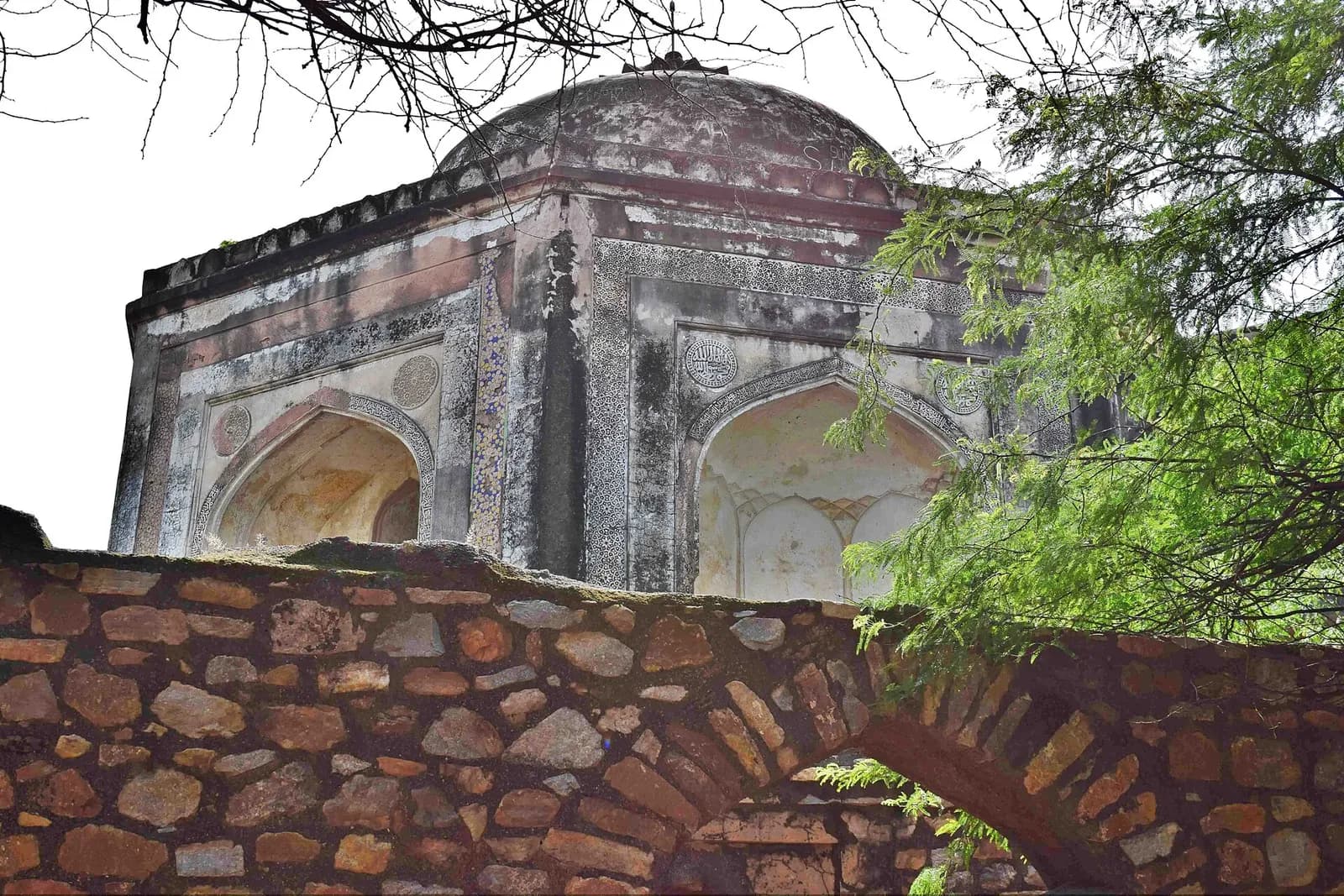
Architecturally, Quli Khan's Tomb is a fascinating and complex hybrid, where an early Mughal octagonal tomb and a 19th-century British house are literally fused in the same structure and knowing what to look for brings the story alive. Its features reward close attention:
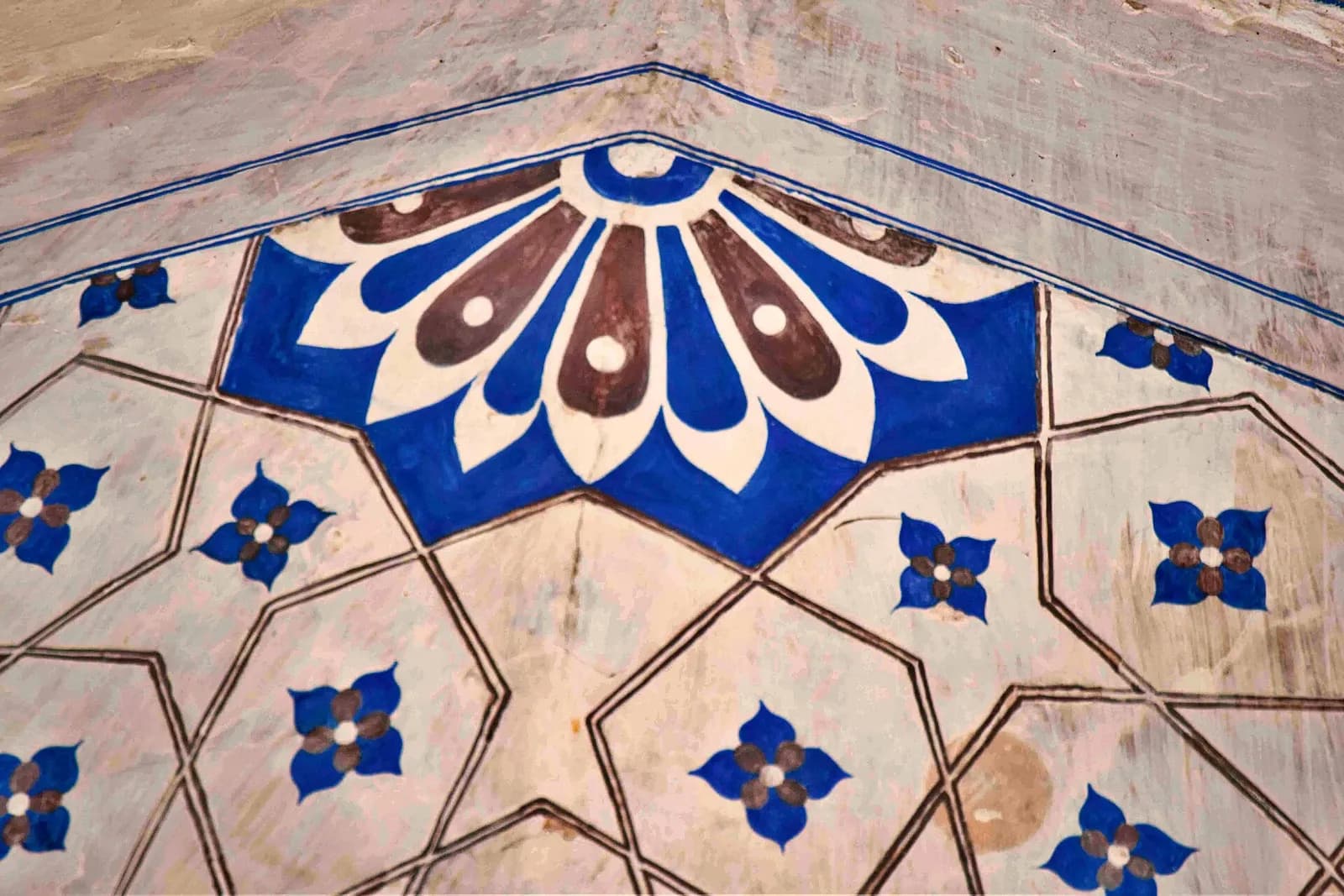
- The octagonal Mughal core. At its heart is a classic early Mughal tomb, a massive square base rising into a double-storeyed octagonal pavilion, built of local grey quartzite and red sandstone and coated in fine lime plaster, with fragments of exquisite incised floral patterns, calligraphic bands and deep blue paintwork still visible on the interior walls.
- The missing sarcophagus. In a standard Mughal tomb the deceased lies in an underground vault with a replica cenotaph in the hall above. To make the building livable, Metcalfe filled the burial vault with rubble, cemented the floor and removed Quli Khan's original marble cenotaph to clear space for a central dining room.
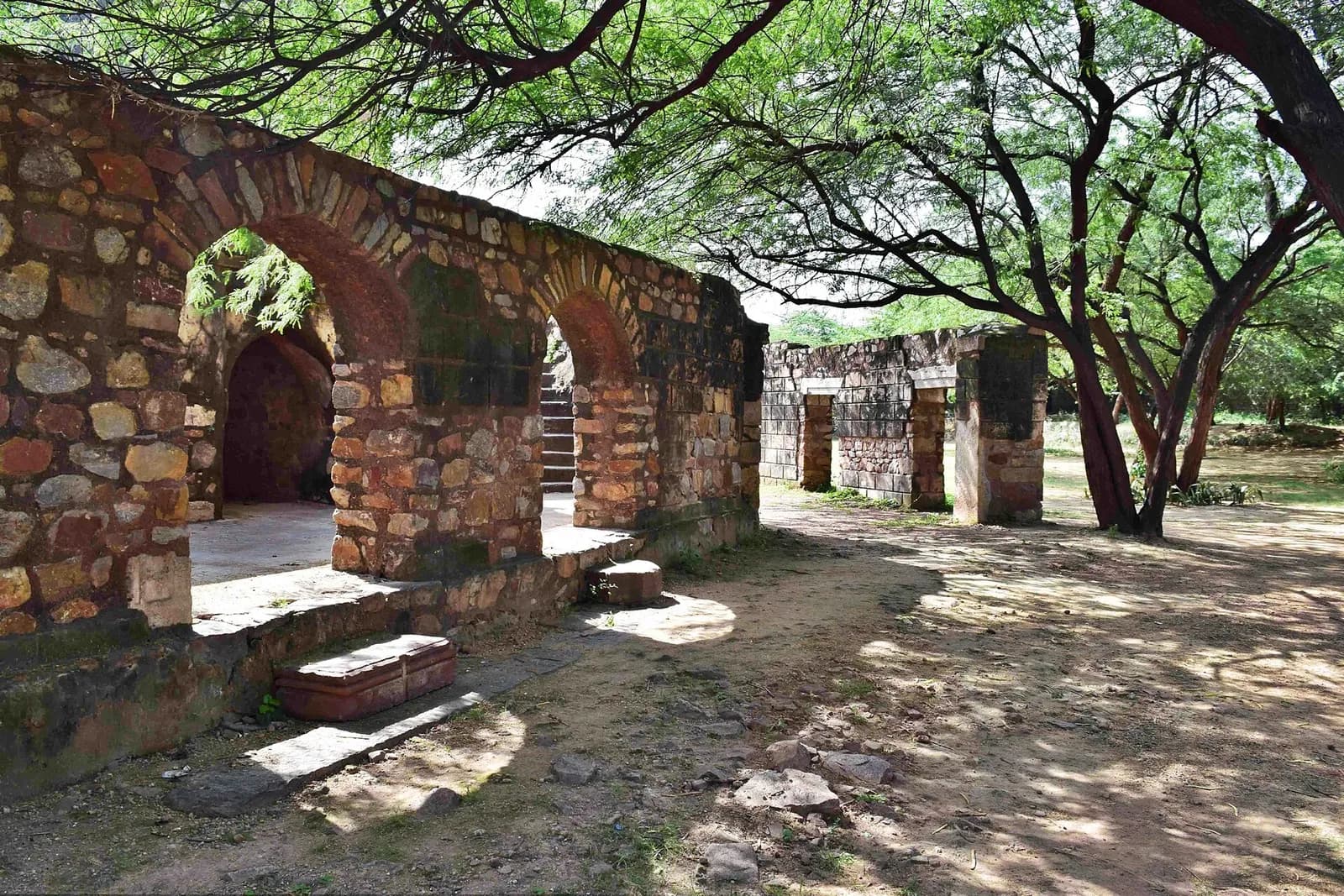
- The British extensions. To turn the octagon into a European house, Metcalfe built single-storeyed brick-and-mortar wings encircling the core, adding bedrooms, a drawing room, a kitchen wing and staff quarters. Most of these have since collapsed or been removed to expose the original Mughal stone, but their foundation outlines remain clearly visible.
- The landscaped grounds. Metcalfe reshaped the rugged hills around the house into a manicured English-style country garden, a romantic estate setting quite alien to the original tomb.
This combination makes the building a rare physical record of one monument serving two utterly different purposes across the centuries. The sight of a Mughal tomb's octagonal hall converted into a Victorian dining room, ringed by the ghostly foundations of vanished bedrooms and drawing rooms, is unlike anything else in Delhi. Since independence, conservation bodies have deliberately stripped away the decaying colonial additions to protect and reveal the original 16th-century monument, so what the visitor sees today is the Mughal core re-emerging from its colonial overlay. For the visitor, reading these architectural layers is the central pleasure of a visit.
Metcalfe's Follies
One of the most charming and unusual features of the site is the scattering of artificial ruins across the grounds, known as Metcalfe's Follies and they are well worth seeking out. In keeping with the romantic, picturesque taste of his age, Sir Thomas Metcalfe did not only convert the tomb itself but re-engineered the surrounding landscape into a theatrical English garden estate, complete with purpose-built mock ruins:
- A miniature watchtower. A small castle-style tower built as a picturesque focal point on the grounds.
- Stepped, ziggurat-like structures. Pyramid-like built features designed purely for visual effect in the landscape.
- Open archways and garden structures. Freestanding brick archways and ornamental features placed to simulate a romantic, aged European estate.
These follies, built deliberately as decorative fake ruins, add a surreal extra layer to a site already rich in irony: a genuine Mughal monument surrounded by artificial ruins built by a British official to evoke a romantic past that never existed here. For the visitor wandering the Mehrauli park, coming upon these scattered follies, some now genuinely ruined themselves, is one of the quiet delights of the area and they are a reminder of the Victorian fashion for the picturesque that shaped so many colonial landscapes. Together with the converted tomb, they make the grounds around Quli Khan's Tomb an open-air museum of colonial fantasy set within a medieval Indian landscape.
The Qutub Minar view
For many visitors, the single most memorable thing about Quli Khan's Tomb is the view and it deserves its own mention. Because the tomb sits on a high ridge and an artificial platform, it is one of the premier viewing points in all of South Delhi. Standing on the outer terrace of the monument gives a direct, uninterrupted, almost face-to-face view of the adjacent Qutub Minar rising above the trees, a clean geometric profile of one of the most famous towers in the world, framed by the ruins of Mehrauli. This commanding vista was, of course, exactly what drew Sir Thomas Metcalfe to convert the tomb into his retreat in the first place. Today it makes the spot a favourite among architectural photographers, sketch artists and anyone who wants a different and more atmospheric perspective on the Qutub Minar than the crowded complex itself offers. For the visitor, timing a visit for the soft light of early morning or late afternoon turns the view into something truly special and it is reason enough on its own to seek the tomb out.
What to expect at Quli Khan's Tomb
A visit to Quli Khan's Tomb is atmospheric, peaceful and a little adventurous, quite unlike the busy Qutub complex just nearby and knowing what to expect helps you enjoy it. The tomb lies within the sprawling, green and often quiet Mehrauli Archaeological Park, reached by a pleasant walk along trails that pass other ruins, so part of the pleasure is the approach through this historic landscape. Arriving, you find a weathered octagonal stone monument on its high platform, its interior still bearing traces of fine Mughal plaster and paint, surrounded by the visible foundations of Metcalfe's vanished house and, scattered across the grounds, his follies. Exploring the hybrid structure, imagining its life as both tomb and country house and taking in the Qutub Minar view from the terrace is the essence of the visit, which takes perhaps 30 to 45 minutes or longer if you explore the wider park.
A few practical points help. The park is open but can feel isolated in parts, so it is best explored in daylight and ideally not entirely alone and sensible shoes help on the uneven trails and stone. There are few facilities within the park, so carrying water is wise. The site is not heavily signposted, so a little navigation is needed and combining it with the other Mehrauli monuments makes the most of the walk. As a ruin rather than a maintained monument, it rewards those who come for atmosphere and history rather than polish. For the visitor, the key is to treat Quli Khan's Tomb as part of an exploration of the Mehrauli park, coming prepared for a quiet, green, ruin-filled landscape and giving yourself time to absorb its remarkable layered story and its views.
Visiting tips
A few pointers make a visit to Quli Khan's Tomb smoother and more rewarding:
- Combine it with the Mehrauli park. The tomb is best enjoyed as part of a walk taking in the park's many other ruins.
- Come for the light. Early morning or late afternoon gives the best Qutub Minar views and photographs.
- Wear sturdy shoes for the uneven trails and stone surfaces of the park.
- Explore in daylight and ideally not alone, as parts of the park can feel isolated.
- Carry water, as facilities within the park are limited.
- Look for the follies scattered across the grounds, part of Metcalfe's romantic garden.
- Picture both lives of the building, the Mughal tomb and the colonial house, as you explore.
- Allow 30 to 45 minutes for the tomb, more to explore the wider park.
The key point is to treat Quli Khan's Tomb as the centrepiece of a Mehrauli park walk, coming for its extraordinary story and its views and giving yourself time to wander the historic landscape around it.
Best time to visit Quli Khan's Tomb
The best time to visit is during the cooler months, from October to March, when walking the trails of the Mehrauli Archaeological Park is comfortable and during the day during the early morning or late afternoon, when the light is soft and the Qutub Minar view is at its most beautiful. A winter morning is ideal, cool and clear for the walk and the vistas and a late-afternoon visit rewards photographers with golden light on the Qutub Minar. The summer months are hot for walking in the open park and the monsoon can make the trails overgrown and muddy, so the winter window is clearly best. Combining the visit with the nearby Qutub Minar and the other Mehrauli monuments makes the most of a cool-season day. Our guide to the best time to visit Delhi sets out the seasons across the city in more detail.
How to reach Quli Khan's Tomb (nearest metro)
Quli Khan's Tomb lies in the core of the Mehrauli Archaeological Park, just south of the Qutub Minar and is easy to reach with a short walk. The nearest metro station is Qutub Minar on the Yellow Line, from which a brief walk or auto-rickshaw ride brings you to the park's main gate on Anuvrat Marg, followed by a pleasant ten-minute walk along the pedestrian trail that passes Balban's Tomb on the way. The monument stands about 500 metres from the Qutub Minar complex itself, so the two are easily combined. Because the tomb sits within a green archaeological park reached on foot, the metro combined with a short walk is the natural approach, rather than driving right up to it. Set in the historic heart of south Delhi, it fits beautifully into a Delhi day tour or a heritage-focused New Delhi tour built around the monuments of Mehrauli.
Places to visit near Quli Khan's Tomb
Quli Khan's Tomb sits within the Mehrauli Archaeological Park, one of the densest and richest concentrations of historic monuments in Delhi, so it is surrounded by remarkable sites and is best enjoyed as part of a wider heritage walk. Right around it in the Mehrauli Archaeological Park lie the exquisite Jamali Kamali mosque and tomb, the imposing tomb of Balban, the ornate Rajon ki Baoli stepwell and the octagonal tomb of Adham Khan, Quli Khan's own brother. Just to the north stands the world-famous Qutub Minar complex, with the ancient Yogmaya Temple close by and a little further the historic Hauz Khas Fort and the medieval stepwell of Agrasen ki Baoli.
Further out, the capital's other great landmarks round out a full picture of the city: the serene Humayun's Tomb, the mighty Red Fort, the ceremonial India Gate and the modern marvels of the Lotus Temple and Akshardham. For more of Delhi's history, the old citadel of Purana Qila, the astronomical Jantar Mantar and the ruins of Feroz Shah Kotla are well worth adding and our roundup of the important monuments of Delhi ties them together.
Quli Khan's Tomb in your Delhi itinerary
For most visitors, Quli Khan's Tomb works best as a highlight of a Mehrauli Archaeological Park walk rather than a destination on its own, since it sits amid one of Delhi's finest clusters of ruins. A natural plan is to enter the park near the Qutub Minar and walk the trail past Balban's Tomb, Jamali Kamali and Quli Khan's Tomb, combining them with the adjacent Qutub complex in a single rich half-day of early Sultanate and Mughal history. The tomb itself needs only 30 to 45 minutes, but its extraordinary story as the Dilkhusha country house and its superb Qutub Minar view, give it an importance out of all proportion to its size and it adds a note of discovery and a touch of the surreal to a day of sightseeing. It suits the history enthusiast, the photographer and the traveller who enjoys the quieter, stranger corners of the city.
If Delhi is your gateway to the wider Golden Triangle, Quli Khan's Tomb offers one of the most memorable small discoveries in the capital, a monument that holds the whole collision of Mughal and British Delhi within a single building, set in a beautiful ruin-filled park with the Qutub Minar as its backdrop. Many of my guests find it one of the most atmospheric and thought-provoking stops of their trip, precisely because so few visitors ever reach it and it deepens their sense of the city's layered past before they travel on to Agra and Jaipur.
Travel tips for visiting Quli Khan's Tomb
A few pointers make a visit even better:
- Enter via Qutub Minar metro and walk into the Mehrauli park, passing Balban's Tomb on the way.
- Make it part of a park walk, taking in Jamali Kamali, Balban's Tomb and Adham Khan's Tomb nearby.
- Time it for soft light, early morning or late afternoon, for the Qutub Minar view.
- Wear sturdy shoes for the park trails and uneven stone.
- Explore in daylight and ideally with company, as the park can feel isolated.
- Carry water, as facilities are limited.
- Seek out Metcalfe's Follies scattered across the grounds.
- Allow 30 to 45 minutes for the tomb, more for the wider park.
If you would like a local guide to take you through the Mehrauli park and tell the remarkable story of Quli Khan's Tomb and Dilkhusha, message our team on WhatsApp at +91 7302265809 with your travel dates and group size and we will shape the day for you.
Is Quli Khan's Tomb worth visiting?
Yes, for the history-minded and the curious traveller Quli Khan's Tomb is absolutely worth seeking out, one of the most rewarding hidden monuments in Delhi. There is nowhere else in the city where you can stand inside a single building that was first a Mughal noble's tomb and then a British Resident's country house, see a burial hall turned into a dining room, trace the ghostly foundations of vanished Victorian bedrooms, wander a garden of deliberately built fake ruins and enjoy one of the finest face-to-face views of the Qutub Minar anywhere, all in one quiet, atmospheric spot. It is free to visit and sits within the beautiful Mehrauli Archaeological Park alongside a cluster of other remarkable ruins. The caveats are simple: it is an unpolished ruin reached on foot, lightly signposted and best combined with the wider park rather than visited alone. For the traveller who wants the strange, layered, lived history of Delhi beyond the famous sights, Quli Khan's Tomb is a treasure and I recommend it warmly to guests with the curiosity to find it.
Plan your trip with us
At Experience My India, through our Delhi and Golden Triangle travel desk, we design unhurried, well paced trips that make room for extraordinary hidden places like Quli Khan's Tomb and the wider Mehrauli park and not just the famous monuments, with guides who can tell the layered stories, Mughal and colonial, that make such sites unforgettable and lead you safely through the ruins to the best views. Whether you want a relaxed set of Delhi Agra tours or a full Golden Triangle route through Delhi, Agra and Jaipur, we plan around your pace, your interests and the right season. Share your dates and the kind of trip you have in mind through our enquiry page, tell us your group size and we will put together an honest, tailored plan rather than a rushed checklist.
Related guides
- Places to visit in Delhi, for the wider picture
- Nearby places to visit in Delhi, to extend your trip
Enquire Now
Ready to Explore
The Heart of Delhi?
Explore the Red Fort, Qutub Minar, Humayun's Tomb, and the vibrant streets of Old Delhi with our expert-guided premium tours of India's capital city.

Delhi
Premium Tour Package
Questions
Frequently asked questions
What is Quli Khan's Tomb famous for?
It is famous as a late-16th-century Mughal tomb that the British Resident Sir Thomas Metcalfe converted in the 1840s into a country house called Dilkhusha. It is also one of the best viewpoints for the Qutub Minar in South Delhi.
Who was Muhammad Quli Khan?
What is Dilkhusha?
What are Metcalfe's Follies?
What are the timings of Quli Khan's Tomb?
Is there an entry fee?
Which is the nearest metro station?
Why is the Qutub Minar view from here so good?
Is Quli Khan's Tomb connected to Adham Khan's Tomb?
Is the site safe and easy to find?
How much time do I need?
Explore more
Plan your Quli Khan's Tomb trip with us

Interested in Quli Khan's Tomb and Dilkhusha, Mehrauli: History and Guide?
Chat with our travel team for a custom quote, or browse every package.
Related Attractions
9Ready to explore Quli Khan's Tomb and Dilkhusha, Mehrauli: History and Guide?
Book your private tour today and experience the magic of India's rich heritage.