Rajon ki Baoli Delhi: History, Timings and Visitor Guide
Visiting Rajon ki Baoli in Mehrauli, Delhi's beautiful Lodi stepwell? Its history, the architecture, the mosque and tomb, timings, free entry and metro.
In a Nutshell
“Rajon ki Baoli is a beautiful early 16th-century stepwell in the Mehrauli Archaeological Park, South Delhi, built in 1506 during the reign of Sikandar Lodi by the nobleman Daulat Khan. A graceful four-tiered, U-shaped Lodi-era stepwell lined with pillared arcades, it is accompanied by a small mosque and a domed tomb from the same year. Despite its name, it was named not for kings but for the masons who later lived in the structures around it. It is free to enter, open through the day and reached from Qutub Minar metro. It features on our heritage Delhi tours, run by a unit of Experience My India.”
Rajon ki Baoli is one of Delhi's most beautiful and photogenic stepwells, a serene, architecturally refined baoli hidden in the green ruins of the Mehrauli Archaeological Park. For history lovers, architecture enthusiasts and those seeking the city's tranquil, offbeat heritage, it is a delightful stop. Our team at Delhi Agra Tour Packages often includes it on a Mehrauli heritage walk and it adds a graceful, atmospheric dimension to a wider Golden Triangle tour through the capital.
I am Abhay Sharma, Delhi born and a Golden Triangle guide since 2015 and I love bringing history-minded guests here, because few stepwells in the city are as elegant or as peaceful as this one, tucked into the wild beauty of the Mehrauli park. This guide gathers everything I would tell a visitor beforehand, checked against current information, including the history, the architecture, the timings and how to reach it.
Details
Rajon ki Baoli at a glance
| Detail | Information |
|---|---|
| Location | Mehrauli Archaeological Park, South Delhi |
| Also known as | Rajon ki Bain, Sookhi Baoli |
| Built | 1506, under Sikandar Lodi |
| Builder | Daulat Khan, a Lodi-era nobleman |
| Known for | Its elegant four-tiered Lodi stepwell design |
| Entry | Free; a protected ASI monument |
| Nearest metro | Qutub Minar or Saket |
| Time needed | About 30 to 45 minutes |
Rajon ki Baoli timings
| Detail | Information |
|---|---|
| Open | Daily, broadly sunrise to sunset |
| Park guidelines | Monday to Saturday 10:00 AM to 5:00 PM, Sunday to 6:00 PM |
| Time needed | About 30 to 45 minutes |
Rajon ki Baoli is open daily, broadly from sunrise to sunset, with local park guidelines generally putting it at around 10:00 AM to 5:00 PM Monday to Saturday and to 6:00 PM on Sunday. A visit, taking in the stepwell, the mosque and the tomb, takes about thirty to forty five minutes. These timings are current at the time of writing and can vary, so a daytime visit is best.
Entry fee
| Item | Information |
|---|---|
| Entry fee | Free for all visitors |
| Tickets | None; it lies within the open archaeological park |
| Setting | A green heritage park of tombs and ruins |
How to reach Rajon ki Baoli
| From | Route |
|---|---|
| Qutub Minar metro (Yellow Line) | A short auto to the Mehrauli park entrance |
| Saket metro (Yellow Line) | Also convenient, a short auto ride |
| Within the park | A signposted walk through the archaeological park |
| By car | Park near the Mehrauli Archaeological Park gate |
What is Rajon ki Baoli?
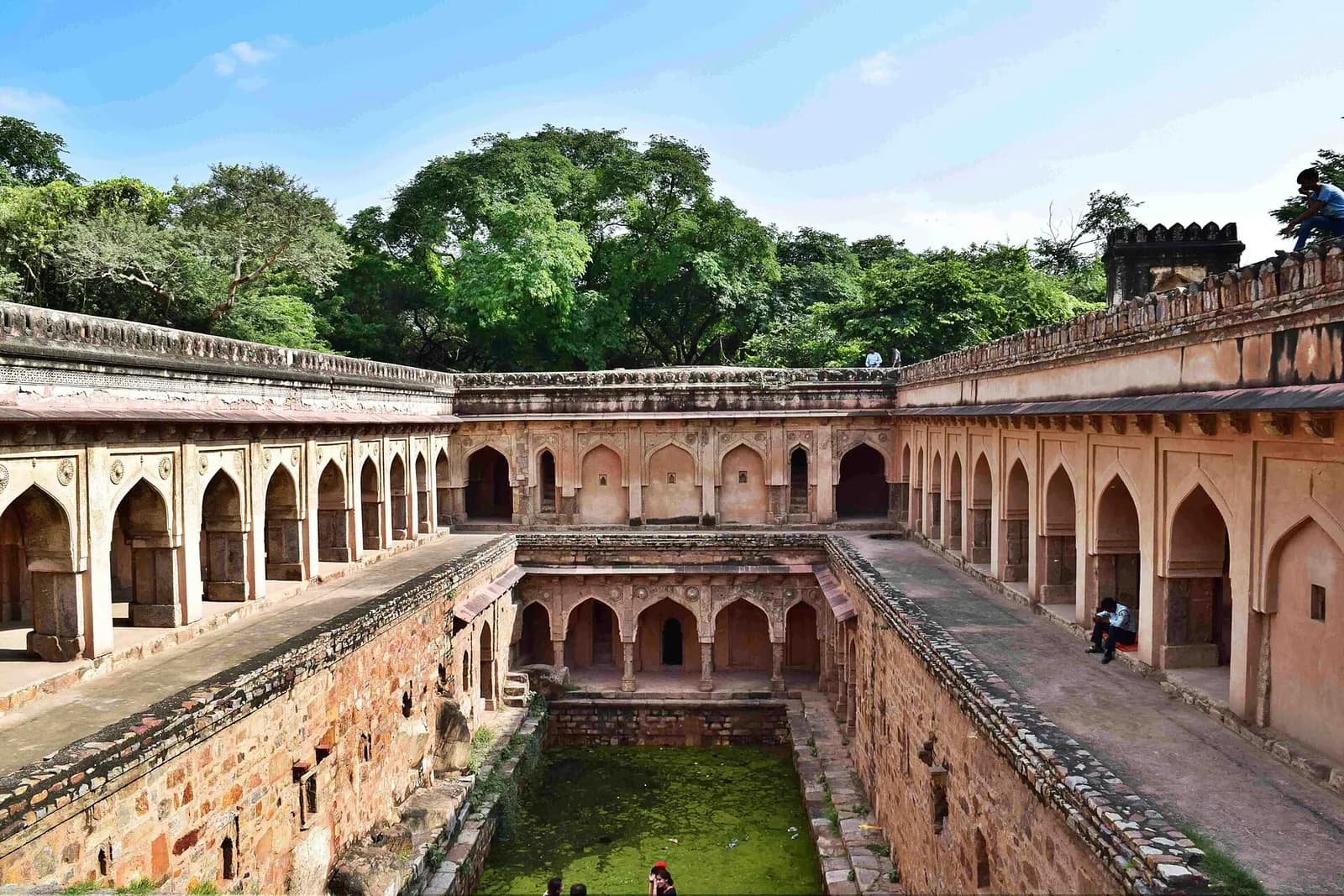
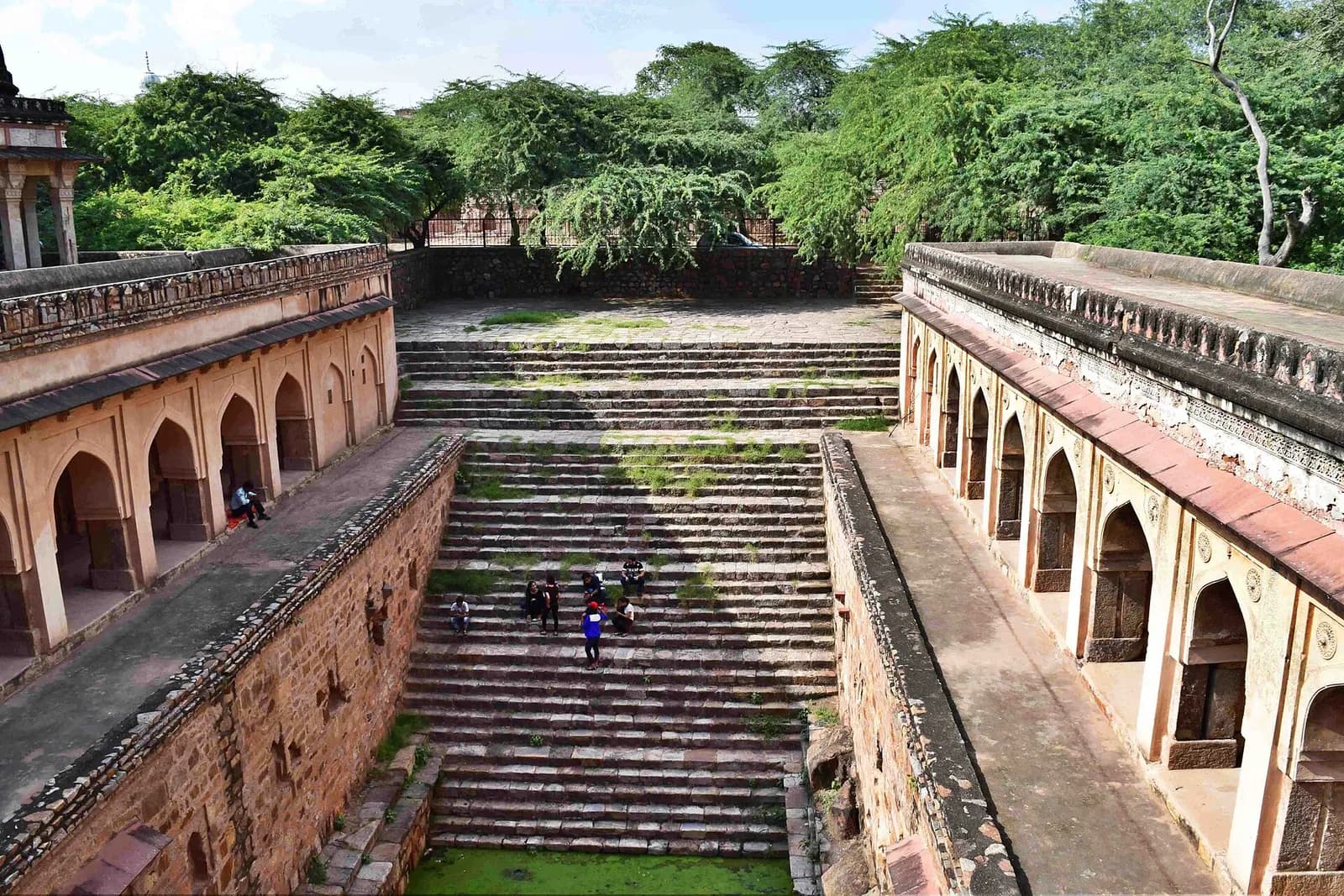
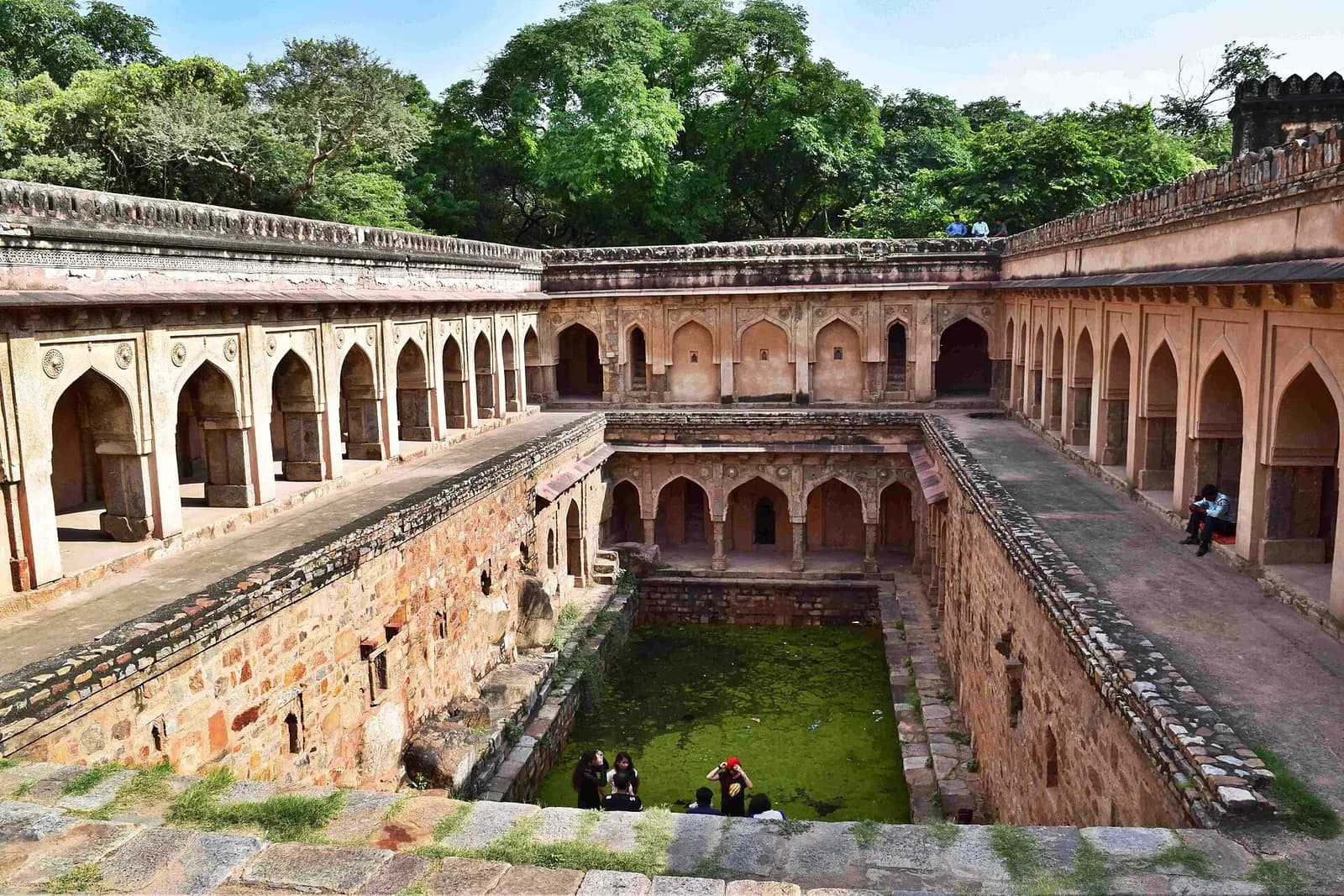
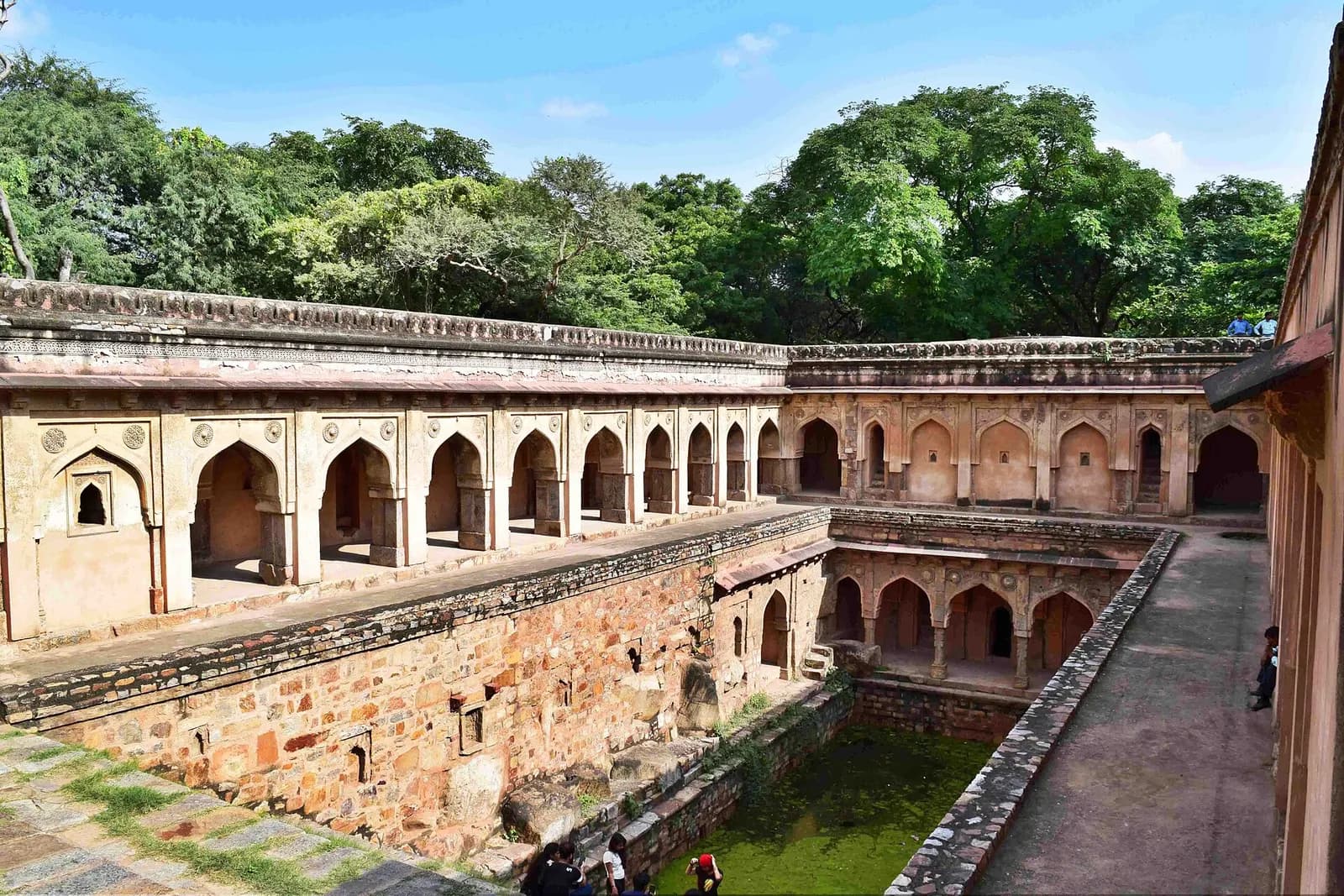
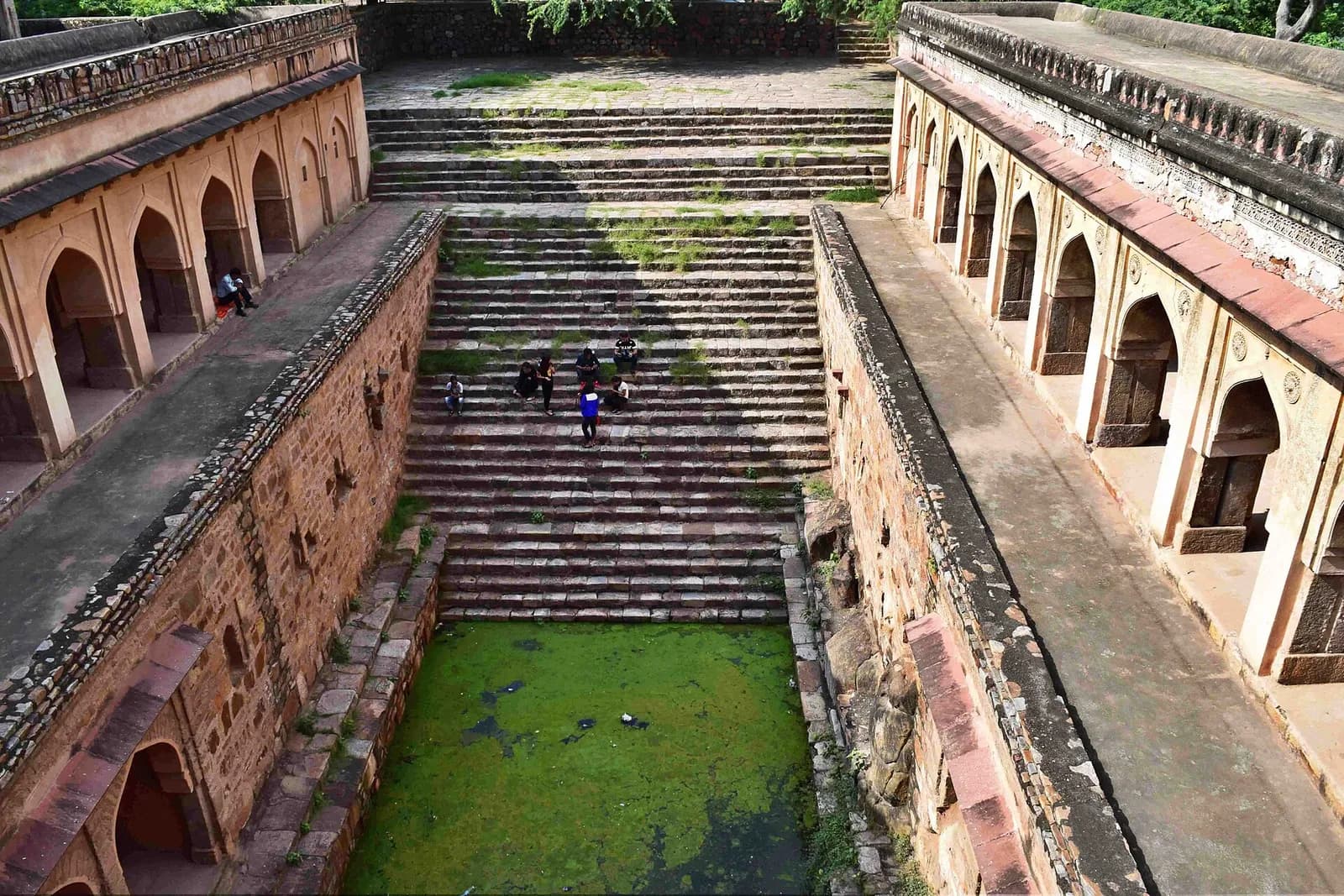
Rajon ki Baoli is a historic early 16th-century stepwell or baoli, set within the green ruins of the Mehrauli Archaeological Park in South Delhi and it is widely regarded as one of the most beautiful and architecturally refined stepwells in the city. Built in 1506 during the reign of Sikandar Lodi by the nobleman Daulat Khan, it is a graceful, multi-tiered, U-shaped subterranean structure, its broad flights of steps descending through four levels lined with elegant pillared arcades and arched niches and it is accompanied by a small Lodi-era mosque and a domed pillared tomb built in the same year. Also known as Rajon ki Bain or the Sookhi Baoli, it takes its name, somewhat surprisingly, not from kings but from the masons who lived in its surrounding structures in later centuries. Serene, photogenic and steeped in Lodi-era elegance, set amid the tombs and wild greenery of the Mehrauli park, it is a tranquil gem of Delhi's medieval heritage.
Several things make it special and they are worth drawing out:
- An elegant Lodi stepwell. A graceful four-tiered, U-shaped baoli of 1506, among the finest stepwell architecture in Delhi.
- A nobleman's gift. Built by Daulat Khan, a courtier of Sikandar Lodi, as a public water source and complex.
- A name from the masons. Named not for rajas or kings, but for the masons who later lived in its surrounding cells.
- A complete complex. Accompanied by a small Lodi mosque and the domed tomb of Khwaja Mohammad, both from 1506.
- A park setting. Set within the Mehrauli Archaeological Park, amid tombs and ruins, near Gandhak ki Baoli and Balban's Tomb.
It is one of the most beautiful and peaceful of the offbeat things to do in Delhi and a graceful lesser-known entry among the important monuments of Delhi.
History of Rajon ki Baoli
The history of Rajon ki Baoli belongs to the Lodi period, the last dynasty of the Delhi Sultanate before the coming of the Mughals and it reflects the tradition of noble patronage that gave Delhi so many of its fine stepwells. The baoli was built in 1506 during the reign of Sultan Sikandar Lodi, one of the most capable of the Lodi rulers, in a period when Delhi was dotted with the tombs, mosques and water structures of the sultanate's nobility, many of which survive today in the Mehrauli area. Its key historical points are worth setting out:
- The Lodi date. The stepwell was constructed in 1506 CE, firmly in the reign of Sikandar Lodi, making it just over five centuries old.
- The builder. It was commissioned by Daulat Khan, an affluent nobleman and administrator at the Lodi court, as an act of public patronage, providing water and a resting place.
- The companion tomb. In the same year, Daulat Khan also built the adjacent domed pavilion tomb of Khwaja Mohammad, so the stepwell and tomb form a single conceived complex.
Stepwells like this were far more than practical water sources in medieval Delhi: they were vital public utilities in a dry climate, often combined with places of prayer and rest and building one was a prestigious act of charity and patronage for a nobleman. Rajon ki Baoli, with its stepwell, mosque and tomb together, is a fine and complete example of this tradition, a self-contained Lodi complex serving water, worship and remembrance. Over the following centuries it fell out of its original use and into neglect, before being protected and restored in modern times. For the visitor, knowing that this elegant structure was a nobleman's gift to the public of Lodi-era Delhi, five centuries ago, adds a rich sense of history and of the civic life of the medieval city to what is already a beautiful place.
Why is it called Rajon ki Baoli?
A natural question and one that often causes confusion, is why the stepwell is called Rajon ki Baoli and the answer corrects a very common misconception. At first hearing, the name seems to suggest a connection with rajas or kings, leading many to assume it was a royal stepwell built for or by kings. In fact, the name has nothing to do with royalty at all. It derives instead from the masons, known as raj, rajbirs or mistris in local usage, who occupied and lived in the structures and cells around the stepwell in a much later period, during the early 20th century. The baoli came to be associated with these resident masons and so it became known as Rajon ki Baoli, the stepwell of the masons, a name that stuck.
This is a lovely example of how the popular names of Delhi's monuments can mislead and of how a building's story can be reshaped by those who used it long after it was built. The stepwell also carries the alternative names Rajon ki Bain, bain being another word for a stepwell and Sookhi Baoli, meaning the dry stepwell, reflecting that it no longer holds water as it once did. For the visitor, knowing the true origin of the name, from the masons who later made it their home rather than from kings, is a satisfying piece of insider knowledge that deepens the appreciation of the place and it is exactly the kind of detail that brings a monument to life. Understanding the name is understanding a small but telling chapter of the stepwell's long and changing history.
Architecture of Rajon ki Baoli
Architecturally, Rajon ki Baoli is a superb example of Indo-Islamic Lodi stepwell design, admired for its elegance and proportion and its features reward a close and knowing look. The structure is a multi-tiered, U-shaped subterranean baoli, descending in graceful stages toward the water at the bottom and its key elements are worth seeking out:
- The four tiers and steps. The stepwell is designed with four tiers or levels and broad flights of descending steps; it originally contained some sixty six steps, of which around forty one are visibly accessible today.
- The pillared verandahs. Colonnaded, symmetrical arcades and multi-storeyed stone corridors run along the sides of the well, giving it a graceful, architectural grandeur rare among stepwells.
- The arched niches. Shallow arched wall niches or alcoves, line the structure, once holding oil lamps to light the well or serving as small resting cells for travellers.
- The adjacent mosque. A small, single-bay Lodi-era mosque with fine incised plasterwork stands beside the stepwell, part of the original complex.
- The tomb is chhatri. A twelve-pillared domed pavilion, a chhatri, serves as the tomb of Khwaja Mohammad, built in the same year, 1506, by Daulat Khan.
The overall impression is of a beautifully conceived and unusually refined stepwell, more like a sunken palace of pillared galleries than a mere well, which is why it is so admired and so photogenic. The descending tiers and colonnaded verandahs create a play of light, shade and symmetry that photographers and architecture lovers find irresistible, while the arched niches, the little mosque and the domed tomb complete a harmonious Lodi-era ensemble. The structure has undergone major conservation by the Archaeological Survey of India to restore its traditional lime-plaster integrity and improve its water management, so it is seen today in fine condition. Knowing what to look for, the four tiers, the pillared arcades, the lamp niches, the mosque and the chhatri tomb, turns a visit into a rich appreciation of one of the loveliest medieval structures in Delhi.
The mosque and the tomb
Rajon ki Baoli is not merely a stepwell but a complete Lodi-era complex and two companion structures, built along with the well, complete the ensemble and add to its interest. Beside the stepwell stands a small, single-bay mosque in the Lodi style, a modest but finely made place of prayer adorned with delicate incised plasterwork, which would have served those who came to the baoli for water and rest. Its presence reflects the common medieval practice of combining a water structure with a place of worship, so that the body and the spirit could both be refreshed at the same spot and it adds a quiet sacred dimension to the complex.
Close by rises the tomb of Khwaja Mohammad, a graceful domed pavilion or chhatri, supported on twelve pillars, built in the same year as the stepwell, 1506, by the same patron, Daulat Khan. This twelve-pillared chhatri is a classic form of Lodi-era funerary architecture, elegant and open and its construction alongside the baoli shows that the whole site was conceived as a single, unified complex of water, worship and remembrance. Together, the stepwell, the mosque and the tomb make Rajon ki Baoli far richer than a simple well, a small but complete expression of Lodi architecture and of the civic and religious life of the age. For the visitor, exploring all three and understanding how they were built together as one patron's gift, greatly deepens the experience, turning a look at a stepwell into an appreciation of a whole medieval ensemble.
What to expect at Rajon ki Baoli
A visit to Rajon ki Baoli is peaceful, beautiful and quietly rewarding, set amid the green and atmospheric ruins of the Mehrauli Archaeological Park and knowing what to expect helps you make the most of it. The baoli lies within the park, a sprawling, lightly wooded expanse scattered with tombs, mosques and ruins from across Delhi's history, so reaching it involves a pleasant walk through the heritage grounds rather than an arrival at a formal gate. The stepwell itself is a delight to explore: you can walk around its upper level, admire the descending tiers and pillared arcades from above and take in the mosque and the domed tomb alongside. The play of light on the stone galleries and the graceful symmetry of the well make it one of the most photogenic spots in the city, so it rewards an unhurried visit. The whole experience takes about thirty to forty five minutes.
Because it sits within the archaeological park, the setting is green, quiet and semi-wild, a world away from the bustle of the surrounding city, though this also means limited facilities and some uneven ground. For safety and conservation, access down into the deeper levels of the well may be restricted, so much of the appreciation is from the upper tiers and the surrounding structures. The baoli is best combined with the other monuments of the park, such as the nearby Gandhak ki Baoli and Balban's Tomb, for a fuller heritage walk. The mood is tranquil and architectural, ideal for those who love history, photography and peaceful green spaces. Come in daylight, with time to wander the park and Rajon ki Baoli rewards you with one of the most elegant and serene heritage experiences in Delhi.
Rajon ki Baoli timings and entry
Rajon ki Baoli is open daily, broadly from sunrise to sunset, as it lies within the open Mehrauli Archaeological Park; local park guidelines generally put the hours at around 10:00 AM to 5:00 PM from Monday to Saturday and to 6:00 PM on Sunday. Entry is completely free for all visitors, as the stepwell lies within the open park with no ticketing. A visit, taking in the stepwell, the mosque and the tomb, takes about thirty to forty five minutes. Because it sits within a green archaeological park, the setting is semi-wild with limited facilities and some uneven ground, so comfortable shoes are wise and for safety and conservation access into the deeper levels of the well may be restricted. A daytime visit is strongly recommended, both for the light, which is beautiful on the stone galleries and because the park is best explored in daylight. These timings and conditions are current at the time of writing and can vary, so plan a daytime visit and reconfirm if your plans depend on exact hours.
Visiting tips
A few pointers make the visit smoother and more rewarding:
- Come in daylight. The park and the stepwell are best seen in good light, which is also beautiful for photography.
- Wear comfortable shoes. The archaeological park has uneven ground and a fair amount of walking.
- Combine it with the park. See the nearby Gandhak ki Baoli, Balban's Tomb and other ruins for a fuller Mehrauli heritage walk.
- Appreciate the architecture. Look for the four tiers, the pillared arcades, the lamp niches, the mosque and the twelve-pillared tomb.
- Mind the deeper levels. Access into the lower tiers of the well may be restricted for safety and conservation.
- Allow 30 to 45 minutes, more if you explore the wider park.
The key point is simply to treat Rajon ki Baoli as part of a walk through the beautiful Mehrauli Archaeological Park, in daylight and with time to spare, rather than a quick isolated stop. Done so, its elegance, its peace and its photogenic beauty make it one of the most rewarding stepwells to visit in the whole city.
Best time to visit Rajon ki Baoli
The best time to visit is the cooler months, from October to March and within the day the morning or the later afternoon, for comfortable weather in the open park and beautiful light on the stone galleries of the stepwell. A pleasant winter day is ideal, with soft light playing on the tiers and arcades and comfortable temperatures for walking the archaeological park. The summer is hot and the open park tiring, though the sunken well offers some shade and the monsoon leaves the park lush and green but can make the ground muddy and the steps slippery. Because the baoli is at its most photogenic in good light, the golden hours of morning and late afternoon are especially rewarding. Avoid dusk, as the park closes and the setting is semi-wild. Allow about half an hour to forty five minutes, more to explore the wider park. Our guide to the best time to visit Delhi sets out the seasons across the city in more detail.
How to reach Rajon ki Baoli (nearest metro)
Rajon ki Baoli lies within the Mehrauli Archaeological Park in South Delhi, near the Qutub Minar and it is easy to reach by metro. The nearest stations are Qutub Minar and Saket, both on the Yellow Line and from either it is a short auto-rickshaw ride to the entrance of the Mehrauli Archaeological Park, from which a signposted walk through the heritage grounds brings you to the stepwell. Because the baoli is set within the park rather than on a main road, the final approach is on foot through the green ruins, which is a pleasant part of the experience. App cabs and autos serve the Mehrauli and Qutub area well. Set within the great Mehrauli heritage zone, it pairs naturally with a Delhi day tour or a heritage-focused New Delhi tour that takes in the Qutub complex and the park.
Places to visit near Rajon ki Baoli
Rajon ki Baoli sits within the Mehrauli Archaeological Park, one of the richest historical zones in all of Delhi, so it is surrounded by remarkable monuments and is best enjoyed as part of a wider heritage walk. Right within the Mehrauli Archaeological Park itself lie the nearby Gandhak ki Baoli and Balban's Tomb and just outside rises the towering Qutub Minar, the great medieval victory tower. For another of Delhi's great stepwells, the deep Gandhak ki Baoli is close at hand, while the famous Agrasen ki Baoli in central Delhi makes a fascinating comparison.
A ride away, the capital's other landmarks round out a full picture of the city: the mighty Red Fort and old city, the serene Humayun's Tomb, the ceremonial India Gate, the lotus-shaped Lotus Temple and the old fort of Purana Qila. For more history, the citadel of Feroz Shah Kotla, the great circle of Connaught Place and the astronomical Jantar Mantar complete the sweep of Delhi's past.
Rajon ki Baoli in your Delhi itinerary
For most visitors, Rajon ki Baoli works best as a beautiful, peaceful stop within a walking tour of the Mehrauli Archaeological Park rather than a destination on its own, since the baoli and its mosque and tomb take about half an hour and the park around it holds many more treasures. The natural plan is to spend a morning or afternoon exploring the park, taking in Rajon ki Baoli, the nearby Gandhak ki Baoli, Balban's Tomb and the other ruins and combining it with the adjacent Qutub Minar complex, for one of the richest and most rewarding heritage days in the city. It is a stop for travellers with a genuine interest in history, architecture and photography and in the city's tranquil green corners and it rewards an unhurried visit in good light.
If Delhi is your gateway to the wider Golden Triangle, Rajon ki Baoli offers a graceful introduction to the stepwells of medieval India, a distinctive architectural form you will encounter again, on an even grander scale, at sites like the great stepwells of Rajasthan and Gujarat. Many of my history-minded guests find the elegance and serenity of this sunken, pillared well, amid the wild beauty of the park, a highlight of their Delhi exploration and its photogenic beauty makes it a favourite with photographers. It adds a peaceful, architectural note to a Mehrauli day before the journey on to Agra and Jaipur.
Travel tips for visiting Rajon ki Baoli
A few pointers make the visit smoother and more rewarding:
- Come in the cooler months and in good light, October to March, in the morning or late afternoon for the best of the stepwell.
- Know the story first, the Lodi date, Daulat Khan and the masons' name, as they bring the baoli to life.
- Explore the whole complex, the stepwell, the little mosque and the twelve-pillared tomb of Khwaja Mohammad.
- Walk the wider park, taking in Gandhak ki Baoli, Balban's Tomb and the other ruins.
- Wear comfortable shoes, as the park has uneven ground and some walking.
- Mind restricted areas, as access into the deeper levels of the well may be limited.
- Allow 30 to 45 minutes for the baoli, more for the park.
- Reach it via Qutub Minar or Saket metro, then a short auto and a walk into the park.
If you would like a local guide to bring the architecture and history of Rajon ki Baoli and the Mehrauli park to life, message our team on WhatsApp at +91 7302265809 with your travel dates and group size and we will shape the day for you.
Is Rajon ki Baoli worth visiting?
For history lovers, architecture enthusiasts, photographers and those who enjoy tranquil heritage, yes, it is a genuinely rewarding and beautiful stop. There are few stepwells in Delhi as elegant as this one, with its four graceful tiers, its pillared arcades like a sunken palace, its lamp-lit niches and the little mosque and domed tomb that complete the Lodi-era complex, all set amid the wild green beauty of the Mehrauli Archaeological Park. It is free, serene and wonderfully photogenic and the story of its name, from masons rather than kings, adds a satisfying twist. The honest note is that it sits within a semi-wild park with limited facilities, access to the deeper levels may be restricted and it rewards being visited as part of a wider park walk rather than as a quick isolated stop. But for the curious traveller who comes in good light and takes time to appreciate it, it is one of the loveliest and most peaceful heritage sites in the whole city and I love showing it to guests with an eye for beautiful architecture.
Plan your trip with us
At Experience My India, through our Delhi and Golden Triangle travel desk, we design unhurried, well paced trips that make room for beautiful, tranquil stops like Rajon ki Baoli and the Mehrauli Archaeological Park, not just the headline monuments and we know how to turn a park full of ruins into a rich and rewarding heritage walk. Whether you want a relaxed set of Delhi Agra tours or a full Golden Triangle route through Delhi, Agra and Jaipur, we plan around your pace, your interests and the right season, with local guides who know the history and the loveliest corners. Share your dates and the kind of trip you have in mind through our enquiry page, tell us your group size and we will put together an honest, tailored plan rather than a rushed checklist.
Related guides
- Places to visit in Delhi, for the wider picture
- Hidden places to visit in Delhi, the city's quieter corners
- Nearby places to visit in Delhi, to extend your trip
Enquire Now
Ready to Explore
The Heart of Delhi?
Explore the Red Fort, Qutub Minar, Humayun's Tomb, and the vibrant streets of Old Delhi with our expert-guided premium tours of India's capital city.

Delhi
Premium Tour Package
Questions
Frequently asked questions
What are the timings of Rajon ki Baoli?
It is open daily, broadly sunrise to sunset, within the Mehrauli Archaeological Park, with local guidelines around 10:00 AM to 5:00 PM Monday to Saturday and to 6:00 PM on Sunday. A visit takes about 30 to 45 minutes. Reconfirm, as timings can vary.
What is the entry fee for Rajon ki Baoli?
Who built Rajon ki Baoli and when?
Why is it called Rajon ki Baoli?
Which is the nearest metro station to Rajon ki Baoli?
What else is in the complex?
What is near Rajon ki Baoli?
Is Rajon ki Baoli worth visiting?
How many steps does Rajon ki Baoli have?
Explore more
Plan your Rajon ki Baoli trip with us

Interested in Rajon ki Baoli Delhi: History, Timings and Visitor Guide?
Chat with our travel team for a custom quote, or browse every package.
Related Attractions
9Ready to explore Rajon ki Baoli Delhi: History, Timings and Visitor Guide?
Book your private tour today and experience the magic of India's rich heritage.