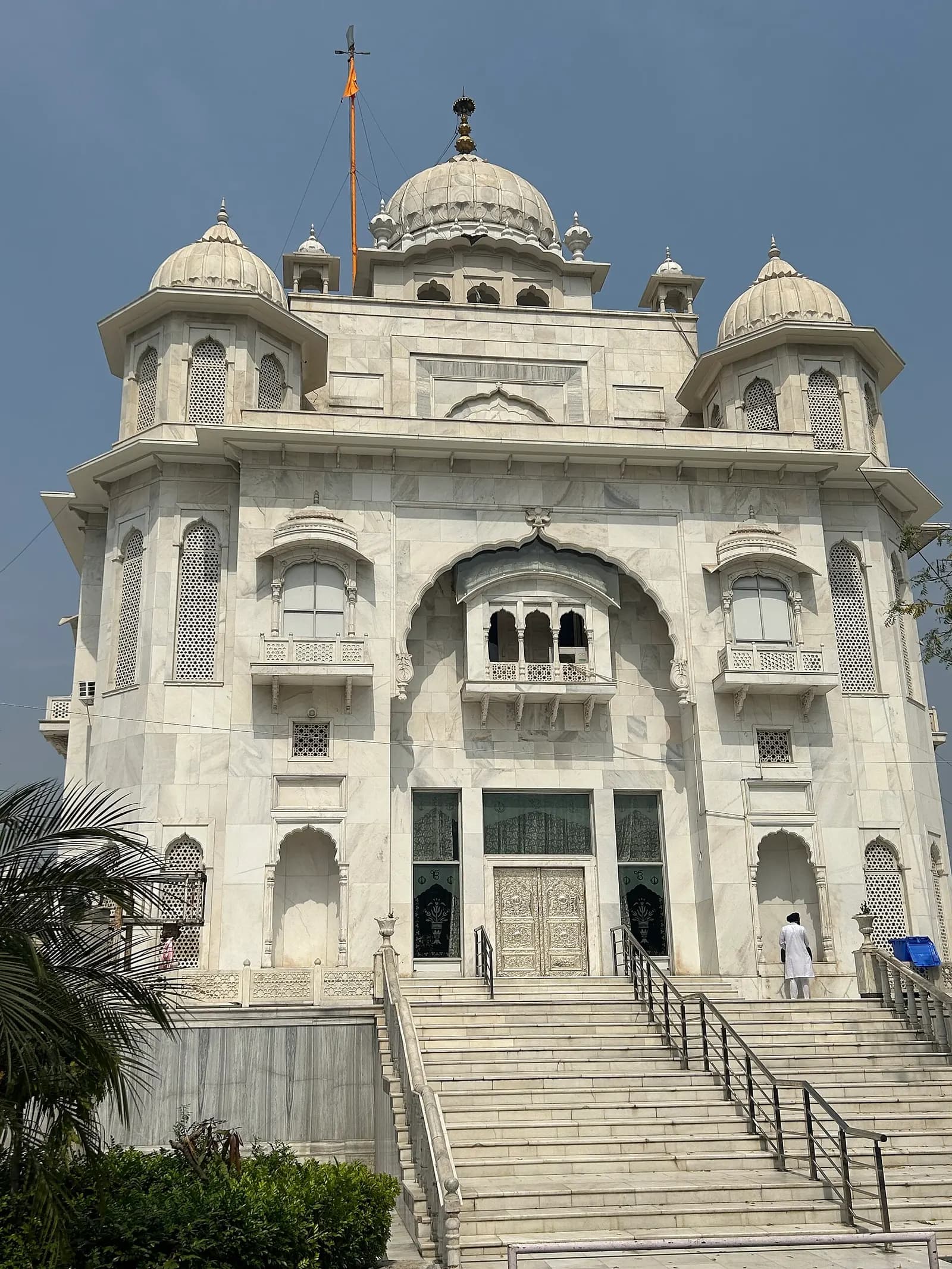
Gurudwara Rakab Ganj Sahib Delhi: Timings and Guide
Visiting Gurudwara Rakab Ganj Sahib near Parliament in Delhi? Its history, timings, free langar, the dress code, free parking, nearest metro and visitor tips.
In a Nutshell
“Gurudwara Rakab Ganj Sahib is a serene white-marble Sikh shrine near Parliament in central New Delhi, marking the spot where the body of the ninth Sikh Guru, Guru Tegh Bahadur, was cremated in 1675 after his execution. A devout disciple, Bhai Lakhi Shah Vanjara, secretly rescued the body and burned down his own house to cremate it with dignity. Open 24 hours and free to enter, it runs a community kitchen and is known as a peaceful, spacious alternative to the busier Bangla Sahib. It features on our Delhi tours, run by a unit of Experience My India.”
Gurudwara Rakab Ganj Sahib is one of Delhi's most significant and tranquil Sikh shrines, a grand marble complex carrying a deeply moving story of devotion and sacrifice, set in the heart of the capital's institutional zone yet offering a calm, uncrowded space for reflection. Visiting it, often alongside the related Sis Ganj Sahib, is a quietly powerful experience. Our team at Delhi Agra Tour Packages sometimes includes it on a central Delhi circuit and it sits naturally on a Golden Triangle tour through the capital.
I am Abhay Sharma, Delhi born and a Golden Triangle guide since 2015 and I love bringing guests here precisely because it is so peaceful, a hidden gem compared with the busier shrines, with a story that moves everyone who hears it. This guide gathers everything I would tell a visitor beforehand, checked against current information, including the history, the timings, the langar and how to reach it.
Details
Rakab Ganj Sahib at a glance
| Detail | Information |
|---|---|
| Location | Pandit Pant Marg, near Parliament, central New Delhi |
| Marks | The cremation site of Guru Tegh Bahadur in 1675 |
| First built | 1783, by the Sikh leader Baghel Singh |
| Present structure | Built from 1960, completed around 1967 to 1968 |
| Known for | A peaceful white-marble shrine, a moving sacrifice story |
| Entry | Free, open 24 hours |
| Nearest metro | Central Secretariat (Yellow and Violet Lines) |
| Time needed | About 45 minutes to 1 hour |
Rakab Ganj Sahib timings
| Detail | Information |
|---|---|
| Open | 24 hours a day, every day |
| Most peaceful | Early morning and during Gurbani recitations |
| Langar | Served daily to all visitors |
The gurudwara is open to everyone 24 hours a day, every day of the year, so there are no closing hours to plan around. It is especially peaceful in the early morning and during the Gurbani hymn recitations. These arrangements are current at the time of writing and best reconfirmed.
Entry and rules
| Item | Information |
|---|---|
| Entry fee | Free for everyone |
| Head covering | Mandatory; free scarves provided; caps and hats banned |
| Shoes and socks | Removed at the free counter outside |
| Dress | Modest; shoulders and knees covered |
How to reach Rakab Ganj Sahib
| From | Route |
|---|---|
| Central Secretariat metro (Yellow and Violet) | An 8 to 10 minute walk down Pandit Pant Marg |
| Parliament and the Secretariat | Directly opposite, in the same zone |
| India Gate and central Delhi | A short auto or taxi ride |
| By car | Free on-site parking for around 150 vehicles |
What is Gurudwara Rakab Ganj Sahib?
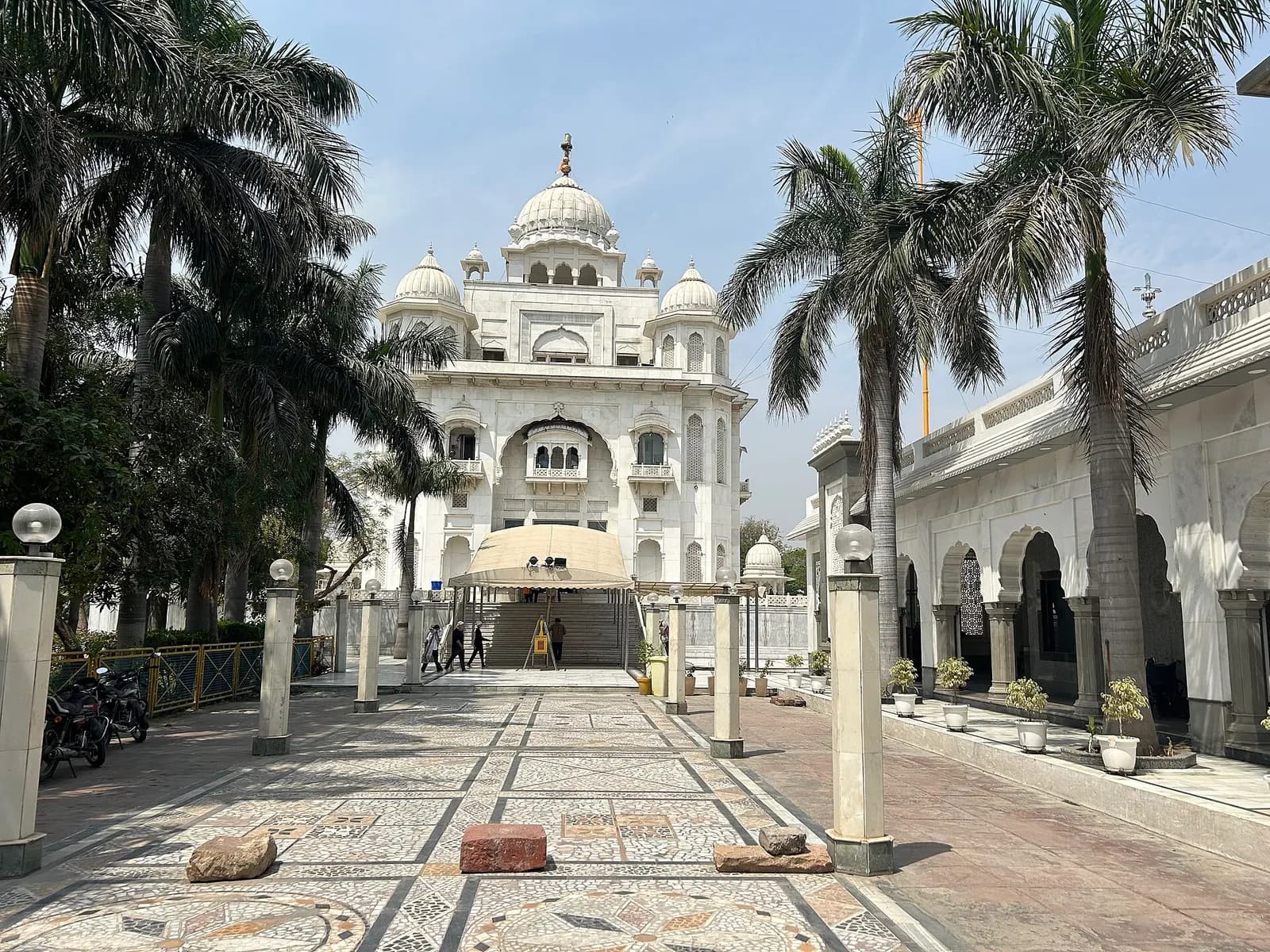
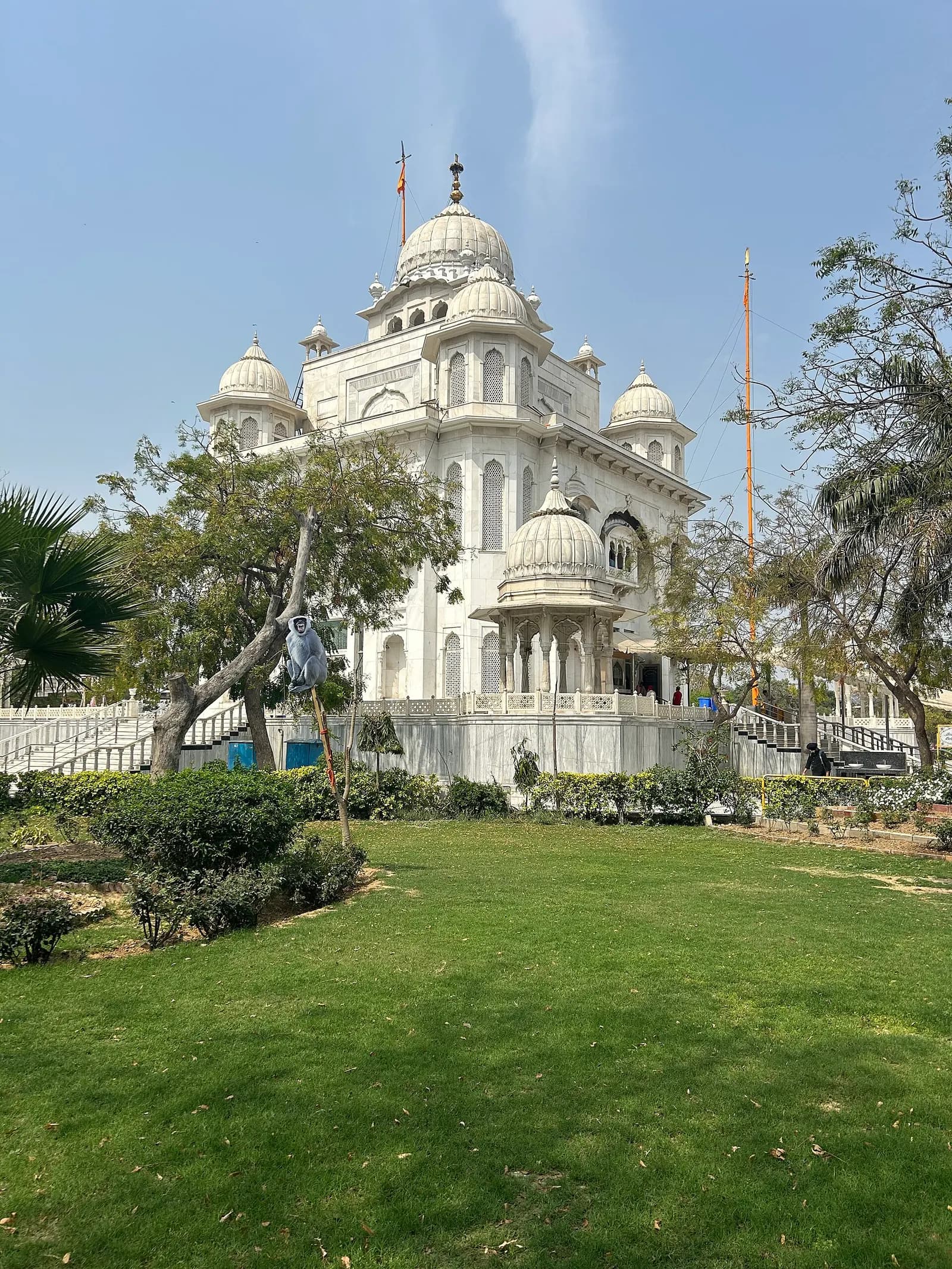
Gurudwara Rakab Ganj Sahib is a major Sikh shrine in central New Delhi, a grand white-marble gurudwara standing in the capital's highest-security institutional zone, directly facing the North Block of the Central Secretariat and near the Parliament House complex. It marks one of the most sacred sites in Sikh history: the exact spot where the body of the ninth Sikh Guru, Guru Tegh Bahadur, was cremated in 1675 after his execution in Old Delhi. It forms a direct historical pairing with Gurudwara Sis Ganj Sahib in Chandni Chowk, which marks where the Guru was executed, while Rakab Ganj Sahib marks where his headless body was secretly and bravely cremated. Beyond its history, the gurudwara is cherished today as a spacious, peaceful and welcoming shrine, with a community kitchen and an atmosphere of calm reflection.
Several things make it special and they are worth drawing out:
- A sacred cremation site. The place where the body of Guru Tegh Bahadur was cremated, among the most revered sites in Sikh history.
- A story of great sacrifice. The shrine commemorates the extraordinary bravery of a devotee who burned his own home to cremate the Guru with dignity.
- A grand marble complex. A majestic white-marble gurudwara with a high central dome, minarets and four symbolic entrances.
- A peaceful hidden gem. Far less crowded than some other Delhi shrines, spacious and calm, ideal for quiet reflection.
- A free community kitchen. A langar serving hot vegetarian meals to all, in the Sikh spirit of selfless service.
It is one of the most meaningful and serene of the things to do in Delhi and a significant site among the important monuments of Delhi.
History of Rakab Ganj Sahib
The history of this gurudwara is inseparable from the martyrdom of Guru Tegh Bahadur, the ninth Sikh Guru, who was executed in Delhi in 1675 on the orders of the Mughal emperor Aurangzeb for defending religious freedom. While the nearby Gurudwara Sis Ganj Sahib in Chandni Chowk marks the spot of his execution, Rakab Ganj Sahib stands where his body was cremated and the story of how that came to pass is one of the most moving in Sikh tradition. Following the execution, the Mughal authorities forbade anyone from removing the Guru's remains, intending them to be left exposed. It was a devout disciple, Bhai Lakhi Shah Vanjara, who, with his son, found the courage and the means to rescue the body and give it a dignified cremation, as recounted below.
The site itself was later formally consecrated as a shrine. In 1783, the Sikh military leader Baghel Singh marched his forces into Delhi and reached a treaty with the Mughal emperor of the day, Shah Alam II, which allowed the building of gurudwaras at the sites associated with the Gurus. At Rakab Ganj, after excavating the site and locating the urn containing the Guru's ashes, he removed a temporary structure that had been raised over it and built the first proper memorial shrine. The grand white-marble complex seen today is modern, begun in 1960 and completed around 1967 to 1968 and it serves as the official autonomous headquarters of the Delhi Sikh Gurdwara Management Committee. The name Rakab Ganj itself recalls the area's Mughal past: rakab means stirrups and the village here once housed the makers of royal riding gear and the stables of the empire. Knowing this history deepens a visit, placing the serene marble shrine within a story of faith, courage and the long Sikh presence in Delhi.
The story of Bhai Lakhi Shah Vanjara
At the heart of Rakab Ganj Sahib is the extraordinary act of devotion that gave the site its sanctity and it is worth telling in full. After Guru Tegh Bahadur was executed in 1675, the Mughal authorities banned anyone from removing his body, hoping to display it and deter his followers. A devout Sikh disciple named Bhai Lakhi Shah Vanjara, a trader and transporter, resolved with his son to rescue the Guru's remains and give them the dignity they deserved, at great personal risk. Seizing their chance under the cover of a sudden, massive dust storm that swept over the city, they spirited the body away, hidden inside one of their carts filled with hay and brought it to their own home in the village of Raisina, where the central government buildings now stand.
Knowing that the authorities would search for the body and that any ordinary cremation would be discovered and the remains desecrated, Bhai Lakhi Shah Vanjara made a remarkable decision: he set fire to his own house, cremating the Guru's body within the burning structure, so that the flames of a seemingly ordinary house fire concealed and completed the sacred cremation. Through this act of courage and sacrifice, he ensured the Guru's body was honoured rather than defiled. This story, of a disciple who gave his own home to protect his Guru's dignity, is remembered with deep reverence and the gurudwara stands as a memorial not only to the Guru but to the devotion of those who served him. Hearing it before or during a visit transforms the experience, turning a beautiful marble shrine into the setting of one of the great acts of faith in Sikh history.
Rakab Ganj Sahib architecture
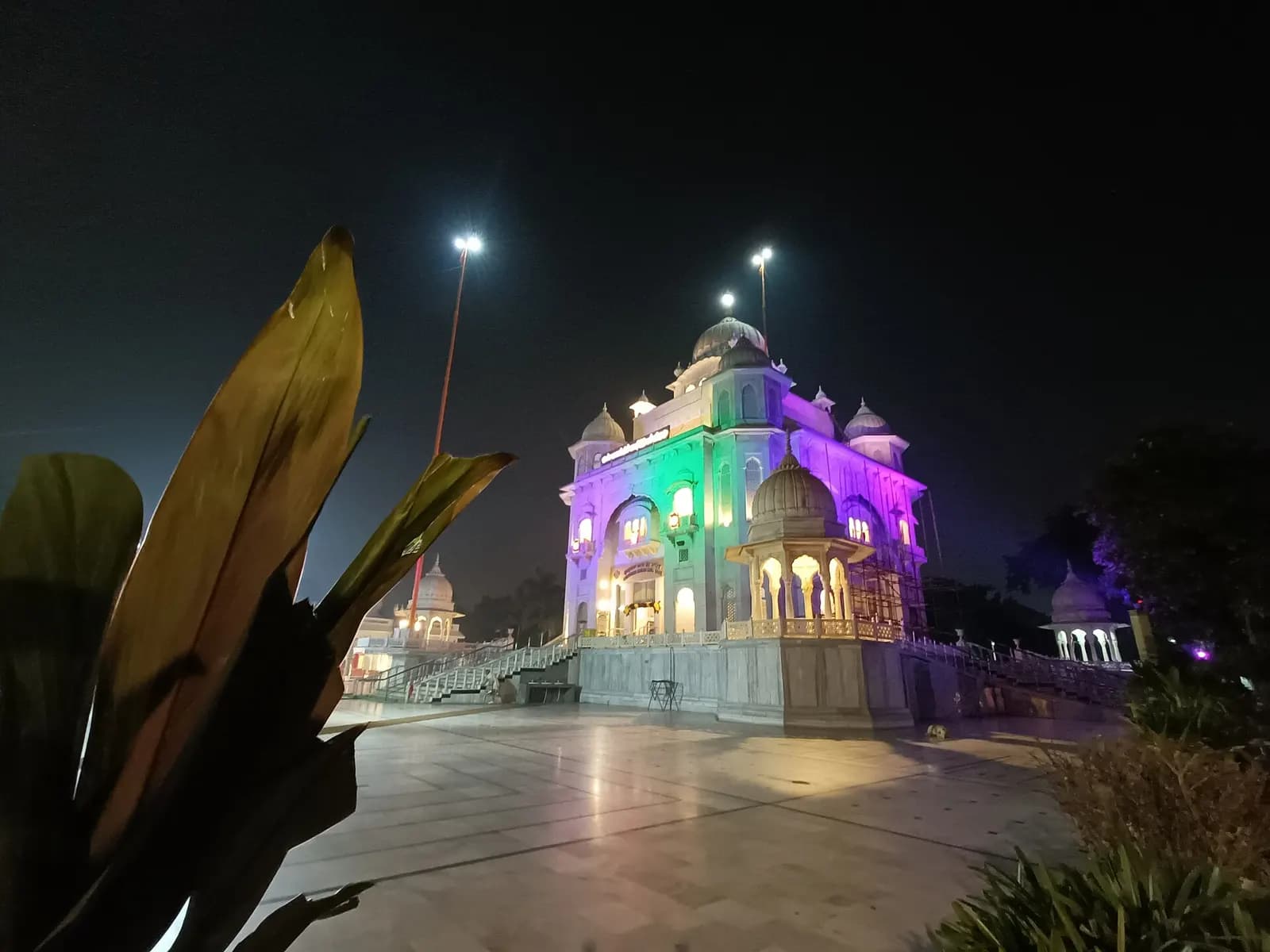
Architecturally, Rakab Ganj Sahib is a majestic example of Sikh shrine design, constructed entirely of premium white marble that gleams against the greenery and the government buildings around it. The complex features extensive arched windows, slender minarets and a high central dome rising over the main sanctum, in the classic idiom of the great gurudwaras, grand yet serene. Its scale and the quality of its marble give it a dignified, uplifting presence and the spacious marble courtyards and floors are part of what makes it so peaceful to visit.
A few features are worth noting:
- The white-marble sanctum and dome. The central prayer hall beneath a high dome, housing the Guru Granth Sahib, where hymns are sung through the day.
- The four entrances. True to classic Sikh architecture, the main sanctum has open entry gates in all four directions, symbolising that the house of prayer is open to all of humanity, without distinction of caste, creed, gender or nationality.
- The minarets and arches. Slender minarets and rows of arched windows that give the complex its graceful, luminous character.
- Bhai Lakhi Shah Vanjara Hall. A large indoor community auditorium, named for the devotee of the story, used for major religious gatherings, discussions and weddings.
The four-directional openness is especially meaningful, a built expression of the Sikh principle that the shrine welcomes everyone equally and it is worth pausing to appreciate as you enter. The whole composition, marble, dome, minarets and open gates, creates a sense of calm grandeur that sets the tone for a reflective visit.
The langar and the peaceful atmosphere
Like all gurudwaras, Rakab Ganj Sahib runs a langar, the free community kitchen, serving hot, pure vegetarian meals daily to all visitors regardless of background, in the Sikh spirit of selfless service and equality, where everyone sits together and shares the same food. Taking part or simply witnessing it, is a warm and humbling experience and a core part of understanding what a gurudwara is.
What particularly distinguishes Rakab Ganj, though, is its atmosphere. Unlike the often crowded Gurudwara Bangla Sahib elsewhere in central Delhi, Rakab Ganj is widely celebrated as a spacious, peaceful hidden gem. Its manicured side gardens, wide marble floors and uncrowded courtyards offer a quiet, unhurried setting ideal for long, uninterrupted reflection and for listening to the live Gurbani hymns that fill the sanctum. For many visitors this tranquillity is the shrine's greatest gift: a genuine pocket of calm in the busy heart of the capital, where you can sit undisturbed, take in the marble and the music and feel the weight of the history around you. It is this combination of a profound story, a beautiful setting and a rare peacefulness that makes Rakab Ganj so rewarding and it is why I often recommend it to guests who found other shrines too crowded for reflection.
What to expect at Rakab Ganj Sahib
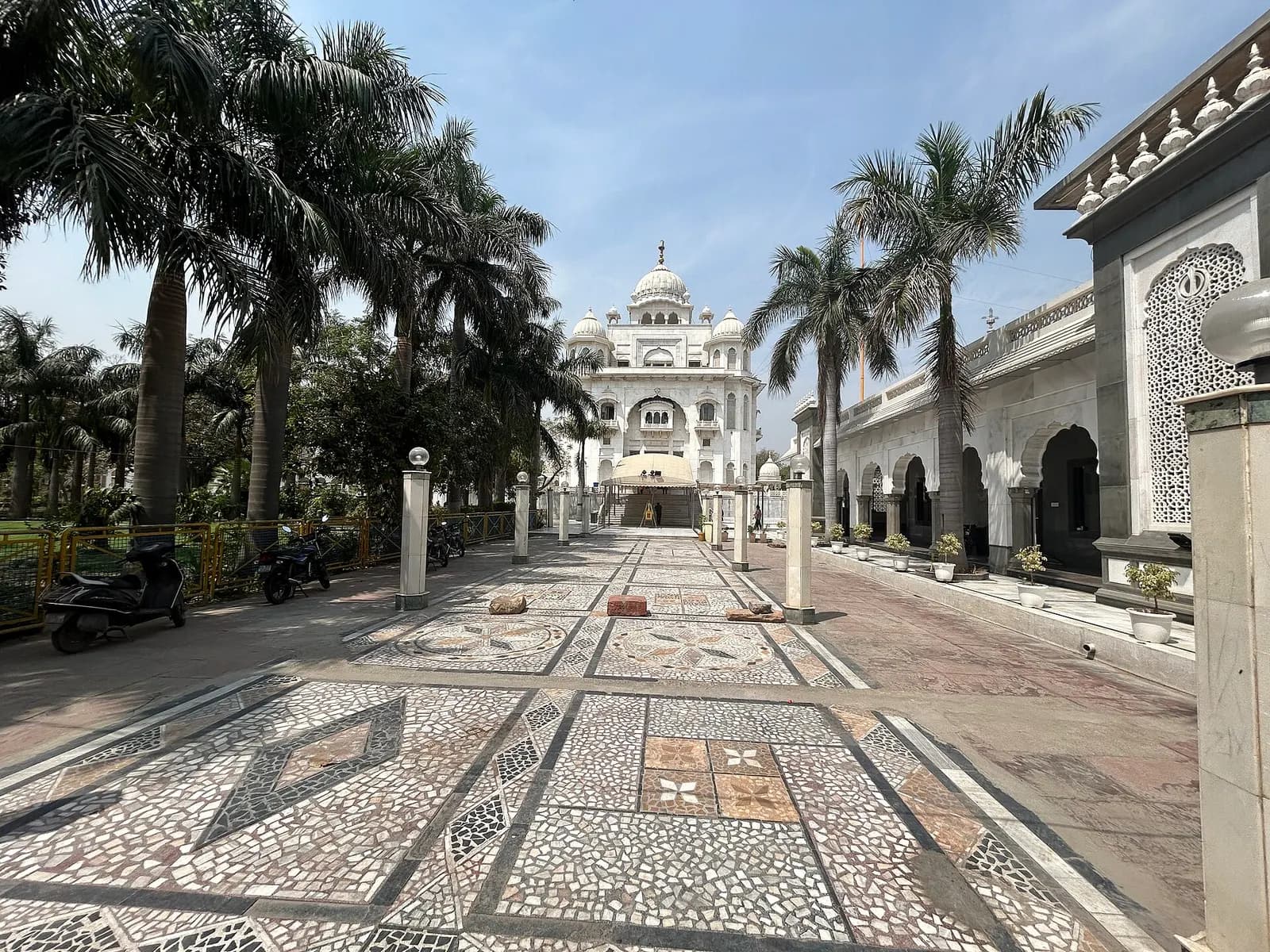
A visit to Rakab Ganj Sahib is a calm, dignified experience and knowing what to expect helps you settle into it. You approach down the quiet, tree-lined Pandit Pant Marg, leave your shoes and socks at the free counter, cover your head with a scarf and step onto the cool expanse of white marble. At once the contrast with the busy city and with the crowds of some other shrines, is striking: the courtyards are wide and uncrowded, the marble gleams and the air carries the sound of live Gurbani from the sanctum. Worshippers move about calmly, sit in reflection or share in the langar and there is space and quiet enough to simply be still, which is rare in central Delhi. Inside the sanctum, the Guru Granth Sahib is attended with reverence beneath the high dome and visitors of all faiths are welcome to pay their respects or observe quietly.
Most people spend time in the sanctum, walk the marble courtyards and the side gardens, perhaps sit a while to listen to the hymns and share or witness the langar. Because the shrine is so peaceful, many stay longer than they intended, drawn by the calm and the sense of history. There is no ticket, no queue and no rush; you enter freely and leave when you are ready. Many visitors, especially those who have found other Delhi shrines overwhelming, are struck by how serene and spacious this one is and by how moving its story becomes once they know it. Come in a quiet, respectful frame of mind, allow the peace to work on you and Rakab Ganj offers one of the most restful and meaningful half hours in the capital.
Guru Tegh Bahadur and his sacrifice
To appreciate Rakab Ganj fully, it helps to understand the figure at the centre of its story, Guru Tegh Bahadur, the ninth of the ten Sikh Gurus. In the 1670s, under the Mughal emperor Aurangzeb's policy of religious persecution, a group of Kashmiri Pandits facing forced conversion came to the Guru for help. He took up their cause, standing for the principle that every person has the right to follow their own faith, even though it was not his own community under threat. For this defence of religious freedom he was summoned to Delhi, imprisoned and, when he refused to abandon his stand or convert, executed in 1675. His martyrdom, in defence of the faith of others, is remembered as one of the great acts of principled sacrifice in Indian history and it earned him lasting reverence as a protector of the persecuted.
Rakab Ganj Sahib commemorates the final chapter of that story, the honouring of his body, while Sis Ganj marks the execution itself. Together the two shrines tell a complete tale of courage: the Guru's own sacrifice and the bravery of the disciples who ensured his remains were treated with dignity. Standing in the peaceful marble shrine knowing this history, that it marks the cremation of a man who died for the freedom of others, gives the visit its depth and its quiet power. It is a story that resonates far beyond the Sikh community and it is what lifts Rakab Ganj from a beautiful building to a place of real meaning.
Rakab Ganj Sahib timings and entry
Gurudwara Rakab Ganj Sahib is open to the public 24 hours a day, every day of the year and there is no entry fee of any kind; it is completely free for everyone, Indian and international visitors alike, as Sikh shrines are. Because it never closes, you can visit at any hour, though the early morning and the times of the Gurbani recitations are especially serene and uncrowded. The langar, too, serves all comers. The only things to prepare for are the simple rules of entry, covering your head, removing your shoes and socks and dressing modestly, all explained below, for which the gurudwara provides free facilities. There is nothing to pay, though voluntary donations towards the running of the shrine and the kitchen are welcomed. As always, treat these details as current at the time of writing and reconfirm if your plans depend on them.
Rules: head covering, shoes and dress
As an active and sacred place of worship, the gurudwara asks visitors to observe a few simple rules of respect and it provides what you need to follow them:
- Remove shoes and socks. Footwear and socks must be left at the managed free storage counter outside before you walk up the steps.
- Cover your head. Keeping your head covered at all times inside the perimeter is mandatory; free headscarves are available in baskets near the entrances.
- No caps or hats. Caps, beanies and brimmed hats are not acceptable as head covering; use a scarf instead.
- Dress modestly. Shoulders and knees should be covered, in keeping with a place of worship.
- Be respectful. Move quietly, do not point your feet at the scripture and follow the lead of worshippers.
The one point that catches some visitors out is that caps and hats are specifically banned as head covering, so plan to use a scarf, your own or one from the free baskets, rather than a cap. Observing these simple courtesies, all of which the gurudwara makes easy, lets you take part in the visit comfortably and respectfully, whatever your own faith.
Best time to visit Rakab Ganj Sahib
Because the gurudwara is open around the clock, you can visit at any time, but some hours are more rewarding than others. The early morning, around and after the dawn rituals and the times of the Gurbani hymn recitations are the most peaceful and atmospheric, when the marble is cool and the sanctum fills with music. As Rakab Ganj is generally uncrowded compared with other shrines, even the daytime is calm, which is part of its appeal, though weekends and major Sikh festivals naturally bring more visitors. In terms of season, the cooler months from October to March are the most comfortable for walking the open marble courtyards and gardens, as the summer sun on the marble can be strong. A winter morning, arriving early for the hymns and the quiet, is close to ideal. Our guide to the best time to visit Delhi sets out the seasons across the city in more detail.
How to reach Rakab Ganj Sahib (nearest metro)
Gurudwara Rakab Ganj Sahib stands on Pandit Pant Marg in the central institutional zone of New Delhi, near Parliament and facing the Central Secretariat and it is easy to reach. The best transit option is the Central Secretariat metro station, an interchange on the Yellow and Violet Lines, from which it is a brief, comfortable 8 to 10 minute walk down the shaded sidewalks of Pandit Pant Marg to the main gates. App cabs and autos can drop you nearby. Unusually for a central Delhi site, the complex also has a large, well-maintained outdoor lot offering free parking for around 150 vehicles, so arriving by car is genuinely practical here; you simply register your vehicle number at the guard post on the way in. Being so central, it slots neatly into a plan of the imperial quarter and a guided New Delhi tour can fold it in alongside the surrounding landmarks, while a broader Old Delhi tour covers the historic walled city where the related Sis Ganj shrine stands.
Places to visit near Rakab Ganj Sahib
Rakab Ganj Sahib sits in the ceremonial heart of New Delhi, so it is easy to pair with nearby sights. The grand avenues around Parliament and the Secretariat lead down to the ceremonial India Gate, a short distance away and the central ring holds a cluster of further sights within easy reach: the great circle of Connaught Place, the serene Bangla Sahib Gurudwara, the ancient stepwell of Agrasen ki Baoli, the astronomical Jantar Mantar and the much loved Pracheen Hanuman Mandir.
In Old Delhi, the related shrine of Sis Ganj Sahib stands on Chandni Chowk near the revered Shri Gauri Shankar Mandir, completing the story that Rakab Ganj begins. A little further out, the capital's great monuments are an easy ride away: the mighty Red Fort, the towering Qutub Minar, the serene Humayun's Tomb and the modern Lotus Temple and Akshardham. Together these make Rakab Ganj a serene anchor for a central Delhi day.
Rakab Ganj Sahib in your Delhi itinerary
For most visitors, Rakab Ganj Sahib works best as a peaceful stop of around an hour within a central Delhi circuit, especially for those who want a calm, reflective shrine away from the crowds and for anyone interested in Sikh history and the story of Guru Tegh Bahadur. It pairs naturally with the surrounding central sights and with the other Sikh shrines of the city and the free parking makes it easy to reach by car. A thoughtful plan is to visit Rakab Ganj for its peace and its story and then, on an Old Delhi day, see the related Sis Ganj Sahib in Chandni Chowk, so that you experience both halves of the Guru's martyrdom and cremation. Because it is quiet and uncrowded, it is a particularly good choice for a moment of calm between busier sights.
If Delhi is your gateway to the wider Golden Triangle, Rakab Ganj offers a moving introduction to Sikh history and to the values of courage, sacrifice and service, a serene counterpoint to the Mughal and colonial monuments nearby. Many of my guests are deeply moved by the story of Bhai Lakhi Shah Vanjara and by the peace of the marble shrine and it adds a reflective, human note to a trip before the journey on to Agra and Jaipur.
Travel tips for visiting Rakab Ganj Sahib
A few pointers make the visit smoother and more respectful:
- Cover your head with a scarf, not a cap or hat, which are not allowed; free scarves are provided.
- Remove shoes and socks at the free counter before going up the steps.
- Dress modestly, with shoulders and knees covered.
- Visit early or during the Gurbani for the most peaceful, atmospheric experience.
- Experience the langar, the free community meal and consider a small voluntary donation.
- Learn the story first, as knowing the sacrifice of Bhai Lakhi Shah Vanjara transforms the visit.
- Use the free parking if driving, registering your vehicle number at the guard post.
- Pair it with Sis Ganj in Old Delhi to see both sites of the Guru's martyrdom.
If you would like a local guide to build Rakab Ganj Sahib into a wider Delhi plan, message our team on WhatsApp at +91 7302265809 with your travel dates and group size and we will shape the day for you.
Is Rakab Ganj Sahib worth visiting?
Yes, especially for anyone seeking a peaceful shrine or interested in Sikh history. It is one of Delhi's most serene and significant gurudwaras, a grand marble complex carrying a profoundly moving story of devotion and sacrifice and its calm, spacious, uncrowded atmosphere makes it a genuine refuge compared with the busier shrines. It is free, open at all hours, welcoming to all and crowned by the warmth of its community kitchen and it sits conveniently in central Delhi with rare free parking. The honest note is that it is a place of quiet worship and reflection rather than a grand sightseeing spectacle, so it rewards an unhurried, respectful visit, ideally with some knowledge of its history, more than a quick photo stop. Approached that way, it is one of the most moving and restful places in the capital and I recommend it warmly to guests who value peace and meaning in a visit.
Plan your trip with us
At Experience My India, through our Delhi and Golden Triangle travel desk, we design unhurried, well paced trips that make room for serene, meaningful stops like Rakab Ganj Sahib, not just the headline monuments and we give a site like this the time and context it deserves. Whether you want a relaxed set of Delhi Agra tours or a full Golden Triangle route through Delhi, Agra and Jaipur, we plan around your pace, your interests and the right season, with local guides who know the story and the etiquette of the city's shrines. Share your dates and the kind of trip you have in mind through our enquiry page, tell us your group size and we will put together an honest, tailored plan rather than a rushed checklist.
Related guides
- Places to visit in Delhi, for the wider picture
- Hidden places to visit in Delhi, the city's quieter corners
- Nearby places to visit in Delhi, to extend your trip
Enquire Now
Ready to Explore
The Heart of Delhi?
Explore the Red Fort, Qutub Minar, Humayun's Tomb, and the vibrant streets of Old Delhi with our expert-guided premium tours of India's capital city.

Delhi
Premium Tour Package
Questions
Frequently asked questions
What are the timings of Gurudwara Rakab Ganj Sahib?
It is open 24 hours a day, every day, with no closing time. It is most peaceful in the early morning and during the Gurbani hymn recitations.
What is the entry fee for Rakab Ganj Sahib?
Which is the nearest metro station to Rakab Ganj Sahib?
Why is Gurudwara Rakab Ganj Sahib important?
What is the story of Bhai Lakhi Shah Vanjara?
Is there parking at Rakab Ganj Sahib?
What is the dress code at Rakab Ganj Sahib?
How is Rakab Ganj different from Bangla Sahib?
How is Rakab Ganj Sahib related to Sis Ganj Sahib?
Is Rakab Ganj Sahib worth visiting?
Explore more
Plan your Gurudwara Rakab Ganj Sahib trip with us

Interested in Gurudwara Rakab Ganj Sahib Delhi: Timings and Guide?
Chat with our travel team for a custom quote, or browse every package.
Related Attractions
9Ready to explore Gurudwara Rakab Ganj Sahib Delhi: Timings and Guide?
Book your private tour today and experience the magic of India's rich heritage.