Rashtrapati Bhavan and Kartavya Path Delhi: Tickets, Tours and Visitor Guide
Planning Rashtrapati Bhavan and Kartavya Path? Tour circuits, ticket booking, Amrit Udyan dates, the Change of Guard, free Kartavya Path and metro route.
In a Nutshell
“Kartavya Path, the grand boulevard from Rashtrapati Bhavan to India Gate, is free and open 24 hours, best in the evening. Rashtrapati Bhavan, the President's residence, can only be visited by prior online booking, in three circuits: the Main Building, the Museum and the seasonal Amrit Udyan gardens. The Main Building and Museum cost about ₹50 a circuit, Amrit Udyan is free when open. Delhi Agra Tour Packages, a unit of Experience My India, pairs the axis with the wider New Delhi sights.”
Rashtrapati Bhavan and Kartavya Path are the ceremonial spine of New Delhi, the long, grand axis that runs from the President's palace on Raisina Hill down to India Gate. It is the India you see on Republic Day, all sweeping lawns, domes and marching bands and for most of the year it is a serene place to walk in the evening. Seeing inside the palace itself, though, takes planning and that is where most visitors come unstuck. If you are organising a trip, Delhi Agra Tour Packages is where I set the capital's sights in a sensible order and this axis is the heart of any New Delhi day. It sits naturally on our Golden Triangle tour routes as the grand, open counterpoint to the crowded Mughal city.
I am Abhay Sharma, Delhi born and a Golden Triangle guide since 2015. Over 11 years I have taken more than 50,000 travellers around this city and this is the sight where a little advance knowledge makes the biggest difference. Kartavya Path is free and effortless, but Rashtrapati Bhavan needs booking days ahead, the gardens open only for a few weeks a year and the security is at the highest national level. This guide fixes all of that. You will get the real picture of what is free and what needs a ticket, how the three tour circuits work, when the Amrit Udyan gardens open, how the Change of Guard works and the practicalities that make the visit smooth. Dates, slots and ceremony timings shift, so treat the specifics as a guide and confirm on the official booking site.
At a glance
Here are the essentials before we go deeper.
| Detail | Information |
|---|---|
| What it is | The President's residence and the ceremonial axis of New Delhi |
| Location | President's Estate, Raisina Hill, New Delhi 110004 |
| Designed by | Edwin Lutyens and Herbert Baker |
| Kartavya Path | A 3.2 km boulevard from Rashtrapati Bhavan to India Gate |
| Kartavya Path entry | Free, open 24 hours |
| Palace entry | By prior online booking only, in three circuits |
| Nearest metro | Central Secretariat (Yellow and Violet Line interchange) |
| Best time | October to March, evenings for Kartavya Path |
Details
Kartavya Path
| Item | Detail |
|---|---|
| Timings | Open 24 hours, every day |
| Entry | Free, pedestrian friendly with paved walkways |
| Highlight | The symmetrical axis view of Raisina Hill |
| Best hours | About 6:00 PM to 9:00 PM for cool air and the evening lighting |
Details
Rashtrapati Bhavan tour circuits (book online)
| Circuit | What you see | Days | Approx fee |
|---|---|---|---|
| 1. Main Building | Durbar Hall, Ashoka Hall, state rooms, central dome | Thursday to Sunday | About ₹50 |
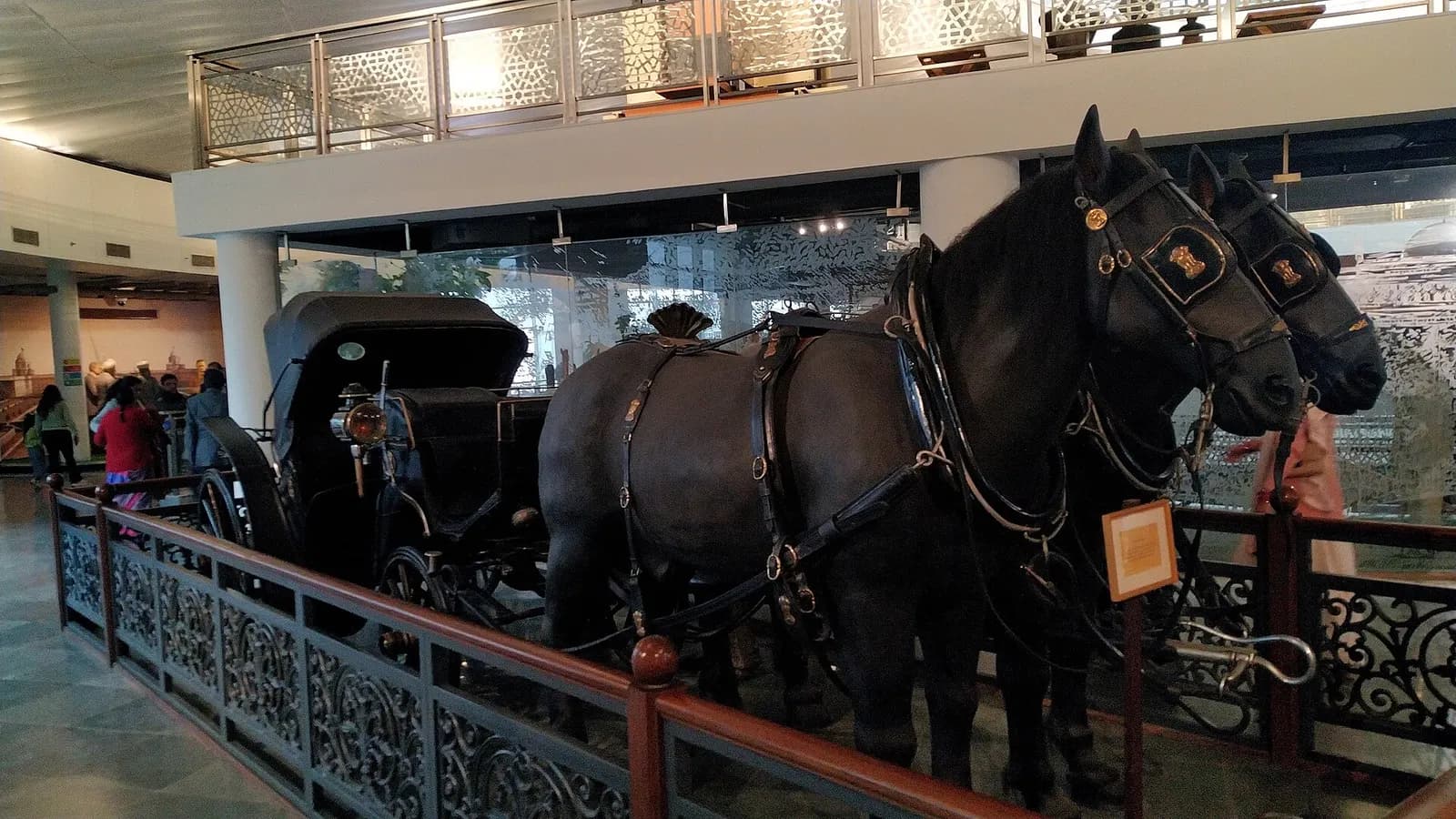
| 2. Museum (RBMC) | Presidential gifts, the buggy, interactive history | Tuesday to Sunday, closed Monday | About ₹50 |
| 3. Amrit Udyan | The famous gardens, roses and tulips | Seasonal only, closed Monday | Free when open |
Details
How to reach
| Mode | Detail |
|---|---|
| Nearest metro | Central Secretariat, exit Gate 5 or 6 for Kartavya Path |
| Alternative metro | Lok Kalyan Marg or Shivaji Stadium on the Airport Line |
| For palace tours | A shuttle runs from Central Secretariat to the entry gate |
| Note | Carry a valid government photo ID for any booked tour |
What are Rashtrapati Bhavan and Kartavya Path?
Rashtrapati Bhavan is the official residence of the President of India, a vast palace of 340 rooms set on Raisina Hill at the western end of New Delhi's ceremonial axis. Kartavya Path, formerly called Rajpath, is the grand 3.2 km boulevard that runs dead straight from the palace down to India Gate, flanked by the Secretariat's North and South Blocks and by long lawns and water channels. Together they form the monumental heart of Lutyens' New Delhi, the backdrop to the Republic Day parade and the single most important ceremonial space in the country.
For a traveller, the two parts offer very different experiences. Kartavya Path is free, open and relaxed, a place to stroll in the evening with the city at leisure around you and the great buildings floodlit. Rashtrapati Bhavan is the opposite, a tightly controlled palace you can only enter by booking ahead, where the reward is a glimpse inside one of the most important buildings in India. Seeing both, the open axis and the palace behind it, gives you the full picture and it belongs on any serious list of things to do in Delhi, close to India Gate at the other end of the same avenue.
Who designed Rashtrapati Bhavan and when?
Rashtrapati Bhavan and the whole ceremonial city around it were designed by the British architects Sir Edwin Lutyens and Herbert Baker, after the decision in 1911 to move the capital of British India from Calcutta to Delhi. Lutyens led the design of the palace, then called Viceroy's House, while Baker designed the flanking Secretariat blocks and the new imperial city was formally inaugurated in 1931. After independence in 1947 the building became the residence of the head of state and in time took its present name, Rashtrapati Bhavan, meaning the President's House.
The design was a deliberate blend, classical European planning fused with Indian architectural elements, from the great central dome inspired in part by the Buddhist stupa to the chhatris, jaalis and chhajjas drawn from Mughal and Rajput building. That fusion is the key to appreciating it, because the palace was meant to project both imperial grandeur and a connection to Indian tradition. It is of a piece with the rest of Lutyens' Delhi, the same hand that shaped the avenues you walk between here and India Gate and understanding it as one planned city rather than separate monuments is what makes the axis so impressive.
What is Kartavya Path and how do you visit it?
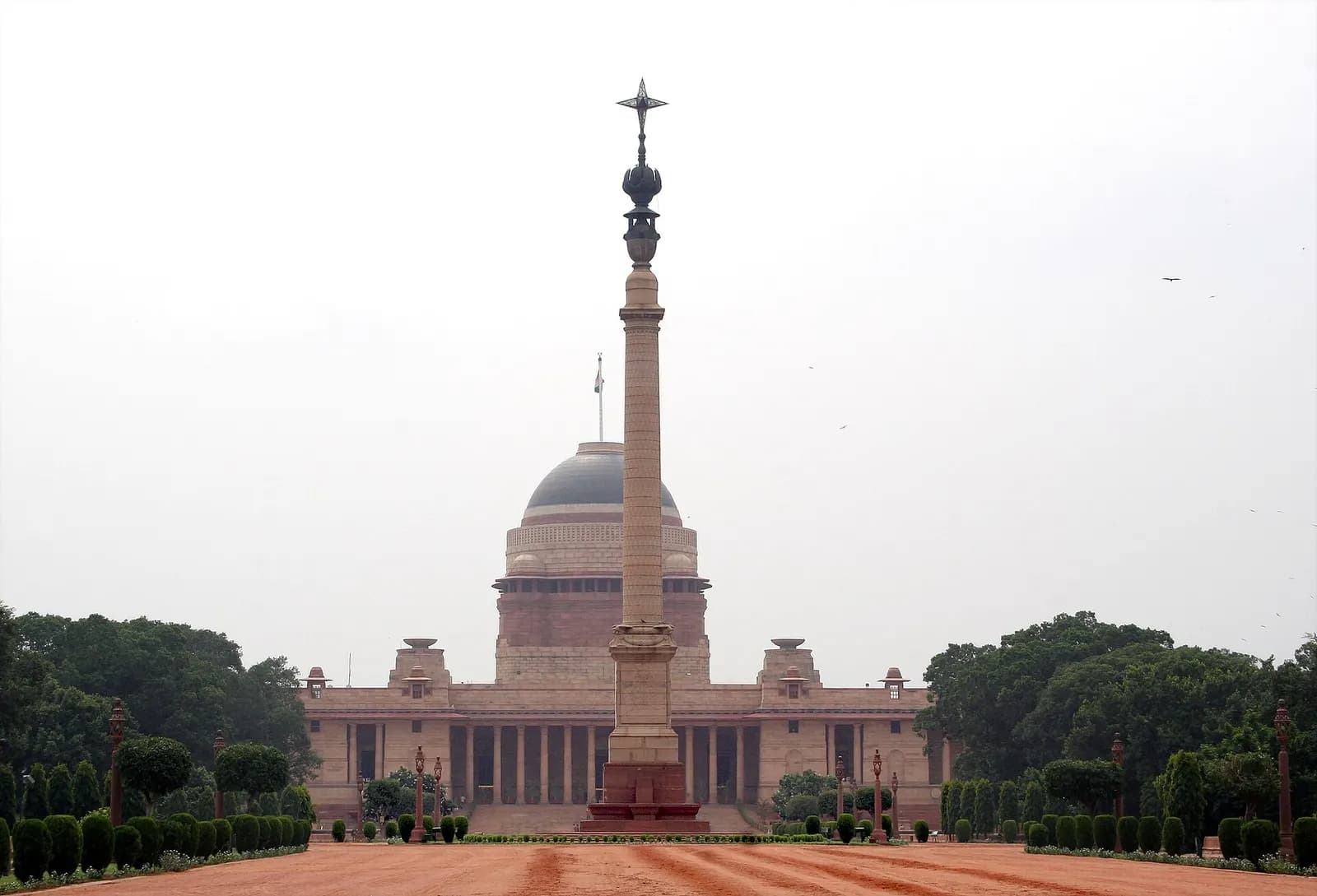
Kartavya Path is the easy, free, open half of this sight and for most visitors it is the part they actually experience. The 3.2 km boulevard runs straight from Rashtrapati Bhavan on Raisina Hill to India Gate and it is open to pedestrians around the clock, with no ticket and beautifully paved walkways, stepped gardens, canals and underpasses following a recent redevelopment. Standing on it near Vijay Chowk gives you the classic, symmetrical axis view, the palace dome framed between the North and South Blocks, one of the finest urban vistas in India.
The best time to come is the evening, roughly 6:00 PM to 9:00 PM, when the air is cooler, the plazas are clean and relaxed and architectural lighting illuminates the whole stretch, with the canal fountains glowing in colour. It is a favourite evening walk for Delhi families and it pairs perfectly with a visit to India Gate at the far end, since the two are simply opposite ends of the same avenue. You can happily enjoy Kartavya Path without booking anything at all, which makes it one of the most accessible great sights in the capital.
How do you visit inside Rashtrapati Bhavan?
This is where planning matters, because entry into the Rashtrapati Bhavan estate is strictly regulated and requires prior online booking through the official presidential website. You cannot simply turn up. The visit is divided into three distinct circuits and you book the one or ones, you want.
Circuit 1 is the Main Building, the grand heart of the palace, taking you through the magnificent Durbar Hall, the Ashoka Hall, the state drawing rooms and the central dome. It generally runs Thursday to Sunday, with slots between about 9:00 AM and 4:00 PM and it is closed on gazetted holidays. Circuit 2 is the Rashtrapati Bhavan Museum, a modern museum set in the old stables, displaying rare presidential gifts, the historic ceremonial buggy, interactive timelines and the story of India's freedom struggle, open Tuesday to Sunday and closed on Mondays, with slots between about 9:30 AM and 5:00 PM. Circuit 3 is the Amrit Udyan gardens, covered in its own section below. The Main Building and Museum each cost a small registration fee, around ₹50 per person, with free entry for young children and a valid government photo ID is mandatory for both booking and entry. Book ahead, because spot booking counters are very limited and frequently sold out.
What are the highlights inside the palace?
If you do manage to book the Main Building circuit, a few spaces stand out and are worth knowing in advance. The grandest is the Durbar Hall, a vast circular chamber beneath the central dome, where the most important state ceremonies take place, including the swearing in of governments. Its scale and deliberate restraint are genuinely awe inspiring. Nearby is the Ashoka Hall originally a ballroom, famous for its richly painted ceiling and used for ceremonial events and the presentation of credentials by foreign ambassadors.
Beyond these, the circuit takes in the state drawing rooms, the banquet hall where formal state dinners are held and the architecture of the central block itself, with its play of marble, colour and filtered light. Even the approach matters, the climb up Raisina Hill between the Secretariat blocks toward the great dome is part of the experience. Because photography is not allowed inside the Main Building, you will not be able to capture these rooms, which in a way makes the visit more memorable, since you simply have to be present and take them in. It is a rare chance to stand inside the working heart of the Indian state and for history minded visitors it is the single best reason to go through the booking effort.
What is the Amrit Udyan, the Mughal Gardens?
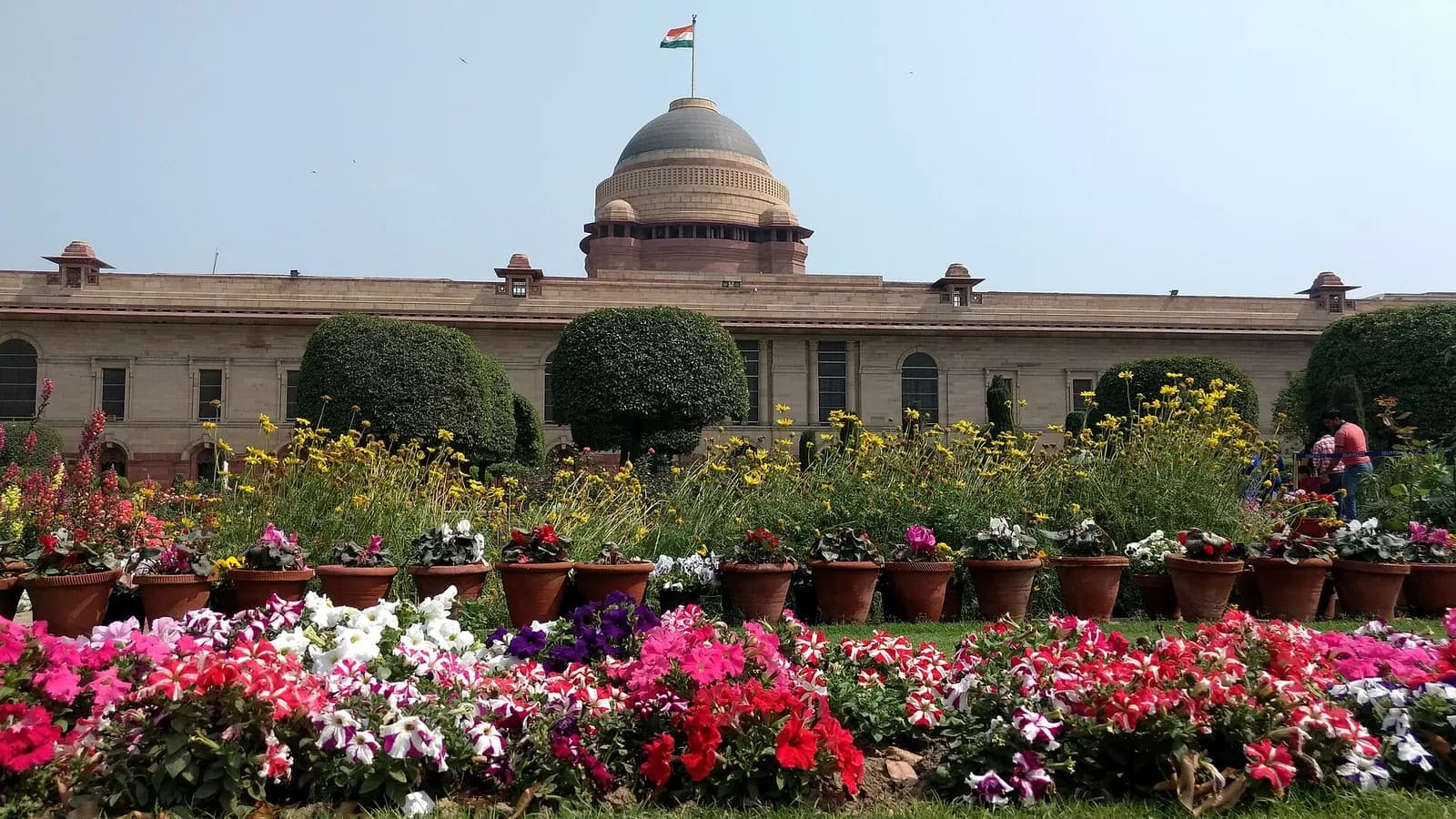
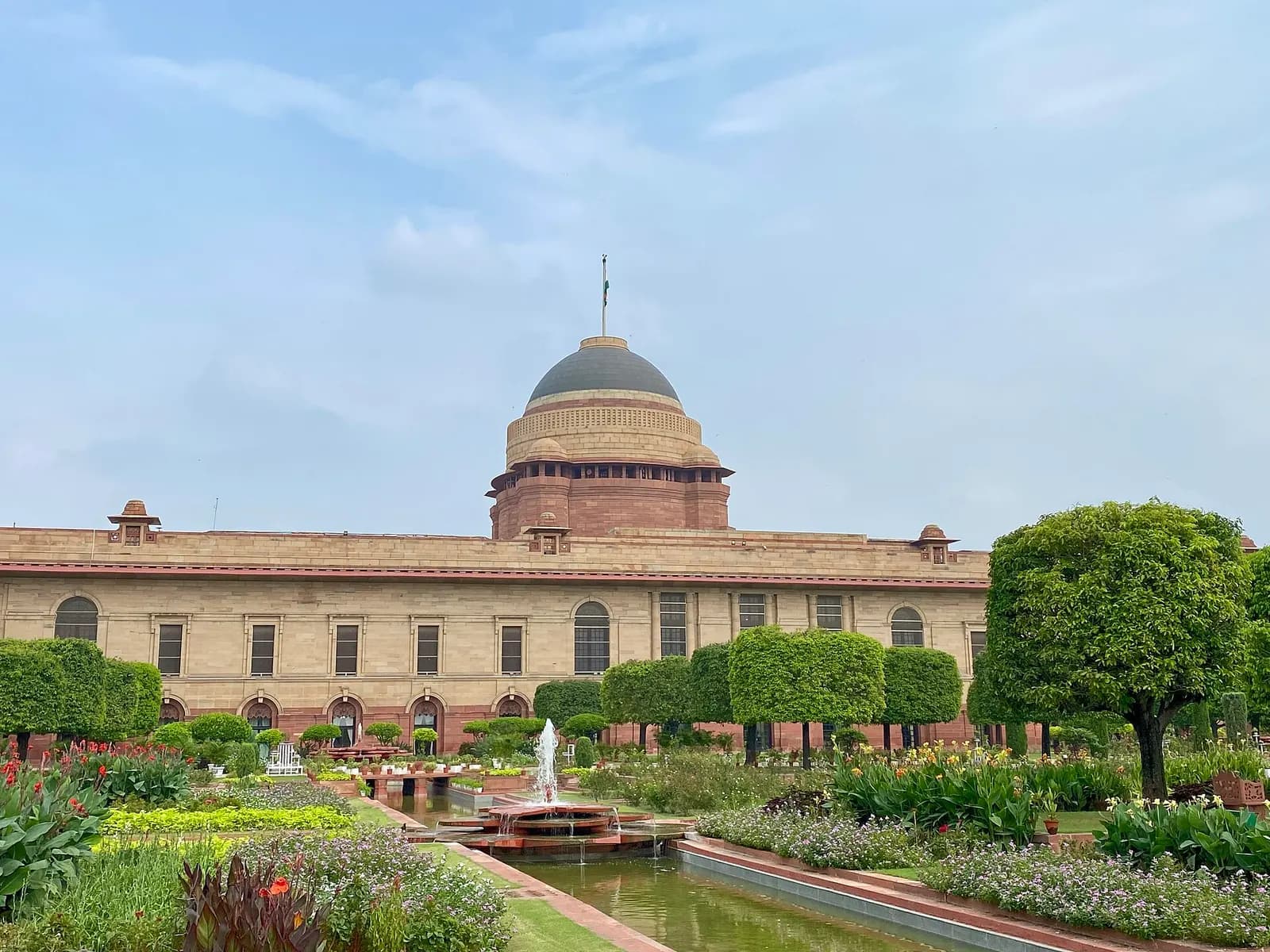
The Amrit Udyan, long known as the Mughal Gardens, is the spectacular garden behind the palace, a blend of Mughal and English landscaping famous for its rare roses, tulips and other seasonal blooms, its terraces and its musical fountains. It is the third tour circuit and the catch is that it opens to the general public only for limited seasons each year, when the flowers are at their peak. In 2026 the main winter season runs from early February to the end of March and there is typically a shorter summer annuals window around August and September, though the exact dates change each year and are announced by the President's Estate.
Entry to Amrit Udyan is completely free, but online booking is mandatory, with self service registration kiosks usually set up near the entry gate for those who arrive without a slot. The garden is closed on Mondays for maintenance and it generally opens from about 10:00 AM to 6:00 PM on visiting days, with the last entry in the late afternoon. Because it is so popular and open for only a few weeks, weekend slots fill fast, so book early if your trip coincides with the season. If it does, it is one of the loveliest and most peaceful experiences in the capital, a world away from the city outside the walls and a rare chance to see inside the President's own gardens.
What is the Change of Guard ceremony?
The Change of Guard is a stirring military tradition held at the Forecourt of Rashtrapati Bhavan, where the President's Bodyguard change shifts in full ceremonial regalia, accompanied by an army band. In its current format it is a proper spectacle and it has become a popular free thing to witness, though it does require a little organising. It generally takes place on Saturdays at the Forecourt, with the exact timing shifting through the year with the seasons, earlier in the hotter months and later in winter, so you must check the current slot before planning around it.
As with the palace tours, you need to book online in advance through the official website under the Change of Guard section, carry a valid photo ID and note that a small registration charge now applies per visitor. The ceremony is occasionally suspended, for instance during the rehearsal weeks before Republic Day in January, so always confirm it is running on your date. Schedules and formats for this ceremony have changed more than once in recent years, so treat any timing you read elsewhere, including a Sunday slot, as something to verify on the official site rather than assume. When it runs, it is a genuinely memorable sight and well worth the small effort to book.
What is the architecture of Rashtrapati Bhavan like?
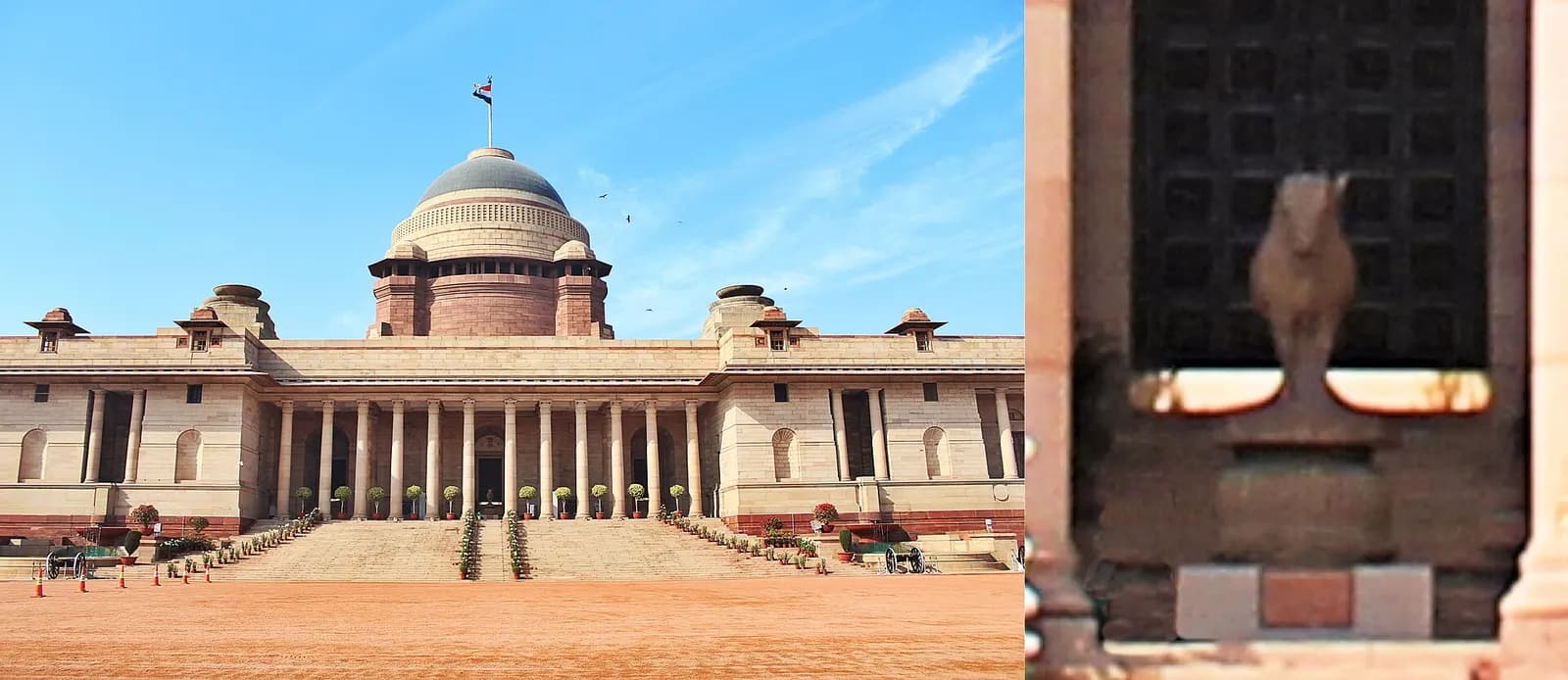
Rashtrapati Bhavan is one of the grandest residences in the world and the architecture is designed to impress from a distance and reward a closer look. The palace sits at the top of Raisina Hill, approached up a gentle rise flanked by the Secretariat's North and South Blocks, so the whole composition climbs toward the great central dome that crowns the building. In the forecourt stands the Jaipur Column, a tall freestanding pillar and the symmetry of the layout, the palace framed between the two Secretariat blocks, is what gives the axis its power.
The style is a confident fusion. The overall planning and the classical proportions are European, but Lutyens wove in Indian elements throughout, the dome drawing on the form of a Buddhist stupa and chhatris, carved screens and deep eaves borrowed from Mughal and Rajput architecture to suit the Delhi light and climate. The result is a building that feels both monumental and rooted in India and that same architectural language runs through the whole of Lutyens' New Delhi. Seeing it after the older monuments like the Qutub Minar and Humayun's Tomb completes the city's long architectural story, right up to the twentieth century.
What are the security rules at Rashtrapati Bhavan?
Security at the President's Estate is at the highest national level, so come prepared and travel light. A long list of items is banned inside, including large bags, backpacks and luggage, umbrellas, outside food and water bottles, cigarettes and of course any weapons. Mobile phones are generally permitted but must be kept on silent, while photography is strictly controlled and cameras are not allowed inside the Main Building at all. Photography inside Circuit 1 is prohibited except where specifically permitted in certain exterior courtyards.
A free baggage cloakroom is available at the entry gates to store the items you cannot take in, so you can deposit bags and forbidden belongings before security screening, but it is far easier simply to arrive with as little as possible. A valid government issued photo ID, such as a passport, is mandatory for both booking and entry and the name on the booking must match the ID. Build in extra time for the security checks, which are thorough and follow the instructions of the staff, who are professional and used to visitors. None of this should put you off, it is simply the reality of visiting a working head of state's residence and the access it grants is genuinely special.
When is the best time to visit?
Across the year, October to March is the comfortable season for this largely outdoor sight, when walking the axis and the estate is a pleasure rather than a trial. For Kartavya Path specifically, the evening is magical, roughly 6:00 PM to 9:00 PM, when the lighting comes on and the heat has gone, so that is when I send people for the walk. For the palace tours, the morning and midday slots are the only option, so you build those around the booking you can get.
If seeing the gardens matters to you, the timing of your whole trip may hinge on the Amrit Udyan season, usually a few weeks in February and March, so check the dates before you lock in travel if the gardens are a priority. The Change of Guard adds a Saturday morning option for those who book it. Put simply, come in the cooler months, walk Kartavya Path in the evening and if the gardens or a palace circuit are open and you can book, add them in the daytime. For the wider question of when to visit the city, see our guide to the best time to visit Delhi.
How much time do you need and is it worth visiting?
For Kartavya Path alone, allow an hour or two for an unhurried evening stroll along the axis, longer if you walk the full stretch to India Gate. For a palace circuit, allow a couple of hours including the security and the tour itself and for the Amrit Udyan gardens, a relaxed hour or two. A visitor who books a circuit and also walks the axis is looking at a half day in this part of the city.
Is it worth it? The free Kartavya Path walk is an easy yes, one of the finest evening experiences in Delhi and completely accessible. The ticketed palace circuits are worth it for anyone interested in the country's history and architecture and the Amrit Udyan, if your trip hits the season, is a rare treat. The only people who come away disappointed are those who expected to walk into the palace on the day and could not, which is exactly the mistake this guide is written to prevent. Plan ahead and the President's Estate is one of the most rewarding and distinctive sights in the capital and for many visitors it quietly becomes a highlight of the whole Delhi trip that they did not see coming.
What is there to see near Rashtrapati Bhavan and Kartavya Path?
This is the most monumental part of the city, so the surroundings are rich. At the far end of the axis stands India Gate, the war memorial arch, with the National War Memorial behind it and the whole walk between the two is the experience. The National Museum, with one of the country's finest collections, is close by and the government buildings of Raisina Hill line the route.
The wider neighbourhood adds plenty more. The colonial shopping circle of Connaught Place is a short ride away, the astronomical instruments of Jantar Mantar are nearby and the antique lanes of Sunder Nagar market and the lovely tombs of Lodhi Garden are an easy hop. For a complete change of pace, the serene Lotus Temple and the Mughal heart of Old Delhi around the Red Fort round out a fuller Delhi plan. Together these make the ceremonial axis the natural hub of a full New Delhi day.
How does Rashtrapati Bhavan fit into a Delhi or Golden Triangle itinerary?
For most visitors this axis is the centrepiece of a New Delhi day, combined with India Gate, the museums and the imperial avenues, with an evening walk along Kartavya Path as the highlight. If you have booked a palace circuit or the gardens, those slot into the daytime and the free evening walk rounds off the day. It is the open, grand, planned side of the city, a deliberate contrast to the dense Mughal lanes of Old Delhi.
If Delhi is your gateway to the wider Golden Triangle, the ceremonial axis is a fine way to feel the modern capital before you head south to the Mughal monuments of Agra. Many of my guests spend a New Delhi evening here, then travel to Agra the next morning for an early sunrise Taj Mahal tour and the Taj Mahal itself. Delhi for its sweep from the ancient to the imperial, Agra for its masterpiece and Jaipur for Rajasthan, tied into one trip, is the whole idea behind how we plan routes and a dedicated New Delhi tour is the easiest way to see this axis and the Lutyens city well, with a day or two more for easy day trips within 50 km.
Travel tips for visiting Rashtrapati Bhavan and Kartavya Path
A few pointers make the visit smooth. Walk Kartavya Path in the evening, around 6:00 PM to 9:00 PM, for the cool air and the lighting and remember it is free and needs no booking at all. For anything inside the palace, book online well ahead through the official presidential website, carry the government photo ID that matches your booking and arrive early for the thorough security. Travel light, since large bags, umbrellas, food and water bottles are banned and only a free cloakroom will hold them and keep your phone on silent, with no photography inside the Main Building. If the gardens matter to you, check the Amrit Udyan season before you plan your dates and if you want the Change of Guard, confirm the current Saturday timing and book your slot. Use the Central Secretariat metro, allow more time than you think for the checks and treat every timing as something to verify on the official site, since this is the one Delhi sight where schedules genuinely change. Get the planning right, though and few places give you a deeper sense of how modern India presents itself to the world, from the open sweep of the illuminated axis in the evening to the quiet grandeur behind the palace gates.
Want the ceremonial heart of New Delhi planned properly, bookings and all? Message our team on WhatsApp at +91 7302265809 and we will build it into a Delhi itinerary that flows.
Plan your trip with us
Rashtrapati Bhavan is the one Delhi sight where planning really pays, from the advance bookings to the garden season to the evening light on Kartavya Path. At Experience My India we design trips that get the timing and the logistics right, so you walk the axis when it is at its best and, where possible, see inside. Whether you want a focused New Delhi evening or a full day across the capital, our Delhi Agra tours suit every style of traveller and our wider Golden Triangle tours carry the journey south to Agra and Jaipur. Tell us your travel dates and group size and we will shape a plan around you, with a licensed guide who brings the Lutyens city to life.
Related guides
Keep planning with these hand picked reads from our team:
- Important monuments of Delhi, a fuller rundown of the city's historic sites
- Shopping in Delhi, where to shop from old bazaars to modern malls
- Akshardham, the vast modern temple complex with its own evening show
Enquire Now
Ready to Explore
The Heart of Delhi?
Explore the Red Fort, Qutub Minar, Humayun's Tomb, and the vibrant streets of Old Delhi with our expert-guided premium tours of India's capital city.

Delhi
Premium Tour Package
Questions
Frequently asked questions
Is Kartavya Path free to visit?
Yes. Kartavya Path, the boulevard from Rashtrapati Bhavan to India Gate, is completely free and open 24 hours, with no booking required. It is best in the evening.
How do you book a Rashtrapati Bhavan tour?
What is the Rashtrapati Bhavan ticket price?
What are the three Rashtrapati Bhavan tour circuits?
When is the Amrit Udyan open in 2026?
When is the Change of Guard ceremony?
Who designed Rashtrapati Bhavan?
Which is the nearest metro station?
Are cameras allowed inside Rashtrapati Bhavan?
What items are banned inside Rashtrapati Bhavan?
Is Rashtrapati Bhavan worth visiting?
Explore more
Plan your Rashtrapati Bhavan and Kartavya Path trip with us

Photo credits
Photos from Wikimedia Commons, used under their licences:
- Photo 1 by This image was produced by me, David Castor (user:dcastor). The pictures I submit to the Wikipedia Project are released , Public domain
- Photo 2 by Ronakshah1990, CC BY-SA 4.0
- Photo 3 by Anita Mary P X, CC BY-SA 4.0
- Photo 4 by Tamjeed Ahmed, CC BY-SA 4.0
- Photo 5 by Pur 0 0, CC0
Interested in Rashtrapati Bhavan and Kartavya Path Delhi: Tickets, Tours and Visitor Guide?
Chat with our travel team for a custom quote, or browse every package.
Related Attractions
9Ready to explore Rashtrapati Bhavan and Kartavya Path Delhi: Tickets, Tours and Visitor Guide?
Book your private tour today and experience the magic of India's rich heritage.