Roshanara Bagh, North Delhi: History, the Tomb and Guide
Visiting Roshanara Bagh in North Delhi, the Mughal garden and tomb of Roshanara Begum? Its history, the open-soil grave, the cricket club, timings and metro.
In a Nutshell
“Roshanara Bagh is a sprawling 17th-century Mughal garden in North Delhi, built around 1650 by Princess Roshanara Begum, a daughter of Shah Jahan, as her country pleasure garden and, later, her tomb. At its heart stands her graceful baradari pavilion and her unusual open-to-the-sky grave, set in a classic Mughal charbagh. The garden is also, remarkably, the birthplace of Indian cricket administration, where the framework of the BCCI was drawn up at the Roshanara Club. Today it is a free public green space and a winter haven for migratory birds. It features on our North Delhi heritage tours, run by a unit of Experience My India.”
Roshanara Bagh is one of the most historically rich and least-visited green spaces in Delhi, a vast Mughal pleasure garden that is at once the resting place of one of the most powerful and controversial royal women of the empire and, improbably, the cradle of Indian cricket administration. For the traveller drawn to Mughal history, garden design, offbeat heritage or birdwatching, it is a rewarding and peaceful discovery. Our team at Delhi Agra Tour Packages is glad to include it for guests who enjoy the quieter, storied corners of the city and it adds a serene, scholarly depth to a wider Golden Triangle tour through the capital.
I am Abhay Sharma, Delhi born and a Golden Triangle guide since 2015 and Roshanara Bagh is a place I love to bring curious guests, because few gardens hold so much history in one green sweep: the dramatic life of a brilliant and ruthless Mughal princess, her beautiful and unusual open-air tomb and the astonishing fact that Indian cricket's governing body was born here. This guide gathers everything I would tell a visitor beforehand, checked against current information, including the history, the tomb, the cricket legacy, the garden today and the timings and directions.
Details
Roshanara Bagh at a glance
| Detail | Information |
|---|---|
| What it is | A 17th-century Mughal pleasure garden and tomb |
| Built | Around 1650, by Princess Roshanara Begum |
| Buried here | Roshanara Begum, daughter of Shah Jahan |
| Location | Roshanara Road, Shakti Nagar, North Delhi |
| Also famous for | Birthplace of the BCCI, at the Roshanara Club |
| Nearest metro | Pratap Nagar (Red Line) |
| Entry | Free |
| Time needed | 1 to 2 hours |
Roshanara Bagh timings
| Detail | Information |
|---|---|
| Open | Every day |
| Hours | About 5:00 AM to 7:00 PM |
| Best time | Early mornings for peace; winter for the birds |
Roshanara Bagh is open every day, generally from around 5:00 AM to 7:00 PM. Early mornings are ideal for peaceful walks, while afternoons draw local sports enthusiasts and families and the winter months bring the migratory birds. These timings are current at the time of writing and can vary, so reconfirm before a special trip.
Entry fee
| Visitor | Fee |
|---|---|
| All visitors | Free; photography also free |
How to reach Roshanara Bagh
| From | Route |
|---|---|
| Pratap Nagar metro (Red Line) | Nearest station, about 0.5 km, a short walk or e-rickshaw |
| Pul Bangash metro (Red Line) | An alternative, about 1.8 km away |
| Near Kamla Nagar and Delhi University North Campus | A short ride from these landmarks |
| By car | Municipal parking is available near the main gates |
What is Roshanara Bagh?
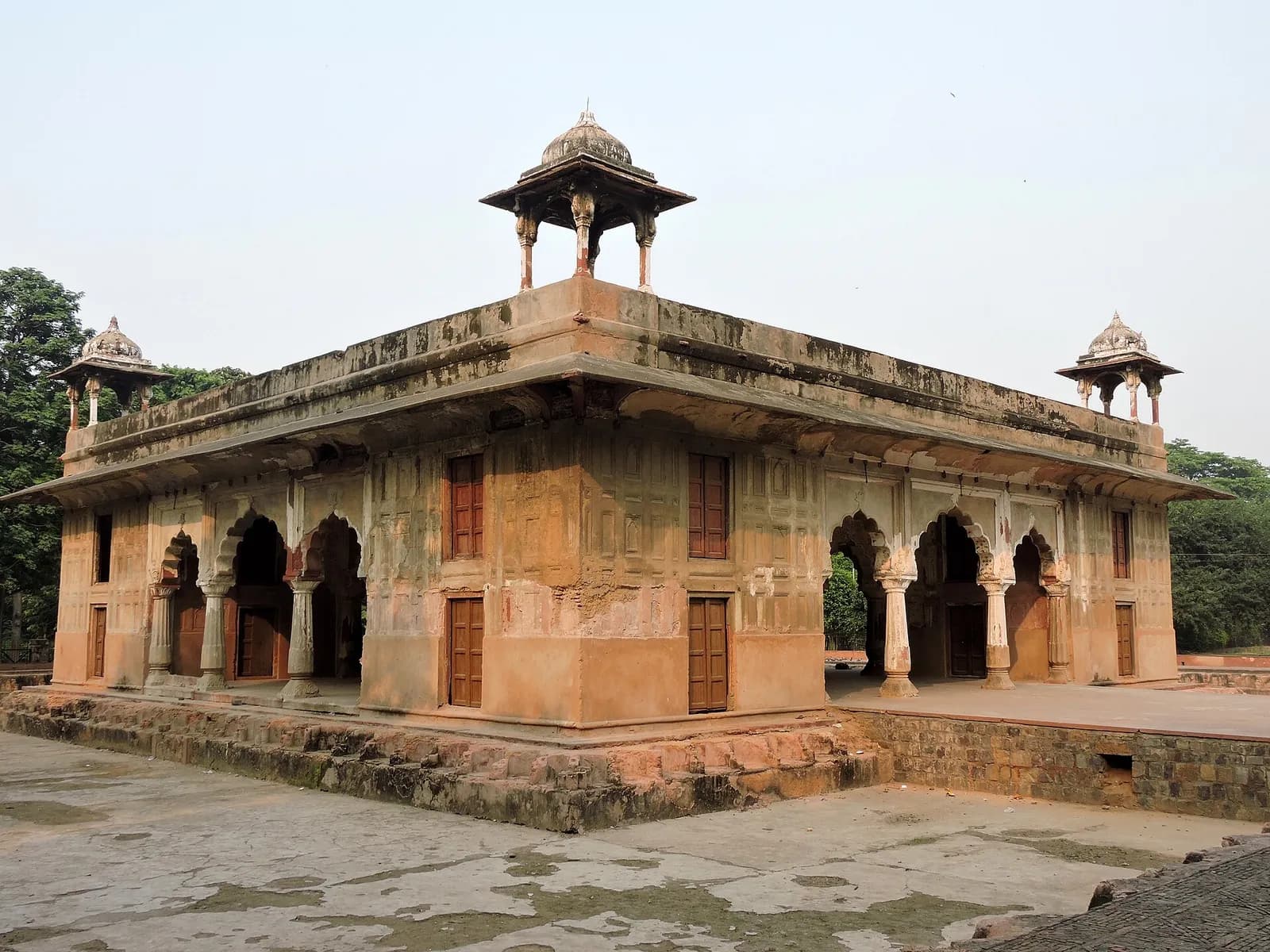
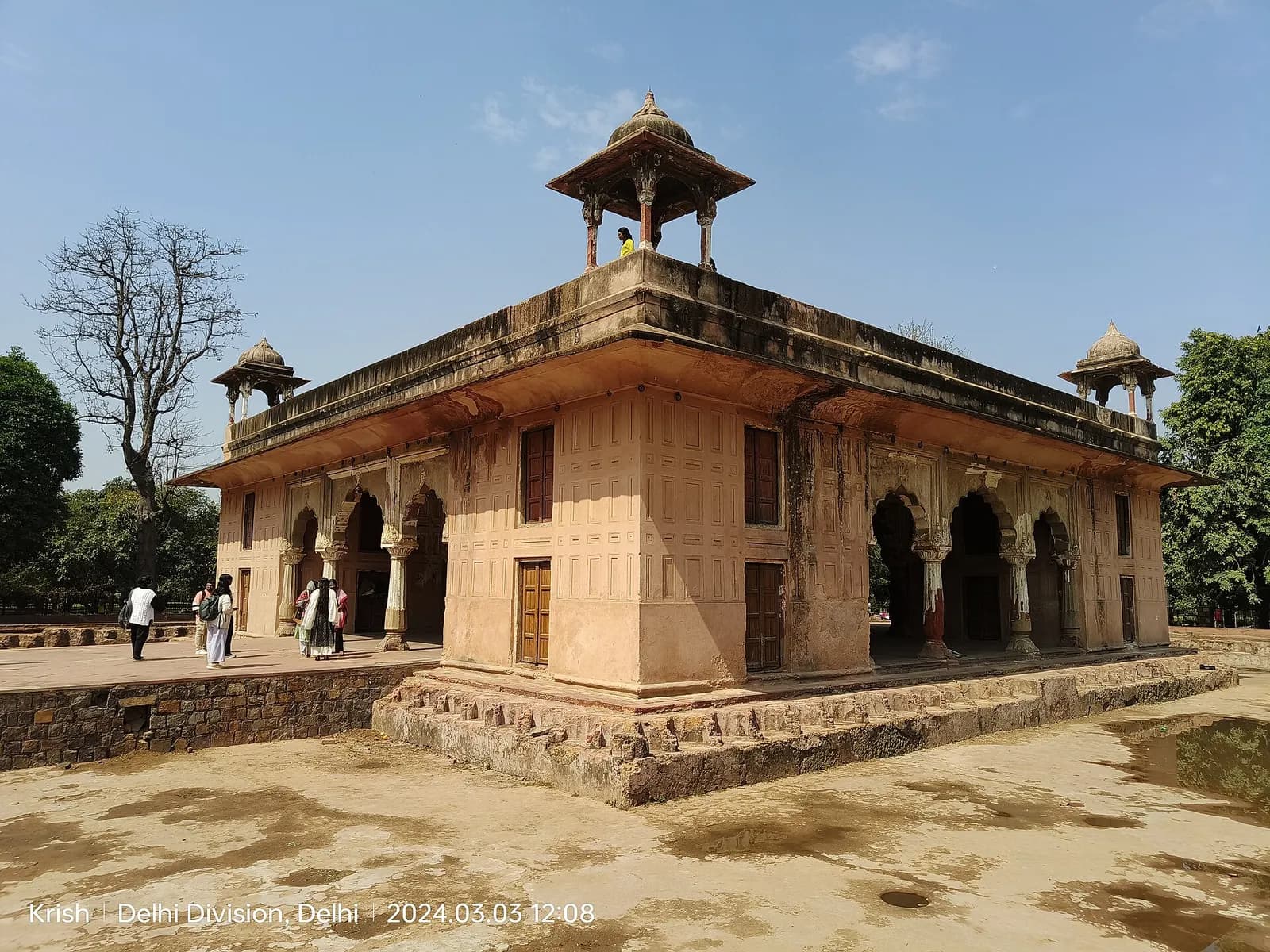
Roshanara Bagh is a sprawling 57-acre Mughal-era garden in North Delhi, built in the mid-17th century by and for Princess Roshanara Begum, a daughter of the emperor Shah Jahan, as her country pleasure garden and ultimately her burial place. It holds a unique position in the city's heritage, for it is at once the resting place of one of the most powerful, brilliant and ruthless royal women of the Mughal empire, a fine surviving example of Mughal garden and tomb design and, remarkably, the birthplace of Indian cricket administration. At its heart stands Roshanara Begum's elegant baradari pavilion and her striking open-to-the-sky grave, set in a classic Mughal charbagh layout, the only original 17th-century monument to survive intact in the garden. Around it spreads a vast public green space that today serves as a city oasis, a winter sanctuary for migratory birds and a place of local recreation. Protected as a heritage site and free to enter, Roshanara Bagh uniquely bridges imperial Mughal landscape design with India's modern sporting legacy and for the visitor it is one of the most layered and rewarding hidden green spaces in Delhi.
Several things make it special and they are worth drawing out:
- A Mughal princess's garden and tomb. Built around 1650 by Roshanara Begum, daughter of Shah Jahan, as her pleasure garden and resting place.
- A dramatic royal story. The burial place of a brilliant political tactician who helped Aurangzeb to the throne and later fell from grace.
- An unusual open-air grave. Her tomb breaks from grand marble domes for a simple grave open to the sky, in the Sufi tradition.
- The birthplace of the BCCI. The Roshanara Club here is recognised as the cradle of India's national cricket governing body.
- A green and avian oasis. A vast public garden and a winter haven for hundreds of migratory birds.
It is one of the most rewarding of the hidden places to visit in Delhi and a fascinating entry among the offbeat things to do in Delhi.
History of Roshanara Bagh and the princess
The history of Roshanara Bagh is inseparable from the dramatic life of the princess who built it, one of the most formidable women of the Mughal age and knowing her story gives the garden its full meaning. Roshanara Begum was a central figure in one of the great power struggles of Indian history:
- A daughter of Shah Jahan. The garden was commissioned around 1650 by Princess Roshanara Begum, the second daughter of the emperor Shah Jahan and empress Mumtaz Mahal and younger sister of Princess Jahanara and Prince Dara Shikoh.
- The master tactician. During the bloody war of succession for the Mughal throne in the late 1650s, while her sister Jahanara backed the crown prince Dara Shikoh, Roshanara allied herself with her younger brother Aurangzeb, acting as his agent within the palace and, by tradition, warning him of a plot against his life, helping secure his path to the throne.
- Rise to power. A grateful Aurangzeb rewarded her richly, declared her Padshah Begum, the First Lady of the Empire and for a time she wielded great influence as a leading figure of the state.
- Fall from grace. Her independent lifestyle, political interference and accusations of corruption eventually estranged her from the strictly orthodox emperor, who around the late 1660s stripped her of her powers and removed her from the court.
- Banishment and death. Roshanara retired to her walled country garden in North Delhi to lead a secluded life away from the politics of the Red Fort and she died in 1671, historical accounts differing on whether by natural illness or otherwise and was buried at the very centre of her favourite garden.
This history makes Roshanara Bagh far more than a pleasant park: it is the personal monument of a woman who rose to be among the most powerful figures in the empire and then fell from favour, retreating to the garden she had built and choosing it as her final resting place. The contrast between her dramatic, often ruthless political career and the serene garden where she spent her last years and lies buried is deeply poignant. For the visitor, knowing the story of Roshanara Begum, a brilliant and controversial princess at the heart of the Mughal power struggle, transforms a walk in the garden into an encounter with one of the most compelling lives of the age.
The tomb of Roshanara Begum
At the heart of the garden stands the one original 17th-century monument to survive intact, the tomb of Roshanara Begum and it is both beautiful and unusual, so it repays close attention. The tomb reflects both the refined taste of the late Shah Jahan era and a deliberate, humble departure from it:
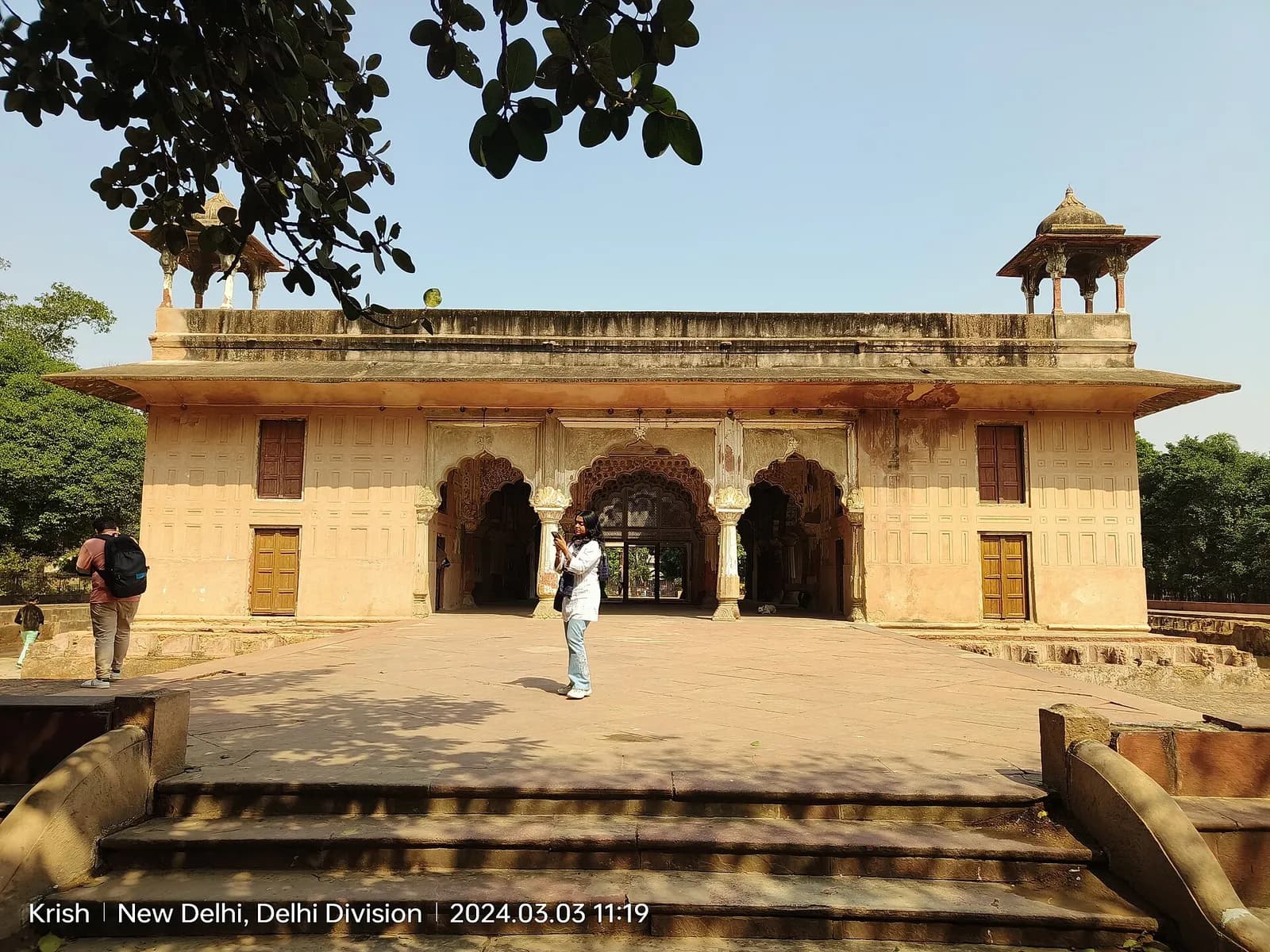
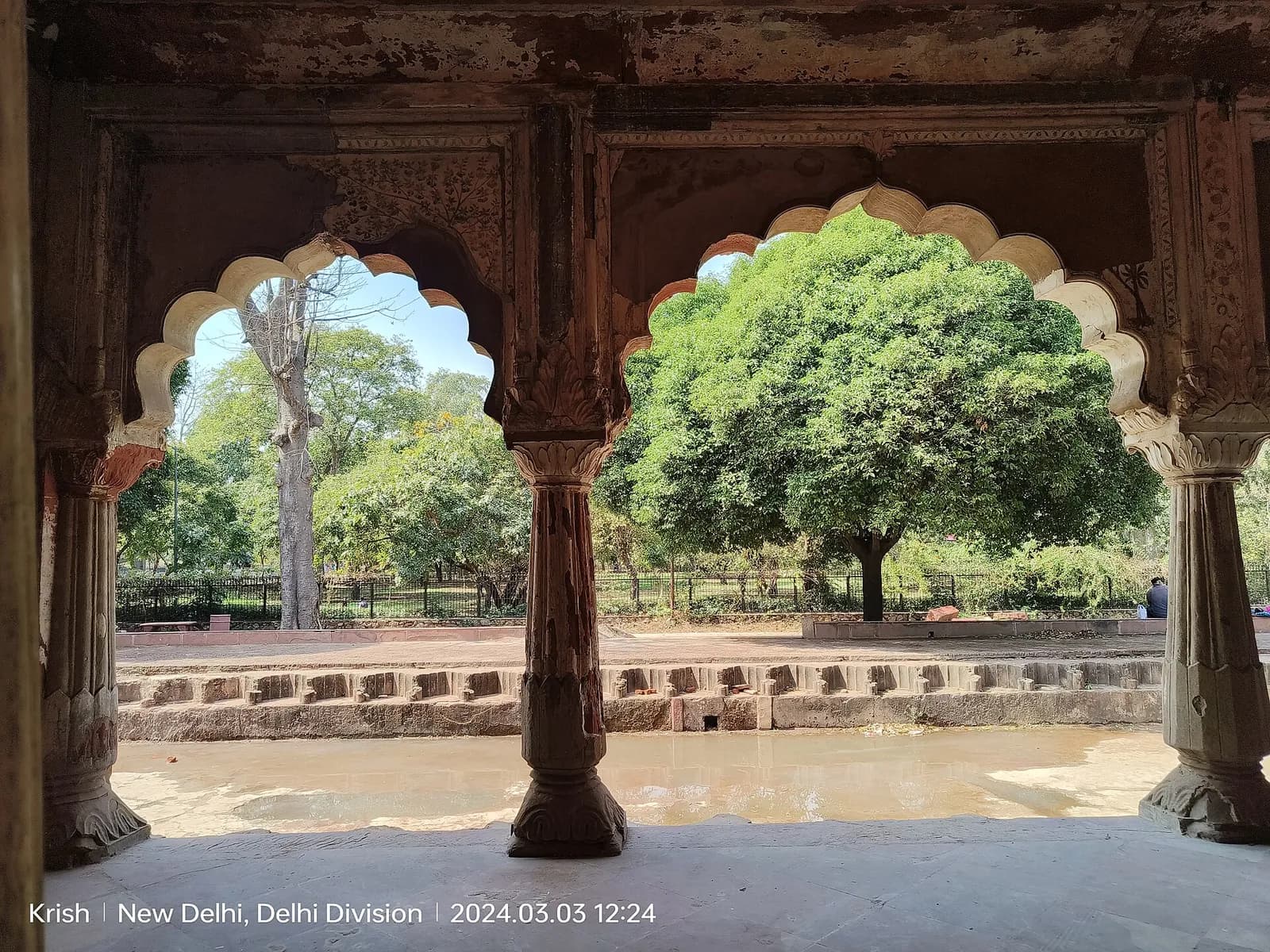
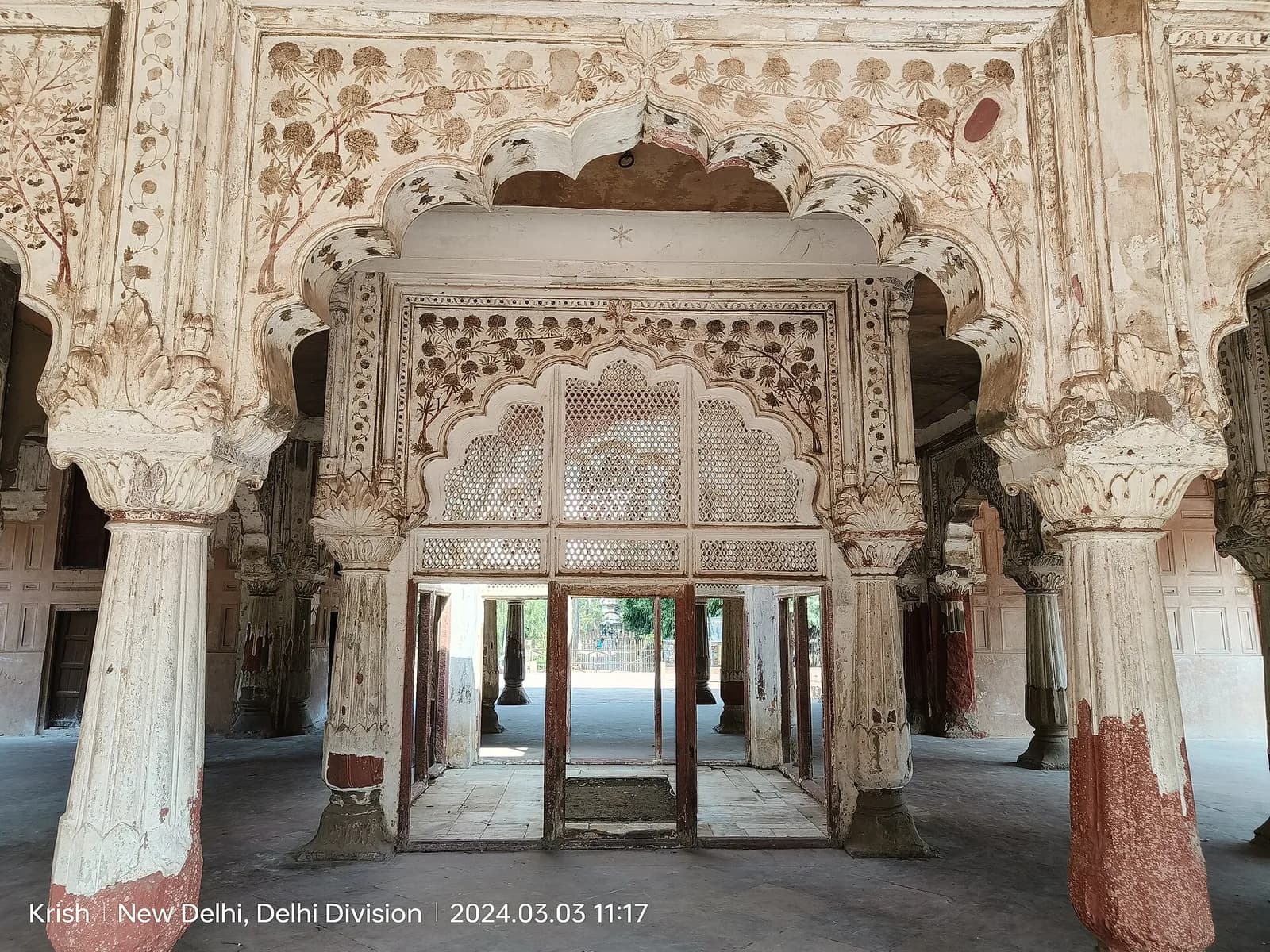
- The baradari pavilion. The mausoleum is a classic baradari, a twelve-pillared open pavilion, set on a high square stone platform, with long verandas supported by heavy pillars and framed by the elegant multi-cusped arches of late Shah Jahani.
- The open-to-the-sky grave. Breaking deliberately from the great enclosed marble domes of her parents, Roshanara decreed a resting place in the orthodox Sufi spirit of simplicity: the central chamber has a fine marble screen, but the grave itself is roofless and open, filled with earth and kept covered in living green grass, exposed to the sky and rain.
- The charbagh setting. The pavilion sits at the exact centre of a traditional Mughal charbagh, a four-quadrant garden grid, once flanked by raised stone canals and reflecting pools that circulated water through the complex to cool the summer house.
This combination makes the tomb a particularly moving and distinctive Mughal monument. The choice of an open, grassy grave, exposed to the elements, is a striking act of humility from a woman who had been among the most powerful in the empire, consciously echoing the simple graves of her sister Jahanara and other royals who followed the Sufi ideal, rather than the domed grandeur of the Taj Mahal that holds her mother. The elegant baradari, the marble screen and the charbagh layout together show the refinement of late Mughal garden design. For the visitor, standing before the simple green grave at the centre of the great garden, set in its pillared pavilion, is the heart of a visit and a quietly powerful experience.
The birthplace of Indian cricket: the Roshanara Club
One of the most surprising things about Roshanara Bagh, which most visitors never realise, is that it holds a major piece of modern sporting history and it is well worth knowing. Beyond its Mughal heritage, the garden is recognised as the birthplace of Indian cricket administration:
- The Roshanara Club. In 1922, during the British colonial era, a group of elite British administrators and prominent Indians established the prestigious Roshanara Club on part of the garden grounds.
- First-class cricket. The club's manicured ground began hosting first-class domestic cricket in the late 1920s.
- The birth of the BCCI. It was here, at the Roshanara Club, that an assembly of leading sports administrators drew up the foundational framework for what became the Board of Control for Cricket in India, the BCCI, so that the club ground is widely recognised by sports historians as the cradle of India's national cricket governing body.
This gives Roshanara Bagh a second, utterly unexpected layer of significance, binding a 17th-century Mughal garden to the birth of the institution that governs India's most beloved sport. The image of the framework of Indian cricket being drawn up in a colonial club set within a Mughal princess's garden captures beautifully the layered, surprising history of Delhi. For the visitor, especially any cricket lover, knowing this adds a wonderful extra dimension to a visit and it is the kind of hidden connection that makes exploring the city's lesser-known sites so rewarding.
The garden today: a green and avian oasis
Beyond its history, Roshanara Bagh is a living, working public garden and a significant green space for North Delhi and this is the side of it most visitors will enjoy day to day. Spread across its many acres, the garden offers much:
- The winter bird sanctuary. A large natural depression in the garden functions as a lake, which in the winter months becomes a vital sanctuary for hundreds of migratory birds escaping the Siberian cold, making the park a major draw for local birdwatchers.
- Horticultural riches. The garden maintains extensive tree nurseries, an acupressure walking path and collections of botanical flora, including varieties introduced through mid-century civic partnerships.
- A place of recreation. For the surrounding neighbourhoods of North Delhi, it is a much-loved green oasis for morning walks, exercise and family outings.
This living character makes Roshanara Bagh a genuine city sanctuary as well as a heritage site, a place where the dramatic Mughal past and the birth of Indian cricket coexist with the everyday life of walkers, families and birdwatchers. The winter birdlife in particular is a highlight, drawing nature lovers to the lake and the mature trees and nurseries make the whole garden green and shaded. For the visitor, this means Roshanara Bagh can be enjoyed simply as a beautiful, peaceful park, with its remarkable history as a rich bonus and it is at its loveliest on a cool winter morning when the birds are on the water and the light is soft among the trees.
Conservation and the garden's challenges
It is worth knowing something of the garden's modern conservation story, as it affects both its condition and its future. Like many of Delhi's heritage green spaces, Roshanara Bagh has faced pressures and has recently drawn official attention. The Delhi High Court has taken up the matter of maintenance lapses and unauthorised encroachments creeping toward the protected zone around the princess's tomb, directing the authorities to act. In response, anti-encroachment drives along Roshanara Road have been carried out to stabilise the perimeter and protect the heritage area, alongside plans to desilt the central lake. These efforts aim to preserve both the historic tomb and the ecological value of the garden for the future. For the visitor, this means the garden is a site under active care and change and while the core monument and the green spaces remain rewarding to visit, some areas may show the effects of past neglect or ongoing restoration work. It is a reminder that Delhi's historic gardens are living, contested spaces, valued by many and in need of protection.
What to expect at Roshanara Bagh
A visit to Roshanara Bagh is peaceful, green and quietly fascinating, a world away from the crowded major monuments and knowing what to expect helps you enjoy it. The garden is a large, mature public park in a busy part of North Delhi, frequented by local walkers, families and birdwatchers rather than tourists, so the atmosphere is relaxed and local. Entering, you can stroll the tree-lined paths to the centre, where the elegant baradari pavilion and the open green grave of Roshanara Begum stand in their charbagh setting, the historic heart of the garden. Walking the grounds, visiting the tomb, pausing by the lake to watch for birds in winter and simply enjoying the greenery and the remarkable history is the essence of the visit, which takes one to two hours depending on your interest.
A few practical points help. As a public park it is easy and pleasant to walk, best enjoyed in the cool of the morning or late afternoon and especially fine in winter for the birdlife. Sensible shoes are useful for the paths and around the tomb. As with any large urban park ordinary awareness of your surroundings and belongings is wise, particularly in quieter corners. Some areas may be affected by ongoing conservation or encroachment-clearance work. For the visitor, the key is to approach Roshanara Bagh as a peaceful heritage garden to wander at leisure, taking time at the tomb and the lake and appreciating the extraordinary layers of history, Mughal and sporting, that the green space holds.
Visiting tips
A few pointers make a visit to Roshanara Bagh smoother and more rewarding:
- Visit the central tomb. The baradari and the open green grave of Roshanara Begum are the historic heart of the garden.
- Come in winter for the birds. The lake draws hundreds of migratory birds in the cold months.
- Walk in the early morning for peace, cool air and the best light.
- Look out for the cricket heritage, the Roshanara Club where the BCCI framework was drawn up.
- Wear comfortable shoes for the garden paths and the tomb platform.
- Stay aware of your surroundings in quieter corners, as in any large park.
- Combine it with North Delhi sights such as the University area and Kamla Nagar.
- Allow one to two hours to enjoy the garden and its history.
The key point is to treat Roshanara Bagh as a peaceful heritage garden to explore at leisure, taking in the princess's tomb, the lake and the birds and the garden's remarkable double history as a Mughal monument and the cradle of Indian cricket.
Best time to visit Roshanara Bagh
The best time to visit is during the cooler months, from October to March, when walking the garden is comfortable and, crucially, when the lake attracts its hundreds of migratory birds, making the park a delight for nature lovers. During the day, the early morning is the loveliest time, cool, quiet and softly lit, ideal for a walk and for watching the birds, while late afternoons are pleasant too. A crisp winter morning is the perfect time to see Roshanara Bagh at its best, with the birds on the water and the historic tomb in gentle light. The summer months are hot for walking in the open garden and the monsoon leaves it green but humid, so the winter window is clearly best, both for comfort and for the birdlife. Our guide to the best time to visit Delhi sets out the seasons across the city in more detail.
How to reach Roshanara Bagh (nearest metro)
Roshanara Bagh lies on Roshanara Road in the Shakti Nagar area of North Delhi, near the Kamla Nagar area and the North Campus of Delhi University and is easy to reach. The nearest metro station is Pratap Nagar on the Red Line, only about half a kilometre away, a short seven-minute walk or a quick e-rickshaw ride to the garden, with Pul Bangash, also on the Red Line, an alternative about 1.8 kilometres away. Municipal parking is available near the main gates for those arriving by car. Because the garden sits in a well-connected part of North Delhi, the metro combined with a short walk or rickshaw ride is the easiest approach. Set in the historic north of the city, it makes a rewarding addition to a Delhi day tour or a heritage-focused New Delhi tour that explores beyond the usual circuit.
Places to visit near Roshanara Bagh
Roshanara Bagh lies in North Delhi, within reach of the historic heart of the old city and several of the capital's great attractions, so it makes a good part of a wider North Delhi outing. Nearby are the lively student district of Kamla Nagar and the North Campus of Delhi University and a short way off is the old walled city, with the mighty Red Fort and the bustling lanes of Chandni Chowk. The sweep of North Delhi's colonial and Mughal history lies all around and the central monuments of the capital, including the ceremonial India Gate and the astronomical Jantar Mantar, are a manageable ride away.
Further out, the capital's other great landmarks round out a full picture of the city: the serene Humayun's Tomb, the towering Qutub Minar and the modern marvels of the Lotus Temple and Akshardham. For more of Delhi's history, the old citadel of Purana Qila, the ruins of Feroz Shah Kotla, the sprawling Mehrauli Archaeological Park, the historic Hauz Khas Fort and the medieval stepwell of Agrasen ki Baoli are well worth adding and our roundup of the important monuments of Delhi ties them together.
Roshanara Bagh in your Delhi itinerary
For most visitors, Roshanara Bagh works best as a peaceful, offbeat stop within a wider North Delhi or old-city outing, rather than a mainstream sightseeing destination on its own. A natural plan is to combine the garden with a visit to the North Campus and Kamla Nagar or with the monuments of the old walled city nearby, for a day that moves from Mughal garden to living city. The garden needs one to two hours, but its remarkable double history, as the tomb of a powerful Mughal princess and the birthplace of Indian cricket, together with its birdlife and greenery, give it an interest out of proportion to its quietness and it adds a serene and surprising note to a day of sightseeing. It suits the history enthusiast, the cricket lover, the birdwatcher and the traveller who enjoys the peaceful, storied corners of the city.
If Delhi is your gateway to the wider Golden Triangle, Roshanara Bagh offers a tranquil and deeply layered experience away from the crowds, where the drama of Mughal court politics, the humility of a princess's open grave and the birth of a modern sporting institution all meet in one green space. Many of my guests find it a restful and memorable contrast to the grand monuments and it deepens their sense of the many stories woven through Delhi before they travel on to Agra and Jaipur.
Travel tips for visiting Roshanara Bagh
A few pointers make a visit even better:
- Reach it via Pratap Nagar metro, about half a kilometre away, then a short walk or rickshaw.
- See the central baradari and open grave, the heart of the garden's history.
- Come on a winter morning for the migratory birds on the lake and the best light.
- Remember the cricket connection, the Roshanara Club and the birth of the BCCI.
- Combine it with North Campus, Kamla Nagar or the old city for a fuller day.
- Wear comfortable shoes for the garden paths.
- Stay aware in quieter corners, as in any large urban park.
- Allow one to two hours for the garden and its history.
If you would like a local guide to show you Roshanara Bagh and tell the remarkable stories of the princess and the cricket club, message our team on WhatsApp at +91 7302265809 with your travel dates and group size and we will shape the day for you.
Is Roshanara Bagh worth visiting?
Yes, for the history-minded and the curious traveller Roshanara Bagh is a genuinely rewarding and unusual stop, one of the most layered hidden green spaces in Delhi. There are few places anywhere that combine so much in one peaceful garden: the resting place of a brilliant and ruthless Mughal princess, her beautiful and humble open-to-the-sky grave in an elegant baradari, a classic Mughal charbagh, the surprising birthplace of Indian cricket administration and a winter haven for hundreds of migratory birds. It is free to enter, calm and green and rich in stories most visitors never hear. The caveats are modest: it is a public park in a busy area, quieter and less polished than the great monuments and some parts may show the effects of past neglect or ongoing conservation. For the traveller who wants the deep, surprising, peaceful side of Delhi beyond the famous sights, Roshanara Bagh is a treasure and I recommend it warmly to guests exploring the north of the city.
Plan your trip with us
At Experience My India, through our Delhi and Golden Triangle travel desk, we design unhurried, well paced trips that make room for serene, storied places like Roshanara Bagh and not just the famous monuments, with guides who can tell the dramatic history of the princess, point out the cricket heritage and time a visit for the winter birds. Whether you want a relaxed set of Delhi Agra tours or a full Golden Triangle route through Delhi, Agra and Jaipur, we plan around your pace, your interests and the right season. Share your dates and the kind of trip you have in mind through our enquiry page, tell us your group size and we will put together an honest, tailored plan rather than a rushed checklist.
Related guides
- Places to visit in Delhi, for the wider picture
- Nearby places to visit in Delhi, to extend your trip
Enquire Now
Ready to Explore
The Heart of Delhi?
Explore the Red Fort, Qutub Minar, Humayun's Tomb, and the vibrant streets of Old Delhi with our expert-guided premium tours of India's capital city.

Delhi
Premium Tour Package
Questions
Frequently asked questions
What is Roshanara Bagh?
It is a sprawling 17th-century Mughal garden in North Delhi, built around 1650 by Princess Roshanara Begum, daughter of Shah Jahan, as her pleasure garden and tomb. It is also famous as the birthplace of Indian cricket administration.
Who was Roshanara Begum?
What is unusual about her tomb?
Why is Roshanara Bagh linked to cricket?
What are the timings and entry fee?
Which is the nearest metro station?
Is Roshanara Bagh good for birdwatching?
How big is Roshanara Bagh?
How does Roshanara's tomb compare with her sister Jahanara's?
How much time do I need?
Explore more
Plan your Roshanara Bagh trip with us

Interested in Roshanara Bagh, North Delhi: History, the Tomb and Guide?
Chat with our travel team for a custom quote, or browse every package.
Related Attractions
9Ready to explore Roshanara Bagh, North Delhi: History, the Tomb and Guide?
Book your private tour today and experience the magic of India's rich heritage.