 Kashmere Gate, Delhi
St James Church Delhi (Skinner's Church): History, Timings and Guide
Visiting St James Church, Skinner's Church, at Kashmere Gate? The battlefield vow, the oldest church in Delhi, the architecture, timings and nearest metro.
Quick answer
St James Church, also known as Skinner's Church, at Kashmere Gate in Old Delhi, is the oldest surviving church in Delhi, consecrated in 1836. It was built by the Anglo-Indian cavalry officer Colonel James Skinner to fulfil a battlefield vow and it is famous for its unusual Renaissance Revival design on a Greek-cross plan crowned by a Florentine dome. Colonel Skinner is buried beneath the altar and the church still bears the scars of the 1857 uprising. Entry is free, it is most reliably open to visitors on Sunday mornings during mass and it sits beside Kashmere Gate metro. It features on our heritage Delhi tours, run by a unit of Experience My India.
- #st-james-church
- #delhi
- #st-james-church-delhi
- #delhi-attractions
- #delhi-travel
St James Church is one of Delhi's most historic and architecturally striking buildings, a serene colonial church with a remarkable founding story, tucked into a green oasis amid the chaos of Kashmere Gate. For history lovers, architecture enthusiasts and those drawn to the city's quieter heritage, it is a rewarding stop. Our team at Delhi Agra Tour Packages sometimes includes it on a Kashmere Gate heritage walk and it adds an elegant, story-rich dimension to a wider Golden Triangle tour through the capital.
I am Abhay Sharma, Delhi born and a Golden Triangle guide since 2015 and I enjoy bringing history-minded guests here, because few buildings in the city carry such a compelling human story or so unusual a design and fewer still offer such a pocket of calm in the heart of old Delhi. This guide gathers everything I would tell a visitor beforehand, checking against current information, including the history, the architecture, the timings and how to reach it.
St James Church at a glance
| Detail | Information |
|---|---|
| Location | Lothian Road, Kashmere Gate, Old Delhi |
| Also known as | Skinner's Church |
| Consecrated | 1836 |
| Built by | Colonel James Skinner |
| Famous as | The oldest surviving church in Delhi |
| Entry | Free; interior most reliably open on Sundays |
| Nearest metro | Kashmere Gate, Gate No. 4, about a 3 minute walk |
| Time needed | About 30 to 45 minutes |
St James Church timings
| Detail | Information |
|---|---|
| Interior access | Most reliable on Sunday during mass, around 8:30 AM to 12:00 PM |
| Winter mass | Slides slightly later, from around 9:00 AM |
| Compound and graves | Generally accessible to walk through by day |
| Time needed | About 30 to 45 minutes |
Interior access to the worship sanctuary is restricted on weekdays and the most reliable window for visitors to see inside is during Sunday morning mass, roughly 8:30 AM to 12:00 PM, with winter timings sliding slightly later from around 9:00 AM. The garden compound and the historic graves can generally be walked through by day. A visit takes about thirty to forty five minutes. These timings are current at the time of writing and can vary, so reconfirm before a special trip.
Entry fee
| Item | Information |
|---|---|
| Entry fee | Free for all visitors |
| Tickets | None; it is an active place of worship |
| Etiquette | Quiet, respectful conduct; phones silent during services |
How to reach St James Church
| From | Route |
|---|---|
| Kashmere Gate metro | Gate No. 4, a brief 3 minute walk down Lothian Road |
| Metro lines | Red, Yellow and Violet Lines interchange at Kashmere Gate |
| Old Delhi and Civil Lines | A short ride through the Kashmere Gate area |
| By car | Limited parking in the busy Kashmere Gate area |
What is St James Church?
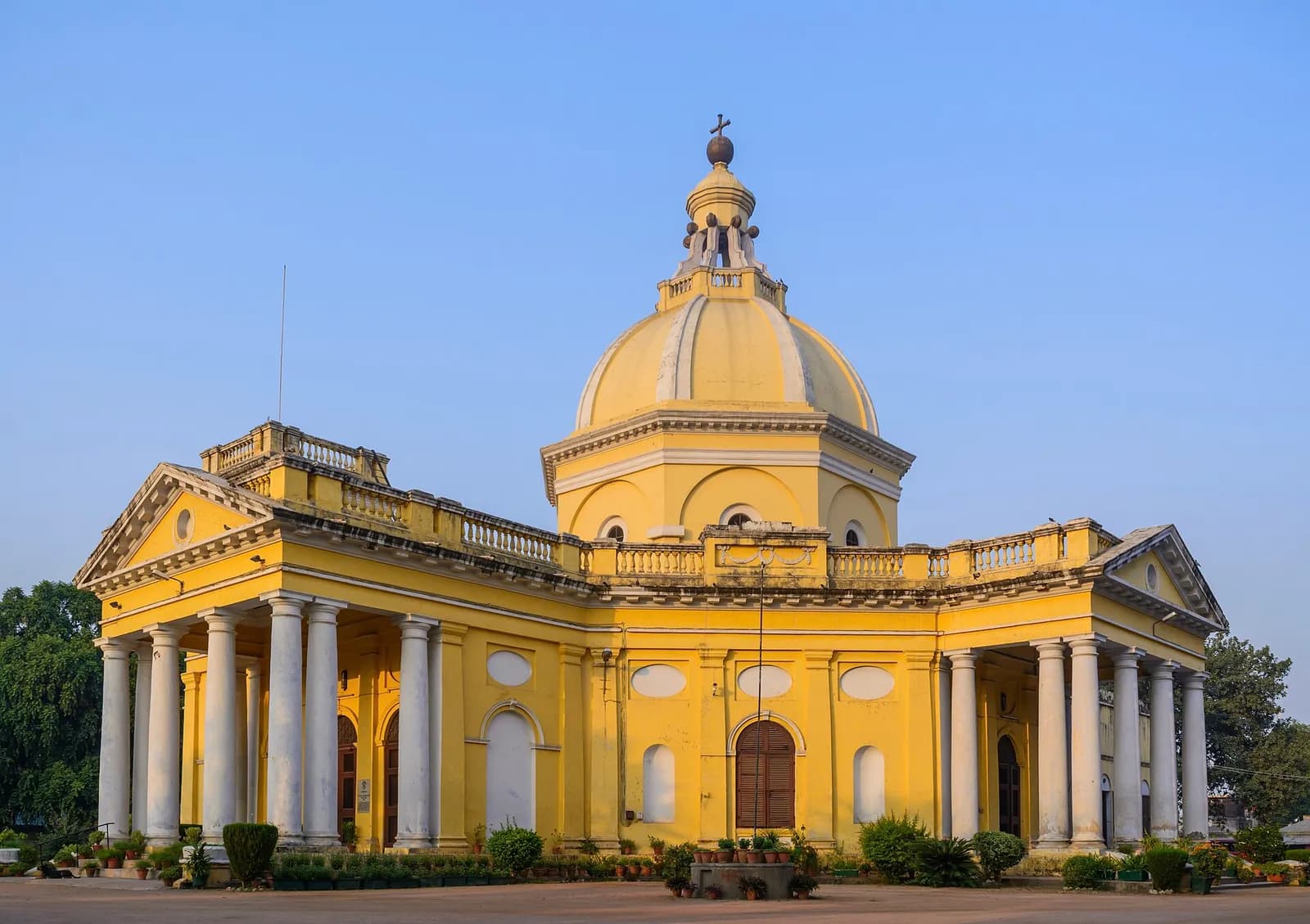
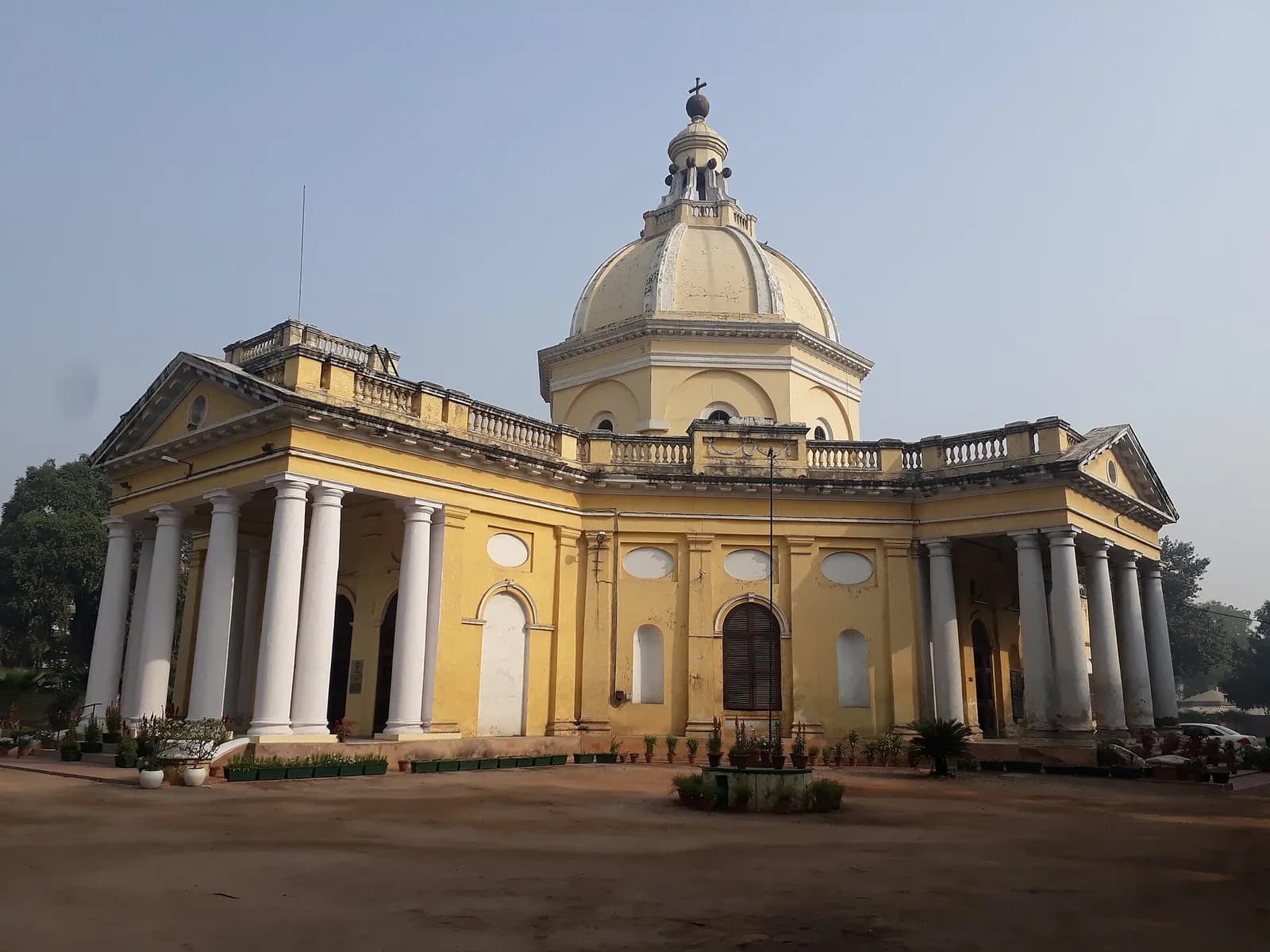
St James Church, popularly known as Skinner's Church, is a historic colonial-era church at Kashmere Gate in Old Delhi, consecrated in 1836 and recognised as the oldest surviving Christian church in the city. It was built by the famous Anglo-Indian military officer Colonel James Skinner to fulfil a vow he made on a battlefield and it stands today as both a working place of worship and a remarkable monument of Delhi's layered history. Architecturally it is unlike any other church in the city, designed in a Renaissance Revival style on a Greek-cross plan and crowned by a tall Florentine dome, set within a beautifully kept green compound that forms a serene oasis amid the roar and rush of the surrounding Kashmere Gate area. With Colonel Skinner buried beneath its altar, the scars of the 1857 uprising still visible on its fabric and the tombs of several key figures of early colonial Delhi in its graveyard, it is one of the most atmospheric and story-rich buildings in the capital.
Several things make it special and they are worth drawing out:
- The oldest church in Delhi. Consecrated in 1836, it is the oldest surviving Christian church in the city.
- A battlefield vow fulfilled. Built by Colonel James Skinner to honour a desperate promise made when he lay wounded in battle.
- A unique design. A rare Renaissance Revival church on a Greek-cross plan, crowned by a Florentine dome, unlike any other in Delhi.
- A witness to 1857. Scarred in the uprising near the Kashmere Gate flashpoint and later used by the British as a command post.
- A green oasis. A pristine, serene compound of lawns and old graves, a pocket of calm in the chaos of old Delhi.
It is one of the most historic and architecturally remarkable of the offbeat things to do in Delhi and a fascinating entry among the important monuments of Delhi.
History of St James Church and the battlefield vow
The history of St James Church begins not with a building but with a vow made in desperation on a battlefield and that story is the key to the place. The church was built by Colonel James Skinner, the legendary Anglo-Indian cavalry officer who founded the famous regiment known as Skinner's Horse. The founding story is remarkable:
- The battlefield vow. In 1800, lying severely wounded and facing what he believed was certain death on a battlefield at Uniara, Skinner made a desperate vow that if he survived he would build a church and, reflecting the mixed world he lived in, a mosque and a temple as well.
- The fulfilment. Skinner survived and over the following decades he honoured his promise, with this grand church at Kashmere Gate becoming his crowning project, consecrated in 1836.
- The oldest in Delhi. That consecration makes St James the oldest surviving Christian church in the city, predating the great churches of New Delhi by nearly a century.
The story of the vow and of a half-Scottish, half-Rajput soldier building a church, a mosque and a temple in gratitude, captures something of the complex, intermingled world of early colonial north India and it gives the building a human warmth that a grand church might otherwise lack. For much of the 19th and early 20th centuries, St James was the most important church in Delhi: until the Cathedral Church of the Redemption was built in New Delhi in 1931, it served as the official place of worship for the British Viceroy and the colonial elite during their winter sessions in the capital, a mark of its prestige. To visit knowing that it rose from a dying soldier's promise and that viceroys once worshipped beneath its dome, is to see far more than a handsome old church; it is to read the story of Delhi's colonial era in a single building.
Who was Colonel James Skinner?
Understanding the church means understanding its founder, for St James is inseparable from the extraordinary figure of Colonel James Skinner. Skinner was one of the most colourful and celebrated military men of his age, an Anglo-Indian officer of mixed Scottish and Rajput parentage who rose to fame as a cavalry commander and founded the irregular cavalry regiment that still bears his name, Skinner's Horse. Born into the complicated world between the British and Indian aristocracies, he was a man of two cultures, famous for his courage, his flamboyance and his deep ties to both communities and he became one of the great personalities of early 19th-century north India.
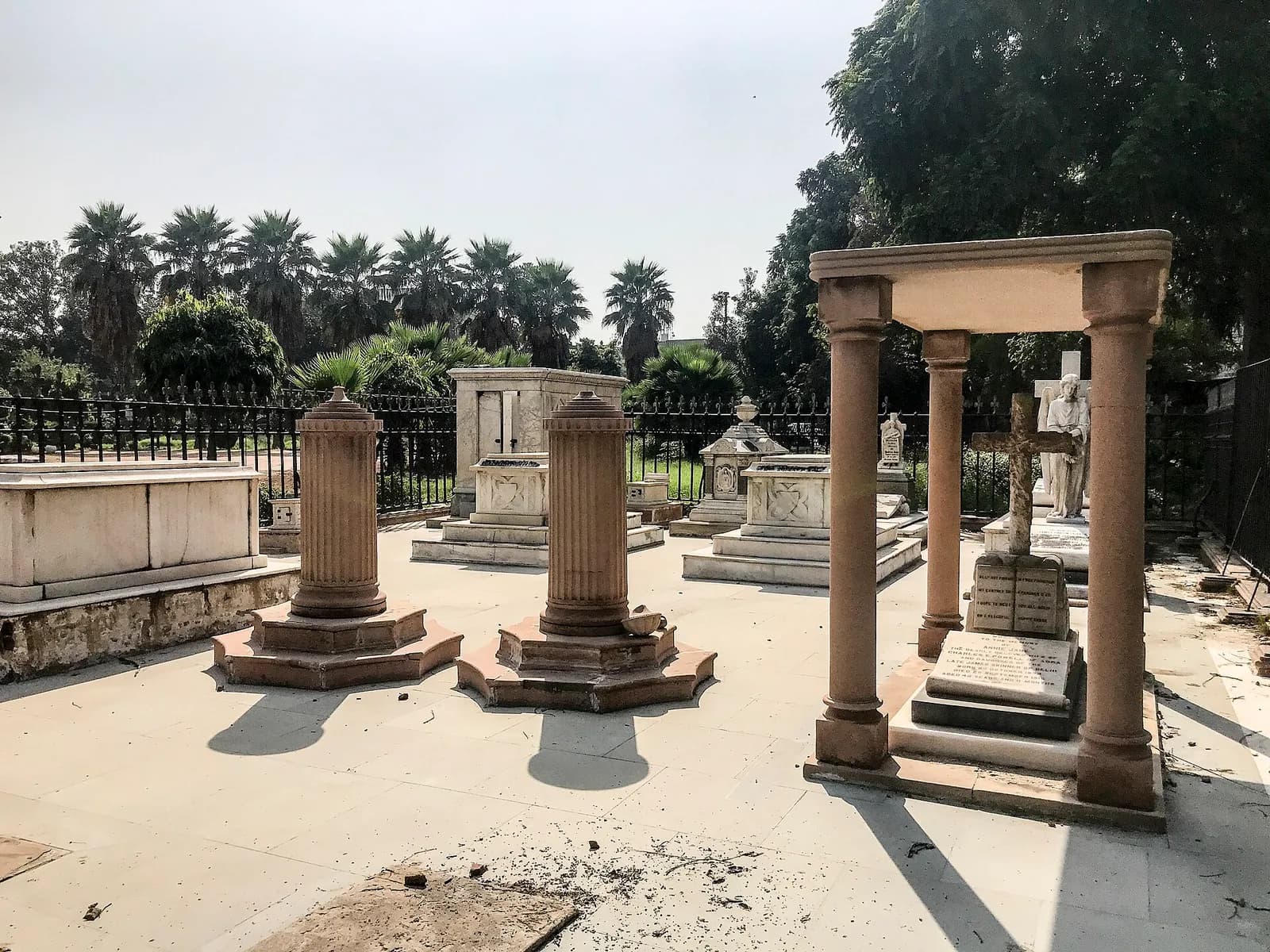
It was Skinner's near-death experience in battle in 1800 and the vow it prompted, that led in time to the building of this church and his devotion to the project is reflected in its grandeur and in his choice to be buried within it. When Skinner died at Hansi in 1841, his body was brought in a solemn procession to Delhi and laid to rest beneath the altar of his own church, a fitting end for the man who had willed it into being. The surrounding graveyard also holds the tombs of members of his large family, as well as those of other key figures of early colonial Delhi, including his close companion William Fraser, the Delhi Resident who was assassinated in 1835 and members of the Metcalfe family. For the visitor, Skinner is the human heart of St James: to stand at his grave beneath the altar, knowing the vow and the life that built the church above, is the most moving part of any visit.
The 1857 uprising and St James Church
St James Church stands very close to the Kashmere Gate, which was one of the principal flashpoints of the 1857 uprising in Delhi and the church bears the scars of those violent events to this day. During the initial outbreak of the rebellion, the church, as a prominent symbol of the British presence, was heavily targeted and vandalised by the Indian revolutionaries who seized the city:
- The targeting. As a conspicuous church beside the Kashmere Gate flashpoint, it was attacked during the outbreak, its copper cross on the dome reportedly used for target practice.
- The destruction. The interior was ransacked and many of the church's records were destroyed in the violence.
- The command post. After British forces fought their way back into the city through the Kashmere Gate, the church was used by them as a base and command post during the recapture of Delhi.
These events bind St James tightly to the pivotal history of 1857, placing it at the very edge of the fighting that opened and then decided the struggle for the city. The marble memorial plaques that cover its interior walls, recording the names of British officers killed in the siege, are a direct and sombre legacy of that period, turning the church into a kind of memorial to the conflict as well as a place of worship. For the history-minded visitor, this layer is profoundly resonant, especially when the church is seen as part of the wider Kashmere Gate heritage, alongside the nearby Nicholson Cemetery where many of those who fell in 1857 are buried. Knowing the church's ordeal in the uprising and reading the names on its walls, deepens a visit immeasurably.
Architecture of St James Church
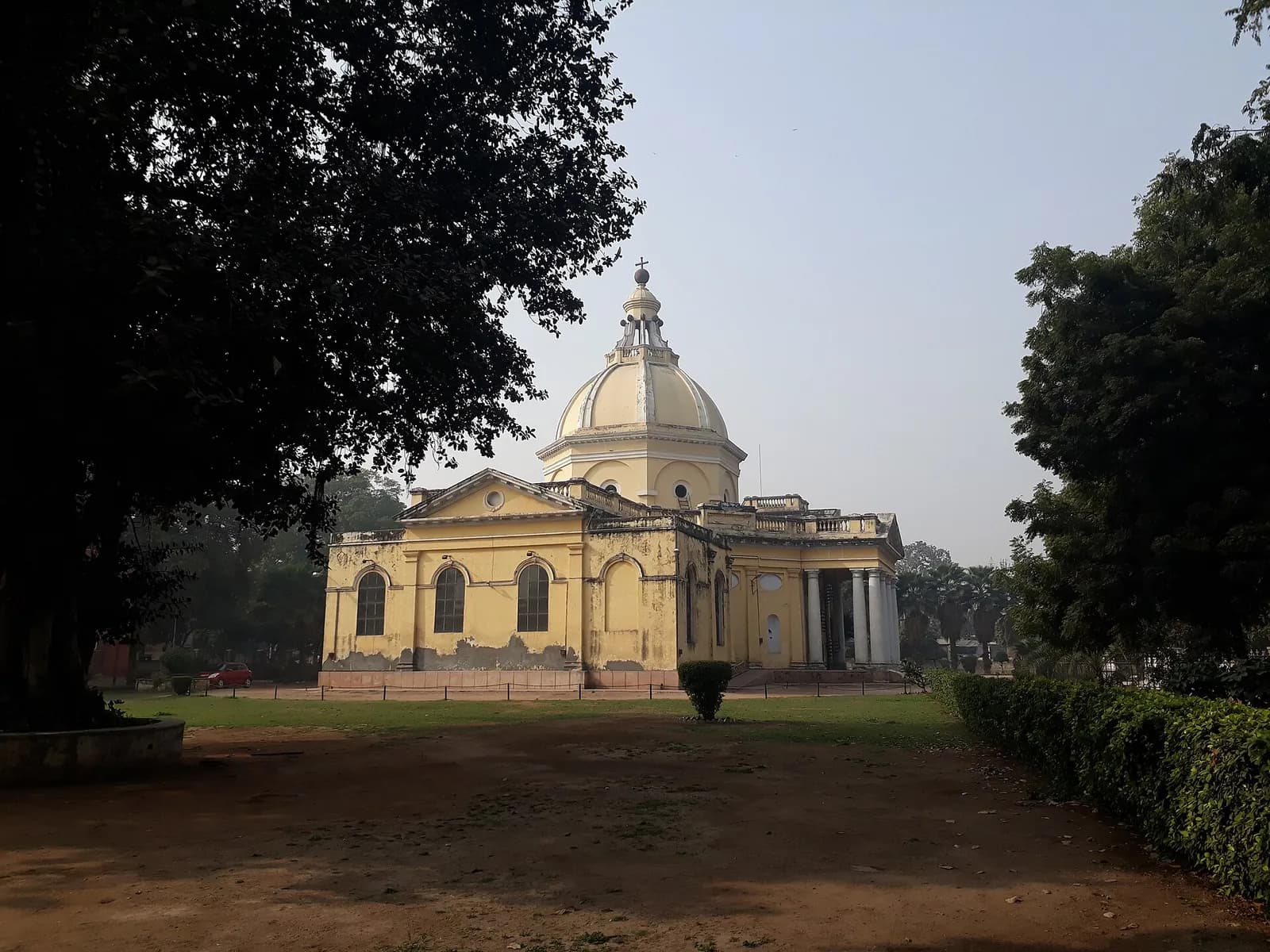
Architecturally, St James is one of the most distinctive buildings in Delhi and its unusual design rewards a close and knowing look. It was designed by the British military engineer Major Robert Smith in a Renaissance Revival style, built on a Greek-cross plan, a layout of four equal arms radiating from a central core, loosely modelled on the great cathedrals of Europe and notably on the Cathedral of Florence. Its key features are worth seeking out:
- The Greek-cross plan. Four equal arms extend from a central space, an uncommon and elegant layout that gives the church its balanced, centralised form.
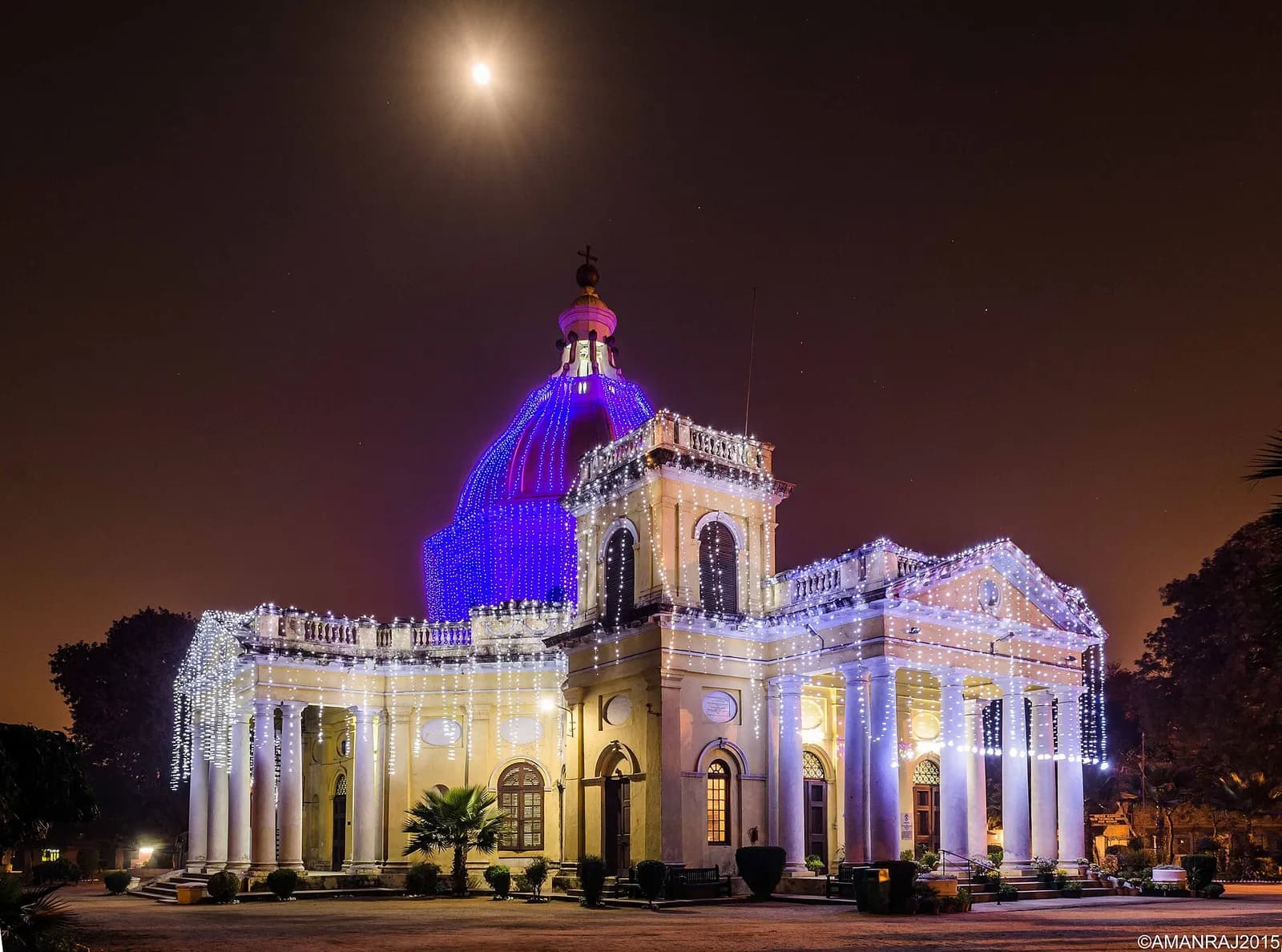
- The Florentine dome. The central core is crowned by a tall, majestic dome in the Florentine manner, topped by an ornamental copper ball and a metal cross, the church's defining silhouette.
- Corinthian porticos. The fronts of the arms are fronted by massive, elegant Corinthian columns forming classical porticos that shade the large wooden entrance doors.
- The interior. Inside are vibrant stained-glass windows depicting the Crucifixion and the Ascension, a historic pipe organ, a rare octagonal marble baptismal font and walls lined with polished marble memorial plaques to officers killed in 1857.
The overall effect is of a serene, classical and beautifully proportioned building, quite distinct from both the Gothic churches of the later colonial period and the Mughal architecture around it, a piece of Renaissance Europe transplanted to old Delhi. The dome is the dominant note, rising above the compound and visible from the surrounding streets, while the interior, when open, is a quiet, light-filled space rich in historic fittings and in the poignant memorials on its walls. Knowing the design, the Greek cross, the Florentine dome, the Corinthian porticos, the Florence inspiration, turns a glance at a pretty church into an appreciation of one of the most ambitious and unusual pieces of architecture in the city.
What to expect at St James Church
A visit to St James Church is calm, atmospheric and historically rich, a striking contrast to the chaos of its surroundings and knowing what to expect helps you make the most of it. The church sits inside a spacious, beautifully manicured green compound right at the busy Kashmere Gate intersection, so stepping through the gates is like entering a serene, pristine oasis, completely insulated from the blaring horns and commercial rush of the neighbouring bus terminus and electronics markets. The experience is in two parts: the garden compound with its lawns and historic graves, which can generally be explored by day and the interior worship space, which is more restricted and most reliably seen during Sunday morning mass. The whole visit takes about thirty to forty five minutes, longer if you attend a service or linger among the graves.
Outside, you can walk the peaceful grounds, take in the dome and porticos and seek out the historic tombs, including those of the Skinner family and of figures such as William Fraser and the Metcalfes. Inside, when open, the church reveals its stained glass, its pipe organ, its marble font and the many memorial plaques to the fallen of 1857. Because this is an active and deeply historic house of worship, respectful conduct is essential: phones should be silent during services, photography is welcome in the garden and around the graves but not of the prayer area during active worship and casual wandering in the altar area, where Skinner is buried, is restricted to protect the centuries-old flooring and the brass markers of the vault. Come quietly, ideally on a Sunday morning to see inside and the church offers one of the most serene and moving historical experiences in old Delhi.
St James Church timings and entry
St James Church is an active place of worship and access to the inner sanctuary is restricted on weekdays, so the most reliable and fully authorised window for visitors and architecture enthusiasts to explore the interior is during Sunday morning mass, roughly 8:30 AM to 12:00 PM, with winter mass timings sliding slightly later to around 9:00 AM. The garden compound and the historic graves can generally be walked through during the day. Entry is completely free for all domestic and international visitors. A visit takes about thirty to forty five minutes. Because it is a living church, a strict etiquette applies: keep mobile phones switched off or on silent during services and behave quietly and respectfully throughout. Photography is fully permitted in the surrounding garden courtyard and around the historic graves, but taking photos or video inside the prayer area during active services is not allowed and casual wandering inside the altar area is restricted to preserve the centuries-old flooring and the brass inscriptions over the Skinner burial vault. These timings and rules are current at the time of writing and can vary, so reconfirm before making a special trip, especially if you hope to see the interior.
Etiquette and visitor guidelines
Because St James is a working and historic church, a few points of etiquette make for a respectful and rewarding visit:
- Visit on Sunday morning for the interior. The inner sanctuary is most reliably open during Sunday mass, around 8:30 AM to 12:00 PM, so plan accordingly to see inside.
- Keep phones silent. During services, switch mobile devices off or to silent and keep conversation quiet.
- Photograph respectfully. Photography is welcome in the garden and around the graves, but not of the prayer area during active worship.
- Do not wander in the altar area. Access around the altar and the Skinner vault is restricted to protect the old flooring and brass markers.
- Dress and behave modestly. As in any place of worship, dress respectfully and move gently, especially if a service is in progress.
- Allow 30 to 45 minutes and more if you attend a service.
Observing this etiquette is both courteous and essential, as the church remains an active congregation as well as a monument. Visited with respect, especially on a quiet Sunday morning, it rewards you with a rare combination of fine architecture, deep history and genuine serenity and leaves the space as it should be for the worshippers who use it.
Best time to visit St James Church
The best time to visit is a Sunday morning in the cooler months, from October to March, when you can both see the interior during mass and enjoy the garden compound in pleasant weather. A winter Sunday morning is ideal, with comfortable temperatures for walking the grounds and the church open for worship, though do note the slightly later winter mass timing. If you only wish to see the exterior and the graves, any clear day will do, but the interior, with its stained glass organ and memorials, is the real reward and is tied to the Sunday service window. The summer is hot and the area intensely busy and the monsoon lush but humid, so the winter months are much the most comfortable. The church is also especially atmospheric around Christmas, when it holds special services. Allow thirty to forty five minutes and combine it with the nearby Kashmere Gate heritage. Our guide to the best time to visit Delhi sets out the seasons across the city in more detail.
How to reach St James Church (nearest metro)
St James Church is on Lothian Road at Kashmere Gate in Old Delhi and it is exceptionally easy to reach by metro. The nearest station is Kashmere Gate, one of the city's largest interchange nodes connecting the Red, Yellow and Violet Lines, which places the church within reach of almost anywhere in Delhi. From the station, leave by Gate No. 4 and it is a very brief and comfortable three minute walk straight down Lothian Road to the church gates. App cabs and autos can also drop you close by, though the Kashmere Gate area is busy and parking is limited, so the metro is by far the easiest option. Because it sits right in the heart of the historic Kashmere Gate district, it pairs naturally with a heritage-focused New Delhi tour or a broader Delhi day tour that takes in the old city and the 1857 sites.
Places to visit near St James Church
St James Church sits at Kashmere Gate in the historic north of the city, close to the old city and the 1857 heritage, so it combines beautifully with Delhi's great monuments. It forms a natural pair with the nearby Nicholson Cemetery, also tied to Skinner's church and to the events of 1857, for a focused Kashmere Gate heritage walk. A short ride south brings you to the mighty Red Fort, the great Mughal citadel and the old fort of Purana Qila, while the historic citadel of Feroz Shah Kotla, with its own Ashoka pillar, lies nearby.
The ceremonial heart of New Delhi, with India Gate and the great circle of Connaught Place, is a manageable ride away and the capital's other landmarks round out a full picture of the city: the serene Humayun's Tomb, the towering Qutub Minar and the modern marvels of the Lotus Temple and Akshardham. For more layered history, the ancient stepwell of Agrasen ki Baoli, the astronomical Jantar Mantar and the historic Hauz Khas Fort complete the sweep of Delhi's past.
St James Church in your Delhi itinerary
For most visitors, St James Church works best as a short, serene stop within a Kashmere Gate and Old Delhi heritage outing rather than a destination on its own, given that the visit takes well under an hour and that the interior is tied to the Sunday mass window. The natural pairing is with the other Kashmere Gate heritage, above all the nearby Nicholson Cemetery, with which it shares both the Skinner connection and the story of 1857, so the two together make a moving, focused walk through the colonial and rebellion history of north Delhi. It is a stop for travellers with a genuine interest in history and architecture, rather than for those chasing only the headline sights and it rewards a Sunday-morning visit and a knowledge of Skinner's story in advance.
If Delhi is your gateway to the wider Golden Triangle, St James Church offers an elegant and intimate perspective on the colonial era and on the remarkable mixed world of early 19th-century north India, embodied in the half-Scottish, half-Rajput soldier who built it, a serene and human counterpoint to the grander Mughal and imperial monuments. Many of my history-minded guests find Skinner's battlefield vow and his grave beneath the altar unexpectedly moving and the church's calm amid the Kashmere Gate chaos a welcome surprise and it adds a distinctive, reflective note to a Delhi exploration before the journey on to Agra and Jaipur.
Travel tips for visiting St James Church
A few pointers make the visit smoother and more rewarding:
- Visit on a Sunday morning to see the interior during mass, around 8:30 AM to 12:00 PM, later in winter.
- Come in the cooler months, October to March, for comfortable weather in the garden compound.
- Know the story first, Skinner's battlefield vow and the 1857 history, as they are the heart of the place.
- Seek out Skinner's grave beneath the altar and the historic tombs in the graveyard, including William Fraser and the Metcalfes.
- Keep phones silent and photograph only the garden and graves during services, not the prayer area.
- Pair it with Nicholson Cemetery for a complete Kashmere Gate heritage walk.
- Reach it via Kashmere Gate metro, Gate No. 4, a 3 minute walk.
- Allow 30 to 45 minutes, more if you attend a service.
If you would like a local guide to build St James Church and the Kashmere Gate heritage into a wider Delhi plan, message our team on WhatsApp at +91 7302265809 with your travel dates and group size and we will shape the day for you.
Is St James Church worth visiting?
For history lovers, architecture enthusiasts and those who enjoy serene, lesser-known heritage, yes, it is a genuinely rewarding stop. There are few buildings in Delhi with so compelling a founding story, a dying soldier's vow fulfilled, so unusual a design, a Florentine-domed Greek cross unlike anything else in the city or so direct a link to the drama of 1857 and fewer still that offer such a pocket of calm amid the roar of old Delhi. As the oldest surviving church in the city, with Skinner buried beneath its altar, it is a monument of the first importance. The honest note is that the interior is best seen on Sunday mornings during mass, so a weekday visit may be limited to the compound and graves and it is a quiet heritage site rather than a grand ticketed attraction, so its appeal rests on an interest in history and architecture. But for the curious, respectful traveller, especially one who can come on a Sunday and knows Skinner's story, it is one of the most charming and moving places in old Delhi and I enjoy showing it to guests with a taste for the city's deeper heritage.
Plan your trip with us
At Experience My India, through our Delhi and Golden Triangle travel desk, we design unhurried, well paced trips that make room for serene, history-rich stops like St James Church and the Kashmere Gate heritage, not just the headline monuments and we know how to time a visit and interpret the stories behind the stones. Whether you want a relaxed set of Delhi Agra tours or a full Golden Triangle route through Delhi, Agra and Jaipur, we plan around your pace, your interests and the right season, with local guides who know the history. Share your dates and the kind of trip you have in mind through our enquiry page, tell us your group size and we will put together an honest, tailored plan rather than a rushed checklist.
Related guides
- Places to visit in Delhi, for the wider picture
- Hidden places to visit in Delhi, the city's quieter corners
- Nearby places to visit in Delhi, to extend your trip
Enquire Now
What our travellers say
“Our Golden Triangle honeymoon was flawless. Sunrise at the Taj with a private guide felt like a dream — every detail was handled.”
“As a first-time visitor to India, I felt completely safe and looked after. The driver and guide were superb professionals.”
“Travelling with two kids is hard, but they made it effortless. Great pacing, clean cars and zero surprises on price.”
“Booked the Agra day trip on short notice and it went off without a hitch. The guide's history knowledge made the Taj come alive.”
“Best decision of our India trip. Car was spotless, driver was punctual every single day, and the itinerary never felt rushed.”
“Organised a same-day Agra trip for my parents. Communication before and during the trip was excellent — genuinely stress-free.”
“Sunrise at the Taj Mahal was magical. Our guide spoke great English and answered every question with patience.”
“Three generations travelling together and everyone was comfortable — good vehicle, sensible stops, and no hidden costs.”
“I've used a few tour operators across Asia and this was among the smoothest. Fair pricing and they actually answer the phone.”
“Our custom Rajasthan-Agra combo was planned around our budget without cutting corners on comfort. Highly recommend.”
“Solo female traveller here — I felt safe throughout. The driver was respectful and the whole trip was timed perfectly.”
Ready to Explore
The Heart of Delhi?
Explore the Red Fort, Qutub Minar, Humayun's Tomb, and the vibrant streets of Old Delhi with our expert-guided premium tours of India's capital city.

Delhi
Premium Tour Package
Questions
Frequently asked questions
What are the timings of St James Church?
The interior is most reliably open to visitors during Sunday morning mass, roughly 8:30 AM to 12:00 PM, later in winter from around 9:00 AM. The garden and graves can generally be seen by day. Reconfirm before a special trip.
What is the entry fee for St James Church?
Which is the nearest metro station to St James Church?
Why is St James Church famous?
Who built St James Church?
Is St James Church the oldest church in Delhi?
Can I see Colonel Skinner's grave?
When was St James Church damaged?
Is St James Church worth visiting?
Explore more
Plan your St James Church trip with us

Interested in St James Church Delhi (Skinner's Church): History, Timings and Guide?
Chat with our travel team for a custom quote, or browse every package.
Related Attractions
9St James Church Delhi (Skinner's Church) on the map
Open in Google MapsReady to explore St James Church Delhi (Skinner's Church): History, Timings and Guide?
Book your private tour today and experience the magic of India's rich heritage.