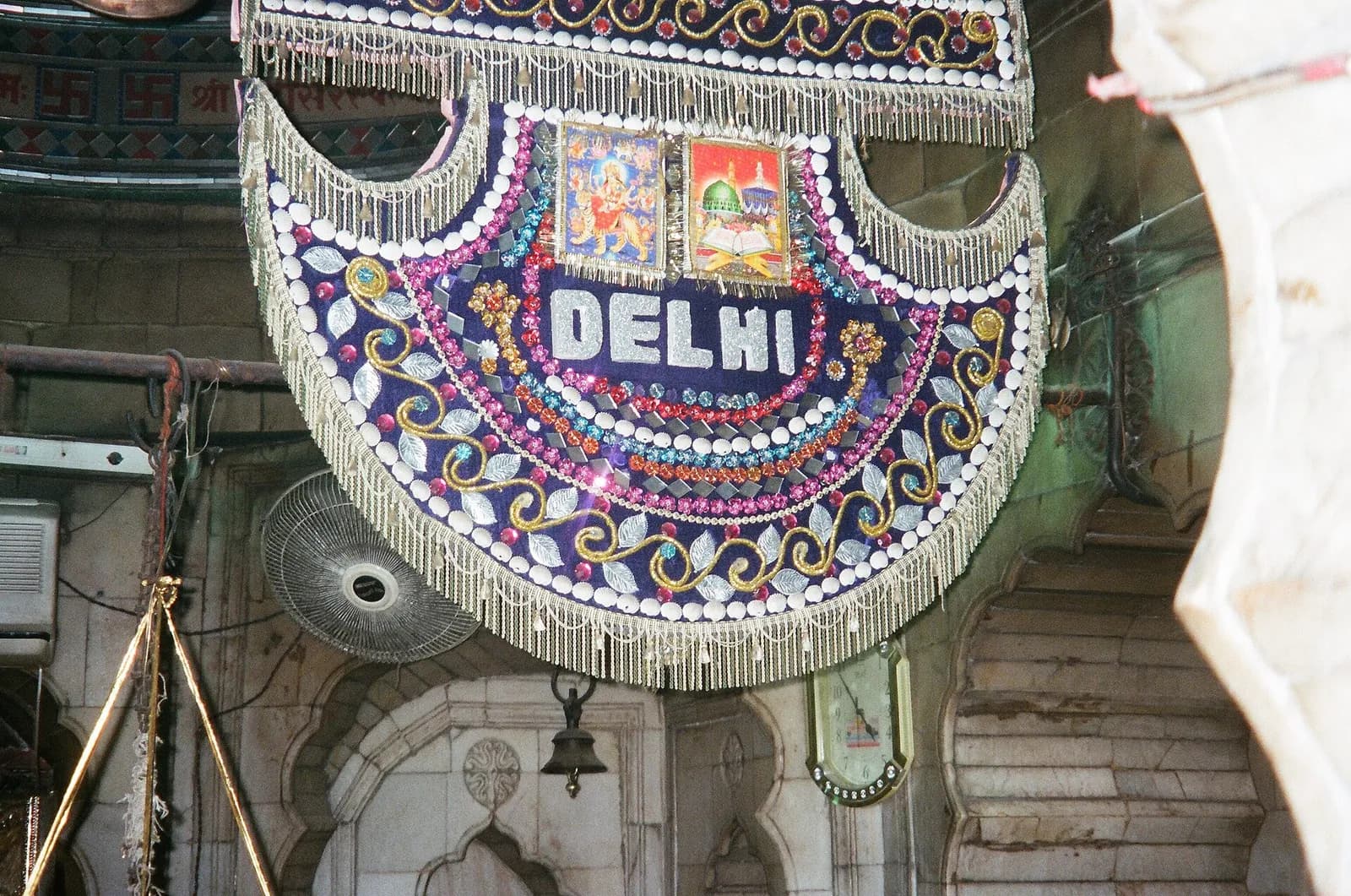
Yogmaya Temple, Mehrauli: History, Timings and Visitor Guide
Visiting Yogmaya Temple in Mehrauli, beside Qutub Minar? Its legend as Krishna's sister, the Phool Walon ki Sair festival, timings, entry and how to reach.
In a Nutshell
“The Yogmaya Temple, also called Jogmaya Temple, is an ancient Hindu shrine in Mehrauli village in South Delhi, just beside the Qutub Minar, dedicated to the goddess Yogmaya, revered in tradition as the sister of Lord Krishna. One of the few surviving ancient shrines of Delhi, traditionally linked to the Mahabharata, it is the structural anchor of the city's famous Phool Walon ki Sair festival of Hindu-Muslim harmony. The present temple was rebuilt in the early 19th century. Entry is free and it is a short way from Qutub Minar metro. It features on our Delhi heritage tours, run by a unit of Experience My India.”
The Yogmaya Temple is one of the oldest and most spiritually significant shrines in Delhi, a living temple of deep antiquity that sits quietly in the heart of the historic Mehrauli district, almost in the shadow of the Qutub Minar. For visitors interested in Delhi's layered past, in Krishna devotion or in the rare monuments that have been continuously worshipped for centuries, it is a remarkable and often overlooked stop. Our team at Delhi Agra Tour Packages is always glad to include it on a Mehrauli heritage walk and it adds a devotional and historical depth to a wider Golden Triangle tour through the capital.
I am Abhay Sharma, Delhi born and a Golden Triangle guide since 2015 and I have a soft spot for Yogmaya Temple, because few places pack so much history and meaning into so modest a shrine, from its Mahabharata legend and its link to Lord Krishna to its central role in Delhi's great festival of communal harmony. This guide brings together everything I would tell a visitor beforehand, checked against current information, including the temple's legend and history, what to see, the festival and the timings and directions.
Details
Yogmaya Temple at a glance
| Detail | Information |
|---|---|
| Official name | Shri Yogmaya Ji Mandir (Jogmaya Temple) |
| Dedicated to | Goddess Yogmaya, revered as the sister of Lord Krishna |
| Location | Mehrauli village, South Delhi, beside Qutub Minar |
| Present structure built | Early 19th century (rebuilt) |
| Known for | Ancient Krishna-linked shrine; Phool Walon ki Sair festival |
| Nearest metro | Qutub Minar (Yellow Line) |
| Entry | Free |
| Time needed | 30 to 45 minutes |
Yogmaya Temple timings
| Session | Hours |
|---|---|
| Morning darshan | About 5:00 AM to 1:00 PM |
| Evening darshan | About 4:00 PM to 9:00 PM |
| Open | Every day |
The temple is open every day, typically for morning darshan from around 5:00 AM to 1:00 PM and evening darshan from around 4:00 PM to 9:00 PM, closing for a few hours in the afternoon as is common for Hindu temples. Festival days, especially during Navratri and Phool Walon ki Sair, see extended hours and large crowds. These timings are current at the time of writing and can vary, so reconfirm before a special trip.
Entry fee
| Visitor | Fee |
|---|---|
| All visitors | Free; no ticket required |
How to reach Yogmaya Temple
| From | Route |
|---|---|
| Qutub Minar metro (Yellow Line) | Nearest station, a short auto or e-rickshaw ride into Mehrauli |
| Qutub Minar complex | About 200 metres away, across the main street |
| Mehrauli bus terminal | The temple lane is tucked just behind it |
| By car | Reachable; Mehrauli lanes are narrow and busy |
What is the Yogmaya Temple?
The Yogmaya Temple, known officially as Shri Yogmaya Ji Mandir and also spelt Jogmaya Temple, is an ancient and still-active Hindu shrine in the historic village of Mehrauli in South Delhi, dedicated to the goddess Yogmaya, who in tradition is revered as the sister of Lord Krishna. It holds an exceptional place in Delhi's spiritual and cultural history, for it is traditionally counted among the very few surviving ancient shrines of the city, linked in legend to the Mahabharata era and it has been a place of continuous worship for centuries. Set barely 200 metres from the iconic Qutub Minar, tucked behind the Mehrauli bus terminal, the temple is dedicated to Yogmaya, an incarnation of the divine goddess Maya or Durga and it also serves as the structural anchor of Delhi's beloved Phool Walon ki Sair, a historic festival celebrating Hindu-Muslim communal harmony. Modest in scale beside the great stone monuments around it, the temple is immense in meaning and for the visitor it offers a rare living link to Delhi's most ancient past.
Several things make it special and they are worth drawing out:
- An ancient living shrine. Traditionally counted among the few surviving ancient temples of Delhi, continuously worshipped for centuries, unlike the ruined monuments around it.
- The Krishna connection. Dedicated to the goddess Yogmaya, revered as the sister of Lord Krishna, giving it deep significance for devotees.
- The Mahabharata legend. In tradition, its origins are linked to the Pandavas and the Mahabharata, placing it among Delhi's oldest sacred sites.
- The festival of harmony. The structural anchor of Phool Walon ki Sair, Delhi's historic autumn festival of Hindu-Muslim unity.
- Beside the Qutub Minar. Set right next to one of Delhi's most famous monuments, yet quietly off most tourist routes.
It is one of the most meaningful and least-known of the things to do in Delhi and a rewarding stop for anyone exploring the hidden places to visit in Delhi.
The legend of Yogmaya and Lord Krishna
At the heart of the temple's meaning is the legend of the goddess Yogmaya and her connection to Lord Krishna, one of the most beloved stories in Hindu tradition and knowing it deepens any visit. The story is rooted in the birth of Krishna and his rescue from the tyrant king Kansa:
- The divine daughter. Yogmaya, an incarnation of the goddess Maya or Durga, was the divine daughter born to Yashoda and Nanda in Gokul, in the Braj region, on the very night Krishna was born.
- The swap. To protect the infant Krishna from Kansa, who had been foretold he would be killed by his sister's eighth child, the baby Krishna was secretly swapped with the newborn girl Yogmaya.
- The transformation. When Kansa seized the baby girl and tried to kill her by dashing her against a stone, she slipped from his grasp, rose into the sky as an eight-armed goddess, warned him that his destroyer was already alive and vanished.
- The manifestation at Mehrauli. In tradition, the goddess later manifested at this sacred spot in Mehrauli, where the temple now stands in her honour.
This legend gives the temple its profound significance, for it ties a quiet Delhi shrine directly to the great Krishna story of Mathura, Gokul and Vrindavan and it is why Yogmaya is revered here as Krishna's sister and protector. For devotees, visiting Yogmaya Temple is a way of honouring the goddess who played a pivotal role in the divine plan to end Kansa's tyranny. For the visitor more broadly, the legend explains the depth of devotion at this unassuming shrine and connects it to the wider sacred geography of the Braj region and the worship of Krishna across India.
History of Yogmaya Temple
The history of the Yogmaya Temple stretches back, in tradition, to the most ancient layers of Delhi's past, though the structure visitors see today is far more recent and understanding this gives the shrine its true context. Its story weaves together myth, medieval history and 19th-century restoration:
- The Mahabharata origins. According to sacred texts and deep oral tradition, the original temple was built by the Pandavas at the end of the Mahabharata war, placing its legendary origins among the very oldest sacred sites in the Delhi region.
- The Prithviraj Chauhan era. Historical tradition records that the temple stood within the walls of Qila Rai Pithora, the 12th-century capital of the Rajput ruler Prithviraj Chauhan, whose family deeply revered Yogmaya as their protective deity.
- Destruction and survival. The shrine faced waves of damage during the early conquests of the Delhi Sultanate, yet worship at the site endured, which is itself remarkable given how many ancient temples of the region did not survive.
- The 19th-century rebuilding. The present structure is not the ancient temple; it was comprehensively rebuilt in the early 19th century, around 1827, by Lala Sidhu Mal, a noble in the court of the late Mughal emperor Akbar Shah II.
This layered history is what makes Yogmaya Temple so significant: it is a site where worship has, by tradition, continued from the most ancient times through the medieval Rajput and Sultanate periods and into the Mughal twilight and the present day, even as the physical building was destroyed and rebuilt. The fact that the current temple dates only to the early 1800s does not diminish the antiquity of the sacred site beneath it, which is revered as one of the oldest places of continuous worship in Delhi. For the visitor, knowing that the modest shrine represents an unbroken thread of devotion stretching back, in belief, to the Mahabharata, adds enormous depth to what might otherwise seem a simple neighbourhood temple.
Is Yogmaya Temple a Shakti shrine and why is it revered?
Visitors often ask about the exact religious status of the temple and it is worth setting out clearly. Yogmaya Temple is revered as an ancient and powerful goddess shrine, a site of deep devotion dedicated to Yogmaya as a form of the divine mother, Maya or Durga. While it is not formally counted among the traditional fifty-one Shakti Peethas of Hindu tradition, it is held in very high regard as one of Delhi's most ancient and sacred Devi shrines and local devotion treats it as a seat of great spiritual power. Its significance rests on several foundations: its legendary antiquity reaching back to the Mahabharata, its direct link to Lord Krishna through the goddess revered as his sister, its historical role as the protective deity of Prithviraj Chauhan's royal house and its continuous worship across many centuries. For the devotee, these combine to make Yogmaya Temple a shrine of exceptional spiritual importance, visited for blessings and for darshan of a goddess tied to the very origins of the Krishna story and for the visitor they explain why such a humble building commands such reverence.
Architecture and what to see
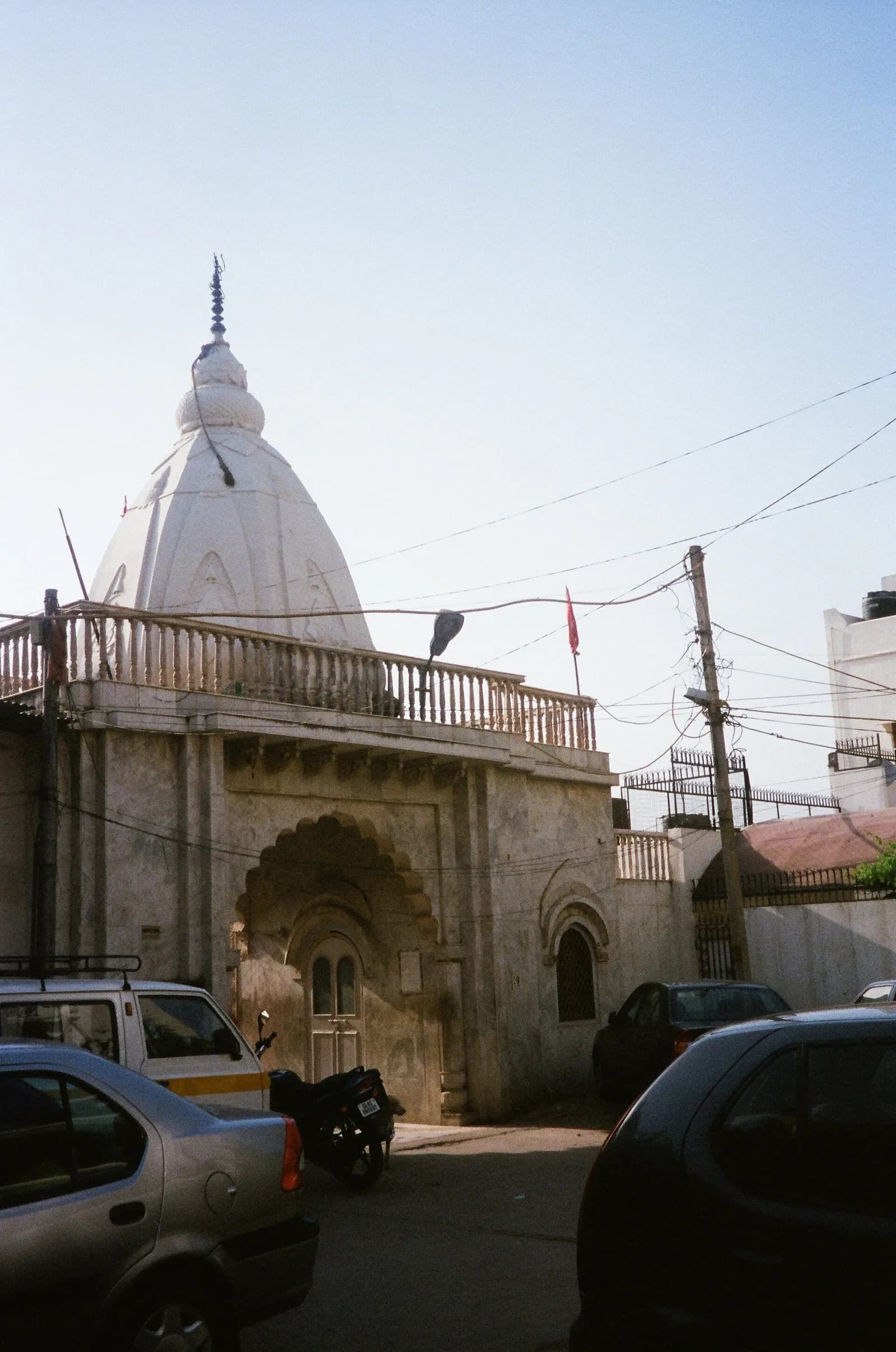
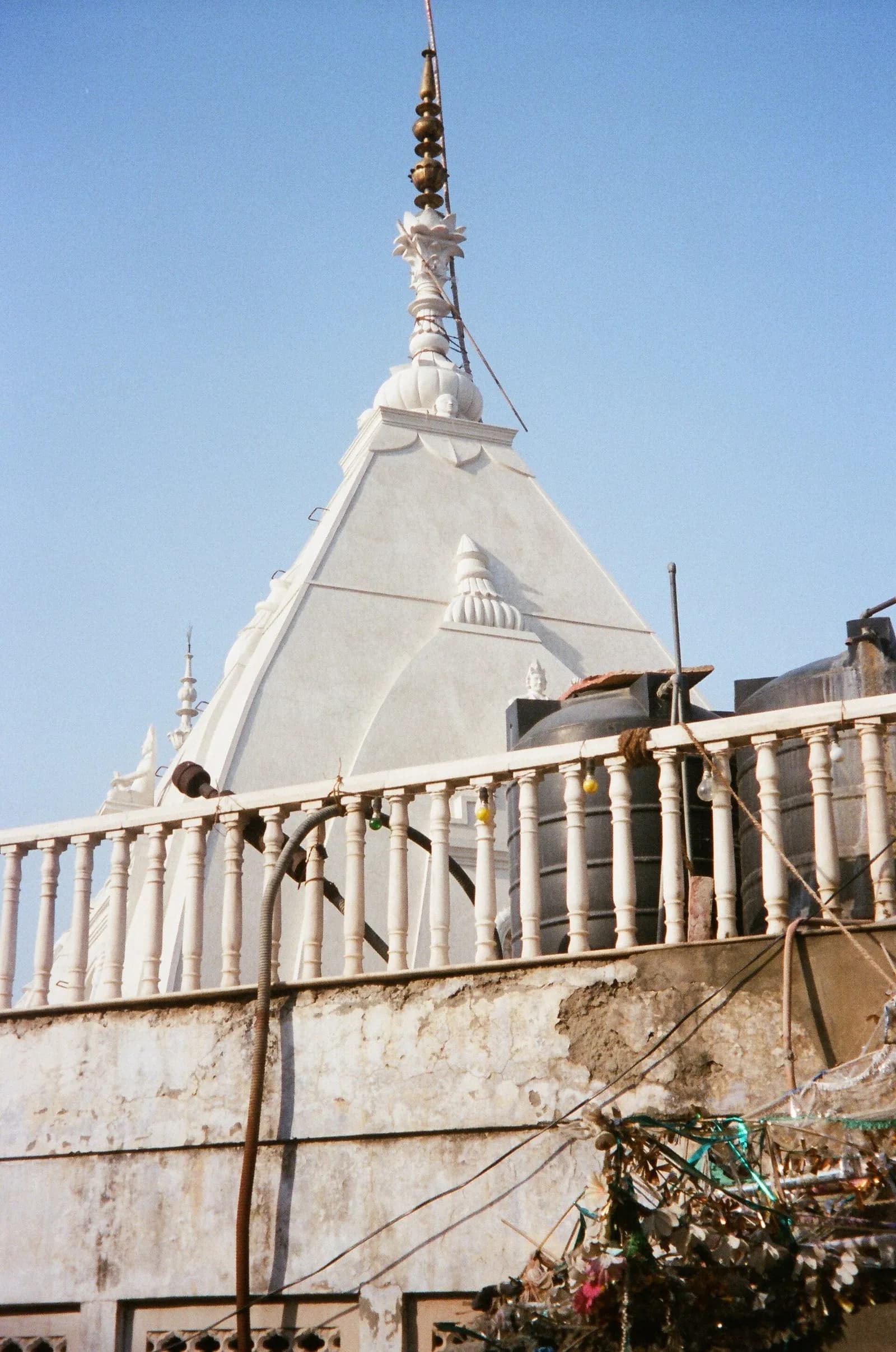
Though the Yogmaya Temple is modest in architectural scale beside the great stone monuments of Mehrauli, it has its own quiet character and knowing what to look for enriches a visit. The temple is built in a traditional North Indian style and centres on its sanctum and tower:
- The shikhara (tower). The temple rises to a prominent North Indian temple spire or shikhara, built of brick and plaster and capped during the 19th-century restoration with a small gilded dome and a flagstaff, the most visible feature from the surrounding lanes.
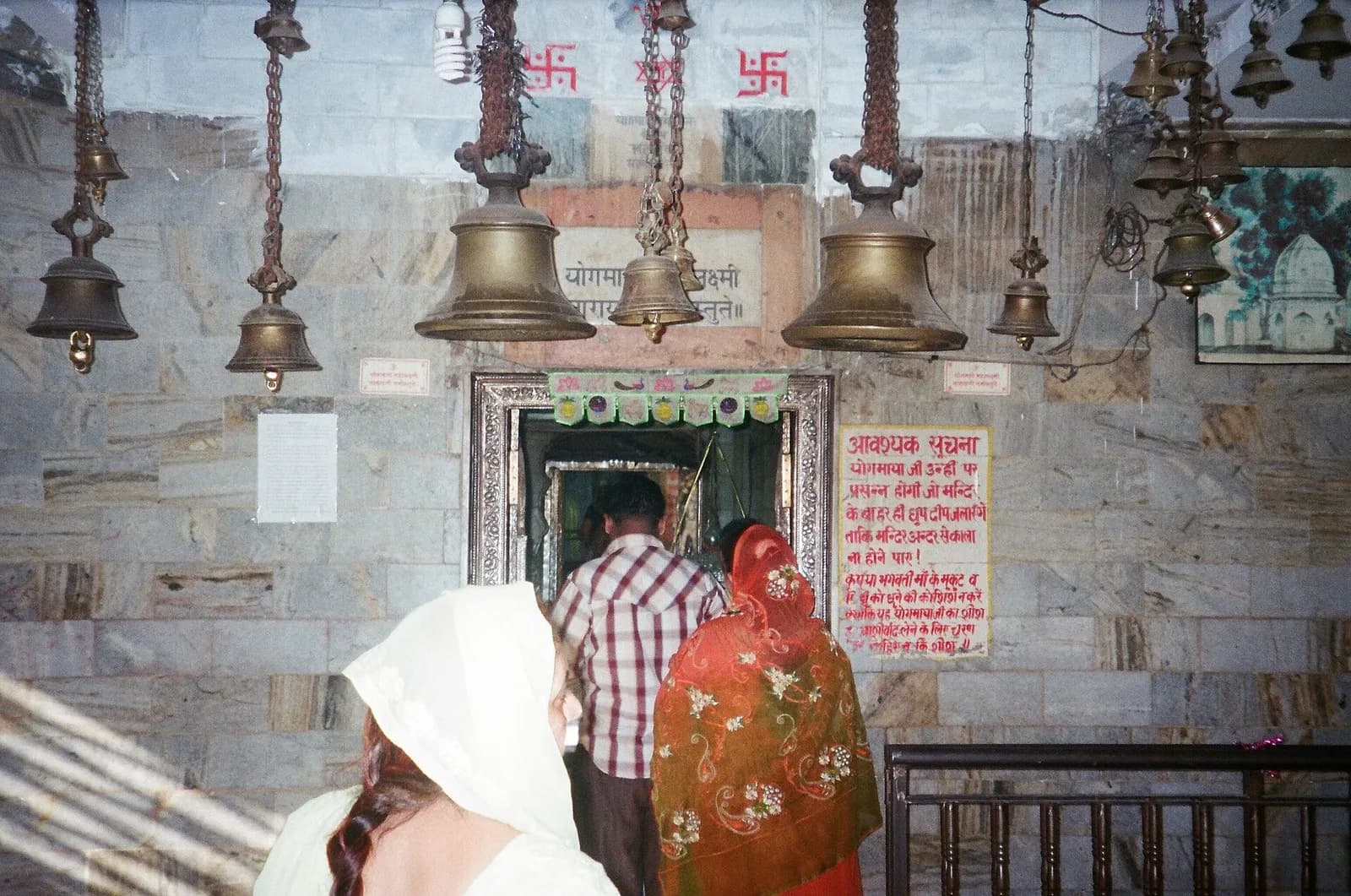
- The sanctum (garbhagriha). The core inner chamber is a small square shrine reached through a covered pillared hall or mandapa, where devotees gather for darshan.
- The sacred stone. Unusually, the deity is represented not by a full carved idol but by a sacred black stone set within a circular marble well in the sanctum, continuously draped in fine silks, brocades and fresh flower garlands.
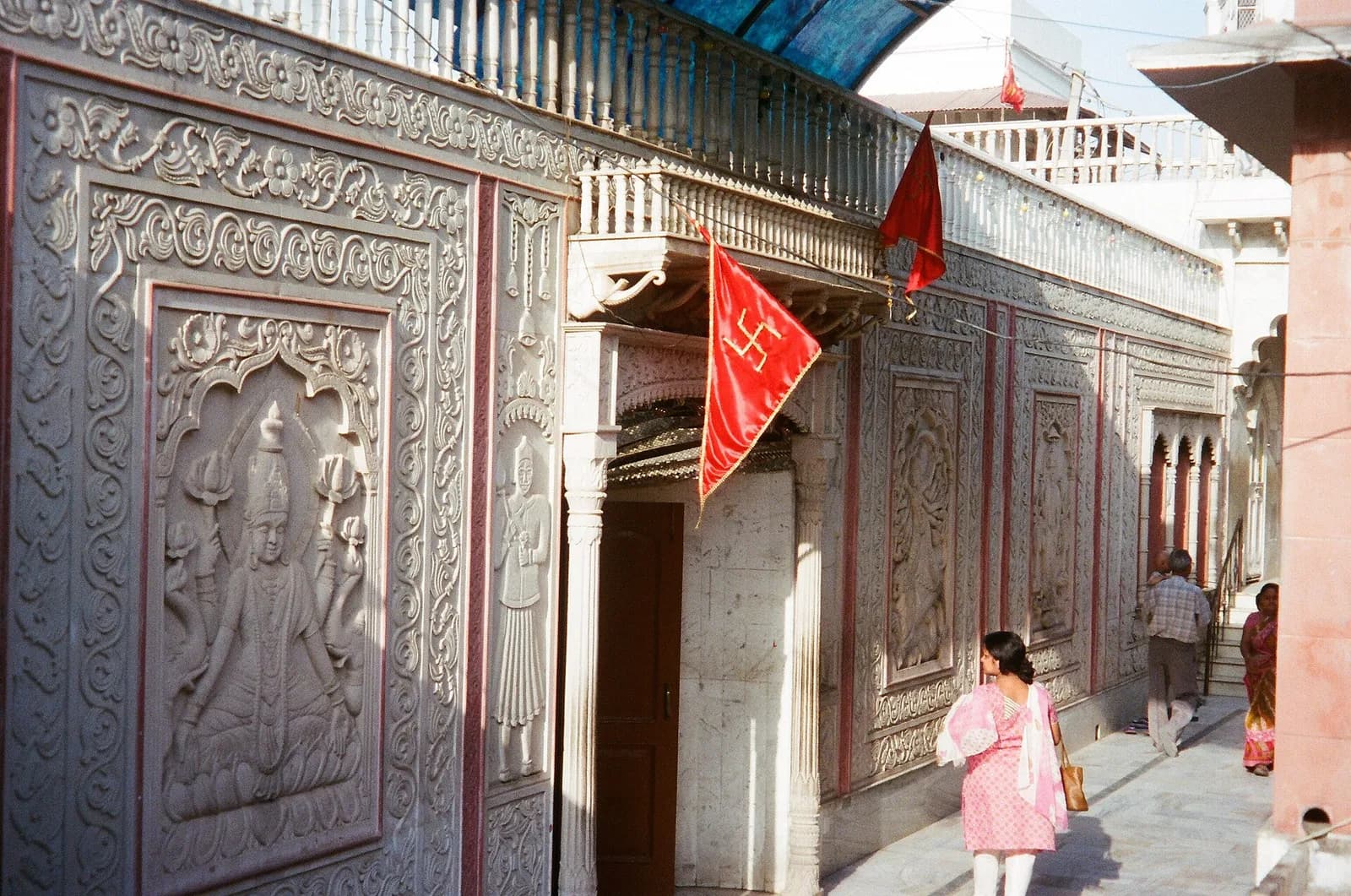
- The courtyard and side shrines. The main building sits in a small walled courtyard paved with stone, with minor side shrines dedicated to Shiva, Kali and Ganesha around its edges.
This simple, intimate layout is part of the temple's appeal: it is a working devotional space rather than a grand showpiece and the sight of the flower-draped sacred stone in its marble well, tended by the hereditary Panda priests who have cared for the shrine for generations, is quietly moving. The temple is independently managed by this local Panda community of traditional priests, who oversee the daily rituals and darshan. For the visitor, the thing to appreciate is not architectural grandeur but the living devotion of a continuously worshipped ancient shrine and the contrast between this humble, active temple and the monumental ruins that surround it in Mehrauli.
Phool Walon ki Sair: the festival of harmony
One of the most important reasons Yogmaya Temple matters to all of Delhi and not only to its devotees, is its central role in Phool Walon ki Sair, the city's historic festival of Hindu-Muslim communal harmony and the story behind it is remarkable. The name translates as the procession of the flower sellers and the temple is its structural anchor:
- The Mughal origin. The festival began in the early 19th century, around 1812, during the reign of Akbar Shah II. The emperor's wife, Queen Mumtaz Mahal Begum, vowed that if her exiled son Mirza Jahangir were allowed to return to Delhi, she would offer flowers at the nearby Sufi shrine of Hazrat Qutbuddin Bakhtiyar Kaki in Mehrauli.
- The unified offering. When the prince returned, the royal family made the offering and out of respect for Delhi's pluralistic culture, they extended the floral offerings to the ancient Hindu Yogmaya Temple as well, binding the two shrines together.
- The pankha procession. Each autumn the festival features a grand secular procession led by flower sellers carrying huge, stylised fans or pankhas, made entirely of fresh marigolds, roses and jasmine, offered first at the Yogmaya Temple and then carried to the dargah of Qutbuddin Bakhtiyar Kaki.
- A shared celebration. The three-day festival is accompanied by music, regional dances and kite-flying and is traditionally inaugurated by a senior dignitary, a living symbol of the shared culture of Delhi.
This festival makes Yogmaya Temple far more than a local shrine: it is a cornerstone of one of India's most cherished traditions of interfaith harmony, where a Hindu temple and a Sufi dargah are honoured together each year in a single celebration rooted in the Mughal court. For the visitor fortunate enough to be in Delhi during Phool Walon ki Sair, usually in the autumn, witnessing the flower-fan procession move between the temple and the dargah is an unforgettable experience of the city's pluralistic spirit. Even for those visiting at other times, knowing this story adds a powerful layer of meaning to the modest temple.
What to expect at Yogmaya Temple
A visit to Yogmaya Temple is quiet, devotional and brief, a complete contrast to the monumental scale of the nearby Qutub complex and knowing what to expect helps you appreciate it. This is a small, active neighbourhood temple set in the dense old lanes of Mehrauli village, busy with local devotees rather than tourists and the experience is one of stepping into a living place of worship rather than a sightseeing monument. You remove your shoes before entering, pass through the pillared hall to the sanctum for darshan of the flower-draped sacred stone and may walk around the small courtyard with its side shrines. The atmosphere is intimate and reverent, especially during the morning and evening aarti and the whole visit typically takes only 30 to 45 minutes.
A few practical points help. As an active temple, respectful dress and conduct are expected and photography inside the sanctum may be restricted, so it is best to ask. The temple lanes of Mehrauli are narrow and can be crowded and the shrine is tucked behind the bus terminal, so a little patience in finding it is worth it. Because the temple closes in the early afternoon, timing your visit for the morning or later afternoon darshan is important. For the visitor, the key is to approach Yogmaya Temple not as a grand monument but as a quiet, deeply historic living shrine, best appreciated for its devotion, its legends and its unique place in Delhi's story, ideally combined with the great monuments of Mehrauli that stand all around it.
Yogmaya Temple timings and practical information
The Yogmaya Temple is open every day, with darshan typically available in the morning from around 5:00 AM to 1:00 PM and again in the evening from around 4:00 PM to 9:00 PM, closing in between for a few hours as is usual for Hindu temples. Entry is completely free and no ticket is required. Morning and evening aarti are the most atmospheric times to visit, while festival days, particularly during Navratri and the autumn Phool Walon ki Sair, bring extended hours and large crowds. As an active place of worship, modest dress and respectful behaviour are expected, shoes are removed before entering and photography inside the sanctum may be limited, so it is courteous to ask. The temple is managed by the hereditary Panda priest community. It sits in the busy old core of Mehrauli, a short ride from the Qutub Minar metro and barely 200 metres from the Qutub complex itself. All timings and conditions are current at the time of writing and can vary, especially around festivals, so reconfirm before a special visit.
Visiting tips
A few pointers make a visit to Yogmaya Temple smoother and more meaningful:
- Time it around the darshan hours. The temple closes in the early afternoon, so come in the morning or later afternoon, ideally for aarti.
- Combine it with the Qutub complex. The temple is barely 200 metres from the Qutub Minar, so the two pair naturally in one Mehrauli outing.
- Dress respectfully. This is an active shrine; modest clothing and quiet conduct are expected and shoes come off at the entrance.
- Ask before photographing inside the sanctum, as it may be restricted.
- Look for it behind the bus terminal. The temple lane is tucked behind the Mehrauli bus terminal, so a little patience helps in finding it.
- Learn the legend first. Knowing the Krishna story and the Phool Walon ki Sair history transforms the visit.
- Visit in the cooler months for comfortable walking around Mehrauli.
- Allow 30 to 45 minutes for the temple itself, more to explore the surrounding monuments.
The key point is to treat Yogmaya Temple as a living, deeply historic shrine rather than a monument to be ticked off and to pair it with the great ruins of Mehrauli for a full sense of this extraordinary old quarter of Delhi.
Best time to visit Yogmaya Temple
The best time to visit is during the cooler months, from October to March, when exploring Mehrauli on foot is comfortable and within the day during the morning or evening darshan hours when the temple is open and the aarti brings the shrine to life. A winter morning is ideal for combining the temple with the nearby Qutub Minar and the monuments of the Mehrauli Archaeological Park. The most special time of all, for those who can plan around it, is the autumn festival of Phool Walon ki Sair, usually held around the September to October period, when the temple is at the centre of Delhi's great celebration of communal harmony, though it is also the busiest. Navratri similarly draws large crowds of devotees. The summer months are hot for walking the open lanes of Mehrauli and the monsoon can be humid. Our guide to the best time to visit Delhi sets out the seasons across the city in more detail.
How to reach Yogmaya Temple (nearest metro)
Yogmaya Temple is easy to reach, sitting in the heart of Mehrauli village right beside the Qutub Minar. The nearest metro station is Qutub Minar on the Yellow Line, from which a short five-minute auto-rickshaw or e-rickshaw ride brings you into the Mehrauli market area and the temple lane, which is tucked just behind the main Mehrauli bus terminal. The temple stands only about 200 metres from the Qutub complex, across the main access street, so visitors to the Qutub Minar can easily walk over. The old lanes of Mehrauli are narrow and busy, so the metro combined with a short rickshaw ride is usually the easiest approach, rather than driving. Set at the historic heart of South Delhi, the temple pairs naturally with a Delhi day tour or a heritage-focused New Delhi tour that takes in the monuments of the south of the city.
Places to visit near Yogmaya Temple
Yogmaya Temple sits in Mehrauli, one of the richest concentrations of historic monuments anywhere in Delhi, so it is surrounded by remarkable sites and makes an excellent stop on a wider heritage outing. Right beside it is the world-famous Qutub Minar complex, with its soaring victory tower, the ancient Iron Pillar and the Alai Darwaza and all around lie the ruins of the sprawling Mehrauli Archaeological Park, including the octagonal Adham Khan's Tomb, the ship-shaped Jahaz Mahal beside the Hauz-i-Shamsi reservoir and the exquisite Jamali Kamali mosque and tomb. A little further north lies the historic Hauz Khas Fort and its lake and the medieval stepwell of Agrasen ki Baoli.
Further out, the capital's other great landmarks round out a full picture of the city: the serene Humayun's Tomb, the mighty Red Fort, the ceremonial India Gate and the modern marvels of the Lotus Temple and Akshardham. For more of Delhi's history, the old citadel of Purana Qila, the astronomical Jantar Mantar and the ruins of Feroz Shah Kotla are well worth adding and our roundup of the important monuments of Delhi ties them together.
Yogmaya Temple in your Delhi itinerary
For most visitors, the Yogmaya Temple works best as part of a wider Mehrauli heritage outing rather than a standalone trip, since it sits amid one of Delhi's densest clusters of monuments. A natural plan is to combine it with the adjacent Qutub Minar and the ruins of the Mehrauli Archaeological Park in a single half-day, giving a rich sweep from the earliest sacred sites of Delhi through its medieval Islamic monuments. The temple itself needs only 30 to 45 minutes, but its legends and its link to Phool Walon ki Sair give it an importance out of all proportion to its size and it adds a devotional, living dimension to a day otherwise spent among ruins. It suits the history-minded traveller, the Krishna devotee and anyone curious about Delhi's traditions of communal harmony.
If Delhi is your gateway to the wider Golden Triangle, Yogmaya Temple offers a quiet, meaningful contrast to the grand monuments on the usual circuit, a reminder that beneath the imperial ruins of Delhi runs an ancient and unbroken thread of devotion. Many of my guests find it one of the more memorable stops precisely because it is so humble and so alive, a working shrine of real antiquity rather than a preserved monument and it deepens their sense of the city before they travel on to Agra and Jaipur.
Travel tips for visiting Yogmaya Temple
A few pointers make a visit even better:
- Come via Qutub Minar metro, then a short rickshaw ride into Mehrauli and look for the temple lane behind the bus terminal.
- Pair it with the Qutub complex, which is barely 200 metres away and the Mehrauli park ruins.
- Visit during darshan hours, morning or later afternoon, ideally for aarti, as the temple closes midday.
- Dress modestly and remove shoes at the entrance, as at any active temple.
- Ask before photographing inside the sanctum.
- Plan around Phool Walon ki Sair in autumn if you want to see the temple at the heart of Delhi's festival of harmony.
- Learn the Krishna legend beforehand to appreciate the shrine's meaning.
- Visit in the cooler months for comfortable walking around the old lanes.
If you would like a local guide to show you Yogmaya Temple and the wonders of Mehrauli and to tell the stories behind them, message our team on WhatsApp at +91 7302265809 with your travel dates and group size and we will shape the day for you.
Is Yogmaya Temple worth visiting?
Yes, for the right visitor Yogmaya Temple is a genuinely rewarding and meaningful stop, even though it is small and easily missed. There is almost nowhere else in Delhi where you can stand in a continuously worshipped shrine of such claimed antiquity, linked by legend to Lord Krishna and the Mahabharata, revered by medieval kings, rebuilt in the Mughal twilight and standing at the very heart of the city's great festival of Hindu-Muslim harmony, all barely 200 metres from one of the most famous monuments in India. It is free to enter, takes only a little time and pairs perfectly with the Qutub Minar and the monuments of Mehrauli. The caveats are simple: it is a modest, active neighbourhood temple rather than a grand sight, it closes in the early afternoon and it sits in busy old lanes that take a moment to navigate. For the history lover, the Krishna devotee and the curious traveller who wants to feel the deepest layers of Delhi's past, it is well worth seeking out and I include it for guests who want more than the usual monuments.
Plan your trip with us
At Experience My India, through our Delhi and Golden Triangle travel desk, we design unhurried, well paced trips that make room for places like Yogmaya Temple, the living, lesser-known heart of old Delhi and not just the famous monuments, with guides who can tell you the legends and the history that bring such sites to life. Being a Braj family ourselves, with roots in Gokul where the Krishna story begins, we take particular pleasure in sharing the Krishna connections of Delhi's shrines. Whether you want a relaxed set of Delhi Agra tours or a full Golden Triangle route through Delhi, Agra and Jaipur, we plan around your pace, your interests and the right season. Share your dates and the kind of trip you have in mind through our enquiry page, tell us your group size and we will put together an honest, tailored plan rather than a rushed checklist.
Related guides
- Places to visit in Delhi, for the wider picture
- Nearby places to visit in Delhi, to extend your trip
Enquire Now
Ready to Explore
The Heart of Delhi?
Explore the Red Fort, Qutub Minar, Humayun's Tomb, and the vibrant streets of Old Delhi with our expert-guided premium tours of India's capital city.

Delhi
Premium Tour Package
Questions
Frequently asked questions
Who built the Yogmaya Temple?
In tradition the original shrine was built by the Pandavas at the end of the Mahabharata war. The present structure, however, was rebuilt in the early 19th century, around 1827, by Lala Sidhu Mal, a noble in the court of the Mughal emperor Akbar Shah II.
Why is Yogmaya the sister of Krishna?
What are the timings of Yogmaya Temple?
Is there an entry fee for Yogmaya Temple?
Which is the nearest metro station to Yogmaya Temple?
How far is Yogmaya Temple from Qutub Minar?
What is Phool Walon ki Sair and how is the temple connected?
Is Yogmaya Temple a Shakti Peetha?
How much time do I need to visit?
Explore more
Plan your Yogmaya Temple trip with us

Interested in Yogmaya Temple, Mehrauli: History, Timings and Visitor Guide?
Chat with our travel team for a custom quote, or browse every package.
Related Attractions
9Ready to explore Yogmaya Temple, Mehrauli: History, Timings and Visitor Guide?
Book your private tour today and experience the magic of India's rich heritage.