 Jaipur
Chandpole, Jaipur: The Moon Gate and Its Craft Bazaar
Chandpole is Jaipur's Moon Gate and a 1-km craft bazaar for marble, wood and textiles. History, shopping, street food and how to reach, from a local guide.
Quick answer
Chandpole, the Moon Gate, is both the 18th-century western gateway of Jaipur's walled Pink City and the 1-km bazaar running from it to Choti Chaupad. Built in 1727 by Sawai Jai Singh II, it is famous for marble carving, woodwork, textiles and old street food. The gate is free and open 24 hours. This guide is by Delhi Agra Tour Packages, a unit of Experience My India.
- #chandpole
- #jaipur
- #jaipur-attractions
- #jaipur-travel
If you want Chandpole's workshops, the forts above it and the Taj all woven into one well-paced trip, our Delhi Agra Tour Packages team builds the route around you, so you reach the artisans and the sights at the right hours without fighting the old city's traffic.
I am Abhay Sharma, and I have guided travellers across Rajasthan and the Golden Triangle since 2015. Chandpole is where I send guests who want the real, working Jaipur rather than the polished tourist trail. It is a genuine Pink City gate with royal drummers' quarters on top, and beyond it a kilometre of craft lanes where marble sculptors and woodworkers still carve in open-front workshops, far quieter than the famous jewellery bazaars. Below is everything I tell my own guests before they go, whether they are hunting for handicrafts and street food or building a full Golden Triangle tour through Delhi, Agra and Jaipur.
Chandpole at a Glance
| Feature | Detail |
|---|---|
| What it is | Western Moon Gate of the Pink City, plus its 1-km craft bazaar |
| Built | 1727, by Maharaja Sawai Jai Singh II |
| Meaning | Chand (moon) + Pol (gate), on the western wall where the moon sets |
| Gate entry | Free, open 24 hours |
| Bazaar hours | Shops roughly 10:30 AM to 9 PM; some wholesale shops closed Sunday |
| Famous for | Marble carving, woodwork, textiles, lac bangles, street food |
| Key lane | Khazane Walon Ka Rasta, the marble sculptors' lane |
| Nearest metro | Chandpole and Choti Chaupad, both on the Pink Line |
| Time needed | 2 to 3 hours |
| Best time | 8 AM to 10 AM, or 4:30 PM to 8 PM |
Chandpole Timings, Entry Fee and How to Reach
Here are the three things most people check first, grouped so you can plan in one glance. The detail behind each follows further down.
Timings
| Zone | Opening hours |
|---|---|
| Chandpole Gate | Open 24 hours, public landmark |
| Chandpole Bazaar shops | 10:30 AM or 11 AM to 8:30 PM or 9 PM |
| Weekly closure | Several wholesale and artisan shops close Sunday |
Entry fee
| Item | Charge |
|---|---|
| Gate and bazaar access | Free |
How to reach
| Mode | Detail |
|---|---|
| Metro | Pink Line to Chandpole or Choti Chaupad, at the two ends of the bazaar |
| Auto or e-rickshaw | From Jaipur Junction or Sindhi Camp, both within 2 km |
| On foot | A walk from the walled-city core and Badi Chaupad |
At the time of writing these details are correct, though shop hours and closures vary, so confirm on the day.
What Is Chandpole
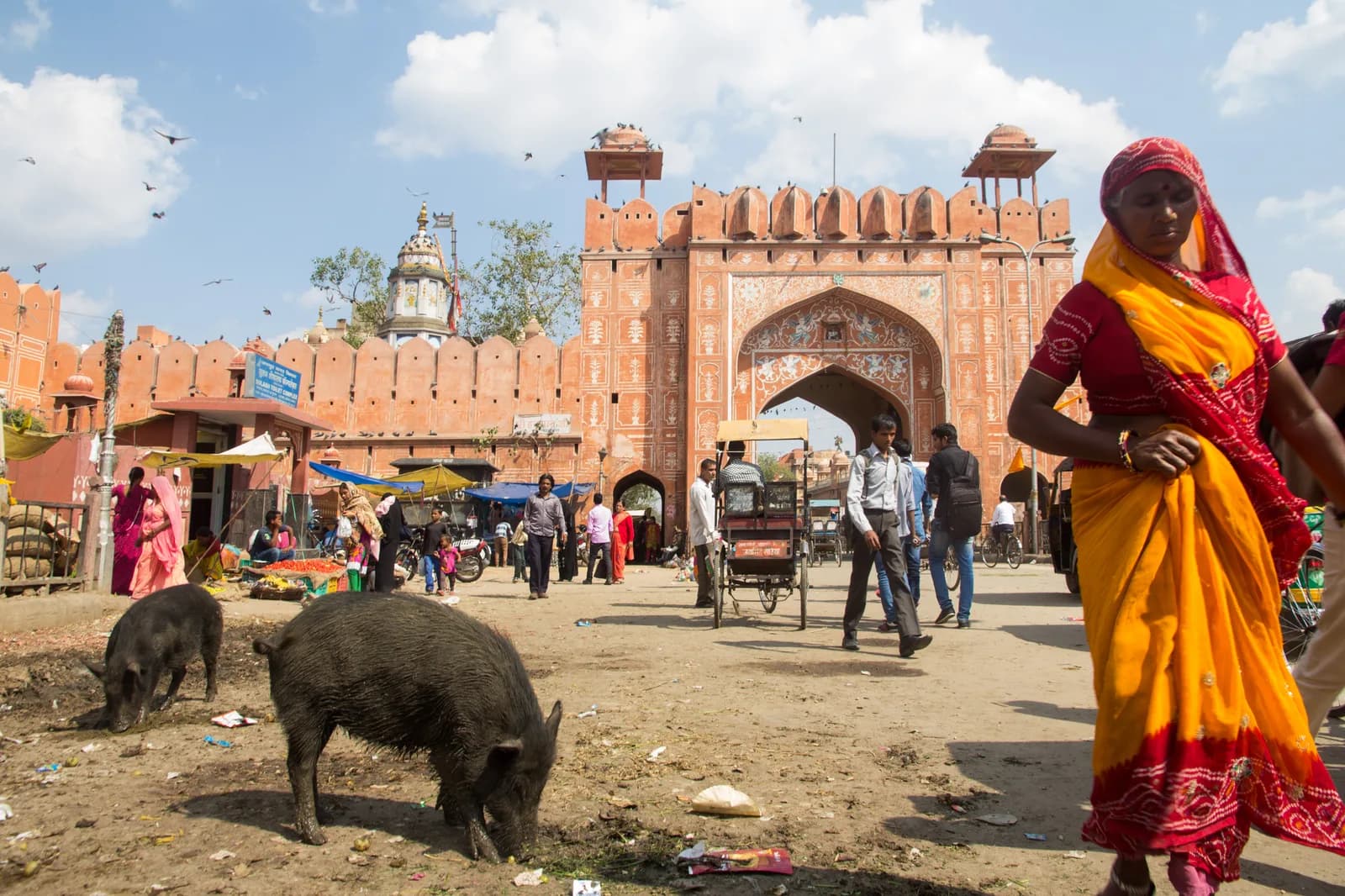
Chandpole is two things sharing one name. It is a historic gateway, one of the original fortified entrances in the wall of Jaipur's planned Pink City, on the western side of the old town. And it is the bazaar that runs inland from that gate, a traditional market stretching roughly 1 km from Chandpole Gate to Choti Chaupad, lined with over 350 uniform pink-fronted shops. When Jaipur locals say Chandpole, they may mean either, and usually mean both, because the gate and the market are inseparable in daily life.
What sets Chandpole apart from Jaipur's other famous markets is its character. Where Johari Bazaar and Bapu Bazaar are busy with jewellery and tourist shopping, Chandpole is quieter, more local and built around artisan workshops, one of the city's most authentic hubs for marble craftsmanship, woodwork, textiles and heritage street food. This is a place to watch things being made, not just sold. For travellers who want to see the working, craft-making side of the city, it is one of the most rewarding of all the things to do in Jaipur, and a refreshing change from the monument circuit.
History of Chandpole Gate: Who Built It and When
Chandpole Gate was built in 1727 by Maharaja Sawai Jai Singh II, as one of the original fortified entrances to his newly planned city of Jaipur. That year is the founding moment of the city itself, so Chandpole is as old as Jaipur, part of the first generation of gates set into the wall that defined and defended the new capital. Jaipur was one of India's earliest planned cities, laid out on a grid and enclosed by the Parkota wall with gates controlling each approach, and Chandpole guarded the western side.
From the beginning it was both a defensive entrance and a working gate for trade and daily movement, the western counterpart to the gates on the city's other sides. Its position on the road toward Nahargarh and the hills gave it a particular role in the life of the old city, and the craft bazaar that grew up behind it turned the gate into the head of a thriving artisan district. Seeing Chandpole as part of Jai Singh's grand design, rather than an isolated arch, is what makes it interesting, and it connects to the wider story of one of the most carefully planned capitals in India.
That planning was not only about defence. Jai Singh II laid Jaipur out as a commercial city, with broad bazaar streets radiating from its gates and whole quarters set aside for particular trades and crafts. Chandpole's artisan character, the marble carvers and woodworkers clustered in its lanes, is a direct inheritance of that design, a working craft district that has held its purpose for three centuries. Few bazaars anywhere let you stand in a market that is still doing, in the same place, the very job it was planned for in 1727.
What Does Chandpole Mean? The Moon Gate
Chandpole means Moon Gate. In Hindi, chand means moon and pol means gate, so the name translates directly as the gate of the moon. It is a poetic name with a practical origin, the gate earned it because it sits on the western wall of the city, the direction in which the moon sets. The western gate became the moon gate, a nice counterpoint to the logic of a city planned with such care for direction and alignment.
This is the kind of detail that makes the old city rewarding to understand rather than simply walk through. Jaipur's founders thought in terms of cardinal directions, cosmology and symbolism when they laid out the capital, and the naming of its gates reflects that. Knowing that you are passing through the Moon Gate, named for the setting moon on the city's western edge, adds a small thread of meaning to what might otherwise be just another arch over a busy road. That same thoughtful planning runs through the whole walled city, from the gates to the painted palaces like the City Palace sub-part at Chandra Mahal.
Chandpole Gate Architecture and the Naubat Khana
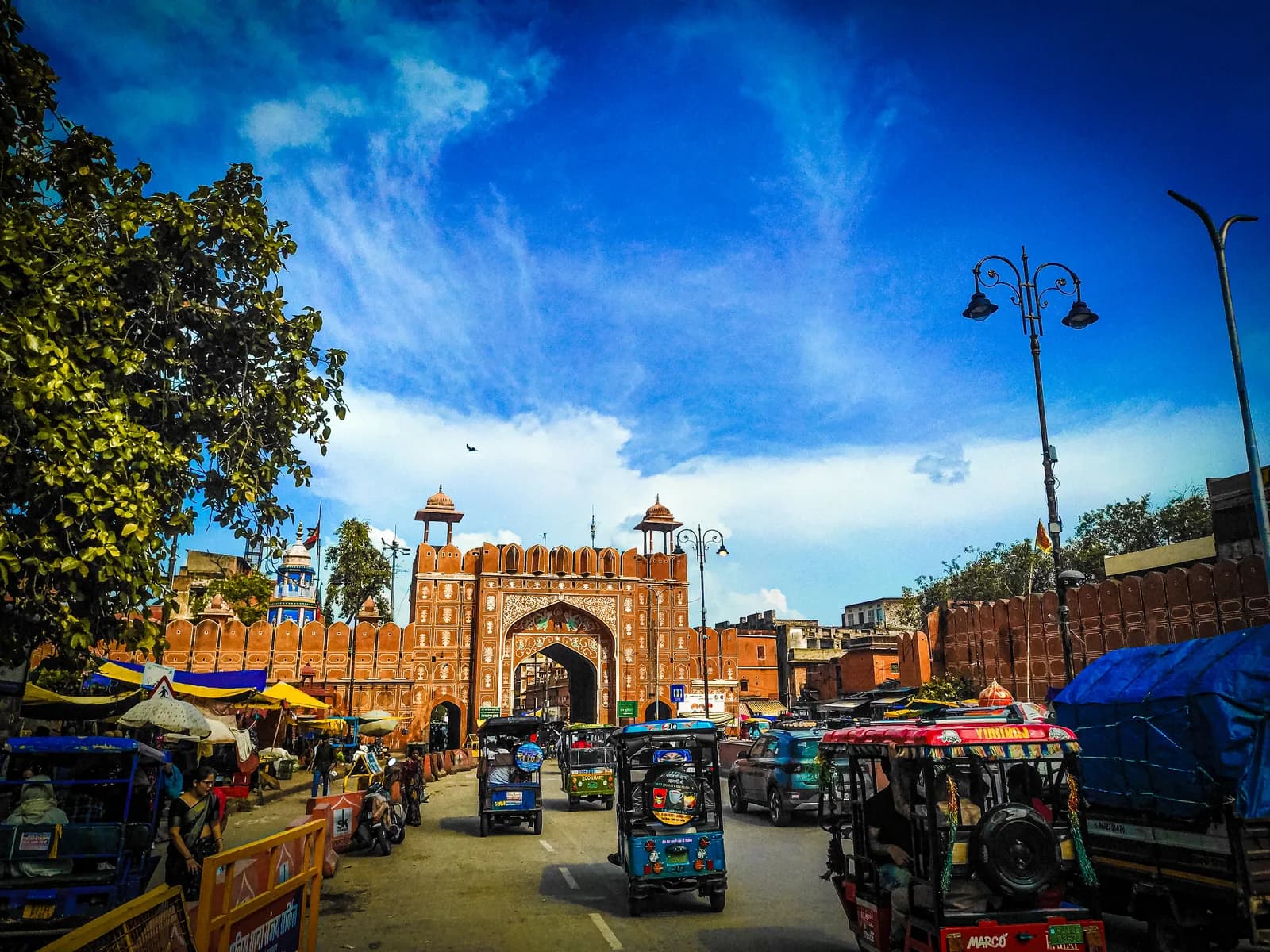
Chandpole Gate blends sturdy Rajput fortification with Mughal elegance, built in sandstone and painted in Jaipur's signature terracotta pink, so it reads immediately as part of the Pink City. It is a solid, defensive structure softened by decorative detail, the practical and the beautiful combined in the manner of the best Jaipur architecture.
Look for the details. The gate carries symmetrical arches, sheltered verandahs and roofed balconies, and on close inspection you can still make out faded 18th-century floral and geometric frescoes, the painted decoration that once brightened the stone. The most evocative feature is at the top. The uppermost section of the gate is the Naubat Khana, the drum house, from which royal musicians and drummers once played, announcing the hours and ceremonial occasions over the comings and goings below. Picture that, the beat of the naubat drums rolling out over the western gate of the new capital, and the structure stops being a traffic arch and becomes a living part of royal Jaipur. Beside the gateway stands a revered Hanuman temple that draws a steady stream of local devotees through the day, so the gate is a spiritual landmark as much as a historic one. This ornate, painted style runs across the whole old city, and seeing it here sharpens your eye for the craftsmanship on show throughout the wider places to visit in Jaipur at night, when the bazaars are lit.
What Is Chandpole Bazaar Famous For
Chandpole Bazaar is famous for being Jaipur's craft and artisan market, the place where the city's handwork is actually made. Spanning roughly 1 km with over 350 uniform pink-fronted shops, it is distinctly less tourist-heavy than Johari or Bapu Bazaar and excels instead in artisan workshops, where you can watch craftspeople at work rather than simply browse finished goods.
Above all it is famous for marble. Chandpole is Jaipur's marble-carving centre, and its most celebrated lane, Khazane Walon Ka Rasta, is lined with master sculptors carving Hindu deities, animal figurines, vases and home decor out of white and coloured marble, often working in open-fronted workshops in full view of the street. Watching a craftsman chip and smooth a block of stone into a figure of a deity, a skill handed down through families over generations, is one of the quietly memorable experiences of Jaipur, and it costs nothing to stand and look. Jaipur and nearby Makrana have supplied marble and marble artisans for centuries, and Chandpole is where that living tradition is most visible in the city itself.
Beyond marble, it is known for woodwork, textiles, lac bangles, traditional footwear and spices, the full range of Rajasthani craft, much of it still made by hand in or near the shops that sell it. If you want to understand why Jaipur is called a city of artisans, Chandpole is where you see it most directly, and it earns its place among the city's genuine hidden places to visit in Jaipur precisely because most visitors never stray this way, heading instead for the jewellery bazaars a few lanes over.
Shopping in Chandpole Bazaar: Marble, Wood and Textiles
Chandpole rewards shoppers who like craft over branded goods, and the range is wide. Here is what to look for.
- Marble sculptures and stonework. Head into Khazane Walon Ka Rasta, the famous side lane of master sculptors carving deities, figurines, vases and home decor from white and coloured marble, the signature craft of Chandpole.
- Wooden handicrafts. Shops along the main stretch sell intricately carved wooden furniture, decorative boxes, traditional puppets and wall hangings.
- Textiles and apparel. Browse colourful Rajasthani fabrics, block-printed bedsheets, bandhani tie-dye dupattas, mirror-work garments and traditional turbans.
- Jewellery and footwear. Pick up handmade lac bangles, silver and metal trinkets, and embroidered leather mojaris, the classic Rajasthani slippers.
- Spices and dry fruits. Local wholesale and retail grocers offer good saffron, Rajasthani red chillies, pulses and assorted dry fruits.
The pleasure of Chandpole is that prices are generally lower than in the big tourist bazaars and the goods are closer to their makers. For a fuller picture of Jaipur shopping, from the textile-and-juttis lanes of Bapu Bazaar to the modern, air-conditioned shopping malls, it is worth knowing how Chandpole fits in, as the craft-and-workshop end of the spectrum. Buy here and you are usually buying closer to the source.
Street Food in Chandpole: Where to Eat
The lanes branching off Chandpole Bazaar hide some of Jaipur's oldest vegetarian street-food stalls and traditional eateries, and for many locals this is reason enough to come. These are a few of the long-standing names worth seeking out.
- Mahaveer Rabri Bhandar, on Mishra Rajaji Ka Rasta, a heritage eatery famous for hearty bejad roti, a multigrain flatbread, served with aloo pyaaz paneer sabzi, garlic chutney and thick saffron rabri.
- Shree Prajeet Chat Bhandar, on Baba Harishchandra Marg, a popular stall drawing crowds for crisp aloo tikki chole, dahi bhalle and golgappe.
- Rahul Chat Bhandar, tucked into Jai Lal Munshi Ka Rasta, a long-standing shop known for soft dahi bada and spiced potato patties.
- Sampat Kachori, near the Hanuman temple on Nahargarh Road, serves freshly fried, flaky kachoris with tangy chutneys.
Eating your way through these lanes is a genuine Jaipur experience, the food that locals have eaten for generations rather than anything put on for visitors. The rabri, the thick, slow-reduced sweetened milk, and the kachoris and chaat here are the real thing, made fresh and eaten standing up amid the bustle of the bazaar. These are old family establishments, some run by the same families for decades, and part of the pleasure is that you are eating where generations of Jaipur residents have eaten, not at a tourist counter. Come hungry, carry small cash for the stalls, and treat the street food as part of the sightseeing rather than an afterthought. For the wider city of flavours around it, our guides to famous foods in Jaipur and the best places to eat in Jaipur will keep you busy well beyond Chandpole.
Chandpole Bazaar Timings and Opening Hours
Chandpole Gate itself is an open public landmark, accessible 24 hours a day with no entry fee, since it is a working gate carrying the life of the city at all hours. The bazaar, though, keeps shop hours. Most shops in Chandpole Bazaar generally open from 10:30 AM or 11 AM and trade until 8:30 PM or 9 PM, so the market has a clear daytime-into-evening rhythm rather than an early start.
One practical point on closures. Most shops stay open through the week, but several of the wholesale and artisan stores close on Sundays, so if your heart is set on commissioning a marble piece or visiting a particular workshop, avoid Sunday or check ahead. The food stalls and many retail shops keep going regardless. Because the gate never closes and the bazaar runs late, Chandpole suits both an early-morning visit for the architecture and quiet, and an evening visit for the lively, lit market, which is a flexibility few of Jaipur's sights offer. That makes it easy to fit around whatever else your day holds, whether you start here or end here.
Best Time to Visit Chandpole
The best time to visit Chandpole falls in two windows. Come early in the morning, between 8 AM and 10 AM, for quiet photography in soft sunlight, when the pink shopfronts and the gate are at their most photogenic and the lanes are calm. Or come in the late afternoon and evening, from 4:30 PM to 8 PM, when the bazaar is at its liveliest and most illuminated, full of shoppers, artisans and the energy of a working market.
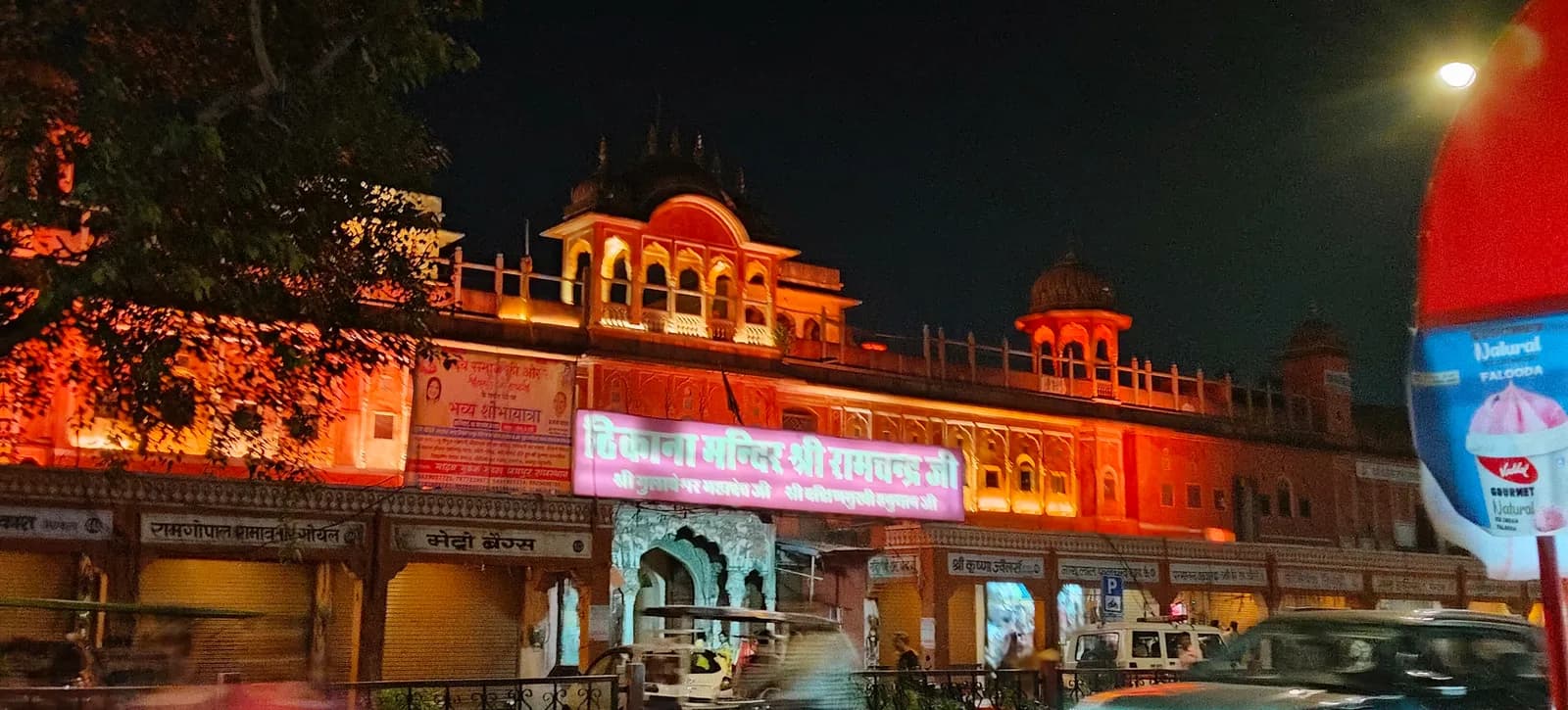
Which you choose depends on what you want. The morning is for photographers and for anyone who wants to watch the marble carvers settle into their day without crowds, while the evening is for atmosphere, shopping and street food at full tilt, when the pink shopfronts glow under their lights and the lanes fill with locals. The cooler months from October to March are the comfortable season for walking the lanes, which involves a fair amount of time on your feet; the summer, from April to June, makes a long bazaar walk hot and tiring. Whichever window you pick, give the place time, because Chandpole rewards slow wandering rather than a quick pass, and a rushed visit misses the whole point. The city after dark holds plenty more, and the lit bazaars are one of its real highlights.
How to Reach Chandpole: Metro and More
Chandpole is one of the easiest parts of the old city to reach, because the Jaipur Metro serves both ends of the bazaar. Take the Pink Line directly to Chandpole Metro Station or Choti Chaupad Metro Station, which sit at either end of the 1-km market, so you can enter at one and walk through to the other, a neat way to cover the whole stretch without backtracking. This metro access makes Chandpole far simpler to reach than its narrow lanes might suggest.
If you prefer road transport, Jaipur Junction Railway Station and the Sindhi Camp bus stand are both within 2 km and easily reached by auto-rickshaw or e-rickshaw. From the walled-city core, Chandpole is a walk or short ride west along the main bazaar axis. As with the rest of the old city, driving a private car into the congested lanes is best avoided, so arrive by metro or auto and explore on foot. If you are reaching Jaipur from elsewhere on the Golden Triangle, the practical distances are in our Delhi to Jaipur distance and Agra to Jaipur distance guides, and once in the city our Jaipur trip planner helps you slot Chandpole into the wider route.
Things to See Near Chandpole
Chandpole sits at the western edge of the walled city, with the old town on one side and the hill forts above, so it combines beautifully with a string of major sights. Here is what is close by.
- Nahargarh Fort, reached via the nearby Nahargarh Road that climbs from Chandpole, is the hilltop fort with the city's finest sunset views, a natural pairing with a Chandpole afternoon.
- City Palace and Jantar Mantar, the walled city's monumental core, lie a short ride or walk east of Choti Chaupad.
- Govind Dev Ji Temple, inside the City Palace complex, is one of Jaipur's most beloved Krishna temples and an easy add-on.
- The Hanuman temple at the gate itself is a living local shrine woven into the daily life of the bazaar.
Because the old city and the hill road meet here, you can combine Chandpole's craft lanes with the monumental core to the east and the forts above in a single well-planned day, pausing at the royal cenotaphs of Gaitore Ki Chhatriyan on the Nahargarh road. This western quarter is one of the most characterful corners of Jaipur, and exactly the sort of route we build into a day for guests who want craft and heritage together.
Is Chandpole Worth Visiting
Yes, Chandpole is well worth visiting, especially for travellers who want more than the standard monument-and-jewellery circuit. It is free, it rewards a couple of unhurried hours, and it offers something the big tourist bazaars do not, the chance to watch marble sculptors, woodworkers and other artisans at work in open-front workshops, alongside some of the city's oldest street food. For anyone interested in craft, making and the working life of Jaipur, it is a highlight.
Set your expectations correctly and you will love it. This is a dense, busy, working bazaar with uneven pavements and two-wheeler traffic, not a landscaped attraction, and that is exactly its appeal. Visitors who come expecting a polished tourist experience may find it chaotic, whereas those who come to wander the side lanes, watch the artisans and eat well leave with a far richer sense of the city than the monuments alone give. Go in the morning for calm or the evening for buzz, dive into the rastas, and Chandpole delivers one of the most authentic experiences in Jaipur.
I rate it for one more reason. It is the Jaipur that still makes things, not just sells them, and standing in a marble carver's workshop watching a deity emerge from a block of stone is a memory that outlasts any souvenir. For the curious traveller, that is the whole point, and it is the kind of experience that makes a trip feel like the city rather than a checklist. Buy a small carved piece or a block-printed length of cloth and you take home something made a few feet from where you bought it, with the maker's hands still on it.
Travel Tips for Chandpole
A few practical pointers will make the visit smoother. Come between 8 AM and 10 AM for quiet and photography, or 4:30 PM to 8 PM for the lively, lit market, and treat October to March as the comfortable season. Explore the side lanes, the rastas, because the real charm of Chandpole lies in the narrow perpendicular alleys like Khazane Walon Ka Rasta and Jai Lal Munshi Ka Rasta, where artisans work live in open-front workshops, not only on the main road. Bargain politely, since prices here are generally lower than in tourist bazaars, but aiming for 15 to 25 percent off the initial quote on handicrafts and textiles is standard. Wear comfortable footwear for uneven stone pavements, crowded walkways and heavy two-wheeler traffic along the main corridor. Carry cash in small denominations, because while many shops take UPI, smaller stalls and workshops often prefer it. Avoid Sunday if a specific wholesale or artisan shop matters to you, as several close that day. And combine the visit with the nearby forts, palaces and temples so your time in this quarter is well used, which you can map into a day with our Jaipur 1 day itinerary.
Where Chandpole Fits in Your Jaipur Trip
Chandpole works best as a craft-and-food half-day woven into the wider old city rather than a quick stop. The natural rhythm is to arrive by metro at one end of the bazaar, walk the kilometre through the craft lanes to the other, dipping into Khazane Walon Ka Rasta for the marble workshops and the food lanes for breakfast or an evening snack, and then continue east to the City Palace, Jantar Mantar and Govind Dev Ji, or up the Nahargarh road to the fort for sunset. Done this way, Chandpole anchors a rich, varied day that balances craft, heritage and views.
For a first-time visitor, Chandpole is a wonderful counterpoint to the headline monuments, and it slots comfortably into a one-day plan as the shopping-and-craft portion. With two or three days you can give the lanes a relaxed morning of their own and still cover the forts, gardens and palaces at an easy pace, the approach our Jaipur itinerary for 2 to 3 days is built around. However you structure it, Chandpole adds a dimension of real craft and local life that a monument-only trip misses, and basing yourself near the walled city makes it easy to return in the evening when the bazaar is at its liveliest.
Plan Your Trip With Us
A great Jaipur visit is really about sequencing, putting the craft lanes, the bazaars, the palaces and the hill forts in the right order, at the right time of day, with a driver who knows the old city and when to go up for sunset. That is exactly what we do. We design private, unhurried trips across Jaipur and the wider Golden Triangle, built around you rather than a fixed coach route.
Tell us your dates, how many of you are travelling and what you most want to see and buy, and we will shape an itinerary that threads the workshops, the sights and the hidden corners together without the rush. You can explore our full range of Delhi Agra tours and our classic Golden Triangle tours, or ask us about shorter runs like a same day Agra tour from Delhi, an Agra overnight tour from Delhi or a sunrise Taj Mahal tour to pair with your Jaipur leg.
To start planning, message us on WhatsApp at +91 7302265809 with your travel dates and group size, and we will send back an honest, tailored plan. As a Brajwasi who has hosted travellers across this region for years, I promise you a trip that feels personal, not packaged.
Related Jaipur Guides
Keep exploring with these guides:
- Places to visit in Jaipur for the full sightseeing picture.
- Best time to visit Jaipur to pick the right season for walking the lanes.
- Places to visit in Jaipur for 2 days to see where Chandpole fits in a longer stay.
- Where to stay in Jaipur to base yourself near the walled city.
Enquire Now
What our travellers say
“Our Golden Triangle honeymoon was flawless. Sunrise at the Taj with a private guide felt like a dream — every detail was handled.”
“As a first-time visitor to India, I felt completely safe and looked after. The driver and guide were superb professionals.”
“Travelling with two kids is hard, but they made it effortless. Great pacing, clean cars and zero surprises on price.”
“Booked the Agra day trip on short notice and it went off without a hitch. The guide's history knowledge made the Taj come alive.”
“Best decision of our India trip. Car was spotless, driver was punctual every single day, and the itinerary never felt rushed.”
“Organised a same-day Agra trip for my parents. Communication before and during the trip was excellent — genuinely stress-free.”
“Sunrise at the Taj Mahal was magical. Our guide spoke great English and answered every question with patience.”
“Three generations travelling together and everyone was comfortable — good vehicle, sensible stops, and no hidden costs.”
“I've used a few tour operators across Asia and this was among the smoothest. Fair pricing and they actually answer the phone.”
“Our custom Rajasthan-Agra combo was planned around our budget without cutting corners on comfort. Highly recommend.”
“Solo female traveller here — I felt safe throughout. The driver was respectful and the whole trip was timed perfectly.”
Ready to Explore
The Pink City?
Experience the Amber Fort, Hawa Mahal, City Palace, and the colorful bazaars of Jaipur with our expert-guided premium tours of Rajasthan's capital.

Jaipur
Premium Tour Package
Questions
Frequently asked questions
What does Chandpole mean, and why?
Chandpole means Moon Gate, from the Hindi chand (moon) and pol (gate). It earned the name because it stands on the western wall of the walled city, the direction in which the moon sets.
Who built Chandpole Gate and when?
What is Chandpole Bazaar famous for?
What are the timings of Chandpole?
Is Chandpole Bazaar open on Sunday?
Is there an entry fee for Chandpole?
What is the nearest metro station to Chandpole?
How much time do you need at Chandpole?
What should I buy in Chandpole?
Is Chandpole worth visiting?
Explore more
Plan your Chandpole trip with us

Interested in Chandpole, Jaipur: The Moon Gate and Its Craft Bazaar?
Chat with our travel team for a custom quote, or browse every package.
Related Attractions
9Chandpole, Jaipur on the map
Open in Google MapsReady to explore Chandpole, Jaipur: The Moon Gate and Its Craft Bazaar?
Book your private tour today and experience the magic of India's rich heritage.