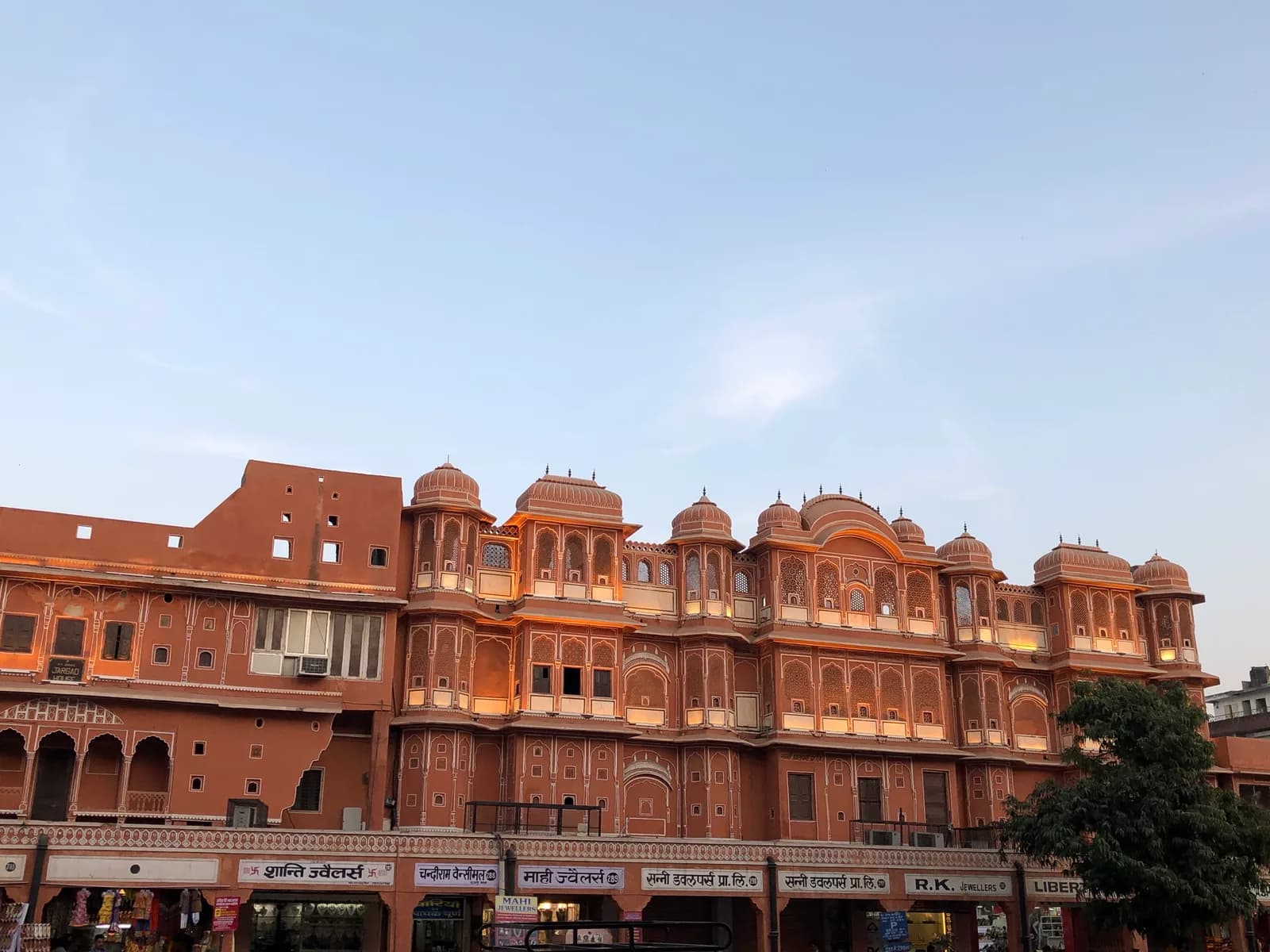
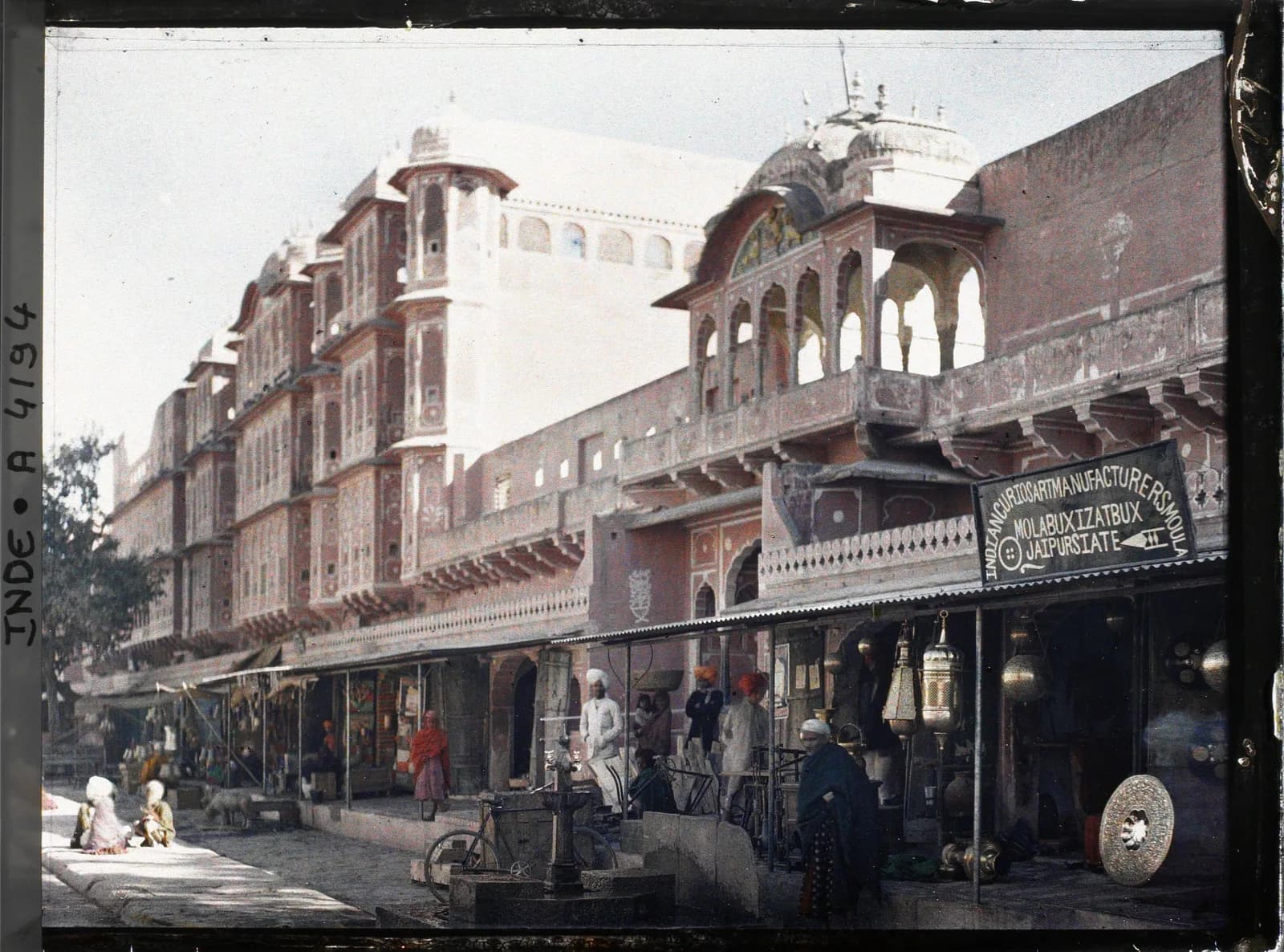
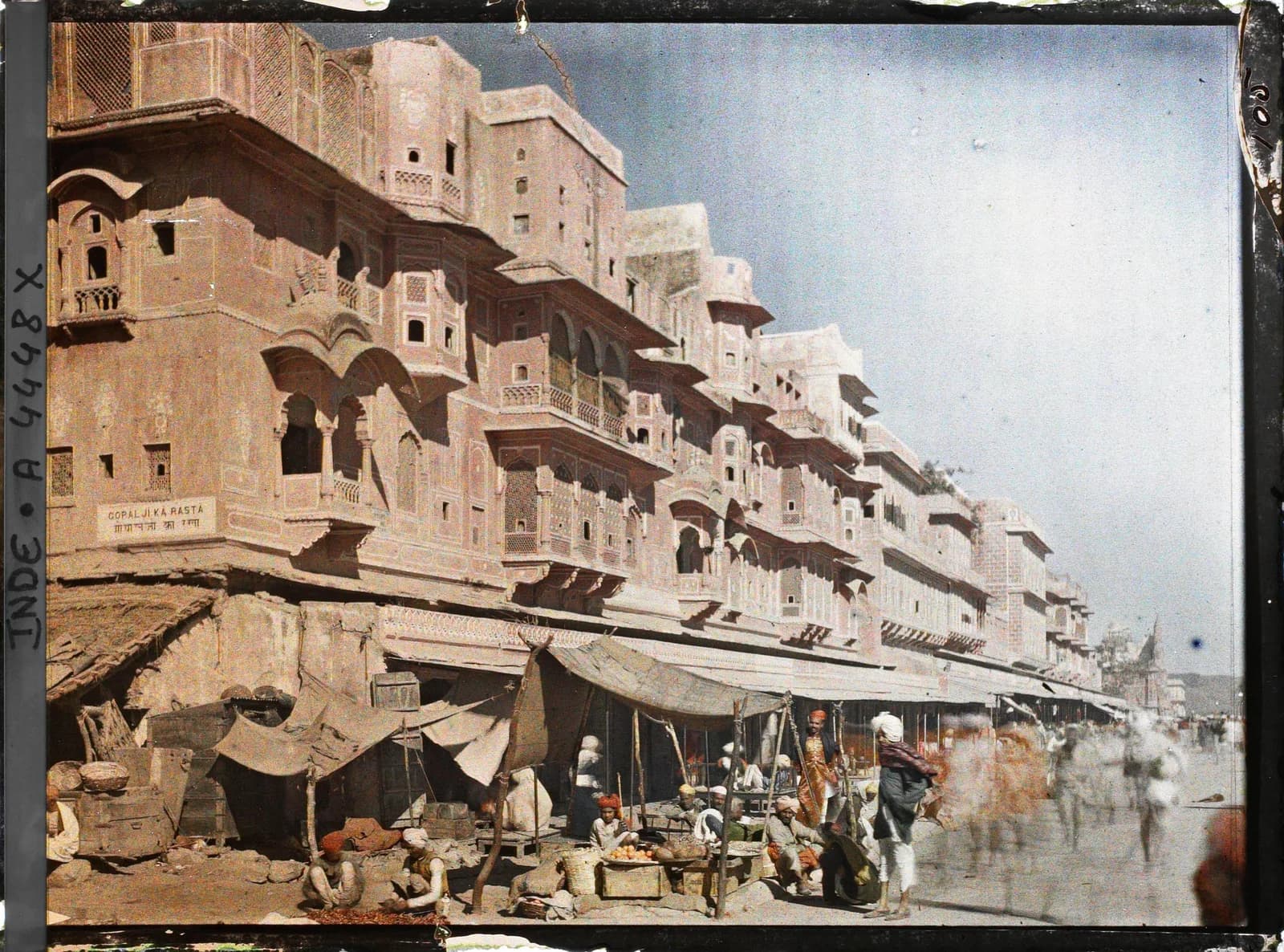
 Johari Bazaar Road, between Sanganeri Gate and Badi Chaupar, Pink City 302003, Jaipur
Johari Bazaar, Jaipur: The Pink City's Gem and Jewellery Market
Johari Bazaar is Jaipur's historic jewellery market, famous for Kundan, Meenakari and gemstones. Timings, what to buy, scam tips and how to reach it.
Quick answer
Johari Bazaar is Jaipur's historic gem and jewellery market in the Pink City, running between Sanganeri Gate and Badi Chaupar. Established in the 18th century, it is famous for Kundan, Jadau, Meenakari and Thewa jewellery, loose gemstones and Rajasthani textiles. It is free to browse, with most shops open 10 AM to 11 PM. This guide is by Delhi Agra Tour Packages, a unit of Experience My India.
- #johari-bazaar
- #jaipur
- #jaipur-attractions
- #jaipur-travel
If you want Johari Bazaar woven into a Pink City day with the palaces and the Taj beyond, our Delhi Agra Tour Packages team builds the route around you, so you shop at the right hour, with an honest sense of what to pay and what to avoid.
I am Abhay Sharma, and I have guided travellers across Rajasthan and the Golden Triangle since 2015. Johari Bazaar is the beating heart of Jaipur's jewellery trade, a dazzling, overwhelming street where royal Kundan sits beside loose emeralds and lac bangles, and where a little knowledge saves you a lot of money. It is a wonderful place to wander and to buy, provided you know the styles, the lanes and the scams. Below is everything I tell my own guests before they go, whether they are shopping for a keepsake or building a full Golden Triangle tour through Delhi, Agra and Jaipur.
Johari Bazaar at a Glance
| Feature | Detail |
|---|---|
| What it is | Jaipur's historic gem, jewellery and textile market |
| Established | 18th century, under Maharaja Sawai Jai Singh II |
| Location | Johari Bazaar Road, between Sanganeri Gate and Badi Chaupar, Pink City 302003 |
| Famous for | Kundan, Jadau, Meenakari, Thewa jewellery and loose gemstones |
| Entry | Free to browse |
| Timings | Most shops 10 AM to 11 PM; inner lanes 11 AM to 8 or 9 PM |
| Closed | Several shops shut on Sundays or public holidays |
| Nearest metro | Badi Chaupar, at the northern end of the bazaar |
| Time needed | 1 to 3 hours |
| Best time | October to March, late afternoon into early evening |
Johari Bazaar Timings, Entry and How to Reach
Here are the things most people check first, grouped so you can plan in one glance. The detail behind each follows further down.
Timings
| Zone | Hours |
|---|---|
| Main-road shops | 10 AM to 11 PM |
| Smaller shops and inner lanes | 11 AM to 8 or 9 PM |
| Closures | Several shops shut on Sundays or public holidays |
Entry
| Item | Charge |
|---|---|
| Browsing the bazaar | Free |
How to reach
| Mode | Detail |
|---|---|
| Metro | Badi Chaupar station, right at the northern end of the bazaar |
| Auto or cycle-rickshaw | Easy into the walled-city lanes |
| By car | Parking inside the walled city is very limited; better to park outside and walk |
At the time of writing these details are correct, though shop hours and closures vary, so confirm on the day, especially for a Sunday visit.
What Is Johari Bazaar
Johari Bazaar is the historic gem and jewellery market of Jaipur, in the heart of the walled Pink City. The name itself means jewellers' market, and that is exactly what it is, a long, bustling street lined with jewellery showrooms, gemstone dealers, textile shops and sweet makers, established in the 18th century as part of Maharaja Sawai Jai Singh II's planned city. It runs between Sanganeri Gate at its southern end and Badi Chaupar at its northern end, close to the Hawa Mahal and the City Palace.
For centuries this has been the trading heart of Jaipur's famous jewellery industry, and it remains a working market where the city's craftspeople and dealers do business, not a tourist arcade. Jaipur has been a global gem-cutting and jewellery centre for generations, supplying buyers worldwide, and Johari Bazaar is where that trade meets the street, so the activity you see is the real commerce of the city, not a show put on for visitors. That authenticity is its appeal and its challenge, the street is dazzling and genuine, but it rewards the visitor who comes prepared. It is one of the essential Pink City experiences, whether you intend to buy or simply to soak up one of India's great jewellery streets.
One small point of clarity, since the name is common. There are markets called Johari Bazar in other Indian cities, such as Dhanbad and Agra, but the famous gem bazaar is this one, in the walled city of Jaipur, between Sanganeri Gate and Badi Chaupar.
What Is Johari Bazaar Famous For
Johari Bazaar is famous above all for jewellery, and specifically for the traditional Rajasthani and royal styles that made Jaipur a global gem and jewellery centre. This is the place to see and buy Kundan, Jadau, Meenakari and Thewa work, the classic forms of Indian fine jewellery, alongside a vast trade in loose precious and semi-precious gemstones such as rubies, emeralds and sapphires cut and polished locally.
It is famous for more than fine jewellery, though. The bazaar also sells silver and tribal ornaments, lac bangles, and traditional Rajasthani textiles, from bridal lehengas to Bandhani and Leheriya sarees, and it is dotted with historic sweet shops. So its fame is really that of a complete traditional shopping street, jewellery at its core but textiles, silver and sweets all around. For visitors, that range is part of the pleasure, you can hunt for a serious gemstone, pick up a pair of lac bangles, and eat a plate of Rajasthani sweets within a few steps. The wider shopping picture, from the textile lanes of Bapu Bazaar to the modern shopping malls, rounds out the city's retail, but Johari Bazaar is its historic jewel.
Jewellery Styles: Kundan, Jadau, Meenakari and Thewa
Understanding the main jewellery styles turns a confusing street into a readable one, so here is what you are looking at. Each is a distinct craft with its own look and tradition.
- Kundan and Jadau are the royal settings, featuring uncut diamonds and gemstones set in refined gold foil. This is the classic Mughal-influenced bridal style, elaborate and regal, and it is what Jaipur is most famous for.
- Meenakari is intricate enamel work in vibrant reds, greens and blues, often crafted on the reverse side of Kundan pieces, so a single ornament is jewelled on one face and enamelled on the other.
- Thewa is a delicate craft of 23-karat gold-leaf designs fused onto coloured molten glass, originally from Pratapgarh, producing glowing, jewel-like panels.
- Silver and tribal ornaments include oxidised silver jhumkas, chokers and anklets, along with the lac bangles for which the city is known.
Knowing these names lets you shop with intent rather than being dazzled into confusion, and it helps you ask the right questions of a shopkeeper. If the craft itself interests you, the Museum of Gem and Jewellery on M.I. The road and the city's workshops give useful background, and a visit there first makes a browse of Johari Bazaar far more rewarding.
Gemstones at Johari Bazaar
Beyond finished jewellery, Johari Bazaar is one of the world's great centres for loose gemstones, and this is a trade with deep roots in Jaipur. You will find loose emeralds, rubies, sapphires, garnets and tourmalines, many cut and polished in the city's own lapidary workshops, sold both as finished stones and in the rough. For serious buyers, this is a chance to buy at the source of a global trade.
That opportunity comes with a clear warning, which I give every guest and cover in full below. The gemstone trade attracts both genuine dealers and opportunists, and high-value stones are exactly where caution matters most. Buy from established, reputable shops, insist on proper certification, and never let the romance of buying an emerald at its source override basic care. Handled sensibly, buying a gemstone in Johari Bazaar can be a wonderful experience, and the city's long jewellery heritage is part of what makes it one of the most storied of the places to visit in Jaipur. Handled carelessly, it is where tourists lose the most money, so read the buying guidance before you spend.
The Lanes of Johari Bazaar: Gopalji ka Rasta and Haldiyon ka Rasta
Johari Bazaar is not just one street but a main road with a web of narrow lanes, the rastas, branching off it, and each has its own specialty. Knowing them helps you find the right shops rather than wandering at random.
The main Johari Bazaar Road carries the flagship jewellery showrooms, along with bridal lehengas, Bandhani and Leheriya sarees, and the historic sweet shops. Branching off it, Gopalji ka Rasta is the hub for wholesale gemstone dealers, lapidary workshops and the traditional jewellery trade, the lane to explore if gemstones are your interest. Haldiyon ka Rasta is popular for silver jewellery, costume jewellery, lac bangles and semi-precious stones, a good lane for more affordable and colourful buys. Above the street-level shops, traditional cushioned trading rooms called gaddis and artisan workshops often occupy the upper floors, where much of the real business and craft happens out of sight.
This layered geography is part of what makes the bazaar fascinating. The showrooms on the main road are only the surface; the lanes and upper floors are where the wholesale trade and the craftsmanship live. Exploring them, respectfully and with a guide if you can, gives you a far richer sense of how Jaipur's jewellery world actually works, and it is the kind of texture that most visitors, hurrying along the main road, never discover hiding in plain sight on a famous street.
How to Buy Safely at Johari Bazaar: Certification and Scam Avoidance
This is the most important section of the guide, because Johari Bazaar is where uninformed tourists lose money, and a little care prevents it. Here is how to buy it safely.
For any high-value gemstone, insist on a lab certificate from a recognised gemological laboratory. Do not take a dealer's word for a stone's identity, treatment or value. For gold, check for BIS hallmarking, and for silver look for the 925 stamp that indicates sterling silver. Always ask for an itemised bill that lists the net metal weight, the stone weight and the making charges separately, so you know exactly what you are paying for.
The single biggest scam to avoid is the resale-abroad pitch. Ignore any unsolicited approach, from a stranger, a tout or a driver, claiming that you can buy gems cheaply in Jaipur and resell them abroad for huge profit. This is a classic, long-running scam, the gems are overpriced or misrepresented, the promised buyer overseas does not exist, and tourists have lost large sums to it for decades. No genuine opportunity is ever sold this way to a passing visitor. If anyone pitches it to you, walk away.
A few related cautions follow from the same principle. Be wary of a driver or guide who steers you insistently to one particular shop, since commissions are often built into the price you then pay, so it pays to choose the shop yourself. Treat a deal that sounds too good, a rare stone at a bargain, a one-day-only price, as a warning rather than a find. And never hand over a stone for custom setting or shipping without a clear written agreement and a reputable shop behind it. None of this should make you nervous, the vast majority of Johari Bazaar's traders are honest and the shopping is a joy, but the handful of tricks that target tourists are entirely avoidable with a little care and a slow, unhurried approach.
On payments and bargaining, know where each applies. Bargaining works well on textiles, bangles and silver, so negotiate there with good humour. Gold, certified gemstones and fixed-price showrooms follow stricter, rate-based pricing, so there is less room to haggle and you should focus instead on certification and a clear bill. Carry cash and UPI for the smaller lanes, while the major showrooms accept cards. Buy from established shops, take your time, and never be rushed into a big purchase, and Johari Bazaar is a safe and rewarding place to shop.
Johari Bazaar Timings and Opening Hours
Most shops in Johari Bazaar operate daily between 10 AM and 11 PM, giving the main road long trading hours well into the night. The smaller shops and the inner lanes keep shorter hours, often opening closer to 11 AM and closing by 8 PM to 9 PM, so the deeper you go into the rastas, the earlier the day ends.
The important practical point is Sunday. Several shops in Johari Bazaar close on Sundays or public holidays, so if a particular showroom or the gemstone lanes are your priority, avoid Sunday or check ahead, as it is a common day for the trade to rest. The main-road showrooms and the sweet shops are more likely to stay open than the wholesale lanes. Because the hours run late on the main street, an evening visit works well, which also suits the lights and the atmosphere, letting you shop in comfort as the heat drops and the bazaar glows.
Best Time to Visit Johari Bazaar
The best time to visit Johari Bazaar is the late afternoon into the early evening, during the cooler months from October to March. This window is ideal for several reasons at once. The shops are open and lively, the daytime heat has eased, making the crowded lanes more comfortable, and the Pink City lights come on around Badi Chaupar, giving the bazaar a lovely glow as dusk falls.
The season matters because the walled-city lanes are dense, busy and largely without shade, so Jaipur's summer makes a long shopping wander draining. October to March is the comfortable window for the old city. Within the day, a late-afternoon start lets you shop in good conditions and then enjoy the illuminated bazaar in the evening, when the whole street is at its most atmospheric. If you want to see the Pink City after dark more widely, our guide to places to visit in Jaipur at night has more, but the lit bazaars around Badi Chaupar are a highlight in themselves.
How to Reach Johari Bazaar
Johari Bazaar sits in the heart of the walled city, running between Sanganeri Gate and Badi Chaupar, and it is easy to reach. The simplest way is the Jaipur Metro, since Badi Chaupar station sits right at the northern end of the bazaar, so you can step off the train and straight into the market. This is by far the most convenient arrival given the congestion in the old city.
You can also come by auto-rickshaw, cycle-rickshaw or cab, which will bring you to the edge of the bazaar or into the lanes. The one thing to avoid is bringing your own car, because parking inside the walled city is very limited and the lanes are dense and slow, so if you do drive, park outside the old city and walk or take an auto in. The bazaar is also an easy walk from the Hawa Mahal and the City Palace, so it folds naturally into a walled-city sightseeing day on foot. If you are reaching Jaipur from elsewhere on the Golden Triangle, the practical distances are in our Delhi to Jaipur distance and Agra to Jaipur distance guides, and our guide to where to stay in Jaipur helps you base yourself near the old city.
Food at Johari Bazaar: LMB and Street Snacks
Johari Bazaar is as much a food destination as a shopping one, and no visit is complete without eating. The landmark is Laxmi Mishthan Bhandar, universally known as LMB, a famous restaurant and sweet shop right on Johari Bazaar, celebrated for its pure-vegetarian Rajasthani thali and its sweets, from ghevar to rajbhog to kulfi. It is an institution, and a meal or a sweet here is part of the Johari Bazaar experience.
Around the bazaar, the street food is just as rewarding. Popular local stalls serve pyaaz kachori, mirchi vada, mawa kachori and lassi, the classic flavours of Jaipur eaten standing amid the bustle. Pacing your shopping with a stop at LMB and a few street snacks turns a browse into a proper half-day out, and it is the kind of authentic, local eating that gives a trip its texture. For a wider sense of where to eat across the city, our guide to the best places to eat in Jaipur points you to much more, but on Johari Bazaar, LMB is the name to know.
Things to See Near Johari Bazaar
Johari Bazaar's location in the heart of the walled city puts it within a few minutes of Jaipur's headline sights, so it is never a standalone trip. Here is what is close by.
- Hawa Mahal, the iconic honeycomb palace facade, is a short walk away and pairs naturally with a bazaar visit.
- City Palace and Jantar Mantar, the monumental core of the old city, are close by and easily combined with shopping.
- Sanganeri Gate, at the southern end of the bazaar, is the historic Pink City gate through which the market begins.
- Badi Chaupar, at the northern end, is the grand central square and metro stop, lit beautifully in the evening.
Because everything clusters so tightly here, you can combine Johari Bazaar with the monuments and the adjoining markets in a single rich old-city day, and pause at the royal cenotaphs at Gaitore Ki Chhatriyan on the way out toward the hills. This walled quarter is the beating heart of Jaipur, and the City Palace sub-part at Chandra Mahal anchors its heritage, making the bazaar part of a dense, rewarding loop we build into a day for guests.
Is Johari Bazaar Worth Visiting
Yes, Johari Bazaar is well worth visiting, and for most people it is one of the essential Jaipur experiences, whether or not they intend to buy. As a free, dazzling, historic jewellery street in the heart of the Pink City, it offers a window into the trade and craft that made Jaipur famous, plus some of the city's best shopping and sweets. For anyone interested in jewellery, textiles or simply the life of a great Indian bazaar, it is unmissable.
Set your expectations correctly and it rewards you. This is a crowded, intense, working market, not a polished tourist mall, and part of coming prepared is knowing the styles, the lanes and the scams so you can enjoy it with confidence. Visitors who wander in unprepared can feel overwhelmed or, worse, get overcharged, whereas those who come knowing what to look for and how to buy safely have a wonderful time. Come in the late afternoon, learn the basics, keep your wits about the resale scam, and Johari Bazaar is a genuine highlight.
I rate it for one more reason. It is Jaipur doing what it has done for three centuries, trading in gems and gold in the same lanes, and being part of that living tradition, even just as a browser with a cup of lassi, is a richer experience than any museum of it. For the curious traveller, that authenticity is the whole point, and a keepsake bought here, chosen carefully, carries the story of the street home with it.
Travel Tips for Johari Bazaar
A few practical pointers will make the visit smoother and safer. Come in the late afternoon into the evening, in the cool months of October to March, when the shops are open, the heat has eased and the lights are on. Allow 1 to 3 hours depending on how seriously you shop. For any significant purchase, insist on a lab certificate for gemstones, check BIS hallmarking on gold and the 925 stamp on silver, and always take an itemised bill. Ignore anyone pitching the buy-gems-to-resell-abroad scam, it is always a con. Bargain on textiles, bangles and silver, but expect firmer pricing on gold and certified stones. Carry cash and UPI for the small lanes, though showrooms take cards. Arrive by metro to Badi Chaupar rather than driving, as parking is very limited. Avoid Sunday if specific wholesale shops matter, as many close. And build in a stop at LMB and the street stalls, because the food is half the fun, as our guide to famous foods in Jaipur makes clear.
Where Johari Bazaar Fits in Your Jaipur Trip
Johari Bazaar works best as the shopping-and-food heart of an old-city day rather than a standalone errand. The natural rhythm is to explore the walled-city monuments, the City Palace, Hawa Mahal and Jantar Mantar, and then flow into Johari Bazaar in the late afternoon for jewellery, textiles and a meal at LMB, finishing as the lights come on around Badi Chaupar. Done this way, the bazaar rounds off a full and satisfying day in the heart of Jaipur.
For a first-time visitor, a wander through Johari Bazaar is one of the essential Pink City experiences, and it slots easily into a one-day plan as the afternoon-into-evening portion, as our Jaipur 1 day itinerary shows. With two or three days you can give the bazaar a relaxed browse of its own, perhaps with a serious purchase in mind, and still cover the forts and gardens at an easy pace, the approach our Jaipur itinerary for 2 to 3 days and our places to visit in Jaipur for 2 days plans are built around. However you structure it, the bazaar adds the colour, commerce and flavour of the living city to a trip of monuments, and planning it for the evening makes the most of its atmosphere. You can pull the whole visit together with our Jaipur trip planner.
Plan Your Trip With Us
A great Jaipur visit is really about sequencing, putting the monuments, the bazaars and a trusted jeweller in the right order, at the right time of day, with a guide who can steer you away from the scams and toward the genuine shops. That is exactly what we do. We design private, unhurried trips across Jaipur and the wider Golden Triangle, built around you rather than a fixed coach route.
Tell us your dates, how many of you are travelling and what you most want to see and buy, and we will shape an itinerary that ties the shopping, the sights and the food together without the rush. You can explore our full range of Delhi Agra tours and our classic Golden Triangle tours, or ask us about shorter runs like a same day Agra tour from Delhi, an Agra overnight tour from Delhi or a sunrise Taj Mahal tour to pair with your Jaipur leg.
To start planning, message us on WhatsApp at +91 7302265809 with your travel dates and group size, and we will send back an honest, tailored plan. As a Brajwasi who has hosted travellers across this region for years, I promise you a trip that feels personal, not packaged.
Related Jaipur Guides
Keep exploring with these guides:
- Hidden places to visit in Jaipur for more of the old city's corners.
- Things to do in Jaipur for the full range of experiences.
- Best time to visit Jaipur to pick the right season for shopping.
Enquire Now
What our travellers say
“Our Golden Triangle honeymoon was flawless. Sunrise at the Taj with a private guide felt like a dream — every detail was handled.”
“As a first-time visitor to India, I felt completely safe and looked after. The driver and guide were superb professionals.”
“Travelling with two kids is hard, but they made it effortless. Great pacing, clean cars and zero surprises on price.”
“Booked the Agra day trip on short notice and it went off without a hitch. The guide's history knowledge made the Taj come alive.”
“Best decision of our India trip. Car was spotless, driver was punctual every single day, and the itinerary never felt rushed.”
“Organised a same-day Agra trip for my parents. Communication before and during the trip was excellent — genuinely stress-free.”
“Sunrise at the Taj Mahal was magical. Our guide spoke great English and answered every question with patience.”
“Three generations travelling together and everyone was comfortable — good vehicle, sensible stops, and no hidden costs.”
“I've used a few tour operators across Asia and this was among the smoothest. Fair pricing and they actually answer the phone.”
“Our custom Rajasthan-Agra combo was planned around our budget without cutting corners on comfort. Highly recommend.”
“Solo female traveller here — I felt safe throughout. The driver was respectful and the whole trip was timed perfectly.”
Ready to Explore
The Pink City?
Experience the Amber Fort, Hawa Mahal, City Palace, and the colorful bazaars of Jaipur with our expert-guided premium tours of Rajasthan's capital.

Jaipur
Premium Tour Package
Questions
Frequently asked questions
What is Johari Bazaar famous for?
Johari Bazaar is famous as Jaipur's historic gem and jewellery market, known for Kundan, Jadau, Meenakari and Thewa jewellery and for loose precious and semi-precious gemstones like rubies, emeralds and sapphires cut locally. It also sells silver ornaments, lac bangles, traditional textiles such as Bandhani and Leheriya sarees, and famous sweets.
What are the timings of Johari Bazaar?
Is Johari Bazaar open on Sunday?
Where is Johari Bazaar and how do I reach it?
Is it safe to buy gemstones in Johari Bazaar?
What should I buy in Johari Bazaar?
Can you bargain in Johari Bazaar?
Where should I eat in Johari Bazaar?
How much time do you need at Johari Bazaar?
Is Johari Bazaar the same as Johari Bazar in other cities?
Is Johari Bazaar worth visiting?
Explore more
Plan your Johari Bazaar trip with us

Interested in Johari Bazaar, Jaipur: The Pink City's Gem and Jewellery Market?
Chat with our travel team for a custom quote, or browse every package.
Related Attractions
9Johari Bazaar, Jaipur on the map
Open in Google MapsReady to explore Johari Bazaar, Jaipur: The Pink City's Gem and Jewellery Market?
Book your private tour today and experience the magic of India's rich heritage.