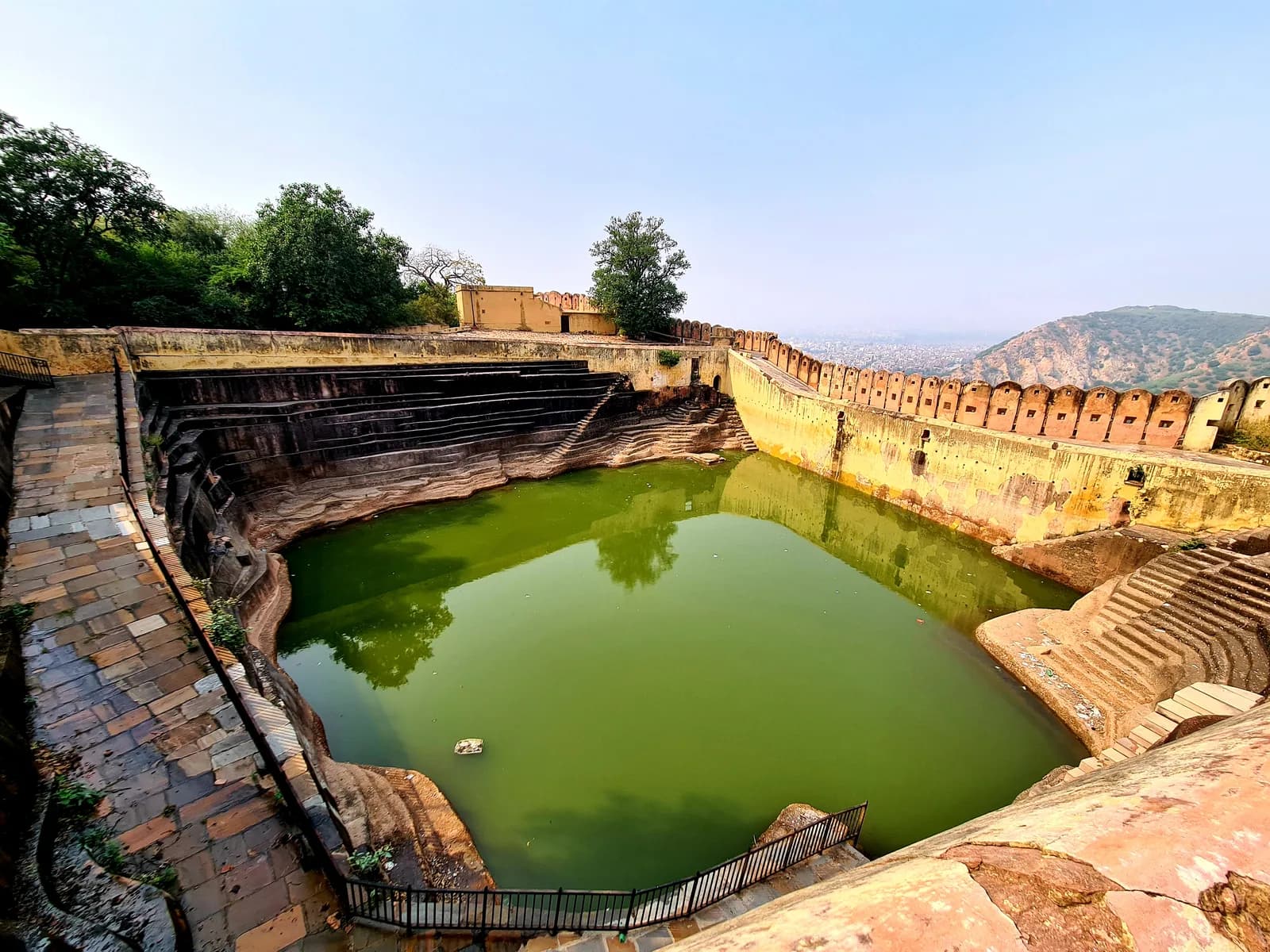
 Inside Nahargarh Fort, Aravalli hills, Jaipur, Jaipur
Nahargarh Stepwell, Jaipur: The Baori Inside Nahargarh Fort
Nahargarh Stepwell is the wavy-stepped baori inside Nahargarh Fort, Jaipur. Timings, tickets, history, architecture and how to reach, from a local guide.
Quick answer
The Nahargarh Stepwell is a historic rainwater baori inside Nahargarh Fort in Jaipur, built in 1734 by Sawai Jai Singh II. Famous for its wavy, curved tiered steps, it is covered by the fort ticket of 50 rupees for Indians and 200 for foreigners, and open 10 AM to 5:30 PM. This guide is by Delhi Agra Tour Packages, a unit of Experience My India.
- #nahargarh-stepwell
- #jaipur
- #jaipur-attractions
- #jaipur-travel
If you want Nahargarh, Amer and the Taj woven into one smooth Pink City and Golden Triangle route, our Delhi Agra Tour Packages team builds the day around your pace, so the hilltop stops landing at the right light and you are never rushing the climb.
I am Abhay Sharma, and I have guided travellers across Rajasthan and the Golden Triangle since 2015. The stepwell inside Nahargarh Fort is one of my favourite surprises to show people. Most visitors come up the hill for the sunset view over Jaipur and the famous fort, and they are not expecting the quiet, geometric beauty of the baori tucked into the compound. It is free with your fort ticket, it is one of the most photogenic corners of the whole hill, and it tells a smart story about how the old rulers solved the problem of water on a dry Aravalli ridge. Below is everything I tell my own guests before they go, whether they are doing a quick Nahargarh evening or a full Golden Triangle tour that ends in Jaipur.
Nahargarh Stepwell at a Glance
| Feature | Detail |
|---|---|
| Location | Inside Nahargarh Fort, Aravalli hills, Jaipur |
| What it is | Royal rainwater stepwell (baori) with wavy tiered steps |
| Built | 1734, by Maharaja Sawai Jai Singh II |
| Entry | Covered by the Nahargarh Fort ticket, no separate fee |
| Fort ticket | Indian 50 rupees, foreign 200 rupees |
| Timings | 10 AM to 5:30 PM, inner fort and stepwell zones |
| Closed on | Dhulandi (the day after Holi) |
| Time needed | 20 to 30 minutes at the stepwell |
| Distance from city | 13 to 15 km from Hawa Mahal |
| Best time | October to March, early morning or late afternoon |
Nahargarh Stepwell Timings, Entry Fee and How to Reach
Here are the three things most people check first, grouped so you can plan in one glance. The detail behind each follows further down.
Timings
| Zone | Opening hours |
|---|---|
| Inner fort and stepwell | 10 AM to 5:30 PM |
| Outer fort ramparts | Often accessible later into the evening |
| Closed | Dhulandi (day after Holi) |
Entry fee
| Visitor | Ticket price |
|---|---|
| Indian visitors | 50 rupees |
| Foreign visitors | 200 rupees |
| Stepwell access | Included in the fort ticket, no separate charge |
How to reach
| Mode | Detail |
|---|---|
| From Hawa Mahal | 13 to 15 km |
| By taxi or auto | 30 to 40 minutes; round trip 500 to 600 rupees with waiting |
| By car or motorbike | Winding asphalt road to the parking outside the fort gates |
| On foot or trek | Steep paved path from the base, 20 to 30 minutes uphill |
At the time of writing these figures are correct, though fort hours and ticket prices can change, so reconfirm locally on the day if timing is tight.
What Is the Nahargarh Stepwell (Baori)
The Nahargarh Stepwell is a baori, a traditional Indian stepwell, built inside the walls of Nahargarh Fort on the Aravalli hills above Jaipur. A baori, also spelled baoli or bawdi, is a well you walk down into by flights of steps rather than drawing water up from the top, and this one was built as the fort's royal water reservoir. It is not a separate ticketed monument. It sits within the fort compound, so your Nahargarh Fort ticket gives you full access to it along with the ramparts and the palace.
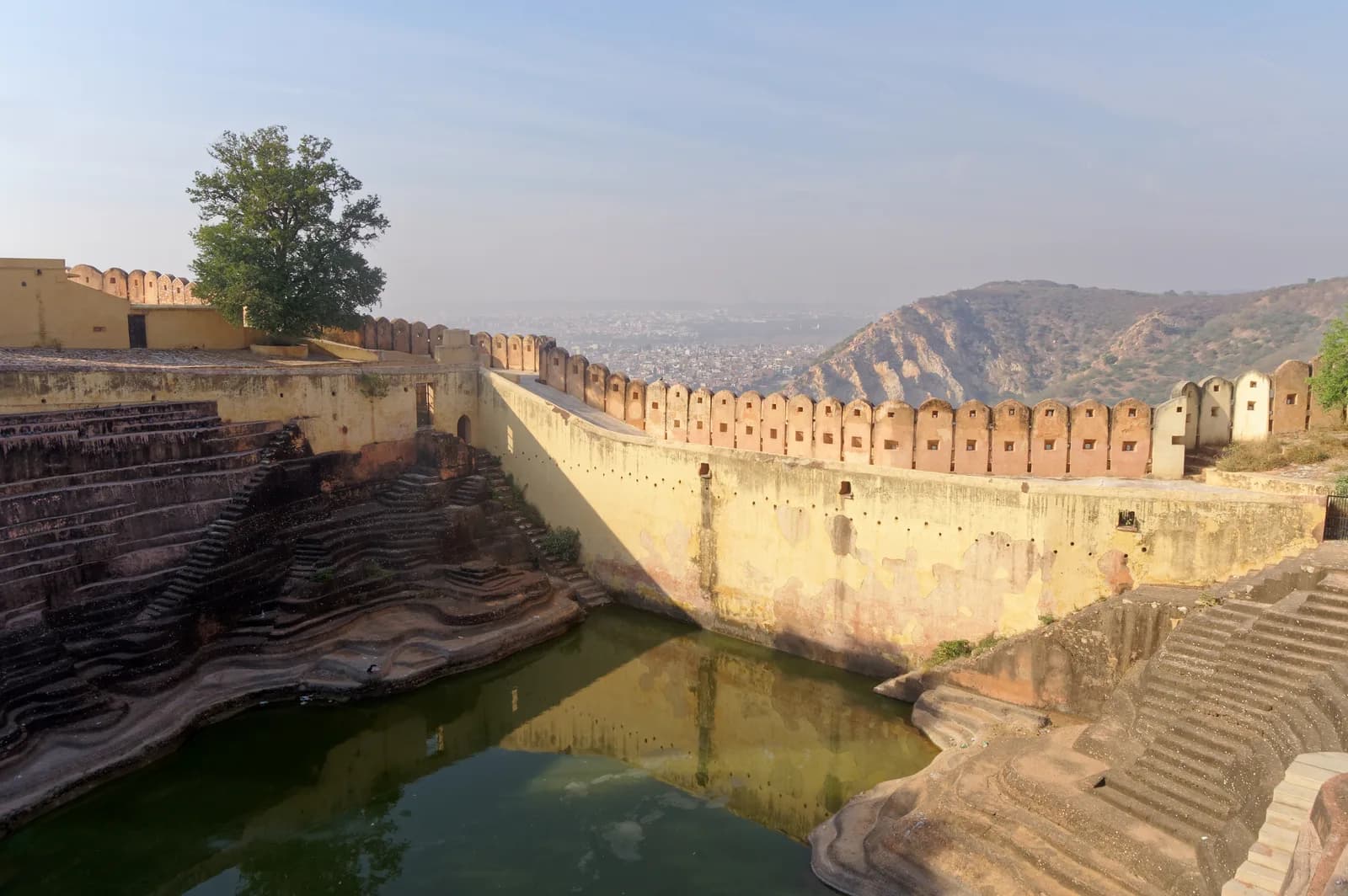
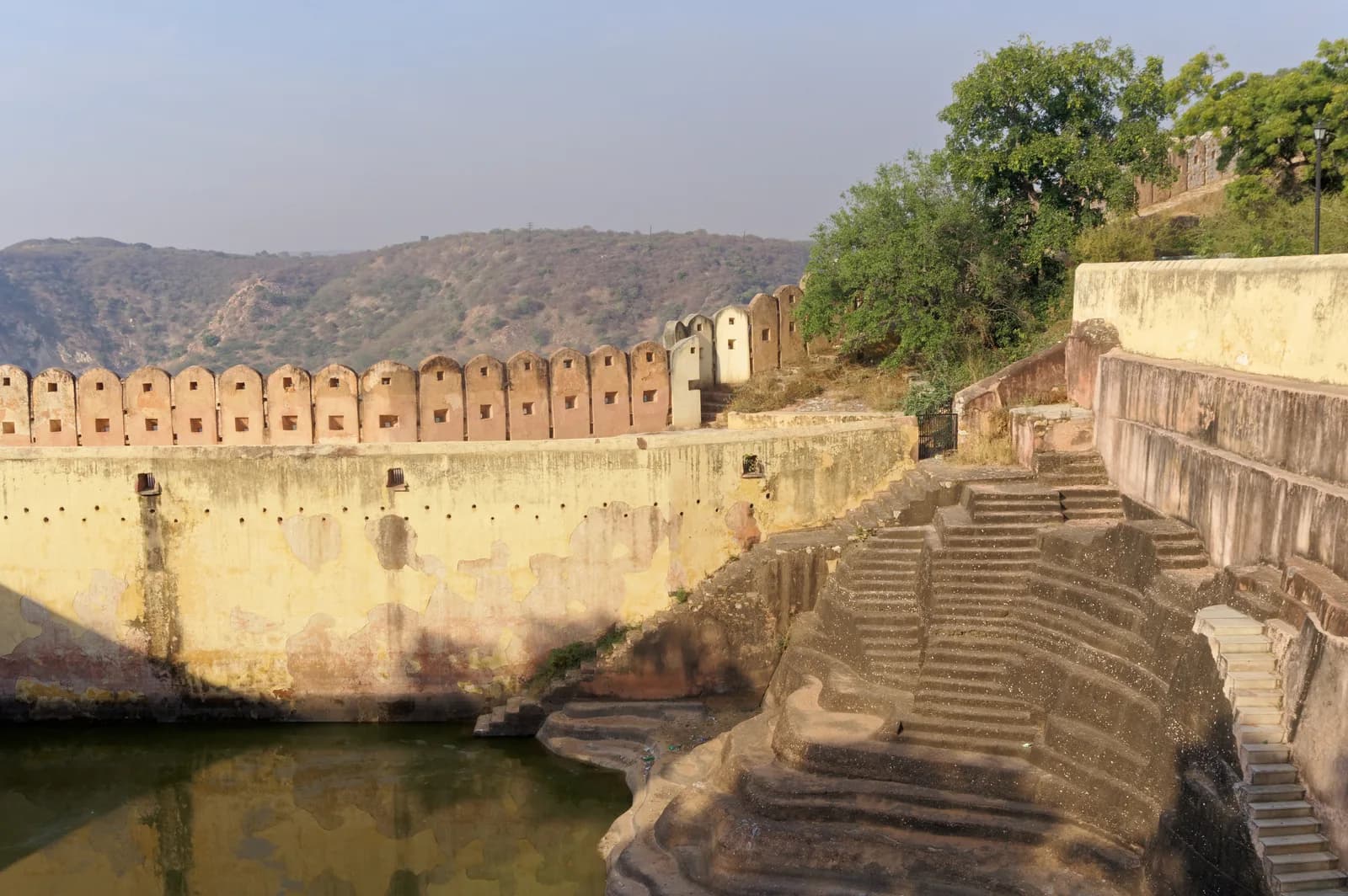
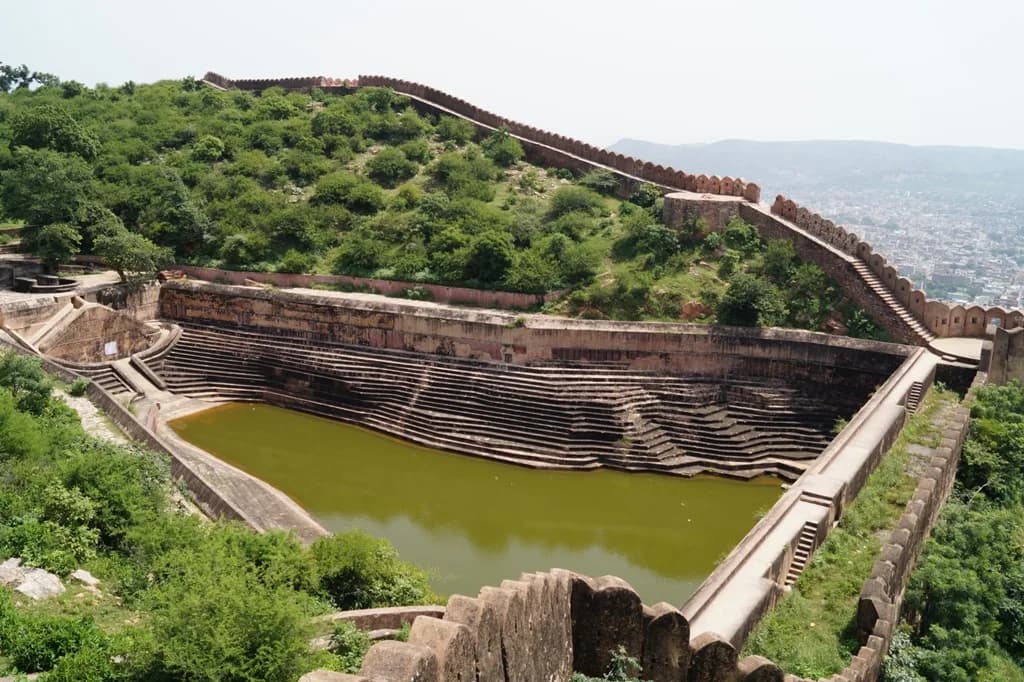
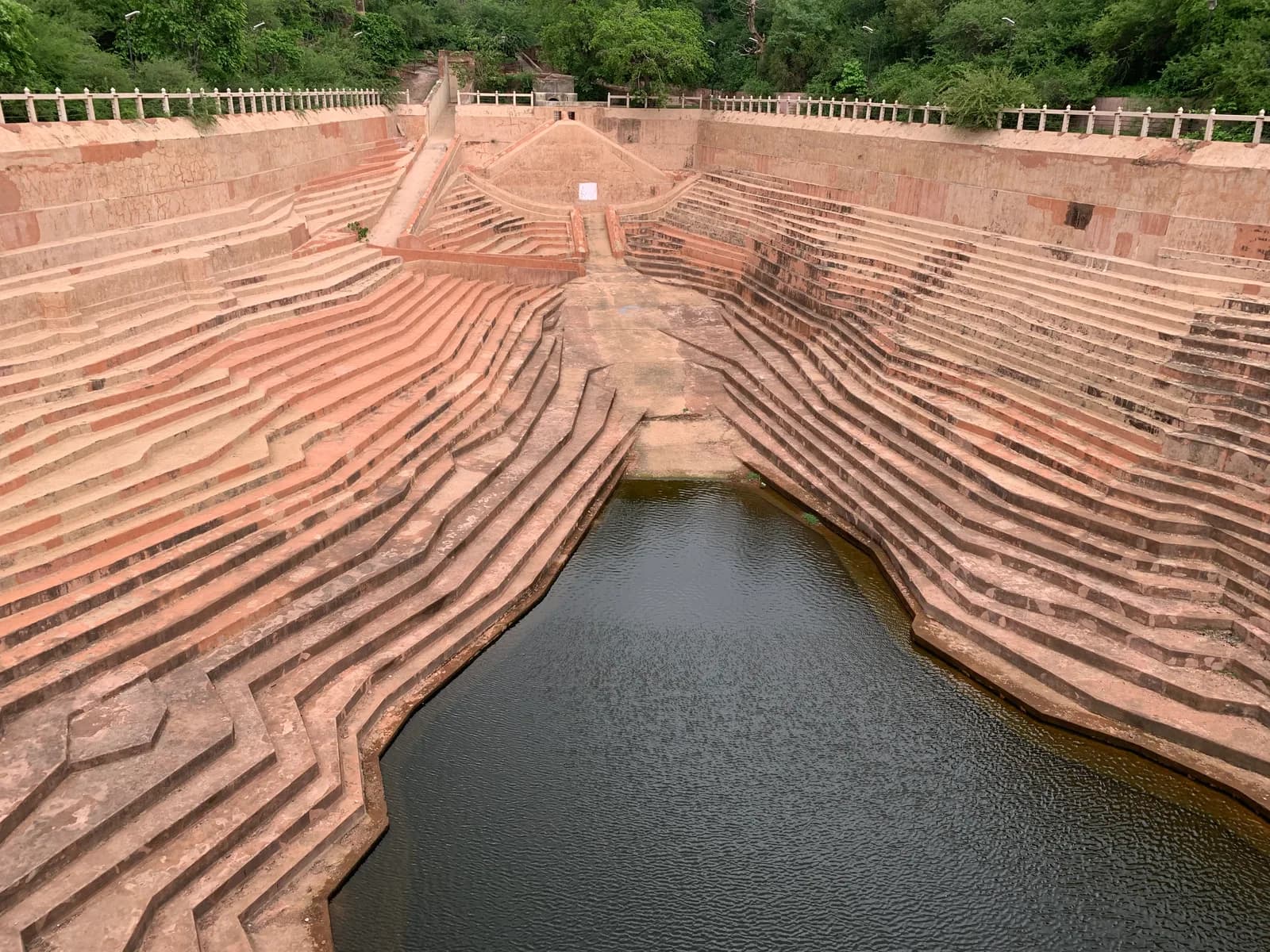
What makes this stepwell special, and what draws photographers to it, is the shape of its steps. Instead of the straight criss-cross flights you see at some other Jaipur stepwells, the Nahargarh baori has wavy, curved, symmetrical tiers of stone descending to a central water basin, which give it a soft, almost hypnotic geometry when seen from above. It was a serious piece of engineering as much as a beautiful one, built to collect, filter and store the monsoon rain that fell on the surrounding rock so that a hilltop fort far from any river could hold water through the dry season.
For visitors today it is a short, rewarding stop within a larger Nahargarh visit. You will not spend long at the baori itself, 20 to 30 minutes is plenty, but it adds real depth to a trip up the hill, pairing the famous sunset views with a quiet lesson in how Jaipur's rulers thought about water. If you enjoy these lesser known corners, it belongs on any good list of hidden places to visit in Jaipur.
History of Nahargarh Stepwell: Who Built It and When
The Nahargarh Stepwell was built in 1734 by Maharaja Sawai Jai Singh II, the founder of Jaipur, at the same time as the fort itself. Nahargarh Fort, originally named Sudarshangarh, was raised on the Aravalli ridge as part of the defensive ring protecting the new city of Jaipur below, and a hilltop fortress needed a reliable water supply to be of any use during a long stay or a siege. The stepwell was the answer.
Jai Singh II was one of the great planner-kings of his age, the same ruler behind Jaipur's grid-plan city and its astronomical observatory, and the baori reflects that engineering mind. Rather than depend on carrying water up the steep hill, the fort was given its own catchment system that harvested the rain falling on the rock around it. For the royal household and the garrison stationed on the ridge, this stored water was a lifeline through the dry months and a strategic asset in times of trouble. Understanding the stepwell this way, as a working part of a fortress rather than an ornament, is what makes it interesting, and it fits into the broader story of how Jai Singh II thought about his whole capital.
Nahargarh Stepwell Architecture: Wavy Steps and Water Filtration
The architecture of the Nahargarh Stepwell is its signature, so it is worth knowing what you are looking at. The baori is built in local stone and descends in a series of tiered steps toward a central basin where the water is collected. Unlike the sharp zigzag staircases of some stepwells, the steps here follow wavy, curved, symmetrical lines, so that the whole structure reads as a set of flowing stone contours rather than hard diagonals. From the upper edge, looking down, that rhythm of curves against the surrounding fort walls is exactly what makes the baori such a strong photography subject.
It was also a clever filtration system, not just a tank. The design included small chambers and a multi-stage layout intended to clear debris and silt from the rainwater before it reached the main storage basin, so that what was stored stayed usable. Rain running off the rocky hillside would be channelled into the structure, slowed and cleaned in stages, and then held in the lower reservoir. This blend of practical hydraulic engineering and graceful form is typical of the best Rajasthani stepwells, where a purely functional structure was given a dignity and beauty well beyond what its job strictly required. It is the same instinct you see across the forts, palaces and water structures of the region, and part of why slow travellers find so much to admire in Jaipur. Our list of places to visit in Jaipur is full of it.
Rainwater Harvesting: How the Nahargarh Baori Worked
The whole purpose of the Nahargarh Stepwell was rainwater harvesting, and it is a genuinely impressive bit of old engineering once you understand it. A fort perched high on the Aravalli hills has no river or lake to draw on, so every drop of usable water had to be captured from the one source available, the monsoon rain falling on the surrounding rock.
The baori sat at the low point of a catchment. During the rains, water running off the hard hillside was directed toward the stepwell, where the filtration chambers and staged layout removed the worst of the debris before the water settled into the central basin for storage. Through the long dry months that followed, the stored water could then be reached by walking down the steps to whatever level it had fallen to, exactly the problem that stepwells everywhere were designed to solve. For a hilltop garrison and a royal retreat, this self-contained system meant Nahargarh could function as a real stronghold rather than a fair-weather lookout. Seeing the baori with this in mind turns it from a pretty set of steps into a smart answer to a hard problem, and it is the kind of detail a good local guide will bring to life on the spot.
Nahargarh Stepwell Photography and Film Shoots
The Nahargarh Stepwell is one of the most photogenic spots on the whole hill, which is a big part of why it has become so well known. The curved, symmetrical steps, the texture of the old stone and the surrounding fort walls combine into a composition that rewards photographers, especially when the light is low and the shadows deepen the contours of the tiers. Early morning and late afternoon are the magic hours here, with the warm, raking light bringing out the geometry far better than the flat glare of midday.
The baori is also a recognised filming and photo-shoot location, and visitors sometimes know the look of it from the screen before they ever arrive. It has featured in Indian films over the years, most notably the 2006 film Rang De Basanti, whose association with the fort and its stepwell is part of what made the spot famous with domestic travellers. Whether or not you know it from a film, the practical advice is the same, come early for the cleanest light and the fewest people, shoot from the upper edge for the full sweep of the curves, and take your time. A few unhurried minutes composing a shot here will give you far better pictures than a rushed snap on the way to the ramparts.
Nahargarh Stepwell Timings and Opening Hours
The Nahargarh Stepwell follows the fort's hours, open daily from 10 AM to 5:30 PM for the inner fort and stepwell zones. Because the baori is inside the compound, you access it within the same visiting window as the rest of the fort interior, so plan to be up the hill comfortably within those hours to see it properly.
One useful quirk is worth knowing. While the inner zones close at 5:30 PM, the outer fort ramparts often remain accessible later into the evening, which is exactly why Nahargarh is such a beloved sunset and night-view spot over the city lights. That means a common plan is to see the stepwell and the inner fort during the afternoon, then stay on for golden hour and the glittering view of Jaipur from the ramparts and the hillside cafes. The fort is open through the week, closing only on Dhulandi, the day after Holi. If an evening in the city is more your pace, the broader after-dark options are covered in our guide to places to visit in Jaipur at night.
Nahargarh Stepwell Entry Fee and Tickets
There is no separate ticket for the Nahargarh Stepwell. Access to the baori is included in the standard Nahargarh Fort entry ticket, which covers the whole compound, the ramparts and the stepwell area together. The fort ticket is 50 rupees per person for Indian visitors and 200 rupees per person for foreign nationals, which makes the stepwell one of the better value sights on the hill, since you are effectively seeing it for nothing on top of the fort you came for anyway.
This is a point I always clarify for guests who have read about the stepwell separately and expect to pay for it on its own. You do not. Buy the one fort ticket at the gate and the baori is yours to explore along with everything else inside. Prices can be revised, so treat these as a guide and reconfirm at the counter, but the principle holds, one ticket covers the lot. With the savings, you can put more into the rest of your Jaipur day, which you can shape with our guide to the best places to eat in Jaipur.
Best Time to Visit Nahargarh Stepwell
The best time to visit the Nahargarh Stepwell is during the cooler months from October to March, and within the day, early morning or late afternoon. The season matters because Nahargarh is an open, exposed hilltop with a fair amount of walking across fort paths and uneven ground, and Rajasthan's summer, from April to June, makes that climb and wander draining. October to March gives you pleasant weather for the whole experience, the baori, the ramparts and the views.
Within the day, the light is everything at the stepwell. Early morning and late afternoon bring the warm, low light that deepens the curves of the steps and photographs beautifully, while midday flattens the whole scene. There is a nice bonus to timing a visit for late afternoon, too, because you can see the stepwell and inner fort and then stay on for Nahargarh's celebrated sunset and the sparkling night view of Jaipur spread out below. If you are building your trip around the ideal Jaipur weather, our guide to the best time to visit Jaipur lays out the whole calendar.
How to Reach Nahargarh Stepwell
The Nahargarh Stepwell sits inside Nahargarh Fort, high on the Aravalli hills, 13 to 15 km from central city landmarks like the Hawa Mahal. Because it is a hilltop fort, reaching it is part of the experience, and there are a few ways up.
The easiest is by taxi or auto-rickshaw, a drive of 30 to 40 minutes from the city centre up the winding hill road. A round trip by cab or auto, including waiting time while you explore, generally costs 500 to 600 rupees, and because there is little transport waiting at the top, arranging a round trip or asking your driver to wait is the sensible plan. If you have your own car or a motorbike, the same asphalt road leads directly to the parking area outside the fort gates. For the active, there is also a steep, paved walking and trekking path from the base of the hills that takes 20 to 30 minutes uphill, a popular route for fitter visitors, especially in the cool of early morning.
Whichever way you come, the most efficient approach is to treat Nahargarh as a half-day, combine the stepwell, the fort and the views in one trip, and ideally link it with the neighbouring hilltop sights rather than making a special journey for the baori alone. If you are planning where to base yourself for these hill runs, our guide to where to stay in Jaipur breaks down the areas, and if you are arriving in Jaipur from elsewhere on the Golden Triangle, the practical distances are in our Delhi to Jaipur distance and Agra to Jaipur distance guides.
Nahargarh Stepwell vs Chand Baori and Panna Meena ka Kund
Travellers often ask how the Nahargarh Stepwell compares with Jaipur's other famous stepwells, so here is the honest picture. All three are baoris, but they are different in scale, style and setting.
The Nahargarh Stepwell is distinguished by its wavy, curved tiers and its location inside a hilltop fort, so you see it as part of a fort visit rather than on its own. Panna Meena ka Kund, down in Amer beside Amer Fort, is famous instead for sharp criss-cross staircases and is free to enter, a quick stop paired with the Amer sights. Chand Baori, in Abhaneri village around 95 km from Jaipur in Dausa district, is in a different league of size, one of the largest and deepest stepwells in India, with thousands of steps, and it is a full day trip out of the city rather than a stop within it.
So the practical guidance is simple. See the Nahargarh baori as part of your Nahargarh Fort visit, and the Panna Meena stepwell as part of your Amer visit, since each sits neatly beside a monument you are seeing anyway. Chand Baori is the one that justifies a dedicated excursion, and only if you have a real appetite for stepwell architecture and a spare day. For most visitors, the two baoris inside the city, at Nahargarh and Amer, give the full stepwell experience without the long drive, and our Jaipur trip planner can help you fit them in.
Things to See Near the Nahargarh Stepwell
The great advantage of the Nahargarh Stepwell is that it comes bundled with one of Jaipur's best hilltop forts and a cluster of nearby sights, so you are never visiting it alone. Here is what surrounds it.
- Nahargarh Fort itself is the main event, the 1734 hill fort with its Madhavendra Bhawan palace of linked suites, ramparts and the finest panoramic view over Jaipur, especially at sunset.
- The Nahargarh hillside cafes and Padao draw crowds for sundown drinks and snacks with the city spread out below, a classic end to an afternoon on the hill.
- Jaigarh Fort sits on the same ridge, connected to Nahargarh, home to the giant Jaivana cannon and well worth pairing on the same trip.
- Gaitore Ki Chhatriyan, the royal cenotaphs of the Kachhwaha rulers, lie at the foot of the Nahargarh hills and make a natural stop on the way up or down.
Because these cluster together on and below the ridge, you can comfortably combine the stepwell, the fort and the views, and add Jaigarh or the cenotaphs at Gaitore Ki Chhatriyan in a single hillside half-day. Nahargarh also carries its own ghost legend of Nahar Singh Bhomia, after whom some say the fort was named, which earns it a place among Jaipur's atmospheric sites listed in our guide to haunted places in Jaipur. This whole ridge is one of the most rewarding stretches of the city, and exactly the sort of loop we build into a day for guests.
Is the Nahargarh Stepwell Worth Visiting
Yes, the Nahargarh Stepwell is worth visiting, and for most people the answer is easy because of how it fits into a Nahargarh trip. It costs nothing beyond the fort ticket you are already buying, it takes only 20 to 30 minutes, and it adds a quiet, beautiful and genuinely interesting stop to a visit most people make for the views anyway.
Set your expectations correctly and you will enjoy it. This is not a vast, descend-to-the-bottom spectacle like Chand Baori, nor a standalone attraction. It is a compact, elegant baori that you admire from the upper edge, photograph for its curving geometry and read for its clever water engineering. Visitors who come expecting a huge monument may be surprised by its modest scale, whereas those who appreciate the design, the history and the way it completes the story of a hilltop fort leave glad they sought it out. Go in the right light, understand what it was for, and it is one of the most satisfying free extras on the whole Nahargarh hill.
I rate it highly for one more reason. It rewards the curious traveller who looks beyond the obvious sunset selfie and takes a few minutes to find the baori tucked into the compound. For that kind of visitor it is a quiet highlight, and the sort of detail that makes a Jaipur trip feel considered rather than box-ticked.
Travel Tips for Nahargarh Stepwell
A few practical pointers will make the visit smoother. Treat October to March as the comfortable season, and aim for early morning or late afternoon for the best light on the curved steps. Wear sturdy, comfortable walking shoes, because the stone steps around the baori and the fort paths are steep and uneven. Carry a reusable water bottle, since the uphill approach and the open sun on the ridge can be tiring. For photography, shoot from the upper edge to capture the full sweep of the tiers, and give the low-light hours priority. Buy the single fort ticket at the gate, remember the stepwell is included, and arrange a round-trip cab or ask your driver to wait, as transport is scarce at the top. If you want detailed historical context on Sawai Jai Singh II's defensive network, consider a licensed local guide at the entrance. Finally, time your visit so you can stay on for Nahargarh's famous sunset and night view, and round off the day with the city's food, which you can plan with our guide to famous foods in Jaipur.
Where Nahargarh Stepwell Fits in Your Jaipur Trip
The Nahargarh Stepwell works best as part of a Nahargarh hilltop half-day rather than a standalone trip. The natural rhythm is to drive up in the afternoon, explore the fort and the baori within the 10 AM to 5:30 PM window, and then stay on the ramparts and the hillside cafes for sunset and the sparkling night view of Jaipur. With a little more time, you can pair it with Jaigarh Fort on the same ridge and pause at the Gaitore cenotaphs at the foot of the hill, making a very full afternoon and evening without feeling rushed.
For a first-time visitor, Nahargarh at sunset is one of the experiences I would protect in any Jaipur plan, and a one day trip can include it as the evening finale, as our Jaipur 1 day itinerary shows. With two or three days you can give the hill a relaxed afternoon and still cover the City Palace, Hawa Mahal, Jantar Mantar and the bazaars at an easy pace, the approach to our Jaipur itinerary for 2 to 3 days is built around. However you structure it, the stepwell is a small stop with an outsized payoff, and slotting it into a visit you are already making costs you almost nothing.
Plan Your Trip With Us
A great Jaipur visit is really about sequencing, putting Nahargarh, Amer and the city's palaces in the right order, at the right time of day, with a driver who knows the hill roads and the sunset timings. That is exactly what we do. We design private, unhurried trips across Jaipur and the wider Golden Triangle, built around you rather than a fixed coach route.
Tell us your dates, how many of you are travelling and what you most want to see, and we will shape an itinerary that threads the famous sights and the hidden corners together without the rush. You can explore our full range of Delhi Agra tours and our classic Golden Triangle tours, or ask us about shorter runs like a same day Agra tour from Delhi, an Agra overnight tour from Delhi, or a sunrise Taj Mahal tour to pair with your Jaipur leg.
To start planning, message us on WhatsApp at +91 7302265809 with your travel dates and group size, and we will send back an honest, tailored plan. As a Brajwasi who has hosted travellers across this region for years, I promise you a trip that feels personal, not packaged.
Related Jaipur Guides
Keep exploring with these guides:
- 3 day trips from Jaipur for excursions like the great stepwell at Abhaneri.
- Chandra Mahal, Jaipur for the royal residence at the City Palace.
- Bapu Bazaar, Jaipur for textiles, juttis and Pink City shopping.
- Jaipur shopping malls for modern retail and air-conditioned breaks.
Enquire Now
What our travellers say
“Our Golden Triangle honeymoon was flawless. Sunrise at the Taj with a private guide felt like a dream — every detail was handled.”
“As a first-time visitor to India, I felt completely safe and looked after. The driver and guide were superb professionals.”
“Travelling with two kids is hard, but they made it effortless. Great pacing, clean cars and zero surprises on price.”
“Booked the Agra day trip on short notice and it went off without a hitch. The guide's history knowledge made the Taj come alive.”
“Best decision of our India trip. Car was spotless, driver was punctual every single day, and the itinerary never felt rushed.”
“Organised a same-day Agra trip for my parents. Communication before and during the trip was excellent — genuinely stress-free.”
“Sunrise at the Taj Mahal was magical. Our guide spoke great English and answered every question with patience.”
“Three generations travelling together and everyone was comfortable — good vehicle, sensible stops, and no hidden costs.”
“I've used a few tour operators across Asia and this was among the smoothest. Fair pricing and they actually answer the phone.”
“Our custom Rajasthan-Agra combo was planned around our budget without cutting corners on comfort. Highly recommend.”
“Solo female traveller here — I felt safe throughout. The driver was respectful and the whole trip was timed perfectly.”
Ready to Explore
The Pink City?
Experience the Amber Fort, Hawa Mahal, City Palace, and the colorful bazaars of Jaipur with our expert-guided premium tours of Rajasthan's capital.

Jaipur
Premium Tour Package
Questions
Frequently asked questions
Who built the Nahargarh Stepwell and when?
It was built in 1734 by Maharaja Sawai Jai Singh II, the founder of Jaipur, at the same time as Nahargarh Fort (originally named Sudarshangarh). It was created as the fort's royal rainwater harvesting and storage system.
What are the timings of the Nahargarh Stepwell?
Is there a separate entry fee for the Nahargarh Stepwell?
What is special about the Nahargarh Stepwell?
Why was the Nahargarh Stepwell built?
How do I reach the Nahargarh Stepwell?
Is the Nahargarh Stepwell the same as Chand Baori or Panna Meena ka Kund?
How much time do you need at the Nahargarh Stepwell?
What is the best time to visit the Nahargarh Stepwell?
Is the Nahargarh Stepwell worth visiting?
Explore more
Plan your Nahargarh Stepwell trip with us

Interested in Nahargarh Stepwell, Jaipur: The Baori Inside Nahargarh Fort?
Chat with our travel team for a custom quote, or browse every package.
Related Attractions
9Nahargarh Stepwell, Jaipur on the map
Open in Google MapsReady to explore Nahargarh Stepwell, Jaipur: The Baori Inside Nahargarh Fort?
Book your private tour today and experience the magic of India's rich heritage.