
 Chaura Rasta, Tripolia Bazar, Pink City, Jaipur 302003, Jaipur
Tarkeshwar Mahadev Jaipur: Darshan at the Swayambhu Shiva Temple
Tarkeshwar Mahadev Temple in Jaipur's old city is a swayambhu Shiva shrine open 5:30 AM to 11:30 PM with free entry. See timings, darshan and visitor tips.
Quick answer
Tarkeshwar Mahadev, also called Tadkeshwar Nath, is an ancient Shiva temple in the Chaura Rasta area of Jaipur's walled Pink City, famous for its self-manifested black stone Shivling. It is open daily from 5:30 AM to 11:30 PM with free entry. This guide is written by Abhay Sharma, a Jaipur guide and a unit of Experience My India.
- #tarkeshwar-mahadev
- #jaipur
- #jaipur-attractions
- #jaipur-travel
Namaste, I am Abhay Sharma, and I have guided travellers through Jaipur since 2015. Tarkeshwar Mahadev is one of the old city's most beloved living temples, a place where the real, daily devotion of Jaipur plays out far from the tourist crowds. When I take guests into the walled city at Delhi Agra Tour Packages, I often bring the ones who want to feel the spiritual pulse of Jaipur here, into the lane-side Shiva shrine that locals have worshipped at for centuries. Many of my travellers are on our Golden Triangle tour, and a few quiet minutes at this temple adds a dimension of living faith that the forts and palaces cannot.
This is not a monument you tick off a list; it is a working temple in the heart of the Chaura Rasta market, treasured for its swayambhu, or self-manifested, Shivling and its place among the Shiva shrines that earn Jaipur the name Chhoti Kashi, the little Varanasi. In this guide I will cover the timings, the darshan and aarti rhythm, the history and legend, the special Makar Sankranti sun alignment, and the practical etiquette you need to visit respectfully, exactly as I brief my own guests before we step inside.
Tarkeshwar Mahadev at a Glance
| Detail | Information |
|---|---|
| Also known as | Tadkeshwar Nath Mahadev |
| Location | Chaura Rasta, Tripolia Bazar, Pink City, Jaipur 302003 |
| Primary deity | Lord Shiva as Tadkeshwar Nath |
| Famous for | Self-manifested black stone Shivling |
| Timings | 5:30 AM to 11:30 PM, daily |
| Entry fee | Free for all |
| Architecture | Traditional Rajasthani, pink facade, silver work in sanctum |
| Nearest metro | Badi Chaupar, Pink Line |
Tarkeshwar Mahadev Timings and Darshan
The temple is open daily from 5:30 AM to 11:30 PM, and entry is free for everyone. Devotees come for morning and evening darshan, with the inner-sanctum access changing in the afternoon when the Shringar decoration of the deity begins.
| Detail | Information |
|---|---|
| Opening hours | 5:30 AM to 11:30 PM, all days |
| Entry fee | Free |
| Jalabhishek and offerings | Best done before Shringar, from 3 PM to 4 PM |
| Busiest times | Mondays, Shravan, Mahashivratri |
How to Reach Tarkeshwar Mahadev
| From | Distance | Best option |
|---|---|---|
| Badi Chaupar Metro Station | Nearest stop, Pink Line | Metro then walk or e-rickshaw |
| Jaipur Junction Railway Station | 4 to 5 km | Auto, e-rickshaw or cab |
| Jaipur Airport (Sanganer) | 11 to 13 km | Cab, 30 to 45 minutes |
Tarkeshwar Mahadev sits deep in the walled city on Chaura Rasta, near Tripolia Bazar, in a dense market area of narrow lanes. Because the old city streets are congested and tight, I always advise reaching the Badi Chaupar metro station on the Pink Line and then walking or taking a short e-rickshaw, rather than trying to drive a car into the market. It is a far easier and more pleasant approach, and it lets you soak in the bazaar atmosphere on the way to the temple door.
What Tarkeshwar Mahadev Is Famous For
Tarkeshwar Mahadev is famous above all for its swayambhu Shivling, a self-manifested black stone lingam that devotees believe was not installed by human hands but emerged on its own from the earth. In Hindu tradition a swayambhu lingam carries special sanctity, since it is seen as a natural, divine manifestation of Shiva rather than a consecrated sculpture, and this is the heart of the temple's spiritual importance. Worshippers come from across Jaipur to offer water and prayers at this ancient lingam, which is believed to predate the founding of the modern city.
The temple is also cherished as one of the Shiva shrines that give Jaipur its devotional nickname, Chhoti Kashi, the little Varanasi. Alongside this reputation, it is known for its traditional Rajasthani architecture, its pink facade with white decorative accents and the silver work that adorns the sanctum, and for a remarkable solar alignment on Makar Sankranti. For a visitor, its fame rests less on grandeur than on authenticity, this is a genuine, centuries-old place of worship, woven into the daily life of the old city.
History of Tarkeshwar Mahadev Temple
The temple is believed to date back to the very establishment of Jaipur in 1727, when the city was planned under the architect Vidyadhar Bhattacharya, and some traditions hold that the shrine, or at least its lingam, is older still. What is clear is that the temple has been a continuous place of worship since the earliest days of the Pink City, which places it among the oldest living religious sites inside the walls. The worship duties at the temple have traditionally been carried out by priests of the Vyas family, who were brought from Amer, the older capital, to serve here, a lineage of service that has continued across generations.
This deep continuity is what gives the temple its special character. Where a fort or palace preserves the grandeur of the past as a monument, Tarkeshwar Mahadev preserves the devotion of the past as a living practice, with the same rituals performed day after day for close to three centuries. Understanding this history helps a visitor appreciate that they are not merely looking at an old building but stepping into an unbroken stream of worship that is as old as Jaipur itself.
The Name, the Legend and Chhoti Kashi
The name Tadkeshwar, from which Tarkeshwar derives, is linked in local tradition to the tad, or palmyra palm, trees that once covered this area before the city grew around it. The temple's name therefore carries a memory of the landscape as it was long ago, a grove of palms where the sacred lingam lay. It is a small but lovely detail that roots the shrine in the natural history of the place.
A popular legend tells how the self-manifested Shivling came to be discovered. The story relates that after an unlikely battle between a lion and a goat at this spot, a divine voice guided people to dig at the site, where they found the swayambhu lingam buried below the ground. Such origin legends are common to swayambhu shrines across India, and they express the belief that the deity chose to reveal itself here rather than being brought by human hands. Whether taken as history or as sacred story, the legend is part of what devotees carry in their hearts when they visit.
Together with the other historic Shiva shrines of the walled city, Tarkeshwar Mahadev contributes to Jaipur's devotional identity as Chhoti Kashi, the little Kashi or little Varanasi. Varanasi, or Kashi, is the holiest city of Shiva worship in India, and for a city to be called its little echo is a mark of how densely its old quarter is woven with Shiva temples. For pilgrims, this temple is one of the stops that makes a walk through the old city a small spiritual circuit in its own right.
The Swayambhu Shivling and the Sanctum
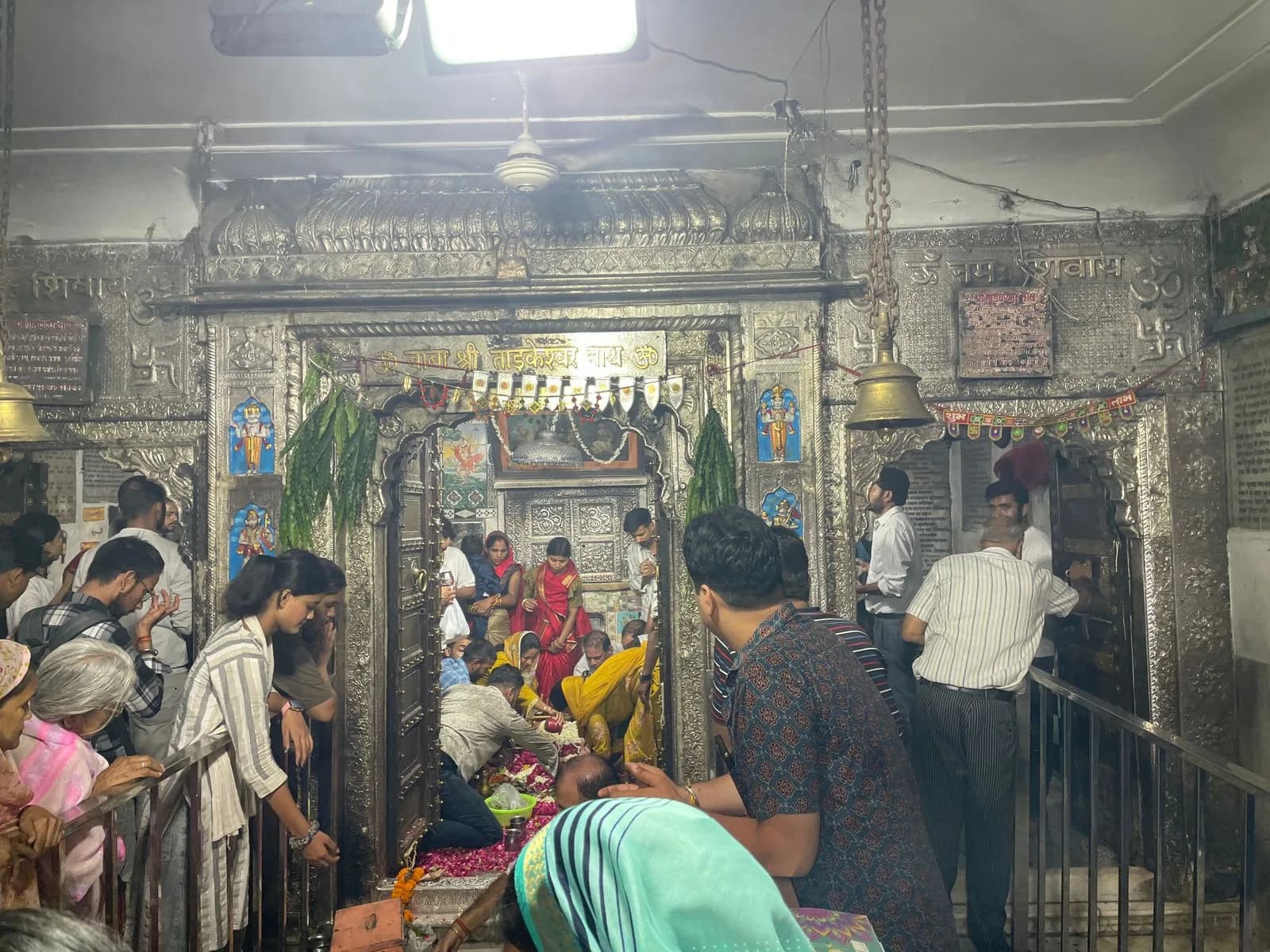
The spiritual centre of the temple is, naturally, the swayambhu black stone Shivling in the inner sanctum. Devotees perform jalabhishek here, the ritual pouring of water over the lingam, along with offerings of milk, ghee and sugarcane juice, each an act of devotion to Lord Shiva. The sanctum itself is adorned with silver work, and in the traditional way the lingam is dressed and decorated during the Shringar ritual, when the deity is adorned with fresh offerings and ornamentation.
For a respectful visitor, the sanctum is a place to move slowly and quietly, following the lead of the temple staff and the local devotees. The intimacy of the space, far smaller and more personal than a grand temple complex, is part of its power. You are not in a tourist hall but in a working shrine where real prayers are being offered around you, and the best way to experience it is with the same calm reverence the devotees bring.
Jagmohan Hall, the Left-Trunk Ganesha and Nandi
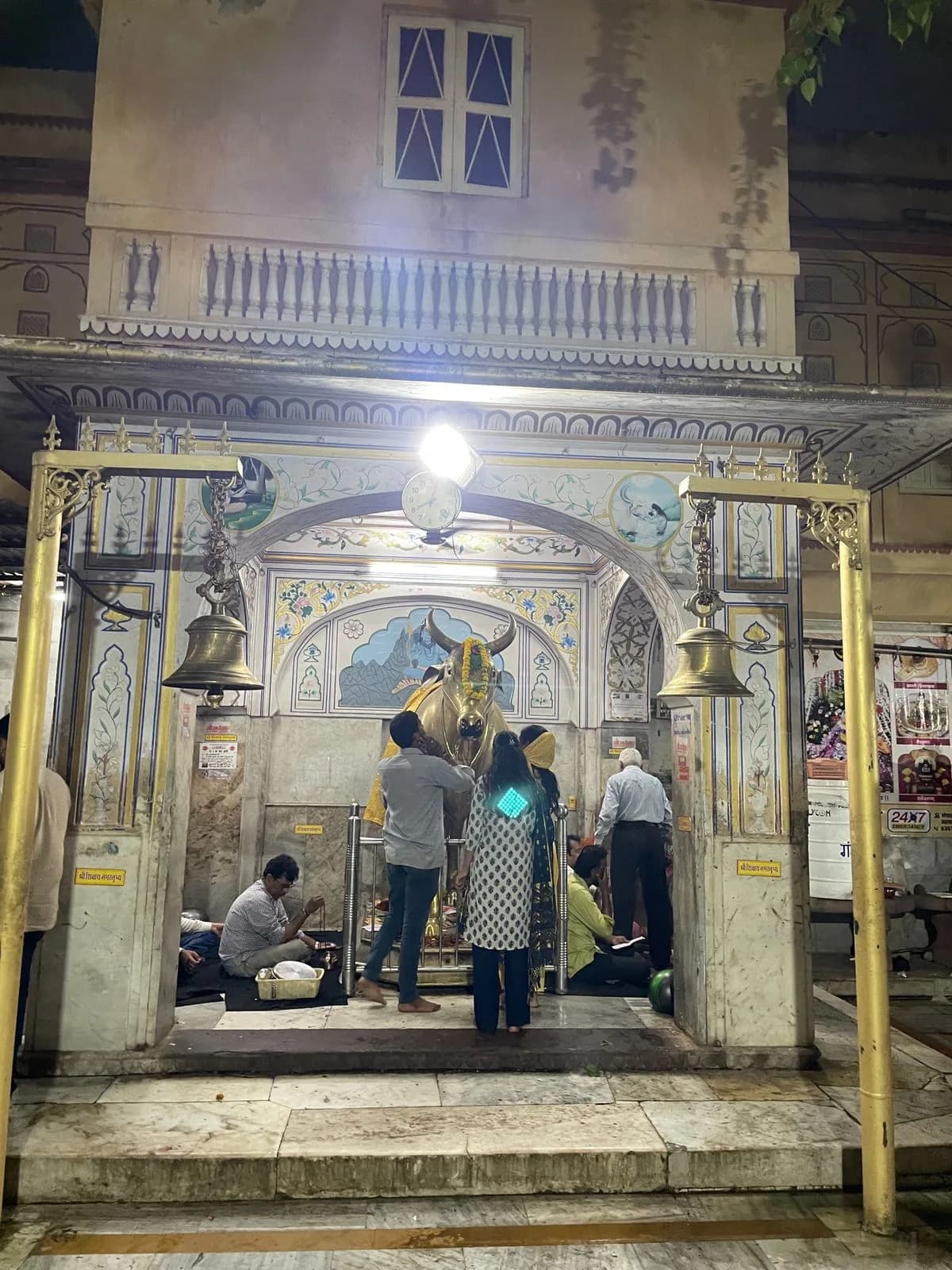
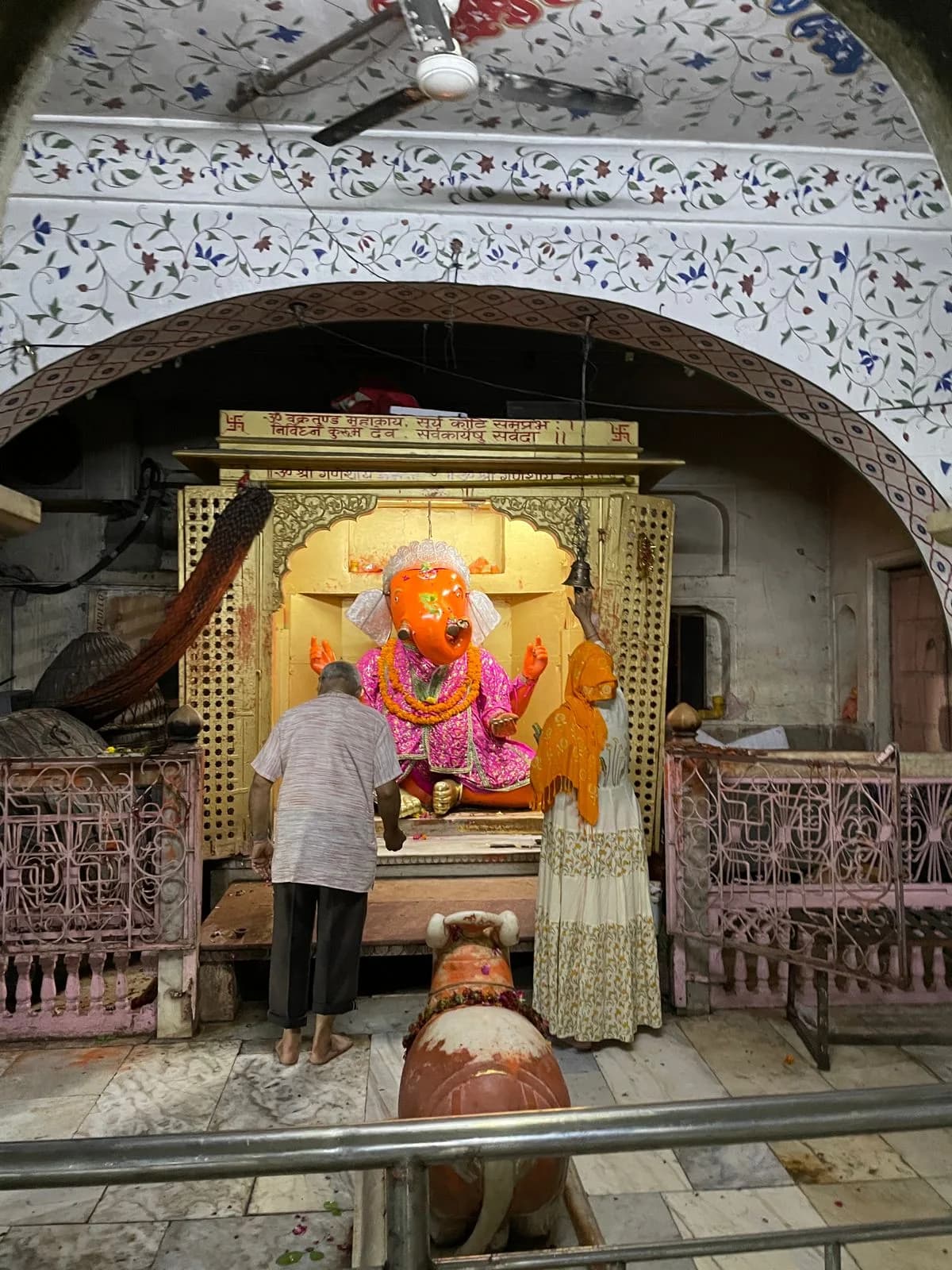
Adjoining the main shrine is the Jagmohan Hall, which holds two features worth seeking out. The first is a distinctive Ganesha idol whose trunk curves to the left, an unusual and auspicious form, since most Ganesha images have a right-curving trunk. A left-trunk Ganesha, known as a vamamukhi form, is considered especially significant in worship, and its presence here is a detail that devotees and the curious alike appreciate. The second is the Nandi statue, the sacred bull who is Shiva's mount and ever-present companion, seated in the traditional position facing the lingam.
These elements complete the temple as a proper Shaivite shrine, with Shiva at the centre, Nandi in devoted attendance, and Ganesha, Shiva's son, honoured nearby. For a visitor interested in the symbolism of a Hindu temple, pausing to notice the left-trunk Ganesha and the Nandi adds a layer of meaning to the visit beyond the central darshan.
Shiva Worship and the Meaning of Jalabhishek
For visitors unfamiliar with Shiva worship, a little background makes the temple far more meaningful. The Shivling, the form in which Shiva is worshipped here, is not an idol in the usual sense but an aniconic symbol, a representation of the formless, infinite nature of the divine. Pouring water over it, the ritual of jalabhishek, is among the simplest and most powerful acts of Hindu devotion, an offering that asks nothing in return and expresses pure surrender. When you see a devotee quietly pour water from a small vessel over the black stone at Tarkeshwar Mahadev, you are watching a gesture that Shaivites have repeated for thousands of years.
The additional offerings carry their own meanings. Milk, ghee and sugarcane juice are each considered pure and auspicious substances, and offering them to the lingam is a way of giving the best of what sustains life back to the source of life. The Shringar that follows, the dressing and decoration of the deity, transforms the simple stone into a radiant focus of devotion, adorned and honoured like a revered guest. Understanding this rhythm, the washing, the offering, the adornment, helps a visitor see the temple not as a static object but as a place where the deity is served and cared for through the day, as a living presence rather than a monument.
This is why I encourage my guests to slow down here. A fort rewards the eye, but a temple like this rewards attention of a different kind, the willingness to watch, to feel the atmosphere, and to sense the continuity of faith flowing through an ordinary afternoon. You do not need to share the belief to be moved by its sincerity, and many travellers tell me afterwards that these quiet minutes stayed with them longer than the grander sights.
The Temple in the Life of the Old City
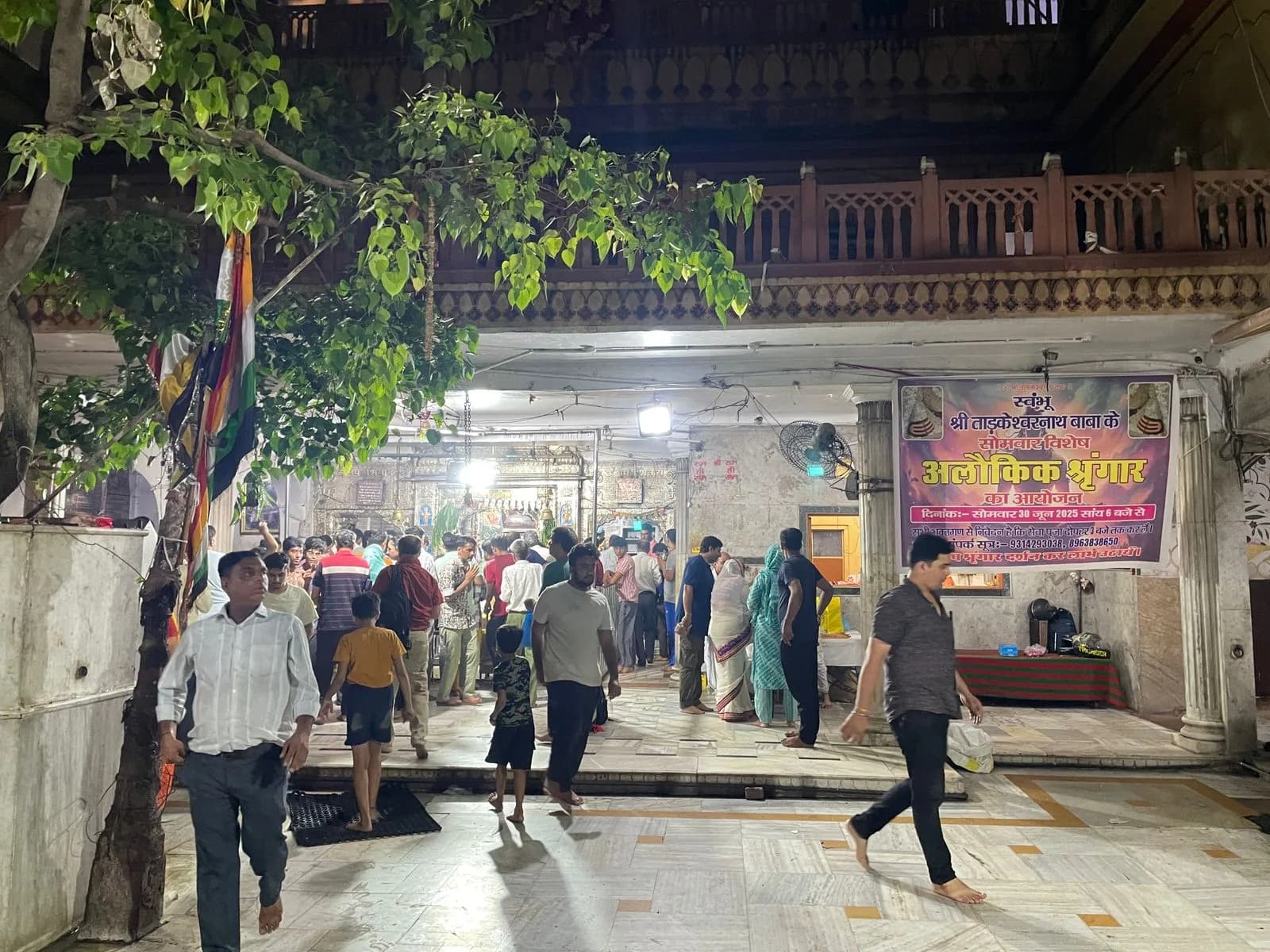
Part of what makes Tarkeshwar Mahadev special is that it is not set apart from daily life but woven right into it. The temple stands amid the shops and stalls of Chaura Rasta, so the sound of bells and chanting mingles with the calls of vendors and the flow of the market. For the people of this quarter, the temple is not a tourist site at all but a familiar presence, a place to pause on the way to work, to offer a prayer before a journey, or to bring the family on a festival day. That everyday intimacy is exactly what gives it its warmth.
This setting also tells you something about how the old Pink City was conceived. When Jaipur was laid out in the eighteenth century, temples were built into the heart of the market squares and residential blocks, not banished to the edges, so that faith and commerce and daily life sat side by side. Tarkeshwar Mahadev is a living example of that vision, a sacred space at the centre of a working bazaar. Walking to it, you pass through the real, unpolished Jaipur that few hurried tourists ever see, and that journey through the lanes is part of the experience.
For a traveller, this means the temple offers two gifts at once. There is the shrine itself, with its ancient lingam and its quiet devotion, and there is the walk to reach it, through a quarter of the city that still lives and trades much as it has for generations. I often tell my guests that the few hundred metres of market lane leading to the temple door are as memorable as the darshan itself, full of colour, craft and the ordinary life of the Pink City. Taken together, the shrine and its setting make a visit here one of the most authentic experiences the old city can offer.
The Makar Sankranti Solar Alignment
One of the temple's most remarkable features is an architectural and astronomical marvel that comes alive once a year. On Makar Sankranti, the mid-January festival that marks the sun's northward journey, a beam of sunlight falls directly onto the Shivling through a specially placed opening in the ceiling of the temple. This solar alignment, designed into the very architecture of the shrine, is a striking demonstration of the astronomical sophistication that runs through old Jaipur, the same spirit that produced the great observatory of the Jantar Mantar nearby.
For devotees, the moment the sunlight touches the lingam is deeply auspicious, a sign of the cosmos itself honouring Shiva. For a visitor fascinated by the blend of science, architecture and faith that defines Jaipur, it is a wonderful example of how the city's builders wove astronomical precision into even a modest neighbourhood temple. If you happen to be in Jaipur around Makar Sankranti, it is a special thing to witness, though the temple is worth visiting at any time of year.
Tarkeshwar Mahadev Timings and Opening Hours
The temple keeps long hours, open daily from 5:30 AM to 11:30 PM, which gives visitors great flexibility. The early morning, soon after opening, is a beautiful time to come, when the first aarti fills the shrine and the old city is still quiet. The evening too has its own atmosphere, with the temple lit and busy with devotees stopping by after the day's work.
One practical point to note is the afternoon rhythm. Through the day the inner-sanctum access changes when the Shringar, the decoration of the deity, begins, so if you particularly want to perform jalabhishek or make offerings directly, it is best to come before that, generally before the mid-afternoon. Planning your visit around this, and avoiding the busiest festival crowds unless you want that intensity, makes for a calmer darshan.
Darshan, Aarti and Rituals
Devotees visit Tarkeshwar Mahadev for both morning and evening darshan, and the temple is a place of active ritual rather than passive sightseeing. The central act of worship is the jalabhishek, the offering of water over the swayambhu lingam, often accompanied by offerings of milk, ghee and sugarcane juice. These offerings are best made in the earlier part of the day, before the Shringar decoration begins in the afternoon, from 3 PM to 4 PM, when the sanctum arrangements change.
If you wish to take part rather than simply observe, the key is to follow the temple staff and the local devotees. Watch how water is offered, join the queue when there is one, and let the rhythm of the shrine guide you. Non-Hindu visitors are welcome to observe respectfully, and many of my international guests find witnessing a genuine jalabhishek, performed by ordinary Jaipur devotees as they have for generations, one of the most moving moments of their trip.
Best Time to Visit Tarkeshwar Mahadev
The best season to visit is the cooler period from October to March, when wandering the old city and reaching the temple on foot is comfortable rather than exhausting, as my guide to the best time to visit Jaipur explains. During the week, weekday mornings are the quietest and most peaceful for an unhurried darshan, which is what I recommend for visitors who want to experience the temple calmly.
If you want to see the temple at its most intense and alive, the Shiva festivals are the time. Mondays are traditionally sacred to Shiva and draw larger crowds, and the month of Shravan in July and August, along with the great festival of Mahashivratri, brings enormous throngs of devotees. These are powerful, crowded, deeply devotional occasions, wonderful to witness if you enjoy that energy, but not the time for a quiet, contemplative visit. Knowing which experience you want helps you choose your day.
Is Tarkeshwar Mahadev Worth Visiting
For the right traveller, Tarkeshwar Mahadev is genuinely worth the short detour, though I am honest with my guests about what it is and is not. It is not a grand architectural spectacle on the scale of the City Palace or the forts, and a visitor looking only for photogenic monuments may pass it by. What it offers instead is authenticity, the chance to step inside a living, centuries-old Shiva shrine at the very heart of the old city and feel the real devotional life of Jaipur.
Pilgrims and anyone drawn to Hindu spirituality will find it deeply rewarding, as will travellers who like to understand a city through its everyday sacred spaces rather than only its showpiece attractions. Because it is free, open long hours and a short walk from the main old-city sights, it costs almost nothing to include, and it adds a layer of meaning to a Jaipur day that the palaces alone cannot. For visitors who value atmosphere and authenticity over grandeur, it is one of the walled city's quiet highlights, and the kind of place that makes a trip feel personal rather than packaged. In my experience the travellers who give it a chance almost always count it among the small, unexpected moments they remember most warmly from their time in Jaipur.
Tarkeshwar Mahadev Dress Code and Etiquette
As a living temple, Tarkeshwar Mahadev asks visitors to dress and behave respectfully. Modest, traditional or neat attire is recommended, with shoulders and knees covered, and you must remove your footwear outside the shrine area before entering. These are the ordinary courtesies of any Hindu temple, and following them marks you as a considerate guest rather than a mere sightseer.
Beyond dress, a little awareness goes a long way in this busy old-city setting. Follow the temple staff's instructions for the jalabhishek and darshan queues, and be mindful not to block the narrow market lanes or temple passages while you buy puja items or take photographs. The temple sits within a working bazaar, so courtesy to the devotees around you and to the shopkeepers of the lane is part of visiting well. Arriving calm, quiet and respectful is the best way to enjoy the shrine and to honour the faith of the people who worship here daily.
Things to See Near Tarkeshwar Mahadev
The temple's location in the heart of the walled city makes it wonderfully easy to combine with Jaipur's headline old-city sights. It sits close to Tripolia Bazar, and a short walk brings you to the markets around Bapu Bazaar, where you can shop for textiles, juttis and handicrafts. The grand City Palace and the astronomical wonder of the Jantar Mantar are both nearby, as is the iconic Hawa Mahal, the honeycomb Palace of Winds that most visitors see first.
This cluster of sights makes Tarkeshwar Mahadev a natural stop on an old-city walking route rather than a separate journey. I often weave it into a morning that takes in the palace, the bazaars and a temple or two, so that my guests experience the full texture of the walled city, its royal grandeur, its bustling markets and its living faith, all in a single stroll. The royal apartments of the Chandra Mahal within the City Palace round out the picture of old Jaipur beautifully.
Where Tarkeshwar Mahadev Fits in Your Jaipur Trip
Tarkeshwar Mahadev is a short visit, so it does not need a slot of its own; it folds naturally into an old-city walk alongside the City Palace, Jantar Mantar and the bazaars. For a tightly packed single day, my one-day Jaipur itinerary shows how to fit the headline sights together, with this temple added as a quick, meaningful pause for anyone drawn to the city's spiritual side. Because the temple stays open late, it is also an easy evening stop, when the old city takes on a different glow.
On a longer visit there is more room for these deeper, quieter experiences, and the full places to visit in Jaipur list helps you balance the grand monuments with living temples like this one. If you are planning the days yourself, my Jaipur trip planner helps you sequence the old-city sights sensibly, and my roundup of the best things to do in Jaipur places this temple among the experiences that reveal the real soul of the city. For pilgrims building a wider circuit, many Jaipur devotees also travel on to the great shrine of Khatu Shyam Ji in the surrounding region.
Beyond the sightseeing, the temple connects to the living festival calendar of the city. Its biggest days fall during Shravan and at Mahashivratri, and my guide to the city's cultural festivals sets out when these devotional high points occur, so you can plan to join them or sidestep the crowds as you prefer. Where to base yourself for easy old-city access is covered in my notes on where to stay in Jaipur, and the local food of this quarter is set out in my guides to places to eat in Jaipur and the city's famous foods.
Reaching Jaipur for the Golden Triangle
Most visitors reach Jaipur as the third corner of the classic Golden Triangle, arriving from Delhi or Agra. If you are driving down from the capital, my guide to the Delhi to Jaipur distance sets out the route and timing, while travellers crossing from the Taj Mahal city will want the Agra to Jaipur distance. Once you are settled in the city, the walled-city temples and markets, including Tarkeshwar Mahadev, are all within easy reach, and the grander sights such as the hilltop Amber Fort and the serene Jal Mahal are a short drive away.
Plan Your Jaipur Trip With Us
A truly memorable Jaipur trip balances the grand monuments with the living, devotional heart of the old city, and a temple like Tarkeshwar Mahadev is where that heart beats most honestly. At Experience My India we build Jaipur itineraries that weave the famous forts and palaces together with the authentic temples, markets and rhythms of the walled city, arranging private cars, knowledgeable guides and comfortable pacing. If you would like a trip that includes the real spiritual texture of Jaipur alongside its headline sights, explore our Delhi Agra tours or send a quick message on WhatsApp at +91 7302265809, and we will shape a journey around what you love.
Related Guides
Enquire Now
What our travellers say
“Our Golden Triangle honeymoon was flawless. Sunrise at the Taj with a private guide felt like a dream — every detail was handled.”
“As a first-time visitor to India, I felt completely safe and looked after. The driver and guide were superb professionals.”
“Travelling with two kids is hard, but they made it effortless. Great pacing, clean cars and zero surprises on price.”
“Booked the Agra day trip on short notice and it went off without a hitch. The guide's history knowledge made the Taj come alive.”
“Best decision of our India trip. Car was spotless, driver was punctual every single day, and the itinerary never felt rushed.”
“Organised a same-day Agra trip for my parents. Communication before and during the trip was excellent — genuinely stress-free.”
“Sunrise at the Taj Mahal was magical. Our guide spoke great English and answered every question with patience.”
“Three generations travelling together and everyone was comfortable — good vehicle, sensible stops, and no hidden costs.”
“I've used a few tour operators across Asia and this was among the smoothest. Fair pricing and they actually answer the phone.”
“Our custom Rajasthan-Agra combo was planned around our budget without cutting corners on comfort. Highly recommend.”
“Solo female traveller here — I felt safe throughout. The driver was respectful and the whole trip was timed perfectly.”
Ready to Explore
The Pink City?
Experience the Amber Fort, Hawa Mahal, City Palace, and the colorful bazaars of Jaipur with our expert-guided premium tours of Rajasthan's capital.

Jaipur
Premium Tour Package
Questions
Frequently asked questions
What is Tarkeshwar Mahadev temple famous for?
Tarkeshwar Mahadev, also called Tadkeshwar Nath, is famous for its swayambhu or self-manifested black stone Shivling, believed to have emerged on its own and to predate the founding of Jaipur. It is one of the old city's most revered Shiva shrines and part of what earns Jaipur the name Chhoti Kashi.
What are the Tarkeshwar Mahadev Jaipur timings?
Is there an entry fee for Tarkeshwar Mahadev?
Where is Tarkeshwar Mahadev temple in Jaipur?
How do I reach Tarkeshwar Mahadev temple?
What is the swayambhu Shivling at Tarkeshwar Mahadev?
What is the Makar Sankranti sun alignment at the temple?
What is the best time to visit Tarkeshwar Mahadev?
Is there a dress code at Tarkeshwar Mahadev?
Can non-Hindus visit Tarkeshwar Mahadev?
Explore more
Plan your Tarkeshwar Mahadev trip with us

Interested in Tarkeshwar Mahadev Jaipur: Darshan at the Swayambhu Shiva Temple?
Chat with our travel team for a custom quote, or browse every package.
Related Attractions
9Tarkeshwar Mahadev Jaipur on the map
Open in Google MapsReady to explore Tarkeshwar Mahadev Jaipur: Darshan at the Swayambhu Shiva Temple?
Book your private tour today and experience the magic of India's rich heritage.