Dilli Haat INA Delhi: Crafts, Food, Timings and Visitor Guide
Visiting Dilli Haat INA in Delhi? The crafts, regional food court, timings, entry fee, what to buy, nearest metro, best time and visitor tips.
In a Nutshell
“Dilli Haat is a vibrant open-air crafts and food market in South Delhi, designed like a traditional village fairground, where artisans from across India sell handmade crafts and regional food stalls serve dishes from every corner of the country. The famous original branch sits opposite INA Market, with the Dilli Haat-INA metro at its gate. Opened in 1994, it rotates its artisans every fortnight, so the goods always change, charges a small entry ticket and is one of the best places in Delhi to shop and eat in one go. It is explored on our Delhi tours, run by a unit of Experience My India.”
Dilli Haat is one of my favourite recommendations for travellers who want authentic Indian crafts and a pan-Indian food feast without trekking across the country. It gathers rural artisans and regional cuisines from every state into one lively, colourful enclosure in the heart of the city. Our team at Delhi Agra Tour Packages often includes it for a relaxed, culture-rich afternoon and it makes a wonderful, easygoing stop on a wider Golden Triangle tour.
I am Abhay Sharma, Delhi born and a Golden Triangle guide since 2015 and I love sending guests here to shop directly from the makers and graze their way across India's regional foods. This guide gathers everything I would tell a visitor beforehand, checked against current information, so you can make the most of it.
Details
Dilli Haat at a glance
| Detail | Information |
|---|---|
| Location | Opposite INA Market, Kidwai Nagar, South Delhi |
| Opened | 1994 |
| Spread | Around 6 acres |
| Concept | An open-air crafts and food market styled like a village haat |
| Entry fee | A small ticket, with concessions for children |
| Nearest metro | Dilli Haat-INA (Yellow and Pink lines), right at the gate |
| Time needed | 2 to 3 hours for crafts and food |
| Other branches | Pitampura and Janakpuri, besides the famous INA one |
Dilli Haat timings
| Detail | Information |
|---|---|
| Opening days | Open every day |
| Timings | About 11:00 AM to 8:00 PM, some stalls to 9:00 PM |
| Weekly closure | None |
Dilli Haat is generally open daily from about 11:00 AM to 8:00 PM, with some food stalls staying open a little later, towards 9:00 PM. Timings can vary, so treat them as a guide and note that the food court and evening atmosphere are liveliest later in the day.
Entry ticket prices
| Visitor | Fee (at the time of writing, reconfirm) |
|---|---|
| Adults | Around ₹30 |
| Children | Around ₹20 |
| Foreign nationals | Around ₹100 |
The entry ticket is small and helps keep the market clean and well managed. Rates can be revised, so reconfirm at the gate. The ticket only covers entry; you pay separately for anything you buy or eat inside and prices there are fair and regulated.
How to reach
| From | Route |
|---|---|
| Dilli Haat-INA metro (Yellow and Pink lines) | Direct exit signs lead right to the market gate |
| By road | Opposite INA Market on Aurobindo Marg; limited parking nearby |
| By auto or cab | Drops at the main entrance |
What is Dilli Haat and why is it special?
Dilli Haat is a permanent open-air market in South Delhi conceived to recreate the atmosphere of a traditional rural haat or village market and to bring the crafts and cuisines of all of India together in one place. Spread across around 6 acres opposite INA Market, it combines a crafts bazaar of rotating artisan stalls, a food court of regional Indian kitchens and an open plaza for cultural performances, all in a pleasant, landscaped setting of thatched-roof stalls, stone paths and lawns. It is run by Delhi Tourism and partner bodies, which keeps it clean, fairly priced and well organised, a world away from the chaos of the old city bazaars.
It is special for several reasons worth spelling out:
- Crafts straight from the makers. Artisans and weavers from across India sell their own handmade work directly, at fair regulated prices, so you buy authentic crafts and the money reaches the maker.
- All of India's food in one place. A food court of state-specific stalls lets you taste dishes from Sikkim to Rajasthan to Bengal without leaving Delhi.
- Ever-changing stalls. The artisans rotate every fortnight, so the crafts on offer are always different and no two visits are the same.
- Culture and performances. Folk dances, music and craft demonstrations often enliven the plaza, especially at weekends and festivals.
- Relaxed and pleasant. Clean, green, ticketed and easy, it is a calm, enjoyable place to browse and eat, ideal after busier sightseeing.
It belongs on any thoughtful list of things to do in Delhi and it is one of the most enjoyable and culturally rich of the places to visit in Delhi.
What is the history and concept of Dilli Haat?
Dilli Haat was established in March 1994, a joint initiative of Delhi Tourism, the New Delhi Municipal Council and the Ministries of Textiles and Tourism, with a thoughtful purpose behind it. The idea was to give India's rural artisans and handloom weavers a dignified, well-run platform to sell their crafts directly to urban buyers and tourists, cutting out the middlemen who so often take the lion's share, while also showcasing the country's extraordinary diversity of handicrafts and regional food in a single, accessible place in the capital. The name itself captures the concept: a haat is the traditional periodic village market of rural India and Dilli Haat recreates that spirit in a permanent, landscaped form in the heart of Delhi.
The result has been a great success and a model copied elsewhere. Crucially, the market was designed so that the artisan stalls are not permanent shops but are allotted on a rotating basis, so a vast number of craftspeople from every state get their turn. This blend of social purpose, cultural showcase and pleasant visitor experience is what gives Dilli Haat its particular character, at once a shopping destination, a food plaza, a cultural stage and a support scheme for traditional crafts, all rolled into one. Understanding that you are buying directly from makers who have travelled from their villages for their fortnight here adds real meaning to a visit.
The model matters because India's traditional crafts face real pressure from mass production and the loss of the old patronage that once sustained them. By giving artisans a prime spot in the capital, access to tourists and urban buyers and a fair, regulated pricing framework, Dilli Haat helps keep these skills alive and gives the makers a livelihood. For the visitor, this means your purchase is not just a souvenir but a small act of support for a living tradition and you can buy with the confidence that the craft is genuine and the price is honest. It is a rare example of a tourist attraction that is also a piece of cultural policy and it has been successful enough to be imitated in other cities. That thoughtful purpose, wrapped in a genuinely enjoyable day out, is a large part of why Dilli Haat is so well regarded by locals and travellers alike.
What does the rotating artisan system mean for shoppers?
This is one of the most important things to understand about Dilli Haat and it works entirely in a visitor's favour. Rather than fixed shops, the craft stalls are allotted to registered artisans and weavers from across the country who rotate roughly every fortnight, so the selection of crafts changes completely through the year as new makers from different states take their turn. For a shopper, this has two happy consequences. First, the goods are genuinely authentic and regional, sold by the very people who made them, often from the craft's home region, rather than by resellers. Second, no two visits are ever the same: the pashmina seller from Kashmir, the blue pottery maker from Rajasthan or the woodcarver from the south who is here this fortnight may be gone the next, replaced by artisans of other crafts from other states. It means that if you see something you love, you should buy it then, because it may not be there next time. It also means Dilli Haat rewards repeat visits and that whatever time of year you come, you will find a fresh and varied array of India's handicrafts under one roof.
What is a visit to Dilli Haat like?
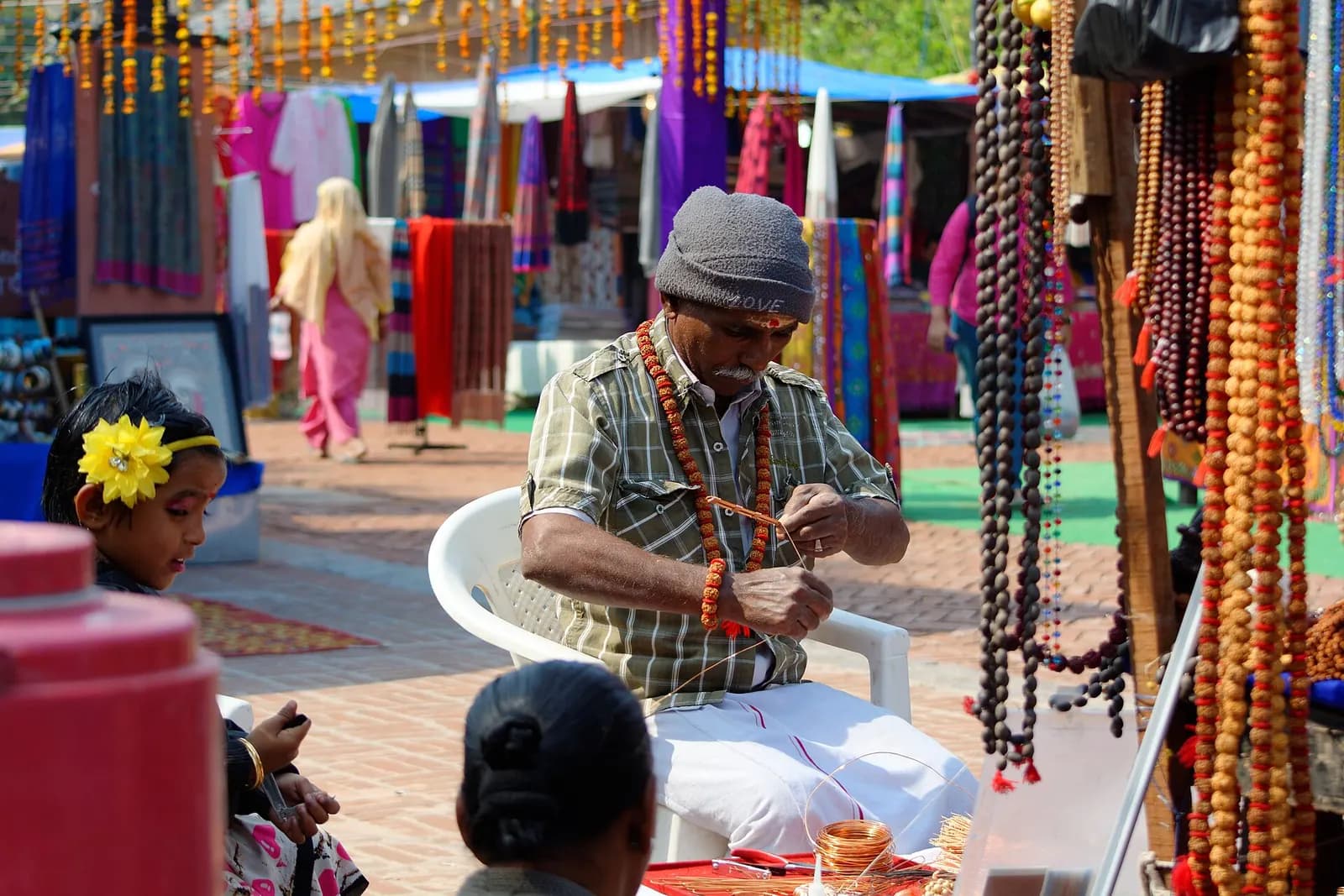
A visit to Dilli Haat is a relaxed, colourful and thoroughly enjoyable few hours, quite different from the crush of the old city markets. You pass through the entrance, buy a small ticket and step into a landscaped enclosure of thatched-roof stalls, stone-paved paths, lawns and shade trees, with craft stalls lining the walkways and the food court and performance plaza beyond. The mood is cheerful and unhurried: artisans sit with their wares, often happy to chat about their craft and region, visitors browse and bargain gently and the smell of regional cooking drifts across from the food court. Because it is ticketed, run by the tourism authorities and kept clean and orderly, it feels safe and comfortable in a way that lets you browse at leisure, which is a welcome contrast to the sensory overload of somewhere like Chandni Chowk.
It is an especially easy and rewarding place for first-time visitors to India, for families and for anyone who finds the big bazaars overwhelming. There is no pressure, prices are fair, the setting is pleasant and you can combine shopping, eating and a bit of culture in one compact, walkable space. Many visitors come intending a quick look and end up staying for hours, browsing from stall to stall, grazing across the food court and pausing to watch a performance. It rewards an unhurried approach: wander the whole circuit first to see what crafts are in residence this fortnight, then come back to buy and leave plenty of time for the food.
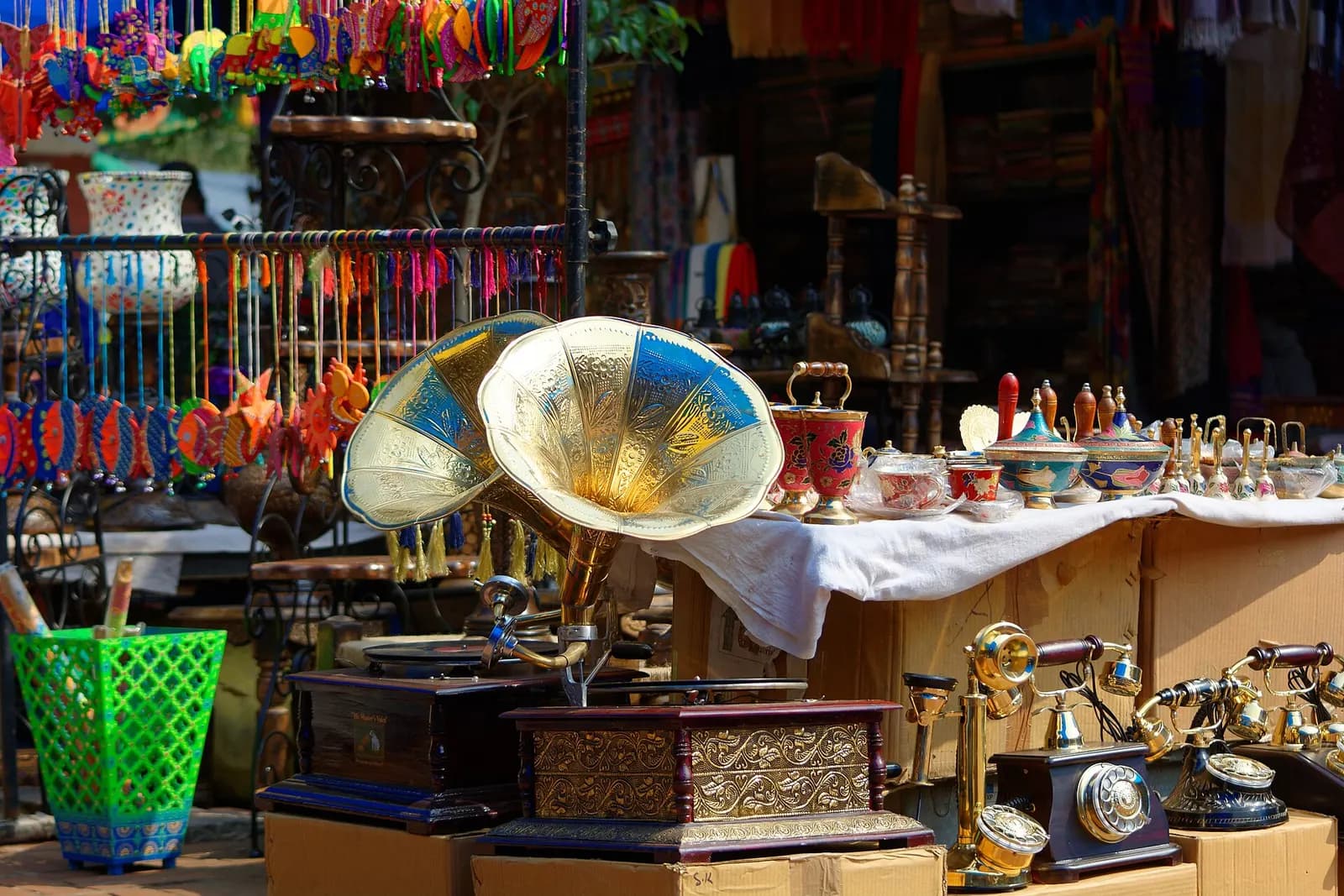
What can you buy at Dilli Haat?
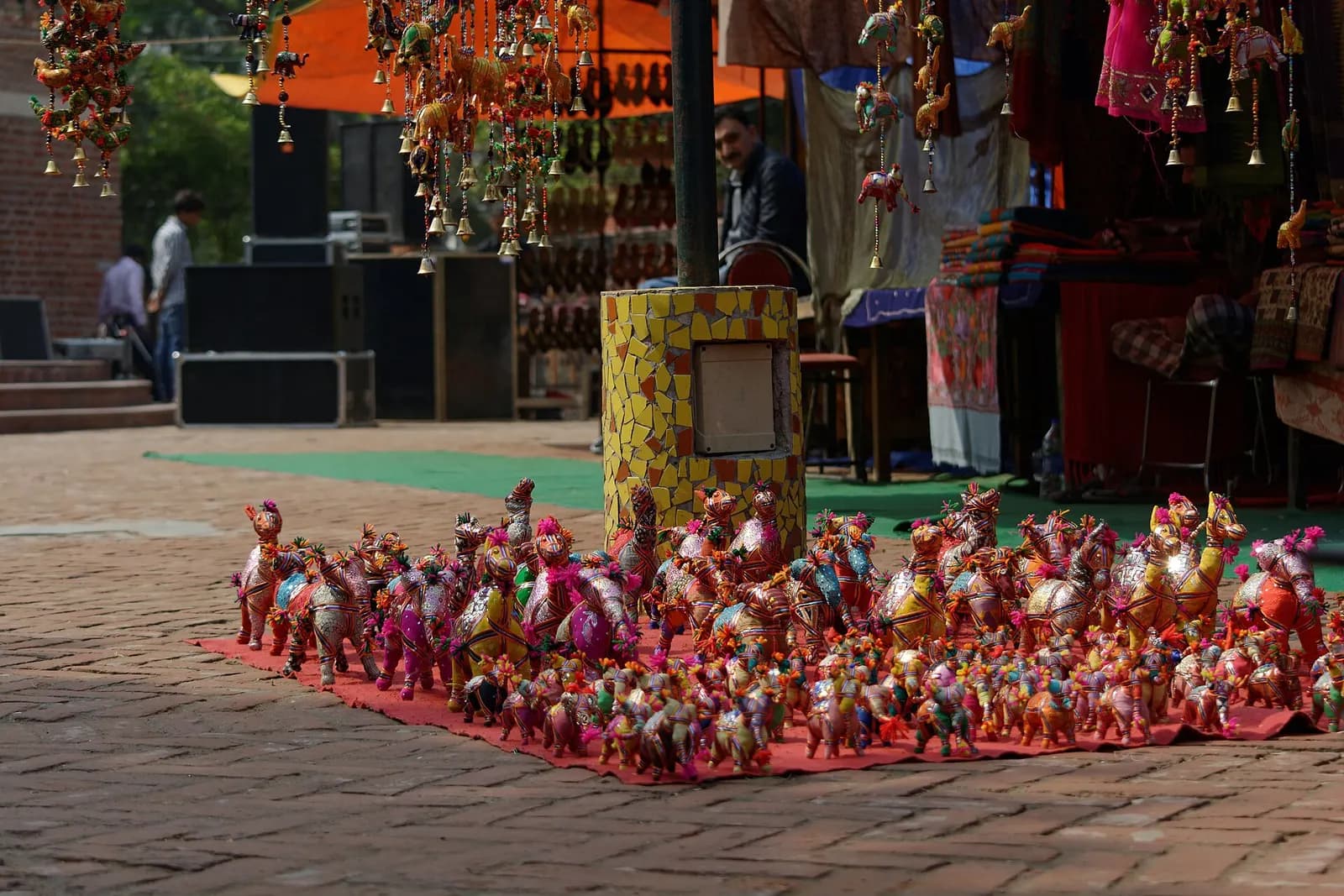
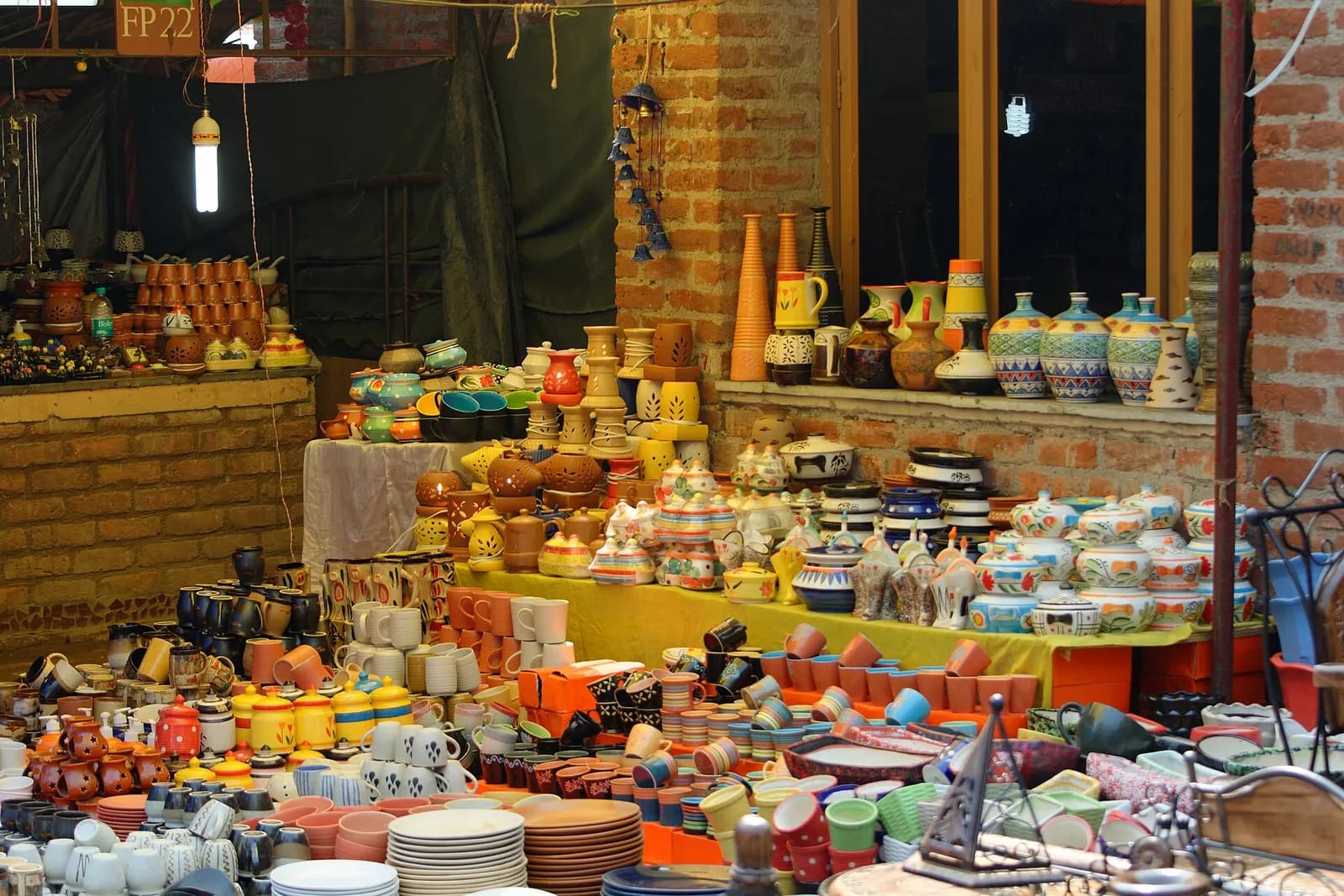
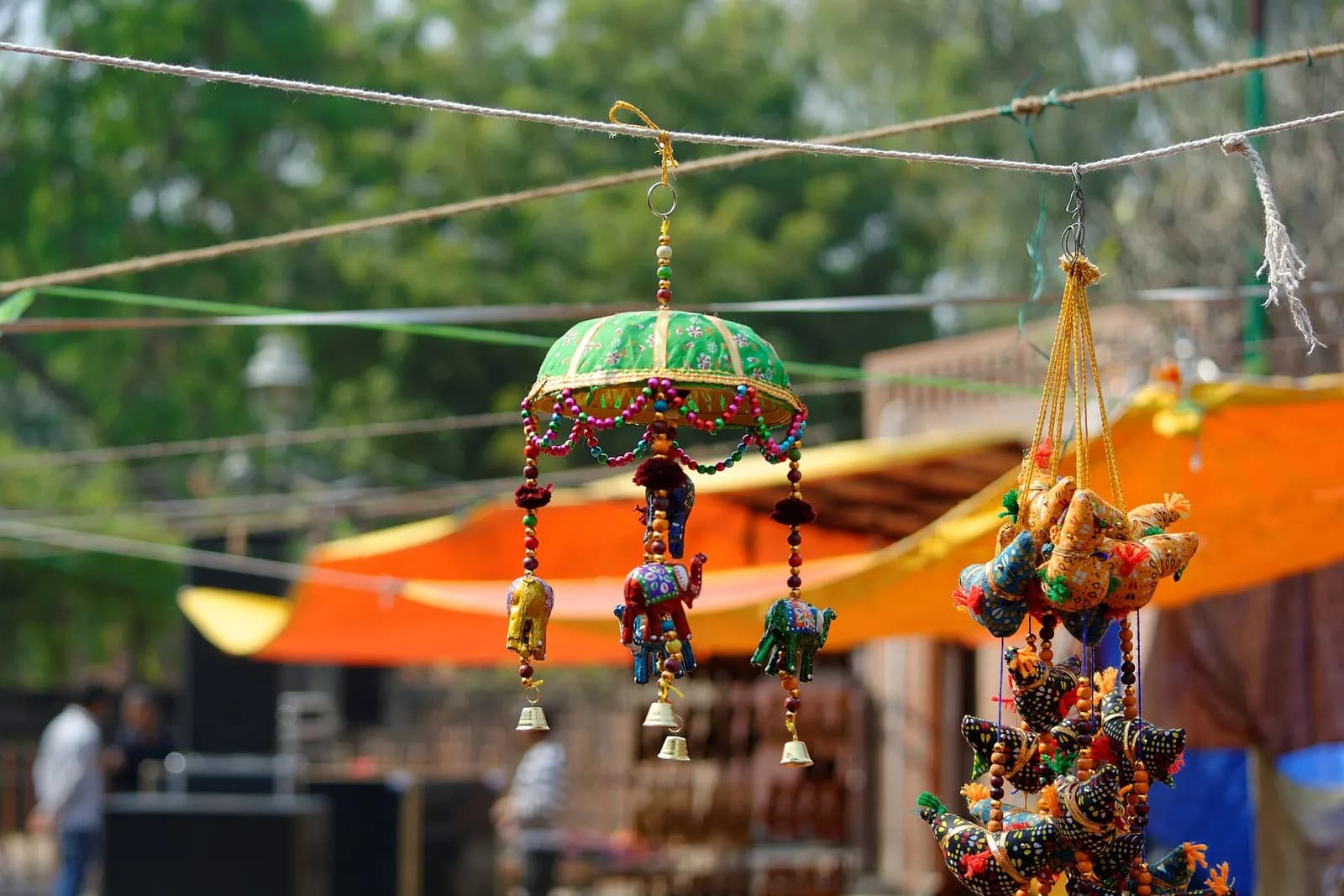
The crafts on sale span the whole range of India's rich handicraft and handloom traditions and because they come directly from the makers, the quality and authenticity are high. Depending on which artisans are in residence during your visit, you might find:
- Woodcraft. Sandalwood and rosewood carvings, decorative boxes and figures.
- Metalware. Brassware, bell-metal and decorative metal crafts.
- Pottery and ceramics. Including the famous blue pottery of Rajasthan.
- Textiles and handlooms. Hand-woven fabrics, saris, stoles and dress material from across the regions.
- Pashmina and shawls. Fine woollen shawls and wraps, including from Kashmir.
- Embroidery. Phulkari from Punjab and other regional embroidery traditions.
- Footwear. Traditional juttis and mojaris, often brightly embroidered.
- Jewellery. Tribal and silver jewellery, beads and gemstones.
Pricing is fair and broadly regulated, since the aim is to support the artisans, though light, good-natured bargaining is common and expected. Because you are buying straight from the maker, you can often learn about the craft and the region it comes from, which makes shopping here a cultural experience as much as a transaction.
What food can you eat at Dilli Haat?
For many visitors, the food court is as big a draw as the crafts and it is a genuine highlight. Dilli Haat's food plaza is an open-air court of stalls, each representing a different Indian state or region, so you can effectively eat your way across the country in a single meal. It is one of the easiest and most enjoyable ways in Delhi to sample authentic regional Indian cooking well beyond the usual North Indian restaurant fare. Specialities you might find include:
- Momos and thukpa from Sikkim and the North East.
- Litti chokha from Bihar.
- Gatte ki sabzi and other Rajasthani dishes.
- Coastal seafood from Goa or dishes from Bengal.
- Regional sweets, snacks and beverages, including traditional teas.
The stalls are run by the respective state emporia or caterers, the setting is casual and open-air and prices are reasonable. It is a wonderful place to try dishes you might never otherwise encounter on a short trip and to round off a craft-shopping session with a relaxed, varied meal. Come hungry and graze across several stalls rather than filling up at one.
What makes the food court special is the authenticity and range. Many of the stalls are run by or linked to the state tourism bodies and emporia, so the regional dishes are cooked in genuine regional styles rather than homogenised for a generic palate, which is why food lovers rate it so highly. On a single visit you can start with Tibetan-style momos, move on to a hearty Bihari litti chokha, try a Rajasthani thali, sample something coastal and finish with a regional sweet and a cup of traditional tea, a culinary tour of India in an hour. The seating is casual and open-air, shared tables encourage a sociable atmosphere and portions are generous and affordable. For vegetarians and meat-eaters alike there is plenty of choice and the staff are used to explaining dishes to curious first-timers. If you time your visit for lunch or an early dinner, the food court alone justifies the trip and it pairs perfectly with an hour of craft browsing on either side.
What cultural events happen at Dilli Haat?
Beyond shopping and eating, Dilli Haat is a cultural venue, which adds to its lively, festive feel. The complex has a central stone plaza and an open-air amphitheatre that frequently host traditional folk dances, classical music recitals, craft-weaving and other demonstrations, particularly at weekends and during the many festivals and themed craft melas held through the year. These events, often free with your entry, turn a simple shopping trip into a richer cultural experience, letting you see performers and craftspeople from different regions in action. Delhi Tourism regularly organises special fairs and food festivals here too, themed around particular states, crafts or seasons, so it is always worth checking what is on when you plan your visit. If you happen to catch a performance or a festival, it adds a memorable extra dimension to Dilli Haat and even on an ordinary day the atmosphere is colourful and welcoming.
Is Dilli Haat worth visiting?
Yes and for several kinds of traveller it is a real highlight. For shoppers, it is arguably the best place in Delhi to buy authentic, regional Indian handicrafts: the goods come straight from the makers, the prices are fair and regulated and the quality is high, so you get genuine craft and the money reaches the artisan, all without the hard-sell and inflated prices of tourist shops. For food lovers, the regional food court is a rare chance to taste dishes from across India in one sitting. For anyone wanting a relaxed, pleasant, low-stress cultural experience, it is ideal, clean, safe, compact and welcoming. The only caveats are small: it is a modern, managed market rather than a historic site, so visitors seeking ancient atmosphere should look elsewhere and the rotating stalls mean you cannot count on finding one specific craft on a given day. But as a place to shop meaningfully, eat adventurously and soak up a bit of India's craft and culinary diversity in a couple of easy hours, Dilli Haat is genuinely hard to beat and it is one of the stops my guests most often thank me for suggesting.
What are the Dilli Haat timings and entry fee?
Dilli Haat is open every day, generally from about 11:00 AM to 8:00 PM, with some food stalls staying open a little later, towards 9:00 PM, so it suits a late morning, afternoon or early evening visit rather than an early start. There is a small entry ticket, at the time of writing, around ₹30 for adults, about ₹20 for children and around ₹100 for foreign nationals, which helps keep the market clean, secure and well managed. These rates can be revised, so reconfirm at the gate. The ticket covers entry only; you pay separately for crafts and food inside, where prices are fair and broadly regulated. Most stalls now accept digital payments as well as cash and the complex offers visitor amenities including wheelchair accessibility, public restrooms and basic medical aid on call. Allow two to three hours to browse the crafts and enjoy a meal at a relaxed pace.
What is the best time to visit Dilli Haat?
The best season, as with all Delhi sightseeing, is the cool stretch from October to March, when the open-air market is most pleasant and the many winter craft fairs and food festivals are in full swing. On any given day, late afternoon into the evening is the nicest time: the heat has eased, the food court comes alive, the lights come on and there is the best chance of catching a cultural performance in the plaza. If you prefer a quieter browse of the crafts, a weekday is calmer than the busy weekends, when local families and shoppers fill the market. Try to time your visit for a themed craft mela or food festival if one is on during your stay, as these are when Dilli Haat is at its most vibrant, though also its most crowded. Avoid the peak summer afternoons, when the open setting offers little shade and the heat makes browsing and eating in the open-air court uncomfortable. If you do visit in the warmer months, come after about 5:00 PM, when it cools down, the lights come on and the market is at its most pleasant and lively.
How do you reach Dilli Haat?
Dilli Haat INA could hardly be easier to reach. It sits opposite INA Market on Aurobindo Marg and the Dilli Haat-INA metro station, on both the Yellow and Pink lines, is right at the gate, with direct exit signs leading straight to the entrance, so the metro is by far the simplest way to get there. By road it is central and easy to reach by auto or cab, though parking in the area is limited, so the metro is preferable. Once inside, the whole market is compact and walkable.
Its location in South Delhi, close to the Lodhi and Safdarjung belt and a short ride from Humayun's Tomb and the Lotus Temple, means it fits neatly into a central or southern plan. If you are threading a wider route, a dedicated New Delhi tour can tie it together with the imperial sights, while a broader Delhi day tour folds the market into the full span of the capital.
Are there other Dilli Haat branches?
Yes. While the original and most famous branch is the one at INA, which is central, the most atmospheric and the one most visitors mean when they say Dilli Haat, there are two other branches in Delhi, at Pitampura in the north west and Janakpuri in the west. These were opened later to bring the same successful concept of artisan crafts, regional food and cultural events to other parts of the city and the Pitampura branch in particular is larger and often hosts bigger cultural shows and events. For a visitor on a short trip, however, the INA branch is almost always the right choice: it is the most central, the easiest to reach by metro and the one with the classic Dilli Haat atmosphere. The other branches are more useful for residents of those areas or for specific events, so unless you are nearby or there is a particular festival on, head for INA.
What is there to see near Dilli Haat?
Dilli Haat sits in a well-connected part of South Delhi, so it pairs easily with plenty nearby. A short distance away are the lawns and tombs of Lodhi Garden and the grand Safdarjung's Tomb, both lovely for a stroll and the antique lanes of Sunder Nagar market are not far. The lively Hauz Khas complex and village is also within easy reach.
For more shopping, Delhi's wider scene runs from its many markets to the bazaars of Karol Bagh and the colonial circle of Connaught Place. For food beyond the court there are options all around and the great monuments of the capital, the Qutub Minar, India Gate and the modern Akshardham, are all a manageable ride away. Together these turn Dilli Haat into a relaxed, enjoyable part of a South Delhi day and you can see the fuller picture in our guide to the important monuments of Delhi.
How does Dilli Haat fit into a Delhi itinerary?
For most visitors, Dilli Haat works beautifully as a relaxed interlude or a rewarding end to a day of sightseeing, the perfect place to pick up genuine souvenirs and enjoy a varied meal after the monuments. Because it opens late morning and runs into the evening, it pairs naturally with a morning of sightseeing nearby, then an afternoon and evening of browsing crafts, eating across the regions and perhaps catching a performance. It is especially valuable for travellers who want to buy authentic Indian handicrafts as gifts or keepsakes but are short on time, since it gathers the whole country's crafts in one fair-priced, hassle-free place. Those on a fuller itinerary often slot it in alongside the grand monuments, the serene Humayun's Tomb, the mighty Red Fort and the towering Qutub Minar, as a lighter, livelier counterpoint.
If Delhi is your gateway to the wider Golden Triangle, Dilli Haat is an ideal first taste of India's craft and culinary diversity before you travel on and a smart place to shop, since you buy directly from the artisans at fair prices rather than from tourist shops later. Many of my guests do their souvenir shopping here precisely for that reason. For the best season across the capital, our guide to the best time to visit Delhi is a useful companion for planning the rest of your days in the capital.
Travel tips for visiting Dilli Haat
A few pointers make the visit even better:
- Come by metro to the Dilli Haat-INA station, which is right at the market gate, as parking nearby is limited and congested.
- Visit in the cooler months, October to March and ideally in the late afternoon into the evening.
- Come hungry and graze across several regional food stalls rather than filling up at one.
- Buy what you love when you see it, as the rotating artisans and their crafts change every fortnight.
- Bargain lightly and kindly, as prices are already fair and regulated and the money goes straight to the makers.
- Carry some cash as well as a card, though most stalls now accept digital payments.
- Check for festivals and craft melas, which are when Dilli Haat is at its most vibrant.
- Allow 2 to 3 hours to enjoy the crafts, the food and any performances at a relaxed pace and do a full loop of the stalls before you start buying.
If you would like a local to build Dilli Haat into a wider Delhi plan, message our team on WhatsApp at +91 7302265809 with your travel dates and group size and we will help you shape the day.
Plan your trip with us
At Experience My India, through our Delhi and Golden Triangle travel desk, we design unhurried, well paced trips that make room for relaxed, culture-rich stops like Dilli Haat, not just the historic monuments. Whether you want a gentle set of Delhi Agra tours or a full Golden Triangle route through Delhi, Agra and Jaipur, we plan around your pace, your interests and the right season, with local guides who know where to find the best crafts and the tastiest regional stalls. Share your dates and the kind of trip you have in mind through our enquiry page, tell us your group size and we will put together an honest, tailored plan rather than a rushed checklist.
Related guides
- Shopping in Delhi, the city's wider markets and malls
- Nearby places to visit in Delhi, to extend your day
Enquire Now
Ready to Explore
The Heart of Delhi?
Explore the Red Fort, Qutub Minar, Humayun's Tomb, and the vibrant streets of Old Delhi with our expert-guided premium tours of India's capital city.

Delhi
Premium Tour Package
Questions
Frequently asked questions
What are the timings of Dilli Haat?
Dilli Haat INA is generally open every day from about 11:00 AM to 8:00 PM, with some food stalls open a little later, towards 9:00 PM. Reconfirm, as timings can vary.
What is the entry fee for Dilli Haat?
Which is the nearest metro station to Dilli Haat?
What can you buy at Dilli Haat?
What food is available at Dilli Haat?
Why do the stalls at Dilli Haat keep changing?
When was Dilli Haat established?
Are there other Dilli Haat branches?
Is Dilli Haat worth visiting?
How much time do I need at Dilli Haat?
Explore more
Plan your Dilli Haat INA trip with us

Photo credits
Photos from Wikimedia Commons, used under their licences:
- Photo 1 by Slyronit, CC BY-SA 4.0
- Photo 2 by Slyronit, CC BY-SA 4.0
- Photo 3 by Slyronit, CC BY-SA 4.0
- Photo 4 by Slyronit, CC BY-SA 4.0
- Photo 5 by Slyronit, CC BY-SA 4.0
Interested in Dilli Haat INA Delhi: Crafts, Food, Timings and Visitor Guide?
Chat with our travel team for a custom quote, or browse every package.
Related Attractions
9Ready to explore Dilli Haat INA Delhi: Crafts, Food, Timings and Visitor Guide?
Book your private tour today and experience the magic of India's rich heritage.