Gandhi Smriti Delhi: Timings, History and Visitor Guide
Visiting Gandhi Smriti, the old Birla House, in Delhi? Timings, free entry, Gandhi's room, the Martyr's Column, the museum, nearest metro and visitor tips.
In a Nutshell
“Gandhi Smriti, formerly Birla House, is the national memorial in central Delhi where Mahatma Gandhi spent the last 144 days of his life and was assassinated on 30 January 1948. The house is preserved with his simple room and belongings and the garden holds the Martyr's Column at the spot where he fell and the stone path marking his last footsteps, alongside a modern multimedia museum. Entry is free, it is open daily except Mondays and the nearest metro is Lok Kalyan Marg. It is one of Delhi's most moving places, visited on our Delhi tours, run by a unit of Experience My India.”
Gandhi Smriti is a place that stays with you. Standing in the plain room where the Father of the Nation lived his final days or walking the path of his last footsteps to the spot where he was killed, is among the most quietly powerful experiences in Delhi. If you want to connect with the human story behind modern India, this is essential. Our team at Delhi Agra Tour Packages often includes it for thoughtful travellers and it adds real depth to a wider Golden Triangle tour.
I am Abhay Sharma, Delhi born and a Golden Triangle guide since 2015 and I always suggest a little unhurried time here, because it is a memorial to feel rather than a monument to tick off. This guide gathers everything I would tell a visitor beforehand, checked against current information, including the closed day and how to visit respectfully.
Details
Gandhi Smriti at a glance
| Detail | Information |
|---|---|
| Location | 5 Tees January Marg, central Delhi, near the Lodhi area |
| Formerly | Birla House |
| Significance | Gandhi's last 144 days and his assassination on 30 January 1948 |
| Highlights | His preserved room, the Last Footsteps path, the Martyr's Column, the museum |
| Entry fee | Free for all |
| Open | 10:00 AM to 6:30 PM, closed Mondays |
| Nearest metro | Lok Kalyan Marg (Yellow Line) |
| Time needed | 1.5 to 2 hours |
Gandhi Smriti timings
| Detail | Information |
|---|---|
| Open days | Tuesday to Sunday |
| Timings | About 10:00 AM to 6:30 PM |
| Weekly closure | Mondays |
Gandhi Smriti is open Tuesday to Sunday, generally from about 10:00 AM to 6:30 PM and closed on Mondays. Timings can change and there may be occasional closures around major anniversaries, so reconfirm and allow enough time to absorb the site rather than rushing.
Entry and visiting
| Detail | Information |
|---|---|
| Entry fee | Strictly free for all domestic and international visitors |
| Photography | Allowed across the grounds and galleries; avoid flash near artefacts |
| Decorum | A solemn memorial; keep quiet near the room and the Martyr's Column |
| Accessibility | Wheelchair-accessible entrances, pathways and restrooms |
Entry is completely free for everyone. Because this is a sacred, solemn memorial, visitors are asked to dress modestly and keep conversations quiet, especially near Gandhi's room and the Martyr's Column.
How to reach
| From | Route |
|---|---|
| Lok Kalyan Marg metro (Yellow Line) | The nearest, a 10 to 12 minute walk or short auto |
| Udyog Bhawan metro (Yellow Line) | An easy alternative |
| Khan Market metro (Violet Line) | Convenient from South or East Delhi |
| By car | Free on-site parking, which fills quickly at weekends |
What is Gandhi Smriti and why is it so significant?
Gandhi Smriti, meaning Gandhi Remembrance, is the national memorial housed in the former Birla House, a mansion in the heart of New Delhi where Mahatma Gandhi lived during the final period of his life. It is one of the most poignant and historically important sites in India, because it was here that Gandhi spent his last 144 days and here, in the garden, that he was assassinated on 30 January 1948. The estate has been preserved and developed as a memorial that pairs the simple, deeply moving authenticity of the places Gandhi actually lived and died with modern, interactive exhibits honouring his life and philosophy.
It is significant and moving for several reasons:
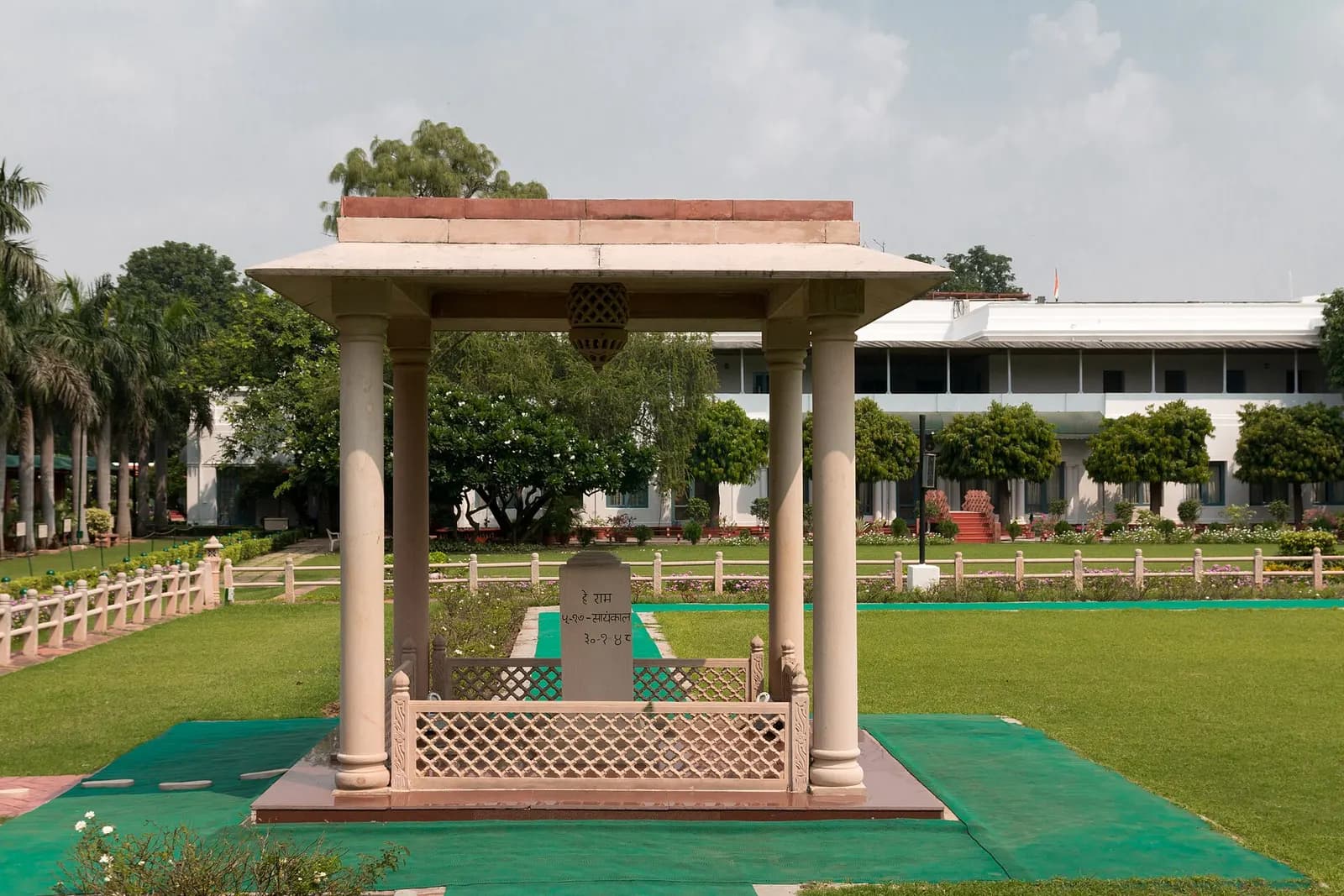
- The site of the assassination. The garden holds the exact spot where Gandhi was shot, now marked by the Martyr's Column, a place of quiet reflection.
- Gandhi's final home. The house preserves the very room where he lived his last days, with his few simple belongings exactly as they were.
- The Last Footsteps. A stone path across the lawn traces his actual final steps towards the evening prayer meeting.
- A living philosophy. The Eternal Gandhi multimedia museum brings his ideas of truth, non-violence and simplicity to life for new generations.
- A place of pilgrimage. For Indians and admirers of Gandhi worldwide, it is a deeply emotional place to pay respects to the Father of the Nation.
It belongs on any thoughtful list of things to do in Delhi and it is one of the most profound of the historic places to visit in Delhi.
What is the history of Gandhi Smriti?
The house was built as a residence of the industrialist Birla family and so was long known as Birla House. Mahatma Gandhi, who owned no home of his own, stayed here as their guest during his visits to Delhi in the final years of the freedom struggle and after independence. He moved into the house in the autumn of 1947, in the turbulent months around India's independence and partition, when he was working tirelessly for peace and communal harmony amid terrible violence. For 144 days this house was his base, from where he held his daily public prayer meetings and continued his fasts and efforts for reconciliation.
On the evening of 30 January 1948, as Gandhi walked from the house across the garden to his regular evening prayer meeting, he was shot and killed by an assassin. The nation and the world were plunged into grief. In the years that followed, the house was acquired by the government and, in 1973, opened to the public as a national memorial, later named Gandhi Smriti. It has since been developed with museums and exhibits while carefully preserving the room where he lived and the spot where he died. Knowing this history, that these are the actual walls, the actual garden, the actual last steps, is what gives a visit its extraordinary emotional weight; this is not a reconstruction but the real place where one of history's great lives ended.
The memorial has evolved thoughtfully over the years since it opened to the public. Beyond conserving the historic rooms and the garden, the authorities added galleries, photographs and, more recently, the immersive multimedia museum, so that the site now serves both as a place of remembrance and as a centre for understanding Gandhi's life and ideas. It remains an active memorial too, hosting prayer gatherings and commemorations, especially around the anniversaries of his death and birth and welcoming heads of state and dignitaries who come to pay homage. For ordinary visitors this means you experience a place that is carefully preserved yet living, where the solemn authenticity of the original rooms sits alongside modern efforts to keep Gandhi's message relevant to new generations. That balance, between a shrine frozen at a tragic moment and an institution looking outward, is part of what makes Gandhi Smriti such a considered and affecting memorial.
What were Gandhi's last days here like?
To understand Gandhi Smriti, it helps to picture the final chapter it preserves. When Gandhi came to stay at Birla House in late 1947, India had just won independence but was being torn apart by the violence of partition, with terrible bloodshed between communities and millions uprooted. Rather than celebrate, the ageing Gandhi threw himself into the work of peace, holding daily prayer meetings in the garden here that were open to all, where he read from the scriptures of many faiths and pleaded for harmony. In January 1948 he undertook his last fast, at this very house, to press for communal peace and fair treatment of the new nation's minorities, ending it only when leaders pledged to restore calm. He was frail, weary and in his late seventies, yet utterly steadfast and the simple routines of these days, the spinning of the charkha, the sparse meals, the walk to the evening prayer, are exactly what the memorial preserves.
It was on his way to one of those evening prayer meetings, on 30 January 1948, that he was shot. The ordinariness of the moment, an old man walking across a garden to pray, supported by his companions, makes the tragedy all the more affecting and it is this that visitors feel so strongly as they follow the Last Footsteps path. Knowing that these final days were spent not in triumph but in selfless labour for peace and that they ended in martyrdom for that very message of tolerance, is the heart of what Gandhi Smriti remembers.
What can you see at Gandhi Smriti?
A visit moves naturally from the house to the garden, following the last chapter of Gandhi's life. The key things to see:
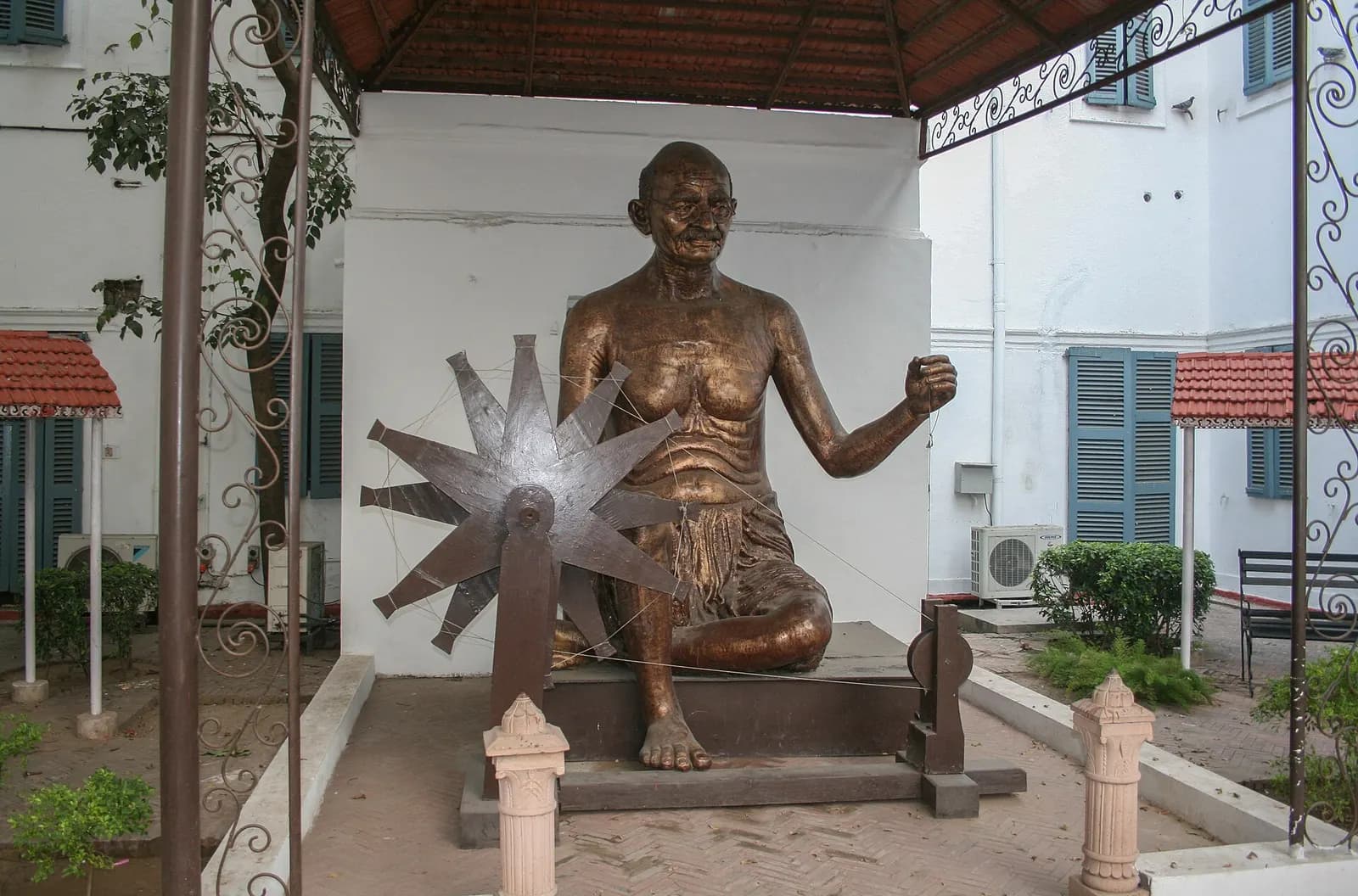
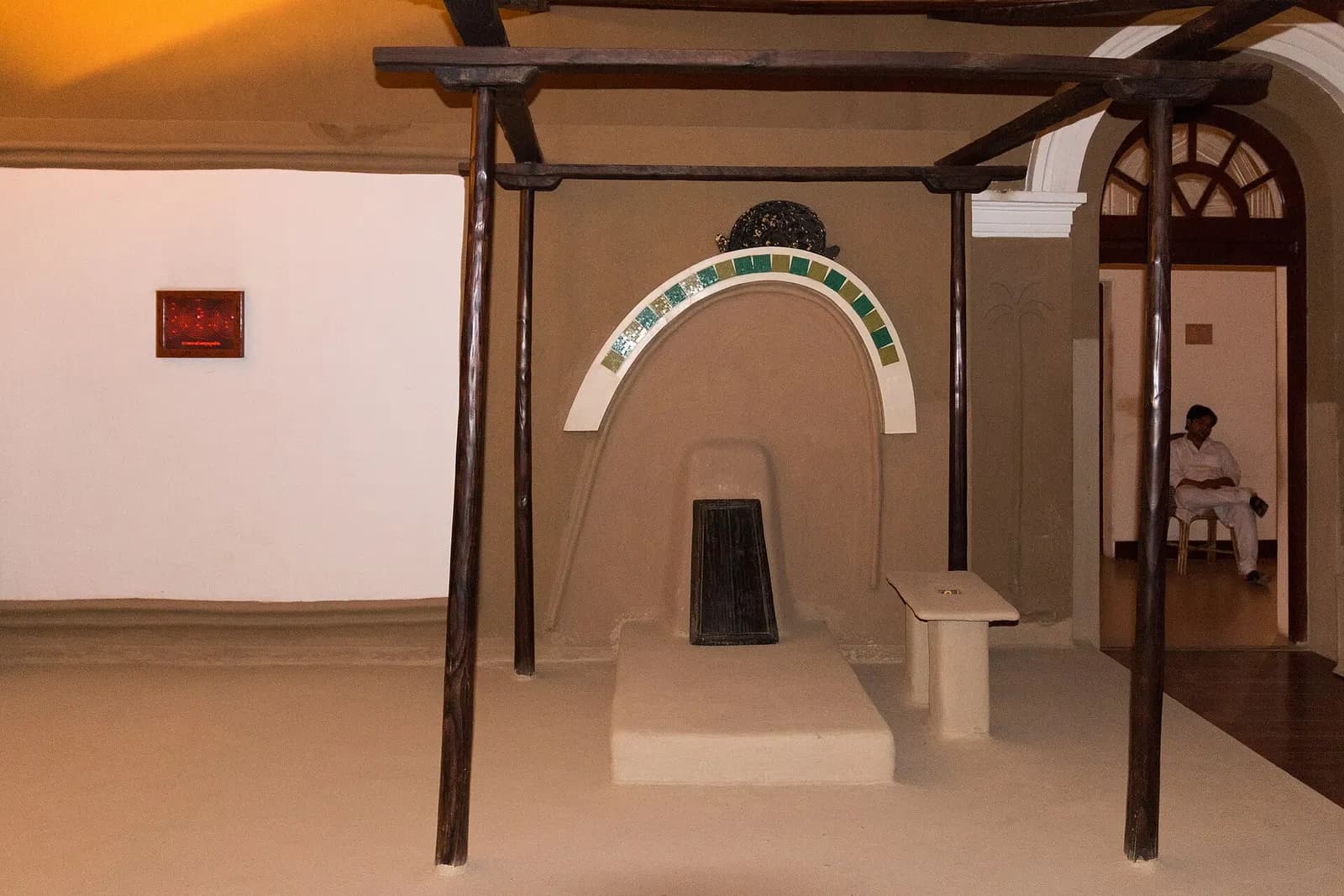
- The preserved room. Inside the house, the simple room where Gandhi lived his final days is kept exactly as it was, holding his sparse belongings, his thin mattress on the floor, his spectacles, walking stick, spinning wheel or charkha and a few eating utensils, a powerful testament to his life of deliberate simplicity.
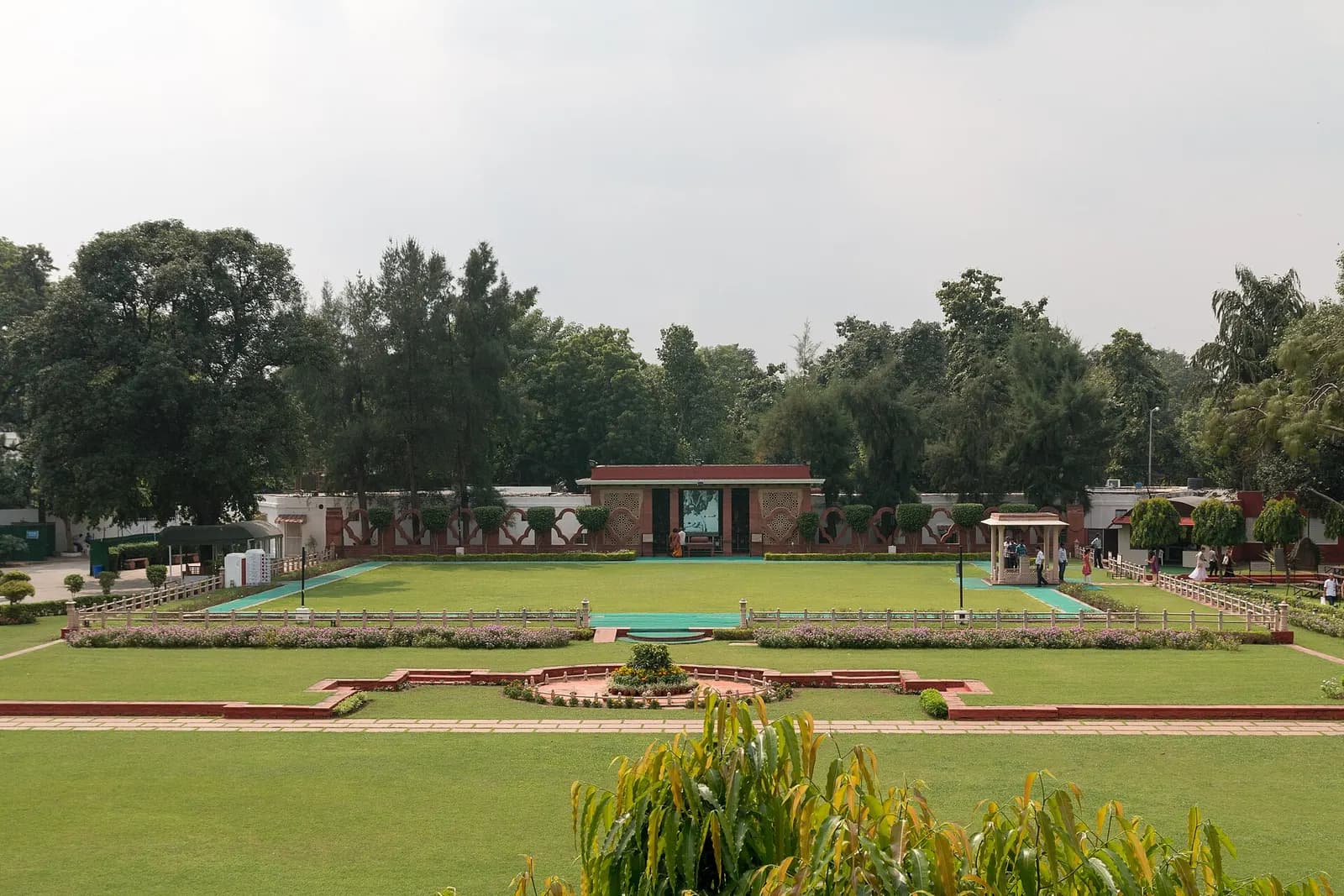
- The Last Footsteps. Set into the manicured lawn, a line of stone footprints marks the exact path Gandhi walked on his way to the evening prayer meeting on his final evening. Following it is a profoundly solemn experience.
- The Martyr's Column. At the end of that path stands a simple column on the precise spot where Gandhi was assassinated, a quiet, flower-laid place for visitors to pause and pay their respects.
- The Eternal Gandhi Multimedia Museum. On the upper floor, a state-of-the-art interactive digital museum uses tactile installations, historical photographs, documentaries and inventive exhibits, including automated instruments that play his favourite hymns at a touch, to convey his life and philosophy.
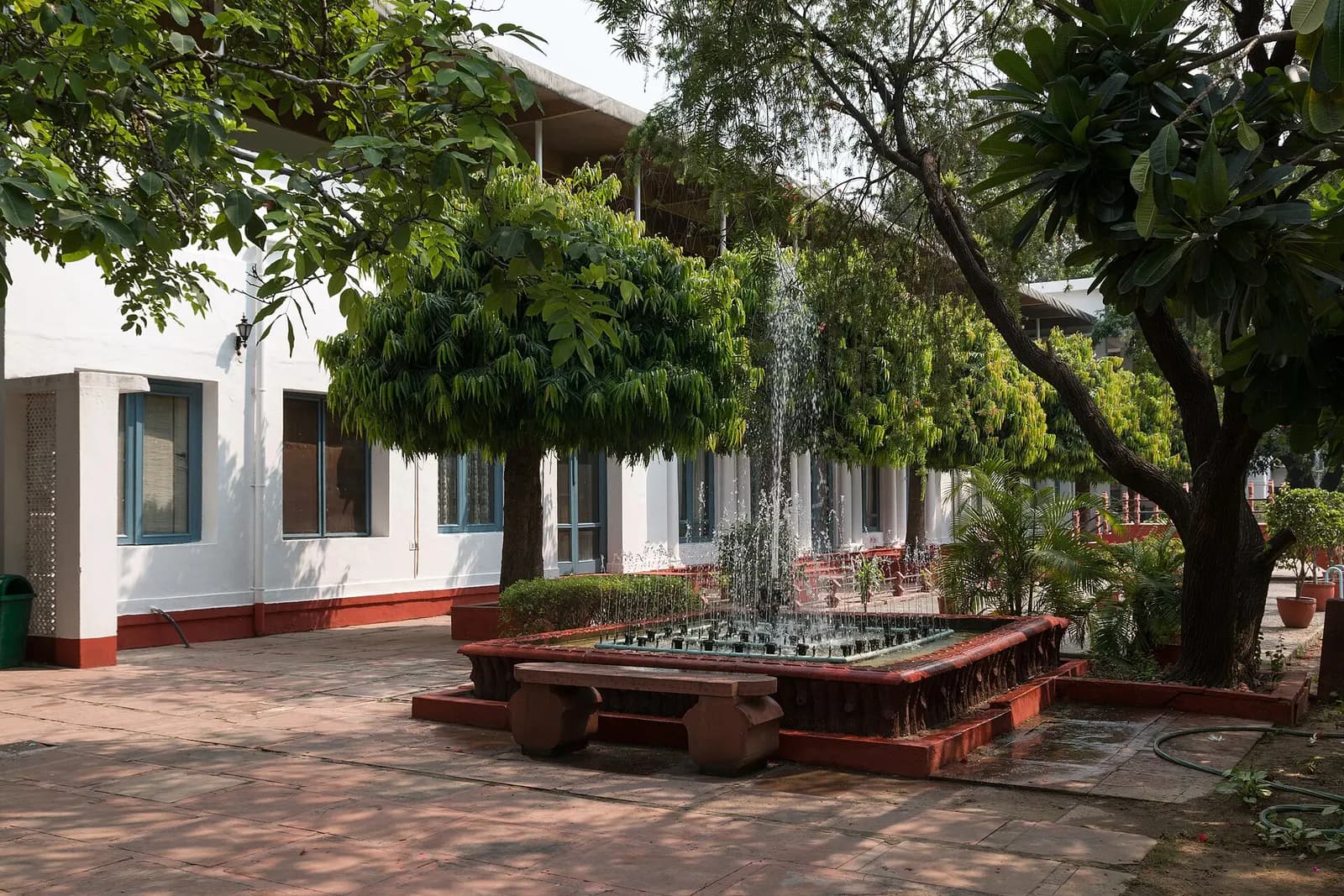
- The grounds. The serene gardens themselves, where Gandhi held his prayer meetings, are part of the experience, a calm green space heavy with history.
The contrast between the stark simplicity of the room and the solemn drama of the garden is the heart of a visit and it affects almost everyone who comes.
Who was Mahatma Gandhi, in brief?
While most visitors come knowing who Gandhi was, a short reminder deepens the experience. Mohandas Karamchand Gandhi, honoured as Mahatma, meaning great soul and as the Father of the Nation, led India's independence movement against British rule through his philosophy of satyagraha, non-violent civil resistance and ahimsa, non-violence. Through decades of mass campaigns, fasts, marches such as the famous Salt March and personal examples of extreme simplicity, he became the moral leader of the freedom struggle and an inspiration to movements for civil rights and freedom across the world. India won independence in 1947, but the accompanying partition unleashed horrific communal violence and Gandhi spent his final months working for peace between communities, often at great personal risk, including the fasts he undertook here at Birla House. He was killed on 30 January 1948 by an assassin opposed to his message of tolerance. Standing in his preserved room and at the Martyr's Column, with this story in mind, you feel the full weight of both the man's simplicity and the magnitude of what was lost.
What is the Eternal Gandhi Multimedia Museum?
The Eternal Gandhi Multimedia Museum, on the upper floor of the house, is a striking modern counterpoint to the preserved historic rooms below and it surprises many visitors. Rather than a conventional display of objects behind glass, it is an interactive, sensory museum that uses technology and art to convey Gandhi's ideas, with tactile installations, light and sound, historical photographs and film and inventive exhibits, famously including automated instruments such as xylophones that play his favourite devotional hymns when visitors touch them. The aim is to make Gandhi's philosophy of truth, non-violence, simplicity and service feel alive and relevant, especially to younger generations, rather than merely historical. It is engaging for children and adults alike and it provides thoughtful context that enriches the solemn experience of the preserved room and the garden. Allowing time for the museum as well as the historic rooms gives you both the emotion of the actual site and a deeper understanding of the ideas the man stood for.
Children in particular tend to respond to the hands-on exhibits, which turn abstract ideas such as truth, non-violence and self-reliance into things you can touch, hear and play with, making this an unexpectedly good memorial for families. For adults, the museum's photographs and film footage of Gandhi's life, the marches, the fasts, the vast crowds, add powerful context to the simplicity of the room downstairs, helping you grasp just how extraordinary the reach of this one frugal man's influence was. Taken together, the preserved rooms, the solemn garden and the lively museum give a rounded picture: the human being, the final tragedy and the enduring ideas, which is exactly what a great memorial should do.
What are the Gandhi Smriti timings and entry fee?
Gandhi Smriti is open Tuesday to Sunday, generally from about 10:00 AM to 6:30 PM and is closed on Mondays, so plan around that closure. Entry is strictly free for all visitors, Indian and foreign alike, as befits a national memorial. Photography is generally permitted across the grounds and in the galleries, though you should avoid flash near the preserved personal artefacts and always be discreet and respectful, particularly near Gandhi's room and the Martyr's Column. The complex is well planned and fully accessible, with wheelchair-friendly entrances, pathways and restrooms. Allow about an hour and a half to two hours for an unhurried visit, taking in the house, the garden and the museum. Timings can occasionally change and there may be temporary closures around major anniversaries such as Gandhi Jayanti on 2 October and Martyrs' Day on 30 January due to high-profile official visits, so it is worth reconfirming if you are travelling around those dates.
What is a visit to Gandhi Smriti like?
A visit to Gandhi Smriti is quiet, solemn and often deeply moving, quite different from the grandeur of Delhi's forts and palaces. You enter the dignified old house and its gardens and almost everyone instinctively lowers their voice. The preserved room, so plain and small, with its simple mattress and few objects, speaks powerfully of a man who held immense moral authority yet owned almost nothing and standing before it is a humbling moment. Outside, the manicured lawn and the line of stone footprints draw you gently towards the Martyr's Column and the short walk along that path, in the knowledge of what it marks, is something visitors often do in complete silence. Many pause at the column, where fresh flowers are laid, to pay their respects.
The multimedia museum upstairs lifts the mood into something more reflective and educational, engaging visitors, especially children, with Gandhi's ideas through interactive displays. The overall experience moves from the intimate and sombre to the inspiring, leaving most people thoughtful rather than merely informed. It is not a place for rushing or for loud groups; it rewards those who come with a little time and an open heart. For a foreign visitor it offers a window into the moral foundations of modern India and for Indians it is a place of genuine pilgrimage. Either way, it tends to be remembered less as a sight seen than as an experience felt.
Is Gandhi Smriti worth visiting?
Yes and for many it is one of the most meaningful stops in Delhi. It is not a grand or visually spectacular site in the way of the great monuments and visitors expecting that may be surprised by its simplicity. But that simplicity is the point: this is the authentic, preserved place where one of the most important figures of the 20th century lived his last days and died for his beliefs and few places anywhere carry such direct historical and emotional weight. For anyone interested in history, in India's independence story or in Gandhi's globally influential philosophy of non-violence, it is essential and profoundly affecting. It is also free, central, quick to see and beautifully maintained, so there is little reason not to include it. The main thing is to come in the right frame of mind, unhurried and respectful, treating it as a memorial to absorb rather than a checklist item and you will find it one of the most worthwhile and lingering experiences of your time in the capital. Pair it with the lawns of Lodhi Garden nearby for a calm, reflective half day.
What is the best time to visit Gandhi Smriti?
The best season is the cool stretch from October to March, when Delhi's pleasant weather makes walking the outdoor garden and the Last Footsteps path comfortable. On any day, a quieter morning is ideal for a reflective visit, allowing you to absorb the room and the garden without crowds. A particularly moving time to come is late January, in the days leading up to Martyrs' Day, Shaheed Diwas, on 30 January, when the site hosts multi-faith prayer gatherings and choral tributes in Gandhi's memory, a deeply atmospheric experience, though busier. Gandhi Jayanti on 2 October, his birth anniversary, is similarly significant. Do bear in mind that around both these anniversaries there can be temporary security closures for official ceremonies, so check in advance if your visit falls then. Avoid Mondays, when the memorial is closed and the peak summer midday, when the open garden is hot. If you are able to plan around it, visiting on or near one of the two great anniversaries gives an added layer of meaning: Martyrs' Day on 30 January marks his assassination with national tributes and two minutes of silence observed across the country, while Gandhi Jayanti on 2 October, his birthday and a national holiday, is celebrated with prayers and cultural programmes. Both are moving, though busier and subject to the security arrangements noted above. For a first visit, many travellers find a calm ordinary morning the most rewarding, when you can take in the room, the garden and the museum in quiet reflection without crowds or ceremony.
How do you reach Gandhi Smriti?
Gandhi Smriti is easy to reach in central Delhi, on Tees January Marg, the road named for the 30th of January, opposite the National Defence College. It sits within about a kilometre of three metro stations, so public transport is very convenient. The nearest is Lok Kalyan Marg on the Yellow Line, a ten to twelve minute walk or a short auto away; Udyog Bhawan, also on the Yellow Line, is an easy alternative; and Khan Market on the Violet Line is handy if you are coming from the south or east of the city. By car or cab it is simple to reach, with free on-site parking, though spaces fill quickly at weekends.
Its central location, close to India Gate, the Lodhi area and the government quarter, means it fits easily into a central Delhi plan. If you are threading a wider route, a dedicated New Delhi tour can tie it together with the imperial sights, while a broader Delhi day tour folds the memorial into the full span of the capital.
What is there to see near Gandhi Smriti?
Gandhi Smriti sits in the gracious, green heart of Lutyens' Delhi, close to several worthwhile sights. A short drive away is the Indira Gandhi Memorial Museum, at the house where the former Prime Minister lived and was assassinated, a natural pairing for anyone interested in the figures who shaped modern India and the vibrant shops and cafes of Khan Market are close by for a meal or coffee. The lawns and tombs of Lodhi Garden and the grand Safdarjung's Tomb are also nearby, as are the antique lanes of Sunder Nagar market; for more of the city's quieter corners, our guide to the hidden places to visit in Delhi is a good companion.
A little further out the great sights of the capital continue, from the ceremonial avenue and India Gate, the colonial circle of Connaught Place and the observatory of Jantar Mantar, to the mighty Red Fort, the towering Qutub Minar, the serene Humayun's Tomb and the modern Lotus Temple and Akshardham. For a meal around Khan Market and the centre, our roundup of where to eat in Delhi has ideas. Together these make Gandhi Smriti a meaningful part of a central Delhi day and you can see the fuller picture in our guide to the important monuments of the capital.
How does Gandhi Smriti fit into a Delhi or Golden Triangle itinerary?
For most visitors, Gandhi Smriti works best as a focused, reflective stop of ninety minutes to a couple of hours, easily combined with the nearby India Gate, Lodhi Garden or Khan Market in a central Delhi day. Because it is free, central and not large, it slots in easily and it offers a profound change of register from the grand forts and temples, a quiet, human encounter with the story of modern India's founding and its greatest moral leader. Many travellers find it especially meaningful early in their trip, as it frames the India they are about to explore. Those on a fuller itinerary often pair it with the other great sights, the Red Fort, Humayun's Tomb and the towering Qutub Minar, using the memorial to connect the country's ancient and modern stories.
If Delhi is your gateway to the wider Golden Triangle, a visit to Gandhi Smriti adds a dimension no fort or palace can, a direct, moving connection to the life and death of the man who more than any other shaped independent India. Many of my guests describe it as the most emotionally powerful stop of their whole trip. For the best season across the capital, our guide to the best time to visit Delhi is a useful companion for planning the rest of your days in the capital.
Travel tips for visiting Gandhi Smriti
A few pointers make the visit smooth and respectful:
- Never come on a Monday, when the memorial is closed and allow yourself about 1.5 to 2 hours for the visit.
- Visit in a quiet morning for a reflective experience, ideally October to March for the weather.
- Dress modestly and keep quiet, especially near Gandhi's room and the Martyr's Column, out of respect.
- Walk the Last Footsteps path slowly and pause at the Martyr's Column, the emotional heart of the visit.
- Allow time for the museum upstairs as well as the historic rooms and the garden below.
- Avoid flash photography near the preserved personal artefacts, though photography is otherwise allowed.
- Check around 2 October and 30 January, when ceremonies and official visits can mean temporary closures.
- Come by metro to Lok Kalyan Marg, the nearest station or use the free on-site parking if you are driving.
If you would like a local to build Gandhi Smriti into a wider Delhi plan, message our team on WhatsApp at +91 7302265809 with your travel dates and group size and we will help you shape the day.
Plan your trip with us
At Experience My India, through our Delhi and Golden Triangle travel desk, we design unhurried, well paced trips that make room for meaningful, moving places like Gandhi Smriti, not just the grand monuments. Whether you want a relaxed set of Delhi Agra tours or a full Golden Triangle route through Delhi, Agra and Jaipur, we plan around your pace, your interests and the right season, with local guides who can give the memorial and its history the context it deserves. Share your dates and the kind of trip you have in mind through our enquiry page, tell us your group size and we will put together an honest, tailored plan rather than a rushed checklist.
Related guides
· Nearby places to visit in Delhi, to extend your day
· Important monuments of Delhi, the wider heritage picture
Enquire Now
Ready to Explore
The Heart of Delhi?
Explore the Red Fort, Qutub Minar, Humayun's Tomb, and the vibrant streets of Old Delhi with our expert-guided premium tours of India's capital city.

Delhi
Premium Tour Package
Questions
Frequently asked questions
What are the timings of Gandhi Smriti?
It is open Tuesday to Sunday, generally from about 10:00 AM to 6:30 PM and closed on Mondays. Reconfirm, as timings can change and there may be closures around major anniversaries.
Is there an entry fee for Gandhi Smriti?
Which is the nearest metro station to Gandhi Smriti?
What is Gandhi Smriti famous for?
What can you see inside Gandhi Smriti?
What is the Martyr's Column at Gandhi Smriti?
Is Gandhi Smriti closed on Mondays?
How much time do I need at Gandhi Smriti?
Is photography allowed at Gandhi Smriti?
Is Gandhi Smriti worth visiting?
Explore more
Plan your Gandhi Smriti trip with us

Interested in Gandhi Smriti Delhi: Timings, History and Visitor Guide?
Chat with our travel team for a custom quote, or browse every package.
Related Attractions
9Ready to explore Gandhi Smriti Delhi: Timings, History and Visitor Guide?
Book your private tour today and experience the magic of India's rich heritage.