Hijron Ka Khanqah Delhi: History, Timings and Guide
Visiting Hijron Ka Khanqah in Mehrauli, Delhi? The history of this transgender community shrine, the 49 tombs, timings, access, etiquette and nearest metro.
In a Nutshell
“Hijron Ka Khanqah is a serene, little-known 15th-century Sufi shrine and graveyard in the old lanes of Mehrauli, South Delhi, belonging to and cared for by the city's transgender or Hijra, community. Within its clean white walls lie 49 simple graves, including that of a revered transgender saint, Miyan Saheb, around a quiet open courtyard with a prayer niche. A free, deeply peaceful and spiritual place, it is one of Delhi's most unusual hidden gems. It is reached from the Qutub Minar metro and features on our Delhi tours, run by a unit of Experience My India.”
Hijron Ka Khanqah is one of Delhi's most moving and unusual hidden monuments, a tranquil white courtyard of medieval graves tucked into the maze of Mehrauli, uniquely associated with and maintained by the transgender community for centuries. For travellers drawn to the city's quieter corners and its rich, layered heritage, it is a quietly powerful stop. Our team at Delhi Agra Tour Packages sometimes guides curious visitors here as part of a Mehrauli heritage walk and it adds a rare dimension to a wider Golden Triangle tour through the capital.
I am Abhay Sharma, Delhi born and a Golden Triangle guide since 2015 and I bring respectful, history-minded guests here because it tells a story of Delhi and of a community, found almost nowhere else. This guide gathers everything I would tell a visitor beforehand, checked against current information, including the history, the access, the etiquette and how to reach it.
Details
Hijron Ka Khanqah at a glance
| Detail | Information |
|---|---|
| Location | Mehrauli Village, South Delhi, near the Bakhtiyar Kaki dargah |
| Era | The Lodi dynasty, 1451 to 1526, pre-Mughal |
| What it is | A Sufi khanqah and graveyard of the transgender community |
| Known for | 49 white graves, the tomb of the saint Miyan Saheb |
| Managed by | The transgender community of Turkman Gate |
| Entry | Free; the gate is often latched, so access may need a request |
| Nearest metro | Qutub Minar (Yellow Line), then an auto |
| Time needed | About 20 to 30 minutes |
Hijron Ka Khanqah timings
| Detail | Information |
|---|---|
| Nominally open | Sunrise to sunset |
| Access | The iron gate is often latched; ask the caretaker to open it |
| Entry fee | Free |
Hijron Ka Khanqah is nominally open from sunrise to sunset, but because it is privately managed by the community, the iron entrance gate is frequently kept latched. Visitors can politely ask the local caretaker or neighbouring shopkeepers to unlock it for a brief, respectful look. Timings are informal, so a daytime visit is best.
Entry and access
| Item | Information |
|---|---|
| Entry fee | Free for everyone |
| Access | May require asking a caretaker or shopkeeper to unlock the gate |
| Footwear | Removed before entering the white courtyard |
| Photography | Only with the explicit permission of community elders present |
How to reach Hijron Ka Khanqah
| From | Route |
|---|---|
| Qutub Minar metro (Yellow Line) | An auto to Mehrauli village market |
| Mehrauli village market | A 200 metre walk through the narrow bazaar lanes |
| The Qutub Minar complex | A short ride away in the same area |
| By cab or auto | Drops at Mehrauli market; the final lanes are on foot |
What is Hijron Ka Khanqah?
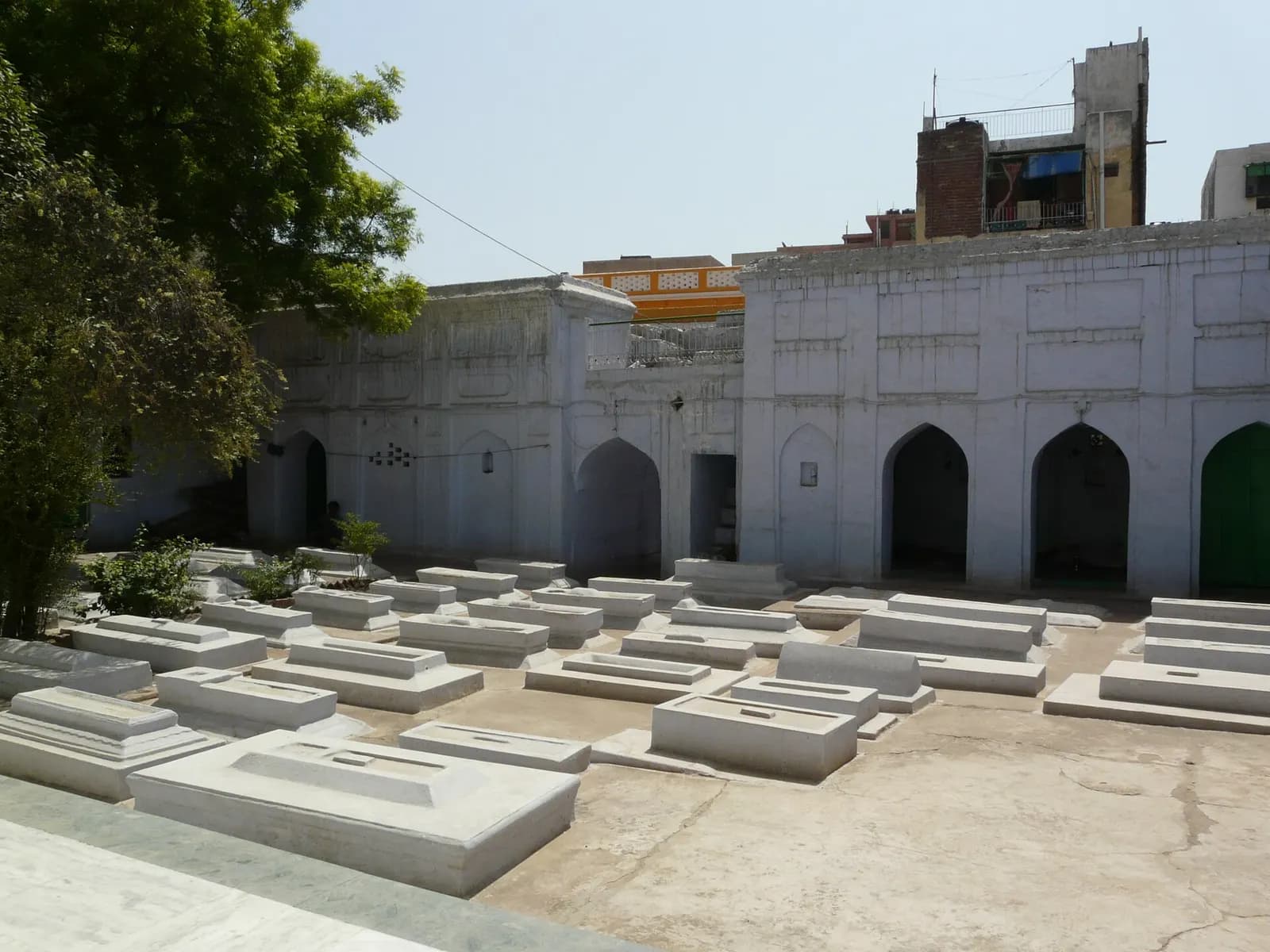
Hijron Ka Khanqah is a unique and little-known medieval monument in the old village of Mehrauli in South Delhi: a Sufi khanqah or spiritual retreat and a private graveyard belonging to the transgender or Hijra community of Delhi. Dating from the pre-Mughal Lodi period, it is an understated, peaceful open-air courtyard sanctuary, shielded by clean white walls, within which lie 49 simple white-plastered graves of the community's revered figures and spiritual leaders from the medieval era, including a central tomb of a venerated transgender saint. Unlike the city's grand monuments, it is a quiet, sacred and living space, still cared for by and important to the transgender community today. For the visitor, it offers a rare and moving glimpse into a strand of Delhi's history and a community seldom represented in its monuments, hidden away in the atmospheric lanes of historic Mehrauli.
Several things make it special and they are worth drawing out:
- A transgender community shrine. A rare monument dedicated to and cared for by the Hijra community, found almost nowhere else.
- A pre-Mughal Sufi retreat. A khanqah dating from the Lodi dynasty, a genuine piece of medieval Delhi.
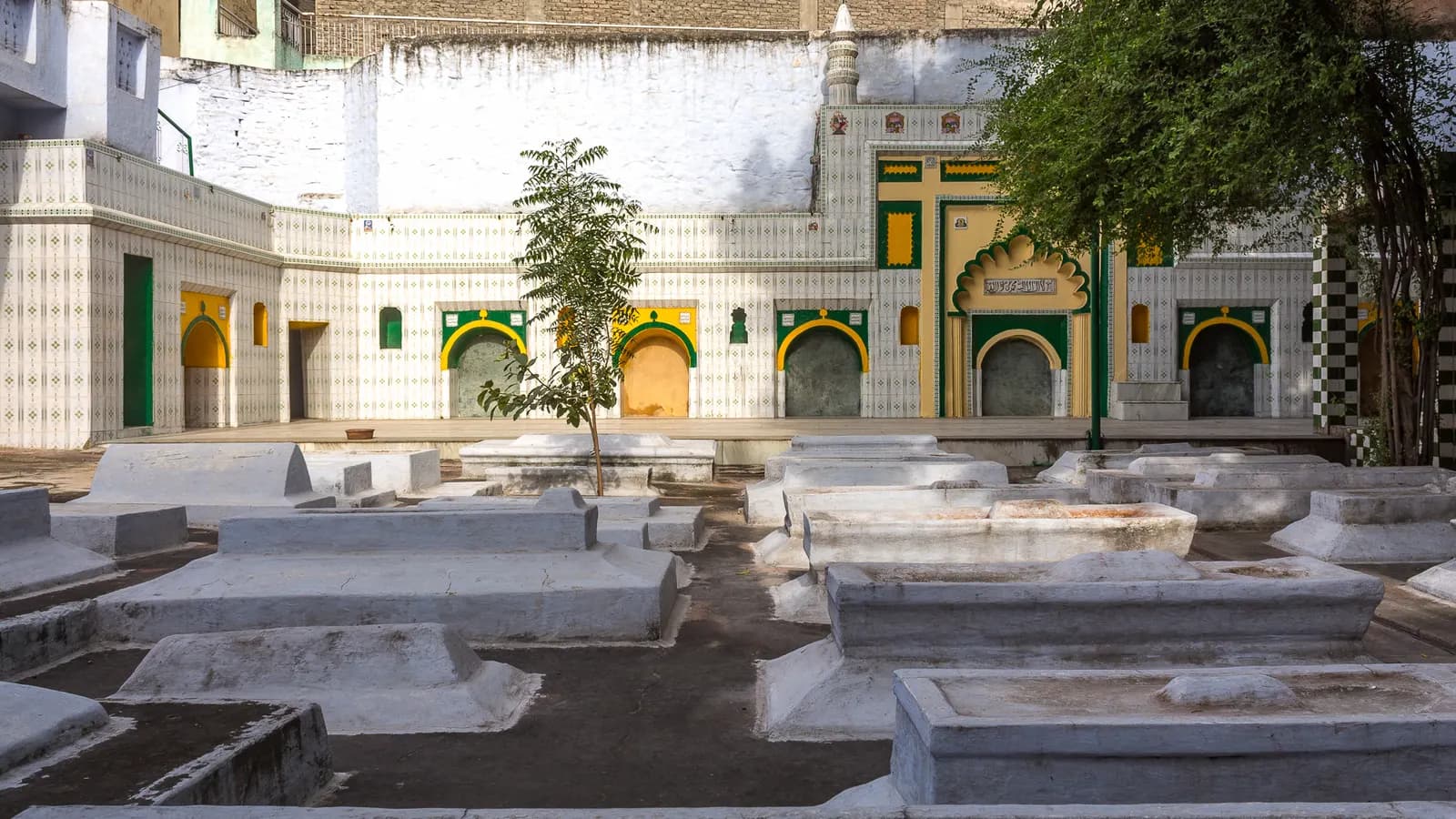
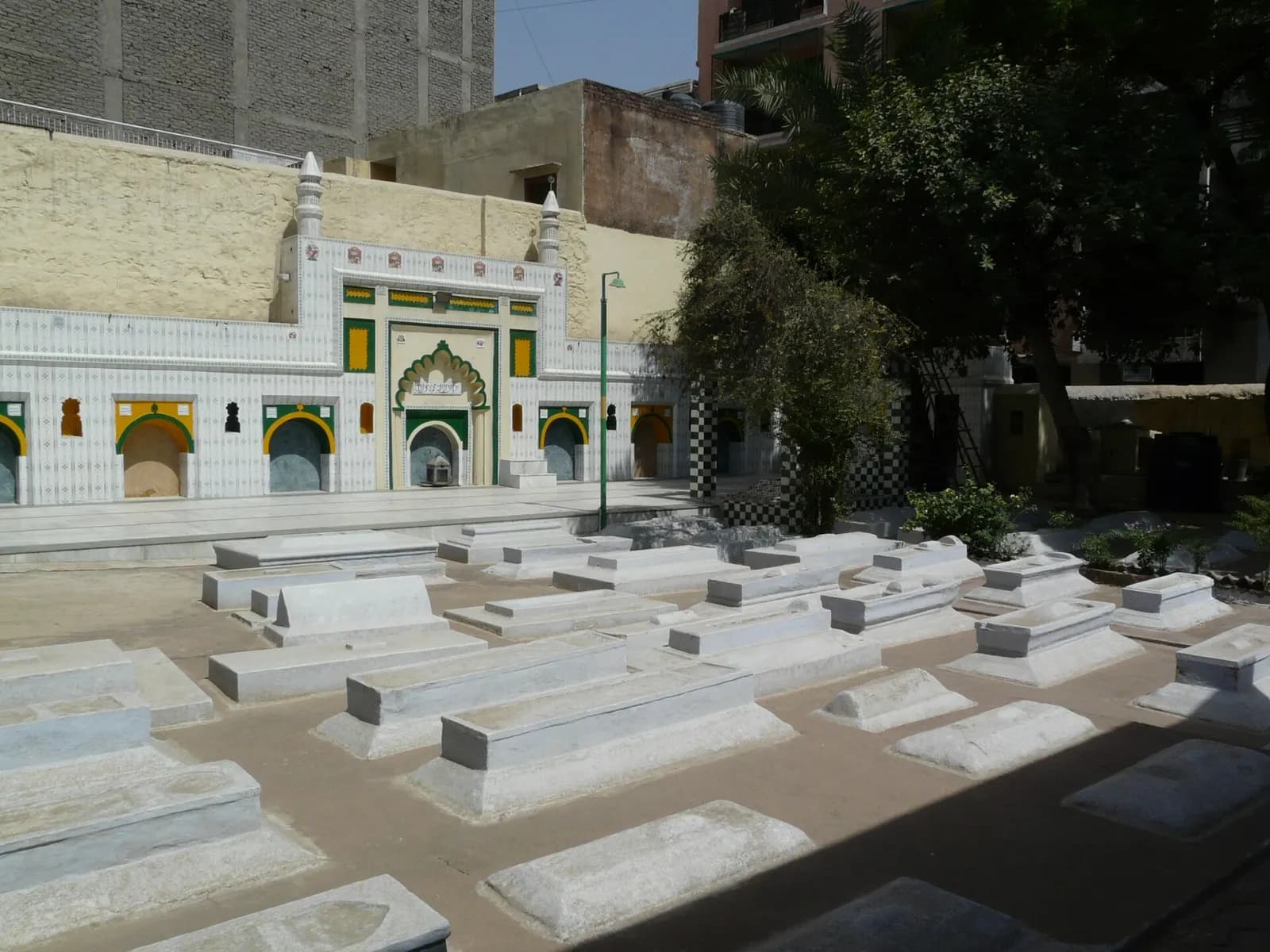
- The 49 white graves. A serene courtyard of 49 identical white graves in neat rows, with the tomb of a revered saint at its heart.
- A living, sacred space. Still an active site where the community gathers for prayer, alms and charity.
- A hidden gem of Mehrauli. Tucked into the winding lanes of historic Mehrauli, a true secret of the old city.
It is one of the most unusual and meaningful of the things to do in Delhi and a remarkable lesser-known entry among the important monuments of Delhi.
History of Hijron Ka Khanqah
The history of Hijron Ka Khanqah reaches back to the Lodi dynasty, which ruled Delhi from 1451 to 1526, the last dynasty of the Delhi Sultanate before the coming of the Mughals, which makes it a genuinely old, pre-Mughal monument. It was established as a khanqah, a Sufi spiritual retreat and gathering place, associated with the transgender community and over the centuries it became their dedicated graveyard and sacred space, a role it has held ever since. This continuity is remarkable: in a city where so many communities have left monuments, Hijron Ka Khanqah stands almost uniquely as a heritage site belonging specifically to the Hijra community, a group that has had a distinctive and often marginalised place in South Asian society for centuries.
The Hijra community has a long and complex history in the subcontinent, holding recognised, sometimes honoured roles in the courts and households of medieval and Mughal India and this khanqah is a tangible link to that deep past. The site has remained in the community's care and continues to be privately managed by the transgender community associated with the Turkman Gate area of Old Delhi, who maintain it and gather here on religious occasions. Knowing this history, that the quiet white courtyard is a centuries-old sacred space belonging to one of Delhi's oldest and most distinctive communities, transforms a visit from a look at some old graves into an encounter with a rare and moving strand of the city's heritage. It is history of a kind the grander monuments simply do not tell.
Miyan Saheb and the community
At the heart of the khanqah is its central tomb, which belongs to a widely revered figure known historically as Miyan Saheb, honoured as a saint of the transgender community. The presence of this central shrine is what gives the site its character as a spiritual retreat and place of pilgrimage for the community, the focus around which the other graves are arranged and the devotions take place. The 49 graves around it are understood to be those of the disciples and spiritual leaders of the community from the medieval period, so the courtyard as a whole represents generations of the community's revered figures resting together.
The site remains an active, living space rather than a mere relic. It is kept and managed by the transgender community of the Turkman Gate area, who hold it as a sacred inheritance and members gather here on religious occasions to pray, distribute alms and feed the poor, continuing traditions of devotion and charity that stretch back centuries. This living connection is central to understanding the place: it is not an abandoned monument but a cherished community shrine, cared for with devotion. For a respectful visitor, this gives the quiet courtyard a particular dignity and warmth and it is why the site asks for sensitivity and respect rather than idle curiosity. Approaching Miyan Saheb's shrine with that understanding is the right way to experience Hijron Ka Khanqah.
Architecture and the 49 tombs
Architecturally, Hijron Ka Khanqah is understated and serene, in keeping with its purpose as a quiet spiritual retreat rather than a grand monument. It takes the form of a peaceful open-air courtyard sanctuary, enclosed and shielded by clean white walls that cut it off from the surrounding lanes and create an atmosphere of calm within. The simplicity is the point: there are no soaring domes or elaborate carvings here, only white walls, white graves and open sky.
The main features are worth noting:
- The white courtyard. A tranquil open-air courtyard enclosed by plain white walls, creating a serene, contained sacred space.
- The 49 graves. Forty-nine identical white-plastered graves laid out in neat rows, representing the community's disciples and spiritual leaders from the medieval era.
- The central tomb. The revered grave of the saint Miyan Saheb, the spiritual focus of the courtyard.
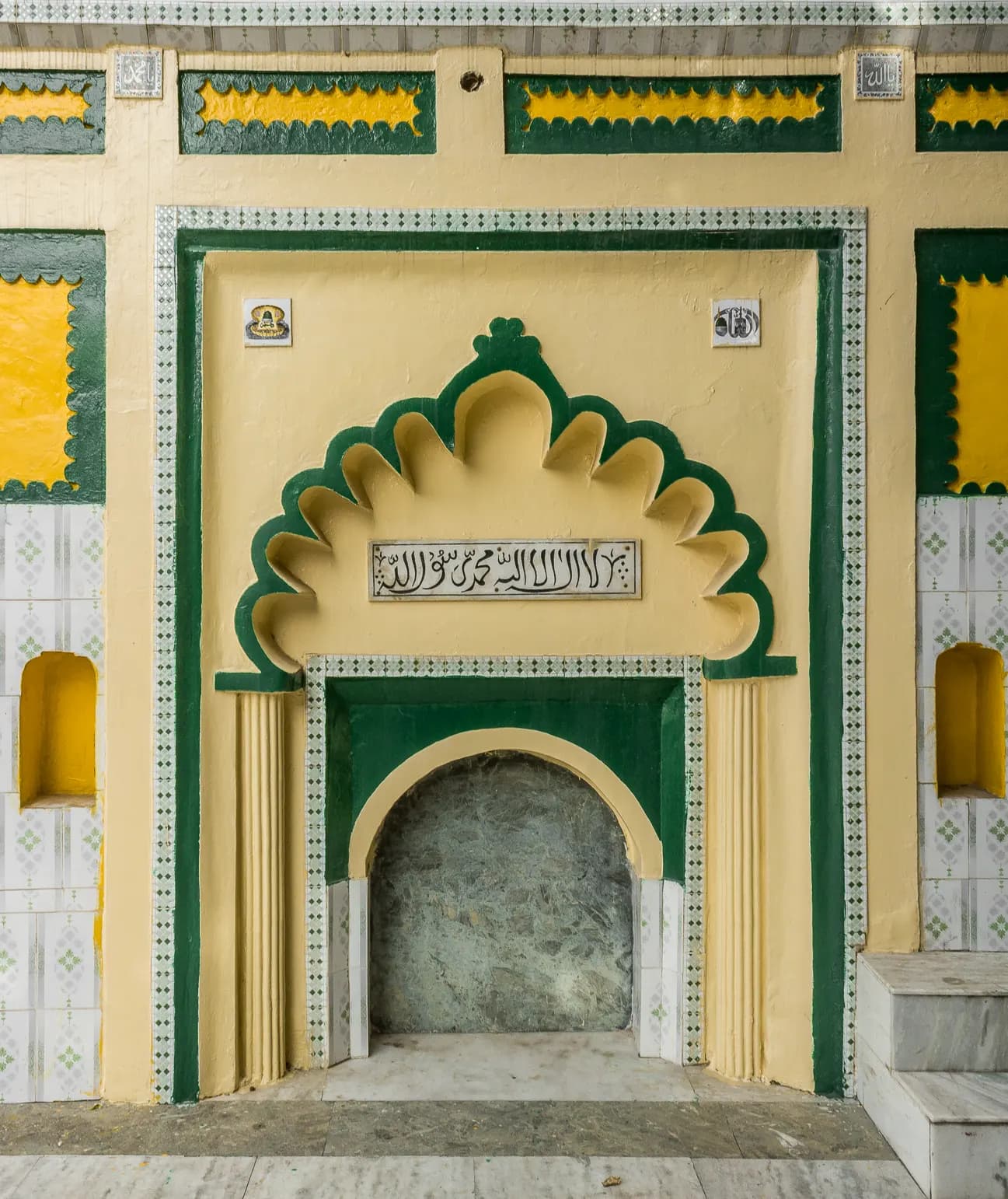
- The west-wall mosque. A simple, elegant prayer niche or mihrab, set in the western wall pointing towards Mecca, serving as an open-air mosque for the community's prayers.
The effect of the whitewashed courtyard, with its neat rows of identical graves beneath the open sky and the quiet mihrab in the west wall, is unexpectedly beautiful in its very plainness, a study in calm and order. It is the kind of place that rewards a few minutes of silent standing rather than busy exploration and its understated architecture is a large part of its tranquil, meditative atmosphere. The whitewash is renewed by the community, keeping the courtyard bright and cared for.
The Hijra community and its heritage
To understand why Hijron Ka Khanqah matters, it helps to know a little about the community it belongs to. The Hijra community, broadly encompassing transgender and intersex people and others outside the conventional male-female binary, has a long and distinctive presence in the Indian subcontinent stretching back many centuries. In the courts and households of medieval and Mughal India, members of the community often held recognised and sometimes influential roles, as guardians, attendants and confidants and they occupied a particular, acknowledged place in the social fabric of the time. Over the colonial and modern eras that status was eroded and the community came to face great marginalisation, which makes the survival of a centuries-old heritage site belonging specifically to them all the more remarkable and significant.
Hijron Ka Khanqah is, in effect, a monument to this long history, one of very few places in India where the heritage of the transgender community is enshrined in stone and preserved as sacred ground. For the community itself it is a source of pride and continuity, a tangible link to a past in which they held an honoured place and a living space they still maintain and use. For the visitor, understanding this background is essential: it turns the quiet white courtyard into something far more meaningful than an old graveyard, a rare and dignified assertion of a community's deep roots in the city and the country. Approaching the site with this awareness and with respect for the community that cares for it, is the right and rewarding way to experience it and it is what makes Hijron Ka Khanqah such a quietly powerful place.
Mehrauli, Delhi's oldest living quarter
The setting of Hijron Ka Khanqah adds greatly to its appeal, for Mehrauli is among the oldest continuously inhabited parts of Delhi, a dense and atmospheric quarter layered with monuments from across the centuries. This is the area around the great Qutub Minar, where some of the earliest Islamic building in India took place and its winding lanes, bazaars and village houses are threaded with tombs, mosques, stepwells and shrines from the Sultanate, Mughal and later periods, many of them hidden and little visited. To find Hijron Ka Khanqah you walk through exactly this living historic fabric, past shops and homes and older walls, which is part of what makes reaching it feel like a genuine discovery rather than a routine sightseeing stop.
Because Mehrauli packs so much heritage into a small area, the khanqah is best appreciated as one thread in a rich tapestry, seen alongside the archaeological park, the royal palaces and the Qutub complex nearby. The contrast between the chaotic, crowded lanes and the sudden calm of the white courtyard is itself a very Mehrauli experience, the old city revealing its quiet secrets to those who seek them out. For travellers who enjoy wandering historic neighbourhoods on foot and stumbling on the unexpected, Mehrauli is one of Delhi's most rewarding quarters and Hijron Ka Khanqah is one of its most singular treasures.
What to expect at Hijron Ka Khanqah
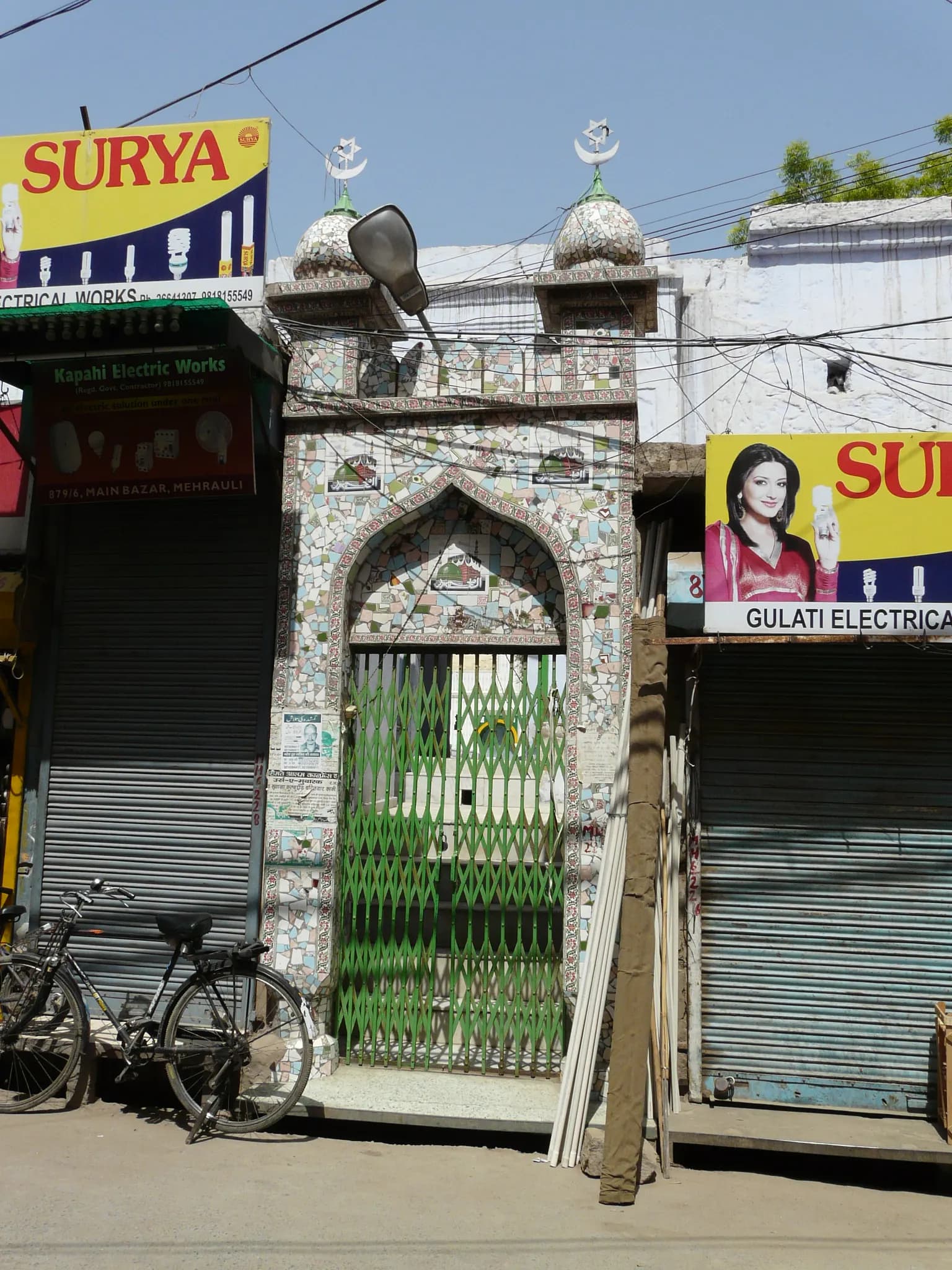
A visit to Hijron Ka Khanqah is short, quiet and quite unlike visiting any ticketed monument and knowing what to expect is important here. The site is hidden in the narrow, winding, maze-like lanes of old Mehrauli, not far from the famous Dargah of Qutbuddin Bakhtiyar Kaki and finding it is part of the experience; you make your way through the bazaar lanes to an unassuming iron gate in a white wall. Crucially, because the site is privately managed by the community, that gate is often kept latched and there may be no one obviously on duty. The usual approach is to politely ask the local caretaker or the neighbouring shopkeepers, who generally know how to help, to open the gate for a brief look. A little patience and courtesy go a long way.
Once inside, the contrast with the chaotic lanes outside is striking: the white courtyard is silent, still and deeply peaceful, a pocket of calm that feels worlds away from the city. You remove your shoes, step onto the clean stone and take in the rows of white graves and the simple mihrab in a few quiet minutes; there is no interior to tour and the whole visit takes only twenty to thirty minutes. The atmosphere is sacred and reflective and the site asks to be treated as a resting place and a living shrine, not a casual photo stop. Many visitors describe it as one of the most unexpectedly moving and tranquil places they found in Delhi, precisely because it is so hidden, so simple and so steeped in a rare history. Come with respect and an open mind and it leaves a lasting impression.
Code of conduct and etiquette
Because Hijron Ka Khanqah is a sacred, privately managed community shrine rather than a public tourist site, observing proper etiquette is essential and knowing the rules in advance ensures a respectful visit:
- Remove your shoes. You must take off your footwear before crossing the stone threshold into the white courtyard.
- Dress conservatively. Cover your shoulders and knees, in keeping with a sacred space.
- Keep silent and show respect. Treat the courtyard with the utmost silence and respect; it is a sacred resting place, not a casual tourist spot.
- Ask before photographing. Photography is strictly prohibited without the explicit, formal permission of the community elders present on site.
- Be courteous about access. Since the gate is often locked, ask politely to be let in and respect the community's wishes.
The most important thing to carry here is sensitivity: this is a cherished space belonging to a community that values it deeply, so a quiet, humble and respectful manner is not just good manners but essential. Do not treat it as a curiosity or a photo opportunity; approach it as you would any active shrine, with reverence. Visitors who come in this spirit are generally welcomed and the experience is all the richer for it.
Hijron Ka Khanqah timings and entry
Hijron Ka Khanqah is nominally open from sunrise to sunset, but, as explained, it is privately managed by the community and the iron gate is frequently kept latched, so there are no fixed, guaranteed opening hours in the usual sense. In practice, a daytime visit is best and you may need to politely request the caretaker or a neighbouring shopkeeper to unlock the gate for a brief look. Entry is completely free for everyone; there is no ticket or charge, though a respectful donation towards the upkeep of the shrine, if offered and accepted, would be in keeping with its charitable traditions. The visit itself is short, around twenty to thirty minutes. Because access depends on the community and the gate may be closed when you arrive, it is wise to be patient, to come during daylight and to treat any access as a courtesy rather than a right. As with all such details, arrangements are informal and can vary, so approach the visit with flexibility.
Best time to visit Hijron Ka Khanqah
The best time to visit is during daylight hours, ideally in the cooler, calmer parts of the day in the morning or late afternoon, when the lanes of Mehrauli are more pleasant to walk and someone is more likely to be around to open the gate. Being a small, enclosed courtyard, the visit is comfortable in most weather, but the walk through the Mehrauli lanes is far nicer in the cooler months from October to March than in the summer heat. Avoid visiting after dark, both because the site is nominally sunrise to sunset and because the old lanes are quiet at night. If you hope to see the community gathered, visits sometimes coincide with their religious occasions, though these are their own private observances to be respected from a distance rather than treated as events to attend. For most visitors, a cool-season daytime visit, combined with the other Mehrauli monuments, is ideal. Our guide to the best time to visit Delhi sets out the seasons across the city in more detail.
How to reach Hijron Ka Khanqah (nearest metro)
Hijron Ka Khanqah is tucked into the old village of Mehrauli in South Delhi, in Ward Number 1 near the historic Dargah of Qutbuddin Bakhtiyar Kaki, within the maze of narrow lanes near the main Mehrauli bazaar. The nearest metro station is Qutub Minar on the Yellow Line, from which you take an auto-rickshaw to the Mehrauli village market and then walk the final 200 metres or so through the narrow walking lanes near the bazaar to reach the site. Finding it can take a little asking, as it is easy to miss, so do not hesitate to ask locals for directions to the khanqah. App cabs and autos can bring you to Mehrauli market, but the final approach is on foot through lanes too narrow for vehicles. Because it sits right in the heart of historic Mehrauli, close to the Qutub Minar and the area's other monuments, it is best combined with them and a guided New Delhi tour or a broader Delhi day tour focused on offbeat heritage can help you find and understand it.
Places to visit near Hijron Ka Khanqah
Hijron Ka Khanqah sits in the heart of historic Mehrauli, one of the richest concentrations of heritage in Delhi, so it combines beautifully with the area's other monuments. Close by is the vast Mehrauli Archaeological Park, dense with tombs and ruins across many centuries and the royal remains of Zafar Mahal, the last Mughal palace and the monsoon pleasure palace of Jahaz Mahal. Towering over it all is the Qutub Minar, a short distance away.
A little further out, the leafy south of the city holds the historic Hauz Khas Fort and the landscaped Garden of Five Senses, while the capital's great monuments, the serene Humayun's Tomb, the ceremonial India Gate, the mighty Red Fort and the modern Lotus Temple and Akshardham, are all within a manageable ride. The central ring, with the great circle of Connaught Place, is a little beyond. Together these make Hijron Ka Khanqah a profound, offbeat addition to a day exploring Mehrauli and South Delhi.
Hijron Ka Khanqah in your Delhi itinerary
For most visitors, Hijron Ka Khanqah works best as a short, meaningful stop within a wider Mehrauli heritage walk rather than a destination on its own, given that the visit takes only twenty to thirty minutes and access can be uncertain. The natural plan is to explore the Mehrauli monuments, the archaeological park, Zafar Mahal, Jahaz Mahal and the nearby Qutub Minar and to seek out the khanqah as a quiet, moving counterpoint among them, ideally with a guide or local help to find it and arrange access. It is a stop for travellers with a genuine interest in Delhi's deeper history, its Sufi heritage and its diverse communities, rather than for those ticking off headline sights and it rewards a respectful, unhurried approach. For the right visitor, it is one of the most memorable and distinctive places in the whole city.
If Delhi is your gateway to the wider Golden Triangle, Hijron Ka Khanqah offers a rare and humane glimpse into a community and a strand of heritage that the grand monuments overlook, a quiet, dignified counterpoint to the Mughal and colonial splendour elsewhere. Many of my more thoughtful guests count it among the most affecting and unusual places they visited in Delhi and it adds a profound, reflective note to a trip before the journey on to Agra and Jaipur.
Travel tips for visiting Hijron Ka Khanqah
A few pointers make the visit smoother and more respectful:
- Combine it with the Mehrauli monuments, as the visit is short and the area is rich in heritage.
- Be ready for a latched gate and politely ask the caretaker or a shopkeeper to open it.
- Come in daylight, in the cooler months and allow time to find it in the lanes.
- Remove your shoes and dress modestly, with shoulders and knees covered.
- Keep silence and show deep respect, as it is a sacred, living community shrine.
- Do not photograph without permission from the community elders present.
- Consider a respectful donation towards the shrine's upkeep if appropriate.
- Reach it via Qutub Minar metro, then an auto to Mehrauli market and a short walk.
If you would like a local guide to find Hijron Ka Khanqah and build a Mehrauli heritage walk around it, message our team on WhatsApp at +91 7302265809 with your travel dates and group size and we will shape the day for you.
Is Hijron Ka Khanqah worth visiting?
For travellers with a genuine interest in Delhi's deeper history and its diverse communities, yes, it is a rare and moving stop. There are few places anywhere quite like it: a centuries-old Sufi shrine and graveyard belonging to the transgender community, a serene white courtyard hidden in the lanes of Mehrauli, telling a story of the city that its grand monuments never touch. It is free, profoundly peaceful and unforgettable for those who approach it with the right spirit. The honest note is that it is a small, sacred community shrine with uncertain access and no facilities, not a conventional tourist attraction; the gate is often locked, the visit is brief and it demands respect, sensitivity and a little effort to find. It is not for those seeking a grand spectacle or a quick photo stop. But for the respectful, history-minded visitor, it is one of the most distinctive and meaningful places in Delhi and I recommend it warmly to guests who value heritage, atmosphere and a story found nowhere else.
Plan your trip with us
At Experience My India, through our Delhi and Golden Triangle travel desk, we design unhurried, well paced trips that make room for rare, meaningful stops like Hijron Ka Khanqah, not just the headline monuments and we know how to find the city's hidden shrines and approach them with the respect they deserve. Whether you want a relaxed set of Delhi Agra tours or a full Golden Triangle route through Delhi, Agra and Jaipur, we plan around your pace, your interests and the right season, with local guides who know the stories and the etiquette of Delhi's heritage. Share your dates and the kind of trip you have in mind through our enquiry page, tell us your group size and we will put together an honest, tailored plan rather than a rushed checklist.
Related guides
· Places to visit in Delhi, for the wider picture
· Hidden places to visit in Delhi, the city's quieter corners
· Nearby places to visit in Delhi, to extend your trip
Enquire Now
Ready to Explore
The Heart of Delhi?
Explore the Red Fort, Qutub Minar, Humayun's Tomb, and the vibrant streets of Old Delhi with our expert-guided premium tours of India's capital city.

Delhi
Premium Tour Package
Questions
Frequently asked questions
What is Hijron Ka Khanqah?
It is a 15th-century Sufi shrine and graveyard in Mehrauli, Delhi, belonging to and cared for by the city's transgender or Hijra, community, with 49 white graves around a quiet courtyard, including the tomb of a revered saint.
What are the timings of Hijron Ka Khanqah?
Is there an entry fee for Hijron Ka Khanqah?
Which is the nearest metro station to Hijron Ka Khanqah?
Why is Hijron Ka Khanqah significant?
Who is buried at Hijron Ka Khanqah?
Can I take photos at Hijron Ka Khanqah?
What is the etiquette for visiting Hijron Ka Khanqah?
How much time do I need at Hijron Ka Khanqah?
Is Hijron Ka Khanqah worth visiting?
Explore more
Plan your Hijron Ka Khanqah trip with us

Interested in Hijron Ka Khanqah Delhi: History, Timings and Guide?
Chat with our travel team for a custom quote, or browse every package.
Related Attractions
9Ready to explore Hijron Ka Khanqah Delhi: History, Timings and Guide?
Book your private tour today and experience the magic of India's rich heritage.