Indira Gandhi Memorial Delhi: Timings and Visitor Guide
Visiting the Indira Gandhi Memorial Museum in Delhi? Timings, which day it is closed, free entry, the preserved rooms, the Rajiv Gandhi wing and nearest metro.
In a Nutshell
“The Indira Gandhi Memorial Museum in central New Delhi is the preserved former residence of Indira Gandhi, India's first and only woman Prime Minister, converted into a memorial after she was assassinated on its grounds in 1984. The rooms are kept as she left them and the site marks the spot where she fell, displays the saree she was wearing and dedicates a wing to her son Rajiv Gandhi. It is open Tuesday to Sunday, closed Mondays, free to enter and a short walk from the Lok Kalyan Marg metro. It features on our Delhi tours, run by a unit of Experience My India.”
The Indira Gandhi Memorial is one of Delhi's most moving and historically charged museums, a quiet bungalow where the life and dramatic death of one of modern India's most powerful leaders are preserved in intimate detail. For anyone interested in Indian political history, it is a profoundly affecting stop. Our team at Delhi Agra Tour Packages often includes it on a central Delhi circuit and it fits thoughtfully into a Golden Triangle tour through the capital.
I am Abhay Sharma, Delhi born and a Golden Triangle guide since 2015 and I always prepare my guests for how emotionally intense this small museum can be, because its power lies in its quiet, preserved intimacy. This guide gathers everything I would tell a visitor beforehand, checked against current information, including the timings, the free entry, the exhibits and how to reach it.
Details
Indira Gandhi Memorial at a glance
| Detail | Information |
|---|---|
| Location | 1 Safdarjung Road, central New Delhi |
| What it is | The preserved former home of Indira Gandhi, now a museum |
| Significance | Her residence and the site of her assassination in 1984 |
| Known for | Preserved rooms, the assassination site, the Rajiv Gandhi wing |
| Entry | Free; no booking needed; closed Mondays |
| Nearest metro | Lok Kalyan Marg (Yellow Line), an 8 to 10 minute walk |
| Time needed | About 1 to 2 hours |
Indira Gandhi Memorial timings
| Detail | Information |
|---|---|
| Open | Tuesday to Sunday, 9:30 AM to 4:45 PM |
| Closed | Mondays and national public holidays |
| Time needed | About 1 to 2 hours |
The museum is open Tuesday to Sunday from 9:30 AM to 4:45 PM and is closed on Mondays and national public holidays. Timings can change, so reconfirm and allow one to two hours for the indoor rooms and the gardens.
Entry and rules
| Item | Information |
|---|---|
| Entry fee | Free for Indian and foreign visitors |
| Booking | None required; no tickets or digital passes |
| Bags and bottles | Barred at security; a cloakroom is outside the gate |
| Photography | Allowed outdoors; flash inside is monitored |
How to reach the Indira Gandhi Memorial
| From | Route |
|---|---|
| Lok Kalyan Marg metro (Yellow Line) | An 8 to 10 minute walk down Safdarjung Road |
| India Gate and central Delhi | A short auto or taxi ride |
| Lutyens' Delhi area | Within the central government zone |
| By cab or auto | Drops near the gate on Safdarjung Road |
What is the Indira Gandhi Memorial Museum?
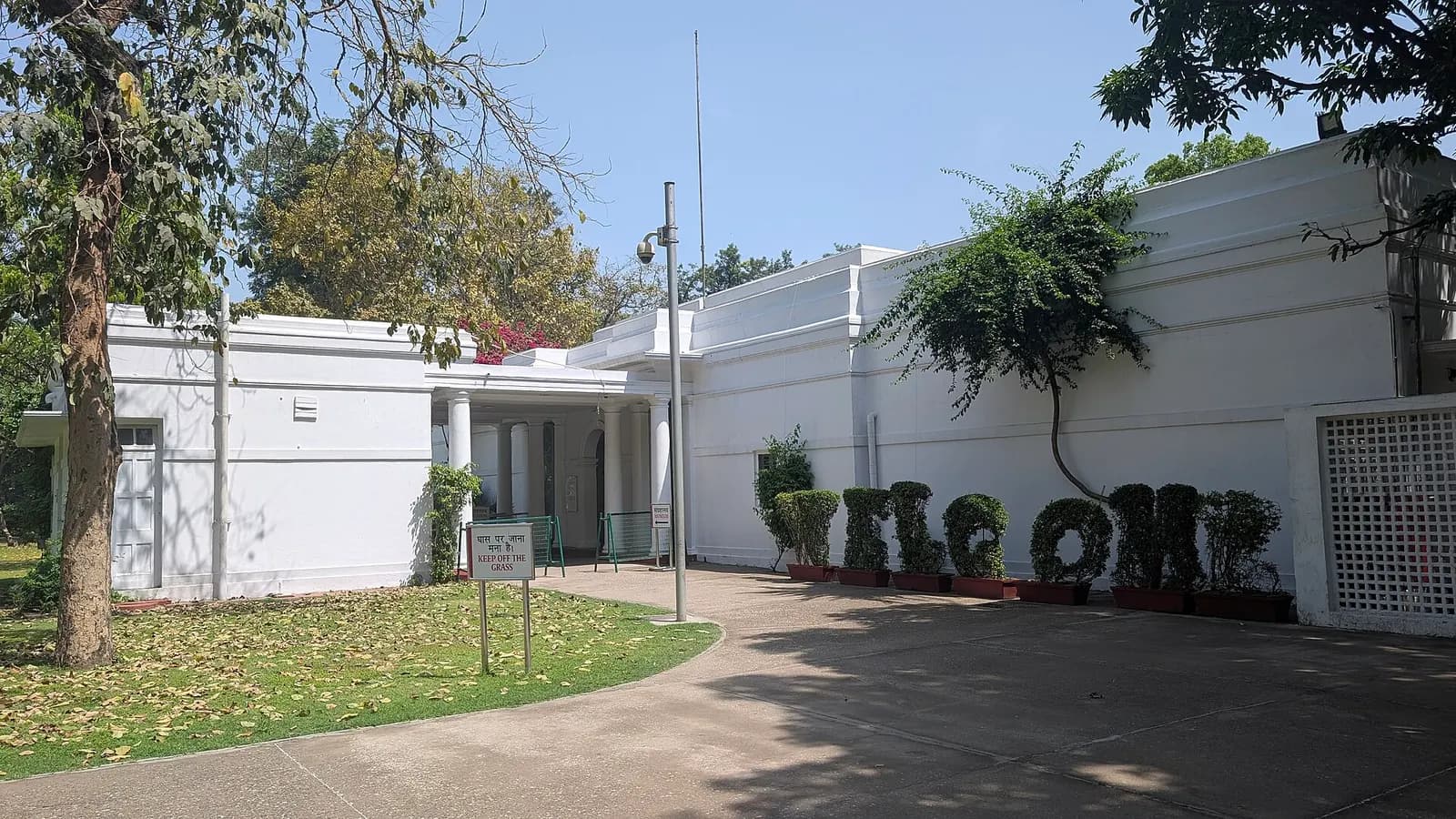
The Indira Gandhi Memorial Museum is the preserved former official residence of Indira Gandhi, India's first and only woman Prime Minister, in the leafy, high-security government zone of central New Delhi. A white-walled single-storey bungalow at 1 Safdarjung Road, it was her home during her years in power and it was here, on its grounds, that she was assassinated in 1984. After her death the house was converted into a memorial museum, with its rooms kept largely as she left them, so that a visit is a remarkably intimate walk through the private world of a towering and controversial political figure. Beyond her own life, the museum also dedicates a substantial wing to her son and later Prime Minister, Rajiv Gandhi, who was himself assassinated in 1991, making it a dual memorial to two leaders of the Nehru-Gandhi family.
Several things make it special and they are worth drawing out:
- A preserved prime ministerial home. The actual residence of Indira Gandhi, kept much as it was, a rare intimate glimpse into a leader's private life.
- The assassination site. The spot where she was killed in 1984 is marked within the garden, a solemn focal point.
- Personal relics. The saree she was wearing, her belongings and other deeply personal items are preserved and displayed.
- The Rajiv Gandhi wing. An extensive section on the life and assassination of her son, former Prime Minister Rajiv Gandhi.
- A photographic record. Thousands of historic photographs tracing the Nehru-Gandhi family through modern Indian history.
It is one of the most moving and historically significant of the things to do in Delhi and a notable modern site among the important monuments of Delhi.
History: the house and the assassination
The museum's history is inseparable from one of the most dramatic episodes in modern Indian history. The bungalow at 1 Safdarjung Road was the official residence of Indira Gandhi during her long and turbulent years as Prime Minister, a leader who dominated Indian politics for much of the 1960s, 1970s and early 1980s. On the morning of 31 October 1984, she walked along the garden path connecting her home to her adjoining office block, as she did each day and was shot dead by two of her own security guards, an act of violence that shook the nation and reverberated through its history. Following her assassination, the house was preserved and converted into a memorial museum so that the public could remember her life and witness the place where it ended.
The memorial was later expanded into a dual tribute with the addition of a wing devoted to her son, Rajiv Gandhi, who succeeded her as Prime Minister and was himself assassinated in a bombing in 1991. Together the two tragedies, mother and son, both Prime Ministers, both killed violently, give the museum its sombre and powerful character. Visitors frequently describe the site as profoundly silent, emotionally intense and deeply moving, a capsule of modern Indian political history preserved in a single quiet compound. Knowing this history before you arrive helps prepare you for the experience, which is less a conventional museum visit than a walk through a preserved moment of national memory.
The preserved rooms and the crystal pathway
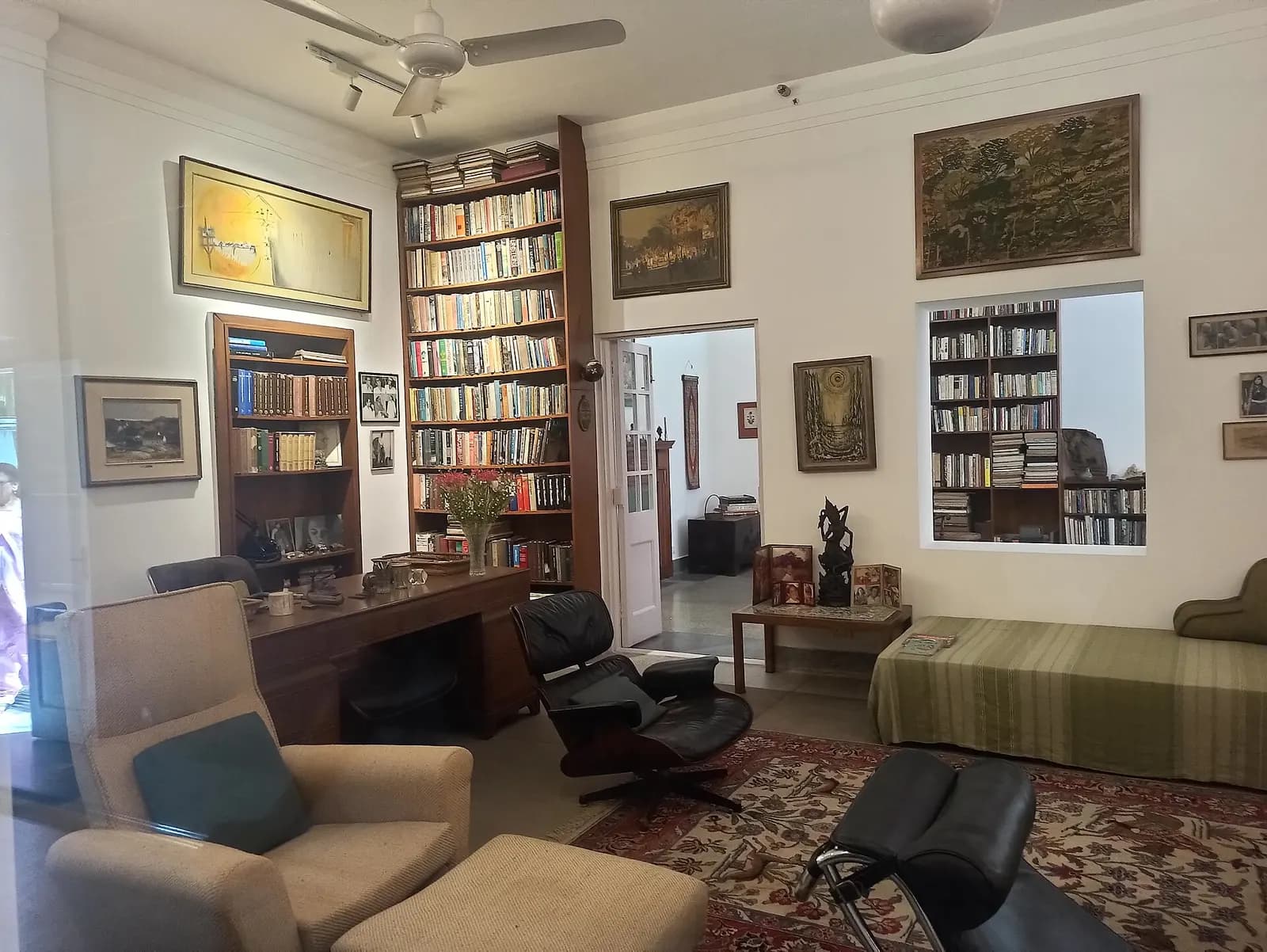
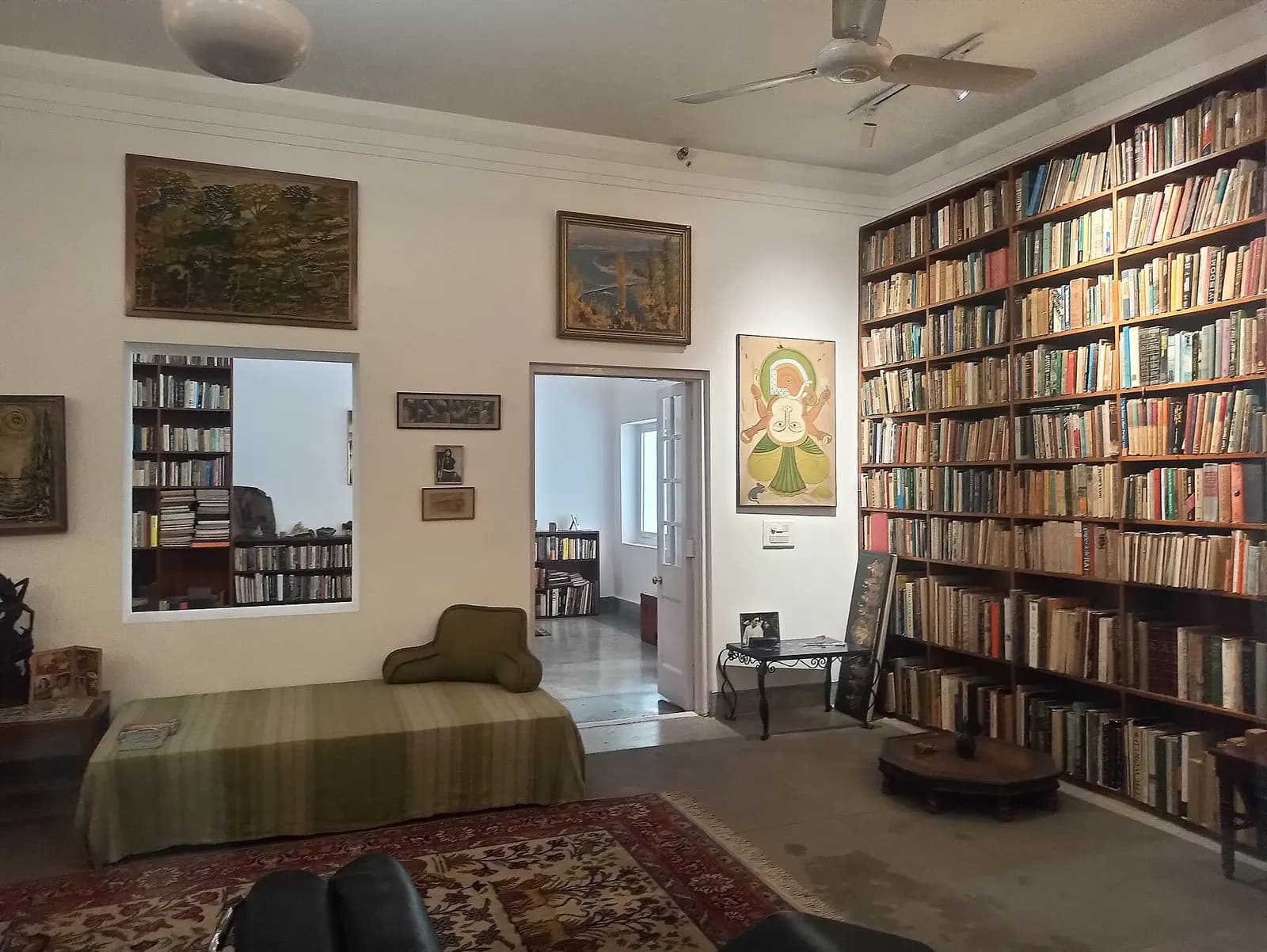
The heart of the museum is the preserved residence itself, where the historic rooms have been kept much as they were on the day Indira Gandhi died, giving an unusually intimate sense of her daily life. Visitors do not walk through the rooms but along the outer covered verandas, peering through large glass windows into the preserved interiors, which include her living room, her study lined with old books, her dressing room and the private dining hall. Seeing these personal spaces, frozen in time, is quietly affecting, bringing the public figure down to a human scale.
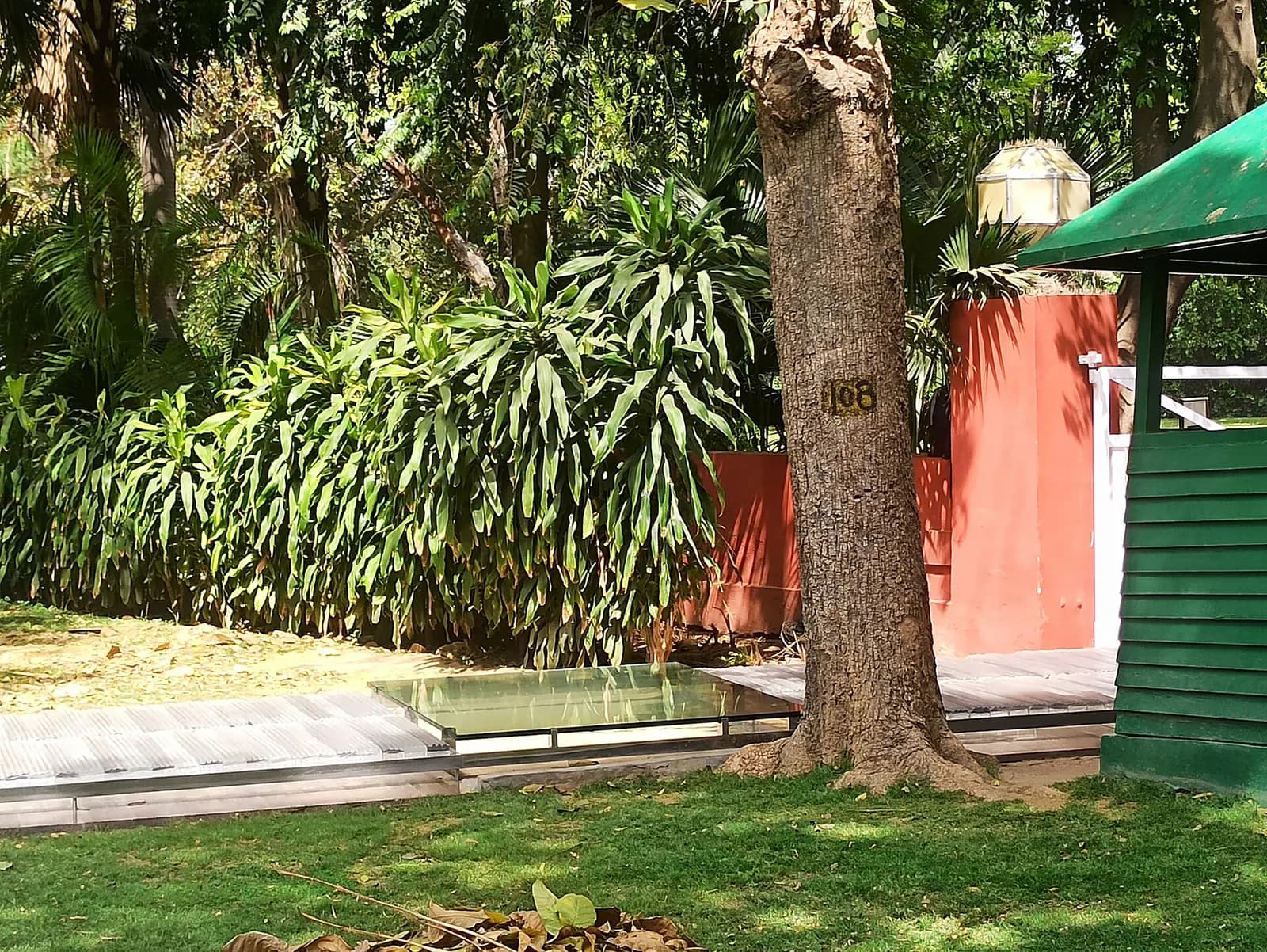
The most solemn feature is the marking of the assassination site itself. The exact path she walked during her final moments has been paved over with a striking crystal glass sheet, creating a luminous pathway through the garden and a transparent glass panel precisely frames the spot where she fell. This crystal pathway is the emotional centre of the visit, a dignified and understated way of marking the place of her death and visitors tend to pause here in silence. It is a powerful piece of memorial design, neither sensational nor hidden, that lets the significance of the spot speak for itself. Walking the veranda past the preserved rooms and arriving at the crystal pathway is the core experience of the museum and it is what stays with most visitors.
The saree and personal belongings
Among the most poignant exhibits is a central indoor gallery that preserves the personal items connected with Indira Gandhi's final day, displayed with care and gravity:
- The saree. The saffron-and-maroon bordered cotton saree she was wearing at the time of the attack is safely displayed, a deeply personal and moving relic.
- Personal belongings. Her personal bag and other belongings from that day are preserved alongside the saree.
- The commemorated site. The museum also preserves a crystal plaque marking the dried spots of her blood collected from the site, a solemn memorial to the moment of her death.
These relics are presented soberly, as objects of national memory rather than spectacle and they lend the museum its intense, reflective atmosphere. For many visitors, standing before the actual saree she wore is the most affecting moment of the visit, collapsing the distance between a historic event and the present. It is worth approaching this gallery, as the whole museum, with quiet respect, mindful that it commemorates a violent death that remains within living memory for many Indians.
The Rajiv Gandhi wing
A substantial part of the museum is given over to the life and death of Rajiv Gandhi, Indira Gandhi's son, who became Prime Minister after her and was assassinated in 1991, making the memorial a tribute to two generations of leaders. The Rajiv Gandhi wing traces his life from childhood to high office and his tragic end and its exhibits include:
- Personal effects from his life. His childhood toys, the engineering tools from his training as a pilot and technician and his personal photography collections, reflecting his interests before politics.
- The relics of his assassination. The actual clothes he was wearing, torn by the explosion, during his assassination by a suicide bombing in 1991, displayed as a solemn record of his death.
This wing broadens the museum from a memorial to one leader into a meditation on the Nehru-Gandhi family and the violence that marked its history. As with the Indira Gandhi exhibits, the relics of Rajiv Gandhi's death are presented soberly and are deeply affecting. Seeing the personal and the political side by side, the childhood toys and the torn clothes, gives the wing its emotional weight and it rounds out the museum's account of a family central to modern India's story.
The photographic galleries
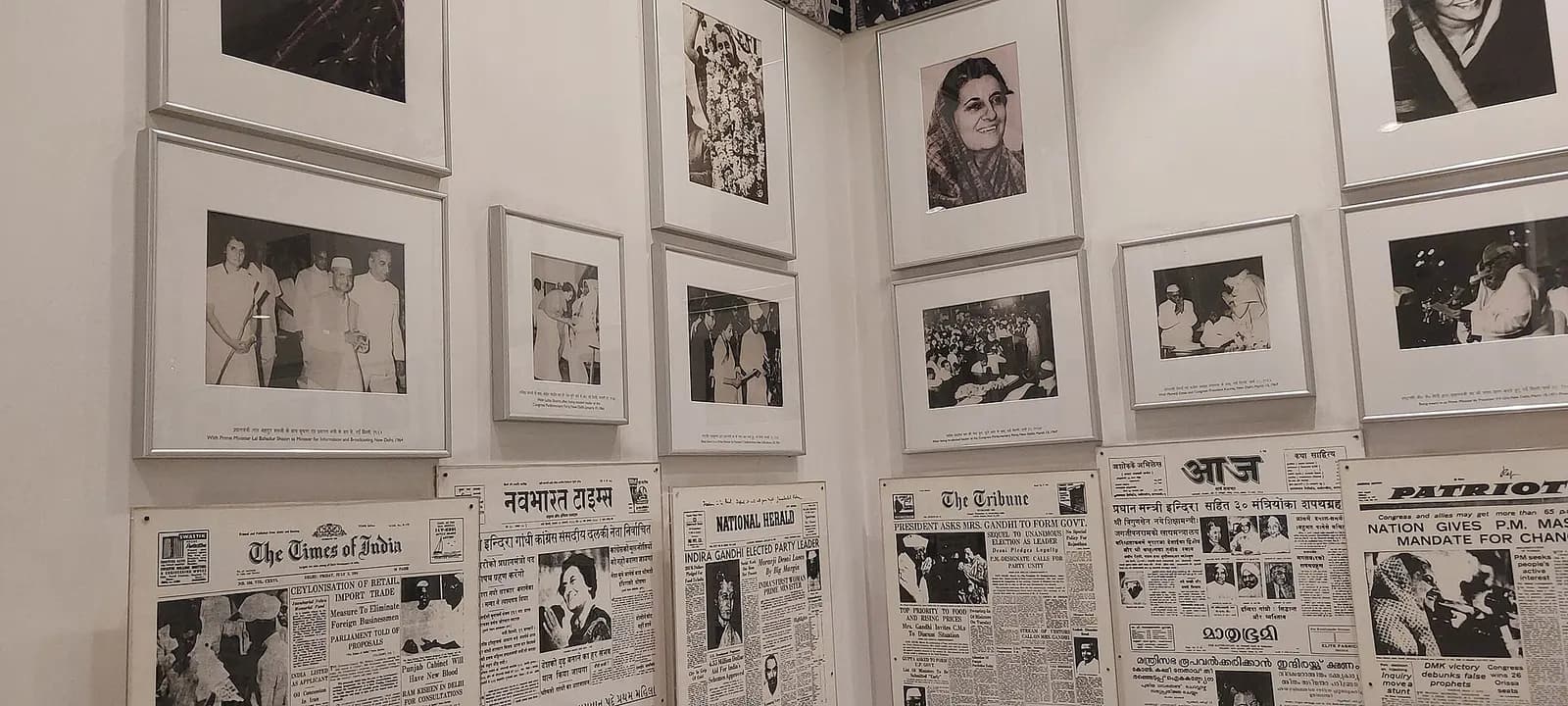
Running throughout the museum are extensive photographic galleries, with wall-to-wall collections of thousands of historic photographs that trace the journey of the Nehru-Gandhi family across the decades. These images follow the family from the early years of the Indian independence movement, through Indira Gandhi's rise and years in power, her meetings with world leaders on foreign state visits and the public and private moments of a dynasty at the centre of national life. For anyone interested in modern Indian history, the photographic record is fascinating in its own right, a visual chronicle of the twentieth century seen through one remarkable family. The photographs also soften and humanise the museum's sombre core, showing the leaders in life, at work and with their families, rather than only in the context of their deaths. Taking time over these galleries adds valuable context, turning the visit from a look at a tragedy into a fuller understanding of the figures and the era they shaped. They are a rewarding complement to the preserved rooms and the memorial relics. Among the images are scenes from the independence movement in which the family played a part, portraits of Indira Gandhi as a child with her father Jawaharlal Nehru and photographs of her later meetings with heads of state from around the world, so the galleries double as a compact visual history of twentieth-century India seen from the inside. Visitors with an interest in history often find themselves lingering here longest, piecing together the arc of a family that was, for several generations, at the very centre of the nation's affairs. It is worth not rushing past these walls on the way to the more dramatic exhibits, as they give the human and historical background that makes the rest of the museum resonate far more deeply with every visitor who pauses to take them in.
Who was Indira Gandhi?
To appreciate the memorial fully, it helps to know a little about the woman it commemorates. Indira Gandhi was the daughter of Jawaharlal Nehru, India's first Prime Minister and she went on to become the country's first and so far only woman Prime Minister, serving for a total of around sixteen years across two spells in office. She was one of the most powerful and polarising figures in the nation's history, admired by many for her decisiveness and her role in major events and criticised by others, especially for the period of Emergency rule she imposed in the mid 1970s. Her tenure saw some of the most consequential and contested moments of independent India and she remained at the centre of national life until her assassination in 1984. Whatever one's view of her politics, her importance to the story of modern India is beyond dispute, which is what makes her preserved home such a significant site. The museum does not attempt a political verdict; it presents her life, her surroundings and her death and leaves visitors to bring their own understanding. Coming with some sense of who she was and of the turbulent era she shaped and was shaped by, turns the visit from a look at a house into an encounter with a pivotal chapter of the nation's past.
What to expect at the Indira Gandhi Memorial
A visit here is unlike a typical museum and knowing what to expect helps you meet it in the right spirit. After depositing your bags at the cloakroom and passing through security, you enter a quiet, well kept compound of lawns and a low white bungalow, with none of the bustle of the city outside. You walk along the covered verandas, looking in through glass at the preserved rooms, reading the labels and following the route towards the crystal pathway that marks the assassination site. The mood throughout is hushed and reflective; visitors speak in low voices and there is a palpable sense of standing in a place where history happened. It is compact, so there is no risk of museum fatigue, but it is emotionally concentrated and most people move through it slowly and thoughtfully rather than briskly.
Along the way you take in the photographic galleries, the personal relics and the Rajiv Gandhi wing, each adding to the picture. The combination of the ordinary, a study full of books, childhood toys, family photographs, with the extraordinary and tragic, the marked spot where a Prime Minister fell, is what gives the visit its unusual power. Many people arrive out of general interest and leave genuinely moved, having felt the human reality behind the headlines of history. Allow yourself time to pause, especially at the crystal pathway and treat the visit as a quiet act of remembrance as much as sightseeing. Come in that frame of mind and it is one of the most memorable hours the city offers.
Indira Gandhi Memorial timings and entry
The museum is open Tuesday to Sunday from 9:30 AM to 4:45 PM and is closed on Mondays and national public holidays, so plan around that Monday closure. Entry is completely free for everyone, both Indian citizens and international tourists and no pre-booked tickets or digital passes are required, so you can simply arrive during opening hours. A thorough walk through the indoor rooms and the outer gardens takes about one to two hours, so it is an easy stop to include in a central Delhi morning or afternoon. The main thing to prepare for is the strict security, explained below, which affects what you can carry in. These timings are current at the time of writing and can change, so reconfirm before a special trip, particularly if you are visiting around a public holiday.
Rules: bags, bottles and photography
Because the museum sits in a high-security VIP zone of central Delhi, security protocols are strict and knowing them in advance makes entry smooth:
- No large bags or luggage. Backpacks, large handbags and luggage are barred at the metal detectors.
- No water bottles or snacks. Water bottles and outside snacks are not allowed inside.
- Use the cloakroom. A secure cloakroom counter outside the main gate lets you deposit your belongings safely before entering.
- Photography outdoors. Personal photography is permitted on the open garden paths and the designated outer display hallways.
- Flash monitored inside. Flash photography inside the inner historical gallery rooms is monitored by security, so follow the guidance there.
Knowing these rules in advance saves time at the gate, so travel light, deposit bags and bottles at the cloakroom and keep photography to the permitted outdoor areas. The strict security is in keeping with the site's status and its solemn character and cooperating with it is part of a respectful visit.
Best time to visit the Indira Gandhi Memorial
The best time to visit is a weekday, when the museum is quietest and you can walk the verandas and galleries at a reflective pace, as weekends can be busier. Above all, avoid Mondays and public holidays, when it is closed. In terms of season, the cooler months from October to March are the most pleasant for walking through the gardens and verandas, as much of the visit is in the open air; the summer can be hot. Arriving earlier in the day, soon after the 9:30 AM opening, gives a calm start before any crowds. Because the museum is compact and takes only an hour or two, it is easy to combine with other central Delhi sights on the same day. A quiet weekday morning in the cooler season is close to ideal for absorbing the museum's intense, contemplative atmosphere. Our guide to the best time to visit Delhi sets out the seasons across the city in more detail.
How to reach the Indira Gandhi Memorial (nearest metro)
The Indira Gandhi Memorial Museum is at 1 Safdarjung Road, in the leafy Lutyens' Delhi government zone of central New Delhi and it is easy to reach. The nearest metro station is Lok Kalyan Marg on the Yellow Line, from which it is a short and comfortable 8 to 10 minute walk down the shaded sidewalk of Safdarjung Road to the museum gates. App cabs and autos can drop you near the gate. The historic Safdarjung Tomb lies a short distance away in the same part of the city, so the two can be combined. Being central, the museum slots neatly into a plan of the imperial quarter and a guided New Delhi tour can fold it in alongside the surrounding landmarks, while a broader Delhi day tour ties it into the full span of the capital.
Places to visit near the Indira Gandhi Memorial
The Indira Gandhi Memorial sits in the central Lutyens' zone, so it is easy to pair with nearby sights. The grand Safdarjung Tomb, one of the last great Mughal garden tombs, is a short distance away in the same part of the city and makes a natural companion. The historic Lodhi Garden, with its medieval tombs set in lovely grounds, is also close and the ceremonial India Gate and the imperial avenues are a short ride away.
The central ring holds a cluster of further sights within easy reach: the great circle of Connaught Place, the ancient stepwell of Agrasen ki Baoli, the astronomical Jantar Mantar and the serene Bangla Sahib Gurudwara. A little further out, the capital's great monuments are an easy ride away: the serene Humayun's Tomb, the mighty Red Fort, the towering Qutub Minar and the modern Lotus Temple and Akshardham. Together these make the memorial an easy, meaningful stop on a central Delhi day.
The Indira Gandhi Memorial in your Delhi itinerary
For most visitors, the Indira Gandhi Memorial works best as a reflective stop of an hour or two within a central Delhi circuit, easily paired with the nearby Safdarjung Tomb, Lodhi Garden and the imperial avenues. Because it is compact, free and centrally located, it is simple to slot into a morning or afternoon alongside other sights, though its sombre, intense character means it is worth giving a little quiet space rather than rushing straight on to something lively. A thoughtful plan is to visit in the calm of a weekday morning, take time over the rooms, the crystal pathway and the photographs and then continue to the lighter, greener Lodhi Garden or the grand Safdarjung Tomb nearby. Those interested in modern Indian history will find it one of the most resonant stops in the city.
If Delhi is your gateway to the wider Golden Triangle, the memorial adds a dimension of recent political history to a trip otherwise rich in Mughal and colonial monuments, a reminder of the dramatic story of independent India and the family that shaped so much of it. Many of my guests find it unexpectedly powerful and it offers a thoughtful, human counterpoint before the journey on to the monuments of Agra and Jaipur.
Travel tips for visiting the Indira Gandhi Memorial
A few pointers make the visit smoother and more respectful:
- Never come on a Monday, when the museum is closed and allow 1 to 2 hours.
- Visit on a weekday morning, for a quiet, reflective experience.
- Travel light, as bags, luggage, water bottles and snacks are barred, with a cloakroom outside the gate.
- Keep photography outdoors, where it is allowed and respect the rules inside the galleries.
- Come in the cooler months, as much of the visit is along open verandas and gardens.
- Approach it with respect, as it commemorates two assassinations within living memory.
- Combine it with Safdarjung Tomb, a short distance away, for a varied central Delhi outing.
- Walk from Lok Kalyan Marg metro, an easy 8 to 10 minutes down Safdarjung Road.
If you would like a local guide to build the Indira Gandhi Memorial into a wider Delhi plan, message our team on WhatsApp at +91 7302265809 with your travel dates and group size and we will shape the day for you.
Is the Indira Gandhi Memorial worth visiting?
For anyone interested in modern Indian history and politics, yes, very much so. It is one of the most moving and distinctive museums in Delhi, a preserved prime ministerial home that lets you walk, quite literally, through the life and death of one of the country's most consequential leaders, with the added history of Rajiv Gandhi in the same compound. It is free, central and takes only an hour or two, so it is easy to include and the photographic galleries offer a rich chronicle of twentieth-century India. The honest note is that it is a sombre, emotionally intense memorial to violent events rather than a light or scenic attraction, so it suits visitors with an interest in history and a reflective frame of mind more than those seeking a cheerful outing and it should be approached with respect. For the right visitor, though, it is one of the capital's most resonant and memorable stops and I recommend it to guests keen to understand India's recent past.
Plan your trip with us
At Experience My India, through our Delhi and Golden Triangle travel desk, we design unhurried, well paced trips that make room for historically rich stops like the Indira Gandhi Memorial, not just the grand monuments and we give a site like this the context and quiet it deserves. Whether you want a relaxed set of Delhi Agra tours or a full Golden Triangle route through Delhi, Agra and Jaipur, we plan around your pace, your interests and the right season, with local guides who can tell the story behind the site. Share your dates and the kind of trip you have in mind through our enquiry page, tell us your group size and we will put together an honest, tailored plan rather than a rushed checklist.
Related guides
- Places to visit in Delhi, for the wider picture
- Hidden places to visit in Delhi, the city's quieter corners
- Nearby places to visit in Delhi, to extend your trip
Enquire Now
Ready to Explore
The Heart of Delhi?
Explore the Red Fort, Qutub Minar, Humayun's Tomb, and the vibrant streets of Old Delhi with our expert-guided premium tours of India's capital city.

Delhi
Premium Tour Package
Questions
Frequently asked questions
What are the timings of the Indira Gandhi Memorial?
It is open Tuesday to Sunday from 9:30 AM to 4:45 PM and is closed on Mondays and national public holidays. Reconfirm, as timings can change.
What is the entry fee for the Indira Gandhi Memorial Museum?
Which is the nearest metro station to the Indira Gandhi Memorial?
Which day is the Indira Gandhi Memorial closed?
What can you see at the Indira Gandhi Memorial?
Where is the Indira Gandhi Memorial located?
How much time do I need at the Indira Gandhi Memorial?
Can I take photographs at the Indira Gandhi Memorial?
Is the Indira Gandhi Memorial suitable for children?
Is the Indira Gandhi Memorial worth visiting?
Explore more
Plan your Indira Gandhi Memorial trip with us

Interested in Indira Gandhi Memorial Delhi: Timings and Visitor Guide?
Chat with our travel team for a custom quote, or browse every package.
Related Attractions
9Ready to explore Indira Gandhi Memorial Delhi: Timings and Visitor Guide?
Book your private tour today and experience the magic of India's rich heritage.