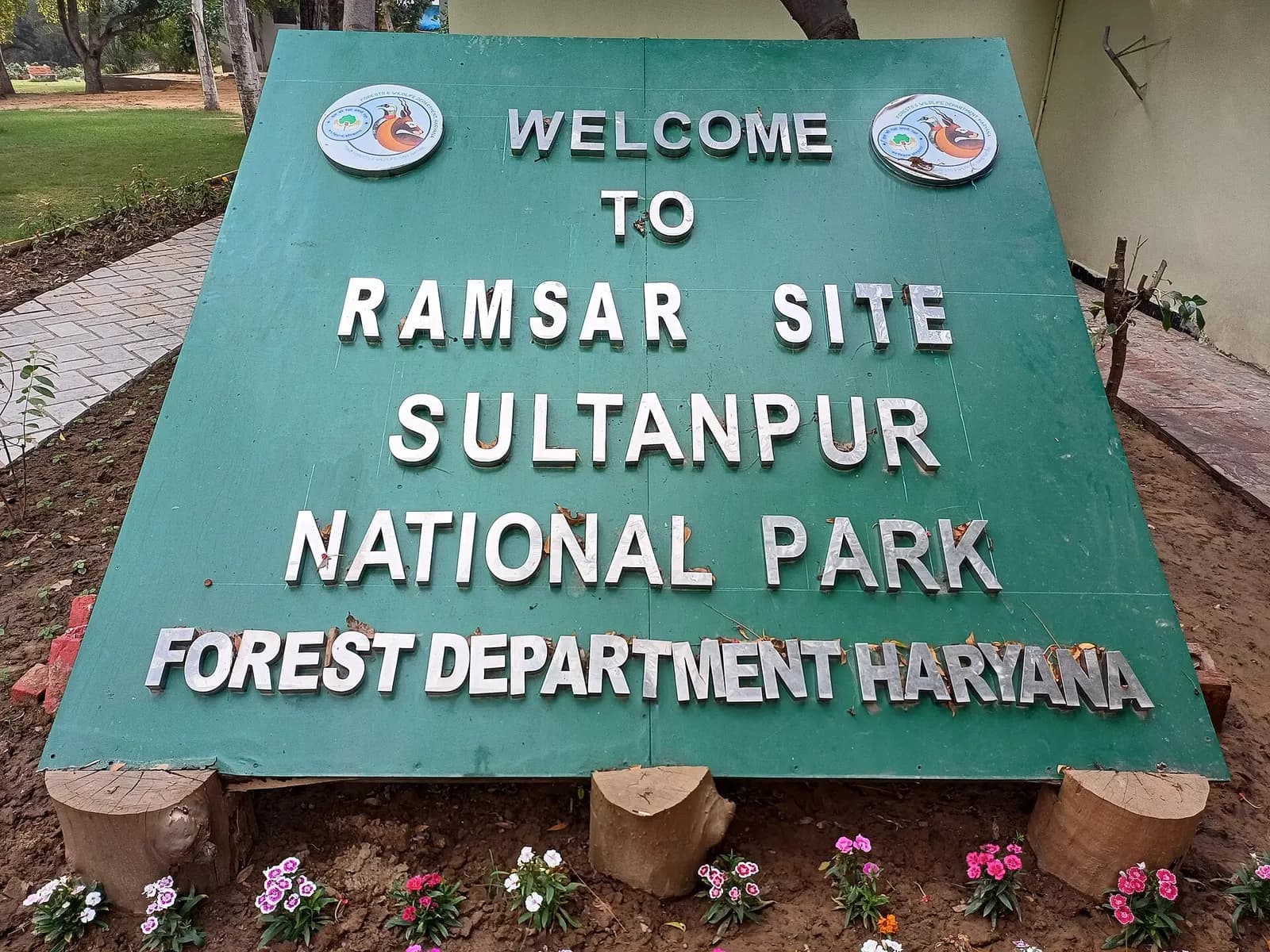
Sultanpur National Park & Bird Sanctuary (near Delhi): Timings and Guide
Visiting Sultanpur National Park & Bird Sanctuary near Delhi? Timings, which day it is closed, ticket price, the birds, best season and how to reach.
In a Nutshell
“Sultanpur National Park, also called the Sultanpur Bird Sanctuary, is a wetland bird reserve in Gurugram, Haryana, around 46 km from central Delhi, famous for the thousands of migratory birds that gather on its shallow lake each winter. Spread over about 1.43 square kilometres and a certified Ramsar wetland, it has a 3.5 to 4 km walking trail around the lake with watchtowers and hides. It is closed on Tuesdays and through the summer, charges a nominal ticket and makes an easy day trip from the capital. It features on our Delhi tours, run by a unit of Experience My India.”
Sultanpur National Park is one of the finest birdwatching escapes near Delhi, a peaceful wetland where, in the cooler months, flocks of migratory birds from as far as Siberia and Europe fill the lake, delighting birders, photographers and families alike. A quiet, green contrast to the city, it is a lovely half day in nature. Our team at Delhi Agra Tour Packages often suggests it as a winter day trip and it pairs well with a wider Golden Triangle tour through the region.
I am Abhay Sharma, Delhi born and a Golden Triangle guide since 2015 and I love sending nature lovers and families here in winter, when the birdlife is at its spectacular best. This guide gathers everything I would tell a visitor beforehand, checked against current information, including the timings, the seasonal closures, the birds and how to reach it.
Details
Sultanpur National Park at a glance
| Detail | Information |
|---|---|
| Location | Gurugram district, Haryana, about 46 km from Delhi |
| Also known as | Sultanpur Bird Sanctuary |
| Status | National Park and a certified Ramsar wetland site |
| Size | About 1.43 square kilometres, around 350 acres |
| Known for | Winter migratory birds on a shallow wetland lake |
| Entry | A nominal ticket; closed Tuesdays and in summer |
| Nearest metro | Huda City Centre, Gurugram, then a cab |
| Time needed | About 2 to 3 hours for the loop trail |
Sultanpur National Park timings
| Detail | Information |
|---|---|
| Open | 7:00 AM to 4:30 PM, exit trails by 5:00 PM |
| Weekly closure | Closed every Tuesday for upkeep |
| Annual closure | Closed 1 June to 30 September in the monsoon |
The park is open daily from 7:00 AM to 4:30 PM, with visitors required to leave the trails by 5:00 PM and it is closed every Tuesday for ecological upkeep. It also shuts completely from 1 June to 30 September during the monsoon breeding season. Timings can change, so reconfirm and come early in the day for the best birdwatching.
Sultanpur National Park ticket price
| Visitor | Fee (at the time of writing, reconfirm) |
|---|---|
| Indian citizens | A nominal fee, around ₹5 to ₹50 depending on the tariff |
| Children 5 to 11 years | Around ₹2 per child |
| Foreign nationals | Around ₹40 to ₹100 per person |
| Binocular rental | Around ₹200 for the day at the gate |
How to reach Sultanpur National Park
| From | Route |
|---|---|
| Huda City Centre metro (Yellow Line), Gurugram | A cab or auto for the final 30 minute drive |
| Central Gurugram | About 15 km, a short drive |
| Central Delhi | About 46 km, by car or cab |
| By road | On the Gurgaon to Farrukhnagar road |
What is Sultanpur National Park & Bird Sanctuary?
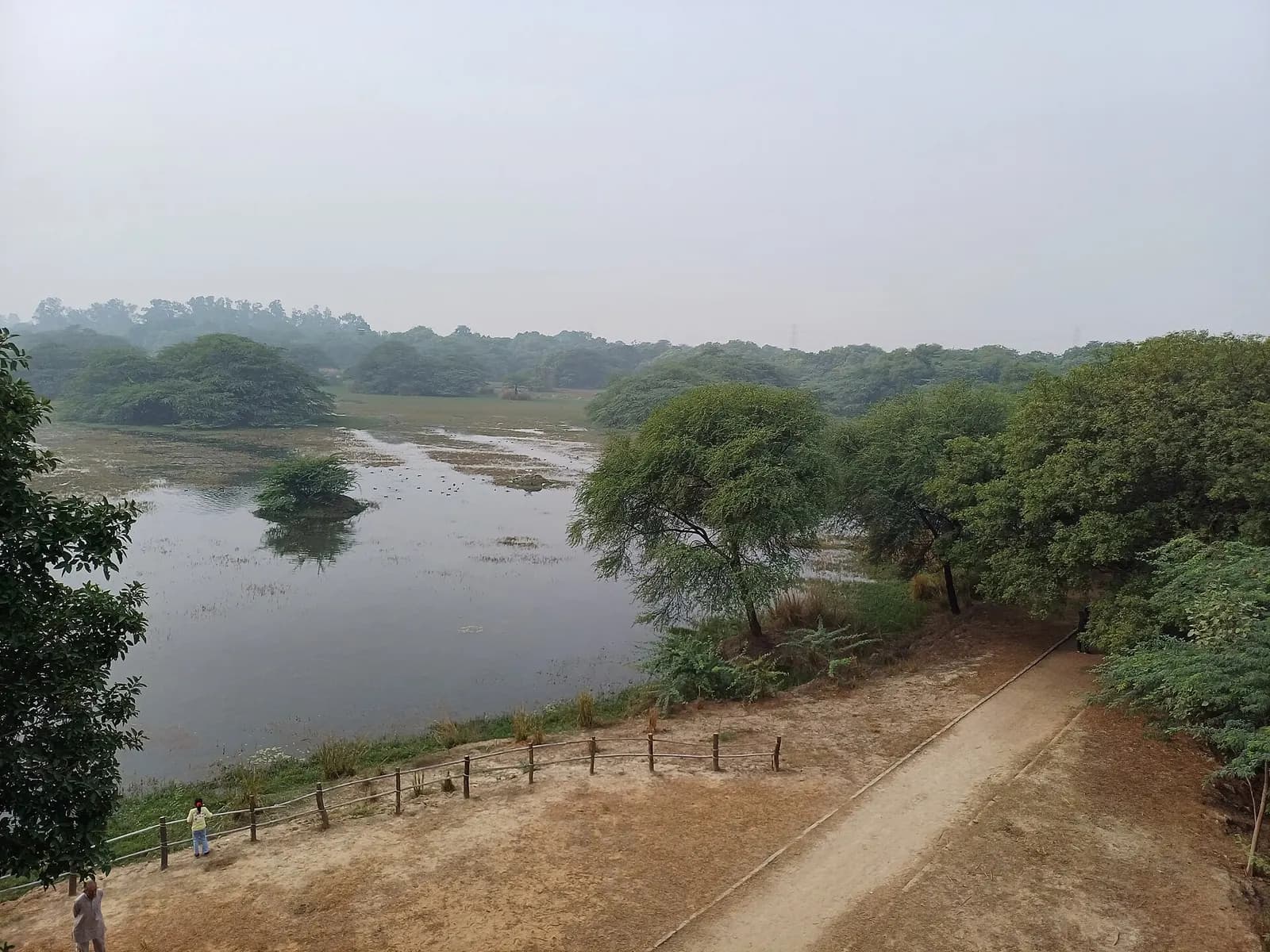
Sultanpur National Park, widely known as the Sultanpur Bird Sanctuary, is a wetland wildlife reserve in the Gurugram district of Haryana, around 46 kilometres from central Delhi, built around a shallow seasonal lake or jheel, that becomes a vital haven for birds. Spread across roughly 1.43 square kilometres, around 350 acres, of low floodplains, marshy shallow water and tropical dry deciduous woodland of acacia and neem, it is internationally recognised as a Ramsar site, a wetland of global importance for bird biodiversity. It is above all a birdwatching destination: every winter the lake draws thousands of migratory birds from across Asia and Europe, alongside a rich community of resident species, making it one of the best and most accessible places for birding near Delhi.
Several things make it special and they are worth drawing out:
- A premier bird sanctuary near Delhi. A wetland reserve of over 250 bird species, one of the finest birding spots within easy reach of the capital.
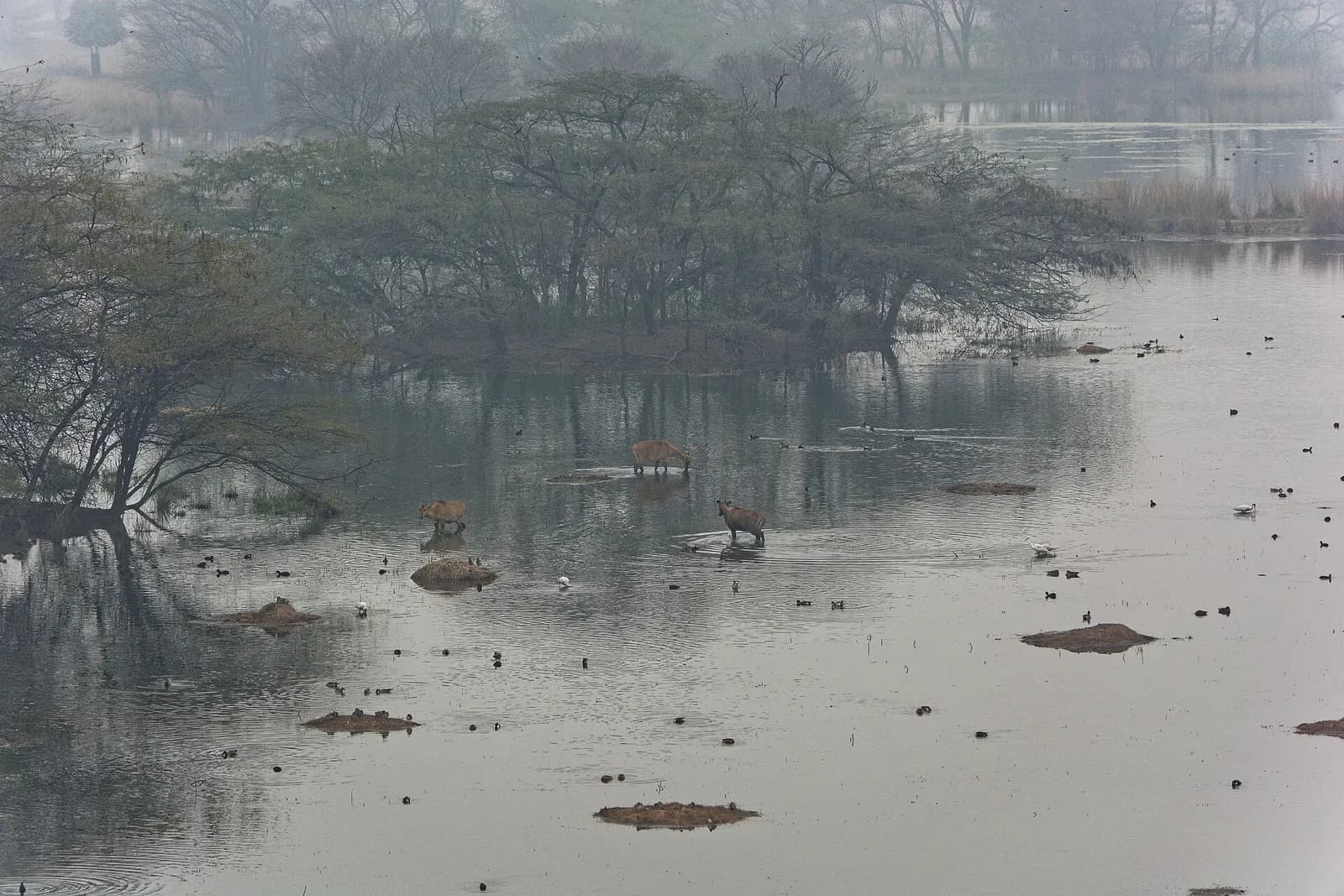
- Spectacular winter migrants. Each winter, thousands of migratory birds arrive from Siberia, Europe, Central Asia and East Asia to feed and roost.
- A Ramsar wetland. Internationally certified as a wetland of global importance for avian biodiversity.
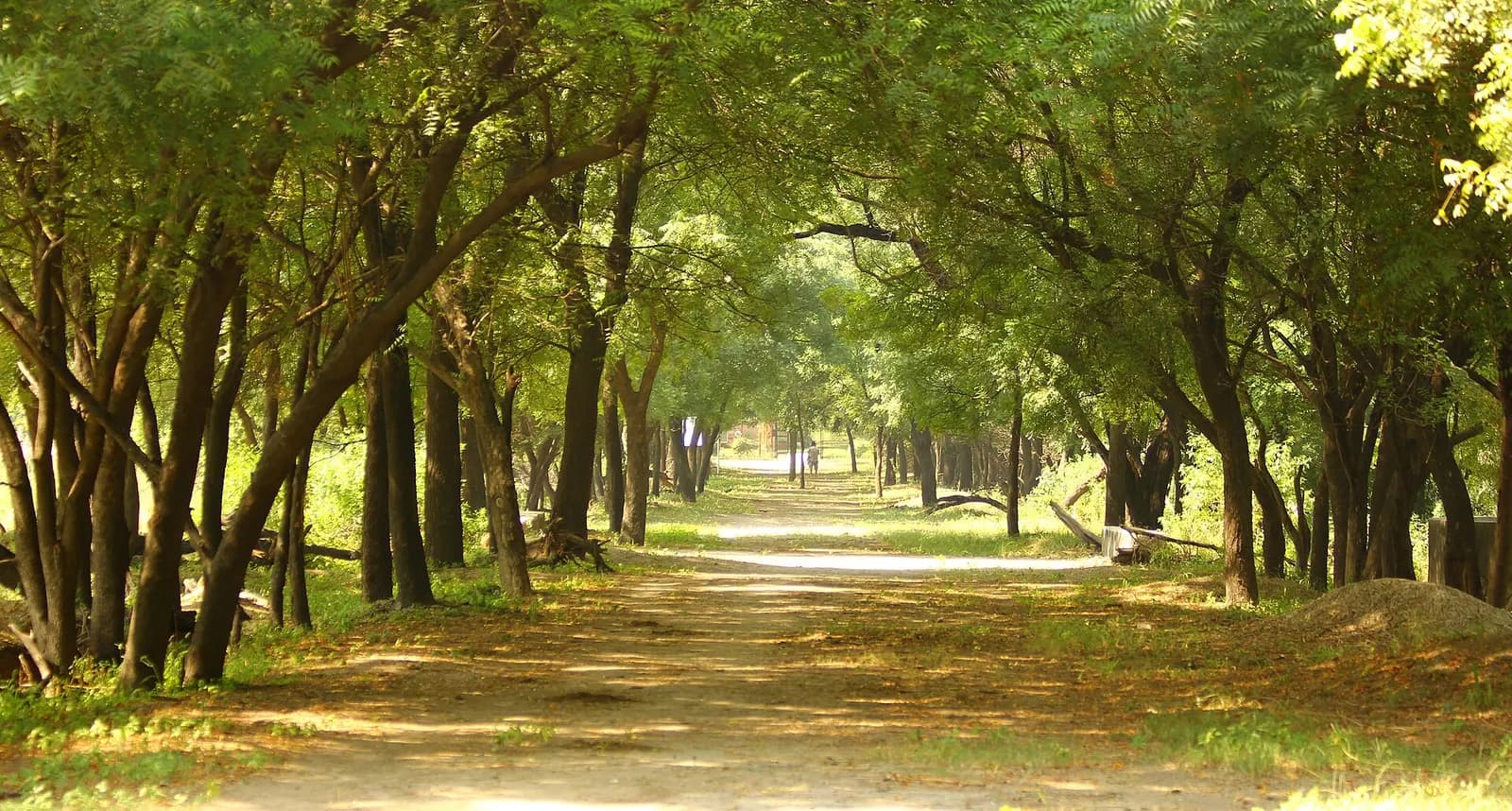
- A peaceful walking reserve. A 3.5 to 4 km trail around the lake with watchtowers and hides and no vehicles or loud safaris.
- An easy day trip. A quiet, green nature escapes a short drive from Delhi and Gurugram.
It is one of the best nature-focused of the things to do in Delhi and its surroundings and it features among the wildlife and national parks near Delhi worth a day trip.
Where is Sultanpur National Park?
A very common question is which state Sultanpur National Park is in, so to be clear: it lies in the Gurugram, formerly Gurgaon, district of the state of Haryana, not within Delhi itself, though it is close enough to be an easy day trip from the capital. It sits along the Gurgaon to Farrukhnagar road, roughly 15 kilometres from central Gurugram and about 46 kilometres from central New Delhi. Its position just outside the city, in the quieter countryside of Haryana, is part of what makes it such a peaceful escape, a genuine patch of wetland and woodland wildlife within reach of the urban sprawl. For visitors based in Delhi or Gurugram, it is comfortably reachable for a morning or a half day, which is why it is so popular with city birdwatchers and families seeking a dose of nature. So while this guide sits within our Delhi coverage because it is such a well loved outing from the city, do note that the sanctuary itself is in Haryana and plan your travel accordingly, as explained in the how to reach section below.
History of Sultanpur National Park
The story of how this wetland became a protected sanctuary is a notable one. The extreme ecological importance of the shallow Sultanpur lake was first brought to wider attention by the prominent British ornithologist Peter Jackson, who, recognising the site's value for birds, wrote directly to the then Prime Minister Indira Gandhi in 1970 urging that the area be safeguarded. His appeal prompted the state to act and the area was officially designated a sanctuary under the wildlife protection rules in 1972. Its status was later raised to that of a full National Park in July 1991, giving the wetland the maximum legal protection and in 2021 it earned international recognition as a certified Ramsar site, confirming its role as a wetland of global importance for bird biodiversity.
This progression, from a lake championed by a single far-sighted ornithologist to a nationally protected park and an internationally recognised Ramsar wetland, reflects a growing appreciation of how precious such wetlands are, especially as habitats shrink elsewhere. In recent years the park has also adopted modern conservation tools, including AI-powered tracking cameras set up within the sensitive marsh areas to detect, catalogue and trace rare or elusive birds in real time without disturbing them. Knowing this history, that the sanctuary exists because people recognised and fought for the value of a humble lake, adds meaning to a visit and underlines why the quiet, low-impact rules of the park matter so much.
Birds at Sultanpur: migratory and resident
The heart of Sultanpur is its birdlife and with somewhere between 250 and 320 species recorded of resident and migratory birds, it is a paradise for birdwatchers. The spectacle divides into the winter migrants and the year-round residents:
- The winter migrants. Each winter, more than 90 species make long-distance journeys from Siberia, Europe, Central Asia and East Asia to feed and roost here. Iconic winter visitors have included the bar-headed goose, northern pintail, Eurasian wigeon, greater flamingo, ruff and black-tailed godwit and the sanctuary has historically been associated with the rare Siberian crane.
- The resident birds. The permanent ecosystem supports key regional species such as the painted stork, black-necked stork, Sarus crane, white-throated kingfisher, Eurasian spoonbill, great cormorant and crested lark.
The winter gathering is the great draw, when the lake and its margins throng with waterfowl, waders and other migrants, a sight that fills the watchtowers with birders and cameras. Even outside the peak migration, the resident birds make for rewarding watching year-round, when the park is open. For anyone with an interest in birds or simply in nature, the variety and accessibility here are remarkable for a site so close to a major city and a pair of binoculars, available to rent at the gate, transforms the experience. It is worth noting that which exact species you see depends heavily on the season and the year, so a winter visit is far richer than one in the shoulder months.
Wildlife beyond the birds
Although birds are the main attraction, Sultanpur is a living ecosystem with other wildlife too, particularly in the grasslands away from the water's edge:
- Nilgai. Large herds of free-roaming nilgai, the blue bull, India's largest antelope, graze the surrounding grasslands.
- Indian jackals. Jackals move through the scrub and grass, especially in the quieter hours.
- Wild boars and mongooses. Wild boar and mongooses are also seen around the margins of the reserve.
These mammals add to the sense of a genuine wild habitat rather than a manicured park and spotting a herd of nilgai or a jackal slipping through the grass is a pleasant bonus alongside the birds. The mix of wetland and dry deciduous woodland supports this variety of life and it is part of why the sanctuary rewards a slow, quiet walk around the full loop rather than a quick look at the lake alone. As with the birds, early morning and the cooler hours are when the mammals are most active and most likely to be seen.
The walking trail, watchtowers and hides
Sultanpur is designed for quiet, low-impact wildlife watching and its layout reflects that:
- The loop trail. A well-laid circular walking track of about 3.5 to 4 kilometres wraps right around the central lake and no motorised vehicles or loud safaris are allowed beyond the entrance plaza, to shield the wildlife from noise.
- The watchtowers. Four multi-level stone watchtowers or machans, are placed at points along the trail, giving elevated, panoramic views over the lake and its birds.
- The hides. Specialised camouflaged hides sit right at the water's edge, allowing close-range, low-angle photography without alarming the birds.
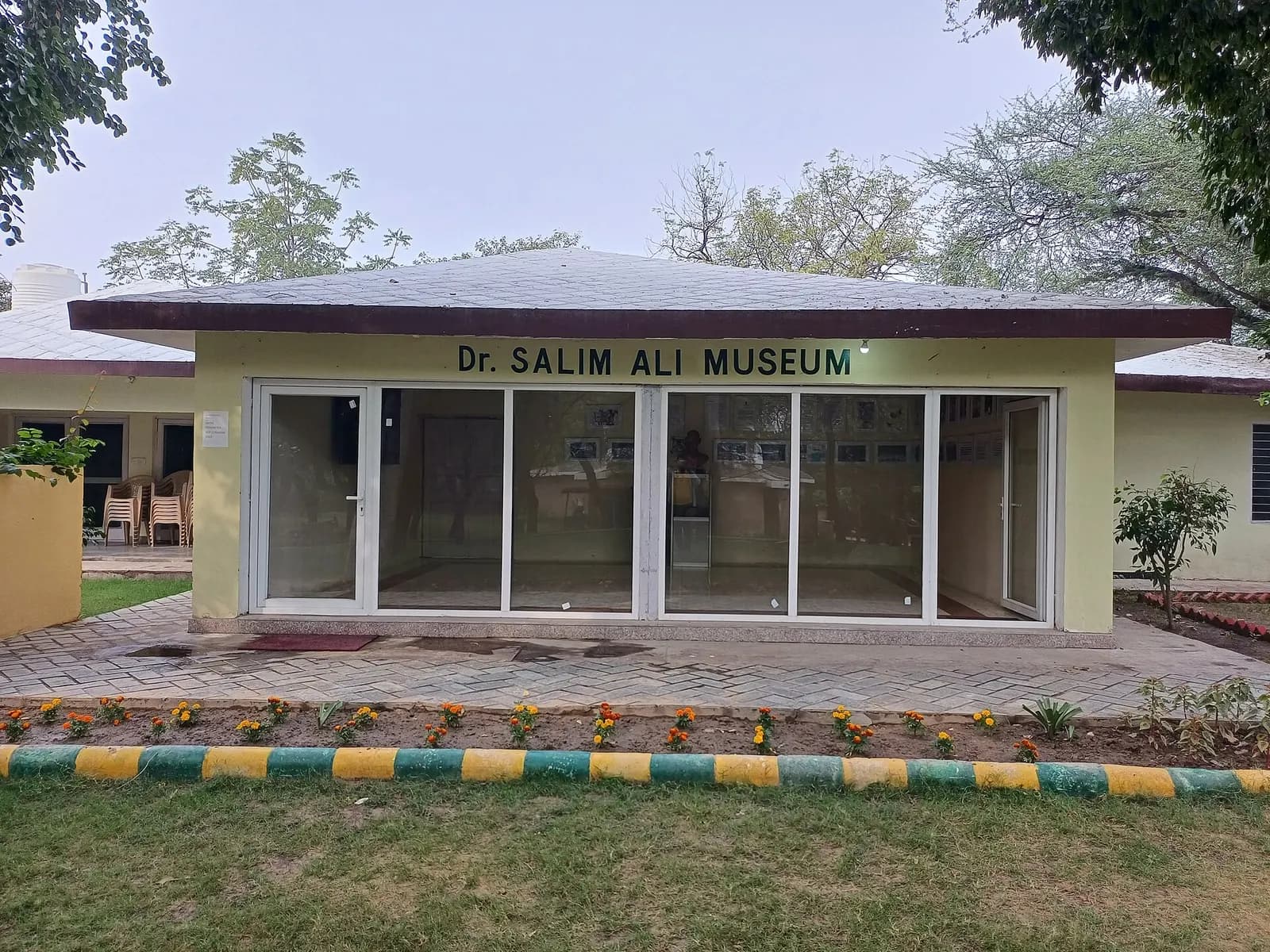
- The education centre. A small flora and fauna museum, an interpretation hub and a nature library offer guides for beginner birdwatchers.
This car-free, peaceful design is central to the experience: you walk the loop at your own pace, pausing at the towers and hides to scan and photograph the birds, in near silence broken only by calls and wingbeats. The watchtowers in particular give wonderful vantage points over the whole wetland, while the hides are a boon for serious photographers. Allowing two to three hours to walk the full loop, with stops, lets you make the most of the towers, the hides and the changing views of the lake.
When is Sultanpur National Park open?
Because Sultanpur has both a weekly and an annual closure, checking when it is open is essential before you go. It is closed every Tuesday for ecological upkeep, water-level management and path maintenance, so, as with some other reserves, it is Tuesday rather than Monday that is the weekly off day. More importantly, the park shuts completely every year from 1 June to 30 September, through the high summer and the monsoon, to give the breeding ecosystem an undisturbed rest. This means a visit is only possible in the cooler, drier months, roughly October to May, which conveniently coincides with the best birdwatching season anyway. The upshot is simple: plan your visit for the October to May window, avoid Tuesdays and you will find the park open and at its best; attempt a visit in the monsoon months or on a Tuesday and you will find the gates closed. These arrangements can change, so reconfirm the current opening status before setting out, especially around the seasonal changeover.
What to expect at Sultanpur National Park
A visit to Sultanpur is a calm, outdoor, walking experience and knowing what to expect helps you enjoy it in the right spirit. You arrive at the gate plaza, buy your ticket, perhaps rent a pair of binoculars and then set off on foot around the lake, leaving all vehicles and noise behind. The reserve is quiet and unhurried, the loudest sounds the calls of birds and the rustle of grass and the mood among visitors is hushed and attentive, especially among the birders scanning the water from the watchtowers. In winter the lake is a shifting carpet of ducks, geese, waders and the occasional flamingo, while herds of nilgai graze the grassland nearby. The pace is yours to set, pausing at each tower and hide to watch and photograph. Many first-time visitors are surprised how wild and peaceful it feels so close to the city, a true nature escape rather than a manicured park and it stands in restful contrast to the bustle of the important monuments of Delhi. Come early, move slowly and quietly and let the birds come to you.
Sultanpur National Park timings and ticket price
During its open season, the park is open daily, except Tuesdays, from 7:00 AM to 4:30 PM, with all visitors required to exit the trails by 5:00 PM, so an early start is best both for the timings and for the birdlife. The entry fee is nominal: at the time of writing, Indian citizens pay somewhere between ₹5 and ₹50 depending on the current gate tariff, children aged five to eleven around ₹2 and foreign nationals around ₹40 to ₹100. It is wise to carry some cash or a digital payment app for the gate. Binoculars can be rented at the front gate complex for roughly ₹200 for the day, which is well worth it if you do not have your own. These figures are current at the time of writing and can be revised, so reconfirm at the gate. Allow two to three hours to walk the loop and enjoy the towers and hides. As with all timings and prices, treat these as a current guide and reconfirm before a special trip.
Camera charges and eco rules
Photography is a big part of a Sultanpur visit, but specialised gear carries charges and the park enforces strict eco rules to protect the wildlife:
- Camera charges. Still smartphone photography is standard, but a DSLR or personal still camera carries a fee of around ₹25 to ₹100, a video camera around ₹500 and professional or commercial film gear up to ₹5,000.
- No outside food or plastic. Carrying outside snacks, loudspeakers, plastic grocery bags or open food wraps onto the trail is banned, to prevent littering and the feeding of animals.
- Water bottles checked. Plastic water bottles are checked at security, so follow the gate's guidance.
- Dress to blend in. Muted or neutral clothing is recommended so you blend into the surroundings and do not startle the birds.
- Keep quiet. The whole reserve is designed for silence, so keep voices low and avoid sudden noise.
Knowing the camera charges and eco rules in advance saves surprises at the gate, so budget for any camera fee, leave snacks and plastic behind, wear muted colours and move quietly. These rules are exactly what keep Sultanpur the peaceful, bird-rich haven it is.
Best time to visit Sultanpur National Park
The best time to visit is firmly the winter, roughly November to February, when the migratory birds are present in their greatest numbers and variety and the weather is cool and pleasant for walking the loop; this is when the sanctuary is at its spectacular best and when serious birders flock here. The wider open season runs from about October to May and the shoulder months still offer good resident birdwatching, but the peak winter migration is the highlight worth timing a visit around. On any day, the early morning soon after the 7:00 AM opening is by far the best time, as birds are most active in the cool, fresh hours and the light is beautiful for photography; by the middle of the day activity drops. Remember the park is closed on Tuesdays and from 1 June to 30 September. A winter weekday morning is close to ideal. Our guide to the best time to visit Delhi sets out the seasons across the region in more detail.
How to reach Sultanpur National Park from Delhi (nearest metro)
Sultanpur National Park lies on the Gurgaon to Farrukhnagar road in Gurugram district, Haryana, about 15 kilometres from central Gurugram and roughly 46 kilometres from central New Delhi, so reaching it takes a little planning as there is no metro station right at the gates. The most practical public-transport route is to take the Yellow Line metro to Huda City Centre station in Gurugram and then book an app-based cab or auto-rickshaw for the final drive of about thirty minutes out to the sanctuary. Alternatively, driving or taking a cab the whole way from Delhi or Gurugram is straightforward and a private vehicle gives the most flexibility for an early start, which birdwatching rewards. The distance from Delhi is covered in our guide to the Delhi to Gurgaon distance. Because it is a day trip out of the city, a guided Delhi day tour or a tailored New Delhi tour extension can handle the logistics and the early start for you.
Where to stay and eat at Sultanpur
For those who want to linger, there is accommodation and dining right at the sanctuary. Just inside the entry zone is a Haryana Tourism complex, a small tourist resort with comfortable overnight rooms, public manicured lawns, a sit-down multi-cuisine restaurant and a bar. This makes it possible to stay overnight and be at the trail for the magical early morning hours, which keen birdwatchers and photographers often prefer and it provides a convenient place to eat given that outside food cannot be taken onto the trail. For most day visitors, a meal at the complex restaurant before or after the walk works well, since you cannot carry snacks inside. Staying over is a particularly good idea in peak winter, when an early start gives you the birds at their best before any crowds build and the resort setting, surrounded by greenery, is a pleasant retreat in its own right. If you plan to stay, it is worth booking the rooms ahead, especially at weekends in the winter season.
Places to visit near Sultanpur National Park
Being on the Delhi and Gurugram fringe, Sultanpur pairs naturally with the city's attractions on a wider trip. In Delhi itself, the great monuments are a drive away: the towering Qutub Minar in south Delhi is among the closer ones, along with the serene Humayun's Tomb, the ceremonial India Gate, the mighty Red Fort and the modern Lotus Temple and Akshardham.
For more nature and greenery, the landscaped Garden of Five Senses in south Delhi and the historic Lodhi Garden make pleasant companions and bird lovers may enjoy the Keetham Lake bird sanctuary near Agra on a wider Golden Triangle trip. Back in the city, the shops of Connaught Place are a world away from the quiet wetland. Together these let you combine a peaceful Sultanpur morning with the city's headline sights.
Sultanpur in your Delhi or Golden Triangle itinerary
For most visitors, Sultanpur works best as a dedicated winter morning or half-day trip out of Delhi or Gurugram, timed for the peak bird migration and an early start. It suits birdwatchers, photographers and families wanting a peaceful dose of nature and it is a refreshing change of pace from the city's monuments and markets. A sensible plan is to set out early, reach the gate soon after it opens at 7:00 AM, walk the loop in the fresh morning hours when the birds are most active and return to the city by lunchtime or stay over at the Haryana Tourism complex for an even earlier start. Because it is closed on Tuesdays and through the monsoon, it needs to be slotted into the right day and season.
If Delhi is your gateway to the wider Golden Triangle, a Sultanpur morning adds a lovely natural interlude to a trip otherwise full of forts and palaces and it connects well with other wetland and wildlife stops on a longer journey. Many of my guests who come in winter say the sight of the lake alive with migratory birds was an unexpected highlight and it offers a tranquil, restorative contrast before the journey on to the monuments of Agra and Jaipur.
Travel tips for visiting Sultanpur National Park
A few pointers make the visit smoother and more rewarding:
- Come in winter, roughly November to February, for the peak migratory birds, within the October to May open season.
- Start early, reaching the gate soon after 7:00 AM, when birds are most active and the light is best.
- Never come on a Tuesday, the weekly closed day or between 1 June and 30 September, when the park shuts.
- Rent or bring binoculars, available at the gate for about ₹200, which transform the experience.
- Budget for camera fees, as DSLR and video gear carry charges, though smartphone photos are standard.
- Wear muted colours and keep quiet, to blend in and avoid startling the birds.
- Carry no outside food or plastic, which are banned on the trail; eat at the complex restaurant.
- Plan the transport, as there is no metro at the gate, so drive or take a cab from Huda City Centre.
If you would like a local guide to build Sultanpur into a wider Delhi or Golden Triangle plan, message our team on WhatsApp at +91 7302265809 with your travel dates and group size and we will shape the day for you.
Is Sultanpur National Park worth visiting?
For birdwatchers, nature lovers and families, especially in winter, very much so. When the migratory birds are in, Sultanpur is one of the most rewarding and accessible birding spots near Delhi, a peaceful wetland alive with thousands of birds, with well-placed watchtowers and hides and a quiet, car-free trail, all a short drive from the city. For photographers it is a treat and for families it is a gentle, screen-free morning in nature. The honest caveats are about timing and expectations: it is a birding reserve, so it is at its best in the winter migration and much quieter outside it and it is closed on Tuesdays and through the monsoon, so the day and season must be right; and it is a calm nature walk rather than a thrill-packed safari, so come in that spirit. Approached as a tranquil winter birding morning, it rarely disappoints and I recommend it warmly to guests with an interest in nature who are visiting in the cooler months.
Plan your trip with us
At Experience My India, through our Delhi and Golden Triangle travel desk, we design unhurried, well paced trips that make room for natural escapes like Sultanpur, not just the headline monuments and we handle the early start and the out-of-city logistics so you can simply enjoy the birds. Whether you want a relaxed set of Delhi Agra tours or a full Golden Triangle route through Delhi, Agra and Jaipur, we plan around your pace, your interests and the right season, with local guides who know the best birding times and spots. Share your dates and the kind of trip you have in mind through our enquiry page, tell us your group size and we will put together an honest, tailored plan rather than a rushed checklist.
Related guides
- Places to visit in Delhi, for the wider picture
- Hidden places to visit in Delhi, the city's quieter corners
- Nearby places to visit in Delhi, to extend your trip
Enquire Now
Ready to Explore
The Heart of Delhi?
Explore the Red Fort, Qutub Minar, Humayun's Tomb, and the vibrant streets of Old Delhi with our expert-guided premium tours of India's capital city.

Delhi
Premium Tour Package
Questions
Frequently asked questions
What are the timings of Sultanpur National Park?
During its open season it is open from 7:00 AM to 4:30 PM, with visitors required to exit by 5:00 PM. It is closed every Tuesday and from 1 June to 30 September. Reconfirm, as timings can change.
Which state is Sultanpur National Park in?
What is the ticket price for Sultanpur National Park?
Which day is Sultanpur National Park closed?
What is the best time to visit Sultanpur National Park?
What birds are found at Sultanpur?
How do I reach Sultanpur National Park from Delhi?
Can I take a camera into Sultanpur National Park?
Is there anywhere to stay at Sultanpur?
Is Sultanpur National Park worth visiting?
Explore more
Plan your Sultanpur National Park & Bird Sanctuary (near Delhi) trip with us

Interested in Sultanpur National Park & Bird Sanctuary (near Delhi): Timings and Guide?
Chat with our travel team for a custom quote, or browse every package.
Related Attractions
9Ready to explore Sultanpur National Park & Bird Sanctuary (near Delhi): Timings and Guide?
Book your private tour today and experience the magic of India's rich heritage.