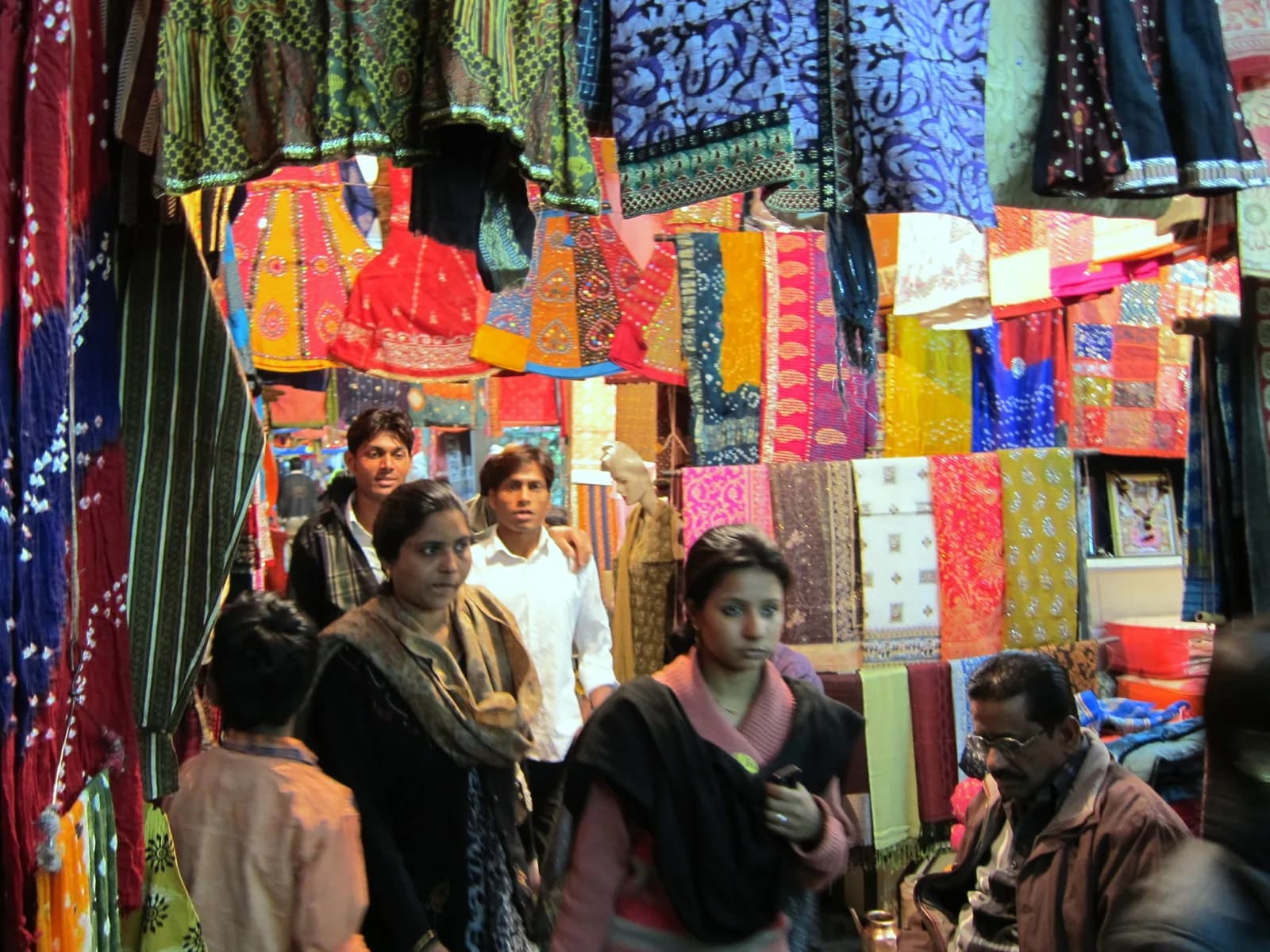
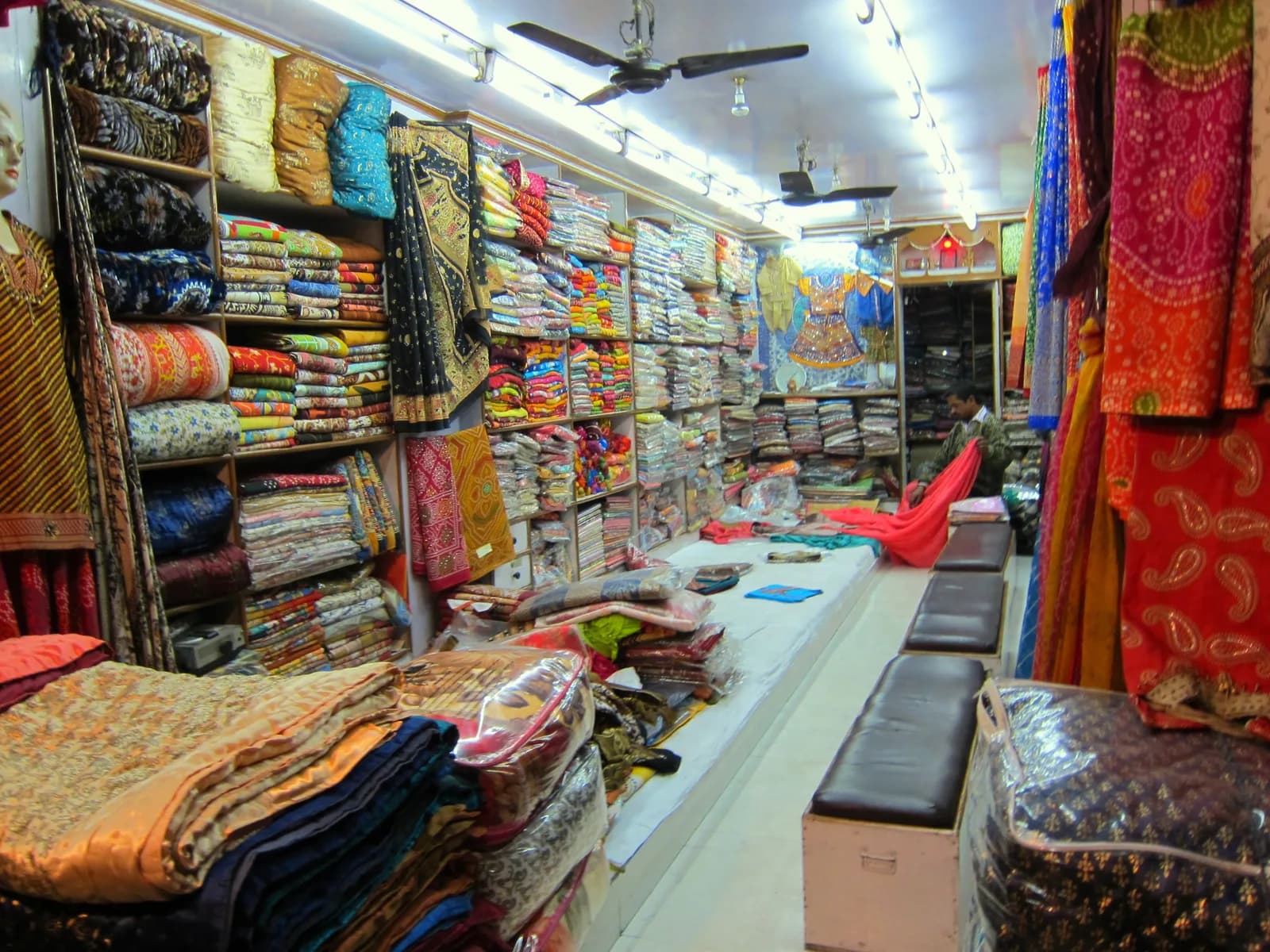
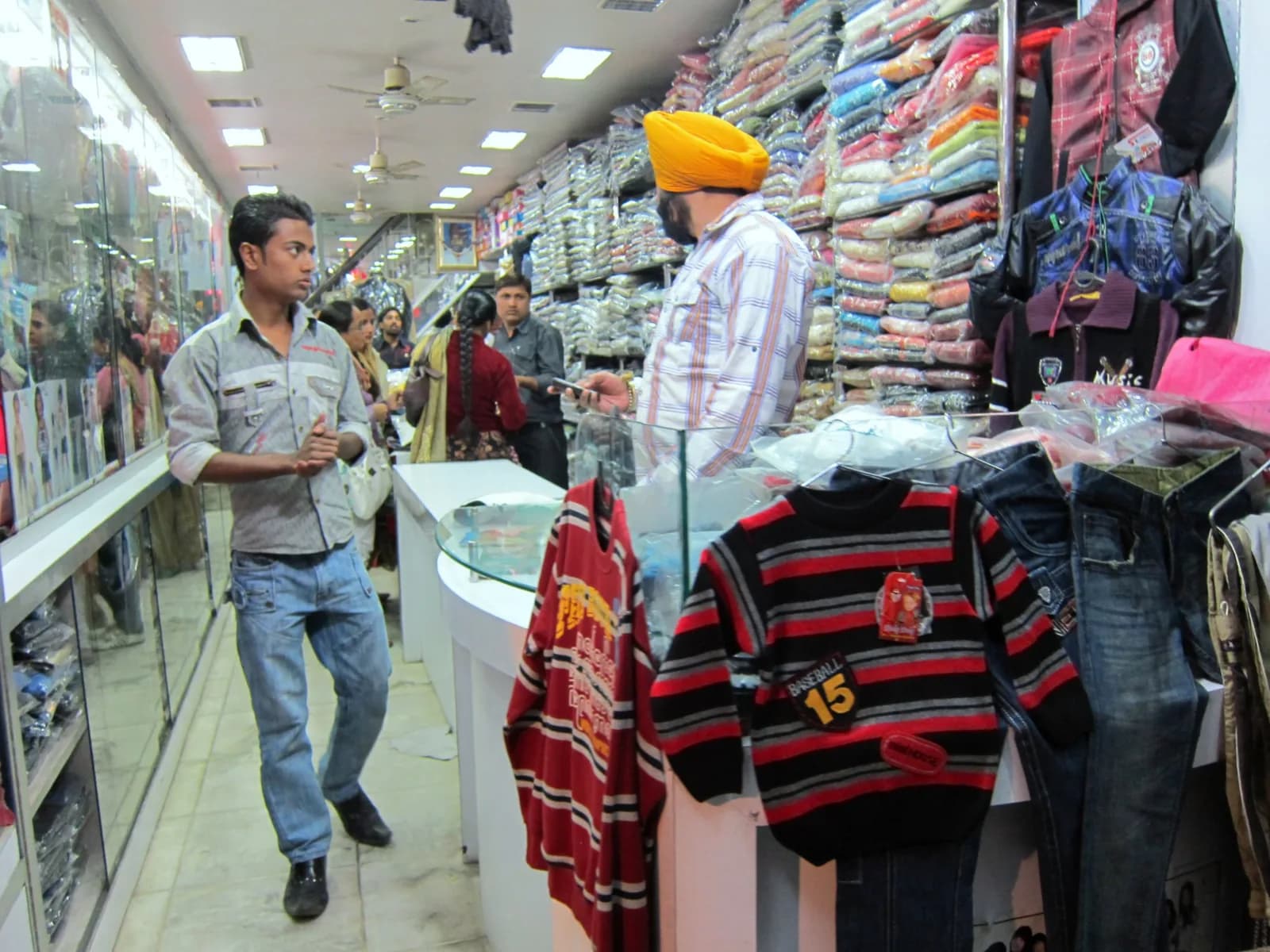
 Modikhana / Film Colony, Pink City, between Bapu Bazaar and M.I. Road, Jaipur 302003, Jaipur
Nehru Bazaar Jaipur: Shoe Street, Mojari and Shopping Guide
Nehru Bazaar Jaipur is the Pink City Shoe Street for mojaris, juttis and textiles. Get timings, closing day, what to buy, metro route and bargaining tips.
Quick answer
Nehru Bazaar is a lively street market in Jaipur's Pink City, known as Shoe Street for its hand-embroidered leather mojaris and juttis, alongside textiles, bandhani dupattas and razais. Entry is free, and most shops trade from 10:30 AM to 8:30 PM. This guide is prepared by Delhi Agra Tour Packages, a unit of Experience My India.
- #nehru-bazaar
- #jaipur
- #jaipur-attractions
- #jaipur-travel
Set under the pink-washed arcades of the Modikhana and Film Colony quarter, between Bapu Bazaar and M.I. Road, Nehru Bazaar is where Jaipur comes to buy footwear, and it is one of the easiest markets to fold into a city walk arranged through Delhi Agra Tour Packages. It sits right beside Bapu Bazaar and a short stroll from Johari and Tripolia Bazaars, so you can cover the whole Walled City shopping circuit on foot, and it pairs naturally with a wider Golden Triangle tour that leaves real time for the bazaars.
I am Abhay Sharma, and I have guided travellers around Jaipur and the Golden Triangle since 2015. I have walked guests through Nehru Bazaar countless evenings, helped them find a well-stitched pair of mojaris among the hundreds on display, and taught them to tell soft, genuine leather from a stiff copy. This guide gathers everything I tell visitors before we turn into Shoe Street, so you arrive knowing what to buy, what it should cost, which day the market sleeps, and how to reach it without losing time to the Walled City's traffic.
Nehru Bazaar at a Glance
| Detail | Information |
|---|---|
| Location | Modikhana / Film Colony, Pink City, between Bapu Bazaar and M.I. Road, Jaipur 302003 |
| Famous for | Hand-embroidered leather mojaris and juttis (Shoe Street) |
| Entry fee | Free |
| Typical hours | 10:30 AM to 8:30 PM (some shops to 9 PM) |
| Weekly closure | Many shops close on Sunday |
| Best time | October to March, late afternoon to evening |
| Time needed | 1 to 2 hours |
| Nearest metro | Chhoti Chaupar, Badi Chaupar or Chandpole (Pink Line) |
| Bargaining | Expected at most non-fixed-price stalls |
The three tables below hold the details travellers ask for most, gathered at the top so you can plan before reading the full guide.
Timings
| Day | Typical shop hours |
|---|---|
| Monday to Saturday | 10:30 AM to 8:30 PM (some to 9 PM) |
| Sunday | Many shops closed |
| Festival evenings | Open later, very crowded |
Charges
| Item | Charge |
|---|---|
| Market entry | Free |
| Everyday mojaris / juttis | Negotiable; compare a few shops |
| Embroidered or fine leather pairs | Higher, by craft and material |
| Simple bandhani dupatta | Negotiable; rises with fabric and work |
Footwear and fabric prices move with the material, the embroidery and bargaining, so compare a few shops and reconfirm at the stall rather than taking a first quote.
How to Reach
| From | Distance and time |
|---|---|
| Jaipur Junction railway station | 4 to 5 km, a 20-minute drive |
| Sindhi Camp bus stand | 3 to 3.5 km, a 15-minute drive |
| Jaipur International Airport | 11 to 12 km, a 35-minute drive |
| Nearest metro (Chhoti Chaupar) | Pink Line, then a short walk |
Nehru Bazaar Jaipur Timings and Closing Day
Most shops in Nehru Bazaar open from 10:30 AM, and some from 11 AM, trading until 8:30 PM, with a few staying lit until 9 PM in the busy season. Like the rest of the Walled City markets, it is a street of independent shops rather than a single mall, so there is no uniform shutter time; the lane fills through the day and is at its liveliest in the evening under the arcade lights.
The weekly closure is the thing to plan around. Many shops in Nehru Bazaar close on Sunday, so while the street itself is never empty, the choice of footwear and fabric is thinner and some of the better shops may have their shutters down. If serious shopping is your aim, come Monday to Saturday. I usually bring guests here on a weekday evening for exactly that reason, keeping Sundays for monuments that hold steadier hours.
The roadway is open through the day, so you can walk the stretch at any hour, but the shops you actually want to browse follow the late-morning-to-evening pattern. For how the city's wider rhythm shifts through the year, our guide to the best time to visit Jaipur is worth a look before you fix dates.
Nehru Bazaar Entry Fee: Is It Free
Nehru Bazaar is completely free to enter. It is a public market street in the Pink City, not a ticketed attraction, so there is no gate, no counter and nothing to pay simply to walk in, browse the arcades or photograph the shopfronts. You pay only for what you choose to buy.
That open access is part of why Nehru Bazaar fits so easily into a packed Jaipur day. You can give it twenty minutes or two hours, slot it between two monuments without worrying about closing-time tickets, and spend nothing if you are only looking. It is one of the essential free experiences of the Walled City, and it belongs on any version of our rundown of things to do in Jaipur.
How to Reach Nehru Bazaar: Location and Metro
Nehru Bazaar sits in the Modikhana and Film Colony quarter of the Pink City, between Bapu Bazaar and M.I. Road, close to both Ajmeri Gate and Sanganeri Gate. The pink arcades and the main gates make it easy to orient yourself: aim for Sanganeri Gate or New Gate and the market runs off from there, directly alongside Bapu Bazaar.
By metro, take the Pink Line to Chhoti Chaupar, Badi Chaupar or Chandpole, all on the edge of the Walled City, then finish the last stretch by auto-rickshaw, e-rickshaw or on foot. The walk in from the gates takes you through the bazaars and is part of the experience.
By road, reckon on these approximate distances:
- From Jaipur Junction railway station. 4 to 5 km, a 20-minute drive depending on Walled City traffic.
- From Sindhi Camp bus stand. 3 to 3.5 km, a 15-minute drive.
- From Jaipur International Airport. 11 to 12 km, a 35-minute drive.
Ask your driver to drop you near Sanganeri Gate or New Gate rather than trying to drive into the market, because the lanes are congested and parking is tight. If you are arriving in Jaipur from elsewhere on the circuit, our distance guides for Delhi to Jaipur and Agra to Jaipur set out the road options and journey times, and most of our guests reach the city by chauffeured car and walk the bazaars on foot.
What Is Nehru Bazaar Famous For
Nehru Bazaar is famous above all as Jaipur's Shoe Street, the market for traditional hand-embroidered leather mojaris and juttis. Whole rows of shops here are given over to footwear, stacked floor to ceiling in every colour, from plain everyday leather slip-ons to pairs heavy with mirror work and zari thread. If you want one good pair of Rajasthani mojaris to carry home, this is the place to find it.
Beyond footwear, the market carries textiles, bandhani dupattas, Jaipuri razais and a wide spread of accessories and crafts, so it rewards a slow wander even if shoes are not on your list. It is a working local market with a strong evening buzz, not a curated boutique row, and that everyday character is exactly what makes it fun. For how it sits against the city's air-conditioned retail, our guide to Jaipur's shopping malls is a useful counterpoint.
Nehru Bazaar also scores on location, woven into the same Walled City fabric as the headline monuments, so a shopping stop here slots beside sightseeing rather than eating a separate half-day. That is why it appears on almost every version of our Jaipur one-day itinerary, usually as the late-afternoon stop once the forts and palaces are done.
Nehru Bazaar Shops and What to Expect
Nehru Bazaar is a long run of small independent shops rather than a single building, so there is no official directory, and the pleasure is in walking the stretch and comparing. Broadly, you will find the footwear shops clustered in dense rows, which is what earns the market its Shoe Street name, with textile and dupatta shops, jewellery and accessory stalls, and homeware and craft shops threaded between them. Many are long-established family businesses, and the quality across the footwear shops is broadly similar, so the rapport you strike often matters as much as the signboard.
A few practical expectations help you shop it well:
- Ask, do not hunt. Most shops are compact and stock-heavy, with goods stacked floor to ceiling, so tell the shopkeeper what you want rather than searching the shelves yourself.
- Sizes come out on request. Colours and sizes not on display can often be brought out or fetched from a back store, so ask before you move on.
- Expect to bargain. Prices are rarely tagged, so asking and negotiating is the norm at most stalls.
- Walk the length first. Covering the full stretch before you buy gives you a feel for the range and the fair price, and it is the single best habit for shopping at Nehru Bazaar.
Mojari and Jutti Shopping at Nehru Bazaar
Mojaris and juttis are the signature buys at Nehru Bazaar, and the choice is enormous. A mojari is a flat, closed, backless leather shoe with a pointed or curved toe, worn across Rajasthan by men and women; jutti is often used for the same thing, sometimes for the more ornate wedding styles. You will see them by the hundred, from plain leather pairs to heavily embroidered, mirror-studded and pom-pom finished designs.
Good ones are hand-stitched and the leather is soft enough to flex; stiff, over-shiny pairs are usually machine-made and will bite your heels. Here is what I tell guests to check before buying:
- Flex the sole. A genuine leather mojari bends with gentle pressure; a board-stiff sole is a factory copy that will not soften kindly.
- Feel the lining. Real leather inside is smooth and slightly warm; plastic lining feels cold and causes blisters.
- Walk a few steps. Mojaris have no left or right at first and mould to your feet with wear, so a snug fit is normal, but pinching across the toes is not.
- Check the stitching. Tight, even stitches around the sole last; loose or glued seams come apart within a season.
- Buy a shade loose. The leather stretches with use, so a pair that is a touch tight on day one tends to settle into the right fit.
Traditional mojaris use leather, so if you prefer to avoid it, say so plainly and ask for the fabric or faux-leather styles that some shops now stock. Break a new pair in slowly at home with thick socks, and they will become the most comfortable souvenir you carry out of Jaipur. For footwear specifically, Nehru Bazaar and neighbouring Bapu Bazaar are the two markets worth comparing before you buy.
Textiles, Bandhani and Razais at Nehru Bazaar
Textiles are the other half of Nehru Bazaar's draw. The shops carry block-printed cotton cloth sold by the metre, bandhani and other tie-dye dupattas, sarees and dress materials, and the lightweight hand-quilted cotton blankets known as Jaipuri razais that the city is famous for.
Hand block printing is worth understanding before you buy. A wooden block is carved by hand, dipped in dye and pressed onto the cloth repeatedly, so a genuine block print carries tiny, human variations: a faint overlap where impressions meet, a hairline gap in a motif, a slight unevenness in the dye. A machine or screen-printed copy is flawlessly uniform. Those small imperfections are the mark of the real thing, not a flaw. Bandhani, the tie-and-dye technique where thousands of tiny points are tied off before dyeing, gives the dotted dupattas their pattern, and it folds flat into a suitcase, which makes it an easy gift to carry.
A Jaipuri razai is the city's famous featherlight quilt, astonishingly thin and warm at once, filled with carded cotton and covered in printed fabric; they are a favourite buy in the cooler months and compress small for packing. These textile traditions run right through the old city, and you can see their royal and heritage end at the Chandra Mahal and City Palace complex a short walk away.
Jewellery, Blue Pottery and Other Things to Buy
Beyond shoes and fabric, Nehru Bazaar is a full craft market, and the range rewards a slow browse. Among the things worth looking for:
- Artificial and silver jewellery. Affordable costume pieces and silver, good for everyday wear and gifts.
- Lac bangles. The brightly coloured Rajasthani signature, also the headline of nearby Tripolia Bazaar.
- Blue pottery. Jaipur's distinctive glazed ceramic, in tiles, bowls and decorative pieces.
- Brass and wooden decor. Handcrafted homeware and souvenirs.
- Leather bags and ittar. Leather goods to match the footwear, and traditional alcohol-free perfumes.
None of this is high-art craft, and that is the appeal: it is colourful, affordable and genuinely local. For travellers who want to understand the city's finer jewellery trade before they buy, our guide to Jaipur gem and jewellery buying sets the market crafts in context, and the royal cenotaphs at Gaitore Ki Chhatriyan show the stone and marble heritage that runs alongside the bazaar trades.
History of Nehru Bazaar and the Pink City Arcades
Nehru Bazaar grew up as part of Jaipur's original planned Walled City, laid out in 1727 under Maharaja Sawai Jai Singh II on a grid of wide bazaar streets. The markets were built into that plan from the start, with trade quarters such as Modikhana set aside for provisioning and commerce, and the bazaars have traded continuously ever since. The uniform terracotta-pink wash that gives the old city its name and its arcades their glow dates to 1876, when the city was painted pink to welcome the Prince of Wales, and that colour has been maintained ever since under heritage rules.
Nehru Bazaar itself carries the name of Jawaharlal Nehru, India's first Prime Minister, a modern name layered onto a much older market street. What you walk through today, then, is a living market in a nearly three-century-old setting: the arcades, the pink wash and the grid are heritage, while the footwear, fabric and crafts on sale keep the street a working part of Jaipur's everyday life rather than a museum piece. That blend of old shell and busy trade is exactly what makes shopping here feel rooted rather than staged.
Nehru Bazaar vs Bapu, Johari and Tripolia Bazaar
Nehru Bazaar sits in a cluster of Walled City markets, and knowing the difference saves you time. Nehru Bazaar is the footwear specialist, Shoe Street, strongest on mojaris and juttis with textiles alongside. Bapu Bazaar runs right next to it and overlaps heavily, the all-rounder for textiles, juttis, razais and everyday goods, so Nehru and Bapu are the natural shop-and-compare pair for footwear and fabric. Johari Bazaar, a short walk east, is the historic gem and jewellery market. Tripolia Bazaar, further in, is the lac bangle market at Maniharon Ka Rasta.
A simple way to plan it: do your footwear and clothing shopping across Nehru and Bapu Bazaars, walk over to Johari Bazaar if jewellery is on your list, and detour to Tripolia for lac bangles. All four are free to enter, keep broadly similar hours and are comfortably walkable in an afternoon. This tight cluster is one reason the Walled City features so heavily in our Jaipur trip planner, which helps you sequence the shopping around the sightseeing. For the wider picture of what else sits between the markets, our overview of places to visit in Jaipur balances the bazaars against the forts and palaces.
Bargaining Tips at Nehru Bazaar
Bargaining is standard at most stalls in Nehru Bazaar, and doing it well is part of the fun rather than a chore. Shops without fixed-price boards will quote an opening figure pitched at a tourist, and the real price sits well below it. The skill is to bring it down without turning the exchange sour, because a friendly haggle gets a better deal than an aggressive one.
Here is the approach I pass on to guests:
- Open below your target. Counter the first quote with a lower figure, then meet in the middle.
- Compare before you commit. Walk a few shops, and check neighbouring Bapu Bazaar too, before buying anything significant.
- Stay warm, not rude. A smile and patience work better than hard tactics; walking away slowly often brings the real price out.
- Buy more for a better rate. Several pairs of mojaris or a few dupattas together give you leverage for a bulk discount.
- Know when a price is fair. Once you have compared two or three shops you will feel the honest level; squeezing the last few rupees past that is not worth the goodwill.
Fixed-price showrooms exist in and around the market for those who would rather not haggle at all, at higher but honest prices. Either way, keep your expectations realistic, as this is an affordable market and the trader has to live too.
Best Time to Visit Nehru Bazaar
The best time to visit Nehru Bazaar is from October to March, when Jaipur's weather is pleasant enough to walk the arcades in comfort. The Walled City bakes from April to June, and shopping on foot in that heat is a short, sweaty affair, so the cooler months are the clear choice for a proper browse.
Within the day, the late afternoon into the evening is the sweet spot. The light softens, the temperature drops, the shops are all open and the market takes on its best energy under the arcade lights as locals come out after work. Mornings are quieter and cooler if you dislike crowds. Plan to give the market 1 to 2 hours, more if you are comparing footwear seriously. If you want to see the Walled City glow after dark, our guide to places to visit in Jaipur at night covers the gates and bazaars under lights.
Because so many shops close on Sunday, a weekday evening in winter is the ideal combination. That is the slot I most often book for guests, leaving the mornings for monuments and the evenings for the colour and bustle of Shoe Street.
Street Food Near Nehru Bazaar
Shopping in the Walled City is hungry work, and the lanes around Nehru Bazaar are full of food. You will find kachoris, samosas and hot chai at stalls along the way, the classic fuel for a market walk, and the wider old city carries everything from old sweet houses to chaat corners. Hydrate as you go in the warmer months, because the arcades trap heat.
For a proper sit-down meal, the famous thali and sweet houses of the Walled City are within easy reach, and this corner of Jaipur is one of the best for traditional Rajasthani food. Our guides to famous foods in Jaipur and the best places to eat in Jaipur point you to the dishes and addresses worth seeking out, so a shopping evening turns naturally into a food walk.
Places to Visit Near Nehru Bazaar
Nehru Bazaar's location is a gift to a sightseer, because almost every Walled City landmark sits within a short walk or a quick ride. Within easy reach you have:
- Hawa Mahal. The iconic honeycomb facade, a few minutes away through the bazaars.
- City Palace. The royal complex at the heart of the Walled City.
- Bapu and Johari Bazaars. The neighbouring markets, right alongside and a short walk east.
- Jantar Mantar. The royal observatory beside the City Palace.
- Albert Hall Museum. Rajasthan's oldest museum, just south near Ram Niwas Garden.
This clustering means a Nehru Bazaar stop costs almost no travel time between sights. For a ready-made route that links the markets, monuments and museums into one walkable loop, our hidden places in Jaipur guide and the overview of places to visit in Jaipur for 2 days between them cover both the landmarks and the quieter corners. When you want a base to rest between shopping sessions, our where to stay in Jaipur guide weighs the Walled City against the quieter modern neighbourhoods.
Is Nehru Bazaar Worth Visiting
Nehru Bazaar is well worth visiting, especially if footwear is on your shopping list, because it is Jaipur's Shoe Street and the best single market in the city for mojaris and juttis. It gives you authentic Rajasthani footwear, textiles and souvenirs at honest street prices, in a historic pink-arcade setting, within walking distance of the top monuments and right beside Bapu Bazaar. You can spend a lot or nothing at all, and either way the evening buzz is worth the walk.
It is not the market for you if you want a quiet, air-conditioned, fixed-price experience; for that, the city's malls serve better. But if you enjoy a lively bazaar, a bit of bargaining and the pleasure of carrying home a handmade pair of mojaris, Nehru Bazaar delivers. It is a regular stop on the Jaipur leg of our chauffeured tours precisely because guests come away happy, and it rounds off a day of sightseeing on a high note.
Travel Tips for Visiting Nehru Bazaar
A few practical habits make a Nehru Bazaar visit smoother. Carry cash in small notes alongside your UPI app, because smaller stalls may prefer cash or hit network slowdowns at busy hours, and small notes help when bargaining. Wear comfortable walking shoes, since you will be on your feet on uneven lanes for a couple of hours, and keep your bag zipped and your phone secure in the crowds, as any packed market rewards a little caution. Come on a weekday in winter, in the late afternoon, to catch the fullest choice of shops in the best weather, and ask to be dropped near Sanganeri Gate or New Gate rather than fighting traffic into the market. Above all, give yourself time and compare a few shops, especially for footwear, because the joy of Nehru Bazaar is in the slow browse, the trying-on and the find.
Plan Your Trip With Us
Nehru Bazaar is at its best as part of a well-planned Walled City evening, and that is what we arrange. As Delhi Agra tours specialists, we build private, chauffeur-driven Jaipur itineraries that balance the forts, palaces and museums with real time for the bazaars, so your shopping is unhurried and your sightseeing is not cut short. Our guides know which shops are fair, which lanes are worth your time, and how to keep a busy day flowing without wasted hours in traffic.
Tell us your travel dates, group size and what you most want from Jaipur, and we will put together a plan and a price built around you. Message us on WhatsApp at +91 7302265809 and we will take it from there.
Related Guides
Enquire Now
What our travellers say
“Our Golden Triangle honeymoon was flawless. Sunrise at the Taj with a private guide felt like a dream — every detail was handled.”
“As a first-time visitor to India, I felt completely safe and looked after. The driver and guide were superb professionals.”
“Travelling with two kids is hard, but they made it effortless. Great pacing, clean cars and zero surprises on price.”
“Booked the Agra day trip on short notice and it went off without a hitch. The guide's history knowledge made the Taj come alive.”
“Best decision of our India trip. Car was spotless, driver was punctual every single day, and the itinerary never felt rushed.”
“Organised a same-day Agra trip for my parents. Communication before and during the trip was excellent — genuinely stress-free.”
“Sunrise at the Taj Mahal was magical. Our guide spoke great English and answered every question with patience.”
“Three generations travelling together and everyone was comfortable — good vehicle, sensible stops, and no hidden costs.”
“I've used a few tour operators across Asia and this was among the smoothest. Fair pricing and they actually answer the phone.”
“Our custom Rajasthan-Agra combo was planned around our budget without cutting corners on comfort. Highly recommend.”
“Solo female traveller here — I felt safe throughout. The driver was respectful and the whole trip was timed perfectly.”
Ready to Explore
The Pink City?
Experience the Amber Fort, Hawa Mahal, City Palace, and the colorful bazaars of Jaipur with our expert-guided premium tours of Rajasthan's capital.

Jaipur
Premium Tour Package
Questions
Frequently asked questions
What is Nehru Bazaar Jaipur famous for?
Nehru Bazaar is famous as Jaipur's Shoe Street, the Pink City market for hand-embroidered leather mojaris and juttis. Rows of shops are given over to footwear in every colour and style, and the market also carries block-print textiles, bandhani dupattas, Jaipuri razais, jewellery, blue pottery and handicrafts.
What are the timings of Nehru Bazaar?
Which day is Nehru Bazaar closed?
Is there an entry fee for Nehru Bazaar?
What should I buy in Nehru Bazaar?
Where is Nehru Bazaar in Jaipur?
How do I reach Nehru Bazaar by metro?
Is Nehru Bazaar different from Bapu Bazaar?
Is bargaining allowed in Nehru Bazaar?
How much time do I need for Nehru Bazaar?
Is Nehru Bazaar worth visiting?
Explore more
Plan your Nehru Bazaar trip with us

Interested in Nehru Bazaar Jaipur: Shoe Street, Mojari and Shopping Guide?
Chat with our travel team for a custom quote, or browse every package.
Related Attractions
9Nehru Bazaar Jaipur on the map
Open in Google MapsReady to explore Nehru Bazaar Jaipur: Shoe Street, Mojari and Shopping Guide?
Book your private tour today and experience the magic of India's rich heritage.