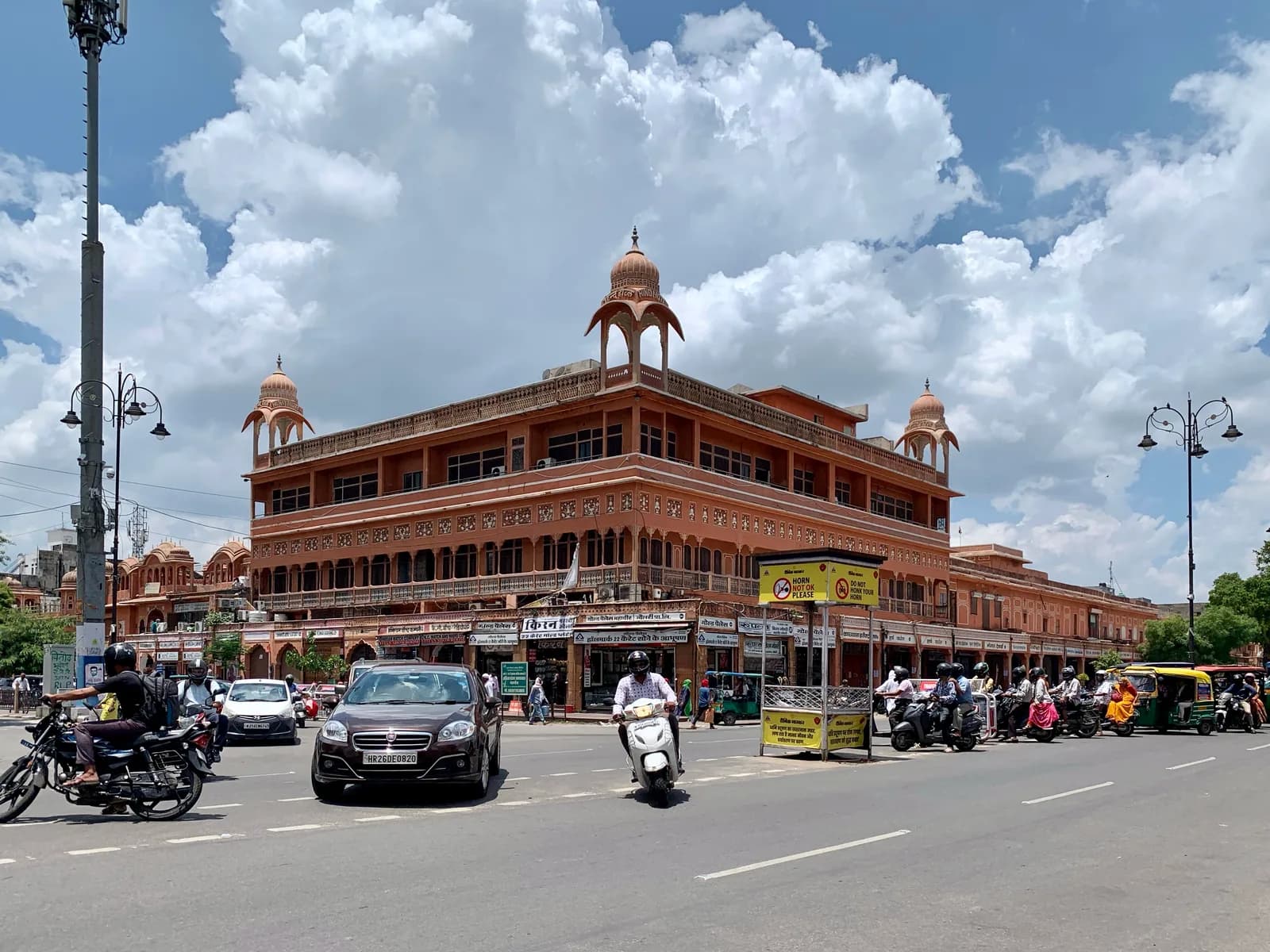
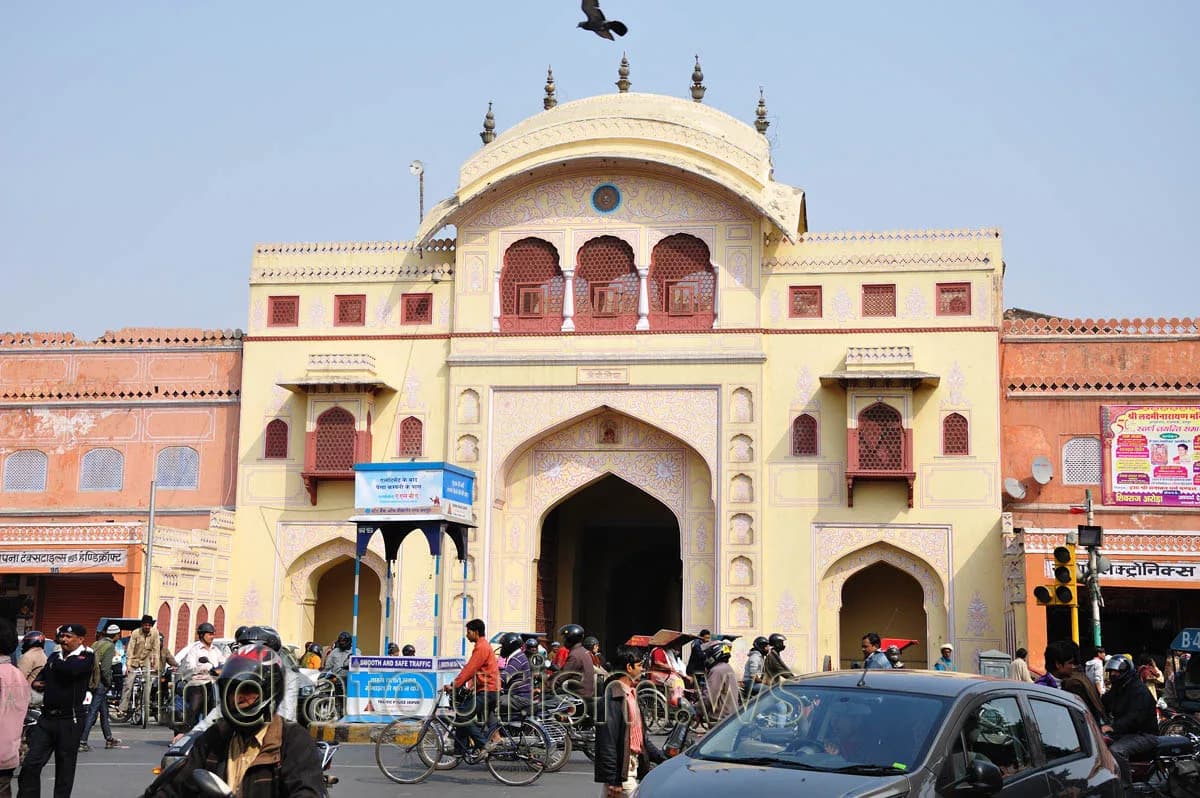
 Walled Pink City, between Chhoti Chaupar and Manak Chowk, Jaipur 302002, Jaipur
Tripolia Bazaar Jaipur: Lac Bangles and Maniharon Ka Rasta Guide
Tripolia Bazaar Jaipur is the lac bangle market at Maniharon Ka Rasta. Get timings, closing day, prices, how bangles are made, metro route and bargaining tips.
Quick answer
Tripolia Bazaar is a historic market in Jaipur's walled Pink City, famous for handmade lac bangles sold along its bangle lane, Maniharon Ka Rasta. Entry is free, and the market generally trades from 10 AM to 8 PM. This guide is prepared by Delhi Agra Tour Packages, a unit of Experience My India.
- #tripolia-bazaar
- #jaipur
- #jaipur-attractions
- #jaipur-travel
Running between Chhoti Chaupar and Manak Chowk, steps from Tripolia Gate and the City Palace, Tripolia Bazaar is where you watch Manihar artisans melt natural lac over charcoal and shape bangles to fit your wrist on the spot. It is one of the most atmospheric shopping stops in the old city, and it slots easily into a Jaipur day arranged through Delhi Agra Tour Packages or a wider Golden Triangle tour that leaves real time for the bazaars.
I am Abhay Sharma, and I have guided travellers around Jaipur and the Golden Triangle since 2015. I have spent more hours than I can count in Maniharon Ka Rasta, watching guests pick colours, press mirrors into warm lac and walk out wearing a set custom-fitted minutes earlier. This guide gathers everything I tell visitors before we turn into the bangle lane, so you know what to buy, what it should cost, how the craft works, which day the market slows, and how to reach it without getting lost in the old city's lanes.
Tripolia Bazaar at a Glance
| Detail | Information |
|---|---|
| Location | Walled Pink City, between Chhoti Chaupar and Manak Chowk, Jaipur 302002 |
| Famous for | Handmade lac bangles (lakh ki choodiyan) at Maniharon Ka Rasta |
| Entry fee | Free |
| Market hours | 10 AM to 8 PM (individual shops 9 AM to 10 PM) |
| Weekly closure | Many bangle shops closed or reduced on Sunday |
| Best time | October to March, mid-morning or late afternoon |
| Time needed | 1 to 2 hours |
| Nearest metro | Chhoti Chaupar (Pink Line), short walk |
| Bargaining | Expected; deeper lanes give better prices |
The three tables below hold the details travellers ask for most, gathered at the top so you can plan before reading the full guide.
Timings
| Segment | Typical hours |
|---|---|
| General market | 10 AM to 8 PM |
| Individual bangle shops | 9 AM to 10 PM (vary shop to shop) |
| Sunday | Many bangle shops closed or on reduced hours |
Charges
| Item | Charge |
|---|---|
| Market entry | Free |
| Everyday lac bangles | From 150 to 250 rupees per pair |
| Wide kadas and stone-studded sets | Higher, by work and size |
| Bridal choodas and custom sets | Higher, priced on the design |
| Car parking (outer lots) | 20 rupees per hour |
Prices are indicative at the time of writing and move with the design, embellishment and bargaining, so treat them as a starting guide and reconfirm at the shop.
How to Reach
| From | Distance and time |
|---|---|
| Jaipur Junction railway station | 4 to 5 km, a 20-minute drive |
| Hawa Mahal | 1 km, a short walk or auto ride |
| Jaipur International Airport | 12 to 13 km, a 40-minute drive |
| Nearest metro (Chhoti Chaupar) | Pink Line, then a short walk |
Tripolia Bazaar Jaipur Timings and Closing Day
The general market at Tripolia Bazaar runs from 10 AM to 8 PM, while individual bangle shops keep their own hours, often from 9 AM to 10 PM. Because it is a street of independent family shops rather than a single mall, there is no one shutter time; the lane wakes up through the morning and stays lively into the evening, especially in the bangle alley.
The closing day matters here. Many traditional shops in Tripolia Bazaar and Maniharon Ka Rasta stay closed on Sunday or run on reduced hours, and since the bangle makers are largely family workshops, a Sunday visit can mean half the lane is shuttered and fewer artisans are at their stoves. If watching bangles being made is part of why you are coming, choose a weekday. I almost always bring guests here Monday to Saturday for exactly that reason.
The roadway itself is open through the day, so you can walk past Tripolia Gate and down the bazaar at any time, but the shops you actually want, the ones with artisans working over charcoal, follow the pattern above. For how the city's wider rhythm changes through the year, our guide to the best time to visit Jaipur is worth a look before you fix dates.
Tripolia Bazaar Entry Fee: Is It Free
Tripolia Bazaar is completely free to enter. It is a public market street in the old city, not a ticketed site, so there is no gate charge, no counter and nothing to pay simply to walk in, browse the lanes or watch the bangle makers at work. You pay only for what you buy, and for parking if you bring a car.
That open access makes it easy to fit into a packed day. You can give the bazaar twenty minutes or two hours, slot it between two monuments without worrying about closing-time tickets, and spend nothing if you are only watching the craft. It is one of the richest free experiences in the Pink City, and it sits comfortably among the essential stops in our rundown of things to do in Jaipur.
How to Reach Tripolia Bazaar: Metro and Location
Tripolia Bazaar sits in the heart of the walled Pink City, running roughly between Chhoti Chaupar and Manak Chowk, steps from Tripolia Gate, the City Palace and Hawa Mahal. The old city's grid makes it easy to find: aim for Tripolia Gate or Chhoti Chaupar and you are there.
By metro, take the Pink Line to Chhoti Chaupar, which is a short walk from the bazaar, or to Chandpole a little further out. From Chhoti Chaupar you simply walk into the market, and the bangle lane opens off the main stretch. Auto-rickshaws and e-rickshaws will drop you right at the bazaar entrance, which is the easiest option.
By road, reckon on these approximate distances:
- From Jaipur Junction railway station. 4 to 5 km, a 20-minute drive depending on old-city traffic.
- From Hawa Mahal. 1 km, an easy walk or a very short ride.
- From Jaipur International Airport. 12 to 13 km, a 40-minute drive.
Private cars cannot easily enter the narrow lanes, so you park in the designated outer lots, priced at 20 rupees per hour, and walk in. If you are arriving in the city from elsewhere on the circuit, our distance guides for Delhi to Jaipur and Agra to Jaipur set out the road options and journey times, and most of our guests reach the old city by chauffeured car and walk the bazaar on foot.
What Is Tripolia Bazaar Famous For
Tripolia Bazaar is famous above all for handmade lac bangles, known locally as lakh ki choodiyan, crafted and sold along its dedicated bangle lane, Maniharon Ka Rasta. This is the place in Jaipur to watch Manihar artisans soften natural lac over charcoal flames, shape it by hand, press in stones or mirrors, and fit a set to your exact wrist size while you wait.
The market's pull is this living craft. Elsewhere you buy a finished bangle off a shelf; here you see it made, choose your colours and embellishments, and often have a pair built to order in minutes. That immediacy, the colour of the stacked bangles and the heat of the little charcoal stoves make it as much an experience as a purchase. It pairs naturally with the wider craft-shopping story told in our guide to Jaipur gem and jewellery buying, which sets the bangle lane in the context of the city's larger jewellery trade.
Beyond bangles, Tripolia is a busy general bazaar, so a stop here gives you both a signature craft and a slice of everyday old-city trade. It is a regular fixture on our Jaipur one-day itinerary, usually threaded in alongside the City Palace and Hawa Mahal, which stand just a short walk away.
Lac Bangles at Maniharon Ka Rasta
Maniharon Ka Rasta, which translates as the lane of the bangle makers, is the narrow alley off Tripolia Bazaar where the lac bangle trade is concentrated. It is lined with tiny shops and workshops, their walls stacked floor to ceiling with bangles in every colour, and it is the single best place in Jaipur to buy and watch lac bangles being made.
Walking in, you will find the lane busiest and most rewarding deeper along its length, where the family workshops sit. A few things are worth knowing before you shop here:
- Watch before you buy. Many shops have artisans working at the front; take a few minutes to watch the lac being shaped before you choose.
- Go deeper for better prices. The shops at the mouth of the lane catch the casual footfall; walking further in usually brings fairer prices and direct access to the makers.
- Ask for a custom fit. Lac is shaped warm, so a good artisan will size a bangle to your wrist on the spot rather than hand you a fixed diameter.
- Buy in stacks. Lac bangles are traditionally worn several at a time, so colours are sold to stack; mixing a set is half the fun.
- Handle gently. Finished lac is firm but not unbreakable, so try bangles on with care.
The lane also carries the name in local directions and on maps, so if you ask an auto driver for Maniharon Ka Rasta rather than the broad bazaar, you will be dropped closer to the bangles.
How Lac Bangles Are Made
Lac bangles are made from a natural resin called lac, and watching the process is the real draw of Maniharon Ka Rasta. Lac is a biodegradable resin secreted by the scale insect Kerria lacca on host trees, collected and refined into the raw material the Manihar artisans work. It is an old, entirely handmade craft, with no machinery involved in the shaping.
The making follows a clear sequence that you can watch unfold in minutes:
- Melting. The artisan softens the lac resin over a glowing charcoal stove until it becomes pliable.
- Kneading and rolling. The warm lac is kneaded, sometimes blended with colour, and rolled into thin coils.
- Shaping. The coil is worked around a wooden mandrel, the hattha, and turned into a smooth ring of the right diameter.
- Embellishing. While the lac is still warm, glass beads, tiny mirrors, kundan or semi-precious stones are pressed into the surface so they set firmly as it cools.
- Fitting. Because the material is shaped warm, the artisan can size the finished bangle to your wrist before it hardens.
The whole craft depends on the heat of the stove and the skill of the hand, which is why no two handmade bangles are identical and why a Sunday closure, when many makers rest, takes the life out of the lane. It is a genuinely sustainable craft too, built on a natural, biodegradable resin.
Lac Bangle Prices and Custom Fitting
Everyday lac bangles at Tripolia Bazaar start from 150 to 250 rupees per pair, at the time of writing and subject to bargaining. Prices rise from there with the work: wide kadas, intricate stone-studded sets and custom bridal choodas cost considerably more, priced by the design, the embellishment and the amount of hand labour involved. There is no fixed tariff, so the final figure comes down to the piece and the haggle.
Custom fitting is part of what you pay for and part of the pleasure. Because lac is shaped while warm, an artisan can build a bangle to your exact wrist size rather than selling you the nearest standard diameter, and many shops will make up a set in your chosen colours and embellishments on the spot or for later delivery. Polite bargaining is expected, and as with the rest of the old city, walking deeper into Maniharon Ka Rasta toward the family workshops usually yields both better prices and more willingness to customise. For how this compares with the city's fixed-price retail, our guide to Jaipur's shopping malls is a useful counterpoint.
Lac Bangle Shops and Workshops at Tripolia Bazaar
Maniharon Ka Rasta holds a dense cluster of lac bangle shops and family workshops, many long-established and several offering live craft demonstrations. The table below lists some of the named shops along the lane and what each is known for, so you can orient yourself before you arrive. Addresses are within Maniharon Ka Rasta or the main Tripolia Bazaar stretch.
| Shop | Location | Known for |
|---|---|---|
| Mahhum Bangles | 130, Maniharon Ka Rasta | Custom lac bangles by colour, pattern and size; delivery available |
| Apsara Bangles | 58, Maniharon Ka Rasta | Custom designs and fair pricing; open through the week |
| Nayyer Bangles Manufacturers | 333, Tripolia Bazar | Traditional bangles, designer kadas, bridal choodas, live workshop viewing |
| M A Bangle Store | Shop 124 to 125, Maniharon Ka Rasta | Long-standing store in the main bangle lane; card and mobile payments |
| Chudi Market cluster | 568, Maniharon Ka Rasta | Dense group of traditional stalls with live craft demonstrations |
These are a starting point rather than an exhaustive list, and the lane holds many more small workshops worth a look. I tell guests to walk the length first, watch a couple of artisans at work, then buy from whichever shop they warmed to; the quality across the established workshops is broadly similar, and the rapport you strike often matters more than the signboard.
Other Things to Buy at Tripolia Bazaar
Lac bangles are the headline, but Tripolia Bazaar is a full old-city market, so there is plenty more to browse between the bangle shops. The broader bazaar and its branching lanes carry a wide spread of traditional goods:
- Bandhani and block-print textiles. Tie-dye and hand-printed fabrics, dupattas and dress materials.
- Brassware and ironware. Utensils, pots and metal goods, a long-standing trade here.
- Hand-woven carpets and durries. Floor coverings in traditional patterns.
- Wooden handicrafts. Carved and painted pieces for the home.
- Everyday household goods. The bazaar remains a working market for Jaipur's own residents.
The market branches into trade-specific alleys, with Maniharon Ka Rasta for bangles and other lanes given over to their own goods and snacks, so a wander rewards the curious. For the finer heritage end of the city's craft, the Chandra Mahal and City Palace complex sits a short walk away, and the royal cenotaphs at Gaitore Ki Chhatriyan show the marble and stone heritage that runs alongside the bazaar crafts.
History of Tripolia Gate and Bazaar
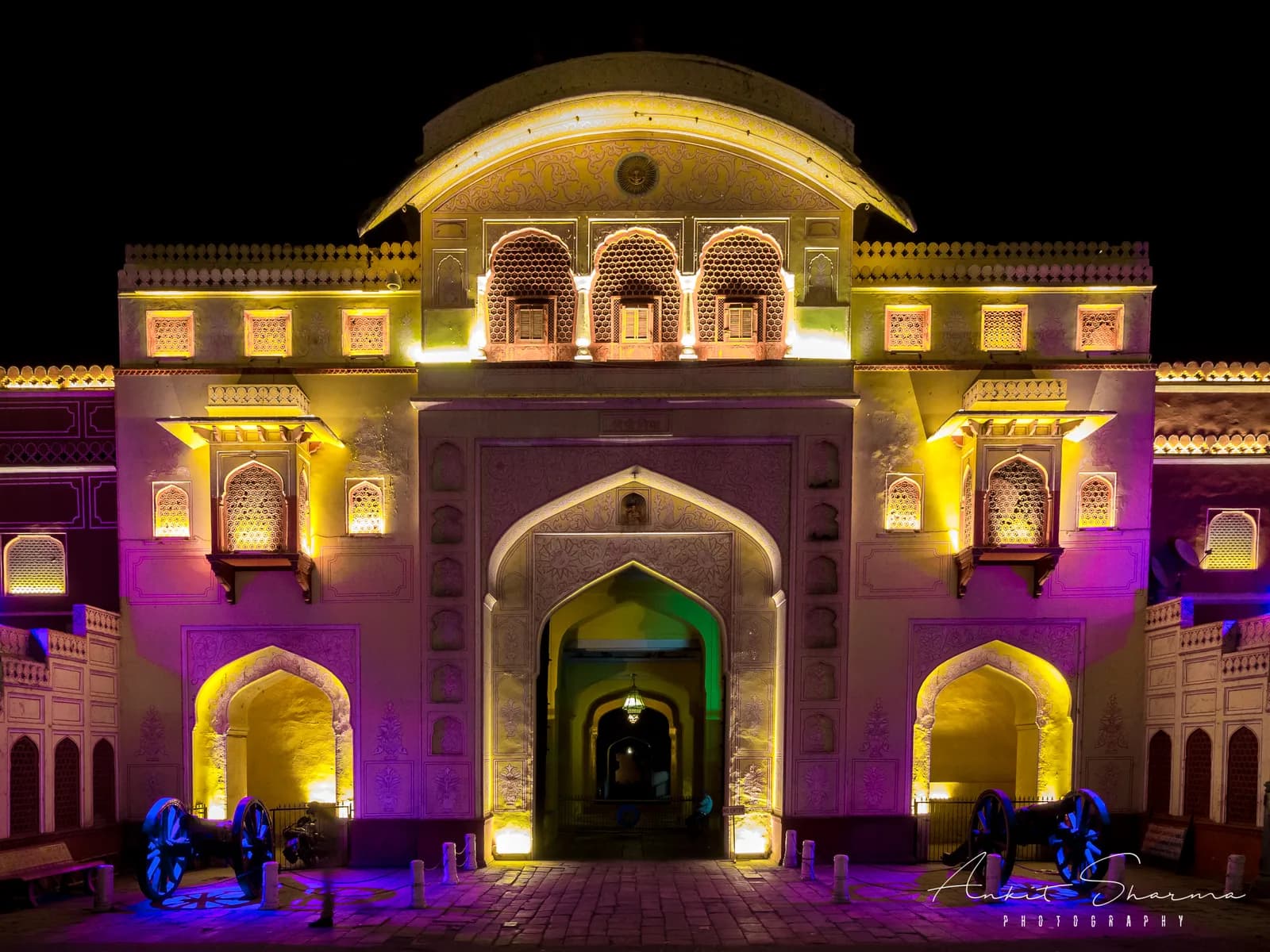
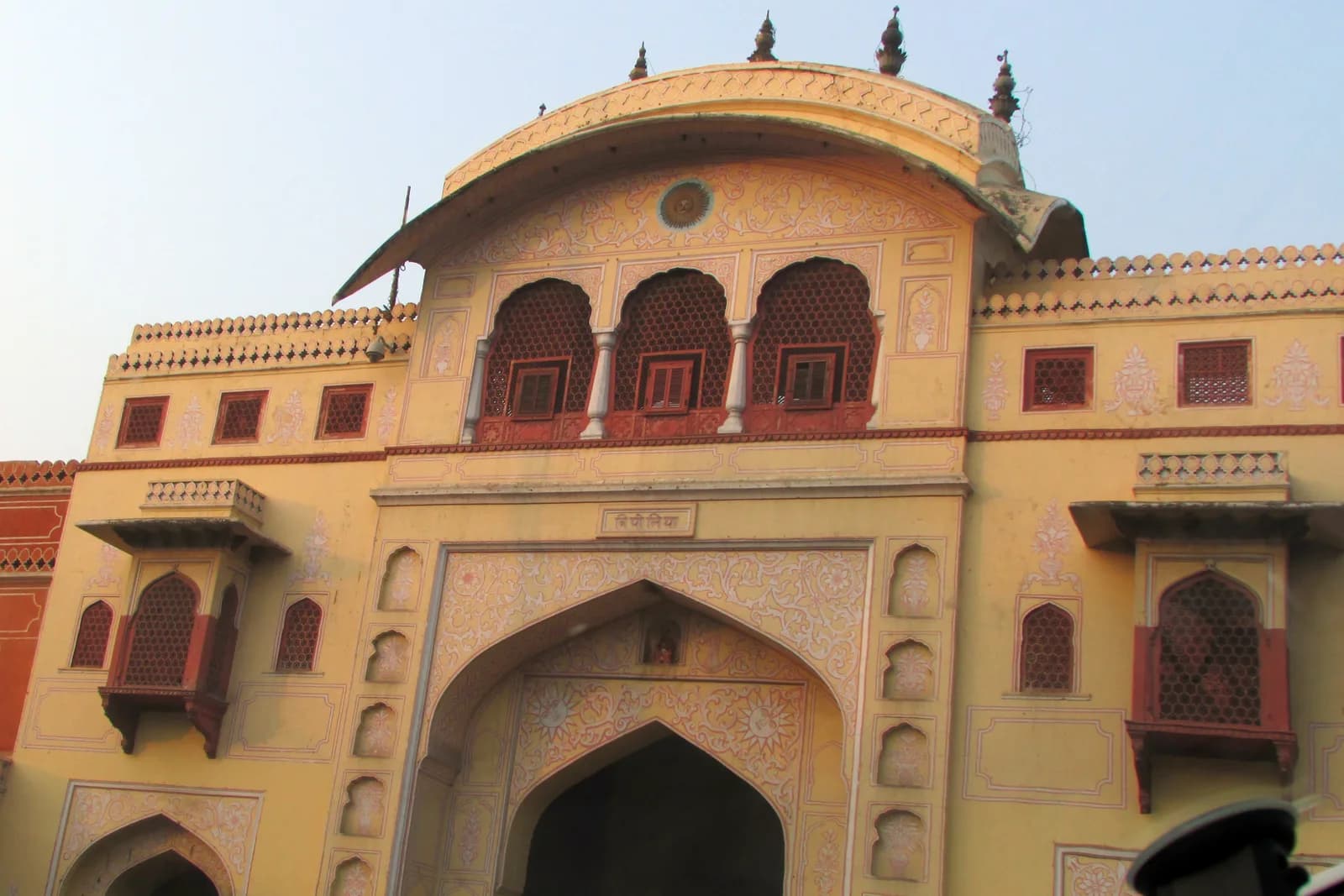
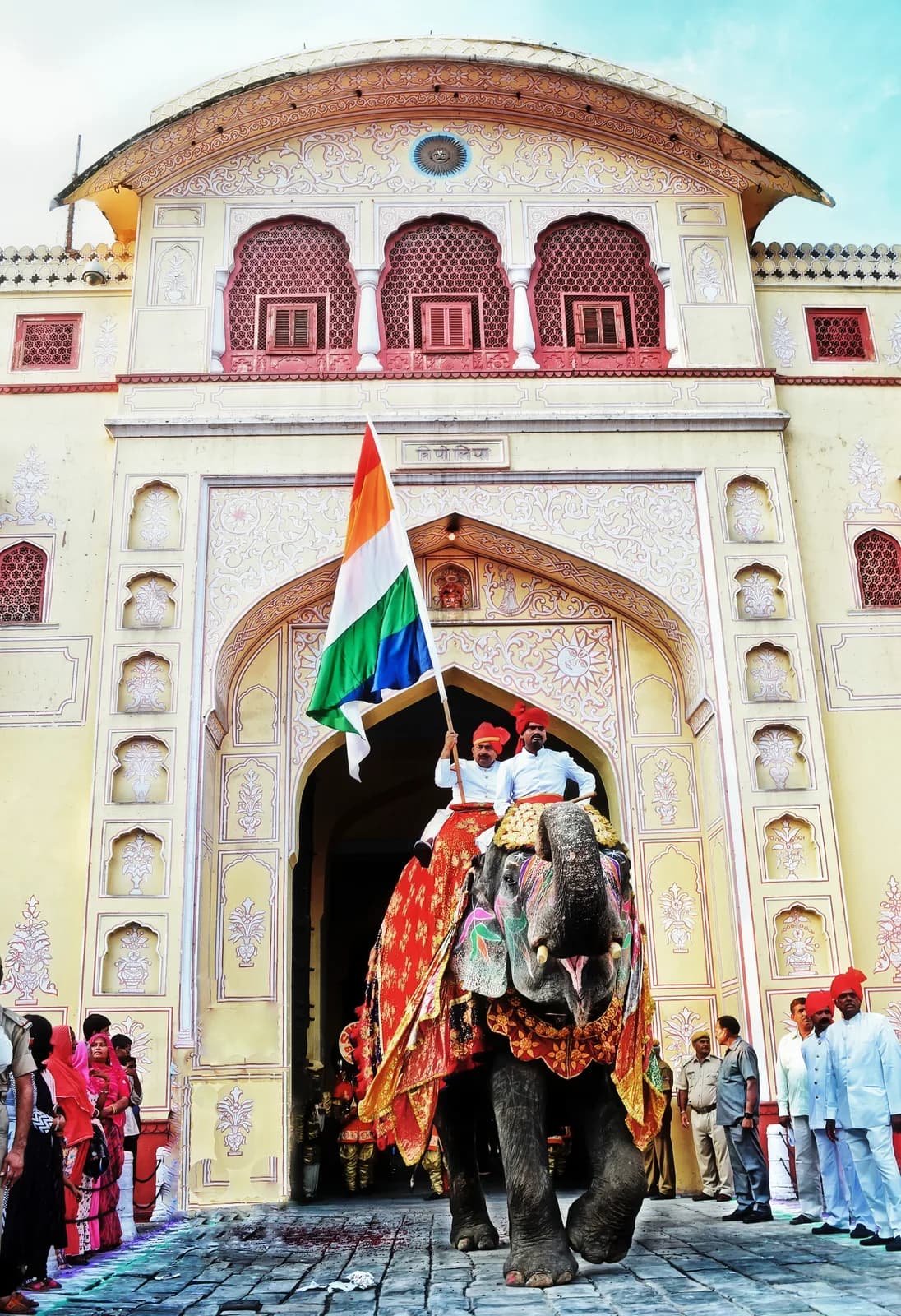
Tripolia Bazaar takes its name and its character from Tripolia Gate, the triple-arched royal gateway built in 1734 as a grand entrance connected to the City Palace complex. The name itself means three gates, from tri for three and pol for gate, and the gate still marks the bazaar today. The market grew along the approach to this gateway as part of Jaipur's planned old city.
The lac bangle craft here runs as deep as the city itself. Jaipur was founded in 1727 under Maharaja Sawai Jai Singh II, and the bangle makers, the Manihars, have plied their trade in these lanes since the early decades of the planned city, passing the skill down through families. That continuity is what you are really buying into at Maniharon Ka Rasta: a craft that has been made on these same stoves, in much the same way, for close to three centuries.
In Rajasthan, lac bangles carry strong cultural weight. They are considered auspicious for married women and brides, and they are essential wear for festivals such as Teej and Gangaur and for the traditional wedding chooda. That is why the lane is at its busiest before the festival season, and why a set of lac bangles makes such a meaningful gift. Our guide to Jaipur's festivals on the Golden Triangle covers the celebrations where these bangles come into their own.
Street Food Near Tripolia Bazaar
Shopping in the old-city heat builds an appetite, and the lanes around Tripolia Bazaar are full of Jaipur's best-loved snacks. Visitors routinely pair bangle shopping with a plate of pyaaz kachori or dal kachori, a crisp mirchi bada, and a thick kulhad lassi served in a clay cup from the nearby stalls. One of the branching lanes is even known locally for its namkeen and snacks.
For something more than street food, the old city around Tripolia is one of the best areas in Jaipur for traditional Rajasthani cooking and old sweet houses, and there are now popular cafes tucked into the bazaar for a modern break too. Our guides to famous foods in Jaipur and the best places to eat in Jaipur point you to the dishes and addresses worth seeking out, so a bangle-shopping afternoon turns naturally into a food walk.
Best Time to Visit Tripolia Bazaar
The best time to visit Tripolia Bazaar is from October to March, when Jaipur's weather is pleasant enough to walk the open-air lanes in comfort. The old city is punishing in the April to June heat, and the narrow, crowded alleys only concentrate it, so the cooler months are the clear choice for a relaxed browse.
Within the day, two windows work best. Come between 10:30 AM and 12:30 PM, or between 4:30 PM and 6:30 PM, to catch the shops open and the artisans working while avoiding the peak afternoon heat and the thickest evening crowds. Mornings are calmer; the late afternoon has more energy as the lane fills. Plan to give the bazaar 1 to 2 hours, more if you want a custom set made. If you would like to see the Pink City after dark, our guide to places to visit in Jaipur at night covers the old city under lights.
Because so many bangle shops close or cut their hours on Sunday, a weekday in these windows is the ideal combination. That is the slot I most often book for guests, keeping the market for a time when the makers are at their stoves.
Lac Bangle Care and Storage Tips
Lac bangles are beautiful but need a little care, because pure lac is sensitive to heat and water. A few simple habits will keep a set looking good for years:
- Keep them cool. Lac softens in high temperatures, so store bangles away from direct sunlight, stoves and hot car interiors.
- Keep them dry. Avoid prolonged soaking; take bangles off before washing dishes or bathing.
- Avoid harsh chemicals. Perfumes, sprays and cleaning agents can dull the surface and loosen set stones, so wear bangles after applying scent, not before.
- Store flat and padded. Lay them in a padded box rather than stacking loose, so the embellishments are not knocked off.
- Handle gently. Lac is firm but can crack under a sharp knock, so slide them on and off with care.
Follow these and a set bought in Maniharon Ka Rasta will carry its colour and its stones well beyond your trip, which is more than can be said for most holiday souvenirs.
Places to Visit Near Tripolia Bazaar
Tripolia Bazaar's location is a gift to a sightseer, because it sits in the middle of the old city within a short walk of Jaipur's headline monuments. Within easy reach you have:
- City Palace. The royal complex the gate was built to serve, a few minutes away.
- Hawa Mahal. The iconic honeycomb facade, about a kilometre off.
- Jantar Mantar. The royal observatory beside the City Palace.
- Isarlat (Sargasuli Tower). The eighteenth-century victory tower rises right beside the bazaar.
- Johari Bazaar. The gem and jewellery market, a short walk through the old city.
This clustering means a bangle stop costs you almost no travel time between sights. For a ready-made route that links the markets, monuments and museums into one walkable loop, our overview of places to visit in Jaipur and the hidden places in Jaipur guide between them cover both the landmarks and the quieter corners. When you want a base within the old city or in a calmer modern neighbourhood, our where to stay in Jaipur guide weighs up the options, and the Jaipur trip planner helps you sequence it all.
Is Tripolia Bazaar Worth Visiting
Tripolia Bazaar is well worth visiting, and for anyone drawn to craft it is one of the most rewarding stops in Jaipur. Watching lac bangles made by hand at Maniharon Ka Rasta, choosing your colours and walking away with a custom-fitted set is an experience you cannot get in a mall, and it comes free to enter, in a historic setting, steps from the City Palace and Hawa Mahal. For most visitors the hour spent here is a highlight of the old city.
It is not the place for a quiet, air-conditioned, fixed-price shop; the lanes are narrow, hot and busy, and prices come through bargaining. But if you enjoy a living market, the colour of stacked bangles and the chance to carry home something genuinely handmade, Tripolia delivers like few places in Rajasthan. It rounds off a morning of monument-seeing beautifully, and travellers extending their trip often pair it with one of the shopping and craft stops on a longer two-to-three day Jaipur plan.
Travel Tips for Visiting Tripolia Bazaar
A few practical habits make a Tripolia visit smoother. Carry cash in small notes, because many workshops prefer it and it helps when bargaining, though several shops now take cards and mobile payments. Come on a weekday in winter, in the mid-morning or late-afternoon window, to find the lane open and the artisans working. Ask your driver or the metro for Chhoti Chaupar or Maniharon Ka Rasta specifically, rather than the broad bazaar, to be dropped closest to the bangles, and expect to park in an outer lot and walk in. Wear comfortable shoes for the uneven lanes, keep your bag secure in the crowds, and give yourself time to watch the craft before you buy; the pleasure here is in the making as much as the buying, so do not rush the lane.
Plan Your Trip With Us
Tripolia Bazaar is at its best woven into a well-planned old-city morning, and that is what we arrange. As Delhi Agra tours specialists, we build private, chauffeur-driven Jaipur itineraries that pair the City Palace, Hawa Mahal and Jantar Mantar with real time in the bazaars, so you can watch the bangle makers without feeling rushed to the next stop. Our guides know which lanes are worth your time, which workshops welcome visitors, and how to keep an old-city morning flowing without losing hours to traffic and parking.
Tell us your travel dates, group size and what you most want from Jaipur, and we will build a plan and a price around you. Message us on WhatsApp at +91 7302265809 and we will take it from there.
Related Guides
Enquire Now
What our travellers say
“Our Golden Triangle honeymoon was flawless. Sunrise at the Taj with a private guide felt like a dream — every detail was handled.”
“As a first-time visitor to India, I felt completely safe and looked after. The driver and guide were superb professionals.”
“Travelling with two kids is hard, but they made it effortless. Great pacing, clean cars and zero surprises on price.”
“Booked the Agra day trip on short notice and it went off without a hitch. The guide's history knowledge made the Taj come alive.”
“Best decision of our India trip. Car was spotless, driver was punctual every single day, and the itinerary never felt rushed.”
“Organised a same-day Agra trip for my parents. Communication before and during the trip was excellent — genuinely stress-free.”
“Sunrise at the Taj Mahal was magical. Our guide spoke great English and answered every question with patience.”
“Three generations travelling together and everyone was comfortable — good vehicle, sensible stops, and no hidden costs.”
“I've used a few tour operators across Asia and this was among the smoothest. Fair pricing and they actually answer the phone.”
“Our custom Rajasthan-Agra combo was planned around our budget without cutting corners on comfort. Highly recommend.”
“Solo female traveller here — I felt safe throughout. The driver was respectful and the whole trip was timed perfectly.”
Ready to Explore
The Pink City?
Experience the Amber Fort, Hawa Mahal, City Palace, and the colorful bazaars of Jaipur with our expert-guided premium tours of Rajasthan's capital.

Jaipur
Premium Tour Package
Questions
Frequently asked questions
What is Tripolia Bazaar Jaipur famous for?
Tripolia Bazaar is famous for handmade lac bangles, known as lakh ki choodiyan, sold and made along its bangle lane, Maniharon Ka Rasta. It is the place in Jaipur to watch Manihar artisans shape lac over charcoal, embed stones and mirrors, and custom-fit bangles to your wrist, alongside a busy general market for textiles, brassware and handicrafts.
What are the timings of Tripolia Bazaar?
Which day is Tripolia Bazaar closed?
Is there an entry fee for Tripolia Bazaar?
How much do lac bangles cost in Tripolia Bazaar?
How are lac bangles made?
Where is Maniharon Ka Rasta?
How do I reach Tripolia Bazaar by metro?
How much time do I need for Tripolia Bazaar?
How do I care for lac bangles?
Is Tripolia Bazaar worth visiting?
Explore more
Plan your Tripolia Bazaar trip with us

Interested in Tripolia Bazaar Jaipur: Lac Bangles and Maniharon Ka Rasta Guide?
Chat with our travel team for a custom quote, or browse every package.
Related Attractions
9Tripolia Bazaar Jaipur on the map
Open in Google MapsReady to explore Tripolia Bazaar Jaipur: Lac Bangles and Maniharon Ka Rasta Guide?
Book your private tour today and experience the magic of India's rich heritage.