National Rail Museum Delhi: Timings, Tickets and Visitor Guide
Visiting the National Rail Museum in Delhi? Timings, tickets, the Fairy Queen, toy train rides, the indoor gallery, nearest metro, best time and visitor tips.
In a Nutshell
“The National Rail Museum in Chanakyapuri, New Delhi, is a large indoor-and-outdoor museum celebrating India's railway heritage, spread across a roughly 11-acre yard of vintage steam, diesel and electric locomotives and royal carriages, with an air-conditioned indoor gallery. Its stars include the Fairy Queen, the world's oldest working steam locomotive and a rideable toy train that loops the grounds, making it a favourite family day out. It is open Tuesday to Sunday, closed Mondays, charges a modest ticket and the nearest metro is Jor Bagh or Moti Bagh. It is explored on our Delhi tours, run by a unit of Experience My India.”
The National Rail Museum is one of Delhi's most enjoyable family attractions, a sprawling open-air showcase of historic trains you can walk among, climb into and ride, alongside a gallery telling the story of one of the world's great railway networks. If you are travelling with children or simply love trains and history, it is a delight. Our team at Delhi Agra Tour Packages often suggests it for a relaxed, fun half day and it makes a great change of pace on a wider Golden Triangle tour.
I am Abhay Sharma, Delhi born and a Golden Triangle guide since 2015 and I love recommending this to families, because few places entertain children and adults equally. This guide gathers everything I would tell a visitor beforehand, checked against current information, including the closed day, the rides and the best time to come.
Details
National Rail Museum at a glance
| Detail | Information |
|---|---|
| Location | Chanakyapuri, near the diplomatic enclave, New Delhi |
| Size | A roughly 11-acre outdoor yard plus an indoor gallery |
| Known for | Vintage locomotives, the Fairy Queen, the toy train ride |
| Open | Tuesday to Sunday |
| Closed | Mondays and national holidays |
| Entry fee | A modest ticket, higher at weekends |
| Nearest metro | Jor Bagh (Yellow Line) or Moti Bagh (Pink Line) |
| Time needed | 3 to 4 hours for the indoor and outdoor sections |
National Rail Museum timings
| Detail | Information |
|---|---|
| Open days | Tuesday to Sunday |
| Timings | About 10:00 AM to 5:00 PM |
| Last entry | Ticket counters close around 4:30 PM |
| Weekly closure | Mondays and national holidays |
The museum is open Tuesday to Sunday, generally from about 10:00 AM to 5:00 PM, with the entry gate and ticket counters closing around 4:30 PM and it is closed on Mondays and national holidays. Timings can change, so reconfirm and arrive by early afternoon to enjoy both the indoor and outdoor sections.
Ticket prices
| Item | Fee (at the time of writing, reconfirm) |
|---|---|
| Entry, weekdays (Tuesday to Friday) | Around ₹50 per person |
| Entry, weekends and gazetted holidays | Around ₹100 per person |
| Toy train or joy train ride | Around ₹20 to ₹50, by ride type |
| Virtual reality or simulator rides | Small separate add-on fees |
The entry ticket is modest and a little higher at weekends and on holidays. The rides and simulators inside are charged separately, so carry some extra cash or a card for those. Rates can be revised, so reconfirm at the counter.
How to reach
| From | Route |
|---|---|
| Jor Bagh metro (Yellow Line) | A short auto ride away |
| Lok Kalyan Marg metro (Yellow Line) | Also convenient, then an auto |
| Moti Bagh or Sir M Visvesvaraya metro (Pink Line) | Close, with a short auto |
| By cab or auto | Drops directly at the museum entrance |
What is the National Rail Museum and why is it special?
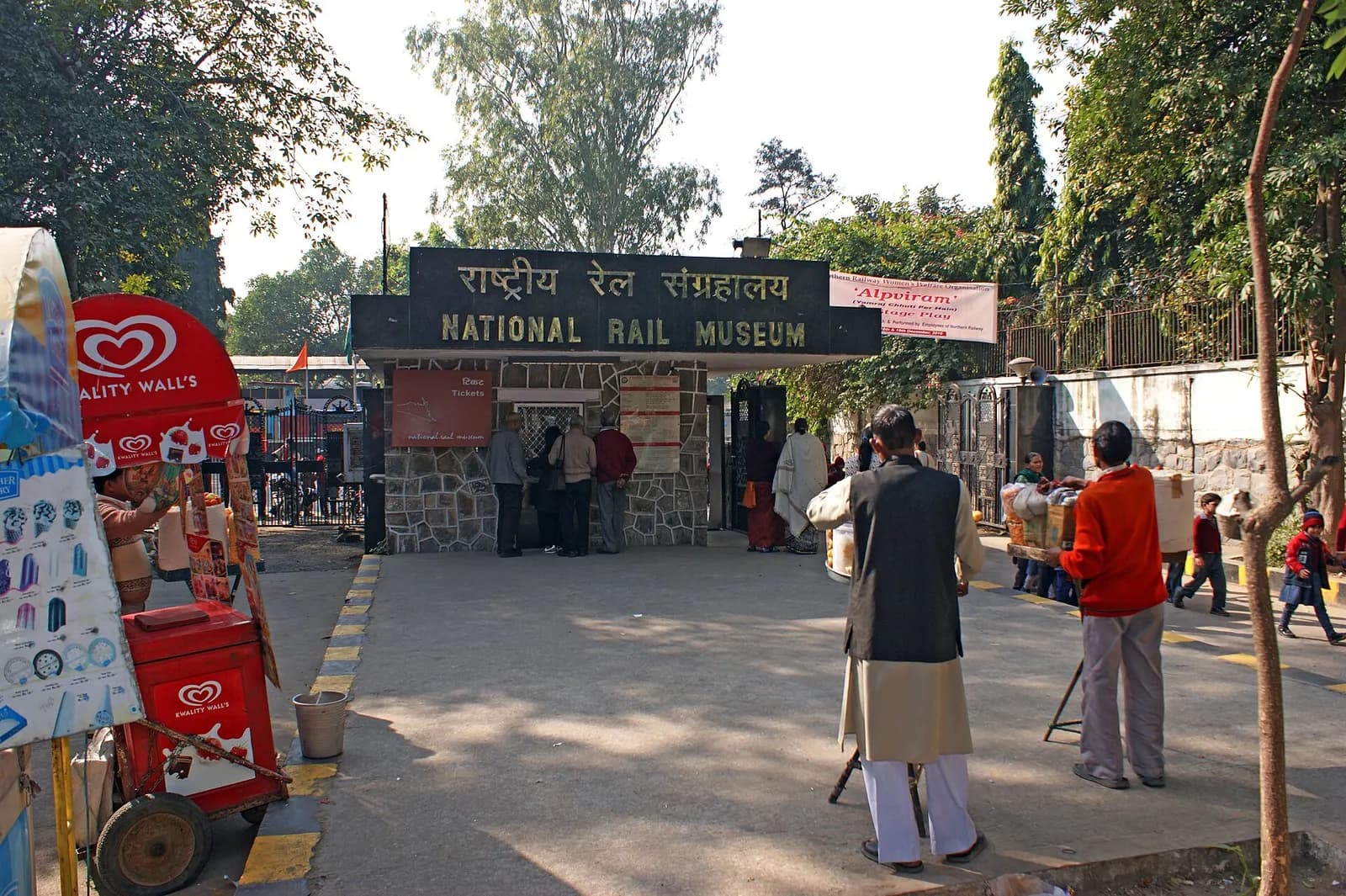
The National Rail Museum is a museum devoted to the history and heritage of the Indian Railways, one of the largest and most storied railway networks in the world, set on a spacious site in the diplomatic enclave of Chanakyapuri. It combines a vast open-air yard, where dozens of real historic locomotives and carriages are displayed in the open and can be approached up close, with an air-conditioned indoor gallery of smaller exhibits, models and memorabilia. Add a rideable toy train that circles the grounds and various rides and simulators and the result is a museum that is as much a fun day out as an educational one, especially for families.
It is special for several reasons worth spelling out:
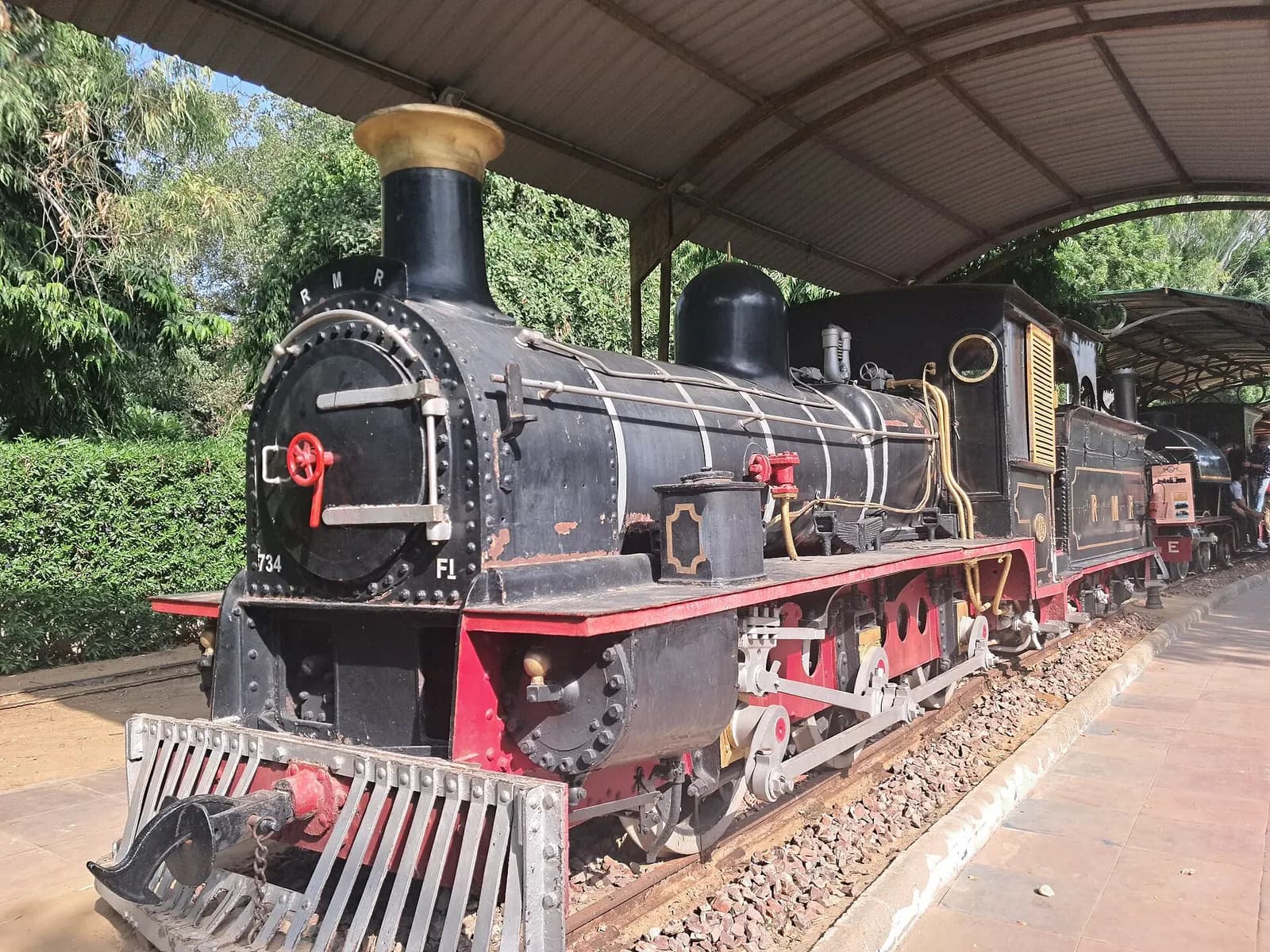
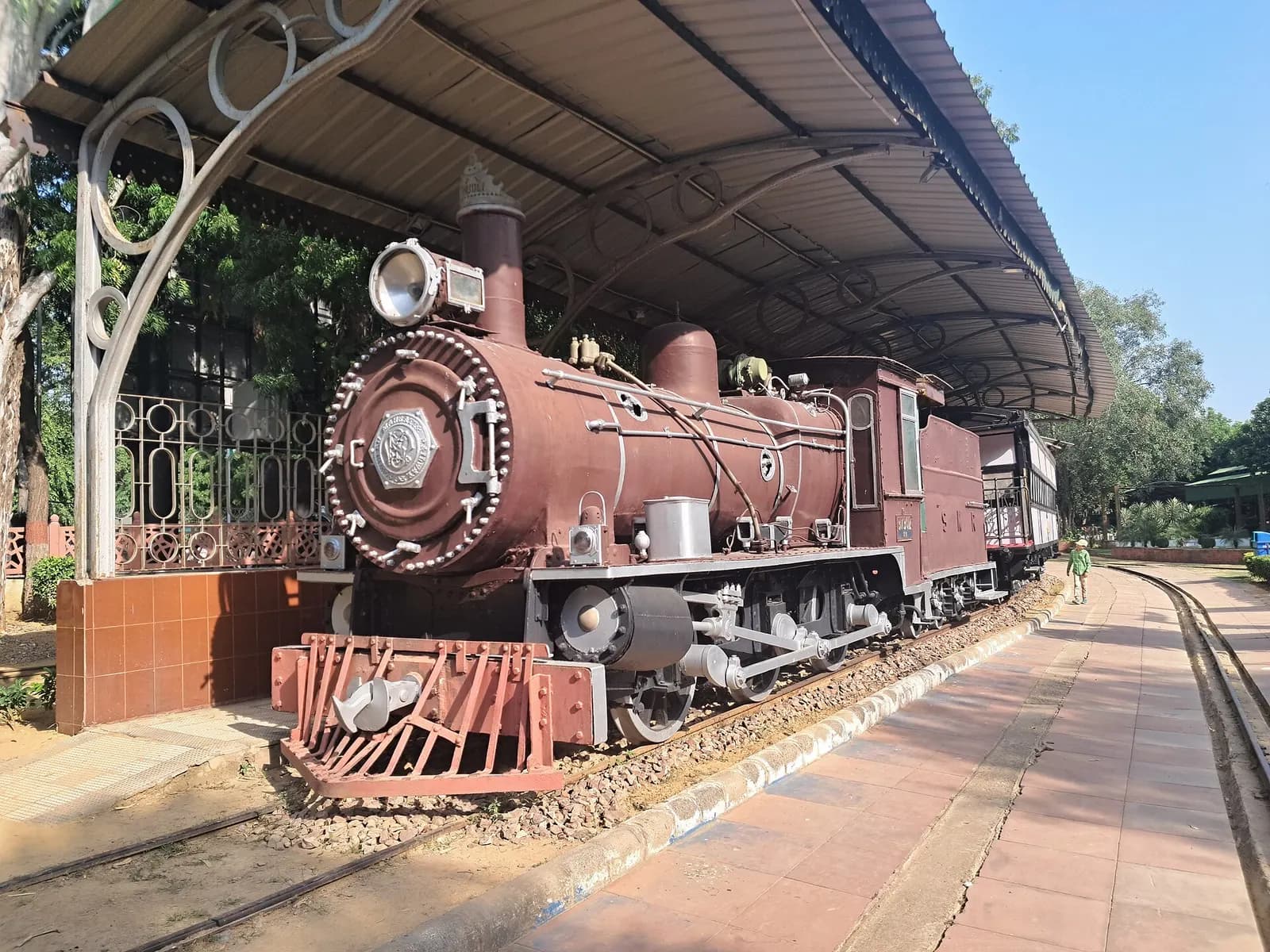
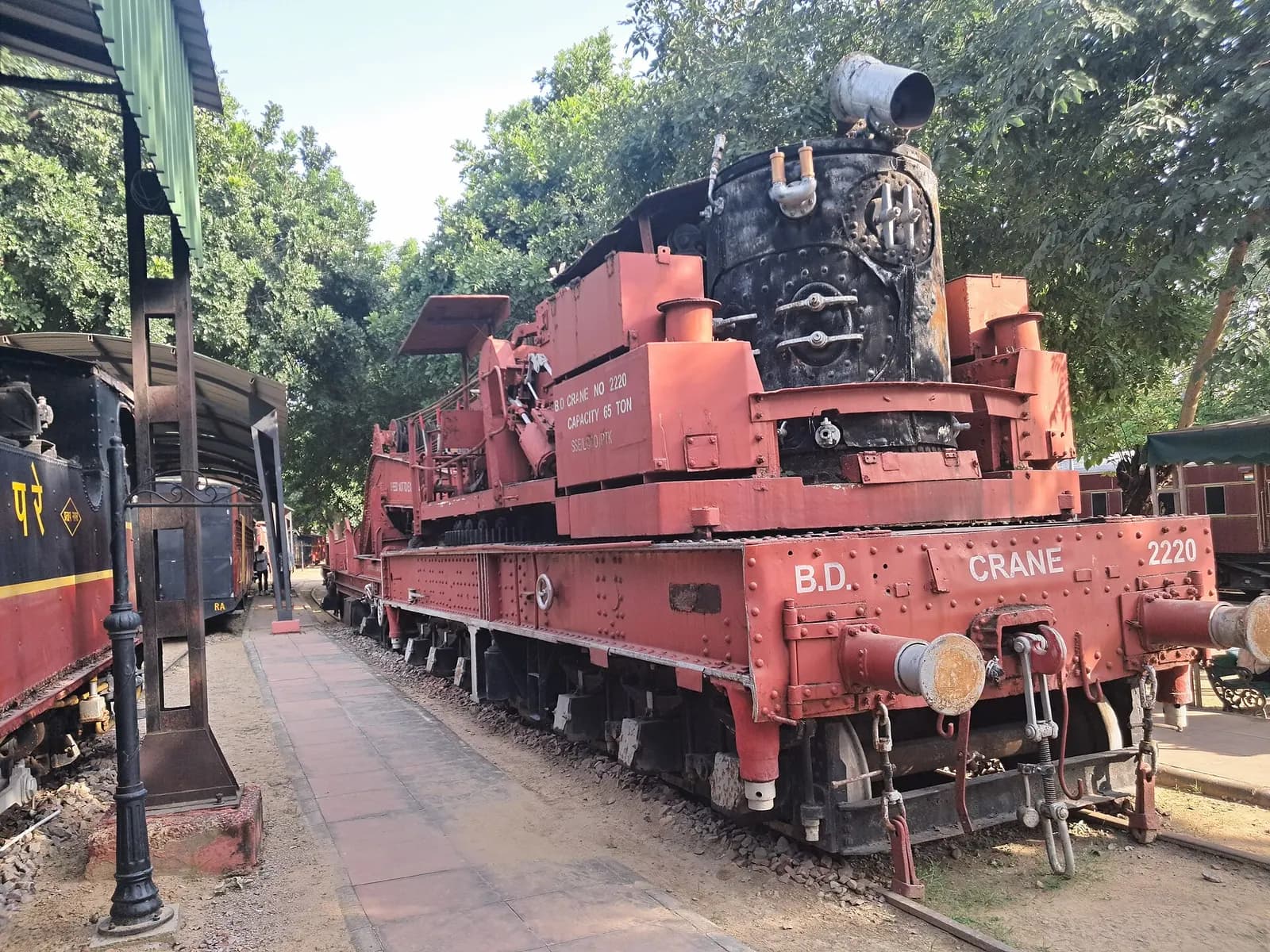
- Real, full-size trains to explore. An 11-acre yard of genuine heritage steam, diesel and electric locomotives and royal saloons, out in the open where you can get close to them.
- World-record exhibits. The Fairy Queen, the world's oldest working steam locomotive and the unique Patiala State Monorail are headline treasures.
- A ride-able toy train. A much-loved mini train that loops the whole park, a highlight for children.
- A rich indoor gallery. Photographs, models, signalling equipment and memorabilia telling the epic story of Indian Railways.
- A perfect family outing. Space to roam, trains to climb, rides to enjoy and shade and refreshments, all in one place.
It belongs on any thoughtful list of things to do in Delhi and it is one of the best family-friendly of all the places to visit in Delhi.
What is the history of the National Rail Museum?
The National Rail Museum was established to preserve and celebrate the remarkable heritage of the Indian Railways, which began in the mid 19th century and grew into a vast network that knitted the subcontinent together and transformed its economy and society. By the 1970s, as steam gave way to diesel and electric traction, many historic engines and carriages were at risk of being scrapped and the museum was created, opening in the late 1970s, to rescue and display these irreplaceable machines. It was laid out with a large outdoor yard so that full-size locomotives could be shown in the open, along with an indoor gallery for smaller artefacts and it has grown over the decades into the premier institution of its kind in India.
The collection tells the story of how the railways came to India, the great engineering feats involved, the different companies and princely states that ran their own lines and the social world the railways created. Many of the exhibits are themselves historic survivors, saved from the scrapyard and lovingly restored, so a visit is a walk through the evolution of rail travel on the subcontinent. Knowing that these are real, working or once-working machines, with their own histories, rather than models, is part of what makes the museum so engaging; you are standing beside the actual engines that built modern India's arteries of travel.
The site was laid out deliberately so that the outdoor yard could hold the full-size rolling stock while the indoor pavilion housed the delicate and detailed material and over the years the displays have been added to and refreshed, with the two record-holding stars, the Fairy Queen and the Patiala monorail, restored to running order so that they are not merely static relics but living demonstrations of how early trains actually worked. The royal saloons in the collection are a window onto a vanished world, the private carriages in which maharajas and the colonial viceroy travelled in considerable style, panelled, furnished and fitted out far beyond ordinary coaches. Taken together, the exhibits trace the arc from the first short lines of the 1850s, through the sprawling network of the colonial era, to the modern railway and they do so with real objects rather than reproductions, which is why rail enthusiasts travel from across India and abroad to see them.
How did the Indian Railways shape the country?
Part of what makes the museum resonate is the sheer importance of its subject. The railways were among the most transformative developments in modern Indian history, binding together a vast and varied subcontinent, moving people, goods, grain and ideas over distances that had previously taken weeks to cross. They reshaped trade and agriculture, created whole railway towns and workshops and, over time, became one of the largest employers anywhere in the world. For millions of Indians the train is woven into the texture of ordinary life, the way families travel to weddings and festivals, the way pilgrims reach holy cities, the way migrants move for work, so a museum devoted to the railways is in a quiet way a museum of the country itself. The exhibits here hint at all of this, from the engineering marvels that drove lines through mountains and across great rivers to the human stories of the people who built, ran and rode the system. Understanding this backdrop turns a stroll among old engines into something richer, a glimpse of how a nation was stitched together by iron and steam and it is why the museum appeals not only to children and train lovers but to anyone curious about how modern India came to be.
What are the main attractions at the National Rail Museum?
The museum divides naturally into its outdoor yard and its indoor gallery, with rides scattered through the grounds. The highlights:
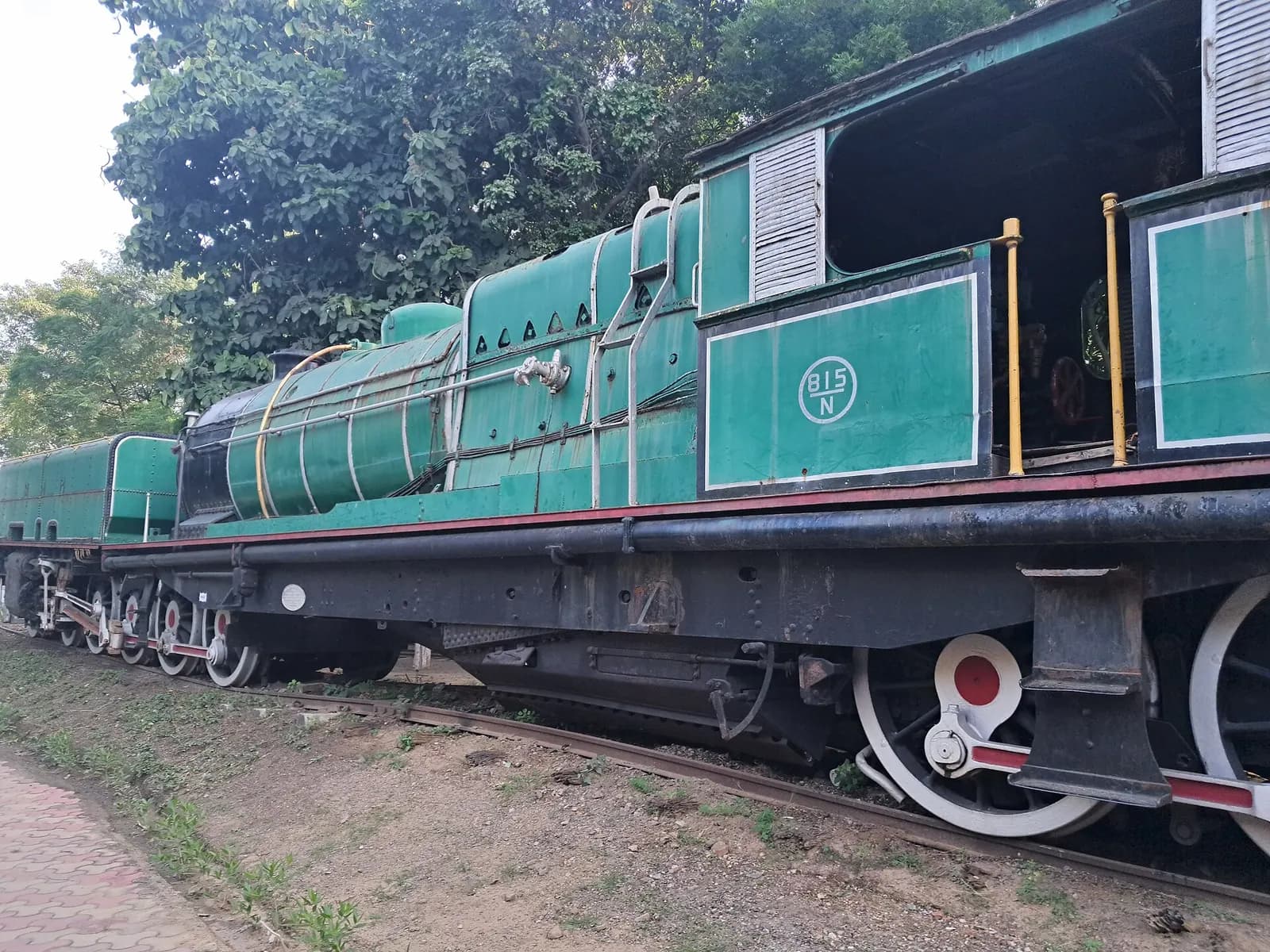
- The outdoor rail yard. The heart of the museum, a vast open display of heritage steam, diesel and electric locomotives, wagons and royal carriages, including the ornate saloons once used by maharajas and the viceroy, which you can view up close.
- The Fairy Queen. Built in 1855, this is celebrated as the world's oldest working steam locomotive, a genuine record-holder and the museum's star exhibit.
- The Patiala State Monorail Trainways. Built in 1907, this is the only operational steam monorail of its Ewing-system type left in the world, a fascinating curiosity restored to working order.
- The indoor gallery. A fully air-conditioned space with historical photographs, antique telecommunication and signalling equipment, old uniforms and detailed miniature and model railway layouts.
- The joy train loop. A mini toy train that carries visitors on a circuit around the entire outdoor park, hugely popular with children and a lovely way to see the yard.
Between the giant engines to explore, the record-breaking exhibits and the rides, there is enough here to fill an easy, happy half day for all ages.
What is the Fairy Queen?
The single most famous exhibit is the Fairy Queen and it is worth seeking out. Built in 1855, in the earliest years of railways in India, it is recognised as the world's oldest working steam locomotive, an extraordinary survivor from the dawn of the railway age. For most of its long life it hauled trains and then stood as a static exhibit, but it was restored to working order and has, on special occasions, pulled heritage excursion trips, a remarkable feat for a machine over a century and a half old. Seeing it in person, a small, elegant, green engine from the Victorian era, is a real thrill for anyone interested in history or engineering and even casual visitors are struck by the thought that this very machine was steaming across India when the subcontinent's railways were brand new. It is the kind of genuine, record-holding artefact that lifts the National Rail Museum from a pleasant family outing to a site of real historical importance.
What is the Patiala State Monorail?
Another unique treasure is the Patiala State Monorail Trainways, which fascinates visitors who have never imagined a steam-powered monorail. Built in 1907 for the princely state of Patiala, it runs on the unusual Ewing system, in which most of the weight rests on a single running rail while a side wheel on an ordinary road keeps the train balanced, a quirky, ingenious solution from the early age of rail. It is believed to be the only operational monorail of its kind left anywhere in the world and it was painstakingly restored to working condition. Seeing this odd, charming contraption and understanding how it worked, is one of the small delights of the museum and it illustrates beautifully the inventiveness and variety of India's early railways, when different princely states and companies experimented with their own systems. It is exactly the sort of thing you will see nowhere else.
What is a visit to the National Rail Museum like?
A visit here feels different from Delhi's forts and tombs and that is a large part of its charm. You enter into the open yard and almost at once you are among real locomotives, great black steam engines and later diesel and electric ones, lined along their tracks under the open sky, close enough to touch. Children tend to run from one to the next, climbing where climbing is allowed and peering into cabs and carriages, while adults read the plaques that explain what each machine was, where it ran and why it mattered. The scale is the first surprise, as these are not models but full-size engines and standing beside a towering steam locomotive gives a vivid sense of the power that once hauled trains across the plains and up into the hills.
Most people drift around the yard first, then take the toy train ride, which loops the whole site and lets you take in the collection from a gentle moving seat, a lovely pause for tired little legs. The indoor gallery comes as a welcome, cool contrast, especially on a warm day and rewards a slower look at the photographs, models and railway memorabilia that fill out the story. There is a cafeteria for a snack and rest, a souvenir shop and enough shade and seating in the right spots to make a half day comfortable. The overall mood is relaxed and unhurried, more like a large railway-themed park than a solemn museum, which is exactly why families love it. You leave having learned a good deal almost by accident, between the climbing and the rides, which is the best kind of museum visit for children.
What are the National Rail Museum timings and ticket prices?
The National Rail Museum is open Tuesday to Sunday, generally from about 10:00 AM to 5:00 PM, with the entry gate and ticket counters closing around 4:30 PM and it is closed on Mondays and on national holidays, so plan around that Monday closure. The entry ticket is modest, at the time of writing around ₹50 per person on weekdays, Tuesday to Friday and around ₹100 on weekends and gazetted holidays. The rides are charged separately: the toy or joy train ride costs roughly ₹20 to ₹50 depending on the engine or ride and the virtual reality and simulator rides carry small additional fees. Parking is available for a modest charge. These figures are current at the time of writing and can be revised, so reconfirm at the counter and carry some cash or a card for the rides on top of the entry ticket. Allow three to four hours to enjoy both the indoor gallery and the expansive outdoor yard, more if your children want several rides.
What is the best time to visit the National Rail Museum?
Because much of the museum is a large open-air yard with minimal shade, the best time is firmly the cooler months, roughly October to March, when exploring the outdoor exhibits is comfortable; the summer sun on the open yard is punishing. On any day, arriving soon after opening at 10:00 AM gives you the coolest hours, the most time for the exhibits and rides before the counters close at 4:30 PM and lighter crowds. Weekdays are quieter and the entry ticket is cheaper than at weekends, so a weekday morning in winter is close to ideal, especially if you want a relaxed visit with children. Weekends are livelier and busier, with more families and longer queues for the rides. If you must visit in the warmer months, come right at opening, carry sun protection and water and use the indoor gallery and the cafeteria to escape the midday heat. Avoid Mondays, when the museum is closed.
How do you reach the National Rail Museum?
The National Rail Museum sits in Chanakyapuri, Delhi's leafy diplomatic enclave, near Shanti Path. It is not right next to a metro station, so the usual approach is a metro ride followed by a short auto. The handiest stations are Jor Bagh and Lok Kalyan Marg on the Yellow Line and Moti Bagh and Sir M Visvesvaraya Moti Bagh on the Pink Line, from which a short auto-rickshaw ride brings you to the gate. The nearest main bus stop is at Moti Bagh, a little over a kilometre away and app cabs and autos can drop you directly at the entrance, which is the simplest option, especially with children. There is parking on site for a modest fee if you drive.
Its location in south-central Delhi, close to the Lodhi and Chanakyapuri areas and a short ride from the India Gate lawns, means it fits into a central or southern plan. If you are threading a wider route, a dedicated New Delhi tour can tie it together with the imperial sights, while a broader Delhi day tour folds the museum into the full span of the capital.
What is there to see near the National Rail Museum?
The National Rail Museum sits among the green avenues of Chanakyapuri, close to several other sights. A short distance away are the lawns and tombs of Lodhi Garden and the grand Safdarjung's Tomb, both lovely for a stroll, while the family-friendly Garden of Five Senses near Saket and the lively Hauz Khas complex are also within reach to the south. For another popular family outing, the National Zoological Park, the Delhi Zoo, pairs naturally with the museum for a day with children.
A little further out, the great monuments of the capital, the ceremonial India Gate, the serene Humayun's Tomb, the mighty Red Fort, the towering Qutub Minar and the modern Lotus Temple and Akshardham, are all a manageable ride away. Together these make the Rail Museum a fun part of a varied Delhi day and you can see the fuller picture in our guide to the important monuments of Delhi.
How does the National Rail Museum fit into a Delhi itinerary?
For most visitors, the National Rail Museum works best as a relaxed, fun half day and it is an especially smart choice for anyone travelling with children, who often tire of monuments but love the trains, the space to run and the rides here. It pairs naturally with other family-friendly stops such as the nearby zoo or the Garden of Five Senses or it can be a welcome change of pace between the historic sights. Because it is indoors and out, it also offers some shelter on a hot or showery day via its air-conditioned gallery. Those on a fuller itinerary often slot it in alongside the grand monuments, the India Gate area, the Qutub Minar and Humayun's Tomb, as a lighter, livelier interlude.
If Delhi is your gateway to the wider Golden Triangle, the Rail Museum is a delightful counterpoint to the forts and tombs and a fitting one, since you may well travel on to Agra and Jaipur by train, perhaps even on a heritage or fast service, so a visit here adds background and fun to the railway journeys ahead. Many of my guests with children say it was the stop their kids enjoyed most in Delhi and more than a few adults quietly admit they enjoyed it just as much. A sensible way to plan it is to pair the museum with one nearby green or family stop in the morning, break for lunch and keep the afternoon lighter, since by then the children will have had their fill of climbing and rides and the counters close at half past four in any case. For the best season across the capital, our guide to the best time to visit Delhi is a useful companion when you are deciding which weeks to travel.
Is the National Rail Museum worth visiting?
For the right visitor, the answer is firmly yes. If you are travelling with children, it is one of the most rewarding stops in the whole city, a place where young ones are entertained and engaged rather than dragged around and where parents get a relaxed, shaded, well equipped day out rather than a forced march past plaques. If you love trains, history or engineering, it is close to essential, holding genuine world-record machines you cannot see anywhere else. Even for the general sightseer it offers a pleasant, informative change of pace from Delhi's heavier monuments and a couple of hours here is time well spent. The honest caveat is that it is not a grand historic monument in the manner of the Red Fort or Humayun's Tomb; it is a museum and a railway park, best approached in that spirit, as fun and educational rather than awe-inspiring architecture. Manage expectations accordingly and you will enjoy it thoroughly. For families especially, I rank it among the best half days Delhi offers and I almost always suggest it to guests travelling with children. If you come in the cooler months, arrive early and give yourself time for both the yard and the gallery, you will leave glad you came.
Who is the National Rail Museum best for?
It helps to know in advance whom the museum suits most, so you can set your own expectations:
- Families with children, who get space to roam, trains to climb and rides to enjoy and for whom this is often the single most popular Delhi stop.
- Rail and history enthusiasts, drawn by genuine heritage locomotives and the record-holding Fairy Queen and Patiala monorail.
- Photographers, who find the open yard of vintage engines under the sky full of striking subjects.
- Anyone wanting a relaxed change of pace from Delhi's forts and tombs, with shade, seating and refreshments on site.
- Visitors on a hot or showery day, who can retreat into the air-conditioned indoor gallery and the cafeteria.
If none of those describe you and you have only limited time in Delhi for its headline monuments, you might reasonably skip it; but for most travellers and almost all with children, it earns its place.
Travel tips for visiting the National Rail Museum
A few pointers make the visit even better:
- Never come on a Monday, when the museum is closed and allow 3 to 4 hours.
- Visit October to March, since much of the museum is open-air with little shade.
- Arrive at opening, around 10:00 AM, for cooler hours, lighter crowds and more time before the 4:30 PM last entry.
- Carry cash or a card for the rides, as the toy train and simulators are charged separately from entry.
- Bring sun protection and water in the warmer months and use the indoor gallery and cafeteria to cool off.
- Come on a weekday for a cheaper ticket and shorter ride queues than at the weekend.
- Let children lead, as the trains to climb and the joy train ride are the real highlights for families.
- Come by metro and auto from Jor Bagh or Moti Bagh or by cab straight to the gate.
If you would like a local to build the National Rail Museum into a wider Delhi plan, message our team on WhatsApp at +91 7302265809 with your travel dates and group size and we will help you shape the day.
Plan your trip with us
At Experience My India, through our Delhi and Golden Triangle travel desk, we design unhurried, well paced trips that make room for fun, family-friendly stops like the National Rail Museum, not just the historic monuments. Whether you want a relaxed set of Delhi Agra tours or a full Golden Triangle route through Delhi, Agra and Jaipur, including the train journeys that link them, we plan around your pace, your interests and the right season, with local guides who know how to keep every age happy. Share your dates and the kind of trip you have in mind through our enquiry page, tell us your group size and we will put together an honest, tailored plan rather than a rushed checklist.
Related guides
- Nearby places to visit in Delhi, to extend your day
- Water parks in Delhi NCR, for more family fun
- Hidden places to visit in Delhi, the city's quieter corners
Enquire Now
Ready to Explore
The Heart of Delhi?
Explore the Red Fort, Qutub Minar, Humayun's Tomb, and the vibrant streets of Old Delhi with our expert-guided premium tours of India's capital city.

Delhi
Premium Tour Package
Questions
Frequently asked questions
What are the timings of the National Rail Museum?
It is open Tuesday to Sunday, generally from about 10:00 AM to 5:00 PM, with ticket counters closing around 4:30 PM and it is closed on Mondays and national holidays.
What is the entry fee for the National Rail Museum?
Which is the nearest metro station to the National Rail Museum?
Is the National Rail Museum closed on Mondays?
What is the Fairy Queen at the Rail Museum?
What is there for children at the National Rail Museum?
How much time do I need at the National Rail Museum?
Can you ride a train at the National Rail Museum?
What is the best time to visit the National Rail Museum?
Is the National Rail Museum worth visiting?
Explore more
Plan your National Rail Museum trip with us
Interested in National Rail Museum Delhi: Timings, Tickets and Visitor Guide?
Chat with our travel team for a custom quote, or browse every package.
Related Attractions
9Ready to explore National Rail Museum Delhi: Timings, Tickets and Visitor Guide?
Book your private tour today and experience the magic of India's rich heritage.